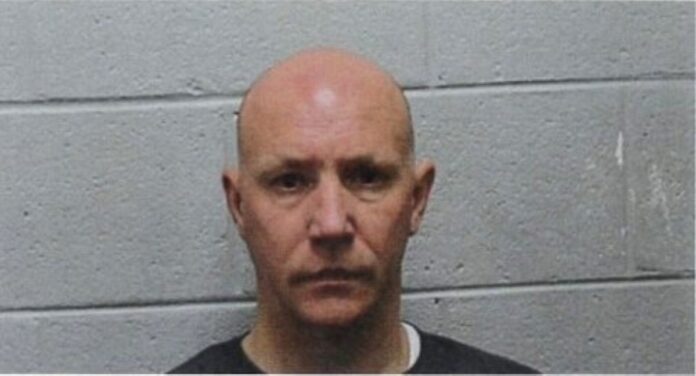
Former YMCA gymnastics coach Jeremy Green received two life sentences for grooming, sexually abusing and raping Jennifer Cobb. (Hart County Sheriff's Office)
HARTWELL, Ga. — A Hart County jury has found Jeremy Green guilty on all counts in a sex-crimes case involving one of his former gymnastics students, and a judge sentenced him to two life sentences plus 89 years in prison and a $100,000 fine.
The convictions stem from charges related to sexual abuse and grooming, including two counts of child molestation, one count of aggravated child molestation, one count of enticing a child, one count of statutory rape and one count of sexual exploitation of a child.
The verdict followed a multi-day trial in Hart County Superior Court that drew significant public attention. Prosecutors presented evidence they said showed Green used his position of trust to groom and abuse a minor. Defense attorneys challenged the state’s case and elements of the investigation.
After deliberating, jurors returned guilty verdicts on all counts. It was not immediately known whether Green plans to appeal. Any appeal would be filed through Georgia’s appellate courts.
Jennifer Cobb’s story and Susan Cobb’s advocacy
Jennifer Cobb dreamed of competing in the Olympics as a gymnast. But after years of being groomed and sexually abused by her coach, she was found dead in 2021 of an apparent suicide. (Justice for Jennifer Foundation)
Jennifer Cobb was known for her generosity, warmth and devotion, her family has said. A talented gymnast with dreams of one day competing at the Olympic level, she began participating in programs through her local YMCA at age 11, according to her family.
But her life took a tragic turn after she was groomed and abused by a coach who was significantly older. Her family has said she endured years of sexual abuse before coming forward to report it — leading the family to pursue both criminal charges and a civil lawsuit against her alleged abuser and the YMCA.
Although the family later reached a settlement with the YMCA, they say justice for Cobb in life was never fully realized. She was found dead in 2021 in what authorities have described as a suspected suicide — a loss that devastated her family and friends.
For Cobb’s family and supporters, the verdict and sentence represent a significant moment in a yearslong pursuit of justice — and part of a broader effort to bring attention to the lasting impact of abuse and the need for stronger protections for children.
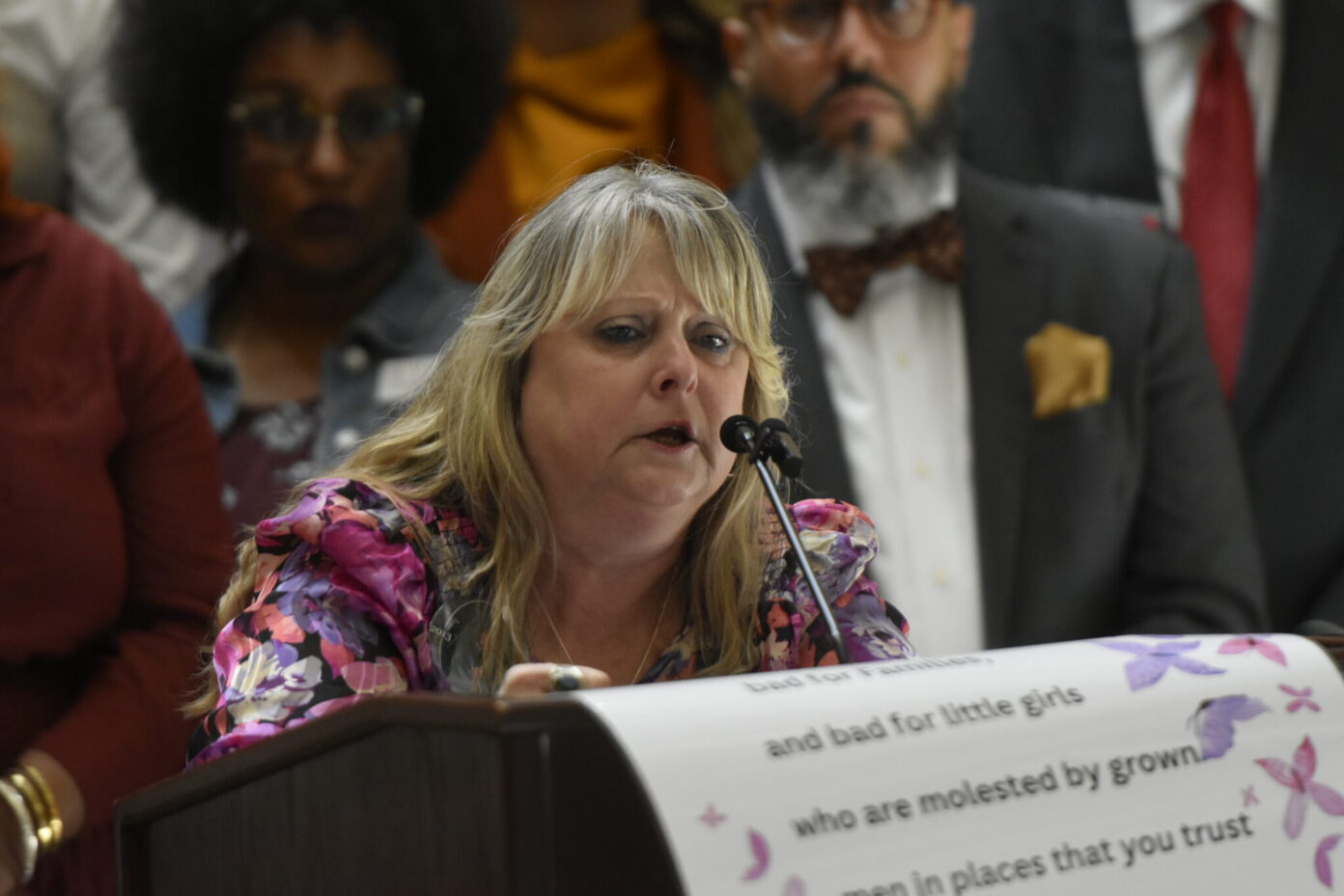
Following her death, her mother, Susan Cobb, emerged as an advocate for survivors of sexual abuse and human trafficking, often speaking publicly about her daughter’s case and pushing for stronger legal protections. She was among survivors and advocates at the Georgia Capitol in 2024 when Gov. Brian Kemp signed a trio of bills aimed at increasing protections for sexual abuse and trafficking survivors, including legislation creating a felony offense for grooming a minor.
Jennifer Cobb’s mother Susan, who became an activist following the death of her daughter to educate the public on the dangers of grooming. (Ross Williams/Georgia Recorder)
Cobb also opposed more recent legislative efforts to overhaul Georgia’s civil litigation system — arguing that proposed limits on lawsuits could shield entities or individuals responsible for enabling abuse from accountability and make it harder for survivors to seek justice.
“This has been a long and painful journey for our family,” her family wrote on the website “Justice for Jennifer Cobb,” thanking supporters who stood by them as the legal process unfolded.
Trial follows years of community attention
The trial in Hart County drew significant attention from community members and supporters who filled the courtroom at times to follow proceedings.
The verdict and sentence bring the trial phase to a close, though the legal and emotional aftermath for the family is likely to continue. If Green files post-trial motions or an appeal, additional proceedings could take place in Georgia’s appellate courts.
For Cobb’s family, the verdict marks a significant moment in their yearslong pursuit of justice — one tied not only to the circumstances of her death but also to broader conversations about survivors’ rights and legal protections in Georgia.
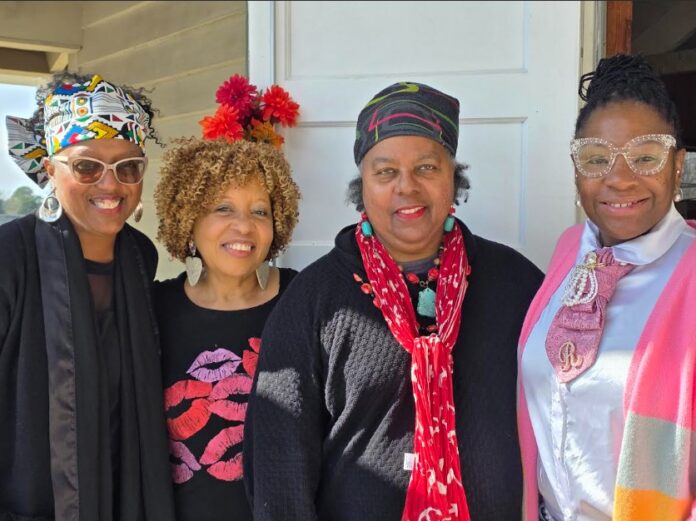
Audrey Davenport, Margaret Shirley-Myers, Sandra Davenport and Renetha Gipson gather at the J.P. Ballard Center on Valentine’s Day to collect community memories that will shape future Brushstrokes of Change murals at Jim Smith Park. (Carly McCurry / Now Georgia)
On Valentine’s Day, residents gathered at the Ballard Center in Cornelia for a Brushstrokes of Change workshop led by Audrey Davenport. From noon to 5 p.m., participants shared stories of loved ones, family traditions and neighborhood life, contributing memories that will shape a series of murals planned for the fence at Jim Smith Park.
The J.P. Ballard Center on Chattahoochee Street in Cornelia served as the gathering place for the Valentine’s Day Brushstrokes of Change memory-mapping workshop. (Carly McCurry / Now Georgia)
Brushstrokes of Change treats public art as a civic process. Rather than presenting a finished design, Davenport invites the community to build one together. She asks for details — a phrase from a poem, a game once played in the park, a church across the street, a stove that kept hands warm on a stark winter’s day. From those details, she extracts symbols. From those symbols, she builds layered imagery.
The Valentine’s gathering centered on love and remembrance. Davenport spoke of her sister, Tanya, who was born on Valentine’s Day and died at 15. She shared poetry and photographs as proof that memory survives through art. Participants wrote reflections and described the people who shaped them. The workshop turned those recollections into visual concepts that will appear on large panels.
Inside the J.P. Ballard Center in Cornelia, tables line the room for the Brushstrokes of Change memory-mapping workshop, where community stories will shape future murals at Jim Smith Park. (Carly McCurry / Now Georgia)
Tables lined the room with photographs, historical displays and writing materials. Organizers offered small snacks and gifts — lotions, hair barrettes, and candy — reinforcing the day’s theme of care. Conversation moved from personal stories to shared history as attendees identified recurring images tied to faith, education, recreation, and family life in Cornelia’s historically Black neighborhoods.
Gift bags, lotions, candy and small keepsakes lined a Valentine’s-themed table at the Brushstrokes of Change workshop at the JP Ballard Center in Cornelia. (Carly McCurry / Now Georgia)
The finished murals will line the fence at Jim Smith Park. Through participation, the project invites residents to make new history while preserving the old.
CLARKESVILLE, Ga. — The City of Clarkesville is moving to formalize and expand its pursuit of outside funding under newly hired grant writer Sara Burke, who outlined an aggressive but structured strategy to city leaders last week.
Appearing before the City Council for the first time, Burke walked members through her grant procurement process, early applications and a draft policy designed to professionalize how the city identifies, evaluates and manages funding opportunities.
“We don’t just need to throw things at her and see what sticks,” City Manager Keith Dickerson said during the work session. “I’d like to follow a process.”
Two major grant seasons
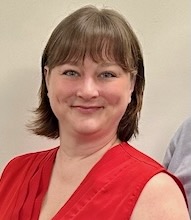
Sara Burke was hired by the City of Clarkesville at the beginning of the year to trengthen Clarkesville’s ability to compete for state, federal, and private funding. (Photo submitted)
Burke told council most grant opportunities fall into two primary cycles — spring and fall — with Clarkesville entering a key application window.
“We’re coming up on a nice round of applications,” Burke said.
She said the city has already received one grant award, submitted a second application and plans additional filings in the coming weeks, including a fire department grant due Feb. 20.
Burke said the summer months are typically used to prepare for larger, more competitive grants that require extensive coordination and narrative development.
“A lot of what I’m doing now is preparation,” she said, including setting up federal grant systems, drafting policies and meeting with department heads to assess needs.
Police, fire and facility priorities
Burke said early conversations with police and fire officials have helped identify priority projects, including body-worn cameras, license plate readers and improved public safety facilities.
Clarkesville has already secured a $20,000 grant from the Criminal Justice Coordinating Council to assist the police department with purchasing license plate readers. Burke said the city hopes to supplement that funding with departmental dollars to acquire two readers.
She also said the police department currently lacks a dedicated impound facility and evidence storage building, sometimes having to manage vehicles in different areas around the city.
“They don’t currently have anywhere to impound a vehicle,” Burke said, adding that officers would also benefit from being able to service their own vehicles in-house.
Burke said the city is exploring grant funding for a police building that could address those needs, as well as potential funding for improvements to the fire station.
The fire department has also applied for a fireworks safety grant with a $25,000 cap and a 10% local match requirement.
Vehicle replacement and infrastructure funding
In addition to traditional grants, Burke said the city has secured participation in a Georgia Municipal Association loan program that would allow Clarkesville to purchase one police vehicle annually for five years, two staff vehicles annually for two years, and a new fire truck.
The fire truck alone is expected to cost nearly $1 million, she said.
Burke is also researching the Georgia Transportation Infrastructure Bank, a low-interest grant and loan program that can support road, bridge and pedestrian projects. While Clarkesville may be too late to apply for major funding this cycle, she said the city can position itself for future opportunities.
Arts and community programming
Beyond public safety and infrastructure, Burke said she is also pursuing grants tied to tourism and quality-of-life initiatives.
She has applied for a Levitt Foundation Music Festival grant that could provide up to $5,000 with no local match requirement. The proposed event would be held at Pitts Park in partnership with the Soque River Watershed Association.
Burke is also exploring an arts grant in partnership with Splash Pottery Studio to create a rotating art installation downtown designed to increase foot traffic and encourage visitors to explore local businesses.
Formalizing the process
Central to Burke’s presentation was a proposed grant policy and internal tracking system intended to create accountability and consistency.
Burke said she has developed a multi-page grant research tracking form that evaluates funding sources, match requirements, eligibility and expected benefits before applications are submitted.
“If one of you throws something at me to see if it sticks, this will tell you whether or not it does,” she told council members.
She also presented a 12-month grant manager action plan outlining deliverables and reporting benchmarks, with the goal of providing regular updates to council.
The draft grant policy is currently under review and would establish clear procedures for application approval, budgeting, compliance and reporting.
For city leaders, the move signals a shift toward proactively seeking outside funding to support infrastructure, public safety and community projects — potentially reducing reliance on local tax dollars.
FILE - Colin Gray, the father of Apalachee High School shooting suspect Colt Gray, arrives to the courtroom at the Barrow County courthouse on Thursday, Dec. 18, 2025, in Winder,Ga. (AP Photo/Brynn Anderson, File)
WINDER, Ga. (AP) — Opening statements are expected Monday in the trial of a man whose teenage son is accused of killing two students and two teachers at a Georgia high school in September 2024.
The case is one of several around the country where prosecutors are trying to hold parents responsible after their children are accused in fatal shootings. Colin Gray faces 29 counts, including two counts of second-degree murder, two counts of involuntary manslaughter and numerous counts of second-degree cruelty to children related to the shooting at Apalachee High School in Winder.
The indictment says Gray gave his son, Colt, access to a gun and ammunition “after receiving sufficient warning that Colt Gray would harm and endanger the bodily safety of another.” Prosecutors argue that amounts to cruelty to children, and second-degree murder is defined in Georgia law as causing the death of a child by committing the crime of cruelty to children.
The trial is being held in Winder, in Barrow County, where the shooting happened. The defense asked for a change of venue because of pretrial publicity, and prosecutors agreed. The judge kept the trial in Winder but decided to bring in jurors from nearby Hall County to hear the case. Jurors were selected last week.
Investigators have said Colt Gray, who was 14 at the time, carefully planned the Sept. 4, 2024, shooting at the school northeast of Atlanta that is attended by 1,900 students.
With a semiautomatic rifle in his book bag, the barrel sticking out and wrapped in poster board, he boarded the school bus, investigators said. He left his second-period class and emerged from a bathroom with the gun and then shot people in a classroom and hallways, they said.
An investigator testified at a pretrial hearing that Colin Gray had given his son the gun as a giftthe Christmas before the shooting and bought a larger magazine so the weapon could hold more rounds.
Colin Gray knew his son was obsessed with school shooters, even having a shrine in his bedroom to Nikolas Cruz, the shooter in the 2018 massacre at Marjory Stoneman Douglas High School in Parkland, Florida, prosecutors have said. A Georgia Bureau of Investigation agent testified that the teen’s parents had discussed their son’s fascination with school shooters but decided that it was in a joking context and not a serious issue.
Colin Gray was also aware his son’s mental health had deteriorated and had sought help from a counseling service weeks before the shooting, an investigator testified.
“We have had a very difficult past couple of years and he needs help. Anger, anxiety, quick to be volatile. I don’t know what to do,” Colin Gray wrote about his son.
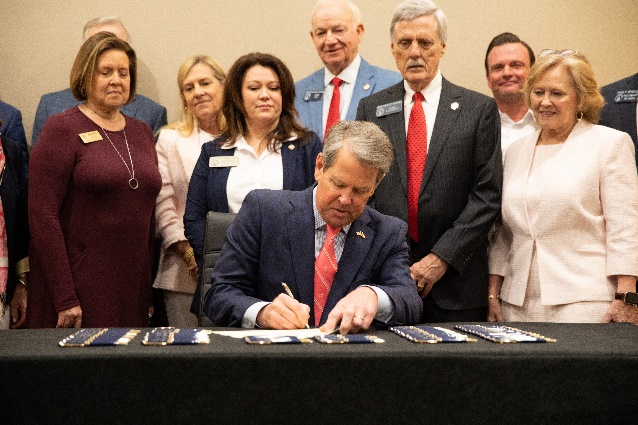
Gov. Kemp signs SB 211 into law, establishing the Georgia Council on Literacy in 2023, (photo submitted)
(Georgia Recorder) – A majority of Georgia’s third graders – 62% – are not reading proficiently, according to the Georgia Council on Literacy.
That’s a big deal because research suggests reading proficiency at this age is a major predictor of future success, with kids who cannot read well by third grade four times as likely to drop out of school before getting their diploma.
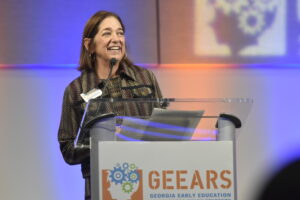
Third grade marks the transition point between learning to read and reading to learn, said Mindy Binderman, executive director of the Georgia Early Education Alliance for Ready Students, a nonprofit supporting early learning.
Mindy Binderman. (Ross Williams/Georgia Recorder)
“Third grade marks the time when we’ve stopped really doing a lot of reading instruction and instead we expect children to understand context and begin to read to learn materials,” she said. “If kids are not reading to learn by the end of third grade, they just fall further and further behind, and we know that if they don’t meet this third grade reading milestone, they’re less likely to be successful in school or to graduate high school and more likely to engage in risky behaviors as they get older.”
State lawmakers say 2026 is the year they will pass major legislation to assist teachers in helping the youngest Georgians become skilled readers. House Bill 1193, the Georgia Early Literacy Act of 2026, is House leaders’ attempt to do so.
The bill passed the House Education Committee unanimously last week. With bipartisan support and the backing of state leaders including House Speaker Jon Burns, a Newington Republican, the effort seems likely to continue to find support before the annual lawmaking session ends April 2 – though the details could change as the bill moves through the House and Senate.
Crucially, there is no price tag yet on the legislation, though the bill’s sponsor, Homer Republican and House Education Chairman Chris Erwin, said an objective estimate of the plan’s financial impact, called a fiscal note, is in the works.
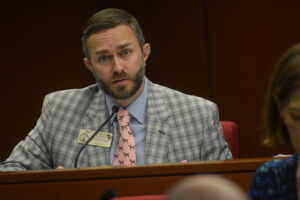
Gainesville Republican Rep. Matt Dubnik, chair of the House Appropriations Education Subcommittee, said members of both chambers and multiple state agencies are finalizing the projected costs.
“We’re working with them to get a final number that’s both cost effective and to a number
Rep. Matt Dubnik. (Ross Williams/Georgia Recorder)
that accurately reflects what we can put in place today,” Dubnik said. “This, unfortunately, is not going to be, flip of switch tomorrow and everything has stood up and is running the next day And so we continue to be diligent in what we’re doing, we should have have some better numbers and facts and figures for you in short order.”
The 41-page bill contains sweeping changes to the way schools test students’ reading and screen for issues like dyslexia. It emphasizes the science of reading, an evidence-based approach to literacy based on research in fields like education, neurology and linguistics.
Here’s a rundown of some of the biggest changes that could be coming for the teachers and little ones in your life.
Classroom literacy coaches
The plan calls for hiring literacy coaches for many schools in Georgia – every school that has students between kindergarten and third grade will get money to hire one literacy coach if they have more than 200 students. Schools with fewer students will receive half of that funding. Paying for the new coaches’ salaries and benefits is expected to make up the bulk of the bill’s cost.
Literacy coaches are educators with expertise in literacy and reading acquisition. They offer teachers support through things like lesson planning, co-teaching and mentoring.
During the 2024-2025 school year, the Georgia Department of Education hired full-time literacy coaches in 60 schools, focused on the lowest-performing 5% of schools and reported a 15% increase in student reading, with the strongest gains in kindergarten.
Erwin estimated that the state will be looking to hire more than a thousand classroom literacy coaches.
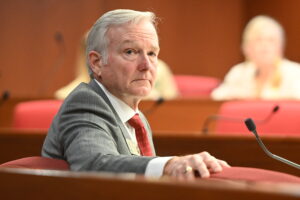
Chris Erwin. (Ross Williams/Georgia Recorder)
“It’s going to be difficult to find them all because we’ve already determined that we’re going to need somewhere close to 1,300 or over,” he said. “We currently have over 5,000 open certified positions in the state of Georgia today, and now we’re going to put 1,300 more in there. But we’re going to do a good job of focusing in on this effort, making it happen, getting those boots on the ground as soon as possible. Remember, there has to be the quality training and professional development of those individuals first, and then set them free in the classroom.”
Erwin said some current teachers may want to work as literacy coaches and characterized switching from a classroom teacher to a literacy coach as a lateral career move. He said teachers who do so will keep their spots on the salary schedule. Districts could choose to supplement literacy coaches’ salaries with local money if they want to attract more experienced candidates.
Under the bill, the Georgia Professional Standards Commission, the body that approves licensing standards for educators, will have until the end of 2026 to create a literacy coach endorsement, a new qualification showing expertise in the topic.
To qualify to become a literacy coach in Georgia, one must earn that endorsement and have at least five years of successful experience in the classroom or in literacy intervention as well as “a knowledge of scientifically based reading research, special expertise in quality reading instruction and intervention, dyslexia specific interventions and data analysis,” according to the bill.
School-based literacy coaches would be expected to spend at least 70% of the school day in classrooms.
Regional coaches
Some literacy coaches would not be assigned to a single school. Each of Georgia’s 16 Regional Educational Service Agencies will assign regional literacy coaches to local school systems under the bill, and at least one regional leadership literacy coach for each region will be responsible for interfacing with system and school leaders.
The leadership coaches’ duties will include training principals and superintendents in literacy education and joining them in classroom observations.
“They take the principal and they go in there and they have the principal work with the teacher and with the child, and they’re working with the principal to say ‘this is what you need to be telling the teacher,’” Erwin said. “We’ve seen this work in other states, that’s been very successful. When the leader knows what’s going on in their classroom and understands it, they can better direct the goals.”
The qualifications for a regional leadership literacy coach will include the same as a classroom literacy coach as well as additional leadership experience such as time working as a principal or superintendent.
Caitlin Dooley, chair of Georgia State University’s Department of Early Childhood and Elementary Education, said she’ll be waiting to see how the details shake out as the bill moves through the process, but she is excited to see the emphasis on literacy and literacy coaches in elementary schools.
“We need the literacy coaches first and foremost,” she said. “And the literacy coaches need to work with leadership and leadership needs to understand what their role is in ensuring that students get high quality literacy instruction.”
Dooley said it’s good that lawmakers are paying attention to district and school leadership in addition to the classroom level, but she questioned whether the plan goes far enough.
“The use of 16 regional leadership literacy coaches is a great idea, but they won’t have capacity to meet with every principal (we have 1,852 elementary schools, so that would be a load of over 100 per coach!),” she said in an email. “The school-based coach will have to meet with the principal and the school leadership team to help coordinate instructional improvements, the implementation of (Multi-Tiered System of Support), special education efforts and individual student interventions.“
Dooley said the Georgia Department of Education found that about two-thirds of poor literacy outcomes correlate with poverty. She said working to mitigate the effects of poverty on children, such as by ensuring they are fed and receive proper medical care, would go a long way to ensuring they can read and write properly.
Kindergarten
The bill also spells out changes to kindergarten in the state. The legislation encourages families to have their children attend school or begin home study by age 5, but the bill does not change the current age of mandatory attendance from age 6.
Some parents choose to delay their children from starting kindergarten at 5, especially if the timing of their birthday would make them significantly younger than many of their classmates, because they believe an extra year will help them mature and be more ready to learn.
At least one Georgia school district has reportedly been enforcing a policy requiring 6-year-olds to go straight to first grade.
The bill aims to prevent that practice by stating that a student must attend kindergarten before starting first grade unless he or she has been tested and found ready to perform at a first-grade level. Peachtree Corners Republican Rep. Scott Hilton has also introduced his own bill with the goal of ensuring that parents can decide whether to enroll their children into kindergarten at age 5 or 6.
The literacy legislation would also establish interventions for kindergarteners at risk of not meeting their reading goals.
Under the plan, if a kindergartener is identified as significantly at risk of not reading at grade level, the school will develop a reading intervention plan and parents will be notified that their child might not be promoted to first grade.
If the child does not improve, the school’s principal will make the decision as to whether the child can advance to first grade. Parents can appeal the decision.
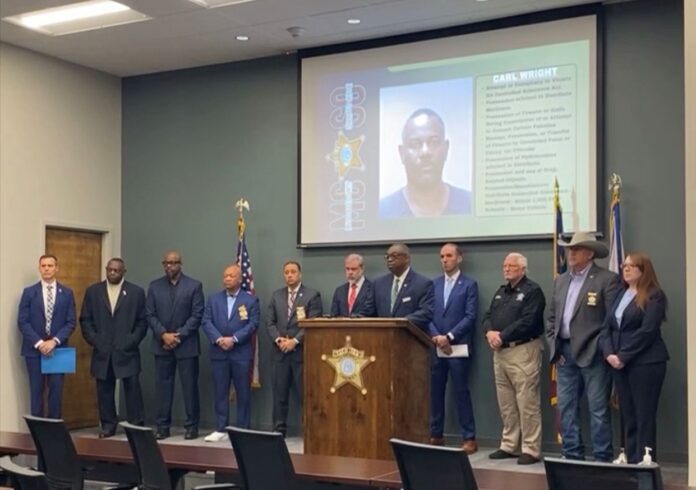
Sheriff announces results of Operation No Compromise (Muscogee County Sheriff's Office)
On February 12, 2026, the Muscogee County Sheriff’s Office Collaborative Intelligence Group conducted Operation No Compromise. This investigation was into a local trafficking organization operating in Muscogee County, Georgia, and Russell County, Alabama. During the investigation, 16 search warrants were executed in Muscogee County, 1 in Harris County, and 1 in Russell County.
The Muscogee County Sheriff’s Office Collaborative Intelligence Unit (CIG) worked in conjunction with the Muscogee County Sheriff’s Office Special Response Team (SRT), Fulton County Sheriff’s Office, Cobb County Sheriff’s Office, Harris County Sheriff’s Office, Russell County Sheriff’s Office, Lee County Sheriff’s Office, Georgia Bureau of Investigation West Gang Task Force, Drug Enforcement Agency (DEA), and the Federal Bureau of Investigation (FBI), to conduct Operation No Compromise.
The executed 18 search warrants led to the seizure of the following:
-Cocaine – 2.2lbs – Street Value: $97,070.00
-Fentanyl – 46g – Street Value: $13,800.00
-Marijuana – 2.5lbs – Street Value: $11,285.00
-THC – 105g – Street Value: $2,100.00
-Hydrocodone Pills – 101 pills – Street Value: $2,020 .00
-Assorted Other Pills/Drugs
The total value of the drugs seized was $126,321.00. The MCSO also seized $101,035.12 in U.S. currency and 14 vehicles. The following individuals were arrested and charged with the following:
Jimmie Fluellen
-Trafficking Fentanyl
-Trafficking Cocaine
-Sale of Fentanyl
-Sale of Cocaine
-Attempt or Conspiracy to Violate GA Controlled Substance Act – Cocaine
-Attempt or Conspiracy to Violate GA Controlled Substance Act – Fentanyl
-Use of Communication Facility in Commission of a Felony Involving Controlled Substance
-2 Cts – Possession of Firearm by Convicted Felon
VGCSA SCH II – Hydrocodone
-Possession of THC – SCH I w/intent to Distribute
-Possession of Drug-Related Object
-Possession of Marijuana
Deaunte Nobles (Validated Gang Member)
-Attempt or Conspiracy to Violate GA Control Sub – Fentanyl
-Use of a communication Facility in the commission of a Felony Involving Controlled Substance
-Attempt or Conspiracy to Violate GA Controlled Substance – Cocaine
-Possession of a Schedule II Controlled Substance – Adderall
-Possession of a Schedule Controlled Substance – Ecstasy
-Possession of a Schedule IV Controlled Substance – Xanax
-Possession of a Schedule I Controlled Substance – THC Wax
Randolph Lawrence
-Use of a Communication Facility in Commission of a Felony Involving Controlled Substance
-Attempt or Conspiracy to Violate GA Controlled Sub – Cocaine
-Possession of Cocaine
-Possession of Marijuana, Less than 1oz
-3 cts – Receipt, Possession or Transfer of Firearm by Convicted Felon or Felony 1st Offender
Antwain Jordon
-Sale of a Schedule I – Fentanyl
-Attempt or Conspiracy to Violate GA Controlled Substance Act – Fentanyl
-Use of Communication Facility in Commission of a Felony Involving Controlled Substance
-Attempt or conspiracy to Violate GA Controlled Substance – Cocaine
-Sale of Cocaine
Joseph Knight
-Conspiracy to Commit a Felony – Marijuana
-Use of Communication Facility in Commission of a Felony Involving Controlled Substance
-2 cts – Theft by Receiving Stolen Property (Firearm)4cts – Receipt, –Possession or Transfer of Firearm by Convicted Felon or Felony 1st Offender
-Possession w/Intent to Distribute Marijuana
-Possession of Cocaine
Forger Baker
-Trafficking of Controlled Substance – Cocaine
-Possession of Firearm or Knife During Commission of or Attempt to Commit Certain Felonies
-Tampering with Evidence
-Possession and use of Drug-Related objects
-Possession of Marijuana, less than 1 oz
-Receipt, Possession, or Transfer of Firearm by Convicted Felon or Felony First Offender
Carl Wright
-Attempt or Conspiracy to Violate GA Controlled Substance Act
-Possession w/Intent to Distribute Marijuana
-Possession of Firearm or Knife During Commission of or Attempt to Commit Certain Felonies
-Receipt, Possession, or Transfer of Firearm by Convicted Felon or Felony 1st Offender
-Possession of Hydrocodone w/Intent to Distribute
-Possession and use of Drug-Related Objects
-Possession/Manufacture/ Distribute Controlled Substance – Marijuana – Within 1,000 Ft of Schools – Motor Vehicle
Maurice Huling
-Purchase, Possession, Manufacture, Distribution, Sale, or Possession w/Intent to Distribute Marijuana
-Possession and Use of Drug-Related Objects
-Attempt or Conspiracy to Violate Controlled Substance Act
Mario Brown
-Use of Communication Facility in Commission of a Felony Involving Controlled Substance
-Attempt or Conspiracy to Violate GA Controlled Substance Act
Darnell Tidwell
-Conspiracy to Commit a Felony – Marijuana
-Use of Communication Facility in Commission of a Felony Involving Controlled Substance
Reginald Brown
-2 Counts – Possession of Firearm by Convicted Felon
Mia Brannum
-Possession of a Schedule I Controlled Substance – THC
This remains an ongoing investigation. Additional arrests and charges are expected.
Eric Naylor arrested for child sex crimes (Harris County Sheriff's Office)
On Thursday, February 12, 2026, the Harris County Criminal Investigations Division, with assistance from the LaGrange Police Department, arrested Eric Naylor following an investigation.
Naylor was booked into the Harris County Jail on charges of:
– Aggravated child molestation
– Sexual battery
– Aggravated sodomy
– Incest
– Sodomy
– Child molestation.
Naylor is being held without bond. The investigation remains ongoing.
FILE - Actor Robert Duvall arrives for the screening of the film "We Own the Night," at the 60th International film festival in Cannes, southern France, on May 25, 2007. (AP Photo/Lionel Cironneau, file)
LOS ANGELES (AP) — Robert Duvall, the Oscar-winning actor of matchless versatility and dedication whose classic roles included the intrepid consigliere of the first two “Godfather” movies and the over-the-hill country music singer in “Tender Mercies,” has died at age 95.
Duvall died “peacefully” at his home Sunday in Middleburg, Virginia, according to an announcement from his publicist and from a statement posted on his Facebook page by his wife, Luciana Duvall.
“To the world, he was an Academy Award-winning actor, a director, a storyteller. To me, he was simply everything,” Luciana Duvall wrote. “His passion for his craft was matched only by his deep love for characters, a great meal, and holding court. For each of his many roles, Bob gave everything to his characters and to the truth of the human spirit they represented.”
The bald, wiry Duvall didn’t have leading man looks, but few “character actors” enjoyed such a long, rewarding and unpredictable career, in leading and supporting roles, from an itinerant preacher to Josef Stalin. Beginning with his 1962 film debut as Boo Radley, the reclusive neighbor in “To Kill a Mockingbird,” Duvall created a gallery of unforgettable portrayals. They earned him seven Academy Award nominations and the best actor prize for “Tender Mercies,” which came out in 1983. He also won four Golden Globes, including one for playing the philosophical cattle-drive boss in the 1989 miniseries “Lonesome Dove,” a role he often cited as his favorite.
In 2005, Duvall was awarded a National Medal of Arts.
He had been acting for some 20 years when “The Godfather,” released in 1972, established him as one of the most in-demand performers of Hollywood. He had made a previous film, “The Rain People,” with Francis Coppola, and the director chose him to play Tom Hagen in the mafia epic that featured Al Pacino and Marlon Brando among others. Duvall was a master of subtlety as an Irishman among Italians, rarely at the center of a scene, but often listening and advising in the background, an irreplaceable thread through the saga of the Corleone crime family.
“Stars and Italians alike depend on his efficiency, his tidying up around their grand gestures, his being the perfect shortstop on a team of personality sluggers,” wrote the critic David Thomson. “Was there ever a role better designed for its actor than that of Tom Hagen in both parts of ‘The Godfather?’”
In another Coppola film, “Apocalypse Now,” Duvall was wildly out front, the embodiment of deranged masculinity as Lieutenant Colonel Bill Kilgore, who with equal vigor enjoyed surfing and bombing raids on the Viet Cong. Duvall required few takes for one of the most famous passages in movie history, barked out on the battlefield by a bare-chested, cavalry-hatted Kilgore: “I love the smell of napalm in the morning. You know, one time we had a hill bombed, for 12 hours. When it was all over, I walked up. We didn’t find one of ‘em, not one stinkin’ dink body.
“The smell, you know that gasoline smell, the whole hill. Smelled like — victory.”
Coppola once commented about Duvall: “Actors click into character at different times — the first week, third week. Bobby’s hot after one or two takes.”
Honored, but still hungry
He was Oscar-nominated as supporting actor for “The Godfather” and “Apocalypse Now,” but a dispute over money led him to turn down the third Godfather epic, a loss deeply felt by critics, fans and “Godfather” colleagues. Duvall would complain publicly about being offered less than his co-stars.
Fellow actors marveled at Duvall’s studious research and planning, and his coiled energy. Michael Caine, who co-starred with him in the 2003 “Secondhand Lions,” once told The Associated Press: “Before a big scene, Bobby just sits there, absolutely quiet; you know when not to talk to him.” Anyone who disturbed him would suffer the well-known Duvall temper, famously on display during the filming of the John Wayne Western “True Grit,” when Duvall seethed at director Henry Hathaway’s advice to “tense up” before a scene.
Duvall was awarded an Oscar in 1984 for his leading role as the troubled singer and songwriter Mac Sledge in “Tender Mercies,” a prize he accepted while clad in a cowboy tuxedo with Western tie. In 1998, he was nominated for best actor in “The Apostle,” a drama about a wayward Southern evangelist which he wrote, directed, starred in, produced and largely financed. With customary thoroughness, he visited dozens of country churches and spent 12 years writing the script and trying to get it made.
Among other notable roles: the outlaw gang leader who gets ambushed by John Wayne in “True Grit”; Jesse James in “The Great Northfield Minnesota Raid”; the pious and beleaguered Frank Burns in “M-A-S-H”; the TV hatchet man in “Network”; Dr. Watson in “The Seven-Per-Cent Solution”; and the sadistic father in “The Great Santini.”
“When I was doing ‘Colors’ in 1988 with Sean Penn, someone asked me how I do it all these years, keep it fresh. Well, if you don’t overwork, have some hobbies, you can do it and stay hungry even if you’re not really hungry,” Duvall told The Associated Press in 1990.
In his mid-80s, he received a supporting Oscar nomination as the title character of the 2014 release “The Judge,” in which he is accused of causing a death in a hit-and-run accident. More recent films included “Widows” and “12 Mighty Orphans.”
Ungifted in school, gifted on stage
Robert Selden Duvall grew up in the Navy towns of Annapolis and the San Diego area, where he was born in 1931. He spent time in other cities as his father, who rose to be an admiral, was assigned to various duties.
The boy’s experience helped in his adult profession as he learned the nuances of regional speech and observed the psyche of military men, which he would portray in several films.
Duvall reportedly used his Navy officer father as the basis for his portrayal of the explosive militarist in “The Great Santini,” based on the Pat Conroy novel. He commented in 2003: “My dad was a gentleman but a seether, a stern, blustery guy, and away a lot of the time.” Bobby took after his mother, an amateur actress, in playing a guitar and performing. He was a wrestler like his father and enjoyed besting kids older than himself.
He lacked the concentration for schoolwork and nearly flunked out of Principia College in Elsah, Illinois. His despairing parents decided he needed something to keep him in college so he wouldn’t be drafted for the Korean War. “They recommended acting as an expedient thing to get through,” he recalled. “I’m glad they did.” He flourished in drama classes.
“Way back when I was in college,” Duvall told the AP in 1990, “there was a wonderful man named Frank Parker, who had been a dancer in World War I. We did a full-length mime play and I played a Harlequin clown. I really liked that.
“Then, I played an older guy in ‘All My Sons,’ and at one point I had this emotional moment, where this emotion was pouring out. Parker said at that moment he didn’t think acting can be carried any further than that. And this guy was a very critical guy. So I thought, at that moment at least, this is what I wanted to do.”
After two years in the Army, he used the G.I. Bill to finance his studies at the Neighborhood Playhouse in New York, hanging out with such other young hopefuls as Robert Morse, Gene Hackman and Dustin Hoffman. After a one-night performance in “A View From the Bridge,” Duvall began getting offers for work in TV series, among them “The Naked City” and “The Defenders.”
Between his high-paying jobs in major productions, Duvall devoted himself to directing personal projects: a documentary about a prairie family, “We’re Not the Jet Set”; a film about gypsies, “Angelo, My Love”; and “Assassination Tango,” in which he also starred.
Duvall had been a tango dancer since seeing the musical “Tango Argentina” in the 1980s and visited in Argentina dozens of times to study the dance and the culture. The result was the 2003 release about a hit man with a passion for tango.
His co-star was Luciana Pedraza, 42 years his junior, whom he married in 2005. Duvall’s three previous marriages — to Barbara Benjamin, Gail Youngs and Sharon Brophy — ended in divorce.
Baldwin City Council (Patrick Fargason/Now Habersham)
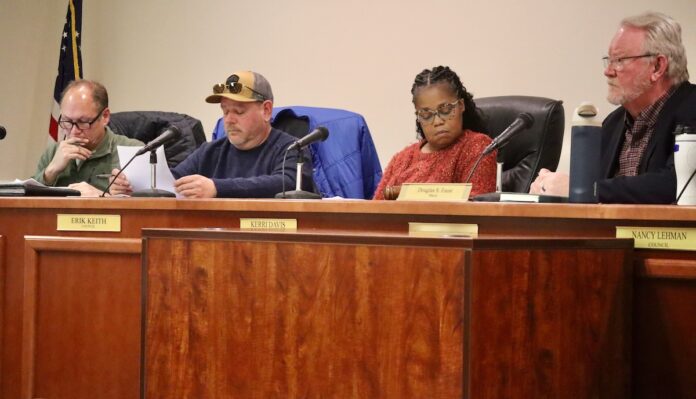
BALDWIN, Ga. — The Baldwin City Council will take up a proposed agreement for license plate reader cameras Tuesday night, while the closely watched Cook Construction annexation will not be on the agenda.
According to the Feb. 17 meeting agenda, council members are scheduled to consider and vote on a memorandum of understanding (MOU) for the Baldwin Police Department’s proposed use of FLOCK Safety cameras.
Council members previously voted to table the measure after determining that a formal MOU was not yet in place outlining the agreement, including terms under which the company would pay for all five cameras proposed for installation within the city.
Tuesday’s vote would determine whether the city formally enters into that agreement.
Cook annexation set for March
Notably absent from Tuesday’s agenda is the proposed Cook Construction annexation and rezoning along the Ga. 365 corridor, which has drawn significant public attention in recent weeks.
City officials have announced that a public hearing on the annexation application will be held at 6 p.m. March 3 at the Baldwin Municipal Courtroom. Second readings of the annexation and zoning ordinances are currently scheduled for March 17.
The Feb. 17 meeting will also include a report from Fire Chief Ross Jackson and consideration of a consulting services agreement with CKH Consulting. Council members are also expected to authorize requests for proposals for legal services, prosecutor and municipal judge positions.
The meeting begins at 6 p.m. at the Baldwin Municipal Courtroom, 155 Willingham Ave.
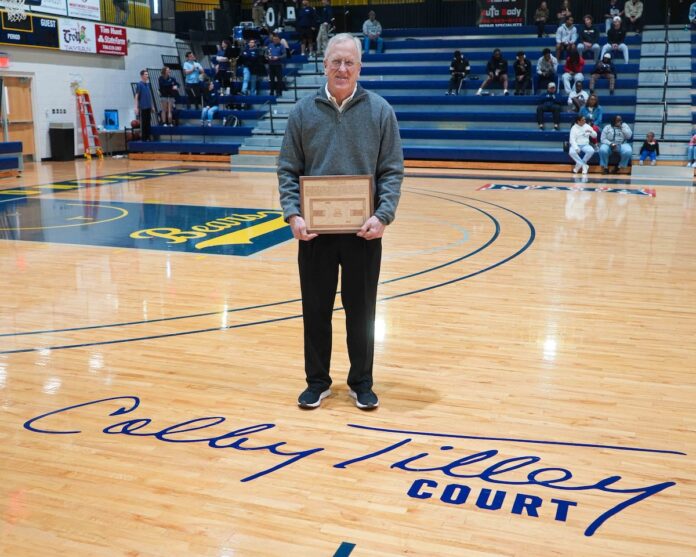
Truett McConnell University dedicated its basketball court for legendary women's basketball coach Colby Tilley. (TMU Athletics)
CLEVELAND, Ga. — Truett McConnell University Athletics dedicated Colby Tilley Court inside the Benjamin F. Brady Arena on Saturday, honoring one of the most successful coaches in program history.
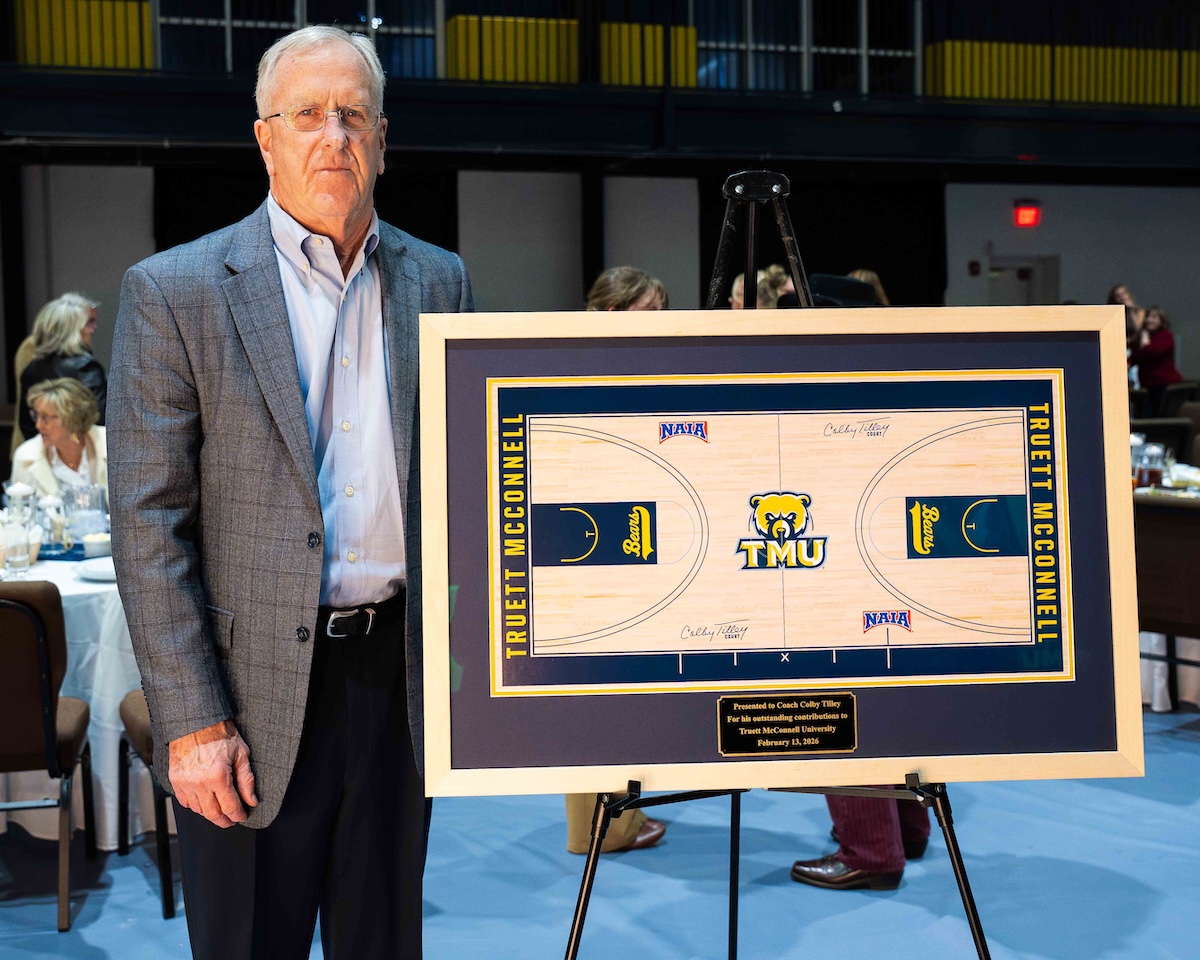
The weekend celebration began Friday with a dinner attended by former players, colleagues and members of the university community. The dedication continued Saturday with an on-court ceremony held between the women’s and men’s basketball games. Tilley was joined by family, friends, former players and current members of the program for the unveiling.
Tilley launched his coaching career at Truett McConnell, leading the women’s basketball program from 1976 to 1985. He compiled a 234-46 record, an .836 winning percentage. His teams won five consecutive Georgia state championships from 1978 through 1982 and made four national tournament appearances.
The 1979-80 team posted a 36-2 record and won the NJCAA National Championship, the only national title in the university’s athletics history.
The weekend celebration began Friday with a dinner attended by former players, colleagues and members of the university community. (TMU Athletics)
Tilley was named Region 17 Coach of the Year six times and Atlanta Tip-Off Club Junior College Coach of the Year in his final season in Cleveland.
After leaving Truett McConnell, Tilley founded the women’s basketball program at Auburn University at Montgomery, where he went 218-74 in nine seasons. He later coached 17 seasons at Kennesaw State University, finishing as the program’s all-time winningest coach with 290 victories and leading the Owls through their transition from NCAA Division II to Division I.
Tilley is an inaugural member of the Truett McConnell Athletics Hall of Fame and has also been inducted into the Auburn Montgomery Hall of Fame, the Kennesaw State University Hall of Fame and the Northeast Georgia Sports Hall of Fame.
University officials said the dedication honors not only Tilley’s championship success but also his leadership and commitment to developing student-athletes. Proceeds from the court-naming campaign will go toward the TMU women’s basketball scholarship endowment.
A two-vehicle crash that occurred at approximately 4:14 p.m. Saturday, Feb. 14, has claimed the life of a Columbus, Ga., woman. Marie B. Thompson, 70, was critically injured when the 2019 Nissan Rogue she was driving collided head-on with the 2017 Dodge Journey driven by Kevin A. Parham, 40, of Prattville. Thompson was transported to Piedmont Columbus Regional – Midtown in Columbus, Ga., where she succumbed to injuries and was pronounced deceased.
Parham was also injured and transported to Piedmont Columbus Regional – Midtown for medical treatment.
The crash occurred on U.S. 80 near the 200-mile marker, approximately 14 miles west of Phenix City, in Russell County. Nothing further is available as Troopers with the Alabama Law Enforcement Agency’s (ALEA) Highway Patrol Division continue to investigate.
HABERSHAM COUNTY, Ga. — A 78-year-old Habersham County man was injured Friday after his Jeep ran off GA 197 and plunged down an embankment, according to the Georgia State Patrol.
Troopers identified the driver as Charles E. Skovgaard. He received a warning for failure to maintain lane following the crash.
The wreck happened Feb. 13 near the Long Branch area. Investigators said Skovgaard was traveling southbound in a Jeep Grand Cherokee when he entered a curve and failed to maintain his lane. The SUV veered off the roadway, traveled down a steep embankment and struck a tree head-on.
The impact caused the Jeep to roll onto its left side before coming to rest against another tree.
Authorities said Skovgaard suffered apparent minor injuries in the crash.