The Helen Police Department is mourning the heartbreaking loss of one of its own—K-9 Officer Henk. Henk passed away Monday morning after suffering heatstroke during a training session with his handler, Sergeant Ray Rutledge, on Saturday afternoon.
“We are devastated,” said Police Chief Aletha Barrett. “Henk was more than a K-9 officer—he was family. His service, loyalty, and heart will never be forgotten.”
K-9 Henk began his official duty with the Helen Police Department on April 18, 2024, quickly becoming a vital team member and a trusted community protector.
On Monday, local law enforcement escorted Henk’s body to Barrett Funeral Home in Cleveland from Gainesville.
“Our hearts are full from the outpouring of support,” said a spokesperson for the Helen Police Department. “The bond of law enforcement is strong—both two- and four-legged. K9 Henk was not only a trusted partner in the field but a cherished member of our law enforcement family.”
To honor his service, the Helen Police Department invites the public and fellow law enforcement officers to a memorial ceremony on Thursday, June 26, at Helen First Baptist Church. Doors open at 1:15 p.m., with the service beginning at 1:30 p.m. Following the ceremony, a procession will accompany K-9 Henk to the Helen Police Department, where he will be laid to rest with full honors.
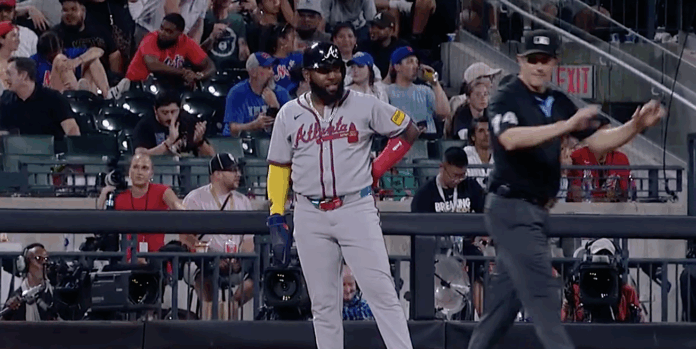
NEW YORK (AP) — Matt Olson had three RBIs, including a tiebreaking single that capped a five-run sixth inning, and the Atlanta Braves rallied past the reeling New York Mets 7-4 on Tuesday night.
Spencer Strider (3-5) overcame one rugged inning to win his third straight start, and the Braves took advantage of nine walks by six Mets pitchers. Atlanta, which has won nine of 12 overall, improved to 5-0 against its NL East rival this year — all in the past eight days.
After getting an encouraging performance from starter Frankie Montas in his Mets debut, New York blew a 3-0 lead and lost for the 10th time in 11 games.
Sidelined since spring training by a right lat strain, Montas struck out five in five shutout innings on a 97-degree night at Citi Field. But reliever Huascar Brazobán walked the first three batters in the sixth, and Atlanta pounced.
Ozzie Albies delivered a sacrifice fly, and left-hander José Castillo (0-2) entered before pinch-hitter Eli White drove in a run with an infield single on a low line drive that glanced off the glove of diving third baseman Brett Baty.
Michael Harris II was hit by a pitch, and No. 9 batter Nick Allen tied it 3-all with his third consecutive single after beginning the night with a .556 OPS.
One out later, Olson gave the Braves a 5-3 lead with a two-run single off Reed Garrett.
Olson and Austin Riley each added an RBI double in the eighth. Raisel Iglesias got two outs in the ninth for his ninth save in 13 chances.
Strider lost his first five starts this season after returning from right elbow surgery. But he beat the Mets for the second time in six days, striking out eight in five innings of two-hit ball.
The right-hander walked three in a 33-pitch fourth as the Mets scored three times. But after Baty’s two-run single, they didn’t get another hit until Jeff McNeil’s one-out double in the ninth.
Key moments
After giving up an RBI double to Ronny Mauricio in the ninth, Iglesias retired Francisco Lindor with two on to end it. … Harris got drilled in the right elbow by a 95 mph sinker and was removed in the bottom of the sixth. He is day to day.
Key stat
The game-time temperature was the hottest for a Mets home game since it was 98 degrees against Milwaukee at Shea Stadium in August 2001.
Up next
Mets RHP Clay Holmes (7-4, 3.04 ERA) pitches Wednesday night against 20-year-old righty Didier Fuentes (0-1, 7.20), who makes his second major league start for Atlanta.
A Gainesville resident is celebrating a life-changing win after hitting a $2 million prize in the June 20 Mega Millions drawing.
The winning ticket, purchased through the Georgia Lottery mobile app, matched all five white ball numbers. Thanks to the 2X Megaplier feature included with the ticket, the standard $1 million prize was doubled, making the lucky player an instant millionaire, twice over.
The next Mega Millions drawing is set for Tuesday, June 24, with an estimated jackpot of $326 million.
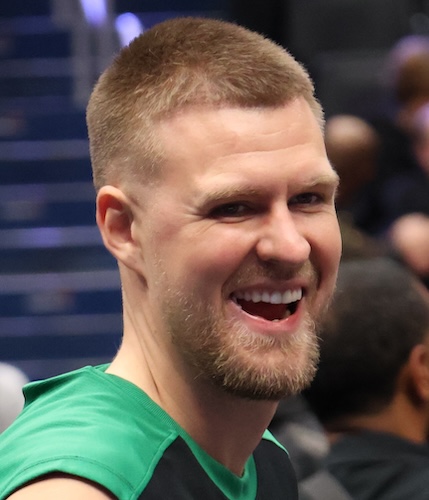
Kristaps Porzingis is being traded by the Boston Celtics to the Atlanta Hawks, and part of what will be a three-team deal gives the Brooklyn Nets another selection in Wednesday’s first round of the NBA draft, according to a person with knowledge of the agreement.
Porzingis is going to the Hawks, while Georges Niang and a second-round pick will be acquired by Boston, and Brooklyn will wind up with Terance Mann and the No. 22 pick that is held by Atlanta in Wednesday’s draft, said the person who spoke to The Associated Press on condition of anonymity because the trade isn’t expected to be finalized until the start of the new league year on July 6.
ESPN first reported the trade, which was later confirmed by The Atlanta Journal-Constitution.
The move is the second major one by Boston of the week, after the team agreed to trade Jrue Holiday to Portland. The combination of those moves still has Boston past the tax line for next season but out from under the second apron, which gives the Celtics — who will be without Jayson Tatum for, at minimum, a significant portion of next season because of an Achilles tear — more flexibility moving forward.
Getting under the second apron is important; that threshold, once exceeded, limits ways that teams can trade for or sign players.
Porzingis — who, like Holiday, was part of the team that helped Boston win the 2024 NBA title — will make $30.7 million next season on an expiring contract. He was slowed by illness at times in the second half of this past season, as well as in Boston’s playoff run this spring. But he intends to play for Latvia at EuroBasket this summer, a good sign.
“Thanks for all the support and questions about my health,” Porzingis posted on social media this week. “I’ve been feeling excellent all offseason and look forward to a healthy and strong European championship tournament.”
Porzingis averaged 19.5 points, 6.8 rebounds and 2.1 assists in 42 games this season.
The Nets now technically have five picks in Wednesday’s first round. They own the Nos. 8, 19, 26 and 27 selections already, and the Hawks will essentially be picking for the Nets now at No. 22, as well.
WASHINGTON (States Newsroom) — Republicans and Democrats on a U.S. House Education and Workforce subcommittee agreed at a Tuesday hearing that child care affordability was a problem, but proposed different solutions.
While Republicans touted a longstanding block grant and called for choice and flexibility in the child care system, Democrats pushed for more federal investments, including legislative efforts that would cap the cost of child care.
For just one child, families spend between 8.9% and 16% of the median family income on full-day care, according to Department of Labor data from 2022.
“Child care is essential to helping working parents thrive and our local economies grow,” Rep. Kevin Kiley, chair of the U.S. House Subcommittee on Early Childhood, Elementary and Secondary Education, said at the panel’s hearing.
“At the same time, child care can be exceedingly expensive — the cost is only climbing,” said the California Republican, whose panel is part of the House Committee on Education and Workforce.
Kiley said the Child Care and Development Block Grant “exists to help working families access affordable child care, giving them the freedom to remain in the workforce and increase their economic opportunity, one solution to the problem of child care affordability and access.”
The grant, funded at roughly $8.75 billion in fiscal 2024, goes to states, tribes and territories to help low-income working families access child care.
Kiley noted that “choice” is a program pillar, “giving parents the freedom to make both lifestyle and economic decisions that best meet their individual family’s needs.”
Caitlin Codella Low, managing director of human capital at the Bipartisan Policy Center, a Washington, D.C., think tank, noted that annually, “the average cost of child care exceeds $10,000 per child, and it’s more than public college tuition in most states, more than the cost of rent in all 50.”
“Employers are paying the price — child care challenges lead to higher absenteeism, lower retention and difficulty recruiting talent,” she added.
Local programs
Todd Barton, the mayor of Crawfordsville, Indiana, highlighted his community’s efforts in addressing a shortage of affordable, high-quality child care.
Barton said that shortage has “deeply affected” the community’s workforce and economic potential.
Some of those efforts include the formation of a child care task force that evolved into an early childhood coalition, a full-day summer program for school-aged children and an early learning center that Barton said has already increased the community’s child care capacity by more than 30%.
Barton said that “to sustain this scale of work, we need strong federal support,” noting that “programs like the Child Care (and) Development Block Grant and Employer-Provided Child Care Credit are essential tools that we need at our disposal.”
Dems blast cuts
Rep. Suzanne Bonamici, ranking member of the subcommittee, said that “without bold and sustained federal investment, child care costs will continue to rise and the workforce that provides the care will continue to struggle.”
The Oregon Democrat blasted the proposed cuts to Medicaid and the Supplemental Nutrition Assistance Program, or SNAP, as part of congressional Republicans’ reconciliation package.
Bonamici described Medicaid and SNAP as “programs that support children, families, child care centers and the child care workforce.”
She also highlighted the Child Care for Working Families Act, which Virginia’s Rep. Bobby Scott, ranking member of the full committee, and Sen. Patty Murray of Washington state, reintroduced in their respective chambers during the previous session of Congress.
Bonamici said the bill “would cap the cost of child care at 7% of income, making it affordable for all parents and also provide historic investments in the child care workforce, including higher pay, better benefits and improved training opportunities.”
The administration reportedly closed down at least five Office of Head Start regional offices earlier this year.
Ruth Friedman, a senior fellow at The Century Foundation, a progressive think tank, said “we are already seeing very bad impacts from those closings.”
She added that “local programs are not getting the support and the answers they need, grants are coming slowly to them, which is very, very problematic in Head Start, because they really work month-to-month with their budget and lost an enormous amount of expertise on the local needs those programs serve.”
Rep. Summer Lee also called for more federal investment in child care, saying “existing programs are, quite frankly, not cutting it.”
“We know that for every dollar we invest in early childhood education, we save substantially more on services that children won’t need as they grow up,” the Pennsylvania Democrat said.
She called for passage of the Scott-Murray bill, as well as a measure that would guarantee universal child care access.
“This is why we need to pass the Democrats’ legislation like the Child Care for Every Community Act and Child Care for Working Families Act, which I’m looking forward to introducing with Ranking Member Scott in the near future.”
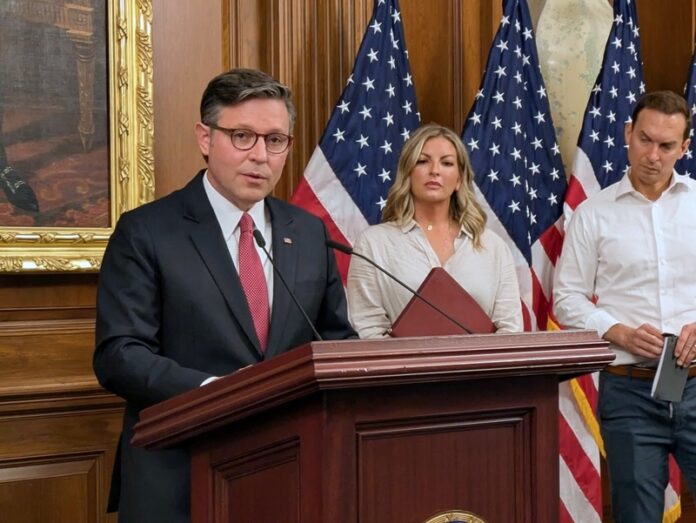
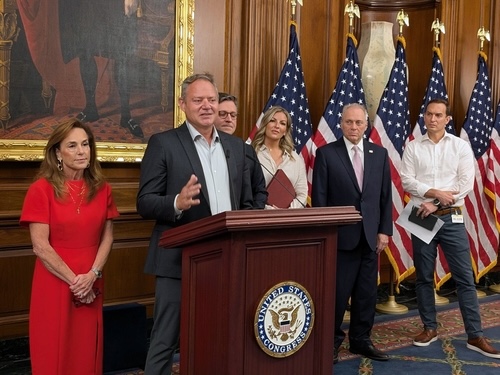
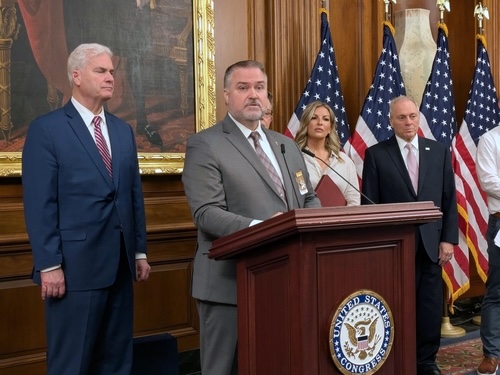
House Speaker Mike Johnson of Louisiana speaks to reporters about the Republican budget reconciliation package at a weekly press conference on Tuesday, June 24, 2025, at the U.S. Capitol. (Ashley Murray/States Newsroom)
WASHINGTON (States Newsroom) — U.S. Senate Republicans were scrambling Tuesday to restructure several proposals in the “big, beautiful bill” that don’t meet their chamber’s strict rules for passing a reconciliation package, while GOP lawmakers on the other side of the Capitol warned those changes may doom its passage in the House.
Senate Majority Leader John Thune, R-S.D., said he and several others are working on a way to bolster rural hospitals, which could experience financial strain as a result of the various changes to Medicaid and other health care programs in the package.
“We are working on a solution for rural hospitals and that’s something that’s been in the works now for several days in response to a number of concerns that our colleagues have mentioned in ensuring that the impact on rural hospitals be lessened, be mitigated,” Thune said. “And I think we’re making good headway on that solution.”
Thune said GOP lawmakers shouldn’t let the “perfect be the enemy of the good,” though he predicted there “could be” two or three Republicans who vote against the package.
“We’ve got a lot of very independent-thinking senators who have reasons and things that they’d like to have in this bill that, in their view, would make it stronger,” Thune said. “But at the end of the day this is a process whereby not everybody is going to get what they want. And we have to get to 51 in the United States Senate.”
More objections to Medicaid cuts
Missouri Sen. Josh Hawley, who has been vocal about Medicaid changes and rural hospitals, said he had “no details whatsoever” about the rural hospital fund or how it would work if it’s added to the bill.
But he said he’s not going to support a bill that takes away working people’s health care.
“We’ve got 1.3 million people on Medicaid in Missouri, hundreds of thousands of kids. That’s 21% of my population. Most of these people are working people. They’re on Medicaid, not because they’re sitting around at home; they’re on Medicaid because they don’t have a job that gives them health care and they cannot afford to buy it on the exchange,” Hawley said. “They don’t want to be, but it’s their only option. And I just think it’s wrong to take away health care coverage from those folks. Now if they’re not working, then sure, they should be.”
Senate Republican Policy Committee Chair Shelley Moore Capito, R-W.Va., said she had a “lengthy discussion” with her home state’s hospital association earlier in the day.
“This has a lot of impacts and we want to make sure we have a lot of rural hospitals. That’s why this rural hospital fund idea is developing,” Capito said. “I don’t think anything is set yet but that is an issue. I think Medicaid, we need to preserve it for the people it’s intended for and get rid of the people who don’t deserve it and don’t qualify and are bilking the system.”
Capito said she hadn’t yet formed an opinion on the rural hospital fund since there isn’t yet a formal proposal written down.
Public lands
In one major development, the Senate parliamentarian ruled Monday that a controversial provision championed by Senate Energy and Natural Resources Chairman Mike Lee to mandate the sale of at least 2 million acres of public lands in 11 Western states did not comply with the chamber’s rules for reconciliation.
Lee, a Utah Republican, has said the provision would free up land to build new housing. But Democrats and some Republicans from the affected states strongly opposed it.
Lee said on social media Monday evening that he was working to rewrite the proposal to comply with reconciliation rules. A spokesperson for his office did not return a message seeking comment Tuesday morning.
SNAP cost-sharing under debate
In another turn of events, Senate Agriculture Chairman John Boozman, R-Ark., earlier Tuesday had announced the panel successfully reworked a provision that would transfer some of the cost of the Supplemental Nutrition Assistance Program to state governments.
But a spokesperson for the panel said later that the parliamentarian actually has not yet made a ruling. The spokesperson said “we’ve gotten some clarification from leadership and it’s steering in the direction it would be compliant but not official.”
Boozman earlier had said his proposal would improve SNAP. “Our commonsense approach encourages states to adopt better practices, reduce error rates, be better stewards of taxpayer dollars, and prioritize the resources for those who truly need it,” Boozman wrote in a statement.
The new language, if accepted, would give states the option of selecting fiscal year 2025 or 2026 as the year that the federal government uses to determine its payment error rate for SNAP, which will then impact how much of the cost the state has to cover starting in fiscal year 2028. Afterward, a state’s payment error rate will be calculated using the last three fiscal years.
Any state with an error rate higher than 6% will have to cover a certain percentage of the cost of the nutrition program for lower income households.
Rushing toward deadline
The internal debates among lawmakers about how to rewrite major pieces of the tax and spending cuts package have led to a rushed feeling among Republican leaders, who have repeatedly promised to approve the final bill before the Fourth of July — an exceedingly tight timeline.
Speaker Mike Johnson, R-La., said during a press conference shortly after a closed-door House GOP conference meeting Tuesday that he’s hopeful the final bill that comes out of the Senate won’t make too many changes to what the House approved earlier this year.
“I remain very optimistic that there’s not going to be a wide chasm between the two products — what the Senate produces and what we produce,” Johnson said. “We all know what the touchpoints are and the areas of greatest concern.”
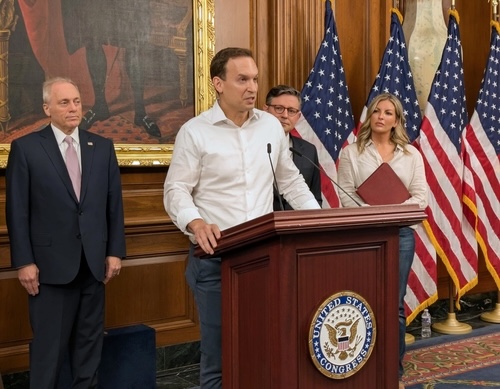
Paul Danos, vice president of domestic operations at Danos and Curole in Houma, Louisiana, advocated for energy provisions in the Republican tax and spending bill at a weekly House Republican press conference on Tuesday, June 24, 2025, at the U.S. Capitol. (Ashley Murray/States Newsroom)
Republicans, he said, know they need to focus on preserving a fragile compromise on the state and local tax deduction, or SALT, that helps offset the cost of living in some higher-tax states like California, New Jersey and New York.
A deal Johnson brokered with GOP lawmakers in the SALT Caucus has been significantly rewritten in the Senate, but is expected to move back toward the House version, though not entirely.
Johnson also mentioned GOP efforts to roll back certain clean-energy provisions that Democrats approved and President Joe Biden signed into law in their signature climate change, health care and tax package, called the Inflation Reduction Act, or IRA, in 2022.
“We’ve got to get the SALT negotiation number right. We’ve got to make sure the IRA subsidies are handled in an appropriate manner,” Johnson said. “Look, you’ve got a number of provisions.”
Johnson said he expects the Senate to vote on its final bill by Friday or Saturday and that he’s told House lawmakers to “keep your schedules flexible” on being in Washington, D.C., for a final House vote.
Trump goads Republicans
President Donald Trump sought to spur quick approval of a final bill, posting on social media that GOP lawmakers should get the package to him as soon as possible.
“To my friends in the Senate, lock yourself in a room if you must, don’t go home, and GET THE DEAL DONE THIS WEEK. Work with the House so they can pick it up, and pass it, IMMEDIATELY,” Trump wrote Tuesday. “NO ONE GOES ON VACATION UNTIL IT’S DONE. Everyone, most importantly the American People, will be much better off thanks to our work together. MAKE AMERICA GREAT AGAIN!”
“Every time something comes out that we’re using as a pay for, it takes the deficit reduction down. And they’ve taken out nearly $300 billion so far. We’ve got to make that up,” Mullin said after leaving the closed-door House GOP meeting. “The Senate can’t come in below the House version as far as deficit reduction. So that makes it difficult.”
Sam Palmeter, founder of Laser Marking Technologies LLC in Caro, Michigan, advocated for the passage of the “One Big Beautiful Bill Act” during the weekly House Republican press conference on Tuesday, June 24, 2025, at the U.S. Capitol. (Ashley Murray/States Newsroom)
Mullin, who has been acting as his chamber’s top negotiator with SALT Republicans in the House, told reporters he expects the deduction for state and local taxes to remain at the $40,000 level negotiated in the House. But said the Senate will likely rewrite the $500,000 income ceiling to qualify for the tax deduction.
“I think 40 is a number we’re going to land on,” Mullin said. “It’s the income threshold that’s in negotiations.”
Sen. Kevin Cramer of North Dakota said “most of us would like to make it zero.”
“I hate the idea of $40,000 but if that’s what it takes to pass the bill, I probably could do it. I would like to maybe find some other tweaks to it, somehow, like changing the income levels,” he said.
Treasury Secretary Scott Bessent told reporters he expects a resolution on SALT in the next 24 to 48 hours.
“I had a very successful lunch meeting with the senators. I think that we are on track,” Bessent said.
The ‘red line’ in the House
New York Republican Rep. Mike Lawler told reporters following the closed-door meeting that Senate leaders shouldn’t assume whatever they pass will be accepted by the House.
“I’ve been very clear about where my red line is. So, you know, we’ll let this process play out,” Lawler said. “I think the Senate should recognize the only number that matters is 218, and 50 plus 1. That’s it. And how do you get there?”
Republicans hold 53 seats in the Senate, so leadership cannot lose more than four votes and still approve the package, given that Democrats are universally opposed.
In the House, GOP leaders have 220 seats and need nearly every one of their members to support whatever the Senate sends back across the Capitol for it to make it to the president’s desk before their self-imposed deadline.
Retired Sheriff James Stuart, now executive director of the Minnesota Sheriff’s Association, spoke alongside House Republicans at the U.S. Capitol on Tuesday, June 24, 2025, about a temporary elimination of tax on overtime in the Republican budget reconciliation bill. (Ashley Murray/States Newsroom)
In addition to the SALT tax compromise, Lawler said he has concerns about how the Senate has changed other provisions, including those addressing Medicaid, the state-federal health program for lower income people.
“Yeah, there are a number of concerns about decisions that they’re making,” Lawler said. “And obviously, the bill on their side is not final, so we’ll see where it goes.”
Missouri Republican Rep. Jason Smith, chairman of the Ways and Means Committee that crafted the tax provisions in the reconciliation bill, stood by the House’s version of the Opportunity Zone Tax Incentives. The House version extends the incentive from the 2017 Tax Cuts and Jobs Act for a year, while the Senate’s version makes it permanent.
The Opportunity Zone Tax Incentive was pushed by South Carolina Sen. Tim Scott during the first Trump administration, which aimed to create tax cuts for businesses and real estate to invest in low-income communities, but it had mixed results.
“The tax bill that we’re going to deliver is gonna deliver for working families, small businesses and farmers,” Smith said.
Thumbs down from one House Republican
House Freedom Caucus Chairman Andy Harris, R-Md., posted on social media that he doesn’t support how the Senate has changed the bill and that he would seek to block it from becoming law.
“The currently proposed Senate version of the One Big Beautiful Bill weakens key House priorities—it doesn’t do enough to eliminate waste, fraud, and abuse in Medicaid, it backtracks on Green New Scam elimination included in the House bill, and it greatly increases the deficit – taking us even further from a balanced budget.
“If the Senate tries to jam the House with this version, I won’t vote ‘present.’ I’ll vote NO.”
Rattlesnakes and the Senate
West Virginia Republican Sen. Jim Justice told reporters that it’s important for the Senate to take its time in its changes to the reconciliation package and that GOP lawmakers need to be patient.
“If you’re walking through the woods and you look right over there at that wall and there’s a rattlesnake all curled up there and everything, what do you do?” Justice asked. “Most people just jump and take off runnin’, well … rattlesnakes run in pairs and if you just jump left or right or behind, that one can hurt you right there.”
Rattlesnakes are typically solitary creatures, but new research has shown that rattlesnakes are more social than previously thought.
Justice said the best course of action when dealing with a rattlesnake, or two, is to stand still for a moment.
“Look to the left, look to the right, look behind you, and then decide which way you’re going,” he said. “That’s what I think we need to do (in the Senate).”
By Jennifer Shutt, Ariana Figueroa, Ashley Murray, Jacob Fischler
Federal Reserve Chairman Jerome Powell speaks during a news conference following the Federal Open Market Committee meeting, Wednesday, May 7, 2025, at the Federal Reserve in Washington. (AP Photo/Jacquelyn Martin)
WASHINGTON (AP) — The Federal Reserve will continue to wait and see how the economy evolves before deciding whether to reduce its key interest rate, Chair Jerome Powell said Tuesday, a stance directly at odds with President Donald Trump’s calls for immediate cuts.
“For the time being, we are well positioned to wait to learn more about the likely course of the economy before considering any adjustments to our policy stance,” Powell said in prepared remarks he will deliver early Tuesday before the House Financial Services Committee.
Powell is facing two days of what could be tough grilling on Capitol Hill, as Trump has repeatedly urged the Fed to reduce borrowing costs. Powell has often received a positive reception before House and Senate committees that oversee the Fed, or at least muted criticism. Powell has also often cited his support in Congress as a bulwark against Trump’s attacks, but that support could wane under the president’s ongoing assaults.
Trump lashed out again in the early hours of Tuesday morning, posting on his social media site: “I hope Congress really works this very dumb, hardheaded person, over. We will be paying for his incompetence for many years to come.”
The last time Powell appeared before Congress, in February, Rep. French Hill, the Arkansas Republican who chairs the committee, urged Powell to ensure inflation returned to the Fed’s target of 2%, which typically requires keeping rates elevated.
The Fed’s 19-member interest rate setting committee, led by the chair, decides whether to cut or raise borrowing costs. They typically increase rates to cool the economy to fight or prevent inflation, and lower rates when the economy is weak to boost borrowing and spending.
The Fed’s committee voted unanimously last week to keep its key rate unchanged, though the Fed also released forecasts of future rate cuts that revealed emerging divisions among the policymakers. Seven projected no rate cuts at all this year, two just one, while 10 forecast at least two reductions.
At a news conference last week, Powell suggested the Fed would monitor how the economy evolves over the summer in response to Trump’s tariffs and other policies before deciding whether to cut rates. His comments suggested a rate reduction wouldn’t occur until September.
Yet two high-profile members of the Fed’s governing board, Michelle Bowman and Christopher Waller, have since suggested the central bank could cut its rate as early as its next meeting in July. Both officials were appointed by Trump during his first term and Waller is often mentioned as a potential replacement for Powell when his term ends next May.
The Fed cut rates three times late last year to about 4.3%. Yet since then it has put rate cuts on pause out of concern that Trump’s tariffs could push up inflation. The president has slapped a 10% duty on all imports, along with an additional 30% levy on goods from China, 50% on steel and aluminum, and 25% on autos.
Yet inflation has steadily cooled this year despite widespread concerns among economists about the impact of tariffs. The consumer price index ticked up just 0.1% from April to May, the government said last week, a sign that price pressures are muted.
Prices for some goods rose last month, but the cost for many services such as air fares and hotels fell, offsetting any tariff impact. Compared with a year ago, prices rose 2.4% in May, up from 2.3% in April.
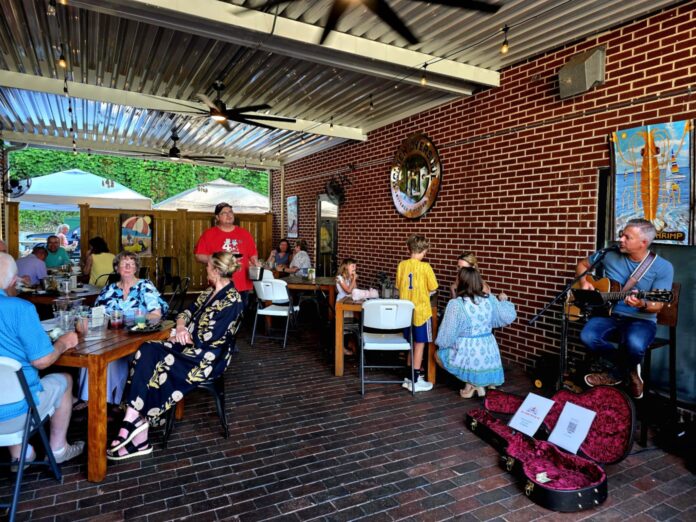
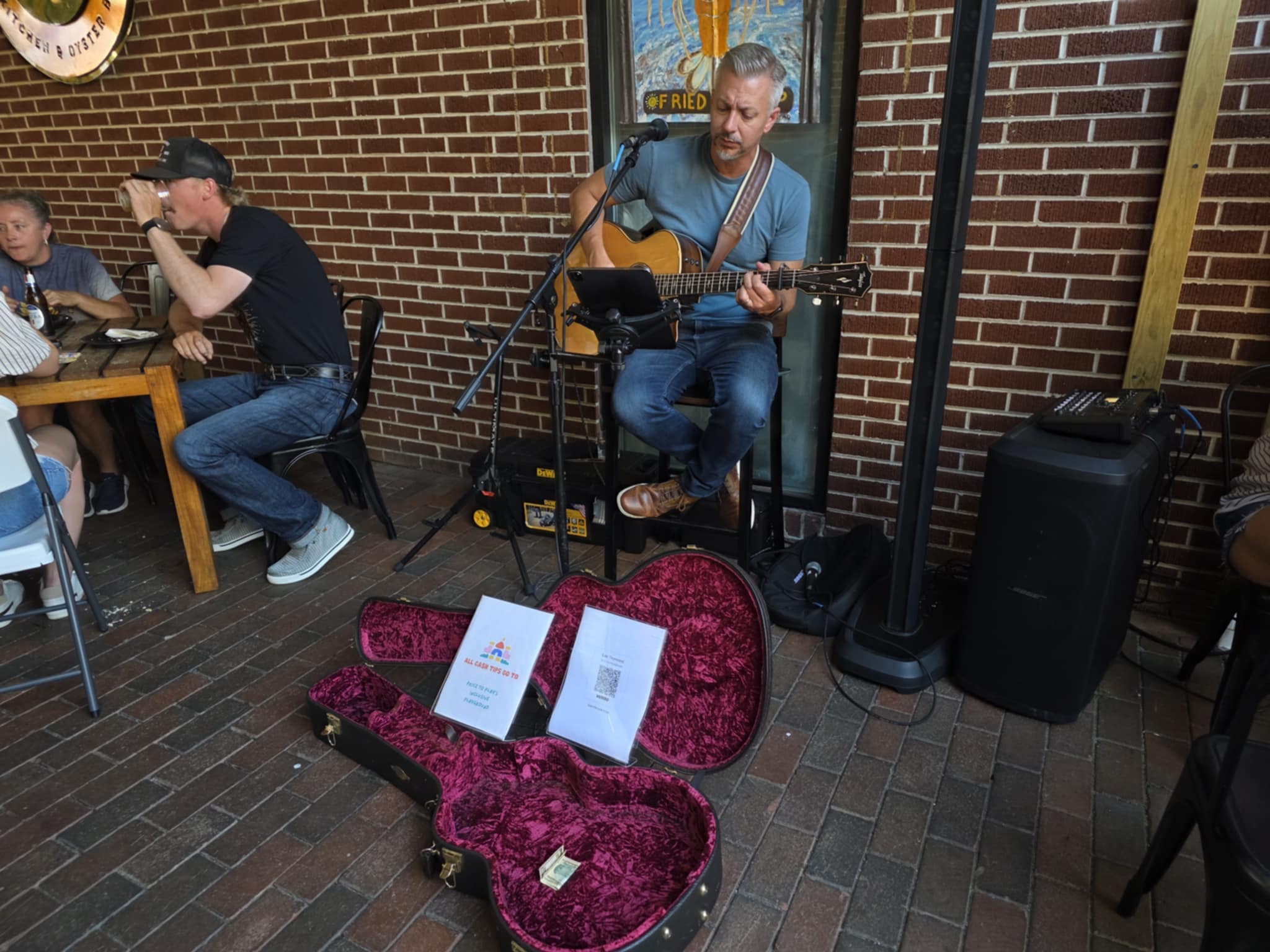
Musician Eric Thurmond performs at the Price to Play Benefit, held at Holden Oversoul Kitchen & Oyster Bar in Demorest, Georgia. (Carly McCurry/The Cute North Georgian Magazine)
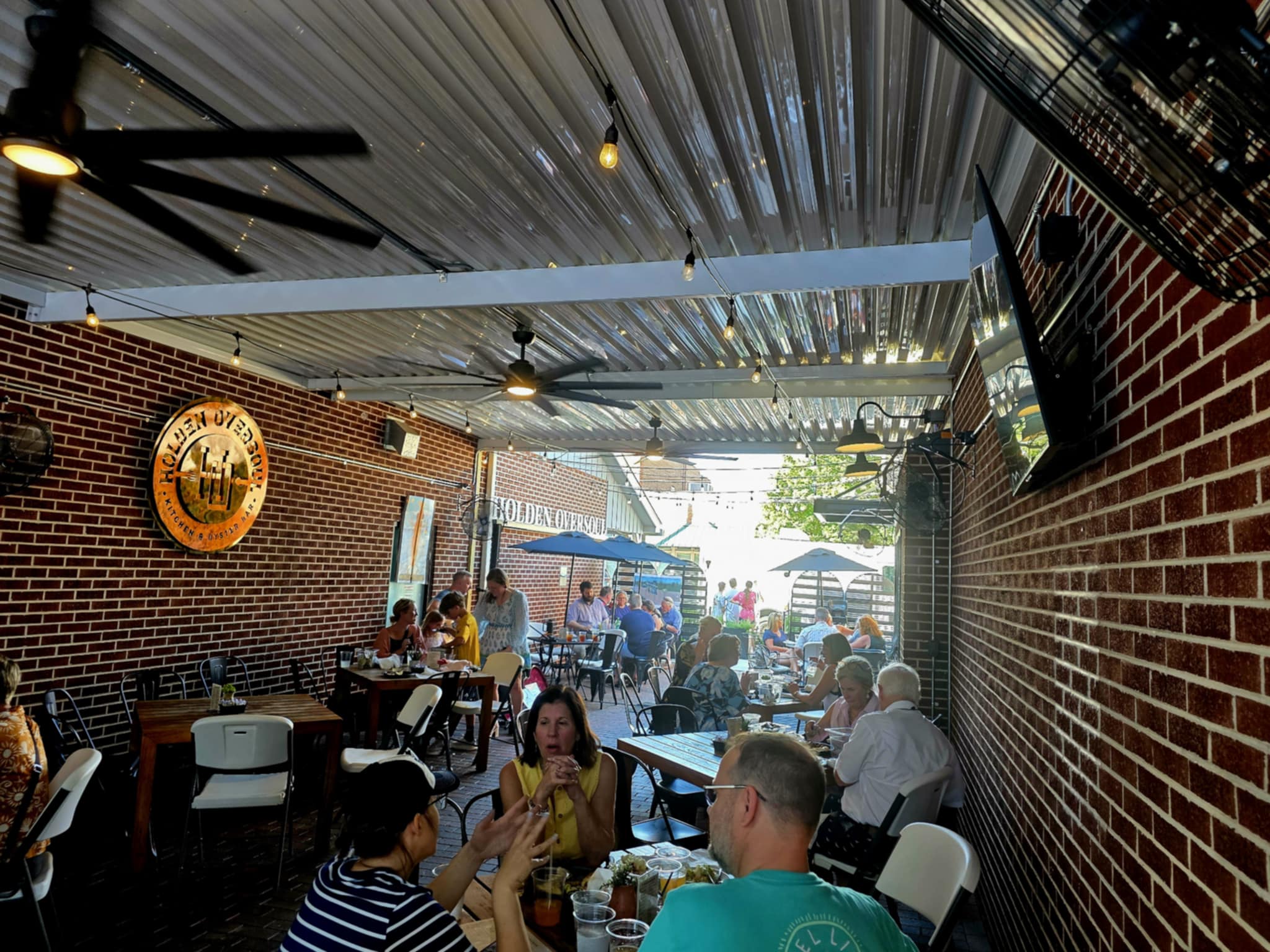
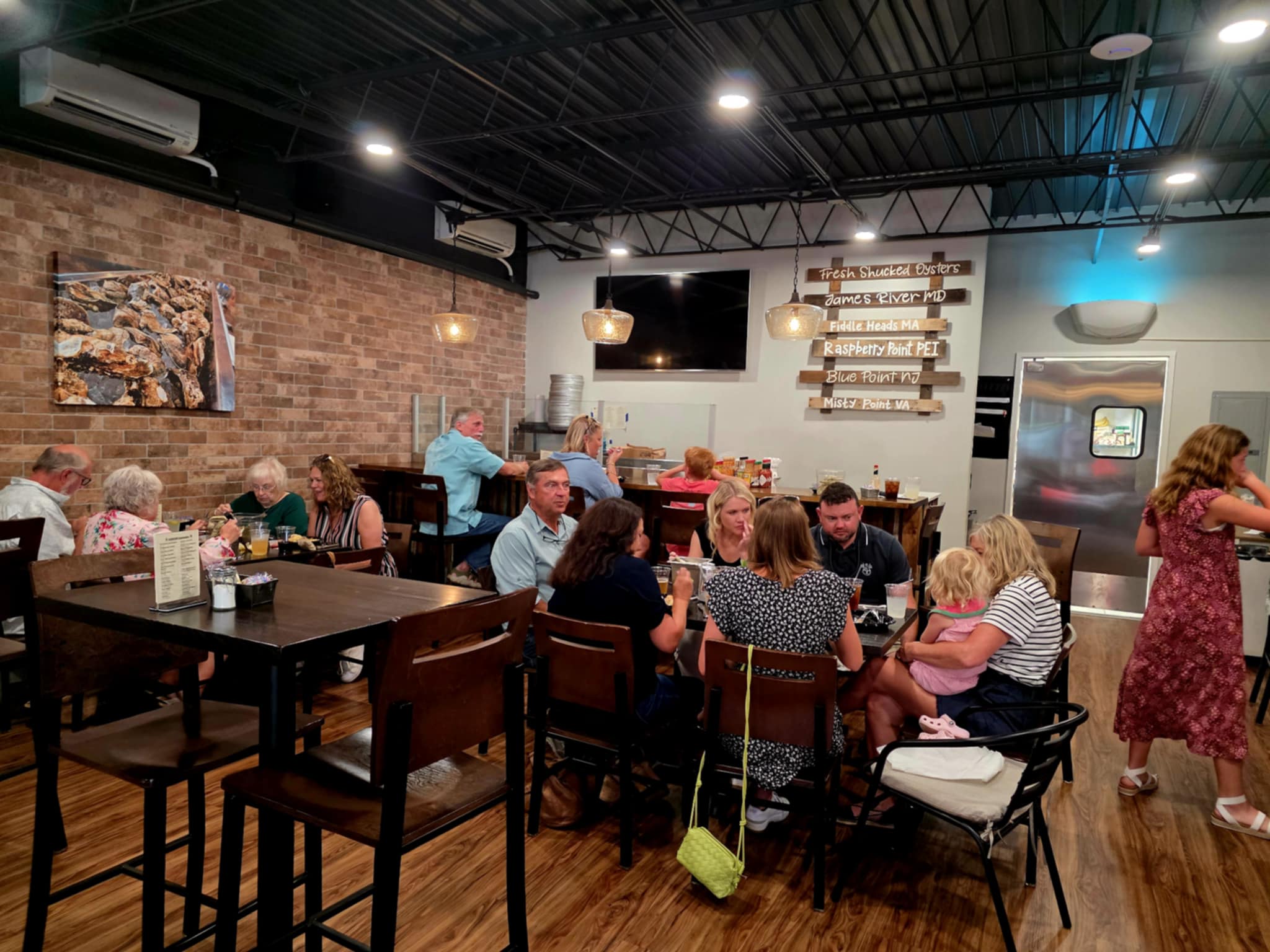
Forget the typical ballroom fundraiser with tables resembling oversized wedding cakes and stuffy speeches—Sunday night’s Price to Play benefit in Demorest was something entirely different. Hosted at Holden Oversoul Kitchen & Oyster Bar by Chef Jamie Allred, the sold-out event combined good food, good music, and a great cause in a relaxed, welcoming setting.
The benefit raised money for Price to Play, a nonprofit working to build an inclusive playground at Demorest Springs Park. The proposed space will feature sensory panels, wheelchair-accessible surfacing, and equipment designed so that children of all abilities can play together.
Marcia and Noah Hamil share a serving of banana pudding, giving it a “100 percent” rating at the Price to Play benefit. (Photo: Carly McCurry/The Cute North Georgian Magazine)
(Carly McCurry/The Cute North Georgian Magazine)
Musician Eric Thurmond (Carly McCurry/The Cute North Georgian)
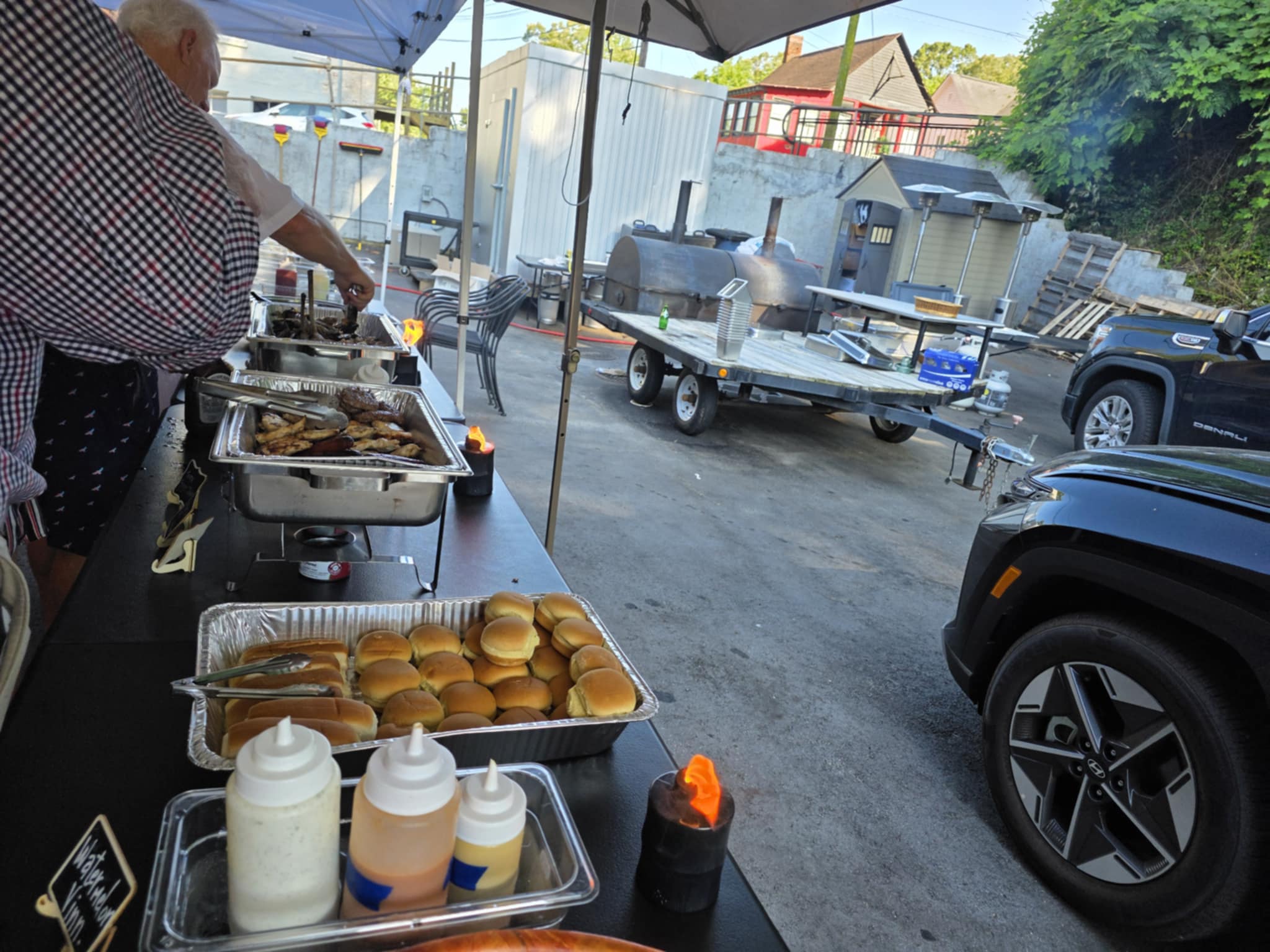
Chef Jamie Allred and volunteers barbecue, cook, and serve guests at the Price to Play benefit buffet at Holden Oversoul Kitchen & Oyster Bar in Demorest, Georgia. (Carly McCurry/The Cute North Georgian Magazine)
(Carly McCurry/The Cute North Georgian Magazine)
(Carly McCurry/The Cute North Georgian Magazine)
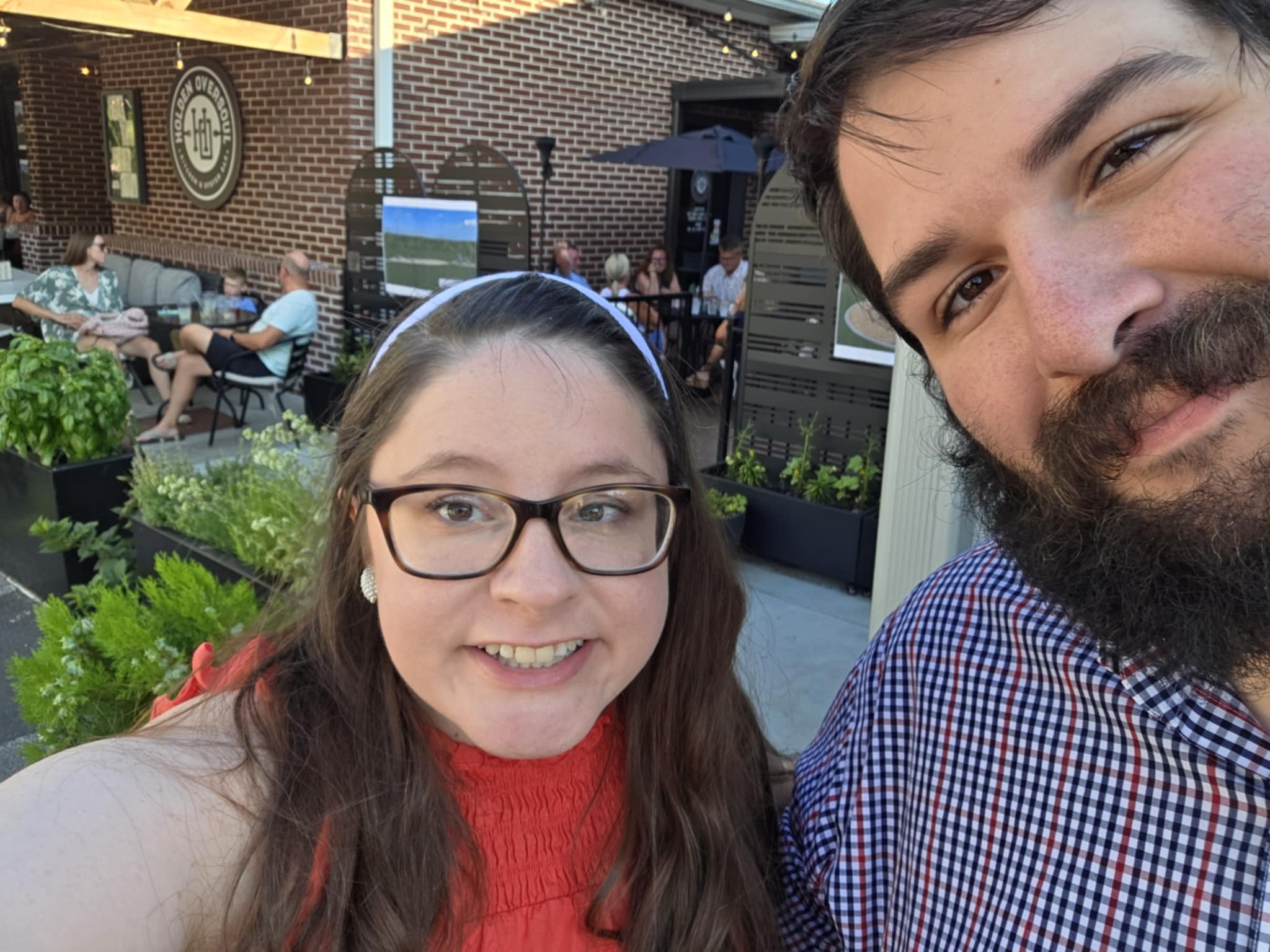
Carly McCurry and husband Alex Camejo snapping a selfie and enjoying the atmosphere at the Price to Play fundraiser on June 22, 2025. (Carly McCurry selfie/The Cute North Georgian Magazine)
Held under the warm glow of string lights, guests mingled beneath a covered patio and moved freely between indoor and outdoor seating. Volunteers who kindly donated their time and tips to the cause helped run the event.
The Brella Studio art truck kept kids engaged while parents enjoyed live acoustic music from Eric Thurmond and dined buffet-style on various offerings. The night’s menu included Rappahannock oysters, a whole Meishan hog, Springer Mountain chicken sliders, Texga Farms beef, hot dogs, sides, and banana pudding—refilled generously until closing.
The Brella Studio art truck, parked outside Holden Oversoul, invites children to decorate its exterior and take part in hands-on art activities inside. (Carly McCurry/The Cute North Georgian Magazine)
The evening event ran smoothly. It was a true community effort.
“This is great,” said Marcia Hamil, a local mover and shaker and the creator behind Bites and Bubbly, as she watched children weave between tables. “It’s a good turnout.”
Seated beside her was Downtown Development Authority member and city councilman Shawn Allen, there to support the cause—and enjoy some outstanding barbecue and seafood.
Beyond the event
The Americans with Disabilities Act created a baseline for public accommodations, but Price to Play wants to go beyond minimum compliance to promote shared public space.
The planned playground reflects trends in modern civic design, where accessibility is understood as a core component of community planning rather than an afterthought.
Demorest Springs Park, a sundappled oasis in the heart of the city, is positioned as a practical and symbolic site for the initiative.
The estimated cost for the project ranges in the hundreds of thousands. Mayor Jerry Harkness has voiced support, and residents like Allred are using their businesses to fundraise. Events like the one on Sunday help generate both money and awareness.
The Holden Oversoul benefit raised nearly $6,000 toward the playground’s installation cost.
“This far exceeded our expectations for this event,” said Allred. “Thank you, everyone!”
While the playground initiative is still in development, Sunday’s fundraiser signaled more than just financial support—it proved that inclusion isn’t just a big-city ideal.
As the music faded and tables cleared, the message was clear: inclusion starts locally. And it doesn’t take a ballroom or a table dressed like a wedding cake to make it happen.
The ranking looked at health care access, affordability and disease prevention, said Sara Collins, the senior scholar and vice president for health care coverage and access and tracking health system performance at The Commonwealth Fund.
Among other things, the report found higher rates of breast cancer deaths in Georgia than in the rest of the country.
Like other diseases, breast cancer is considered a mostly preventable form of mortality because screening is available.
“If you don’t have access to providers because you don’t have health insurance coverage, it is nearly impossible to get regular cancer screens,” Collins said. “I think if Georgia were to improve on its coverage rates, it might also see improvements in both screening of key cancers and also mortality rates from those cancers.”
Insurance coverage is essential for a health system to perform at a high level, so the uninsured rate drives Georgia down in the rankings.
Georgia ranks 49th in the share of adults ages 19 to 64 who are uninsured, which is associated with its low rank on cost-related access problems, Collins said.
“People still have a lot of problems getting the health care that they need because they can’t afford it,” she said.
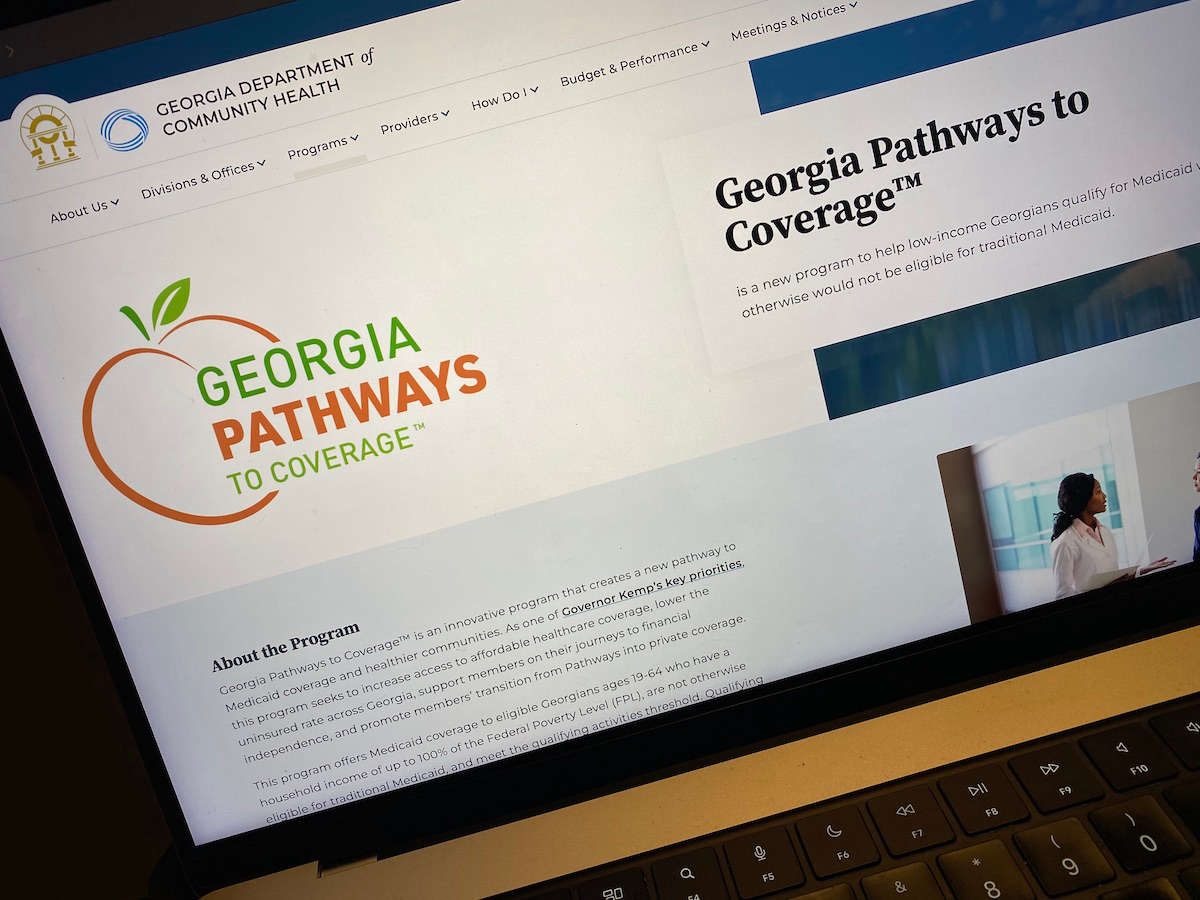
Since its launch in July 2023, less than 3% of those eligible for the state’s Pathways to Coverage — or 7,000 Georgians — enrolled in health care coverage using a Medicaid waiver.
The administrative burden is preventing people from enrolling and is leaving more people without access to health care, Whitney Griggs with Georgians for a Healthy Future said.
“Lots of folks who are eligible lose their coverage because they run into some sort of an administrative roadblock trying to submit their qualifying activity or prove their address or even just fill out the basic application,” Griggs said.
The Commonwealth Fund estimates that, between federal and state dollars, they’ve spent about $58 million, meaning the per person cost of that work requirement far exceeds what it would have cost if Georgia had expanded its Medicaid program.
Congress is considering similar changes to work requirements as it seeks to make cuts to Medicaid.
“A lot of the gains that Georgia has made on coverage are really at risk because of the expiration of the premium tax credits for the marketplaces and because of additional of the House and Senate reconciliation bills that would actually make pretty significant cuts in the marketplaces, making it less affordable, harder to enroll,” Collins said. “So, Georgia’s relative ranking relative to other states will likely be at risk because of those changes if they were to go into effect.”
This article comes to Now Habersham in partnership with GPB News
This fall, thousands of Georgia students will attend a private school or study at home, and state government will help them pay for it.
Republican lawmakers led a push last year to give families $6,500 a year per student toward private education. Georgia already had a state-funded voucher program, but it was limited to students with disabilities or certain medical conditions.
Another program for all students was funded through tax credits rather than money directly from the state treasury.
The new state-funded “Promise Scholarship” program doesn’t require a disability. It only requires that students live in the attendance zone of a public school performing in the bottom 25% statewide. The student either must have attended it for a year or be a rising kindergartner.
This article comes to Now Habersham in partnership with WUGA News
The Camp Crafter spent almost every summer of her childhood at summer camp, where she loved the songs, campfires, and especially the crafts. Now an art teacher during the school year and a camp counselor during the summer, she’ll be guiding readers to a cool camp craft they can do at home this summer. The Camp Crafter has lots of fun at-home craft ideas for families, and will be presenting one each week of this summer!
A favorite camp craft at the camp where I work is God’s Eye! Campers love them because it is a colorful reminder of camp that you can hang in a window, on a cabinet knob, or almost anywhere.
Want to bring a camp vibe into your home while crafting? The KOA website has a list of favorite camp songs along with links to people singing them. Play a few while you create.
Supplies needed:
scissors
popsicle sticks
yarn
hot glue (optional)
I bought my popsicle sticks and yarn at Walmart for a total of $3!
Steps
Gather your popsicle sticks. If you want to add a natural element, find some small but sturdy sticks in your yard. Make sure they are dry.
2. Place your sticks perpendicular to each other, like a cross.
3. Start wrapping your yarn around the sticks to secure them in place. The yarn will make an ‘X’ pattern.
*Tip* Keep the yarn attached to the ball of yarn until the end of the project.
(Camp Crafter/NowHabersham.com)
4. Now that you have wrapped the sticks together, decide where you want the top of your eye to be. Start wrapping your yarn in the pattern of wrapping the string around the stick once and going diagonally OVER to the next stick.
If you want a multi-colored God’s Eye, use multiple balls of yarn. Start with one color and wrap until you have a wide stripe of color. Then cut the yarn. Tie a new color to the end from a different ball (try to put the knot on the back of your creation). Continue wrapping. Repeat as desired.
(Camp Crafter/NowHabersham.com)
(Camp Crafter/NowHabersham.com)
(Camp Crafter/NowHabersham.com)
5. Keep wrapping until your yarn nears the end of the sticks.
6. When done with the wrapping, cut the string about 5 inches long. Wrap the string around the top stick and tie a knot at the back. Do this a second and third time to ensure the yarn does not come loose.
After tying the knot, you can use the leftover yarn to make a loop from which to hang your God’s Eye. I like hanging mine in a window!
(Camp Crafter/NowHabersham.com)
For me, summer camp was always about making friends and exploring the beauty of creation. Try looking out your window or walking around your block and discovering one beautiful part of creation you admire. It might inspire your next craft! In the meantime, enjoy your God’s Eye!
(Camp Crafter/NowHabersham.com)
A look to next week:
Start looking for interesting leaves you can gather. Leaves of three, leave them be!
A powerful heat wave gripping the Eastern United States is pushing temperatures to dangerous levels this week, with much of Georgia under a Heat Advisory through Wednesday evening. While mountain counties like Habersham, White, Lumpkin, Rabun, Fannin, Gilmer, and Towns are not included in the advisory, heat index values in these areas are still expected to reach 100–104º—well into the danger zone.
In the rest of North and Central Georgia, heat index values could climb as high as 107º, making prolonged outdoor activity potentially hazardous.
What’s behind the extreme heat?
A persistent high-pressure system over the eastern U.S. is trapping hot, humid air across much of the region. Cities from Atlanta to Washington, D.C., are experiencing record or near-record heat, and forecasters expect the pattern to continue through the week.
While mountain regions may be spared the worst of the heat, public health officials urge all Georgians to take precautions.
Tips for staying safe in extreme heat
Health experts recommend the following safety tips to avoid heat-related illnesses:
Stay hydrated: Drink water frequently, even if you don’t feel thirsty. Avoid alcohol and sugary drinks, which can dehydrate you.
Take breaks: Rest in the shade or air conditioning whenever possible, especially between 11 a.m. and 4 p.m., when heat is most intense.
Dress smart: Wear lightweight, loose-fitting, and light-colored clothing. Don’t forget sunscreen (SPF 30+), sunglasses, and a wide-brimmed hat.
Know the warning signs: Watch for heavy sweating, dizziness, nausea, fatigue, or confusion. These could be signs of heat exhaustion or heat stroke—seek medical help immediately if symptoms worsen.
Never leave children or pets in vehicles: Interior car temperatures can become deadly in minutes, even with windows cracked.
Check on others: Check in on elderly neighbors, young children, and people with chronic health conditions who may be more vulnerable.
Stay informed
The National Weather Service and local emergency management agencies are monitoring conditions closely. In the mountain counties of Northeast Georgia, where full advisories are not in effect, residents should still be mindful of high heat indices and avoid unnecessary outdoor activity during peak hours.
Now Habersham will continue to provide daily updates on forecasted heat index values for the mountain region and any changes to advisories.
Bottom line: Whether you’re in the mountains or the foothills, this heat wave is no time to take chances. Stay cool, stay safe, and look out for one another.