Home Blog Page 396

Commerce Police host active shooter training at middle school

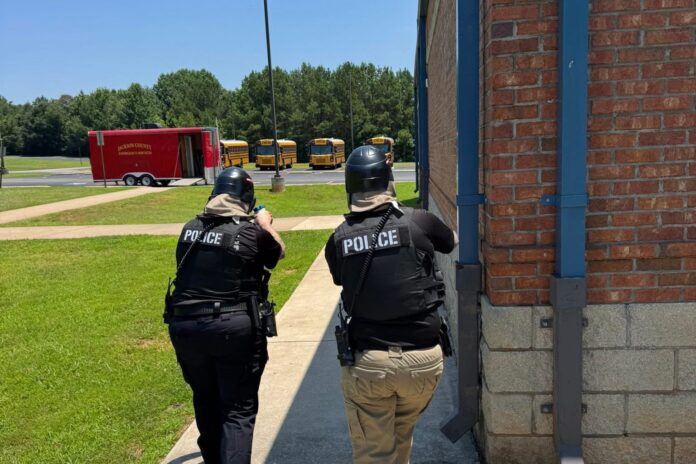
Two officers clear the exterior of Commerce Middle School as part of a multi-agency training drill aimed at improving active shooter response tactics. (Photo: Commerce Police Department/Facebook)

The Commerce Police Department led an active shooter training this week at Commerce Middle School, bringing together multiple agencies from across the region for a joint preparedness exercise.

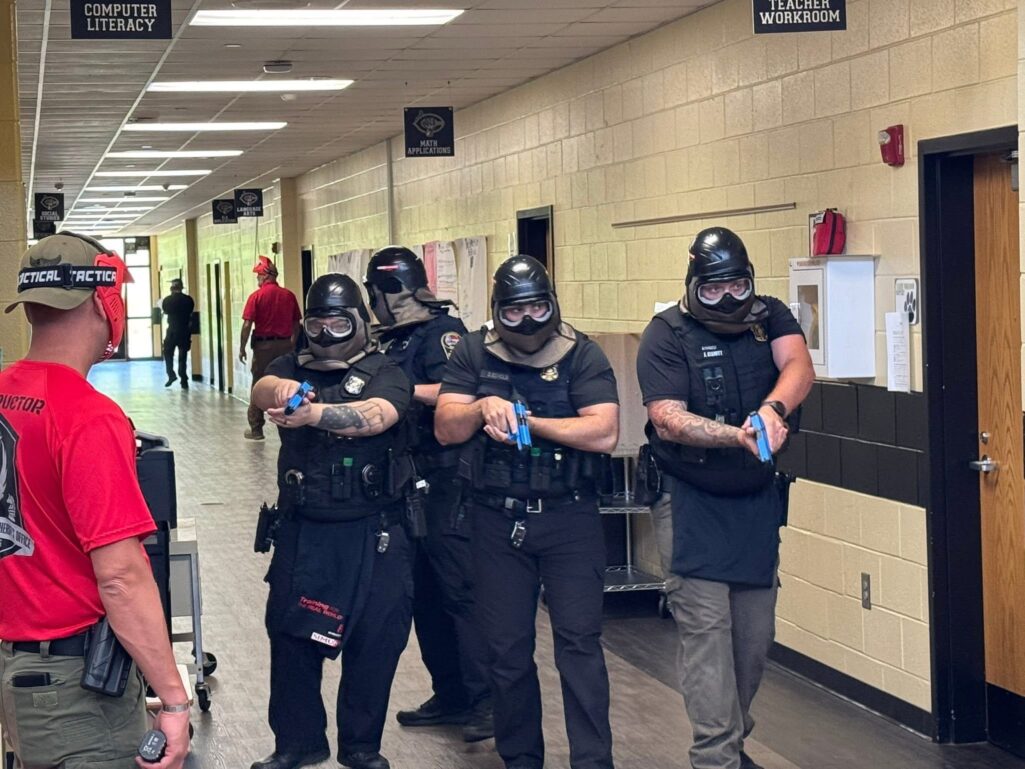
Officers move in formation during an active shooter scenario. The training brought together agencies from Jackson County, Gainesville, and beyond to strengthen cross-agency coordination. (Photo: Commerce Police Department/Facebook)

Officers from Commerce PD, Jefferson PD, the Jackson County Sheriff’s Office, and Gainesville PD participated in the training, with support from Commerce and West Jackson Fire Departments and Jackson County Emergency Services. The goal is to strengthen response tactics and improve coordination in the event of an active shooter situation.

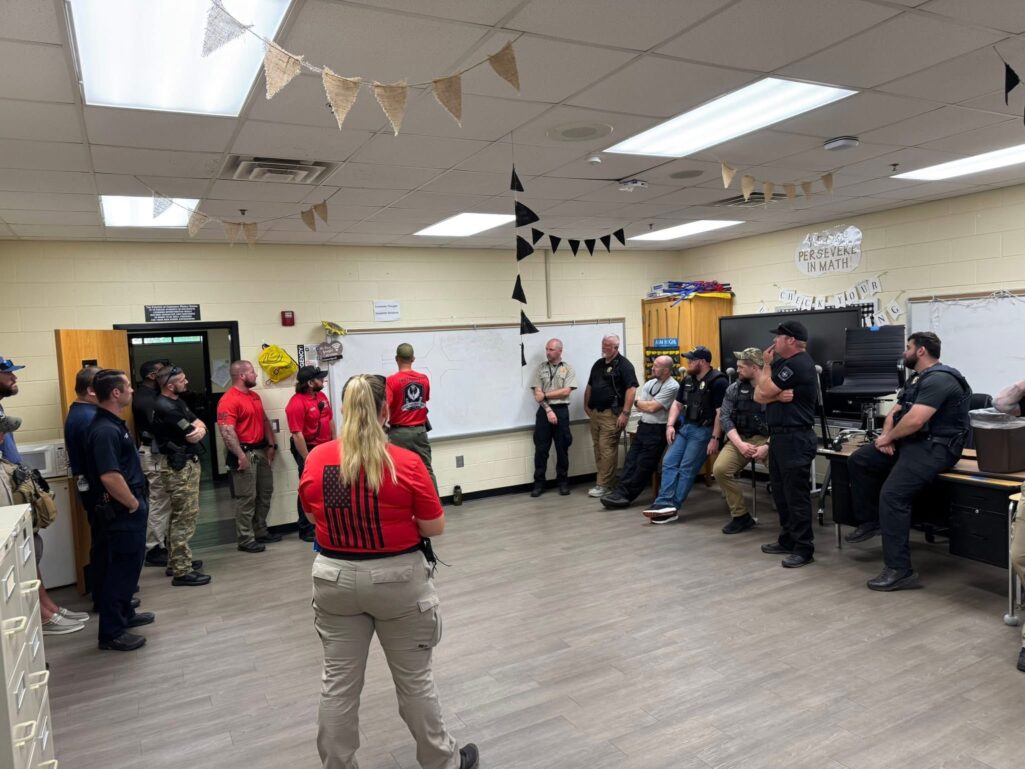
Officers from multiple agencies gather for a tactical debrief during this week’s active shooter training hosted by Commerce Police. The scenario-based sessions took place inside Commerce Middle School. (Photo: Commerce Police Department/Facebook)

The department thanked Commerce City Schools for allowing the use of their facility, emphasizing that exercises like this are only possible through strong community partnerships.

Officials say that multi-agency training like this helps ensure a faster and safer response, ultimately making both the City of Commerce and Jackson County more secure.

Key vaccine panel recommends banning thimerosal from shots but CDC’s own research says it’s harmless

The CDC's Advisory Committee on Immunization Practices is charged with setting national guidelines around which people should be vaccinated against a plethora of preventable diseases and when those vaccines should be administered. (Photo courtesy of Centers for Disease Control and Prevention)

(Georgia Recorder) — The Centers for Disease Control and Prevention’s key vaccine panel has voted 5-1 to ban thimerosal, a harmless preservative used in a small portion of flu vaccines, in what critics say is a nod to vaccine skeptics who have fixated on the chemical’s use.

The move rescinds recommendations for flu vaccines containing thimerosal for children, pregnant women, and the general public. The CDC’s research shows no adverse impacts caused by the chemical.

The Advisory Committee on Immunization Practices also voted 5-2 to approve a monoclonal antibody shot manufactured by Merck to protect infants younger than eight months from respiratory syncytial virus (RSV), 7-0 to add RSV to a program that provides free vaccines to children whose families can’t afford them, and 6-0 to approve the annual flu vaccine for everyone older than six months.

The committee, which was established in 1964, is charged with setting national guidelines around which people should be vaccinated against a plethora of preventable diseases and when those vaccines should be administered. The recommendations also play a key role in determining which vaccines insurance companies are willing to cover and how accessible immunizations are for the public to access. They also help guide global immunization practices.

This week’s meeting is ACIP’s first since U.S. Health Secretary Robert F. Kennedy Jr. dismissed all 17 members of the committee and replaced them with a slate of eight hand-picked appointees, several of whom are seen as vaccine skeptics.


Though certain members of the committee have embraced the label of anti-vaxxer, committee Chair Martin Kulldorff has objected to the characterization, and emphasized the need to build public confidence in the CDC’s recommendations.

“Our central duty is to protect public health, and we understand that we must answer the call for re-establishing confidence in the scientific examination process,” the committee members said in a joint statement.

“We came to this meeting with no predetermined ideas, and will make judgments as if we are treating our own families.”

The votes also offered insights into individual members of the committee’s stance on vaccines. Dr. Cody Meissner, a professor of pediatrics and medicine at Dartmouth College’s Geisel School of Medicine who has served as a past committee member, cast the sole “no” vote on the thimerosal ban.

“The risk from influenza is so much greater than the nonexistent, as far as I know, risk from thimerosal,” he said.

Vicky Pebsworth, a registered nurse and board member of the National Vaccine Information Center, which advocates for vaccine exemptions, abstained from voting.

A controversial ingredient

Thimerosal, a mercury-derived antiseptic, has been used since the 1930s to guard against harmful fungi and bacteria in vaccines. The chemical was removed from all childhood vaccines in the U.S. by 2001 and today, only 4% of flu vaccines administered — those used in multi-dose vials — contain the compound. However, antivaccine activists have seized on thimerosal, citing unfounded arguments that link the chemical to autism and other adverse health outcomes.

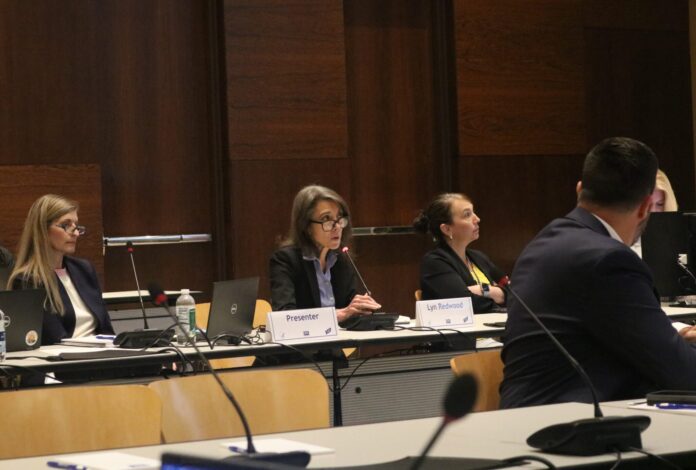
Thursday’s vote to ban thimerosal from flu shots came shortly after Lyn Redwood, the former head of Kennedy’s anti-vaccine group Children’s Health Defense, delivered a presentation to the committee centered on the ingredient. Redwood, who has long echoed conspiracy theories about vaccines, was recently hired by Kennedy to help oversee vaccine safety at the CDC, the Washington Post reported Wednesday. The U.S. Department of Health and Human Services directory now lists Redwood as an employee.

Redwood’s presentation argued that thimerosal has been shown to cause autism, though there is no scientific evidence to support the claim. An early draft of her slides claiming that thimerosal can cause “long-term consequences in the brain,” cited a study that does not appear to exist. The draft was later removed and replaced with a version that does not include the fabricated citation.

The CDC’s own research has shown no connection between thimerosal and autism or any other potential harm. The chemical is not frequently used in U.S.-administered vaccines, but remains common in most vaccines around the world.

Jodie Guest, who serves as the senior vice chair of Emory University’s epidemiology department and as a faculty member on the CDC’s Epidemic Intelligence Service (EIS) program, criticized the committee’s emphasis on “revisiting settled science” in an effort to appease vaccine skeptics.

“Revisiting [thimerosal] and taking it out of the very few vaccines that’s left in is really scientifically not a huge problem,” Guest said. “But from a communication perspective, it continues to propagate the concept that there is a relationship between it and neurological disorders.”

There are certain situations in which using a vaccine that contains thimerosal may be a more practical choice, Guest said. Multi-vial doses of vaccines are cheaper to produce, and are more likely to be used in rural areas where vaccines are administered less frequently.

“Our underserved communities are the places where we are more likely to see the multi-dose vials for the flu vaccine, and that’s where thimerosal still exists,” Guest said. “It was put into multi-dose vials in order to not have bacterial infections inside of the vaccine vials that were then given to patients. So it’s a protection and it’s scientifically sound to continue to use it.”

Georgia, which has a large rural population, rural health care shortages and low vaccination rates, could be disproportionately impacted by any messaging that casts doubt on the safety and efficacy of vaccines, Guest added.

“Anything that makes it harder to find a flu vaccine or to get one — or makes you question how safe they are — will drive our numbers down,” she said.

US Supreme Court limits injunctions, allows Trump to act on birthright citizenship ban

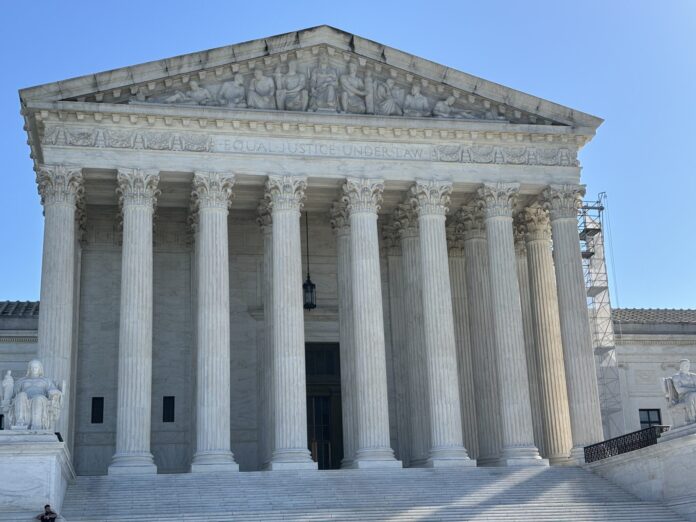
The U.S. Supreme Court, as seen on Oct. 9, 2024. (Jane Norman/States Newsroom)

WASHINGTON (States Newsroom) — The U.S. Supreme Court Friday in a major decision reined in nationwide injunctions by some lower courts that had blocked President Donald Trump’s executive order barring birthright citizenship.

The high court declined to decide the constitutionality of birthright citizenship itself. But the justices said the Trump executive order rewriting the constitutional right to birthright citizenship could go into effect within 30 days after Friday’s ruling in the 28 states that did not initially sue.

The Supreme Court’s 6-3 decision thus raises the prospect that a child born in some states would be regarded legally as a U.S. citizen but not in others until the overall question of constitutionality is settled, unless there is further legal action.

The sweeping ruling also likely could hamper other legal challenges against Trump administration actions in which nationwide injunctions are sought. Democratic attorneys general in the states have been successful in obtaining injunctions in the months since Trump was elected.

“GIANT WIN in the United States Supreme Court!” Trump wrote on social media shortly after the ruling.

Speaking at the White House later, Trump said his administration will move forward with several executive orders that have faced nationwide injunctions, such as suspending refugee resettlement and revoking federal funds from “sanctuary” states and localities.

“Thanks to this decision, we can now promptly file to proceed with these numerous policies and those that have been wrongly enjoined on a nationwide basis, including birthright citizenship,” Trump said.

Liberals on the high court issued a strong dissent. “No right is safe in the new legal regime the Court creates,” wrote Justice Sonia Sotomayor. “Today, the threat is to birthright citizenship. Tomorrow, a different administration may try to seize firearms from law abiding citizens or prevent people of certain faiths from gathering to worship.”

Joining the dissent were Justices Elena Kagan and Ketanji Brown Jackson.

Barrett writes ruling

In the ruling, the conservative justices found that nationwide “injunctions likely exceed the equitable authority that Congress has given to federal courts.”

“The Court grants the Government’s applications for a partial stay of the injunctions entered below, but only to the extent that the injunctions are broader than necessary to provide complete relief to each plaintiff with standing to sue,” according to the ruling, written by Justice Amy Coney Barrett and joined by Chief Justice John Roberts and Justices Brett Kavanaugh, Clarence Thomas, Samuel Alito and Neil Gorsuch.

While the dispute before the court related to Trump’s executive order to rewrite the constitutional right to birthright citizenship, the Trump administration asked the high court to instead focus on the issue of preliminary injunctions granted by lower courts.

“The applications do not raise—and thus the Court does not address—the question whether the Executive Order violates the Citizenship Clause or Nationality Act,” according to the ruling, referring to the practice of granting citizenship to babies born on U.S. soil.

Attorney General Pam Bondi, who appeared at the White House with the president, predicted the Supreme Court in its new term in October will take up the merits of the executive order that aims to redefine birthright citizenship.

The high court’s ruling instructs lower courts to “move expeditiously to ensure that, with respect to each plaintiff, the injunctions comport with this rule and otherwise comply with principles of equity.”

In the first 100 days of the second Trump administration, through April 29, judges issued about 25 nationwide injunctions, according to the Congressional Research Service.

“The lower courts should determine whether a narrower injunction is appropriate; we therefore leave it to them to consider these and any related arguments,” according to the ruling.

A narrower injunction could refer to a class action suit.

Barrett argued that a nationwide injunction would not grant more relief for barring the enforcement of Trump’s executive order against a pregnant person who is not a U.S. citizen and fears their child would be denied citizenship.

“Her child will not be denied citizenship. And extending the injunction to cover everyone similarly situated would not render her relief any more complete,” according to the ruling. “So the individual and associational respondents are wrong to characterize the universal injunction as simply an application of the complete-relief principle.”

Stateless people

Trump ran on a reelection campaign platform promising mass deportations of people without permanent legal status and vowed to end the constitutional right of birthright citizenship.

During the press conference at the White House Trump said that birthright citizenship historically was only meant to benefit the children of the newly freed African Americans, not the children of immigrants.

“It wasn’t meant for people trying to scam the system and come into the country on vacation,” Trump said.

Under birthright citizenship, all children born in the United States are considered citizens, regardless of their parents’ legal status.

If birthright citizenship were to be eliminated, more than 250,000 children born each year would not be granted U.S. citizenship, according to a recent study by the think tank the Migration Policy Institute.

It would effectively create a class of 2.7 million stateless people by 2045, according to the study.

In last month’s oral arguments, Solicitor General D. John Sauer, who argued on behalf of the Trump administration, contended that it’s unconstitutional for federal judges to issue nationwide injunctions. Instead, he said, the injunctions should be limited to those who brought the challenges.

‘Consequences for the children’

New Jersey Attorney General Matt Platkin said during a briefing with reporters that one group of private individuals that challenged the executive order has already filed a class action suit.

“I suspect more will come,” Platkin said.

Washington state Attorney General Nick Brown said at the press conference of Democratic attorneys general that because of Friday’s ruling, the rights of future newborns who hail from states that have not directly challenged the order will be in question.

“In Washington and New Jersey and Massachusetts, Connecticut, your rights are much more strong, but in all those other states, including many of our neighbor states, not participating in this case is going to have consequences for the children born in those states,” Brown said.

With 22 states part of the initial suits challenging Trump’s birthright citizenship order included, that means the order could impact the 28 states that were not part of the initial suit.

Those 28 states are: Alaska, Alabama, Arkansas, Florida, Georgia, Idaho, Indiana, Iowa, Kansas, Kentucky, Louisiana, Mississippi, Missouri, Montana, Nebraska, New Hampshire, North Dakota, Ohio, Oklahoma, Pennsylvania, South Carolina, South Dakota, Tennessee, Texas, Utah, Virginia, West Virginia and Wyoming.

‘The gamesmanship in this request is apparent’

Sotomayor, in her dissent, argued that the Trump administration brought the question of nationwide injunctions before the high court because it would be “an impossible task” to prove the constitutionality of the birthright citizenship executive order.

“So the Government instead tries its hand at a different game. It asks this Court to hold that, no matter how illegal a law or policy, courts can never simply tell the Executive to stop enforcing it against anyone,” she said. “Instead, the Government says, it should be able to apply the Citizenship Order (whose legality it does not defend) to everyone except the plaintiffs who filed this lawsuit.”

“The gamesmanship in this request is apparent and the Government makes no attempt to hide it. Yet, shamefully, this Court plays along,” she continued.

Sotomayor also questioned the irreparable harm the Trump administration would face.

“Simply put, it strains credulity to treat the Executive Branch as irreparably harmed by injunctions that direct it to continue following settled law,” she said.

She argued that the issue of birthright citizenship was ratified in the 14th Amendment of the Constitution in 1868, following the Civil War, to establish citizenship for newly freed Black people. It was meant to rectify a 1857 case in Dred Scott v. Sandford where the Supreme Court initially denied citizenship to Black people, whether they were free or enslaved.

“By stripping all federal courts, including itself, of that power, the Court kneecaps the Judiciary’s authority to stop the Executive from enforcing even the most unconstitutional policies,” Sotomayor said. “That runs directly counter to the point of equity: empowering courts to do complete justice, including through flexible remedies that have historically benefited parties and nonparties alike.”

Origins of birthright citizenship case

The case, Trump v. CASA, was consolidated from three cases.

George Escobar, the chief of programs and services of CASA, which brought the case, said in a statement that the ruling from the high court “undermines the fundamental promise of the Constitution — that every child born on U.S. soil is equal under the law.”

“Today’s decision sends a message to U.S.-born children of immigrants that their place in this country is conditional,” Escobar said. “But we are not backing down.”

The CASA case was on behalf of several pregnant women in Maryland who are not U.S. citizens who filed their case in Maryland; the second came from four states — Washington, Arizona, Illinois, and Oregon — that filed a case in Washington state; and the third came from 18 Democratic state attorneys general who filed the challenge in Massachusetts.

Those 18 states are California, Colorado, Connecticut, Delaware, Hawaii, Maine, Maryland, Massachusetts, Michigan, Minnesota, Nevada, New Mexico, New Jersey, New York, North Carolina, Rhode Island, Vermont and Wisconsin. The District of Columbia and the county and city of San Francisco also joined.

This is not the first time the Supreme Court has addressed the issue of birthright citizenship.

In 1898, the Supreme Court upheld the 14th Amendment, in United States v. Wong Kim Ark, extending birthright citizenship.

In that 19th-century case, Ark was born in San Francisco, California, to parents who were citizens of the Republic of China, but had legal authority to be in the United States, such as a temporary visa. While Ark was born in California, his citizenship was not recognized when he went on a trip to China. Upon his return to California, he was denied reentry due to the Chinese Exclusion Act— a racist law designed to restrict and limit nearly all immigration of Chinese nationals.

When his case went all the way to the Supreme Court, the high court ruled that children born in the U.S. to parents who were not citizens automatically become citizens at birth.

The Trump administration has argued that the 1898 case was misinterpreted and point to a specific phrase: “subject to the jurisdiction” of the United States.

Government attorneys contend that the phrase in the 14th Amendment means that birthright citizenship does not apply to people in the U.S. without legal status or temporary legal status who are “subject to the jurisdiction” of their country of origin.

South Georgia drug ring traced to ‘prison broker’ at Lee Arrendale State Prison

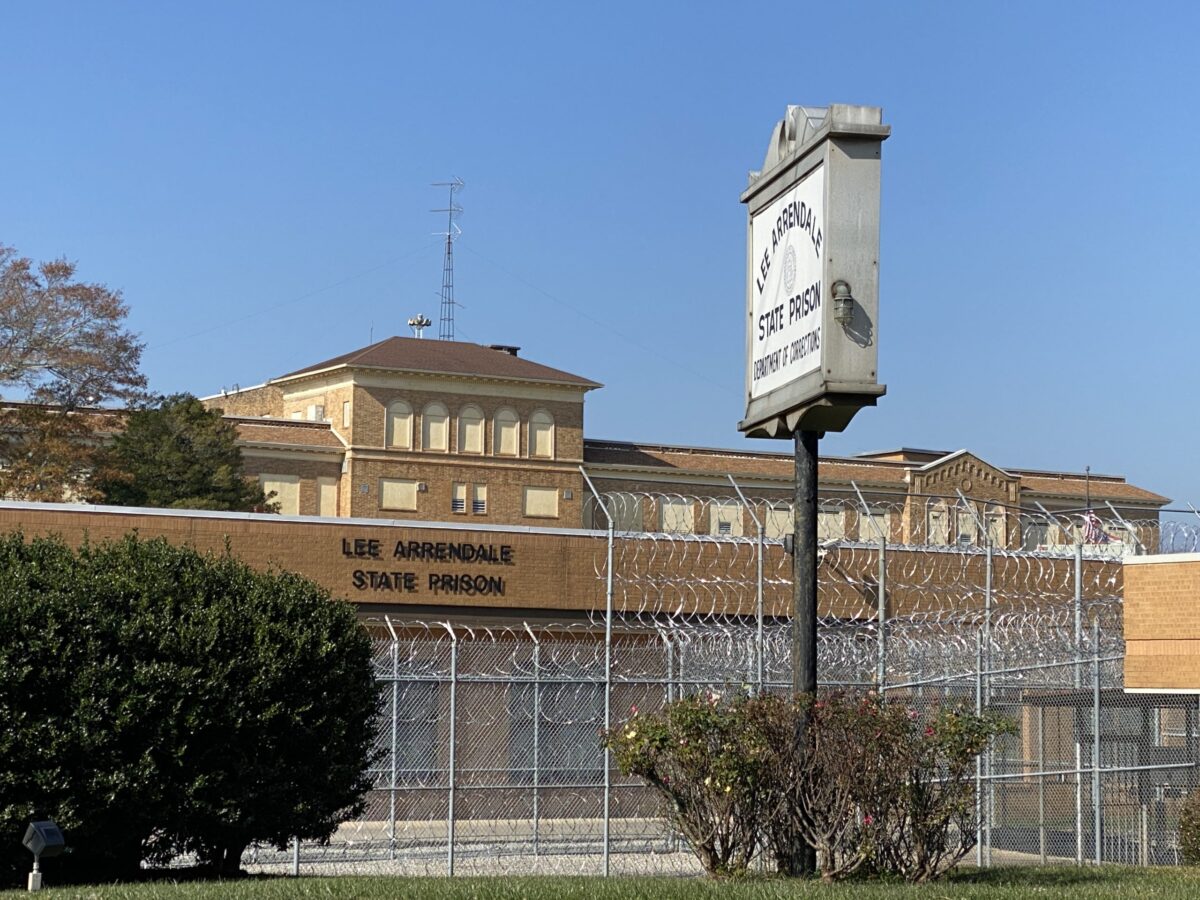
Some of the drugs agents with the South Central Drug Task Force say they seized in a raid in Irwin County. The South Georgia drug operation was allegedly being run by an inmate at Lee Arrendale State Prison in Habersham County, Georgia. (SCDTF/Facebook)

IRWIN COUNTY, Ga. — A Lee Arrendale State Prison inmate is accused of orchestrating a methamphetamine trafficking operation from behind bars. The South Central Drug Task Force (SCDTF) uncovered the alleged operation during an extensive investigation.

According to SCDTF, the inmate was directing methamphetamine shipments into South Georgia’s Irwin County. The suspect allegedly used contraband cell phones to coordinate deals with outside dealers and couriers.

“These cases are not as common as one would think. However, these ‘prison brokers,’ that’s what we call them in our field, they have a lot of friends, a lot of connections through prior work histories on their behalf, so they are still able to make these contacts,” Hudson Moyle with the South Central Drug Task Force (SCDTF) told WALB News.

Two-part takedown

Meth the SCDTF says it seized during its investigation into the South Georgia drug operation. (SCDTF/Facebook)

According to WALB, the SCDTF used two tactics to bring down the operation. First, they used an inmate ringleader to coordinate a controlled drug deal in the prison. Using information they learned during that deal, investigators then located a drug mule at Irwinville Country Store, outside Ocilla. There, they allegedly found 33 grams of methamphetamine.

The drug mule cooperated with law enforcement. They explained that a dealer in Tifton was supplying the drugs at the direction of the Lee Arrendale inmate.

“Tifton Police Department was then able to get enough probable cause to obtain a search warrant for that hotel. After the search warrant was executed, they found copious amounts of drugs and some digital media that also tied him to the prison source up in Arrendale Prison,” said Moyle.

According to SCDTF, the search uncovered methamphetamine, fentanyl, ecstasy tablets, and a firearm connected to the network moving drugs into Irwin County.

Dept. of Corrections issues statement

The Georgia Department of Corrections (GDC) issued a statement to WALB addressing how an inmate could have carried out such an operation.

“The use of contraband cell phones by inmates as a tool to carry out their crimes is a fight we continue to battle and is paramount in our commitment to public safety,” the statement said. “The GDC continues to utilize all resources at our disposal to combat this and other similar crimes being carried out inside and outside our prisons from those using contraband cell phones.”

Lee Arrendale State Prison in Alto, Georgia. (NowHabersham.com)

GDC officials said they are working with state and federal lawmakers to pass legislation that would allow Georgia prisons to jam cell phone communications. Currently, federal law prohibits the use of cell phone jammers.

The SCDTF said the case highlights the importance of interagency communication and teamwork.

“Without the rapid coordination between South Central Drug Task Force agents, investigators with the Georgia Department of Corrections, and the Tifton Police Department, this operation would not have had the successful outcome it did.”

Due to the ongoing investigation, authorities have not released the names of the suspects.

Judge blocks Georgia’s social media age verification law, citing free speech concerns

FILE - This combination of photos from 2017 to 2022 shows the logos of Facebook, YouTube, TikTok and Snapchat on mobile devices. (AP Photo, File)

ATLANTA (AP) — Georgia has become the latest state where a federal judge has blocked a law requiring age verification for social media accounts.

Like in seven other states where such laws have been blocked, a federal judge ruled Thursday that the Georgia law infringes on free speech rights.

The ruling by U.S. District Judge Amy Totenberg means that the Georgia measure, which passed in 2024, won’t take effect next week as scheduled. Instead, Totenberg granted a preliminary injunction blocking the law until there’s a full ruling on the issue.

Georgia’s law would require some social media providers to take “commercially reasonable” steps to verify a user’s age and require children younger than 16 to get parental permission for accounts. It was challenged by NetChoice, a trade group representing online businesses.

“The state seeks to erect barriers to speech that cannot withstand the rigorous scrutiny that the Constitution requires,” Totenberg wrote, finding the law restricts the rights of minors, chills the right to anonymous speech online and restricts the ability of people to receive speech from social media platforms.

Georgia will appeal, a spokesperson for Attorney General Chris Carr said Thursday.

“We will continue to defend commonsense measures that empower parents and protect our children online,” spokesperson Kara Murray said in a statement.

Parents — and even some teens themselves — are growing increasingly concerned about the effects of social media use on young people. Supporters of the laws have said they are needed to help curb the explosive use of social media among young people, and what researchers say is an associated increase in depression and anxiety. Totenberg said concerns about social media harming children are legitimate, but don’t outweigh the constitutional violation.

Totenberg wrote that NetChoice’s members would be irreparably harmed by the law. She rejected arguments from the state that the group shouldn’t get temporary relief because it had delayed filing its lawsuit by a year and because the state would be required to give 90 days’ notice before enforcing the law.

“Free expression doesn’t end where government anxiety begins,” NetChoice Director of Litigation Chris Marchese said in a statement. “Parents— not politicians — should guide their children’s lives online and offline— and no one should have to hand over a government ID to speak in digital spaces.”

It’s the ninth state where NetChoice has blocked a law over children’s use of social media. In Arkansas and Ohio, federal judges have permanently overturned the laws. Besides Georgia, measures are also on hold in California, Florida, Mississippi, Texas and Utah. Louisiana agreed to not enforce its law while litigation proceeds. Only in Tennessee did a federal judge decline to temporarily block a law, finding NetChoice hadn’t proved that people would be irreparably harmed if the law wasn’t blocked before trial.

Georgia had argued the law was meant to protect children in a dangerous place, likening it to banning them from bars serving alcohol instead of restricting their speech.

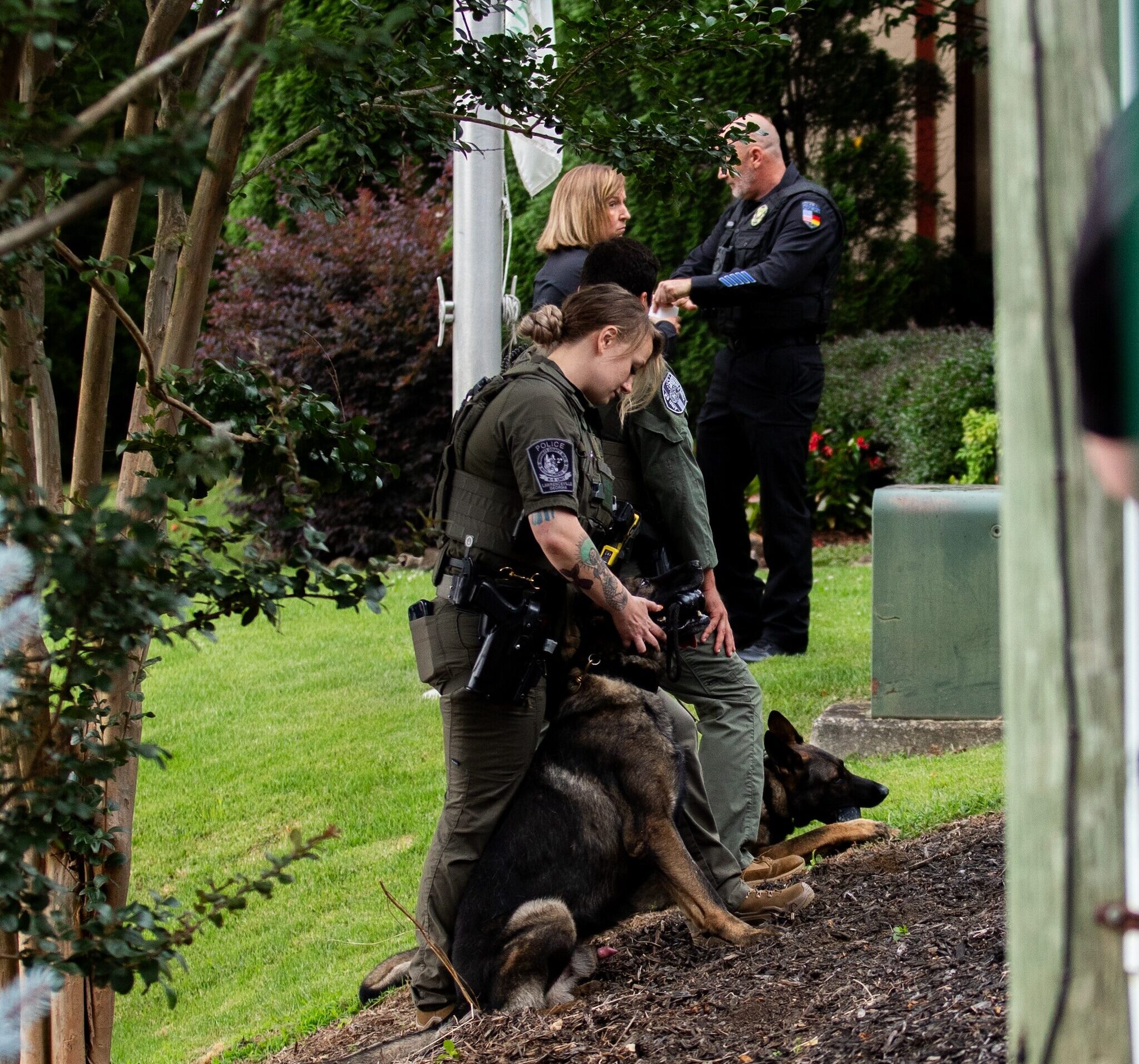
PHOTO GALLERY: K-9 Henk laid to rest in Helen

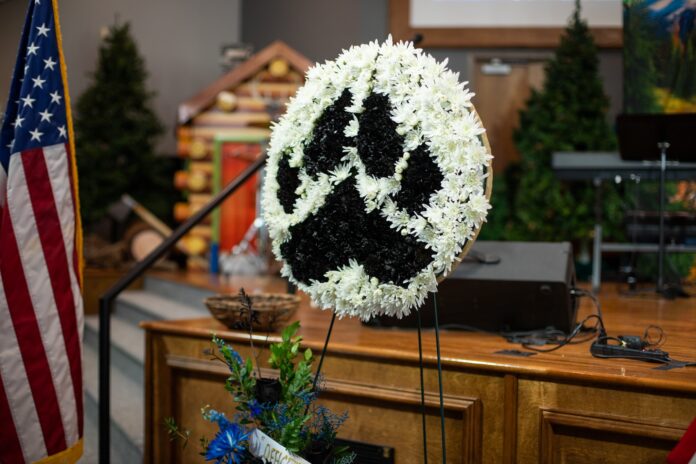
A paw print wreath stands at the front of Helen First Baptist Church, where K-9 Officer Henk's funeral was held on Thursday, June 26, 2025. (Katelynn Hulsey/NowHabersham.com)

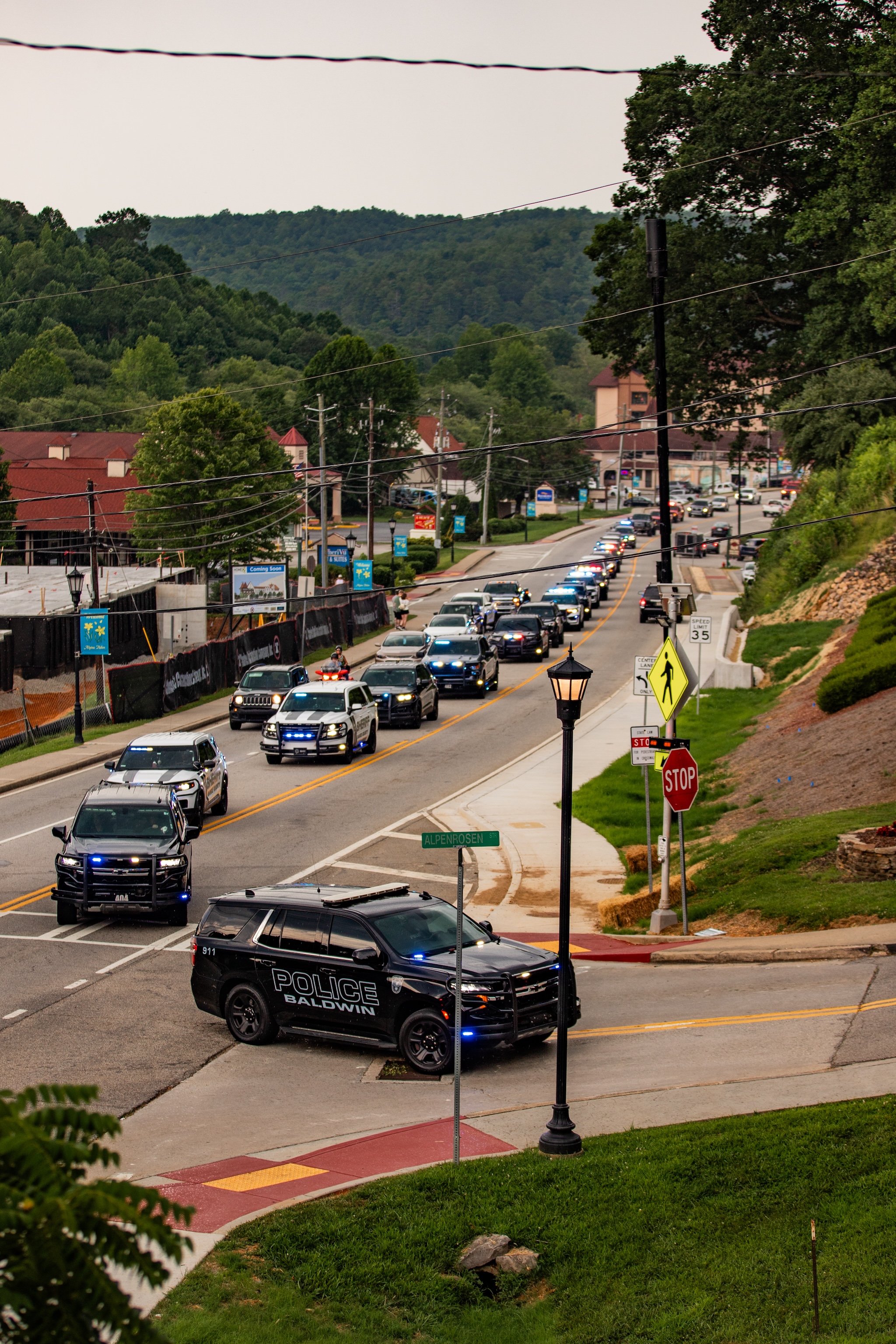
It was a somber day for local law enforcement on Thursday as they laid to rest one of their own.

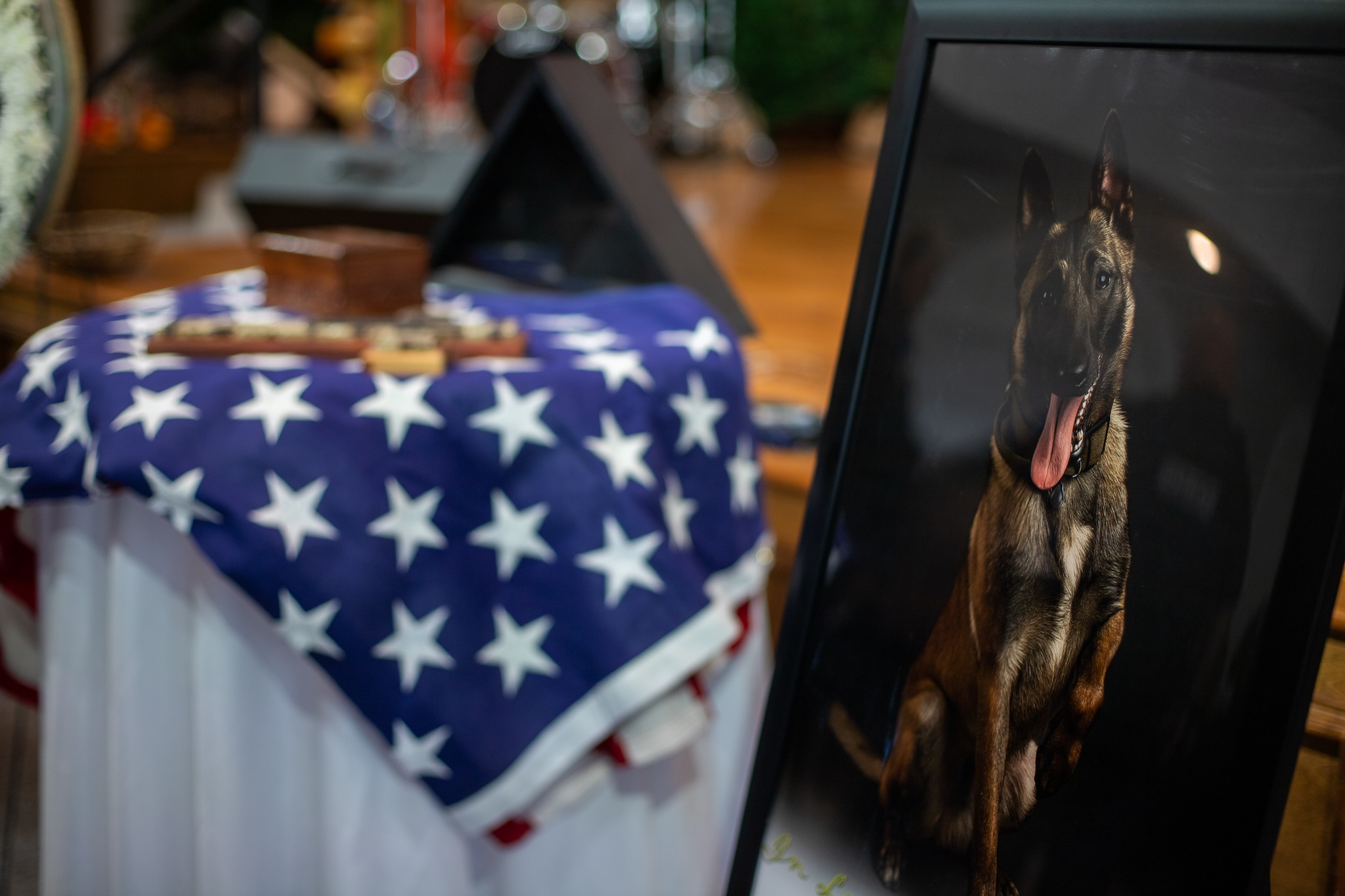
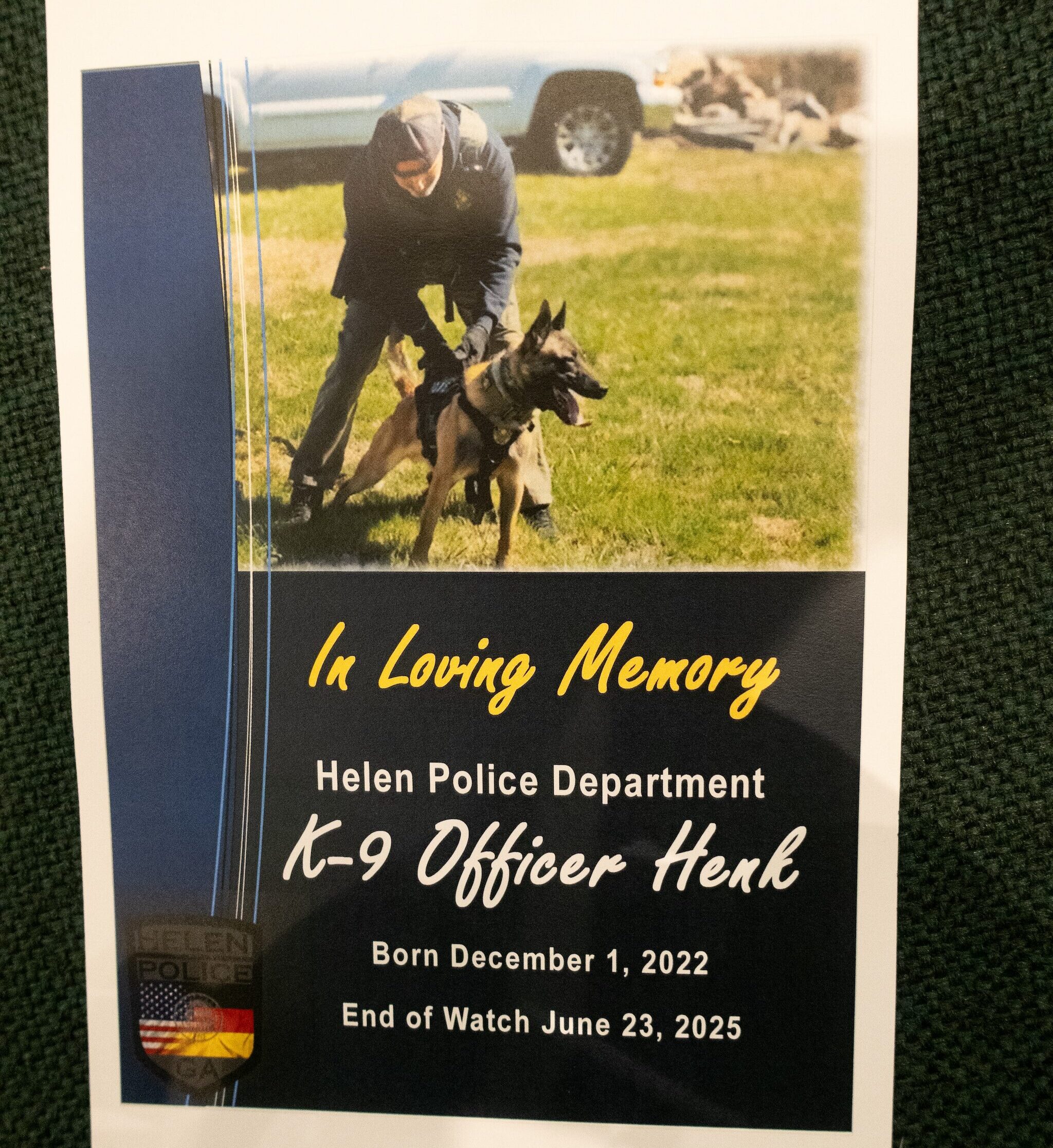
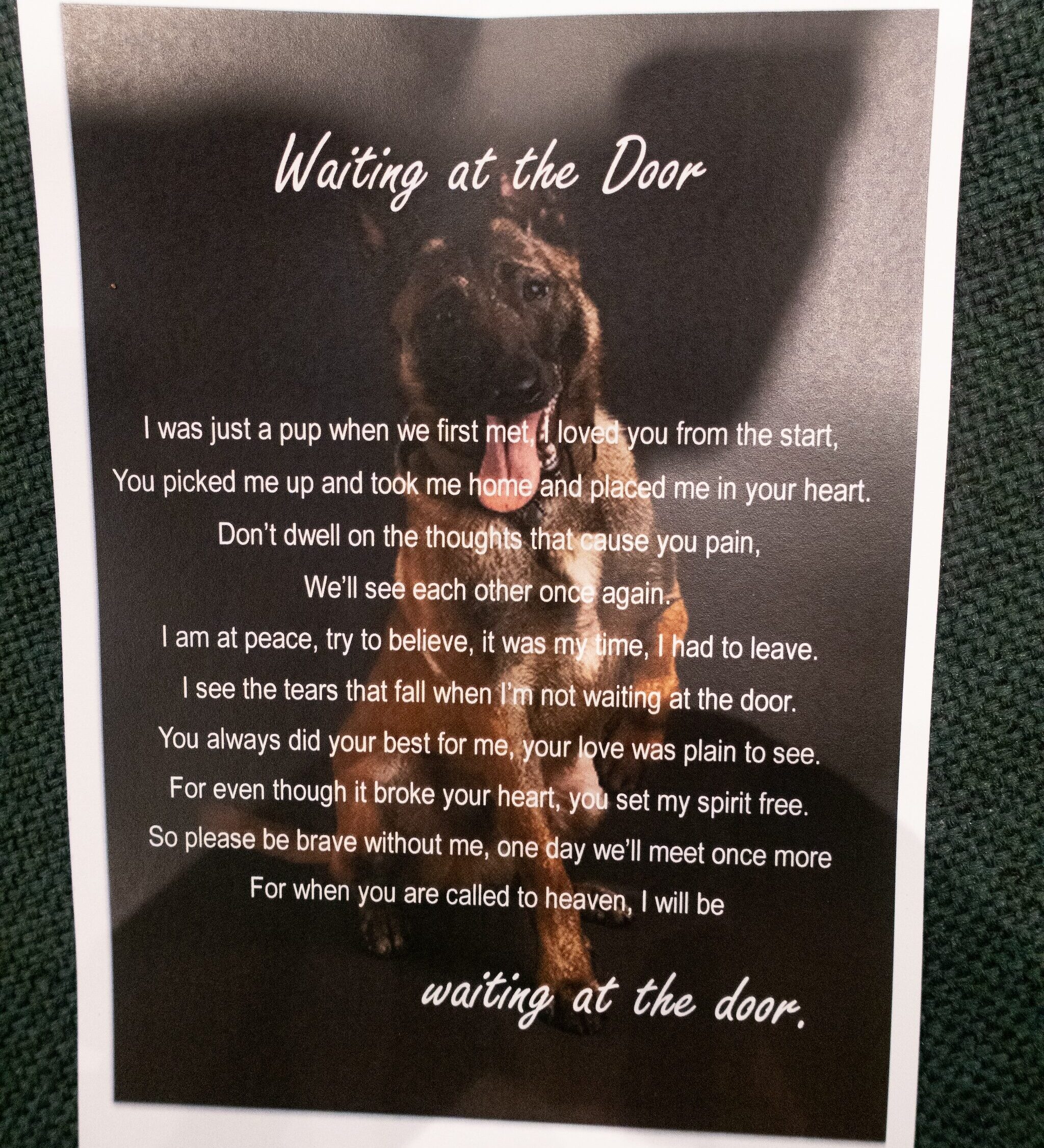
K-9 Henk worked at the Helen Police Department for just over a year. He died during training last week.

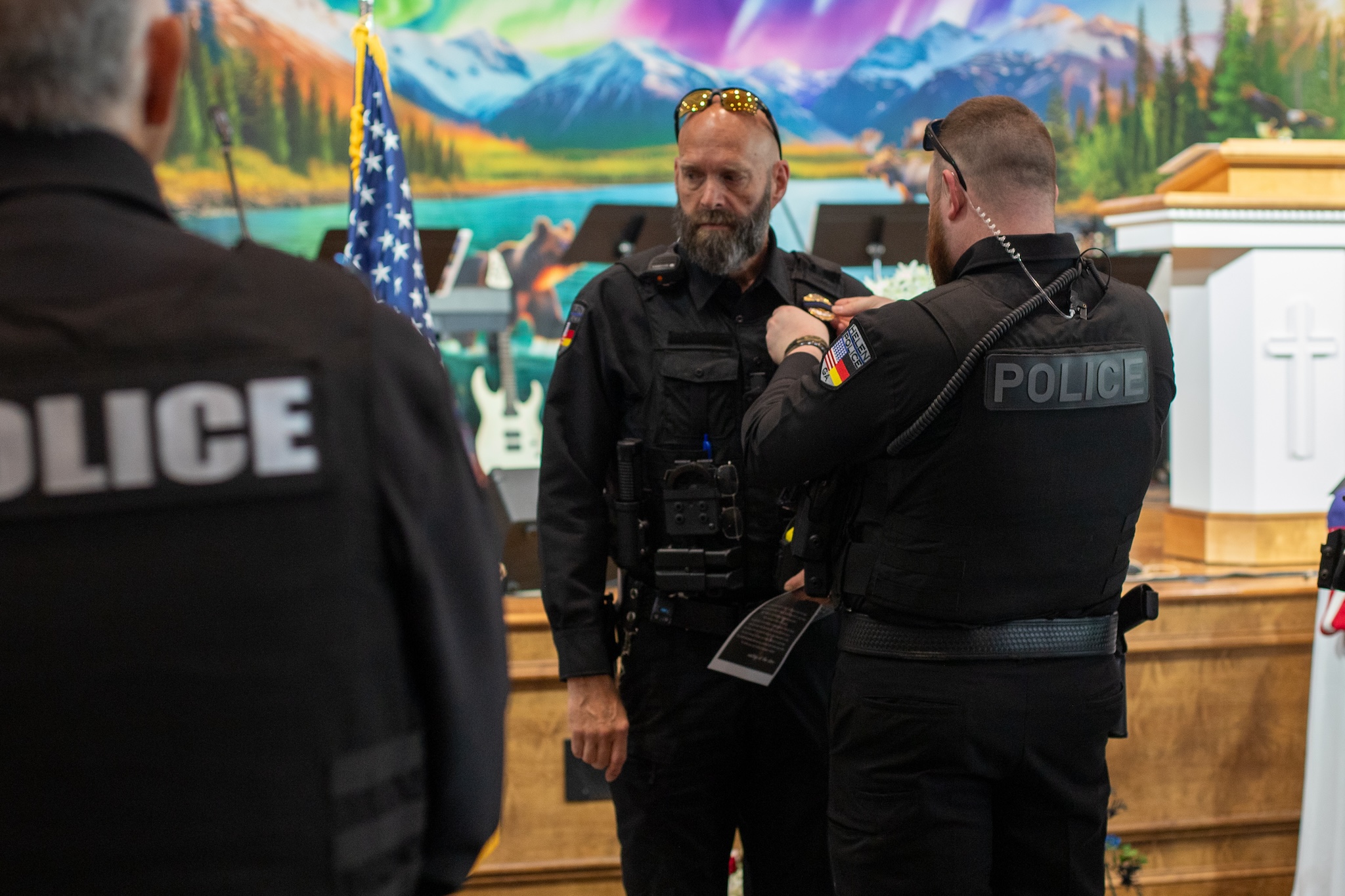
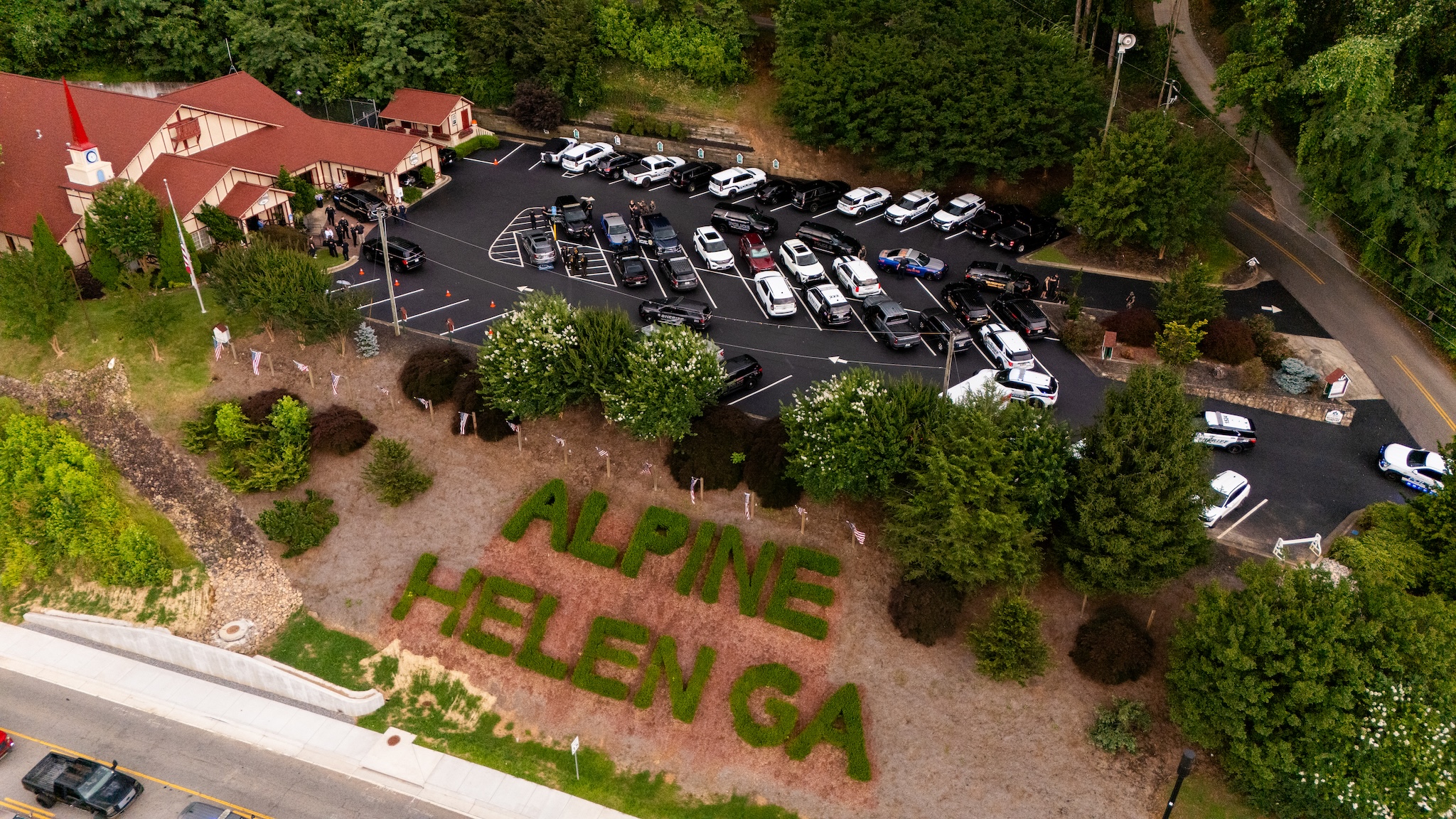
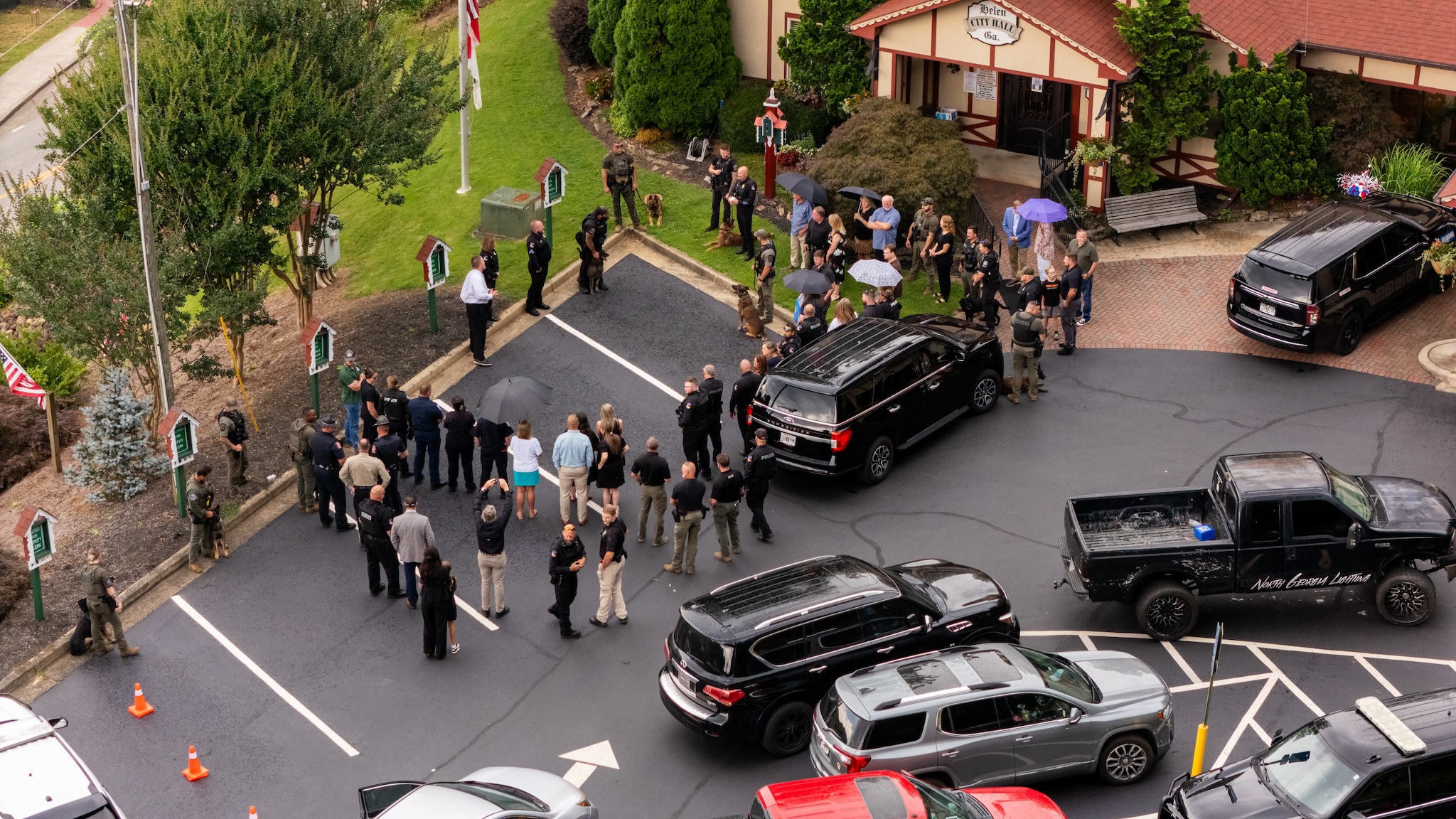
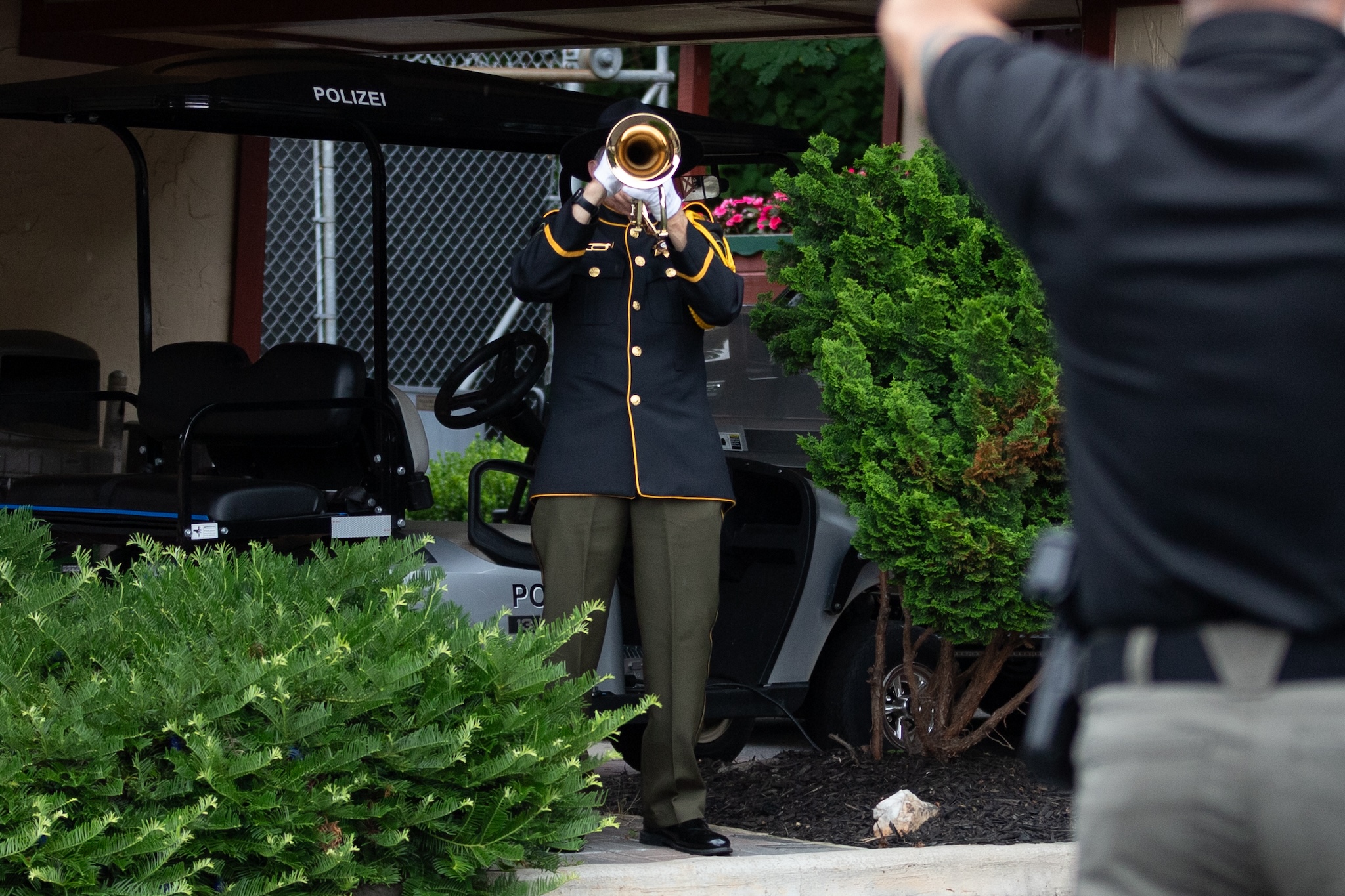
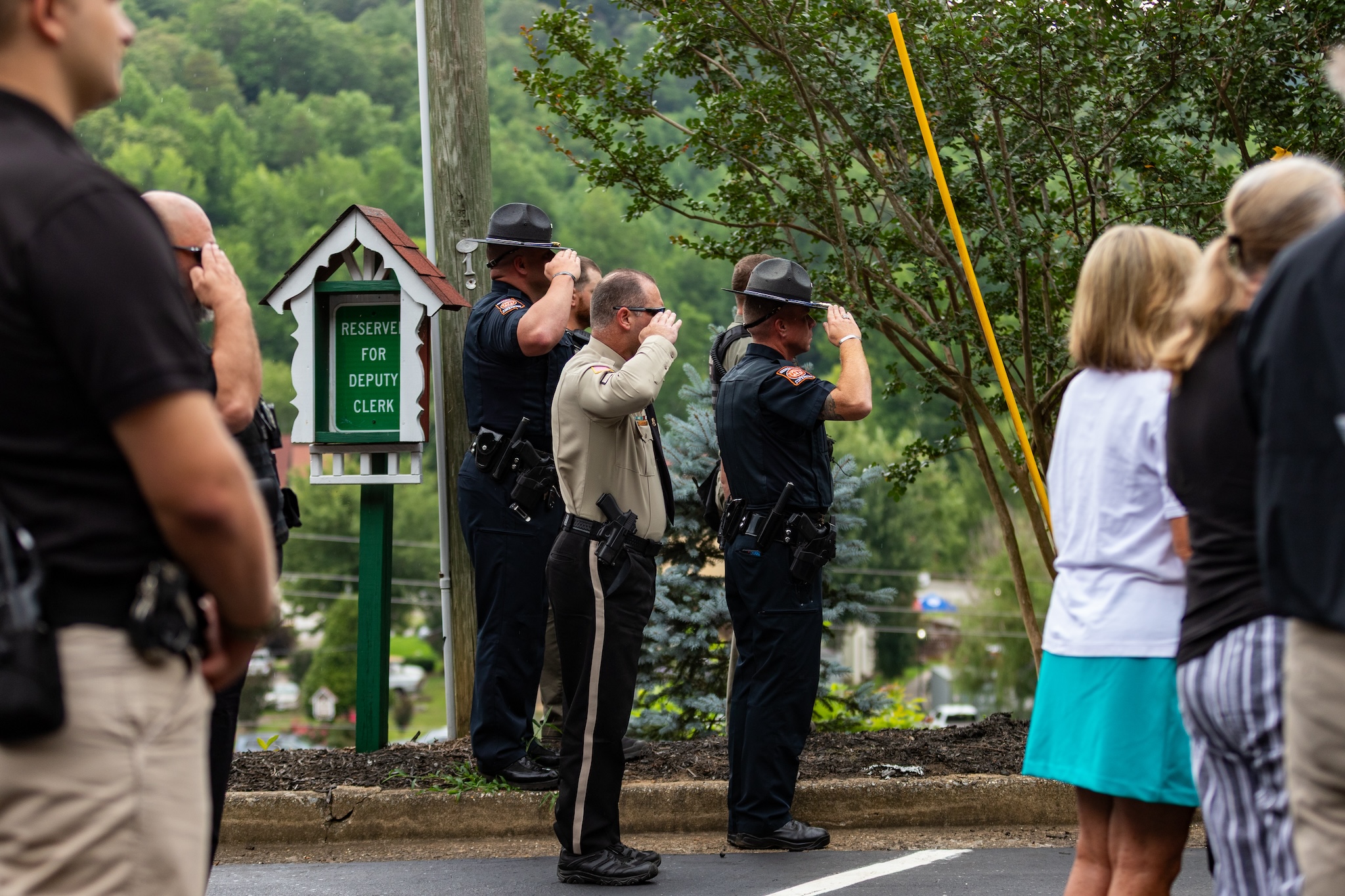
Dozens of fellow law enforcement officers joined Henk’s handler, Sgt. Ray Rutledge, in giving his beloved K-9 partner a fitting farewell. They attended a memorial service for Henk at Helen First Baptist Church, and then escorted his body to the Helen Police Department, where he was laid to rest with full honors.

Now Habersham’s Daniel Purcell and Katelynn Hulsey captured photos of the public funeral and procession in honor of Henk and his service to our community.

VIDEO: Daytime fireball meteor spotted over North Georgia

A rare daytime fireball meteor was seen across North Georgia on Thursday afternoon.

At around 12:27PM, reports started flooding in about a large, bright object in the sky followed by a sonic boom. Shortly after, video emerged of what is certainly a bolide, or extremely bright meteor. Michelle Jones, one of our readers, shared this with us on Facebook from her front porch camera. The meteor can be easily seen very bright.

Meteor over North Georgia Source: Michelle Jones


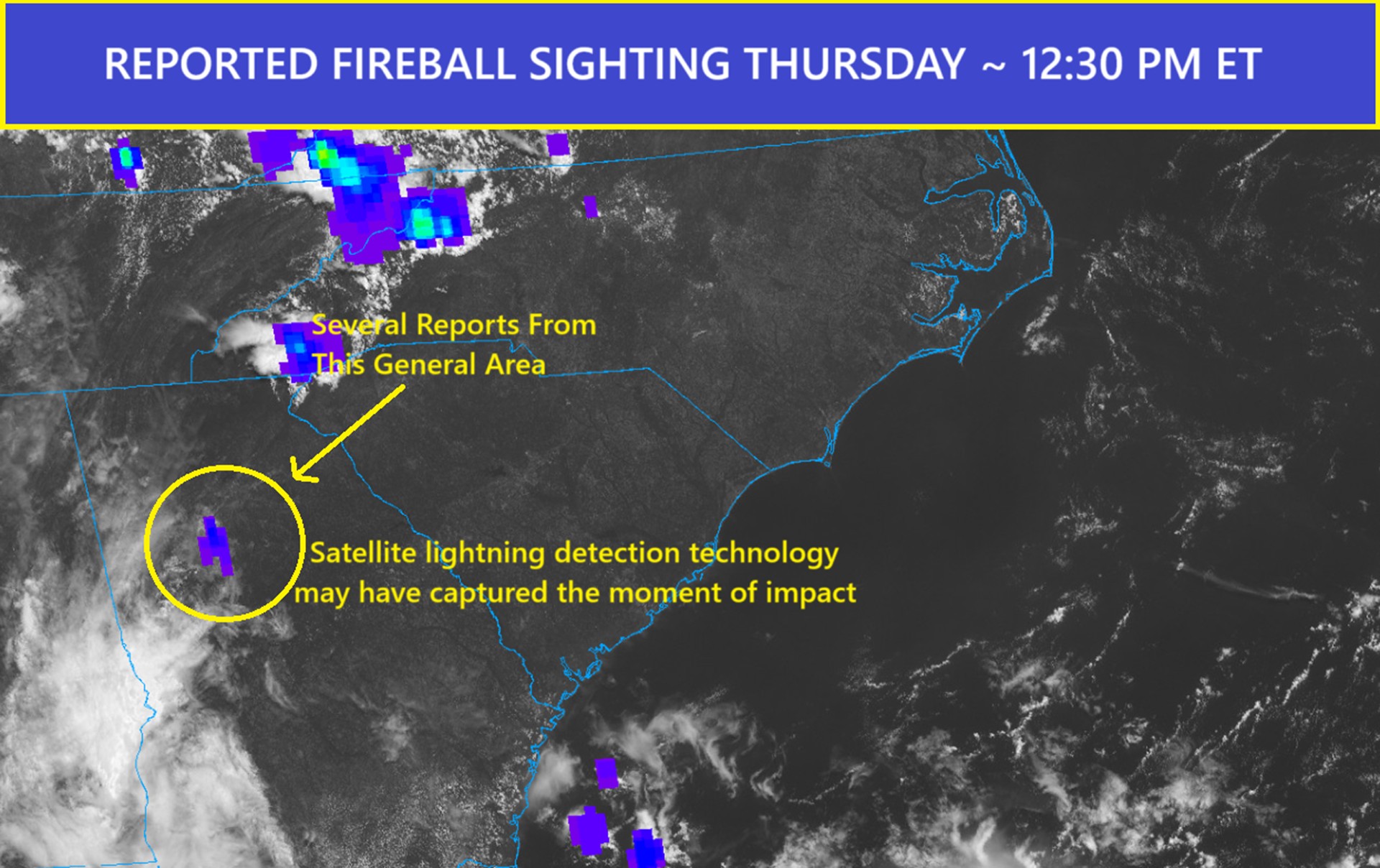
Satellite detection picked up the meteor as it reached the ground just south of Atlanta.

A look at visible satellite imagery shows what may have been smoke from the fireball entering the atmosphere.

The remnants of the meteor likely made it to the ground south of Atlanta, where emergency management reported damage to a home’s roof and interior in Henry County.

A sonic boom was felt with the entry across the region as well.

This is a very rare occurrence with only a few daytime meteors being reported and recorded each year. While thousands of meteors hit our planet each day, those big enough to be seen in daylight are few and far between. The meteor was likely the size of a quarter or a bit larger based on photos of the pieces that made it to the ground and the damage it incurred on the roof and interior of the Henry County house.

Permanent Clarke County Manager to be named after almost a year

Robert "Bob" Cowell, Jr.

After a year-long search and three interim county managers, Athens-Clarke County will soon vote on who its next full-time manager will be.

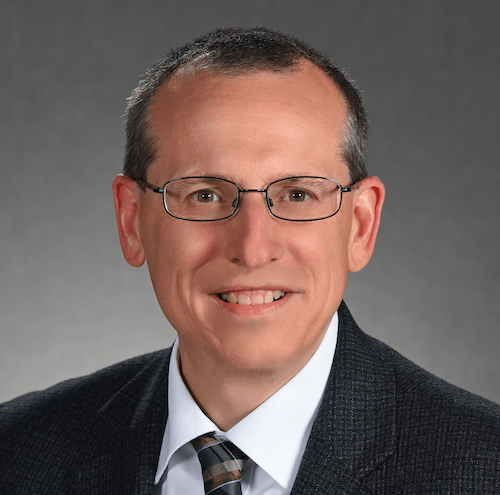
Mayor Kelly Girtz announced this week that Robert (Bob) Cowell, Jr., is the sole finalist for the position of ACCGov Manager. The announcement follows a nationwide search and interviews with four candidates earlier this month.

Cowell brings more than 30 years of experience in city and county leadership roles. He most recently served as City Manager of Roanoke, Virginia, and has held leadership positions in Amarillo, Texas; College Station, Texas; and Monroe County, Indiana.

“Athens-Clarke County is an exceptional place,” Cowell said. “I very much look forward to working with the Mayor, the Commission, ACCGov staff and community members to ensure Athens-Clarke County remains a vibrant community for all who call it home.”

Cowell holds a master’s degree in urban planning from the University of Tennessee and a bachelor’s degree in aeronautics from St. Louis University. He is a Credentialed Manager with the International City/County Management Association and a Certified Urban Planner.

The selection process, conducted in partnership with Strategic Government Resources, drew about 50 candidates from 17 states and two countries. A search committee of commissioners narrowed the field to four finalists, who participated in a two-day selection process that included staff interviews, community tours, and meetings with stakeholders.

“Bob Cowell has spent lengthy and successful tenures in a number of large and complex cities, including several hosting major public universities,” said Girtz “His thoughtful approach to staff support and community development will be an enormous asset to the Unified Government and to residents of Athens-Clarke County.”

Mayor Girtz is expected to present Cowell’s employment agreement for formal approval at a Special Called Session on July 15. If approved, Cowell will begin his new role on July 28.

Blazing temps threaten both people and animals as heat wave rolls through Georgia

With funding from Cobb County, MUST Ministries operates a cooling center off of Bells Ferry Rd at the Hope House on days when temperatures rise above 90 degrees. (Amber Roldan/Georgia Recorder)

(Georgia Recorder) — While the Peach State is no stranger to high temperatures, this week was hotter than most. A National Weather Service heat advisory warned of high temperatures and humidity across the state.

“We basically have an area of high pressure over our area that is allowing these temperatures to be in place,” NWS Peachtree City meteorologist Carmen Hernandez said. “With high temperatures in the upper 90s, along with increased dew points, we are seeing heat indices in the 105 to 109 range.”

The heat index measures humidity and air temperature to more accurately represent what the temperature feels like to the human body, and it’s considered dangerous after reaching 105 degrees. Georgia reached these levels this week, causing a heat advisory to take effect Tuesday and stay in place for most of Georgia through Wednesday evening. The advisory extended through Thursday in the Northwest corner of the state, with some areas still feeling as hot as 105 degrees.

Traditionally, Georgia experiences a couple of heat waves each summer. Even with triple-digit heat indices, this week’s weather was not considered abnormal or concerning for weather experts. As the heat wave scorched the state, Atlanta’s NWS shared suggestions to stay cool. Top recommendations included minimizing exposure by staying inside or out of the sun, drinking extra fluids, and wearing light colored clothing.

Even with suggested coping mechanisms, dangerous exposure levels put some Georgians at higher risk. According to the NWS, vulnerable groups include the elderly, young children, pets and people who work outside.

While air conditioning remains one of the top recommendations to combat the heat, this is not a luxury afforded by all. Unsheltered populations face increased risk when exposed to high levels of heat. Cooling centers across metro Atlanta helped some avoid extended heat exposure. A Cobb County cooling center at Must Ministries’ Hope House has opened their doors every day this week.

“We operate whenever the temperature is above 90 degrees, and we provide lunch and dinner,” said Falecia Stewart, vice president of housing operations.

Last Friday was the first day of the season above this temperature. Traditionally, the Cobb County cooling center sees its busiest days during the month of July. On Tuesday, when the heat advisory began, the cooling center saw 25 people throughout the day. Visitors are welcomed between 9 A.M. and 6:30 P.M.

Outdoor safety

Employees who work outside or inside under harsh temperatures are also a high-risk group. According to the Natural Resources Defense Council, which is an environmental advocacy group, an estimated 1.8 million Georgians work in high-risk jobs that leave them vulnerable to heat-related illness. Farm, food processing, outdoor tourism and construction workers are some of the top occupations prone to heat related illness.

“Heat waves like the one the Southeast and most of the eastern U.S. in general have been facing over the last few days puts additional stress on not only outdoor workers, but indoor workers in hot conditions like kitchens or warehouses,” said Juanita Constible, NRDC senior advocate. “Along with the heat comes the risk of everything from mild heat related cramps and dehydration, to potential death from heatstroke or even cardiovascular illnesses that can be exacerbated by heat.”

Regular rest breaks, shade or air-conditioned spaces and staying hydrated remain the best options to protect people working through heat waves. Constible said she believes that companies with workers who face increased risks should have a written safety plan in place before a heat wave arrives.

Pet and livestock safety

A number of animal advocacy groups also echoed NWS’s warnings in hopes of spreading awareness on how to protect Georgia’s four-legged friends.

Unlike humans, dogs are unable to regulate their body temperatures by sweating. This makes them more susceptible to heat-related illnesses. Panting serves as an alternative allowing water to evaporate from their mouths in an attempt to cool down. However, panting can be insufficient in the level of heat currently encompassing the state.

Dr. Jaclyn Luckstone, president of the Georgia Veterinary Medical Association, recommends walking pets during cooler times to avoid risks.

“If you’re going to take them for a walk, check the pavement with your hand and feel how hot it is, because pets can easily burn their paws on it,” Luckstone said. “If you put your hand on the pavement, and you can’t leave it there for more than a few seconds, then it’s too hot for them to walk on.”

Claudine Wilkins has worked in the animal advocacy world for 37 years. As the executive director of The Animal Protection Society, as well as co-founder of the Georgia Pet Coalition, Wilkins regularly works to fight against animal cruelty.

“Georgia is well known to have lots of problems when it comes to summertime with animals and heat stroke,” Wilkins said.

With the exception of fish and most pests, animals are legally protected in Georgia. This means that leaving animals in hot vehicles can lead to a criminal charge. Wilkins urges bystanders to call local police for assistance if they encounter an animal trapped in a hot car during the heat wave or any warm day.

“Our habits stay the same, and we get used to our air-conditioned cars, houses and workplaces (so) we don’t think about the animals as much,” Wilkins said.

Georgia Agriculture Commissioner Tyler Harper also encouraged Georgians to look out for their pets and livestock.

“With extreme heat expected for the remainder of the week, I am encouraging all Georgians to take steps to protect their pets and livestock from heat stress,” Harper said. “GDA has resources available to help you identify signs of heat stress in your animals and how you can prevent it.”

Much of the East Coast and Midwest joined Georgia underneath a heat dome encompassing large parts of the country this week. As of Wednesday, The New York Times reported that Atlanta was one of 62 major cities with forecasts showing dangerous levels of heat.

After a long week of sweltering temperatures, Georgians can look forward to some relief with forecasts showing highs in the 80s through the entirety of next week.

Alonso’s 3 hits help Mets overcome loss of pitcher Canning in a 4-0 win over Braves

(livestream image courtesy SNY New York Mets/Facebook)

NEW YORK (AP) — Pete Alonso had three hits and an RBI and the New York Mets overcame the loss of starting pitcher Griffin Canning to injury in the third inning Thursday night for a 4-0 victory over the Atlanta Braves and a split of the four-game series.

The Mets, who had lost 10 of 11 games before a 7-3 win over the Braves on Wednesday night, moved back into first place in the NL East, a half-game ahead of the Philadelphia Phillies.

Canning worked 2 2/3 scoreless innings before suffering a left ankle injury on a non-contact play while trying to race off the mound. After the game, Mets manager Carlos Mendoza said it “looks like an Achilles injury.” The team said he would undergo imaging to determine the severity of the injury.

After Canning left, four relievers limited the Braves to two hits the rest of the way. Austin Warren (1-0) replaced Canning and threw 2 1/3 one-hit innings.

Tyrone Taylor lofted a sacrifice fly against Grant Holmes (4-7) in the fourth, and Alonso doubled the lead with a run-scoring hit in the fifth. Jeff McNeil added a two-run single in the seventh.

The Mets won while debuting their blue alternate uniforms with “New York” in script on the front.

Holmes allowed two runs and six hits while walking three and striking out six over five innings.

Key moment

Canning’s injury may have created another vacancy in a depleted rotation for the Mets, who are already without ace Kodai Senga (right hamstring) as well as Tylor Megill (elbow) and Sean Manaea (oblique, elbow).

Key stats

Braves first baseman Matt Olson played in his 700th straight regular-season game — the longest streak in the majors since Miguel Tejada’s 1,152-game streak from 2000-07. … The first pitch temperature was 69 degrees (20 Celsius), 28 degrees cooler than Tuesday’s Citi Field record.

Up next

LHP David Peterson (5-3, 2.98 ERA) starts for the Mets against Pittsburgh RHP Mitch Keller (1-10, 4.02) Friday night.

The Braves and RHP Bryce Elder (2-4, 4.77 ERA) host the Philadelphia Phillies and RHP Mick Abel (2-1, 3.47).

College Spotlight: Swartz leaves Piedmont as one of the all-time greats

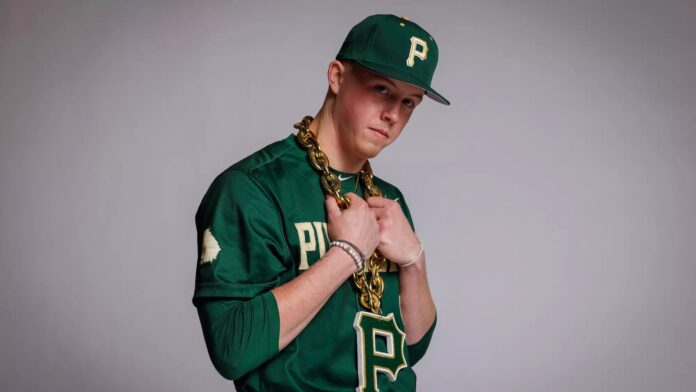
Zeke Swartz (Photo BlitzSportsGa.com)

The dust has settled, the numbers are finalized, and it’s official – Zeke Swartz is among the top pitchers in Piedmont Lions’ history.

Consider the stats: 19-5 overall record as a starter, appearing in 43 games (41 starts). The southpaw’s win total has him tied at third in program history, and same for the starting nods. His 3.38 ERA is fantastic, and his 260 strikeouts also sits third all-time at Piedmont. He’s ninth in innings pitched at 231.2, and first all-time in batting average against – .216.

“It’s what I set out to do from the very beginning,” says Zeke. “I wanted to be the best player I could possibly be for the four years I was at Piedmont. I wanted to leave everything out on the field and know when it was all said and done, I gave it everything I had.”

This past season was his best yet, as he naturally progressed each season since arriving from Union County. See the year-by-year marks below. He really took his game to a new level as a junior in 2024 with a 2.76 ERA and 5-2 record with 89 strikeouts. He followed that with a senior year of 6-1 with a 1.96 ERA and 84 K, earning All-American honors by D3 Baseball and ABCA/Rawlings. He was also named Collegiate Conference of the South Pitcher of the Year after leading the Lions to a 27-15 record.

“Honestly, I didn’t think I had put up the amount of innings and numbers for the All-American Honors,” Zeke admits. “I was extremely surprised, but also grateful. All that hard work put in on and off the field was recognized.”

YEAR W-L ERA K IP APP
2025 6-1 1.96 84 69.0 11-11
2024 5-2 2.76 89 75.0 13.13
2023 6-1 4.84 68 70.2 14-13
2022 2-1 5.82 19 17.0 5-4
19-5 3.38 260 231.2 43-41

While the numbers are eye-popping, you can’t put a number on the memories, relationships, and experiences for Zeke at Piedmont. His top moment came in a game that was not even official, but speaks to the importance of making memories with teammates.

“My favorite moment as a Lion to this day happened in the fall of my sophomore year during an inter-squad,” he recalls. “We were in the last inning and we had a rule where each team could select a pitcher to hit if they needed it. I was in the press box keeping score of the game and was called out to hit, walked down, hit a 3-run homerun and then proceeded to head right back up to the press box!”

The Business Marketing major just graduated in May, and has a world of possibilities ahead of him.

“As for my future plans, I plan on continuing my landscaping company with one of my hometown friends,” states Swartz. “Baseball will always hold a special place in my heart.”

Swartz shined at Union County as a 2021 grad for the Panthers. He was 6-6 with a 2.71 ERA and 109 K as a senior, also batting .402 with a homer and 33 RBI. He went 2-0 with a save and a 1.00 ERA as a junior with 16 K in the COVID-shortened season. In his sophomore season, we hit .360 with 16 RBI, and went 5-1 with a 0.75 ERA and 71 K across 56 innings. Those totals gave him a 13-7 W-L mark with a save and a miniscule 1.45 ERA, striking out 196 batters while batting around .375 with a homer and 49 RBI.

Southeast Division recap: Hornets add winning college players in NBA draft after a 63-loss season

File photo (AP Photo/Jessica Hill, File)

The Charlotte Hornets lost 63 games last year.

The four players they took in this year’s draft — combined — lost fewer than half that last season in college.

Charlotte drafted two players from Duke, one from UConn and one from Creighton this year. That’s after the Hornets took Duke’s Sion James and Creighton’s Ryan Kalkbrenner in the second round Thursday night. If nothing else, Charlotte can move forward with several young additions from winning college programs.

The Hornets and Washington Wizards were the two worst teams in the Southeast Division last year, and they had two first-round picks each, with Washington selecting Tre Johnson at No. 6 and Will Riley at No. 21, and Charlotte taking Kon Knueppel of Duke fourth and Liam McNeeley of UConn 29th.

The Hornets also finally got 7-footer Mark Williams traded this week after a deal with the Los Angeles Lakers fell through last season. Charlotte sent him to Phoenix and got the 29th pick in return.

Also active on the trade market were the Hawks, who dealt away the 13th pick and received the 23rd selection. That was after they’d already traded No. 22 in a deal bringing Kristaps Porzingis to Atlanta.

Rounding out the division, it was a quieter draft for Miami and Orlando, which made one pick each in the first round — both picking in the latter half.

Charlotte Hornets

Needs: You name it, the Hornets need it. Most notably, Charlotte had to stabilize the center position after trading Williams to the Phoenix Suns (and dealing away backup Nick Richards last year). After winning only 19 games, improving 3-point shooting, rebounding and defense were also priorities and the team addressed some of those.

Who they drafted: Knueppel, McNeeley, James and the 7-foot-1 Kalkbrenner.

NBA comparisons: Knueppel draws comparisons to Cam Johnson and Bojan Bogdanović for his shooting ability, savvy play and basketball IQ. McNeeley has been compared to Corey Kispert.

Washington Wizards

Needs: After winning 33 games over the past two seasons, the Wizards still need whatever young talent they can find, and after drafting center Alex Sarr last year, it made sense that they would look to the perimeter. They could use a pure scorer since their recent draft picks — who have shown promise in general — have not been all that efficient in that department.

Who they drafted: Johnson of Texas and Riley of Illinois in the first round, then Jamir Watkins of Florida State in the second.

NBA comparison: Johnson has been compared to Tyler Herro, who is also 6-foot-5. That was an offense-oriented pick.

Miami Heat

Needs: The Heat clearly needed a boost on offense.

Who they drafted: Lithuanian guard Kasparas Jakucionis from Illinois. He’s a good shooter, good slasher and excellent in the pick-and-roll. A strong finisher as well, and some of the passes he tried at the college level showed he was NBA-ready.

NBA comparison: For a Miami standpoint, try Goran Dragic — another smart European who wasn’t afraid to go into the lane, draw contact and use his body against bigger defenders.

Atlanta Hawks

Needs: New general manager Onsi Saleh addressed a need at center with a trade for Porzingis the day before the draft. Saleh then scored a potential draft-day steal by trading the No. 13 pick to New Orleans and landing the No. 23 pick and an unprotected 2026 first-round pick that will be the most favorable of picks held by Milwaukee and New Orleans. That could prove to be a lottery pick.

Who they drafted: Power forward Asa Newell of Georgia may have been Atlanta’s pick at No. 13, so it was a bonus when Newell was still available 10 picks later following the trade.

NBA comparison: Newell has been compared with former NBA forward Paul Millsap, who played four seasons in Atlanta.

Orlando Magic

Needs: The Magic acquired Desmond Bane from Memphis in a recent trade, a move they hope can improve their shooting. Four first-round picks went to the Grizzlies in the deal, so it’s clear Orlando is in win-now mode. Picking 25th, the Magic tried to find a sleeper late in the first round.

Who they drafted: Michigan State’s Jase Richardson, whose father Jason also played for the Magic. Orlando also acquired Noah Penda of France in the second round.

NBA comparison: Richardson isn’t big enough to be compared to his father, but if he can show similarity to Philadelphia’s Jared McCain, the Magic would probably be pretty happy.