Home Blog Page 391

Inmate fatally shoots North Carolina officer before being caught in stolen vehicle, sheriff says

FILE PHOTO - The deadly shooting occurred during an inmate visit to Erlanger Western North Carolina Hospital in Murphy, North Carolina, on Monday, June 30, 2025. (Erlanger Western Carolina Hospital/Facebook)

MURPHY, N.C. (AP) — A federal inmate escaped from custody at a medical clinic in western North Carolina and fatally shot a detention officer with his own gun Monday, then fled in a stolen vehicle before being captured in another county, a sheriff said.

The inmate had been taken to an orthopedics office in Murphy for undisclosed treatment when a scuffle began. The inmate took the officer’s weapon and shot him, Cherokee County Sheriff Dustin Smith said at a news conference. The inmate ran into the parking lot, jumped into a vehicle that had just arrived and took off. The inmate was later apprehended in Macon County, nearly an hour to the east, Smith said.

Smith said the inmate, Kelvin Simmons, 48, will be charged with first-degree murder.

The detention officer was identified as Francisco Paul Flattes, 56, a four-year employee of the Cherokee County Sheriff’s Office. Smith said Flattes’ wife also works for the county detention center.

Another officer suffered injuries unrelated to the shooting and was recovering, the sheriff said.

“This has been probably one of the worst days of my career,” Smith said.

Emergency personnel in Clay County had alerted Macon County deputies that the inmate was driving to their county on U.S. Route 64, authorities said. Simmons’ vehicle was stopped and he was detained after a short standoff. There were no injuries at the scene.

Smith said Simmons was already being held on bank robbery charges along with an October 2024 escape.

Athens Choral Festival features voices from around the country

Joseph Napoli conducts the Athens Choral Festival at Hodgson Concert Hall on Saturday, June 28. (Emma Auer/WUGA)

A long-time Athens music conductor gathered singers from around the nation for a concert of classical music over the weekend.

Joseph Napoli has conducted classical music performers in Athens for decades. He founded the Athens Master Chorale in 1989 and conducted a group of local singers at Carnegie Hall in New York City last year. Saturday’s Athens Choral Festival was a reunion of sorts for that chorus.

He says that in addition to singers from around Georgia and Athens, people from all over the country were invited to participate.

“This is a put-together group, singers from ten states around the country.”

By livestreaming rehearsals, Napoli says everybody was able to prepare themselves for the concert. Suzanne Richardson-White drove 20 hours with her family from Connecticut for the performance. The draw—the chance to once again join the Athens singing family headed by Napoli.

“I’ve known Joe–I sang with the Athens Master Chorale for about ten and a half years when we lived here. He was kind of like my Athens dad when I lived here,” says Richardson-White.

Richardson-White was one of over 60 other singers Saturday night, plus a small orchestra. Napoli conducted the Solemn Vespers by Wolfgang Amadeus Mozart. He also chose Lux: Dawn from on High by a contemporary composer, Dan Forrest.

“The Mozart is kind of straightforward and the Lux is sweeping, highs and lows, louds and softs,” says Napoli. “There’s just so many more things that can go wrong, and a lot that can go right.”

Napoli says he has been conducting music for over 60 years.

“Somehow the people like to do it with me. That part makes it easy. I just announce, ‘We’re doing a concert,’ and they all say, ‘Oh, great, yeah, I’m coming,’ so that’s a really nice thing to feel, too,” he says.

Though his tenure as conductor of Athens Master Chorale may have officially ended last year, Napoli continues to fill stages in the Classic City.

Rural hospitals, SNAP cuts, Medicaid: Democrats force tough votes on GOP mega-bill

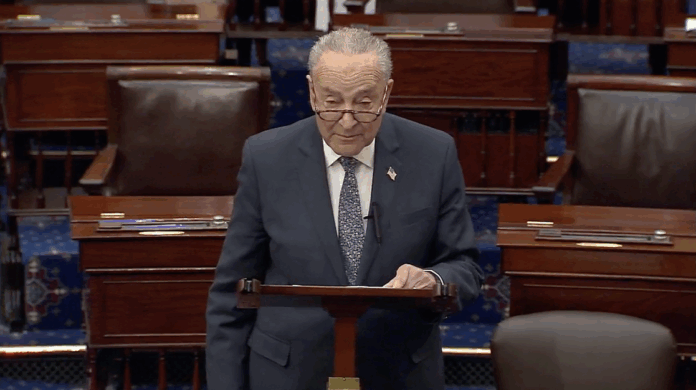
U.S. Senate Minority Leader Chuck Schumer takes to the Senate floor on Monday, June 30, 2025, to encourage his GOP colleagues to vote against the Trump-backed bill. "This bill steals people's health care, jacks up their electricity bill, takes away their jobs, all to pay for tax cuts for billionaires," Schumer said. (Senate livestream image)

WASHINGTON — Senate Republicans were closing in Monday on passing their version of the “big beautiful” tax break and spending cut bill that President Donald Trump wants to make law by a self-imposed July Fourth deadline.

But the chamber’s Democrats first kicked off a marathon of amendment votes, forcing their GOP colleagues to go on the record on tough issues, including cuts to health and food safety net programs. As of early evening, Democrats had not prevailed on any votes.

The tactic is used by the opposition party during massive budget reconciliation fights to draw attention to specific issues even as their amendments are likely to fail.

Democrats decried numerous measures in the mega-bill, including new work reporting requirements for Medicaid, the federal-state health insurance program for low-income people and people with disabilities.

Loud opposition has also swelled as legislative proposals shift significant costs of the federal Supplemental Nutrition Assistance Program, or SNAP, to states for the first time.

“I say to our colleagues, ‘Vote for families over billionaires,’” Sen. Amy Klobuchar of Minnesota said on the Senate floor.

The heart of the nearly 1,000-page legislation extends and expands the 2017 tax law to keep individual income tax rates at the same level and makes permanent some tax breaks on business investments and research and development costs.

The bill would also put in motion some of Trump’s campaign promises, including no tax on qualifying tips, overtime or car loan interest, but only for a few years.

The tax cuts are estimated to cost nearly $4.5 trillion over 10 years, and a provision in the bill raises the nation’s borrowing limit to $5 trillion as the United States faces record levels of debt.

Overall, the Senate bill is projected to add $3.25 trillion to deficits during the next decade, according to the latest calculation from the nonpartisan Congressional Budget Office.

Here are some key votes so far:

Planned Parenthood

Washington Democratic Sen. Patty Murray tried to remove language from the bill that would block Medicaid payments from going to Planned Parenthood for one year unless the organization stops performing abortions.

Federal law already bars funding from going toward abortions, with limited exceptions, but GOP lawmakers have proposed blocking any other funding from going to the organization, effectively blocking Medicaid patients from going to Planned Parenthood for other types of health care.

Murray said the proposal would have a detrimental impact on health care for lower-income women and called it a “long-sought goal of anti-choice extremists.”

“Republicans’ bill will cut millions of women off from birth control, cancer screenings, essential preventive health care — care that they will not be able to afford anywhere else,” Murray said. “And it will shutter some 200 health care clinics in our country.”

Mississippi Republican Sen. Cindy Hyde-Smith opposed efforts to remove the policy change and raised a budget point of order, which was not waived following a 49-51 vote. Maine Republican Sen. Susan Collins and Alaska’s Lisa Murkowski voted with Democrats.

“There was a time when protecting American tax dollars from supporting the abortion industry was an uncontroversial, nonpartisan effort that we could all get behind,” Hyde-Smith said.

Medicaid for undocumented immigrants

Senators from both political parties crossed the aisle over whether the federal government should reduce how much a state is given for its Medicaid program if that state uses its own taxpayer dollars to enroll immigrants living in the country without proper documentation.

The provision was included in an earlier version of the bill, but the Senate parliamentarian ruled it didn’t comply with the complex rules for moving a budget reconciliation bill.

The vote was 56-44, but since it was on waiving a budget point of order, at least 60 senators had to agree to set aside the rules and move forward with the amendment, so the vote failed.

Democratic Sens. Catherine Cortez Masto of Nevada, Maggie Hassan of New Hampshire, and Jon Ossoff and Raphael Warnock of Georgia voted with GOP senators. Maine’s Collins voted with most of the chamber’s Democrats against moving forward.

Texas Republican Sen. John Cornyn asked for the vote, saying he believes the policy change would reduce undocumented immigration.

“Border patrol talks about push and pull factors,” Cornyn said. “One of the pull factors for illegal immigration is the knowledge that people will be able to receive various benefits once they make it into the country.”

Senate Budget Committee ranking member Jeff Merkley, D-Ore., opposed Cornyn’s attempt to get the language back in the bill, saying the policy change would financially harm states that expanded Medicaid under the 2010 health care law for simple mistakes.

“What this amendment says is that if one person, despite state law, through a bureaucratic mistake, is receiving funds, then the whole state pays the price and has their rate on expanded Medicaid changed from 90% to 80%,” Merkley said, referring to the percentage paid by the federal government.

Reduction in funding for Consumer Financial Protection Bureau

An amendment to stop a nearly 50% reduction in funding for the Consumer Financial Protection Bureau was blocked by Republican Sen. Tim Scott of South Carolina, who chairs the Senate Committee on Banking, Housing and Urban Affairs.

Sen. Elizabeth Warren, a Democrat who championed the CFPB after the 2008 financial collapse, attempted to bring the amendment to the floor saying the agency “is the financial watchdog to keep people from getting cheated on credit cards and mortgages and Venmo and payday loans and a zillion other transactions.”

“When this financial cop can’t do its job there is no one else in the federal government to pick up the slack,” Warren said.

Scott blocked her using a budget point of order, saying the reduction still provides “ample funding” for the agency. Democrats tried to waive that procedural tactic, but failed following a 47-53 vote.

An original provision to completely zero out the budget for the CFPB was not included because it did not meet the reconciliation process’ parameters.

Medicaid hospitals and maternal mortality

Senators voted 48-52 to reject Delaware Democratic Sen. Lisa Blunt Rochester’s proposals to send the legislation back to committee to remove language cutting certain funding for Medicaid, which she said would negatively impact “vital hospital services, especially labor and delivery rooms.”

“Today, Medicaid is the single largest payer of maternity care in the United States, covering 40% of births nationwide and nearly half of the births in our rural communities,” Blunt Rochester said. “Obstetric units, particularly in rural hospitals, are closing at alarming rates, actually creating maternity deserts.”

No Republicans spoke in opposition to the proposal, though Maine’s Collins voted in support.

Supplemental Nutrition Assistance Program

New Mexico Democratic Sen. Ben Ray Luján offered a motion to commit the bill back to committee in order to remove all changes related to the Supplemental Nutrition Assistance Program, or SNAP. It was rejected following a 49-51 vote, though Alaska Republican Sens. Dan Sullivan and Murkowski voted in favor.

“I’m offering my colleagues the opportunity to step away from these devastating cuts, to show our fellow Americans that in this country we care for our friends, family and neighbors who need support,” Luján said.

Senate Agriculture Chairman John Boozman, R-Ark., opposed the proposals, saying that SNAP is “on an unsustainable path wrought with mismanagement and waste.”

“This program has devolved into viewing success as enrolling more individuals to be dependent on government assistance,” Boozman said. “SNAP is long overdue for change.”

Medicaid work requirements

Senators voted 48-52 to reject a proposal from Delaware Democratic Sen. Chris Coons that would have sent the bill back to committee to remove language requiring Medicaid enrollees to work, participate in community service, or attend an educational program at least 80 hours a month. Alaska’s Murkowski was the only member of her party to vote in favor of the effort.

Democrats have expressed concern for weeks that some people would lose access to Medicaid if they forgot to complete paperwork proving that time commitment or didn’t understand how to show the government they met the new requirement.

“It is cruel and dishonest to bury patients, kids and seniors in paperwork and then blame them when they lose their health care, all to further rig our tax code for the very wealthiest,” Coons said.

Kansas Republican Sen. Roger Marshall urged opposition to the proposal, saying that working helps people.

“My question is, don’t you think a job brings value, that it brings dignity?” Marshall said. “Do you not think it brings purpose and meaning to life?”

Rural hospitals and Medicaid

Maine’s Collins and Alaska’s Murkowski both voted for a proposal from Massachusetts Democratic Sen. Ed Markey that would have removed parts of the bill changing Medicaid.

But even with some bipartisan support, the changes were rejected on a 49-51 vote that would have technically sent the bill back to committee for three days to implement the changes.

“My Republican colleagues’ so-called Medicaid cuts replacement fund is like giving aspirin to a cancer patient,” Markey said. “It is not enough. It is pathetically inadequate to deal with the health care crisis Republicans are creating here today on the Senate floor. No billionaire tax break or Donald Trump pat-on-the-back is worth the risk of people’s lives.”

Senate Finance Committee Chairman Mike Crapo, R-Idaho, spoke out against the proposal, saying that rural hospitals have long had financial challenges and that it was clearly “intended to derail this very bill.”

“Unfortunately for far too long some rural hospitals have struggled to achieve financial stability, even with a wide-range of targeted payment enhances,” Crapo said. “These issues pre-date the consideration of the reforms that we are including in the legislation today.”

Etta Mae Parson Powell

Etta Mae Parson Powell, age 88, of Homer, Georgia, passed away on Sunday, June 29, 2025.

Mrs. Powell was born on August 27, 1936, in Homer, Georgia, to the late Henry Parson and Cleo Arnold Parson. In addition to her parents, she was preceded in death by her loving husband of 38 years, Charles “Bill” Powell; son, Terry Lee Powell; brother, Hoyt Parson, Bobby Parson; sister, Lois Snipes;

Survivors include her daughter and son-in-law, Scarlet and Stacey McDonald, of Homer; granddaughter, Erin McDonald; daughter-in-law, Tammy Powell, of Homer; grandson and his spouse, Greg and Jessica Powell, of Homer; granddaughter, Nicole Powell, of Greenville, SC; great-granddaughters, Charlie Ann Powell, and Bailee Powell; sister, Lou Jean Waddell, of Homer; Barbara Ann Trotter, of Homer; brother, Lloyd Parson, of Homer; and numerous nieces and nephews.

Funeral Services will be held at 2:00 p.m., Wednesday, July 2, 2025, at the Whitfield Funeral Home, South Chapel, with Rev. Robert Nix officiating. Interment will follow in the Silver Shoals Baptist Church Cemetery.

The family will receive friends from 2:00 p.m. to 4:00 p.m. and 6:00 p.m. to 8:00 p.m., Tuesday, July 1, 2025, at the funeral home.

Arrangements have been entrusted to the Whitfield Funeral Homes & Crematory, South Chapel at 1370 Industrial Boulevard, Baldwin, Georgia 30511. Telephone: 706-778-7123

Becky Kay Floyd Stone

Becky Kay Floyd Stone, age 70 of Clarkesville, Georgia & formerly of the Redwine Community of Hart County, Georgia, passed away on Sunday, June 29, 2025, at home.

Born in Royston, Georgia on January 04, 1955, she was a daughter of the late George McWhorter & Ruby Jean Johnson Floyd. Becky was a homemaker who enjoyed cross-stitching and special time with her grandchildren.

In addition to her parents, she was preceded in death by her infant sister, Starley Laine Floyd.

Survivors include her loving husband of 51 years, Hugh Doyle Stone; daughter, Amber Stone; daughters & sons-in-law, Jada & Ben Harrison, Candi & Oswyn Harrow; brother & sister-in-law, Mike & Betty Floyd; sister & brother-in-law, Christy Holcombe-Busby & Blake Busby; grandchildren, Zoe Harrison, Jaden Harrison, & Zion Harrison.

Mrs. Stone’s wishes were to be cremated.

A celebration of Becky’s life will be held at 6:00 p.m. on Saturday, July 19, 2025, at the home of her daughter, Jada, at 154 Washington Street, Jefferson, Georgia 30549.

In lieu of flowers, memorials may be made to St. Jude Children’s Research Hospital, 501 St. Jude Place, Memphis, TN 38105.

The family would like to thank the Compassus Hospice Staff for their support over the past year and nine months.

An online guest registry is available for the Stone family at www.mcgaheegriffinandmcentire.com.

McGahee-Griffin & McEntire Funeral Home of Cornelia, Georgia (706/778-8668) is in charge of arrangements.

Bryan Kohberger to plead guilty to murder in Idaho student stabbings to avoid death penalty

FILE - Bryan Kohberger, the man accused of fatally stabbing four University of Idaho students, is escorted into court for a hearing in Latah County District Court, Sept. 13, 2023, in Moscow, Idaho. (AP Photo/Ted S. Warren, Pool, File)

BOISE, Idaho (AP) — Bryan Kohberger has agreed to plead guilty to murdering four University of Idaho students as part of a deal to avoid the death penalty, an attorney for one victim’s family said.

Shanon Gray, an attorney representing the family of Kaylee Goncalves, confirmed Monday that prosecutors informed the families of the deal by email and letter earlier in the day, and that his clients were upset about it.

“We are beyond furious at the State of Idaho,” Goncalves’ family wrote in a Facebook post. “They have failed us. Please give us some time. This was very unexpected.”

They spoke with the prosecution on Friday about the idea of a plea deal and they explained they were firmly against it, the family wrote in another post. By Sunday, they received an email that “sent us scrambling,” and met with the prosecution again on Monday to explain their views about pushing for the death penalty.

“Unfortunately all of our efforts did not matter. We DID OUR BEST! We fought harder then anyone could EVER imagine,” the family wrote.

A change of plea hearing was set for Wednesday, but the family has asked prosecutors to delay it to give them more time to travel to Boise, Gray said. Kohberger’s trial was set for August in Boise, where it was moved following pretrial publicity in rural northern Idaho.

Kohberger, 30, is accused in the stabbing deaths of Goncalves, Ethan Chapin, Xana Kernodle and Madison Mogen at a rental home near campus in Moscow, Idaho, early on Nov. 13, 2022. Autopsies showed the four were all likely asleep when they were attacked, some had defensive wounds and each was stabbed multiple times.

At the time, Kohberger was a criminal justice graduate student at Washington State University, about 9 miles (14.5 kilometers) west of the University of Idaho. He was arrested in Pennsylvania, where his parents lived, weeks later. Investigators said they matched his DNA to genetic material recovered from a knife sheath found at the crime scene.

No motive has emerged for the killings, nor is it clear why the attacker spared two roommates who were in the home. Authorities have said cellphone data and surveillance video shows that Kohberger visited the victims’ neighborhood at least a dozen times before the killings.

The murders shocked the small farming community of about 25,000 people, which hadn’t had a homicide in about five years, and prompted a massive hunt for the perpetrator. That included an elaborate effort to track down a white sedan that was seen on surveillance cameras repeatedly driving by the rental home, to identify Kohberger as a possible suspect through the use of genetic genealogy and to pinpoint his movements the night of the killings through cellphone data.

In a court filing, Kohberger’s lawyers said he was on a long drive by himselfaround the time the four were killed.

In the letter to families, obtained by ABC News, prosecutors said Kohberger’s lawyers approached them seeking to reach a plea deal. The defense team had previously made unsuccessful efforts to have the death penalty stricken as a possible punishment, including arguing that Kohberger’s autism diagnosis made him less culpable.

The prosecutors said they met with available family members last week before deciding to make Kohberger an offer.

“This resolution is our sincere attempt to seek justice for your family,” the letter said. “This agreement ensures that the defendant will be convicted, will spend the rest of his life in prison, and will not be able to put you and the other families through the uncertainty of decades of post-conviction, appeals. Your viewpoints weighed heavily in our decision-making process, and we hope that you may come to appreciate why we believe this resolution is in the best interest of justice.”

In a Facebook post, the Goncalves family wrote that Kaylee’s 18-year-old sister, Aubrie, had been unable to attend the meeting with prosecutors. But she shared her concerns in a written statement.

“Bryan Kohberger facing a life in prison means he would still get to speak, form relationships, and engage with the world,” Aubrie Goncalves wrote. “Meanwhile, our loved ones have been silenced forever. That reality stings more deeply when it feels like the system is protecting his future more than honoring the victims’ pasts.”

In Idaho, judges may reject plea agreements, though such moves are rare. If a judge rejects a plea agreement, the defendant is allowed to withdraw the guilty plea.

Earlier Monday, a Pennsylvania judge had ordered that three people whose testimony was requested by defense attorneys would have to travel to Idaho to appear at Kohberger’s trial.

The defense subpoenas were granted regarding a boxing trainer who knew Kohberger as a teenager, a childhood acquaintance of Kohberger’s and a third man whose significance was not explained.

A gag order has largely kept attorneys, investigators and others from speaking publicly about the investigation or trial.

___

By Rebecca Boone and Gene Johnson

A Star Spangled Classic ushers in the Fourth in Northeast Georgia

Fireworks light up the night sky over Athens during a Star Spangled Classic on Saturday, June 28, 2025. (Ziggy Moon/WUGA)

Saturday, June 28, the Athens-Clarke County Leisure Services Department hosted their annual Fourth of July celebration, the ‘Star Spangled Classic.’

The Star Spangled Classic featured an array of entertainment, including several carnival rides and bounce houses for the younger festival goers. There was also a live band, The Funk Brotherhood, that played up until the fireworks show. Singing classics along with modern hits, everyone was able to enjoy the music. To keep the festivities going, they had a food truck court, which included vendors from Chick-fil-a, Kona Ice, and Cafe Racer.

Teenagers played soccer and threw footballs, while the younger kids climbed monkey bars and took turns on the slides. Dressed for the occasion, festival goers wore all types of reds, whites, and blues. The Southeast Clarke Park fields were scattered with picnic blankets and lawn chairs, with many people waiting in anticipation for the fireworks.

With bad weather looming, the fireworks show was rescheduled for 9:15, up from its original time of 9:30. Despite the change, the fireworks show went off without a hitch. Colors filled the night skies while festival goers watched in awe.

The festivities ended shortly after the last fireworks went up.

This article appears on Now Habersham in partnership with WUGA News

New Georgia laws to take effect July 1st

A slew of new laws passed during the last session of the General Assembly take effect July 1st.

Senate Bill 1 was the first item on the Republican-led state Senate’s agenda. It generally prohibits student athletes in private and public schools and colleges from competing in interscholastic and intercollegiate sports on teams that do not match their birth gender.

House Bill 111 and 112 provided an income tax cut and a taxpayer rebate.

House Bill 428 brought both parties together to support efforts to protect in vitro fertilization.

House Bill 340 means no more cellphones in public schools in the grades from kindergarten through middle schools but the law allows schools until the fall of next year to figure how to stop their students from using phones in school. The proponents of this ban on devices that are widely viewed as a distraction stopped short of prohibiting them in high schools. Ban backers said high schools could be next.

Smartphones and driver’s licenses have been joined under House Bill 296, meaning you can store your license on your phone, but the law gives police two years to prepare.

Under House Bill 398, home bakers and other makers will be allowed to sell their goods online, by mail, in grocery stores and at restaurants this is generally limited to food that is stable without temperature control.

Senate Bill 241, which inspired a bit of uneasy humor at the Capitol. It allows the composting of human corpses and passed with huge bipartisan majorities.

This article appears on Now Habersham in partnership with WUGA News

US Senate kicks off vote-a-rama on massive tax and spending cut bill

The U.S. Capitol on Sunday, June 29, 2025. (Jennifer Shutt/States Newsroom)

WASHINGTON (States Newsroom) — The U.S. Senate launched a marathon amendment voting session Monday during which lawmakers will debate dozens of proposals from Republicans and Democrats that could significantly reshape the “big, beautiful bill” even as a final vote nears.

The vote-a-rama is expected to last throughout Monday and potentially into Tuesday, challenging senators who aren’t accustomed to having to stay on the floor for all hours of the day and night. At the end, the Senate will vote on final passage and if the tax and spending cut bill is successful it will be taken up next in the House, possibly as soon as Wednesday morning.

The first big debate and vote Monday centered around Republicans’ decision to use current policy instead of current law to determine the bill’s fiscal impacts.

Congress has long used current law to determine how much legislation will add or subtract from annual deficits, especially when it comes to the budget reconciliation process that is being used for this bill.

But since Republicans’ 2017 tax law was set to expire at the end of the year, using the current law baseline showed significantly higher deficits than using current policy — which could prove to be a political problem.

The debate, wonky even for the Senate, could have ripple effects in the future, especially if Democrats ever get unified control of government and use the change in process that GOP lawmakers set this time around for their own policy goals.

Budget Chairman Lindsey Graham, R-S.C., said during brief debate before the vote that using current policy would allow the GOP to make many of the tax levels in the 2017 law permanent, instead of having to sunset them to comply with reconciliation rules.

“What I’m trying to do, and I’m very happy about it, is to make sure the tax cuts don’t expire 10 years from now,” Graham said.

Reconciliation bills cannot increase the deficit after the 10-year budget window ends.

Senate Democratic Leader Chuck Schumer of New York spoke out against using current policy over current law, rebuking his Republican colleagues, though his arguments were ultimately unsuccessful.

“Republicans are doing something the Senate has never done before — deploying fake math, accounting gimmicks to hide the true cost of the bill,” Schumer said. “Look, Republicans can use whatever budgetary gimmicks they want to try to make the math work on paper but you can’t paper over the real-life economic consequences of adding tens of trillions to the debt.”

The nonpartisan Congressional Budget Office released its current law score of the bill on Sunday, showing the legislation would add $3.253 trillion to deficits during the next decade.

Senators voted 53-47 along party lines against overruling Graham’s decision to use current policy.

Narrow majority

Senators spent the next few hours debating Democratic changes to the bill that would have addressed Medicaid and the Supplemental Nutrition Assistance Program. But no Democratic proposals had been adopted as of Monday afternoon and Republicans had yet to start voting on their own amendments.

Once both sides exhaust themselves, the Senate will move on to a final passage vote. With a narrow 53-seat majority, GOP leaders can only afford to lose three members and still have the bill pass with Vice President JD Vance breaking the tie.

Two Republican senators — Thom Tillis of North Carolina and Rand Paul of Kentucky — already indicated they’ll oppose the bill when they voted against advancing it late Saturday night. Altering the bill could cause issues for other senators, making the entire process a headache for GOP leadership.

Senate Majority Leader John Thune, R-S.D., said during a floor speech that the core of the sweeping package is focused on avoiding a cliff created when Republicans approved lower tax rates during President Donald Trump’s first term.

“This is about extending that tax relief so the same people that benefited from it back in 2017 and for the last eight years don’t end up having a colossal, massive tax increase hitting them in the face come January 1,” Thune said.

Schumer sharply criticized the policy changes and spending cuts in the mega-bill, saying they would lead to fewer people being able to access safety-net programs, like Medicaid, which provides health insurance coverage for low-income people and some people with disabilities, and the Supplemental Nutrition Assistance Program, which provides food assistance for low-income people.

“How can any senator go home and tell their constituents, ‘I’m sorry, I took away your health care because I wanted to give tax breaks to billionaires?’” Schumer said. “And yet Republicans are dead set on walking off a cliff by passing a bill they know will be ruinous to their own constituents.”

‘Wraparound amendment’

Depending on how popular an amendment is and exactly what aspects of the legislation it seeks to change, it could increase or decrease the number of GOP senators willing to vote for the final version of the bill.

Republican leaders will want to fend off all Democratic amendments, though if some do get added, Thune can use a procedural tactic called a “wraparound amendment” at the end to cut any problematic changes by wiping out Democratic amendments with a majority vote.

In addition to providing an opportunity for senators to debate nitty gritty policy details, the vote-a-rama serves a political purpose for Democrats, who will try to get at-risk senators to take votes that can then be used during the midterm elections to try to sway voters.

Those amendments will mostly focus on Maine’s Susan Collins after North Carolina’s Tillis announced his retirement Sunday.

While Democrats have more incentive for so-called “gotcha amendments” since they’re trying to flip the Senate from red to blue, GOP leaders may also bring up amendments challenging vulnerable Democratic senators, like Georgia’s Jon Ossoff.

And since the opportunity to put up as many amendments as a senator pleases is rare, both Democrats and Republicans may have an eye on purple-state lawmakers up for reelection in 2028.

Operation Zero Tolerance in full effect as holiday travel ramps up

File photo (Daniel Purcell/NowHabersham.com)

As Georgia’s Operation Zero Tolerance enters its fourth day, local authorities are already seeing results. Since the holiday enforcement campaign began on June 27, law enforcement officers have made ten traffic-related arrests in Habersham County.

The arrests are part of a coordinated statewide push led by the Governor’s Office of Highway Safety to crack down on impaired, aggressive, and distracted drivers during one of the year’s busiest travel periods.

Locally, the Habersham County Sheriff’s Office Special Operations Units — including H.E.A.T. (Highway Enforcement of Aggressive Traffic) Deputies and patrol officers — have joined forces with the Georgia State Patrol to increase visibility and enforcement on major roadways. The effort includes increased patrols and roadside safety checks throughout the county.

“These efforts are in line with one of our chief responsibilities in traffic safety to reduce crashes and fatalities at the hands of impaired drivers on the roadways,” a news release from the sheriff’s office says.

Authorities say enforcement will continue through July 6. Motorists can expect to see an increased law enforcement presence, particularly on state routes and high-traffic corridors.

The sheriff’s office urges drivers to buckle up, obey posted speed limits, avoid distractions, and never drive under the influence.

“Drive sober or you will get pulled over,” officials warn.

NGTC launches summer farmers market in Clarkesville

(NowHabersham.com)

Fresh veggies, blooming flowers, and a chance to support local students? Yes, please.

North Georgia Technical College is bringing new life to Tuesdays this summer with the launch of its Farmers Market at the Irvin Agriscience Complex. The market is open from 1 to 5 p.m. each Tuesday through September 23 at NGTC’s Clarkesville campus. To reach it, follow Loop Road to the greenhouses and you’ll find a lively hub of homegrown goodness.

Local vendors will offer fresh-picked summer produce, while NGTC’s own Horticulture program will showcase seasonal blooms. Proceeds go directly to support NGTC’s Agriculture and Horticulture programs, giving students a meaningful way to share the fruits (and flowers) of their labor with the community.

“Our students take a lot of pride in their work,” said Stephanie Benson, NGTC’s Vice President of Academic Affairs. “We’re thrilled to open this opportunity for the public to enjoy what they’ve grown — and to help our programs flourish in the process.”

North Georgia Technical College is located at 1500 GA-197 in Clarkesville.

Interested in becoming a vendor? Call 706-754-7822 for more information.

White County’s Travis Turner reappointed to lead statewide county policy committee

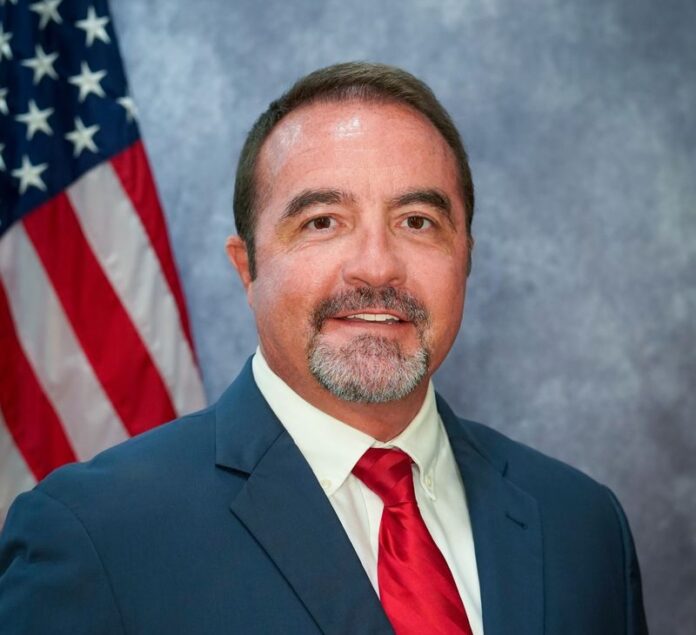
White County Commission Chairman Travis Turner

White County Commission Chairman Travis Turner has been reappointed to serve as chair of the General County Government Policy Committee for the Association County Commissioners of Georgia (ACCG), also known as Georgia’s County Association.

Turner’s appointment was made by ACCG President and Dougherty County Commissioner Clinton Johnson. He will continue leading the committee alongside newly appointed Vice Chair Dan Perdue, chairman of Houston County.

“It is an honor to continue serving as Chair of the General County Government Policy Committee,” Turner said. “This committee plays a critical role in shaping policies that strengthen local governance across our state.”

The General County Government Committee focuses on issues related to the structure of county government and its relationships with constitutional officers, courts, and other levels of government. It also addresses areas such as elections, ethics, home rule, service delivery, and planning and zoning.

ACCG Executive Director Dave Wills praised the importance of policy committee leaders, saying, “Advocacy is a foundational aspect of our organization, and our policy committee leaders are essential to our advocacy efforts.”

Through a collaborative, consensus-based process, ACCG’s policy committees develop the association’s official policy priorities, which guide its legislative advocacy efforts on behalf of Georgia counties.