Home Blog Page 39

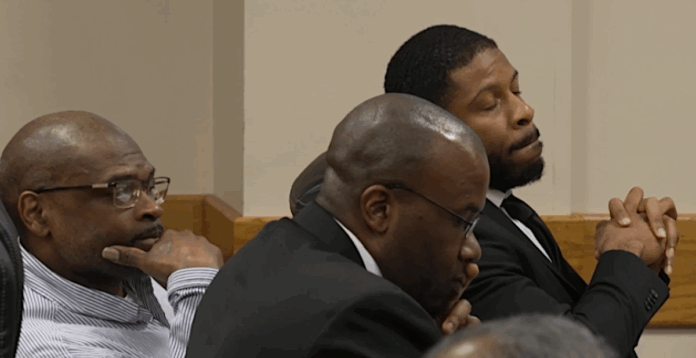
Edrick Faust found guilty on all counts in Tara Baker’s murder

Feb 4, 2026 - Defendant Edrick Faust (far left) with his counsel during day three of the Tara Baker murder trial. (WUGA News)

ATHENS, Ga. — After 12 hours of deliberations, jurors reached a verdict Tuesday afternoon in the cold-case murder trial of University of Georgia law student Tara Baker. Edrick Faust has been found guilty on all charges, including malice murder, felony murder, rape, arson, tampering with evidence, and all other charges in her death.

Baker was found dead in her East Athens home in January 2001 after authorities responded to a fire. Prosecutors alleged Faust, who had a previous criminal history, had raped and murdered her, then attempted to hide the evidence by setting fire to her apartment.

The body of University of Georgia law student Tara Baker was found inside a burned out apartment in Athens in 2001. Her suspected killer was arrested in May 2024. (Photo courtesy The Red & Black)

The case remained unsolved for years until a 2023 law established a Georgia Bureau of Investigation cold case unit specializing in DNA technology, which led to Faust’s arrest in May 2024.

Monday’s deliberations consisted of the jury re-watching GBI investigator William Ricketts’ testimony and reviewing DNA analysis. A sentence hearing is scheduled for 3 p.m. Thursday.


This article comes to Now Habersham in partnership with WUGA News

Mayor: Columbus is in a season of change

Mayor remarks during State of the City (Robbie Watson/NowGeorgia.com)

Mayor Skip Henderson delivered his final State of the City remarks in front of a packed audience that included local leaders from the business sector, education, military and public safety arena. Crime is down, morale is up and the search for a new city manager is moving forward. The mayor told the crowd to trust the process; the same process he used to hire a new Fire Chief and Police Chief.

Life is good in Columbus, Georgia right now the mayor told Now Georgia after his remarks. “It is. There’s so much momentum right now and we didn’t even really talk about the fact there’s been so much change. I mean we’ve got a new economic development person; we’ve got a new chamber chair; we’ve got a new visit Columbus with our tourism. We’re going to have a new city manager; we’re going to have a new mayor. We’re going to have a couple new councilors, all of that change bringing all that fresh perspective. Columbus is poised to do great things,” Henderson said.

When Skip Henderson was first elected to city council 30 years ago all eyes were on South Commons and the 1996 Olympics. As he closes out his tenure in public service the city is once again focused on South Commons. “I didn’t think about that but you’re right it kind of comes full circle and the thing is we’ve tried so many times to create some energy in South Columbus and South Commons and we just haven’t been able to really see it take off but I’m convinced that with the Clingstones there as sort of a cornerstone for development we’re gonna get that done,” he said.

Henderson is serving his last year after an eight-year term as mayor. He said he’s not on a farewell tour yet, but it feels good to hear talk of a positive legacy before he leaves office. “Obviously is feels wonderful because I’ve been able to work with so many people. It’s not done in a vacuum right, so councils helped, the private sector helps and Fort Benning and the folks out there help. It’s just a really unique place to live. I know I wouldn’t want to live anywhere else.”


County formally objects to Baldwin annexation

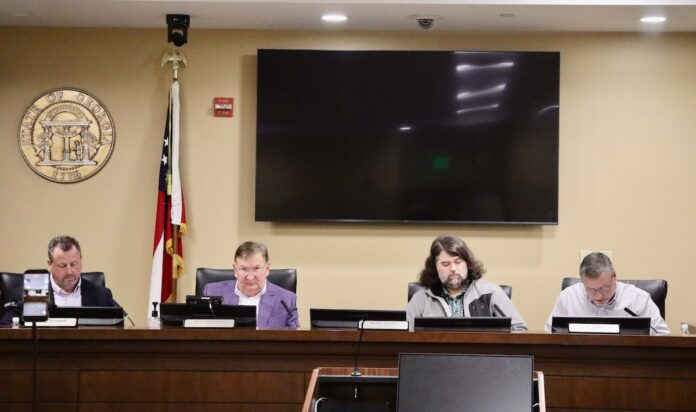
The Habersham County Board of Commissioners. (Patrick Fargason/NowGeorgia.com)

CLARKESVILLE, Ga. — The Habersham County Board of Commissioners voted unanimously Monday to formally object to the City of Baldwin’s proposed annexation of nearly 100 acres along Duncan Bridge Road and GA 365, setting the stage for a possible state arbitration process.

The board adopted a resolution directing the county attorney to file a timely objection with the Georgia Department of Community Affairs under O.C.G.A. 36-36-113. The resolution authorizes staff to prepare a detailed objection letter documenting what county officials describe as a “material increase in burden” tied to the proposed zoning change.

Under Georgia law, counties cannot approve or deny municipal annexations. They may only object based on specific statutory criteria, including increased service demands or land use conflicts.

RELATED Commissioners extend housing moratorium, call special election

Material burden cited

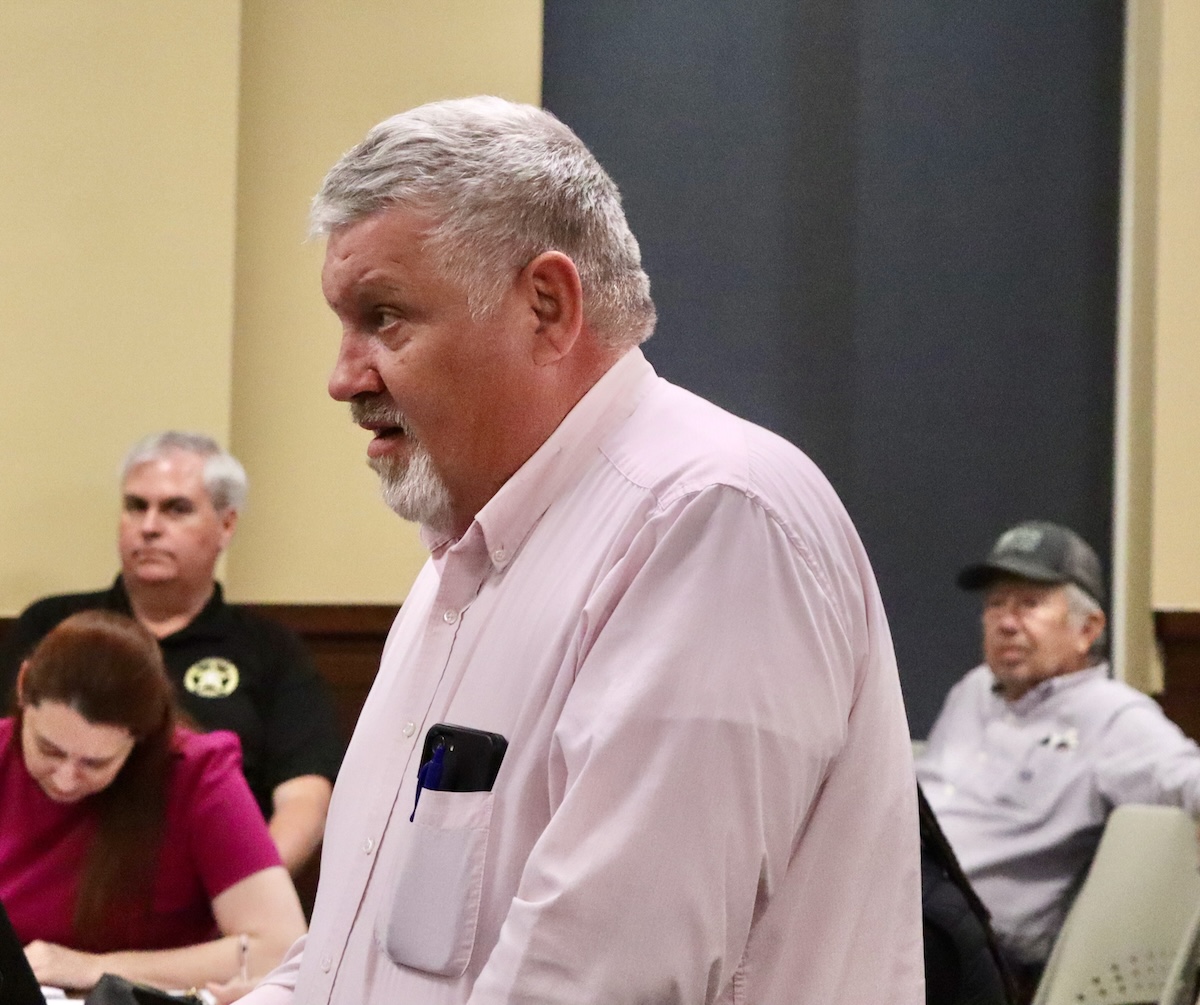
Planning and Development Director Mike Beecham told commissioners the annexation

Planning and Development Director Mike Beecham told the commission this annexation would represent a “material increase in burden” to the county. (Patrick Faragson/NowGeorgia.com)

would represent a significant shift from the county’s current Low Intensity designation to Baldwin’s proposed Highway Business zoning.

He described the change as “pretty drastic,” noting the county’s LI classification allows small-scale office and neighborhood uses, while Highway Business permits higher-intensity commercial development, including drive-through restaurants, banks and grocery stores.

However, Beecham emphasized that zoning differences alone are not sufficient grounds for objection. The county must demonstrate a material increase in burden.

Using traffic estimates prepared by a local engineer based on data from the Institute of Transportation Engineers, Beecham said a proposed shopping center concept could generate approximately 24,000 vehicle trips per day. Current traffic counts just north of the site on Ga. 365 average about 28,000 vehicles daily.

“It’s not quite a doubling, but it’s pretty close,” Beecham said, noting the estimate covers only about 60% of the annexed property.

He also cited crash data at the intersection of Duncan Bridge Road and Ga. 365, where roughly 200 accidents were recorded in the past year, along with 41 crashes at Level Grove Road and Duncan Bridge Road.

Habersham County provides EMS services countywide and serves as a first responder at those intersections.

“If we have 24,000 people around that intersection, then the number of accidents are going to go up,” Beecham said. “That creates a significant increase in burden to the county.”

Arbitration process ahead

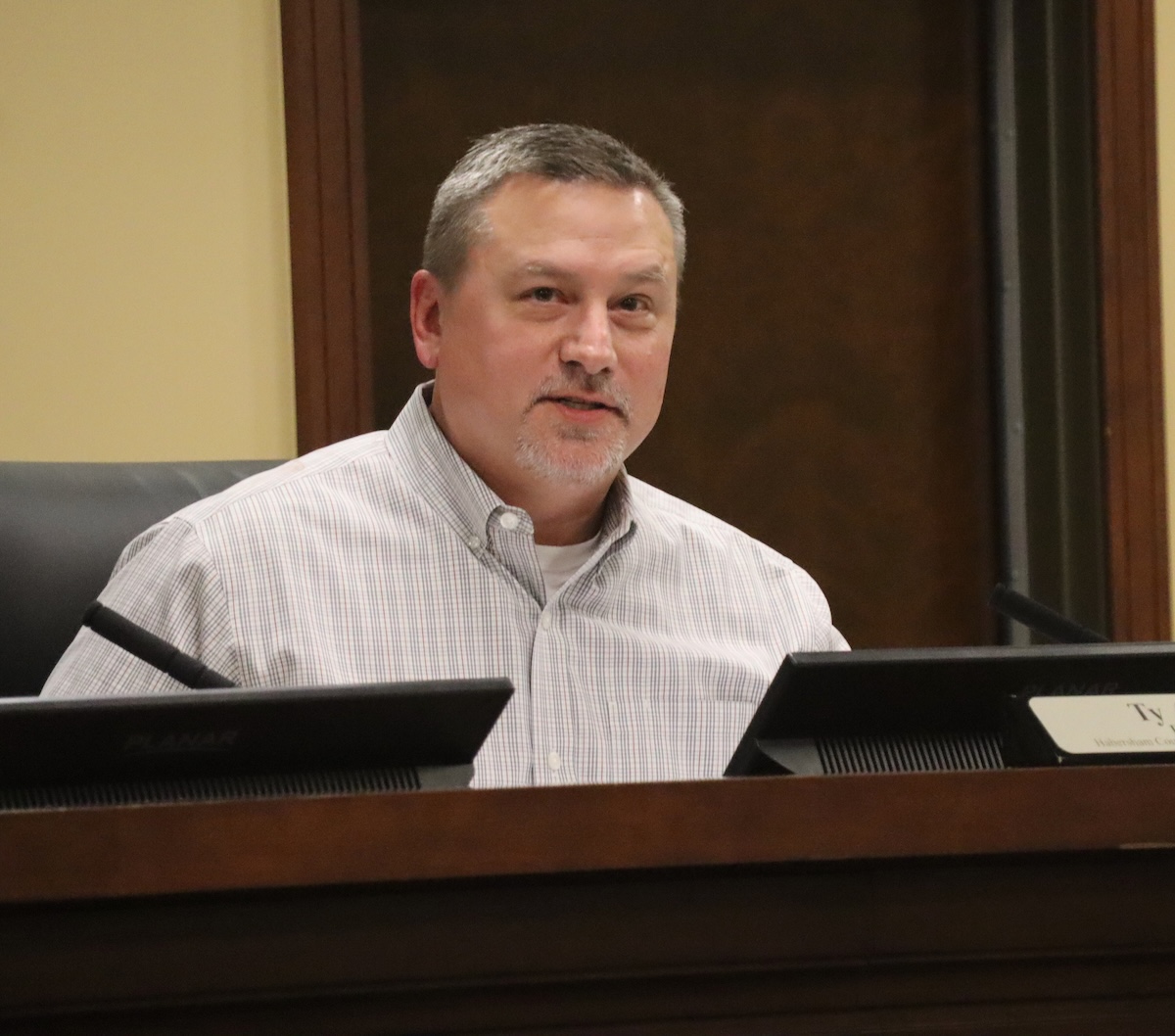
Commissioner Ty Akins read the resolution to object which passed unanimously. (Patrick Fargason/NowGeorgia.com)

County Attorney Angela Davis said the resolution tracks the annexation statute and preserves the county’s rights ahead of an early March objection deadline.

If the objection proceeds, the matter would move through a state-managed dispute resolution process. After a 30-day negotiation period, an arbitration panel appointed through DCA could hear arguments from the county, the city and the developer before issuing a decision.

Davis also noted a procedural question remains about whether the city properly notified the local school board when it initiated the annexation. State law requires notice to both the county and the board of education.

The county has requested confirmation multiple times and filed an open records request but has not received documentation, Davis said. If notice was not properly given, DCA could determine the annexation was not correctly commenced and require the process to restart.

“We do not have the authority under the law to just vote no and stop an annexation,” Davis said. “What we’re putting forward tonight is us exercising authority to the greatest extent that we have it.”

Baldwin response

Former Baldwin Councilwoman Alice Venter addressed the commission during public

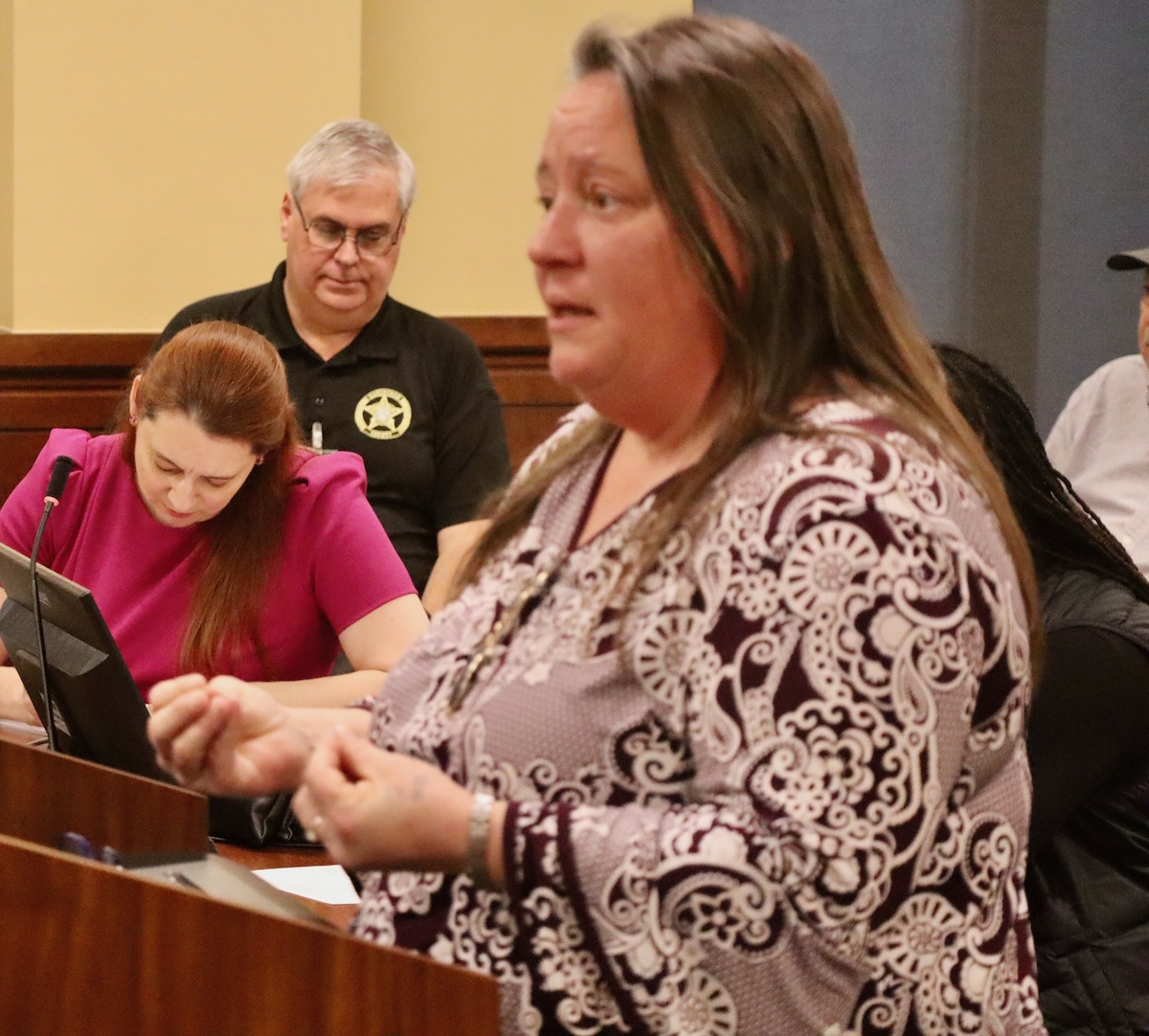
Former Baldwin Councilman Alice Venter speaks in objection to Baldwin’s attempt for annexation. (Patrick Fargason/NowGeorgia.com)

comment, urging members to carefully consider their decision and expressing disappointment that Baldwin’s mayor was not present.

Current Baldwin Councilman Mike Tope was the only city official in attendance.

Following the meeting, Tope told Now Georgia the annexation remains part of an ongoing process.

“Like I said at our last council meeting, this is a process and we’re here to gather information,” Tope said. “I appreciate the county taking the time to research this matter thoroughly.”

Tope said he did not know how the county’s objection might affect Baldwin’s public hearing on the annexation scheduled for March. He also said he was unsure whether the required notice to the school system had been filed on time.

The county’s formal objection now shifts the matter into the state’s dispute resolution framework, where negotiations — and potentially arbitration — will determine whether the annexation proceeds as proposed.

RELATED

Commissioners extend housing moratorium, call special election

Driver fleeing ICE officers crashes, killing a Georgia teacher, authorities say

Dr. Linda Davis (Hesse K-8 School)

SAVANNAH, Ga. (AP) — A Guatemalan driver fleeing a Georgia traffic stop by federal immigration officers crashed into another vehicle, killing a teacher who was headed to work, authorities and school officials said.

Oscar Vasquez Lopez, the driver accused of causing the Monday crash just outside of Savannah, remained jailed Tuesday on charges including vehicular homicide, reckless driving and driving without a valid license. Lopez, 38, is in the U.S. illegally, according to Immigration and Customs Enforcement.

Immigration officers were looking for Lopez to enforce an immigration judge’s 2024 deportation order, ICE spokesperson Lindsay Williams said Tuesday, noting that Lopez has no other criminal history.

Lopez pulled over when ICE officers used sirens and blue lights to initiate a traffic stop, but then drove away when they approached his vehicle, Williams said. Lopez made a U-turn and ran a stop light before he crashed, ICE said in a news release.

Asked if the ICE officers chased Lopez, Williams said: “Chased? I wouldn’t say that. They followed him until he crashed.”

Williams said he didn’t know how far Lopez fled before he crashed.

“According to preliminary findings, we believe the pursuit was relatively short in duration and distance,” said Chatham County police spokesperson Betsy Nolen, who noted the investigation is ongoing.

Security camera video obtained by WTOC-TV showed a red pickup truck moving at high speed past Herman W. Hesse K-8 School on Monday morning. The footage showed a vehicle with flashing lights follow about five seconds later at a similar speed, and another vehicle with lights flashing pass several seconds after that.

News video from the crash scene showed one of the vehicles involved in the wreck was a red pickup.

Teacher killed was known for ‘kindness, patience, and ethusiasm’

Savannah-Chatham County school officials identified the woman killed as Linda Davis, a special education teacher at the school.

Davis was beloved by the school community, Principal Alonna McMullen said.

“She dedicated her career to ensuring that every child felt supported, valued, and capable of success,” McMullen said in a news release. “Her kindness, patience, and enthusiasm created a nurturing environment for her students and inspired those around her.”

The crash happened less than a half-mile (0.8 kilometers) from the school. Though students were off Monday for Presidents Day, teachers reported to work. Davis was driving to school when she was killed, school system spokesperson Sheila Blanco said.

Oscar Vasquez Lopez (Department of Homeland Security)

Lopez remained jailed Tuesday. He is being representing by a public defender in Chatham County, said Don Plummer, a spokesman for the Georgia Public Defender Council.

“We recognize the community’s concern and extend condolences to those harmed,” Plummer said by email. “Mr. Lopez is presumed innocent. We will review the evidence and address it where it belongs — in court, not in the press.”

Local officials question necessity of ICE pursuit

Federal immigration officers have faced increased scrutiny for their aggressive tactics during the Trump administration’s nationwide crackdown on illegal immigration, especially since they shot and killed Renee Good and Alex Pretti in Minneapolis.

In a statement, Tricia McLaughlin, a Department of Homeland Security spokesperson, blamed “politicians and the media constantly demonizing ICE officers and encouraging those here illegally to resist arrest.”

Chatham County police said in a statement that they were unaware of the ICE operation and traffic stop before the deadly crash.

Chester Ellis, chairman of the Chatham County Board of Commissioners, noted that county police are constrained by a policy that allows vehicle pursuits only when officers believe a suspect has committed or is attempting to commit a violent felony. But he said county officers, had ICE requested their assistance, could have helped cut off the suspect’s escape without a pursuit that endangered other drivers.

“If that had been the case yesterday, then Dr. Davis would still be alive,” Ellis said. “My personal feeling is that one life lost is too many, especially when you’re taking about a precious teacher.”

Savannah Mayor Van Johnson also questioned whether Davis’ death might have been prevented.

“I’ve always been and remain very concerned about the activities of ICE in cities, particularly where they’re not coordinating or communicating,” Johnson, a former police officer, told reporters Tuesday.

He added: “What this individual was wanted for, did it necessitate the end result?”

Guillotines and Girl Talk: Piedmont’s ‘The Revolutionists’ reimagines history

Dakota Rose Chen’s Olympe de Gouges and Nealy Webster’s Marie Antoinette discuss the French Revolution and the Reign of Terror. (Carly McCurry / Now Georgia)

If Taylor Swift wrote a play about the women of the French Revolution, this would be it. Piedmont University’s production of The Revolutionists stages history as girl talk, manifesto, and rollicking reckoning.

The play imagines a meeting between four women who never shared a room: playwright Olympe de Gouges, assassin Charlotte Corday, former queen Marie Antoinette, and Haitian revolutionary Marianne Angelle. The script blends puns, expletives and pointed speeches with moments of confession and conflict. In short, it feels like a concept album set in 1793.

The theatre becomes part of the conversation. Tiered risers climb the walls, forcing the audience upward while a central platform drops below eye level. A railing divides the space. Two French tricolors stretch across the wall and chandeliers hang overhead like relics of a fallen court. The layout echoes the gallery of the National Assembly during the Reign of Terror. The audience looks down into the chamber on the actors as if they themselves serve as judges in a tribunal.

Director Kathy Blandin brings her vision and conviction to the stage, guiding Piedmont’s student cast through a bold, irreverent reimagining of revolution and resistance. (Carly McCurry / Now Georgia)

All performers in The Revolutionists are Piedmont students, and the production operates as part of the program. Director Kathy Blandin frames the work as practical education. Theatre, in this context, teaches craft, discipline, and collaboration alongside traditional text analysis. When asked about the play, she calls it an “irreverent” and “comic” look at women during resistance and revolution. In her director’s note, she connects her choice directly to the 2022 overturning of Roe v. Wade. “Apparently, it has been declared ‘open season’ on women’s rights,” she writes, “and I believe this play is more relevant than ever.”

That perspective drives the staging. At one point, female figures round up the men, restrain them, and tape their mouths after the men drone in monotone, clearing the floor so the women can speak while their male counterparts remain bound and silent. The reversal of expectation leaves no ambiguity. The play names misogyny and repressed racism outright and casts women as protagonists in direct opposition to male antagonists. Blandin uses the stage as her platform, echoing the character of Olympe de Gouges — a writer who wielded art against power and accepted the cost.

Male figures sit restrained, mouths taped shut, as the women claim the floor — a stark tableau that flips the script on power and renders patriarchy visibly silenced in The Revolutionists. (Carly McCurry / Now Georgia)

Dakota Rose Chen’s Olympe de Gouges moors the play with control and conviction. She defends art as a weapon and witness. When she promises to help Charlotte Corday craft final words before execution, the promise draws fire. Marianne Angelle demands accountability. The conflict exposes the play’s central question: Does art shape history or simply frame it?

Kattie Smith plays the attractive yet lethal femme-fatale Charlotte Corday in Piedmont University’s production of The Revolutionists. (Carly McCurry / Now Georgia)

Kattie Smith, who bears a striking resemblance to the woman she portrays, strides onto the stage with knife-sharp precision as Charlotte Corday. “I’m not here to make a story. I’m here to make history,” she declares. She speaks of sacrifice for the greater good. She reminds the room that history judges slowly. She wields wit like a blade, leaning into puns and conviction as the assassin of Jean-Paul Marat.

Yet it is Nealy Webster’s Marie Antoinette who steals scene after scene. She sweeps in with theatrical air, sashaying hips and a crown of curled blond hair. Her face broadcasts every flicker of feeling to the audience, and her exaggerated gestures channel Lucille Ball, blending physical comedy with royal bravado. Her arrival into the production is like the arrival of an impeccably frosted cake set at the center of the table, both announcing and fulfilling the occasion.

Nealy Webster’s Marie Antoinette trades the throne for a writing desk, silk and stockings draped across scuffed wood — queen, caricature, and woman, all at once. (Carly McCurry / Now Georgia)

If Webster elevates, Delyna Fuller’s Marianne Angelle grounds it. She opens the production with a pointed finger and lofty lectures, lambasting each woman in their turn. Yet, as the play progresses, she shifts from prosecutor to friend, forming relationships and extending empathy where she once pressed constant critique. She loves her husband without apology, rejecting the caricature of the man-hating revolutionary. She stands beside Charlotte before her execution and later demands that Olympe live up to her promises. Her power emerges most clearly in vulnerability, especially in her exchange with Antoinette about separation, loss, and the cost a woman pays for power.

Delyna Fuller’s Marianne Angelle and Dakota Rose Chen’s Olympe de Gouges debate the role of theatre and revolution. (Carly McCurry / Now Georgia)

The set captures the period. A rose-pink chaise longue introduces a note of femininity against an otherwise spare chamber. The emptiness of the room echoes the austerity of the Reign of Terror. Oversized flags of the revolution dominate the walls, their scale suggesting patriotism in the inhale and oppression in the exhale.

In the Swanson Center for Performing Arts and Communications the Black Box allows the viewers to be participants. (Carly McCurry / Now Georgia)

The show runs Thursday through Saturday at 7:30 p.m. and Sunday at 2:00 p.m. The house seats 70. Tickets cost $10 for adults and $5 for seniors and outside students. Admission is free for Piedmont faculty, staff, and students. In the black box venue, history stands at eye level. The women look up from the center of the floor and demand a voice.

“Look up. Find your light. And say it loud.”
The line lands as an invitation and command.

Commissioners extend housing moratorium, call special election

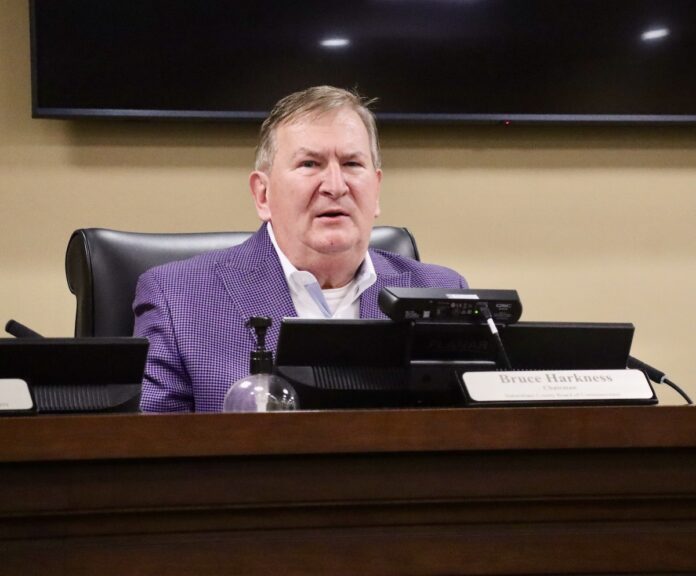
Commission Chairman Bruce Harkness was outspoken Monday night on growth issues affecting the county. (Patrick Fargason/NowGeorgia.com)

CLARKESVILLE, Ga. — The Habersham County Board of Commissioners voted unanimously Monday to extend a limited moratorium on certain residential development and to formally call a special election to fill the District 3 commission seat.

Both measures passed without objection.

RELATED County formally objects to Baldwin annexation

Moratorium extended 30 days

Commissioners approved a 30-day extension of the county’s temporary moratorium on accepting applications for rezoning to certain residential districts involving subdivisions of more than five lots.

County Attorney Angela Davis said the moratorium was enacted earlier this year to give the county time to complete work on a new unified development code.

“We have a draft … that’s going forward to the Planning Commission soon and then will be coming to this board for consideration,” Davis said. “But it’s a huge, herculean task to get that all in place.”

Because the revisions are not yet complete, staff requested additional time. The extension runs through March 17, 2026 — one day after the board’s March meeting.

Davis said the short extension was necessary because the county did not have time to properly advertise a public hearing for a longer continuation. Commissioners plan to hold an advertised public hearing next month to consider whether to extend the moratorium further.

Commission Chairman Bruce Harkness said the action reflects the board’s effort to actively manage growth.

“Some people have said that we can’t control growth,” Harkness said after the vote. “Well, I hope that some of those people stand corrected. We just passed something here that we’re trying to manage and control growth in our county.”

“If we don’t do it, who’s going to do this?” he added. “We were elected to try to preserve and protect our beautiful county, and this is just one simple item that we’re trying to work on.”

Special election set for District 3

Commissioners also adopted a resolution calling for a special election to fill the unexpired District 3 commission term ending Dec. 31, 2026.

The vacancy was created by the resignation of former District 3 Commissioner Jimmy Tench. Under the county charter, a special election is required.

County Clerk Brandalin Carnes said the special election will be held in conjunction with the May 19 general primary and will not require additional funding.

“This special election won’t cost anything additional,” Carnes said, noting it can be conducted alongside the regularly scheduled primary.

Candidates interested in serving the remainder of the unexpired term may qualify in March. The same May ballot will also include the race for the full four-year term beginning in January 2027.

Carnes said anyone wishing to run for both must complete separate qualifying paperwork and pay separate qualifying fees for each race. Interested candidates should contact Laurel Ellison with the voter registration office for details.

Harkness acknowledged the unusual nature of holding elections for both the remainder of the current term and the upcoming full term at the same time.

“It’s a very unique situation,” he said. “If you only want to do part of the year, you can qualify in March to do that, just the rest of this year. Or if you want to do both, you can qualify to do that.”

SEE ALSO

County formally objects to Baldwin annexation

Fire destroys Gainesville home, displaces 3

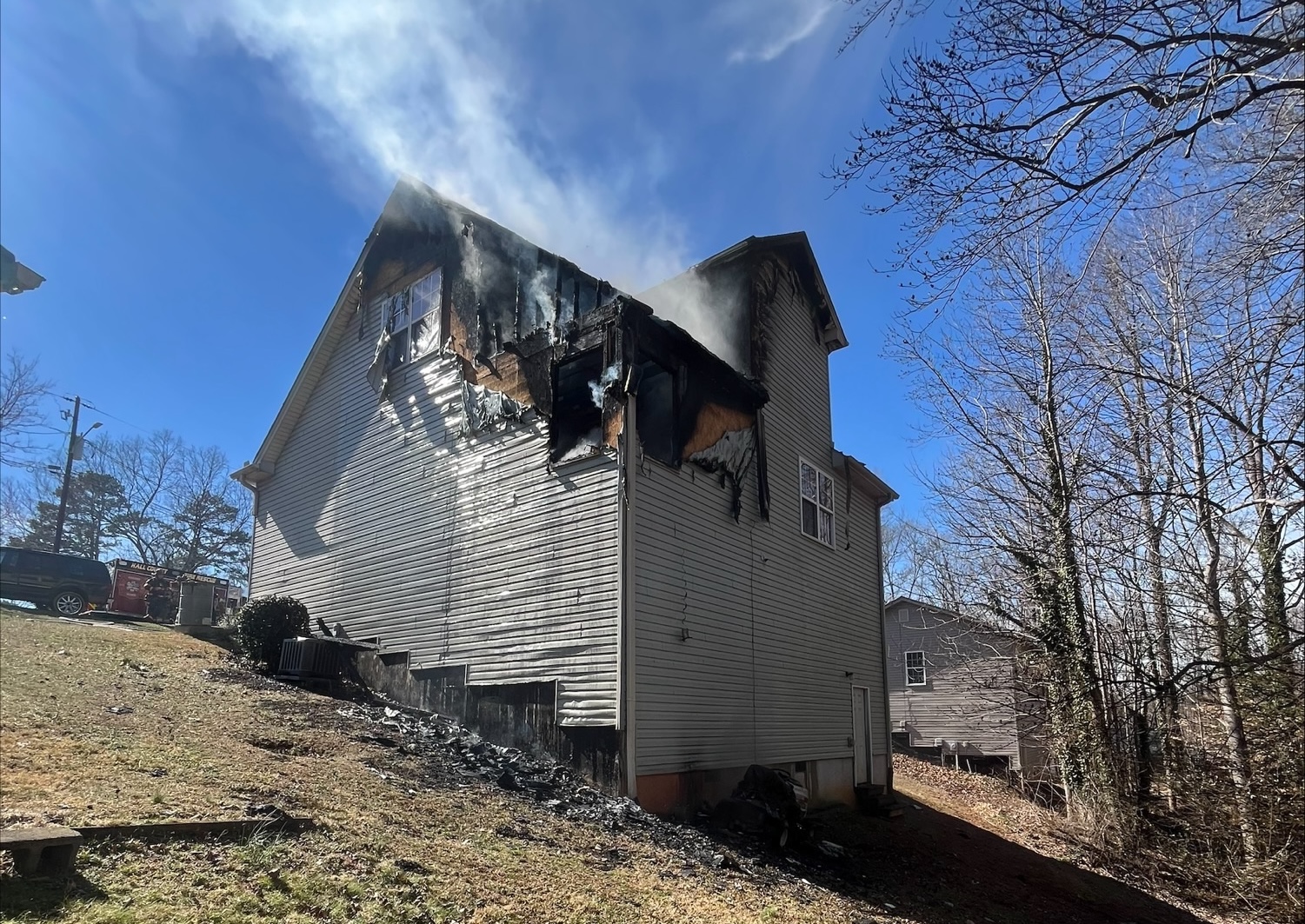
Firefighters on the scene of a mid-afternoon house fire in the 1900 block of Garden Drive in Gainesville on Feb. 17, 2026. (Hall County Fire Rescue)

GAINESVILLE, Ga. — Flames tore through a Gainesville home Tuesday afternoon, spreading from a single bedroom into the attic within minutes and leaving the house a total loss.

At approximately 1:45 p.m. on Feb. 17, Hall County Fire Rescue responded to the 1900 block of Garden Drive following reports of a residential fire.

(Hall County Fire Rescue)

When firefighters arrived, they found one bedroom fully engulfed in flames, said Hall County Fire Rescue Public Information Officer Kimberlie Ledsinger. The fire had already spread to the second floor and into the home’s attic.

Firefighters launched an aggressive interior attack and brought the blaze under control within 15 minutes, said Ledsinger.

Despite the quick response, the home was deemed a total loss. Three adults who lived at the residence were displaced. No injuries were immediately reported.

The cause of the fire remains unknown. The Hall County Fire Marshal’s Office is investigating.

High housing costs, shortages propel movement on reform in Congress

New housing construction in Cornelia in 2023. (NowHabersham.com)

WASHINGTON (States News) — Republicans, Democrats and the White House are methodically, calmly inching toward a common goal: agreeing on a thick package of laws that would do something quickly about slowing housing costs and boosting supply.

There’s no talk of gridlock here. No partisan sniping. Just an under the radar effort to show constituents in an election year that their lawmakers realize there’s a big problem when it comes to buying homes.

That’s why the House earlier this month passed its version of housing reform with only nine dissenting votes. The Senate committee writing similar legislation approved it unanimously last year.

While there are still some obstacles ahead before anything reaches President Donald Trump’s desk, what’s happening is almost a throwback to the days when getting 80% of one’s plan was a big victory, a policy prize to tout back home as midterm elections near.

“There is no silver bullet for fixing this problem,” said Rep. Mike Flood, R-Neb., chairman of the Housing and Insurance Subcommittee.

But, he added, “I think that this bill, this legislation, includes a range of meaningful housing reforms that will add to housing supply and ultimately decrease housing costs.”

Housing shortage

The House and Senate bills have a common purpose, said Emma Waters, senior policy analyst at Washington’s Bipartisan Policy Center. “Both bills really are pushing to make it easier to build more affordable homes,” she said.

Rep. Emanuel Cleaver, D-Mo., a member of the House Financial Services Committee, explained the House bill this way: “It ensures that every dollar we do spend goes further.”

An analysis by the Zillow Group, a real estate company that researches home prices and trends, last summer found that in 2023, about 1.4 million new homes were added to the housing stock, but there were 1.8 million newly formed families.

As a result, the housing shortage was up to 4.7 million units. Other estimates put it as high as 7 million.

The typical home price in January in the United States was $359,078, up 0.2% from a year earlier, Zillow found. Prices depend on a wide variety of factors, including labor costs, cost of materials, interest rates, supply and demand and more.

What government can do

The congressional legislation tries to help ease supply and stabilize prices as much as the government can at this point.

The House and Senate bills share several similar provisions. The  Bipartisan Policy Center, a Washington-based research organization, estimated that the House bill includes pieces of at least 43 different House or Senate bills, 27 of which have had bipartisan support.

Under the House plan, the federal Department of Housing and Urban Development would update the department’s construction standards for manufactured housing. The Senate bill has similar provisions.

Rep. John Rose, R-Tenn., a housing subcommittee member, explained the problem: “Municipalities across the country have restricted or outright banned homes built on permanent steel chassis. The result has been less construction, higher costs, and fewer opportunities for working families to own where they live.”

The House bill would provide money for “pattern books” for such housing that would feature pre-approved plans that could speed up the approval process.

The legislation would also provide “a lot of provisions to make it easier for state and local governments to reduce regulatory barriers,” said Waters.

The bills would allow money from Community Development Block Grants, which help fund neighborhood projects, to better support housing production.

The Senate bill would reward CDBG recipients that have, unrelated to their other CDBG projects, increased their housing production in the previous year.

As a reward for building more housing in the previous year, those jurisdictions would receive additional CDBG funding, but there are still restrictions on how those funds can be used.

The House bill, though, would change the restriction so that CDBG money could be used for housing construction.

Help for consumers

Housing experts believe a reason landlords balk is they’re reluctant to endure the government’s inspection process; the bills would streamline that process. Landlords would get incentives to accept tenants with rent vouchers.

The HOME Investment Partnerships Program, which aids state and local efforts to provide housing for lower income families, would also get a makeover of sorts in the bills.

For instance, the House bill says environmental impact statements would no longer be needed for many projects, and it would be easier to tap money from the HOME budget.

Also likely to help consumers: making it easier for banks, usually community institutions that focus on local needs, to invest in more affordable housing. The House bill would raise the public investment welfare cap, allowing more such investments.

Rep. French Hill, R-Ark., was enthusiastic about this provision. “Our bill helps banks access stable deposit funding, streamlines the exam process that’s tailored particularly for our vital community banks, and helps promote more community banks to do what they do best, lend locally and support their communities,” said Hill, chairman of the Financial Services Committee, in a statement.

What’s ahead

The banking provision is one of the few major areas where the Senate and House disagree. There’s concern among some Democrats that the House bill lifts too many bank regulatory barriers.

“We have a bipartisan bill with unanimous support in the Senate that will help build more housing and lower costs for the American people. I’m glad to see the House move forward on housing proposals,” said Sen. Elizabeth Warren, D-Mass., top Democrat on the Senate Banking Committee.

But, she said, “House Republicans should not hold housing relief hostage to push forward several bank deregulatory bills that will make our community banks more fragile while harming consumers, small businesses, and economic growth.”

Also having potential to stymie negotiations is the White House’s eagerness to ban institutional investors from buying single family homes. There’s not much congressional support for that idea.

Trump last month issued an executive order telling “key agencies to issue guidance preventing relevant Federal programs from approving, insuring, guaranteeing, securitizing, or facilitating sales of single-family homes to institutional investors.”

Staying upbeat

There’s still a sense in the Capitol that Republicans and Democrats will come together on a major housing bill, particularly since Congress and the White House agree on most key provisions and leading interest groups are helping push legislation forward.

The National Association of Realtors has been enthusiastic about the House and Senate bills.

 “By addressing barriers at every level of government, the legislation will make it faster and cheaper to build new homes,” the organization said after the House passed the housing reform  bill. The Realtors had similar praise for the Senate version.

The Affordable Housing Tax Credit Coalition also liked the House bill, as CEO Emily Cadik called it “a set of common sense, bipartisan housing proposals that would increase the supply of affordable housing.”

Most in Washington who follow housing policy closely are upbeat about the legislation’s prospects.

“It’s all pretty positive stuff,” said Waters.

Sweet lottery win on Valentine’s Day

(NowGeorgia.com)

Just in time to buy all the flowers and candy your heart desires, a Columbus lottery player hit the Fantasy 5 jackpot. The drawing on February 14 paid out $213,618. The ticket was purchased at Citgo, 1431 Martin Luther King Blvd. 

Other big wins across the state came on Maga Millions, Diggi Games, and Keno tickets from the Georgia Lottery website and the mobile app.

Since its first year, the Georgia Lottery Corp. has returned more than $30.6 billion to the state of Georgia for education. All Georgia Lottery profits are used to fund specific educational programs, including Georgia’s HOPE Scholarship Program and Georgia’s Pre-K Program. More than 2.3 million students have received HOPE, and more than 2.2 million 4-year-olds have attended the statewide, voluntary prekindergarten program.

Tiger Woods isn’t ruling out a return to the Masters. Ryder Cup captaincy also uncertain

Tiger Woods speaks to the media at Riviera Country Club in Los Angeles, Tuesday, Feb. 17, 2026, ahead of the Genesis Invitational, where he is the tournament host. (AP Photo/Doug Ferguson)

LOS ANGELES (AP) — Tiger Woods did not rule out a return to the Masters just under two months away, even as his immediate future appears to include just about everything but golf.

Woods again painted an uncertain future about when or where he plays next because of a seventh back surgery to replace a disk. He said Tuesday at the Genesis Invitational that he remains plenty occupied, mostly with trying to reshape the PGA Tour schedule.

“I thought I spent a lot of hours practicing in my prime,” Woods said. “It doesn’t compare to what we’ve done in the boardroom.”

Those hours also are an obstacle in his decision whether to be the U.S. captain for the Ryder Cup for the 2027 matches in Ireland. Woods turned down the job two years ago because he didn’t think he had the time to do the job justice.

Foremost this time of the year is the Masters, which Woods last played in 2024 when he made the cut for a record 24th time in a row. Woods is a five-time Masters champion.

Asked if playing the Masters, which starts April 9, was off the table, Woods replied without elaboration, “No.”

As for his golf anywhere — he turned 50 at the end of last year and is eligible for the PGA Tour Champions — Woods said he is still working his way back from the disk replacement surgery in October and has no timetable for a return. He has yet to play in the indoor TGL matches, either.

“Well, I’m trying — put it that way,” he said, adding that he can hit full shots but not every day “and not very well.”

Last year was the first time in his career he did not compete in a single tournament. He had surgery in March 2025 for a ruptured Achilles tendon, which is no longer holding him back. He said his lower back was sore, and at his age, “It’s probably going to take me a little bit longer.”

“My body has been through a lot,” Woods said. “Each and every day, I keep trying, I keep progressing, I keep working on it, trying to get stronger, trying to get more endurance in this body and trying to get it at a level at which I can play at the highest level again.”

His chief interest is indoors. He is on the board of the PGA Tour and the commercial PGA Tour Enterprises, heading the “Future Competition Committee” that is trying to create a model to meet CEO Brian Rolapp’s goal of fewer tournaments that are more meaningful for the best players.

The only thing clear is that a new model most likely won’t be ready by 2027. The committee has reached agreement on a big start to the season — that could be the week after or before the Super Bowl — taking the big events to bigger markets and becoming the must-see sport of the summer.

Another players-only meeting was scheduled Tuesday at Riviera. Rolapp is expected to pull back the curtain on some aspects at The Players Championship in March, with a little more clarity expected in the summer.

Among items under consideration is moving some prime California stops — Riviera and Torrey Pines get most of the attention — to August as part of the PGA Tour’s postseason.

“We’re looking at things like that, looking to go to bigger markets later in the year for the playoffs. Just trying to make our competitive model better, and how do we do that?” Woods said, adding that moving the Genesis Invitational to August “certainly is on the table.”

All the while, Woods said it was important to create a path for the next batch of stars.

“We’re trying to create opportunities for that turnover … to get more youth out here because eventually they’re going to take over the game,” Woods said. “So trying to create that opportunity, trying to create the right competitive model and the environment to foster that, that’s been the greater challenge of it all.”

As for the Ryder Cup, that also is in the wait-and-see mode.

The PGA of America waited longer than it ever has before choosing Keegan Bradley for the ’25 matches at Bethpage Black because it was waiting on an answer from Woods.

He doesn’t appear to have made much headway.

“They have asked me for my input on it, and I haven’t made my decision yet,” Woods said. “I’m trying to figure out what we’re trying to do with our tour. That’s been driving me hours upon hours every day and trying to figure out if I can actually do our team — Team USA and our players and everyone that’s going to be involved in the Ryder Cup — if I can do it justice with my time.”

Woods became involved at Riviera in 2017 when his TGR Venture began running the event, and now he is the official host in the same capacity of Jack Nicklaus at the Memorial and the late Arnold Palmer at Bay Hill. Those three signature events are the only ones with a 36-hole cut.

Genesis announced it was renewing as title sponsor at Riviera, even amid questions whether it might move to late summer. Genesis also is title sponsor of the Scottish Open in July. There also is a question of how Riviera could be held in August 2028 a month after the Olympics.

Georgia lawmakers rethinking requirements for funeral home directors

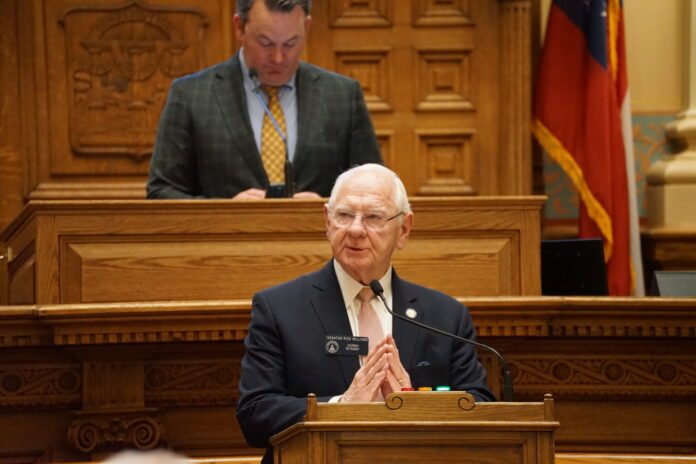
Sen. Rick Williams, a Milledgeville Republican, presents SB 239, which would remove the requirement that funeral directors be licensed in embalming in order to work in Georgia, on Feb. 5, 2026, in Atlanta. (Alander Rocha/Georgia Recorder)

(Georgia Recorder) — The demographics in Georgia are changing, and so is the way people choose to ceremoniously depart this world.

Embalming, or the practice of preserving a body to delay decomposition, was the preference of most Georgians just a few decades ago, says Sen. Rick Williams, a Milledgeville Republican and a licensed funeral director and embalmer for over 50 years.

But now fewer people are opting to be embalmed in Georgia, whether because of cultural and religious preferences or a shift toward cremation. Even so, funeral directors are still required to carry an additional embalming license.

Williams is sponsoring a bill that would end the requirement that funeral directors double as licensed embalmers. Senate Bill 239 aims to replace longstanding state law mandating funeral directors in the state to carry both licenses. It recently passed through the Senate unanimously.

“The customs of burials and cremations have changed so much,” Williams said.

According to the Cremation Association of North America, the national rate for cremation was about 5% when Williams became a licensed funeral director in the 1970s. Today, it has replaced embalming as the primary method of treating a dead body. As of 2024, the cremation rate in Georgia was over 50%.

Cy Hume, CEO of A.S. Turner and Sons Funeral Home and Crematory in Decatur, said families are now opting for cremation over embalming due to a “financial standpoint.” He also said people also “feel like that’s more eco-friendly.”

Hume says A.S. Turner currently has a 72% cremation rate.

A new law took effect last year that allows funeral homes in Georgia to practice natural organic reduction, which Hume says “is where you reduce someone’s body down to soil.”

Williams said the state’s growing Jewish and Muslim communities are also contributing to the shift away from embalming. These cultures prohibit the practice in most cases and prefer burial of the body within 24 hours.

Williams’ bill, which is now sitting in the House for consideration, also makes it a misdemeanor for unlicensed people to act as or impersonate funeral directors. Williams said a 2025 case in which an inmate posed as a funeral director to steal $1,200 from a grieving widow inspired that proposed change.

The measure has the support of the Georgia Funeral Directors Association. David Morrow, the president of the association, said over 100 members responded to a recent survey about SB 239. Morrow says two-thirds of the members voted in favor of the bill.

Hume said some funeral directors opposed to the bill believe that directors need to be able to explain embalming to families. But Hume said funeral directors are usually only generally describing the process.

“They’re not explaining how to make formaldehyde,” he said.

With the decrease in embalming, funeral home employees would often rather choose between being an embalmer and a director, Hume said. He says passing SB 239 would allow potential employees to choose their career path.

“Not all people are cut out to be funeral directors. Not all people are cut out to be embalmers,” Hume said.

Williams said some people choose to work at multiple funeral homes only to embalm and have “no desire” to work as funeral directors, who are usually the ones working directly with grieving families and friends.

The supporters of the bill say that it modernizes the profession. Williams said that Georgia would be joining 26 other states that have already ended the requirement for a funeral director to have an embalming license.

The Rev. Jesse Jackson, who led the Civil Rights Movement for decades after King, has died at 84

FILE - Rev. Jesse Jackson gestures to a friend in the balcony at the 16th Street Baptist Church in Birmingham, Ala., Sept. 15, 2013. The church held a ceremony honoring the memory of the four young girls who were killed by a bomb placed outside the church 50 years ago by members of the Ku Klux Klan. At right is U.S. Rep. Terri Sewell, D-Ala. (AP Photo/Dave Martin, File)

CHICAGO (AP) — The Rev. Jesse L. Jackson, a protege of the Rev. Martin Luther King Jr. and two-time presidential candidate who led the Civil Rights Movement for decades after the revered leader’s assassination, died Tuesday. He was 84.

As a young organizer in Chicago, Jackson was called to meet with King at the Lorraine Motel in Memphis shortly before King was killed and he publicly positioned himself thereafter as King’s successor.

Jackson led a lifetime of crusades in the United States and abroad, advocating for the poor and underrepresented on issues from voting rights and job opportunities to education and health care. He scored diplomatic victories with world leaders, and through his Rainbow/PUSH Coalition, he channeled cries for Black pride and self-determination into corporate boardrooms, pressuring executives to make America a more open and equitable society.

And when he declared, “I am Somebody,” in a poem he often repeated, he sought to reach people of all colors. “I may be poor, but I am Somebody; I may be young; but I am Somebody; I may be on welfare, but I am Somebody,” Jackson intoned.

It was a message he took literally and personally, having risen from obscurity in the segregated South to become America’s best-known civil rights activist since King.

Santita Jackson confirmed that her father died at home in Chicago, surrounded by family.

“Our father was a servant leader — not only to our family, but to the oppressed, the voiceless, and the overlooked around the world,” the Jackson family said in a statement posted online. “We shared him with the world, and in return, the world became part of our extended family.”

Fellow civil rights activist the Rev. Al Sharpton said his mentor “was not simply a civil rights leader; he was a movement unto himself.”

“He taught me that protest must have purpose, that faith must have feet, and that justice is not seasonal, it is daily work,” Sharpton wrote in a statement, adding that Jackson taught “trying is as important as triumph. That you do not wait for the dream to come true; you work to make it real.”

Despite profound health challenges in his final years including a rare neurological disorder that affected his ability to move and speak, Jackson continued protesting against racial injustice into the era of Black Lives Matter. In 2024, he appeared at the Democratic National Convention in Chicago and at a City Council meeting to show support for a resolution backing a ceasefire in the Israel-Hamas war.

“Even if we win,” he told marchers in Minneapolis before the officer whose knee kept George Floyd from breathing was convicted of murder, “it’s relief, not victory. They’re still killing our people. Stop the violence, save the children. Keep hope alive.”

Calls to action, delivered in a memorable voice

Jackson’s voice, infused with the stirring cadences and powerful insistence of the Black church, demanded attention. On the campaign trail and elsewhere, he used rhyming and slogans such as: “Hope not dope” and “If my mind can conceive it and my heart can believe it then I can achieve it,″ to deliver his messages.

Jackson had his share of critics, both within and outside of the Black community. Some considered him a grandstander, too eager to seek out the spotlight. Looking back on his life and legacy, Jackson told The Associated Press in 2011 that he felt blessed to be able to continue the service of other leaders before him and to lay a foundation for those to come.

“A part of our life’s work was to tear down walls and build bridges, and in a half century of work, we’ve basically torn down walls,” Jackson said. “Sometimes when you tear down walls, you’re scarred by falling debris, but your mission is to open up holes so others behind you can run through.”

In his final months, as he received 24-hour care, he lost his ability to speak, communicating with family and visitors by holding their hands and squeezing.

“I get very emotional knowing that these speeches belong to the ages now,” his son, Jesse Jackson Jr., told the AP in October.

A student athlete drawn to the Civil Rights Movement

Jesse Louis Jackson was born on Oct. 8, 1941, in Greenville, South Carolina, the son of high school student Helen Burns and Noah Louis Robinson, a married man who lived next door. Jackson was later adopted by Charles Henry Jackson, who married his mother.

Jackson was a star quarterback on the football team at Sterling High School in Greenville, and accepted a football scholarship from the University of Illinois. But after he reportedly was told Black people couldn’t play quarterback, he transferred to North Carolina A&T in Greensboro, where he became the first-string quarterback, an honor student in sociology and economics, and student body president.

Arriving on the historically Black campus in 1960 just months after students there launched sit-ins at a whites-only diner, Jackson immersed himself in the blossoming Civil Rights Movement.

By 1965, he joined the voting rights march King led from Selma to Montgomery, Alabama. King dispatched him to Chicago to launch Operation Breadbasket, a Southern Christian Leadership Conference effort to pressure companies to hire Black workers.

Jackson called his time with King “a phenomenal four years of work.”

Jackson was with King on April 4, 1968, when the civil rights leader was slain at the Lorraine Motel in Memphis, Tennessee. Jackson’s account of the assassination was that King died in his arms.

With his flair for the dramatic, Jackson wore a turtleneck he said was soaked with King’s blood for two days, including at a King memorial service held by the Chicago City Council, where he said: “I come here with a heavy heart because on my chest is the stain of blood from Dr. King’s head.”

However, several King aides, including speechwriter Alfred Duckett, questioned whether Jackson could have gotten King’s blood on his clothing. There are no images of Jackson in pictures taken shortly after the assassination.

In 1971, Jackson broke with the Southern Christian Leadership Conference to form Operation PUSH, originally named People United to Save Humanity. The organization based on Chicago’s South Side declared a sweeping mission, from diversifying workforces to registering voters in communities of color nationwide. Using lawsuits and threats of boycotts, Jackson pressured top corporations to spend millions and publicly commit to diversifying their workforces.

The constant campaigns often left his wife, Jacqueline Lavinia Brown, the college sweetheart he married in 1963, taking the lead in raising their five children: Santita Jackson, Yusef DuBois Jackson, Jacqueline Lavinia Jackson Jr., and two future members of Congress, U.S. Rep. Jonathan Luther Jackson and Jesse L. Jackson Jr., who resigned in 2012 but is seeking reelection in the 2026 midterms.

The elder Jackson, who was ordained as a Baptist minister in 1968 and earned his Master of Divinity in 2000, also acknowledged fathering a child, Ashley Jackson, with one of his employees at Rainbow/PUSH, Karen L. Stanford. He said he understood what it means to be born out of wedlock and supported her emotionally and financially.

Presidential aspirations fall short but help ‘keep hope alive’

Despite once telling a Black audience he would not run for president “because white people are incapable of appreciating me,” Jackson ran twice and did better than any Black politician had before President Barack Obama, winning 13 primaries and caucuses for the Democratic nomination in 1988, four years after his first failed attempt.

His successes left supporters chanting another Jackson slogan, “Keep Hope Alive.”

“I was able to run for the presidency twice and redefine what was possible; it raised the lid for women and other people of color,” he told the AP. “Part of my job was to sow seeds of the possibilities.”

U.S. Rep. John Lewis said during a 1988 C-SPAN interview that Jackson’s two runs for the Democratic nomination “opened some doors that some minority person will be able to walk through and become president.”

Jackson also pushed for cultural change, joining calls by NAACP members and other movement leaders in the late 1980s to identify Black people in the United States as African Americans.

“To be called African Americans has cultural integrity — it puts us in our proper historical context,” Jackson said at the time. “Every ethnic group in this country has a reference to some base, some historical cultural base. African Americans have hit that level of cultural maturity.”

Jackson’s words sometimes got him in trouble.

In 1984, he apologized for what he thought were private comments to a reporter, calling New York City “Hymietown,” a derogatory reference to its large Jewish population. And in 2008, he made headlines when he complained that Obama was “talking down to Black people” in comments captured by a microphone he didn’t know was on during a break in a television taping.

Still, when Jackson joined the jubilant crowd in Chicago’s Grant Park to greet Obama that election night, he had tears streaming down his face.

“I wish for a moment that Dr. King or (slain civil rights leader) Medgar Evers … could’ve just been there for 30 seconds to see the fruits of their labor,” he told the AP years later. “I became overwhelmed. It was the joy and the journey.”

Exerting influence on events at home and abroad

Jackson also had influence abroad, meeting world leaders and scoring diplomatic victories, including the release of Navy Lt. Robert Goodman from Syria in 1984, as well as the 1990 release of more than 700 foreign women and children held after Iraq’s invasion of Kuwait. In 1999, he won the freedom of three Americans imprisoned by Yugoslav President Slobodan Milosevic.

In 2000, President Bill Clinton awarded Jackson the Presidential Medal of Freedom, the country’s highest civilian honor.

“Citizens have the right to do something or do nothing,” Jackson said, before heading to Syria. “We choose to do something.”

In 2021, Jackson joined the parents of Ahmaud Arbery inside the Georgia courtroom where three white men were convicted of killing the young Black jogger. In 2022, he hand-delivered a letter to the U.S. Attorney’s Office in Chicago, calling for federal charges against former Chicago Police Officer Jason Van Dyke in the 2014 killing of Black teenager Laquan McDonald.

Jackson, who stepped down as president of Rainbow/PUSH in July 2023, disclosed in 2017 that he had sought treatment for Parkinson’s, but he continued to make public appearances even as the disease made it more difficult for listeners to understand him. Earlier this year doctors confirmed a diagnosis of progressive supranuclear palsy, a life-threatening neurological disorder. He was admitted to a hospital in November.

During the coronavirus pandemic, he and his wife survived being hospitalized with COVID-19. Jackson was vaccinated early, urging Black people in particular to get protected, given their higher risks for bad outcomes.

“It’s America’s unfinished business — we’re free, but not equal,” Jackson told the AP. “There’s a reality check that has been brought by the coronavirus, that exposes the weakness and the opportunity.”

By Sophia Tareen