Home Blog Page 379

US Senate GOP under pressure on Trump demand to defund NPR, PBS, foreign aid

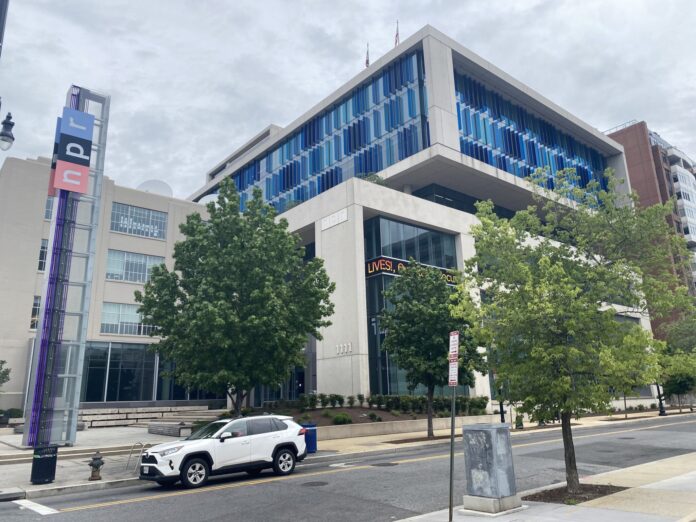
The National Public Radio headquarters in Washington, D.C., is pictured on Tuesday, May 27, 2025. (Jennifer Shutt/States Newsroom)

WASHINGTON (States Newsroom) — Congress has just one week left to approve the Trump administration’s request to cancel $9.4 billion in previously approved funding for public media and foreign aid, setting up yet another tight deadline for lawmakers.

The Senate must pass the bill before July 18, otherwise the White House budget office will be required to spend the funding and be barred from sending up the same proposal again for what are called rescissions.

But objections from several GOP senators could stop the legislation in its tracks, or change it substantially, requiring another House vote in a very short time frame. Rejecting the plan would represent a loss for the Trump administration after passage of the “big, beautiful” tax and spending cut law earlier this month.

Senate Majority Leader John Thune, R-S.D., appears optimistic he can secure the votes needed to begin debate, though he hasn’t said publicly if he thinks the bill can actually pass.

“We’ll have it up on the floor next week. Hopefully, we get on it and then we’ll have an amendment process,” Thune said during a Wednesday press conference. “And kind of like a budget reconciliation bill, it’s an open amendment process, a vote-a-rama type process, which I’m sure you’re very excited about.”

JD Vance needed again?

At least 50 Republicans must agree to proceed to the legislation amid unified opposition from Democrats. Thune can only lose three GOP senators and still begin debate with Vice President JD Vance’s tie-breaking vote. Rescissions bills are exempt from the Senate’s 60-vote legislative filibuster.

After a maximum of 10 hours of debate, the Senate will begin a marathon amendment voting session that could substantially reshape the measure.

There may be enough Republican votes to completely remove the section rescinding $1.1 billion for the Corporation for Public Broadcasting, which funds the Public Broadcasting Service, National Public Radio and hundreds of local public media stations.

Senate Appropriations Chairwoman Susan Collins, Nebraska Sen. Deb Fischer, Alaska Sen. Lisa Murkowski and South Dakota Sen. Mike Rounds all brought up misgivings during a June hearing about how canceling previously approved funding for the Corporation for Public Broadcasting would impact rural communities and emergency alerts.

Collins, R-Maine, also raised concerns about the Trump administration’s efforts to claw back previously approved funding for the President’s Emergency Plan for AIDS Relief, or PEPFAR, and is likely to bring an amendment to the floor on that issue, according to her office. PEPFAR is a global initiative to combat HIV/AIDS that was led by President George W. Bush.

Democrats will get to offer as many amendments as they want during the vote-a-rama and could try to remove each section of the bill one by one, forcing Republicans to weigh in publicly on numerous foreign aid programs.

45 days for Trump request

President Donald Trump sent Congress the rescissions request in early June, starting a 45-day clock for lawmakers to consider his proposal.

The recommendation asked lawmakers to cancel $8.3 billion in foreign aid funding, including $500 million for certain global health programs at the U.S. Agency for International Development.

“This proposal would not reduce treatment but would eliminate programs that are antithetical to American interests and worsen the lives of women and children, like ‘family planning’ and ‘reproductive health,’ LGBTQI+ activities, and ‘equity’ programs,” the request states. “This rescission proposal aligns with the Administration’s efforts to eliminate wasteful USAID foreign assistance programs.”

The House voted mostly along party lines in mid-June to approve the rescissions request, but the legislation sat around the Senate for weeks as Republicans struggled to pass their “big, beautiful” law.

The Senate can vote to approve the proposal as is, change it, or let it expire, forcing the White House budget office to spend the money, which it’s been able to legally freeze since sending Congress the rescissions request.

Relations with White House

Senators’ decision will impact how Republicans in that chamber, especially Thune and those on the Appropriations Committee, work with White House budget director Russ Vought in the coming months and years.

Congress and the Trump administration must broker some sort of funding agreement before the start of the next fiscal year on Oct. 1 to stave off a shutdown.

Vought has also said he plans to send lawmakers additional rescissions requests, though he hasn’t said exactly when or what programs he’ll include.

Senate Appropriations Committee ranking member Patty Murray, D-Wash., said Thursday as the panel debated three of the full-year government funding bills that the rescissions package is not acceptable and could impede the committee’s traditionally bipartisan work.

“We need to make sure decisions about what to fund and, yes, what to rescind are made here in Congress on a bipartisan basis and within our annual funding process,” Murray said. “We cannot allow bipartisan funding bills with partisan rescission packages. It will not work. And that is why I will repeat my commitment to all of my colleagues that on this side of the dais, we stand ready to discuss rescissions as part of these bipartisan spending bills.”

Trump emergency tariffs violate Constitution, Democrats argue in court case

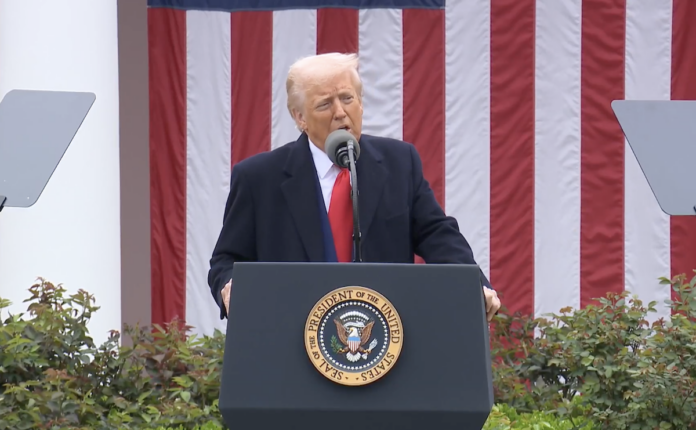
U.S. President Donald Trump speaks during a “Make America Wealthy Again” trade announcement event in the Rose Garden at the White House on April 2, 2025 in Washington, D.C. (White House livestream image)

WASHINGTON (States Newsroom) — U.S. Democratic lawmakers argued in a new legal filing this week that President Donald Trump’s sweeping emergency tariffs usurped congressional power, and they urged a federal appellate court to strike down the duties on foreign imports.

The U.S. Court of Appeals for the Federal Circuit is set to hear oral arguments over some of Trump’s tariffs after a lower court blocked them in May. Despite being tied up in court, Trump continued threatening tariffs Wednesday on numerous trading partners, including a 50% import tax on goods from Brazil.

Nearly 200 lawmakers signed onto the amicus brief Tuesday, asserting that the International Emergency Economic Powers Act, under which Trump triggered the duties, “does not confer the power to impose or remove tariffs.”

The lawmakers argued that Trump’s unprecedented use of IEEPA violates Article I of the U.S. Constitution that authorizes Congress to “lay and collect taxes, duties, imposts and excises” and “regulate commerce with foreign nations.”

“This reflects the Framers’ interest in ensuring the most democratically accountable branch — the one closest to the People — be responsible for enacting taxes, duties, and tariffs,” wrote the 191 Democratic members of Congress, citing the Federalist Papers, in their 65-page brief.

Congress has “explicitly and specifically” delegated tariff-raising powers to the president, but not under IEEPA, according to the lawmakers.

“Unmoored from the structural safeguards Congress built into actual tariff statutes, the President’s unlawful ‘emergency’ tariffs under IEEPA have led to chaos and uncertainty,” the lawmakers wrote.

‘Economic chaos,’ price hikes cited

Sen. Jeanne Shaheen of New Hampshire, top Democrat on the Senate Committee on Foreign Relations, co-led the brief with Oregon’s Sen. Ron Wyden, top Democrat on the Senate Finance Committee.

House Minority Leader Hakeem Jeffries also co-led, along with Reps. Gregory Meeks of New York, Joe Neguse of Colorado, Jamie Raskin of Maryland and Richard Neal of Massachusetts.

In a statement Wednesday, Shaheen said Trump’s “reckless tariff agenda has caused economic chaos and raised prices for families and businesses across the country at a moment in which the cost of living is far too high.”

“The Trump Administration’s unlawful abuse of emergency powers to impose tariffs ignores that he does not have the authority to unilaterally impose the largest tax increase in decades on Americans. This brief makes clear that IEEPA cannot be used to impose tariffs,” Shaheen said.

May decision

The U.S. Court of International Trade struck down Trump’s emergency tariffs in a May 28 decision, following two legal challenges brought by a handful of business owners and a dozen Democratic state attorneys general.

Arizona, Colorado, Maine, Minnesota, Nevada, New Mexico and Oregon were among the states that brought the suit.

The lead business plaintiff is V.O.S. Selections, a New York-based company that imports wine and spirits from 16 countries, according to its website. Other plaintiffs include a Utah-based plastics producer, a Virginia-based children’s electricity learning kit maker, a Pennsylvania-based fishing gear company, and a Vermont-based women’s cycling apparel company.

Following an appeal from the White House, the Federal Circuit allowed Trump’s tariffs to remain in place while the case moved forward.

Triple-digit tariff

Trump used IEEPA to declare international trade a national emergency and announced tariffs on nearly every other country on April 2 in what he dubbed as “Liberation Day.”

Tariffs reached staggering levels on major U.S. trading partners, including 46% on Vietnam, 25% on South Korea and 20% on the European Union.

The announcement wiped trillions from markets, which have largely recovered. Trump delayed all but a 10% base tariff for 90 days on every country except China. Trump fueled a trade war with the massive Asian nation, peaking at a 145% tariff rate, but then temporarily settling between 10% and 55%, depending on the good.

Even before Trump shocked the world with his “Liberation Day” announcement, small business owners from around the U.S. told States Newsroom they were bracing for potentially devastating economic effects.

The trade court’s ruling — a pending appeals litigation — does not apply to tariffs Trump imposed under other statutes, including national security-related duties on foreign automobiles, as well as steel and aluminum. Some of the steel tariffs, imposed during Trump’s first term, were left in place under former President Joe Biden.

Soderstrom’s walk-off single gives A’s 5-4 win over Braves in 11 innings

Athletics' Tyler Soderstrom jogs around the bases after hitting a three-run home run against the Atlanta Braves during the first inning of a baseball game Thursday, July 10, 2025, in West Sacramento, Calif. (AP Photo/Scott Marshall)

WEST SACRAMENTO, Calif. (AP) — Tyler Soderstrom opened Thursday night’s game with a long home run and closed it with a one-out RBI single to give the Athletics a 5-4 11-inning victory over the Atlanta Braves.

Soderstrom went 3 for 5 with four RBIs, his winning hit plating automatic runner Brent Rooker.

The Braves have lost 11 of 14 games and haven’t won a series since they swept the New York Mets in a three-game homestand June 17-19. Atlanta has since lost five series since then and split one with the Mets.

Soderstrom’ 445-foot three-run homer to right field in the first inning gave the A’s a 3-0 lead.

JP Sears, making his 100th career appearance, retired the first 11 Braves batters he faced, five by strikeouts. Back-to-back doubles by Austin Riley and Sean Murphy put the Braves on the scoreboard with two outs in the fourth to end Sears’ streak of 15 1/3 scoreless innings, which was the second-longest active one to Detroit’s Tarik Skubal (18).

Jurickson Profar then erased the deficit with a two-run homer to left field.

Ozzie Albies of the Braves and the A’s Nick Kurtz exchanged homers to send the game into extra innings.

The temperature at first pitch was 99 degrees (37 Celsius), the highest for an A’s home game since that measurement was tracked daily in 1991. The highest-recorded temperature for an Athletics home game occurred July 27, 1956 when the then-Kansas City A’s hosted the New York Yankees in 101-degree heat.

Key moment

Five A’s relievers combined to allow one hit over six shutout innings.

Key stat

A’s closer Mason Miller struck out Sean Murphy on a pitch in the ninth inning clocked at 104.1 mph. He threw five pitches that were all at least 102.4 mph.

Up next

Toronto Blue Jays RHP Max Scherzer (0-0, 4.77 ERA) faces A’s RHP Luis Severino (2-10, 5.30) as the teams open a three-game series.

Baldwin officials debate paying animal control dues

(Chaz Mullis/NowHabersham.com)

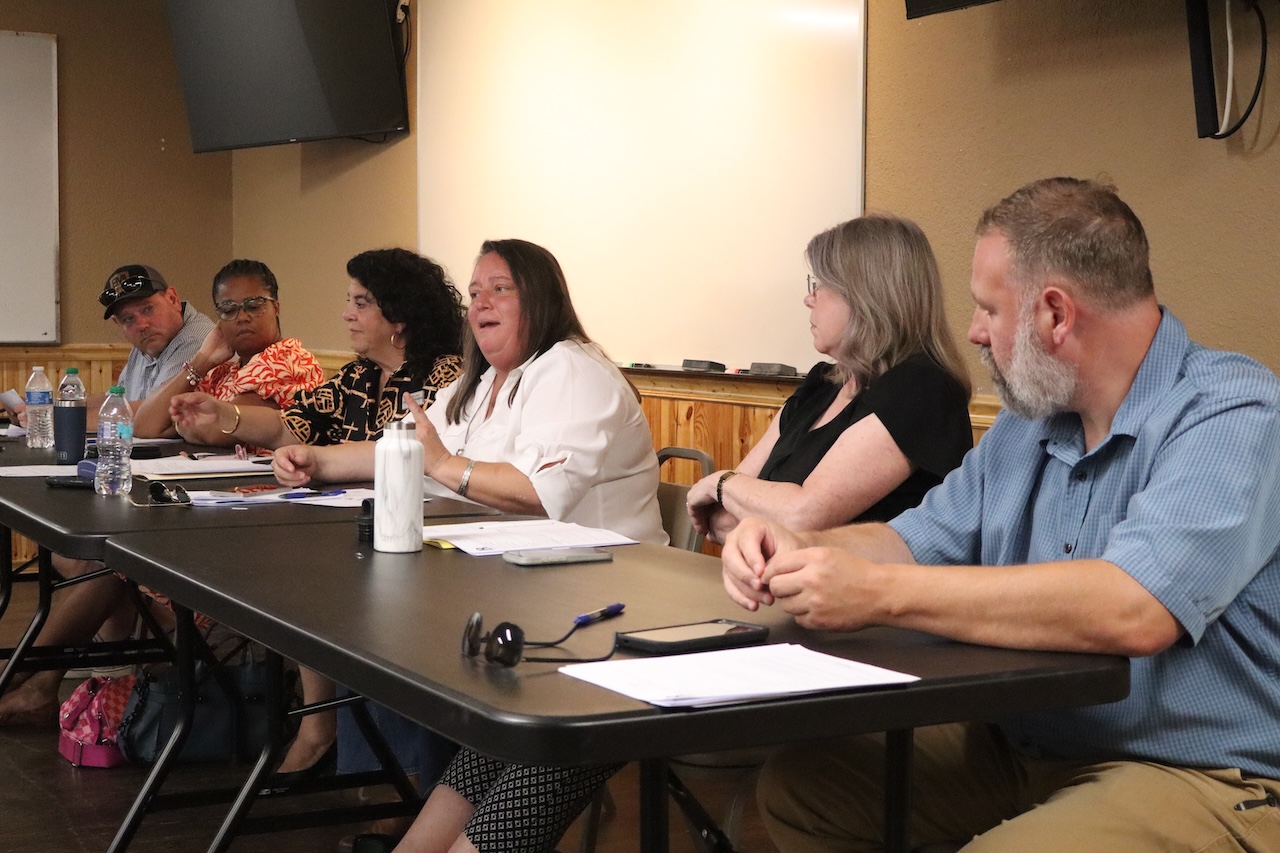
Baldwin city council members were visibly distraught during the work session held on Tuesday, July 8, when they learned that the amount due to Habersham County for animal control fees was over $1,000 more than what was budgeted for.

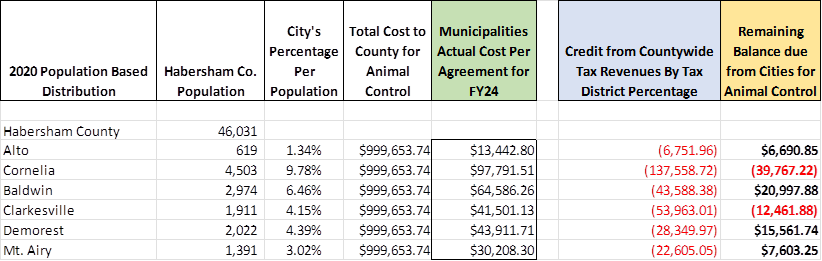
The city’s total cost for animal care and control fees this year is $64,586.26. A countywide tax digest credit of $43,588.38 cut the total cost down to $20,997.88.

Chief Administrative Officer Emily Woodmaster informed the council that the city anticipated a three percent increase in animal control fees from the previous expenditure of around $18,350. With the current budget at $19,000, the city will need to raise an additional $1,997.88 to pay the county. The city cannot pay the amount until the council approves.

Woodmaster said that she received the animal control invoice on June 19. This did not give the city enough time to move funds or find additional funding to cover the outstanding balance, Woodmaster added, because the invoice came at the end of the budget cycle.

Fee calculation formula is “trash”

Mayor Pro Tem Alice Venter described her frustration with the remaining balance, saying that she had to take care of stray animals that were left at Baldwin City Hall.

“My problem is that Habersham County taxpayers already pay for this service,” she said. “[The county] is like ‘you guys have this much population so you gotta pay extra just because,’ and there was no good reason for it at all.”

Baldwin Mayor Pro Tem Alice Venter expresses her disagreements with the city’s remaining animal control balance. (Chaz Mullis/NowHabersham.com)

Cornelia and Clarkesville not having to pay for animal control because of their tax digest, according to Woodmaster. Venter differed, saying that citizens from those cities, including Baldwin, are still taxed for animal control for the county.

“The way that they calculate the numbers is dumb. This is trash, and now they’re asking us to pay extra,” Venter said.

Sims gives clarification

Habersham County Manager Tim Sims provided clarification on the formula used to calculate municipal costs. He explained that the annual fee is based on each city’s share of the county population, which is then reduced by a tax digest credit specific to each municipality.

“The yearly fee is based upon the total cost for Animal Control (including direct & indirect costs), which is distributed by population,” Sims said. “That amount is then credited by the amount collected from the tax digest for each municipality to get their cost for Animal Control.”

According to Sims, the formula used to calculate the FY25 costs was the same one agreed upon in previous years and was even updated in 2024 to reduce the burden on cities. Still, increased operating costs—including the hiring of two new part-time employees—led to a higher overall bill for Baldwin.

Sims noted that Baldwin’s Intergovernmental Agreement (IGA) with the county, signed in May 2024, clearly states that animal control costs would be recalculated annually and billed to the city accordingly.

“There were no surprises intended as we used the same formula that we used last year and that all municipalities agreed upon,” Sims said. “We will continue to provide services and hope to reach a mutual understanding on this increase.”

Habersham County Animal Control Fee Spreadsheet (Courtesy of Tim Sims)

The spreadsheet provided by Sims confirms that Baldwin’s share of animal control services accounts for 6.46% of Habersham County’s population. While the countywide tax credit helped offset the cost, Baldwin was still left with the highest balance due.

Woodmaster told council members that she intends to meet with county officials soon to address their concerns and explore solutions for the unexpected expense.

New Helen boundary lines approved

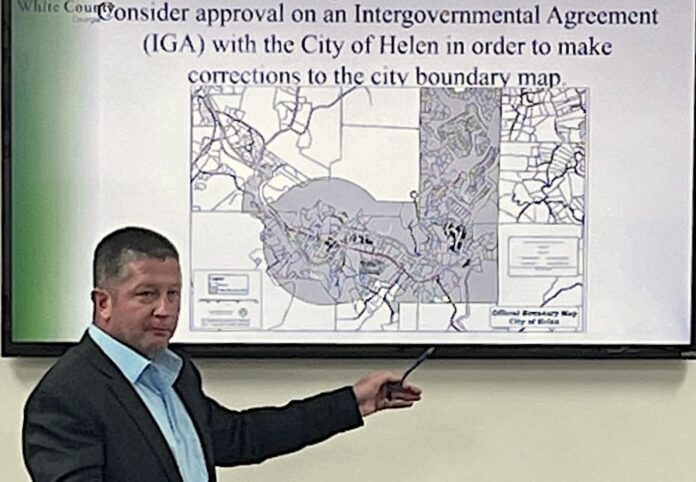
White County Manager Derick Canupp outlines the redrawn Helen City boundary lines during the White County Commission meeting. (Dean Dyer/WRWH.com)

An intergovernmental Agreement has been reached between White County and the City of Helen to correct the city’s boundary map.

During the July 7 county commission meeting, White County Manager Derick Canupp said for quite some time, there have been a number of inconsistencies with where the actual boundary lines are, and that has caused problems with service delivery.

County staff, working with attorneys for both entities, have been able to work out the details that, under the current agreement, will resolve the boundary lines.

To complete the agreement, Canupp said they went back to the original charter for the city of Helen and found the center of town, redrew the half-mile radius of the town, and then added in the areas that have been annexed over the years. Canupp said the agreement will reduce some inconsistencies and provide streamlined services.

Now that the new boundary line has been established, it was revealed during the meeting that the City of Helen will submit a couple of new annexation requests to the county, which will necessitate one more redraw of the map.

Georgia lags far behind other states in the number of journalists, says new report

A new local journalism report reveals a 75% decline in local journalists across the country since 2002. (Photo contributed by Kevin Hall)

(Georgia Recorder) — The decline of local news continues on the national level and here at home in Georgia. A new local journalism report from Rebuild Local News and Muck Rack reveals a 75% decline in local journalists across the country since 2002.

“The goals of this new report and project is to try to create a measure of journalists per population and an index that could be recreated each year down to the county level,” Rebuild Local Journalism Founder Steve Waldman said during a webinar Thursday. “The reason that we all felt that was important is that at the heart of the local news crisis is the lack of coverage and the lack of reporters in communities.”

The report, released on Thursday, found that the shortage of local journalists is both severe and widespread. This shortage is measured by a new metric called Local Journalist Equivalents (LJEs), which uses a formula to evaluate the strength of local journalism. LJEs were determined by outlet types, verifiable bylines and reporting capacity based on factors like publishing frequency. This data was then used to show nationwide trends and state-specific metrics.

In 2002, there was a national average of about 40 local journalists per 100,000 people. Today, that figure has dropped to an average of 8.2 Local Journalist Equivalents. Georgia’s average currently sits well below that number, landing Georgia at No. 46 on this year’s ranking.

With a statewide population of 11 million people, Georgia has an average of 5.8 Local Journalist Equivalents per 100,000 people. This average was significantly less than the No. 1 ranked state of Vermont, which has an average of 27.5. Nevada trailed four places behind Georgia, with the lowest-ranked average of 4.8 local journalists.

While the decline of local news is not a new phenomenon, the report confirms that rural areas are not the only communities underserved by local news. Many fast-growing areas, including Los Angeles and Las Vegas, also scored below the national average.

Richard T. Griffiths, a retired reporter and president emeritus of the Georgia First Amendment Foundation, said the continued decline of local journalism goes beyond local journalists.

“It’s not the industry that is the future casualty of this, it’s democracy itself,” Griffiths said. “If you have a populace that doesn’t understand what’s going on in its community because there are no reporters able to go to the meetings to figure out what’s going on, then you have a collapse of the institutions that underpin our society and our democracy.”

Griffiths cited waning advertising dollars and the rise of social media as notable factors behind the demise of local news. In a world of subscriptions and paywalls, Griffiths said he believes that the business model of local journalism needs to be re-evaluated. He points to nonprofit models like The Current on the Georgia coast and The Macon Melody as potential ways to revitalize local news.

While the new report may not identify clear-cut solutions, the creators behind the report hope their findings can help improve the viability and sustainability of local journalism.

“We think we made a real significant contribution here, and that this really gives a very meaningful picture of the sort of journalistic horsepower in counties across America and will help all of us to better understand both the crisis and how to solve it,” Waldman said.

Martha Baum Sikes Carlton

Martha Baum Sikes Carlton, age 85, died peacefully in Nashville, Tennessee, on July 1, 2025.

Martha was born in Opelika, Alabama to the late Col. John Pinson Baum, and Martha Bowen Baum of Milledgeville, Georgia. Martha attended Sweet Briar College in Amherst County, Virginia, completed a master’s degree in education from the University of Southern California, and was in the inaugural entering class of Georgia State University School of Law in Atlanta. She was a member of the bar of the State of Georgia.

Martha’s first love professionally was teaching. She called upon years of language study and travel growing up and taught French, Spanish, and English, first at Paul Revere Junior High School in Pacific Palisades, California. Later, she taught at Piedmont College in Demorest, Georgia and then at Habersham Central High School in Mt. Airy, Georgia. She loved her students and kept up with several of them for the rest of her life.

In mid-life, she changed careers and became an attorney. Her first job as an attorney was as a judicial clerk for Judges Jack Gunter and Robert Struble of Georgia’s Mountain Judicial Circuit. Uncertain at first, she grew to enjoy the challenge of being a judicial clerk and was always grateful to her two mentors for their wisdom. Later, she became associated with, and eventually joined, the Toccoa, Georgia law firm of McClure, Ramsay, & Dickerson, LLP, specializing in representing Georgia’s Department of Family & Children’s Services in child abuse cases. She was never flashy in legal practice, and instead built a record of success and a reputation for fair dealing based on consistent, thorough preparation.

Much of Martha’s life centered around her family and her journey through three marriages. She was married to her first husband, Thomas Wellington Sikes, for 19 years, and together they had three children: Matthew McArthur Sikes, Suzanne Hope Sikes Thurman, and Kenneth Rivers Sikes. While this chapter of her life concluded, she cherished her role as a mother. Later in life, Martha found happiness with her second husband, Helmut Hartmann of Venice, Florida, who passed away after two years of marriage. She later married Walter Carl Carlton of Ringgold, Georgia, with whom she shared a fulfilling 10 years before his passing.

Music was a constant theme in Martha’s life. After years studying the piano and the organ as a young person, she became the organist for Grace Calvary Episcopal Church in Clarkesville, Georgia. Later, her musical interest evolved to include bluegrass music, and she practiced her banjo and guitar faithfully every night. Her bluegrass interest brought her into contact with many other musicians who became close, cherished friends, including her third husband, Carl. The two of them played and sang in formal and informal ensembles around Florida and Georgia.

In addition to her son Matthew and her daughter Suzanne, Martha leaves two grandchildren whom she adored: Mizuki Juliet Sikes and Julian Kazuki Sikes. She spent as much time as she could with them, whether it was getting snowed in with them as eighteen-month-old twins while Matthew and Rumiko took a much-needed vacation or teaching them to swim as toddlers in her pool in Florida. Even when she was confined to a nursing home late in her life, she burst with pride at hearing them play their musical instruments for her, and spoke about it often to the nurses and other nursing home residents. To her grandchildren, she was “Omama.” Omama loved her grandchildren dearly; they were a true blessing to her.

In addition to her children and grandchildren, Martha’s sisters Mary Anna Baum Vincent and Marjorie Baum Pearsall, and her nieces and nephews Kimberly Baum Cook, John Pinson Baum, III, John Philip Vincent, Robert Vincent, and Mark Vincent, Sarah Pearsall, and Miller Pearsall and their families will cherish Martha’s memory. Martha was predeceased by her parents, her son Kenneth Rivers Sikes, her brother John P. Baum Jr., her nephew Greg Pearsall, her second husband Helmut, and her third husband Carl.

Martha’s family and friends will hold a service to honor Martha’s life at 2:00 p.m. on Saturday, July 19, 2025, at Grace Calvary Episcopal Church in Clarkesville, Georgia, with Reverend Michelle Fritch officiating. Following the service, Martha will be laid to rest at Holy Cross Cemetery on New Liberty Road, Clarkesville, Georgia.

The family will receive friends from 6:00 p.m. to 8:00 p.m., Friday, July 18, 2025, at the Whitfield Funeral Home, North Chapel.

In lieu of flowers, the family requests donations to the Cure Alzheimer’s Fund; Cure Alzheimer’s Fund, 34 Washington St., Suite 230, Wellesley Hills, MA 02481; phone: 781-237-3800; federal tax ID number 52-239-6428.

Arrangements have been entrusted to the Whitfield Funeral Homes & Crematory, North Chapel at 245 Central Avenue, Demorest, Georgia 30535. Telephone: 706-778-1700.

Crowd packs Clayton City Council meeting to defend popular wine tasting room

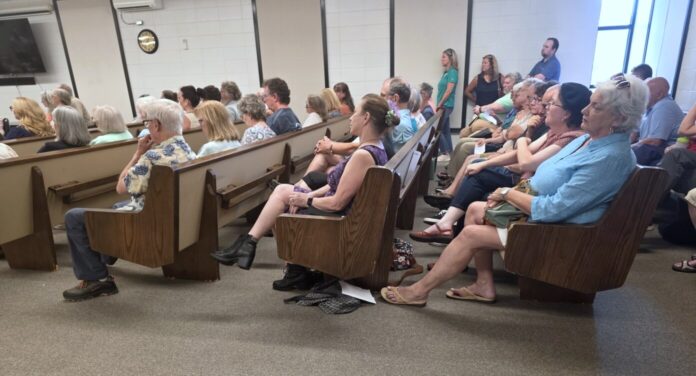
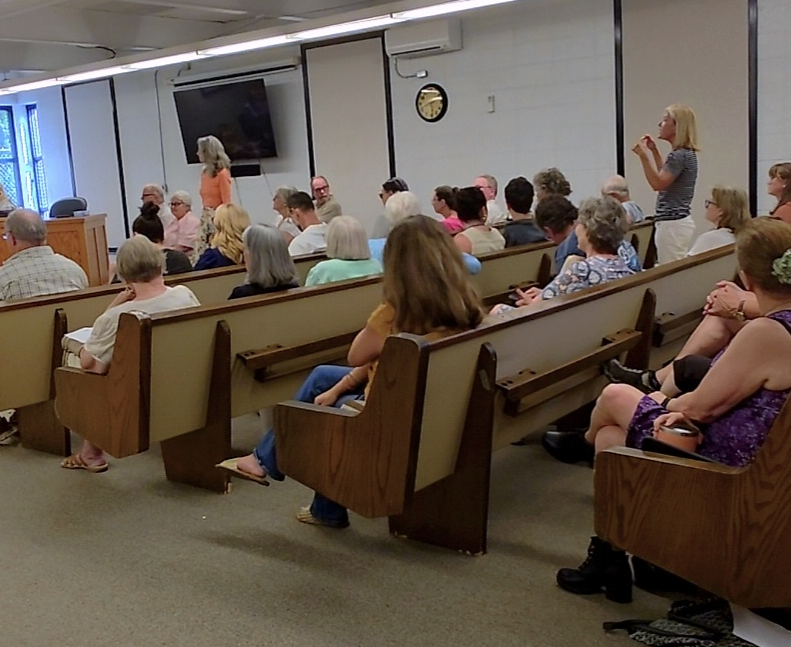
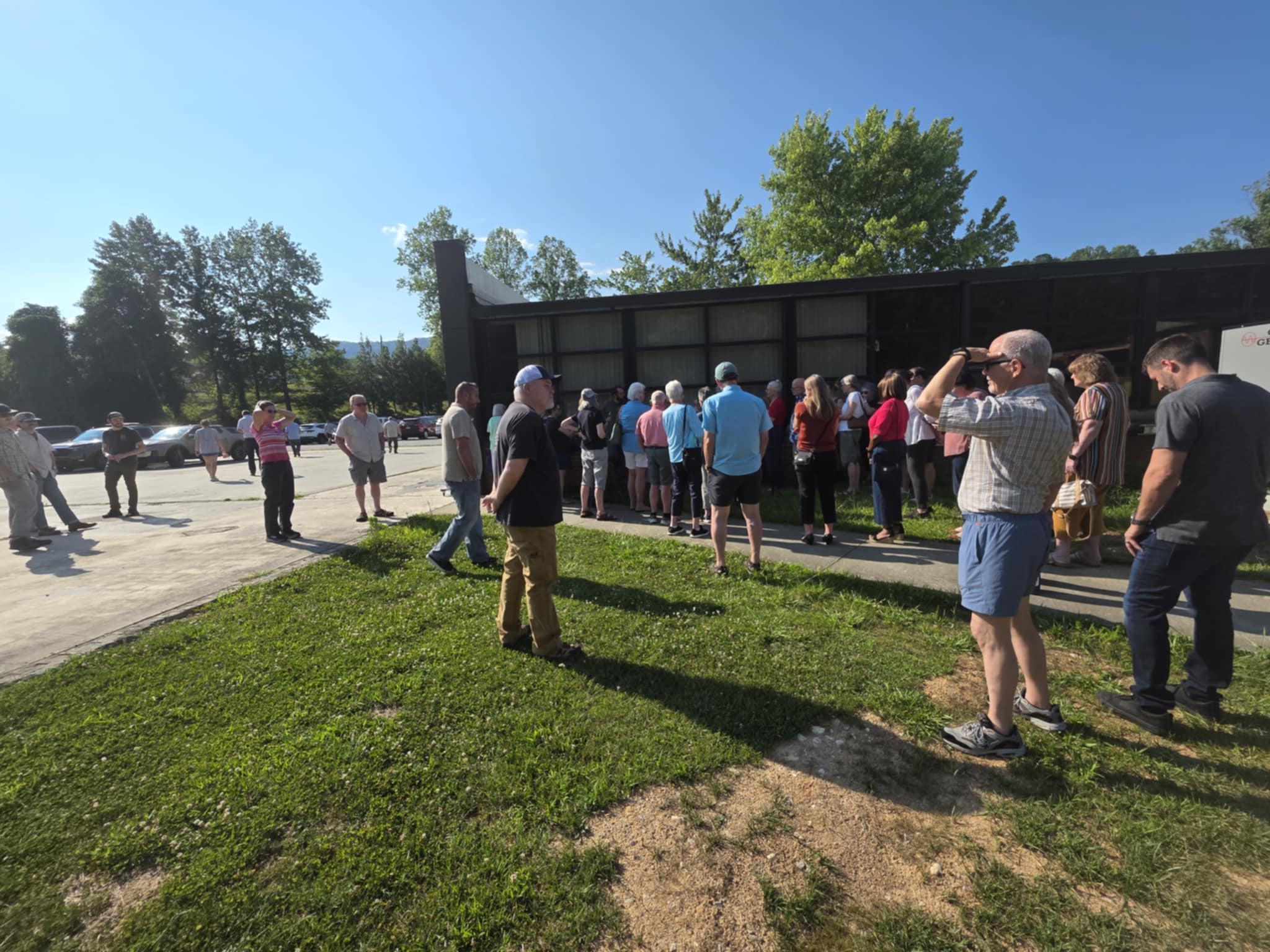
Standing room only as nearly 100 supporters of Highroads Tasting Room pack the City of Clayton Courthouse. (Carly McCurry/ Now Habersham)

CLAYTON, Ga. — A standing-room-only crowd filled the Clayton City Council chambers Monday night as residents rallied in support of Highroads Tasting Room, which warns it could be forced to shut down unless the city reconsiders an ordinance limiting tasting rooms to serving only Georgia wines by the glass.

The ordinance, revised in 2019, has drawn confusion and criticism for how it’s being applied to Highroads.

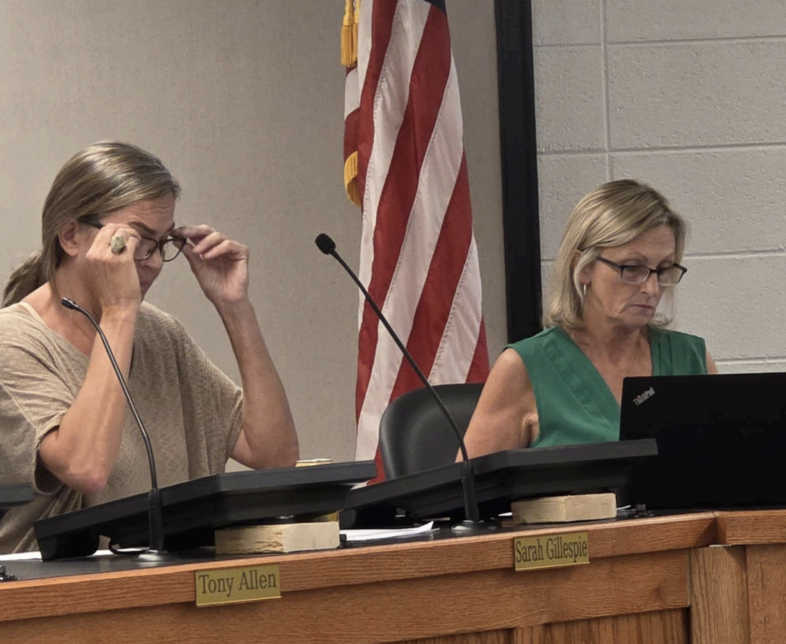
“We are reviewing the ordinance. We are not making the decision to alter it today,” Councilwoman Sarah Gillespie told the crowd. “That does not mean the ordinance won’t be altered. There is, obviously, some confusing language in the way it was written. That’s why you elected us—to do our jobs and make it clearer. We’ve been working on that for weeks now, so please, bear with us,” she implored. “Please.”

Gillespie voiced support for the business community and said council members are working toward a solution.

Council punts without attorney

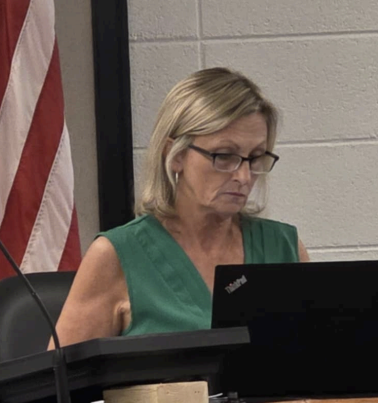
Sarah Gillespie adjusts her glasses as she prepares to engage thoughtfully with attendees. Beside her, Mrs. Tracey Crunkleton studies her notes. (Carly McCurry / Now Habersham)

Despite reassurances, tensions rose when council members refused to discuss ordinance details due to the absence of City Attorney Mitchell L. Baker, Jr.

“The biggest thing is that if we have a difference on our interpretation of our ordinances, it’s not ours to discuss outside of counsel. We need him here to lead us in that,” explained Mayor Pro Tem Stacey Fountain.

Highroads owner Jabe Hilson pressed him: “Where is he?”

“He’s on his way back from Atlanta,” Fountain replied.

Hilson responded, “That doesn’t help everybody here today, does it? It’ll be another month before we have the opportunity to do that [speak about the ordinance]?”

Fountain ended the exchange: “Jabe, I appreciate you.”

RELATED

Comment rules spark frustration

Jabe Hilson, owner of Highroads Tasting Room out of Be Effervescent Winery, speaks with the council. (Carly McCurry / Now Habersham)

Audience members grew confused and frustrated over unclear public comment procedures. Only those who signed up in advance were allowed five minutes to speak; others were limited to one minute. Around 45 minutes into the meeting, the council moved to adjourn early, though many still wished to speak.

Before adjourning, City Manager Trudy Crunkelton addressed the crowd.

“The attorney has advised us that if y’all are going to say why you are here and what your thoughts are—and I believe we all know what they are—that’s fine. But when it comes to ‘We disagree. Our interpretation…we don’t think we are interpreting it correctly,’… that becomes a legal matter,” she said.

Directing her remarks to one person in the crowd, she added, “And, back there shaking your head, I’m telling you, our attorney says that…[That] is why we are not saying more.” Then, clapping her hands for emphasis, she continued, “Because multiple of you stood up and said, ‘You’re interpreting it wrong. You’re interpreting it wrong.’”

City manager, Hilson spar

Clayton City Manager Trudy Crunkelton (Carly McCurry/NowHabersham.com)

Crunkelton then addressed Hilson directly, referencing a private meeting.

“Jabe, you and I sat in my office and we agreed how we interpreted it [the ordinance] sitting in my office,” she said.

Hilson interrupted, disagreeing with her characterization: “Actually, I decided it was not prudent to argue.”

The crowd applauded. Crunkelton responded sharply.

“Y’all can all applaud for him, and I want to say, I have been blamed and I have been called out on this, but that is not the conversation you and I had sitting in that room. There was no argument, but you never said, ‘I disagree with your interpretation.’ And so that everybody in this room knows, that was not my interpretation. I went to our attorney before I ever sent anything [an email informing Hilson his business was not in compliance] and said [to the attorney], ‘Am I interpreting this correctly?’”

Work session ends early

When asked if the attorney would be available later, council members confirmed he would attend the 5 p.m. council meeting. They ended the work session early and recessed for 15 minutes.

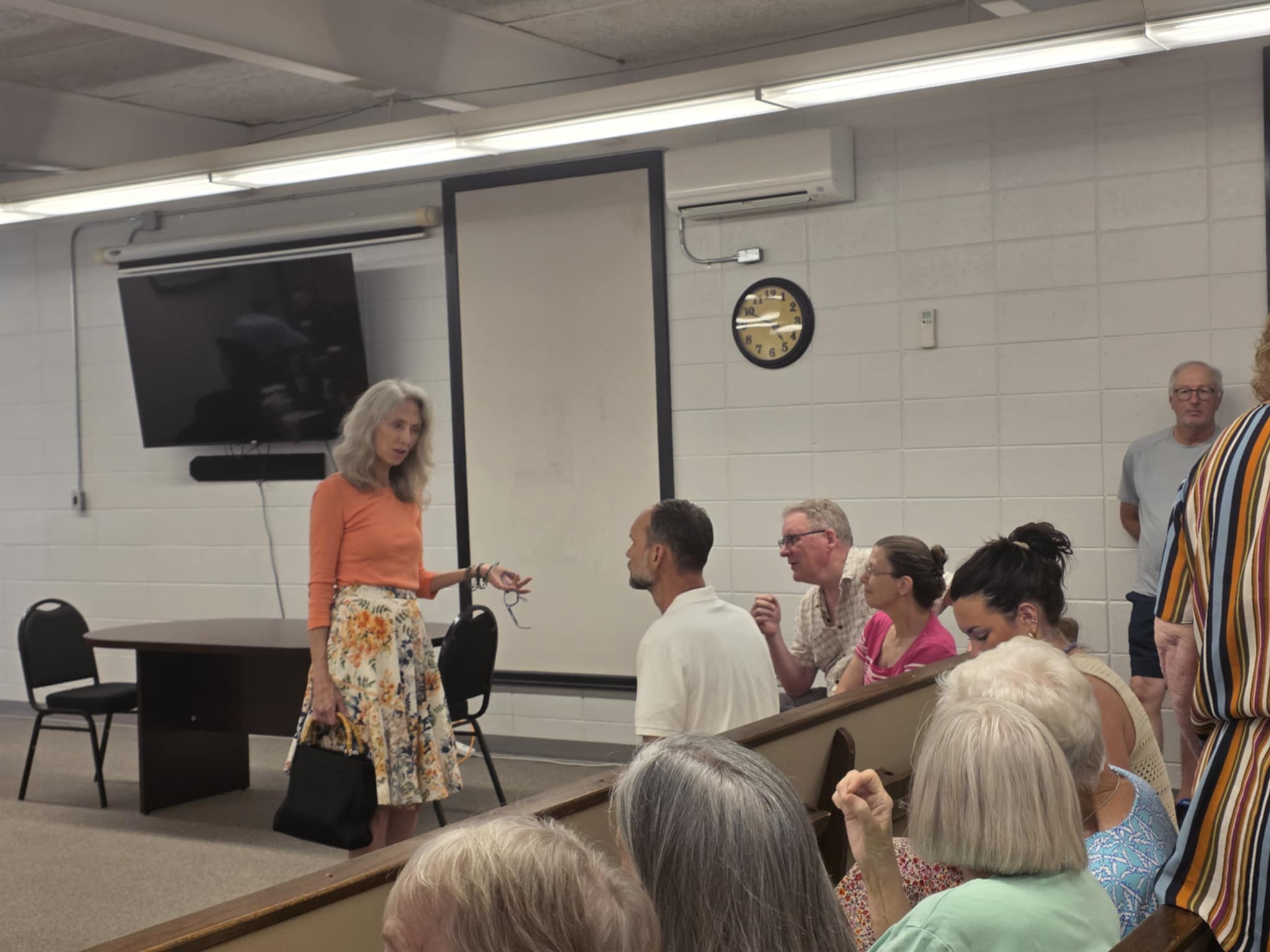
Frustrated audience members used the break to speak directly with council members and among themselves about what they saw as “openly hostile” attitudes from some city leaders.

During the 15-minute recess, individuals break into small groups and discuss the meeting and the ordinance. (Carly McCurry/Now Habersham)

Equity and clarity

When the meeting resumed, Hilson again took to the podium to voice his concerns. He pointed out discrepancies in local alcohol ordinances

“You don’t even have an ordinance for wineries. It’s only tasting rooms. Y’all don’t have an ordinance for distillery tasting rooms; you only have an ordinance for distilleries. Yet, you have a distillery tasting room operating within the city limits,” he said.

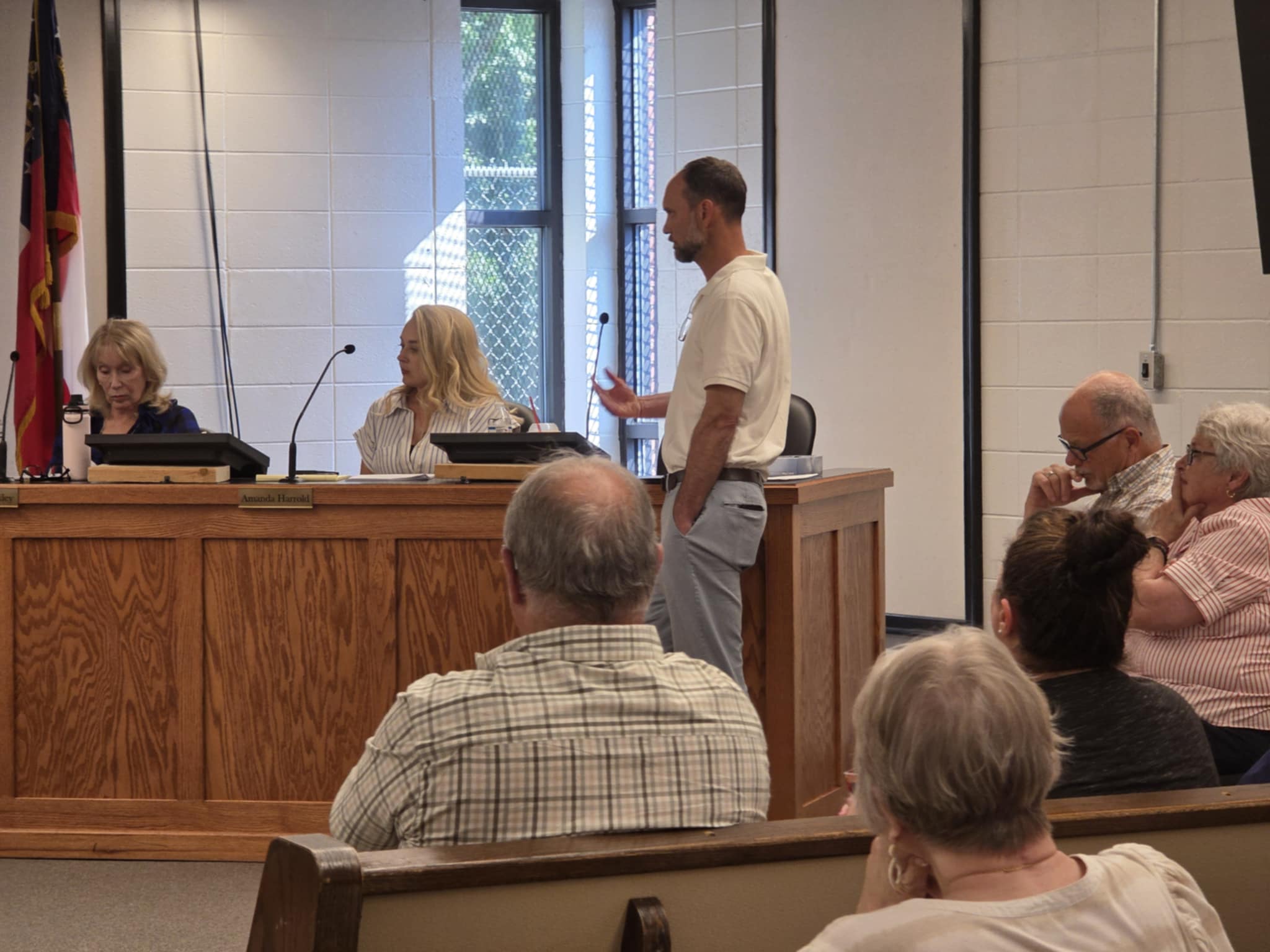
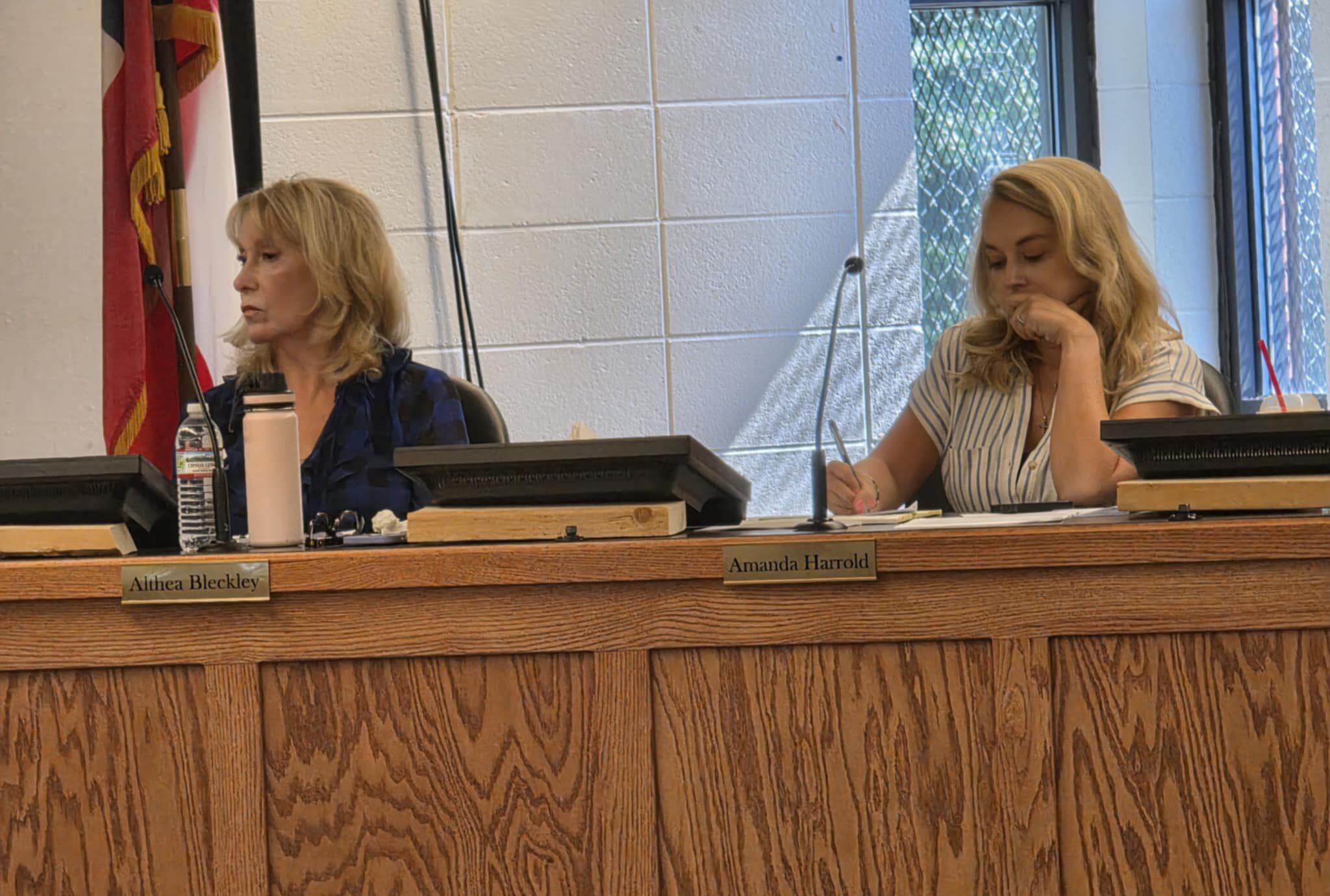
Councilwomen Althea Bleckley and Amanda Harrold listen intently and take notes during a City of Clayton council meeting. (Carly McCurry/ Now Habersham)

The Highroads owner called on the city to apply the same standards to wineries that it uses for breweries and distilleries, noting that those businesses follow Georgia state codes for their operations.

Hilson described how the issue had affected his business and urged the council to consider granting a temporary variance. He asked that the variance allow Highroads to continue operating as it has until a formal ruling could be made.

Attorney Baker, now present, responded that no citations had been issued and the city had not threatened to pull the business’s license

He added, “And you don’t have to respond to this, but it is my understanding that there were activities going on at this location that were blatantly violations of our alcohol ordinances, not related to the serving of non-Georgia wines. Other issues. Which precipitated the communication [Crunkelton’s email].”

When several audience members asked for specifics, Councilwoman Amanda Harrold said, “This is a communication with us. Thank you.”

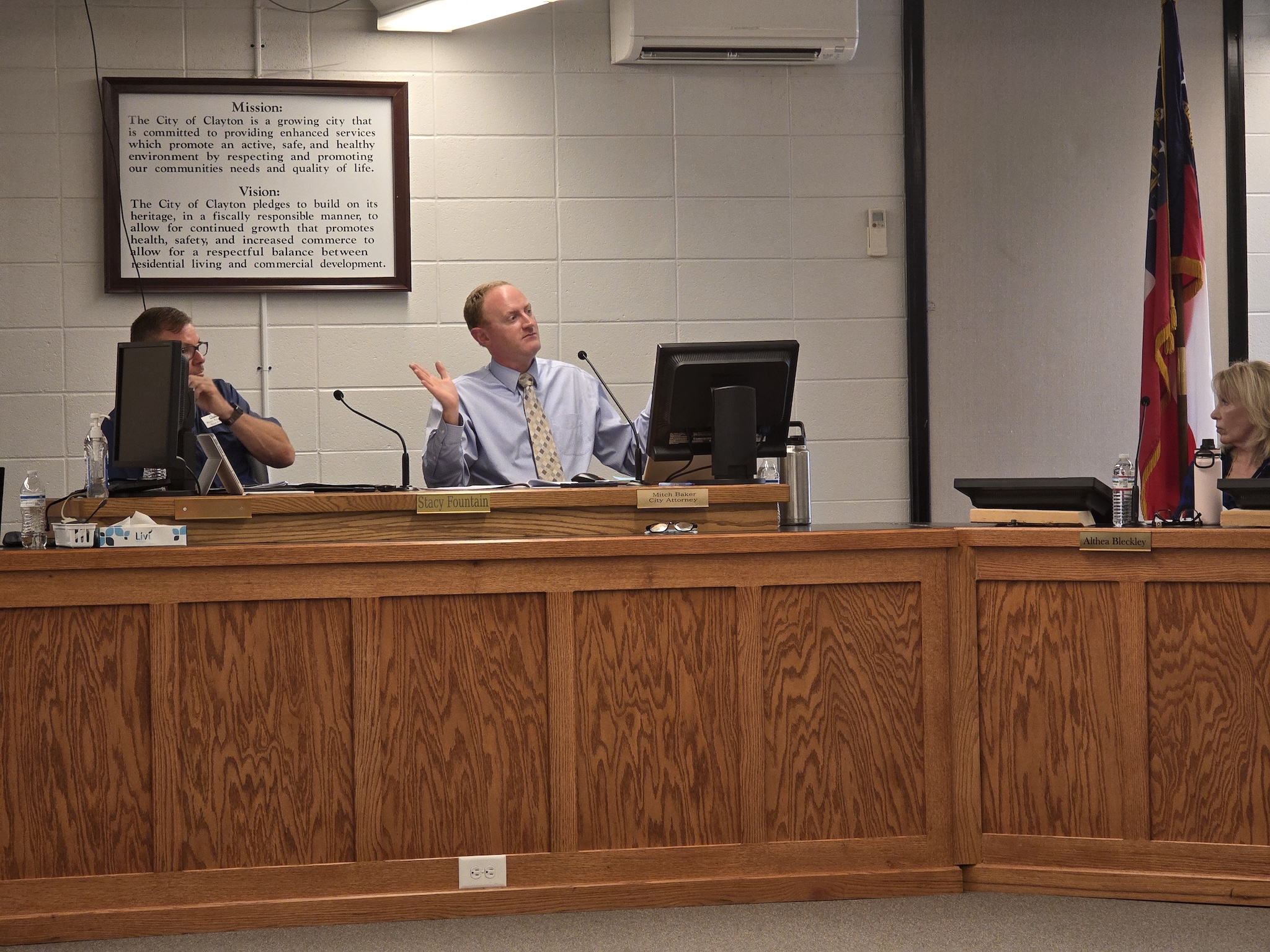
Clayton City Attorney Mitchell L. Baker Jr. discusses the ordinance with Jabe Hilson, as Mayor Pro Tem Stacey Fountain and Councilwoman Althea Bleckley look on. (Carly McCurry/ Now Habersham)

Baker said to Hilson, “You can respond to that if you want to. Or if you don’t want to. I’m not necessarily saying we need to engage in that. But just for everybody’s knowledge, the communication was precipitated by activities that have nothing to do with why we are here today. It led to this discussion and expression of what the city’s interpretation of the ordinance was, which led to Jabe, you coming and saying, ‘If that is going to be the interpretation, then I would like you to consider changing the ordinance.’”

Attorney hints at violations

Although Baker admitted the alleged violations were unrelated to the ordinance, he made it clear that they influenced the city’s response. He also made clear that a variance was unlikely.

“I am in favor of clear ordinances that reflect the mores and beliefs of the citizens of Clayton…” he said, adding he believed the council supported that view.

Councilwoman Gillespie reiterated her desire to work with Hilson on a solution.

Kimberly Lacey stood and declared, “This is the United States of America,” after being denied a chance to speak. (Carly McCurry/Now Habersham)

Protest moves outside

During public comments, several attendees praised Highroads as a key part of Clayton’s community and culture. One man grew visibly emotional as he recalled visiting the establishment with his late father. Another described the business as a “secret chamber of commerce” that helps artists and entrepreneurs thrive.

The Mayor Pro Tem offered an opportunity for individuals to speak in opposition. No one did.

In one of the night’s most dramatic moments, retired attorney Kimberly Lacey sought to present a constitutional law perspective on the ordinance. Fountain denied her request to speak. When she protested, he asked security to intervene. As Clayton Police Chief Andy Strait moved to remove her, Lacey announced she would speak on the courthouse lawn. Many in the audience followed her outside.

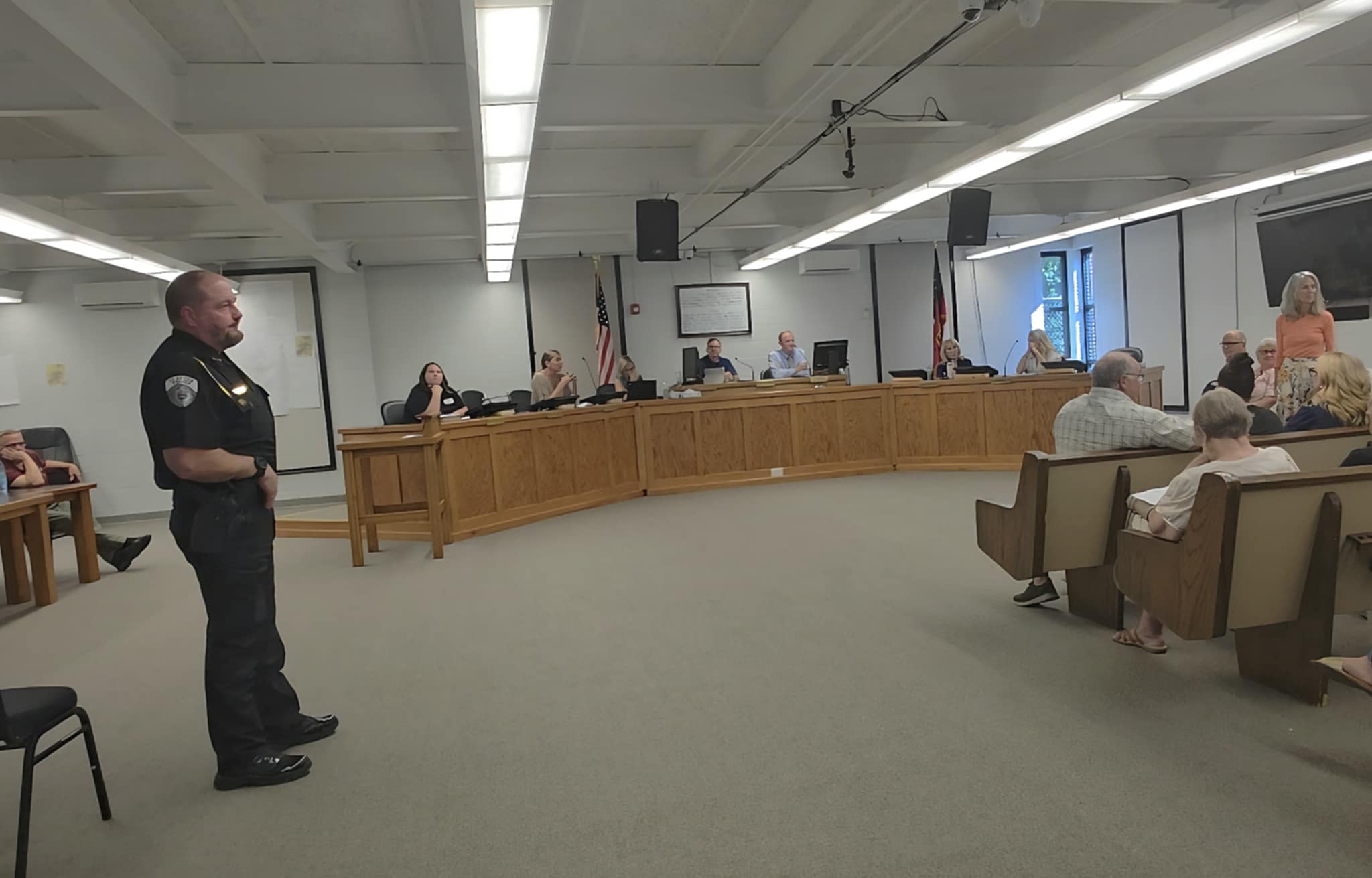
Clayton Police Chief Andy Strait starts the process of removing Mrs. Kimberly Lacey as a means to enforce decorum expectations. (Carly McCurry/Now Habersham)
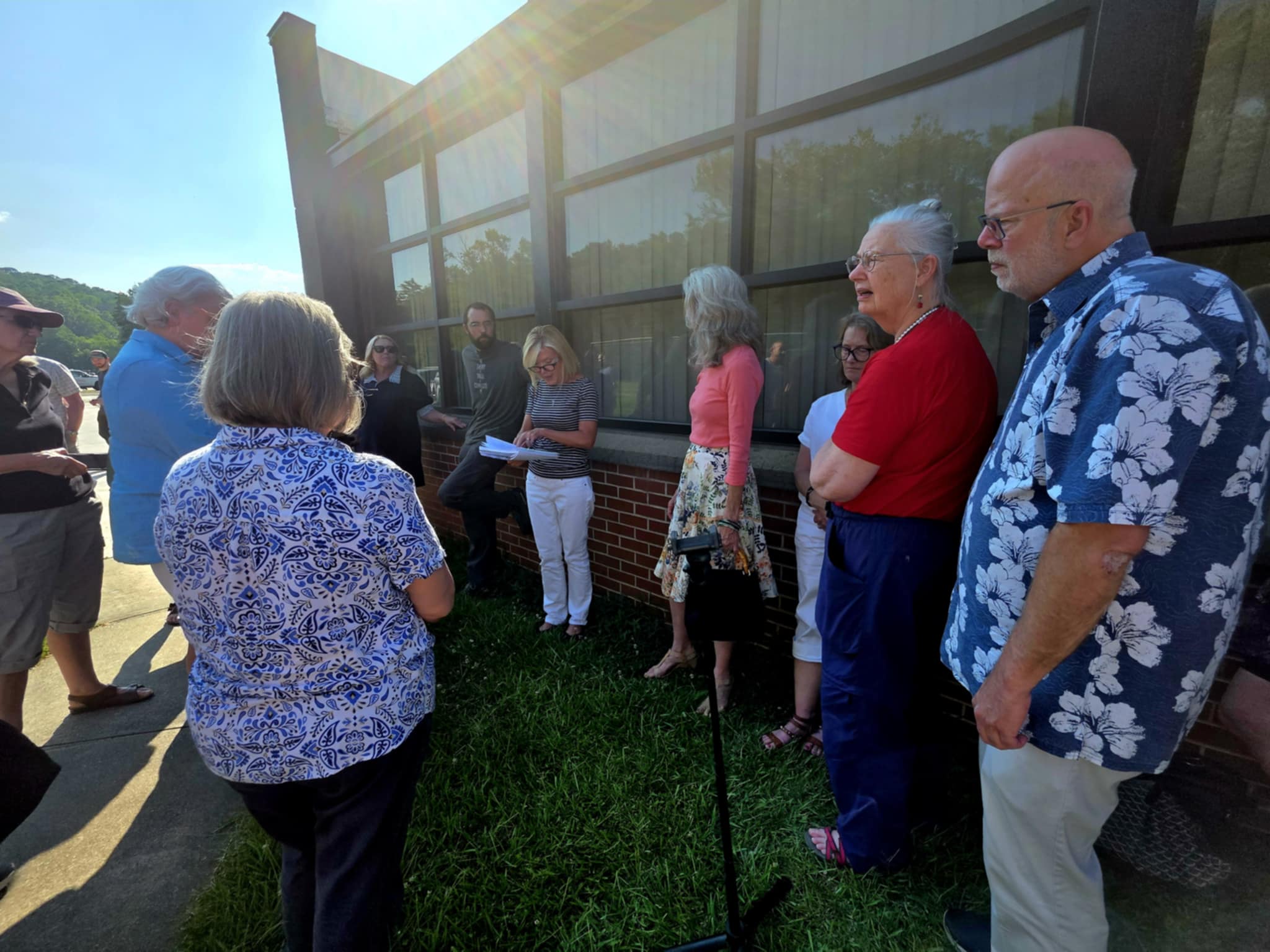
A crowd gathers on the courthouse lawn to hear Kimberly Lacey present her constitutional law argument. (Carly McCurry/Now Habersham)
Highroads supporters listen as retired lawyer Kimberly Lacey reads aloud her argument against the local ordinance on the Rabun County Courthouse lawn. (Carly McCurry/Now Habersham)

Gillespie offers apology and assurance

After the meeting, supporters gathered at Highroads to unwind. Gillespie joined them, reaffirming her support for a positive resolution.

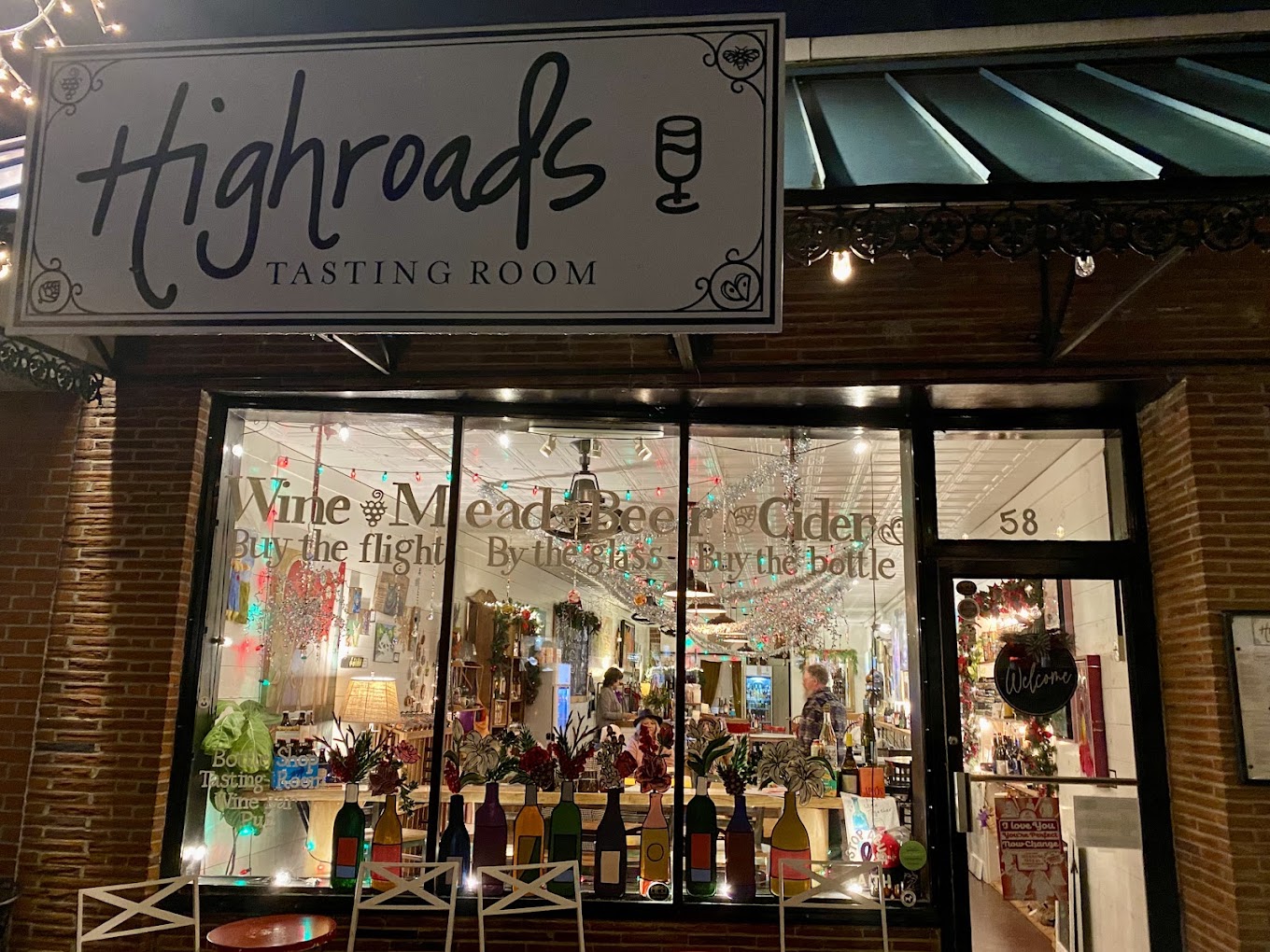
The downtown Clayton wine tasting room at the center of the controversy. (Carly McCurry/NowHabersham.com)

When someone mentioned the “rudeness” they felt during the meeting, Gillespie responded with an apology on behalf of those responsible.

Her visit offered a measure of relief to supporters, who ended the night cautiously optimistic that the local business could be preserved and civic harmony restored.

White County Sheriff’s Office seizes pills, meth in drug bust

Drugs and drug paraphernalia deputies say they seized in a traffic stop on Westmoreland Road in White County in June 2025. (White County Sheriff's Office/Facebook)

A traffic stop earlier this summer led to a drug bust in White County, according to a press release from the White County Sheriff’s Office.

On June 4, deputies from the department’s Crime Suppression Units and Criminal Investigations Division were patrolling the area of Highway 254 near Westmoreland Road when they pulled over a multi-colored Ford Ranger. During the stop, officers searched the vehicle and uncovered a substantial quantity of illegal substances.

Authorities found approximately 90 Oxycodone pills, 60 Diazepam pills, and 7.5 grams of methamphetamine inside the vehicle. Deputies also seized a number of items classified as drug-related objects.

The driver, identified as 50-year-old Angela Woodward of Cumming, GA, was arrested at the scene and faces multiple felony charges. She is charged with:

  • Possession of Oxycodone with the Intent to Distribute

  • Possession of Diazepam with the Intent to Distribute

  • Possession of Methamphetamine

  • Possession of Drug-Related Objects

The White County Sheriff’s Office has not released additional details at this time.

Turnout is ‘miserably low’ in the race for utility regulator

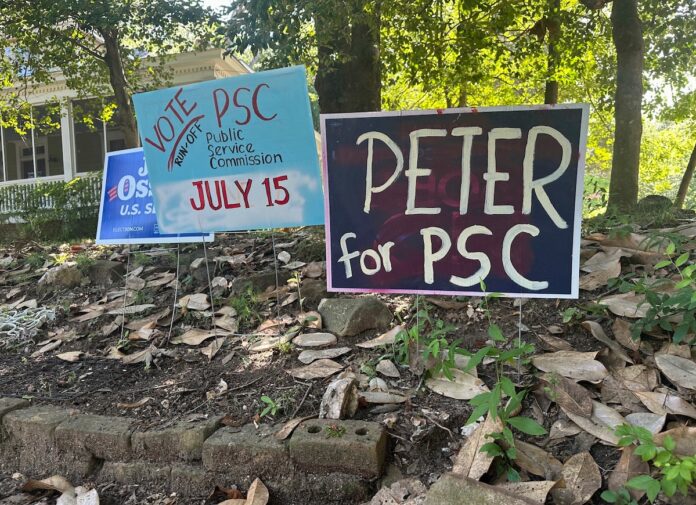
Homemade signs tout the candidacy of Democrat Peter Hubbard for a July 15, 2025, Democratic runoff for Georgia's Public Service Commission on Wednesday, July 9, 2025, in Atlanta. (AP Photo/Kate Brumback)

ATLANTA (AP) — Every time the door swings open this week at the county courthouse in the tiny south Georgia town of Statenville, six election workers have a moment to hope that someone is coming to vote.

“Anybody that comes in pretty much has to walk by our office,” said Renee Church, the elections supervisor in Echols County.

But through noon on Wednesday, none of those passersby had voted in the runoff to choose either Peter Hubbard or Keisha Waites as the Democratic nominee for a seat on Georgia’s Public Service Commission.

Welcome to a statewide election where almost nobody came.

Through the first two of five days of early in-person voting, only 9,822 ballots were accepted. That’s 0.13% of active voters, what Gabriel Sterling, the chief operating officer for Georgia Secretary of State Brad Raffensperger, called “miserably low turnout.”

Early in-person voting runs through Friday, with the election day set for Tuesday. Anyone can vote, except for the more than 63,000 people who voted in Republican primaries on June 17 including one in which incumbent Tim Echols beat GOP challenger Lee Muns.

Waites was the top vote-getter in a June 17 Democratic primary, but didn’t get a majority. That meant she had to face the second-place finisher, Hubbard, in a runoff to determine the party nominee. Barring an upswell in voter numbers, fewer than 1% of Georgia’s 7.4 million active voters could cast ballots. The winner will go on to face Republican incumbent Fitz Johnson in November.

Despite the low turnout, Hubbard and Waites continue to push, telling voters that breaking the Republican hold on the five-member body will mean a difference in their electric bills. The commission sets rates and oversees generation plans for Georgia Power, which serves 2.3 million customers statewide. Customers have seen bills rise six times in recent years, and a typical Georgia Power residential customer now pays more than $175 a month, including taxes.

“If you don’t like the direction your power bills are going, then you have a choice. You could do something about it,” Hubbard said Wednesday.

A green energy advocate, Hubbard touts his experience testifying before the commission and developing alternative plans that emphasize a shift toward solar power stored in batteries, rather than building more natural gas plants.

“A vote for Peter Hubbard is a vote to put a commissioner on the Public Service Commission who brings deep experience, who can hit the ground running with novel ideas to drive down power prices while inviting economic growth to our state,” he said.

Waites, a former state House member and former Atlanta City Council member, emphasizes that she would give representation to Black people and Democrats on the commission. In a statement Wednesday, Waites said her previous experience in office would help her “work with utility companies, legislators, and stakeholders to secure fair rates.”

“I plan to lower energy bills by advocating for increased transparency in utility rate-setting, promoting competition within the energy sector, and prioritizing clean, renewable energy sources to reduce dependence on fossil fuels,” Waites said in the statement.

It’s not like the low turnout is a surprise. Only about 140,000 people cast ballots in the June 17 Democratic primary, about 2% of voters statewide. Many Republican-leaning counties had less than 1% turnout in the Democratic primary, allowing them to activate a rarely used state law to consolidate early-voting and election day polling places to one location. A total of 76 counties triggered that clause to save money, according to the secretary of state’s office.

Officials in Walton County, east of Atlanta, predict they would have spent $42,000 to operate three early voting locations and 16 election day precincts. Cutting back to only one of each, Assistant Elections Director Lisa Clark said the runoff will now cost $5,600 in a county where only 21 of nearly 79,000 active voters had cast ballots through Tuesday.

“When it comes to public service commissioner, people don’t even know what a public service commissioner is or what they do,” Clark said. “So we were not surprised. We were hopeful it would have been bigger, but we were not surprised.”

Echols isn’t the only one of Georgia’s 159 counties without voters in the early going. Also recording no ballots in the first two days were Chattahoochee, Clay, Glascock, Miller and Telfair counties, while seven other counties recorded one vote. But Brittany Reynolds, the election supervisor in southwest Georgia’s Clay County, said Wednesday that turnout will rise there.

“I do know we will have at least one vote at the end of the day because I plan on voting myself,” Reynolds said.

Federal judge to pause Trump’s birthright citizenship order

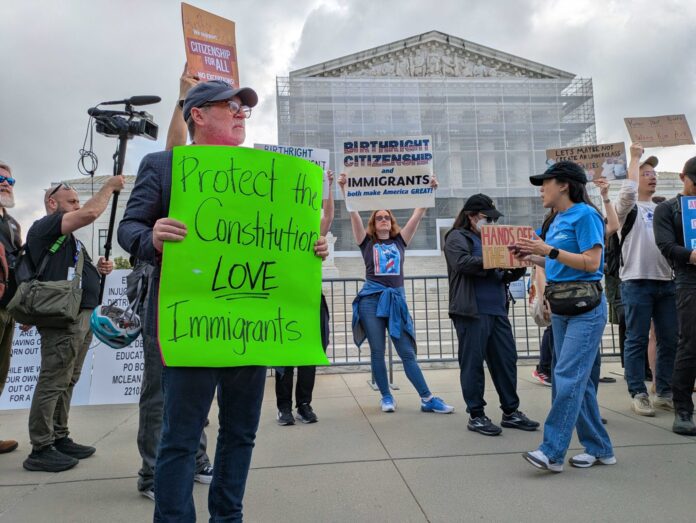
Rev. Patrick Mahoney, director of the Christian Defense Coalition, joined demonstrators outside the U.S. Supreme Court on Thursday, May 15, 2025, to protest the Trump administration’s effort to strip birthright citizenship from the Constitution. (Ashley Murray/States Newsroom)

WASHINGTON (States Newsroom) — A federal judge in New Hampshire Thursday issued a preliminary injunction against President Donald Trump’s executive order that would rewrite the constitutional right to birthright citizenship, and granted a class certification to infants who would be affected by the order.

The ruling from U.S. District Judge Joseph Laplante came after the Supreme Court last month limited lower courts’ ability to grant nationwide injunctions. Multiple courts had blocked the president’s executive order ending birthright citizenship, which is granted under the 14th Amendment to any infant born on U.S. soil. There is an exception for children born to foreign diplomats.

Laplante will stay his ruling for seven days to give the Trump administration time to appeal, according to his written order. Laplante was nominated by former President George W. Bush.

The high court in June deemed that lower courts should seek a narrower way to issue orders with wide effect, such as a class action suit. Under the ruling, the Trump administration’s executive order could take effect by July 27 in the 28 states that did not initially sue.

After the Supreme Court ruling, the American Civil Liberties Union filed the suit on behalf of immigrants whose babies would be affected by the order.

However, Laplante narrowed his injunction to focus on the infants as the plaintiffs rather than the parents.

“This ruling is a huge victory and will help protect the citizenship of all children born in the United States, as the Constitution intended,” said Cody Wofsy, deputy director of the ACLU’s Immigrants’ Rights Project, who argued the case. “We are fighting to ensure President Trump doesn’t trample on the citizenship rights of one single child.”

Habersham tax digest to be discussed at July 14 Board of Assessors meeting

(Brian Wellmeier/Nowhabersham.com)

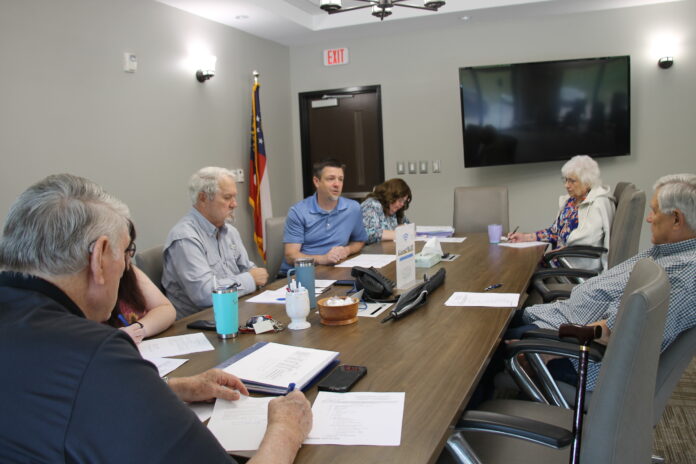
Habersham’s 2025 tax digest will be discussed at the upcoming Board of Tax Assessors meeting on Monday, July 14. The assessors must approve the digest before it is approved by the county’s tax commissioner.

Board meeting date was up in the air

County Clerk Brandalin Carnes said that two meetings were advertised because the assessors were uncertain that the digest would be ready before the Friday meeting. In the event that the digest is not ready by Friday, Carnes will update the public notice.

Chief Appraiser Joan Church confirmed that the Monday meeting will be cancelled if the Friday meeting happens as scheduled.

“Right now, we are going through the digest and doing our edits and trying to get our calculations right,” she said.

As reported by County Manager Tim Sims during the Board of Commissioners meeting on June 30, the vendor responsible for working the tax assessment software mistakenly increased the county’s exemptions introduced by GA House Bill 581. Church said that the mistake has been a cause for delay while completing the digest.

“Hopefully those issues will be resolved by Friday, but if not, we’ll cancel that meeting and meet on Monday,” she said.

Church expects increased, frozen values

The chief appraiser warned that the digest will show increased property values for Habersham residents. She could not give an estimate of how much the values would go up.

Despite this increase, Church reminded that although digest values have changed, a lot of people will not realize a difference on their tax bills because of the exemptions provided in HB 581. “They will be paying on frozen values,” she said.

Now Habersham will update the article to reflect the correct meeting date. Check back on Thursday for updates.

Now Habersham has updated this article to reflect the correct meeting date.