Home Blog Page 375

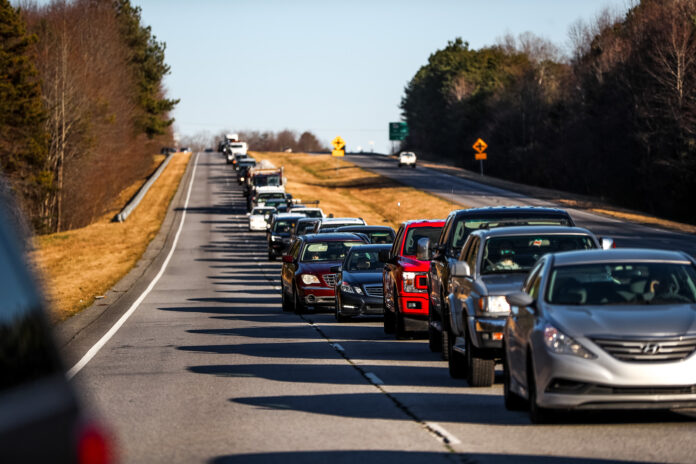
‘Operation Southern Slow Down’ kicks off across Georgia and Southeast

(Daniel Purcell/Now Habersham)

Law enforcement officers across Georgia and four neighboring states are teaming up to crack down on speeding and aggressive driving. Operation Southern Slow Down kicks off today, July 14.

The weeklong campaign, now in its ninth year, runs through Sunday, July 20. It involves coordinated enforcement efforts by state and local agencies in Georgia, Alabama, Florida, South Carolina, and Tennessee.

Speeding contributed to one out of every five traffic deaths in Georgia between 2019 and 2023, according to state data. With that in mind, officers will be out in force on interstates and major highways, aiming to reduce crashes and encourage safer driving behaviors.

In Habersham County, drivers should expect to see increased patrols and a strong law enforcement presence. Local agencies are placing a special emphasis on curbing excessive speed and aggressive maneuvers, hoping to gain voluntary compliance from motorists.

“Officers would like to gain voluntary compliance with motorists respecting and obeying posted speed limits as they travel from one destination to the other,” states a news release from the Habersham County Sheriff’s Office.

Young bear rescued after wandering with pretzel container stuck on head

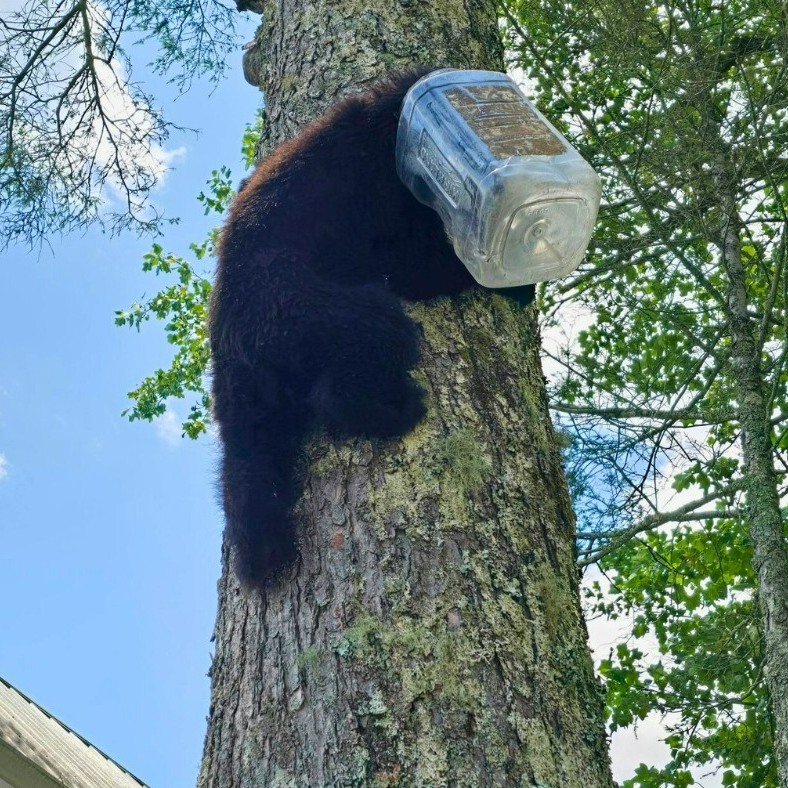
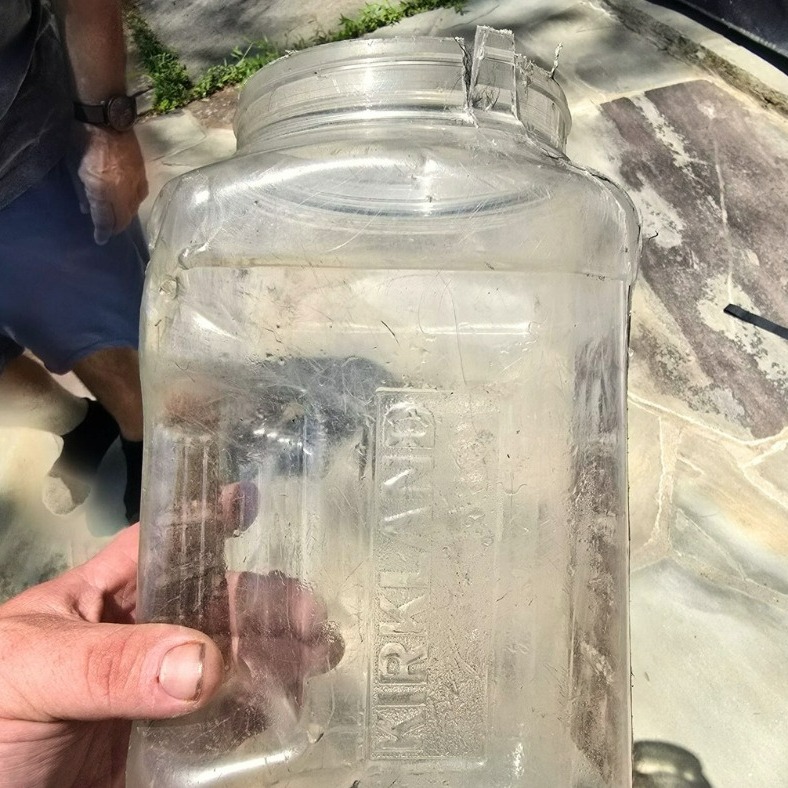
Residents grew worried when they spotted this young bear with a pretzel container on its head. Fortunately, state biologists were able to remove it and free the bear. (Georgia DNR Wildlife Resources Division/Facebook)

Georgia wildlife officials responded to more than a dozen calls last weekend about an unusual bear sighting—one involving a plastic pretzel container and a curious young bear.

The juvenile bear was spotted with the clear plastic container stuck on its head, prompting over 15 calls from concerned residents. The Georgia Department of Natural Resources Wildlife Resources Division (WRD) dispatched a biologist and a wildlife technician to investigate.

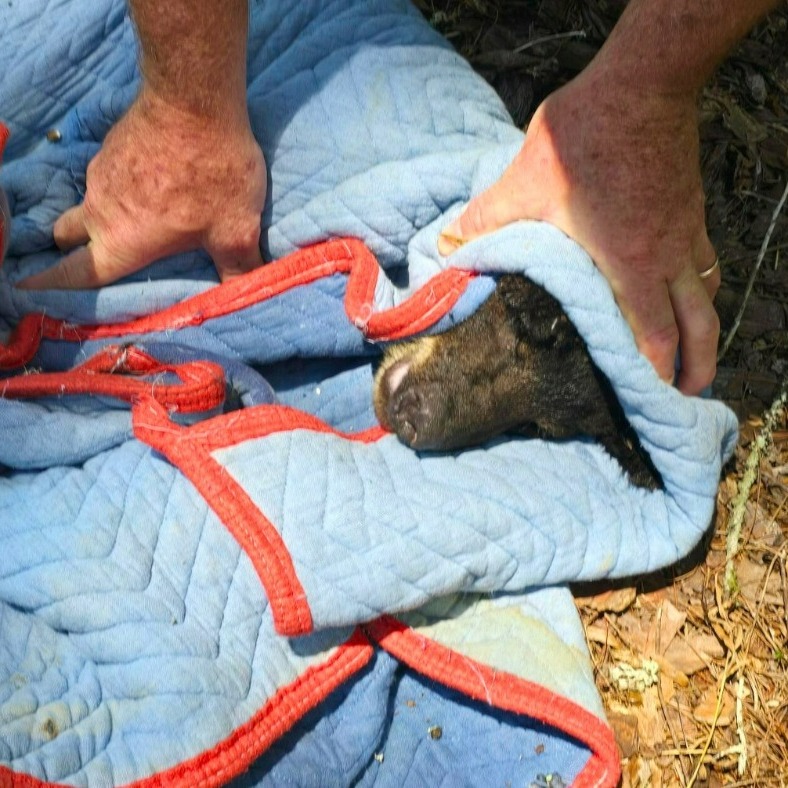
The team was able to safely capture the bear, remove the container, and release it back into the wild, unharmed, the agency said.

In another recent incident, WRD officials in Jasper responded to a report of a deer with a PVC pipe around its neck. A team of biologists responded to help.

“It took a couple of tries, but biologists were able to safely sedate the deer and cut the pipe off its neck,” DNR said. “Other than some hair loss, the deer was no worse for (the) “wear-ing!”

Officials say incidents such as these serve as important reminders that even small items can pose serious dangers to wildlife. They urge anyone who notices sick or injured wildlife to contact them. The number for WRD is 1-800-366-2661.

Also, residents living near forests and other natural areas are encouraged to become BearWise—a regional initiative that promotes securing trash and recyclables to help keep bears and communities safe.

For more information, visit bearwise.org or Appalachia Georgia Friends of the Bears online.

TFS rifle team places fifth at National Championships

The TFS precision rifle team placed fifth at the 3-Position National Championship match this week. Tallulah Falls’ group consisted of Chloe Erwin, Mitchell McGahee, Leah Rogers, and Faith Stout.

Tallulah was in fourth place, just 10 points out of first, following the first day after firing a 2316 team score. Rogers led with a 586, Erwin had a 585, and McGahee shot a 584 (PR). Stout followed with a 561.

On the second day, Erwin led with a 583, while Rogers (579), McGahee (578), and Stout (573; PR), bringing the team to a 2313 day two score and holding firm at fifth overall.

“We did not repeat with a National Championship, but I’m very proud of this team in a rebuilding year after losing six of nine athletes,” says coach Tim Stamey. “We were not sure we would have a fourth athlete that could shoot well enough for us to make Nationals this year, and are very happy to finish in the top-5.”

Stout as a 14-year-old finished the 15-and-Under Class as #11 in the nation. Erwin and Rogers finished in Graduating Senior Class as 15th and 18th in the nation, respectively.

Nine deaths in fire at Massachusetts assisted living facility

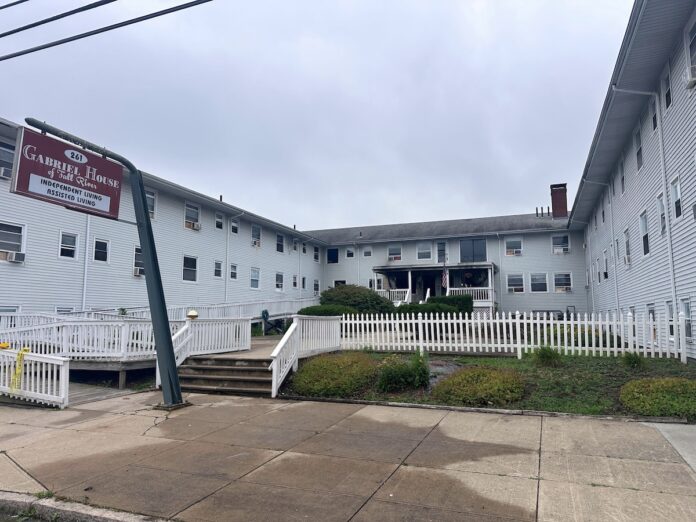
CORRECTS TO FALL RIVER NOT FALLS The Gabriel House assisted living facility is shown after a fire in Fall River, Mass., Monday, July 14, 2025. (AP Photo/Michael Casey)

FALL RIVER, Mass. (AP) — Nine people have died in a fire at an assisted living facility in Massachusetts, where people were hanging out of windows screaming for help, authorities said Monday. At least 30 people were injured.

Firefighters responded to the Gabriel House assisted living facility in Fall River at about 9:50 p.m. Sunday and were met with heavy smoke and flames at the front of the building, with occupants trapped inside, the state Department of Fire Services said in a news release. About 70 people live in the house.

The fire was out by Monday morning and firefighters were able to get inside and rescue numerous occupants. About 50 firefighters responded, including 30 who were off-duty.

Many of those rescued were taken to local and regional hospitals in varying conditions. Five firefighters suffered injuries that were not life-threatening, the statement said.

“This is an unfathomable tragedy for the families involved and the Fall River community,” said Chief Jeffrey Bacon.

He told reporters “multiple people were hanging out the windows looking to be rescued.” Family members who showed up said police were trying to break windows.

Leo Johnson, 45, of Fall River, told The Boston Globe he rushed over to find his 68-year-old mother, who lives on the top floor of Gabriel House.

“I was kinda freaking out because she wasn’t one of the ones outside,” he said. He eventually found her, saying she was outside soaking wet because the sprinklers were going off.

Joe Alves, who lives several houses down from the facility, said he was watching TV when he heard the wave of sirens and fire crews responding to the fire.

He said he saw officials pulling bodies and injured pets out of the building, with some pouring water bottles on burns as they desperately tried to help those in need.

“There were people in wheelchairs, a lot of people missing limbs, it was terrible,” he said, choking up slightly.

The Fall River Police Department in a statement said that “without hesitation, officers entered the smoke-filled facility, breaking down doors and escorting residents to safety.

“Approximately a dozen non-ambulatory residents were physically carried out by our officers. Their bravery and quick action undoubtedly saved many lives.”

The origin and cause of the fire are under investigation, state and local authorities said.

Fall River, which has about 94,000 people, is about 20 miles (32 kilometers) southeast of Providence, Rhode Island.

By Michael Casey and Kimberlee Kruesi

‘The most draconian cuts imaginable’: Health care providers, advocates brace for Medicaid cuts

(Georgia Recorder) — As the dust settles in the wake of President Donald Trump’s “big, beautiful bill,” — the massive spending cut and tax break package signed into law early this month — it’s becoming clearer that Georgia’s health care landscape may look dramatically different in 2026.

Health insurers, providers and advocates alike are bracing for the impact that the federal budget reconciliation bill will have on health care access throughout the state over the next decade. The bill’s sweeping Medicaid cuts are expected to reduce federal health care funding in Georgia by $2.29 billion, according to data from the nonprofit health policy research organization KFF.

In addition, roughly 310,000 people across Georgia are projected to lose access to health insurance by 2034. That number could rise to 750,000 if Congress allows enhanced tax credits for those insured through the Affordable Care Act to expire this year.

The policy changes have alarmed health policy experts, who anticipate that the bill will bring drastic changes to the U.S. health care landscape over the next decade.

“This bill was not framed as a health care reform effort, but it represents the biggest change to the health care system since the passage of the Affordable Care Act 15 years ago,” said Larry Levitt, KFF’s executive vice president for health policy. “And in effect, it amounts to what is effectively a partial repeal of the ACA, erasing a lot of its gains in health coverage.”

“The scale of the change to the health care system is staggering,” he added. “This represents the biggest rollback in federal support for health coverage ever.”

A Georgia Recorder analysis found that 45 health care facilities across 35 Georgia counties risk reducing services or closing altogether due to the bill’s spending cuts. Those facilities include hospitals, nursing homes and Planned Parenthood centers across both urban and rural parts of the state, all of which will likely face funding gaps under the budget reconciliation bill.

Rural hospitals face funding shortfall

Hospitals in rural parts of the state, many of which rely on funding from Medicaid to sustain their facilities, may be among the hardest hit health care providers under the new bill.

That includes four hospitals in rural Georgia: Fannin Regional Hospital in Blue Ridge, Flint River Community Hospital in Montezuma, Irwin County Hospital in Ocilla and Washington County Regional Medical Center in Sandersville. Three of those hospitals are in counties represented by Republican congressmen who voted in favor of the bill, and all four border at least one county that lacks its own hospital.

HomeTown Health CEO Jimmy Lewis said he and his organization’s network of rural hospitals are bracing for the changes handed down by Washington, though they are not sure yet what the full impact will be.

“The ability to plan around the uncertainty is a nightmare,” he said. “The only thing we can tell [hospitals] on this particular occasion is that you just must be prepared for the most draconian cuts imaginable as we go forward.”

For the rural hospitals in his network, Lewis said, government funding makes up the vast majority of their income. Roughly 60% of payments come from Medicare and Medicare Advantage, with Medicaid payments making up another 20%. Private insurers and self-funded payers make up only a small portion of rural hospital incomes.

“That’s a real problem, because Medicaid typically pays 85.6% of cost,” he said. “Medicare pays, at best, about cost, and any variation that occurs to that, for example, self pay, typically pays seven to 10% of cost. So over a normal matrix, we start out losing money.”

“It’s not uncommon at all for rural hospitals to operate with three to 10 days’ cash with a $30 to $40 million operation,” he added.

And when hospitals are forced to reduce services or close entirely, Lewis said, the effects ripple out into the entire community, forcing residents to drive further to access care and depleting local job opportunities. Labor and delivery unit closures, which have been on the rise nationwide since 2020, often serve as a bellwether for the broader impact of hospital closures in rural areas, Lewis added.

“We closed about 14 OB units in the last five to 10 years,” Lewis said. “That’s a real problem. Not only is that a health care delivery system for babies, but it’s an economic development system for the community. And when you lose it, you lose economic development opportunities in a big time fashion.”

The federal bill includes a $50 billion fund aimed at helping offset some of the costs for providers in rural areas, and Georgia’s Department of Community Health board voted to increase Medicaid funding to hospitals by $2 billion in an emergency meeting last month, a move that must be approved by the Centers for Medicare & Medicaid Services. But experts are skeptical that the funds will go far enough to prevent hospital closures in the long term.

The rural health fund “will certainly help in rural communities, but it won’t fully compensate for the cuts, especially since it’s temporary and the cuts are permanent,” said KFF’s Levitt.

Tax credit expirations leave Georgia families hanging

The expiration of ACA enhanced premium tax credits, which were first introduced in 2021 as part of the American Rescue Plan Act, poses another barrier for Georgia residents seeking health care access.

The credits currently help subsidize health care premiums for families with incomes up to 400% of the federal poverty line (which comes out to $62,600 for a single-person household and $128,600 for a household of 4), and are associated with record high ACA enrollment levels. In Georgia, which saw ACA enrollment triple between 2020 and 2024, 96% of enrollees use advanced premium tax credits to cover some or all of their health care costs.

The credits are set to expire at the end of this year, and Congress has yet to renew them, meaning families may have to start paying higher premiums for health care coverage as early as January 2026.

Data from the Century Foundation, a progressive think tank, estimates that Georgia families could end up paying an average of $528 more per year, which amounts to an 85% increase on health care premiums. Residents of some counties are projected to spend up to $900 more annually.

Health care advocates worry that the higher premiums will result in fewer Georgia residents obtaining coverage, with some families being priced out of the health insurance market entirely. Georgia already has one of the highest uninsured rates in the country.

“Because Georgia has not expanded Medicaid, we have more low-income individuals enrolled in the marketplace or Georgia Access than most states,” said Whitney Griggs, the director of health policy at Georgians for a Healthy Future, a patient advocacy group. “Those folks are going to feel the pain of these premium increases the most.”

Though certain parts of the budget reconciliation bill likely won’t impact taxpayers until 2027 or beyond, higher insurance premiums may debut as soon as January 2026.

As a result, state lawmakers will likely have to choose between directing more state funds towards health care programs or allowing service cuts to take effect, with health policy experts hoping that the state’s multibillion dollar budget surplus could be used to help supplement the federal funding gap.

“We have been operating with a budget surplus that is above and beyond our undesignated reserves,” said Leah Chan, director of health justice at the Georgia Budget and Policy Institute. “So our state has clearly shown that we are setting our revenue estimates very conservatively, and there might be an opportunity to use more of the state revenue that we’re receiving to meet people’s basic needs.”

Democratic PSC candidates Q&A: Election day is July 15

Peter Hubbard and Keisha Waites are Democratic candidates for a seat on the Georgia Public Service Commission. They will face each other in a run-off election on Tuesday, July 15th, 2025. (Photos from the candidates via Georgia Recorder)

Democratic Georgia Public Service Commission candidate Peter Hubbard calls the state regulatory board he wants to serve on “the best kept secret in the state.” As the agency that oversees utility rates, the PSC has an outsized influence on people’s lives. Still, only a small percentage of Georgia voters have shown an interest so far in selecting who sits on the panel.

RELATED PSC runoff draws low early voter turnout

Voter turnout for the June Republican and Democratic primaries was extremely low—approximately 1% of all active registered state voters participated in the primary. Early voter turnout for the Democratic primary runoff between Hubbard and Keisha Waites is even lower—around .4% statewide. The runoff election is Tuesday, July 15.

Where the candidates stand

Orlando Montoya of Georgia Public Broadcasting recently interviewed the two remaining Democratic candidates to learn their positions on price hikes and other regulatory matters. Their responses are in the Q&A below:

What is your background and expertise relevant to the position you’re seeking?

Peter Hubbard: My background is 15 years of direct energy experience. I’ve worked at Siemens Energy Business Advisory at AFRY Management Consulting. Siemens was eight years, AFRY two years. And then for the last almost three years now, I’ve been with a private solar and storage development company called Ecoplexus. And that’s where I operationalize and bring to life solar and storage projects. But in addition to that, I’ve also founded a nonprofit, that was six years ago, called the Georgia Center for Energy Solutions. It’s Georgia-ces.org and that’s where I’ve been in the last four Integrated Resource Plans, bringing all of that expertise of putting together power plans for utilities in that career that I just mentioned and bringing that expertise to the IRP process. So that’s a broad swath of energy expertise, but it spans 15 years. And it covers the electricity and natural gas market.

Keisha Waites: I served over a decade as a legislator, three terms in the Georgia House of Representatives and most recently on the Atlanta city council.  The existing PSC, Public Service Commission chair, Jason Shaw, is a former colleague of mine, as well as Bubba McDonald.

This will be the first time since 2020 that voters will be able to elect members to the Public Service Commission. The Republican incumbent office holder of this seat, Fitz Johnson, was appointed in 2021 and will stand for election for the first time. Why do you think a change is needed?

Peter Hubbard: We do not have a level of accountability that I think is acceptable at the Public Service Commission. We haven’t had accountability in terms of all the rate increases that the incumbent, Johnson, has approved in those four years.  And this is the first time that voters have that chance. And I think that those voters deserve a better representative on the commission than what they’ve been seeing and how they’ve been served or disserved on this commission. So really what I’m doing is to be a representative for residential customers of Georgia Power Company and really all of Georgia who would like to see lower power bills and a transition to cleaner energy and handing off a better environmental and fiscal future for our children.

Keisha Waites: Over the last couple of years, I think when you look at the trends, there have been six rate hikes in a two-year period of time.  And I think, at the end of the day, voters are hurting. They’re suffering. Whether you are affluent or you are a working family, you are feeling the pinch and the sting of a lot of the decisions that are being made. The Public Service Commission was charged with being an advocacy and a watch group for consumers and rate payers. However, that function has not happened now in many, many, many, many years. When you think about the $35 billion cost overrun with Plant Votgle, that bill or that tab was passed on to consumers and rate payers.  So the reality is that Georgia Power should absorb some of that cost, which is why I support performance-based management. And I believe through that, consumers will get the best buck for the bang. We need an audit. We need to understand how these investments are being made in terms of infrastructural improvements, in terms investing in our grid. Frankly, we need storm weather preparedness. When our power goes down, it’s down too long. And so those are some simple investments that we can make that will provide equity and that will pay dividends to consumers and ratepayers.

This is a Democratic runoff election. You are facing (your opponent). Why are you the best candidate to face Mr. Johnson in this race?

Peter Hubbard: This race requires not only that deep energy expertise, but it also requires a coalition of people that recognize that we have to do a serious job at the commission. It requires a background in energy and that expertise that only I bring. And what I’ve been doing is speaking to a broad coalition of people that are now endorsing this campaign and investing in this campaign because they recognize that what we need to really take on this Public Service Commission that’s been held under Republican control for so long is someone who has been invested in doing the work and in front of the Commission and understands the ways that the process can be manipulated. And I am that person because I’ve been doing the work for so long in front the Commission. And so I think that’s really what differentiates me is that direct experience before the Public Service Commission in the industry and with the support of a broad coalition of people now.

Keisha Waites: I think it’s important that you have someone that has statewide relationships and that is viable. When you look at my campaign and my performance in the primary election, you can see that I performed all over the state of Georgia, in conservative areas as well as Democratic-performing areas. My support base is broad with white voters as well as Black voters. I enjoy a broad base of support from seniors as well as the LGBT community that I believe will be instrumental in being successful in November. I understand how to run a large campaign, garnering 57,000 votes in the primary election and leading that particular race. The analysts all agree that, had we not had the debacle with the disqualification, I would have won that race without a runoff. So I’ve already demonstrated viability. But I’ve already shown up for Georgians. When it came to reproductive rights and social justice, I’ve been on the forefront of those.

Since 2023, the average Georgia Power customer is paying $43 more each month. Last week, current commissioners unanimously approved a plan from Georgia Power that will freeze current rates through 2028, though customers’ bills could still rise next year. How would you approach the issue of Georgia Power rate hikes?

Peter Hubbard: I believe there is a significant amount of excess capacity in the grid that we have. And there’s a surplus in the return on equity that Georgia Power Company receives. And, and there’s number of things that we’re doing that are inefficient. And when you gather all of that together, there is way to provide almost instantaneous rate release.  And, in fact, the overages are enough, in terms of the rate of return on equity of Georgia Power Company, that if it were adjusted down to the market rate, we could provide roughly 20% bill relief to everyone immediately. Now, that’s going to be a difficult thing to accomplish. But the point is that there are ways that we can provide rate relief to those who need it, who have seen these increases. And I believe the rate freeze was our chance to make an argument that there is room for improvement and we’re not getting that chance. We were promised at least $2.89 in bill relief in the ‘23 IRP update and now that’s been erased. And so there’s this cycle of not being able to make that case before the commission. That’s really why I’m running for Public Service Commission: Time and again, we’re not being heard.

Keisha Waites: I think if I were in that position, I would have approached it with a greater level of transparency, public accountability and long-term consumer protection in mind. And here’s what I would’ve done differently. I would have held full rate case hearings. Instead of passing a traditional rate case process, I would have insisted on full public hearings where voters can weigh in, right? Consumers. These allow consumer advocates, municipalities, and everyday Georgians to scrutinize Georgia Power’s financials, which we are not allowed to do. We’re allowed to challenge assumptions, especially around projected demand, storms and recovery costs, which is what they said these rate increases were about. Secondly, separate storm recovery base rate. So, the current deal allows Georgia Power to recover $860 million in storm costs from Hurricane Helene, right? This is outside of the freeze. So I would have pushed for transparent, capped recovery mechanisms with strict oversight, ensuring that ratepayers were not blindsided by future bill increases. So even though we have a rate freeze, it’s disingenuous.  It’s almost like buying an airline ticket, and when you get on a plane, you’re going to be billed for your bags, you’re going to be billed to use the restroom, you’re going be billed for a Coke or a water. And essentially, that’s kind of what they are doing, right? So the surprise billing is still an option. And then lastly, I would protect ratepayers against deferred cost surges. Deferring costs now could lead to a massive rate hike in 2028. So I advocate for a phased recovery plan that spreads costs out over a period of time. And this provides safeguards to prevent rates shot down the road.

Georgia Power, so far, has preferred owning utility-scale solar generation over incentivizing and cooperating with private property owners and businesses on distributed solar, like on rooftops. Where do you stand on that strategy, and what do you think the future of distributed solar should be in the state?

Peter Hubbard: Distributed energy resources like solar on your rooftop, solar on businesses, especially large flat white roofs, as in the warehouses around Atlanta, those are all extremely sensible ideas. They are a bit more costly than the utility-scale solar. The benefit is that they’re local to where the load is, where the people live. You don’t have to build the large transmission lines to move that solar power from south to north Georgia. And so, the benefits really outweigh a lot of the costs. The reason why we’re not building more of them is because the incentives are completely misaligned. Georgia Power Company customers will pay 21 cents per kilowatt hour for the energy they buy. But if they sell any excess back to the grid, they only get 7.3 cents right now per kilowatt hour. And so, you can’t pay back your solar system because the benefits are not flowing to the customers who put them on. Those distributed energy resources have incredible value. We’re undervaluing them and that’s an important way that we could drive down power bills for customers that’s being ignored right now.

Keisha Waites: We cannot run out of sun or wind. So these are constant renewable sources for energy, right? So, we have to move it in the right direction. But, we’ve got to think about it from this perspective. There’s a reason why Georgia Power never, ever talks about the fact that we have a solar buyback plan. They never talk about it. Because Georgia Power has historically favored centralized, utility-owned generation, like gas or nuclear. And this is something that they can profit from. So, distributing solar like rooftop panels, community solar, it shifts power and savings to consumers and it reduces the demand for new power plants, right? Building large-scale solar also competes with fossil fuel investments the utility has already been made. So, there’s a less financial incentive for Georgia Power to embrace solar unless the PSC requires it. So again, as I stated, the PSC is an oversight agency. It is our job to mandate certain policies to protect consumers. And right now we don’t have that in place.

Georgia Power says that by using their own trade-secret predictions about the future of data centers in the state, we need to wait for the sunset of coal and natural gas. The PSC’s own professional staff disagrees on those projections. How would you resolve that conflict?

Peter Hubbard: I completely agree with the public interest advocacy staff at the commission because I’ve run my own analysis that specifically looks at that question of whether or not we can maintain reliability on our power grid in the absence of coal. And the answer is a resounding ‘yes.’ We can retire them on schedule in 2032. I would make that case very forcefully and ask any commissioners who don’t agree to please present evidence to support their claim that we need to keep that coal running because there is not a single coal plant in this country that is economic right now. They are all losing money. And it is not a truthful statement to say that we to keep the coal on to maintain a reliable grid. That is factually false.

Keisha Waites: We all know that reliance and fossil fuel dependency is a problem. And so we have to start looking at clean energy. And I love the idea of moving towards solar and sun because that way it’s clean, it saves money. Now, there is an initial upfront cost that I’m very clear about. I’m not naive about that. But I also think it’s important that we take a look at making sure that customers are getting a great return on their rates and that we are producing clean, affordable energy.

If Georgia Power came to the PSC and asked for permission to build another nuclear generation unit, where would you come down on that issue?

Peter Hubbard: I, in principle, am okay with nuclear. In fact, I’m in favor of nuclear because it is a carbon-free resource.  When Vogel units 3 and 4 came online, it pushed a lot of coal and natural gas-fired generation out of the merit order stack. We didn’t use them that much. However, the cost overruns are unconscionable. And that lack of oversight regulatory oversight is why we ended up with the most expensive power plant in the world. And absent a strict cost control mechanism that was airtight, zero loopholes — and that’s very difficult to construct — then I would not be in favor of repeating that same mistake. And I don’t believe in the small modular reactors. Until there’s one that is commercially deployed somewhere in North America, I don’t think we should be putting our eggs in that basket of small modular reactors. So, while I’m supportive of nuclear, we don’t have the management cost control mechanism to make it viable.

Keisha Waites: I don’t see nuclear as a bad thing; frankly. I would prefer that over coal. But what I also think is that we need to talk about the demand. The reality is, data centers are coming here to stay. So we don’t want to be naive about that. We simply want to make sure that, when it comes to infrastructure and investments in the grid, that we modernize our grid to handle extreme weather.  And we do that by investing in battery storage, by investing in microgrids and localized energy sources. And I’ll also push for mandatory storm preparedness from utilities. And that will provide faster response standards so that are not left in the dark for many days

Trump to meet NATO secretary-general as plan takes shape for Ukraine weapons sales

President Donald Trump talks with reporters on his way out of the White House enroute to Andrews Air Force Base to depart for the NATO Summit on June 24, 2025. (Fox News livestream/Facebook)

BRIDGEWATER, N.J. (AP) — NATO Secretary-General Mark Rutte is set to meet President Donald Trump this week on the heels of the U.S. leader announcing plans to sell NATO allies weaponry that they can then pass on to Ukraine.

Rutte will be in Washington on Monday and Tuesday and plans to hold talks with Trump, Secretary of State Marco Rubio and Defense Secretary Pete Hegseth as well as members of Congress.

“I’m gonna have a meeting with the secretary-general who’s coming in tomorrow,” Trump told reporters as he arrived in Washington on Sunday night. “But we basically are going to send them various pieces of very sophisticated (weapons) and they’re gonna pay us 100% for them.”

A top ally of Trump, Republican Sen. Lindsey Graham of South Carolina, said Sunday that the conflict is nearing an inflection point as Trump shows growing interest in helping Ukraine fight back Russia. It’s a cause that Trump, who during his campaign made quickly ending the war a top priority, had previously dismissed as being a waste of U.S. taxpayer money.

“In the coming days, you’ll see weapons flowing at a record level to help Ukraine defend themselves,” Graham said on CBS’ “Face the Nation.” He added: ”One of the biggest miscalculations (Russian President Vladimir) Putin has made is to play Trump. And you just watch, in the coming days and weeks, there’s going to be a massive effort to get Putin to the table.”

The Rutte visit comes after Trump last week teased that he would make a “major statement” on Russia on Monday and as Ukraine struggles to repel massive and complex air assaults launched by Russian forces. Trump on Sunday declined to offer further details on his coming announcement.

“We’re going to see what we will see tomorrow,” he said.

Graham and Democratic Sen. Richard Blumenthal of Connecticut, who also appeared on CBS, said there is also growing consensus on Capitol Hill and among European officials about tapping some of the $300 billion in Russian assets frozen by Group of Sevencountries early in the war to help Ukraine.

“It’s time to do it,” Blumenthal said.

Rubio said Friday that some of the U.S.-made weapons that Ukraine is seeking are deployed with NATO allies in Europe. Those weapons could be more quickly transferred to Ukraine, with European countries buying replacements from the U.S., he said.

French Defense Minister Sebastien Lecornu, in an interview published Sunday in La Tribune Dimanche, said European officials have been making the case to the Trump administration to bolster air defense capabilities with any coming packages.

He added that France is in a “capacity hole” and will have to wait until next year before being able to provide Ukraine new ground-air missiles.

Trump is also facing calls from Republicans and Democrats as well as European allies to support legislation in the Senate that aims to cripple Russia’s oil industry and hit Moscow with U.S. sanctions for its ongoing invasion of Ukraine.

The legislation, in part, calls for a 500% tariff on goods imported from countries that continue to buy Russian oil, gas, uranium and other exports. It would have an enormous impact on the economies of Brazil, China and India, which account for the vast majority of Russia’s energy trade.

“The big offender here is China, India and Brazil,” Graham said. “My goal is to end this war. And the only way you are going to end this war is to get people who prop up Putin — make them choose between the American economy and helping Putin.”

That revenue is critical in helping keep the Russian war machine humming as the U.S. and Europe have imposed significant import and export bans on a wide range of goods to and from Russia, affecting sectors like finance, energy, transport, technology and defense.

Trump for months had threatened, but held off on, imposing new sanctions against Russia’s oil industry.

But the Republican leader has become increasingly exasperated with Putin in recent days and has repeatedly laid into the Russian leader for prolonging the war.

“He talks so beautifully and then he’ll bomb people at night,” Trump said in his latest broadside against Putin. “We don’t like that.”

Congress has been prepared to act on the legislation, sponsored by Graham and Blumenthal, for some time.

The bill has overwhelming support in the Senate, but Republican leadership has been waiting for Trump to give the green light before moving ahead with it.

The White House had expressed some reservations about the legislation. Trump made clear he wants full authority over the waiver process to lift the sanctions, tariffs or other penalties, without having to cede control to Congress.

Under the initial bill, the president “may terminate” the penalties under certain circumstances, but immediately reimpose them if the violations resume. Graham has said the president would be allowed to waive the sanctions, for 180 days, and could also renew a waiver.

Some Democratic lawmakers have expressed concerns about the waivers. But Blumenthal downplayed the differences and said the legislation would give Trump a “sledgehammer” to utilize on Putin.

“The waiver language we will have in this bill is very much like the provisions have existed in past similar measures,” Blumenthal said. He added, “What I think is most important right now is our unity.”

Sheriff to address jail deaths, medical emergencies in Athens press conference

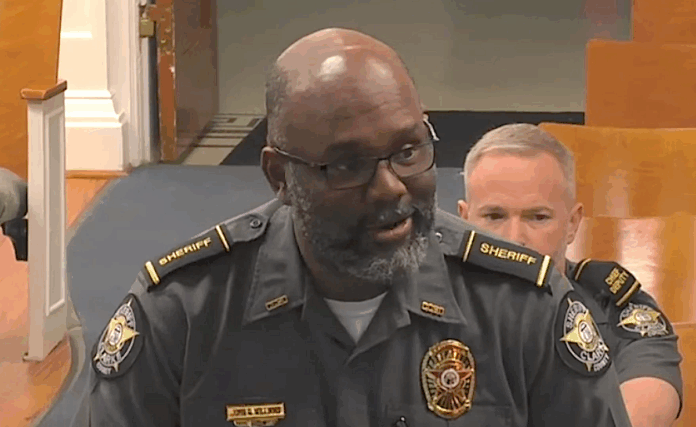
FILE PHOTO - Clarke County Sheriff John Q. Williams addresses the Athens-Clarke County Commission in January 2023. (Photo courtesy WUGA.com)

ATHENS, GA — Clarke County Sheriff John Q. Williams will hold a press conference on Monday, July 14, to address recent medical emergencies and the deaths of individuals in custody at the Athens-Clarke County Jail.

This year, at least three inmates have died and several others have been hospitalized while in custody.

The sheriff is expected to provide updates on the ongoing investigations and speak to concerns surrounding jail safety and oversight.

Sheriff Williams will outline steps his office is taking to improve conditions and prevent future incidents. He will also discuss ongoing collaboration with outside investigative agencies and a review of existing jail protocols.

Habersham tax digest to be discussed at July 14 Board of Assessors meeting

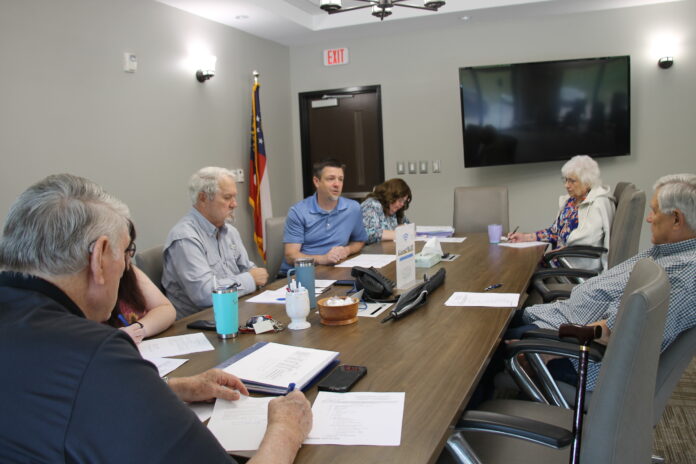
(Brian Wellmeier/Nowhabersham.com)

Habersham’s 2025 tax digest will be discussed at the upcoming Board of Tax Assessors meeting on Monday, July 14. The assessors must approve the digest before it is approved by the county’s tax commissioner.

“Right now, we are going through the digest and doing our edits and trying to get our calculations right,” Chief Appraiser Joan Church told Now Habersham last week.

As reported by County Manager Tim Sims during the Board of Commissioners meeting on June 30, the vendor responsible for working the tax assessment software mistakenly increased the county’s exemptions introduced by GA House Bill 581. Church said that the mistake has been a cause for delay while completing the digest. Church said they hoped to have those issues resolved by Monday’s meeting.

Church expects increased, frozen values

The Chief Appraiser warned that the digest will show increased property values for Habersham residents. However, despite this increase, Church advised many property owners will not realize a difference on their tax bills because of the exemptions provided in HB 581.

“They will be paying on frozen values,” she said.

Once the tax digest is set, the county and municipalities can set their millage rates.

The Tax Assessors Board will meet at 10:30 a.m. on Monday, July 14, at the Habersham County Administration Building in Clarkesville.

Search for Texas flood victims to resume after pause due to heavy rains

A cross stands in debris at a make-shift memorial honoring flood victims, Sunday, July 13, 2025, in Kerrville, Texas. (AP Photo/Eric Gay)

KERRVILLE, Texas (AP) — Crews on Monday were expected to resume looking for victims of catastrophic flooding in Texas that killed at least 132 people after more heavy rains temporarily paused their search and rescue operations.

Those efforts along the Guadalupe River were halted on Sunday after a new round of severe weather led to high water rescues elsewhere and prompted fears that waterways could surge again above their banks.

It was the first time search efforts for victims of the July Fourth floods were stopped due to severe weather. Authorities believe more than 160 people may still be missing in Kerr County alone, and 10 more in neighboring areas.

In Kerrville, where local officials have come under scrutiny over whether residents were adequately warned about the rising water in the early morning hours of July 4, authorities went door-to-door to some homes after midnight early Sunday to alert people that flooding was again possible. Authorities also pushed phone alerts to those in the area.

During the pause in searches, Ingram Fire Department officials ordered crews to immediately evacuate the Guadalupe River corridor in Kerr County, warning the potential for a flash flood was high.

Late Sunday afternoon, the Kerr County Sheriff’s Office announced that search teams in the western part of that county could resume their efforts. The Ingram Fire Department would resume its search and rescue efforts Monday morning, said agency spokesman Brian Lochte.

Latest flooding damages dozens of homes

Gov. Greg Abbott said on X the state conducted rescues of dozens of people in San Saba, Lampasas and Schleicher counties, and that evacuations were taking place in a handful of others.

The latest round of flooding damaged about 100 homes and knocked down untold lengths of cattle fencing, said Ashley Johnson, CEO of the Hill Country Community Action Association, a San Saba-based nonprofit.

“Anything you can imagine in a rural community was damaged,” she said. “Our blessing is it was daylight and we knew it was coming.”

With more rain on the way, county officials ordered everyone living in flood-prone areas near the San Saba River to evacuate, with people moved to the San Saba Civic Center, Johnson said.

A wide-ranging weather system brings heavy rains

The weather system brought slow-moving storms and multiple rounds of heavy rain across a widespread area, pushing rivers and streams over their banks.

The rains caused waterways to swell further north in Texas, where emergency crews rescued one motorist who was left stranded in waist-high rapids on a submerged bridge over the Bosque River.

“He drove into it and didn’t realize how deep it was,” said Jeff Douglas, president of the McGregor Volunteer Fire Department.

In the west Texas city of Sonora, authorities called for evacuations of some neighborhoods due to rising flood waters. Sonora is located about 110 miles (177 kilometers) northwest of Kerrville.

Kerrville residents get support from police, alerts

Under heavy rain, Matthew Stone on Sunday cleared branches and a log from a storm sewer in front of his home on Guadalupe Street in Kerrville as several inches of water pooled up on the road.

Multiple houses on the street overlooking the Guadalupe River were severely impacted by the July 4 floods. Stone said he felt safe for now.

“The cops have been coming back and forth, we’re getting lots of alerts, we’re getting a lot of support,” he said.

Just before daybreak on the Fourth of July, destructive, fast-moving waters rose 26 feet (8 meters) on the Guadalupe River, washing away homes and vehicles. Ever since, searchers have used helicopters, boats and drones to look for victims.

The floods laid waste to the Hill Country region of Texas. The riverbanks and hills of Kerr County are filled with vacation cabins, youth camps and campgrounds, including Camp Mystic, the century-old, all-girls Christian summer camp.

Located in a low-lying area along the Guadalupe River in a region known as flash flood alley, Camp Mystic lost at least 27 campers and counselors.

The flood was far more severe than the 100-year event envisioned by the Federal Emergency Management Agency, experts said, and moved so quickly in the middle of the night that it caught many off guard in a county that lacked a warning system.

Shane van Gisbergen dominates on another road course, wins at Sonoma to extend streak

Shane van Gisbergen kicks a rugby ball as he celebrates after winning a NASCAR Cup Series auto race at Sonoma Raceway, Sunday, July 13, 2025, in Sonoma, Calif. (AP Photo/Godofredo A. Vásquez)

SONOMA, Calif. (AP) — Another road course win was so expected for Shane van Gisbergen that Trackhouse Racing had extra tires ready for his Sonoma Raceway victory celebration.

Van Gisbergen won for the third time in five race and second straight on Sunday when he dominated on the California road course. The New Zealander once again showed he’s in a completely different class on road and street courses than his rivals as he led 97 of 110 laps to win from pole at Sonoma Raceway.

He celebrated with the traditional burnout, then his Trackhouse crew changed the tires on the No. 88 Chevrolet so he could do a second smoke-inducing spin on his way to victory lane. He also kept with his own tradition and kicked a rugby ball into the grandstands.

“It means everything. That’s why I race cars. I had an amazing time in Australia, and then to come here and the last couple weeks, or years, actually, has been a dream come true,” said van Gisbergen. “I’ve really enjoyed my time in NASCAR. Thanks, everyone, for making me feel so welcome. I hope I’m here for a long time to come.”

All three of his wins this year have been from pole — which tied him with Jeff Gordon for a NASCAR record of three consecutive road course victories from the top starting spot. Gordon did it between the 1998 and 1999 seasons.

He joins Christopher Bell, Denny Hamlin and Kyle Larson as the only drivers with three wins this season and this one moved him into third for playoff seeding. Van Gisbergen was 33rd in the standings and not yet qualified for the playoffs just five weeks ago.

Victory number four for van Gisbergen — who stunned NASCAR in 2023 when he popped into the debut Chicago street course race from Australian V8 Supercars and won — seemed a given before teams even arrived at the picturesque course in California wine country. His rivals have lamented that “SVG” has a unique braking technique he mastered Down Under that none of them — all oval specialists — can ever learn.

That win in Chicago two years ago led van Gisbergen to move to the United States for a career change driving stock cars for Trackhouse Racing. He and Ross Chastain have pumped energy into the team over this summer stretch with Chastain kicking it off with a Memorial Day weekend victory at the Coca-Cola 600.

Van Gisbergen is the fastest driver to win four Cup Series races — in his 34th start — since Parnelli Jones in 1969. He’s also the winningest driver born outside the United States.

“It’s unreal. To do Chicago, an experience that I really enjoyed, and never thought it would lead to more let alone moving over here and doing things,” he said. “Its been amazing, everything that I hoped it could ever be.”

The Sonoma win made it four victories for Trackhouse in eight weeks. Van Gisbergen was second from pole in Saturday’s Xfinity Series race.

Chase Briscoe was second in a Toyota for Joe Gibbs Racing.

“I never played basketball against Michael Jordan in his prime, but I feel like that’s probably what it was like,” said Briscoe after not being able to pass van Gisbergen on two late restarts — the last with five laps remaining.

“That guy is unbelievable on road courses. He’s just so good. He’s really raised the bar on this entire series.”

Briscoe was followed by Chase Elliott in a Chevrolet for Hendrick Motorsports. McDowell in a Chevy for Spire Motorsports was fourth and Christopher Bell in a Toyota for Joe Gibbs Racing was fifth.

In-Season challenge

The mid-season tournament that pays $1 million to the winner is down to four drivers.

Alex Bowman finished 25th and eliminated Ty Dillon, who finished 26th. Tyler Reddick (11th) knocked out Ryan Preece (16th), John Hunter Nemechek knocked out teammate Erik Jones as they finished 21st and 22nd, and Ty Gibbs, with a seventh-place finish, eliminated Zane Smith.

Bowman, at eighth, is the highest-seeded driver still in the challenge, which debuted this year.

Crew fight

NASCAR officials had to separate the crews for Brad Keselowski and Gibbs when members from the two teams scrapped on pit road during the race.

Keselowski’s crew confronted Gibbs’ crew after Gibbs drove through their pit stall and narrowly missed hitting some of Keselowski’s crew members already in place waiting for him.

The confrontation appeared to be contained to pushing and shoving and NASCAR quickly stepped between them. Both crews were given an official warning for fighting but NASCAR said Gibbs did nothing wrong.

Clean race — for awhile

It took 61 of the 110 laps for the first caution for an on-track incident — when Ryan Blaney was knocked off the course and into the dirt early in the third stage. The contact from Chris Buescher left Blaney stranded, and right before NASCAR could throw the yellow, Bubba Wallace and Denny Hamlin both spun.

It was technically the third caution of the race, but the first two were for natural stage breaks.

The race ended with six cautions — three in the final 13 laps.

Up next

The Cup Series races Sunday at Dover Motor Speedway in Delaware, where Hamlin won last year.

Fermín hits first major league homer to break tie in the Cardinals’ victory over the Braves

St. Louis Cardinals' Jose Fermin, right, is congratulated by teammate Masyn Winn after hitting a two-run home run during the sixth inning of a baseball game against the Atlanta Braves Sunday, July 13, 2025, in St. Louis. (AP Photo/Jeff Roberson)

ST. LOUIS (AP) — José Fermín hit his first major league home run to break a sixth-inning tie in the St. Louis Cardinals’ 5-3 victory over the Atlanta Braves on a soggy Sunday.

In his 159th career plate appearance, the 26-year-old Fermín smacked a sinker over the left-field fence off Jesse Chavez (0-1) with Masyn Wynn on base to cap the scoring.

Two rain delays totaled 4 hours, 2 minutes. The game lasted 2:38.

The Braves added a run off Gordon Graceffo (3-0) in the seventh. Graceffo threw 1 2/3 innings. Ryan Helsley pitched the ninth for his 19th save.

Matt Olson led the Braves with three RBIs on two hits.

Chavez started the fifth for Atlanta. He gave up two runs with two outs when Willson Contreras dropped a double in shallow right field to tie it at 3.

Reliever Steven Matz surrendered two runs in the fifth. Just before the game was halted for a second time, Olson singled home two runs for a 3-1 advantage.

St. Louis went up 1-0 in the second inning off Atlanta’s Daniel Davis, who was recalled before the game and made his seventh career start and first this season.

The Braves touched St. Louis starter Sonny Gray for a run in the third on three consecutive two-out singles in the third. Nick Allen scored on Olson’s single off the wall in right field.

St. Louis manager Oliver Marmol was ejected in the bottom of the ninth. It was his fourth ejection this season.

Key moment

Winn’s hustle led to the St. Louis’ first run. He walked and stole second base. With two outs, Victor Scott II hit a ball that bounced off Davis and caromed into vacant area between first and second. Winn never stopped at third and scampered home to score without a throw.

Key stat

Fermín is hitting .381 in nine games since his June 25 recall from Triple-A Memphis.

Up next

The Braves return to action Friday when they host the New York Yankees. The Cardinals return to play Friday at Arizona.