Home Blog Page 369

Albies hits 3-run homer, Acuña has defensive gem to lead the Braves past the Yankees

Braves infielder Ozzie Albies rounds third on a 3-run homer in the third against the Yankees Friday night, July 18, 2025, in Atlanta. (Atlanta Braves video image/Facebook)

ATLANTA (AP) — Ozzie Albies hit a three-run homer, Ronald Acuña Jr. made a spectacular throw and the Atlanta Braves beat the New York Yankees 7-3 on Friday night as both teams resumed action after the All-Star break.

Spencer Strider (4-7) threw six shutout innings, striking out eight and allowing three hits and three walks.

Albies was 1 for 3 with four RBIs and launched a 390-foot homer just in front of the Chop House in right to make it 6-0 in the third inning.

Acuña was 2 for 3 with a double, triple and runs scored, but his best play came when he threw out Jorbit Vivas for a double play in the third inning.

Vivas was trying to tag up from second base on a fly to deep in the corner in right, but Acuña’s throw reached third on the fly to get a surprised Vivas, who slowed up as he approached the bag.

Ian Hamilton (1-1) took the loss after leading off a bullpen game for the Yankees by surrendering three runs in the first inning. Rico Garcia, making his debut with the Yankees, gave up Albies’ three-run homer in the third.

New York star Aaron Judge was 1 for 4 with three strikeouts three days after playing in his seventh All-Star Game in the same park.

Giancarlo Stanton had a pinch-hit two-run double for the Yankees in the seventh inning.

Also Friday, Yankees right-hander Luis Gil made his second rehab start for Double-A Somerset, going 3 1/3 innings and allowing two hits and two runs. He’s recovering from a strained right lat from spring training.

Key moment

The Yankees cut it to 7-3 in the seventh and had Judge up with men on first and third with two outs, but Dylan Lee struck out the slugger on a full count.

Key stat

The six shutout innings for Strider marked the second time he accomplished that line this season, matching an outing on June 14 against Colorado.

Up next

Yankees RHP Will Warren (6-5, 4.63) was set to face recently acquired LHP Joey Wentz (2-1, 6.32) on Saturday night.

Texas picked to win SEC championship with Arch Manning at QB

(Georgia Bulldogs/Facebook)

Texas, with Heisman Trophy candidate Arch Manning set to take over as starting quarterback, is the preseason pick to win the Southeastern Conference championship.

The Longhorns received 96 of the 204 votes cast from media members covering the SEC media days this week to be crowned SEC champion on Dec. 6 in Atlanta at Mercedes-Benz Stadium. Georgia, with 44 votes, received the second-most votes.

If that scenario plays out, it would mean a rematch of the 2024 SEC championship game, which Georgia won in an overtime thriller. The SEC championship game pits the two teams with the best regular-season conference record against one another.

Alabama was third with 29 votes, while LSU got 20. South Carolina was next with five, while Oklahoma received three and Vanderbilt and Florida each got two votes. Tennessee, Ole Miss and Auburn each received one vote.

Since 1992, only 10 times has the predicted champion in the preseason poll gone on to win the SEC championship.

The 2024 SEC title game averaged 16.6 million viewers across ABC and ESPN, the fourth-largest audience on record for the game. The overtime win for Georgia, which peaked with 19.7 million viewers, delivered the largest audience of the college football season.

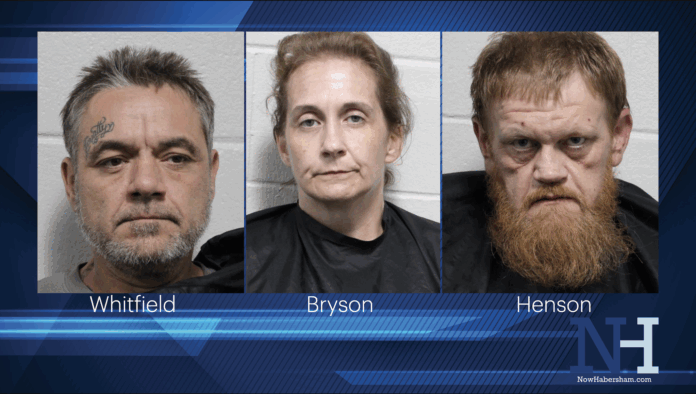
3 arrested on felony drug charges in Habersham County

(Habersham County Sheriff's Office)

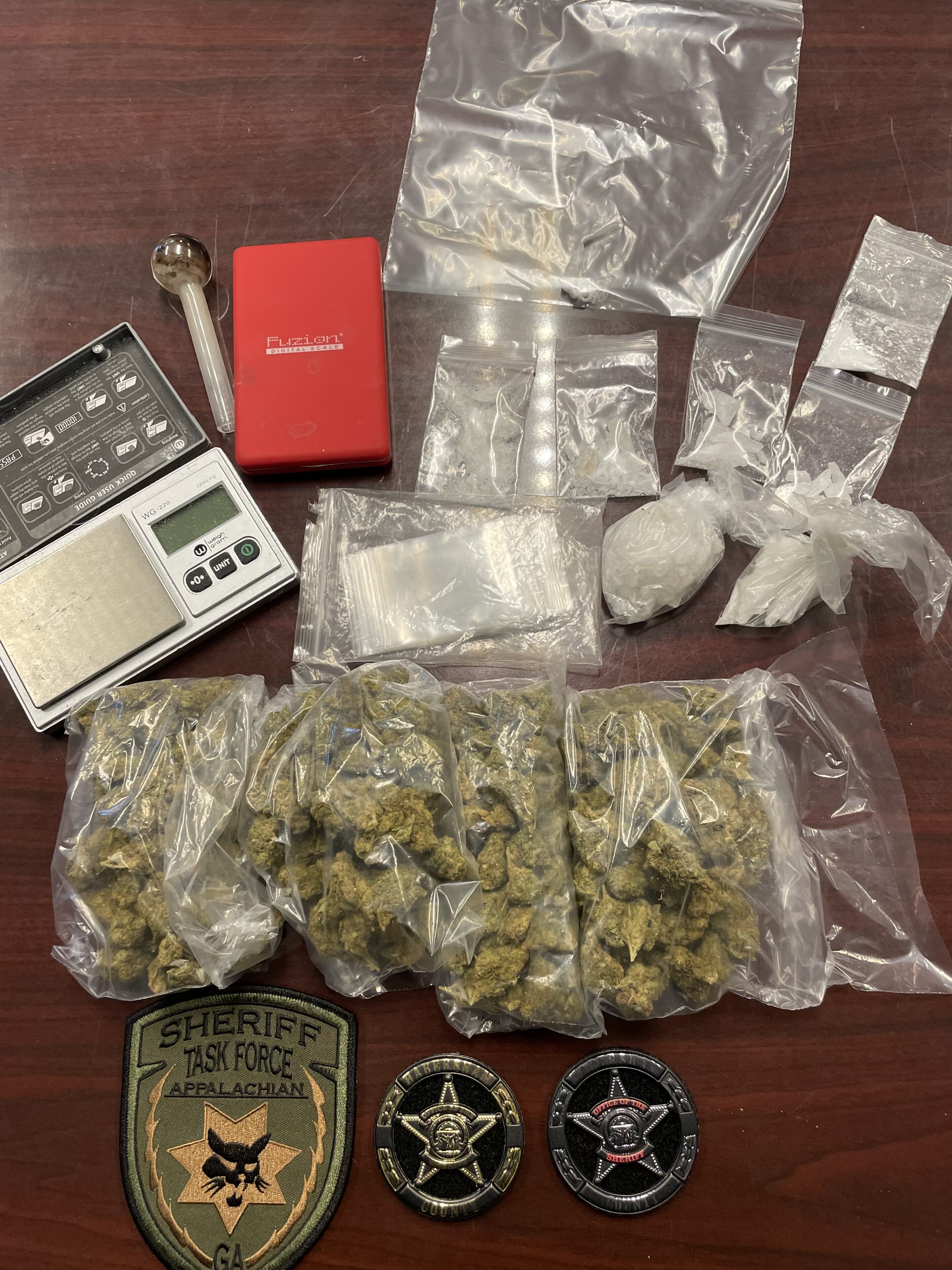
Three people face felony drug charges in Habersham County following two separate investigations by the Habersham County Sheriff’s Office Narcotics Division and the Appalachian Regional Drug Enforcement Office (ARDEO).

Meth trafficking arrest in Mt. Airy

On July 17, drug agents raided a home on Keller Road in Mt. Airy and arrested 50-year-old Toby Whitfield. Investigators say they seized approximately two ounces of methamphetamine and four ounces of marijuana during the search.

Whitfield is charged with trafficking methamphetamine, possession of methamphetamine, and possession of marijuana with intent to distribute.

Also arrested at the scene was Kimberly Bryson. She is charged with possession of methamphetamine.

Separate arrest in Demorest

A day earlier, on July 16, investigators arrested 46-year-old Billy Ray Henson of Demorest after a two-week investigation. Authorities say they seized a half-ounce of meth and two pistols during his arrest.

Henson is charged with possession of methamphetamine with intent to distribute and two counts of possession of a firearm or knife during the commission of a felony.

Ongoing crackdown on drug activity

As of Friday morning, July 18, Whitfield, Bryson, and Henson remained in custody at the Habersham County Detention Center. No bond has been set.

These arrests are part of ongoing efforts by local and state law enforcement to combat meth trafficking and illegal drug activity in northeast Georgia.

Toccoa man arrested weeks after domestic violence incident

Jeremy Holbrooks (Stephens County Sheriff's Office)

A Toccoa man wanted for assault and child cruelty was arrested Wednesday night during a traffic stop.

According to the Stephens County Sheriff’s Office, 35-year-old Jeremy Jo Holbrooks was a passenger in a vehicle stopped for lack of insurance around 8:22 p.m. on Highway 17 at Hayes-Wilbanks Road.  The deputy recognized Holbrooks and confirmed he had active warrants related to a June 20 domestic violence incident, officials said.

Deputies arrested Holbrooks without incident and booked him into the Stephens County Jail. As of July 19, he remained in jail pending a bond hearing.

Investigators say Holbrooks was the alleged aggressor in the June altercation and fled before deputies arrived. Multiple attempts to find him at the time were unsuccessful.

He is charged with two counts of aggravated assault, four counts of third-degree cruelty to children, two counts of battery, and obstructing emergency calls.

Some frozen federal funds for schools released to states by Trump administration

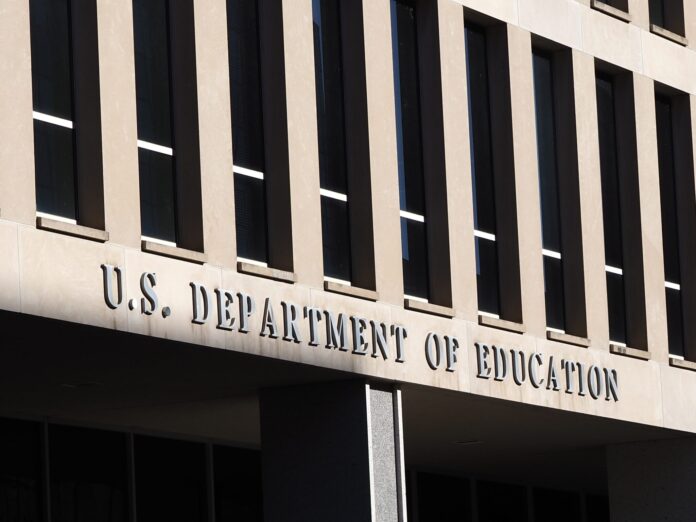
The Lyndon Baines Johnson Department of Education Building pictured on Nov. 25, 2024. (Shauneen Miranda/States Newsroom)

WASHINGTON (States Newsroom) — President Donald Trump’s administration confirmed Friday that it’s releasing funds that support before- and after-school programs as well as summer programs, a portion of the $6.8 billion in withheld funds for K-12 schools that were supposed to be sent out two weeks ago.

The administration has faced bipartisan backlash over its decision to freeze billions of dollars that also go toward migrant education, English-language learning, adult education and literacy programs, among other initiatives. Those other funds apparently remained stalled on Friday, and Democrats, a key Republican appropriator and school leaders called for them to be released as well.

The funds that will be released total $1.3 billion, according to Democrats on the Senate Appropriations Committee, and are intended for the 21st Century Community Learning Centers initiative.

The Education Department says the program “supports the creation of community learning centers that provide academic enrichment opportunities during non-school hours for children, particularly students who attend high-poverty and low-performing schools.”

A senior administration official said the programmatic review for 21st Century Community Learning Centers has concluded and funds “will be released to the states.”

“Guardrails have been put in place to ensure these funds are not used in violation of Executive Orders,” the official added.

Pressure from GOP senators

The announcement came after 10 Republican senators sent a letter to Office of Management and Budget Director Russ Vought on July 16 urging him to release the $6.8 billion in funds to states.

West Virginia GOP Sen. Shelley Moore Capito, who led the letter, said in a statement Friday that “21st Century Community Learning Centers offer important services that many West Virginians rely on.”

“This program supports states in providing quality after-school and summer learning programs for students while enabling their parents to work and contribute to local economies,” said Capito, who chairs the Senate Appropriations Subcommittee on Labor, Health and Human Services, Education, and Related Agencies.

Sen. Susan Collins of Maine, who leads the broader Senate Appropriations panel, also signed the July 16 letter, along with: Sens. Katie Britt of Alabama, Lisa Murkowski of Alaska, John Boozman of Arkansas, Mitch McConnell of Kentucky, Deb Fischer of Nebraska, John Hoeven of North Dakota, Mike Rounds of South Dakota and Jim Justice of West Virginia.

While Collins said in a Friday statement she is glad she and her colleagues were able to work together to “effectively urge the Administration to get these funds released,” she noted that “there is more funding that still needs to be disbursed.”

“I will continue to work to ensure it is delivered swiftly so educators can prepare for the upcoming academic year with certainty and Maine students and families have the resources they need to succeed,” she said.

July 1 notification

The Education Department notified states of the freeze just a day before July 1, when these funds are typically sent out as educators plan for the school year, saying the funds were under review.

A slew of congressional Democrats and one independent pushed back on the funding freeze.

Thirty-two senators and 150 House Democrats urged Vought and Education Secretary Linda McMahon in two letters dated July 10 to immediately release the funds they say are being withheld “illegally.”

A coalition of 24 states and the District of Columbia also sued the administration over the withheld funds.

The rest of the school money

Sen. Patty Murray of Washington state, the top Democrat on the Senate spending panel, called on the Trump administration to release the rest of the frozen funds.

“After we spoke up — and after weeks of needless chaos — the Trump administration is now releasing funding for after school programs while continuing to block billions more in funding for our students, teachers, and schools,” Murray said in a statement Friday.

“Every penny of this funding must flow immediately,” she said. “Whether or not parents know the afterschool program they depend on will exist should not depend on whether Republicans will push back against Trump’s lawlessness — he should simply get the funding out, just as the law requires him to do. I am going to keep pushing until every dollar goes.”

David Schuler, executive director of AASA, The School Superintendents Association, expressed similar concerns in a statement Friday.

“While we’re pleased to see crucial dollars going to afterschool programs which are vital for students across the nation, the bottom line is this: Districts should not be in this impossible position where the Administration is denying funds that had already been appropriated to our public schools, by Congress,” said Schuler, whose organization helps to ensure every child has access to a high quality public education.

“The remaining funds must be released immediately — America’s children are counting on it.”

Commentary: Hunger demands not only empathy, but action

The Food Bank of Northeast Georgia has two locations, one in Athens and one in Clayton. (Margie Williamson/Now Habersham)

As the President and CEO of the Food Bank of Northeast Georgia, one of my favorite quotes comes from Dr. Martin Luther King, Jr.’s “I’ve Been to the Mountaintop” speech, where he reflects on the parable of the Good Samaritan: “The question is not, ‘What will happen to me if I help?’ but ‘What will happen to my neighbor if I do not help?’”

That quote remains a guiding light for our work—because the truth is, hunger is often invisible. Yet it affects more than 91,000 people in our region, including 1 in 6 children and 1 in 12 seniors. Food insecurity is a profoundly human experience, and one that causes deep and daily stress. It demands from all of us not only empathy, but action.

At the Food Bank of Northeast Georgia, we believe that nourishment and dignity go hand in hand. That belief shows up in every decision we make, every partnership we form, and every pound of food we distribute. And it is a reflection of the sacred worth of each neighbor we are honored to serve.

One neighbor had this to share with us: “I work 6 days a week and have for 6 years now. I take care of my mom who lives with me. No matter how hard I try it seems like I can barely keep my head above water. Thank you for being so nice and not making people feel embarrassed.”

Another person bravely said, “if it wasn’t for y’all I wouldn’t eat.”

In 2024, our partnership network in Habersham County helped distribute 1,180,833 pounds of food—totaling 984,028 meals—to neighbors across the county. These meals supported families, children, seniors, and others facing food insecurity, with more than half of the food being fresh or frozen—fruits, vegetables, dairy, and protein—bringing both nourishment and hope. So far in 2025, we’ve already distributed 645,471 pounds of food in Habersham County, keeping pace with rising need and deepening our investment in community well-being.

We’ve doubled our food purchasing efforts, deepened partnerships with Georgia farmers, and coordinated closely with schools, congregations, and community organizations. When federal food deliveries were unexpectedly cut, our team pivoted—thanks to the generosity of donors and supporters who made it possible to keep shelves stocked and fridges full.

But we cannot do this work alone.

This is a moment that calls for more Good Samaritans—those willing to stop, help, and ask the right question. If you’ve ever packed a box of food, shared your table, or offered a gift to help a neighbor, you already understand the kind of world we’re building.

Join us. Visit foodbanknega.org to volunteer, donate, or partner. Because food is essential—and what is essential should never be negotiable.

In strength,
Erin Barger
President & CEO
Food Bank of Northeast Georgia

Falcons’ Chris Lindstrom voted top interior offensive lineman by AP

Chris Lindstrom (Atlanta Falcons/Facebook)

Chris Lindstrom has spent much of his six-year career under the radar playing for an Atlanta team that hasn’t made the postseason since 2017.

But Lindstrom’s play deserves much more attention as his ability to create holes in the run game and protect the passer is a key part to Atlanta’s offensive production.

Lindstrom has been the top-graded guard by Pro Football Focus for three straight seasons and has won the honor of being voted the top interior offensive lineman in the league by The Associated Press.

A panel of eight AP Pro Football Writers ranked the top five players among guards and centers, basing selections on current status entering the 2025 season. First-place votes were worth 10 points. Second through fifth-place votes were worth 5, 3, 2 and 1 points.

Lindstrom got three first place-votes, two seconds and one third to beat out Joe Thuneyfor the top spot. Thuney, who was traded from Kansas City to Chicago this offseason, got two first-place votes, one second, three thirds and one fourth to finish second.

Kansas City center Creed Humphrey got two first-place votes and finished third and Denver’s Quinn Meinerz got the other first-place vote and came in fourth.

Indianapolis’ Quenton Nelson rounded out the top five.

Baltimore Tyler Linderbaum, Philadelphia’s Landon Dickerson and Cam Jurgens, Baltimore’s Daniel Faalele and recently retired former Detroit center Frank Ragnow also received votes.

1. CHRIS LINDSTROM, Atlanta Falcons

Lindstrom has allowed just three sacks and 37 pressures on true pass sets the past three seasons, according to PFF, and has been a steady presence on Atlanta’s offense. But Lindstrom really shines at run blocking when his ability to get in space on zone runs has helped fuel Bijan Robinson’s success.

2. JOE THUNEY, Chicago Bears

Thuney has been one of the top guards in the league ever since being drafted by New England in 2016. He has been a first-team All-Pro the past two seasons in Kansas City and helped the Chiefs and Patriots reach the Super Bowl six times in his nine seasons. Thuney was forced to move out to tackle late last season for Kansas City, but will be back at guard as a key piece in Chicago following on offseason trade.

3. CREED HUMPHREY, Kansas City Chiefs

The Chiefs were willing to part with Thuney in part because they were strong at the other interior spots led by Humphrey at center. Humphrey has taken the mantle from Jason Kelce as the top center in the league and made first-team All-Pro for the first time last season. Humphrey hasn’t missed a game in four seasons and excels at both run and pass blocking.

4. QUINN MEINERZ, Denver Broncos

After being drafted in the third round from Division III Wisconsin-Whitewater in 2021, Meinerz has made steady progress each season and earned first-team All-Pro honors in 2024 to get on this list. Meinerz allowed just 12 pressures last season, according to PFF, and is a violent blocker in the run game.

5. QUENTON NELSON, Indianapolis Colts

Nelson’s play has dropped a little in recent years but the 29-year-old is still one of the top guards in the league. He was an All-Pro his first three seasons after being drafted sixth overall in 2018 and earned second-team All-Pro honors for the second time in his career last season. Nelson has made the Pro Bowl all seven seasons.

Toccoa man arrested in string of campus thefts at Toccoa Falls College

(Stephens County Sheriff's Office)

A Toccoa man is behind bars after deputies linked him to a string of thefts at Toccoa Falls College. The Stephens County Sheriff’s Office says 29-year-old Christopher Rentrell Colbert was arrested Tuesday, July 16.

Colbert is accused of entering campus dorms multiple times during church-sponsored summer camps. He’s charged with three counts of burglary, three counts of attempted burglary, and six counts of criminal trespass.

The sheriff’s office shared details of the arrest in a press release.

Investigators say TFC security contacted them on June 24 after spotting a suspicious person on campus. Security footage showed a man entering a dorm on six separate occasions over a three-week period. College officials later confirmed several thefts had occurred during that time.

Deputies identified Colbert through prior contact and obtained arrest and search warrants for a home on Hillside Drive. On July 16, they executed the warrants but were unable to locate Colbert.

Later that day, the sheriff’s office posted a wanted notice on its app and social media. Several citizens responded with tips, one of which led police to a vehicle in which Colbert was believed to be a passenger. Toccoa police officers stopped the vehicle for a malfunctioning brake light. Authorities found Colbert in the back seat and took him into custody.

Stephens County investigators took Colbert into custody and booked him at the Stephens County Jail. As of Thursday, July 17, he remained in jail pending a bond hearing.

Stephens County Sheriff Rusty Fulbright thanked TFC security for their “quick and continued efforts” to keep the college campus safe. He also thanked the concerned citizens who submitted tips and the Toccoa Police Department for their assistance in Colbert’s capture.

TMU sex scandal investigations ongoing, officials say

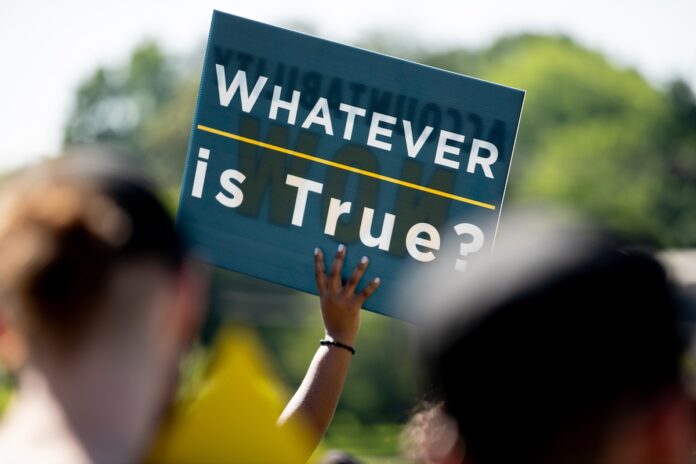
A protester holds up a sign on June 6, 2025, demanding transparency from school officials over Truett McConnell University's handling of sex abuse allegations made against a former administrator. The sign is based on Scripture (Philippians 4:8), encouraging believers to focus on things that are true, noble, right, and pure. (Daniel Purcell/NowHabersham.com)

The years-old sex scandal at Truett McConnell University in Cleveland is under investigation by a public official and a hired investigator, and each said Wednesday that their investigations were still in the intermediate stages.

Enota Judicial Circuit District Attorney, Jeff Langley, in a brief interview, said, “I’m still interviewing witnesses” and he asserted that his work would take at least two more months before he presents his findings, if any, to the Grand Jury for possible indictment, probably in late September.

Langley had earlier told Now Habersham that he was open to the possibility of prosecuting former TMU Vice President Bradley Reynolds or other wrongdoers, if any criminal activity were found.

In a separate inquiry, the outside investigator hired by the TMU Trustees, Richard Hyde of Phoenix Research, LLC in Atlanta, told Now Habersham in a text Wednesday: “[S]till speaking with folks and reviewing documents. It’s a marathon. Not a sprint.”

Langley said that he and Hyde were sharing some information, though their inquiries are separate.

Renewed legal scrutiny

TMU alumna, former soccer player, and former assistant soccer coach Hayle Swinson, who alleges she was groomed and raped, beginning in 2009, by Reynolds, brought her charges to light this last May, in a wide-ranging interview with a Christian podcast. Now Habersham and other news outlets picked up on the story, learning that White County Sheriff Rick Kelley initially declined in 2024 to arrest Reynolds when Swinson first reported the alleged abuse. Langley said Kelley did not share the report with the District Attorney’s office. Kelley said he did not believe the allegations would withstand judicial scrutiny, in part because of a state law seemingly excluding colleges and universities from prosecution over sexual relationships between adults.

But when the story went public in early June, law enforcement brought new focus to the case.

TMU trustees placed university President Emir Caner on administrative leave from his position on June 6 and temporarily replaced him with Acting President John O. Yarbrough, a TMU alumnus and administrator. On the same day, the trustees hired Hyde, who is affiliated with an Atlanta law firm, to conduct an independent investigation into the allegations and school administrators’ handling of the matter.

Abuse allegations

Reynolds’ alleged abuse of Swinson occurred over several years, mainly in the basement of his home, off-campus, during private religious counseling sessions, according to Swinson’s podcast interview. Swinson also sometimes slept over in the Reynolds’ basement, behind what she wrongly believed to be a locked door, she said. It was on those occasions when the worst abuse occurred, she said in her original interview.

Swinson and her attorney offered more than 350 emails, many of them heavily sexual in nature, from Reynolds to Swinson. Some seemed to argue that Swinson had a religious obligation to submit. Reynolds had initially denied he was the author of those emails, but Kelley’s staff was able to determine they came from the vice president’s private email account.

Swinson has declined to speak to the media, apart from the podcast where she first shared her story. She did not respond to a message sent through her website portal on Wednesday.

As reported previously, Bradley Reynolds, contacted in June, identified himself, but then hung up on a reporter. Reynolds was located at a sandwich shop in Texas where he was reportedly working as of early June.

House gives final approval to Trump’s $9 billion cut to public broadcasting and foreign aid

(Jennifer Shutt/States Newsroom)

WASHINGTON (AP) — The House gave final approval to President Donald Trump’s request to claw back about $9 billion for public broadcasting and foreign aid early Friday as Republicans intensified their efforts to target institutions and programs they view as bloated or out of step with their agenda.

The vote marked the first time in decades that a president has successfully submitted such a rescissions request to Congress, and the White House suggested it won’t be the last. Some Republicans were uncomfortable with the cuts, yet supported them anyway, wary of crossing Trump or upsetting his agenda.

The House passed the bill by a vote of 216-213. It now goes to Trump for his signature.

“We need to get back to fiscal sanity and this is an important step,” said House Speaker Mike Johnson, R-La.

Opponents voiced concerns not only about the programs targeted, but about Congress ceding its spending powers to the executive branch as investments approved on a bipartisan basis were being subsequently canceled on party-line votes. They said previous rescission efforts had at least some bipartisan buy-in and described the Republican package as unprecedented.

No Democrats supported the measure when it passed the Senate, 51-48, in the early morning hours Thursday. Final passage in the House was delayed for several hours as Republicans wrestled with their response to Democrats’ push for a vote on the release of Jeffrey Epstein files.

The package cancels about $1.1 billion for the Corporation for Public Broadcasting and nearly $8 billion for a variety of foreign aid programs, many designed to help countries where drought, disease and political unrest endure.

The effort to claw back a sliver of federal spending came just weeks after Republicans also muscled through Trump’s tax and spending cut bill without any Democratic support. The Congressional Budget Office has projected that measure will increase the U.S. debt by about $3.3 trillion over the coming decade.

“No one is buying the the notion that Republicans are actually trying to improve wasteful spending,” said Democratic leader Hakeem Jeffries.

A heavy blow to the Corporation for Public Broadcasting

The cancellation of $1.1 billion for the CPB represents the full amount it is due to receive during the next two budget years.

The White House says the public media system is politically biased and an unnecessary expense.

The corporation distributes more than two-thirds of the money to more than 1,500 locally operated public television and radio stations, with much of the remainder assigned to National Public Radio and the Public Broadcasting Service to support national programming.

Democrats were unsuccessful in restoring the funding in the Senate.

Lawmakers with large rural constituencies voiced particular concern about what the cuts to public broadcasting could mean for some local public stations in their state.

Sen. Lisa Murkowski, R-Alaska, said the stations are “not just your news — it is your tsunami alert, it is your landslide alert, it is your volcano alert.”

As the Senate debated the bill Tuesday, a 7.3 magnitude earthquake struck off the remote Alaska Peninsula, triggering tsunami warnings on local public broadcasting stations that advised people to get to higher ground.

Sen. Mike Rounds, R-S.D., said he secured a deal from the White House that some money administered by the Interior Department would be repurposed to subsidize Native American public radio stations in about a dozen states.

But Kate Riley, president and CEO of America’s Public Television Stations, a network of locally owned and operated stations, said that deal was “at best a short-term, half-measure that will still result in cuts and reduced service at the stations it purports to save.”

Inside the cuts to foreign aid

Among the foreign aid cuts are $800 million for a program that provides emergency shelter, water and family reunification for refugees and $496 million to provide food, water and health care for countries hit by natural disasters and conflicts. There also is a $4.15 billion cut for programs that aim to boost economies and democratic institutions in developing nations.

Democrats argued that the Republican administration’s animus toward foreign aid programs would hurt America’s standing in the world and create a vacuum for China to fill.

“This is not an America first bill. It’s a China first bill because of the void that’s being created all across the world,” Jeffries said.

The White House argued that many of the cuts would incentivize other nations to step up and do more to respond to humanitarian crises and that the rescissions best served the American taxpayer.

“The money that we’re clawing back in this rescissions package is the people’s money. We ought not to forget that,” said Rep. Virginia Foxx, R-N.C., chair of the House Rules Committee.

After objections from several Republicans, Senate GOP leaders took out a $400 million cut to PEPFAR, a politically popular program to combat HIV/AIDS that is credited with saving millions of lives since its creation under Republican President George W. Bush.

Looking ahead to future spending fights

Democrats say the bill upends a legislative process that typically requires lawmakers from both parties to work together to fund the nation’s priorities.

Triggered by the official rescissions request from the White House, the legislation only needed a simple majority vote to advance in the Senate instead of the 60 votes usually required to break a filibuster. That meant Republicans could use their 53-47 majority to pass it along party lines.

Two Republican senators, Murkowski and Sen. Susan Collins of Maine, joined with Democrats in voting against the bill, though a few other Republicans also raised concerns about the process.

“Let’s not make a habit of this,” said Senate Armed Services Committee Chairman Roger Wicker of Mississippi, who voted for the bill but said he was wary that the White House wasn’t providing enough information on what exactly will be cut.

Russ Vought, the director of the Office of Management and Budget, said the imminent successful passage of the rescissions shows “enthusiasm” for getting the nation’s fiscal situation under control.

“We’re happy to go to great lengths to get this thing done,” he said during a breakfast with reporters hosted by the Christian Science Monitor.

In response to questions about the relatively small size of the cuts — $9 billion — Vought said that was because “I knew it would be hard” to pass in Congress. Vought said another rescissions package is ’likely to come soon.”

By Kevin Freking and Mary Clare Jalonick

King’s Hawaiian to invest $54M in Hall County, add 135 jobs

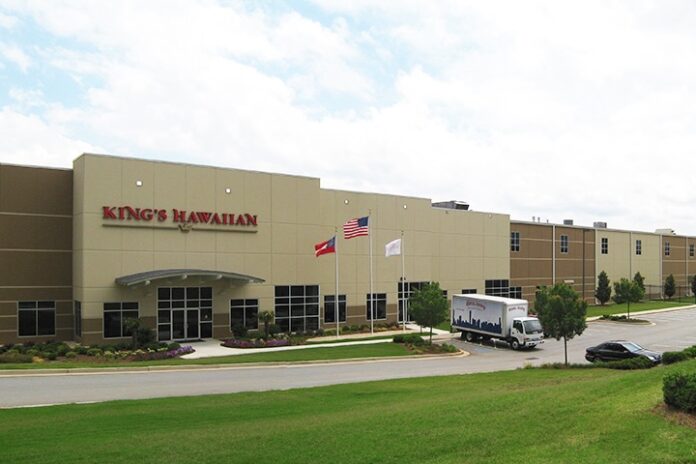
King's Hawaiin plant in Hall County, Georgia. (Photo courtesy Patillo Construction Company)

King’s Hawaiian will invest approximately $54 million to expand its Oakwood facility, creating more than 135 new jobs in Hall County, Gov. Brian Kemp announced Thursday.

“For nearly 15 years, King’s Hawaiian has proven to be an incredible partner in creating quality jobs in northeast Georgia,” said Kemp. “Expansions like these are an important part of our economic development work, helping create further opportunities in growing communities.”

Founded in 1950 by the Taira family in Hilo, Hawaii, King’s Hawaiian has had a presence in Georgia since 2010. Today, the company supports more than 800 jobs statewide.

“This expansion represents a major milestone in our journey, and we’re thrilled to continue growing our ohana in Hall County,” said CEO Mark Taira. “For 15 years, Georgia has been an essential part of our success. The support from Lanier Technical College, Georgia Quick Start, and the Greater Hall Chamber of Commerce has been instrumental in helping us train and develop talent to grow our business.”

The latest expansion adds a new production line to King’s Hawaiian’s 150,000-square-foot facility in Oakwood South Industrial Park. The new line, expected to be operational in the second quarter of 2026, will produce new flavors of King’s Hawaiian Pretzel Bites.

The company is hiring for positions in management, maintenance, food safety, and quality control. Interested applicants can learn more at kingshawaiian.com/careers.

“King’s Hawaiian has become a cornerstone of our regional economy and a shining example of a company that invests in both business and community,” said Tim Evans, President and CEO of the Greater Hall Chamber of Commerce. “This sixth major expansion since 2010 is a testament to the company’s deep roots in Hall County. We are especially proud of their ongoing support for youth and community programs, including the University of North Georgia’s First Generation Scholars, Junior Achievement, and Youth Leadership Hall.”

Brandon Lounsbury with the Georgia Department of Economic Development’s Global Commerce team managed the competitive project, working with the Greater Hall Chamber and Georgia EMC.

“King’s Hawaiian has been a cornerstone employer in northeast Georgia and a valued partner of Georgia Quick Start for more than a decade,” said GDEcD Commissioner Pat Wilson. “By continuing to invest in people and innovation – and by working closely with the Technical College System of Georgia – King’s Hawaiian is helping build the skilled workforce that drives its success.”

Carr questions legality of rival’s $10M campaign loan

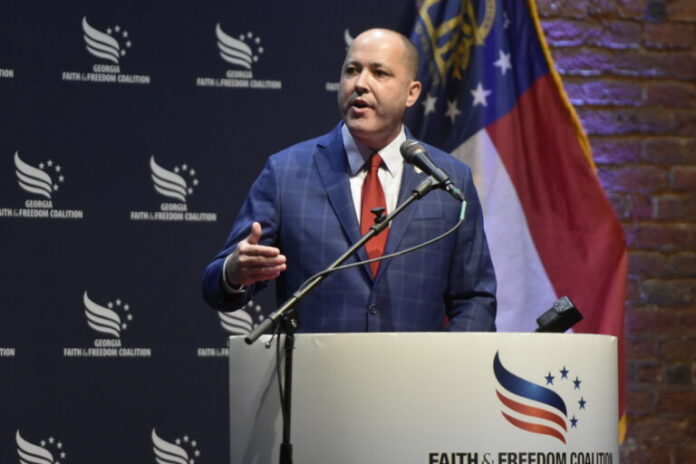
Attorney General Chris Carr speaks at the 2025 Georgia Faith and Freedom Luncheon in Atlanta. Carr is running to be Georgia’s next governor. (Ross Williams/Georgia Recorder)

ATLANTA (AP) — A Republican candidate for Georgia governor asked a state ethics body Thursday to determine whether his GOP rival illegally lent $10 million to a campaign committee to evade restrictions under state campaign finance law.

Attorney General Chris Carr’s campaign lawyer asked the Georgia Ethics Commission for a legal opinion saying Lt. Gov. Burt Jones was prohibited from making the loan to his leadership committee, a special fundraising vehicle that allows the governor, lieutenant governor and legislative leaders to raise unlimited funds.

A spokesperson for Jones called the complaint a “weak attempt to get attention” in a statement.

FILE PHOTO – Georgia Lt. Gov. Burt Jones (Ross Williams/Georgia Recorder)

Carr and some other candidates for state office cannot have the so-called leadership committees for campaign fundraising under a 2021 state law that created the committees unless they win their party’s nomination for governor or lieutenant governor. Instead, they are limited to candidate committees, which can raise a maximum of $8,400 from each donor. Opponents say that’s an unfair advantage for incumbents.

Jones and Carr are competing for the Republican nomination to succeed Gov. Brian Kemp, who legally can’t run again after two terms. The GOP primary is next May, followed by the general election in November 2026.

Jones filed documents showing he made loans of $7.5 million and $2.5 million to the WBJ Leadership Committee when he announced his long-anticipated run for governor on July 8.

The cash infusion was part of Jones’ strategy to set himself up as the front-runner in the race.

Carr announced his run for governor last year, saying he needed a long runway to raise money because he isn’t personally wealthy. Carr’s campaign has been voicing concerns for months that Jones will use his leadership committee and his family wealth from a string of gas stations to win the primary.

Bryan Tyson, a lawyer for Carr’s campaign, on Thursday requested an advisory opinion from the Ethics Commission on whether the loans are legal. Tyson argued that under Georgia law, loans can be made only to a candidate committee, not to a freestanding political action committee, or even a leadership committee, which is allowed to coordinate with a candidate committee.

Carr’s campaign cited a 2022 federal judge’s ruling that a leadership committee for Gov. Brian Kemp could not spend money to get Kemp reelected during the Republican primary that year. U.S. District Judge Mark Cohen found that the “unequal campaign finance scheme” violated challenger David Perdue’s First Amendment right to free speech.

Jones spokesperson Kendyl Parker said in a statement she was “not surprised by this weak attempt to get attention — it’s exactly what you’d expect from a campaign that’s losing steam with many months to go until Election Day.”

Tyson suggested that if Jones could make a loan to the leadership committee and then raise unlimited sums to repay himself, he could give the repaid money to his candidate committee to spend in the primary. That would evade Cohen’s ban on the use of leadership committee money in the primary. Tyson warned that such laundering would “wash away contribution limits entirely.”

The Ethics Commission must issue an advisory opinion within 60 days under state law.

In a related complaint to the commission on Thursday, Tyson alleged that Jones broke state law because his previous financial disclosures didn’t show that he had $10 million in cash or securities to be able to afford such large loans.

Tyson pointed to a 2022 financial disclosure that showed Jones had a net worth of $12.4 million, but only $700,000 in cash and securities. The rest was tied up in the value of real estate and Jones’ insurance agency, the disclosure stated. Tyson noted that Jones’ 2024 disclosure showed he hadn’t sold real estate or his business, arguing “it appears he could not have sufficient liquid assets to loan his leadership committee $10 million.”

Ethics complaints can take years to resolve, but Tyson said it was “imperative” that the commission move quickly to determine the source of the loan, whether it was properly reported and whether Jones planned to spend from his leadership committee in the primary.