
Home Blog Page 366

Georgia conservationists push to ‘finish the job’ of protecting Okefenokee from mining

A recently announced land deal marks the second time a mining proposal near the Okefenokee National Wildlife Refuge was thwarted due to public outcry. (Joe Cook/Georgia Rivers)

(Georgia Recorder) — Georgia environmentalists are still celebrating a conservation group’s announcement last month that it plans to purchase thousands of acres of land targeted for mining near the Okefenokee National Wildlife Refuge.

But they read the win, they say, not as a moment to pop the champagne, but a call to action.

Mining interests are still eyeing property near the refuge, they say, and to preserve additional acreage, they need to build on their advocacy efforts, including persuading environmental groups to buy mineral rights in other areas attractive to mining businesses and highlighting easements for purchase along mineral-rich Trail Ridge.

And they say they need to continue to press Georgia leaders to enact the legal protections for the Okefenokee that have eluded them for years at the state Capitol. Lawmakers will return to Atlanta for a new legislative session in January.

“We can’t rest on our laurels,” said Brian Foster, a spokesman for Georgia Conservancy, one of the environmental groups leading the charge. “There is still a lot of work to be done.”

There’s a reason for their urgency, Georgia environmentalists said.

In the late 1990s, the environmental community thought the Okefenokee was safe from mining after chemical giant DuPont was persuaded to donate thousands of acres to The Conservation Fund because of public opposition to DuPont’s mining plans.

Three decades later, Alabama-based Twin Pines Minerals, which has owned land along Trial Ridge since 2019, appeared close this year to realizing its plans to mine the area for titanium dioxide, a whitening agent in toothpaste, paint, sunscreen and other products.

But The Conservation Fund, a nonprofit based in Arlington, Virginia, stepped in again, announcing late last month that it would spend almost $60 million to purchase close to 8,000 acres owned by Twin Pines.

Environmentalists were elated, but quickly turned their attention to protecting land that could still be purchased for mining.

“If there is one thing that is abundantly clear to us is that the past is prologue when it comes to the Okefenokee,” said Christian Hunt, chairman of the Okefenokee Protection Alliance.

“Roughly 25 years ago we were pretty much in the same position we’re in today,” said Hunt, who also is director of national wildlife refuges and parks program for Defenders of Wildlife. “It’s very clear to everybody involved at this stage that goodwill alone is not going to save the swamp and we need to secure durable protections.”

Environment Georgia launched a campaign to collect 10,000 signatures calling on Gov. Brian Kemp to pursue permanent protections for the Okefenokee just days after The Conservation Fund’s announcement. The organization hopes to meet its goal by the end of the summer.

“We know that there are mineral rights that are still in the hands of people who could and would like to use them, so we would like to make sure that we find a permanent protection that ensures that there is not another mine proposed,” Environment Georgia Director Jennette Gayer said.

“Our hope is that we do not find ourselves in the same position a couple of decades from now,” she said.

Kim Bednarek, executive director of Okefenokee Swamp Park and Adventures, said environmentalists are not the only ones concerned about the refuge. It has a direct impact on the economies of Charlton, Ware and Clinch counties, which are home to the majority of the Okefenokee’s shallow, 438,000-acre, peat-filled wetland along the Georgia-Florida border.

A healthy Okefenokee promotes agritourism in the three small south Georgia counties, which have a combined population of about 54,000 people, as well creating jobs and encouraging workforce development, she said.

In addition, the Okefenokee National Wildlife Refuge has been nominated to be a UNESCO World Heritage Site, which could further boost its visitation numbers, Bednarek said. A decision on the nomination is expected next year.

More than 800,000 people visit the Okefenokee annually, according to Okefenokee Swamp Park and Adventures. Visitors spend about $91.5 million in Ware, Charlton, and Clinch counties.

“It’s really a huge opportunity for the region and the gateway communities around the Okefenokee to benefit from increased tourism and educational and research activities,” Bednarek said. “We want to see more sustained attention and investment in the communities and the people around the Okefenokee. If the people are benefitting from a conserved landscape, then they’ll want to make sure the landscape stays preserved.”

Megan Huynh, senior attorney and wetlands and coasts program leader for the Southern Environmental Law Center, echoed Bednarek.

“Now that the mine is gone, there’s a responsibility to support opportunities for those communities that aren’t at odds with the health of the Okefenokee,” she said.

Mike Worley, president and CEO of the Georgia Wildlife Federation, said the goal is to use every available tool to ensure the future of the Okefenokee.

“The main thing right now is to celebrate the victory that we’ve had and be prepared to finish the job,” he said.

The hills are alive with the sound of Rodgers and Hammerstein

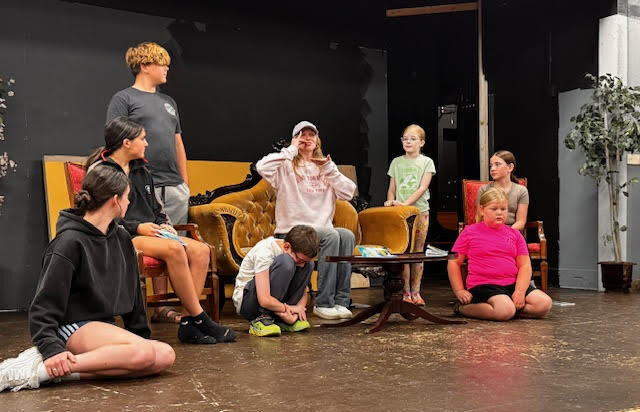
Rehearsals are underway for the North Georgia Community Players' production of "The Sound of Music." The classic musical by Rodgers and Hammerstein opens at the NGCP theater on August 8, 2025. (Photo by Rebecca Bilbrey)

The hills are alive with the sound of singing children. At a late June rehearsal of North Georgia Community Players’ production of The Sound of Music, the von Trapp kids are singing their lungs out as they yodel their way through “The Lonely Goatherd,” one of many memorable songs in Richard Rodgers and Oscar Hammerstein’s immortal musical.

The show, which will run for nine performances in Dillard over three weekends from August 8th through the 24th, features familiar young faces from previous NGCP shows, as well as the indefatigable director of all the company’s recent musicals, Rebecca Bilbrey.

A timeless tale of music, love, and resistance

Based on the true story of an Austrian near-nun, Maria; the Austrian admiral who becomes her husband, Baron Georg von Trapp; and his seven children from his first marriage, the musical tells the story of the now-famous family that escaped the Nazi “Anschluss”—the 1938 German annexation of neighboring Austria that was the first Nazi cross-border aggression leading to World War II. The beloved musical, as a film, is one of the top-grossing shows of all time and is Rodgers and Oscar Hammerstein’s most successful collaboration.



Some of its many songs, “My Favorite Things,” “Do-Re-Mi,” “Sixteen Going on Seventeen,” and the heart-rending “Edelweiss”—the last song the duo ever wrote together—are considered classics of musical theater, and have been recorded by dozens of other artists, in many different styles, from operatic to jazz.

The story, for the 11 readers who may be unfamiliar with it: Maria, a postulant—prospective nun—near Salzburg, Austria, is initially sent out of her abbey for a bit of real-world experience, as her mother abbess is not sure the restless young woman is suited for a nun’s life. She is assigned to help the stern, hyper-disciplinarian and widower von Trapp raise his seven children. The captain, a celebrated German naval officer in World War I, is being pressured to resume his military career—this time under the authority of the party led by one Adolf Hitler.

Spoiler alert

The captain has an equally distinguished girlfriend—the Baroness Elsa Schraeder—who is initially suspicious of Maria, but is comforted by learning she will soon be returning to the abbey. Maria does leave, but doesn’t stay away for long (cue romantic music). The former future nun instantly bonds with the von Trapp children, dressing them colorfully and teaching them the rudiments of music, which became the family’s lifelong passion.

The nuns in the abbey are a big part of the story, as they ponder (among other big questions, “How Do You Solve a Problem Like Maria?”

Ultimately, the plot turns on the pressure the Nazis are applying to force von Trapp to resume his military duties. His original fiancée and his friend, Max, both consider the Germans’ triumph inevitable and beg him to submit. But Georg and his new bride endeavor to evade the Nazi menace and save their children from the Nazi domination of Austria and Europe (spoiler alert: the good guys win).

Double-casting the von Trapp kids

Rehearsing a pivotal dance in the musical are Sam Warren as “Rolf Gruber” and Rilyn Bilbrey as “Liesl von Trapp” (Photo by Rebecca Bilbrey)

Director Rebecca Bilbrey was overwhelmed by local actors’ response to the auditions in May; more than 40 people of all ages turned out, including many family groups. She decided to double-cast all the kids’ roles, which included older teens down to a six-year-old as the youngest von Trapp.

“I chose the show because I wanted to give the younger talent in the community a chance to shine,” Bilbrey said, taking a breath this week between rehearsals. “I’m thrilled with how I was able to fill the cast; the kids are so gifted, and everyone is working so hard.”

Among the younger characters are Captain’s oldest girl, Liesl, and a local messenger boy, Rolf, whose romance serves as a subplot and generates the charming duet, “You Are Sixteen, Going on Seventeen.”

Stage veterans bring depth to iconic characters

Lucy Barry is all of 22, and playing Maria is her first time in a full-on romantic lead. She’s played the title role in “Annie,” Elle Woods in “Legally Blonde,” and most recently the high-energy Rosie in the NGCP “Bye Bye Birdie” in 2023.

“I love this show,” Barry says. “I watched it incessantly while I was growing up.”  Interestingly, Barry has a little bit of exposure to the lifestyle Maria surrenders: “My aunt, Christine, is the only cloistered nun I’ve ever known.” In “real life,” Barry is a zip line guide and dog groomer, but she has always loved the stage.

Lucy’s “stage husband” is Anthony Schandel, 23, who’s been very busy on stage lately, including a big role in “9 to 5” in Dillard, and “Pirates of Penzance” and “To Kill a Mockingbird” at Habersham Community Theatre, among others. But he called playing the Captain his biggest stage challenge to date.

“It’s quite an evolution he goes through,” Schandel says. “He’s so emotionally closed off at first, “but he gradually opens up more in each scene. It’s very tricky to reveal that slowly.”

Schandel particularly likes the moment when his firm, military reserve cracks as he dances with Maria for the first time, to illustrate to his children how it’s properly done. The lesson generates a bit more heat between the incipient couple than they intended.

Anthony Schandel, right, is an auto parts salesman by day who dances and sings on stage at night as Captain von Trapp in NGCP’s production of “The Sound of Music.” (Photo by Rebecca Bilbrey)

In the rest of his life, Schandel manages a career every bit as hands-on as the captain’s; he sells automotive parts at Jefferson Ford in Jackson County.

Bilbrey brings families and talent together

Schandel and Barry both said their favorite element of the show is the joyful kids—two septets full—who are not only key to the plot but will win over the audience’s hearts. The kids are featured in several of the show’s best-known songs, including the charming “Goatherd” song, and, of course, “Do-Re-Mi.”

Director Bilbrey has become an NGCP institution; she’s directed every one of the company’s musicals since performances resumed after the Covid shutdown.  These have included such audience favorites as “Little Shop of Horrors,” “9 to 5,” “I Love You, You’re Perfect, Now Change,” “Bye Bye Birdie,” “Joseph and the Amazing Technicolor Dreamcoat,” and the song and dance numbers at the theater’s recent spring gala fundraiser.

Said Bilbrey, “I think it’s everybody’s favorite, and for me, I’m delighted that I’ve been able to cast whole family groups—moms, dads, and kids together.”

Some of the other familiar names and faces in the cast: Cecilia Barry (Lucy’s sister), and Makenna Bilbrey (the director’s niece), who share duties as Liesl von Trapp; Amy Smith, who is both music director and Sister Berthe, one of the nuns; Sam Warren and Mont Wood, who share the role of Liesl’s love interest, Rolf; Dannyale Williams as Baroness Elsa Schrader; Peyton Wood as Admiral von Schreiber and Baron Elberfeld; Rilyn Bilbrey—the director’s daughter—as Louisa von Trapp, and Lauryn Baltimore as Frau Zeller.

(Photo by Rebecca Bilbrey)

Tickets now on sale

The North Georgia Community Players (NGCP) production of The Sound of Music opens Friday, August 8, and runs through August 24. Friday and Saturday performances are at 7 p.m., and Sunday matinees are at 3 p.m.

Tickets are available online through the NGCP website or by calling (706) 212-2500.

The NGCP theater is in the Old Dillard Schoolhouse, which also houses Dillard City Hall, at 892 Franklin Street in Dillard, Georgia.

Trump tax law runs up deficit by $3.4T, throws 10 million off health insurance, CBO says

President Donald Trump holds up the “One Big Beautiful Bill Act” that was signed into law during an Independence Day military family picnic on the South Lawn of the White House on July 4, 2025 in Washington, D.C. (Photo by Alex Brandon – Pool/Getty Images)

WASHINGTON (States Newsroom) — Republicans’ “big, beautiful” law will add $3.394 trillion to deficits during the next decade and lead 10 million people to lose access to health insurance, according to an analysis released Monday by the nonpartisan Congressional Budget Office.

The updated assessment of the sweeping tax and spending cuts law came weeks after nearly every GOP lawmaker voted to approve the legislation ahead of a self-imposed Fourth of July deadline. The law made permanent the 2017 tax cuts from President Donald Trump’s first term and provided billions to carry out his plans of mass deportations, an immigration crackdown and increased defense spending.

Maya MacGuineas, president of the Committee for a Responsible Federal Budget, wrote in a statement that it is “still hard to believe that policymakers just added $4 trillion to” deficits after Republican lawmakers “have spent months or years appropriately fuming about our unsustainable fiscal situation.”

“This is a dangerous game we are playing,” MacGuineas wrote. “It has been going on for years, and it was brought to new levels with this bill. And it is time to stop.”

CBO released numerous reports throughout the months-long process showing how various parts of the bill would affect federal spending and health care access, but the scorekeeper needed additional time to evaluate changes Republicans made during the last few days of debate.

The latest figures are similar to a preliminary report CBO released earlier this month projecting the final version of the package, which underwent considerable changes in the Senate, would likely lead to a $3.4 trillion increase in deficits between 2025 and 2034.

That total was significantly higher than the $2.4 trillion increase in deficits CBO expected the original House version of the bill would have had during the next decade.

Health spending to fall by more than $1 trillion

Republicans’ numerous changes to health programs, predominantly Medicaid, will reduce federal spending during the next decade by $1.058 trillion.

The law made more than a dozen changes to the state-federal health program for lower income individuals and certain people with disabilities, though some of those have larger budget impacts than others.

Language barring Medicaid spending from going to Planned Parenthood for one year would actually increase federal deficits during the 10-year window by $53 million.

The CBO score shows that policy change would decrease federal spending by $44 million this fiscal year and another $31 million during the next fiscal year, before increasing deficits by $91 million during fiscal year 2027 and continuing.

That section of the law is on hold for the moment after a federal judge issued a temporary restraining order earlier this month that required the Trump administration to continue paying Planned Parenthood for routine health care coverage for Medicaid enrollees.

Federal law for decades has barred the federal government from spending taxpayer dollars for abortion services with limited exceptions, so the one-year prohibition on Medicaid funding to Planned Parenthood would have blocked patients enrolled in the program from going to their clinics for routine health appointments, like annual physicals and cancer screenings.

The CBO report didn’t include a state-by-state breakdown of the effects of the health care changes in the law, but the agency is expected to release more detailed analysis of the health impacts in the coming weeks.

Nutrition assistance cuts

Apart from Medicaid, two large projected deficit reductions in the law come in the agriculture title’s sections on the Supplemental Nutrition Assistance Program, or SNAP.

A provision requiring states to pay for some portion of SNAP benefits starting in fiscal 2028 would save the federal government between $5.7 billion and $6 billion per year, totalling just less than $41 billion for the first seven years it will be in effect.

And new work requirements for SNAP would result in $68.6 billion less in federal spending over the 10 years starting in fiscal 2026, the CBO projected.

Federal student loan program

Republicans’ streamlining of the federal student loan program is projected to reduce federal spending in the next decade by $270.5 billion.

As part of a sweeping overhaul of higher education, the law limits repayment options for borrowers with any loans made on or after July 1, 2026, to either a standard repayment plan or an income-based repayment plan.

Extension and expansion of tax cuts

The extension of Trump’s 2017 tax law, plus new tax breaks, will cost $4.472 trillion over the next decade, according to the latest CBO score.

The United States collects the majority of its revenue from individual taxpayers, and the continuation of lowered income tax brackets, plus an increased standard deduction, will comprise the bulk of lost revenue over 10 years, adding up to $3.497 trillion.

Trump also campaigned on several other tax cut promises, including no tax on tips and overtime, as well as no tax on car loan interest. The temporary provisions come with stipulations and will end in 2029. Together they will cost $151.868 billion.

The child tax credit increases under the new law to $2,200, up from $2,000, though lawmakers did not increase the amount lower income families can receive as a tax refund. The CBO estimates the bumped-up tax credit will cost $626.345 billion over the next decade.

Lawmakers offset some costs of the bill by repealing clean energy tax credits, including ending tax credits for personal and commercial electric vehicles, nixing energy efficiency improvement credits for homeowners, and terminating clean electricity production credits. In all, Republicans saved $487.909 billion from axing the measures meant to address the effects of climate change.

Jacob Fischler, Shauneen Miranda and Ashley Murray contributed to this report.

Trump administration releases FBI records on MLK Jr.

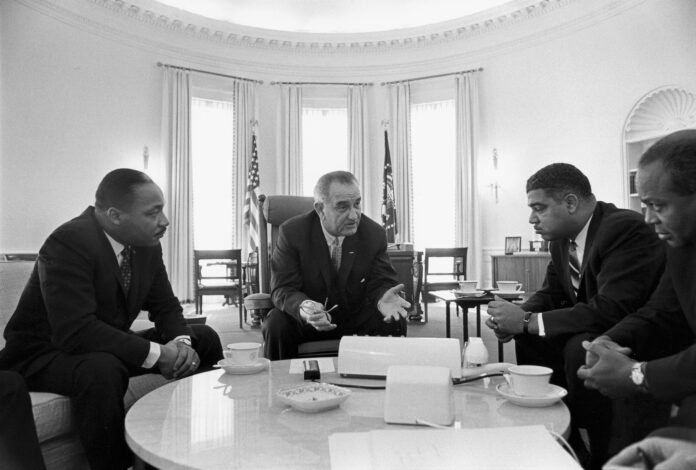
The Rev. Martin Luther King, Jr. meets with President Lyndon B. Johnson and civil rights leaders in the Oval Office on January 18, 1964.

The Trump administration on Monday released records of the FBI’s surveillance of Martin Luther King Jr., despite opposition from the slain Nobel laureate’s family and the civil rights group that he led until his 1968 assassination.

The digital document dump includes more than 240,000 pages of records that had been under a court-imposed seal since 1977, when the FBI first gathered the records and turned them over to the National Archives and Records Administration.

In a lengthy statement released Monday, King’s two living children, Martin III, 67, and Bernice, 62, said their father’s killing has been a “captivating public curiosity for decades.” But the pair emphasized the personal nature of the matter and urged that the files “be viewed within their full historical context.”

Family members, including King’s son and namesake, Martin Luther King, III, were given advance notice of the document release. (AP video screengrab)

The Kings got advance access to the records and had their own teams reviewing them. Those efforts continued even as the government granted public access. Among the documents are leads the FBI received after King’s assassination and details of the CIA’s fixation on King’s pivot to international anti-war and anti-poverty movements in the years before he was killed. It was not immediately clear whether the documents shed new light on King’s life, the Civil Rights Movement or his murder.

“As the children of Dr. King and Mrs. Coretta Scott King, his tragic death has been an intensely personal grief — a devastating loss for his wife, children, and the granddaughter he never met — an absence our family has endured for over 57 years,” they wrote. “We ask those who engage with the release of these files to do so with empathy, restraint, and respect for our family’s continuing grief.”

They also repeated the family’s long-held contention that James Earl Ray, the man convicted of assassinating King, was not solely responsible, if at all.

Bernice King was 5 years old when her father was killed at the age of 39. Martin III was 10.

A statement from the office of Director of National Intelligence Tulsi Gabbard called the disclosure “unprecedented” and said many of the records had been digitized for the first time. She praised President Donald Trump for pushing the issue.

Release is ‘transparency’ to some, a ‘distraction’ for others

Trump promised as a candidate to release files related to President John F. Kennedy’s 1963 assassination. When Trump took office in January, he signed an executive order to declassify the JFK records, along with those associated with Robert F. Kennedy’s and MLK’s 1968 assassinations.

The government unsealed the JFK records in March and disclosed some RFK files in April.

The announcement from Gabbard’s office included a statement from Alveda King, Martin Luther King Jr.’s niece, who is an outspoken conservative and has broken from King’s children on various topics — including the FBI files. Alveda King said she was “grateful to President Trump” for his “transparency.”

Separately, Attorney General Pam Bondi’s social media account featured a picture of the attorney general with Alveda King.

Besides fulfilling Trump’s order, the latest release means another alternative headline for the president as he tries to mollify supporters angry over his administration’s handling of records concerning the sex trafficking investigation of Jeffrey Epstein, who killed himself behind bars while awaiting trial in 2019, during Trump’s first presidency. Trump last Friday ordered the Justice Department to release grand jury testimony but stopped short of unsealing the entire case file.

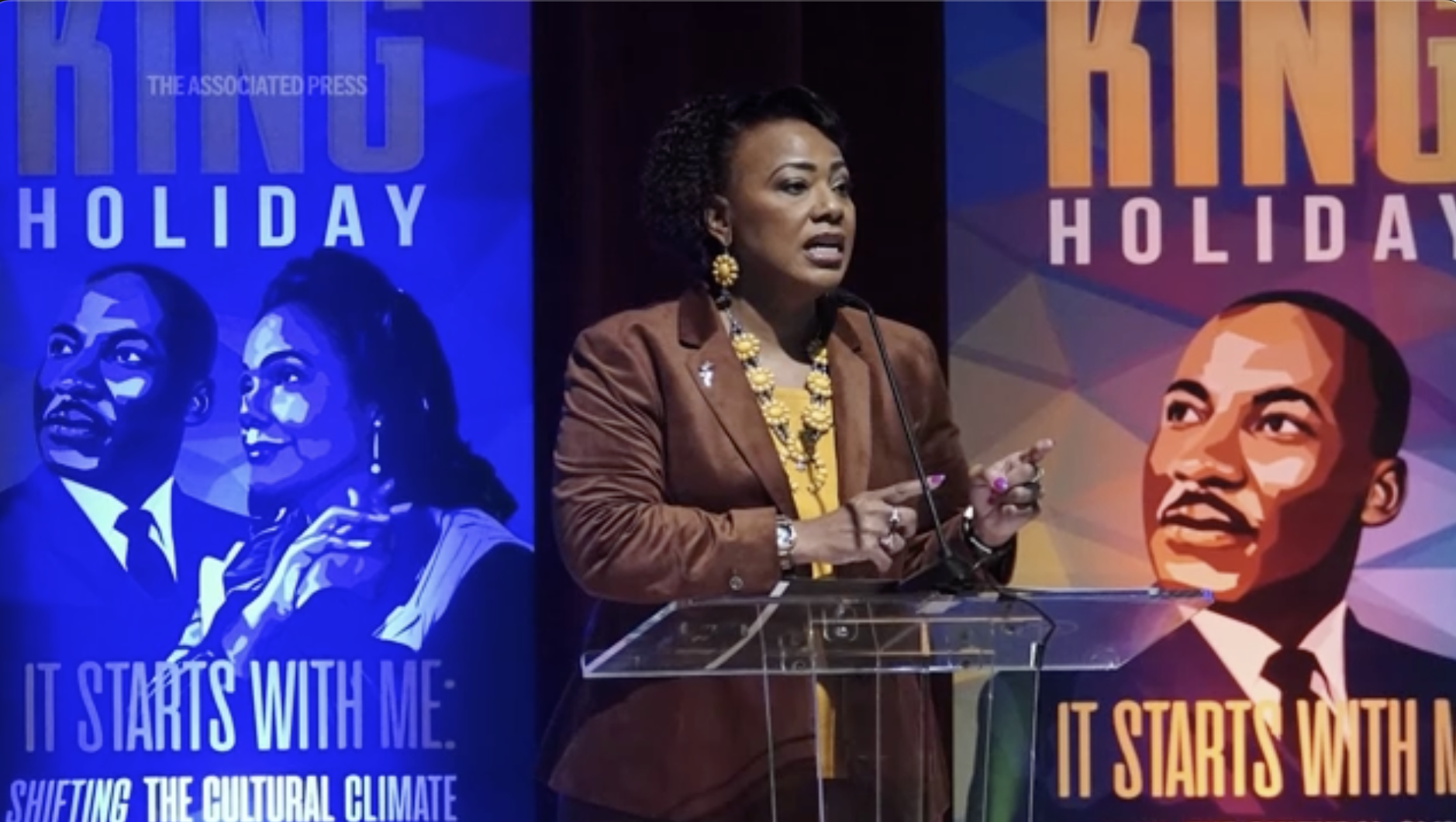
Bernice King (AP video screengrab)

Bernice King and Martin Luther King III did not mention Trump in their statement Monday. But Bernice King later posted on her personal Instagram account a black-and-white photo of her father, looking annoyed, with the caption “Now, do the Epstein files.”

And some civil rights activists did not spare the president.

“Trump releasing the MLK assassination files is not about transparency or justice,” said the Rev. Al Sharpton. “It’s a desperate attempt to distract people from the firestorm engulfing Trump over the Epstein files and the public unraveling of his credibility among the MAGA base.”

The King Center, founded by King’s widow and now led by Bernice King, reacted separately from what Bernice said jointly with her brother. The King Center statement framed the release as a distraction — but from more than short-term political controversy.

“It is unfortunate and ill-timed, given the myriad of pressing issues and injustices affecting the United States and the global society,” the King Center, linking those challenges to MLK’s efforts. “This righteous work should be our collective response to renewed attention on the assassination of a great purveyor of true peace.”

Records mean a new trove of research material

The King records were initially intended to be sealed until 2027, until Justice Department attorneys asked a federal judge to lift the sealing order early. Scholars, history buffs and journalists have been preparing to study the documents for new information about his assassination on April 4, 1968, in Memphis, Tennessee.

The Southern Christian Leadership Conference, which King co-founded in 1957 as the Civil Rights Movement blossomed, opposed the release. The group, along with King’s family, argued that the FBI illegally surveilled King and other civil rights figures, hoping to discredit them and their movement.

It has long been established that then-FBI Director J. Edgar Hoover was intensely interested if not obsessed with King and others he considered radicals. FBI records released previously show how Hoover’s bureau wiretapped King’s telephone lines, bugged his hotel rooms and used informants to gather information, including evidence of King’s extramarital affairs.

“He was relentlessly targeted by an invasive, predatory, and deeply disturbing disinformation and surveillance campaign orchestrated by J. Edgar Hoover through the Federal Bureau of Investigation,” the King children said in their statement.

“The intent … was not only to monitor, but to discredit, dismantle and destroy Dr. King’s reputation and the broader American Civil Rights Movement,” they continued. “These actions were not only invasions of privacy, but intentional assaults on the truth — undermining the dignity and freedoms of private citizens who fought for justice, designed to neutralize those who dared to challenge the status quo.”

The Kings said they “support transparency and historical accountability” but “object to any attacks on our father’s legacy or attempts to weaponize it to spread falsehoods.”

Opposition to King intensified even after the Civil Rights Movement compelled Congress and President Lyndon B. Johnson to enact the Civil Rights Act of 1964 and the Voting Rights Act of 1965. After those victories, King turned his attention to economic justice and international peace. He criticized rapacious capitalism and the Vietnam War. King asserted that political rights alone were not enough to ensure a just society. Many establishment figures like Hoover viewed King as a communist threat.

King’s children still don’t accept the original explanation of assassination

King was assassinated as he was aiding striking sanitation workers in Memphis, part of his explicit turn toward economic justice.

Ray pleaded guilty to King’s murder. Ray later renounced that plea and maintained his innocence until his death in 1998.

King family members and others have long questioned whether Ray acted alone, or if he was even involved. Coretta Scott King asked for the probe to be reopened, and in 1998, then-Attorney General Janet Reno ordered a new look. Reno’s Justice Department said it “found nothing to disturb the 1969 judicial determination that James Earl Ray murdered Dr. King.”

In their latest statement, Bernice King and Martin Luther King III repeated their assertions that Ray was set up. They pointed to a 1999 civil case, brought by the King family, in which a Memphis jury concluded that Martin Luther King Jr. had been the target of a conspiracy.

“As we review these newly released files,” the Kings said, “we will assess whether they offer additional insights beyond the findings our family has already accepted.”

Clarkesville installs cameras to monitor downtown parking

A newly installed Eagle Eye Networks surveillance camera overlooks one of the main parking lots on the Clarkesville Square. The city has begun monitoring parking activity with these wide-angle cameras mounted on light poles. (Daniel Purcell/Now Habersham)

After months of discussion, Clarkesville has quietly taken its first step toward regulating parking on the downtown square. Two wide-angle security cameras are now mounted and operational, monitoring the city’s two main public parking lots.

The cameras, installed by Omega Technology Group, are mounted on light poles on either side of the square. A third camera has been installed at the pickleball courts at Mary Street Park. According to City Manager Keith Dickerson, the cameras cost approximately $9,000, with an additional $3,500 paid annually to Omega for cloud storage.

Remote monitoring

The cloud-based system, developed by Eagle Eye Networks, allows authorized users to view live or recorded footage, check how long vehicles have been parked, and search for specific vehicles remotely.

“No one will be actively monitoring the system. The police department, city IT department, and City Manager will have access,” Dickerson told Now Habersham in early July.

When asked whether signage would be posted to alert drivers of the cameras, Dickerson replied, “Not at this time.”

When the City Council approved the camera installation in May, officials said the system would help monitor parking turnover and identify long-term parkers. With limited parking and increased traffic downtown, the move is intended to improve access for short-term visitors. Still, the move was questioned by many on social media due to the cost. Others questioned the impact of ‘customers only’ parking on residential tenants and non-retail outlets operating on the square.

In addition to the camera monitoring, the policy, spearheaded by Councilman Brad Coppedge, also includes a provision requiring downtown retailers to report violations by submitting vehicle descriptions and photos to city officials. Parking violators face possible fines; however, it is unclear whether such fines are enforceable by law since the parking regulations do not fall under a city ordinance.

Malcolm-Jamal Warner, ‘Cosby Show’ actor, dies at 54 in Costa Rica drowning

FILE - Actor and musician Malcolm-Jamal Warner poses for a portrait in Los Angeles, Oct. 8, 2015. (Photo by Danny Moloshok/Invision/AP, File)

SAN JOSE, Costa Rica (AP) — Malcolm-Jamal Warner the actor who played teenage son Theo Huxtable on “The Cosby Show,” has died at age 54 in an accidental drowning in Costa Rica, authorities there said.

Costa Rica’s Judicial Investigation Department said Monday that Warner drowned Sunday afternoon on a beach on Costa Rica’s Caribbean coast. He was swimming at Playa Cocles in Limon province when a current pulled him deeper into the ocean.

“He was rescued by people on the beach,” the department’s initial report said, but first responders from Costa Rica’s Red Cross found him without vital signs and he was taken to the morgue.

Warner created many TV moments etched in the memories of Generation X children and their parents, including a pilot-episode argument with Bill Cosby’s Cliff Huxtable about money and an ear piercing he tries to hide from his dad. His Theo was the only son among four daughters in the household of Cliff Huxtable and Phylicia Rashad’s Clair Huxtable on the NBC sitcom, and he would be one of the prime representations of American teenage boyhood on a show that was the most popular in America for much of its run from 1984 to 1992.

He played the role for eight seasons in all 197 episodes, winning an Emmy nomination for supporting actor in a comedy in 1986. For many the lasting image of the character, and of Warner, is of him wearing a badly botched mock designer shirt sewed by his sister Denise, played by Lisa Bonet.

Warner later appeared on the sitcom “Malcolm & Eddie,” co-starring with comedian Eddie Griffin in the series on the defunct UPN network from 1996 to 2000. And in the 2010s he starred opposite Tracee Ellis Ross as a family-blending couple for two seasons on the BET sitcom “Read Between The Lines.” He also had a role as O.J. Simpson’s friend Al Cowlings on “American Crime Story” and was a series regular on Fox’s “The Resident.”

His film roles include the 2008 rom-com “Fool’s Gold” with Matthew McConaughey and Kate Hudson. A poet and a musician, Warner was a Grammy winner, for best traditional R&B performance, and was nominated for best spoken word poetry album for “Hiding in Plain View.”

Warner was married with a daughter, but chose to not publicly disclose their names. Warner’s representatives declined immediate comment.

Judge orders Trump administration to ‘stop violating the law!’ and publish spending details

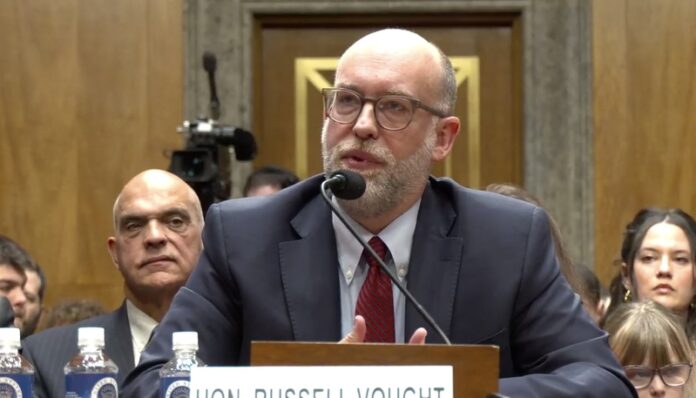
Office of Management and Budget Director Russ Vought testifies before the Senate Homeland Security and Governmental Affairs Committee on Jan. 15, 2025. (Screenshot from committee webcast)

WASHINGTON (States Newsroom) — A federal judge on Monday ordered the Trump administration to once again publish details about the pace at which it plans to spend money approved by Congress.

U.S. District Court for the District of Columbia Judge Emmet Sullivan wrote in his ruling that Congress “has sweeping authority” to require the president to post a website detailing how it doles out taxpayer dollars throughout the year.

“As explained in this Memorandum Opinion, there is nothing unconstitutional about Congress requiring the Executive Branch to inform the public of how it is apportioning the public’s money,” he wrote. “Defendants are therefore required to stop violating the law!”

The ruling won’t take effect until Thursday at 10 a.m. Eastern, giving the Trump administration time to appeal and to seek the ruling be put on hold during the appeals process.

Sullivan was appointed to the federal district court by President Bill Clinton but was selected for two prior judicial appointments by President Ronald Reagan and President George H. W. Bush.

Website pulled down

More than two years ago, Congress began requiring the White House budget office to publicly post apportionment information and the Biden administration took that step, though Trump officials pulled down the website in March.

That decision led to two separate lawsuits, one from Citizens for Responsibility and Ethics in Washington and another from the Protect Democracy Project.

Apportionments are the first step the executive branch takes when spending money appropriated by Congress. The documents and their footnotes usually detail how quickly, or how slowly, departments and agencies plan to send money out the door throughout the fiscal year.

The documents and the public website would have been a window into whether the Trump administration was impounding, or refusing to spend, funding that lawmakers have said it should allocate on behalf of taxpayers.

Trump administration protested provision

An attorney for the Department of Justice argued during a May hearing the Trump administration believes the provision is unconstitutional and seeks to micromanage how the executive branch spends federal funds throughout the year.

The DOJ lawyer also said posting the information within two business days, as called for in the law, would require the White House budget office to divert staff from other work.

Lawyers for CREW and Protect Democracy Project told the judge the White House was in clear violation of the law and that the data is valuable information that helps the organizations monitor if a president were to cease spending on programs funded by Congress.

The watchdog organization attorneys noted during that hearing the Government Accountability Office is looking into dozens of instances where the administration held onto congressionally approved funding instead of spending it.

They said the Freedom of Information Act, or FOIA, wasn’t a helpful alternative to the website since it can take months or years for organizations to get a response to their request.

Public’s right to see decisions

Sullivan wrote in the 60-page ruling the Trump administration “complaining about the extra work” that goes along with posting the information on a public website represents “a management issue; not a constitutional one.”

“Here, Congress has determined that OMB’s apportionment decisions should be publicly available so that, among other things, it and the public can see whether they are consistent with congressional appropriations,” Sullivan wrote, adding the website aids Congress with “its undisputed oversight role.”

“The Acts do not dictate how OMB should apportion funds, nor do they establish a congressional management role in the administration of apportionments,” Sullivan wrote. “The Acts merely require that the final apportionment decisions be made publicly available to provide transparency to Congress and the public.”

Sullivan rejected an argument from the Trump administration that publicly sharing details about the pace at which it’s spending taxpayer dollars was unconstitutional because it required “the disclosure of privileged information.”

“There is no evidence in the record remotely supporting the notion that the apportionment documents are presidential communications or are in any way subject to the presidential communications privilege,” Sullivan wrote. “Accordingly, the Court rejects this constitutional claim.”

Advocates applaud ruling

Cerin Lindgrensavage, counsel for Protect Democracy Project, wrote in a statement the judge’s ruling “makes clear that the executive branch cannot simply ignore appropriations laws they disagree with on policy grounds, no matter what President (Donald) Trump or OMB Director Russell Vought thinks.

“Congress passed a law making sure the American public could see how their taxpayer dollars are being spent, and we will continue to hold the administration accountable for making good on that promise.”

Nikhel Sus, deputy chief counsel at CREW, wrote in a separate statement that the organization applauds “the court’s thorough and well-reasoned decision, which reaffirms Congress’s constitutional authority to require public disclosure of how taxpayer dollars are spent.

“Americans have a right to know how taxpayer money is being spent. Ensuring public access to this information serves as a critical check on the executive branch’s abuse and misuse of federal funds.”

The White House budget office and Department of Justice did not immediately return a request for comment about the ruling or whether the administration would appeal to the Circuit Court.

U.S. Senate Appropriations Committee ranking member Patty Murray, D-Wash., wrote in a statement that “the law is clear as day: every president is required to show the public how they are spending taxpayer dollars, and it is past time President Trump and Russ Vought get the website they illegally ripped down back up.”

Senate Appropriations Chairwoman Susan Collins, R-Maine, didn’t immediately return a request for comment.

Panel floats limits for artificial intelligence in Georgia courtrooms as odd cases pop up elsewhere

AI-generated image of a courtroom by Udin. Georgia’s judicial leaders have produced a report they hope will help ensure the state’s legal system is prepared for the continued rollout of artificial intelligence.

(Georgia Recorder) — How comfortable would you be with a lawyer using artificial intelligence to represent you?

Just this year, lawyers and law firms have been sanctioned and fined for submitting legal briefs with fake, AI-generated citations, the Arizona Supreme Court has enlisted artificial court reporters to summarize important cases, and a dead man “gave a statement” in his own manslaughter trial through an AI video made by his family.

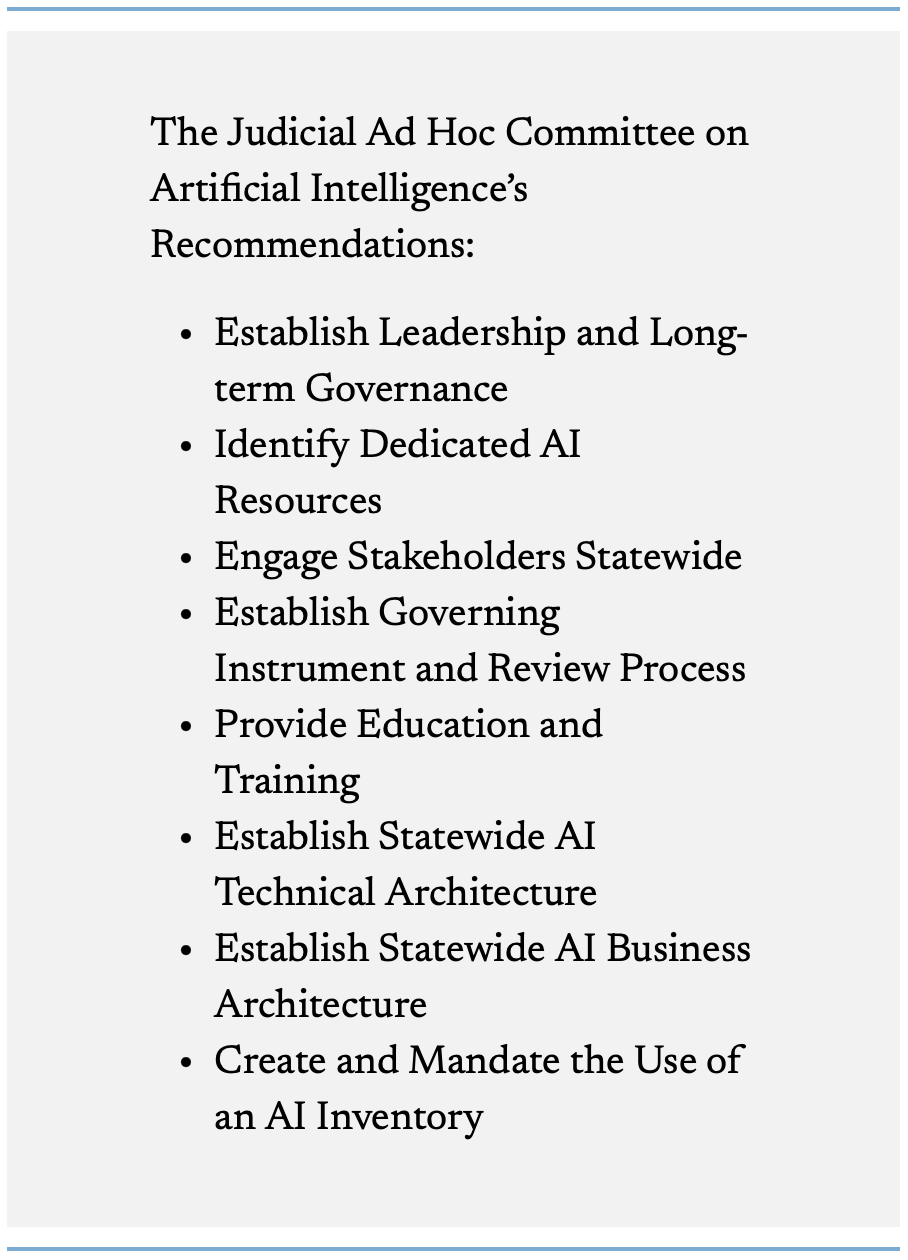
In an attempt to ensure Georgia courts can transition into the age of AI as smoothly as possible, a special committee established in August by now-retired Chief Justice Michael P. Boggs dug into the issue. That panel issued a report this month reviewing the use of AI in Georgia courts and producing a list of eight recommendations intended to maintain public faith in the judicial system as use of the technology expands. The report proposes the recommendations be rolled out over the next three years.

Darrell Sutton, a past president of the State Bar of Georgia who served on the committee, said the most common use of AI by Georgia lawyers is through brief writing and other submissions to courts.

Sutton said he uses AI to create summaries of depositions for clients, a process that once required going through a transcript and notes and manually typing out a text.

“I can now feed that transcript into an artificial intelligence program, and it will generate a summary for me,” said Sutton, who is also chair of the state Bar’s AI committee. “Now, I don’t just take that summary and send it to the client. I still have to take that and make sure that it is accurate and revise it so that it is produced in a way that is both accurate and accurately recounts what is done and then add my own editorial to it, but it’s cut by a third or two-thirds the amount of time that it takes me to summarize the deposition than what it would have before.”

Sutton said revising and fact-checking anything produced by AI is key.

“I think what a lot of lawyers are doing is they’ve gotten fooled into believing that the artificial intelligence program that they’re using is not fallible when, in fact, it is incredibly fallible,” he said. “If used well, it can be a great opportunity for a lawyer to shrink the amount of time that it takes to do a task, but the lawyer has to understand that the technology is fallible and has to be verified and has to be double-checked just like you would proofread something.”

The committee recommends that courts “avoid fully automated decision-making at this time and instead promote a ‘human-in-the-loop’ approach to mitigate risk and ensure accountability.”

The report also recommends reviewing existing cybersecurity practices for securing sensitive or confidential data and updating them if necessary to prepare for the proliferation of AI and training judicial officers and staff in recognizing and counteracting algorithmic bias – when AI is trained on biased data, leading to biased results.

Other potential future AI uses flagged for consideration by the committee include tools to translate for litigants with limited English proficiency or to put court notices into plain English for laypeople, AI software to manage busy courtroom schedules or scan documents for filing deficiencies or even AI-powered self-help kiosks or virtual assistants to help – but not provide legal advice to – self-represented litigants.

The committee emphasises that before Georgia courts adopt new technologies, they should ensure that they are technologically ready, that the new tech is compatible with their existing systems and that they have systems to measure whether AI improves the user experience.

Sutton said he believes AI will someday be as ubiquitous in law offices as email is today, but he said he thinks Georgia’s judicial system is well-poised to succeed in the new information age, as long as legal leaders continue to face the developing technology judiciously.

“I think the rules are well-suited to address it already. I think that we need to remain vigilant about the monitoring of the technology and, more importantly, monitoring how the technology is used within the legal profession and the justice system,” he said.

Click here to read the Judicial Council Ad Hoc Committee on Artificial Intelligence and the Courts’ full report.

Habersham County to recognize Purple Heart veterans

Officials are asking residents to wear purple to tonight’s Habersham County Commission meeting, where commissioners will formally recognize the county as a Purple Heart County.

During this evening’s meeting, officials will issue a proclamation honoring service members wounded or killed in combat and formally declare August 7 as Purple Heart Day in Habersham County.

August 7 observance

As part of the upcoming observance, Habersham is partnering with VFW Post #7720 to host a local event in Cornelia. The ceremony is scheduled for 2 p.m. at Fairfield Inn & Suites, 160 Market Corners Drive.

Organizers are asking for the public’s help in identifying Purple Heart recipients and their families.

If you or someone you know has received a Purple Heart, please contact Habersham County Clerk Brandy Carnes at [email protected] or call 706-839-0215.

Last year, White County and the City of Cleveland both adopted Purple Heart community designations. Several other Northeast Georgia communities also participate in the program, including Clarke, Hart, Jackson, Madison, Oconee, and Union counties.

Cleveland lifts boil water advisory

(NowHabersham.com)

The City of Cleveland has lifted its Boil Water Advisory following a water main break.

Cleveland’s Water Distribution Operator Andrea Smith said the 6-inch water main broke in the area of 92 Sunrise Lane. The line has since been repaired.

As a precaution against possible contamination, the city issued the advisory for the following areas: College View, Laurel Point, Leadpole Mountain Lane, Misty Lane, Mountainview Drive, Oak Point Drive, Point Willow Drive, Sunrise Lane, Thunder Ridge Drive, Treetop Drive, and Vista Drive.

Those in the affected areas may now resume normal water use.

Dean Dyer of WRWH Radio contributed to this report

What to know about a vulnerability being exploited on Microsoft SharePoint servers

NEW YORK (AP) — Microsoft has issued an emergency fix to close off a vulnerability in Microsoft’s SharePoint software that hackers have exploited to carry out widespread attacks on businesses and at least some federal agencies.

The company issued an alert to customers Saturday saying it was aware of the zero-day exploit being used to conduct attacks and that it was working to patch the issue. Microsoft updated its guidance Sunday with instructions to fix the problem for SharePoint Server 2019 and SharePoint Server Subscription Edition. Engineers were still working on a fix for the older SharePoint Server 2016 software.

What is a zero-day exploit?

A zero-day exploit is a cyberattack that takes advantage of a previously unknown security vulnerability. “Zero-day” refers to the fact that the security engineers have had zero days to develop a fix for the vulnerability.

According to the U.S. Cybersecurity and Infrastructure Security Agency (CISA), the exploit affecting SharePoint is “a variant of the existing vulnerability CVE-2025-49706 and poses a risk to organizations with on-premise SharePoint servers.”

Security researchers warn that the exploit, reportedly known as “ToolShell,” is a serious one and can allow actors to fully access SharePoint file systems, including services connected to SharePoint, such as Teams and OneDrive.

Google’s Threat Intelligence Group warned that the vulnerability may allow bad actors to “bypass future patching.”

How widespread is the impact?

Eye Security said in its blog post that it scanned over 8,000 SharePoint servers worldwide and discovered that at least dozens of systems were compromised. The cybersecurity company said the attacks likely began on July 18.

Although the scope of the attack is still being assessed, CISA warned that the impact could be widespread and recommended that any servers impacted by the exploit should be disconnected from the internet until they are patched.

ACCGov calls for public art at Lay Park and Heard Park

Lay Park in Athens (Athens-Clarke County Government)

The Athens-Clarke County Government is inviting local artists to submit their public art proposals for consideration in a Community Center Improvements project.

The artists chosen to create art for the project will work with stakeholders and government staff to enhance the experience of the selected sites.

Murals will be designed for placement at both Heard Park and Lay Park. The murals will be a celebration of both parks’ 50th anniversaries of serving the Athens community.

The application deadline for artists to submit their work is September 19th at 5 pm. To apply, forms must be submitted to ACCGov through their form center on accgov.com.

The art chosen will be installed and available for public view by the end of Fall 2025.