Home Blog Page 27

Second-grader brings loaded handgun to Hall elementary school

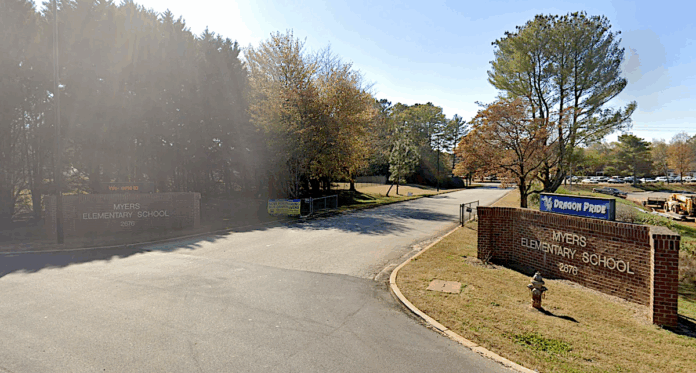
The Hall County Sheriff's Office is investigating an incident at Myers Elementary School where a second-grader brought a loaded gun to school. (Source: Google Maps)

GAINESVILLE, Ga. — An 8-year-old student brought a handgun to Myers Elementary School on Thursday morning, prompting an investigation by the Hall County Sheriff’s Office.

According to Hall County Schools Director of Communications Stan Lewis, school officials were alerted around 8:15 a.m. that a student may have been in possession of a firearm. The student was searched immediately, the weapon was confiscated without incident and the school resource officer was notified.

The Hall County Sheriff’s Office said a male second-grade student brought the handgun to school and showed it to a classmate at approximately 8:15 a.m. The classmate reported it to a teacher, who notified the principal.

The principal searched the student, confiscated the handgun, alerted the school resource officer and escorted the child to the school office, according to sheriff’s office Public Information Officer BJ Williams. The school resource officer secured the firearm, which had a loaded magazine but no round in the chamber.

Investigators with the sheriff’s office responded to the campus and began an investigation.

Based on preliminary information, authorities said there is no immediate indication the student intended to harm himself or others.

Lewis said the school remained under normal operations following the incident.

“The possession of any weapon on campus is a serious violation of the Hall County School District Student Code of Conduct, and the district will respond accordingly,” Lewis said.

The sheriff’s office and the school district continue to work together as the investigation remains ongoing. Additional information will be released as it becomes available.

Tallulah Falls girls basketball team donates books to NICU

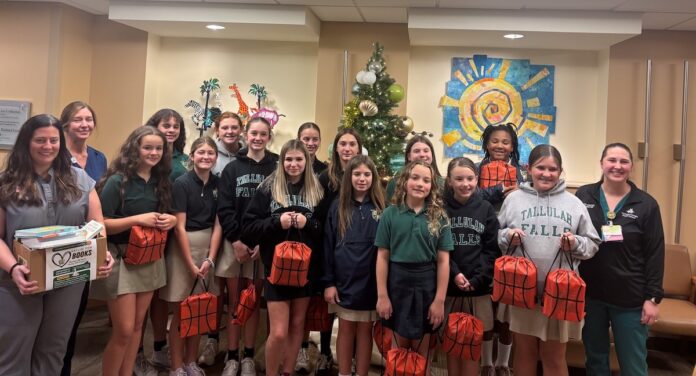
The Tallulah Falls Middle School girls basketball team donated books to the NICU unit at Northeast Georgia Medical Center. (photo submitted)

TALLULAH FALLS, Ga. — The middle school girls basketball team at Tallulah Falls School spent part of its winter season doing more than scoring points.

The Lady Indians organized a “Ballin’ for Books” drive, collecting more than 100 children’s books for families in the neonatal intensive care unit at Northeast Georgia Medical Center in Gainesville.

“It definitely brought our team way closer because we weren’t just practicing drills, but working together for something that matters,” said Evie Purcell, a seventh-grader from Baldwin. “It was honestly so cool to see everyone hyped to help out, and it made our bond on the court feel even stronger. Now, when we play, it feels like we’re a real family because we know we can count on each other for more than just a basket.”

The project’s theme was “playing with heart, giving with purpose.”

Eighth-grader Lily Denard of Cornelia said the idea came from her mother, who works for Northeast Georgia Health System and helps with fundraisers.

“She saw that the cheerleading team did a fundraiser for the animal shelter and wanted to do something similar,” Denard said.

Coach Jenny Long said the team embraced the idea quickly.

“It was actually a pretty neat idea,” Long said. “We collected the books and donated them to the NICU in Gainesville for parents to read to their newborn babies since they are not allowed to have much contact. This was one way they could still hear their voice and connect with their babies.”

For about two weeks, donation bins were placed in the middle school lobby and media center. Players encouraged classmates and teachers to contribute children’s books that would be delivered to the NICU at NGMC Gainesville.

The girls later delivered the books to the hospital, where parents and nurses can use them to help comfort infants who cannot be held as often as families might wish.

NGMC Gainesville shared a photo of the donation on social media before Christmas, thanking Tallulah Falls for teamwork that extends beyond the court.

“It was a really special moment for all of us,” Denard said. “The people who work in the NICU seemed very grateful. It was an amazing experience to be able to do that for the hospital and I’m very glad we did it.”

For Purcell, the effort underscored a lesson bigger than basketball.

“To me, being part of this is super special because it shows that being a basketball player is about way more than just winning games,” she said. “It’s a really great feeling to know that we’re helping other kids get books. I just love that I can use the sport, and I love being able to do something kind for the community and make a real difference.”

Parvo outbreak forces Habersham County Animal Shelter to pause intakes

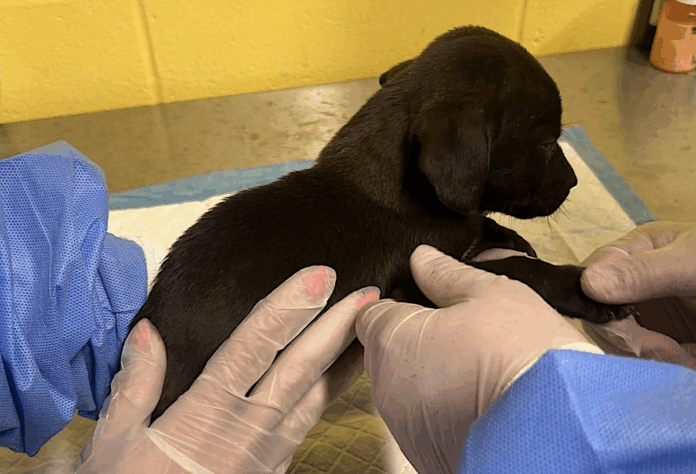
After they were surrendered by their owners to the Habersham County Animal Shelter on Feb. 25, 2026, 11 puppies tested positive for parvovirus. (Habersham County Animal Shelter/Facebook)

CLARKESVILLE, Ga. — The Habersham County Animal Shelter has temporarily paused non-emergency intakes after 11 surrendered puppies tested positive for parvovirus, officials said.

Habersham County Animal Care and Control Director Madi Nix said the puppies, from multiple litters in one household, began showing symptoms within hours of arrival.

“All tested positive. Every single puppy,” Nix wrote in a public post.

Despite immediate treatment, one puppy died shortly after arrival. Officials said symptoms were not disclosed at surrender and had apparently been present for some time, lowering the survival rate.

Highly contagious virus

Parvovirus is a highly contagious and potentially deadly illness that primarily affects young dogs and stressed new intakes. It is preventable through vaccination and basic veterinary care.

“When parvo enters a shelter, it does not affect just one group — it puts our entire population at risk,” Nix said.

The shelter is now pausing non-emergency intakes while staff deep-clean, disinfect and monitor animals in their care. The goal is a full two-week period with no additional cases.

Limited isolation space has forced staff to house some infected puppies in the cat quarantine area, reducing cat intake capacity. Nix urged residents to temporarily hold strays if possible.

“If you find a stray and are able to briefly and safely hold onto them, we will gladly provide necessary supplies and vaccinations to help you do so,” she said. “This reduces risk during this critical time.”

Emergencies will be handled on a case-by-case basis. The shelter reported the outbreak to the Georgia Department of Agriculture.

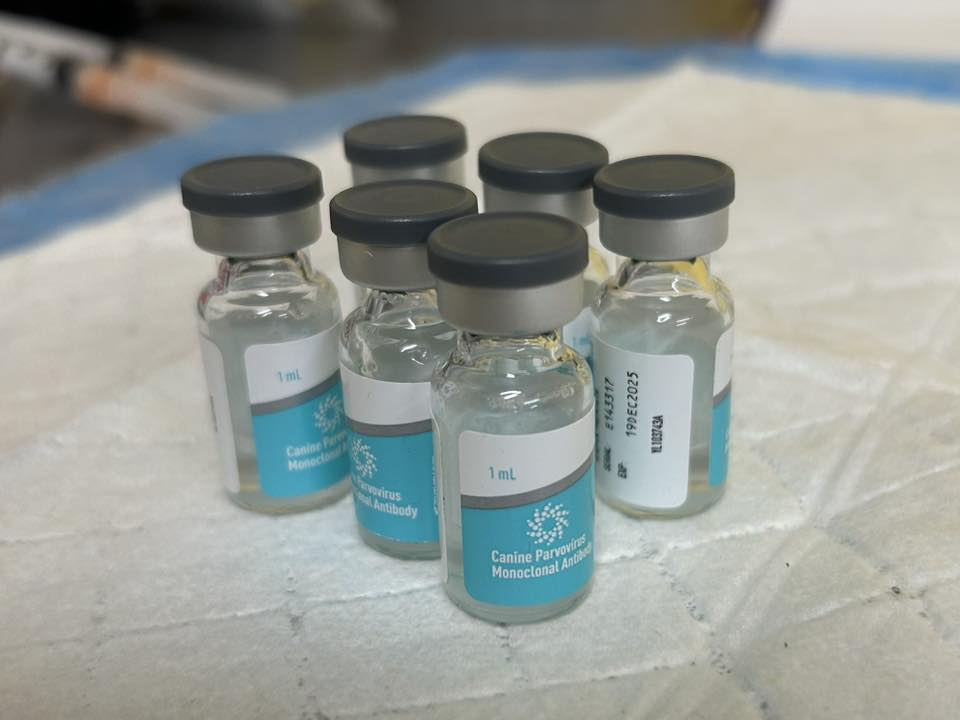
The Habersham County Animal Shelter is now seeking donations to replenish its supply of Canine Parvovirus Monoclonal Antibody, a treatment for the highly contagious and potentially deadly parvo virus. (Habersham County Animal Shelter/Facebook)

Donations needed

The shelter offers free parvovirus vaccines to Habersham County residents during business hours. However, officials used the remaining treatment supply, including Canine Parvovirus Monoclonal Antibody, to care for the puppies.

“If you are able to contribute toward restocking this life-saving treatment, you are directly impacting whether the next puppy gets that same chance,” Nix said.

Donations may be mailed to:
Habersham County Animal Shelter
4231 B Toccoa Highway
Clarkesville, GA 30523
706-839-0195

“We want to help — that is why we exist,” said Nix. “But helping also means protecting the population already under our roof and the future animals coming into our care. Please give us this time to stabilize, sanitize, and safeguard.”

Lawmakers restore full $325 million for needs-based college aid program, with a boost from Kemp

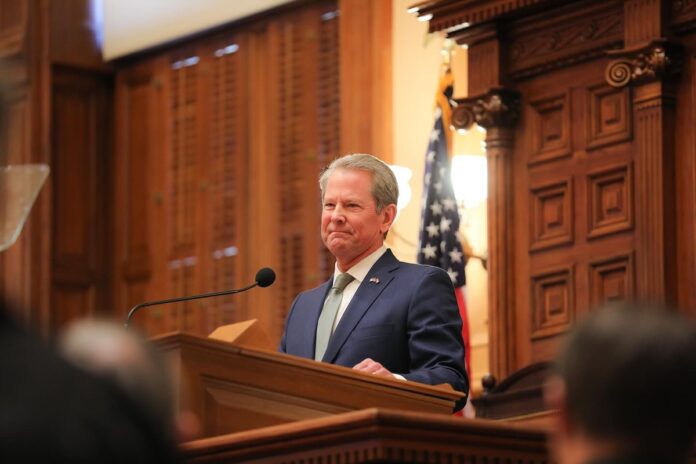
Gov. Brian Kemp has proposed a one-time investment of $325 million in state funding for the DREAMS scholarship program, seen as a potential companion to the merit-based HOPE Scholarship launched in 1993 under Gov. Zell Miller. (Gov. Brian Kemp/Facebook)

(Georgia Recorder) – Georgia’s first comprehensive needs-based college scholarship came closer to becoming reality Wednesday after the state House and Senate approved a budget plan that would fully fund the endeavor.

Gov. Brian Kemp proposed the DREAMS scholarship in his State of the State Address last month with a proposed price tag of $325 million. But last week, the House and Senate cut $25 million and $200 million, respectively, from that fund, leaving only $100 million for the proposed scholarship program.

Lawmakers restored the proposed funding after Kemp increased the revenue estimate Wednesday for the current budget year by $1.4 billion dollars, which includes $145 million in state lottery funds for the DREAMS scholarship program.

Georgia Lottery funds are exclusively earmarked for education, mostly for the merit-based HOPE Scholarship and Georgia Pre-K.

“This one-time allocation of reserves will not impact HOPE and pre-K in any way, and we will be revising the statutory lottery reserve to further protect those reserves,” said House Appropriations Committee Chair Matt Hatchett, a Dublin Republican.

In a letter to the House and Senate budget chairmen this week, Kemp said that he remains “fully committed to funding” the program.

As proposed, $25 million would go to college students in need for the school year starting in the fall of 2026, with the remaining $300 million launching a long-term endowment to sustain the DREAMS program. The student basis of allowance would be based on the student aid index from FAFSA, and eligible students could receive up to $3,000 per academic year for up to eight semesters, according to the University System of Georgia.

To be eligible, students must be Georgia residents with unmet financial needs after all other scholarships, grants and loans are accounted for, and they must either be employed or volunteer at least part time.

The revised budget allots $180 million from state general funds and $145 million from lottery reserves, raising the endowment back to the governor’s originally proposed $325 million. The DREAMS scholarship and endowment fall under the Georgia Student Finance Commission, which also oversees HOPE and Zell Miller scholarships.

Ashley Young, a senior policy analyst at the Georgia Budget and Policy Institute, said having the program under the commission will allow for more transparency on how the program is being run each year.

“[DREAMS] will be centrally located and disseminated through Georgia Student Finance Commission, which will be very helpful in terms of ensuring that students that qualify for the funds at all institutions will be able to receive them,” Young said. “And that we will have transparency and important data on who receives the need-based aid.”

Supporters of the scholarship, such as Georgians for College Affordability and the NAACP Legal Defense Fund, had warned that reductions to the proposal would hinder long-term efforts to improve college affordability.

While investing in merit-based aid such as the HOPE and Zell Miller scholarships, Georgia is one of two states that does not currently offer comprehensive need-based financial aid. Merit-based scholarships can leave some students behind, said Hamida Labi, senior policy counsel for the NAACP Legal Defense Fund.

“Black students enroll in state schools at far lower rates than their counterparts, yet have the highest rates of student loan debt,” Labi said. “Black students also receive HOPE and Zell Miller scholarships at a rate vastly lower than students from other racial backgrounds.”

Kimberly Moore, a higher education consultant, said students often look to her to answer how they can fund their college journeys.

“It breaks my heart when I can only offer them student loans,” Moore said. “Knowing that statistically, the loans can change the trajectory of their life that they haven’t even begun to live.”

Labi also said some Georgia students need as little as $3,000 a year to be able to graduate without student loans. House Bill 1413, introduced by Rep. Chuck Martin, an Alpharetta Republican and chair of the House Higher Education Committee, outlines program eligibility and formally establishes the program.

Scholarships like DREAMS can be the difference between getting a degree or dropping out, said Georgia high school graduate Kamore Campbell.

“Two of my closest friends started at Georgia Southern,” Campbell said. “Like me, they were strong, hardworking students. They both had the HOPE scholarship, and the maximum Pell grant, but the financial gap was too hard, and they never made it to their second year.”

Campbell said her best friend went to Georgia State University, and worked full-time to fund her education. Her friend took two days off of work to study and was fired from her job, rendering her unable to pay her spring education costs. The DREAM scholarship would bridge the financial gap and take the strain off of working students.

Story written by Georgia Recorder reporter MaKenna Carlton. 

Income tax cut clears the Georgia House as Kemp adds new money to cover budget priorities

Gov. Brian Kemp speaks at 2026 Eggs and Issues. (Ross Williams/Georgia Recorder)

(Georgia Recorder) — House lawmakers signed off on a plan to incrementally reduce the state’s income tax rate over concerns from Democrats who argued the perk would disproportionately benefit wealthier Georgians.

The proposal, House Bill 1001, accelerates an already planned cut to the state’s income tax rate and is part of a series of reductions to the rate in recent years. Under the proposal, the rate would drop to 4.99% this year, down from the current rate of 5.19%, which is three years ahead of schedule.

The gradual cut also represents Gov. Brian Kemp’s preferred approach to tax relief at a time when other Republican leaders have pushed for more aggressive steps toward eliminating the income tax, which is a major source of revenue for the state. Kemp’s more moderate approach would cost the state about $750 million in lost revenues.

The governor has also proposed another round of one-time income tax rebates, which was temporarily sidelined during the legislative process but is in the final version of the mid-year budget that is now sitting on Kemp’s desk.

The governor sent a letter to House and Senate budget writers this week notifying them that he would add about $1.4 billion to this year’s spending plan to cover his priorities as well as the one-time property tax relief that GOP leaders in the House pushed to include in the current year’s now-$43.7 billion budget. That’s significant because only the governor determines the size of the budget.

“It allows us to make these essential, one-time investments while maintaining the proposed income tax reductions for this fiscal year,” Kemp wrote in the letter.

The income tax cut passed the House Wednesday with a 106-to-66 vote, with about a half dozen Democrats voting with Republicans. It now moves over to the Senate, which advanced a pair of income tax proposals earlier this month.

But some Democrats criticized the uneven benefit of the income tax reduction to Georgians, with the cut representing a bigger savings for higher income-earners.

“I’m not opposed to tax cuts. I’m opposed to the continued sanction of wealth inequality in our state,” said state Rep. Bryce Berry, an Atlanta Democrat, who argued that targeted tax relief would have more impact.

“Every dollar we cut without intention is one dollar we cannot invest in housing, in education and health care and opportunity. It’s a choice, and right now, we are choosing to widen a gap that is already too wide,” he added.

An analysis from the Georgia Budget and Policy Institute found that the top 1% of earners in the state would enjoy one quarter of the benefit while more than half of households would collectively see about 14% of the savings. Overall, about three-fourths of the cuts would go to those in the top 20% and out-of-state corporations, according to the analysis.

But proponents of the cut argued that since it is across the board all Georgia taxpayers would benefit.

“All Georgians are going to benefit from this. That’s going to put that much more money back into our state’s economy, that will also generate other revenues,” state Rep. Will Wade, a Dawsonville Republican and one of the governor’s floor leaders in the House, said to his colleagues Wednesday.

In his letter to lawmakers, Kemp said he supports the Legislature’s push to add $850 million for homeowner tax relief grants because “rapidly rising housing costs have put an additional pressure on many homeowners through higher property tax bills.”

State Sweet 16 Matchups

The playoffs move on to the Sweet 16. Here’s how local teams line up.

Girls

CLASS 3A
#17 White County @ #1 Monroe
#19 Lumpkin County @ #3 Jenkins

CLASS 2A
#29 Franklin County @ #20 Coahulla Creek
#10 Union County @ #7 Thomson

CLASS 1A DI
#7 Rabun County vs #10 Model
#20 Commerce @ #4 Vidalia
#22 Banks County @ #6 Bacon County

GIAA CLASS 4A
#9 Tallulah Falls 53, @ #8 King’s Academy 43

Boys

CLASS 5A
#2 Habersham Central @ #1 Woodward Academy

CLASS 3A
#11 Jefferson @ #6 East Hall
#14 Dawson County @ #3 Calhoun

CLASS 2A
#11 Franklin County @ #6 KIPP

CLASS 1A DI
#2 Rabun County vs #15 Heard County
#9 Commerce @ #8 Swainsboro

GIAA CLASS 4A
#4 Bethlehem Christian 55, #5 Tallulah Falls 47

State playoffs Round One results (Boys)

Here’s how local boys’ teams fared in the first round of the state high school basketball playoffs.

CLASS 5A

#2 Habersham Central 65, #3 Brunswick 60
The Raiders survive at home in a tough win over 3-seed Brunswick by a 65-60 final, getting back to the Sweet 16.

CLASS 3A

#11 Jefferson 63, #22 Westside, Augusta 48
The Dragons earned a 63-48 victory over Westside, Augusta in the opening round, as Darren Pinkard dropped in 22 points. Colton Grant added 12, Karter Shields 10, and nine from Griffin Drake.

#14 Dawson County 57, #19 Beach 53
The Tigers grabbed a huge home win over Beach, 57-53 to reach the Sweet 16. Dawson County got a go-ahead from Mason Harvey and closed it out at the line down the stretch. Harvey had 19 points, while Landon Lee had 13, and Cayson Chester and Jack Ledbetter 10 apiece.

#15 Westover 61, #18 Lumpkin County 51
Lumpkin County came up just short in a 61-51 final against Westover on the road. Jordan Richerson scored 25, while Jackson Pulley and Landon Pierce had eight apiece. The season comes to an end for the Indians.

CLASS 2A

#11 Franklin County 60, #22 Kendrick 54
The Lions reach the Sweet 16 with a close 60-54 win over 22-seed Kendrick. Franklin County moves on!

#7 Columbia 87, #26 Union County 45
Union County dropped an 87-45 final in the opening round, as the Panthers met the end of their season.

CLASS 1A DI

#2 Rabun County 80, #31 Chattooga 47
The Wildcats drilled pass Chattooga 80-47 in the opening round at home, reaching the Sweet 16 by no real surprise. Four players were in double figures, led by Huey Blalock’s 19 points (and nine assists and five steals). Trace Adcock had 18, Reed Burrell 15, and Hayes Free 13.

#9 Commerce 57, #24 Social Circle 48
The Tigers secured a tight 57-48 win over 24-seed Social Circle. Commerce rolls into the Sweet 16, and had 17 points from Essien Lockleer, 15 from Maki Mitchell, and seven from Zavion Smith.

#1 Vidalia 64, #32 Banks County 48
The Leopards saw their season come to a close in a 64-48 final at top-seeded Vidalia. Banks County was actually ahead 33-30 at the half, but went scoreless for nearly six minutes to start the second half.

CLASS 1A DII

#3 Early County def #2 Towns County
Early County defeated Towns County in the opening round, as the end of the season comes for the Indians.

Rabun Gap-Nacoochee School names Bob Ahrens next head of school

Rabun Gap-Nacoochee School has announced the appointment of Bob Ahrens as the twelfth Head of School, effective July 1, 2026. (photo submitted)

RABUN GAP, Ga. — Rabun Gap-Nacoochee School has appointed Robert “Bob” Ahrens as its 12th head of school, effective July 1, 2026.

The school’s Board of Trustees approved Ahrens’ appointment following a national search. The recommendation was unanimous from both the Head of School Search Committee and the board. Ahrens will succeed Jeff Miles, who has led the school since 2019 and will become head of school at Athens Academy.

Search committee co-chairs Kate Maine and Niles Bolton described Ahrens as a visionary leader who values the school’s history and mission.

“He recognizes the distinct needs and contributions of both boarding and day families and is committed to preserving the unique character of our Rabun Gap student body,” Maine and Bolton said in a joint statement. “Bob possesses a genuine gift for connecting with others and looks forward to deeply engaging with our students, employees, alumni and parents.”

Ahrens brings more than 25 years of experience in boarding and day schools. Most recently, he served five years as head of school at Saratoga Independent School in upstate New York. During his tenure, the school reported enrollment growth, record philanthropic support, implementation of a strategic plan, expanded faculty professional development and curriculum innovation.

Before that, Ahrens spent two decades in Ohio, including leadership roles at Andrew Osborne Academy, where he served as assistant head of school for academics and director of upper school. There, he established a Global Scholars Program and expanded academic offerings. His career also includes service as dean of students, dean of middle school, academic director and mathematics teacher.

Ahrens earned a bachelor’s degree from The Ohio State University and a master’s degree in educational leadership from Villanova University. He frequently presents at national education conferences and leads accreditation reviews.

“From my earliest conversations with members of this community, it was clear that Rabun Gap-Nacoochee School is far more than a school. It is a family united by mission and shared values,” Ahrens said. “I am humbled and honored to serve as the next head of school. My family and I look forward to embracing the beauty of the local area and immersing ourselves in the daily life, traditions and spirit of Rabun Gap.”

Ahrens and his wife, Lindsey, have four children — Brady, Ryan, Ashley and Finnegan — and plan to live on campus beginning in July 2026.

School leaders said Ahrens steps into the role at a strong moment in the institution’s history. Rabun Gap recently completed a $10 million capital campaign that restored its main academic building, Hodgson Hall, in 2024. The school also reported record enrollment and was named the No. 1 boarding school in Georgia by Niche in 2025.

“Mr. Ahrens will join Rabun Gap at a time of remarkable strength — a direct reflection of the work of our employees and the commitment of our families,” Maine and Bolton said. “His appointment as head of school marks a significant milestone in our history, and we are eager to see the energy and vision he will bring to our campus.”

Prosecutors introduce law enforcement interview with Colin Gray from day after high school shooting

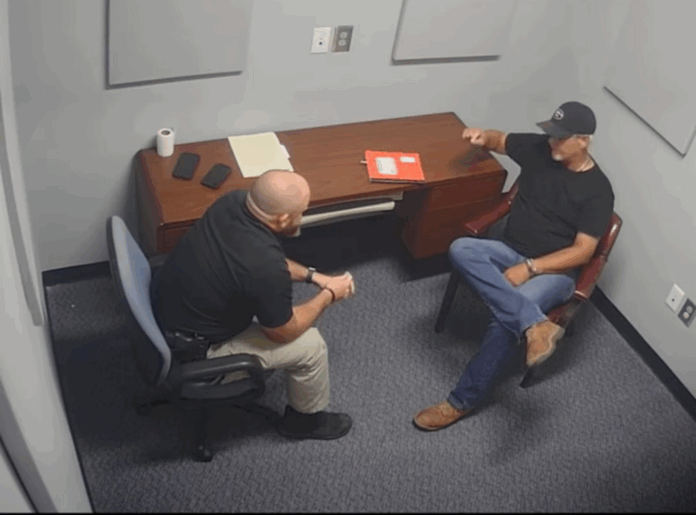
Barrow County Persons Crimes Investigator Jason Smith (left) interviews Colin Gray (right) the day after the September 4th, 2024 shooting at Apalachee High School. (Barrow County Sheriff's Office)

Prosecutors in the trial of the Colin Gray, the father of the suspected Apalachee High School shooter, introduced a recorded interview Wednesday in court from shortly after the shooting.

Barrow County Investigator Jason Smith interviewed both Colin Gray and his son Colt after the 2024 shooting.

Prosecutors played his two-and-a-half-hourlong interview with Colin in front of the jury.

They say in that interview, he contradicted what he told the GBI on the morning of the shooting several times, on safe gun storage, how much he knew about his son’s mental health, and about how much he knew about Colt’s collage of Nicholas Cruz, the convicted killer in a school shooting in Parkland, Fla.

“This was in his room?” Gray asked, after being shown photos of Cruz and news clippings from the 2018 shooting.

After Smith answered that it had, he responded, “I’m telling you right now I never saw any of that. There was one picture, that one right there.”

Smith informed Colin Gray that two students and two faculty had been shot and killed by the shooter. Gray appeared remorseful, breaking into tears after hearing about the victims.

But Judge Nicholas Primm told the jury to disregard key moments where Investigator Smith tells Colin what Colt told him separately, because as far as evidence goes, it could be seen as hearsay.

Wednesday marked the eighth day of the trial, and prosecutors haven’t signaled that they’re done calling witnesses to testify. It’s unclear how long Gray’s attorneys will take to make their case to the jury, but the trial was forecast to run around three weeks.

Colin Gray has been charged with second-degree murder and involuntary manslaughter, among other lesser charges, for allegedly providing his son Colt with the rifle used in the Apalachee shooting. Prosecutors have built their case by claiming Gray was negligent, and missed signs that his son was a danger to others.

2 attorneys launch campaigns challenging GOP-appointed justices on Georgia’s highest court

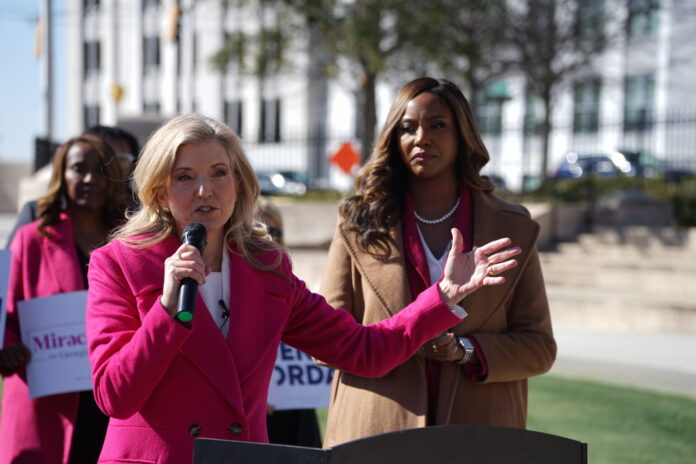
Former Democratic state Sen. Jen Jordan and Miracle Rankin, a trial lawyer and former president of Georgia Association of Black Women Attorneys, announce their candidacy for Georgia Supreme Court in a joint press conference on Feb. 24, 2026, at Liberty Plaza in Atlanta. (Alander Rocha/Georgia Recorder)

(Georgia Recorder) – Two prominent attorneys have launched campaigns for the Georgia Supreme Court, challenging two sitting justices who were originally appointed by former Republican Gov. Nathan Deal.

Former Democratic state Sen. Jen Jordan and Miracle Rankin, a personal injury attorney and former president of the Georgia Association of Black Women Attorneys, stood together Tuesday at Liberty Plaza outside the state Capitol. The two left-leaning candidates pledged to protect basic rights that they argued are under attack.

Jordan is challenging Presiding Justice Sarah Hawkins Warren, and Rankin will take on Justice Charlie Bethel. Warren and Bethel were both appointed to the court in 2018 and then reelected to a six-year term in 2020. Bethel served as a GOP state senator from north Georgia before joining the bench.

“I’m not just going to sit down and do nothing because someone has to stand up for Georgia’s civil liberties that are being stripped away,” Rankin said.

The candidates were introduced Tuesday by reproductive and voting rights advocates, but they framed the election as a referendum on all basic rights granted by the state constitution.

“If that’s what’s at stake and that court is supposed to be the last line of defense, then, my goodness, you better make sure that the people on that court have your back right,” said Jordan, who stepped down from her Senate seat to run for attorney general in 2022. “That’s why we’re running.”

In recent years, the state’s highest court has been asked to weigh in on Georgia’s six-week abortion banand the powers of the State Election Board, which had attempted to pass controversial new voting rules shortly before the 2024 election.

Unlike the partisan races on the ballot this year, where nominees are chosen in May to compete in the fall, these statewide Supreme Court races are nonpartisan and will be settled through the May 19 election. That gives Jordan and Rankin just three months to mount their challenge.

They are also up against the power of incumbency on a nine-member bench where nearly all the justices originally landed there through an appointment by a governor.

In an interview Tuesday, the candidates acknowledged the challenge that awaits them and said they plan to focus on making sure voters know this is an elected position and that they have a choice.

“We do understand that we’re doing something that people don’t frequently do, but we’re living in a time where we have to have leaders who are willing to step up and do things that are uncommon to get uncommon results for our state,” Rankin said.

Jordan said the unusual timing of the election also favors the incumbents, which she argued is by design.

“We’re going to have to do a lot of voter education to tell folks about what is the role of Supreme Court, why is it important to you and why you need to vote,” Jordan said.

Bethel last won reelection in 2020 with 52% of the vote, defending the seat against a former Republican lawmaker. In the same election, Warren won in a landslide against a lesser-known candidate.

In an interview, Bethel said Wednesday that he looks forward to a campaign that is “focused on ensuring Georgians have a judiciary governed by the rule of law.”

He argued it is the court’s job to merely apply existing law to the case before the justices, although he did say he and other members of the court will sometimes flag for lawmakers when the law is unclear.

For example, Bethel wrote in a dissenting opinion in 2021 that Georgia’s strict rules for proving someone facing the death penalty has an intellectual disability “significantly increases” the risk that Georgia could execute someone with disabilities. A lawmaker used Bethel’s words to successfully convince his colleagues last year to change Georgia law.

“When we talk about being governed by the rule of law, that implies that branches all follow their own assigned tasks and it’s not for the judicial branch to correct or fill in. It is to apply the law that exists,” Bethel said.

Warren said in a statement that she looks forward to “earning the votes of hardworking Georgians in this May’s election.”

“Georgians deserve independent, nonpartisan Supreme Court Justices who honor their oaths to uphold the Georgia Constitution of and the United States Constitution. That’s what I have done during my more than seven years of service on the Supreme Court, and that’s what I will continue to do in this role,” Warren said.

Deputies seize 10 pounds of suspected meth during Lavonia traffic stop

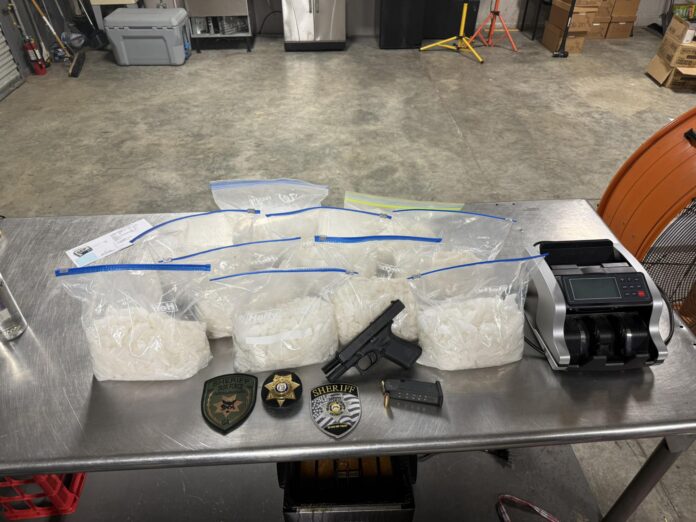
A traffic stop in Lavonia led to the seizure of over ten pounds of meth Tuesday. (Franklin County Sheriff's Office)

FRANKLIN COUNTY, Ga. — A routine traffic stop Tuesday night led to the seizure of approximately 10 pounds of suspected methamphetamine and the arrest of two men, according to the Franklin County Sheriff’s Office.

A deputy initiated the stop around 8:27 p.m. Feb. 24 after observing a vehicle following too closely and failing to maintain its lane, the sheriff’s office said.

During the stop, deputies reported smelling a strong odor of an alcoholic beverage coming from inside the vehicle. Further investigation led to the discovery of approximately 10 pounds of suspected methamphetamine, along with a digital currency counter and a firearm.

The driver, Grayson Brewer of Lakeview Court in Lavonia, was arrested. A passenger, Charles Stowers of Boilermaker Road in Greenville, South Carolina, was also taken into custody.

Authorities said the charges include DUI, following too closely, failure to maintain lane, possession of an open container of alcohol, possession of a firearm during the commission of a crime, possession of a firearm by a convicted felon and trafficking methamphetamine. Officials said additional charges may be pending.

The case remains under investigation.

Piedmont program helps with nursing shortage

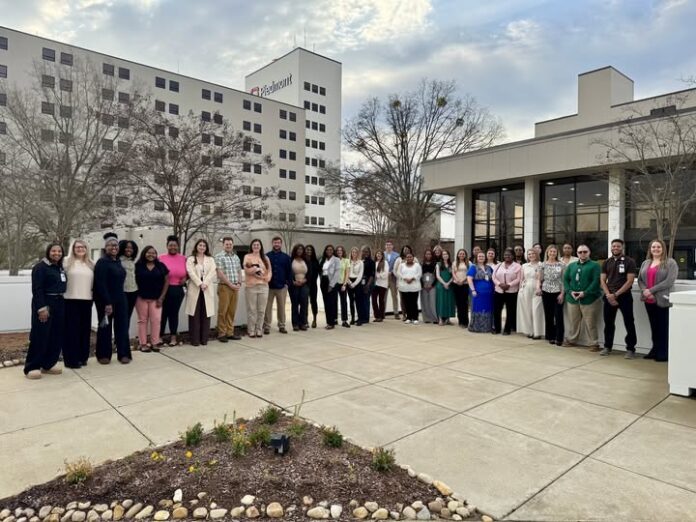
(Photo/Piedmont Columbus Regional)

A shortage of Registered Nurses (RNs) is expected to intensify as Baby Boomers age, and the need for health care grows. Compounding the problem is that nursing schools across the country are struggling to expand capacity to meet the rising demand for care, according to the American Association of Colleges of Nursing (AACN).

Piedmont Columbus Regional is helping to address the shortfall. A 12-month enhanced nurse residency program recently celebrated the graduation of 38 nurses, which marked the completion of their first year of nursing. 

The 12-month Transition to Practice Nurse Residency Program helps the new graduate transition from advanced beginner to competent clinical professional in the Piedmont system. New nursing school graduates are welcomed three times a year into the organization.

Projections indicate a shortage of approximately 264,000 to 350,540 registered nurses (RNs), representing an 8%–10% gap in demand across the country. While demand for RNs surges, particularly due to aging workforce retirements, a paradox exists with a projected 15% surplus of nurse practitioners.

New nursing school graduates are welcomed three times a year into the organization. For more information on Piedmont’s nursing program or to apply, visit: https://www.piedmont.org/…/resi…/nurse-residency-program.