Home Blog Page 23

War powers debate intensifies after Trump orders attack on Iran without approval by Congress

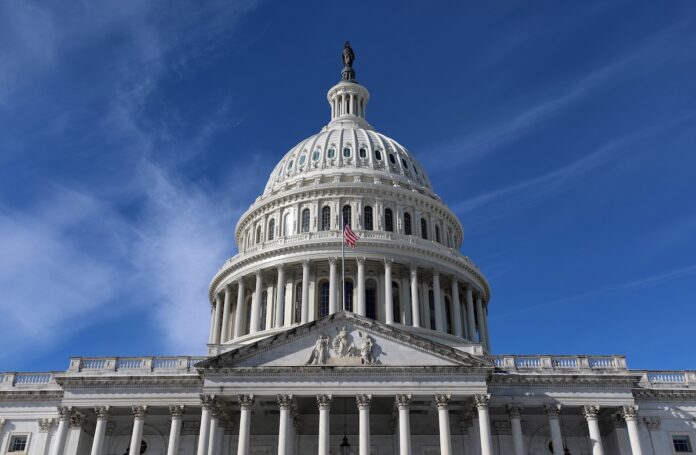
The U.S. Capitol is photographed Friday, Jan. 30, 2026, in Washington. (AP Photo/Rahmat Gul)

WASHINGTON (AP) — Key members of Congress are demanding a swift vote on a war powers resolution that would restrain President Donald Trump’s military attack on Iran unless the administration wins their approval for what they warn is a potentially illegal campaign that risks pulling the United States into a deeper Middle East conflict.

Both the House and Senate, where the president’s Republican Party has a slim majority, had already drafted such resolutions long before the strikes Saturday. Now they are ready to plunge into a rare war powers debate next week that will serve as a referendum on Trump’s decision to go it alone on military action without formal authorization from Congress.

“Has President Trump learned nothing from decades of U.S. meddling in Iran and forever wars in the Middle East?” said Sen. Tim Kaine, D-Va., a leader in the bipartisan effort. He said the strikes on Iran were “a colossal mistake.”

In the House, Reps. Ro Khanna, D-Calif., and Thomas Massie, R-Ky., are demanding Congress go on record with a public vote on their own bipartisan measure. “Congress must convene on Monday to vote,” Khanna said, “to stop this.”

Massie blasted Trump’s own presidential campaign slogan and said: “This is not ‘America First.’”

But most Republicans, particularly their leaders, welcomed Trump’s move against Iran. Many cited the longtime U.S. adversary’s nuclear programs and missile capabilities as requiring a military response.

“Well done, Mr. President,” said Sen. Lindsey Graham, R-S.C. “As I watch and monitor this historic operation, I’m in awe of President Trump’s determination to be a man of peace but at the end of the day, evil’s worst nightmare.”

War powers debate tests Congress

The administration’s decision to launch, with Israel, what appears to be an open-ended joint military operation aimed at changing the government in Tehran is testing the Constitution’s separation of powers in deep and dramatic ways. Nearly two months earlier, Trump ordered U.S. strikes that toppled Venezuelan leader Nicolás Maduro.

While presidents have the authority as the commander in chief to conduct certain strategic military operations on their own, the Constitution vests Congress with the power to wage war. Before the Iraq War began in March 2003, Republican President George W. Bush made a monthslong push to secure congressional authorization. No such vote was attempted on Iran, and an earlier Senate effort to halt Trump’s actions after last summer’s strike on Iran failed.

The congressional debate over war powers would mostly be symbolic. Even if a resolution were to pass the narrowly split Congress, Trump likely would veto it and Congress would not have the two-thirds majority needed to overturn that rejection. Congress has often failed to block other U.S. military actions, including in a Senate vote on Venezuela, but the roll calls stand as a public record.

Republican leaders back Trump’s action

The response by House Speaker Mike Johnson reflected the party’s long-standing views. Iran, he said, is facing “the severe consequences of its evil actions.”

Johnson, R-La., said the leaders of the House and Senate and the respective intelligence committees had been briefed in detail earlier in the week that military action “may become necessary” to protect U.S. troops and citizens in Iran. He said he received updates from Secretary of State Marco Rubio and will stay in “close contact” with Trump and the Defense Department “as this operation proceeds.”

Senate Majority Leader John Thune, R-S.D., commended Trump “for taking action to thwart these threats.”

Thune said he looked forward to administration officials briefing all senators — a signal that lawmakers are seeking more answers to their questions about Trump’s plans ahead.

Democrats warn strikes are illegal

Many Democrats are calling the operation illegal, saying the Constitution gives Congress alone the power to declare war. To them, the administration has failed to lay out its rationale or plan for the military strikes, and the aftermath.

Sen. Chris Van Hollen, who serves on the Senate Foreign Relations Committee, said the president has undertaken “illegal, regime-change war against Iran.”

“This is not making us safer & only damages the US & our interests,” Van Hollen, D-Md., said in a social media post. “The Senate must immediately vote on the War Powers Resolution to stop it.”

House Democratic leader Hakeem Jeffries of New York said while Iran is a “bad actor and must be aggressively confronted” for its human rights abuses and the threat it poses to the U.S. and allies, the administration “must seek authorization for the preemptive use of military force that constitutes an act of war.”

New York Sen. Chuck Schumer, the Democratic leader, demanded that Congress be briefed immediately on the administration’s plans.

“Iran must never be allowed to attain a nuclear weapon but the American people do not want another endless and costly war in the Middle East when there are so many problems at home,” he said.

World leaders react cautiously to US and Israeli strikes on Iran as fears grow of a wider war

President Donald Trump in a video posted by the White House on social media announces a U.S. strike on Iran, on Saturday, Feb. 28, 2026. (Screenshot of White House video)

BRUSSELS (AP) — How long will it last? Will it grow? What will it mean to us — and to global security overall? Those questions echoed across the Middle East and the planet Saturday as world leaders reacted warily to U.S. and Israeli strikes on Iran that sowed concerns of a broader conflict. The U.N. Security Council scheduled an emergency meeting.

Perhaps cautious about upsetting already strained relations with U.S. President Donald Trump, many nations abstained from commenting directly or pointedly on the joint strikes but condemned Tehran’s retaliation. Similarly to Europeans, governments across the Middle East condemned Iran’s strikes on Arab neighbors while staying silent on the U.S. military action.

Other countries were more explicit: Australia and Canada expressed open support for the U.S. strikes, while Russia and China responded with direct criticism.

The U.S. and Israel launched a major attack on Iran on Saturday, and U.S. President Donald Trump called on the Iranian public to “seize control of your destiny” by rising up against the Islamic theocracy that has ruled the nation since 1979. Iran retaliated by firing missiles and drones toward Israel and U.S. military bases in the Middle East.

Some leaders urge resumption of talks

In a statement, British Prime Minister Keir Starmer, French President Emmanuel Macron and German Chancellor Friedrich Merz called on the U.S. and Iran to resume talks and said they favored a negotiated settlement. They said their countries didn’t take part in the strikes on Iran but are in close contact with the U.S., Israel and partners in the region.

The three countries have led efforts to reach a negotiated solution over Iran’s nuclear program.

“We condemn Iranian attacks on countries in the region in the strongest terms. Iran must refrain from indiscriminate military strikes. We call for a resumption of negotiations and urge the Iranian leadership to seek a negotiated solution. Ultimately, the Iranian people must be allowed to determine their future,” they said.

Later, at an emergency security meeting, Macron said France was “neither warned nor involved” in the strikes. He called for intensified efforts for a negotiated solution, saying “no one can think that the questions of Iran’s nuclear program, ballistic activity, regional destabilization will be settled by strikes alone.”

The 22-nation Arab League called the Iranian attacks “a blatant violation of the sovereignty of countries that advocate for peace and strive for stability.” That coalition of nations has historically condemned both Israel and Iran for actions it says risk destabilizing the region.

Countries that maintain diplomatic ties with Israel — including Morocco, Jordan and the United Arab Emirates — denounced Iranian strikes targeting U.S. military bases in the region including in Kuwait, Bahrain, Qatar and the Emirates.

Saudi Arabia said it “condemns and denounces in the strongest terms the treacherous Iranian aggression and the blatant violation of sovereignty.” Oman, which has been mediating the talks between Iran and the U.S., said in a statement that the U.S. action “constitutes a violation of the rules of international law and the principle of settling disputes through peaceful means, rather than through hostility and the shedding of blood.”

Careful wording is (mostly) the order of the day

Countries in Europe and the Middle East used careful wording, avoiding perceptions that they either support unilateral American action or are directly condemning the United States.

Others were more blunt. Russia’s Foreign Ministry called the strikes “a pre-planned and unprovoked act of armed aggression against a sovereign and independent U.N. member state.” The ministry accused Washington and Tel Aviv of “hiding behind” concerns about Iran’s nuclear program while actually pursuing regime change.

Similarly, China’s government said it was “highly concerned” about the U.S. and Israeli strikes on Iran and called for an immediate halt to the military action and a return to negotiations. “Iran’s sovereignty, security and territorial integrity should be respected,” a Chinese Foreign Ministry statement said.

Meanwhile, Australian Prime Minister Anthony Albanese said his country supports the United States in its effort to stop Iran from obtaining an atomic bomb. He described Iran’s current leadership as a destabilizing force and noted two attacks on Australian soil that were blamed on Tehran. Last August, Australia cut off diplomatic relations with Iran and expelled its ambassador after accusing it of orchestrating two antisemitic attacks in the country.

Despite recent tensions with the U.S., Canada too expressed its support for the military action. “The Islamic Republic of Iran is the principal source of instability and terror throughout the Middle East,” Prime Minister Mark Carney said.

And the U.N. Security Council scheduled an emergency meeting on the U.S. and Israeli attacks on Iran, at the request of Bahrain and France.

Concerns expressed of ‘new, extensive’ war

Palestinians in the occupied West Bank said they were largely unfazed as war erupted Saturday, barely pausing as booms echoed across the sky from Israel’s Iron Dome intercepting missiles overhead.

Unlike Israel, Palestinian cities have no warning sirens or bomb shelters, despite the risk of falling debris or errant missiles. As people sheltered less than 10 miles away in Jerusalem, streets in Ramallah swarmed with shoppers browsing meat counters, vegetable stalls and Ramadan sweets, some stopping to record the sounds of distant sirens and missile interceptions.

But as Israel closed checkpoints to the movement of people and goods on Saturday, gas stations saw longer-than-usual lines as residents filled spare canisters in case of supply disruptions.

Nervousness is perceptible across multiple countries as people fear a full-scale war engulfing the region. Norwegian Foreign Minister Espen Barth Eide told Norwegian broadcaster NRK that he was concerned the failure of negotiations between the U.S. and Iran meant a “new, extensive war in the Middle East.”

The Nobel Peace Prize-winning International Campaign to Abolish Nuclear Weapons condemned the U.S. and Israeli strikes on Iran in harsher words. “These attacks are totally irresponsible and risk provoking further escalation as well as increasing the danger of nuclear proliferation and the use of nuclear weapons,” said its executive director, Melissa Parke.

EU leaders issued a joint statement Saturday calling for restraint and engaging in regional diplomacy in hopes of “ensuring nuclear safety.”

“We call on all parties to exercise maximum restraint, to protect civilians, and to fully respect international law,” the statement from European Commission President Ursula von der Leyen and European Council President António Costa said.

The Arab League, too, appealed to all international parties “to work towards de-escalation as soon as possible, to spare the region the scourge of instability and violence, and to return to dialogue.”

By Claudia Ciobanu, Sam Mcneil and Samuel Metz

US and Israel attack Iran as Trump says US begins ‘major combat operations’

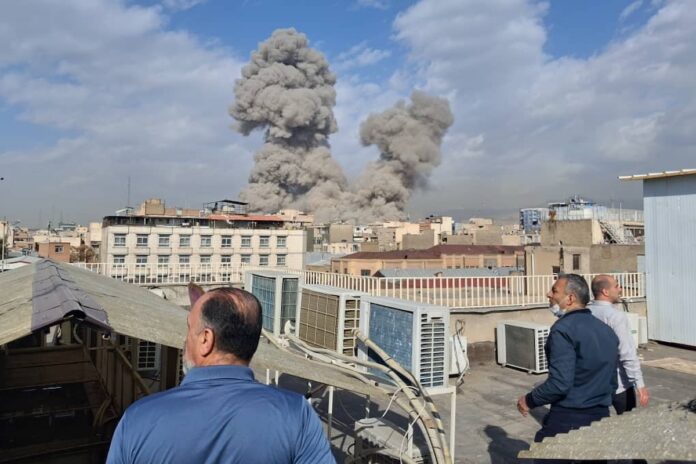
People watch as smoke rises on the skyline after an explosion in Tehran, Iran, Saturday, Feb. 28, 2026.(AP Photo)

DUBAI, United Arab Emirates (AP) — The U.S. and Israel launched a major attack on Iran on Saturday, and President Donald Trump called on the Iranian public to “seize control of your destiny” by rising up against the Islamic leadership that has ruled the nation since 1979.

Some of the first strikes appeared to hit areas around the offices of Supreme Leader Ayatollah Ali Khamenei, and Iranian media reported strikes nationwide. Smoke could be seen rising from the capital. It wasn’t immediately clear whether the 86-year-old leader was in his offices at the time of the strike.

“When we are finished, take over your government. It will be yours to take. This will be probably your only chance for generations,” Trump said in a video announcing “major combat operations” were underway. “For many years, you have asked for America’s help, but you never got it.”

Israeli Prime Minister Benjamin Netanyahu echoed that sweeping goal. “Our joint operation will create the conditions for the brave Iranian people to take their fate into their own hands,” Netanyahu said.

The strikes opened a stunning new chapter in U.S. intervention in Iran and marked the second time in eight months that the Trump administration has used military force against the Islamic Republic. They also came just weeks after Trump ordered a military operation to capture Venezuela’s president, Nicolás Maduro, and bring him and his wife to New York to face federal drug conspiracy charges.

The targets included members of Iran’s leadership, according to a U.S. official and another person briefed on the attacks who both spoke on condition of anonymity because they were discussing classified information on an ongoing operation. There was no immediate information on whether top officials had been killed.

Tensions have soared in recent weeks as American warships moved into the region. Trump said he wanted a deal to constrain Iran’s nuclear program at a moment when the country is struggling at home with growing dissent following nationwide protests.

The immediate trigger for Saturday’s strikes appears to be the unsuccessful latest round of nuclear talks. But they also reflect the dramatic changes across the region that have left Iran’s leadership in its weakest position since the Islamic Revolution nearly half a century ago.

Israeli and American strikes last June greatly weakened Iran’s air defenses, military leadership and nuclear program. A regionwide war, sparked by Hamas’ Oct. 7, 2023, attack on Israel, has left Iran’s network of proxies across the Middle East greatly weakened. U.S. sanctions and global isolation, meanwhile, have decimated Iran’s economy.

Iran responded to the latest strikes as it had been threatening to do for months — first launching a wave of missiles and drones targeting Israel. It followed with strikes targeting U.S. military installations in Bahrain, Kuwait and Qatar. The United Arab Emirates and Iraq shut down their airspace.

Iran’s Foreign Ministry issued a defiant statement, saying the country “will not hesitate” in its response. In a statement posted on X, the ministry said: “The time has come to defend the homeland and confront the enemy’s military assault.”

At least 57 people were reported killed at a girls’ school in southern Iran in the Israeli-U.S. strikes, according to Iran’s state-run IRNA news agency. At least 45 others were wounded in the attack in Minab in Iran’s Hormozgan province. The White House and the Israeli military did not immediately respond to a request for comment on reported strike on the school.

In an indication of the scope of the conflict, flights across the Middle East were disrupted and air defense fire thudded over Dubai, the commercial capital of the United Arab Emirates, Saturday afternoon. Associated Press journalists saw the aftereffects of the blast from an interceptor.

Shrapnel from an Iranian missile attack on the capital of the UAE killed one person, state media said.

Attack was coordinated between Israel and US

The U.S. military has for weeks amassed forces in the region, even as U.S. and Iranian envoys held talks in Switzerland and Oman aimed at finding a diplomatic solution.

“Active and serious negotiations have yet again been undermined,” Oman’s Foreign Minister Badr al-Busaidi said in a post on X. Al-Busaidi, a key mediator in the nuclear talks, traveled to Washington on Friday to meet with Vice President JD Vance.

“Neither the interests of the United States nor the cause of global peace are well served by this,” al-Busaidi said. “And I pray for the innocents who will suffer. I urge the United States not to get sucked in further.”

Israel said the operation has been planned for months between the Israeli and U.S. militaries.

Trump, in justifying the military action, claimed that Iran has continued to develop its nuclear program and plans to develop missiles to reach the U.S.

He also acknowledged that there could be American casualties, saying “that often happens in war.”

It was a notable call on Americans to brace themselves from a U.S. leader who swept into office on an “America First” platform and vowed to keep out of “forever wars” that had bogged down his recent predecessors.

Trump’s statement indicated the U.S. was striking for reasons far beyond the nuclear program, listing grievances stretching back to the beginning of the Islamic Republic following a revolution in 1979 that turned Iran from one of America’s closest allies in the Middle East into a fierce foe.

The U.S. president said he was aiming to “annihilate” the Iranian navy and destroy regional proxies supported by Tehran.

He also called on the Iranian Revolutionary Guard to lay down its arms, pledging that members would be given immunity, while warning they would face “certain death” if they didn’t.

Trump had threatened military action — but held off — following Iran’s recent crackdown on protests spurred by economic grievances and evolved into a nationwide, anti-government push against the ruling clerics.

The Human Rights Activists News Agency says it confirmed more than 7,000 deaths in the crackdown and that it is investigating thousands more. The government has acknowledged more than 3,000 killed, though it has undercounted or not reported fatalities from past unrest.

Iran has said it hasn’t enriched since June, but it has blocked international inspectors from visiting the sites America bombed during a 12-day war then. Satellite photos analyzed by The Associated Press have shown new activity at two of those sites, suggesting Iran is trying to assess and potentially recover material there.

Iran currently has a self-imposed limit on its ballistic missile program, limiting their range to 2,000 kilometers (1,240 miles). That puts all the Mideast and some of Eastern Europe in their range.

Iran had hoped to avert a war, but maintains it has the right to enrich uranium and does not want to discuss other issues, like its long-range missile program or support for armed groups like Hamas and Hezbollah.

The strikes could rattle global markets, particularly if Iran is able to make the Strait of Hormuz unsafe for commercial traffic. More than 14 million barrels per day of oil passed through the strait in 2025, about a third of total worldwide oil exports transported by sea.

Strikes hit targets across Iran

Iranian media reported strikes nationwide. Roads to Khamenei’s compound in downtown Tehran had been shut down by authorities as other blasts rang out across the capital.

Khamenei has not made a public appearance in recent days and wasn’t immediately seen after. During the 12-day war in June, he was believed to have been taken to a secure location away from his Tehran compound.

Targets in the Israeli campaign included Iran’s military, symbols of government and intelligence targets, according to an official briefed on the operation, who spoke on condition of anonymity to discuss nonpublic information on the attack.

Iran retaliates

Hours after the strikes, Iran’s paramilitary Revolutionary Guard said it launched a “first wave” of drones and missiles targeting Israel, where a nationwide warning was issued as the military said it was working to intercept incoming Iranian missiles. There was no immediate word on any damage or casualties from the ongoing attack.

Meanwhile, Bahrain said that a missile attack targeted the U.S. Navy’s 5th Fleet headquarters in the island kingdom. Witnesses heard sirens and explosions in Kuwait, home to U.S. Army Central. Explosions could be also be heard in Qatar.

The Iranian-backed Houthis in Yemen vowed to resume attacks on Red Sea shipping routes and on Israel, according to two senior Houthi officials. They spoke on condition of anonymity because there was no official announcement from the Houthi leadership.

U.S. embassies or consulates in Qatar, United Arab Emirates and Israel posted on social media that they told staffers to shelter in place and recommended all Americans “do the same until further notice.”

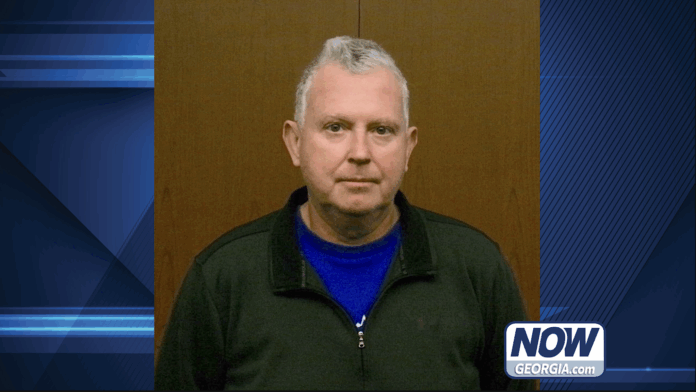
Hall County sheriff arrested for DUI after being pulled over by deputy

Hall County Sheriff Gerald Couch seen in mug shot following his arrest for DUI on Friday, Feb. 27, 2026. (Hall County Sheriff's Office)

HALL COUNTY, Ga. — Hall County Sheriff Gerald Jay Couch was arrested Friday and charged with driving under the influence following a traffic stop in Hall County, according to authorities and jail records.

The 63-year-old sheriff faces charges of DUI – alcohol/less safe, open container, and failure to maintain lane.

In a press release issued Friday evening, the Hall County Sheriff’s Office said the incident began at approximately 10:30 a.m. on Feb. 27 when a deputy operating an unmarked vehicle observed a black Chevrolet Tahoe traveling on Green Hill Road and failing to maintain its lane.

The deputy followed the vehicle as it turned into a private driveway. Upon making contact with the driver, the deputy detected a strong odor of an alcoholic beverage and observed clear signs of impairment,” said sheriff’s office spokesperson Derreck Booth.

According to the deputy, Sheriff Couch’s speech was slurred, and he was “unsteady on his feet.”

Because the driver was Sheriff Couch, the deputy requested the Georgia State Patrol to handle the DUI investigation. After completing its investigation, the Georgia State Patrol arrested Couch and transported him to the Hall County Jail. He posted a $1,560 bond and was released from jail at approximately 6 p.m. Friday.

Booth said Couch was driving his county-issued vehicle at the time of the incident. The sheriff’s office took possession of the vehicle and notified state officials of the arrest.


Lady Wildcats lead wire-to-wire in Sweet 16 win over Model

#2 Rabun County (24-5) never trailed in a 56-43 Sweet 16 win on Friday at home against Model (18-10). Three scored in double figures for the Lady Wildcats, who led by as many 20 points.

Addy Beth Owens had a couple of early 3-pointers, while Model was able to string together answers for the first several minutes, though Rabun County never fell behind.

After a 15-10 Rabun lead after the first, the Lady Cats began to pull away in the second. A big run had the home team up by 10, and Conley Spivey had 10 first-half points to help pad and keep the lead.

Adelyn Thompson buried a shot from beyond the arc, and Spivey’s bucket advanced the lead to 31-16 and forced a timeout by the reeling Lady Blue Devils. It was a 33-18 score at the half, as Owens beat the buzzer with a nifty move at the rim.

The Lady Wildcats continued to pull ahead by as many as 20 in the third, and played conservatively in the fourth with some great clock management.

Owens led with 14 points, while Spivey added 12 and Thompson 10. Millie Southards added eight, Jaydynn Cohee six, and two apiece for Hannah Beers, Cheyenne Queen, and Madison Houck.

Rabun County advances to the Elite 8 for a third straight year.

Father of accused Georgia school shooter testifies about hoping to bond over guns and hunting

ATLANTA (AP) — The father of an accused Georgia school shooter testified in his own defense Friday that he gave his son the rifle used in the attack as a Christmas present in hopes of bonding with the boy over hunting and outings at the gun range.

In one of the latest cases in which parents are being put on trial after their children are accused in fatal shootings, defense lawyers called Colin Gray to the witness stand. Prosecutors say he should be held accountable for giving his son the weapon despite alleged threats and warning signs that the boy, who was 14 years old at the time, was mentally unstable.

After the family had opened presents, Gray testified that he walked down the hallway and said to his son, “I have one more thing for you.” He presented the gun, hoping it would encourage him to succeed in school.

“This is a weapon that I want you to shoot when we go to the range,” Gray said he told him, “and if you keep doing really good in school, going to school and doing all the things you should, you graduate and you’re 18, this will be your gun.”

His son Colt Gray now faces 55 counts, including murder in the deaths of four people and 25 counts of aggravated assault. He’s accused of carefully planning the Sept. 4, 2024, shooting at Apalachee High School in Winder, northeast of Atlanta, that killed two teachers and two students and wounded several others.

The father faces 29 counts, including two counts of second-degree murder and two counts of involuntary manslaughter.

The trial of Colin Gray, now ending its second week, has included testimony from the boy’s mother, Marcee Gray, who testified that she urged her husband to lock up the guns so that their son could not access them. But in the days before the school shooting, their son kept the gun in his bedroom, witnesses testified at the father’s trial.

The parents were separated for much of the time leading up to the shooting, and Marcee Gray was not charged with any crimes.

Colin Gray became emotional Friday after being asked by his lawyer whether there were any “red flags” that would have made him believe his son was capable of a school shooting.

“No, I struggle with it every day,” he said, trying to hold back tears.

“He’s a good kid,” Gray added. “He wasn’t perfect, and nor was I. But to do something that heinous, like I don’t know of anybody that can ever see that kind of evil. Like the Colt I knew and the relationship I had — there’s this whole other side of Colt I didn’t know existed.”

In a sometimes combative cross-examination, a prosecutor hammered Gray on details he left out of conversations with social workers and others who were checking up on his children. Multiple times, Gray responded that he was struggled while “learning on the fly being a single parent working full time just trying to get my feet under me.”

Even today, he said, he doesn’t remember everything in the years leading up to the shooting.

“I’m trying to still process what exactly happened with my son, and me being locked up for it, so if I did not remember every single detail that you are asking me at that point, that is my bad,” he testified.

After being asked about his efforts to get his son into therapy, Gray said “that’s not the only thing I had to worry about while I had those kids.”

Gray took the stand a day after prosecutors showed surveillance video of the morning of the shooting. The video shows his son getting on a school bus with a backpack that prosecutors contend carried the rifle. The weapon protruded from the backpack, and posterboard was used to conceal it, prosecutors have said.

In the video, he is seen entering the school with the backpack. He walks down several hallways past dozens of students and some employees who don’t take notice of the large size of the pack. He then begins classes, and later that morning spends several minutes in a bathroom moments before the shooting.

Video of the gunfire was played for jurors, but not shown to the general public watching the livestream of the trial.

In dramatic testimony last week, several Georgia high school students testified in court about being shot during their algebra class. They recounted through tears seeing a classmate in a pool of blood, then seeing blood on their own bodies and fearing they might die.

There has also been testimony about what prosecutors describe as a “shrine” to a Florida school shooter that Colt Gray kept on a wall next to his computer at home.

He had an interest in Nikolas Cruz, convicted of the 2018 shooting that left 14 students and three staff members dead at Marjory Stoneman Douglas High School in Parkland, Florida, Marcee Gray testified this week.

Area schools collaborate for military support

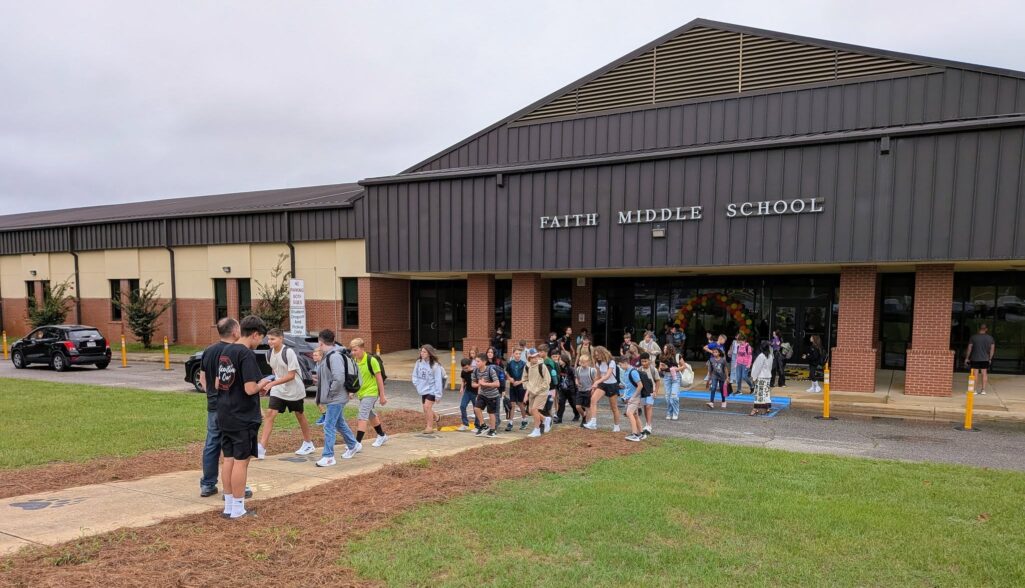
Nearly 6,000 military‑connected students attend the eight school districts in and around Fort Benning. Superintendents and representatives serving those students, from districts in Alabama and Georgia, recently took part in the annual Superintendents’ Roundtable, hosted by the Fort Benning Directorate of Family and Morale, Welfare, and Recreation School Liaison Office.

“A strong community support system helps military families navigate the challenges that come with frequent relocations,” said Kevin Clarke, Fort Benning Deputy to the Garrison Commander. 

In the spirit of collaboration, garrison and district representatives shared updates using the “rose, bud, and thorn” framework—highlighting strengths, emerging efforts, and areas needing improvement in their support for military‑impacted students.

Sarah West, Fort Benning School Liaison Officer (SLO) explained, “The roundtable provides our Garrison leadership with an overarching view of district policies and best practices, while allowing our superintendents to collaborate and strengthen partnerships.”

Some districts also emphasized the success of their Partners in Education (PIE) partnerships. The PIE program connects local schools with soldiers across the installation. Soldiers visit schools for Career Days and Veterans Day events, teach resiliency skills, serve as lunch “Battle Buddies,” and attend academic and special events.

Faith Middle School is a DoDEA school serving Fort Benning students. (Photo/US Army Garrison Fort Benning)

An example of the Alabama Department of Education’s innovation is its honoring of schools that demonstrate a strong commitment to supporting military families as they transition to new homes, schools, and communities with the Purple Star Schools designation. To earn the designation, schools must have a dedicated staff liaison for military families, provide professional development on the needs of military students, maintain online military resources, and offer a student-led transition program with faculty support.

Similarly, the Georgia Department of Education established the Military Flagship School Award in 2019 to recognize schools that provide exceptional support to military students and families. Each year, a panel of judges with experience educating military-connected students reviews submissions detailing specific support initiatives. Examples include collaboration with Fort Benning’s SLO, Student 2 Student (S2S) peer transition programs, counseling services, Junior Leadership Corps (JLC) programs, military mentorships, military student clubs, and full-time family coordinators who help families navigate school transitions.

Military-connected students represent about 10 percent of the combined student population in the Chattahoochee Valley, and the impact of frequent moves and the emotional demands of military life can significantly shape their educational experience

“Supporting military families not only aids in their stability,” Clarke added.  “But also has a direct impact on the morale of service members and the overall effectiveness of their missions.”

LaGrange man wanted for pointing rifle at teen

Troup County man arrested for trafficking marijuana (NowGeorgia.com)

On February 26, 2026, at approximately 1830 hours, officers from the Lagrange Police Department responded to 124 McGee Street regarding a subject with a gun. Upon arrival Officers made contact with the complainant April Parks.

Parks stated that earlier in the day she was involved in a verbal dispute with her live-in boyfriend Karmez Jackson. She stated that her 16-year-old son attempted to intervene, when Jackson became aggressive towards her son. Parks stated Jackson went into his room and returned with a loaded rifle and pointed it at her son making threats to kill him. Parks stated she grabbed her son and they ran out of the house and called police.

Jackson took flight prior to officers’ arrival. A warrant has been obtained for the arrest of Karmez Jackson on the charge of Aggravated Assault.

Anyone with information pertaining to this investigation is encouraged to contact Detective M. Ligon 706-883-2621.

Individuals who wish to remain anonymous can submit tips through the Tip411 system. This can be done via the mobile application, through the online portal, or by texting the keyword LAGRANGE to 847411. These channels are designed to ensure the public can share critical information confidentially and securely.

Georgia’s child welfare system remains shaken after projected $85.7 million budget shortfall

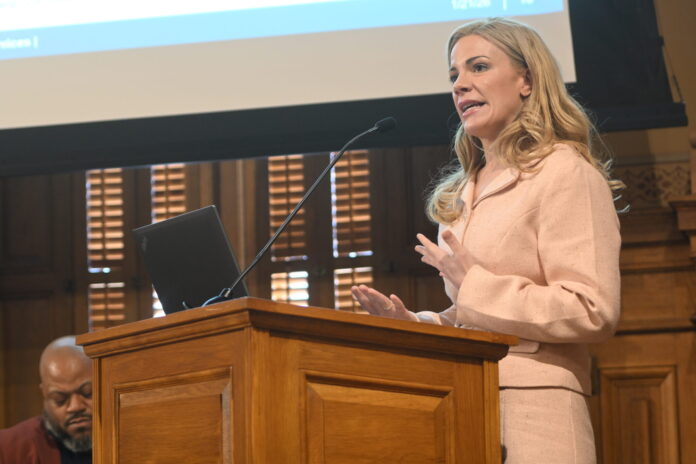
DFCS Director and DHS Commissioner Candice Broce speaks before a joint budget committee. (Ross Williams/Georgia Recorder)

ATLANTA (AP) — Georgia’s child welfare system spiraled into crisis as the Georgia Division of Family and Children Services faced a whopping $85.7 million projected shortfall.

With Candice Broce, commissioner of the Department of Human Services and director of the child welfare agency it oversees, taking a number of cost-saving measures in November, it’s meant fewer visits between children and parents needed for family reunification, less time for aides to spend helping foster parents care for children with complex needs and juvenile court dates needing to be postponed when children have no transportation to get there.

“I’m just stuck. I’m stressed out. Emotionally, I’m exhausted,” said Pamela Bruce, who said her foster son “can’t grow in survival mode” and is also terrified she’ll surrender him back to the state as services dwindle.

Georgia lawmakers voted to backfill the budget gap, but families have already lost months of services and delays may last. Some lawmakers see the influx of cash as a Band-Aid and want an audit to determine why the system blew up.

Although experts say the projected deficit was an outlier in size, Georgia’s child welfare agency is not the only one struggling. One of the issues stressing Georgia’s system — an unpredictable influx of children with acute behavioral challenges — is a problem nationwide. Broce has been applauded for reducing the number of complex needs kids living in hotels, a troublesome practice many states use as a remedy. Finding places and people to care for children with such high needs is expensive.

To try to manage the deficit, which observers say could have resulted from a plethora of causes, Broce, a longtime ally of Republican Gov. Brian Kemp, has terminated contracts with service providers she said weren’t performing well and in November required contracted services to first get state approval. Providers, families, lawyers, lawmakers, placement agencies and others across the state say few service referrals are being made and describe a system that slowed drastically.

“Every day that a family or kid is not receiving the kinds of support that they need, the situation only compounds,” said Ann Flagg, director of the Office of Family Assistance for the National Association of Counties, an advocacy group, and former member of the Biden administration.

Broce said in a statement to The Associated Press that requests for services “are approved within hours unless we ask for more information.” Contracted services include providers that offer transportation, counseling, assessments, behavior aides and more.

The child welfare agency is a critical lifeline for children in crisis. It’s part of larger state Department of Human services, which is budgeted to spend $1.06 billion in state money this year. It’s tasked with finding ways to protect children, heal their families if possible and then find ways to reunify them. The state’s Division of Family and Children Services employs about 7,500 staff.

At a legislative hearing, she said the agency doesn’t have enough resources to deal with the “magnitude” of behavior and mental health services needed for the kids that enter their care. To tighten the budget, she said she tried to only limit services that are duplicative, unnecessary or could be paid for by the state-federal Medicaid health insurance program.

“I am being forced to make decisions that nobody wants to make,” Broce told lawmakers.

Even after those cost-cutting moves, the projected deficit remained at just below $49 million.

Services have slowed

“How in the world are we supposed to reunify the families if we don’t have services in place?” family attorney Jessica Hall said.

Broce said in her statement that it’s possible requests “are not being escalated to the State Office for review.”

Bruce’s foster son wrote to his case worker that he developed a “brotherly relationship” with his behavior aide, something the teenager never had before as he bounced around homes. That relationship ended after the behavior aide’s services were no longer funded this past fall.

Missing in-person school with his friends when he had no transportation put a “toll on my mind,” the son wrote. He also noticed the toll on Bruce — she struggles to pay bills now that she covers Ubers for him to see family and stays home to care for him. She’s set on keeping him out of a group home.

Broce said the agency tapers services such as behavior aides for potentially self-sufficient teenagers with judicial involvement. She also said she is trying to avoid “cookie cutter” case plans that aren’t tailored to individual family needs.

Brittney Kleuger, CEO of Family Menders, which offers services such as transportation, counseling and behavior aides in northwest Georgia, said at a recent hearing that her agency received 80 to 100 referrals each week before the November process change. Now, they receive fewer than 10 each week.

On a phone call with DFCS, providers questioned Broce’s claims that services are being approved quickly and asked whether DFCS will still contract with them. Kristen Toliver, the agency’s director of delivered services, said “the approval process will look different” going forward but was loosened for some services.

A web of causes

The division has lost more than 800 beds to place children since 2019, and there is a dearth of available spots at psychiatric facilities, Broce has said. Transportation and behavior aides are expensive, she said. Broce has said she’s also working to reduce how often the division pays for services Medicaid should cover.

Broce has had longstanding conflict with judges, who she says often ask for unnecessary services or removals that drive up costs. Judge Nhan-Ai Simms, who testified to lawmakers in 2023 that Broce asked judges to violate state law by keeping some children with mental and behavioral problems inappropriately locked in juvenile detention centers, disagrees.

“The idea that courts are ordering above and beyond what DFCS has recommended, I think those cases are very few and far between,” Simms said.

Changes to federal law made it harder for Georgia and other states to use federal child welfare funds.

“The budget instability that we see here to me is just signaling this insufficient long-term fiscal strategy,” said Melissa Carter, executive director of the Barton Child Law and Policy Center at Emory University, adding that the state should invest more in keeping families together to draw federal funds.

Several lawmakers aren’t satisfied with Broce’s explanations.

“I’ve been in the budget world a long time, and I’ve never seen a deficit like this,” said state Rep. Mary Margaret Oliver, a Democrat. “I don’t think we can blame the providers for that. I think that’s a management issue.”

Juanita Stedman, former juvenile court judge and executive director of Together Georgia, disputes the idea that the shortfall is Broce’s fault.

“Historically, we have not paid for the complexity of the kids,” she said.

Whatever the causes are, Bruce worries the deficit could explode again. She said she’s never felt so unsupported by DFCS in her two and a half years fostering kids, but what really broke her heart was seeing her foster son miss seeing his family more often.

“My visits are very important to me because I really love my family,” he wrote.

Free’s 29 points and jaw-dropping dunks send Wildcats into Elite 8

#1 Rabun County (27-2) has a gear only the elite teams can get to. After allowing Heard County (17-10) just a little over a quarter to stay in the game, the Wildcats dazzled the crowd with 16 3-pointers and four dunks in a blowout 84-52 win. The Wildcats stormed back into the Elite 8.

The Braves were able to hang tight for several minutes, but Hayes Free, Trace Adcock, and Reed Burrell all had early shots from downtown. Free had the first of his four dunks, and had nine points in the opening frame. Rabun led 17-14 going into the second.

One of the most electric plays you’ll ever see came just before the half. With 1.4 seconds on the clock and the Wildcats inbounding the ball on the side, Huey Blalock threw a perfect dot to a soaring Hayes Free for an alley oop to beat the buzzer. The Cats officially doubled up on the Braves, 32-16.

Free’s clinic continued in the third, as he opened the quarter with a pair of 3-pointers. He then added his third slam of the night on a beautiful pass from Blalock. Rabun was in complete control by then with a 62-35 lead.

Free jammed one more time in the fourth, and the starters came out with under three minutes remaining.

Free finished with 29 points, including 15 in the first half. Adcock dripped in 18 points, all coming off his six 3-pointers. Blalock registered 13 and Burrell 11. Landan Bedingfield had six, Graham Anderson three, and two apiece for Cord Burrell and Colton Crane.

Laken Riley’s father accuses Georgia university system of negligence in wrongful death lawsuit

Jason Riley, father of murdered Augusta University student Laken Riley, spoke to Georgia state senators on March 20, 2024, about his daughter’s killing as she went for a run at the University of Georgia. (Ross Williams/Georgia Recorder)

ATLANTA (AP) — The father of Laken Riley, who was killed on the campus of the University of Georgia by a Venezuelan man who lived nearby, is accusing the state university system of negligence that he says led to his daughter’s death.

Jason Riley filed a wrongful-death lawsuit against the Board of Regents of the University System of Georgia, as well as several property management companies. His daughter, a 22-year-old nursing student, was killed in February 2024, and Jose Ibarra was convicted of murder and other charges in her death.

Just over an hour before Riley was killed, Ibarra had looked into the window of a University of Georgia graduate student’s on-campus apartment and tried to open the front door before fleeing into a wooded area. The lawsuit alleges that the Board of Regents “failed in its duty to provide a reasonably safe premises” and failed to notify students and guests on campus of the threat posed by Ibarra that morning.

“Soon thereafter, with no knowledge of the potential assailant and no reason to suspect any danger, nursing student Laken Riley went for her routine morning run near the Intramural Fields on the UGA campus,” the lawsuit says.

A Board of Regents spokesperson said the board does not comment on pending litigation.

The lawsuit filed Monday in Gwinnett County State Court also says the Board of Regents failed to follow its own policies and procedures on screening employees, which resulted in Ibarra’s brother, who was also in the country illegally, being employed on campus. And it says the board failed to monitor criminal activity on campus.

Prosecutors said Ibarra encountered Riley while she was running on the University of Georgia campus in Athens on Feb. 22, 2024, and killed her during a struggle. Riley was a student at Augusta University College of Nursing, which also has a campus in Athens, about 70 miles (115 kilometers) east of Atlanta.

Ibarra, 28, had entered the U.S. illegally in 2022 and was allowed to stay while he pursued his immigration case. Riley’s killing in February 2024 heightened tensions in the national debate over immigration.

The lawsuit also alleges negligence on the part of the property management for the apartment complex where Ibarra lived with other people, including two of his brothers. The property manager “failed in its duty to properly screen prospective tenants” and allowed Ibarra to live there regardless of the fact that he was in the country illegally and had a criminal history.

Had the property manager “not permitted Ibarra to live in the Apartments in close proximity to the citizens of Athens and students of the University of Georgia, Ibarra would not have had the opportunity to assault and murder Ms. Riley in February 2024.”

Riley’s father is asking for a jury trial. He is seeking compensatory and punitive damages, as well as reimbursement of legal costs.

Steve Horton named principal of White County High School

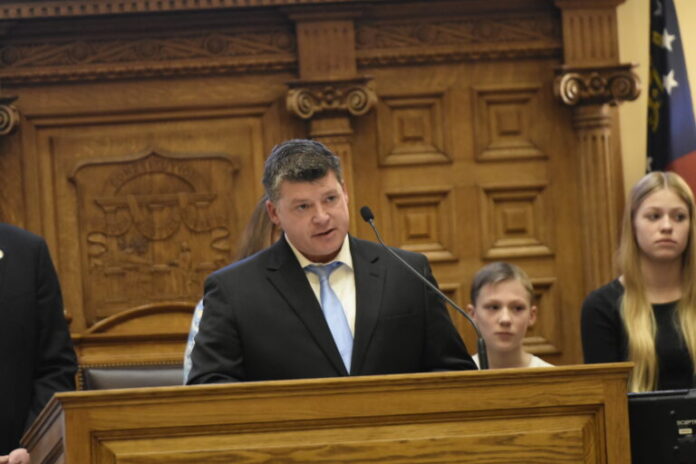
By a unanimous vote of the White County Board of Education Thursday, Steve Horton was named the next principal at White County High School. (photo submitted)

CLEVELAND — The White County Schools Board of Education has unanimously approved the appointment of Steve Horton as the next principal of White County High School, effective July 1.

The board voted Feb. 26 to name Horton to the position. He will succeed Mary Anne Collier, who will remain principal through June 30 before transitioning to director of secondary school improvement.

Horton brings 27 years of experience in education, including 19 years in leadership roles. Most recently, he served at Lumpkin County High School as the school’s Assistant Principal and Athletic Director.

During his career, Horton has overseen daily school operations with an emphasis on student discipline and campus safety. He has managed facility and campus improvement projects, directed districtwide athletic programming for grades 6-12 and supervised instructional delivery and compliance in special education services. He also has classroom experience teaching multiple core content areas and has launched programs aimed at increasing student engagement and strengthening community pride.

In a message to staff, Horton said he looks forward to joining the school community.

“I’m honored to join the White County High School family,” he said. “My priority is building strong relationships with our students, teachers and staff while honoring the proud traditions of White County Schools. Together, we will bring a winning mentality to everything we do.”

Assistant Superintendent Jonathan Stribling said Horton’s background makes him well-suited for the role.

“Mr. Horton is a relationship-driven leader who understands that strong schools are built on trust, high expectations and teamwork,” Stribling said. “His depth of experience in instruction, operations, athletics and student services makes him exceptionally well-prepared to lead White County High School. We are excited about the energy, integrity and commitment he brings to this role.”

According to the district, Horton’s leadership philosophy centers on collaboration, accountability and a student-focused approach. He has said excellence is achieved when educators, students, families and the broader community work together toward shared goals.

Collier, who has led the high school, will move into her new district-level role July 1.