Home Blog Page 22

3 US troops killed, 5 seriously wounded during Iran attacks, military says

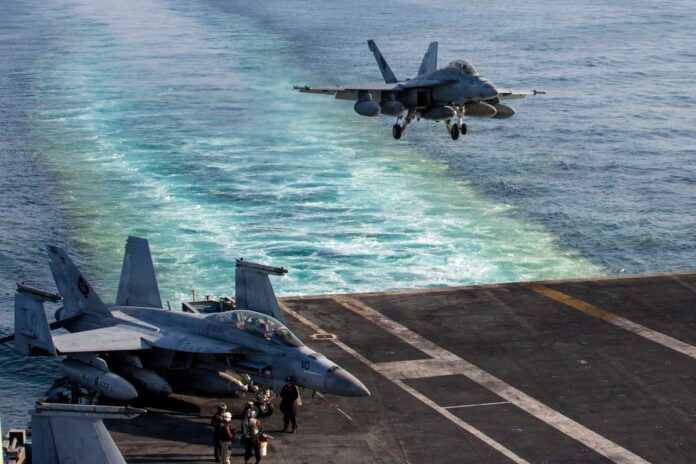
This image provided by U.S. Central Command shows a F/A-18E Super Hornet preparing to make an arrested landing on the USS Abraham Lincoln (CVN 72) after a mission in support of Operation Epic Fury, on Saturday, Feb. 28, 2026. (U.S. Navy via AP)

WASHINGTON (AP) — Three American service members have been killed and five others seriously wounded during the U.S. attacks on Iran, the military said Sunday, marking the first American casualties in a major offensive that has sparked retaliation from the Islamic Republic.

U.S. Central Command, which oversees the Middle East, announced the deaths in a post on X but did not say when and where they occurred. The statement said “several others sustained minor shrapnel injuries and concussions” and were going to return to duty.

Central Command described the situation “as fluid” and said it would withhold the identities of the service members who were killed for 24 hours after their families were notified.

The U.S. military also denied Iranian claims that the USS Abraham Lincoln aircraft carrier was struck with ballistic missiles, saying on X that the “missiles launched didn’t even come close.”

President Donald Trump had warned that American troops could be killed or injured in the operation.

“The lives of courageous American heroes may be lost, and we may have casualties,” the Republican president said in a video address released early Saturday. “That often happens in war. But we’re doing this not for now. We’re doing this for the future.”

Following the U.S.-Israeli strikes that killed Iran’s supreme leader, Ayatollah Ali Khamenei, and other leaders, Iran’s counterattacks have struck U.S. bases in Bahrain and the United Arab Emirates.

Iran’s paramilitary Revolutionary Guard has threatened to launch its “most intense offensive operation” ever targeting Israeli and American military installations.

Before the strikes, Trump had built up the largest U.S. military presence in the Middle East in decades. The arrival of the Lincoln and three accompanying guided-missile destroyers at the end of January bolstered the number of warships in the region.

The world’s largest aircraft carrier, the USS Gerald R. Ford, and four accompanying destroyers later were dispatched from the Caribbean Sea to head to the Middle East.

The Ford was part of the U.S. raid in Venezuela that captured leader Nicolás Maduro, who was brought to New York to face drug trafficking charges. The operation in January claimed no American lives but left seven U.S. troops with gunshot wounds and shrapnel-related injuries.

One of those injured received the Medal of Honor during Trump’s State of the Union address last week. Trump said Army Chief Warrant Officer 5 Eric Slover piloted the lead CH-47 Chinook helicopter that descended on the “heavily protected military fortress” where Maduro was staying.

Trump has launched several military operations during his second term, including strikes on members of the Islamic State group in Syria in retaliation for an ambush attack that killed two U.S. troops and an American civilian interpreter in December.

The U.S. military has also struck IS forces in Nigeria, after Trump accused the West African country’s government of failing to rein in the targeting of Christians.

Mt. Airy council to revisit engineering proposal

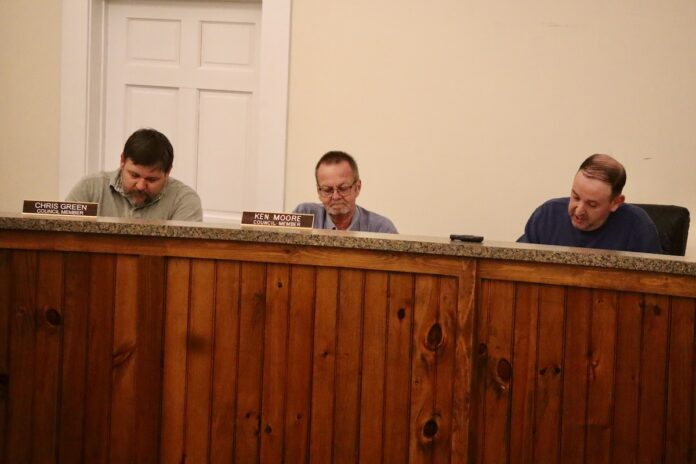
The Mt. Airy Town Council voted to table a vote for engineering services to receive another quote. (Patrick Fargason/Now Georgia)

MOUNT AIRY, Ga. — The Mt. Airy City Council will revisit a proposed engineering services contract Monday night, taking up an item that was tabled earlier this month amid questions about scope and long-term planning.

At its Feb. 9 meeting, council members tabled an engineering proposal after discussing the need for reliable on-call engineering services to support the city’s infrastructure projects and day-to-day operations. City leaders said at the time that having a designated engineer would be critical as Mt. Airy addresses ongoing and future needs tied to water, sewer and other municipal systems.

The engineering discussion comes as the city continues to evaluate capital improvements and compliance requirements. Officials previously noted that professional engineering support is often required for state and federal permitting, grant applications and project oversight. Without a contract in place, the city could face delays in moving forward with infrastructure work or responding quickly to issues as they arise.

Council members also raised questions in February about costs, contract terms and how an engineering firm would be utilized — whether on a project-by-project basis or through a broader services agreement. The item was tabled to allow time for further review and clarification.

In addition to the engineering proposal, the council will consider a resolution to impose a technology fee for municipal court cases. Such fees are commonly used by cities to help offset the cost of court software, hardware and related administrative expenses.

The meeting agenda also includes department reports, public comments and approval of minutes from the Feb. 9 meeting. An executive session to discuss cybersecurity is scheduled near the end of the meeting.

The Mt. Airy City Council will meet at 7 p.m. Monday at City Hall.

Iran vows revenge after the killing of its top leader and trades strikes with Israel in widening war

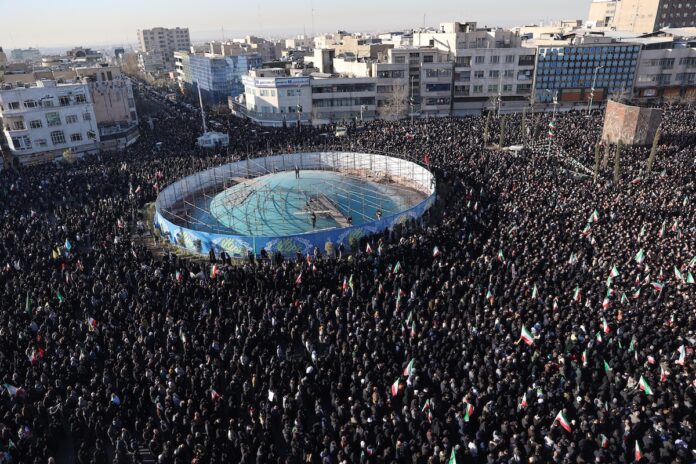
Government supporters gather in mourning after state TV officially announced the death of Iranian Supreme Leader Ayatollah Ali Khamenei, in Tehran, Iran, Sunday, March 1, 2026. (AP Photo/Vahid Salemi)

DUBAI, United Arab Emirates (AP) — Iran vowed revenge Sunday after the killing of its supreme leader and traded strikes with Israel as part of a widening war prompted by a surprise U.S. and Israeli bombardment. The U.S. military said three service members have been killed, the first known American casualties from the conflict.

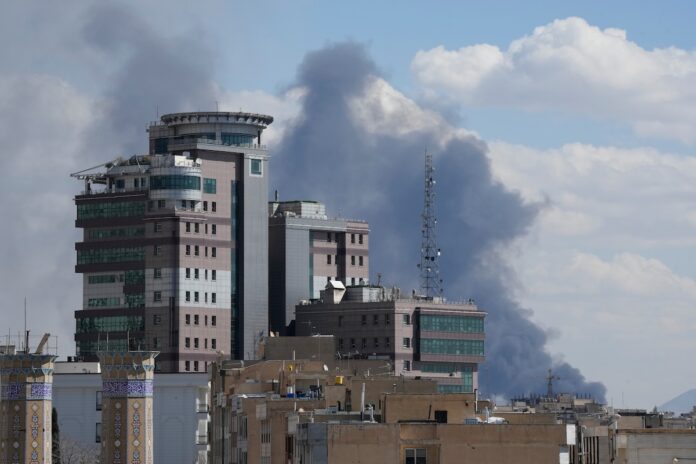
Blasts in Tehran sent a huge plume of smoke into the sky in an area of government buildings. Iranian authorities say more than 200 people have been killed since the start of the strikes that killed Ayatollah Ali Khamenei and other senior leaders. Iran fired missiles at Israel and Gulf Arab states in retaliation while Israel pledged “non-stop” strikes against Iran’s leaders and military.

In Israel, loud explosions caused by missile impacts or interceptions could be heard in Tel Aviv. Israel’s rescue services said nine people were killed and 28 wounded in a strike that hit a synagogue in the central town of Beit Shemesh, bringing the overall death toll in the country to 11. Eleven people were still missing after the strike, police said, as rescue crews combed the rubble.

The U.S. military, meanwhile, said B-2 stealth bombers have struck Iran’s ballistic missile facilities with 2,000-pound bombs. U.S. President Donald Trump said on social media that nine Iranian warships had been “destroyed” and sunk, and that the Iranian navy’s headquarters had been “largely destroyed.”

The strikes and counterattacks underscored how the killing of Khamenei, and Trump’s calls for the overthrow of the decades-old Islamic Republic, carried the potential for a prolonged conflict that could envelop the Middle East. It also represents a startling show of military might for an American president who swept into office on an “America First” platform and vowed to keep out of “forever wars.”

Streets of Tehran are largely deserted

In Tehran, there was little sign that Iranians had heeded Trump’s call for an uprising against the government.

The streets were largely deserted as people sheltered during heavy airstrikes, witnesses told The Associated Press, speaking anonymously for fear of retribution. The paramilitary Basij, which has played a central role in crushing protests, has set up checkpoints across the city, they said.

In southern Iran, at least 165 people were killed when a girls’ school was struck, and dozens more were wounded, the state-run IRNA news agency reported. The Israeli military said it was not aware of strikes in the area. The U.S. military said it was looking into the reports.

The U.S. military said three service members were killed and five others seriously wounded, without providing further details. It said several others suffered minor injuries and concussions.

In the 12-day war last June, Israeli and American strikes greatly weakened Iran’s air defenses, military leadership and nuclear program. But the killing of Khamenei, who had ruled Iran for more than three decades, creates a leadership vacuum, increasing the risk of regional instability.

Iran says new leadership is in place

The CIA had been tracking the movements of senior Iranian leaders, including Khamenei, for months, according to a person familiar with the operation who was not authorized to comment publicly and spoke on condition of anonymity. The intelligence was shared with Israeli officials, and the timing of the strikes was adjusted in part because of that information, the person said.

The New York Times earlier reported about the CIA’s efforts ahead of the Israeli-U.S. strikes.

Iranian President Masoud Pezeshkian said in a prerecorded message that a new leadership council had begun its work. The country’s foreign minister, Abbas Araghchi, said a new supreme leader would be chosen in “one or two days.”

Trump told The Atlantic in an interview on Sunday that he planned to speak with Iran’s new leadership.

“They want to talk, and I have agreed to talk, so I will be talking to them,” he said, declining comment on the timing.

Iran vows revenge for Khamenei killing

As word spread of Khamenei’s death, some in Tehran could be seen cheering from rooftops, witnesses said. Others mourned as a black flag was raised over the Imam Reza shrine in Mashhad.

“You have crossed our red line and must pay the price,” Iran’s parliamentary speaker, Mohammad Bagher Qalibaf, said in a televised address. “We will deliver such devastating blows that you yourselves will be driven to beg.”

Trump warned against retaliation.

“THEY BETTER NOT DO THAT,” he said in a social media post. “IF THEY DO, WE WILL HIT THEM WITH A FORCE THAT HAS NEVER BEEN SEEN BEFORE!”

As supreme leader, Khamenei had final say on all major policies since 1989. He led Iran’s clerical establishment and the Revolutionary Guard, the two main centers of power in the governing theocracy.

An Iranian medical professional in northern Iran said he and colleagues spent the early hours of Sunday celebrating Khamenei’s death indoors because armed security forces are still heavily deployed in his city.

There were forces stopping and interrogating people celebrating in their cars but there was no gunfire, said the doctor, who spoke on condition of anonymity for fear of reprisal.

“It was one of the best nights, if not the best night of our lives,” the doctor said in a voice message from the city of Rasht. In fact, “it was actually my first time ever smoking a cigarette. It was a very very nice time. We didn’t sleep at all. And we don’t even feel tired.”

Iran retaliates with missiles and drone attacks

As U.S. and Israeli strikes have pounded Iran, the Islamic Republic has retaliated with missiles and drone attacks on Israel and nearby Arab Gulf countries hosting U.S. forces.

The air war could rattle global markets, particularly if Iran makes the Strait of Hormuz unsafe for commercial traffic. Around 20% of the world’s traded oil passes through the vital waterway.

While Iran struck U.S. bases in Bahrain and the United Arab Emirates, the attacks have also hit outside of military installations, including a hotel in the Emirati city of Dubai, and Kuwait’s international airport. At least four people have been killed in strikes on Gulf countries.

Araghchi, Iran’s foreign minister, blamed such strikes on the U.S. and Israel for starting the war. He said he had spoken to his counterparts in the Gulf countries and urged them to pressure the U.S. and Israel to end it.

Israel’s Defense Minister Israel Katz said Israel will have “a nonstop air train” of strikes against Iranian military and leadership targets.

Flights across the Middle East were disrupted, and air defense fire thudded over Dubai. The United Arab Emirates’ commercial capital has long drawn business and expatriates by billing itself as a safe haven in a volatile region.

Strikes were planned for months and feared for weeks

Tensions have escalated in recent weeks as the Trump administration built up the largest force of American warships and aircraft in the Middle East in decades. The president insisted he wanted a deal to constrain Iran’s nuclear program while the country struggled with growing dissent following nationwide protests.

Democrats decried that Trump had taken action without congressional authorization. The White House said it had briefed several Republican and Democratic leaders in Congress in advance.

Though Trump had pronounced the Iranian nuclear program obliterated in strikes last year, the country was rebuilding infrastructure that it had lost, according to a senior U.S. official who spoke to reporters on condition of anonymity to discuss Trump’s decision-making process. The official said intelligence showed that Iran had developed the capability to produce its own high-quality centrifuges, an important step in developing the highly enriched uranium needed for weapons.

Iran has said it has not enriched since June, though it has maintained its right to do so while saying its nuclear program is entirely peaceful. It has also blocked international inspectors from visiting the sites the U.S. bombed. Satellite photos analyzed by AP have shown new activity at two of those sites.

AP’s Melanie Lidman, Josh Boak, and Eric Tucker contributed to this report

Clarkesville council to consider court technology fee, alcohol license

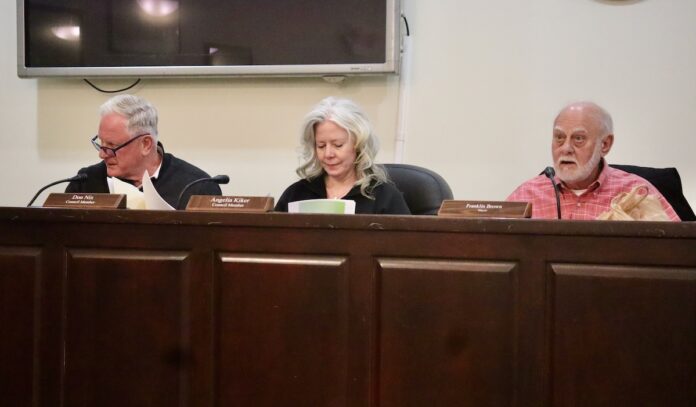
FILE-The Clarkesville City Council. (Patrick Fargason/NowGeorgia.com)

CLARKESVILLE — The Clarkesville City Council will meet Monday evening with an agenda that includes a proposed new municipal court technology fee, a beer and wine license request and continued discussion of fire services and city equipment purchases.

The council’s regular meeting begins at 6 p.m. at City Hall, preceded by a 5 p.m. work session.

Technology fee tied to municipal court

One of the key action items is a proposed resolution that would request local legislation to allow the city to impose a $10 technology fee on each case docketed in Clarkesville Municipal Court.

If approved, the fee would be assessed per case and designated specifically to support current and future municipal court technology needs. The proposal states the council supports connecting fees to those who use court services rather than placing an additional burden on property owners, and emphasizes maintaining quality court operations through diversified funding sources.

The item will be discussed during the work session before council members consider a vote during the regular meeting.

If adopted, the resolution would formally request local legislation to authorize the fee, which is typically required for municipal court surcharges.

Beer and wine license request

Council members are also scheduled to vote on a request from 358 Fuel Up LLC to sell beer and wine by the package at 358 West Louise Street.

Alcohol license applications generally require council approval following background checks and compliance review. If approved, the business would be permitted to sell beer and wine for off-premises consumption.

Fire consolidation study

During the work session, council members will revisit discussion of a fire consolidation study.

The city has been exploring long-term options for fire protection services, including potential consolidation or cooperative agreements. The study is expected to examine service delivery models, cost structures and operational efficiencies.

No formal vote on consolidation is expected Monday night, but the discussion could help shape future decisions on how fire protection services are structured.

City property and equipment

Council members are also expected to discuss 555 Monroe Street, a city property that has been part of broader conversations about redevelopment and strategic use of municipal assets.

Additional discussion items include potential vehicle leases through the Georgia Municipal Association and the possible purchase of a mobile generator. A mobile generator could be used to support city operations during power outages or emergencies.

Grants update and department assignments

The work session is also expected to include a grants update, which could provide insight into funding opportunities tied to infrastructure, public safety or downtown initiatives.

Council members will also discuss department assignments, a move that can help streamline oversight of areas such as finance, planning and zoning, public safety and downtown development.

Committee reports are also scheduled from finance, Main Street, fire, police, planning and zoning and downtown development, providing updates on ongoing projects and initiatives.

Public comment will be taken during both the work session and the regular meeting.

The Clarkesville City Council meets at City Hall, 123 North Laurel Drive. Now Georgia will cover the meeting and provide updates.

World leaders urge return to talks after U.S. and Israeli strikes kill Iran leader Ali Khamenei

Smoke rises up after a strike in Tehran, Iran, Sunday, March 1, 2026. (AP Photo/Vahid Salemi)

BRUSSELS (AP) — World leaders urged peace and a return to talks as the military strikes by the United States and Israel on Iran raised concerns about whether the violence could spread across the region and tensions rose with Iran vowing devastating blows after the killing of Iran’s Supreme Leader Ayatollah Ali Khamenei.

A massive explosion rocked the Iranian capital on Sunday morning as the Israeli military said it was targeting the “heart” of the city after stating it cleared the path to Tehran the day before. Meanwhile, Iran pressed on with its retaliation campaign: Qatar, Kuwait and Bahrain said they intercepted a barrage of missiles.

Oman, which served as an interlocutor between Tehran and Washington in recent nuclear talks, said an oil tanker in the strategic Strait of Hormuz came under attack and its port at Duqm, used by the U.S. Navy as a logistical hub and capable of hosting aircraft carriers, was targeted in a drone attack.

The demise of Khamenei, who had no designated successor, will likely throw Iran’s future into uncertainty and exacerbate already growing concerns of a broader conflict.

Top diplomats from the 27 European Union nations are holding an emergency meeting Sunday to discuss the situation around Iran and the next steps for the bloc. The United Nations Security Council met late Saturday.

Perhaps cautious about upsetting already strained relations with Trump, many nations, including several in the Middle East, refrained from commenting directly or pointedly on the joint strikes but condemned Tehran’s retaliation.

Other countries were more explicit: Australia and Canada expressed open support for the U.S. strikes, while Russia and China responded with direct criticism.

The United States and Israel launched a major attack against Iran on Saturday, and Trump called on the Iranian public to “seize control of your destiny” by rising against the Islamic theocracy that has ruled the nation since 1979.

World leaders urge resumption of talks

During the U.N. Security Council on Saturday, the U.N. chief and many countries urged a halt to attacks and a return to negotiations to prevent the conflict from expanding further into the region and beyond.

Secretary-General António Guterres told the council that everything must be done to prevent an escalation. “The alternative,” he warned, “is a potential wider conflict with grave consequences for civilians and regional stability.”

Guterres said the U.S. and Israeli airstrikes violated international law, including the U.N. Charter. He also condemned Iran’s retaliatory attacks for violating the sovereignty and territorial integrity of Bahrain, Iraq, Jordan, Kuwait, Qatar, Saudi Arabia and the United Arab Emirates.

The Security Council meeting was tense as the U.S. and Iranian ambassadors traded warnings and direct rebuffs.

De-escalation calls

Further calls for de-escalation came from across the Middle East and Europe.

“Return to your senses … and deal with your neighbors with reason and responsibility before the circle of isolation and escalation widens,” Anwar Gargash, an adviser to the United Arab Emirates’ president, told the Iranian theocracy on Sunday.

In recent years, the UAE sought to de-escalate tensions with Iran despite its longtime suspicions of its northern neighbor.

The 22-nation Arab League called the Iranian attacks “a blatant violation of the sovereignty of countries that advocate for peace and strive for stability.” That coalition of nations has historically condemned both Israel and Iran for actions it says risk destabilizing the region.

“The Iranian regime’s indiscriminate attacks against its neighbours carry the risk of dragging the region into a broader war and we condemn this,” said EU foreign policy chief Kaja Kallas as she announced the bloc’s meeting on Sunday. “It is essential that the war does not spread any further. The Iranian regime has choices to make.”

British Prime Minister Keir Starmer, French President Emmanuel Macron and German Chancellor Friedrich Merz called on the U.S. and Iran to resume talks in a statement on Saturday, saying they favored a negotiated settlement. The three countries have led efforts to reach a negotiated solution over Iran’s nuclear program.

“We condemn Iranian attacks on countries in the region in the strongest terms. Iran must refrain from indiscriminate military strikes,” they said. “Ultimately, the Iranian people must be allowed to determine their future,” they said.

Protests and celebrations

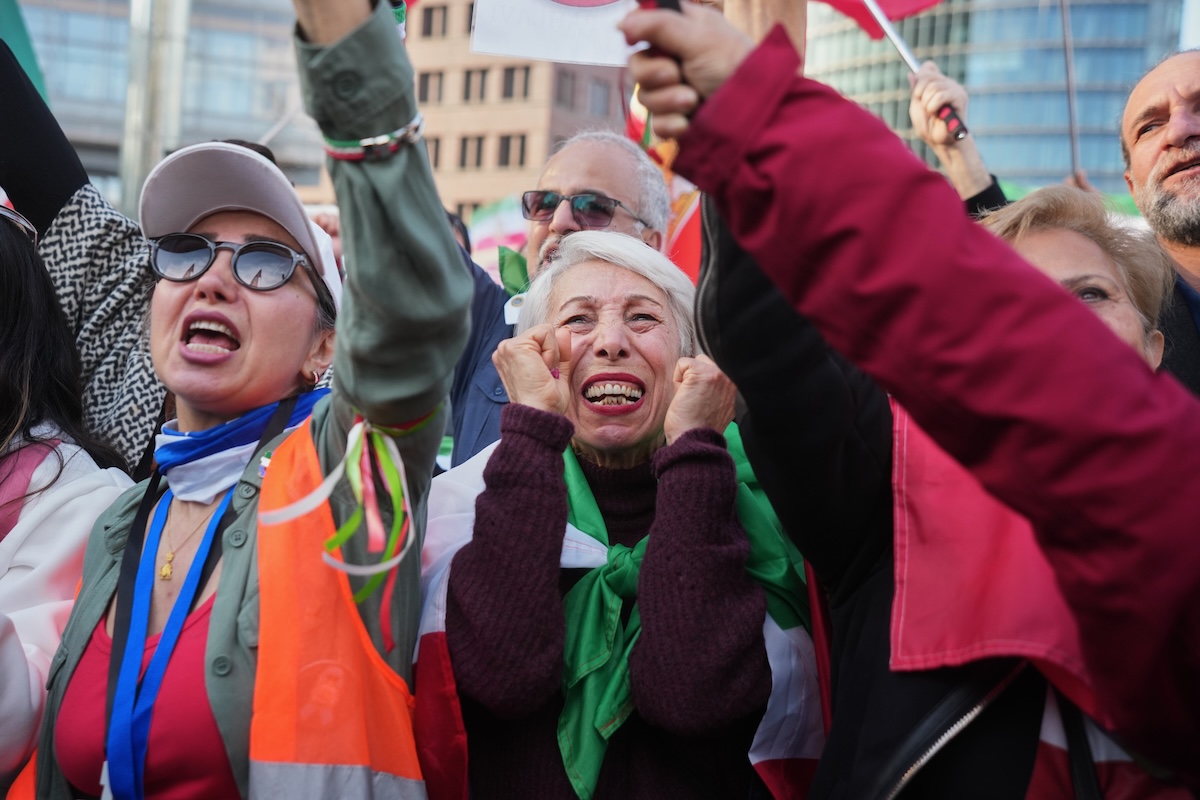
Iranian people attend a demonstration in support of the U.S. and Israeli strikes on Iran, in Berlin, Germany, Saturday, Feb. 28, 2026. (AP Photo/Markus Schreiber)

At least six people were killed in clashes with police Sunday after hundreds of protesters stormed the U.S. Consulate in the Pakistani port city of Karachi, authorities said.

In Indian-controlled Kashmir, tens of thousands of people on Sunday staged massive demonstrations to denounce Khamenei’s killing by the U.S. and Israel.

Demonstrations were also held from New York to Berlin and beyond by members of the Iranian diaspora and their supporters, celebrating the end of Khamenei’s rule.

Iranians in Berlin were seen cheering and dancing to loud music on Saturday afternoon in celebration. Some of the demonstrators waved flags of the Iranian monarchy, with German, Israeli, and U.S. flags also on display. Hopeful Iranians also took to the streets in multiple U.S. cities.

By Claudia Ciobanu, Sam Mcneil and Sam Metz

Firefighters rescue dogs from burning home

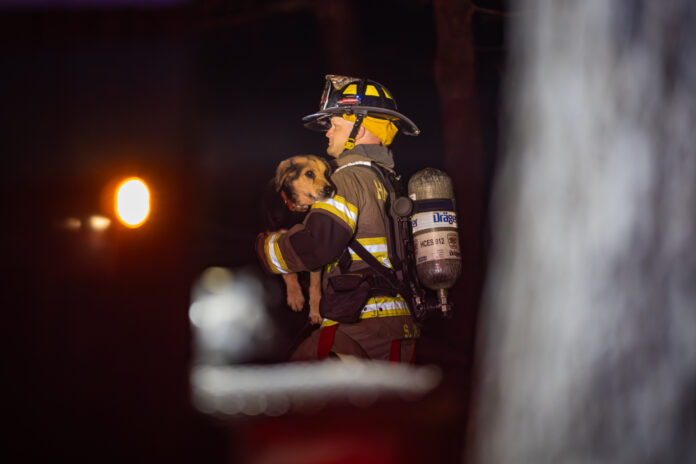
A firefighter carries a dog to safety after finding it inside a burning house in Demorest Saturday night, Feb. 28, 2026. (Daniel Purcell/Now Georgia.com)

DEMOREST, Ga. — Firefighters saved a house and several pets Saturday night after an apparent electrical fire broke out at the residence on Old Ridge Road.

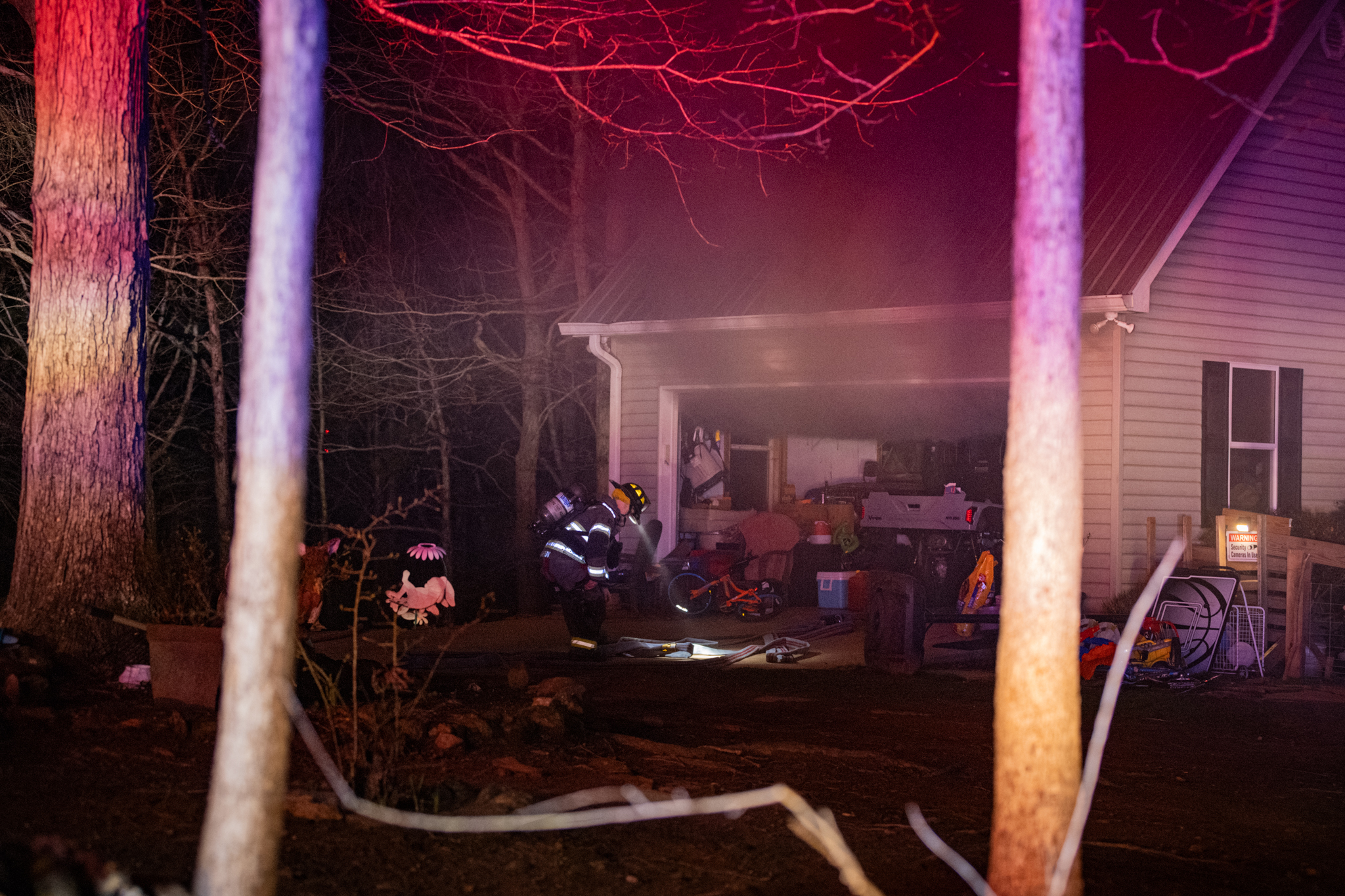
Units were dispatched to the area off Habersham Mills Road around 7:48 p.m. on Feb. 28 following reports of heavy smoke coming from the house. When crews arrived, they found a single-story structure with a smoke-filled basement.

Officials said the fire appeared to be electrical and involved the main exterior service panel, preventing firefighters from immediately disconnecting power to the home.

Smoke pours out of the house on Old Ridge Road as firefighters work to contain the fire. (Daniel Purcell/NowGeorgia.com)
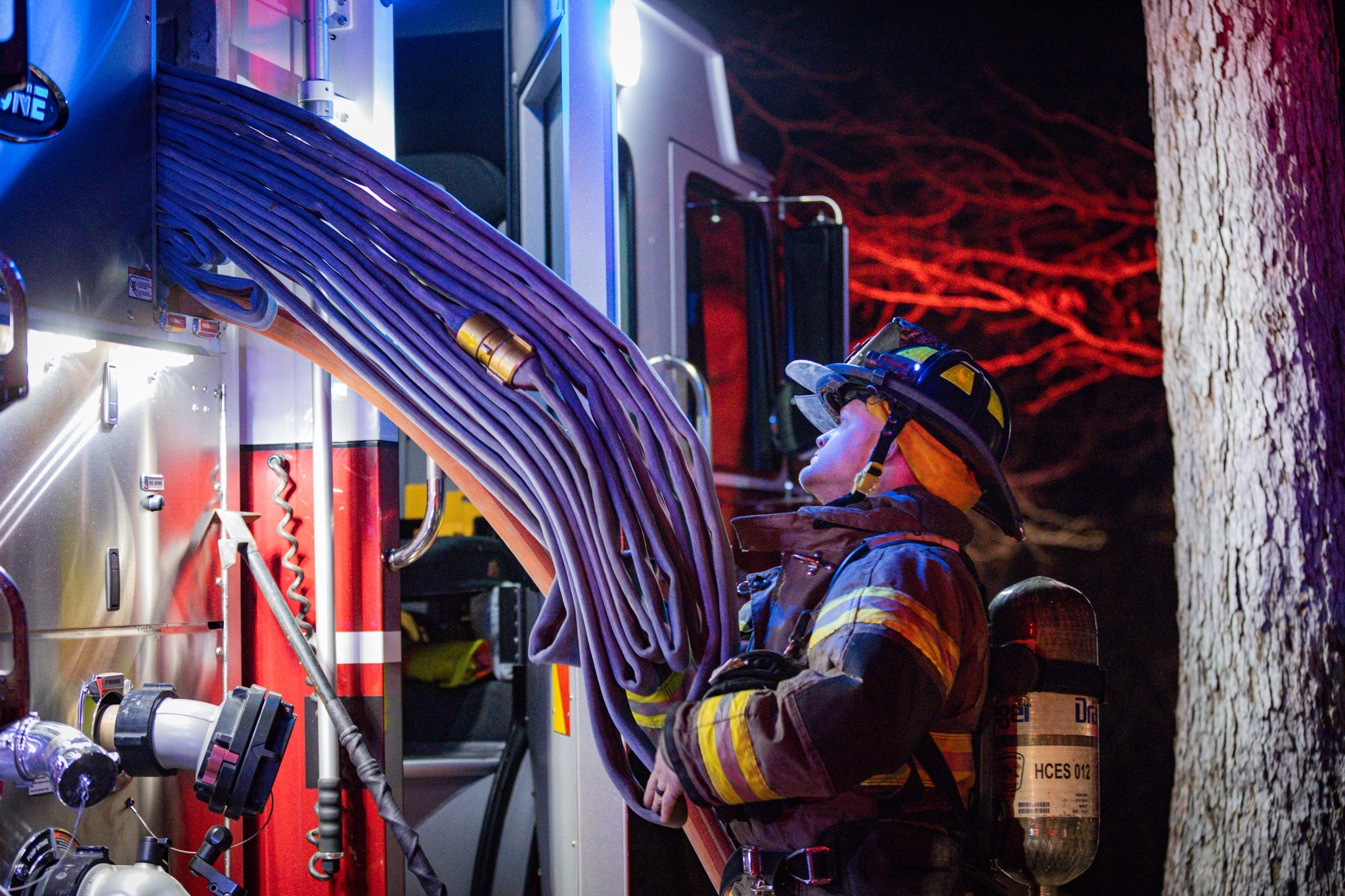
A firefighter pulls a hose from the engine to run water to the burning residence. (Daniel Purcell/NowGeorgia.com)

Access and water challenges

Multiple stations responded to the rural property, where firefighters encountered early obstacles.

Radio traffic indicated the driveway was extremely narrow, limiting where engines could park without blocking access or affecting water supply.

Because of the location, crews initially relied on water carried in their trucks. During suppression efforts, one engine reported running low and connected to another apparatus to maintain flow. At one point, three engines were flowing water simultaneously as crews worked to bring the fire under control.

Bystanders gathered near the scene, prompting law enforcement to assist with scene control so firefighters could operate safely.

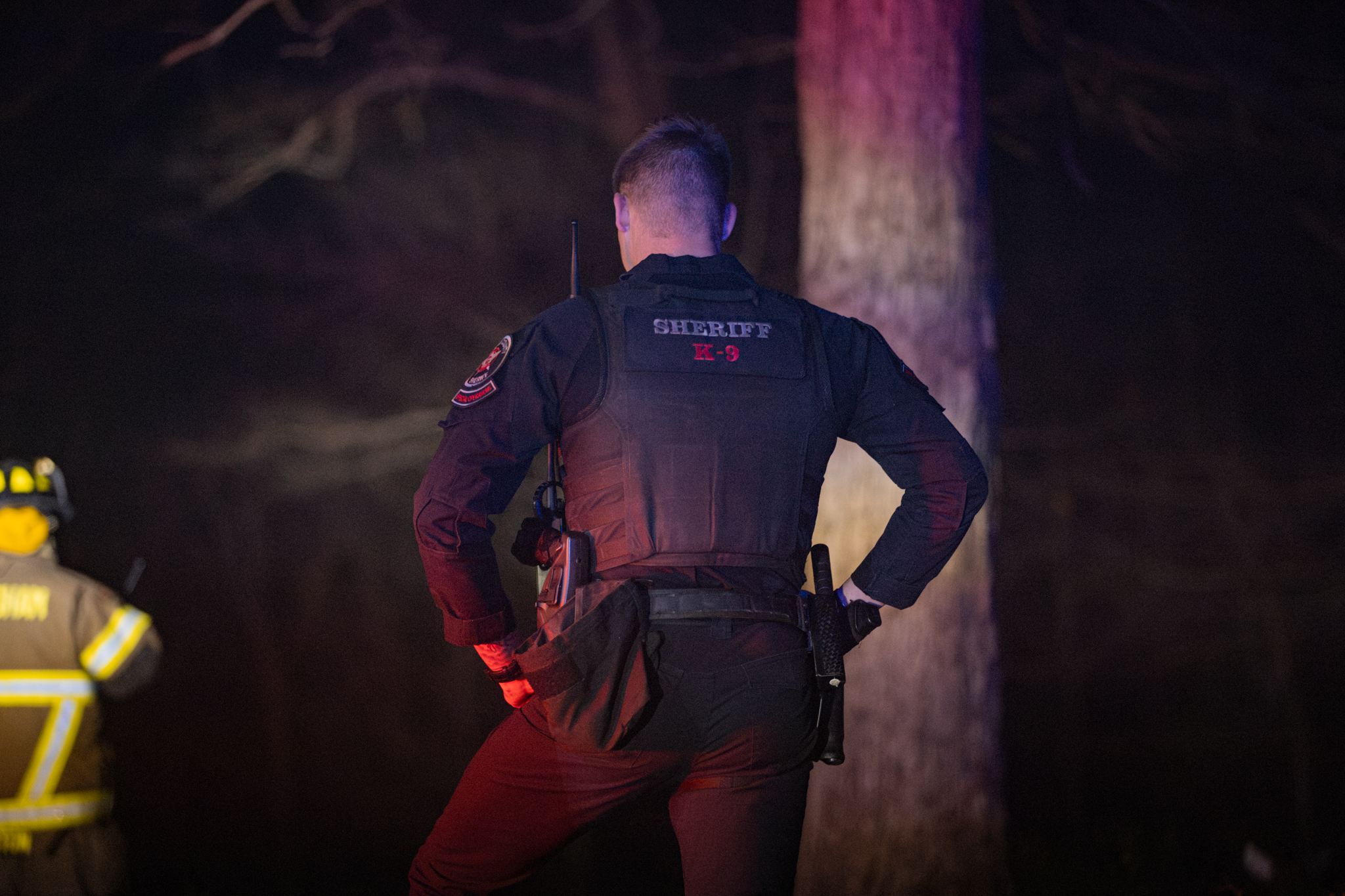
A police officer looks on as firefighters work to contain the house fire. (Daniel Purcell/NowGeorgia.com)

Dogs rescued

The residents were not home at the time of the fire. At least one dog was rescued from inside the smoke-filled house, while several others outside were safely secured.

No injuries were reported.

The official cause of the fire has not been released. The incident remains under investigation.

Now Georgia will update this story as more information becomes available.

Scream 7

(NowGeorgia.com)

The Scream franchise has had a bloody ride since the first movie in 1996. It’s been everything from clever to codswallop in its emphasis on self-awareness of horror movie cliches, and even that has taken a nosedive in some installments.

Scream 7 is somewhere in between. Sure, it relies on nostalgia overload, but it does introduce plot elements that keep it afloat, albeit with mixed results.

Take the opening scene, for example: A young couple visits the house of one of the victims from one of the previous movies. It’s pretty much the boyfriend’s horror movie Mecca, but the girlfriend is as disinterested as she possibly can be. While he’s lurking about trying to soak in all the geekdom, we know it’s just a matter of time before things go horribly wrong and Ghostface emerges, ready to slay his first victims.

Then the movie reintroduces Neve Campbell’s Sydney Prescott, now Prescott-Evans. She’s married to her police officer husband (Joel McHale), and she has three kids, but we only see her oldest daughter, Tatum (Isabel May). Sydney and Tatum have a pretty rocky relationship, relating back to Sydney’s experiences in the other movies.

Sydney starts receiving video messages from Ghostface and it’s supposedly the same character whose house is introduced at the beginning of the film. Sydney thinks it’s an elaborate hoax and possibly AI.

Ghostface continues his reign of terror in the small town where Sydney lives and works as a manager at a coffee shop. The killings are pretty much what fans have come to expect from this series, but too much relies on misdirection and jump scares until it inevitably becomes a joke.

Courtney Cox returns as the spunky reporter Gale Weathers to try to get the story on the mayhem, but she’s not alone. She’s got her eager news crew (Jasmin Savoy Brown and Mason Gooding). They have ambitions to be newscasters, while Gale finally gets what she wants out of Sydney over the last three decades: an interview.

Kevin Williamson, who wrote the first, second, and fourth installments of the franchise, steps up to the plate as director, and he’s clearly in his element, but perhaps a little too comfortable with the material.

He knows exactly what fans love and want out of a Scream movie, and he delivers. However, there were moments when the movie’s energy got bogged down in borderline self-parody.

It all leads to a climax that grows increasingly absurd once we glimpse who this version of Ghostface is. Anyone who pays attention about three-quarters of the way through will know the outcome; still, the movie is content with being on autopilot.

Campbell and Cox deliver sufficient work, but the script lacks an ebb and flow that is satisfactory. There are plot holes that don’t get filled in at the right time, and it’s only when it’s convenient for the plot that they do get answered.

Scream 7 may be a cut above some of its previous installments (pun intended), but this one left me feeling indifferent.

Grade: C+

(Rated R for strong bloody violence, gore, and language.)

Reviewer’s Note: I saw this movie at the Historic Strand in Jesup.

Iranian state media confirms Supreme Leader Ali Khamenei is dead

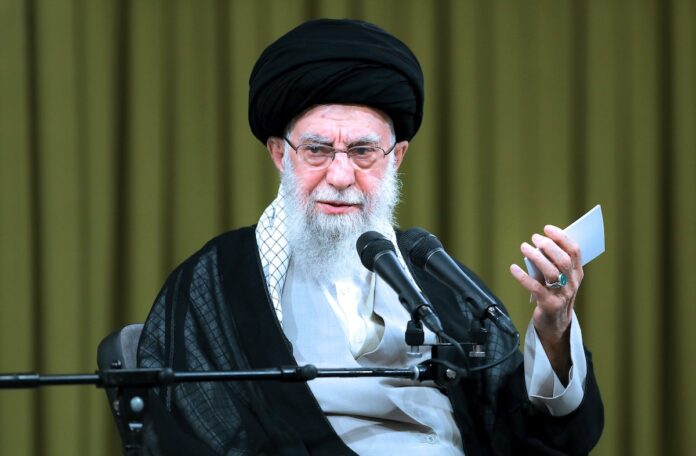
FILE - In this photo released by an official website of the office of the Iranian supreme leader, Supreme Leader Ayatollah Ali Khamenei speaks in a ceremony to mark the Shiite holiday of Eid al-Ghadir, in Tehran, Iran, Tuesday, June 25, 2024. (Office of the Iranian Supreme Leader via AP, File)

DUBAI, United Arab Emirates (AP) — Iranian Supreme Leader Ayatollah Ali Khamenei died following a major attack by Israel and the United States, Iranian state media confirmed early Sunday. President Donald Trump previously announced the death, saying it gave Iranians their “greatest chance” to “take back” their country.

Iranian state television and the state-run IRNA news agency did not report a cause of death for the 86-year-old. The assassination put the future of the Islamic Republic in doubt and raised the risk of regional instability.

“Khamenei, one of the most evil people in History, is dead,” Trump wrote in a social media post. He warned of “heavy and pinpoint bombing” that he said would continue throughout the week and even beyond, part of a lethal assault the U.S. has justified as necessary to disable the country’s nuclear capabilities.

The attack opened a stunning new chapter in U.S. intervention in Iran, carried the potential for retaliatory violence and a wider war, and represented a startling flex of military might for an American president who swept into office on an “America First” platform and vowed to keep out of “forever wars.”

If confirmed, the killing of Khamenei in the second Trump administration assault on Iran in eight months appeared certain to create a leadership vacuum given the absence of a known successor and because the 86-year-old supreme leader had final say on all major policies during his decades in power. He led Iran’s clerical establishment and its paramilitary Revolutionary Guard, the two main centers of power in the governing theocracy.

As reports trickled out about the death, eyewitnesses in Tehran told The Associated Press that some residents were rejoicing, blowing whistles and letting out ululations.

Iran, which responded to the strikes with its own counterassault, warned of retribution.

Ali Larijani, the secretary of Iran’s National Security Council, said Saturday that Israel and America will “regret their actions.”

“The brave soldiers and the great nation of Iran will deliver an unforgettable lesson to the hellish international oppressors,” Larijani posted on X.

Strikes followed months of rising tensions

The joint U.S.-Israel operation, which officials say was planned for months, took place Saturday during the Muslim holy fasting month of Ramadan and at the start of the Iranian workweek. It followed stilted negotiations and warnings from Trump, who last year trumpeted his administration’s success in incapacitating the country’s nuclear program but nonetheless cast the latest round as necessary to head off its potential resurgence.

About 12 hours after the attacks began, the U.S. military reported no U.S. casualties and minimal damage at U.S. bases despite “hundreds of Iranian missile and drone attacks.” It said targets in Iran included Revolutionary Guard command facilities, air defense systems, missile and drone launch sites, and military airfields.

Israel, for its part, said it had killed the commander of the Revolutionary Guard Corps and the country’s defense minister, as well as the secretary of the Iranian Security Council, a close adviser to Khamenei.

Khamenei “was unable to avoid our Intelligence and Highly Sophisticated Tracking Systems and, working closely with Israel, there was not a thing he, or the other leaders that have been killed along with him, could do,” Trump said. “This is the single greatest chance for the Iranian people to take back their Country.”

An Iranian diplomat told the United Nations Security Council that hundreds of civilians were killed and wounded in the strikes. Iran retaliated by firing missiles and drones toward Israel and at U.S. military bases in the region, and exchanges of fire continued into the night.

Some of the first strikes on Iran appeared to hit near the offices of Khamenei, the second leader of the Islamic Republic who succeeded Ayatollah Ruhollah Khomeini, the leader of the 1979 Islamic Revolution. Israeli officials confirmed the death, followed by Trump.

Democrats decried that Trump had taken action without congressional authorization. White House spokesperson Karoline Leavitt said the administration had briefed several Republican and Democratic leaders in Congress in advance.

The strikes followed unsuccessful nuclear talks

Tensions have soared in recent weeks as the Trump administration built up the largest force of American warships and aircraft in the Middle East in decades. The president insisted he wanted a deal to constrain Iran’s nuclear program while the country struggled with growing dissentfollowing nationwide protests.

Though Trump had pronounced the Iranian nuclear program obliterated in strikes last year, the country was rebuilding infrastructure that it had lost, according to a senior U.S. official who spoke to reporters on condition of anonymity to discuss Trump’s decision-making process. The official said intelligence showed that Iran had developed the capability to produce its own high-quality centrifuges, an important step in developing the highly enriched uranium needed for weapons.

Iran responded to the latest strikes by launching missiles and drones toward Israel and targeting U.S. military installations in Bahrain, Kuwait and Qatar. The Israeli military said Iran fired dozens of missiles at Israel, with many intercepted. The Magen David Adom rescue service said Saturday night that a woman in the Tel Aviv area died after being wounded in an Iranian missile attack.

At least three explosions were heard Saturday evening near the Intelligence Ministry building in northern Tehran, witnesses said, adding that air defense systems had begun operating there. Israel’s military said it had begun new strikes against missile launchers and aerial defense systems in central Iran.

In southern Iran, at least 115 people were reported killed when a girls’ school was struck, and dozens more were wounded, the local governor told Iranian state TV. U.S. Central Command spokesperson Capt. Tim Hawkins said he was “aware of reports” that a girls’ school was struck and that officials were looking into them.

Iran’s state news agency IRNA said at least 15 people were killed in the southwest, quoting the governor of the Lamerd region, Ali Alizadeh, as saying a sports hall, two residential areas and a hall near a school were hit.

Flights across the Middle East were disrupted, and air defense fire thudded over Dubai, the United Arab Emirates’ commercial capital. Shrapnel from an Iranian missile attack on the UAE capital killed one person, state media said.

Attack was coordinated between Israel and US

Israel said the operation had been planned for months with the United States. Air Force pilots struck “hundreds of targets across Iran,” Israeli military chief of staff Lt. Gen. Eyal Zamir said in a statement.

Targets in the Israeli campaign included Iran’s military, symbols of government and intelligence targets, according to an official briefed on the operation, who spoke on condition of anonymity to discuss nonpublic information on the attack.

Trump acknowledged Saturday that there could be American casualties, saying “that often happens in war.” He said he was aiming to “annihilate” the Iranian navy and destroy regional proxies supported by Tehran. He called on the paramilitary Iranian Revolutionary Guard to lay down arms, saying members would be given immunity or face “certain death” if they did not.

Iran had said it hoped to avert a war, but it maintained its right to enrich uranium.

Iran has said it has not enriched since June, but it has blocked international inspectors from visiting the sites the U.S. bombed. Satellite photos analyzed by AP have shown new activity at two of those sites, suggesting Iran is trying to assess and potentially recover material.

Trump had threatened military action but held off following Iran’s recent crackdown on protests spurred by economic grievances that evolved into a nationwide push against the ruling clerics.

The Human Rights Activists News Agency says it confirmed more than 7,000 deaths in the crackdown and is investigating thousands more. The government has acknowledged more than 3,000 killed.

Effects could extend to markets and other countries

The strikes could rattle global markets, particularly if Iran makes the Strait of Hormuz unsafe for commercial traffic. A third of worldwide oil exports transported by sea passed through the strait in 2025.

Saudi Arabia said Iran targeted its capital and eastern region in an attack that was repelled. Bahrain said a missile attack targeted the U.S. Navy’s 5th Fleet headquarters in the island kingdom, and three buildings were damaged in the capital, Manama, and Muharraq city by drone strikes and debris from an intercepted missile.

Kuwait’s civil aviation authority said a drone targeted the main international airport, injuring several employees. Kuwait’s state-run news agency said three troops were injured by shrapnel from strikes that hit Ali Al-Salem air base. Explosions could also be heard in Qatar. Jordan said it “dealt with” 49 drones and ballistic missiles.

US and Israel clash with Iran at emergency Security Council meeting

UNITED NATIONS (AP) — The United States and Israel clashed with Iran at an emergency meeting of the U.N. Security Council on Saturday where the U.N. chief and many countries urged a halt to their attacks and a return to negotiations to prevent the conflict from spreading further into the region and beyond.

Secretary-General António Guterres told the council that everything must be done to prevent an escalation. “The alternative,” he warned, “is a potential wider conflict with grave consequences for civilians and regional stability.”

Guterres said the U.S. and Israeli airstrikes violated international law, including the U.N. Charter. He also condemned Iran’s retaliatory attacks for violating the sovereignty and territorial integrity of Bahrain, Iraq, Jordan, Kuwait, Qatar, Saudi Arabia and the United Arab Emirates.

The U.S. ambassador to the United Nations, Mike Waltz, insisted the U.S. military action was lawful.

“Iran cannot have a nuclear weapon,” he told the council. “That principle is not a matter of politics. It’s a matter of global security. And to that end, the United States is taking lawful actions.”

Israel’s U.N. Ambassador Danny Danon defended the airstrikes as necessary to stop an existential threat.

“We are stopping extremism before it becomes unstoppable,” he said. “We will ensure that no radical regime armed with nuclear weapons and ballistic missiles can threaten our people or the entire world.”

Amir Saeid Iravani, Iran’s ambassador to the U.N., told the council that the airstrikes have killed and injured hundreds of Iranian civilians, which he called a war crime and a crime against humanity.

He blasted the U.N. and the Security Council, its most powerful body, for not heeding Tehran’s warnings about the “warmongering statements” by the U.S. in recent weeks and urged the council to act now.

“The issue before the council is straightforward: whether any member state may, including a permanent member of this council, through the use of force, coercion or aggression, determine the political future or system of another state or impose control over its affairs,” Iravani said.

During his speech, the Iranian diplomat did not mention or comment on President Donald Trump’s statement that Supreme Leader Ayatollah Ali Khamenei was killed in the strikes, although Iranian state media later confirmed his death. The assassination of the second leader of the Islamic Republic, who had no designated successor, raised the prospects of a protracted conflict given Iranian threats of retaliation.

Iranian and US ambassadors have tense back-and-forth

In a rare exchange, the U.S. and Iranian ambassadors traded warnings and direct rebuffs toward the end of the emergency session as military aggression between their countries risked spilling into a regional war.

After Waltz responded to Iranian claims that the U.S. had violated international law, Iravani asked to speak again to issue a warning: “I advise to the representative of the United States to be polite. It will be better for yourself and the country you represent.”

Waltz responded immediately, saying, “This representative sits here, in this body, representing a regime that has killed tens of thousands of its own people, and imprisoned many more, simply for wanting freedom from your entire tyranny.”

Other Security Council members speak up

Russia’s ambassador condemned the U.S.-Israeli airstrikes, while China’s ambassador was more measured in his criticism.

“We demand that the United States and Israel immediately cease their aggressive actions,” Russian U.N. Ambassador Vassily Nebenzia said. “We insist on the immediate resumption of political and diplomatic settlement efforts … based on international law, mutual respect and a balance of interests.”

China’s U.N. Ambassador Fu Cong said China was very concerned by “the sudden escalation of regional tensions” and supported Russia’s call for a return to diplomatic negotiations.

The permanent observer of the 22-nation Arab League, Maged Abdelaziz, suggested Israel was being hypocritical in justifying its military attack by saying it was intended to prevent Iran from acquiring nuclear weapons. Abdelaziz, a former Egyptian ambassador to the U.N., noted that Israel has refused to subject its own nuclear facilities to inspection by the U.N. nuclear watchdog.

The emergency meeting was called by five council members: Bahrain, which is the Arab representative on the council, France, Russia, China and Colombia,.

In a joint statement, the leaders of Britain and France — both veto-wielding members of the council — along with Germany’s chancellor called for a resumption of U.S.-Iranian talks on Tehran’s nuclear program. The three countries, part of the 2015 nuclear deal with Iran, have led efforts to reach a negotiated solution. Trump pulled the U.S. out of the deal in 2018.

The three European leaders strongly condemned Iranian airstrikes in the region — not the U.S.-Israeli airstrikes — and urged Iran’s leaders to seek a negotiated solution, saying: “Ultimately, the Iranian people must be allowed to determine their future.”

The Security Council meeting is taking place on the last day of the United Kingdom’s presidency and a day before the United States takes over the rotating presidency for the month of March.

By Edith M. Lederer and Farnoush Amiri

Donald Trump says Iranian Supreme Leader Ayatollah Ali Khamenei is dead

FILE - In this photo released by an official website of the office of the Iranian supreme leader, Supreme Leader Ayatollah Ali Khamenei speaks in a ceremony to mark the Shiite holiday of Eid al-Ghadir, in Tehran, Iran, Tuesday, June 25, 2024. (Office of the Iranian Supreme Leader via AP, File)

DUBAI, United Arab Emirates (AP) — Iranian Supreme Leader Ayatollah Ali Khamenei was killed in a major attack on Iran launched by Israel and the United States, President Donald Trump said Saturday on social media.

Trump said his death is “the single greatest chance for the Iranian people to take back their Country.” The death occurred after a joint U.S. and Israeli aerial bombardment that targeted Iranian military and governmental sites.

The president also said “heavy and pinpoint bombing” was to continue “uninterrupted” through the week or longer.

There was no immediate comment from Iran. The assassination of the second leader of the Islamic Republic, who had no designated successor, would throw its future into doubt and raise the prospect of a protracted conflict given Iranian threats of retaliation.

Trump in his post called Khamenei “one of the most evil people in history.”

Trump said that Khamenei “was unable to avoid our Intelligence and Highly Sophisticated Tracking Systems and, working closely with Israel, there was not a thing he, or the other leaders that have been killed along with him, could do.”

In a nationally televised address, Israeli Prime Minister Benjamin Netanyahu said there were “growing signs” that Khamenei had been killed when Israel struck his compound early Saturday.

Shortly after the address, two Israeli officials said Israel had confirmed his death. The officials both spoke to The Associated Press on condition of anonymity pending a formal announcement and gave no further details.

Khamenei succeeded Ayatollah Ruhollah Khomeini, the leader of the 1979 Islamic Revolution. He had the final say on all major policies, leading Iran’s clerical establishment and its paramilitary Revolutionary Guard – the two main centers of power in the country’s theocracy.

As the attack on Iran unfolded, Trump urged the Iranian public to “seize control of your destiny” by rising up against the Islamic leadership. In a video announcing the “major combat operations,” Trump told Iranians that “when we are finished, take over your government. It will be yours to take. This will be probably your only chance for generations.”

Iranian state media, citing the Red Crescent, on Saturday evening said at least 201 people had been killed and more than 700 injured. Iran retaliated by firing missiles and drones toward Israel and U.S. military bases in the region, and exchanges of fire continued into the night.

Some of the first strikes on Iran appeared to hit near the offices of the 86-year-old Khamenei. Before Israeli officials confirmed the death, Iranian Foreign Minister Abbas Araghchi told NBC News that Khamenei and President Masoud Pezeshkian were alive “as far as I know.” He called the attack “unprovoked, illegal and absolutely illegitimate.”

The strikes during the holy fasting month of Ramadan opened a stunning new chapter in U.S. intervention in Iran, marking the second time in eight months that the Trump administration has attacked the Islamic Republic during talks over its nuclear program.

About 12 hours after the attacks began, the U.S. military reported no U.S. casualties and minimal damage at U.S. bases despite “hundreds of Iranian missile and drone attacks.” It said targets in Iran included Revolutionary Guard command facilities, air defense capabilities, missile and drone launch sites, and military airfields.

Various members of Iran’s leadership were targeted in the attack. Israel said it killed the commander of the Iranian Revolutionary Guard Corps and the country’s defense minister. The Israeli military also said its strikes killed the secretary of the Iranian Security Council, a close adviser to Khamenei.

Israel said the strikes had targeted three locations in Tehran where intelligence had indicated that top Iranian officials were gathered. Neither Iran nor the U.S. commented on or confirmed Israel’s claims about the Iranian leadership.

Even if Iran’s top leaders are killed, regime change is not guaranteed.

Democrats decried that Trump had taken action without congressional authorization. White House spokesperson Karoline Leavitt said the administration had briefed several Republican and Democratic leaders in Congress in advance.

The U.N. Security Council said it would meet Saturday afternoon. The U.N.’s nuclear watchdog said on X it was closely monitoring developments and had seen “no evidence of radiological impact.”

Iran was in a “near-total internet blackout,” advocacy group NetBlocks said.

Months of rising tensions

Tensions have soared in recent weeks as American warships moved into the region. Trump said he wanted a deal to constrain Iran’s nuclear program, as the country struggles with growing dissent following nationwide protests.

The trigger for Saturday’s strikes appeared to be the unsuccessful latest round of nuclear talks on Thursday. They also reflected dramatic changes that have left Iran’s leadership in its weakest position since the Islamic Revolution nearly half a century ago.

Israeli and American strikes last June greatly weakened Iran’s air defenses, military leadership and nuclear program. A regionwide conflict sparked by Hamas’ Oct. 7, 2023, attack on Israel has left Iran’s network of proxies across the Middle East greatly weakened. U.S. sanctions and global isolation have decimated Iran’s economy.

Iran responded to the latest strikes by launching missiles and drones targeting Israel and strikes targeting U.S. military installations in Bahrain, Kuwait and Qatar. Israel’s military said Iran fired “dozens” of missiles at Israel, with many intercepted. Emergency responder Magen David Adom noted 89 “lightly injured” people.

At least three explosions were heard Saturday evening near the Intelligence Ministry building in northern Tehran, witnesses said, adding that air defense systems had begun operating there. Israel’s military said it had begun new strikes against missile launchers and aerial defense systems in central Iran.

In southern Iran, at least 85 people were reported killed when a girls’ school was struck, and dozens more were wounded, the local governor told Iranian state TV.

Capt. Tim Hawkins, a U.S. Central Command spokesperson, said he was “aware of reports” that a girls’ school was struck and they were looking into them.

Iran’s state news agency IRNA said at least 15 people were killed in the southwest, quoting the governor of Lamerd, Ali Alizadeh, as saying a sports hall, two residential areas and a hall near a school were hit.

Flights across the Middle East were disrupted, and air defense fire thudded over Dubai, the United Arab Emirates’ commercial capital. Shrapnel from an Iranian missile attack on the UAE capital killed one person, state media said.

Attack was coordinated between Israel and US

“Active and serious negotiations have yet again been undermined,” Oman’s Foreign Minister Badr al-Busaidi, a key mediator of the nuclear talks, said on X. “Neither the interests of the United States nor the cause of global peace are well served by this.”

Israel said the operation has been planned for months with the United States. Air Force pilots were striking “hundreds of targets across Iran,” Israeli military chief of staff Lt. Gen. Eyal Zamir said in a statement.

Targets in the Israeli campaign included Iran’s military, symbols of government and intelligence targets, according to an official briefed on the operation, who spoke on condition of anonymity to discuss nonpublic information on the attack.

Trump, in seeking to justify the military action, claimed Iran has continued to develop its nuclear program, despite asserting last year the program had been “obliterated” by an earlier round of strikes.

He acknowledged Saturday that there could be American casualties, saying “that often happens in war.” It was a notable statement from a U.S. leader who swept into office on an “America First” platform and vowed to keep out of “forever wars.”

Trump also said he was aiming to “annihilate” the Iranian navy and destroy regional proxies supported by Tehran. He called on the paramilitary Iranian Revolutionary Guard to lay down arms, saying members would be given immunity or face “certain death” if they didn’t.

Iran had said it hoped to avert a war, but maintained its right to enrich uranium. It did not want to discuss other issues such as its long-range missile program or support for armed groups like Hamas and Hezbollah.

Iran has said it hasn’t enriched since June, but it has blocked international inspectors from visiting the sites the U.S. bombed. Satellite photos analyzed by The Associated Press have shown new activity at two of those sites, suggesting Iran is trying to assess and potentially recover material.

Iran on Saturday requested an urgent session of the International Atomic Energy Agency’s Board of Governors about “these threats to safeguarded nuclear facilities,” according to a letter posted by the semiofficial Tasnim news agency.

Trump had threatened military action but held off following Iran’s recent crackdown on protests spurred by economic grievances that evolved into a nationwide push against the ruling clerics.

The Human Rights Activists News Agency says it confirmed more than 7,000 deaths in the crackdown and is investigating thousands more. The government has acknowledged more than 3,000 killed.

Now, Iranians are likely to be wary about taking to the streets again because the Revolutionary Guard has demonstrated its ruthlessness, said Kamran Matin, an expert on Iran at the University of Sussex in southern England.

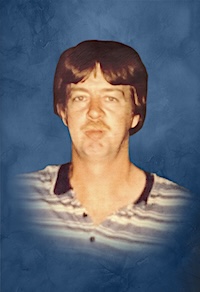
Dennis James Norton

Dennis James Norton, age 67, of Mount Airy, passed away peacefully on Friday, February 28, 2026.

Born in Demorest on October 2, 1958, Dennis was the son of the late Thomas Enoch Norton and Joyce Mote Norton. From an early age, he carried with him the values of hard work, loyalty, and devotion to family that would define his life.

Dennis was a skilled mechanic for many years, a trade he took great pride in. He had a special love for old cars and could often be found under the hood of a classic vehicle, bringing engines back to life with patience and care. To Dennis, working on cars was more than a job or hobby — it was a craft that reflected his steady hands and determined spirit.

A proud veteran, Dennis honorably served his country in the United States Army. His time in service was a source of quiet pride, and he carried that sense of duty and commitment throughout his life.

Above all else, Dennis loved his family. He was a devoted husband to his beloved wife, Alice “Kay” Heaton Norton, and a proud father to his sons, Doug Norton (Amanda) and Brandon Norton. Nothing brought him greater joy than his grandchildren and great-grandchildren, who were the light of his life. Whether sharing stories, laughter, or simple moments together, Dennis treasured every second spent with them. In addition to his wife and sons, Dennis is survived by a host of extended family members and dear friends.

He will be remembered for his warm heart, his strong work ethic, and the deep love he had for those closest to him. His legacy lives on in the lessons he taught, the hands he held, and the cars he restored.

No formal services are scheduled at this time.

An online guest registry is available for the Norton family at www.mcgaheegriffinandmcentire.com.

McGahee-Griffin & McEntire Funeral Home of Cornelia, Georgia (706/778-8668) is in charge of arrangements.

Danny Jay Nicholson

Danny Jay Nicholson, age 79 of Clarkesville, passed away February 28, 2026.

Born in Clarkesville, Georgia, on December 24, 1946, Danny was the son of the late Willie Jay Nicholson and the late Sara Hunsucker Garbaccio. In addition to his parents, Danny was preceded in death by his daughter Karen Smith and stepfather Robert Garbaccio.

Danny was married to his wife, Maxine Worley Nicholson, for 60 years and enjoyed spending time with his family and traveling.  Throughout his career, Danny farmed poultry and cattle and worked as a contractor and a brick mason.

Survivors include his wife Maxine Worley Nicholson, daughters Yvonne Hefner, Susan (Tim) Goss, and son-in-law Marty Smith, grandchildren Danny (Kristen) Mote, Dylan (Kelley) Mote, Jeffery (Whitney) Smith, Katie Smith, Chloe (Patton) Strong, and Caroline Turpin, great grandchildren Sally Lee Smith, Marshall Mote and Micah Mote, and his brother David (Dawn) Nicholson, as well as numerous extended family members.

Funeral services will be held at 3:00 PM, Sunday, March 1, 2026, at Hillside Memorial Chapel with Rev. Kenny Kilby officiating.  The family will receive friends from 1:00 PM until 2:30 PM prior to the service.  Interment will follow the service in Hillside Gardens Cemetery.

An online guest book is available for those wishing to express condolences by visiting www.hillsidememorialchapel.com.

Arrangements are in the care and professional direction of Hillside Memorial Chapel & Gardens, Clarkesville.