Home Blog Page 1765

House Dems to unveil revamped voting rights bill

WASHINGTON (GA Recorder) — House Democrats plan to unveil next week a new version of legislation named after the late Georgia civil rights icon Rep. John Lewis that could protect voting rights across the U.S.

During a Friday press conference, House Democratic Whip Jim Clyburn of South Carolina said that House Democrats are expected to introduce a revised H.R. 4, the John Lewis Voting Rights and Advancement Act, on Aug. 6. That is the same date that the Voting Rights Act of 1965 was signed by President Lyndon B. Johnson.

Clyburn said that many House Democrats are in favor of including provisions that would bolster the Voting Rights Act by establishing a new formula to require all 50 states to get special permission from the Justice Department before making any changes to voting laws or putting in place new voting requirements.

Democrats and the White House have repeatedly criticized new laws passed by Republicans at the state level that contain a variety of voting restrictions.

“There’s tremendous sentiment in our caucus for expanding preclearance to all 50 states, and that is because 48 states have either proposed or passed… restrictive laws,” Clyburn said. Preclearance would mean getting federal approval for changes in voting laws.

He said that means that many of those states would not have been covered by earlier preclearance requirements because they don’t have a history of discrimination.

The House in the last session of Congress passed another version of voting rights legislation named for Lewis, but it was not taken up in the GOP-controlled Senate.

Senate negotiations

Minnesota Sen. Amy Klobuchar, who chairs the Senate Rules & Administration Committee, said Thursday that the Senate is currently working on a voting rights package that includes strengthening the Voting Rights Act of 1965 and senators are close to a deal.

An elections overhaul known as the “For the People Act” would undo many of the recent voting laws put in place by Republican-led states. It passed the House, but Republicans blocked it in the Senate earlier this year.

House Speaker Nancy Pelosi, at the press conference with Clyburn, said she has not seen the voting legislation that the Senate is currently working on, but added that the House would be ready to quickly pass H.R. 4 once it’s introduced.

If the House adjourns for recess as scheduled Friday, though, that may not happen until lawmakers return in September.

“This is the highest priority for us,” Pelosi said. “The sanctity of the vote, the basis for a democracy and the assault on the democracy that is being perpetuated across the country, in states across the country, to suppress the vote in a way that just undermines the strength of our democracy.”

Pelosi and Senate Majority Leader Chuck Schumer are expected to meet soon with President Joe Biden about further action on voting rights.

Flurry of state laws

The flurry of restrictive voting legislation spurred by Republican state legislatures is due to the outcome of the 2020 presidential election, where Joe Biden won several states, including Georgia and Pennsylvania, that former President Donald Trump won in 2016.

Georgia has become known as “ground zero” in the fight for Democrats to protect voting rights as the state recently passed a restrictive voting bill that eliminates drop box locations, and makes it illegal to hand out food and water to a voter within 150 feet of the polling place or 25 feet of any voter standing in line, the same distances from which campaign activity is barred, among other restrictions.

The Biden administration directed the Justice Department to sue the state over its newly passed voting law. Senate Democrats earlier this month held a field hearing in Georgia, headed up by Klobuchar, on voting rights.

As of July, state Republican lawmakers have introduced more than 400 bills with restrictive voting provisions across 49 states, according to the Brennan Center for Justice. Of those 18 states, 30 laws have been enacted with restrictive voting provisions.

Before the Section 5 preclearance requirement of the Voting Rights Act was struck down by the Supreme Court in 2013, it covered nine states and a handful of counties and municipalities with a history of discriminating against voters of color.

Those states included Alabama, Alaska, Arizona, Georgia, Louisiana, Mississippi, South Carolina, Texas and Virginia. Certain counties included in the preclearance requirement were in New York, Florida, North Carolina, California and South Dakota.

GOP support?

Clyburn said Friday that there is some Republican support for H.R. 4.

“How much Republican support, we don’t know,” he said. “But we do believe that we have a very good product.”

However, during a June U.S. House Judiciary panel hearing on H.R. 4, Republicans argued that reinstating the preclearance section of the 1965 Voting Rights Act was unnecessary because there is no discrimination in voting.

Democratic state legislators have pressed Congress to pass federal voting rights protections, outlining their struggles to fight voter restrictive laws put forth by Republicans at the state level.

Texas Democrats recently fled the state to halt a special session called by Republican Gov. Greg Abbott to pass a restrictive voting law.

Georgia Medicaid insurers may have to repay $500 million

Georgia is in line to recover $500 million from state Medicaid insurers for overpayments in 2020 and 2021, according to an insurance industry official who represents the companies.

The half-billion-dollar payout will come from two separate Medicaid recoveries, said Jesse Weathington, the executive director of the Georgia Quality Healthcare Association. Due to the federal role in financing Medicaid, much of the returned money would likely go to the U.S. government.

The insurers were told the reduction was due to many Medicaid patients skipping medical care during the COVID-19 pandemic, along with other adjustments, said Weathington.

“It was surprising in terms of timing and the amount,” Weathington said. He added that the three Medicaid insurers were not given detailed breakdowns of how the state actuary arrived at the numbers.

The Georgia Medicaid insurers – Peach State, Amerigroup and CareSource – are paid a per-member, per-month rate to care for Medicaid members.

These insurers continued to receive those payments from Medicaid while there was a dropoff in patient visits.

The repayments are known as clawbacks: When an organization believes it has overpaid for services, it takes steps to get back the money.

“Clawbacks mean people did not get health care,’’ said Laura Colbert, executive director of Georgians for a Healthy Future, a consumer advocacy group.

“Essentially, people may have missed services they needed last year. That’s no fault of the [Medicaid insurers] because we saw that happen across the board regardless of the type of insurance.  The state still has a right to address that based on their contract,” added Colbert.

The Department of Community Health, which runs Medicaid in the state, did not respond to GHN’s requests for comment.

The $202 million retrospective rate adjustment for 2020 is now awaiting approval from the federal Centers for Medicare & Medicaid Services, Weathington said. Another $300 million midyear adjustment for 2021 is currently under negotiation, he added.

Medicaid, jointly financed by the federal government and individual state governments, covers low-income and disabled residents. Georgia pays the Medicaid insurers over $4 billion each year to provide care to low-income children and other vulnerable populations. The state covers about one-third of those costs, with the feds funding the rest.

It’s unclear how much of the recovered funds will go to the feds and how much to Georgia’s coffers. But if it’s split by the normal funding formula, the state would gain more than $165 million.

The projected $500 million recovery comes after Medicaid insurers posted big profits during 2020, according to the Center for Children and Families at Georgetown University.

Before the pandemic, many states had measures in place to limit the profits that state Medicaid insurers could make on their contracts and ensure taxpayer dollars went to patient care. Georgia was not one of those states, according to the Center on Budget and Policy Priorities.

Other states have adopted or bolstered measures to recover taxpayer dollars that went to Medicaid programs while patients stayed home during the pandemic. There are different ways states can do this.

For example, Virginia directed state Medicaid insurers to increase payments to medical providers.

Two of the Georgia insurers – Peach State and Amerigroup – are owned by publicly traded, for-profit corporations, Centene and Anthem, respectively. Centene last year acquired WellCare, another Medicaid insurer,  and closed down its WellCare Medicaid operations in May.


A third Medicaid insurer, CareSource, is a nonprofit company based in Ohio.


Rebecca Grapevine is a freelance journalist who was born and raised in Georgia. She has written about public health in both India and the United States, and she holds a doctorate in history from the University of Michigan.

Garden contest with a tropical flair

3 quart red hibiscus from Lowe's of Cornelia.

Hibiscus puts on a show in our gardens from summer through the first frost. Are you growing one of these tropical beauties in your yard?

Our monthly Green Thumb Gardening contest kicks off today with a chance to win a tropical hibiscus. Isn’t the sound of that exciting? Flowers and plants come and go this time of year but the hibiscus is there for the long haul, blooming from summer until the first hard frost.

Yesterday’s gardening column featured everything you need to know about growing and caring for these tropical flowering plants. Creating a tropical paradise with hibiscus.

Post a picture of the hibiscus in your landscape for a chance to win another. Every gardener knows you can never have too many.

Thanks again to Lowe’s in Cornelia for providing our monthly gardening giveaways!

Visit our Facebook page for a chance to win one of these beauties for your yard to enjoy a taste of the tropics.

The contest ends Monday, August 2 at 12:00 pm. Our winner will be announced Tuesday morning.

Show us your hibiscus and good luck!

Old

Old is writer/director M. Night Shyamalan’s latest thriller, but it might as well be called his latest disappointment. He once again crafts an intriguing premise, but it’s mired in the usual trappings of pretentiousness and ludicrous payoffs — not to mention, it’s also unintentionally hilarious.

The movie stars Gael Garcia Bernal and Vicky Krieps as a married couple who are about to be divorced so they take their kids on a last vacation. Alex Wolff and Thomasin McKenzie costar as their kids.

They go to a tropical resort with a private beach as recommended by the resort’s manager and while they’re visiting, they encounter other people also exploring the beach including a doctor (Rufus Sewell) and his wife (Abby Lee) and their daughter (Eliza Scanlen). Others include another physician (Ken Luang) and his epileptic wife (Nikki Amuka-Bird).

Soon after they’re on the beach, strange occurrences take place such as the married couples’ two kids rapidly aging into teens. The rest of the party tries to make sense out of the predicament, but oftentimes, they’re left with more questions than answers. So are we.

Other nonsensical moments include an increasing amount of disturbing behavior that leads to the party trying to kill off one another. One character’s revelations are so ridiculous that we don’t even care when it’s revealed. That’s how I felt about a lot of Old.

As I mentioned, Old is filled with moments of unintentional hilarity and seems to be a specialty of Shyamalan’s. Idiotic dialogue and plot twists either make us howl with laughter or roll our eyes. No sense of shock or amazement is to be found. Here’s another example of a good cast and a great production put under the services of a lame script.

Old is appropriately named because so many moments are lethargic in nature. At other times, this movie is odd, scare-free, and silly. Just when we hope there’s a method to the madness, we realize there’s only madness.

Grade: C-

(Rated PG-13 for strong violence, disturbing images, suggestive content, partial nudity and brief strong language.)

White County BOE Chair fires back against Critical Race Theory charges

CLEVELAND – At a board of education meeting earlier this week some White County citizens accused the school system of teaching Critical Race Theory or working to implement such teaching.

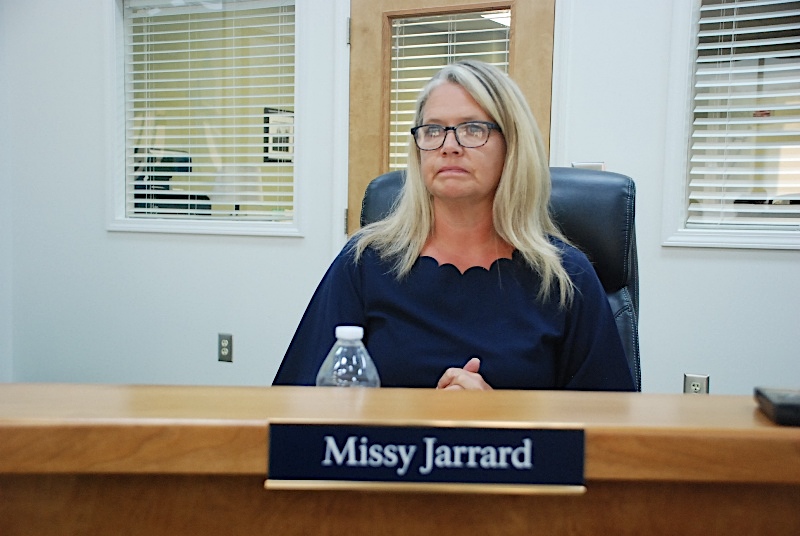
At Thursday night’s White County Board of Education meeting, Board Chair Missy Jarrard vehemently denied those accusations. Noting that she was only speaking for herself, not other board members or the superintendent, Jarrard told a large crowd, “since Tuesday’s meeting this is all I have thought about.”

Jarrard was emphatic in her comments.

“The statement I would like to make is this group, this teacher discussion group, did not have impact whatsoever on the instruction or curriculum used in White County School System. White County School System does not instruct students on critical race theory,” the BOE chair said.

While she noted that some may not believe her, Jarrard pointed out she has two children in White County schools. “I wouldn’t have them here if I didn’t believe in the school system.” She added that every student that comes into the school buildings will be loved and will feel safe and they will be taught factual knowledge from the Georgia state standards.

An educator herself, Jarrard urged White County parents to get the facts and do their own investigation. She called on all citizens to “ask your students, ask your children, your grandchildren what did you learn today? What did you talk about? Get involved.” In addition, the BOE Chair urged parents to meet with teachers and ask to see the curriculum if they have any doubts about what’s being taught. “Ask to see the Georgia State Standards – ask to see those – ask to see the lesson plans. You can do that. Get involved in your schools, ask those questions and I think you will be pleasantly surprised.”

The only other board member to speak about this issue Thursday night was Charlie Thomas who said, “It’s really simple. As Missy said, Critical Race Theory is not taught in White County nor will it be taught in White County.”

Lillie Irene Dill Hunnicutt

Lillie Irene Dill Hunnicutt, age 90 of Cornelia, passed away on Thursday, July 29, 2021.

Born in Mt. Airy, Georgia, on October 29, 1930, she was a daughter of the late Henry Hershel Dill and Lillie Estelle Mote Dill.

In addition to her parents, she was preceded in death by her husband, Harold C. Hunnicutt; a daughter, Barbara Jean Thomas; brothers, John Henry Dill and George Omer Dill; and a sister, Willie Mae Robinson.

Surviving are her daughters, Jenny Sue Thomas and Fay Thomas, both of Ohio; sisters, Annie Ruth Wiley and Betty Elizabeth Smith, both of Cornelia and Leona Butler of Mt. Airy; several nieces, nephews, other relatives and friends also survive.

There will be a visitation service from 4-6 pm on Tuesday, August 3, 2021, at the funeral home.

Those in attendance are asked to please adhere to the public health and social distancing guidelines regarding COVID-19.

An online guest register is available and may be viewed at www.mcgaheegriffinandstewart.com.

McGahee-Griffin & Stewart Funeral Home of Cornelia, Georgia (706/778-8668) is in charge of arrangements.

Two killed in single-vehicle crash in Stephens County

fatal accident

A late-night accident in Stephens County claimed the lives of two Toccoa residents. The Georgia State Patrol identifies them as 19-year-old Micah Kaden Ferreira and Andrew Billy Crunkelton, age 20.

The accident happened just after 11 p.m. Thursday, July 29, on Prather Bridge Road at Holly Creek Drive.

“A Trooper investigated the accident and determined that a Nissan 5D Sedan traveled off the roadway, overturned, and then struck a tree,” says GSP Post 7 Commander Donnie Sadler. “Both driver and passenger in the vehicle sustained fatal injuries during the accident.”

According to Sadler, Ferreira was driving the vehicle. He adds that at this time, there is no further information to release.

COVID spread in Georgia driving patients to urgent care, hospitals

Georgia’s COVID case numbers jumped by 4,800 in the state figures reported Thursday, continuing a recent upswing that’s apparently fueled by the Delta variant.

“It is believed that the Delta variant is highly prevalent throughout Georgia,” said Dr. Charles Ruis, health director in the Southwest Health District, which is based in Albany. “The best way to prevent a COVID-related death is to get vaccinated, and vaccines are widely available in our region.”

Urgent care centers in the metro Atlanta area were slammed Wednesday with patients, many asking for COVID tests.

Bulloch County

A similar patient crunch occurred in Bulloch County in east Georgia, where most arrivals at one urgent care center Wednesday were tested for COVID, reported news outlet Grice Connect. It added that urgent care facilities and other providers were dealing with a shortage of testing supplies.

On Thursday, dozens of hospitals around the state reported having severely overcrowded emergency rooms. Several were in the Piedmont Healthcare network.

“As has been the case throughout the pandemic and as indicated by publicly available government data, our COVID-19 hospitalization trend has followed the state’s, with caseloads varying across our hospitals based on the level of community spread in those local communities and their surrounding areas,’’ said John Manasso, a Piedmont spokesman.

“We continue to believe that our best way out of the pandemic – including addressing the state’s growing inpatient COVID population – is for those who are eligible to get vaccinated while also following CDC guidance: wear a mask when indoors in public areas, watch your distance and wash your hands.’’

The ER crowding extended to hospitals in the Emory, Wellstar, and Northside systems. Bibb/Macon and Augusta ERs were hard hit as well.

Emory Healthcare said Thursday that like many Georgia hospitals, its emergency departments “have been seeing higher volumes of non-COVID-19 patients, which is now exacerbated by a growing surge in COVID-19, resulting in increased wait times for patients who visit emergency rooms.”

“A number of states with lower vaccination rates, such as Georgia, are seeing similar trends,” said Emory in a statement. “Patients are also presenting with a higher degree of illness which requires more resources to provide care, leading to longer stays in the emergency departments, and more patients are requiring admission to our hospitals, which are also busy. We strongly encourage everyone who is eligible to get a COVID-19 vaccination as soon as possible to help protect themselves, their families and our community.”

Several Georgia hospitals said they were diverting ambulances because ICU and other beds were filled.

The increasing COVID numbers did not deter Gov. Brian Kemp from tweeting Wednesday that Georgia “will not lock down or impose statewide mask mandates.

“As the first state in the country to reopen over a year ago, we’ve proven that Georgians know how to come together and protect themselves and their loved ones,” Kemp said.

Kemp

“The data is clear,’’ Kemp said. “Thanks to efforts initiated under the Trump administration, we have a medical miracle in multiple vaccines that protect from the virus and save lives. Nearly all new COVID hospitalizations in Georgia are among the unvaccinated.”

“Georgians know the risks and they know these safe, effective vaccines are our greatest tool to defeat COVID-19.”

New numbers from Georgia’s Department of Public Health show that more than 98% of the over 335,000 COVID-19 cases recorded since mid-January were among the unvaccinated, GPB reported.

Georgia reports 40 percent of residents as fully vaccinated, one of the lowest rates in the U.S.

Kemp added that the “biggest obstacle to getting more people vaccinated” came from “mixed messages” in Washington D.C. and “those with partisan agendas.”

Still, more school systems announced mask requirements for staff and students. The AJC reported Thursday that Drew Charter School in Atlanta will quarantine more than 100 students after two students and two employees tested positive for COVID-19 in the first week of classes.

Bottoms

The City of Atlanta joined Savannah in issuing a mask requirement for inside public buildings. Mayor Keisha Lance Bottoms issued the order “requiring all persons in a public place, including private businesses and establishments, to wear a mask or a cloth face covering over their nose and mouth when indoors.”

The CDC, noting the rising danger from the Delta variant, announced this week that it is recommending masks again for vaccinated people in some cases.

“Public health experts overwhelmingly agree, and the data has proved, that wearing a face-covering helps slow the spread of the deadly virus,” Bottoms said in a statement.

Dr. Harry Heiman, a public health expert at Georgia State University, said that Thursday’s high COVID case numbers and hospitalizations “are exactly what many public health experts have been warning about. Georgia and our surrounding Southern states are the perfect setting for a surge from the Delta variant due to our low vaccination rates and lack of community-level mitigation.”

“We are seeing the same inaction from our state’s political and public health leaders that we saw last summer and last winter — leading to many preventable hospitalizations and deaths,” Heiman added. “It is imperative that state leadership take stronger actions now — targeted to vaccine outreach and community-level mitigation, including ensuring that all K-12 schools have mask mandates and state universities have both vaccination mandates and mask mandates to ensure safe environments for students, faculty, and staff.”

COVID-19 vaccine facts and information

EDITOR’S NOTE: After meeting with the Habersham Board of Health regarding the county’s low vaccination rate, District 2 Public Health Director Dr. Zachary Taylor released the following information.  

It is important to know the facts about the COVID-19 vaccine and have accurate information for individuals to make informed decisions about getting the vaccine. District Two Public Health is providing up-to-date vaccine information to improve understanding within the community regarding the COVID-19 vaccine.

In Habersham County, 13,929 residents have been fully vaccinated, 31 percent of the county population. In the U.S., 160 million people are fully vaccinated, 48 percent of the total population. Globally, 988 million people have been fully vaccinated, 13 percent of the world’s population.

It is safe to get a COVID-19 vaccine. Studies show COVID-19 vaccines are safe and effective for children 12 years and older and adults. The vaccines have gone through the most intensive safety monitoring in the United States. Over 30,000 persons participated in the clinical trials establishing the safety and efficacy of the vaccine.

The ingredients in COVID-19 vaccines vary by manufacturer. However, there are no preservatives, eggs, latex, or metals in the vaccine. None of the vaccines contain mercury.

A COVID-19 vaccine will not alter DNA. mRNA and viral vector vaccines deliver instructions to our cells to start building protection against the virus that causes COVID-19. The material never enters DNA cells.

Depending on the COVID-19 vaccine an individual receives, the number of doses needed may be one dose or two doses. Pfizer vaccines require two doses three weeks apart. Moderna vaccines require two doses one month apart. The Johnson & Johnson vaccine is only one dose.

It is not uncommon to experience side effects after receiving the COVID-19 vaccine; these are signs the body is building protection against the virus. An individual may experience pain, redness, and swelling at the injection site. Other side effects may include tiredness, headache, muscle pain, chills, fever, and nausea several days after receiving the vaccine.

An individual should be vaccinated even if they have had COVID-19 in the past. Experts do not know how long an individual is protected from getting sick again from the virus. The vaccine provides a strong boost of protection for individuals who have recovered from COVD-19.

COVID-19 vaccines are available at all county health departments, no appointment is necessary and walk-ins will be accepted or visit vaccines.gov to find a vaccine location near you.

Life in Motion: Big Red is back

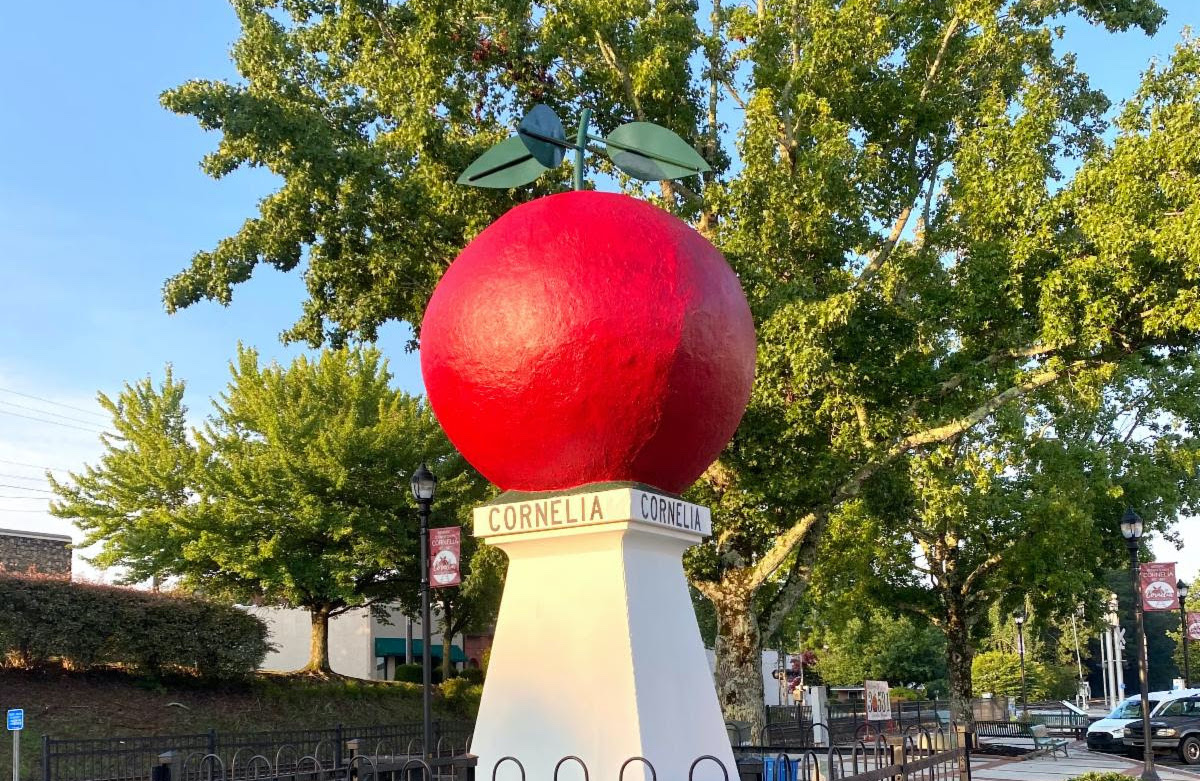
The Big Red Apple in downtown Cornelia has been repainted - again - to return it to its iconic look. (photo courtesy City of Cornelia)

After months spent looking like a faded version of itself, Cornelia’s Big Red Apple is back!

The iconic local landmark, which celebrates the city’s apple-growing heritage, is again the deep, rich red color for which it has long been known. The 5200-pound steel and concrete structure turned a pinkish shade of orange after a restoration project earlier this year. But the city proudly announced this week the color misstep has been corrected.

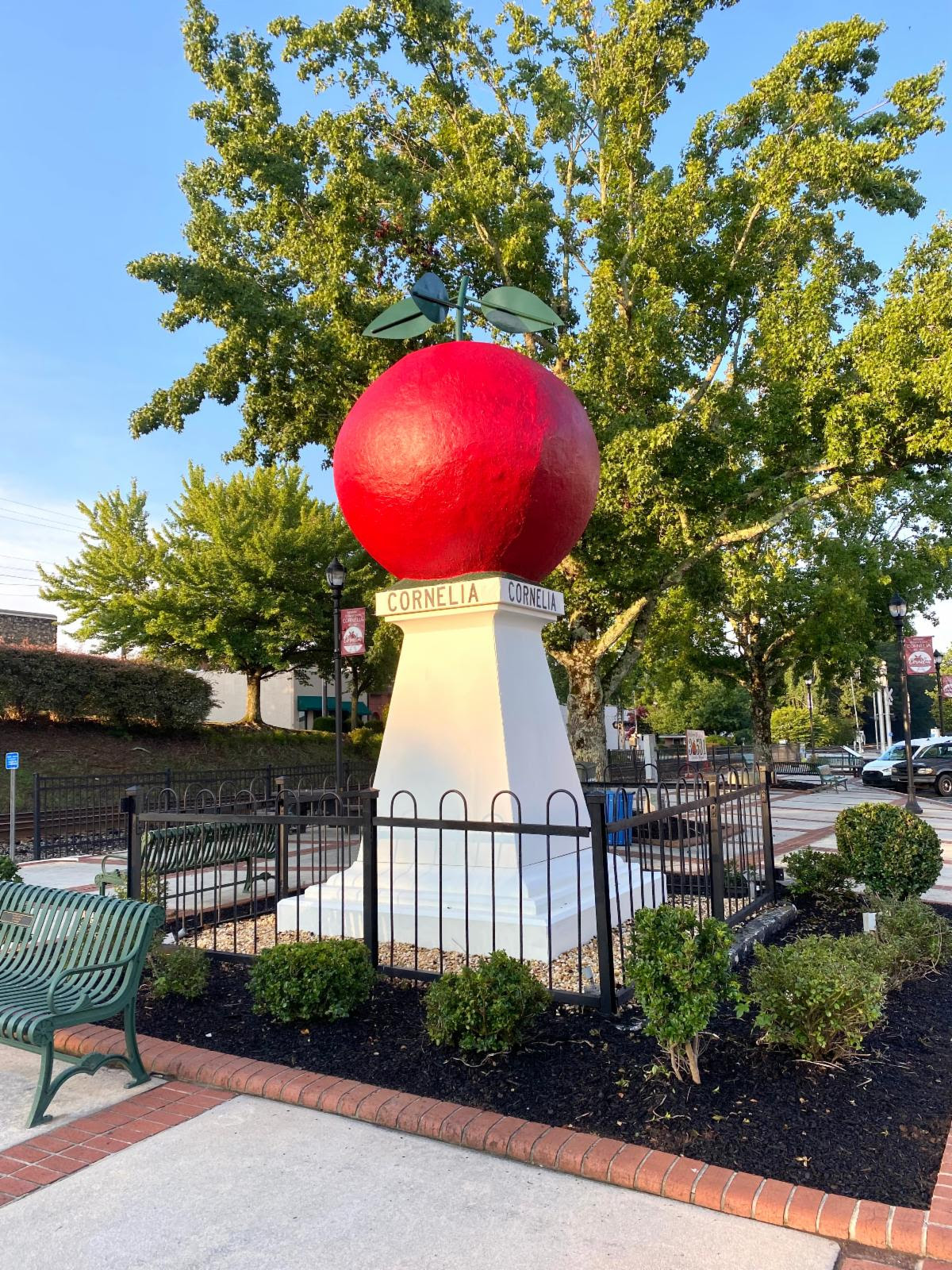
The 15-foot-tall monument was built in Winchester, Virginia, in 1925 and shipped to Cornelia by train. (photo courtesy City of Cornelia)

“It took several attempts to get the color correct, but the contractor was able to apply the correct shade of red on the apple this weekend,” the city says.

Built in 1925, the apple itself stands 7 feet high and is 22 feet in circumference. It sits atop an 8-foot-high pedestal on the grounds of the old railway depot in Cornelia, according to information on the city’s website.

The monument was constructed in Winchester, Virginia, and shipped to Cornelia by train. It has long been the town’s symbol and local gathering spot for the annual Big Red Apple Festival, which takes place each fall.

Calls for transparency during Georgia redistricting a common refrain

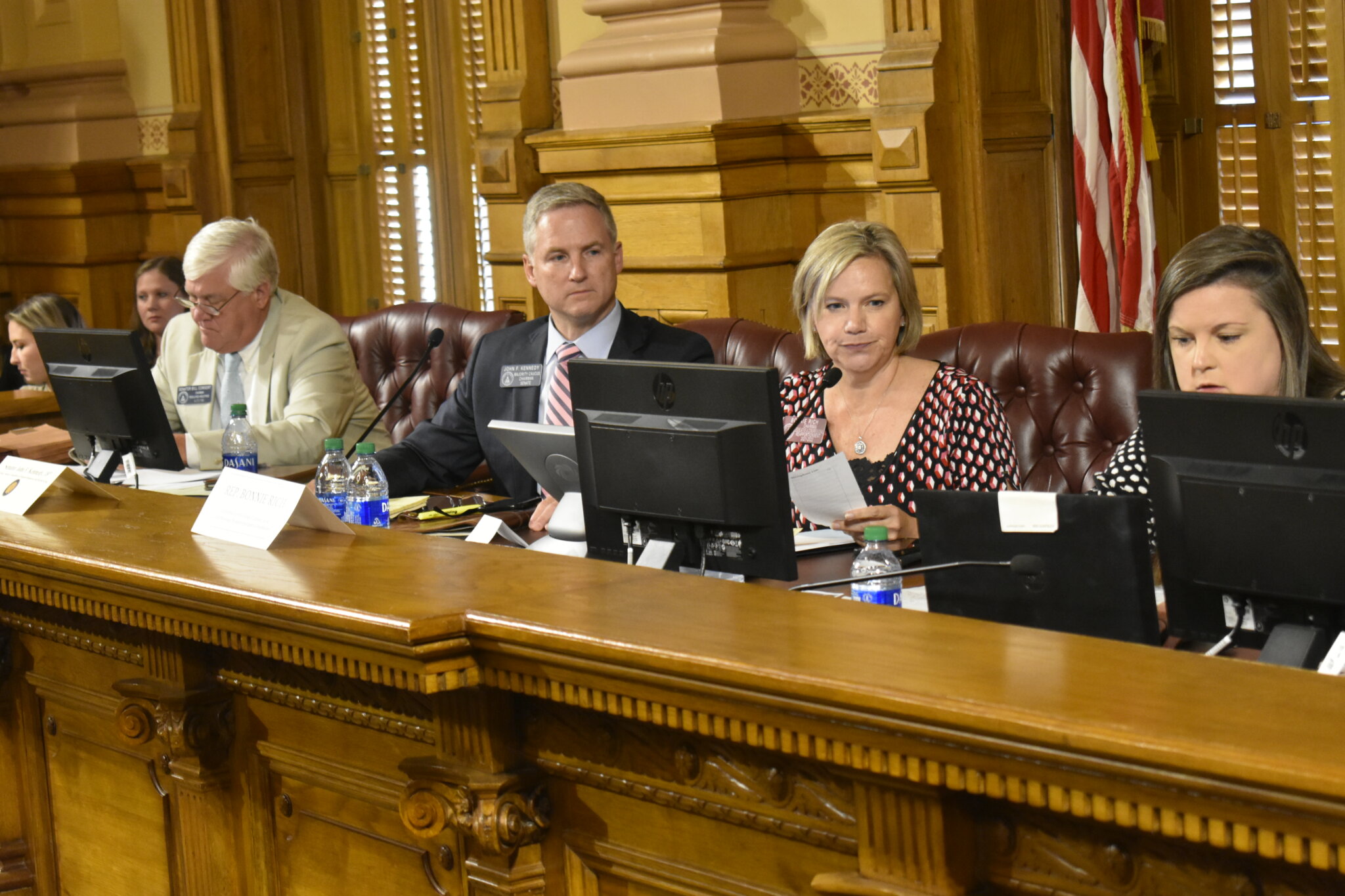
State redistricting chairs Sen. John F. Kennedy and Rep. Bonnie Rich, center, have been holding a series of public hearings to launch Georgia’s once-a-decade revamp of the state’s political landscape. (Ross Williams/Georgia Recorder)

When lawmakers from the Georgia committees tasked with the once-a-decade redrawing of congressional and legislative district lines came to Columbus Wednesday, Martha Saunders made the trek down from Carroll County with two other women to share their worries about transparency when lawmakers sharpen their mapmaking pencils.

“Like many others, we are concerned about how the process will work,” she said. “Will we as citizens be made aware of the rules and guidelines that determine the outcomes? Will we be able to see drafts of maps as soon as they are drawn and be able to publicly react to those drafts?”

Saunders said she’s concerned that four different state representatives with divided attention represent parts of Carroll County, pop. 120,000 – Republican Reps. Tyler Smith of Bremen, J. Collins of Villa Rica, Lynn Smith of Newnan, Randy Nix of Lagrange, all of whom also represent territory outside of the west Georgia county.

“There is no House legislator whose sole responsibility is our county’s welfare and interests,” Saunders said. “Compactness and preservation of existing political communities are two of the criteria for drawing legislative districts. We ask that the joint appropriation and redistricting committee make the system transparent and allow all citizens to see and react to the district maps that involve their counties.”

The committee members’ whirlwind tour of the state is winding down. A Macon hearing Thursday was the last in-person meeting scheduled for the year, though lawmakers say they still plan to host a make-up hearing in the Augusta area after dangerous weather canceled one scheduled early this month, and a virtual meeting is set for Friday at 5 p.m.

More hearings needed

But while the town halls are almost over, some long for another chance to have their say on the maps in the fall — preferably once preliminary maps actually exist.

In a normal redistricting year, lawmakers would have all the population data from the U.S. Census Bureau they need to start crafting maps by March, but with the headcounts delayed last year because of the pandemic, that data is not expected to reach states until Aug. 16, according to the U.S. Census Bureau. Sometime after that, Gov. Brian Kemp is due to call a special session of the state Legislature to hash out the maps’ details.

That delay will probably leave no time for public hearings after the data comes in, said Rep. Bonnie Rich, the Suwanee Republican who chairs the House Legislative and Congressional Reapportionment Committee. Qualifying begins next spring for state legislative and congressional office, and candidates need to know which district they live in before they decide to run.

“We are going to be on an extremely compressed timeline to draw the maps before we need to qualify for elections,” Rich said at Wednesday’s hearing at Columbus State University. “A lot of people are asking us to make this tour a second time, and I don’t know that that’s going to be physically possible in order for us to meet our legal requirements to draw these maps.”

But not allowing public comment on proposed maps would mean people like Saunders would have no recourse if lawmakers do not listen to their concerns, said Ken Lawler, chair of the non-partisan anti-gerrymandering group Fair Districts Georgia.

“These listening sessions that we’re doing now are fine, but they’re not enough. The public wants to see the maps and be able to (have) input and comment on the maps themselves,” he said. “That’s where the public can have the most impact is commenting on the maps, and if we don’t get hearings when the maps are out, some extensive public hearings, then there’s really no chance to influence them after that.”

The sooner Gov. Brian Kemp approves the maps, the easier things will be for the candidates on the ballot in 2022, but Georgia has no law that specifies when redistricting has to occur, Lawler said.

“Our thinking is that there should be enough time to hold hearings on the maps themselves, besides just the special session, which tends to be a very short affair,” he said. “There should be enough time to go back around the state and give the public a chance to comment on the maps.”

Still no guidelines

Also not scheduled until after the public hearings are over is the approval of the guidelines the lawmakers will use to create the maps.

Last decade’s guidelines outlined important aspects of the process like general principles for map drawing, limits for public access to documents, and the requirements for submitting a proposed or alternative map.

Still, those committee rules do not have the force of law behind them — in 2011, lawmakers built themselves an escape hatch in their list of criteria for creating district boundaries: “The identifying of these criteria is not intended to limit the consideration of any other principles or factors that the Committee deems appropriate.”

Fair Districts and other advocacy groups submitted their own proposed guidelines in April, a list that includes the immediate release of maps on a public website, the publication of factors leading to the creation of boundaries, and an analysis of how the proposed borders will affect minority communities. As of Thursday, the group has not received a response, Lawler said.

Georgia transparency law loopholes also make it more difficult for open government advocates to get a glimpse into the proverbial smoke-filled rooms.

“All of this is secret because of the way the laws are written,” Lawler said. “It’s not enough to say the guidelines are not very good. The General Assembly is not subject to the Open Meetings Act, the Open Records Act, and there are some provisions in the law that specifically draw a privileged circle around all the communications with the staff people and the committees that do this work. It’s only when they’re meeting in a public hearing that you see what’s going on. So, unfortunately, we have structural problems. And in the long run, that’s what’s got to get changed.”

Incentives to change

Change is unlikely, said University of Georgia political science professor Charles Bullock. For now, Republicans can use their power to protect their majority, and whenever Democrats take back control, they, too, will be tempted to wield power to cement their authority.

“People would like to see this done in an open forum. It ain’t going to happen,” Bullock said. “It never has, it probably never will, as long as it’s being done by partisans. Maps will be drawn, probably, by technicians in the Georgia reapportionment office with a good deal of input from Republicans. Democrats, the first time they see it may be the first time that the public sees it.”

States in which citizens can initiate votes on constitutional amendments have had an easier time reforming their redistricting process, but in states like Georgia, in which citizens do not have that right, advocates have to rely on lawmakers willingly giving up power.

That’s been rare, but it happened in Virginia last November when voters approved a constitutional amendment putting the power to redraw map lines in the hands of a nonpartisan commission rather than the state’s General Assembly.

The measure found enough support from lawmakers to pass as the state’s Republican majority fell into jeopardy. There’s a chance that could happen in Georgia, but Bullock said it’s not likely anytime soon.

“Maybe in 10 years,” he said. “Right now, Republicans have a trifecta, they get to draw the maps, and there’s no need for them to give up their power now. Some way well into the decade, Republicans may size up the situation, and if they say, ‘We don’t think we’re going to be able to maintain a majority in both chambers.’ At that point, they might say, ‘Let’s give this to an independent commission.’ But right now, I don’t think Republicans think they will be unable to maintain a majority.”

Owensby graduates as Fellow of Appalachian Leadership Institute

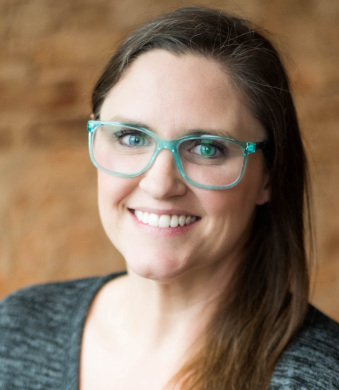
Jessie Owensby

CORNELIA – Cornelia Community Development Director Jessie Owensby was one of 38 fellows who graduated from the Appalachian Leadership Institute this month. The Institute is a leadership and economic development program sponsored by the Appalachian Regional Commission.

Members of the Class of 2021 and their friends and family attended the ceremony – 24 in-person in Washington, DC, and 14 virtually – on July 15.

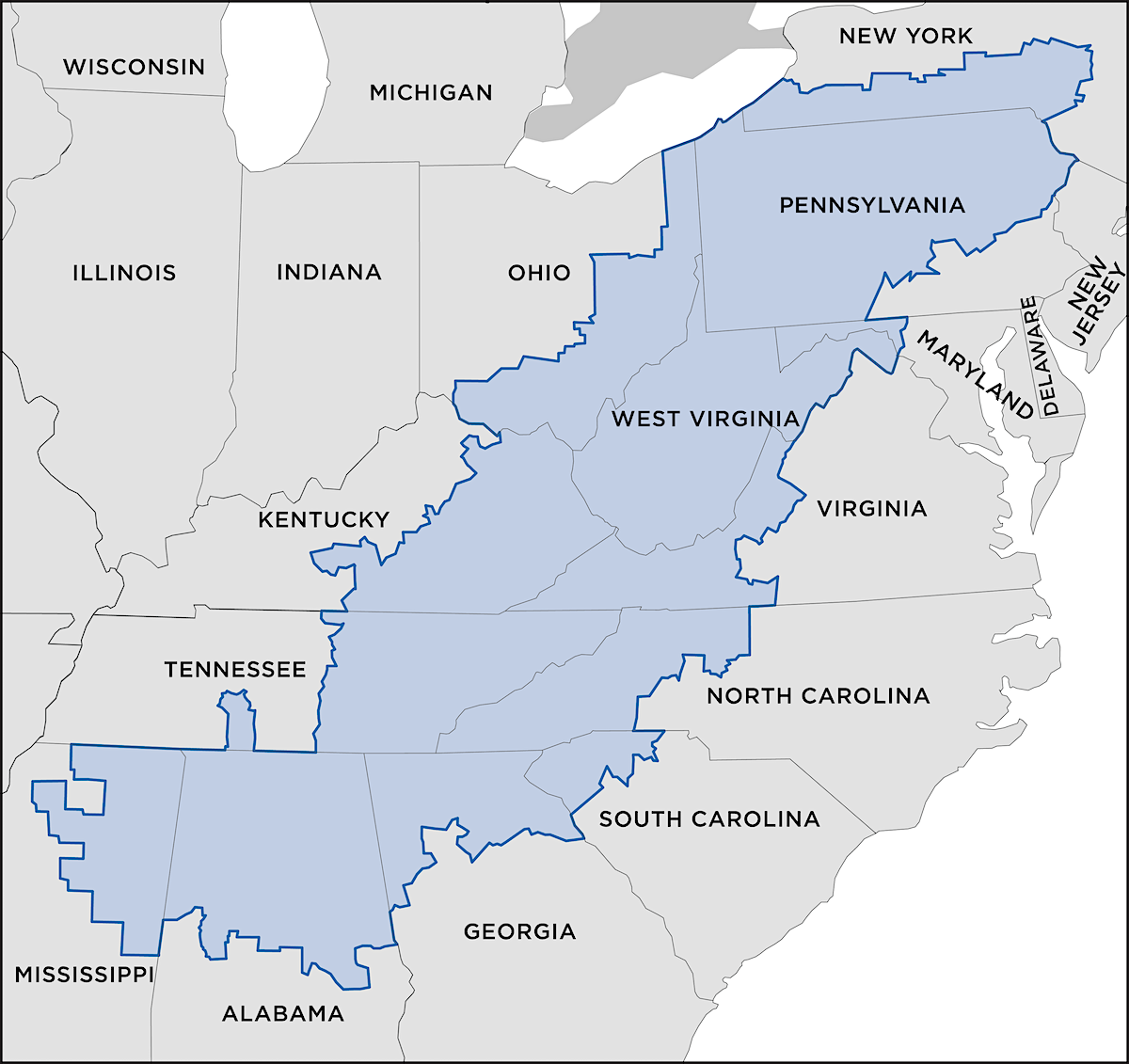
The Appalachian Regional Commission is an economic development agency of the federal government and 13 state governments focusing on 420 counties across the Appalachian Region. (Image source: arc.gov)

“We congratulate the 2021 class of Appalachian Leadership Institute Fellows. In addition to network building, the Fellows have been hard at work over the last nine months building skills needed to help their communities thrive,” said ARC Federal Co-Chair Gayle Manchin.
“The Appalachian Leadership Institute gives local leaders the tools to make their communities stronger and more resilient,” said ARC States’ Co-Chair, Virginia Governor Ralph Northam.

In the nine months leading up to graduation, Owensby participated in six virtual sessions, all of which included skill-building seminars with regional experts, peer-to-peer learning, and case study analysis. All aspects of the curriculum were designed to equip fellows with the knowledge and network needed to create positive change in their communities. Owensby was one of three fellows representing Georgia in the class.

“I feel so honored to have been part of this amazing team of people who are doing their part to improve Appalachia. It’s great to see different communities with different demographics, psychographics, and industries coming together to develop solutions to common problems. I’m grateful to the Appalachian Regional Commission and the City of Cornelia for the opportunity.”

As a graduate of the Appalachian Leadership Institute, Owensby is now part of the Appalachian Leadership Institute Alumni Network. With each graduating class, the network will continue to grow, connect leaders, and facilitate continued learning and idea exchange across the 13 Appalachian states.