
Home Blog Page 1757

2020 census shows increase in Georgia minorities, population shift to metro areas

In October, Gov. Brian Kemp and first lady Marty Kemp wore 2020 Census face masks to urge Georgians to fill out their census forms. The U.S. Census Bureau sent the data back to Georgia Thursday. (Ross Williams/Georgia Recorder)

(GA Recorder) — Georgia’s population is more diverse and more concentrated around cities than ever before, according to data released by the U.S. Census Bureau Thursday.

More Georgians 18 and older told census takers in 2020 that they identify as more than one race – 5.9%, compared with 1.5% in 2010. The numbers of Black, Latino and Asian Georgians increased, while the proportion of Georgians identifying as only white dropped from 59.7% in 2010 to 51.9% in the latest data.

“Diversity has arrived in Georgia in a huge way,” said Ken Lawler, chair of the non-partisan anti-gerrymandering group Fair Districts Georgia. “We’re diverse, and drawing maps to reflect that diversity is going to be the challenge.”

During the last decade, Georgia’s population grew from about 9.6 million to more than 10.7 million, and most of those new Georgia residents are living in a large metropolitan area such as Savannah, Augusta or Atlanta, whose surrounding counties welcomed the most new residents in the last ten years. Most of rural south Georgia lost population or stayed about the same.

The maps released by the U.S. Census Bureau will shape policy decisions in Georgia communities for the next decade and inform how billions of federal dollars will be distributed. More immediately, the data will be used to draw new state and congressional maps in a special Legislative session later this year. The date of that session is yet to be announced, and lawmakers are on a rushed schedule this year because of delays to the 2020 census caused by COVID-19.

“Usually we get these data right at the end of the census years, we would have gotten it back in late December, and we would then have a special session or in late August or early September,” said University of Georgia political science professor Charles Bullock. “Here we are getting it in August, and we really can’t wait eight or nine months to have a session because qualifying will be coming along in March, so that’s going to require that work that would be spread out over quite a few months be shortened.”

Lawmakers are likely already busy breaking down the census numbers to start planning the maps, Bullock added.

“The data that comes from the Census Bureau at the census block level, and that’s not really what’s of the most interest to the political figures that are drawing the districts,” Bullock said. “They’re interested in whether the district they draw is going to be a Democratic or Republican district or a toss-up district. So what you have to do is to aggregate up the census block data until you get to the precinct level because precincts are the lowest level at which you get electoral data, and so they will be building up from the census block level to the precinct level, and then merging the census data with the political data.”

Because congressional and legislative districts must have equal populations, that will mean districts in south Georgia will likely get bigger on the map, while metro Atlanta’s districts will continue to shrink.

“The districts are all going to look very, very different. That’s true for the congressional, and it’s true for the House and Senate,” Lawler said. “The maps are going to look quite different, quite new, I think I’ll be surprised if they resemble the old maps at all.”

As the majority in Georgia’s Legislature, Republicans will hold the pencil for this year’s map-drawing and will likely work to create maps that will help them hang on to their advantage.

“I think there are some positive sides, we’re seeing some more politically mixed populations in suburban and exurban areas,” said Alex Tausanovitch, director of Campaign Finance and Electoral Reform at the Center for American Progress, a liberal-leaning think tank. “That makes it a little bit more challenging to draw an optimal gerrymander.”

Bullock agreed — the Atlanta suburbs are likely to remain at the center of the swing state’s political battles for the foreseeable future.

“You could see districts with some red precincts and some blue precincts. How do you do that?” Bullock said. “Do you draw bacon strips where the southern end of the district might be Democratic and you move it up north to make it Republican? Can you make it Republican enough to work for a decade? Or are these trends which we’ve seen taking place over the last couple of decades going to continue, that would mean increased diversity, especially moving further and further out from Atlanta?”

“Unfortunately, there are also other trends that are making it easier to gerrymander, like the availability of better gerrymandering software,” Tausanovitch added. “So I still think we have very gerrymandered districts in Georgia. It’s a state where the vote is very obviously very evenly split, nearly 50-50, between Democrats and Republicans, and yet, you’ve consistently had about eight Republicans to six Democrats in the House.”

In 2019, the U.S. Supreme Court ruled that partisan gerrymandering is not under the jurisdiction of federal courts, though racial gerrymandering is still illegal.

“Because the Supreme Court has recently said that there’s no constitutional restriction on partisan gerrymandering, I think what you’re going to see is gerrymandering in Georgia that is heavily based on party, but that has that as racial impacts,” Tausanovitch said. “So there are going to be districts that disadvantage Black and African American Georgians, but they’re going to be disadvantaged because of their political party rather than their race because that’s now the more viable legal route to limit political power.”

That could mean Democrats will have a more difficult time challenging the eventual maps if they plan on alleging racial bias.

“It’s certainly possible, but it is very difficult to win a case under the Voting Rights Act when the existing districts for people of a certain race are maintained and where there’s no proof of intent,” Tausanovitch said. “So it’d be, I think, very difficult to challenge the districts that are drawn as a partisan gerrymander on the basis that they disadvantaged African Americans.”

Georgia’s shifting population statistics will also affect groups like Fair Districts as they attempt to put out their own maps, Lawler said.

“Traditionally, Georgia’s districts were drawn pretty much, from a minority point of view, the Legislature looked at Black population versus others,” he said. “It was kind of a Black/ White story. It’s not that anymore. Do you look at minorities as a group, do you look at Blacks versus Hispanics? How do you make sense of all that, is the challenge. So I can’t say we have any answers yet, but I think the problem has become a little bit more complex, and it’s important to take those complexities into account given the magnitude of the changes that we’re seeing.”


FDA authorizes third COVID vaccine dose for people with weak immune systems

The Food and Drug Administration has authorized an additional dose of vaccine for people with weakened immune systems caused by disease, medical treatments, and organ transplants.

The federal panel approved the immunization boosts late Thursday.

“The country has entered yet another wave of the COVID-19 pandemic, and the FDA is especially cognizant that immunocompromised people are particularly at risk for severe disease. After a thorough review of the available data, the FDA determined that this small, vulnerable group may benefit from a third dose of the Pfizer-BioNTech or Moderna Vaccines,” says Acting FDA Commissioner Dr. Janet Woodcock.

The FDA’s action only applies to those with certain immune deficiencies, specifically, solid organ transplant recipients or those who are diagnosed with conditions that are considered to have a similar level of immunocompromise. The CDC estimates the population to be less than three percent of adults.

“As we’ve previously stated, other individuals who are fully vaccinated are adequately protected and do not need an additional dose of COVID-19 vaccine at this time,” Woodcock says.

“The science and resulting data in this pandemic are moving extremely rapidly. The U.S. government, in turn, is moving swiftly to analyze the science and make the recommendations most appropriate to protect Americans,” said Centers for Disease Control and Prevention Director Dr. Rochelle Walensky during a White House briefing on Thursday. “We know our vaccines are safe and effective. And if you have not gotten a vaccine yet, please do so today.”

The CDC’s Advisory Committee on Immunization Practices is scheduled to meet Friday to discuss further clinical recommendations regarding immunocompromised individuals.

Some countries have already started administering an additional dose to seniors based on studies showing a decline in immunity over time, GPB News reports. The committee is not scheduled to take any action on the broader question of boosters for the general population.

The Pfizer-BioNTech COVID-19 Vaccine is currently authorized for emergency use in individuals ages 12 and older, and the Moderna COVID-19 Vaccine is authorized for emergency use in individuals ages 18 and older. Both vaccines are administered as a series of two shots.

Baldwin to buy police body cams, fire department computers

Baldwin firefighters on the scene. (Daniel Purcell/Now Habersham)

The City of Baldwin met for their monthly meeting on Thursday, during which the council unanimously approved much-needed upgrades for Baldwin’s public safety departments, totalling more than $57,000.

The Baldwin Fire Department has made do with outdated computers for the last several years, and as the city works to improve their department and bring in new training options, the department was in desperate need of new computer technology.

The council voted unanimously to approve the purchase of two Microsoft Surface computers, which serve as both tablets and laptops, as well as Microsoft software and cybersecurity, for the department. The $6,603 dollar investment will be paid for with revenue from Baldwin’s speed zone.

In the police department, the city’s taser system is outdated, and Baldwin Police Cheif Jeff Branyon estimates the current system has about two years of life left. The council voted unanimously to enter into a five-year contract with Axon, a taser and body camera vendor, that would improve officer safety and department transparency.

The new taser system is integrated with the Axon body camera system. Whenever a taser is deployed, a weapon is drawn or a rifle is removed from an officer’s vehicle, a sensor detects this and automatically turns on the officer’s body camera. If a body camera turns on within 30 feet of another officer, their camera also begins recording.

For added transparency, when the officer’s camera is turned on, the camera also records the thirty seconds that passed before the camera was turned on. Video data is uploaded to a cloud database, where video recordings can easily be shared with courts.

“My goal is transparency, so when something happens, the first thing I’ll say is ‘let’s watch the video,'” Branyon told the council at their August work session. “We want to make sure we have it and that it’s available for us, the public, the media and everywhere that needs it.”

The new tasers are bright yellow, making it difficult for them to be confused with any other weapon, and is stored on the opposite side of the officer’s belt from their firearm. The taser itself also documents its use, storing data about when it was used, how many times it was deployed and other helpful information.

The new equipment will cost $50,620 in total, split over five years of payment. The first payment of $12,655 will be covered by speed zone revenue, and future payments will be budgeted for.

You can watch a recording of the meeting on the city’s Facebook page.

Health care rates to stay the same next year for state employees, teachers, retirees

Tens of thousands of Georgia teachers and state employees are getting good news on their health insurance costs for next year.

Members of the State Health Benefit Plan will have the same monthly premiums, co-pays and deductibles in 2022 as they have now, the Department of Community Health (DCH) announced at an agency board meeting Thursday.

The benefits plan covers more than 600,000 state employees, teachers, other school personnel, retirees and dependents. The members’ options for health plans will stay the same as well, DCH officials said.


Separately, the agency’s commissioner, Caylee Noggle, said at the board meeting that DCH is reviewing the state’s extraordinarily low rate of referring poor children to specialty services under Medicaid.

That inquiry was revealed after a board member, Mark Trail, a former state Medicaid director, asked the agency to look into the services gap, citing a recent Georgia Health News article about the issue.

Noggle responded that “the department is actively looking into that’’ to figure out whether the problem lies with an actual lack of referrals or with providers failing to report referrals.

The health screenings of Medicaid kids and the subsequent “corrective treatments’’ are required under the Early and Periodic Screening, Diagnostic and Treatment (EPSDT) program.

Noggle

The goal of EPSDT is to provide early detection and treatment of health conditions so children and adolescents covered by Medicaid can get appropriate preventive, dental, mental health, developmental and other specialty services.

Georgia in 2019 had 1.4 million children eligible for EPSDT. A recent report’s figures show the state is doing health screenings at recommended levels. But just 30,000 Georgia kids that same year were referred to corrective treatment for a health condition. That compares with Illinois, also with 1.4 million eligible kids, which referred more than 500,000 for services in 2019.

“EPSDT is essential to maintaining and improving the health of Georgia’s children, especially children with disabilities,” Susan Goico, director of the Disability Integration Project at the Atlanta Legal Aid Society, said Thursday.  “The state has an obligation under federal law to ensure that kids are connected to medically necessary treatment.  Understanding why this is not happening should be a high priority for DCH, and then corrective steps must be taken.”

A touchy issue at times

Premium increases in the State Health Benefit Plan, along with changes in health plan options, have in the past created political turmoil for state lawmakers and the governor’s offices.

In 2014, a wave of complaints arose from members of the plan, and some of them publicly protested, after employees were limited to one insurer, among other changes. That led to a quick fix for that year’s plan and to more revisions in the 2015 plan.

SEE ALSO: Insurer’s flock to offer coverage in 2022 exchange

But the news Thursday of flat rates in 2022 pleased organizations representing educators.

Morgan

Lisa Morgan, president of the Georgia Association of Educators, said in a statement that “our dedicated educators who continue to do a phenomenal job navigating the back and forth of this continuing COVID health crisis, will most surely be appreciative to see no increases in their premiums or out-of-pocket costs for health care. This past year has been especially demanding not only in the classroom but personally for their families. This is certainly welcome news.’’

And Ramona Mills of the Professional Association of Georgia Educators (PAGE) said that “amid escalating inflation and the ongoing challenges of the COVID-19 pandemic, a strong benefits package for teachers and school staff is essential. PAGE is pleased by the announcement today that there will be no State Health Benefit Plan premium increase, deductible increase, or benefit reduction for Georgia educators next calendar year.”

Open enrollment for State Benefit Health Plan members will run from Oct. 18 to Nov. 5.


Stephens County welcomes back former superintendent as interim

The Stephens County Board of Education has arranged for the county’s former superintendent Bryan Dorsey to assume those duties again on an interim basis.

Stephens County Schools Director of Human Resources John Stith III announced the board’s decision in a press release Thursday evening.

“It is the intention of the Board to pursue the hiring of a new, full-time Superintendent during the course of this next year, but having Bryan available to handle the administration of the school system on a day-to-day basis allows the Board to focus on the important task of selecting the next full-time leader of our school system,” the release states.

Dorsey will assume the position on a part-time basis, consistent with state retirement rules. He will work closely with the school system’s administrative staff to “provide the leadership that is needed as we enter into a new school year.”

The announcement of Dorsey’s return comes less than one week after the Stephens County school board let Dr. Daniel Oldham go as superintendent after one year on the job.

Stillwater

Stillwater is a drama that mixes familiar themes with a screenplay that may seem formulaic, but in this case, the formula works and becomes genuinely engaging.

Matt Damon stars as Bill Baker, an oil rig worker living in Stillwater, Oklahoma who sets off to Marseilles, France to help exonerate his daughter Alison (Abigail Breslin) after she’s charged with murder.

Bill asks for help despite not knowing a word of French until he comes in contact with a single mother (Camille Cottin). Her eight-year-old daughter Maya (Lilou Siauvaud) immediately takes a liking to Bill after they attempt to teach him about French culture and he attempts to make them Americanized roughnecks.

One of the movie’s best qualities is the family dynamics on both fronts. We learn that both Bill and his daughter have been estranged for some time and the mother/daughter allows Bill the chance to redeem himself from the mistakes he made of not being in Allison’s life.

Equal parts character study and intriguing mystery, Stillwater avoids being an edgy thriller and focuses more on quieter scenes that are more impactful with a spoonful of moral ambiguity thrown in for good measure.

Did Allison commit the murder or not? Will Bill be able to prove her innocence? The movie twists our expectations so that none of the characters in any of their circumstances will know how they’re going to end. Neither do we.

Grade: A-

(Rated R for language.)

Varsity and JV sweep past Banks and Elbert; C-Team splits with Commerce & Winder-Barrow

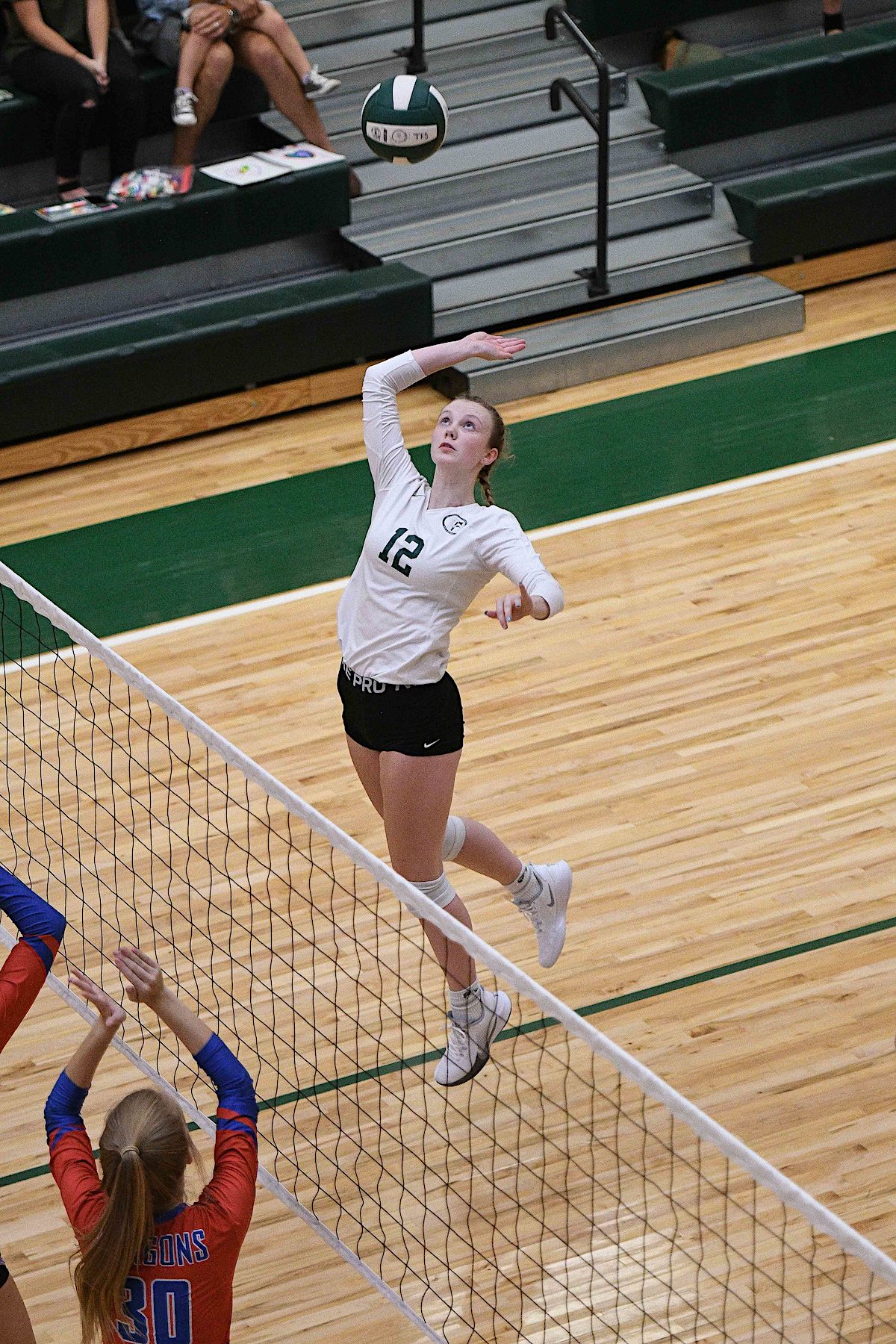
The TFS Lady Indians took on host Banks County and Elbert County in a Thursday tri-match, while the JV team also played. The C-Team played at Commerce in other action, earning a hard-fought split.

Barrett Whitener (photo by Randy Crump)

Varsity

The Lady Indians earned a pair of quick 2-0 wins over Banks County and Elbert County. The pair of straight-set wins gave TFS a four-match win streak, just two off the school record, which was achieved twice including once last season.

TFS is quickly 4-1 overall on the season, and returns to the court next Tuesday at Rabun County against the host and Hart County.

SCORES:
W 2-0 vs Banks County
W 2-0 vs Elbert County

JV

The Lady Indians opened the 2021 season at Banks County and swept past Elbert and Banks. It was a straight set win over Elbert, 25-6 and 25-15. The Banks County match came down to a decisive third set. After a 25-21 win, TFS dropped the next set by the same score. However, the girls won the match-clinching set 15-7.

“Consistent serves from Chesney Tanksley and Claire Kelly contributed to the overall team effort to score,” states coach Danielle Smith. “I’m very proud of these athletes for their hard work and strong start to the season.”

The girls are 2-0 on the young season and return to play next Tuesday against Rabun County (host) and Hart County.

SCORES:
W 2-0 vs Banks County: (25-6, 25-15)
W 2-1 vs Elbert County: (25-21, 21-25, 15-7)

C-Team

The C-Team traveled to Commerce to play Commerce and Winder-Barrow. The girls split, taking a win over the hosts before dropping a match to Winder. The win over Commerce came with a gritty first set in which TFS edged out the Lady Tigers 25-21. The second set provided less drama as the Lady Indians walked off the court winners in straight sets.

In the Winder match, the girls fell 8-25 but showed great resilience in a hard-fought 19-25 second set. The C-Team is now 1-1 on the season and play again at home on August 25 against East Hall.

SCORES:
W 2-0 vs Commerce: (25-21, 25-13)
L 0-2 vs Winder-Barrow: (8-25, 19-25)

Community rally planned for HCHS baseball coach battling COVID

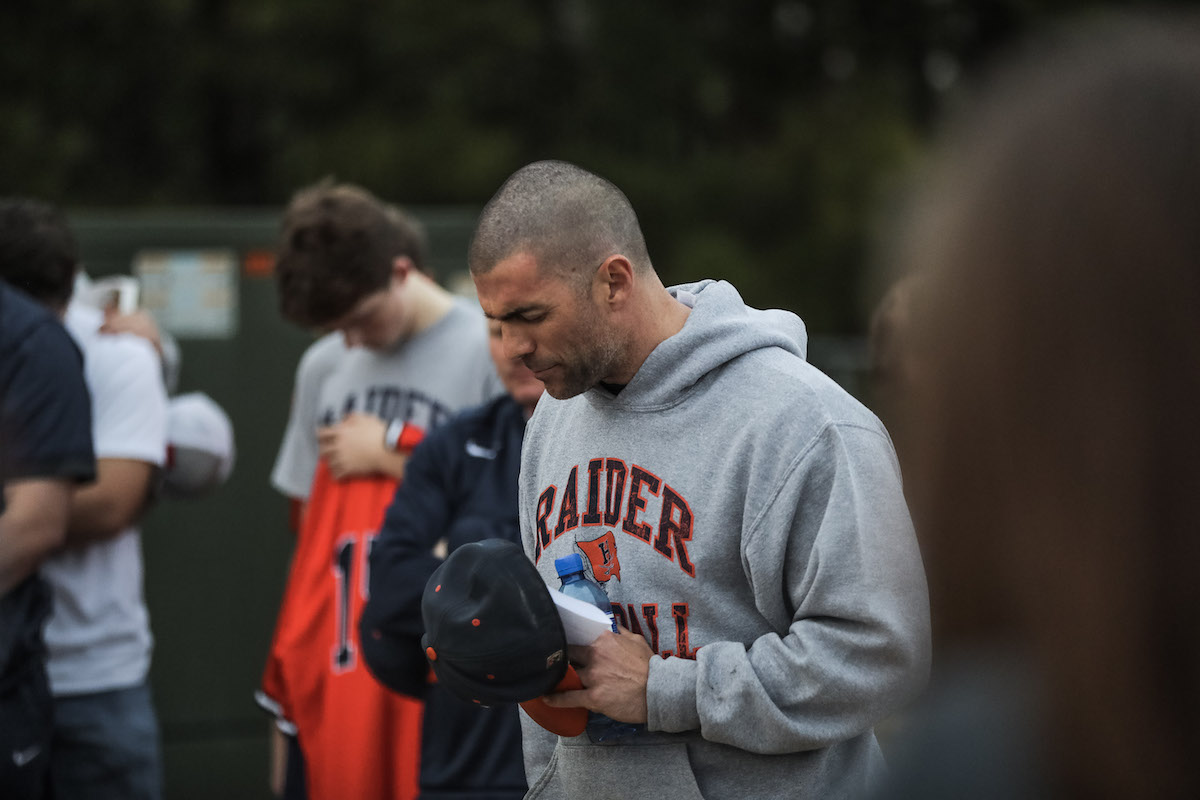
Habersham Central baseball coach Chris Akridge, shown here during a prayer vigil for one of his players in 2019, is now himself in need of prayer. Akridge has been hospitalized for nearly three weeks with COVID. A community rally is planned in his honor on Saturday, August 14. (Daniel Purcell/Now Habersham)

Habersham Central High School head baseball coach Chris Akridge has spent the last 18 days in the hospital battling COVID-19. On Saturday, student-athletes and members of the HCHS community will come together for a rally in support of him and his family.

The rally will be held in conjunction with pregame ceremonies at the Battle of the Heroes charity flag football game at Raider Stadium on August 14. Organizers will lead the community in prayer from the field shortly before the game’s 7 p.m. kickoff.

Raider baseball head coach Chris Akridge

“When this was brought to our attention, there was no hesitation in being part of this rally,” said Glenn Ingram, the chairman of the board for the Easton Foundation.  “Coach Akridge has touched so many in this community, and is a huge part of the Habersham Central Family.”

Ingram says student-athletes from the school approached the Foundation with the idea to pray for Coach Ak, as he is commonly referred to. In addition to his coaching duties, Akridge is a social studies teacher at Central.

MORE: North Georgia health officials cite ‘mounting concerns’ over rise in COVID cases

Family friends set up a Go Fund Me account to help with medical and other expenses.

While the event in support of Coach Akridge does not require specific safety protocols, organizers are encouraging people to take steps to mitigate the spread of the virus.

“We don’t have any mandates for attendees but strongly encourage social distancing for all and masks for unvaccinated individuals,” Easton Foundation Communications Director Colin Lacy tells Now Habersham. “We’re also limiting on-field access to on-field personnel.”

Full schedule of events

In June, the Easton Foundation announced the schedule for its 8th Battle of the Heroes game featuring first responders from Banks, Habersham, and Hall counties.

The event is a fundraiser for the Foundation, which helps teens in crisis and also provides scholarships to Northeast Georgia area students. This year’s expanded fundraiser will also include an inaugural classic car Cruise-In from 4:30-6:30 p.m. in front of Raider Stadium.

Cornelia entrepreneur Faith Baird, co-owner of Brownies by Faith, will serve as Grand Marshal for the pre-game festivities.

A fireworks show will cap off the evening after the game. All of the events are free, but donations are encouraged and welcomed.

Raider Stadium is located on the campus of Habersham Ninth Grade Academy at 171 Raider Circle in Mt. Airy.

This article has been updated to include measures organizers are encouraging to mitigate the spread of COVID-19

How Congress will attempt the biggest expansion of U.S. social programs since FDR

Getting big infrastructure packages to President Joe Biden’s desk will require delicately balancing competing factions among congressional Democrats, who hold slim majorities in both chambers and are unlikely to get further GOP help. (Adam Schultz/Official White House photo)

WASHINGTON (GA Recorder) — The U.S. Senate this week passed a massive bipartisan infrastructure bill and an even larger budget blueprint that would pave the way for historic changes in U.S. health, education, climate and tax policies.

The two measures are roped to each other, reflecting Democrats’ strategy to pass what could be bipartisan with Republicans—and to go it alone on the rest.

The Senate votes represented important steps for that approach—and the Biden administration’s priorities. But getting the packages to President Joe Biden’s desk will still require delicately balancing competing factions among congressional Democrats, who hold slim majorities in both chambers and are unlikely to get further GOP help.

Plus, the strategy is complicated.

Below are questions and answers about what happened this week, what the bills would do if they become law, and what we know about what will happen next.

What does the Senate infrastructure bill do?

The Senate passed a $1.2 trillion bipartisan infrastructure bill to upgrade the nation’s roads, bridges, transit, passenger rail, electric grid, water systems, broadband and more.

It includes record spending for items that have been underfunded for years but doesn’t dramatically alter a transportation system that’s a major contributor to climate change.

Nineteen Republicans voted for it—including Minority Leader Mitch McConnell.

What else did the Senate do before it left for recess?

The Senate approved a budget resolution for fiscal 2022, the federal budget year that begins on Oct. 1. That document serves as a blueprint for how much revenue the federal government expects to take in and how much it expects to spend.

It also opens the door to an ambitious $3.5 trillion package of health, education, climate and social services items much desired by progressives and President Joe Biden, and on a scale not seen since the New Deal.

The budget resolution is not a law—it is not signed by Biden—and instead guides Congress in a spending plan. It was adopted by the Senate, which is split 50-50 between Democrats and Republicans, on a 50-49 party-line vote.

What happens next with the budget?

House Majority Leader Steny Hoyer of Maryland says the House will return from its recess on Aug. 23 and pass the resolution.

What else does the budget resolution include?

The resolution that the Senate adopted includes instructions for what is known as reconciliation. That is a process that operates separately, in a second stage and will be used to pass the social programs Biden wants.

It’s not employed every year but it is useful when Congress wants to move relatively quickly on budget matters. Congress used reconciliation earlier this year to enact the American Rescue Plan.

Those reconciliation instructions make recommendations to 11 Senate committees on legislation that would change laws in their jurisdictions dealing with spending, revenue, deficits or the debt limit.

Why is reconciliation politically important for Democrats?

In the Senate, a reconciliation bill is not subject to the 60-vote filibuster, and that means it requires only a majority vote to pass. Routine legislation usually needs 60 votes to advance.

Why is reconciliation even more important right now?

It’s pretty much the only way Democrats can pass into law the sweeping package Biden has proposed.

The specifics in that $3.5 trillion package will be spelled out by the 11 committees in detail when they write up their reconciliation legislation.

What are some policies likely to be included?

Universal pre-K for 3-and-4-year olds; paid family and medical leave; drought, forestry and conservation programs to help prevent wildfires; expanding Medicare to include dental, vision and hearing benefits; extending the child tax credit; tuition-free community college; tax cuts for Americans making less than $400,000 a year; reductions in prescription drug costs; and much more.

“Every part of Biden’s proposal will be there in a big, robust way. We’re going to all come together to meet that goal,” Senate Majority Leader Chuck Schumer said.

When will the Senate committees start that work?

Schumer says committee chairs will meet weekly with their members through the rest of the month and into September. There is a Sept. 15 deadline, though it’s not ironclad.

But what happens now with the bipartisan infrastructure bill?

House Speaker Nancy Pelosi has said she won’t take up the roads-and-bridges infrastructure bill until the Senate also passes the reconciliation, or “human infrastructure” bill, which now won’t happen until September at the earliest. This has become known as the “two track” approach.

What happens with the reconciliation bill in the meantime?

The Senate Budget Committee, if it follows usual procedures, would wrap together all the policies adopted by the 11 committees into one giant omnibus bill that will be considered by the full Senate. There are limits on debate time and the kinds of amendments senators can try to attach to change it.

Why are there two tracks?

Moderate Democrats in the Senate were adamant that they could work with Republicans on physical infrastructure, long a priority for both parties.

Additionally, Senate rules limit what can be included in a reconciliation bill, requiring some provisions to go through the normal legislative process.

The bipartisan nature of the infrastructure bill resulted in a product that some progressives found inadequate because it left out the “human infrastructure” pieces. The second track, the Democrats-only reconciliation bill, provides a path to their more ambitious goals.

Will all Senate Democrats support the reconciliation bill?

All 50 Senate Democrats voted for the budget resolution that would unlock the reconciliation process, a good sign for Schumer, who predicted all his members would be on board for the final bill.

Keeping them all satisfied will be a challenge, though. Senate Democrats across the political spectrum disagree about the level of spending.

West Virginia’s Joe Manchin said Wednesday he had “serious concerns” about the $3.5 trillion figure, which is down from Vermont independent Bernie Sanders’ initial $6 trillion plan.

“There are some in my caucus who may believe it’s too much,” Schumer said. “There are some in my caucus who believe it’s too little. …We are going to all come together to get something done.”

Could there be last-minute changes in the Senate?

The reconciliation bill will be subject to a grueling Senate procedure known as “vote-a-rama,” a series of back-to-back votes on amendments proposed by senators, often by members of the minority party trying to score points. This can go on for hours and the votes can be very rapid.

What does the House do with reconciliation?

Like the Senate, the committees in the House will be assigned to make decisions about the policies affecting spending or revenue that should be in the reconciliation bill.

What do House Democrats think about the reconciliation plan?

As in the Senate, members on the moderate end of the House Democratic caucus have voiced concerns about the $3.5 trillion price tag for the partisan reconciliation bill. Nine members have asked Pelosi to take up the bipartisan infrastructure bill first.

That’s unacceptable to about 50 or more House progressives, who are withholding support for the infrastructure bill until the larger spending plan is approved.

What about the debt limit?

Congress must raise or suspend the debt limit, the total amount the federal government is permitted to borrow, before spending reaches that limit or the government will be unable to pay for what it has already committed to.

Democrats are not including debt limit changes in the reconciliation process, even though 47 Senate Republicans have pledged not to support any changes to the debt limit. One of those things will have to change for the U.S. to avoid default.

North Georgia public health officials cite ‘mounting concerns’ over rise in COVID cases

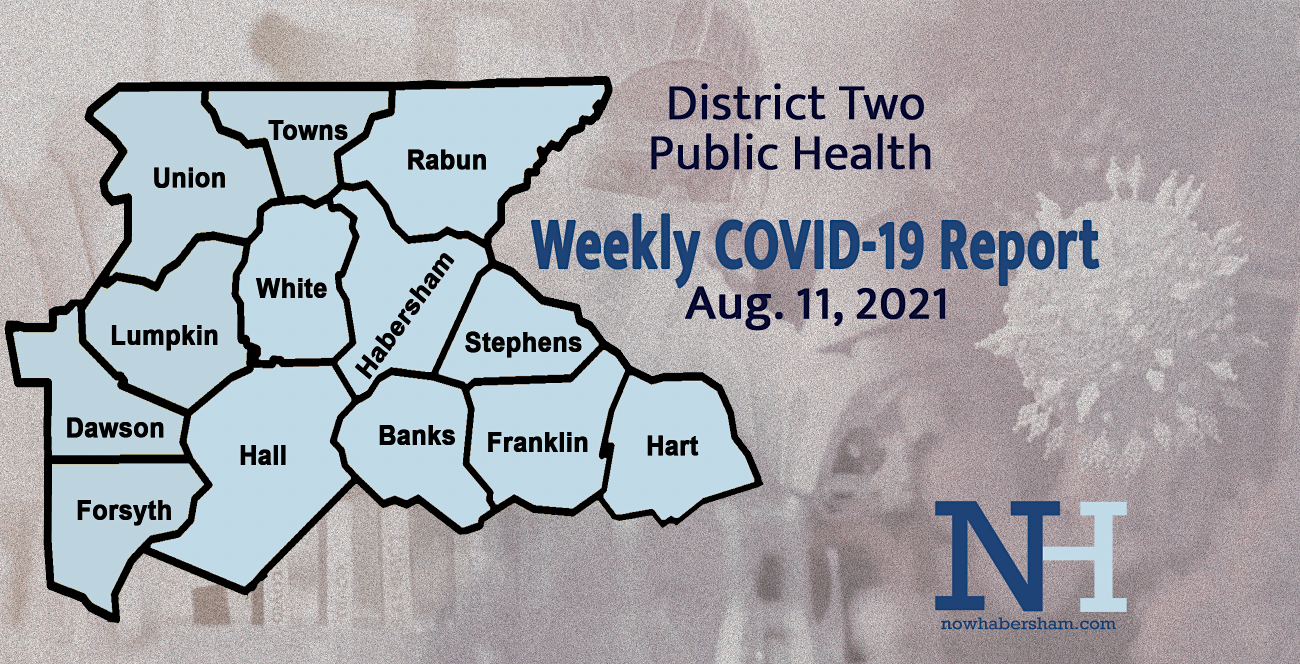
Due to the recent rise in COVID-19 cases, District Two Public Health is now providing weekly updates to the public about COVID-19 vaccinations, hospitalizations, and deaths.

“District Two Public Health has mounting concerns about the increase in COVID-19 cases, and we feel it’s important to share COVID updates with you once a week,” says district spokesperson Natasha Young.

Public health officials are monitoring the data, including the prevalence of the more aggressive Delta variant. Epidemiologists are working to collect more definitive information in North Georgia on breakthrough cases, reinfection rates, and school data. And Young says they will continue to monitor this data and provide it as it becomes available.

District Two includes 13 counties in the northern part of the state including Banks, Dawson, Forsyth, Franklin, Habersham, Hall, Hart, Lumpkin, Rabun, Stephens, Towns, Union, and White.

Hospitals in the region are filling up and health officials are doubling down on their efforts to encourage people to get vaccinated. They say vaccination lessens the risk of infection by three-and-a-half times. The chance of vaccinated people getting ill from COVID-19 is eight times lower than for unvaccinated people, and the risk of hospitalization or death is 25 times lower.

Young says “Vaccination is the key to getting out of this pandemic.” She adds, “No matter your vaccination status, wear a mask if indoors and social distance.”

Vaccinations are free and readily available to all Georgians 12 years and up. Walk-in visits are welcome or you can schedule an appointment online at phdistrict2.org or by using the statewide Vaccine Finder at https://www.vaccines.govvaccine.

If you are feeling sick and want to be tested, District Two has free testing available every Monday, Wednesday, and Friday from 8:30 a.m. to 4:30 p.m. at the regional COVID testing site in Gainesville. The site is located at the Allen Creek Soccer Complex at 2500 Allen Creek Road.

District Two COVID-19 Data as of Aug. 11, 2021

Banks
Cases (last 2 weeks): 75
Cases Per 100k (last 2 weeks): 400
Positive PCR Tests (last 2 weeks): 21.6%
Vaccines Administered: 9, 096
One Dose: 4,963 (27% of residents)
Fully: 4,421 (24% of residents
Deaths: 39
Hospitalizations: 220

Dawson
Cases (last 2 weeks): 97
Cases (last 2 weeks) Per 100k: 381
Positive PCR Tests (last 2 weeks): 15.5%
Vaccines Administered: 16,654
One Dose: 8,931 (36% of residents)
Fully: 8,126 (33% of residents)
Deaths: 48
Hospitalizations: 260

Forsyth
Cases (last 2 weeks): 728
Cases (last 2 weeks) Per 100k: 292
Positive PCR Tests (last 2 weeks): 13.2%
Vaccines Administered: 225, 390
One Dose: 119,551 (52% of residents)
Fully: 109,341 (48% of residents)
Deaths: 199
Hospitalizations: 1,055

Franklin
Cases (last 2 weeks): 84
Cases (last 2 weeks) Per 100k: 394
Positive PCR Tests (last 2 weeks): 26.5%
Vaccines Administered: 13,592
One Dose: 7,358 (32% of residents)
Fully: 6,570 (29% of residents)
Deaths: 47
Hospitalizations: 175

Habersham
Cases (last 2 weeks): 150
Cases (last 2 weeks) Per 100k: 356
Positive PCR Tests (last 2 weeks): 20.3%
Vaccines Administered: 29,328
One Dose: 16,070 (36% of residents)
Fully: 14,246 (32% of residents)
Deaths: 157
Hospitalizations: 515

Hall
Cases (last 2 weeks): 756
Cases (last 2 weeks) Per 100k: 392
Positive PCR Tests (last 2 weeks): 16.2%
Vaccines Administered: 149,791
One Dose: 81, 460 (41% of residents)
Fully: 72,331 (36% of residents)
Deaths: 480
Hospitalizations: 2,601

Hart
Cases (last 2 weeks): 41
Cases (last 2 weeks) Per 100k: 169
Positive PCR Tests (last 2 weeks): 14.8%
Vaccines Administered: 16, 367
One Dose: 8,839 (34% of residents)
Fully: 7,918 (31% of residents
Deaths: 39
Hospitalizations: 136

Lumpkin
Cases (last 2 weeks): 148
Cases (last 2 weeks) Per 100k: 482
Positive PCR Tests (last 2 weeks): 16.1%
Vaccines Administered: 19,629
One Dose: 10,571 (33% of residents)
Fully: 9,549 (29% of residents)
Deaths: 71
Hospitalizations: 320

Rabun
Cases (last 2 weeks): 50
Cases (last 2 weeks) Per 100k: 306
Positive PCR Tests (last 2 weeks): 16.7%
Vaccines Administered: 13,874
One Dose: 7,320 (44% of residents)
Fully: 6,683 (40% of residents)
Deaths: 43
Hospitalizations: 162

Stephens
Cases (last 2 weeks): 81
Cases (last 2 weeks) Per 100k: 380
Positive PCR Tests (last 2 weeks): 26.7%
Vaccines Administered: 17,258
One Dose: 9,209(36% of residents)
Fully: 8,265(32% of residents)
Deaths: 80
Hospitalizations: 267

Towns
Cases (last 2 weeks): 37
Cases (last 2 weeks) Per 100k: 316
Positive PCR Tests (last 2 weeks): 17.2%
Vaccines Administered: 10, 665
One Dose: 5,573 (48% of residents)
Fully: 5,211 (45% of residents)
Deaths: 49
Hospitalizations: 155

Union
Cases (last 2 weeks): 86
Cases (last 2 weeks) Per 100k: 339
Positive PCR Tests (last 2 weeks): 20.2%
Vaccines Administered: 19,516
One Dose: 10,297 (44% of residents)
Fully: 9,628 (41% of residents)
Deaths: 81
Hospitalizations: 245

White
Cases (last 2 weeks): 168
Cases (last 2 weeks) Per 100k: 583
Positive PCR Tests (last 2 weeks): 21.4%
Vaccines Administered: 18,362
One Dose: 9,869 (33% of residents)
Fully: 8,954 (30% of residents)
Deaths: 75
Hospitalizations: 316

Murdered Banks County postal worker buried

Asa Wood, Jr., was gunned down on August 7 while delivering mail on his rural route in Commerce. He is survived by his wife and two daughters. Investigators have not released a motive in the slaying.

Funeral services were held today for a Banks County postal worker who was shot and killed on the job.

59-year-old Asa Julius Wood, Jr., of Commerce, died Saturday, August 7 while delivering mail on his rural route. Investigators charged Larry Steven Grogan of Danielsville with his murder. Grogan is also accused of shooting at Banks County deputies who attempted to stop him hours after the fatal shooting.

Asa Julius Wood, Jr.

Wood had worked for the post office for 28 years. In his obituary, his family remembers him as a joyful soul who “loved the Lord and everyone he met.”

A community mourns

The shooting happened on Hebron Road in Commerce, just two miles south of Hebron Presbyterian Church. Rick Billingslea is the pastor there. He says the shooting hit close to home.

“Junior was our mail carrier for years. He was dedicated and took care of some of our old folks. Several he delivered to the house so they wouldn’t have to walk to the road,” Billingslea tells Now Habersham.

After Wood’s murder, the church held a community prayer meeting. About a dozen people attended, including several current and former postal employees and a member of Wood’s family.

According to Billingslea, on the day he was murdered, Wood was filling in for another postal worker who had to go to the hospital. Normally, he would have been off from work.

A ‘known troublemaker’

Those familiar with Grogan describe him as a “known troublemaker” who frequently posted to a Banks County social media page. He also released hundreds of YouTube videos over the years. In his last video posted on August 5, Grogan claimed he was being “microwaved to death by cell towers” and said he suffered from “electromagnetic torture and ultrasound.”

Authorities charged Larry Steven Grogan with murder and two counts of aggravated assault on a law enforcement officer. (YouTube)

In the rambling 56-second video, Grogan also claimed Banks County police officers threatened to murder him.

Investigators say when deputies tried to apprehend Grogan after Wood’s murder, he shot at them with a rifle. The deputies returned fire, wounding Grogan. He suffered non-life-threatening injuries and was hospitalized. Neither deputy was injured.

Grogan was released from the hospital on Wednesday, August 11, and booked into the Banks County jail.

The GBI and U.S. Postal Inspectors Office are working with the Banks County Sheriff’s Office on the investigation. They have not released a motive in the slaying.

Wood is survived by his wife of 41 years, Wanda Faye Prickett Wood, and their two daughters.

Asa Julius Wood, Jr. obituary

Demorest Mayor Rick Austin says he won’t seek reelection

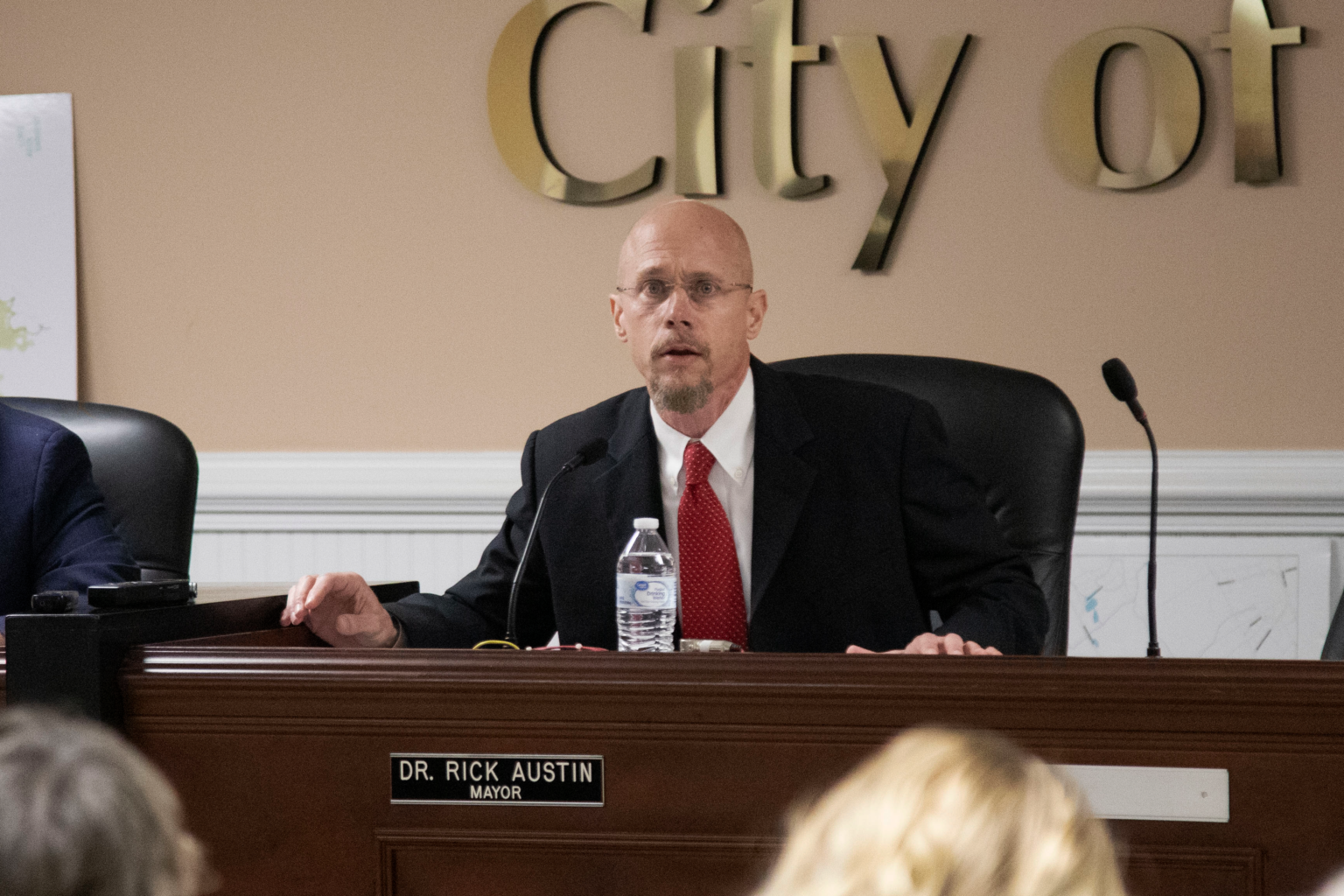
Rick Austin has served as mayor of Demorest since 2014. He says he's stepping down from the office when his term expires at the end of this year. (nowhabersham.com)

Demorest Mayor Rick Austin says he will not seek reelection this year. Austin has served as mayor since 2014. Before being elected to that post, he served as a Habersham County commissioner and District 10 State Representative.

In a letter released publicly on August 12, Austin writes: “It has been my distinct honor to serve this county and community for the past twenty years. The four principles of Character, Integrity, Honesty and Truth have always been the heartbeat of my service. It has never been about a title or position.”

Austin did not list a specific reason for his decision but indicates he feels that it’s time.

His letter includes a lengthy list of accomplishments he says he’s proud to have achieved alongside other city officials and department heads.

“We’ve worked together to transform our city from near economic collapse to economically thriving. We’ve paid down debt by millions while purposefully and strategically increasing our operational reserves to well over a million [dollars]. We have put financial controls in place that have ensured that every penny has been accounted for. We have poised ourselves for economic growth by expanding our sewer services and upgrading our Wastewater facilities to accommodate our needs for the next 50 years. Our Police Department has become the finest in the state under the leadership of Chief Robin Krockum. Our Fire Department, under the direction of Chief Ken Ranalli, was transformed from a part-time/volunteer department to a full-time department with one of the lowest ISO ratings in the county. Our Water Department, led by Bryan Popham, has grown our system and replaced and repaired our infrastructure to ensure our ability to continually provide first-class water and service to our customers.

Most importantly, these feats have been accomplished while reducing the millage rate each and every year since I took office.”

READ Mayor Rick Austin’s full letter here

While Austin acknowledges that his leadership style and approach have not always been popular, he says, for him, “it has always been about identifying and solving problems for those I have served.”

“Each and every day has been focused to produce tangible results that centered on process improvement and team development…all to ensure that I have served our residents and community with honor. That singular goal has been extraordinarily successful,” he says.

The embattled mayor who is currently embroiled in three lawsuits involving the city and Piedmont College credits the town’s “great employees” and former city council members for their roles in moving Demorest forward.

“It would not have been possible without the leadership, dedication, and forward thinking of our previous Council members. And it certainly would not have been possible without the legal and financial expertise of Joey Homans and Joely Mixon.”

The current Demorest City Council, comprised of Nathan Davis, Ed Hendrix, Jim Welborn, and Shawn Allen, voted 3-1 not to reappoint Homans and Mixon at the start of this year. Allen was the lone dissenting vote.

Since Welborn’s election last fall, he, Davis, and Hendrix have built a voting block that resulted in the firing of Homans and Mixon. Actions taken by the council have also been cited in the resignations of two planning commission members and Demorest Fire Chief Ken Ranalli.

READ Nancy Adams’ resignation letter
READ Rebecca Shedd’s resignation letter

Ranalli is said to be a possible contender for one of two city council seats up for election this year.

Asked if he plans to run for any other office, Austin won’t commit either way but he does say he intends to continue his public service.

“Service is my heartbeat and I will continue to serve my community and neighbors each and every day.”

Austin still has four and a half months left in office. His term expires on December 31.

Municipal elections are scheduled for November 2. Qualifying opens on August 16 and ends at noon on August 20.

SEE ALSO

Qualifying for local elections opens August 16