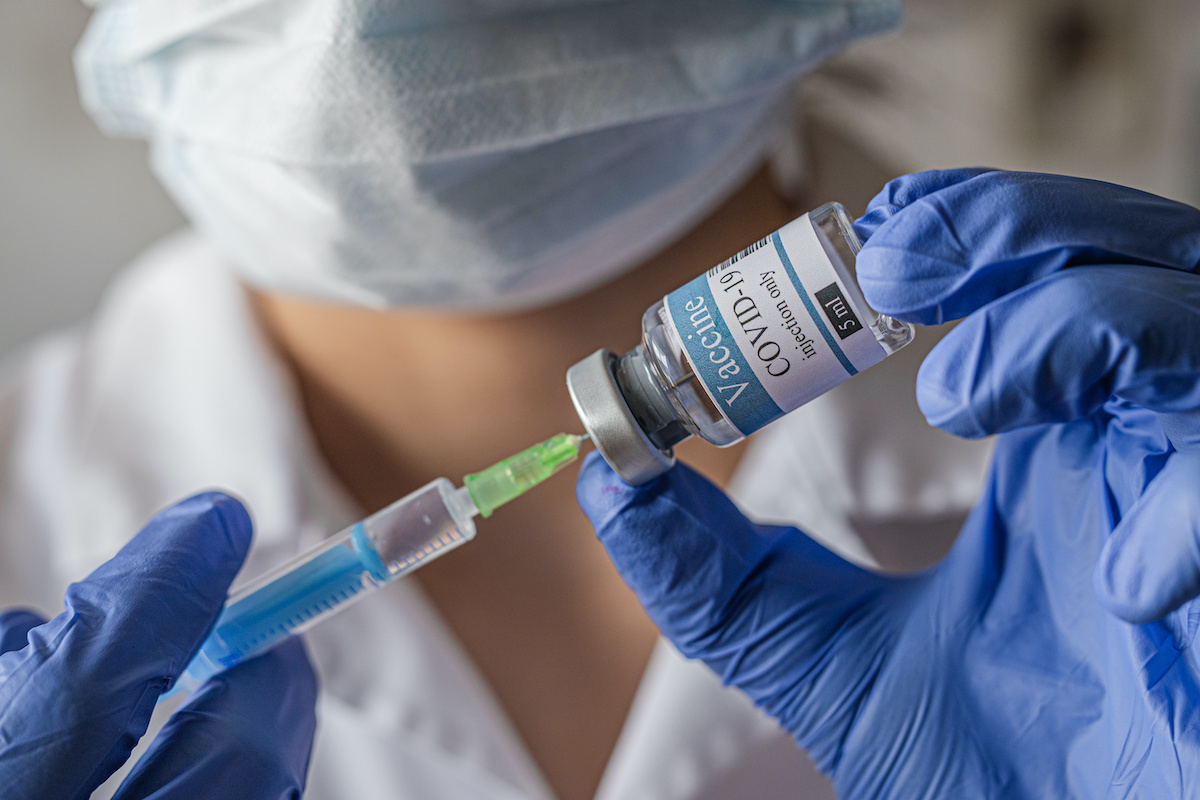
ATLANTA — Following the FDA’s authorization of an additional COVID vaccine dose for immunocompromised individuals, the CDC’s Advisory Committee on Immunization Practices (ACIP) is now recommending that certain patients with weakened immune systems receive an additional dose of the Pfizer-BioNTech or Moderna vaccine.
The recommendation does not include J&J vaccine recipients at this time.
The Georgia Department of Public Health on Monday said it is awaiting guidance from the CDC on who is eligible to receive a third dose.
“Once those conditions are known, DPH will establish statewide protocols for health departments administering additional doses of the COVID vaccine,” the public health agency states. “Until then, DPH will hold off on administering third doses.”
Patients seeking additional doses of the vaccine should contact their healthcare provider for guidance and recommendations.
For information about COVID vaccines or to schedule a vaccination appointment, visit dph.ga.gov/covid-vaccine.
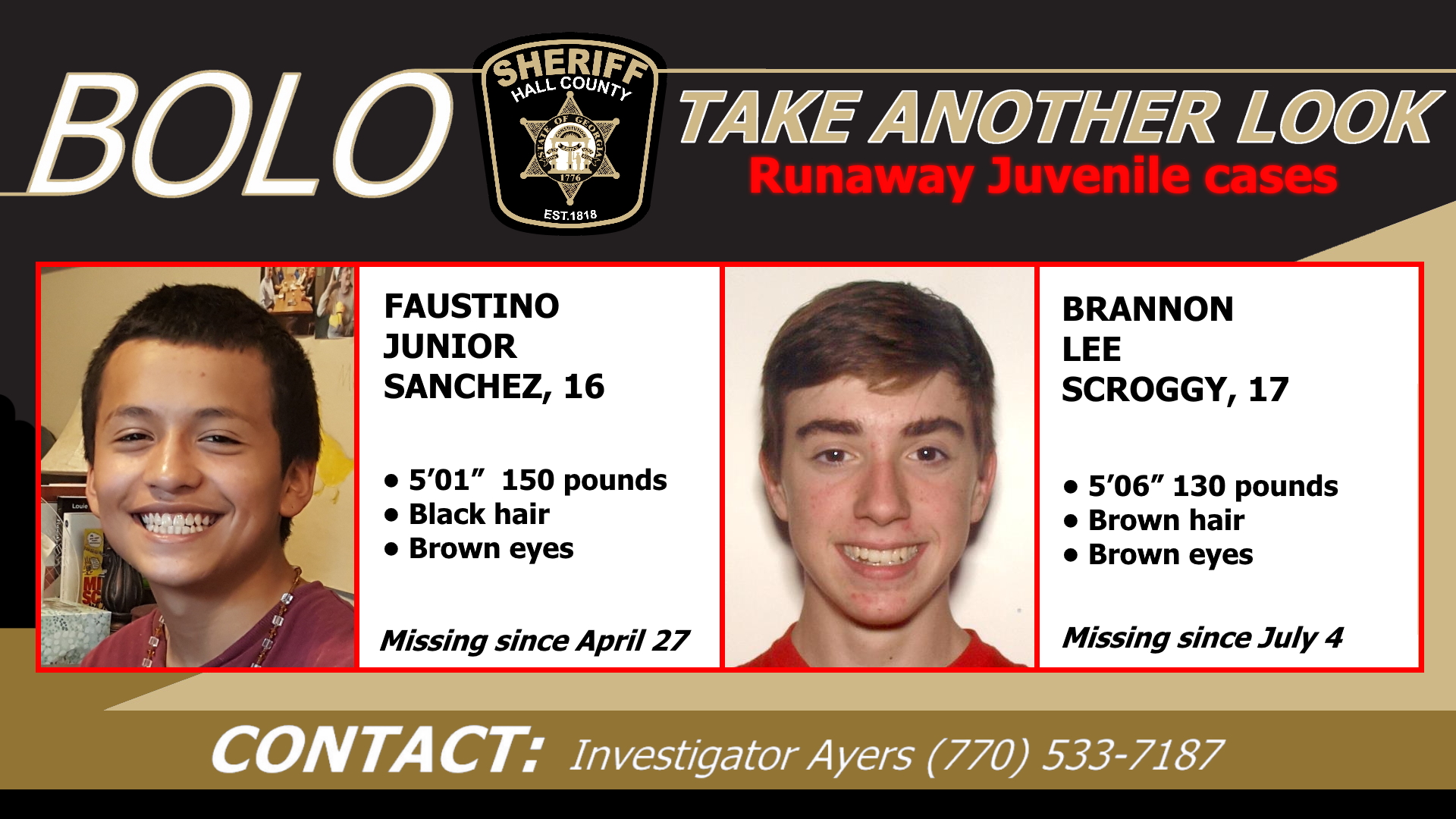
A Hall County investigator searching for two juvenile runaways is again reaching out to the community hoping someone can help find them.
It’s now been nearly four months since Faustino Junior Sanchez disappeared from Johnson High School in Gainesville. He was last seen on April 27.
The 16-year-old Sanchez is 5’01” tall, weighs 150 pounds, and has black hair and brown eyes.
In an unrelated case, 17-year-od Brannon Lee Scroggy of Flowery Branch has been missing for over a month. Family members last saw him near his home in the area of Oak Ridge Drive on Sunday night, July 4. A family member reported him missing to the Hall County Sheriff’s Office the following Friday, July 9.
Since leaving home, investigators say Brannon has been spotted in the areas of Malibu Ridge and Ivy Springs Drive, both near his residence.
Scroggy is 5’06” tall and weighs 130 pounds. He has brown hair and brown eyes.
HCSO Investigator J. Ayers asks the public to, “Please take another look and keep your ears open for any information on their whereabouts.”
If you know where they are or have information that might help find them, please contact Ayers at (770) 533-7187.
Johnny Lee Gailey, age 67 of Baldwin, passed away on Sunday, August 15, 2021.
Born in Commerce, Georgia on June 13, 1954, he was a son of the late Lee Gailey and Arizona Brock Gailey. Mr. Gailey worked for Mt. Vernon Mills for many years.
In addition to his parents, he was preceded in death by his wife, Patricia Pauline Mauldin Gailey, and a daughter, Robin Gailey.
Surviving are his sons, Chris Gailey of Alto, John Jacob Gailey of Baldwin, Jonathan Gailey and Timothy Gailey both of Toccoa; daughter, Shelby Gailey of Homer; 10 grandchildren; 1 great-grandchild; brothers, Larry Gailey and James Gailey both of Homer and Robert Gailey of Toccoa; sisters, Carrie Norton of Baldwin and Frances Donaldson of Toccoa; numerous nieces, nephews, other relatives and friends.
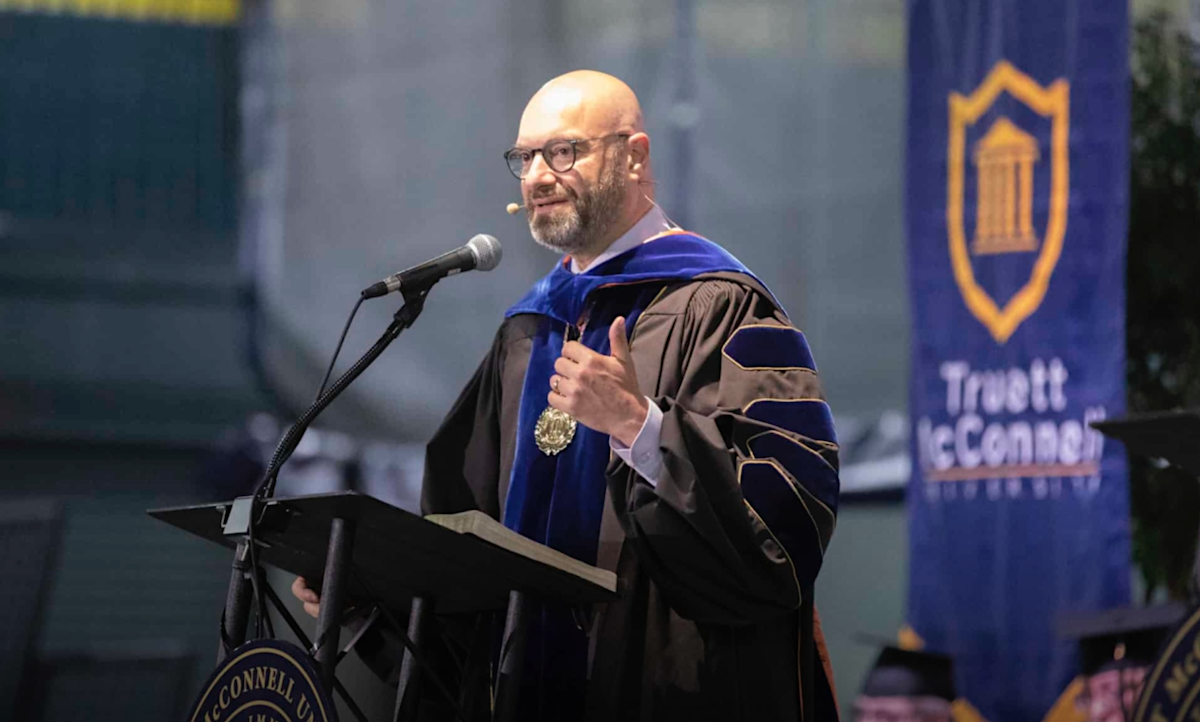
Truett McConnell University President Dr. Emir Caner will recognize alumni spanning 75 years during the first President's Chapel service of the new school year on August 17. (Jenny Gregory/TMU)
Truett McConnell turned 75 this year and alumni and community members are invited to join in the celebration this week.
The university was chartered as a small Christian junior college on July 23, 1946. It opened a year later, on September 17, 1947.
University officials will recognize alumni from that era and the seven decades since during Tuesday morning’s chapel on the Cleveland campus. This includes students who attended Truett McConnell Junior College, Truett McConnell College, or Truett McConnell University.
Community members, family, and friends are also invited to join in the celebration. It will begin at 9:30 a.m. on August 17 in the George Blaurock Student Wellness Center.
During the ceremony, new faculty members will sign the Southern Baptist Convention’s statement of faith.
TMU will livestream the ceremony on its Facebook page where you can learn more about the school’s history.
Former White County Recreation Department Director Joe Gailey (whitecounty.net)
There are now two people temporarily at the helm of the White county Parks and Recreation Department following the resignation of director Joe Gailey. County officials named Deena Cowart and Corey Collins as co-interim directors of the Rec Department as the county begins the search for Gailey’s successor.
In a news release issued Friday, White County said Cowart will be over all administrative functions and non-sports programming and Collins will oversee all sports programming functions. Cowart has worked in the recreation department for almost 20 years and currently serves as the Assistant Director. Collins is new to White County and currently serves as the Sports League Manager.
The release states Deena and Corey both have extensive experience working in recreation and youth sports and will provide the level of expertise needed as the recreation programs in White County have record levels of enrollment this fall and continue to grow.
The release also stated the County would like to thank Joe Gailey for his years of service and wishes him the best in his retirement from recreation.
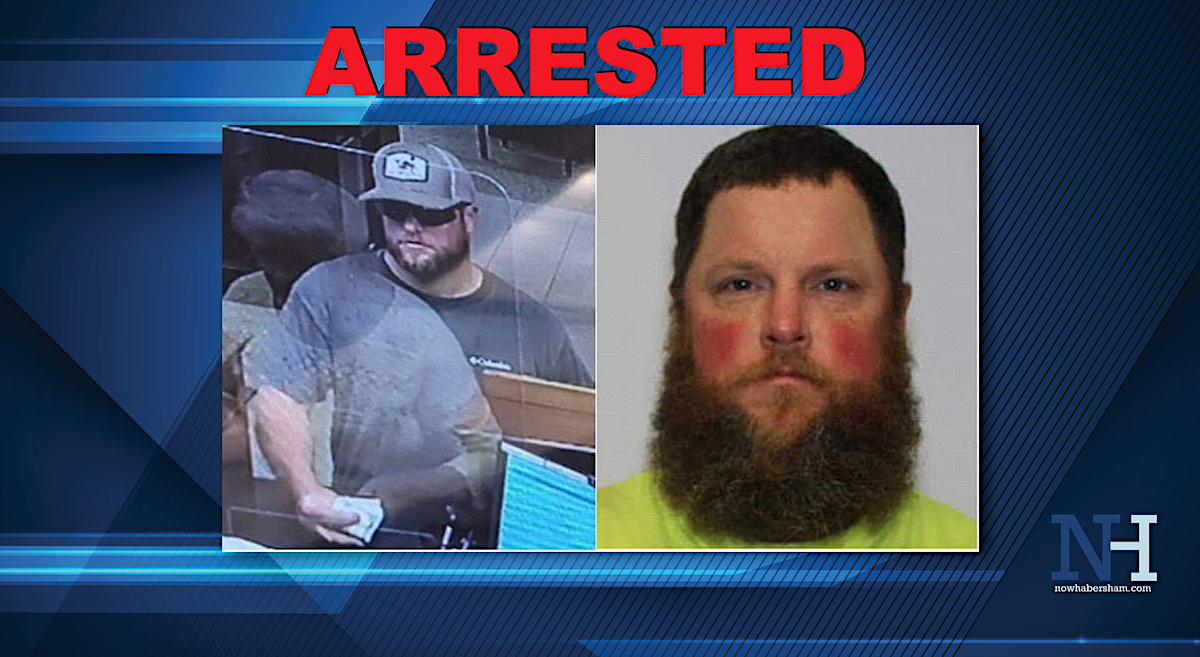
The South Carolina man accused of robbing two banks in Northeast Georgia last week is now in custody, police say.
Sidney Alan McCollum of Pickens County was arrested in Chattanooga, Tennessee Thursday evening, says Toccoa Police Chief Jimmy Mize.
After a lookout was issued for a possible drunk driver, Mize says a Chattanooga police officer “spotted the suspect’s vehicle pulling into a restaurant parking lot. As McCollum exited the vehicle to enter the restaurant, he was taken into custody without incident.”
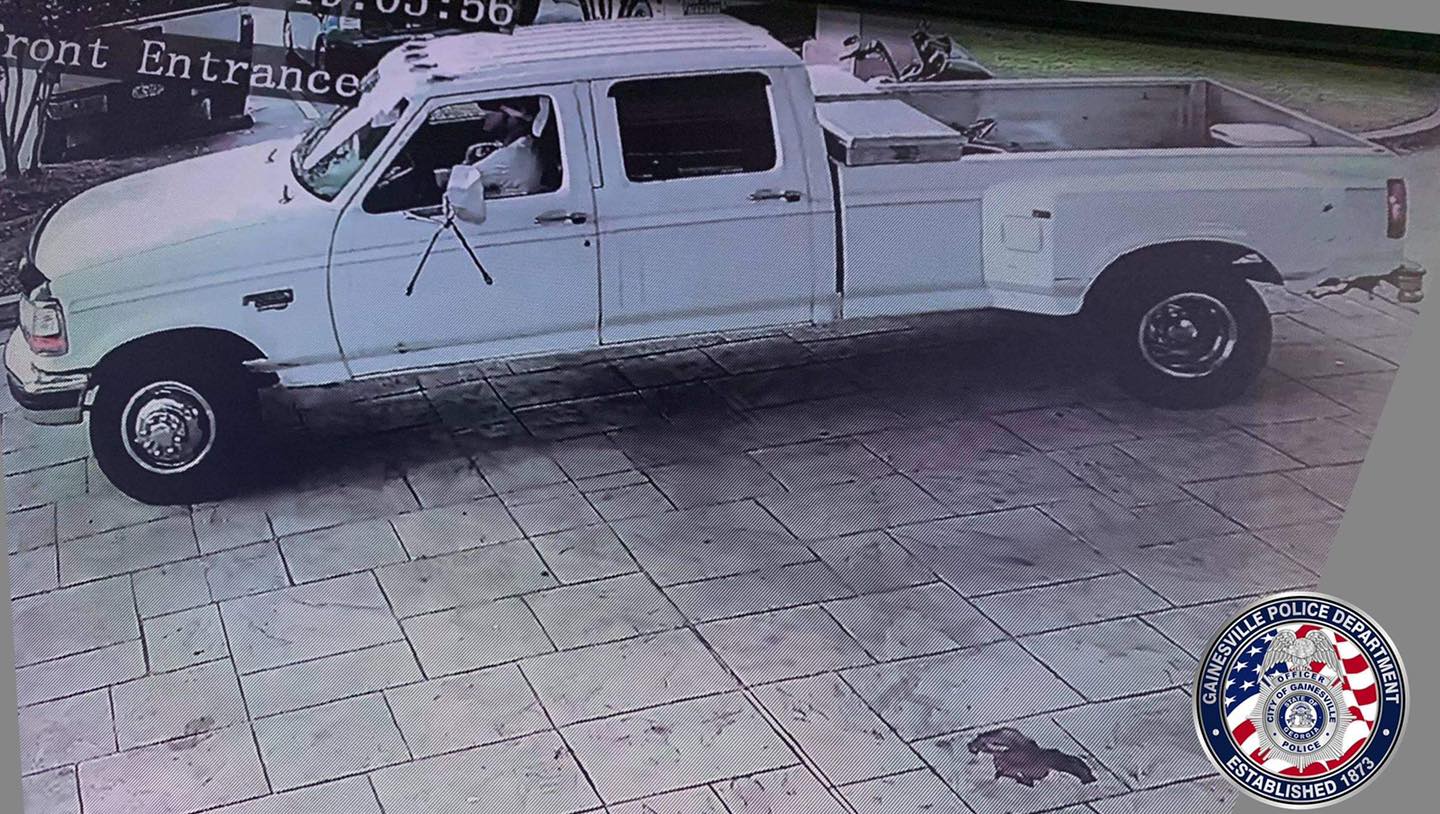
Police issued a BOLO on this stolen 1997 White F350 4-door Dooley pickup they say McCollum stole in Pickens County, SC. (photo Gainesville PD)
McCollum, 42, was still driving the stolen truck he allegedly stole from his hometown. It’s the same vehicle authorities say he used as the getaway vehicle after allegedly robbing Northeast Georgia Bank in Toccoa on August 11 and a Wells Fargo Bank in Gainesville two days later.
McCollum is being held in Hamilton County, Tennessee. He will face extradition back to Georgia to Stephens County and Hall County for the robbery charges as well as to Pickens County, South Carolina for the theft and a domestic violence charge.
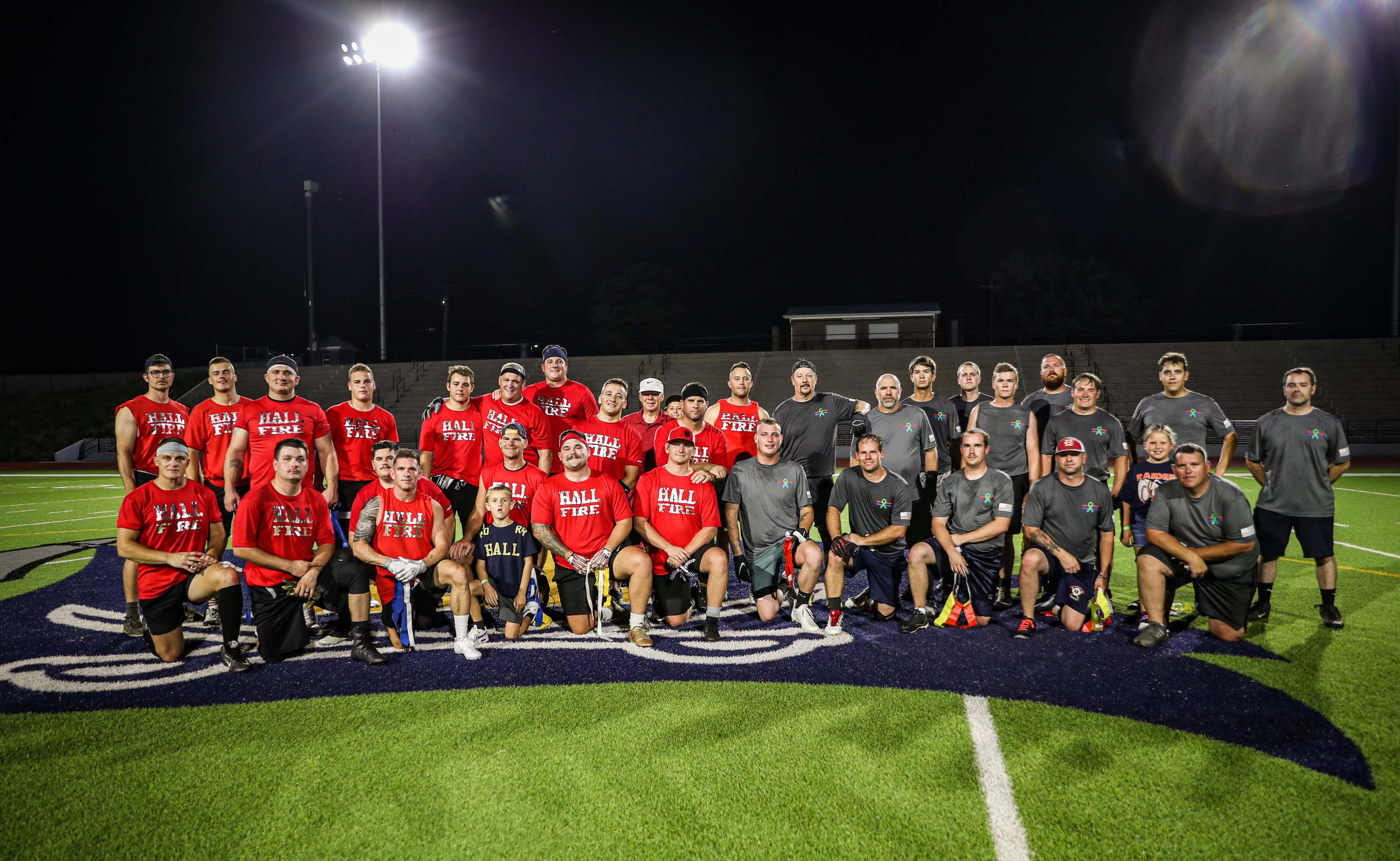
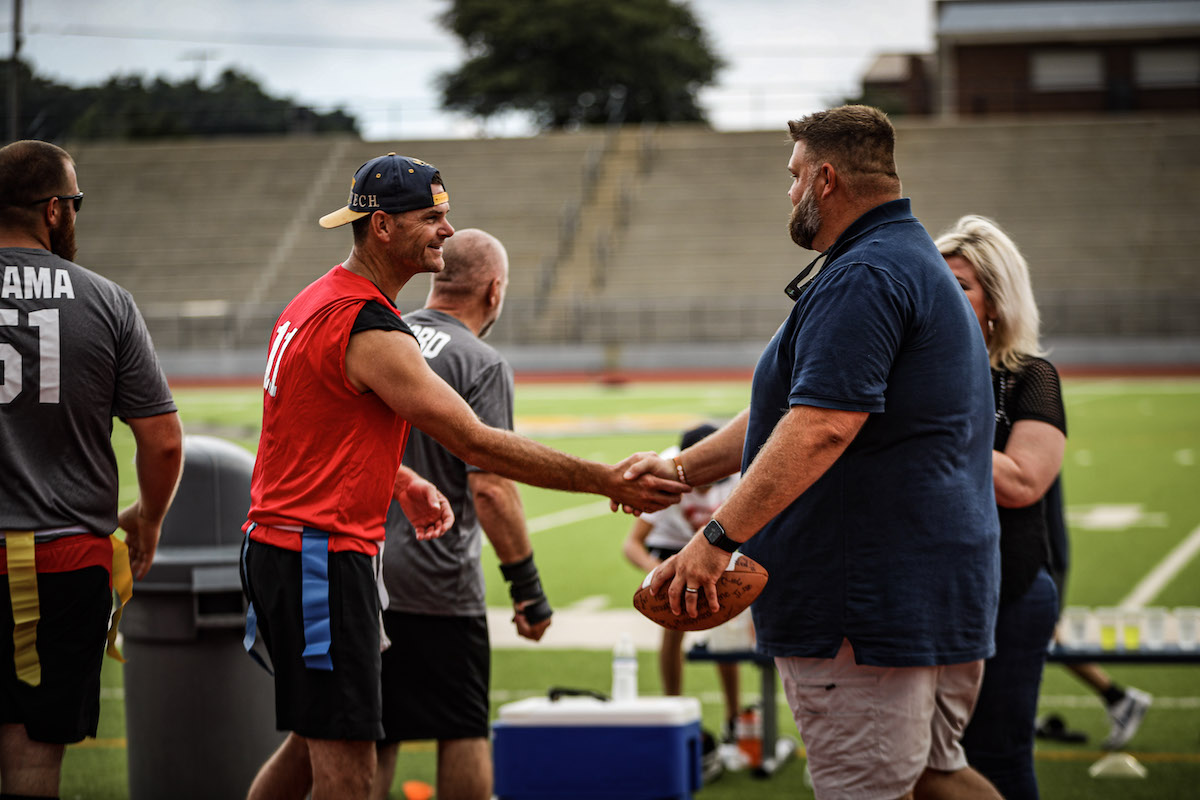
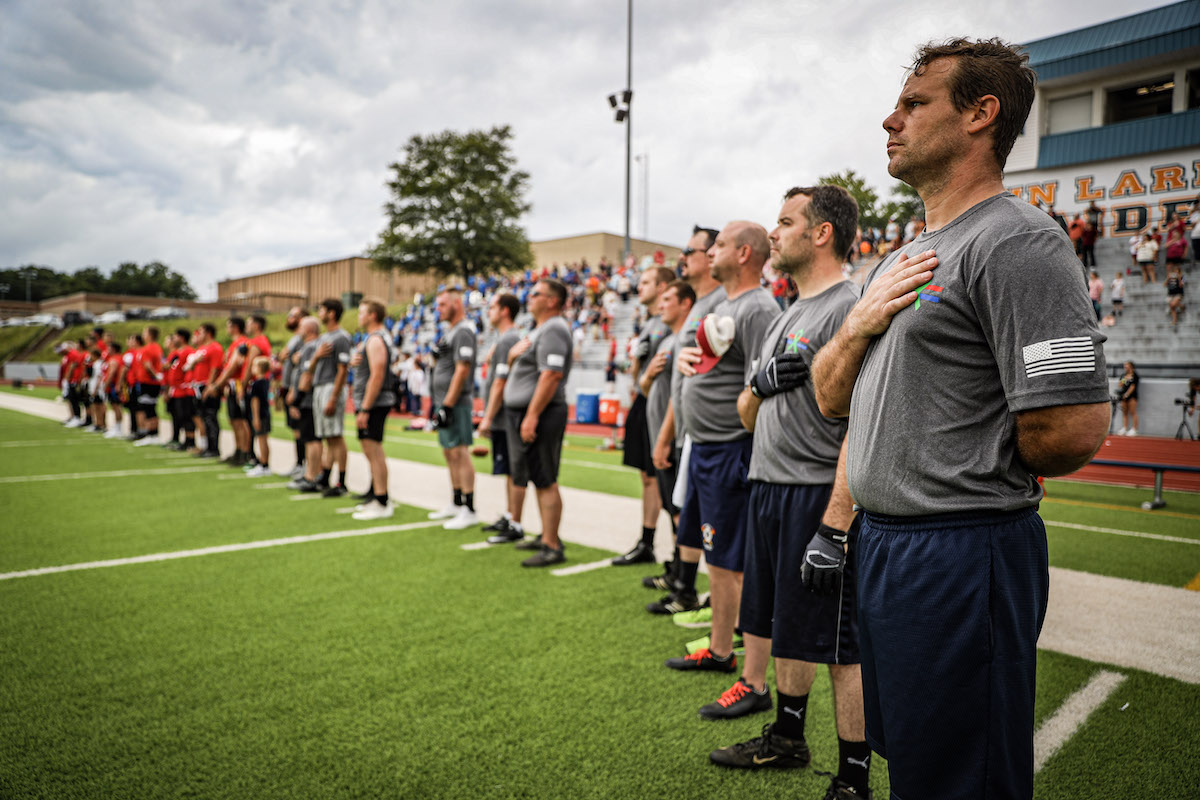
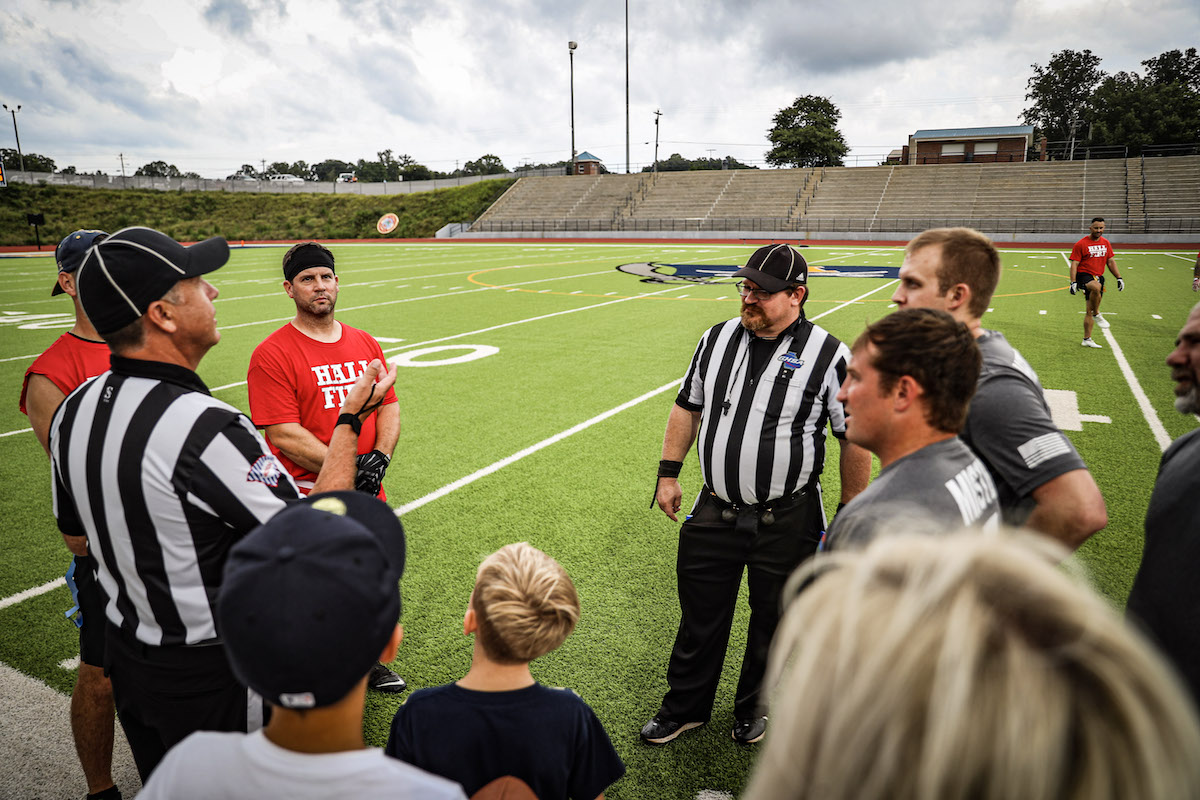
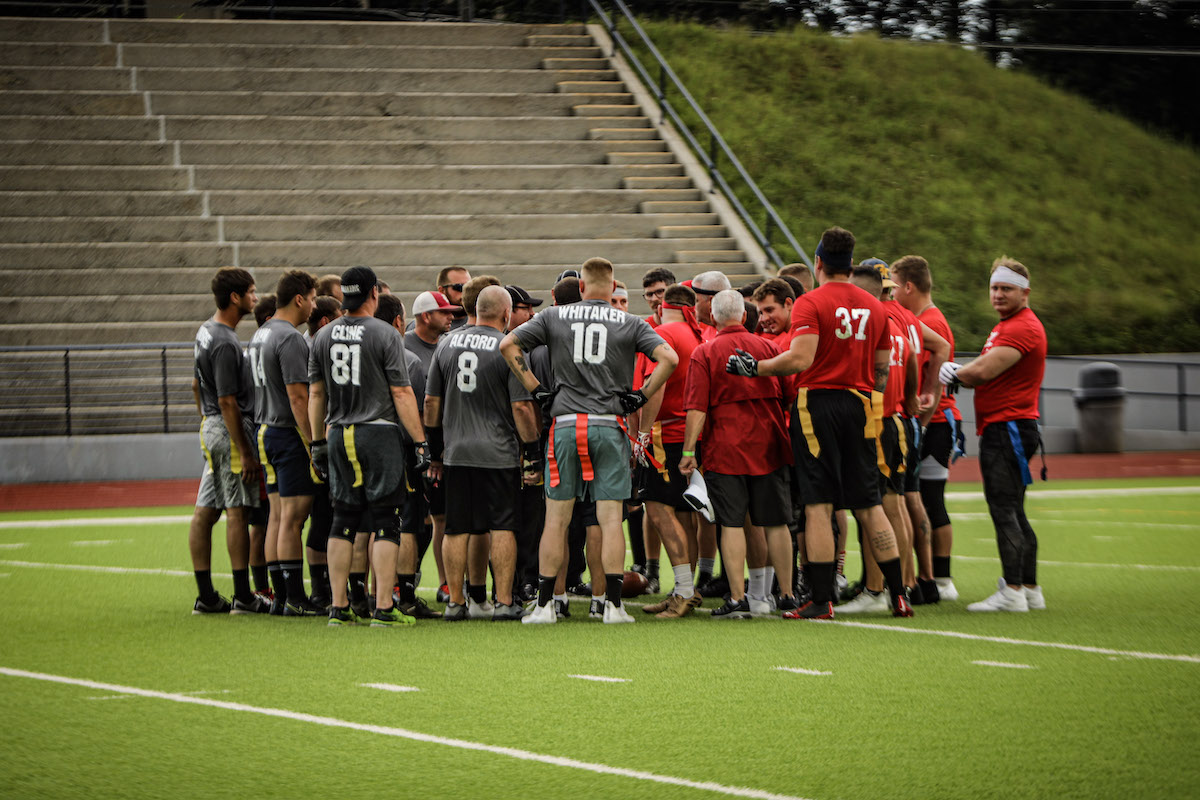
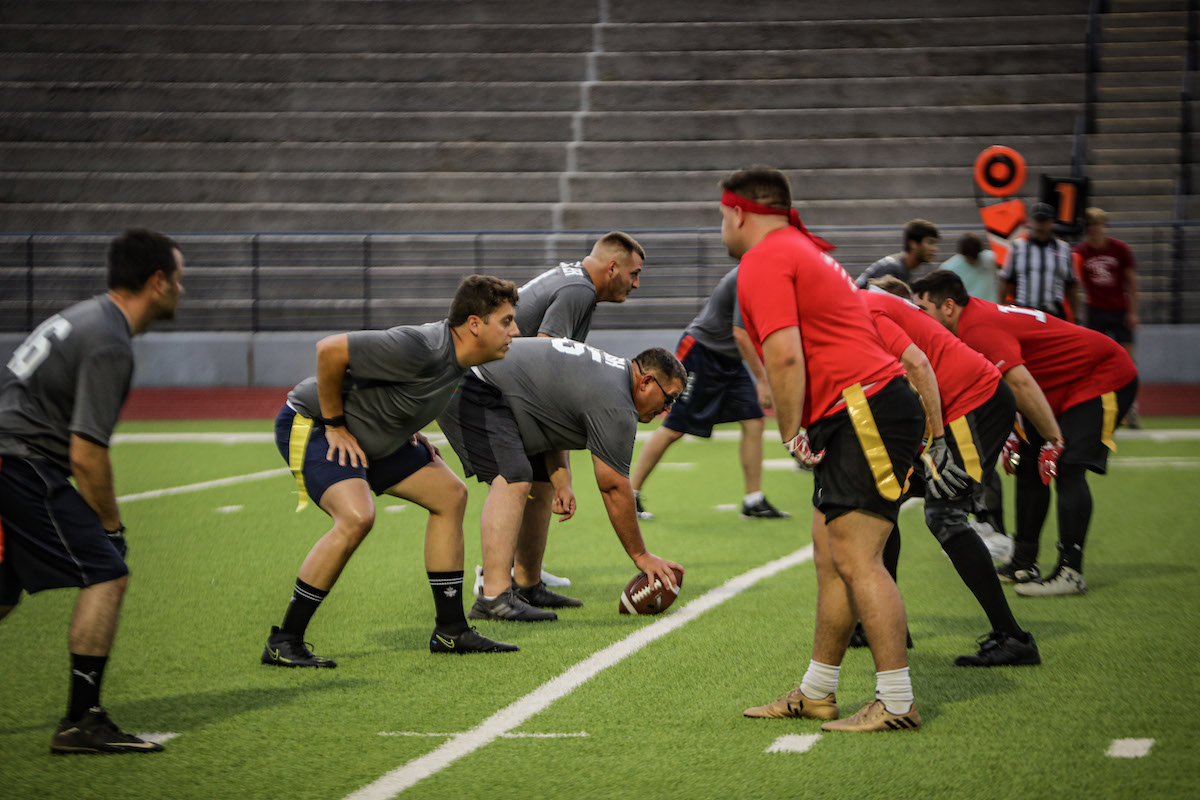
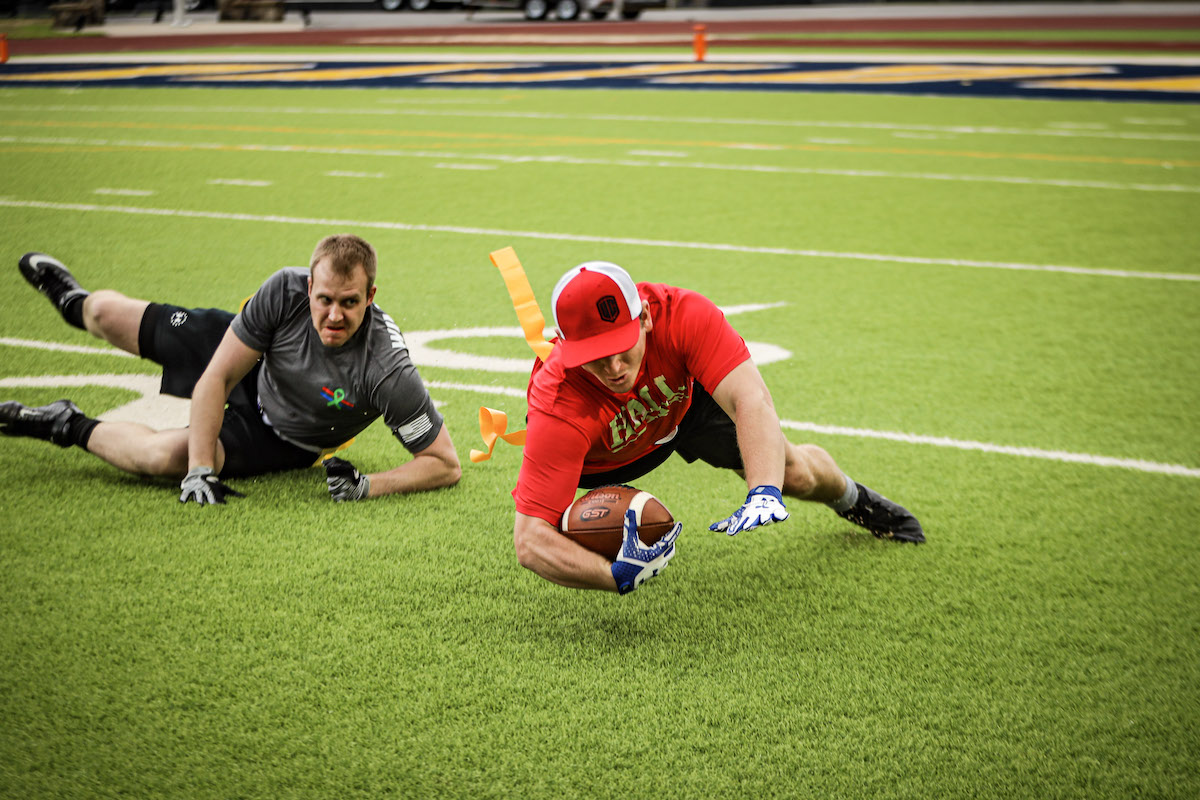
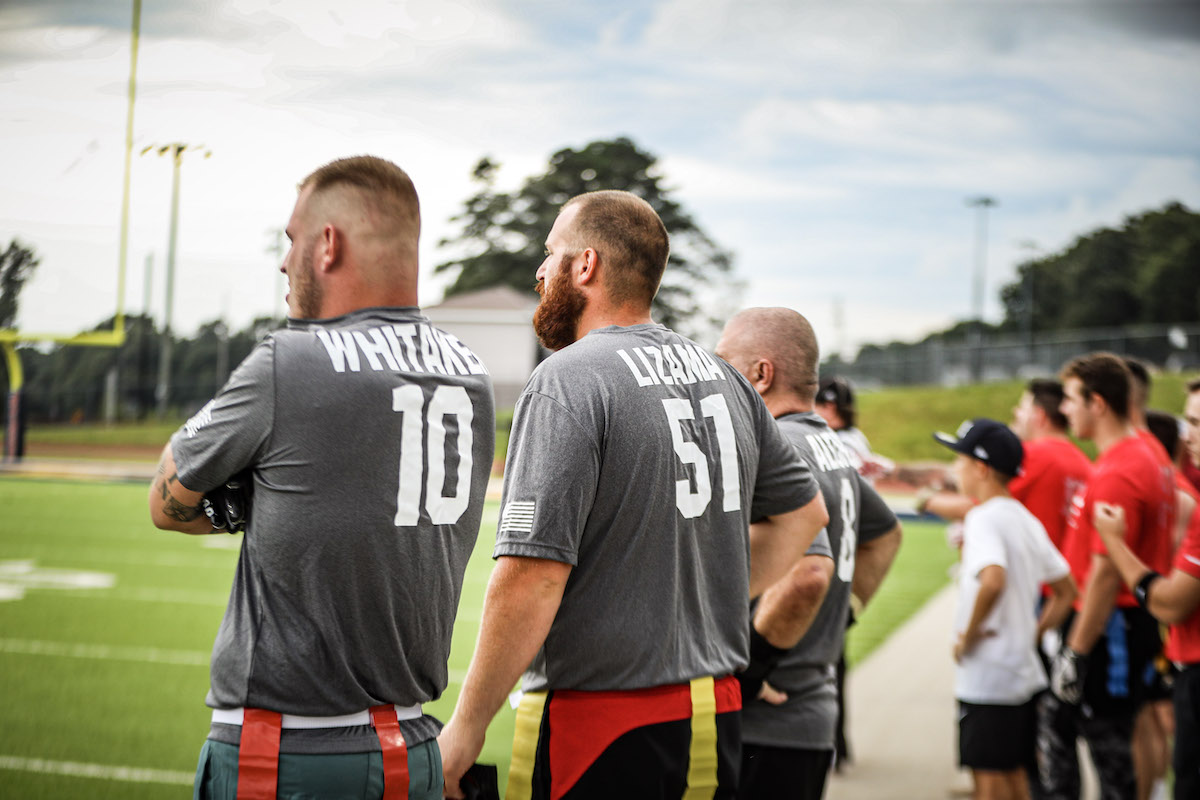
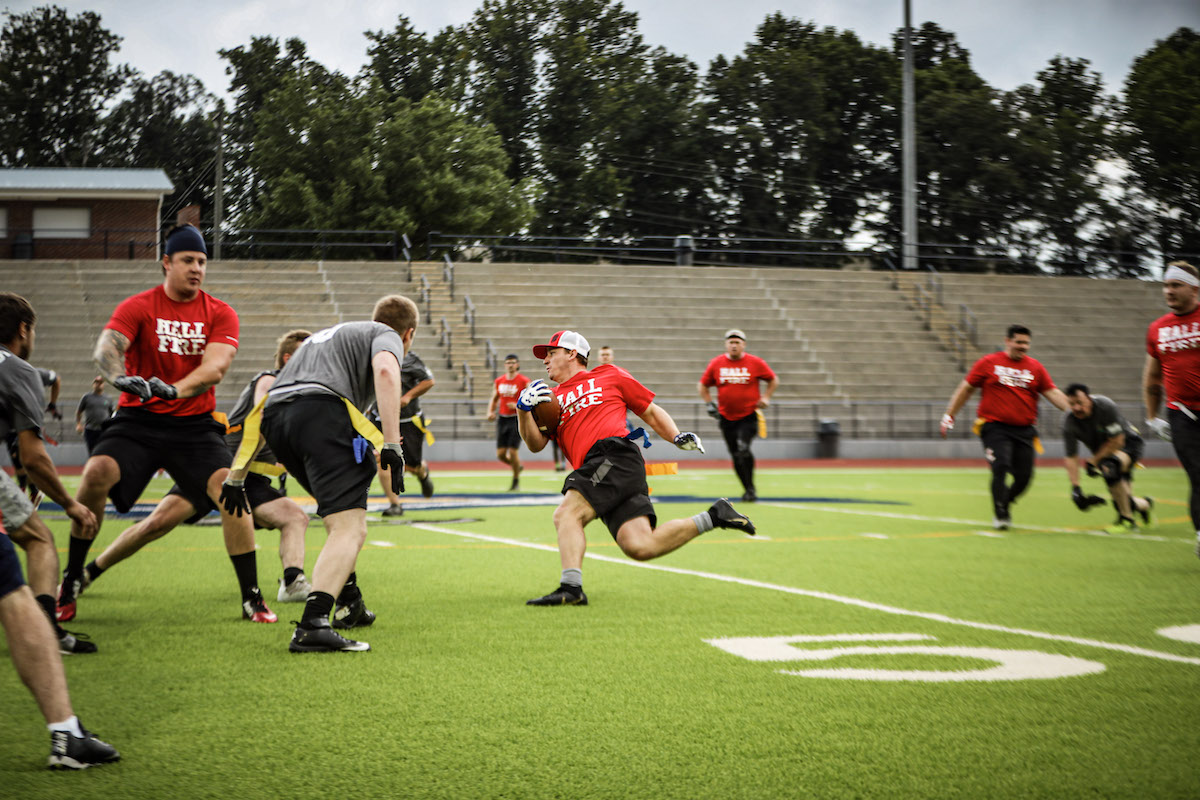
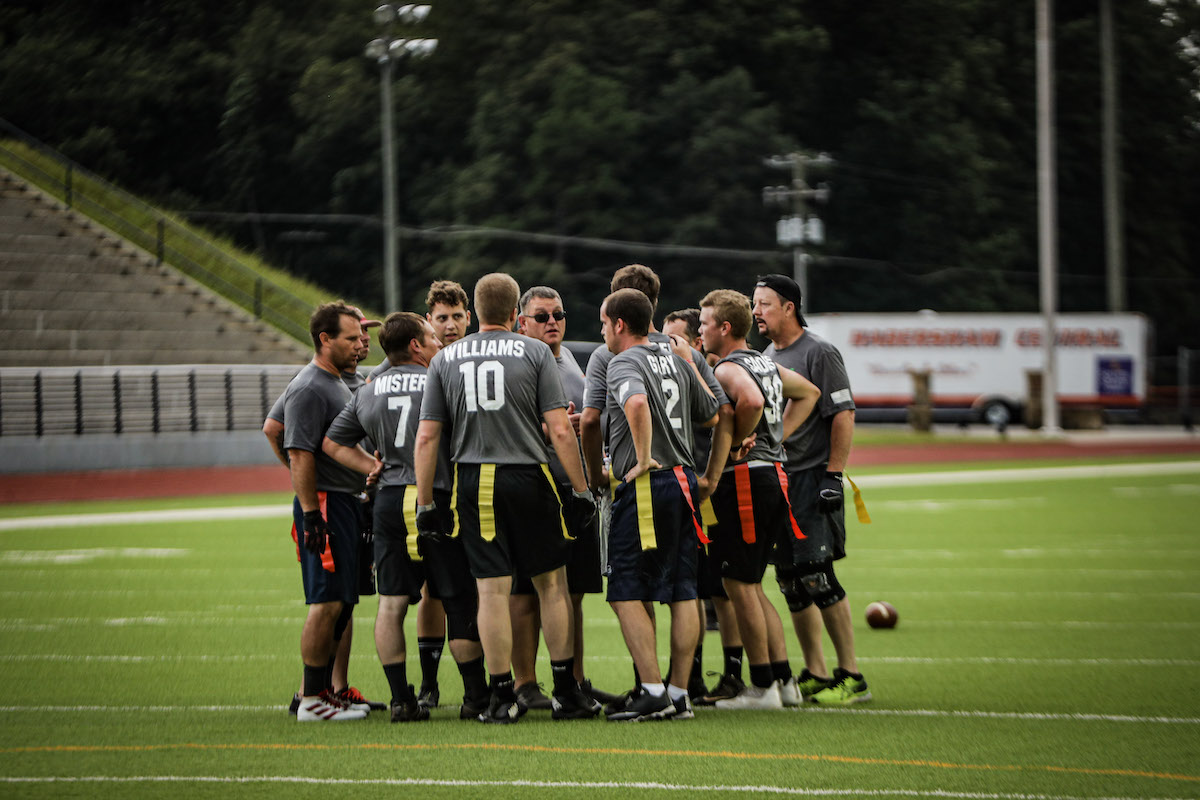
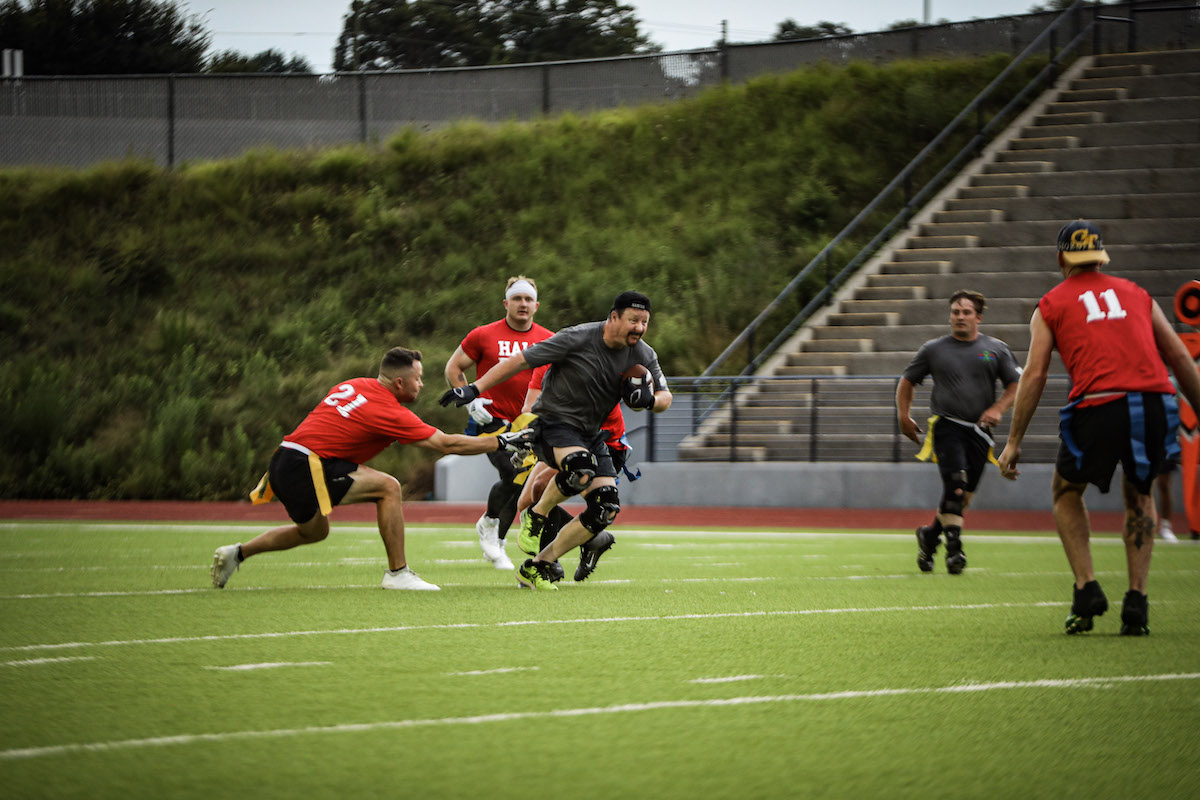
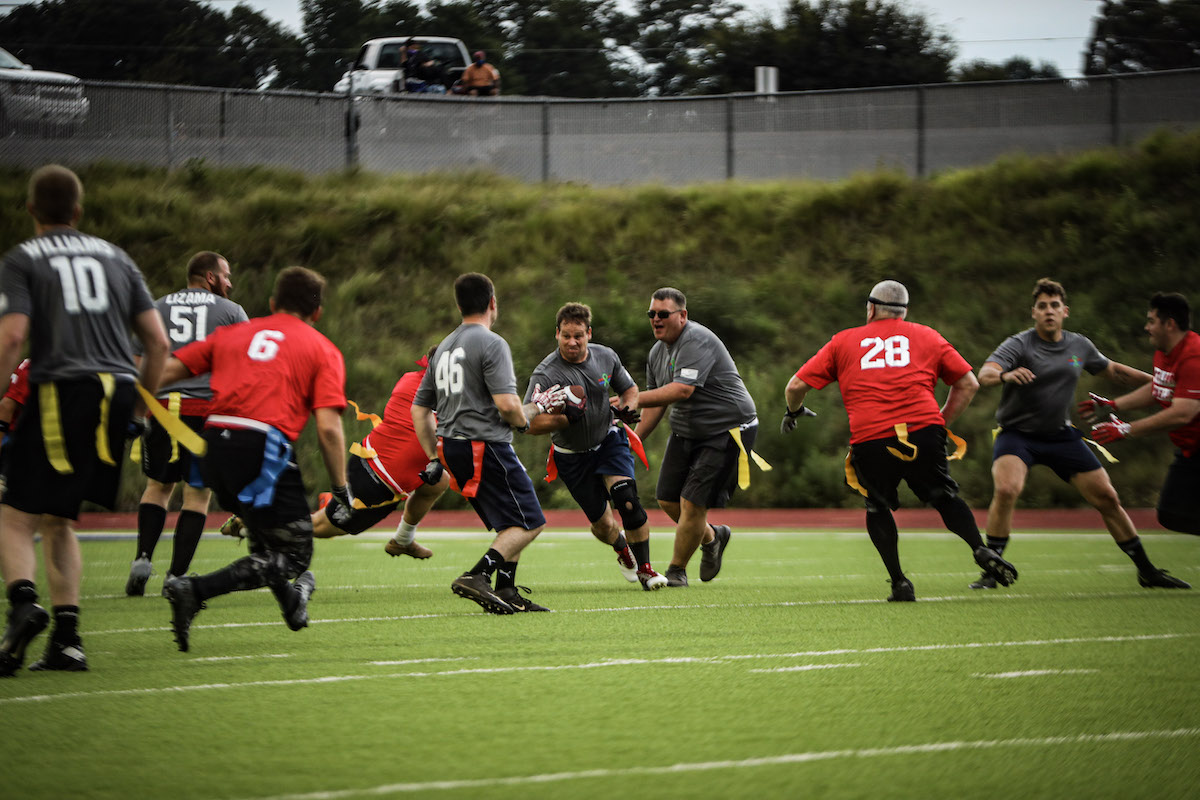
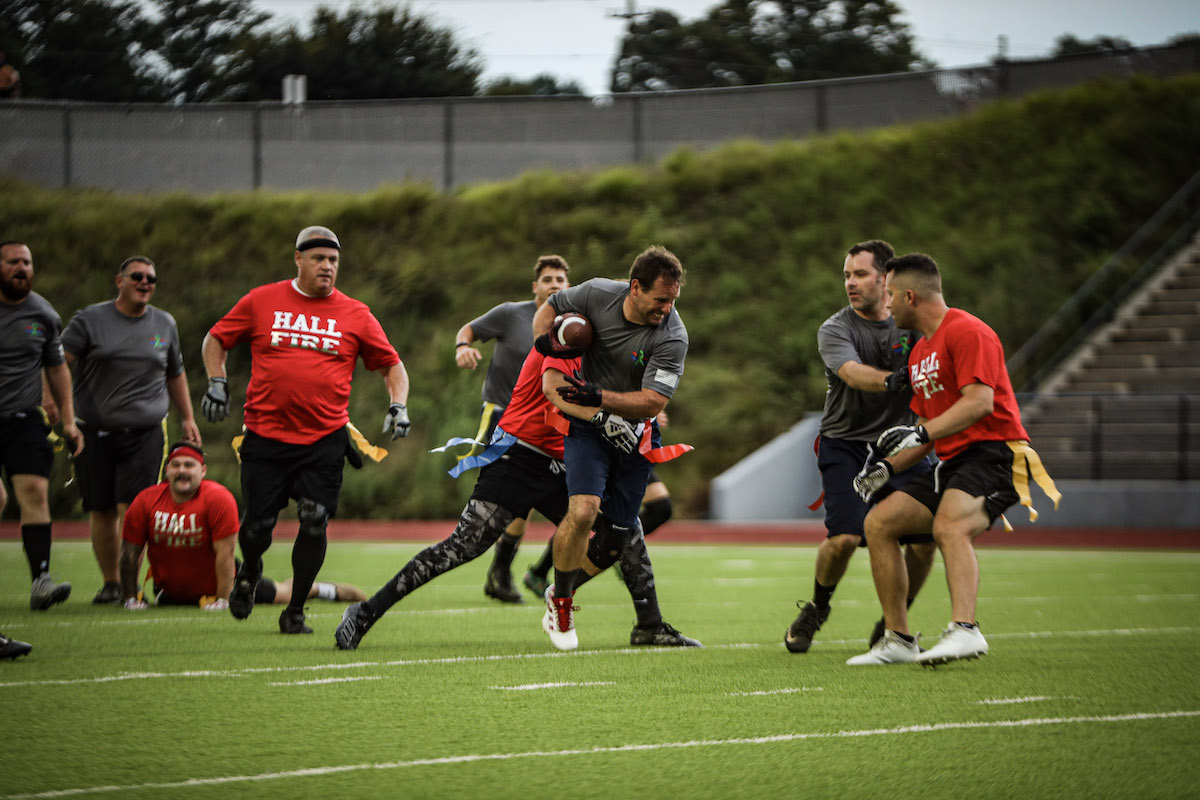
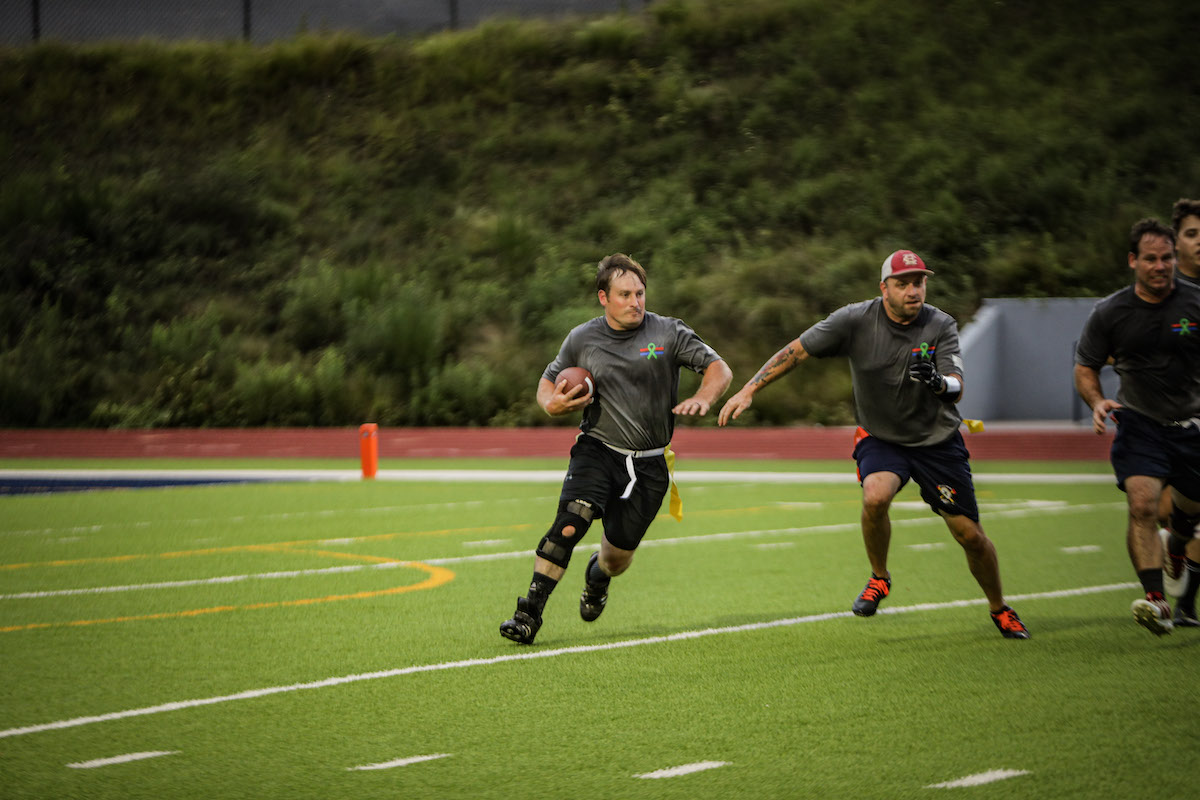
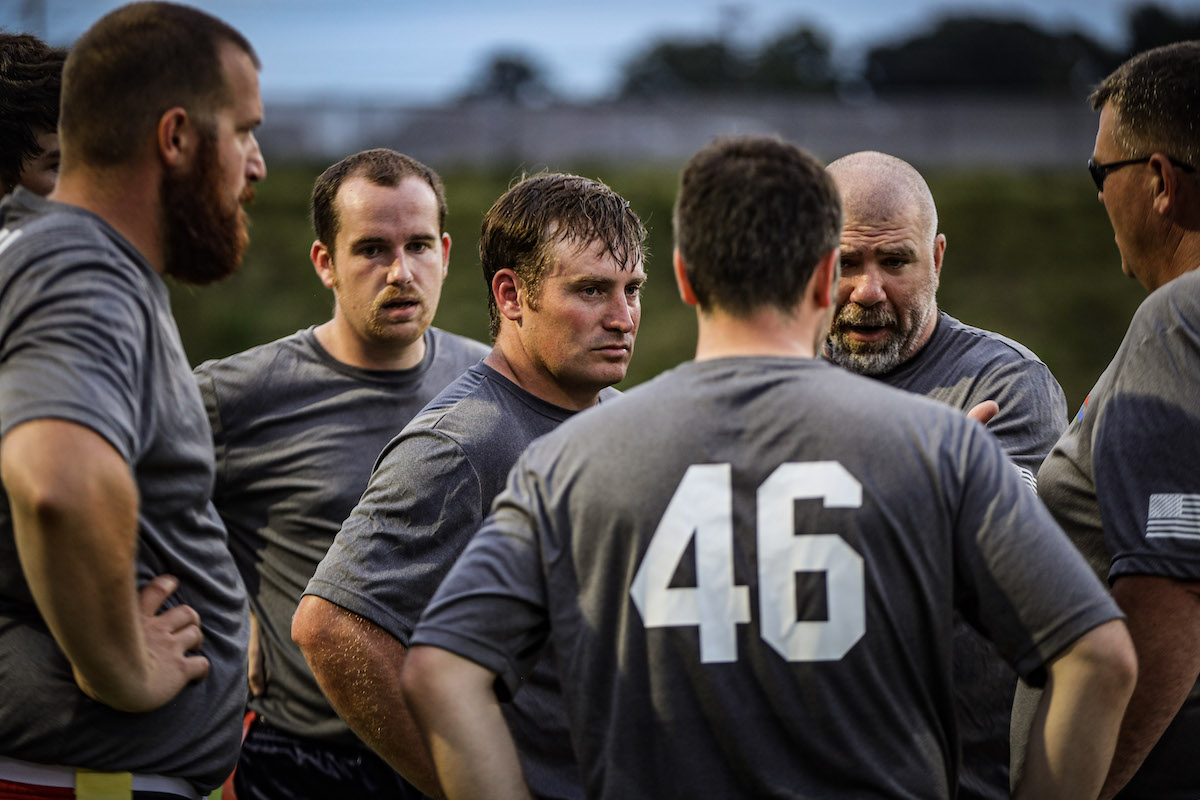
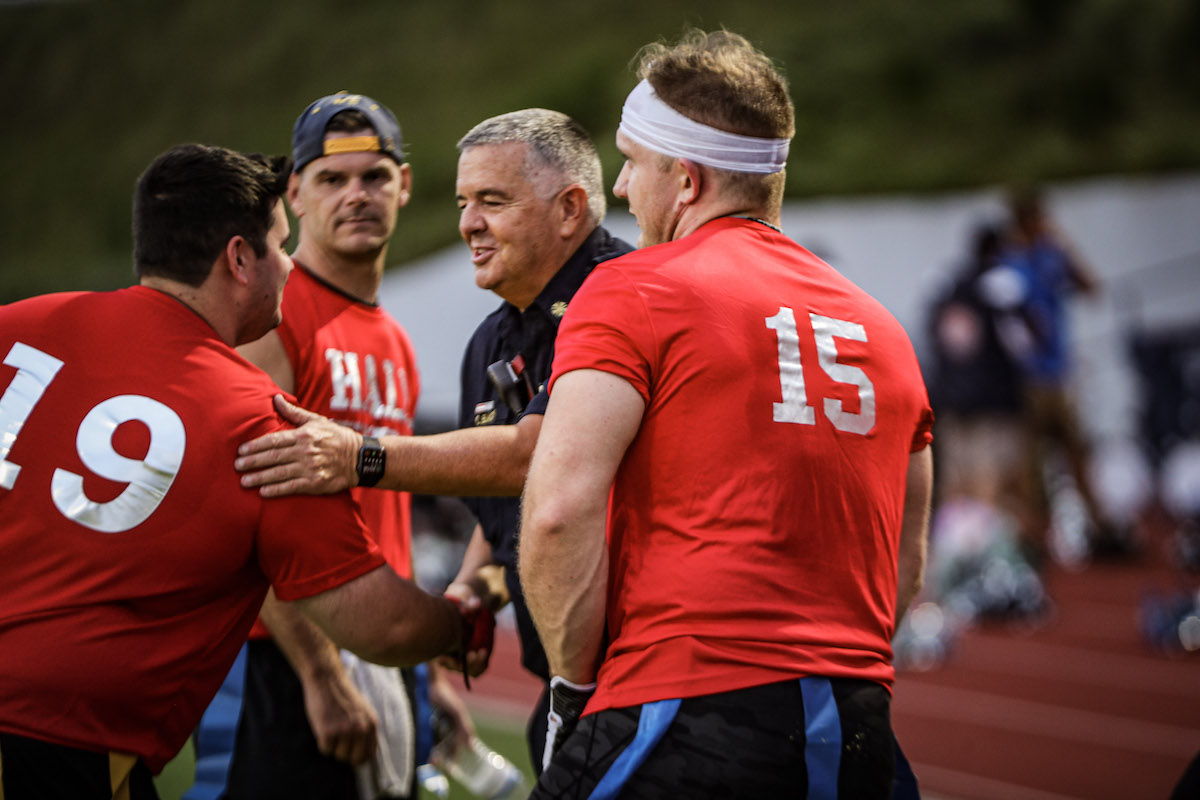
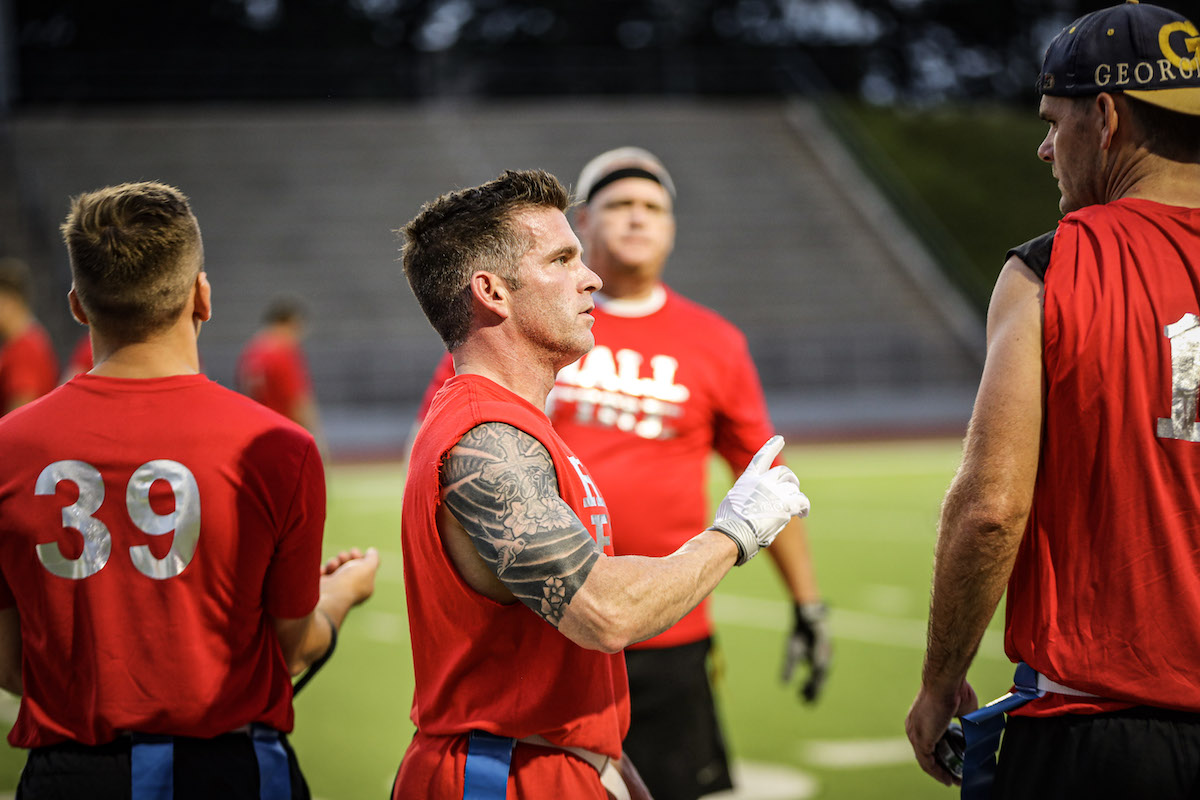
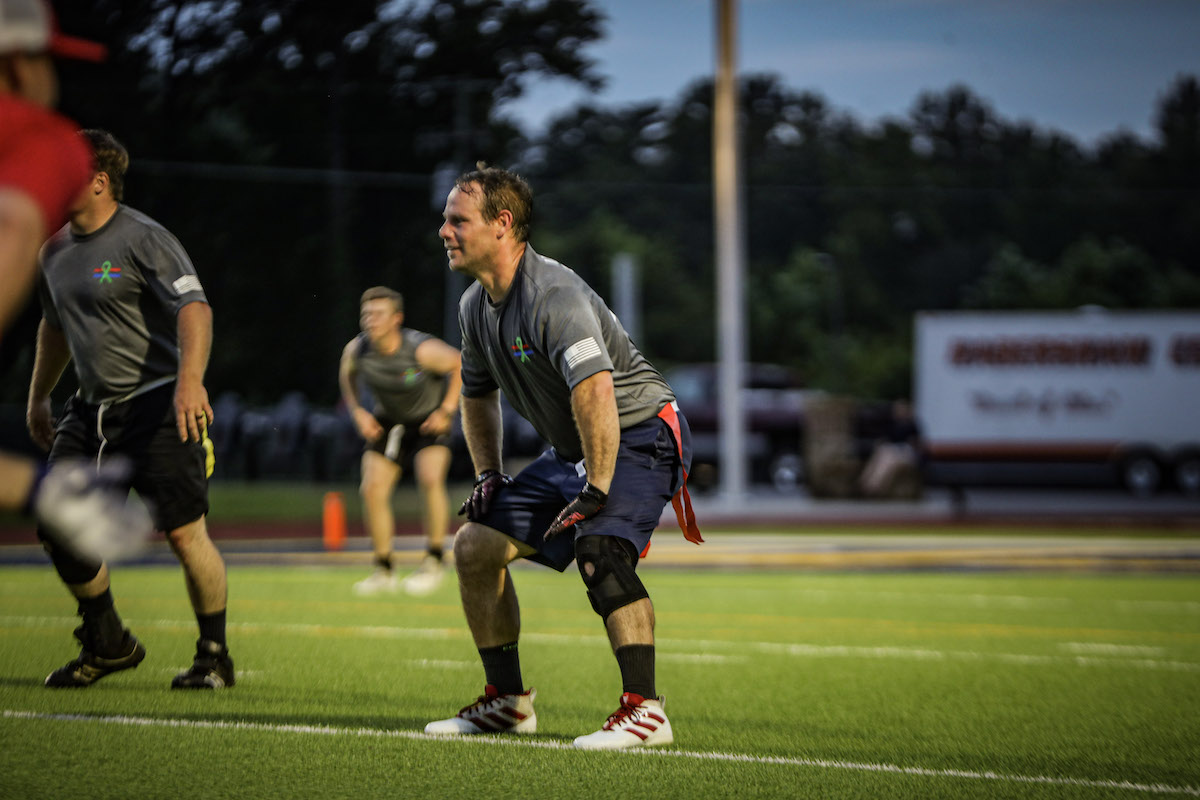
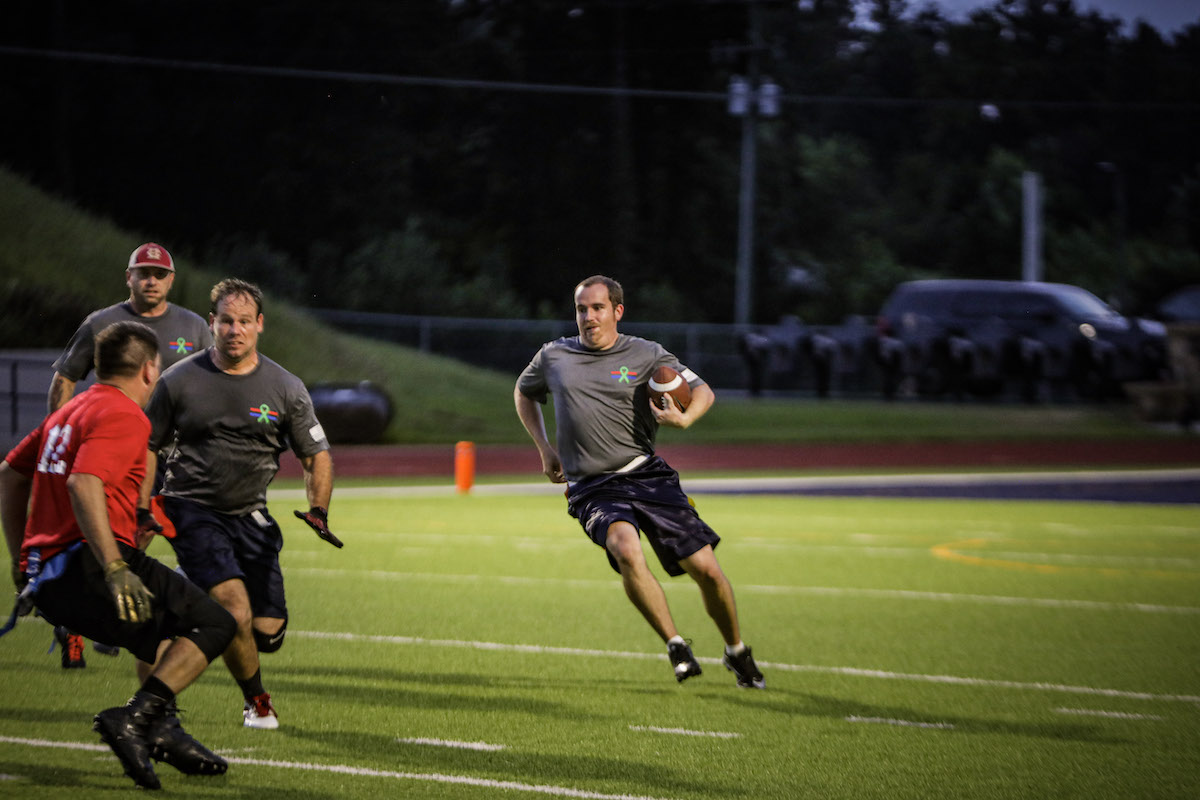
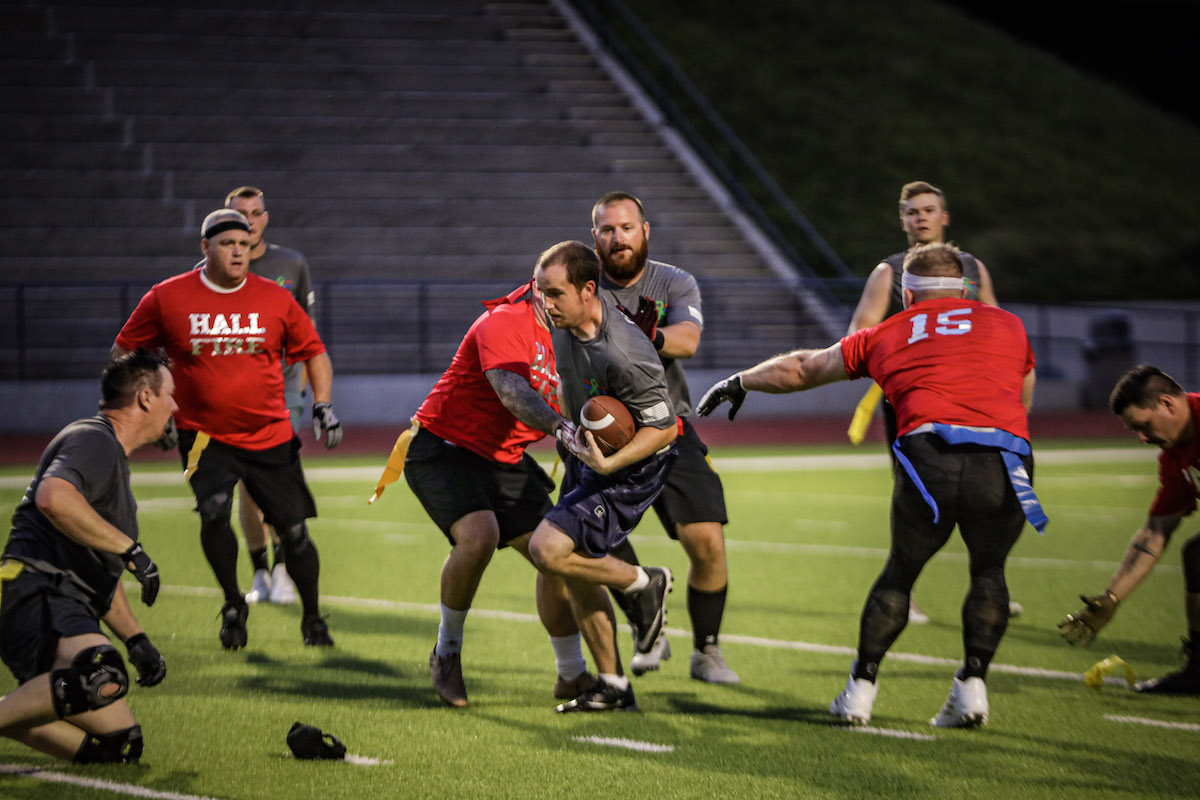
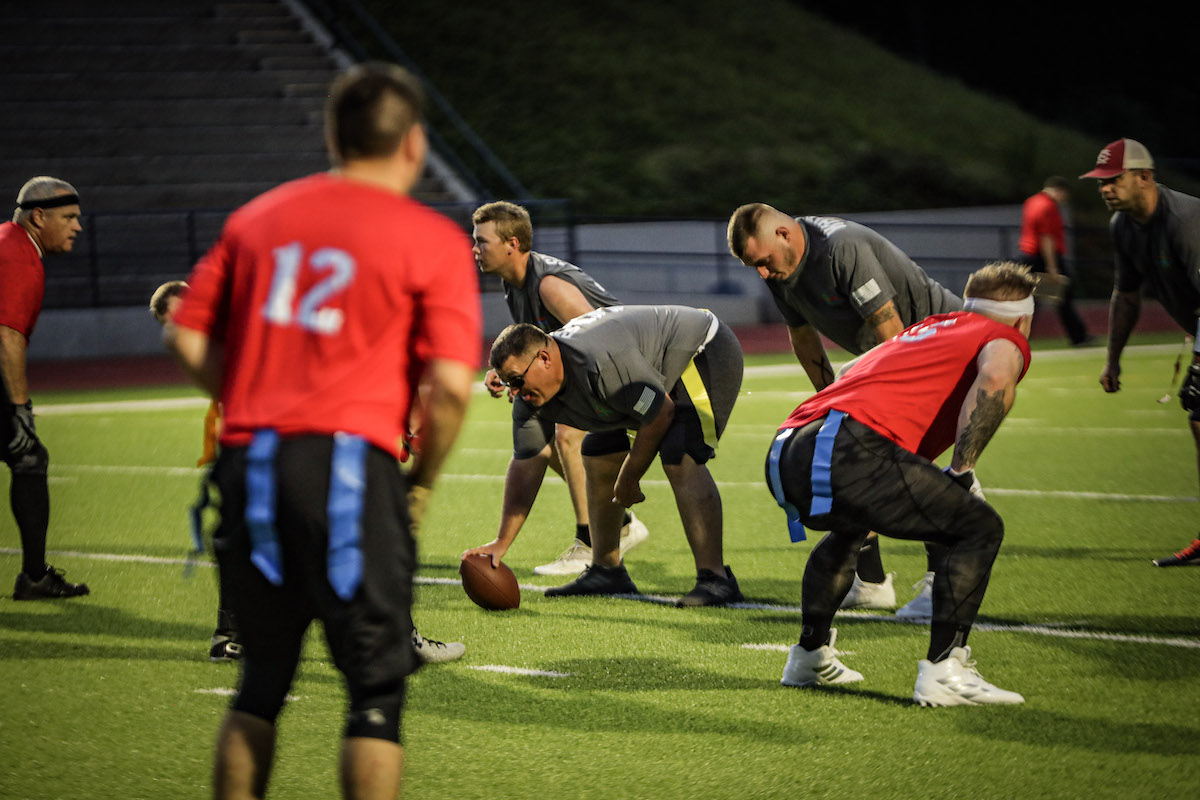
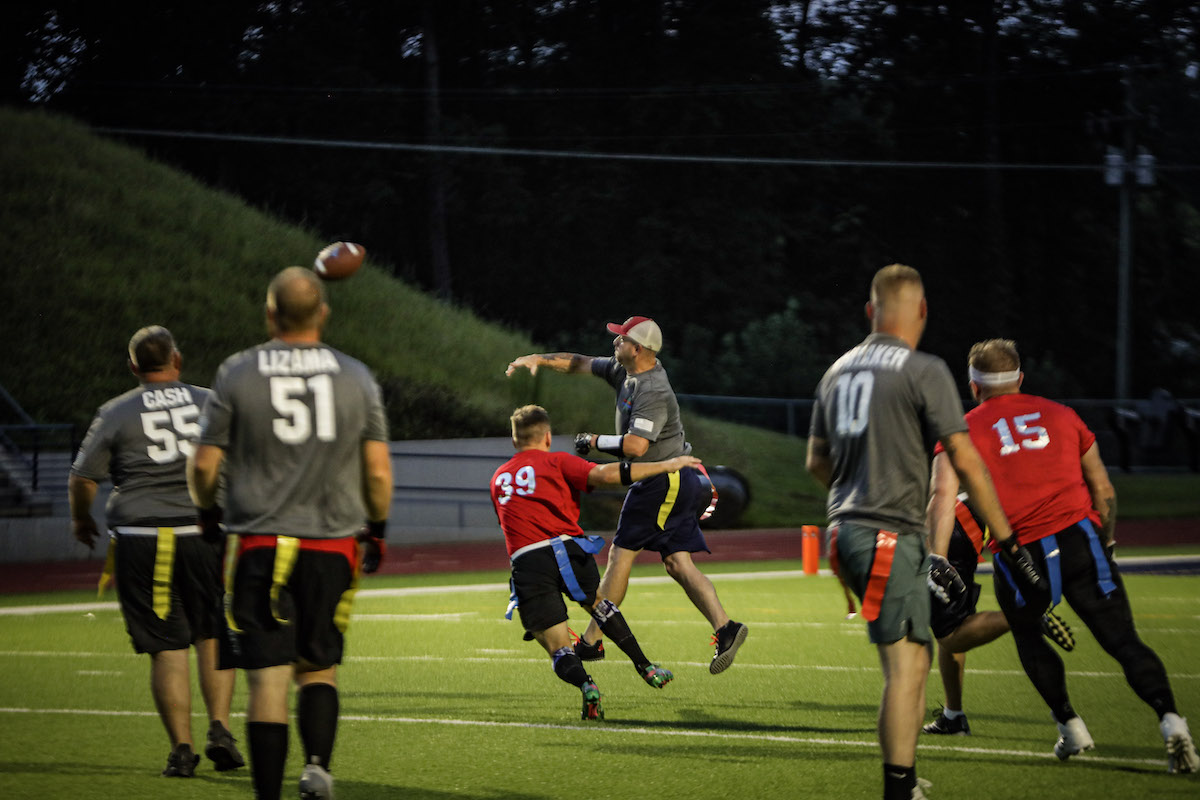
Each year the Battle of the Heroes charity flag football game brings together first responders from Habersham and Banks (in grey) and Hall County to raise money to help area youth. (photo by Daniel Purcell)
It was a banner year for The Easton Foundation’s fundraising. The nonprofit’s 8th Battle of the Heroes charity flag football game raised more money and had more people in attendance this year than ever before.
The game was held Saturday, August 14 at Raider Stadium in Mt. Airy.
Now Habersham’s Daniel Purcell captured the people and moments that helped make this year’s event special.
8th Battle of the Heroes • Aug. 14, 2021 (photos by Daniel Purcell/Now Habersham)
1 of 63
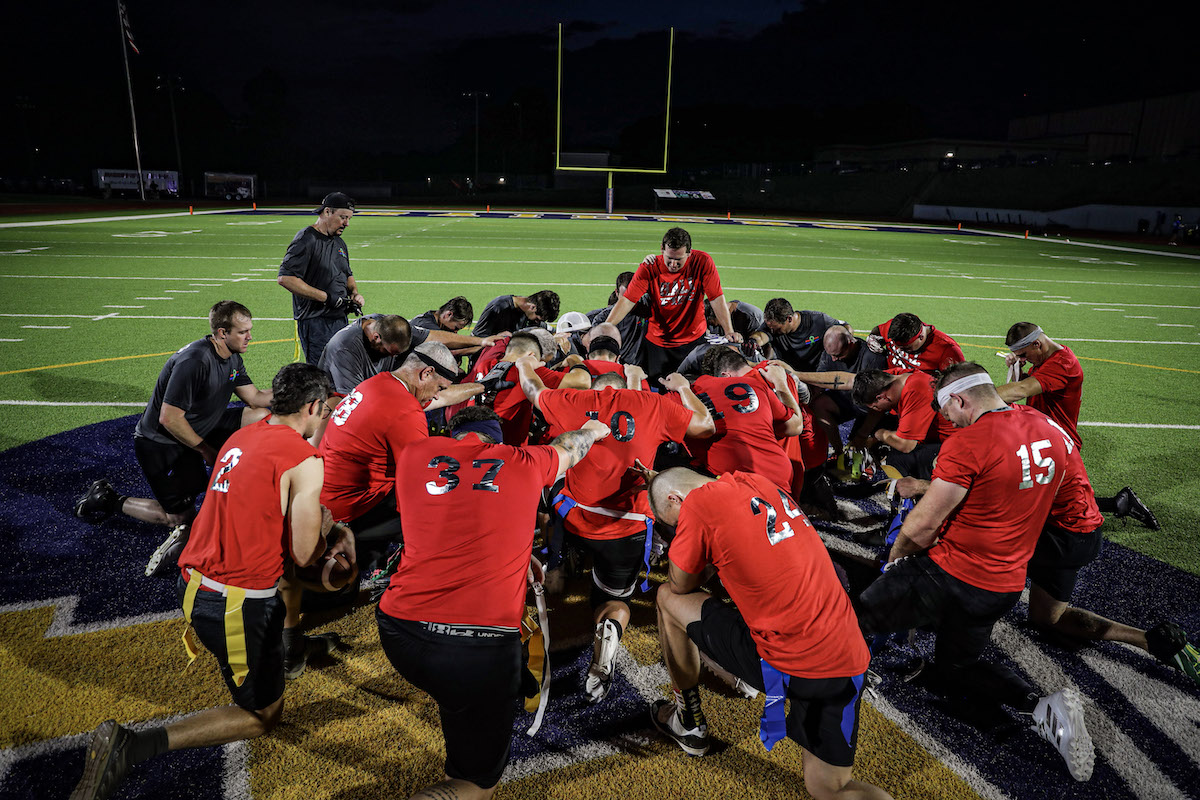
Area Fellowship of Christian Athletes Director Thomas Burnett carries a football inscribed for HCHS Head Baseball Coach Chris Akridge who is battling COVID.
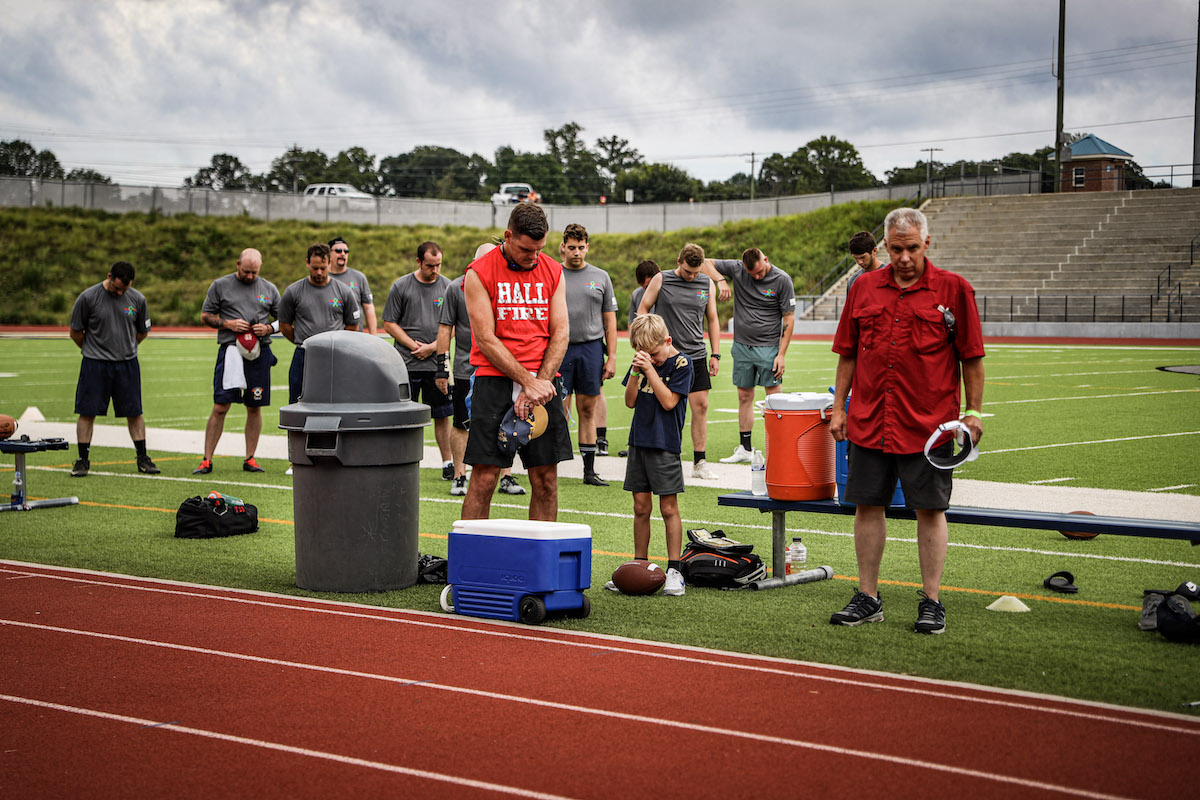
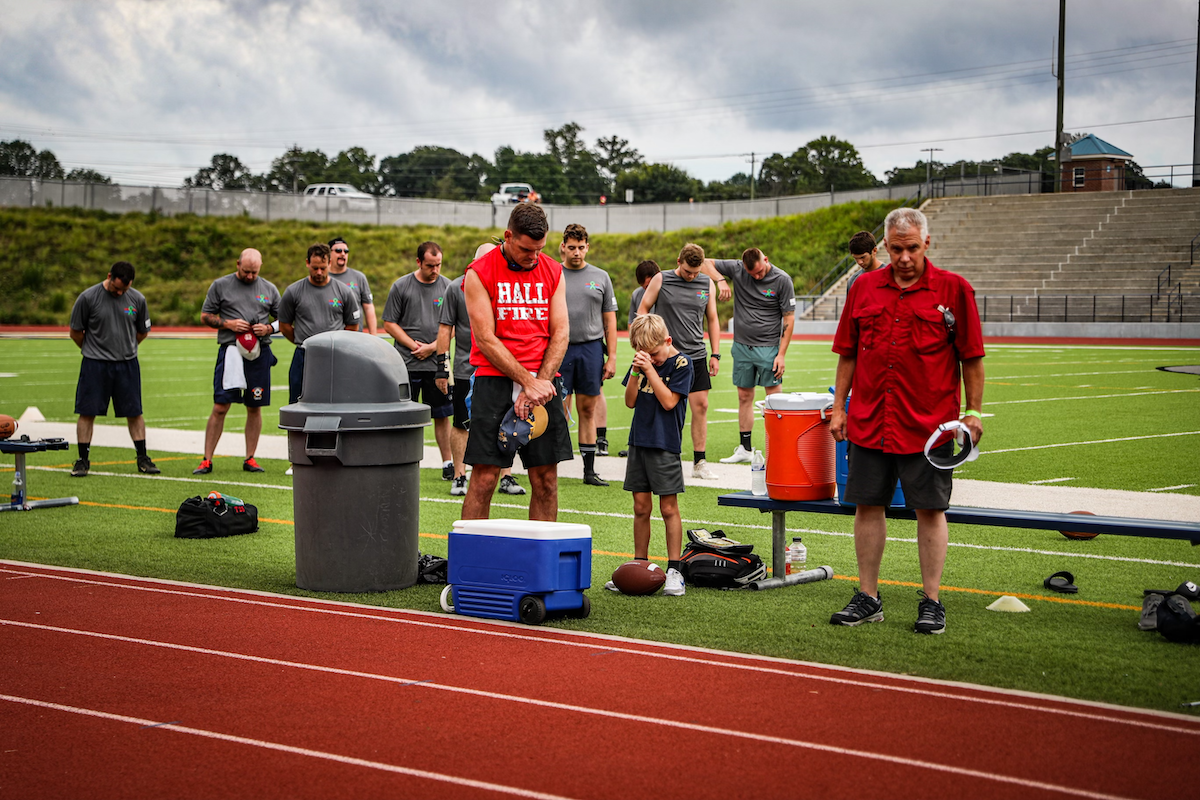
Burnett offered up a community prayer for Coach Akridge during the event.
(Daniel Purcell/Now Habersham)
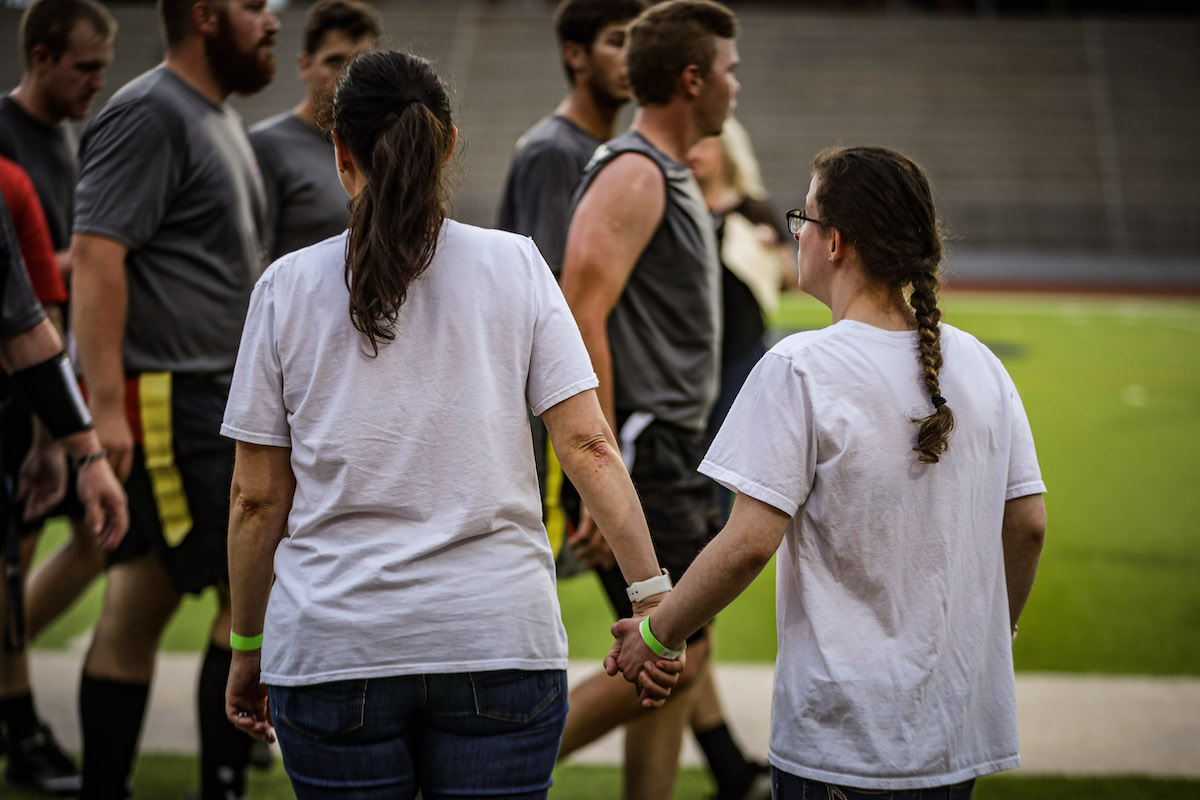
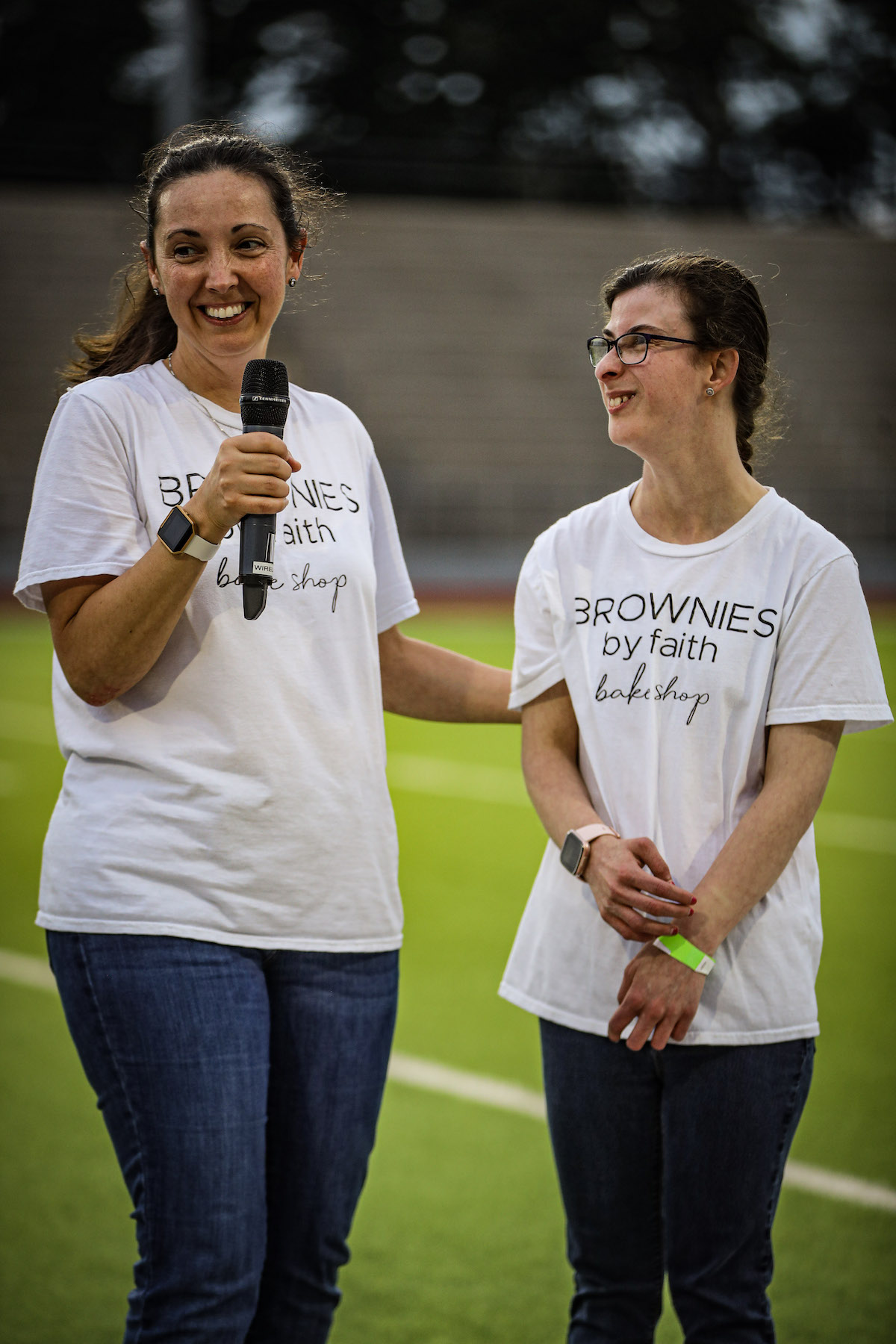
Grand Marshal Faith Baird, left, and her mom and business partner Misty walk on to the field.
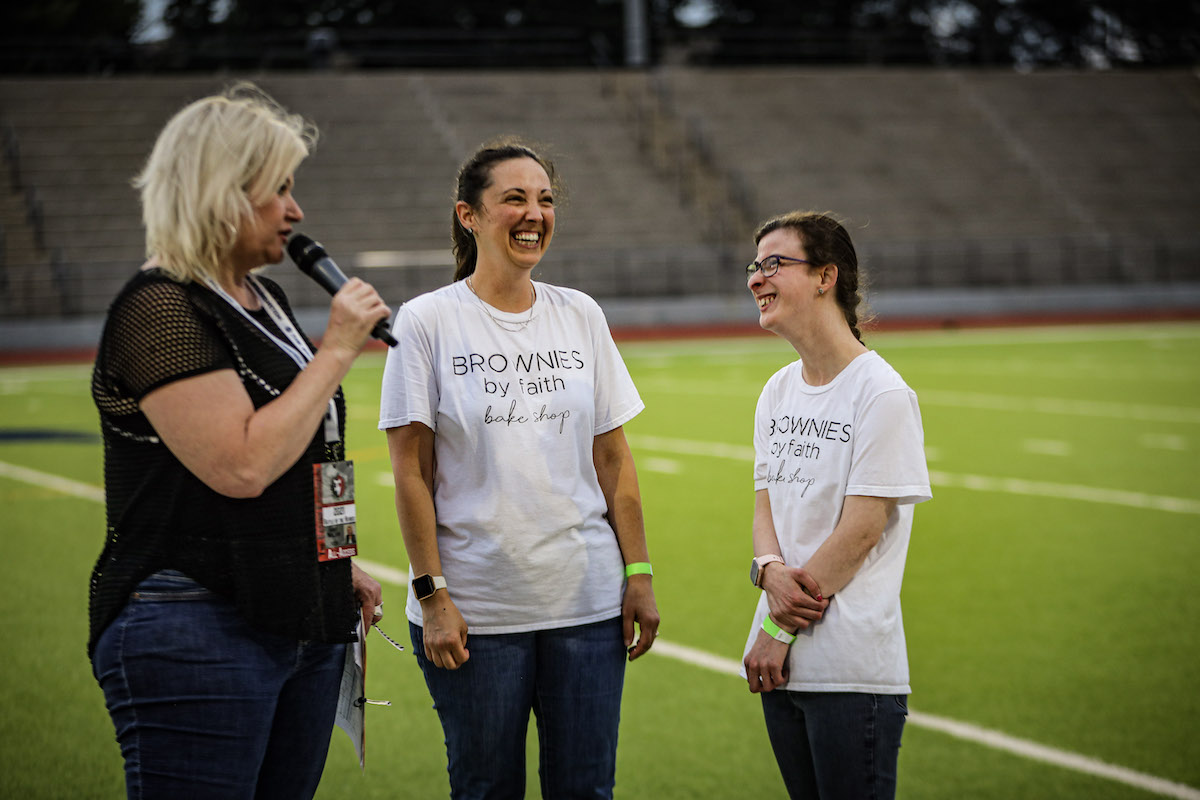
WCON Radio personality Kathy Nicholson talks with the Grand Marshal during the festivities.
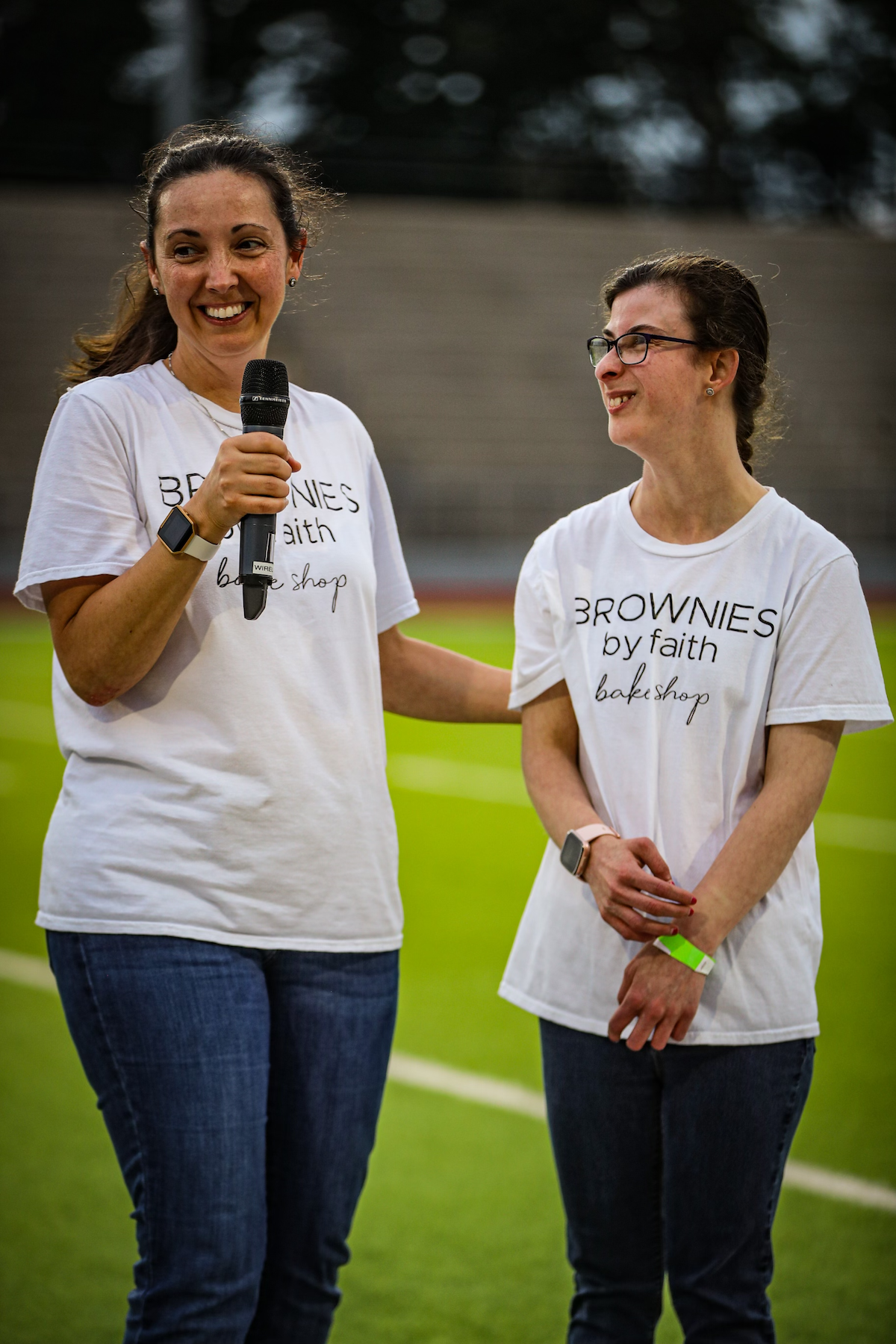
Misty Baird speaks to the crowd as her daughter Faith looks on.
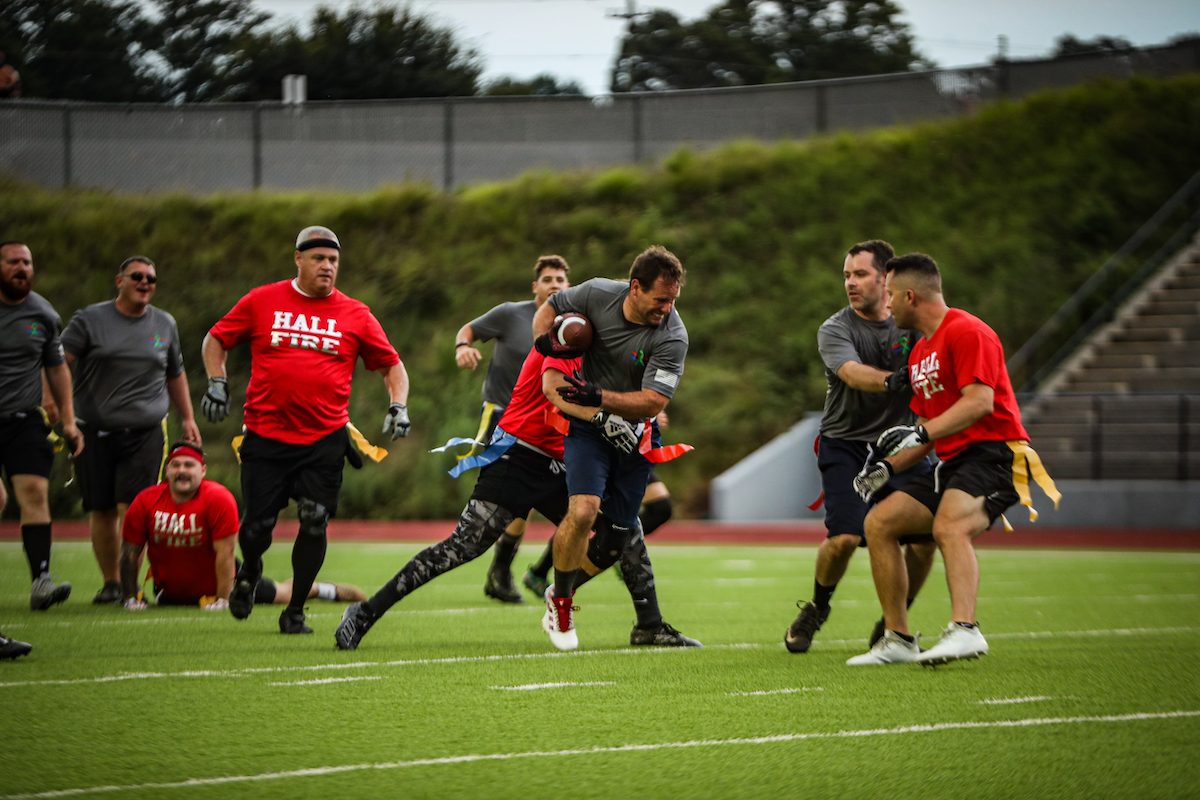
Banks and Habersham (in grey) tried but couldn't put any points on the board. Hall County beat them 38-0.
Each year the Battle of the Heroes charity flag football game brings together first responders from Habersham and Banks (in grey) and Hall County to raise money to help area youth. (photo by Daniel Purcell)
Editor’s Note: This commentary is republished with permission from Georgia Health News. Jack Bernard, former Georgia Director of Health Planning, is a retired senior vice president with a national health care corporation and a Fayette County Board of Health member. Dr. Doug Skelton is the former Dean of the Mercer School of Medicine and current Chancellor of Trinity Medical Sciences University. The opinions expressed in this commentary are theirs.
The results are in for all of America to see, and Georgia has finally made it . . . to very near the bottom of the pile. Shameful, but true.
Georgia has a booming economy and is one of the fastest-growing states in the nation. Possibly, this is the reason that news of its poor health care system hit the national news.
Bernard
Surprisingly, our health care disaster did not create much of a stir locally (other than in GHN), which is why we decided to write this column. We all love our state, but let’s not continue to deceive ourselves. We can improve, but only by acknowledging our faults. And a poor health care system is on the top of the list.
Why is our system such a wreck? In regard to income, Georgia is in the middle of the pack, with a median income of $61,980. But our cost of living is a lot less than in places like New York and Californiathat have higher incomes.
However, our poverty rate is 13.3 percent, the 14th-highest in America, while the national rate is 10.5 percent.
Fifty years ago, it was at 18 percent for the region. So there has been some improvement. But not nearly enough given the economic growth in our state. And the status of black Georgians is still dismal, as discussed below.
Let’s get into specifics. One source lists Georgia’s health care as the second-worst in the U.S., with only Texas being worse. We have the third-highest rate of uninsured nationally. Our infant mortality and maternal mortality rates are extremely high, as is our preventable hospitalization rate compared to other states and the national average.
And despite our progress economically, we have far fewer primary care doctors (we rank 40th) and mental health providers (we rank 45th). You want proof? Try to find psychiatrists who take Medicaresouth of the Atlanta perimeter.
Another source, the respected Commonwealth Fund, analyzed health care in all states. Overall, we were the sixth-worst in the nation. And key measures like hospital 30-day mortality and preventable hospitalizations were getting worse versus prior years. On the crucial measures of access and affordability, we were the third-worst.
Demographically, there was one area that was glaringly different from national figures. Whereas the national rate of African-American poverty is 12 percent, in Georgia it is 31 percent . . . nearly triple. That’s why we are ranked fourth-worst nationally regarding the health disparity among racial groups.
The Commonwealth Fund also used a measurement technique common in industry, called “best practices.” For example, if Georgia matched the best state in the Southeast, we would have 820,359 fewer uninsured plus 391,983 fewer adults who “skipped care because of its cost.”
Skelton
Despite our deficits, much has been accomplished over the last several decades. We now have five medical schools, with two focused on producing primary care physicians. There are public health departments in all of Georgia’s 159 counties, high-quality hospitals for metro areas, plus a Medicaid program covering 2 million people in need.
However, the situation with the Affordable Care Act’s Medicaid expansion option highlights the problem that we believe drives the data above. If exercised in 2010, the expansion option would have provided medical care for most of our uninsured population . . . and with 100 percent federal funding for three years and 90 percent thereafter.
No good reason for declining the option exists. Georgia’s decision to do so simply left neglected the poorest of the poor, as has been the unofficial state policy forever. And the “waiver” suggested to the feds by Gov. Brian Kemp wouldn’t do much to increase coverage.
Can the situation in Georgia be changed? Of course it can. But not unless our state and local governments are willing to construct a strategic plan to directly address the needs of our lower-income citizens.
The Grace Gate free medical clinic in Demorest serves the primary health and spiritual needs of its clients. The clinic is housed in a building now owned by Mt. Carmel Baptist Church and is a place where love, hope, and healing reside.
When Habersham Medical Center sold the building that housed its home health division, some wondered what would become of the building’s other tenant, Grace Gate. The Christ-centered free medical clinic provides health care services to uninsured low-income adults. In its sixteen years, the clinic has only ever known one home, in the office building on Historic Highway 441 in Demorest adjacent to Mt. Carmel Baptist Church.
Thanks to the church’s generosity, Grace Gate still calls that building home.
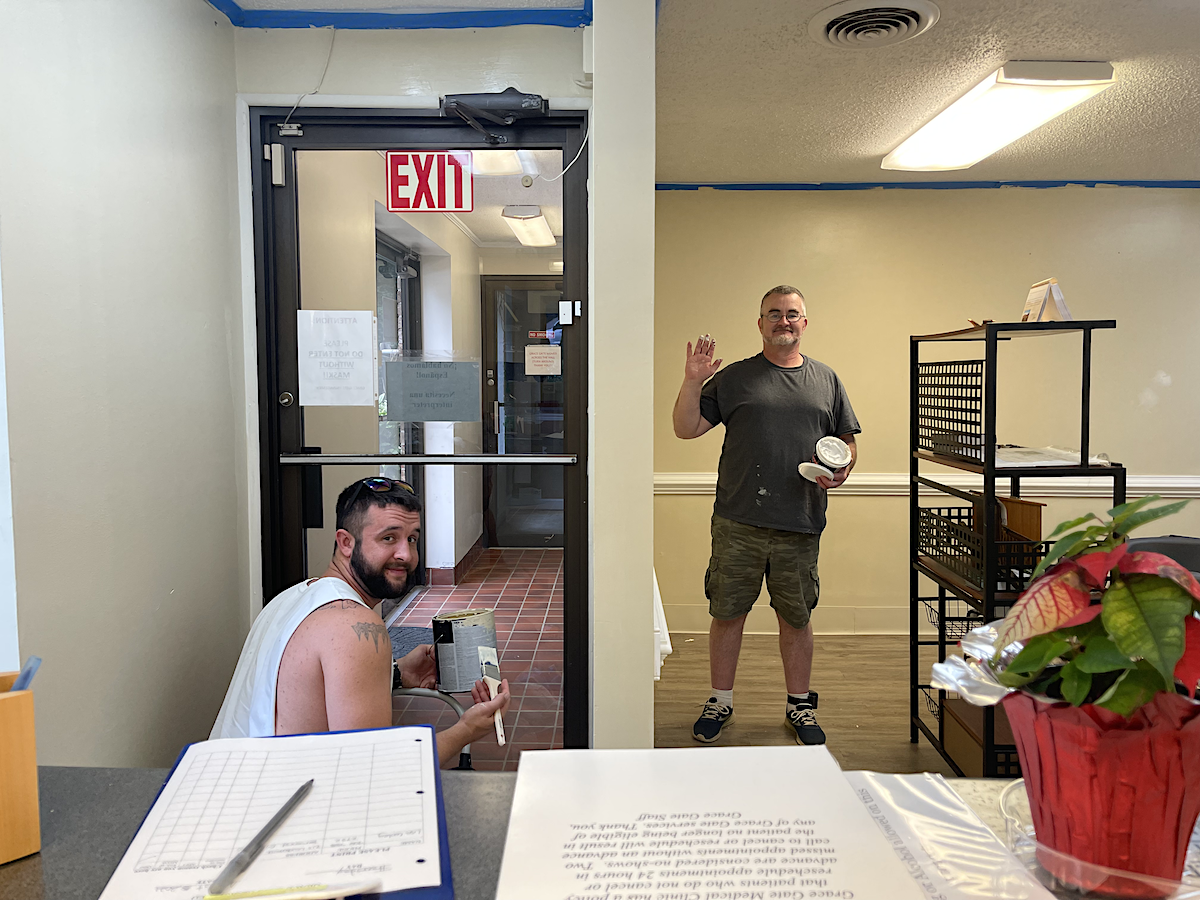
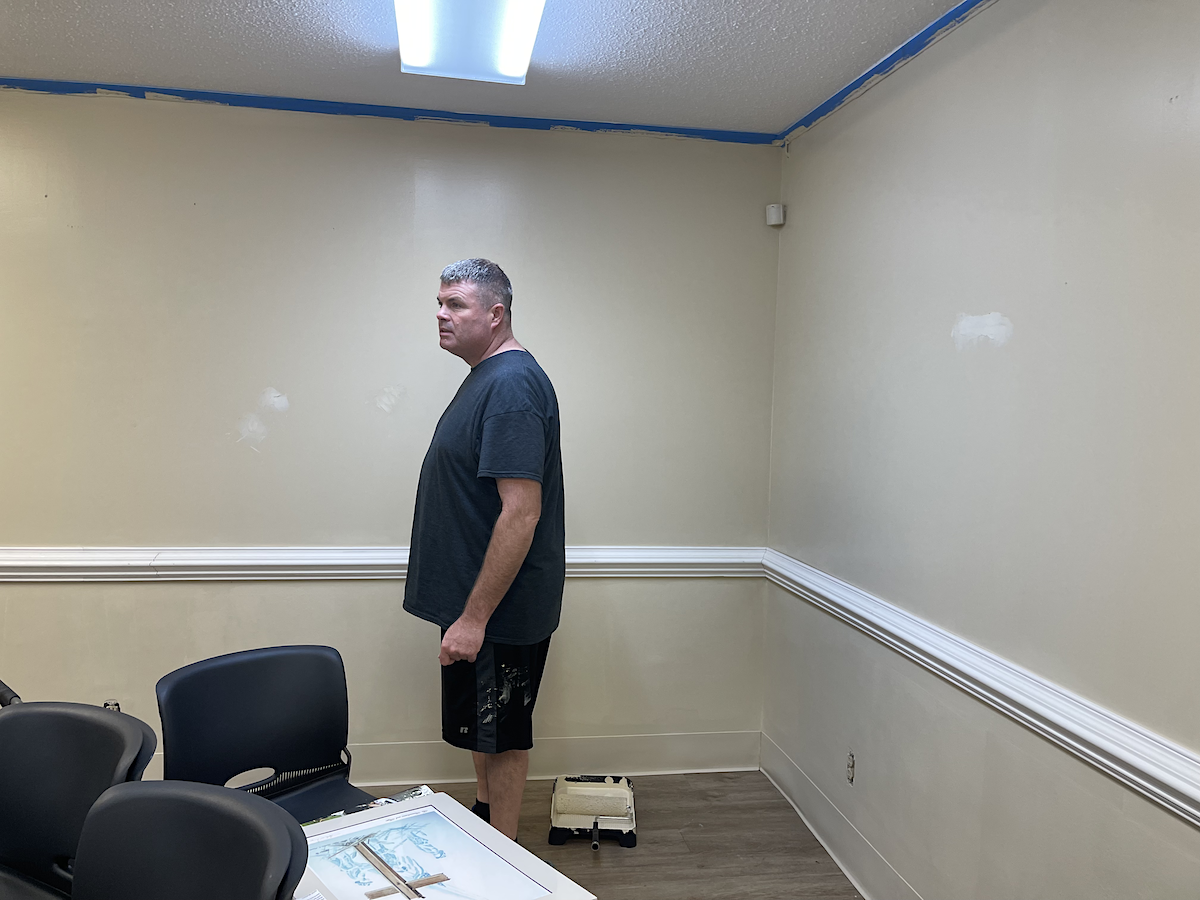
Volunteers from Pilgrim Ministries work to make the waiting room at Grace Gate more inviting. (photo submitted)
Mt. Carmel bought the property and allows the clinic to operate rent-free. Last fall, when mold and humidity problems forced the clinic to move, “Mt. Carmel graciously allowed us to move to the other suite in the building,” says Grace Gate’s Clinic Administrator Ginny Allison.
The move brought its own set of challenges.
“Those offices, particularly the patient waiting room, were in need of paint and repair. Chairs lining the waiting room had gouged the walls badly, and there were holes in the walls,” says the Grace Gate’s Board of Directors Chair Carol Johnson.
Recently, Grace Gate staff, board members, and volunteers pitched in to patch it up.
Steve and Tangye Teague from Bethlehem Baptist Church in Clarkesville provided the labor and materials and installed a new chair rail around the waiting room. Then, volunteers from another local ministry stepped in to help.
Pilgrim Ministries is a faith-based recovery center in Clarkesville. In the cycle of giving that often defines and sustains faith initiatives, Grace Gate provides its residents with free medical care. When the clinic needed help, Pilgrim Ministries was there.
“Those men volunteered to come and patch and paint the walls and new chair rail,” says Johnson.
Allison coordinated the work. She’s been Grace Gate’s director for six years. A big part of her job is connecting needs and services; she has to in order to keep the clinic running.
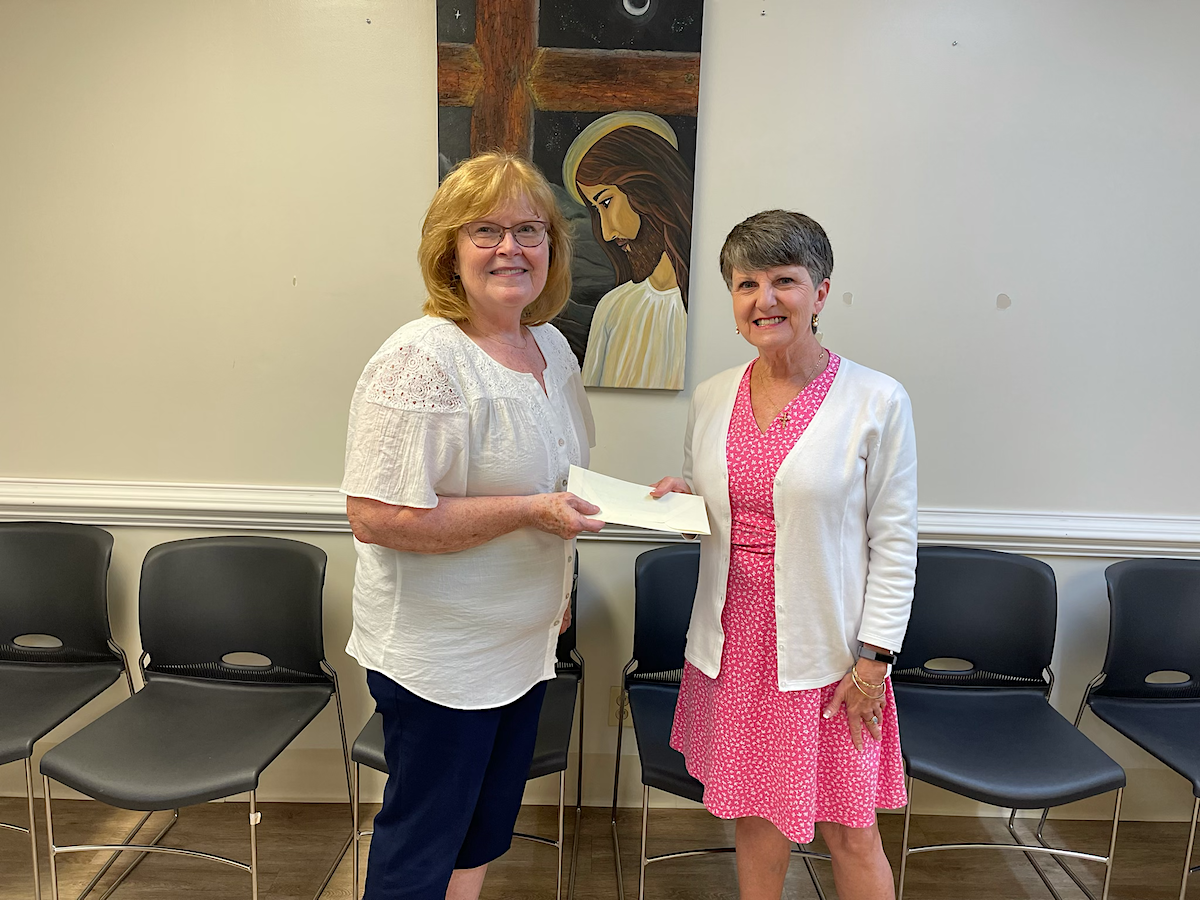
Grace Gate Director Ginny Allison, right, accepts a donation from the niece of a woman who included Grace Gate in her will. (photo submitted)
The local medical ministry survives on the labor of one full-time employee, three part-timers, and about 30 volunteers. Its operations are funded through the Habersham United Way, personal and corporate donations, and fundraisers.
“We have prayer partners and students from Piedmont College that volunteer. Also, our physicians and nurse practitioners,” says Allison.
The one paid staff clinician is a nurse practitioner who works eight hours a month. The rest of the medical team is made up of volunteers, recruited only through word of mouth.
Grace Gate serves around 180 patients — all Habersham County residents — and logs about 1,100 patient visits each year. Grace Gate refers those who require specialists to Northside Hospital in Atlanta.
Each one should use whatever gift he has received to serve others, faithfully administering God’s grace in its various forms. – 1 Peter 4:10
“Northside came to us five years ago and said they had money they needed to use for non-profits. The rest is history,” says Allison. “We have been so blessed by them.”
Since partnering together, Northside physicians have helped cure several patients of Hepatitis C. They’ve performed open-heart surgeries, orthopedic hip and knee replacements, provided imaging services, and many other surgeries and procedures for Grace Gate patients.
Pharmaceutical companies often donate medication to the clinic and “are also a real blessing to us,” says Allison. Crossroads Pharmacy in Habersham County helps too, providing patients some medications and prescriptions at no cost or greatly reduced rates.
Grace Gate is in the process of joining the Georgia Volunteer Health Care Program (GVHCP) which will provide access to other hospitals and agencies in Georgia.
It is that ever-expanding network of benevolence and volunteers that keeps Grace Gate going. As service options expand, the clinic hopes its patient base will too. Grace Gate is now working with board member Pastor Sam Negron and others to raise awareness of its services among Habersham’s Hispanic population.
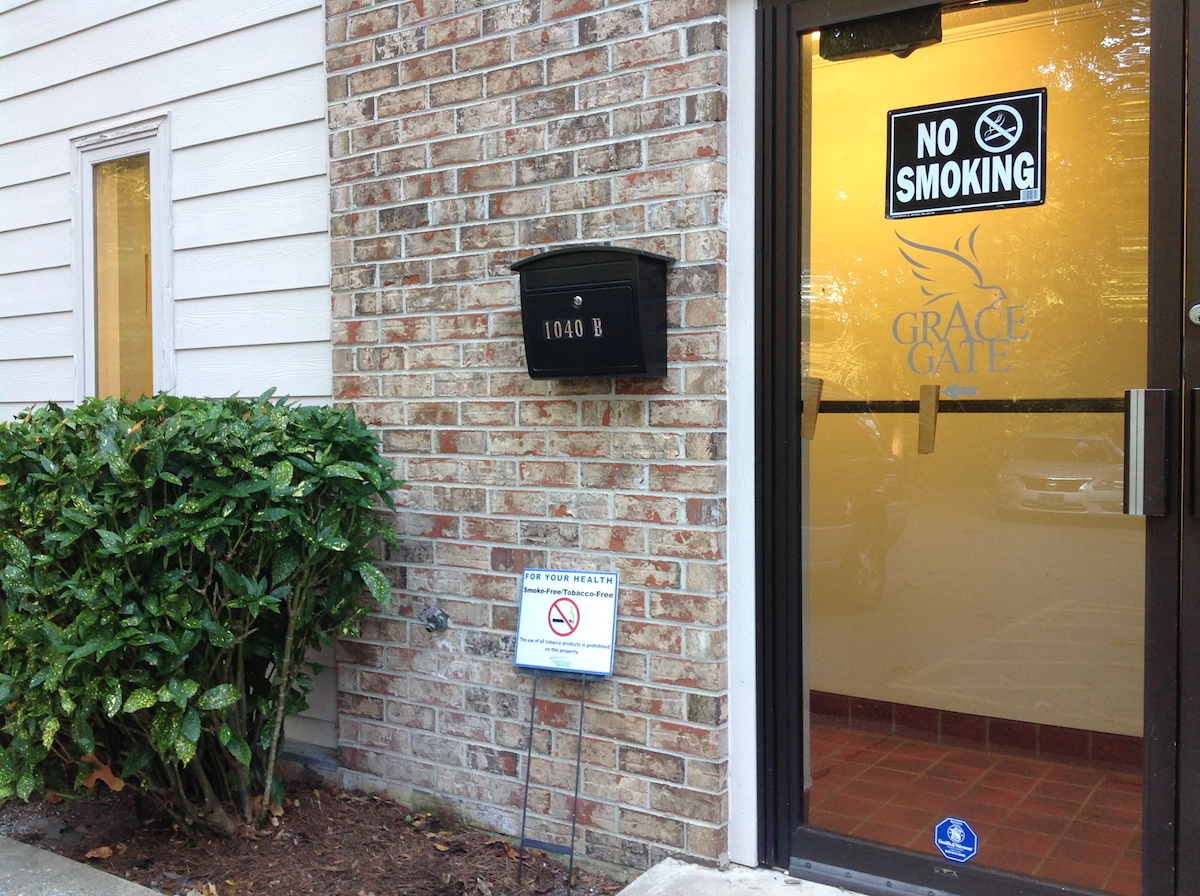
Those who need medical assistance may visit Grace Gate at 1040B Historic Highway 441 North to apply. Applications may be picked up and dropped off between 9 a.m. and 5 p.m. Mondays and Wednesdays. Clinics are held on Tuesdays and Thursdays.
Those who’d like to get involved by donating may contribute money or materials, just as the Teague’s and Pilgrim Ministries did.
The clinic is always in need of paper towels, toilet tissue, and Kleenex. Other welcome donations include copy paper, office supplies, cleaning supplies, trash bags, bacterial wipes, air fresheners, and hand sanitizer, among other items.
To volunteer, contact the clinic at 706-839-4080 or email Allison at [email protected].
Grace Gate is a 501(c)(3) nonprofit. All contributions and in-kind gifts are tax-deductible.
Thanks to the contributions of many, each new and existing patient who enters Grace Gate’s doors will be greeted in a more welcoming setting.
“Grace Gate now has a beautiful waiting room to serve with love and care the needs of our patients,” says Johnson. “We serve the primary care needs and address the spiritual needs of these clients, sharing the love of Christ.”
“We are so thankful for Mt. Carmel Church for allowing us to reside here,” adds Allison.
Born of a vision to serve others and carried on the strength of its connections and mission, Grace Gate is truly a place where love, hope, and healing reside.
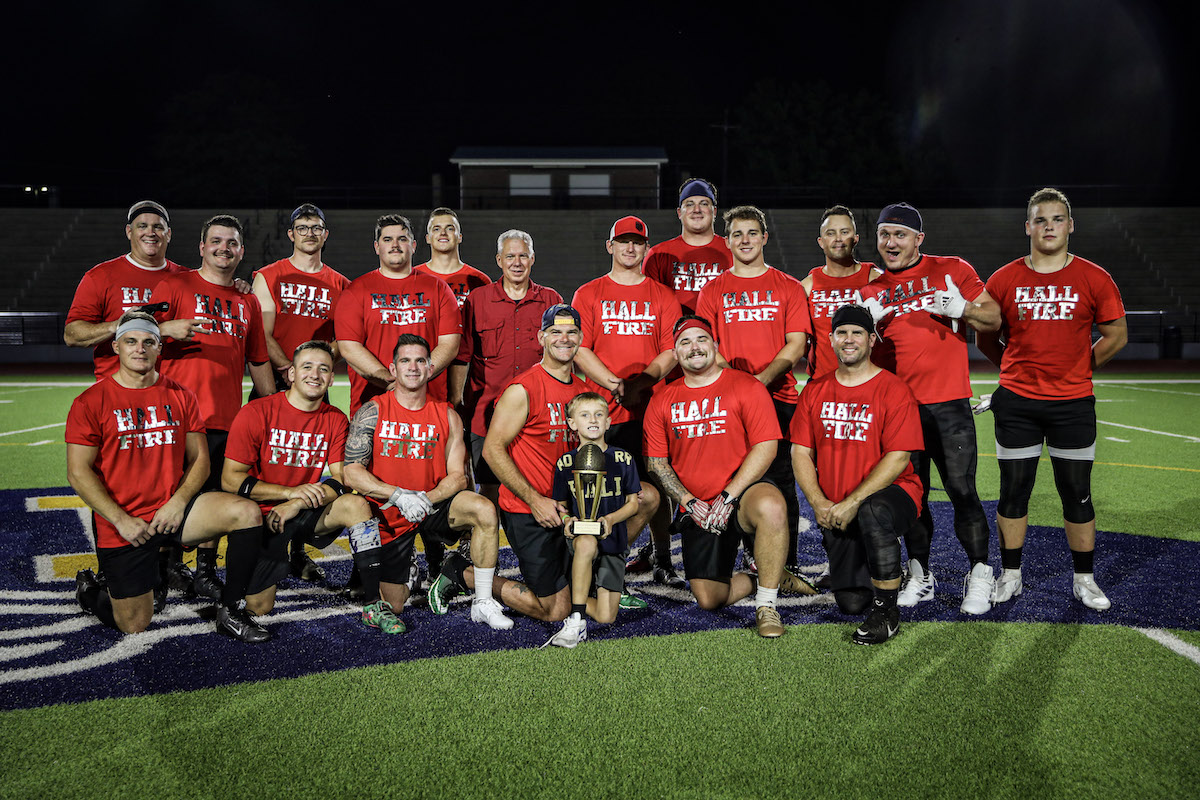
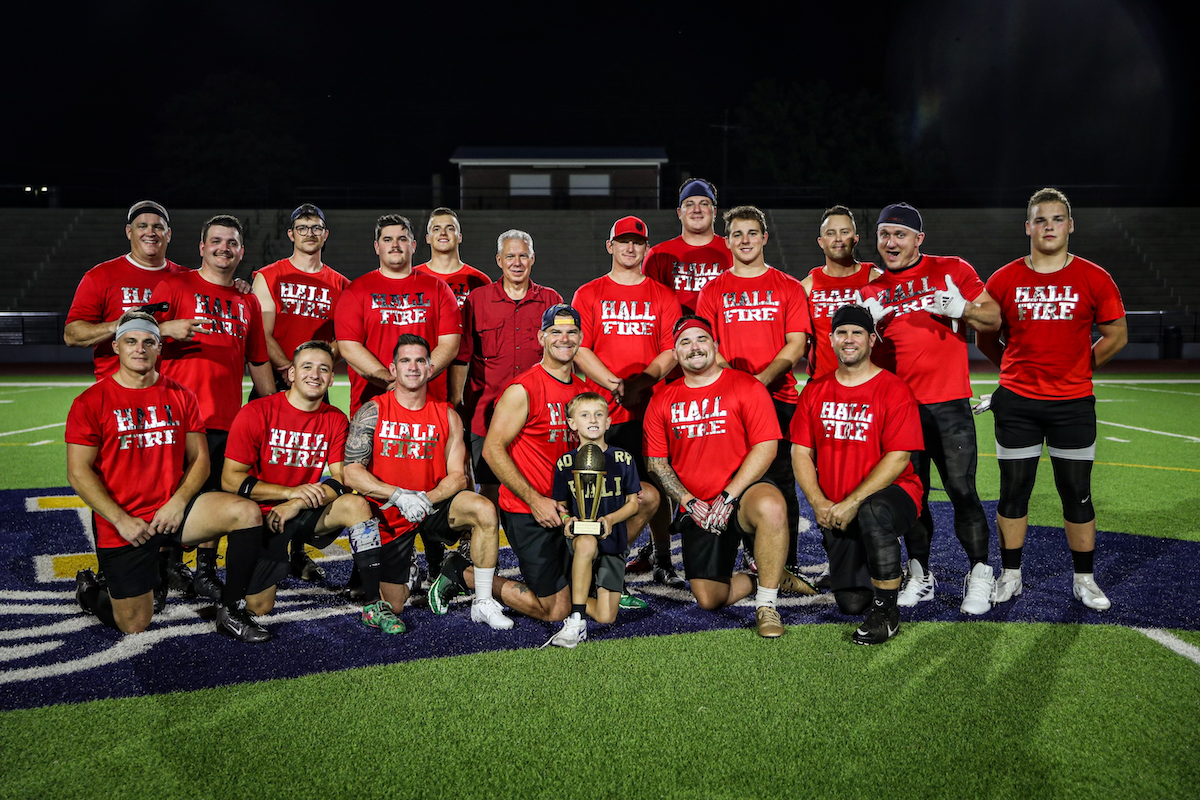
Hall County first responders again took home Battle of the Heroes bragging rights and a trophy. They defeated their counterparts from Banks and Habersham, 38-0. The flag football game is a fundraiser for The Easton Foundation. (photo by Daniel Purcell)
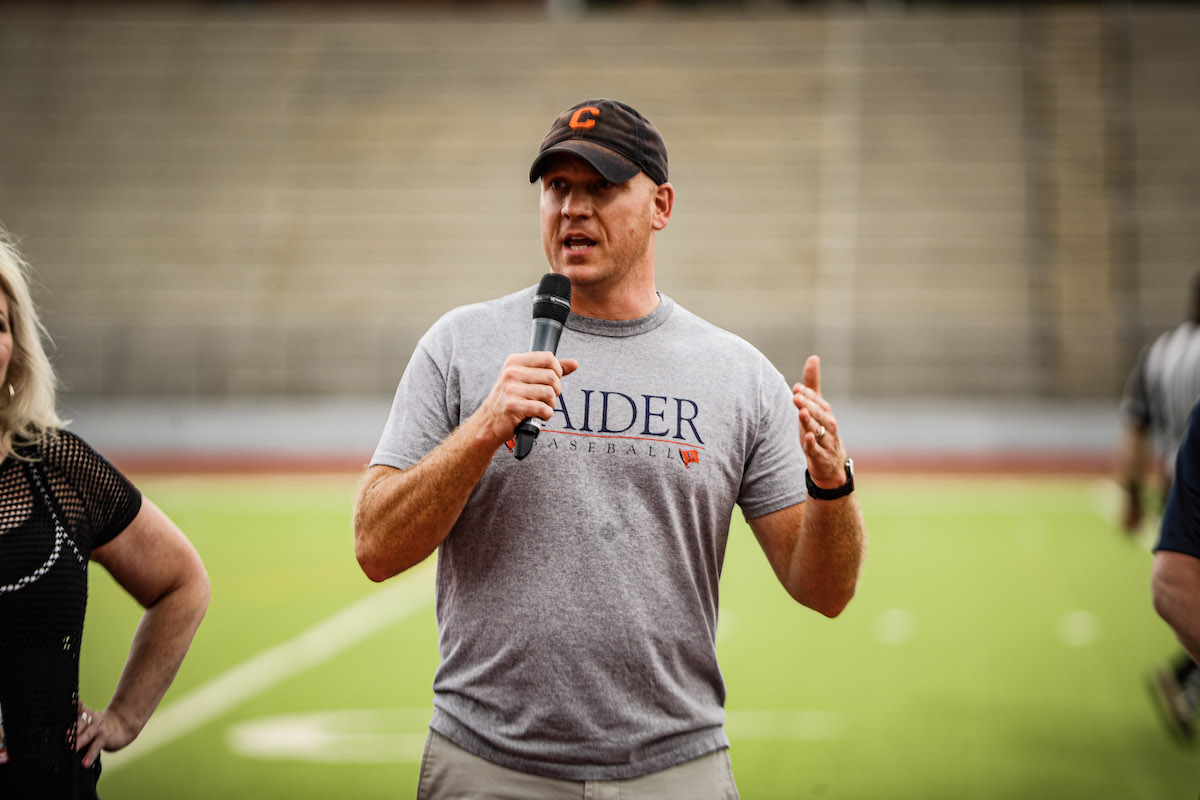
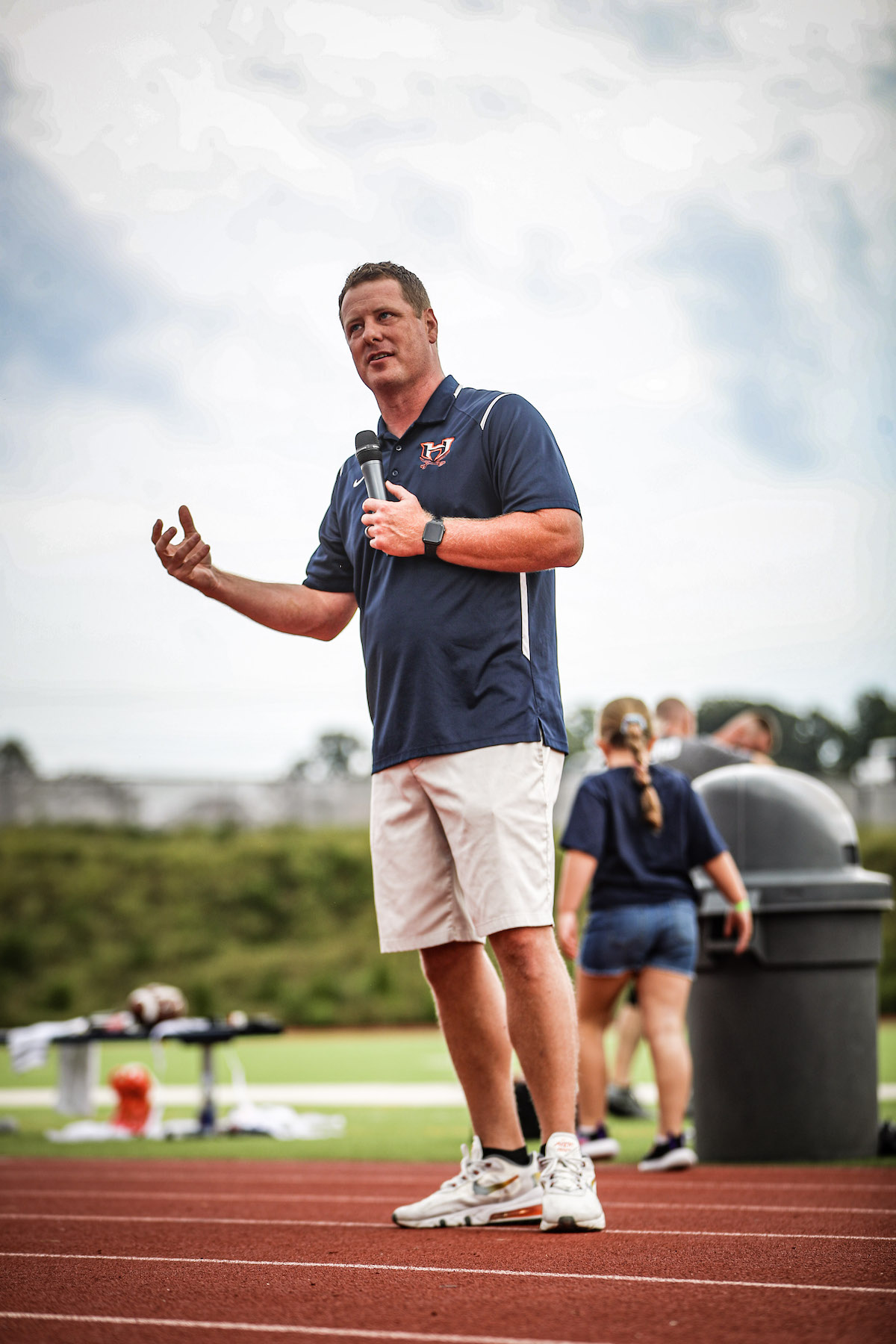
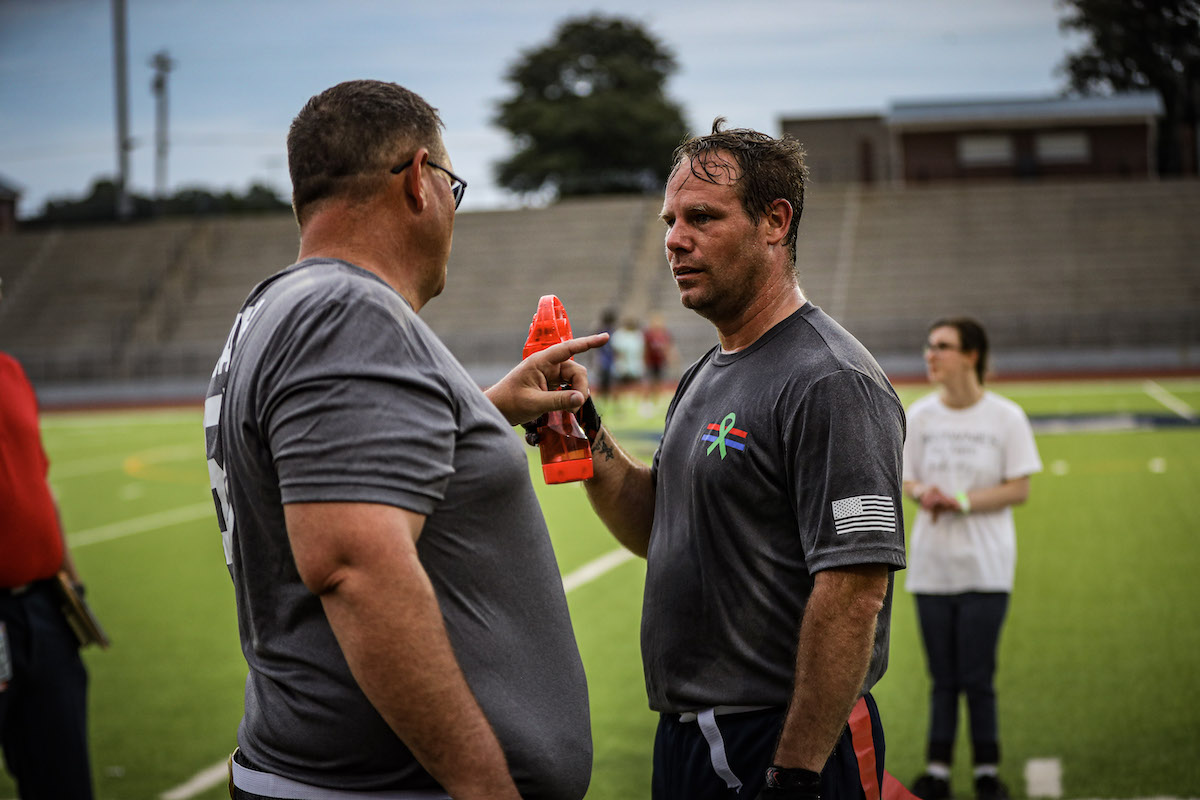
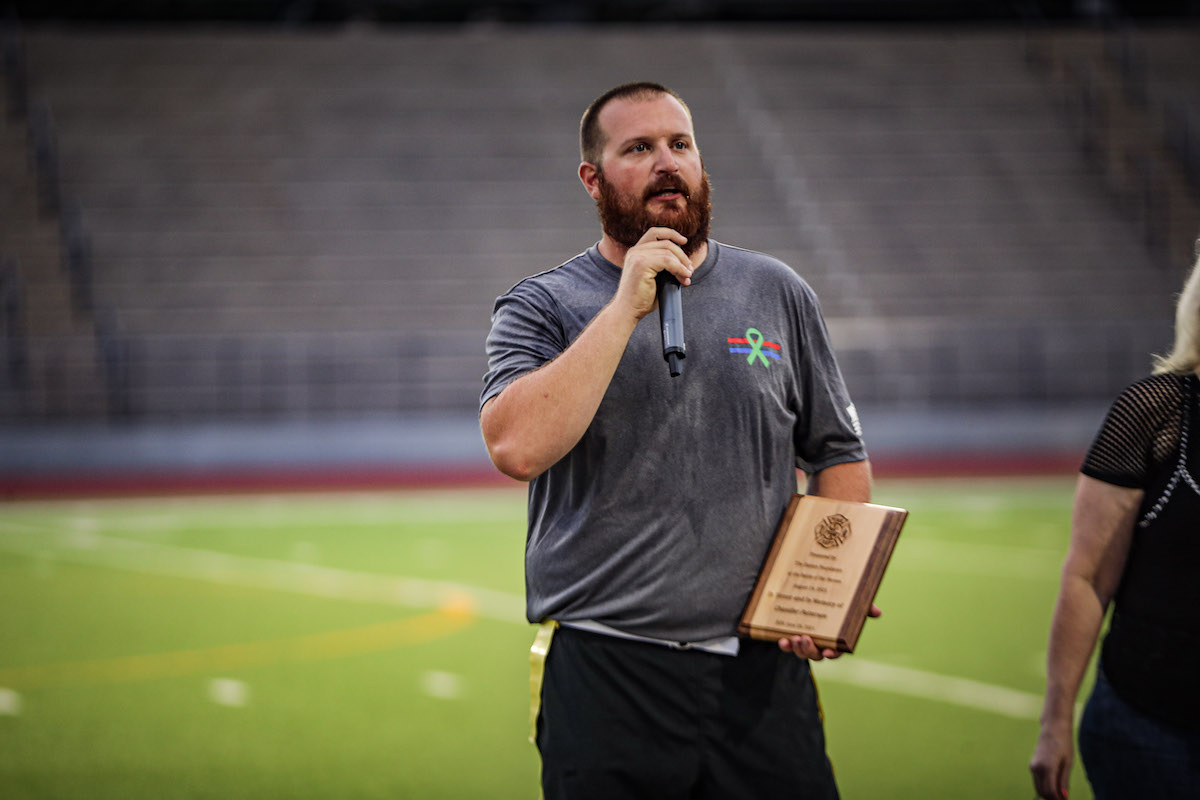
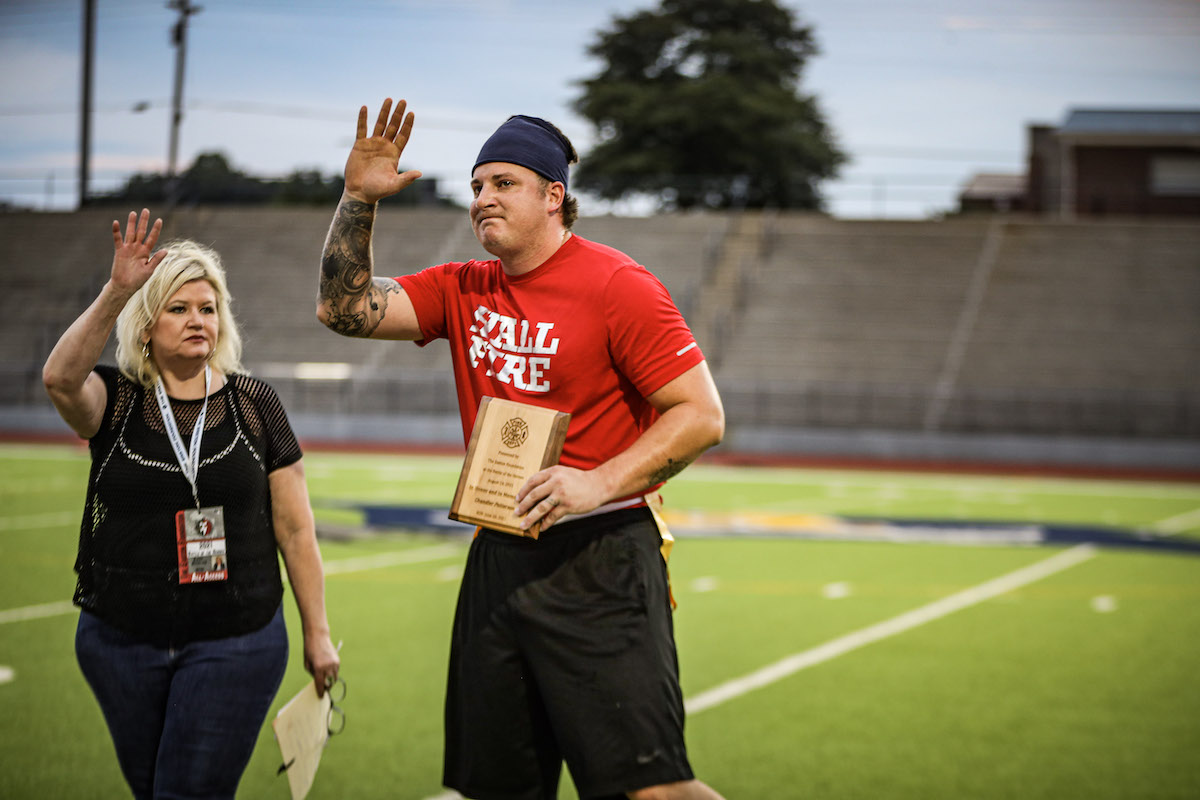
Saturday night, dozens of first responders from around Northeast Georgia battled it out on the gridiron in support of charity. The 8th Battle of the Heroes pitted a joint team from Banks and Habersham counties against their counterparts from Hall County.
Hall County won the trophy and bragging rights, beating the Banks/Habersham team 38-0.
Banks and Habersham (in grey) tried but couldn’t put any points on the board. Hall County beat them 38-0. (photo by Daniel Purcell)
But if you want to measure the true success of Saturday’s event, you won’t find it in the numbers on the scoreboard, but rather, in the final amount donated by those who attended.
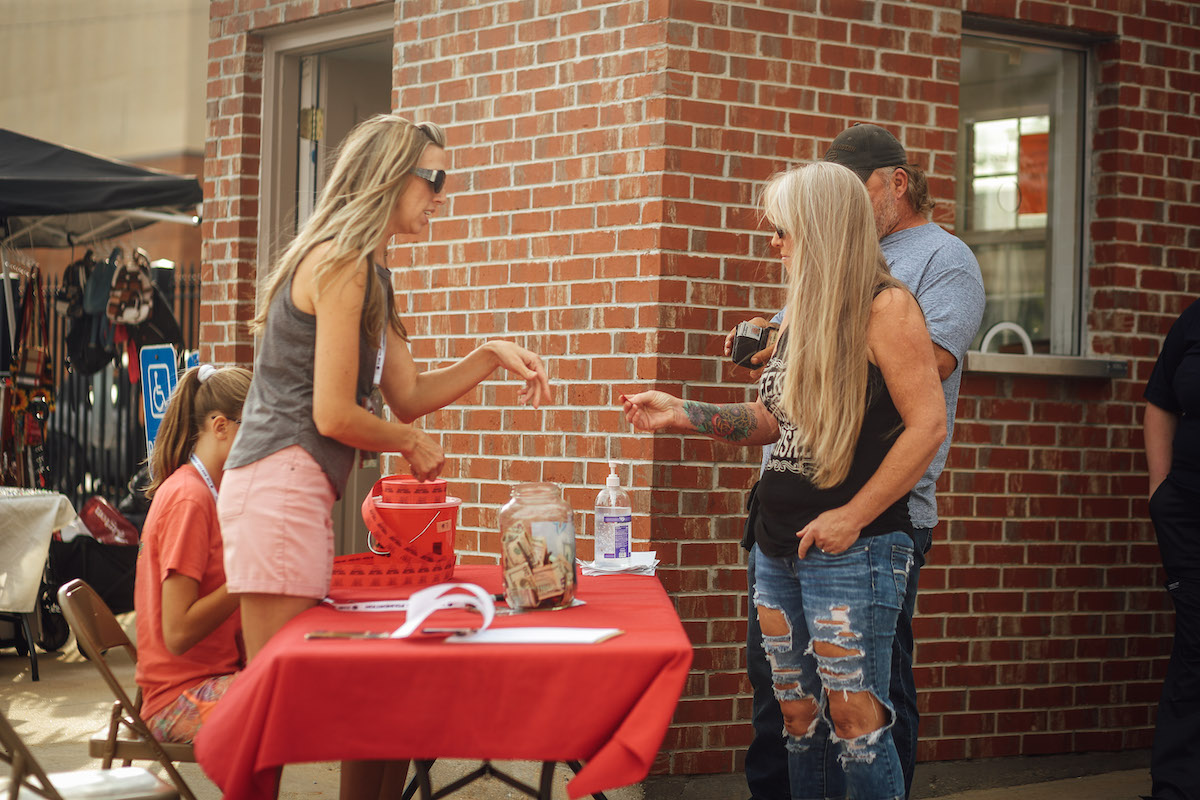
The football game and the classic car cruise-in held before the game were fundraisers for the Easton Foundation. Named in memory of Habersham Central High student-athlete Easton Singleton who died in a wreck in 2012, the foundation supports teens in crisis and awards scholarships to Northeast Georgia area students.
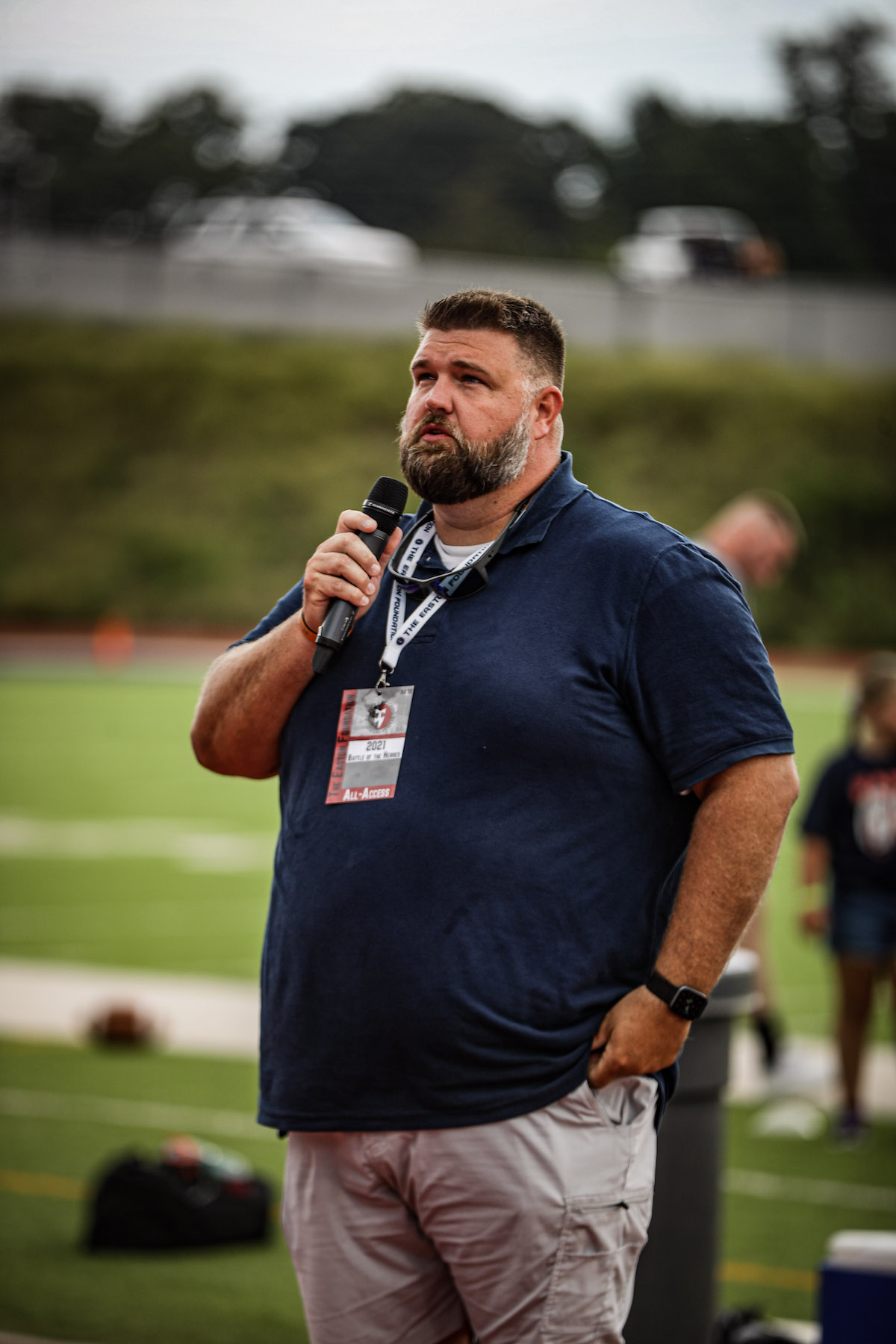
“This was a record year for many areas of the event, and a record amount of money was brought in,” says Easton Foundation spokesperson Colin Lacy.
This year’s event raised over $18,000, with an estimated record turnout of more than 1,000 people.
The game at Raider Stadium in Mt. Airy also included a prayer rally for Habersham Central High’s head baseball coach. Chris Akridge — affectionately known as ‘Coach Ak’ — has been in the hospital battling COVID for weeks.
The players and foundation members signed a football for Coach Ak. They inscribed on the football a Bible verse, Philippians 4:13: “I can do all things through Christ who strengthens me.”
Prayer for Coach Ak (photo by Daniel Purcell)
Inspiring and uplifting others is a hallmark of The Easton Foundation’s annual event. While the purpose is to raise money for charity, it also raises spirits by spotlighting those within our community who have persevered through tragedy and challenges. It gives those individuals and families a chance to shine — to be recognized and remembered.
Battle of the Heroes Grand Marshal, Faith Baird, smiles as her mom and business partner, Misty Baird, speaks before the game at Raider Stadium in Mt. Airy on Aug. 14, 2021. (photo by Daniel Purcell)
In the past, The Easton Foundation has honored a child cancer survivor, families who’ve lost loved ones in accidents, and the family of slain Dekalb County Police Officer and Habersham Central graduate Edgar Flores.
Cornelia entrepreneur Faith Baird, co-owner of Brownies by Faith, served as Grand Marshal for the pre-game ceremonies this year. Faith was chosen for the honor last year, but the game was canceled due to the pandemic.
Although the pandemic is again surging, The Easton Foundation elected to continue with this year’s event, encouraging the unvaccinated to wear masks and for attendees to social distance.
John Arrendale’s 1950 Ford F1000 took best of show at the cruise-in. Habersham Central’s Band of Blue brought energy to the festivities. And a fireworks display after the game added the final spark to keep this year’s event glowing in people’s hearts for a while.
Fireworks capped off the record-setting fundraiser at Raider Stadium in Mt. Airy. (photo by Daniel Purcell)
This article has been updated with new information
Aretha Franklin was beyond debate one of the most important and influential artists in music history and her story is deserving of a movie that is worthy of telling it. Respect manages to do that despite occasionally suffering from biopic syndrome.
Jennifer Hudson stars as Franklin and to get straight to the point, she delivers a performance that absolutely carries this movie through.
At the beginning of the movie, we’re introduced to a young Aretha (Skye Dakota Turner) and growing up, she sings a lot for her pastor father (Forest Whitaker), but her home life is deeply troubled due to her parents’ divorce stemming from her father’s infidelity issues.
She manages to find comfort and solace in singing thanks to her loving mother (Audra MacDonald). Certainly, that relationship is better than the one she has with her father which is controlling, rocky, and turbulent. Things go from bad to worse for young Aretha when her mother dies and she is left at her father’s mercy.
Then we get introduced to Aretha as an adult (Hudson) and this is where the movie shines. Hudson portrays Ms. Franklin with exuberant independence and she refuses to compromise her artistic integrity in order to satisfy her father or her record producers who insist she work on cover material instead of her songs.
In addition to her musical career, the movie also gives a glimpse into her work as a civil rights activist working alongside Martin Luther King (Gilbert Glenn Brown) and her passion for seeing African Americans in America receive their rights.
Respect is a film that is very much guided by Hudson’s performance. Each time she’s on screen, she is riveting, magnetic and mesmerizing which thankfully is quite often. Not only she does have the look and sound down, but she also displays the style and essence of who and what Ms. Franklin was. From her uncompromising stance as an artist to dealing with personal demons from her relationships with both her father and husband, to her faith guiding her every step, it’s a nuanced, engaging performance that can’t be ignored. It’ll be an upset if she isn’t nominated for Best Actress next year.
If only the rest of the picture didn’t take conventional detours, then we could’ve had something that lived up to both her performance and Franklin’s legacy.
Be that as it may, it’s an entertaining and occasionally moving film. It earned my respect enough to recommend it.
Grade: B+
(Rated PG-13 for mature thematic content, strong language including racial epithets, violence, suggestive material, and smoking.)
Last week featured a beautiful meteor shower across the region with rates reaching around 30-40 per hour on Wednesday night and the peak coming a bit later than expected on Thursday night. We’ll continue to see Perseids for the coming week or so but they will gradually be waning.
The Planets this Week: Venus is BRIGHT in the evening sky and Mars remains just below it by late twilight but both set shortly after. Jupiter and Saturn are both well above the horizon by 11PM now and high in the southern sky by midnight. Jupiter shines brightly with Saturn to it’s right a bit.
Naked Eye Object of the Week-Cassiopeia: This week’s naked eye object is another famous and easy-to-find constellation. Cassiopeia is currently rising in the southeastern sky by 10PM and is easily found by looking for a “W” shape. It is one of the original constellations listed by Ptolemy in the 2nd century. The constellation consists of 5 main stars that form the W, all of which are aligned almost exactly with a bright section of the Milky Way. In fact, following the constellation can help to find the Milky Way in the night sky in areas with more light pollution where it isn’t as obvious. There are numerous clusters and nebulae located in and around the constellation, and we’ll be covering these over the coming weeks as this portion of the sky rises higher.
Cassiopeia can be seen left of center in this image captured by Tyler Penland
The constellation name comes from the queen of Aethiopia in Greek mythology. After boasting to Poseidon that she and her daughter were more beautiful than the sea nymphs, her punishment was to be placed in the sky. Her husband, Cepheus, and her daughter Andromeda were placed next to her as well.
Telescope Object of the Week-M31: Speaking of Andromeda, this week’s telescope object of the week is none other than M31, the Andromeda Galaxy. This famous galaxy is a barred spiral galaxy located around 2.5 million light years from the Earth. It is the closest major galaxy to the Earth and possibly the largest in our local group. It is also the only galaxy easily visible to the naked eye under dark skies coming in at magnitude 3.4. It was the first galaxy ever photographed and has been observed since at least the 900s AD.
By Isaac Roberts (d. 1904) – A Selection of Photographs of Stars, Star-clusters and Nebulae, Volume II, The Universal Press, London, 1899., Public Domain,
Until the 1925 Andromeda was thought to simply be a nebula inside our galaxy, as were most other observable galaxies. Edwin Hubble was the first to show that the the nebula was actually a galaxy by observing variable stars in the galaxy and using them to determine the distance to Andromeda. Later observations have shown that Andromeda is moving towards us and in around 4-5 billion years it will collide with our own Milky Way. While this may sound spectacular very few effects will be seen on any small scale. Despite how dense it looks in photographs stars in galaxies are VERY far apart and the chances of any collision is near enough to zero to not matter.
By Torben Hansen – https://www.flickr.com/photos/torbenh/6105409913, CC BY 2.0, https://commons.wikimedia.org/w/index.php?curid=54367045
Andromeda has an easy-to-see, small satellite galaxy just beneath it which can easily be viewed with a small telescope or even binoculars. An additional bright satellite galaxy is located just to the left of the bright central bulge. Andromeda itself is located near the constellation Cassiopeia in the constellation aptly named Andromeda. In dark skies it can be seen as a fuzz ball with the naked eye. It will be rising higher in the sky as we move deeper into the fall and winter.
We’ll be fighting clouds all week but be sure to get out and enjoy any clear skies we manage to get!































Georgia’s troubled health care system
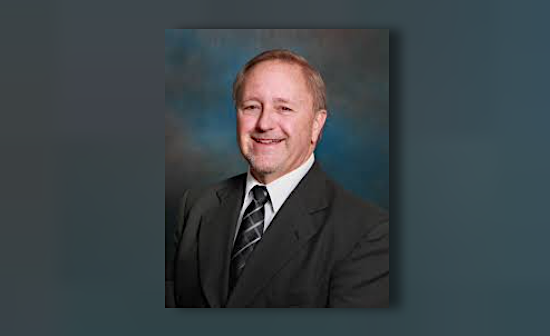
Editor’s Note: This commentary is republished with permission from Georgia Health News. Jack Bernard, former Georgia Director of Health Planning, is a retired senior vice president with a national health care corporation and a Fayette County Board of Health member. Dr. Doug Skelton is the former Dean of the Mercer School of Medicine and current Chancellor of Trinity Medical Sciences University. The opinions expressed in this commentary are theirs.
The results are in for all of America to see, and Georgia has finally made it . . . to very near the bottom of the pile. Shameful, but true.
Georgia has a booming economy and is one of the fastest-growing states in the nation. Possibly, this is the reason that news of its poor health care system hit the national news.
Surprisingly, our health care disaster did not create much of a stir locally (other than in GHN), which is why we decided to write this column. We all love our state, but let’s not continue to deceive ourselves. We can improve, but only by acknowledging our faults. And a poor health care system is on the top of the list.
Why is our system such a wreck? In regard to income, Georgia is in the middle of the pack, with a median income of $61,980. But our cost of living is a lot less than in places like New York and California that have higher incomes.
However, our poverty rate is 13.3 percent, the 14th-highest in America, while the national rate is 10.5 percent.
Fifty years ago, it was at 18 percent for the region. So there has been some improvement. But not nearly enough given the economic growth in our state. And the status of black Georgians is still dismal, as discussed below.
Let’s get into specifics. One source lists Georgia’s health care as the second-worst in the U.S., with only Texas being worse. We have the third-highest rate of uninsured nationally. Our infant mortality and maternal mortality rates are extremely high, as is our preventable hospitalization rate compared to other states and the national average.
Another source, the respected Commonwealth Fund, analyzed health care in all states. Overall, we were the sixth-worst in the nation. And key measures like hospital 30-day mortality and preventable hospitalizations were getting worse versus prior years. On the crucial measures of access and affordability, we were the third-worst.
Demographically, there was one area that was glaringly different from national figures. Whereas the national rate of African-American poverty is 12 percent, in Georgia it is 31 percent . . . nearly triple. That’s why we are ranked fourth-worst nationally regarding the health disparity among racial groups.
HEALTH CARE RELATED: Grace Gate: A place where love, hope, and healing reside
The Commonwealth Fund also used a measurement technique common in industry, called “best practices.” For example, if Georgia matched the best state in the Southeast, we would have 820,359 fewer uninsured plus 391,983 fewer adults who “skipped care because of its cost.”
Skelton
Despite our deficits, much has been accomplished over the last several decades. We now have five medical schools, with two focused on producing primary care physicians. There are public health departments in all of Georgia’s 159 counties, high-quality hospitals for metro areas, plus a Medicaid program covering 2 million people in need.
However, the situation with the Affordable Care Act’s Medicaid expansion option highlights the problem that we believe drives the data above. If exercised in 2010, the expansion option would have provided medical care for most of our uninsured population . . . and with 100 percent federal funding for three years and 90 percent thereafter.
No good reason for declining the option exists. Georgia’s decision to do so simply left neglected the poorest of the poor, as has been the unofficial state policy forever. And the “waiver” suggested to the feds by Gov. Brian Kemp wouldn’t do much to increase coverage.
Can the situation in Georgia be changed? Of course it can. But not unless our state and local governments are willing to construct a strategic plan to directly address the needs of our lower-income citizens.