Home Blog Page 1635

Rural Health Pt. 3: The ripple effect when rural hospitals drop birthing services

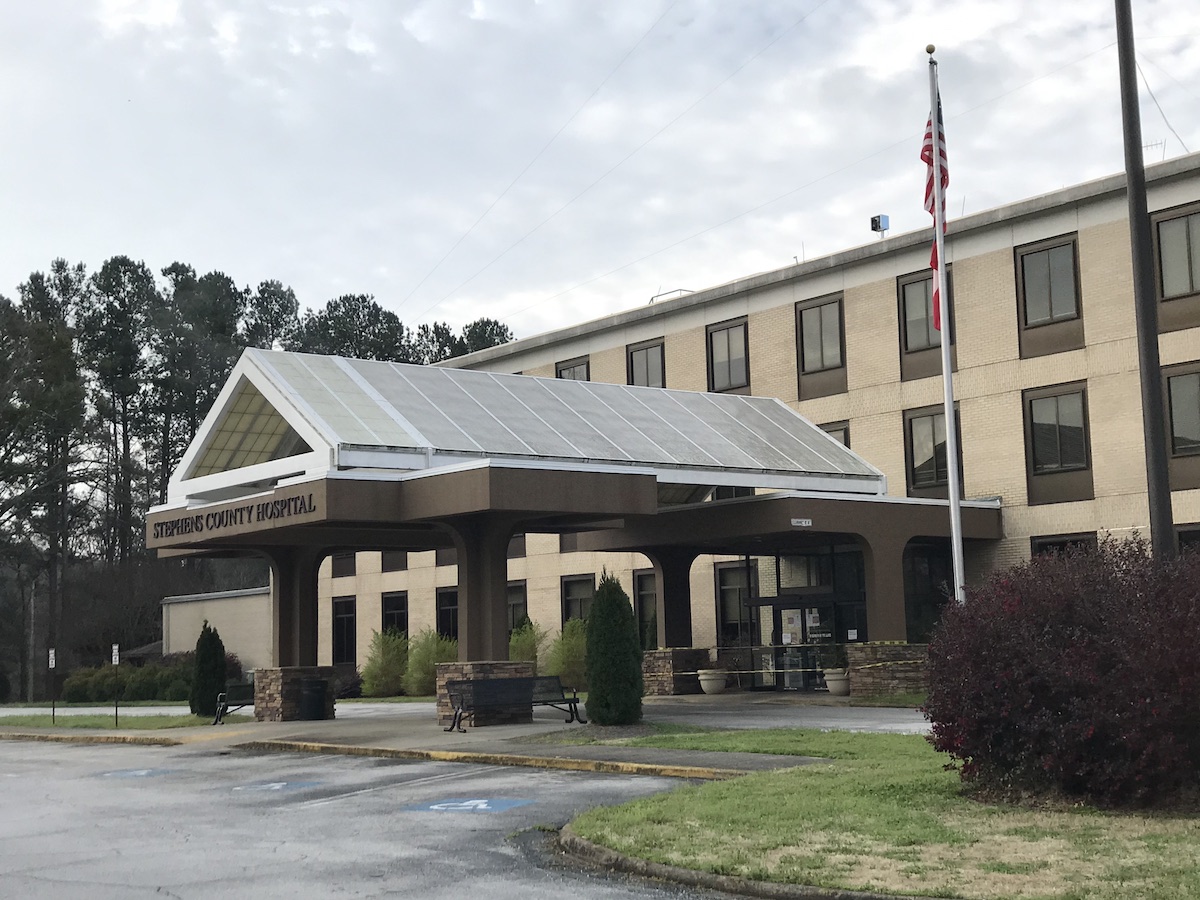
Stephens County Hospital is one of 40 rural Georgia hospitals that have cut labor and delivery services in recent years. (nowhabersham.com)

Part 3 of a Special Report

Madelaine Austin is having her first baby and had planned to give birth at Stephens County Hospital in northeast Georgia, just five minutes from her home.

But in the middle of her pregnancy, she was forced to change OB/GYNs and the facility where she would deliver her child.

The Toccoa resident, 19, was recently told that Stephens County Hospital, dealing with financial deficits, was suspending its labor and delivery service due to costs.

“I never expected this,’’ Austin said. Her former OB/GYN, she said, “made me feel very confident and comfortable.’’ She’ll now have her baby at a hospital 25 to 30 minutes away.

The Toccoa hospital emphasizes that its closure of labor and delivery services is not necessarily permanent. Still, there have been 40 Georgia hospitals that have shut down their labor and delivery units in recent years.

Such a move leads to the departure of OB/GYNs from the area where a hospital is located – all of which creates challenges for many women still living there. They have to travel farther for prenatal care, and if they are in labor, they have to travel farther to deliver.

“If a woman has to travel more than 40 miles, her chances of preterm labor, preterm birth and obstetrical complications are three times higher,’’ said Dr. Hugh Smith, a retired Thomaston OB/GYN.

Rural Health: The Road Ahead Pts. 1 & 2:

The erosion of obstetrical services is occurring nationally as well. The percentage of rural counties with available hospital-based obstetrical services dropped from 55% to 46% between 2004 and 2014, according to a study in the Journal of the American Medical Association.

Austin

The loss of hospital-based services is associated with increases in out-of-hospital and preterm births, and births in hospitals without obstetric units, said the research program.

In Georgia, 93 of the 159 counties in the state have no hospital with a labor and delivery unit.

Last year, with financial losses piling up, Taylor Regional Hospital in central Georgia shut down its labor and delivery unit because “we weren’t delivering enough babies to make it viable,’’ said Richard Stokes, its chief financial officer.

The rural Hawkinsville hospital did roughly 230 births a year. But it takes about 350 to break even on the service, said Jimmy Lewis, CEO of HomeTown Health, an association of rural hospitals in the state.

The nearest birthing hospital is now about 25 minutes away from Hawkinsville.

Taylor Regional Hospital

Hospitals that are barely surviving financially can lose up to $1 million on labor and delivery, Lewis said. But they are reluctant to give up obstetrics, he said, because “there’s so much emotion involved.’’

“It rips the heart out of the community’’ to give up births, Lewis said. And for women who are pregnant or contemplating having a baby, “it creates fear and anxiety.’’

Warren

Transportation thus becomes crucial. But many low-income women in rural areas don’t have a car. And others who have low incomes tend to skip appointments, Smith said. They’re going to be sure they can feed their families before they think about taking off work to go to prenatal appointments, he said.

So with the OB unit closures, “we have a general access-to-care issue,’’ said Jacob Warren, director of the Center for Rural Health and Health Disparities at Mercer University School of Medicine. “Two-thirds of rural births come outside the family’s home county.’’

A report by Surgo Ventures, citing a 2019 study, said that rural residents have a 9 percent greater probability of severe maternal morbidity and mortality than those in urban areas. Georgia has one of the highest rates of maternal mortality, defined as deaths due to complications from pregnancy or childbirth.

Rural women in Georgia have a significantly higher maternal mortality rate than those in urban Georgia, Warren said. And rural African-American women have double the maternal mortality rate of rural white women.

Warren said no rural county in Georgia has a maternal-fetal medicine specialist — a doctor who helps take care of women having complicated or high-risk pregnancies. And a long ambulance ride to a distant hospital can lead to bad medical outcomes.

The state created a review panel in 2014 to identify maternal deaths and their causes. Approximately 26 Georgia women die from pregnancy complications for every 100,000 live births, compared to the national average of about 17 women. And about 60% of the state’s maternal deaths between 2012 and 2016 were found to be preventable.

Key factors in many of these cases are high levels of chronic diseases, such as hypertension and diabetes, along with high levels of poverty and low levels of people with health insurance. Georgia has the third-highest uninsured rate in the country.

Some of the same factors lead to the state’s high infant mortality rate. “The counties with the highest infant mortality rates in Georgia are all rural,’’ Warren said. A lack of prenatal care raises the risk of preterm birth and infant mortality.

Peterson

Many pregnant women in rural areas don’t get this care. “If they have to drive an hour, they don’t have the ability to leave work,’’ said Dr. Justin Peterson, an OB/GYN in Douglas in Coffee County. “I have a lot of patients who are very high-risk. I have to spend more time with these patients.’’

The lack of prenatal care also can raise the risk of maternal death, Warren said.

Georgia has recently been focusing on these issues. For one thing, it has increased Medicaid coverage for new moms to six months, up from two months.

“That’s a hugely impactful decision,’’ Warren said.

That Medicaid coverage would be extended to 12 months post-partum for all states, under the social spending bill being debated in Congress.

The Arthur M. Blank Family Foundation contributed funding for the reporting of this article.

Rural Health Pt. 4: Gaps in health care hinder some rural areas

Part 4 of a Special Report

Georgia’s Echols County, which borders Florida, could be called a health care desert.

It has no hospital, no local ambulances. A medical provider comes to treat patients at a migrant farmworker clinic but, other than a small public health department with two full-time employees, that’s about the extent of the medical care in the rural county of 4,000 people.

In an emergency, a patient must wait for an ambulance from Valdosta and be driven to a hospital there, or rely on a medical helicopter. Ambulances coming from Valdosta can take up to 20 minutes to arrive, said Bobby Walker, county commission chairman. “That’s a pretty good wait for an ambulance,” he added.

Walker tried to establish an ambulance service based in Statenville, the one-stoplight county seat in Echols, but the cost of providing one was projected at $280,000 a year. Without industry to prop up the tax base, the county couldn’t come up with that kind of money.

In many ways, Echols reflects the health care challenges faced in rural areas nationwide, such as limited insurance coverage among residents, gaps in medical services and shortages of providers.

Dr. Jacqueline Fincher, an internal medicine physician who practices in rural Thomson, in eastern Georgia, said such communities have a higher share of people 65 and older, who need extensive medical services, and a much higher incidence of poverty, including extreme poverty, than the rest of the country.

About 1 in 4 Echols residents has no health insurance, for example, and almost one-third of the children live in poverty, according to the County Health Rankings and Roadmaps program from the University of Wisconsin’s Population Health Institute.

Echols County

Like Echols, several Georgia counties have no physician at all.

It’s difficult to recruit doctors to a rural area if they haven’t lived in such an environment before, said Dr. Tom Fausett, a family physician who grew up and still lives in Adel, a southern Georgia town.

About 20% of the nation lives in rural America, but only about 10% of U.S. physicians practice in such areas, according to the National Conference of State Legislatures. And 77% of the country’s rural counties are designated as health professional shortage areas. About 4,000 additional primary care practitioners are needed to meet current rural health care needs, the Health Resources and Services Administration has estimated.

“Many physicians haven’t experienced life in a rural area,” said Dr. Samuel Church, a family medicine physician who helps train medical students and residents in the northern Georgia mountain town of Hiawassee. “Some of them thought we were Alaska or something. I assure them that Amazon delivers here.”

Rural hospitals also have trouble recruiting nurses and other medical personnel to fill job vacancies. “We’re all competing for the same nurses,” said Jay Carmichael, chief operating officer of Southwell Medical, which operates the hospital in Adel.

Fausett

MORE: Georgia Health News

Even in rural areas that have physicians and hospitals, connecting a patient to a specialist can be difficult.

“When you have a trauma or cardiac patient, you don’t have a trauma or cardiac team to take care of that patient,” said Rose Keller, chief nursing officer at Appling Healthcare in Baxley, in southeastern Georgia.

Magloire

Access to mental health care is also a major problem, said Dr. Zita Magloire, a family physician in Cairo, a city in southern Georgia with about 10,000 residents. “It’s almost nonexistent here.”

A map created at Georgia Tech shows wide swaths of rural counties without access to autism services, for example.

One factor behind this lack of health care providers is what rural hospital officials call the “payer mix.”

Many patients can’t pay their medical bills. The CEO of Emanuel Medical Center in Swainsboro, Damien Scott, said 37% of the hospital’s emergency room patients have no insurance.

And a large share of rural hospitals’ patients are enrolled in Medicaid or Medicare. Medicaid typically pays less than the cost of providing care, and although Medicare reimbursements are somewhat higher, they’re lower than those from private insurance.

“The problem with rural hospitals is the reimbursement mechanisms,” said Kirk Olsen, managing partner of ERH Healthcare, a company that manages four hospitals in rural Georgia.

Georgia is one of 12 states that have not expanded their Medicaid programs under the Affordable Care Act. Doing so would make additional low-income people eligible for the public insurance program. Would that help? “Absolutely,” said Olsen, echoing the comments of almost everyone interviewed during a monthslong investigation by Georgia Health News.

“If Medicaid was expanded, hospitals may become more viable,” said Dr. Joe Stubbs, an internist in Albany, Georgia. “So many people go into a hospital who can’t pay.”

Echols County isn’t the only place where ambulance service is spotty.

Ambulance crews in some rural areas have stopped operating, leaving the remaining providers to cover greater distances with limited resources, said Brock Slabach, chief operations officer of the National Rural Health Association. It’s difficult for a local government to afford the cost of the service when patient volumes in sparsely populated rural areas are very low, he said.

“If people aren’t careful, they’re going to wake up and there’s not going to be rural health care,” said Richard Stokes, chief financial officer of Taylor Regional Hospital in Hawkinsville, Georgia. “That’s my big worry.”

READ MORE ABOUT IT

The Arthur M. Blank Family Foundation contributed funding for the reporting of this article.


Area Christmas Eve services

(Jan-Henrik Franz/Unsplash)

If you haven’t made plans for attending a Christmas Eve service and are wondering where to go, area churches are holding services that community members are welcome to attend as they reflect on the reason for the season.

“Light of the World” Christmas Eve Service | Clarkesville First UMC

Family service: 4 p.m.
Traditional service: 6 p.m., 11 p.m.

The “Light of the World” service will include a teaching, candlelight service, music and carols, communion and community. All are welcome to attend.

In addition, the church is collecting new and gently used coats for the “Share the Warmth” coat drive. All offerings collected at the service will be donated to the United Methodist Committee on Relief (UMCOR) to help those affected by the tornados in Kentucky and surrounding states earlier this month.

Christmas Eve Service | Clarkesville Baptist Church

Candlelight service: 5:30 p.m.

Clarkesville Baptist Church welcomes visitors for an evening of candles, carols and communion during their Christmas Eve service.

Christmas Eve Service | Grace-Calvary Episcopal Church, Clarkesville

Christmas Eve Service: Friday, December 24, 10:30 pm to Saturday, December 25, 12 a.m. (midnight)

Music begins at 10:30, service begins at 11.

Christmas Eve at Bethlehem | Bethlehem Baptist Church, Clarkesville

Christmas Eve Service: 5 p.m.

Join Bethlehem Baptist Church as they worship together and share the Lord’s Supper.

FBCC Christmas Eve Candlelight Service | First Baptist Church of Cornelia

Candlelight Service: 6 p.m.

The public is invited to attend a family-friendly Christmas worship service in the beautifully decorated church sanctuary at the First Baptist Church of Cornelia.

Christmas at the Torch Candlelight Experience | The Torch, Demorest

Candlelight service: 5 and 7 p.m.

Join the Torch for Christmas as they celebrate the birth of the hope and light of the world, Jesus. They will offer two Christmas Eve Experiences at both the Dahlonega and Demorest campuses on Christmas Eve and will incorporate traditional and modern elements to create a memorable Christmas Eve experience.

Christmas at Concord | Concord at Habersham, Demorest

Christmas service: 4 p.m.

Are you weary? In the busyness of the Christmas season, it’s sometimes hard to catch your breath. Christmas eve, Concord Baptist Church invites you to gather with them to take a deep breath and celebrate the One who offers us true rest

Mt. Yonah Baptist Church Christmas Eve candlelight service | Mt. Yonah Baptist Church, Cleveland

Candlelight Service: 5 p.m.

Mt. Yonah Baptist Church will hold a candlelight Christmas Eve Service with communion. Pastor Rev. Ross Roberts welcomes everyone to attend.

Cleveland First Baptist Church Christmas Eve service | Cleveland First Baptist Church, Downtown Cleveland

Service: 6:30 p.m.

Cleveland First Baptist Church invites you to join them each Sunday during the Advent season as they celebrate the reason for the season, and will hold a Christmas Eve service on Friday in the sanctuary. All are invited to attend.

If you’d like your church’s Christmas Eve service added to the list, email events@nowhabersham.com.

Daisy Elizabeth Tallent Sanders

Daisy Elizabeth Tallent Sanders, age 86 of Mount Airy, Georgia went home to be with the Lord on Tuesday, December 23, 2021.

Born in Franklin, North Carolina on December 02, 1935, she was a daughter of the late Henry Tallent & the late Dora Jones Keener Tallent. Daisy retired from Piedmont Automotive with over 20 years of dedicated service. In her spare time, she enjoyed vegetable gardening & canning as well as spending winters in Florida.

In addition to her parents, she was preceded in death by her husband, Clifton Sanders; daughter-in-law, Connie Sanders; half-brother, Jimmy Keener & sister, Betty Jo Tallent Nelms.

Survivors include her son, Gary Sanders of Mt. Airy, GA; daughter, Linda Sue Sanders of Alto, GA; sisters, Cora Lee Tallent Scott of Franklin, NC; & Barbara Tallent Mashburn of Asheville, NC; grandchildren, Travis A. & Cassie Sanders; Tracey & Chad Giles; great-grandchildren, Tori Giles, Tyler Giles, & Austin Giles; great-great-grandchildren, Emma Ayers & Alex Ayers; numerous nieces, nephews, other relatives, & friends.

Funeral services are scheduled for 3:00 p.m. Sunday, December 26, 2021, at Hillside Memorial Chapel with Rev. Billy Burrell & Rev. Scott Collett officiating.

The family will receive friends at the funeral home from 2:00 p.m. until the service hour on Sunday.

An online guest registry is available at www.HillsideMemorialChapel.com

Arrangements by Hillside Memorial Chapel, Clarkesville, Georgia. (706) 754-6256

Athens driver sought in fatal hit-and-run

Athens-Clarke County Police are asking for the public’s help to locate a suspected hit-and-run driver who left a man dead on the sidewalk.

Police were called to the scene on North Avenue, just south of Strickland Avenue, around 3:45 p.m. on Wednesday, December 22.

“Upon arrival, officers discovered the subject was deceased and the victim of a hit and run,” says Athens-Clarke Police Lt. Shaun Barnett. He says the initial investigation indicates that the man was walking north on the sidewalk when a northbound vehicle exited the roadway and struck him.

“The vehicle continued driving, leaving the scene,” Barnett says.

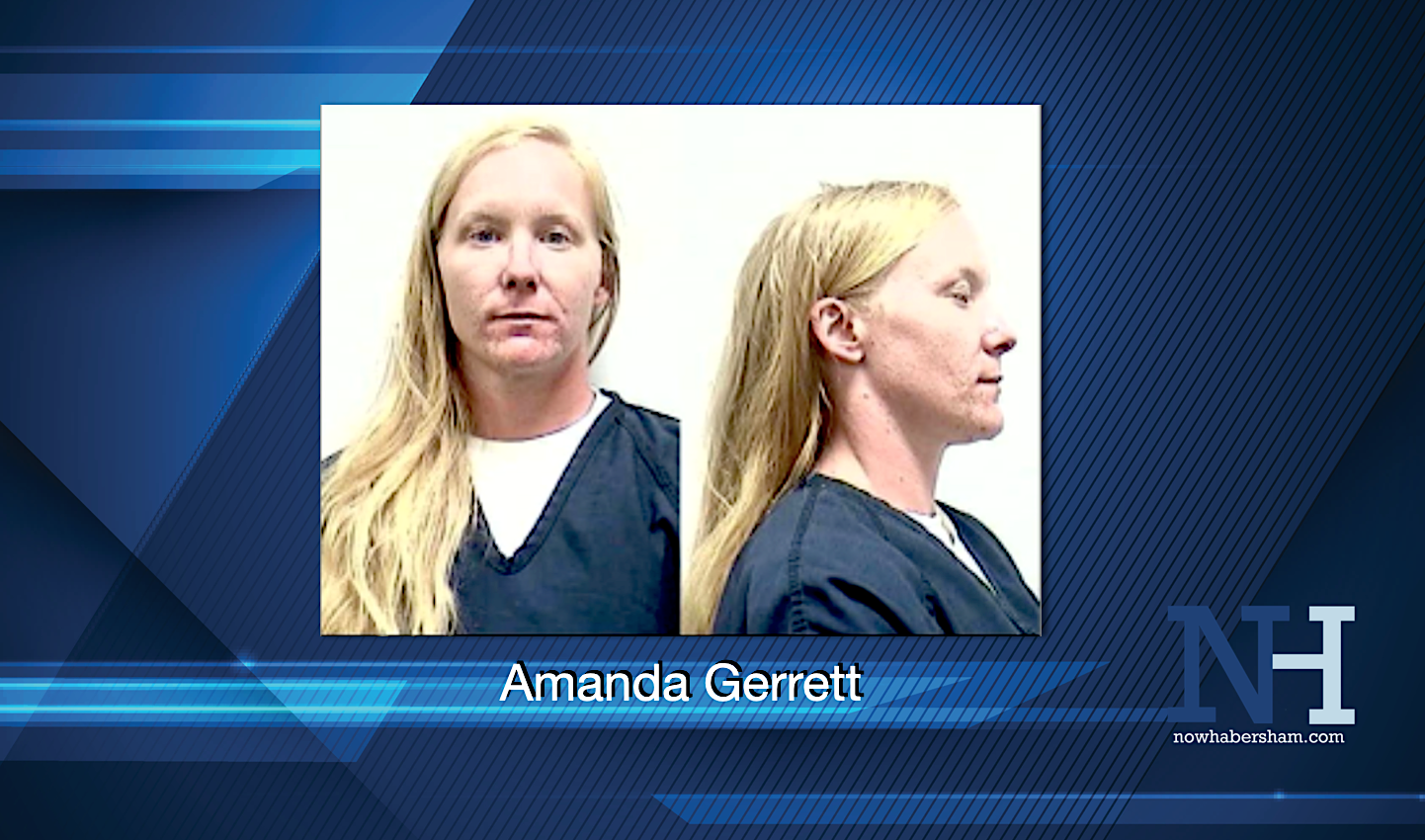
As a result of their investigation, police identified the driver as 31-year-old Amanda Gerrett of Athens. They took out arrest warrants on her for first-degree vehicular homicide, felony hit and run, and failure to maintain lane.

Police are now searching for her. They ask anyone with information regarding Gerrett’s whereabouts to call 911. Anyone with information about the crash is asked to contact ACCPD Senior Police Officer Lewis at 762-400-7169 or joey.lewis@accgov.com.

The victim’s name is being withheld pending notification of next of kin. The investigation continues.

This is the second fatal hit-and-run in Athens in three months.

20-year-old UGA marketing student Ariana Zarse of Austin, Texas, was fatally injured as she and a friend walked across Broad Street downtown just after midnight on October 9.

The alleged driver in that case, 29-year-old Donterris Gresham of Athens, turned himself into police four days after the fatal crash. As of December 23, he remained in the Clarke County jail.

Ronnie Edwin Jones

Ronnie Edwin Jones age 64, entered rest Thursday, December 23, 2021, at his residence surrounded by family.

Ronnie was born May 31, 1957, in Gainesville to the late Lewis Sr. & Nora Hay Jones. Ronnie worked with the Budd Group for several years and attended West Hall Baptist Church. He was an avid outdoorsman. He loved to fish but most of all he was a proud Atlanta Braves Fan. He was preceded in death by an infant brother, Lewis Jones, Jr.

Left to cherish his memory, sister, Olene Little; niece, Kristie Upton; nephew, Travis Little; a number of great-nieces & nephews also survive.

Funeral services will be held at 2:30 p.m. Tuesday, December 28, 2021, at the West Hall Baptist Church with Dr. Mike Reynolds & Rev. Bobby Jones officiating. Burial will follow in Alta Vista Cemetery. The family will receive friends Monday, December 27, 2021, from 2:00 p.m. until 4:00 p.m. and again from 6:00 p.m. until 8:00 p.m. at the funeral home. They will also receive friends from 1:00 p.m. until 2:00 p.m. Tuesday at the church.

In lieu of flowers contributions may be made to West Hall Baptist Church, P.O. Box 567 Oakwood, GA 30566, or to the Good News Clinic, 810 Pine Street, Gainesville, GA 30501.

Please share online condolences to the family at www.wardsfh.com.

Ward’s Funeral Home is honored to serve the family of Ronnie Edwin Jones.

Clayton man charged with DUI, drug charges following high-speed chase with police

A 28-year-old Clayton man faces numerous charges following a high-speed chase in Habersham and Stephens counties. A state trooper wrecked during the chase late Wednesday night, officials say.

According to the Georgia State Patrol, the trooper tried to stop a black Chevrolet 2500 for speeding on US 441/GA 15 at the Habersham/Rabun County Line.

“The truck failed to stop and immediately accelerated to speeds above 100 mph,” says GSP Post 7 Commander Donnie Sadler. “The trooper pursued the vehicle south on GA 15 and attempted to perform a PIT Maneuver Technique. The trooper tried three more (PITs) which were all unsuccessful.”

On the last PIT attempt, Sadler says the trooper struck a concrete and stone mailbox with the front corner of his patrol car, disabling the officer’s vehicle.

The fleeing driver recovered from the maneuver and fled for approximately another ten miles into Stephens County before the truck became disabled. Habersham County Sheriff’s deputies, who had joined in the pursuit, arrested him without incident in the area of Yonah Dam Road near Toccoa and transported him to jail.

GSP identifies the driver as David Henry Diggs. Officers charged him with DUI, possession of meth, possession of a weapon during the commission of a crime, and numerous traffic violations.

As of early Wednesday, Dec. 23, Diggs remained in the Habersham County jail pending a bond hearing.

“Neither the suspect nor the trooper was injured,” says Sadler. The patrol car sustained only light damage.

Sadler extends his gratitude to the Habersham, Stephens, and Oconee County, South Carolina, sheriff’s departments for aiding in Diggs’ arrest.

Downtown Cleveland landmark to be auctioned off for charity

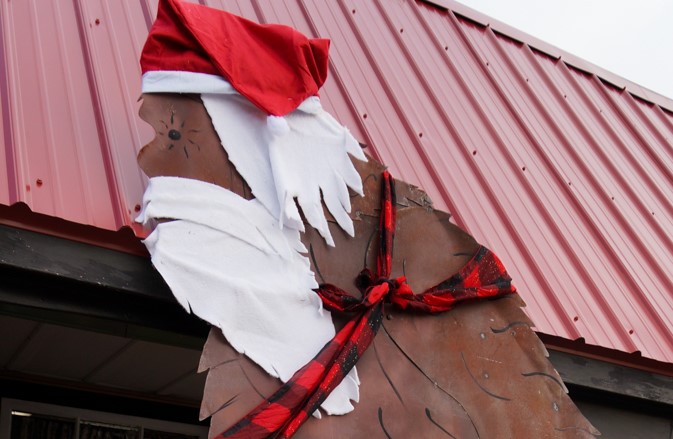
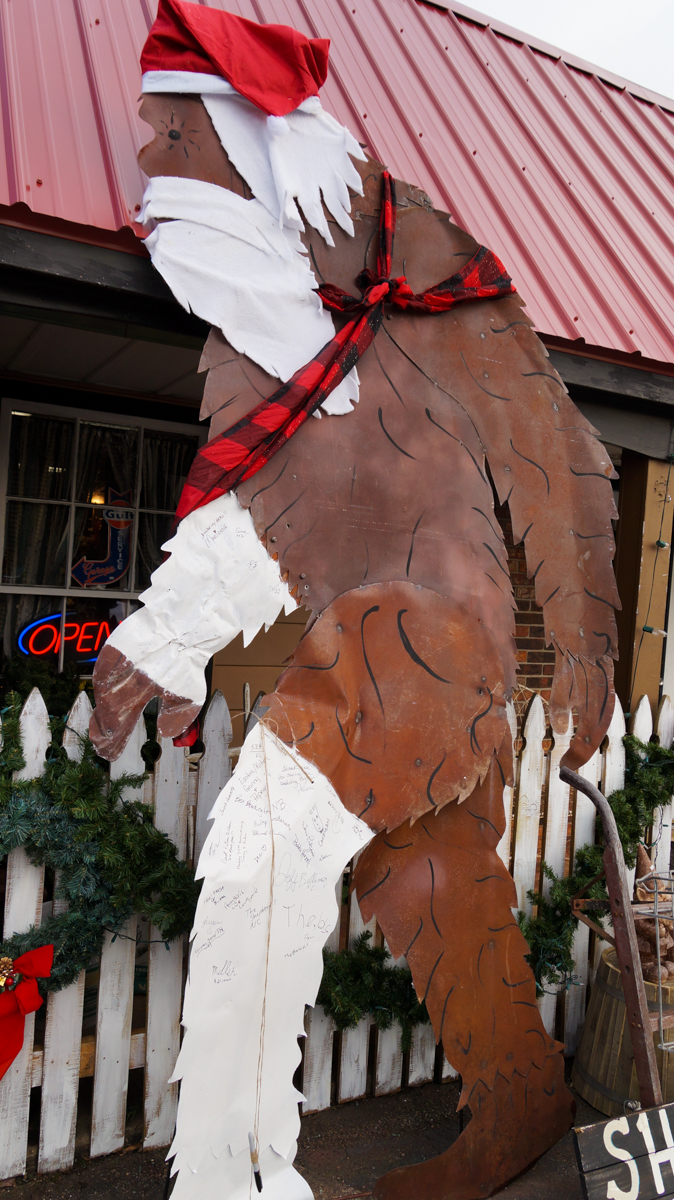
Rustic Rooster's owner Marianne Quigg says she didn't know how much people loved the metal bigfoot sculpture outside her shop until 'Daryl' got hurt. (Hadley Cottingham/Now Habersham)

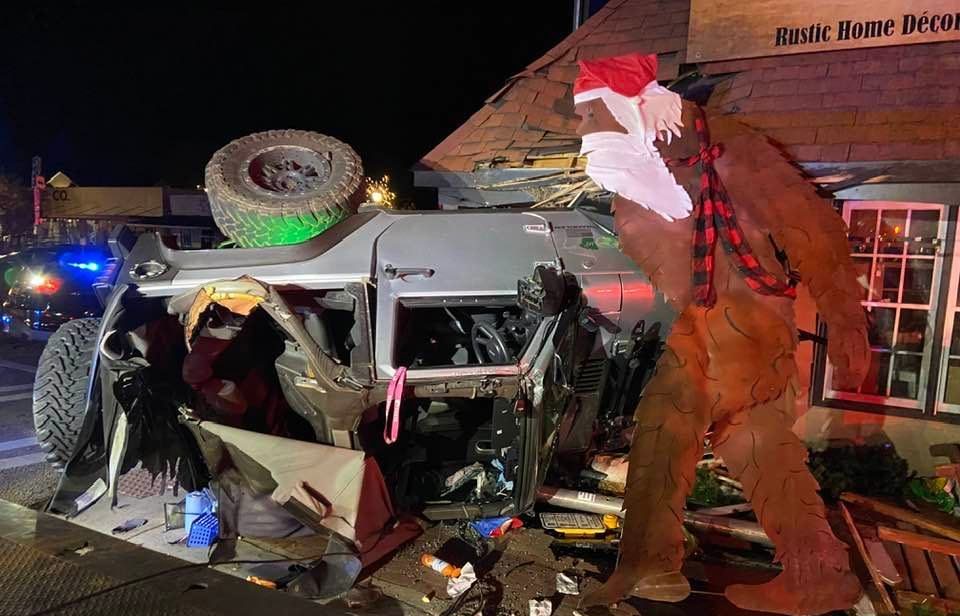
When the Rustic Rooster was saved from major damage by their Bigfoot sculpture in a police chase that resulted in a wreck, Bigfoot became a local hero.

The sculpture, known to locals as “Daryl,” prevented damage to Marianne Quigg’s Downtown Cleveland shop when he came between an overturned Jeep and the rest of the store. While the Rustic Rooster sustained some damage, Quigg credits the store’s safety to Daryl. And so did the Cleveland community.

Bigfoot, better known to Cleveland locals as “Daryl,” is credited with saving the Rustic Rooster from further damage. (Photo: WRWH)

“I did not realize how much he [Daryl] was loved in the area until people started reacting to his injury,” Quigg tells Now Habersham. “I thought, ‘oh, this is a community thing.'”

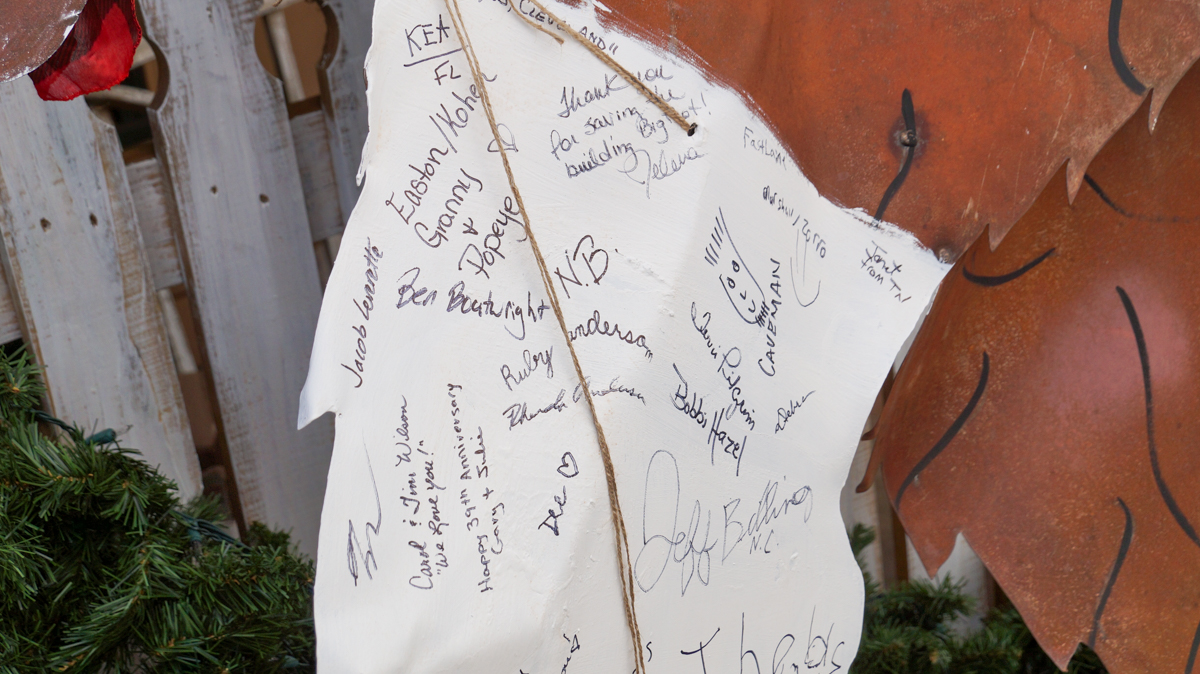
Quigg says she painted Daryl’s cast on the morning of Dec. 4, about a week and a half after the wreck. Daryl was on the mend the day of Cleveland’s Christmas in the Mountains Parade, and while Quigg wasn’t able to stay at the Rustic Rooster that day, she says when she came back to work, his cast was covered in signatures.

“It was just an amazing outflowing of the community that came and signed it,” she says. “I love the warmth of the community. [I’ve been impressed] that everybody rallied in such a way. When I put the cast on people went nuts— I thought it was awesome.”

Daryl, wrapped in painted-on bandages, is still patrolling the Rustic Rooster storefront. (Hadley Cottingham/Now Habersham)

The Rustic Rooster was behind a meme depicting a scene of the crash that garnered controversy and has since been removed. Quigg shares in a Facebook post that after speaking to the family members of the man who caused the wreck that she, as well as other members of the Cleveland community, are working to support the involved family and “make beauty from ashes.”

“As a teenager, my family had to endure something very much like this with my own brother,” Quigg writes in the post. “I regret that those memories didn’t flood my mind before I posted that meme. We were a good family with a bad seed and we never knew what to do to get him straightened out.”

Now, she’s planning to either auction or raffle off the Cleveland landmark in the coming year, and donate the proceeds to Jericho House in Sautee Nacooche, a drug and alcohol recovery program.

“The young man who was involved in the accident has a substance abuse problem,” Quigg says. “I’ve kind of supported them [Jericho House] in my own personal way, but now this is what I want to do, to donate to this substance abuse program.”

After Daryl finds his new home, he’ll be replaced with his “other brother, Daryl,” who should arrive in the new year.

This article has been updated to correct the spelling of Marianne Quigg’s name.

By late afternoon on Dec. 4, just hours after Quigg painted Daryl’s cast on, it had already been covered with signatures. (Hadley Cottingham/Now Habersham)

Colorado historic preservation group to restore Chenocetah Tower

(Margie Williamson/NowHabersham)

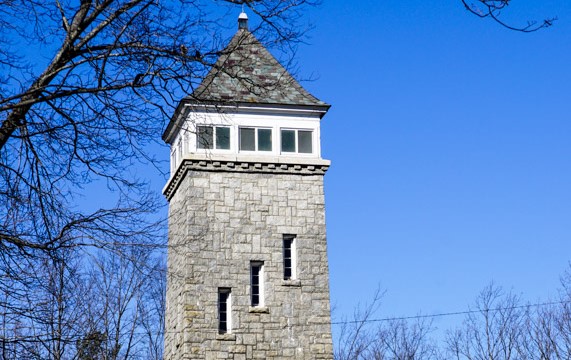
Colorado-based non-profit historic preservation group HistoriCorps is partnering with the Habersham County Historical Society and the Chattahoochee National Forest to preserve Cornelia’s Chenocetah Fire Lookout Tower.

The lookout tower, built in 1937 during the Works Progress Administration Program, employed Northeast Georgian farmers facing poverty during the great depression. For nearly 40 years, the tower served as a way to spot wildfires in the Chattahoochee National Forest and Lake Russel area.

Chenocetah was added to the National Historic Registry in the 1980s, but Habersham Historical Society Executive Director Audrey Davenport says that while it is a registered historic place, it needs professional restoration help.

“I was at Lake Russell hiking, and I went up to the tower with my two sisters and I said, ‘Wow, this building needs some work,'” Davenport tells Now Habersham. She says just a few days later, a woman at the Cornelia library connected her with HistoriCorps, who wanted to help preserve the tower.

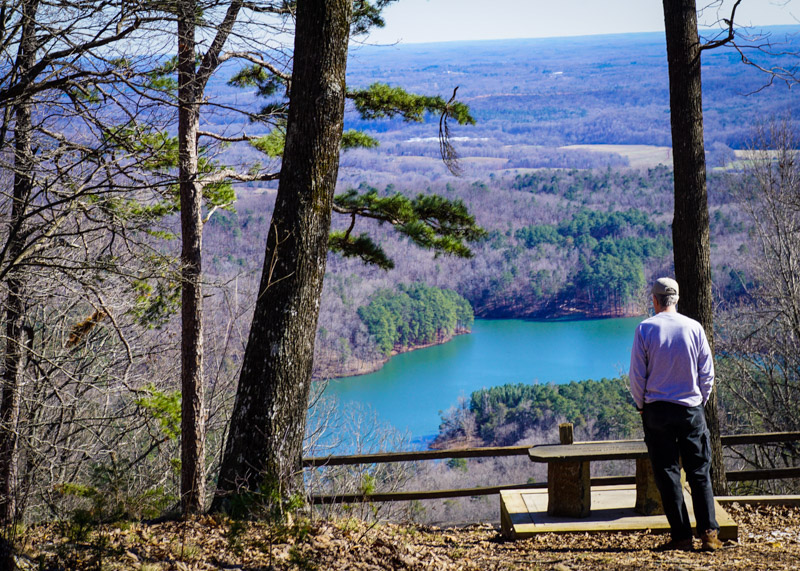
Lake Russell, where HistoriCorps volunteers will camp, can be viewed from Chenocetah Tower. (Margie Williamson/Now Habersham)

The preservation group will camp out at the Lake Russell Campground the weeks of Jan. 9-14 and Jan. 16-21; Historicorps volunteers will commute to the tower and work together to help restore and preserve Chenocetah. The preservation will be done at no cost.

HistoriCorps staff members Ariel Clark and Erin Crooks will serve as Crew Leaders and will train volunteers in preserving the historic site. The Town of Mt. Airy will also be involved with the reception of HistoriCorps volunteers.

“The entire community, especially youth groups, are invited to visit the project and learn about the historic preservation while the project is ongoing,” says HistoriCorps Workforce Manager Liz Rice. “We encourage the community to warmly welcome HistoriCorps to Habersham County!”

Details regarding dates and times during which volunteers will be actively working on the project are to come. The preservation group encourages anyone interested in volunteering to contact HistoriCorps or the Habersham County Historical Society to get involved.

Attorney calls on Vaughn to share reason for leaving Catoosa County

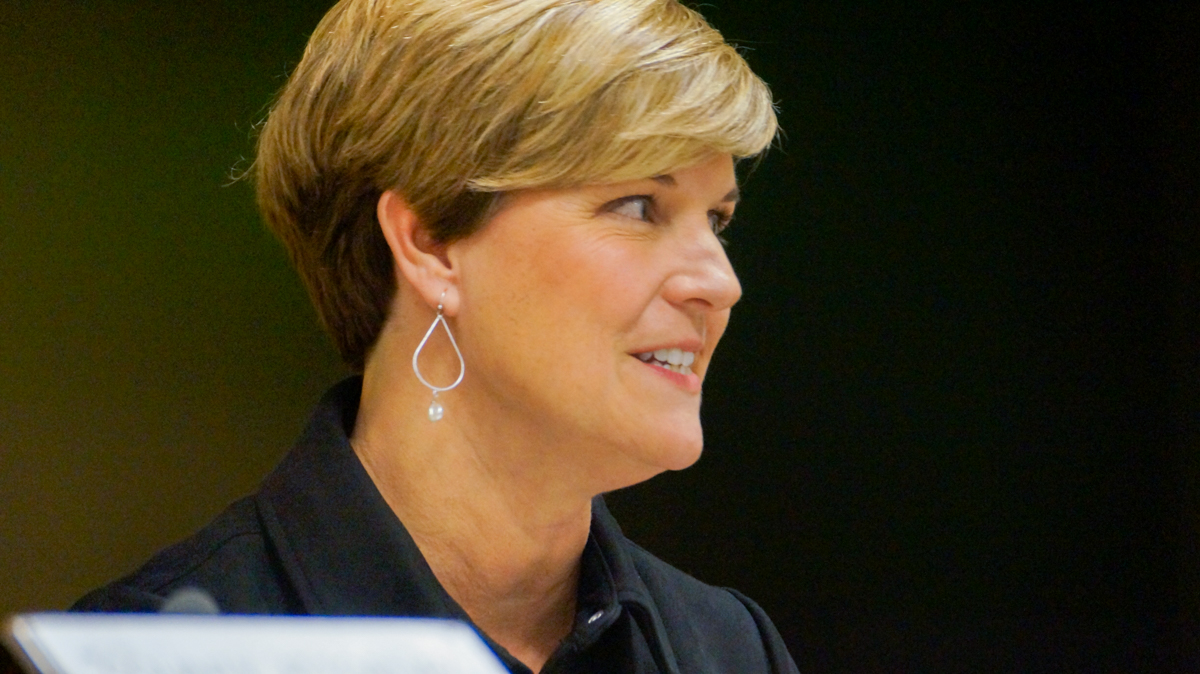
Interim County Manager Alicia Vaughn is one of three finalists in the search for a permanent county manager. (Hadley Cottingham/Now Habersham)

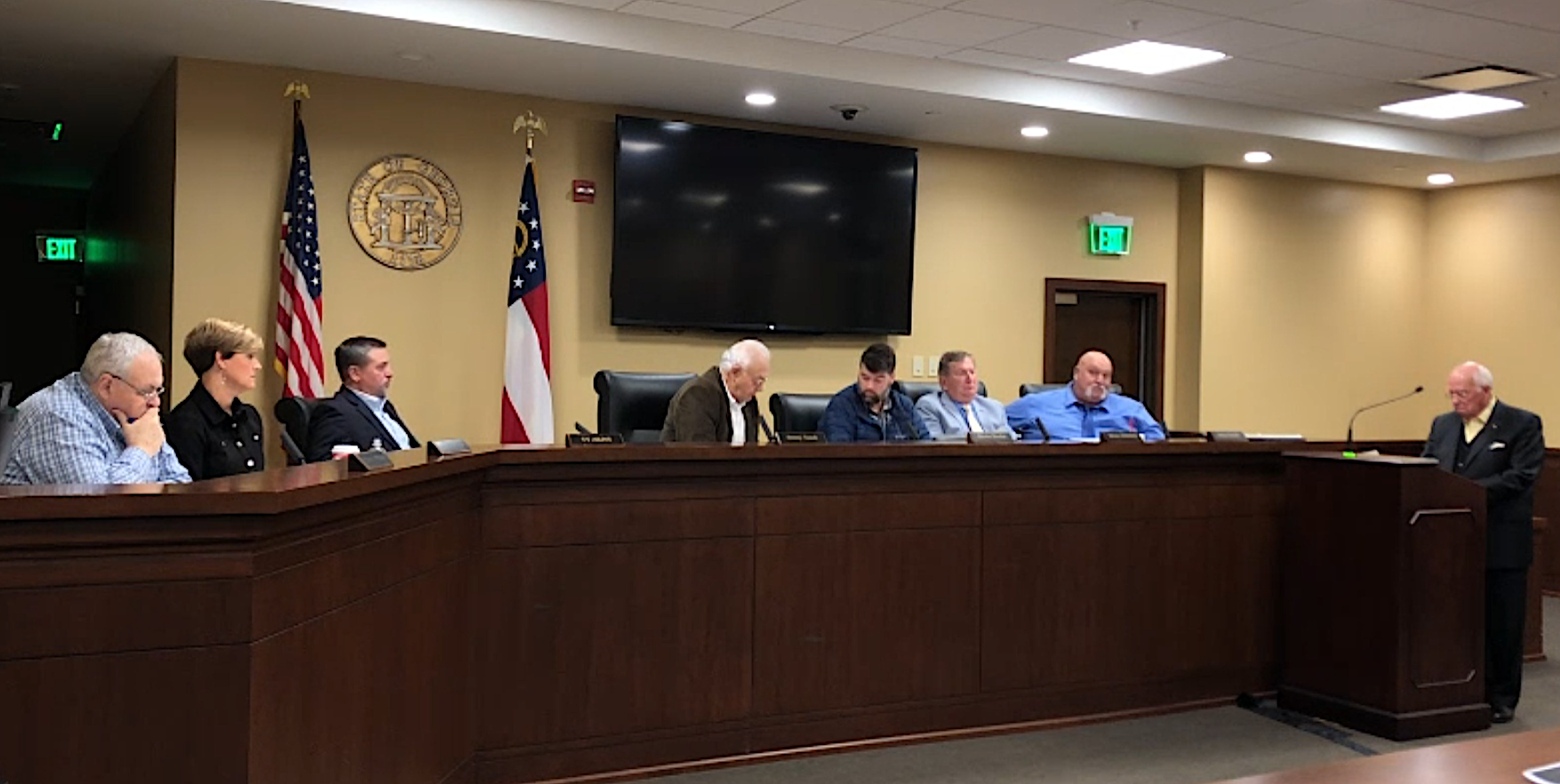
At Monday’s Habersham County Commission meeting, Cornelia attorney and outspoken critic of Habersham County government, Doug McDonald, called on Interim County Manager Alicia Vaughn to publicly state why she abruptly resigned her job as Catoosa County manager in April.

“I understand Ms. Vaughn is reported to have left Catoosa County as county manager abruptly, going into the office, putting her keys down, and saying she’s leaving,” McDonald said during public comments Monday. “[She] did not leave a 30-day notice— left money on the table — because if she herself was going to be terminated for cause, she’s not entitled to severance pay. If she left on her own, she left $50,000 to $60,000, or a percentage of her salary, laying on the table.”

McDonald addressed the commission during public comment, calling on Interim County Manager Alicia Vaughn to publicly state why she abruptly left her position as county manager of Catoosa County. (Hadley Cottingham/Now Habersham)

Vaughn is one of three finalists in Habersham’s county manager search led by the Carl Vinson Institute of Government (CVI/CVIOG) at the University of Georgia. Following candidate interviews on Dec. 20 and a two-week waiting period, the county commission will vote on their pick for the permanent county manager position in a special called meeting on Jan. 4, 2022.

“I would be very pleased if she would state tonight why she left so it can be clear,” McDonald said. “The people are entitled to know.”

Neither Vaughn nor Catoosa County have publicly shared why she resigned from her position. However, the Habersham County Board of Commissioners is aware of the reason.

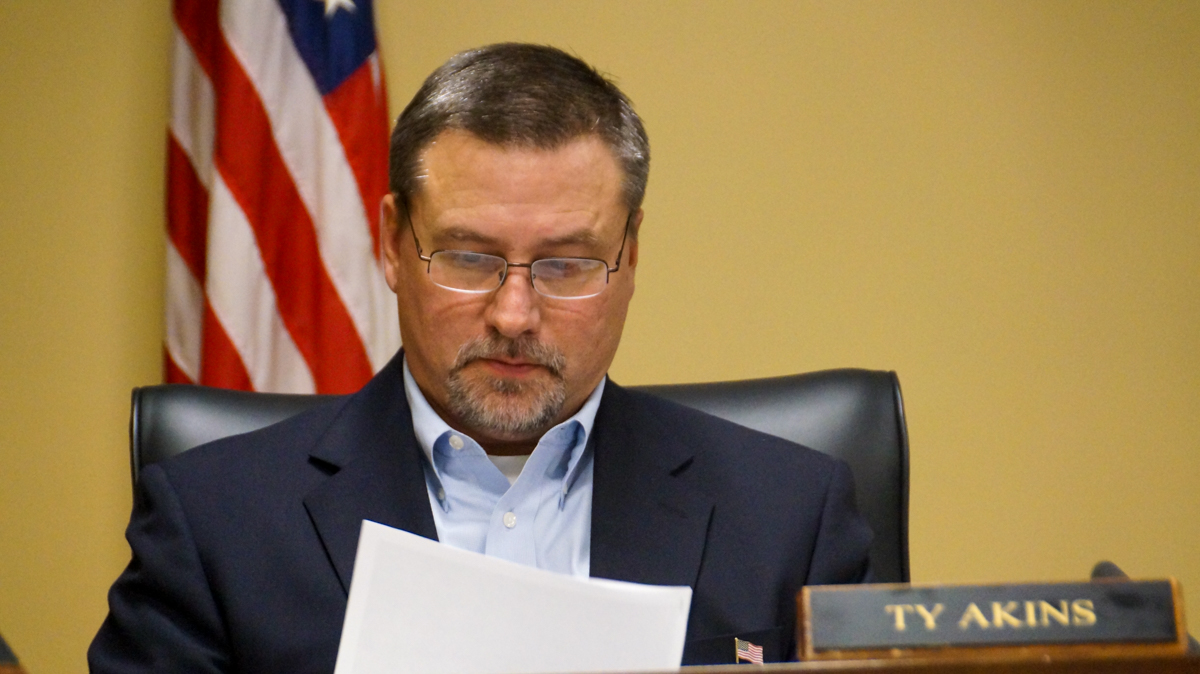
Things got heated in newly-elected commissioner Ty Akins’s first meeting with the Habersham County Commission when Cornelia attorney Doug McDonald raised issues with Commissioner Bruce Palmer, planning commission member D. Higgins and Interim County Manager Alicia Vaughn. (Hadley Cottingham/Now Habersham)

“The question has been answered satisfactorily as far as I’m concerned,” Newly-election District 5 Commissioner Ty Akins told McDonald. “You may never get that answer, but I did.”

Vaughn did not state at the meeting why she resigned from her position as county manager, but she did encourage McDonald to reach out to her to discuss any concerns he had.

“My desire is to have an open-door policy and I want to express my willingness to be available to Mr. McDonald and any citizen to discuss any concerns they may have regarding the county and its operations,” Vaughn tells Now Habersham. “I have shared my cell phone number with Mr. McDonald in the past and hope he will reach out to me.”

FDA authorizes Merck’s COVID-19 pill

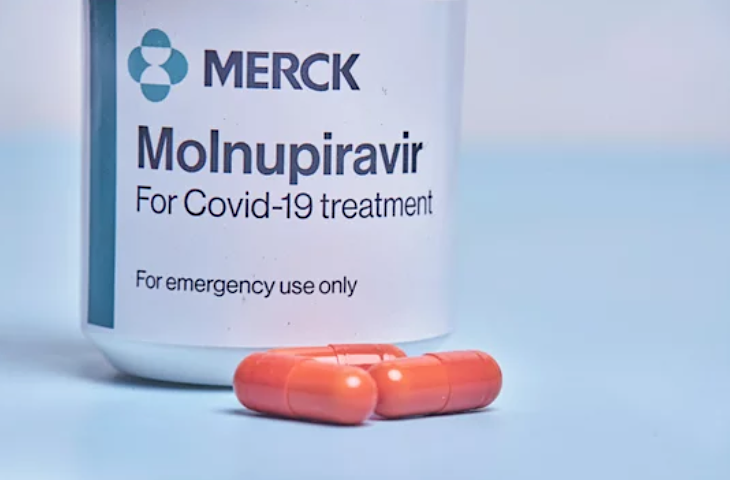
The Food and Drug Administration Thursday issued an emergency use authorization for another COVID-19 pill. Merck’s molnupiravir may now be used to treat mild-to-moderate symptoms of the disease in high-risk patients who are 18 years or older.

Molnupiravir is not authorized for patients younger than 18 because it may affect bone and cartilage growth, the FDA says.

“Today’s authorization provides an additional treatment option against the COVID-19 virus in the form of a pill that can be taken orally. Molnupiravir is limited to situations where other FDA-authorized treatments for COVID-19 are inaccessible or are not clinically appropriate and will be a useful treatment option for some patients with COVID-19 at high risk of hospitalization or death,” said Dr. Patrizia Cavazzoni, director of the FDA’s Center for Drug Evaluation and Research. “As new variants of the virus continue to emerge, it is crucial to expand the country’s arsenal of COVID-19 therapies using emergency use authorization, while continuing to generate additional data on their safety and effectiveness.”

MORE: Habersham County tops 200 COVID deaths

Molnupiravir is a medication that works by introducing errors into the SARS-CoV-2 virus’ genetic code, which prevents the virus from further replicating. Clinical trials indicate the drug may cause harm to fetuses, so, it is not recommended for women who are pregnant.

Merck’s EUA comes one day after the FDA approved the nation’s first COVID treatment pill. The federal health agency granted emergency use of Pfizer’s Paxlovid for patients 12 years and up.

Paxlovid is a 5-day, 30 pill treatment and molnupiravir is a 5-day, 40 pill treatment. Both drugs are available only with a prescription.

According to FDA guidance, both therapies should be initiated as soon as possible after diagnosis and within five days of symptom onset to reduce the severity of COVID-19.

Health officials stress the pills are not a substitute for vaccinations and boosters.

READ MORE ABOUT IT: FDA website

Clarkesville Boil Water Advisory lifted

The Clarkesville Water Department has lifted a Boil Water Advisory as of Dec. 23 at 5:12 p.m. for the area of Robertson Loop Road between Yonah Drive and Memorial Drive.

The advisory was originally put in place on the afternoon of Dec. 22. Clarkesville residents in this area can now safely consume their tap water.