Home Blog Page 1634

Family united with valuable package after asking community for help

(Photo/Bre Cope)

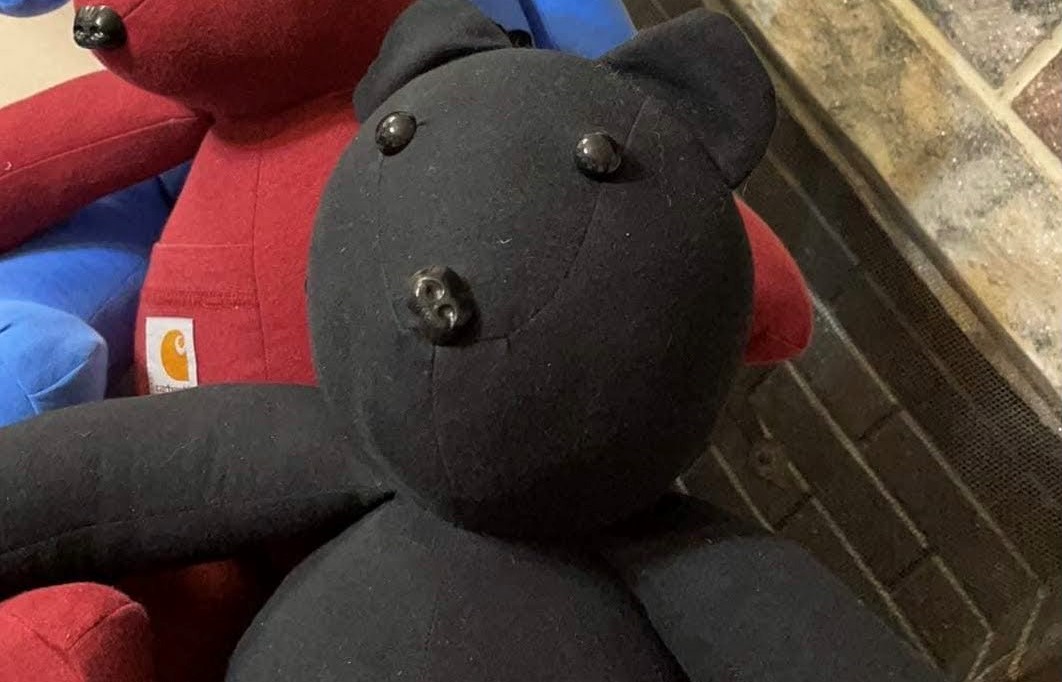
A Cornelia family asked their community for help tracking down a lost package containing something precious on Tuesday: a teddy bear made from the shirts of a grandfather and grandson that passed away this year. A day later, they’re celebrating locating it.

The bear was shipped with FedEx, and Keith Cope, who lost his father and his son within two months of each other this year, waited for the arrival of the bear his niece made.

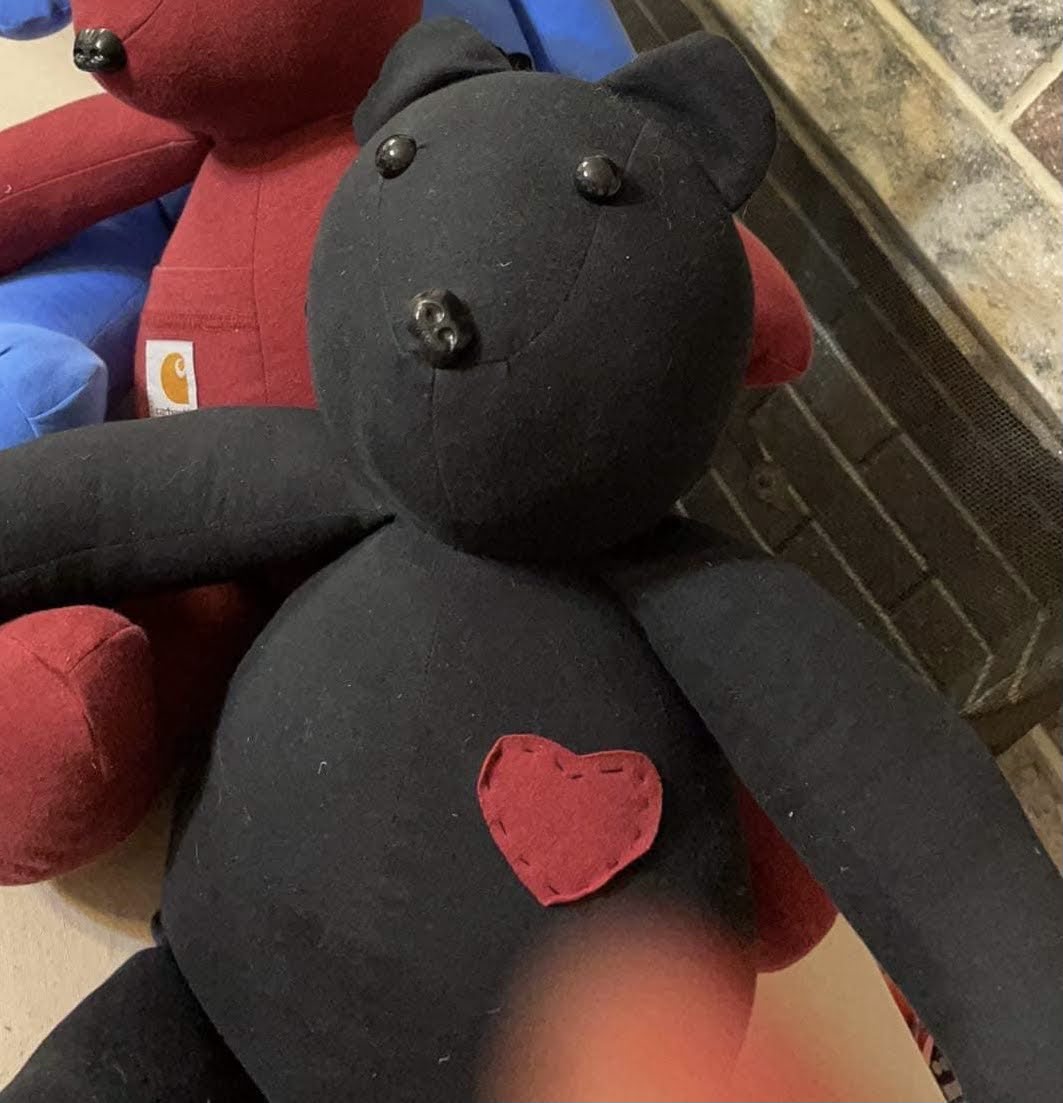
“My cousin made a stuffed bear for my dad, and the bear was made out of my brother’s shirt,” Keith’s daughter, Breanne Cope, said. “My brother passed away at the end of June; and then there is a little heart on the bear that was made from my grandfather’s shirt, who passed away in August. So my dad has lost his son and his father in the span of about two months.”

When the FedEx delivery notification came in that the package containing the teddy bear had arrived and been signed for, the family was at a loss. The package had been signed for, but not by any of them.

The bear, handmade by a family member who lives in North Carolina, is made of the shirts of two family members who passed away within two months of each other this year. (Photo/Bre Cope)

“When we look up the proof of delivery, someone named ‘S. Taylor’ signed for the package, but that’s all we know,” Cope said on Tuesday. “We don’t know who ‘S. Taylor’ is. We don’t know where FedEx delivered it to.”

She says her family had reached out to FedEx for more information on the package and where it might have been delivered, but they hadn’t received any further information from FedEx. That’s when she reached out to her community to keep an eye out.

The day after asking for the community’s help, Cope’s father got a call Wednesday morning from FedEx, who had seen Now Habersham’s article and wanted to help.

FedEx was able to track down where the package had been delivered, and the family is making arrangements to get the bear home. Tuesday, Cope told Now Habersham that getting the bear back would be “a sign of hope.” A day later, that sign is alive and well in the bear.

She says she worried the bear might never make it back, and as much as she wanted to have hope, waiting to hear from someone about the lost package was trying.

“It’s a relief to know we have it back and my dad can have comfort,” Cope says. “My family did reach out to me and thank me and the community for helping find the bear.”

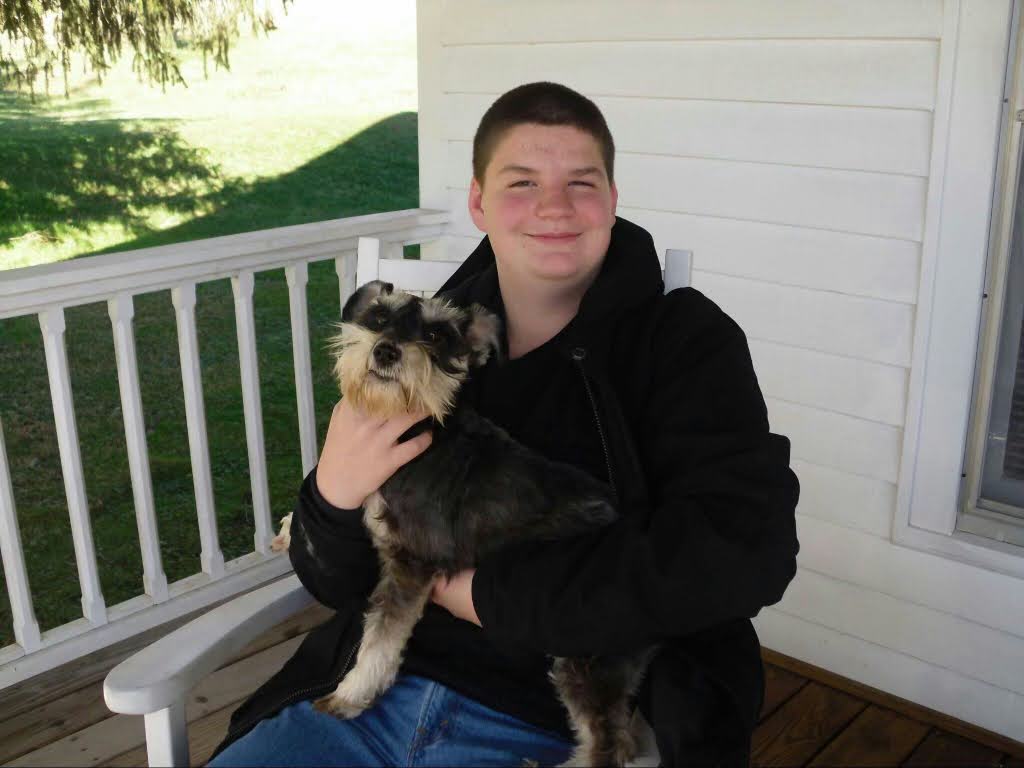
Sutherlan Cope, who passed away at only 21 years old, is remembered by his sister for his intelligence and unwavering kindness. (Photo/Bre Cope)

Breanne remembers her brother, Sutherlan Cope, as one of the smartest people she’s ever met. He was a student at the University of Georgia at the time of his death and was an Ed Schrader Presidential Scholarship recipient at Tallulah Falls School in 2019.

“He was an absolutely incredible young man,” Cope says. “He was kind, funny, loved his family, loved his friends. Just one of the most genuine and kindest people you would ever meet.”

Cope says Sutherlan was always smiling and laughing, and that she never saw him get angry with anyone. She says he would have given someone the shirt off his back if they’d needed it.

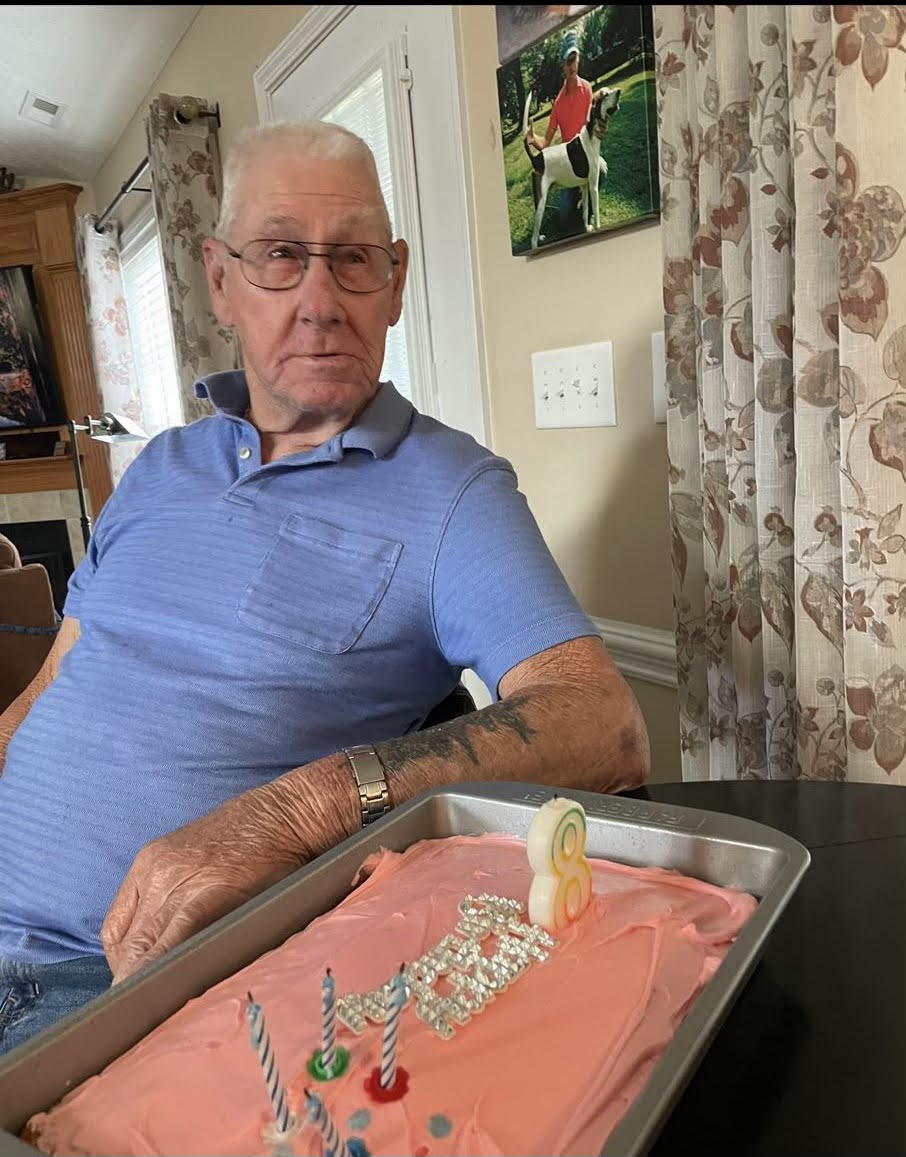
Her grandfather, James Cope, was much quieter and more reserved than her brother, she says. But Breanne says he always had a joke up his sleeve.

James Cope passed away in August of this year, less than two months after his grandson died. (Photo/Bre Cope)

“He was always quietly picking on us, but in such a loving way,” she says. “He would always have something to make us laugh.”

He loved to garden, too. Cope and the rest of her siblings have started filling their homes and yards with flowers in his, and their brother’s, memories. “It gives us something to kind of hold on to,” she says.

Now, she’s savoring the feeling of knowing a little bit more comfort has made its way to her family.

“Nothing can bring my brother and grandpa back,” she says. “But I know how much having a piece of them means to me and how much I wanted that for my dad.”

Health officials urge Georgians not to go to hospital emergency departments for COVID tests

Georgia is now in the midst of its fifth COVID surge. The state’s seven-day average of positive tests is now higher than it’s ever been and hospitalization rates in the state are starting to climb.

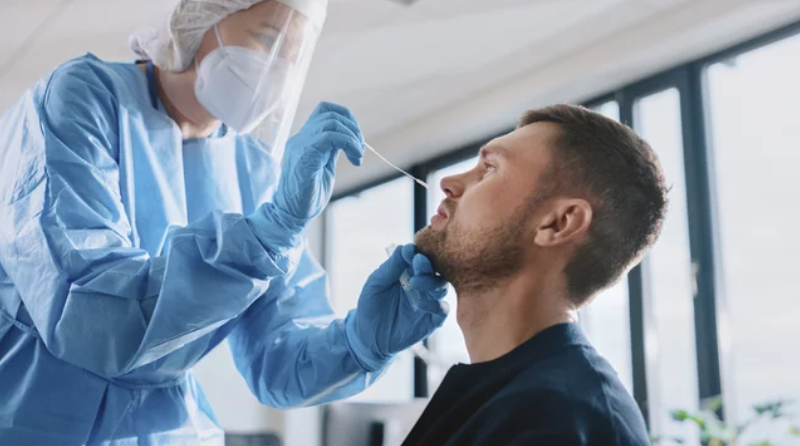
While the rapid rise in cases has not yet resulted in hospitals being overrun, the number of COVID-19 patients rose about 10% Tuesday to nearly 2,200 statewide. To help ease the strain on hospital resources, the Georgia Department of Public Health urges Georgians not to go to hospital emergency departments for COVID tests: Only go to EDs if you are experiencing severe COVID-19 symptoms requiring urgent medical attention.

“Asymptomatic individuals or individuals with mild symptoms should find testing sites other than hospital emergency departments,” a news release from DPH states.

COVID-19 testing locations are available throughout Georgia and can be found on the Georgia Department of Public Health website.

“We are working with our lab partners to expand testing hours and add testing sites, however, lines will continue to be long as thousands of Georgians want to get tested,” the state health agency says.

To help alleviate delays at testing sites, it is critical that people register before going to a DPH test site. Online registration is available through the website. Officials say pre-registering helps alleviate back-ups at test sites.

MORE: Georgia shatters COVID-19 case record amid rapid surge

Public health officials continue to urge people to get vaccinated as their best defense against the virus.

“COVID vaccination is available statewide and is our best tool for ending this pandemic and reducing the overwhelming strain on the healthcare system and healthcare providers,” health officials say.

To find a COVID vaccination location, visit https://dph.georgia.gov/covid-vaccine.

Georgians aged 5 and older are eligible for vaccination. Georgians 16 and older are eligible for boosters.

In addition to the vaccine, health officials urge people to continue to follow basic prevention measures; wear a mask, physically distance, and wash your hands frequently with soap and water.

Georgia shatters COVID-19 case record amid rapid surge

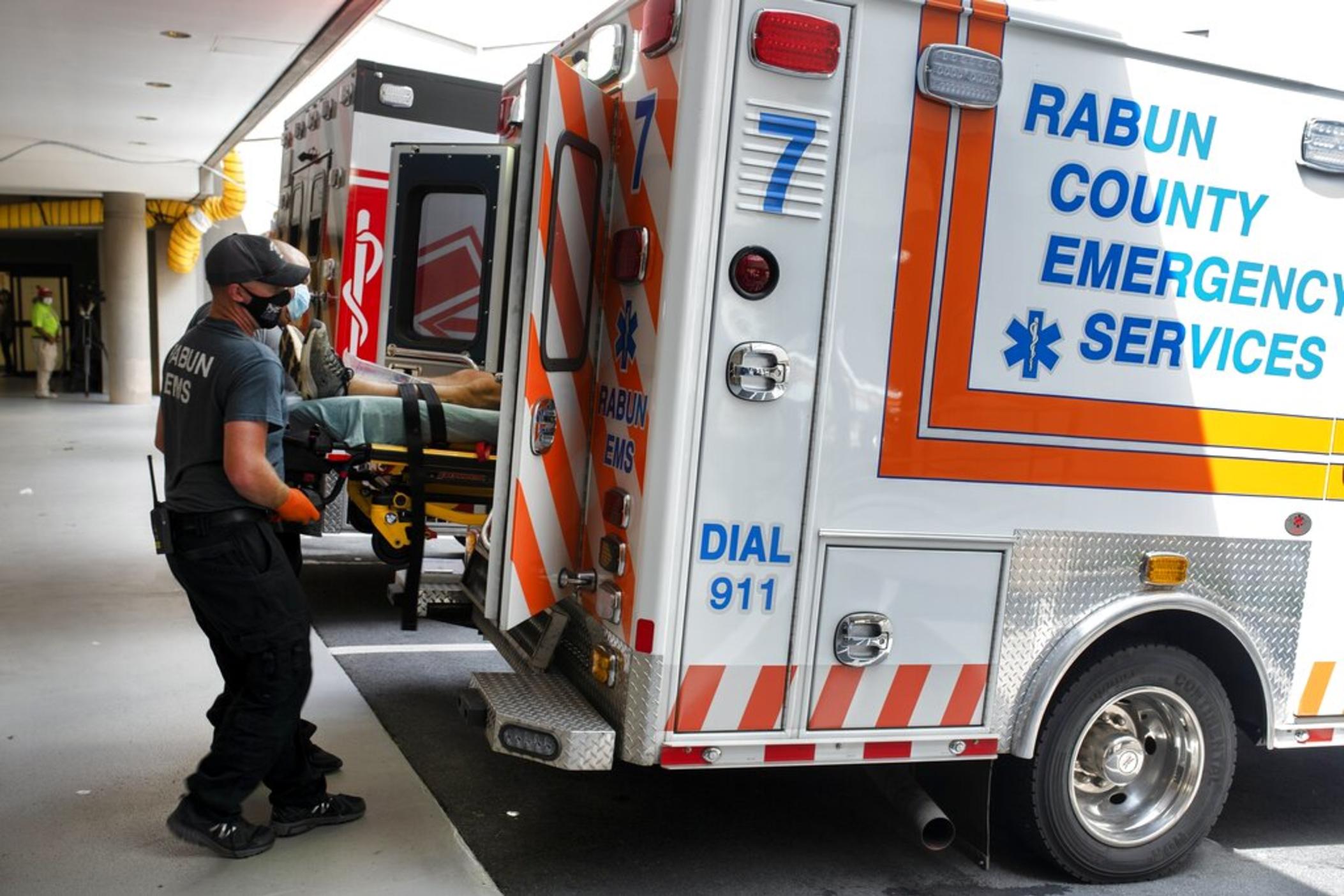
Ambulances from surrounding counties fill the emergency entrance Monday, Aug. 30, 2021, at the Northeast Georgia Medical Center Gainesville, Ga. Like most in Georgia, the hospital is experiencing a surge in COVID-19 patients as the state set a new mark for infections on Tuesday, Aug. 31. (Scott Rogers/The Times via AP)

Georgia broke the state’s record for the number of test-confirmed COVID-19 cases Tuesday, with an extremely rapid rise passing the peaks previously set in January.

The state recorded 13,670 positive tests, a combination of molecular PCR and rapid antigen tests, in its report released Tuesday. That boosted Georgia’s seven-day average of positive tests to 9,798. That seven-day average is a key measure because it smooths out normal daily variations.

That’s a huge escalation from a month ago, when Georgia was recording fewer than 1,000 positive tests a day. This fifth wave has passed both an early January peak as well as the delta wave that roared through Georgia as schools opened in August and September.

The rapid rise in cases has not yet resulted in hospitals being overrun, although the number of COVID-19 patients is climbing, rising about 10% Tuesday to nearly 2,200 statewide. Both infections and hospitalizations have been centered in the Atlanta area and some parts of north Georgia so far.

DPH urges Georgians: Avoid hospital emergency departments for COVID testing

The climbing number of virus cases is forcing changes in plans. The city of Atlanta announced it was canceling the New Year’s Eve Peach Drop at the Underground Atlanta complex downtown, the third year in a row that the event won’t be held. Emory University said it will start its spring semester online, with in-person classes not starting until Jan. 31 at the earliest. And some public schools are saying students and employees must wear masks when their classes resume in early January, with the 1,100-student Dooly County district joining that group on Tuesday.

As of Tuesday afternoon, 25 Atlanta-area emergency rooms were turning away ambulances, while only six ERs at hospitals caring for adults were receiving them, according to state data. Among those turning away emergency medical transports were the flagship hospitals of three of the area’s four major hospital systems: Emory, Piedmont and Northside. Data showed emergency rooms in regions around Atlanta, Rome and Carrollton, Columbus and Augusta were exceeding 100% capacity.

Officials are urging people who need testing not to tie up emergency rooms but to instead seek out testing sites and pharmacies.

Katie Byrd, a spokesperson for Gov. Brian Kemp, said the state is working to increase testing capabilities and has 2,500 National Guard troops on standby who could be used to aid testing sites and hospitals. She said the state Department of Community Health would decide who to send where in coming days. She also said Kemp continues to communicate with hospital leaders and has five calls with hospitals planned Wednesday.

Byrd, though, reiterated that the Republican governor, who has joined a series of lawsuits against Biden administration vaccine mandates in recent weeks, won’t “be implementing any measures that shutter businesses or divide the vaccinated from the unvaccinated or the masked from the unmasked.”

“Gov. Kemp is fully vaccinated and boosted, and he will continue to urge Georgians to talk with their doctors about the benefits of getting the vaccine or receiving their booster shot,” Byrd said in a statement. “Ultimately, he feels that we must trust our citizens to do what’s right for themselves and their families.”

Emory President Gregory Fenves said Tuesday that Georgia’s largest private university is switching to virtual classes to start the spring semester because of a national surge in COVID-19 cases fueled by the omicron variant. Fenves said Emory will transition back to in-person learning on Jan. 31 if conditions permit. The switch to remote learning applies to undergraduate, graduate and professional courses. Residence halls will remain open, though students are encouraged to delay their return to campus.

Fenves wrote in a letter that he knew that “beginning the semester with remote learning and teaching is inconvenient.”

“But we must be adaptable during this surge so we can continue our important work — learning, teaching, creating, and discovering — in the face of this ever-evolving pandemic,” Fenves wrote.

Emory students, faculty and staff are required to get a booster shot by Jan. 19.

This article appears on Now Habersham through partnership with GPB News

State lawmakers to take aim at racial history in public schools, partisan school boards

The 2022 legislative session could mean big changes for Georgia’s public school students.

(GA Recorder) — Teachers and administrators from across the state agree critical race theory is not discussed in Georgia grade school classrooms, but it likely will be a hot topic under the Gold Dome in January as lawmakers return for an election-year legislative session.

But with restrictions on schools teaching about racism and other cultural issues dominating the discussion before the session begins, some worry more pressing problems like school funding could get short shrift.

Critical race theory, a term for a legal framework developed in the 1970s defining racism as arising from social forces rather than individual prejudice, has become a catch-all for instruction that acknowledges racist structures in American history like redlining and Jim Crow.

Opponents argue focusing on these issues and tying them to modern problems weighing on racial minorities is divisive and paints people as oppressors or victims based on their race.

According to Google Trends, searches for critical race theory were mostly flat from when tracking began in 2004 until last May when internet interest spiked.

That’s about the same time parents started showing up to school board meetings across the state to demand an end to so-called critical race theory lessons.

During a May Cherokee County school board meeting, state Rep. Brad Thomas, a Republican from Holly Springs, said he had already started writing a bill to ban critical race theory in schools.

The next month, the Georgia Board of Education approved a resolution that did not mention critical race theory by name but asserted that the United States is not racist and that public school students should only be taught that slavery and racism are betrayals of the country’s founding principles.

Cumming Republican state Sen. Greg Dolezal listed the idea as one of the top targets of Georgia’s new Freedom Caucus, which he chairs.

“When we see dangerous ideology creeping into our schools, we think that monitoring, making sure our children are taught how to think and not what to think is at the forefront of what we can do legislatively,” he said. “Our K through 12 education budget represents 38% of the budget here in the state of Georgia, and we want to make sure that investment is spent in a way that parents can be proud of.”

Gillsville Republican Rep. Emory Dunahoo, another member of the Freedom Caucus, elucidated: “We had for 50 years the opportunity to teach not one theory, but four or five, for instance, Buddha, Jesus Christ, Gandhi, different religions, different beliefs. We should still have that right for everybody to hear all the parts, not one part. A lot of the buzzword, which will change, is CRT. Well, critical race is a lot stronger than you think. I’ve been working on this for a year. There’s things that will come out later. But our number one goal is to educate our children, and educate them not on one mind, but on what history truly is, and to educate them on a process of learning how to make it in the real world.”

In January, Dunahoo sent a letter to University System of Georgia administrators asking whether there are any classes in the state’s university system that teaches about the concept of privilege or oppression or that white, male, heterosexual Christians are intrinsically privileged.

In a 102-page response, then-Chancellor Steve Wrigley said the university system strives to balance their cause of expanding students’ minds and ensuring they are free from harassment and indoctrination.

Banning critical race theory from classrooms this session could be a win for Republican lawmakers ahead of November’s election, but it would also mean losing a powerful weapon to wield against Democrats like Stacey Abrams and Sen. Raphael Warnock, said University of Georgia political science professor Charles Bullock. Attacks on critical race theory were seen as helping to swing Virginia’s governor’s race to Republican Glenn Youngkin.

“What we’re told is that it would have no impact whatsoever on the curriculum because it’s not being taught anyway,” Bullock said. “Symbolically, yeah, it could be important, although having done that, it may be then taking an issue out of play for the election. If the issue is still out there that it is being taught, then you could run against that, where if you pass legislation saying you can’t do it, now you really can’t run against it, can you?”

Other political projects

Critical race theory has been cited in a push to make local school boards across the state nonpartisan, at least on the ballot.

State Sen. Clint Dixon, a Buford Republican, pressed pause last month on a pair of bills that would alter the structure of Gwinnett County’s board of commissioners and school board after getting pushback from Gwinnett County Democrats who said they were not consulted.

Gwinnett has been at the forefront of Georgia’s move toward becoming a swing state, and the school board there flipped to Democratic control last year.

Lt. Gov. Geoff Duncan tapped Dixon to lead a committee to study making all of Georgia’s school boards nonpartisan. More than 60% of Georgia school districts are already nonpartisan.

At the committee’s first meeting this month, Gwinnett County parents complained that the new school board members were not responsive to parents’ concerns and that they had placed new limits on the number of speakers at school board meetings. Some listed contentious issues like masks and racial education and argued that nonpartisan elections would cool down tensions.

The Georgia School Board Association supports legislation calling for the non-partisan election of local school board members. Democrats question the timing of the move and the focus on Gwinnett.

Speaker Pro Tem Jan Jones also started conversations in November with a tweet about removing certain materials from schools:

“I’m working with House Education Chair Matt Dubnik and Rep. Chris Erwin to ensure obscene materials have no place in public schools,” she wrote. “Let’s get it done this session!”

Superintendent Richard Woods seemed happy to hear about the idea.

“This is great news,” he said in a tweet. “Obscene materials have no place in our schools. Looking forward to working with the House to protect our students and empower our parents.”

Jones did not elaborate on what she is planning or what sort of obscene material she hopes to target. Democrats and First Amendment advocates said they fear a push to ban books that discuss race or LGBT issues from school libraries

A bill by Dallas Republican Sen. Jason Anavitarte that passed the Senate this year but stalled in the House would require boards of education to adopt a complaint resolution policy for parents who take issue with materials available to their children. The bill would charge school principals with making the final decision on materials that are subject to complaints.

Budget matters

Parental involvement in school decisions and minority representation are both important discussions, said Stephen Owens, senior policy analyst at the Georgia Budget and Policy Institute, but it can be frustrating when cultural clashes seem to drown out more grounded issues.

“We have kids in the middle of a pandemic, with this new wave of the coronavirus, schools are operating under historic budget cuts, we’re having a difficult time staffing schools, specifically with substitute teachers and school bus drivers, so there are actual crises that are going on inside public schools, and then there’s CRT,” he said. “They’re two completely separate things.”

Owens said he’ll be watching House Bill 10, which would provide additional funds to schools that serve students living in poverty.

“Georgia is one of only eight states in the union that doesn’t provide additional funding specifically to educate students living in poverty, so we’re hoping that we can advance a bill like House Bill 10,” he said. “That’d be about $343 million. It’s a bipartisan issue, this is something that Gov. Deal’s Education Reform Commission came up with in 2015, and now, Democrats have signed onto a bill, we’re hoping to get a good bipartisan legislation across the finish line.”

It’s also a good bet that private school vouchers will come up again in 2022. Supporters say allowing parents to use state money to send their children to private school helps students who live in low-performing districts. Opponents say the practice takes taxpayer money from schools that need it and funnels it to schools that do not have the same oversight. In 2021, a bill from Woodstock Republican Rep. Wes Cantrell to expand vouchers to more families passed out of committee but never got a full House vote.

The state budget might be the one piece of legislation with the greatest impact on Georgia’s public school students. The budget passed earlier this year marks the 18th year out of the past 20 that Georgia has failed to meet the minimum public school funding based on its Quality Basic Education formula, or QBE. During the COVID-19 pandemic, Georgia schools have received nearly $6 billion in federal money from the CARES Act, Cares II and the American Rescue Plan.

“We have really solid revenue numbers, there is absolutely opportunity to fill in QBE, do a number of other policies, such as perhaps finish off the teacher pay raises,” Owens said. “But I think moving forward is my bigger concern. We continue to balance budgets in the state of Georgia on the backs of children. Right now, we have this historic investment in federal dollars, it’s really good for these one-time issues, such as fixing the HVAC, extending the school day, maybe one-time bonuses for staff. But schools are afraid to use this money in a way that actually increases staff for fear that it’s going to be gone in a couple years.”

Palmer, county officials say goal of town hall is to open conversation

(Hadley Cottingham/Now Habersham)

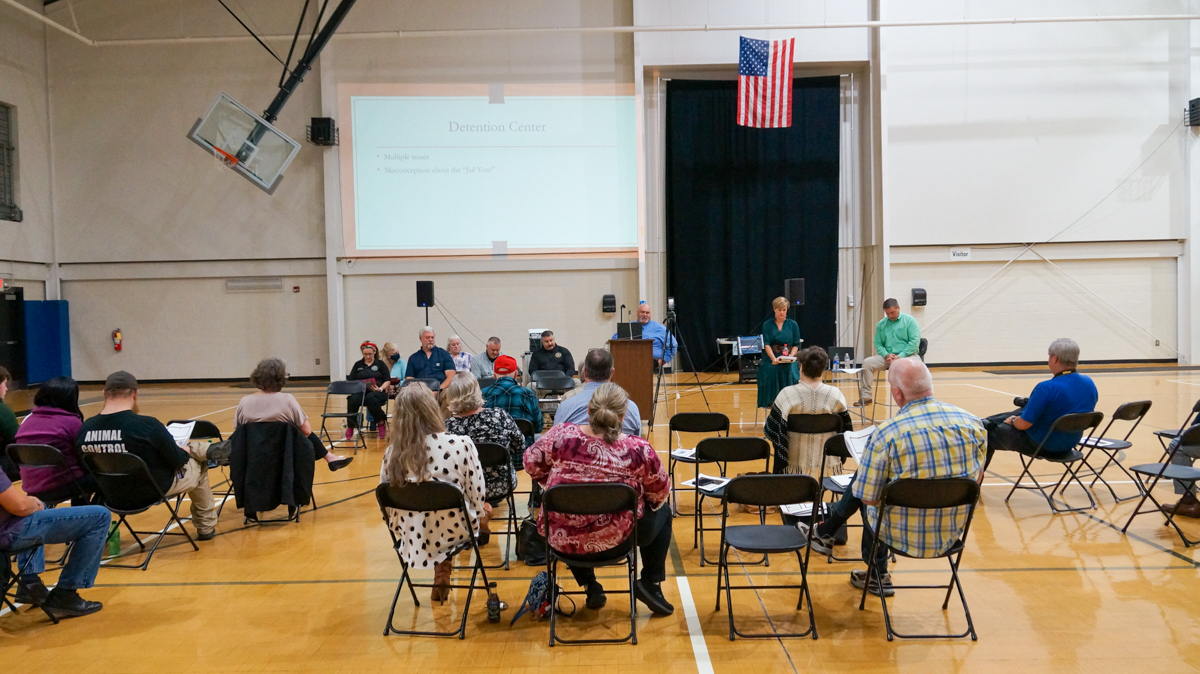
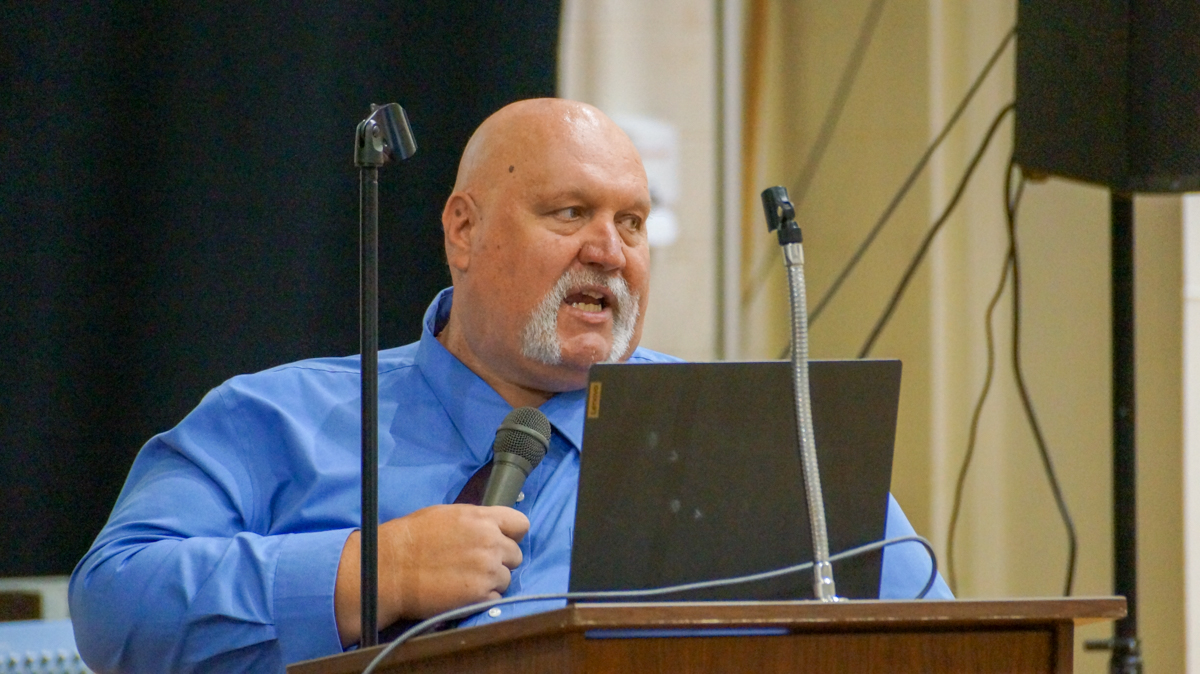
Commissioner Bruce Palmer held his second town hall meeting Tuesday night, where he was joined by public safety department heads from Habersham County Emergency Services, Sheriff’s Office and Animal Care and Control.

Department heads shared the challenges they’re facing in their public safety departments during Palmer’s informational presentation, which detailed the costs of running local public safety operations, upcoming projects and staffing information. The department heads were also available to answer questions from citizens.

Palmer says that his public safety experience helped him prepare for the presentation.

“Even though my experience has primarily been fire and EMS, I still knew a lot about law enforcement and 911, and even animal control from working with them on different types of calls,” Palmer said. “There wasn’t as much of a learning curve as there was for the first one [town hall] over taxes and tax digests.”

RELATED: ESPLOST and LOST at center of Tuesday night’s town hall discussions

He says he believes that these meetings are helping community members become acquainted with their local government officials, and he says that being able to present information to and answer questions from citizens is helping overall government transparency.

Commissioner Bruce Palmer held his second town hall meeting on Tuesday, centered around public safety and the issues community members and county public safety department heads are facing. (Hadley Cottingham/Now Habersham)

“You’re not ever going to make everybody happy, but when you have people taking interest that ask legitimate questions, I think that’s the whole goal,” Palmer said. “The whole goal is to open conversation with our citizens because through that conversation, I think that’s where we get a lot more transparency from.”

Discussions and questions from citizens centered around area animal population control, improving public safety staffing, long emergency response times and the safety and improvement of the county jail. The public safety department heads directly involved in those issues were able to answer those questions and provide insight into what plays into those citizen concerns.

Only a handful of community members attended the town hall in person, but the county’s online livestream had 369 viewers during the initial livestream. The stream is still available for viewing on the county’s Facebook page.

VIEW Recorded Livestream of HABCO Public Safety Town Hall

Habersham County Public Information Officer Carolyn Gibson says that the engagement she’s seen with the community during these meetings shows the town halls’ beneficial impact.

“It creates an opportunity for discussions that may not happen elsewhere,” Gibson tells Now Habersham. She also hopes that recording the initial livestream will be helpful for dispersing more information to citizens in the future. “The great thing about filming this is we can use this information in other informational campaigns.”

VIEW Slide presentation from HABCO Public Safety Town Hall

Now Habersham will release more information on the topics discussed at the public safety town hall in the near future.

McDonald and McClure take the oath of office

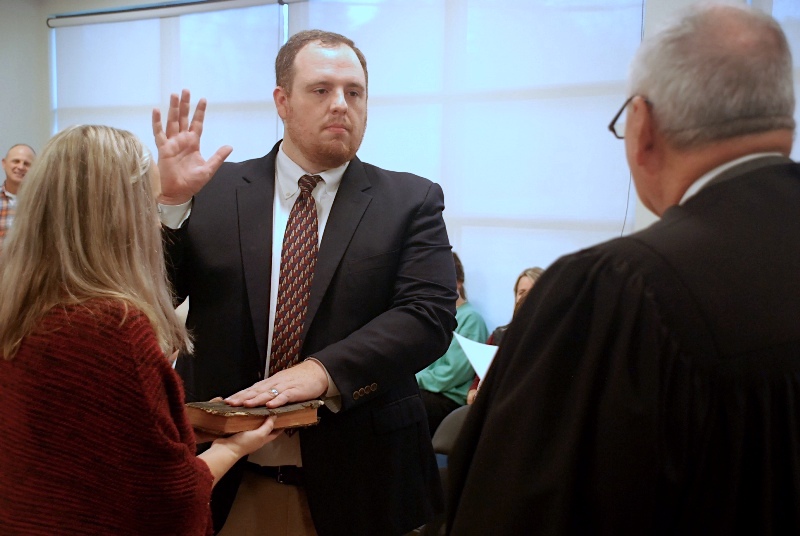
CJ McDonald takes the oath of office from Judge Garrison Baker with McDonald’s wife Haley looking on. (Dean Dyer/wrwh.com)

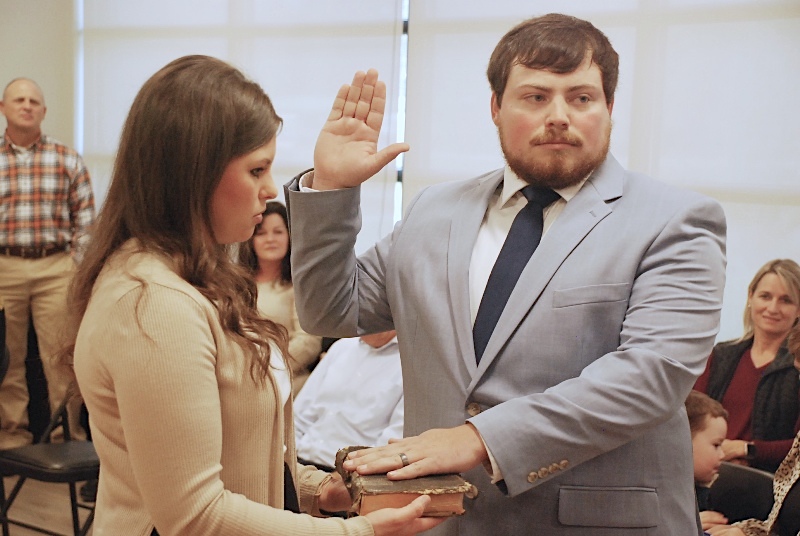
The Cleveland City Council has two new members following Tuesday’s swearing-in of Jeremy McClure as Ward 3 and C.J. McDonald as Ward 4 council members.

Prior to administering the oath of office and loyalty oath, Cleveland Municipal Judge Garrison Baker said public service is more than just a position you hold in a community, “it’s a calling.”

“You’ve been granted a great trust by the voters of the city of Cleveland in electing you to the position you are in,” Garrison told the newly-elected councilmen. “If you will take these oaths you are about to receive seriously and if you will apply them to your heart in the way you manage your public life, then I know the city of Cleveland will benefit from your service.”

Jeremy McClure takes the oath of office from Judge Garrison Baker with McClure’s wife Ansley looking on. (Dean Dyer/wrwh.com)

After the ceremony, McClure said he is ready for the challenge.

“I know the town’s ready. I know everybody is excited and eager. We’re ready to get to work and get things moving to help everybody out and get this community back on the right track,” he said.

McDonald is ready to go, as well.

“I’m excited to get to work. I think we have a great council and look forward to facing any problems and opportunities we have in the new year head-on,” Mcdonald said.

The two new city leaders will take their seats on the Cleveland City Council at the next meeting on January 3.

Ginger cookies

Each Wednesday for Dishing Up Memories, we’ve featured cookie recipes that are perfect for holiday baking. Even though Christmas is over, it’s never too late to bake cookies. Especially these scrumptious ginger cookies which will have your kitchen smelling oh so good!

Here’s a bonus, the ginger that is in these cookies has anti-inflammatory properties, is known to help treat nausea and fight heart disease and other illnesses.

Don’t you just love a treat that is tasty and good for you at the same time?

Ingredients

2 ¼ cup all purpose flour

2 tsp ginger

1 tsp baking soda

¾ tsp cinnamon

½ tsp ground cloves

¼ tsp salt

¾ cup butter, softened

1 cup sugar

1 Tbls water

¼ cup molasses

2 Tbls sugar

Directions

Preheat oven to 350 degrees.

Sift together flour, ginger, baking soda, cinnamon, cloves, and salt. Set aside.

In a large bowl, cream butter and 1 c sugar until light and fluffy. Beat in the egg, then stir in water and molasses. Gradually stir in sifted ingredients into molasses mixture.

Shape dough into walnut sized balls and roll in remaining sugar. Place cookies 2 inches apart on ungreased cookie sheet, flatten slightly.

Bake 8-10 minutes. Cool on baking sheet for 5 minutes before moving to wire rack. Store in air-tight container.

Potential remedies to stubborn problems in rural health care

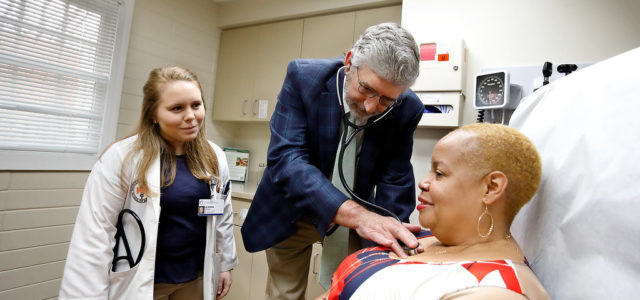
Dr. Michael Raines examines a patient at the Mercer clinic in Plains.

Part 5 of a Special Report

The concept isn’t exactly new.

Free-standing ERs — affiliated with hospitals but not physically connected to them — have cropped up in many areas, generally in suburban or urban locations where large numbers of local residents have private insurance. They provide emergency medical services apart from a regular hospital location.

Now federal health officials are developing plans for something similar but in a different setting.

“Rural Emergency Hospitals’’ are part of a bipartisan proposal that would replace full-service medical facilities in rural areas with standalone ERs.

An REH would be run independently, with an emergency department and, perhaps in some cases, a few outpatient services. Federal health programs would pay more than standard Medicare rates for services at such a facility.

It’s the basic idea that officials in Cuthbert and Richland envision as a replacement for their shuttered Georgia hospitals.

Southwest Georgia Regional Medical Center in Cuthbert

The proposal isn’t clear whether an already-closed hospital could be converted into an REH. Still, it’s an interesting potential remedy for rural communities struggling to preserve health care.

Chiquita Brooks-LaSure, the Centers for Medicare and Medicaid Services administrator, said the rural emergency hospital initiative “is a priority for us to implement.”

More insurance coverage

Other ideas – many that have been put into practice — have been promoted to bolster rural health care.

The biggest one is for the 12 states that have long declined to expand Medicaid under the Affordable Care Act to agree to do so. Most of these states are in the South, and Georgia is among them. In this state, expansion would mean up to 500,000 low-income uninsured adults would get coverage under the federal-state program. Georgia has the third-highest uninsured rate in the U.S.

States that haven’t expanded Medicaid are in orange. Source: Kaiser Family Foundation


Dozens of people associated with rural health care told GHN that Medicaid expansion would be a big help in Georgia. They say it would mean more compensation for providers whose patients have no health insurance or other means to pay. But Republican leaders in Georgia, citing costs, have rejected expansion.

In Congress, an alternative to expansion surfaced in the Democrats’ social-spending bill. It would target low-income people in the 12 non-expansion states who don’t qualify for regular Medicaid but don’t earn enough to get discounts on coverage they buy on the health insurance exchange. Under the plan, those people would qualify for those discounts for four years, starting in January.

The bill’s fate in Congress is unclear.

Filling provider gaps

Among other recommended steps:

Attracting those likely to stay: Katie Metts, a nurse from a small town in Florida, now plans to be a physician. She has started medical school at the Philadelphia College of Osteopathic Medicine (PCOM) campus in Moultrie. When she worked as a nurse practitioner in Jacksonville, she said, “sometimes we’d get patients from South Georgia. They would have complex diseases. A lot of times their outcomes weren’t good. I wondered whether they had good access to health care.’’

PCOM campus in Moultrie

PCOM, with the new Moultrie campus, targets students from southwest Georgia in admissions, as well as those with connections to the area, and those interested in practicing in underserved areas.

Aiming to boost the state’s physician workforce, the Mercer University School of Medicine in Macon accepts only Georgia residents as applicants. “We started preferentially looking at people from rural areas. Our hope is that they understand the need,’’ said Dr. Jean Sumner, dean of the school.

One of the recent Mercer grads, Dr. Justin Peterson, an OB/GYN in Douglas in Coffee County, said he wanted to come home to practice because his family is there and “I wanted to give back to the community who raised me.’’

Shorter med school: The Medical College of Georgia at Augusta University is shortening its med school curriculum to three years from four for students who want to work in primary care in rural or underserved areas. “It’s a really good deal,’’ said Scotty Hall, who grew up in the small town of Dexter in Central Georgia. Scholarships are available for tuition as well. Peach State Health Plan, run by Centene, has contributed $5.2 million to the MCG program. Mercer offers a similar shortened curriculum for med students.

Loan repayment programs: A Tifton hospital paid off $100,000 of the medical education loans for Dr. Flavia Rossi, a pediatrician in the town. The terms of the deal required her to work in Tifton for three years, which she fulfilled, but she has stayed there “because I like it. I like the small-town life.’’

Primary care clinics: Mercer has opened four primary care clinics in underserved rural areas, including one in Plains after a request from the town’s most famous resident, former President Jimmy Carter. “Our goal is to go where there’s no care,’’ said Dr. Sumner. Another clinic is planned for Harris County.

Sumner

Diversified services: Miller County Hospital in southwest Georgia has accepted a stream of patients considered “medically needy,’’ who are eligible for Medicaid through disability, into its nursing home. “No nursing home in the state would take them,’’ said Robin Rau, CEO of the hospital, which also benefits from services delivered to those patients. “We’ve taken 200 to 300.’’

Mobile clinic: Rau of Miller County Hospital runs a medical “truck’’ clinic to nearby counties that have lost their hospitals. It’s equipped for telehealth, EKGs, X-rays and lab work, and is staffed by a nurse.

“I’ve been asked by these communities to help them,’’ Rau said. “I will not reopen their hospitals, I will not staff an ER.’’ But by sending the mobile clinic into areas of need, she said, “I’m willing to lose some money.’’

READ MORE ABOUT IT:

The Arthur M. Blank Family Foundation contributed funding for the reporting of this article.

25K chickens lost in fire near Clarkesville

(NowHabersham.com)

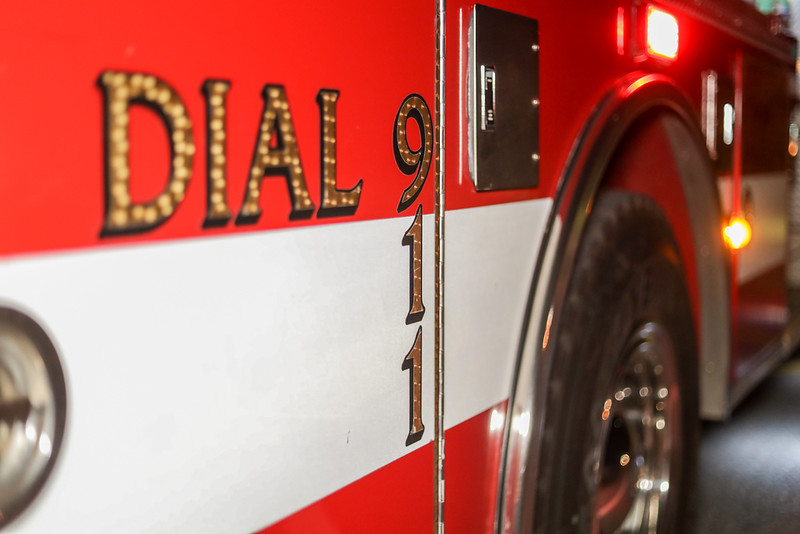
Officials say an electrical problem may be to blame for a costly and deadly chicken house fire northwest of Clarkesville. The December 28 fire killed 25,000 birds and caused approximately $300,000 in loss and damages.

The blaze broke out just before 8 p.m. Sunday in a 500-foot-long structure at 130 Preacher Campbell Road. Habersham County Emergency Services with help from the White County Fire Department spent several hours Sunday night into Monday extinguishing the flames and putting out hotspots.

The chicken house was destroyed, resulting in an estimated loss of between $200,000 to $250,000 for the structure. The chickens were owned by Fieldale Farms. Officials say the estimated cost of the lost chickens is around $75,000.

This article has been updated with new information

Northeast Georgia man accused of killing mom, stepdad

Police officers arrested an Oconee County man suspected of killing his mother and stepfather early Tuesday morning.

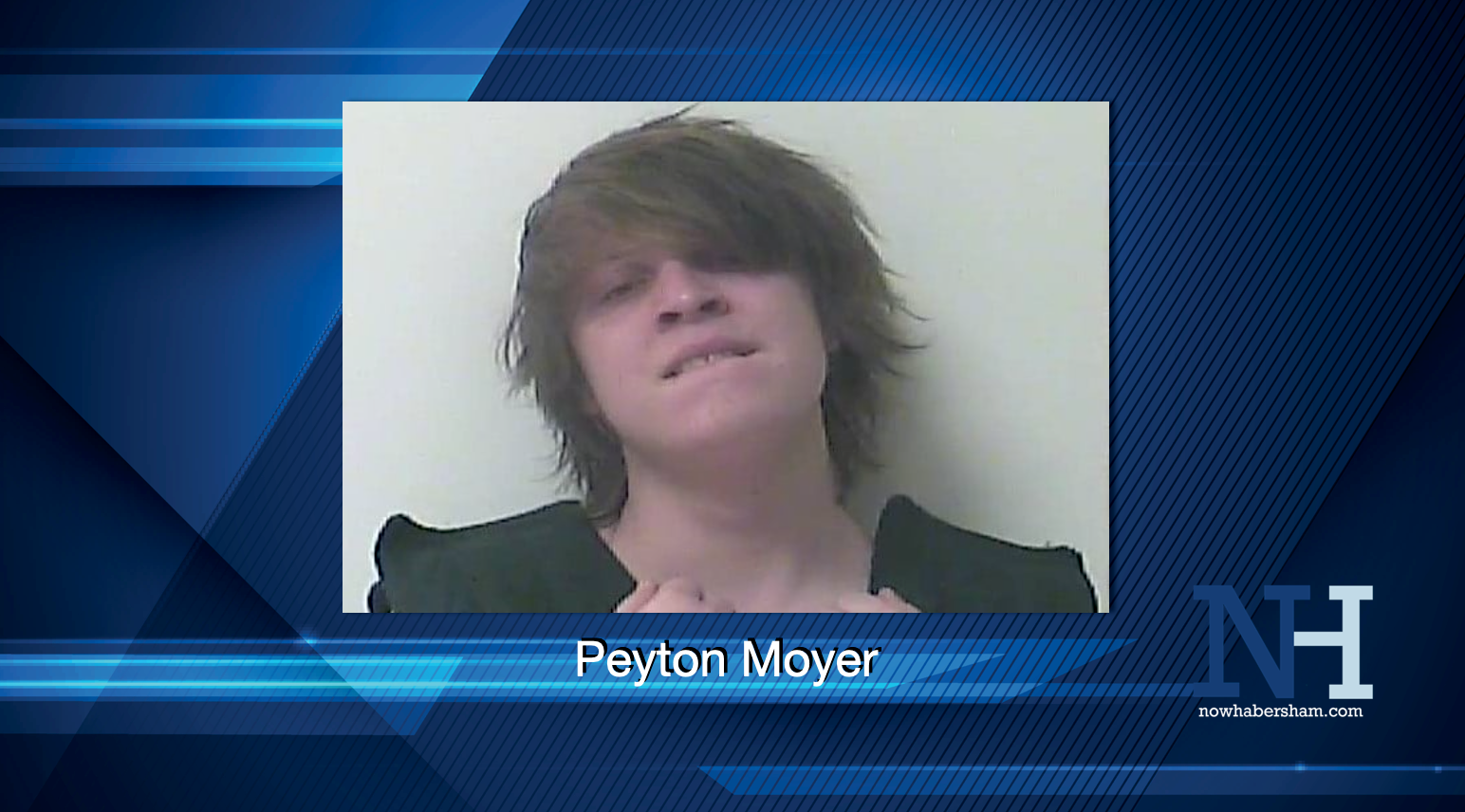
Athens-Clarke County Police took 20-year-old Peyton Moyer into custody.

Oconee County Sheriff’s investigators suspect Moyer of killing Ashley Schutza and Benjamin Smith. Officers found the couple dead in their home on Boldercrest Circle around 12:22 a.m. on December 28 while responding to a report of a shooting. They also located two juveniles inside the home who were unharmed.

Moyer lived in the house with his family. Investigators say he fled the scene in a car that belonged to one of the victims.

Athens police found Moyer and arrested him after a short pursuit. The case is still under investigation.

State lawmakers poised to add expanded gun access to 2022 legislative agenda

(GA Recorder) — Each new legislative session brings the opportunity for lawmakers to bring home a victory for their constituents, and for Georgia Republicans, passing an expansion of gun rights in 2022 could be just the thing to make their base happy in an election year.

The General Assembly declined to pass new firearm legislation last session, though it did come close with a gun rights bill written by Cherokee Republican Rep. Mandi Ballinger. Among that bill’s provisions are an expansion of firearm license reciprocity with other states and a restriction of the powers of Georgia governors to curtail gun rights under states of emergency.

Ballinger’s bill passed both chambers, but the Senate version was amended in committee, which meant the House would have needed to vote on the bill again. That never happened, and House Speaker David Ralston later told reporters a deadly shooting spree at Asian-American-owned spas in Cherokee County and Atlanta shortly before the end of the session factored into that decision.

The shooting sparked grief and anger among lawmakers.

“Frankly, I thought we needed to be very, very sensitive to any gun legislation,” the Blue Ridge Republican said following the close of the 2021 session. “You know, we’re less than two weeks out from two major mass killings and so that heightens my level of sensitivity to that.”

But the bill could get a second chance when the House and Senate gavel into session in January, and lawmakers could also set their sights higher, said Rep. Philip Singleton, a Sharpsburg Republican and a founding member of the Georgia Freedom Caucus.

“Mandi’s bill, in my opinion, could have been stronger, obviously I would have taken it over nothing,” he said. “We have a Second Amendment Protection Act bill, SAPA, which has passed in seven other states, that I’d like to get passed in Georgia, and then there’s constitutional carry, two different versions of that floating around. I think you’re definitely going to see some gun legislation this year. It’s too early to tell with the session not started how that’s going to manifest, how that’s going to look, but that is something the Freedom Caucus and our network of allies – we have allies that aren’t necessarily part of the caucus – will work to get passed.”

Lawmakers in the House and Senate filed so-called constitutional carry bills last year that will remain alive in 2022. They would remove the requirement for Georgians to have a permit to carry weapons.

Former U.S. Sen. David Perdue, who is a GOP candidate for governor, has announced his support for constitutional carry.

“Law-abiding citizens should be able to exercise their Second Amendment rights to carry a firearm without having to pay for and carry a government permit,” Perdue said in a Dec. 20 statement. “Twenty-one states have constitutional carry, but despite his promises on the campaign trail, Brian Kemp has failed to make it a reality in Georgia. As Governor, I’ll work with the state legislature to finally enact constitutional carry.”

Georgians are now required to hold a Weapons Carry License to carry a concealed weapon. That requires a valid Georgia ID, fingerprinting, a background check, and that most owners be at least 21.

Gov. Brian Kemp, also a Republican, ran a pro-Second Amendment campaign in 2018, gaining national attention for one ad in which he jokingly brandished a shotgun at a young man who said wanted to date one of Kemp’s daughters.

Missouri’s state legislature passed a pair of bills called the Second Amendment Preservation Act earlier this year. The law bars state and local law enforcement from enforcing federal laws on firearms.

Though the newly hatched Georgia Freedom Caucus might see a major expansion of Second Amendment rights as a good way to spread its wings, Ralston will have the final say, and he might not think a gun right expansion should be a priority this year, said University of Georgia political science professor Charles Bullock.

“There’s little doubt it will be introduced, but the odds of it passing really depend on what the Speaker thinks about it,” he said. “I don’t think he’s eager to push the envelope. So let folks introduce that, talk about it, then maybe it dies in Judiciary Committee, something like that.”

Ralston told the Atlanta Journal-Constitution he is open to constitutional carry, but he said it would be an ongoing discussion and the scope of the bill could be up for debate.

Ballinger’s bill could have a better chance, but Bullock said he’s not convinced.

“We’ve got two senators running for lieutenant governor who will probably be vying with each other to see who can go a step further than one another,” he said. “So, I think the real challenge will be getting it out of the House.”

“I don’t know, the fact that a shooting derailed something like that, who knows, we could, unfortunately, have another event like that happen again,” he added. “What it does show is that the Speaker is not fully committed to it.”

One recent mass shooting happened Nov. 30 at a high school in Oxford, Michigan, where four people were killed and seven were wounded before a suspect was arrested. On the same day, a Clayton County police officer was shot and killed while investigating a domestic disturbance call along with two women and a male suspect.

The next day, Georgia Rep. Lucy McBath, a Marietta Democrat, urged her colleagues to pass gun safety legislation in a U.S. House floor speech invoking the deadly high school shooting.

“Do you have the courage to do that, to feel what it might be like to bury your own child? To suffer with your God day after day to make sense of the senseless, unnecessary gun violence?” McBath said. “Do you have the courage? Do you, this body, have the courage to do what is right to save our children and to protect our families? And if not, do you really, truly have the courage to look away?”

McBath, whose son was murdered in 2012, became a gun safety advocate before running for a suburban Atlanta House seat in 2018. In office, she has backed legislation aimed at preventing gun violence through measures like expanded background checks and red flag laws.

A McBath-cosponsored bill that would require background checks for gun sales between private parties passed the House earlier this year, but it is likely to face headwinds in the Senate, where Democrats lead by the thinnest of margins.

Democrats in the state Legislature may also seek to bring up gun safety legislation when lawmakers return to the Gold Dome next month for the 2022 legislative session.

Notably, Democrats in the state House and Senate filed a pair of bills that would require a five-day waiting period for all gun purchases.

Those bills will still be alive when lawmakers return to Atlanta in January, but the odds of them becoming law in Georgia appear slim.

New Year’s Eve celebrations canceled due to COVID

Atlanta has canceled its popular Peach Drop for the third straight year. The Peach Drop began in 1989 and became a popular New Year's Eve event in the Peach State. (photo courtesy Underground Atlanta)

If you were planning to head to Atlanta for the Peach Drop or Dahlonega for its big First Night celebration, make other plans. Both cities have canceled their New Year’s Eve celebrations because of the current COVID surge.

The organizing committee for First Night Dahlonega says theirs was a difficult decision but one they had to make in the interest of public health.

“First Night Dahlonega is simply unable to manage the COVID 19 recommendations by the CDC and do not want to put our attendees, musicians, artists and volunteers at risk for contracting this highly contagious strain of the virus,” a notice on the event website states.

Compounding organizers’ disappointment is the fact First Night Dahlonega is a fundraiser for Jeremiah’s Place which provides transitional housing for homeless families in Lumpkin County.

“As we look ahead to this upcoming year, we fully intend to come roaring back, and we will begin our plans in early 2022 to make next year’s event spectacular,” the committee says.

Atlantans, too, are looking ahead to next year after the city canceled the popular Peach Drop at Underground Atlanta. This is the third straight year the event has been canceled – this year and last because of COVID and in 2019 over planning issues.

“While we are saddened to miss this year’s party and musical acts, we are very excited to bring the Peach Drop back next year and better than ever. Stay healthy everyone!” Underground Atlanta posted to Instagram.

Even as these and other events fall by the wayside, the city of Helen in White County still plans to hold its annual Dropping of the Edelweiss. The admission-only event at the town’s Festhalle is billed as a family-friendly evening of music, dancing, food, and fun.

For a list of New Year’s Eve events happening in and around Habersham, click here.