
Home Blog Page 1588

Unicoi Wildifire ‘100% contained,’ forest service says

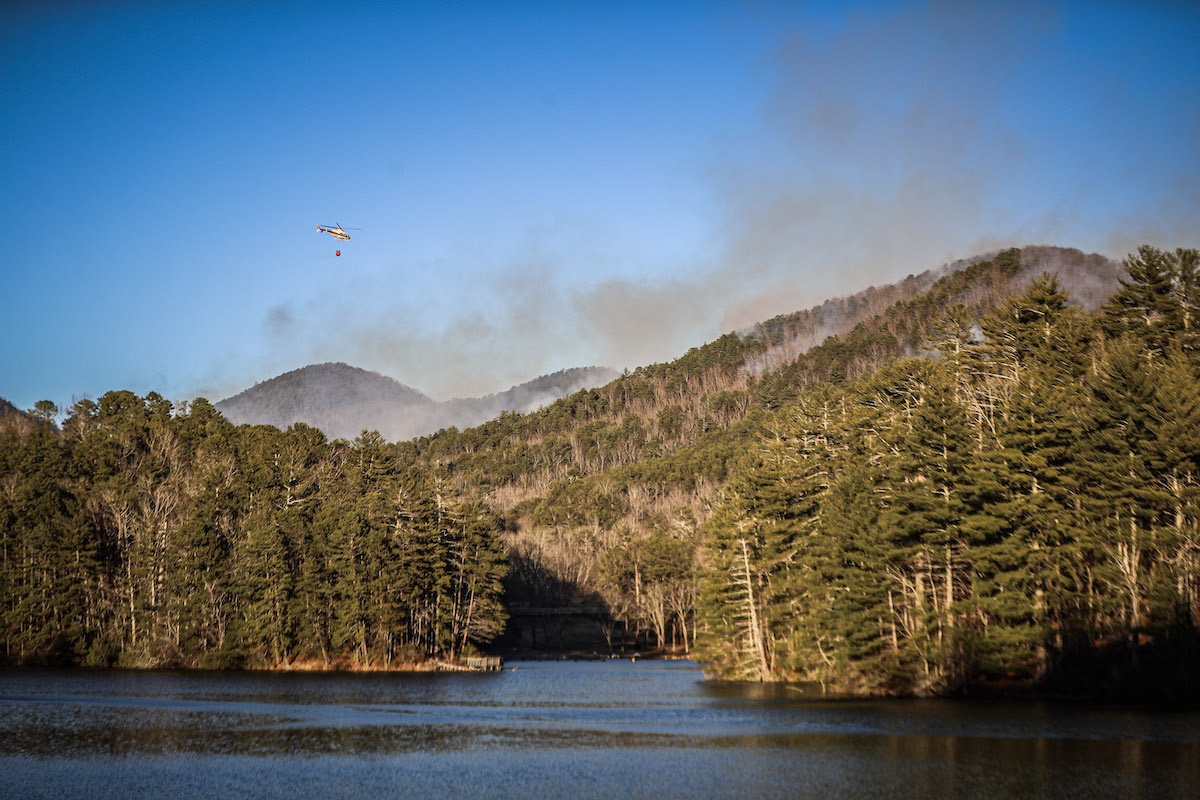
A US Forest Service helicopter drops water on the Unicoi Wildfire burning north of Helen. The fire was sparked on Feb. 12, 2022, by a homeowner burning leaves. (photo by Red Bird Media)

The Unicoi Wildfire that has been burning now for four days is “100% contained,” U.S. Forest Service officials say. “There was no change in the fire size yesterday and we have control lines all the way around it,” says USFS spokesperson James Wettstaed. “We expect to start downsizing tomorrow.”

From burning leaves to burnout
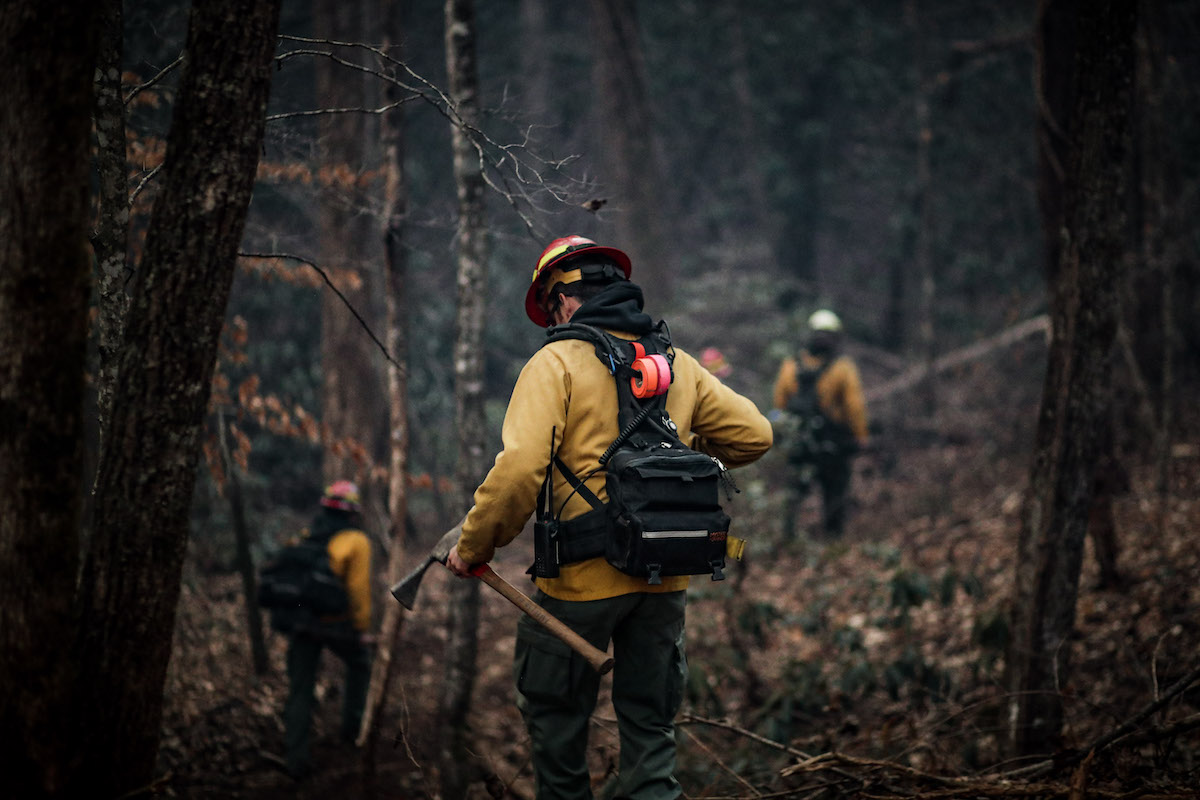
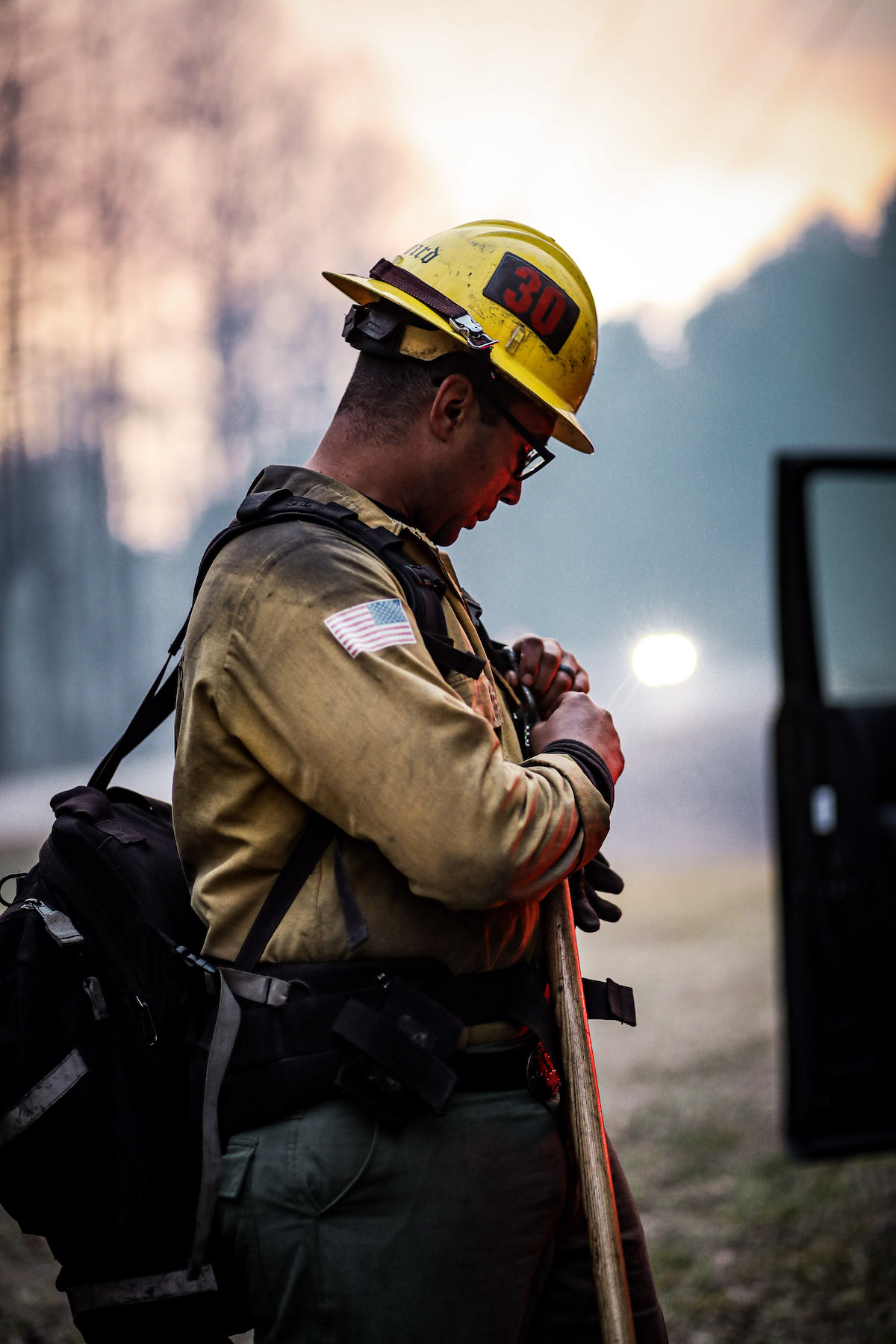
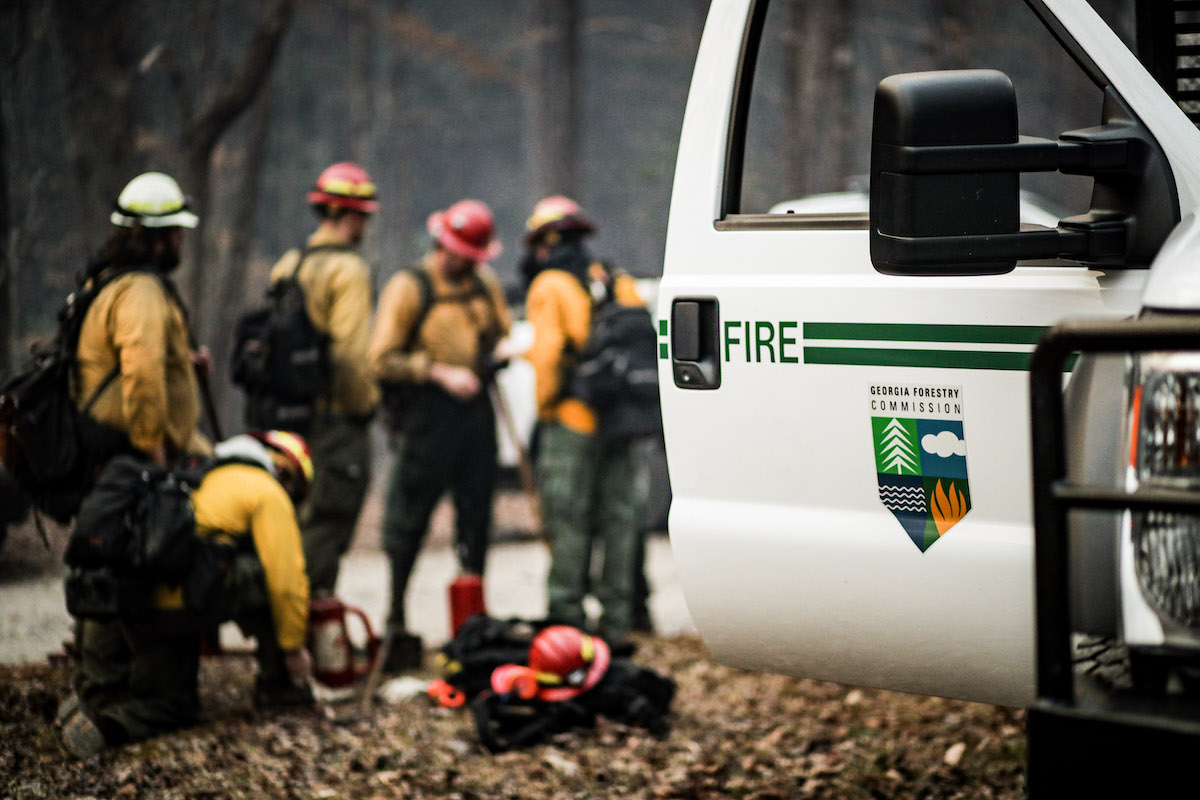
Crews from the US Forest Service and Georgia Forestry Commission cleared containment lines to keep the fire from spreading. (photo by Red Bird Media)

The good news comes on the heels of a tough weekend of firefighting that saw the wildfire – which started with a homeowner burning leaves – spread from 5 to 60 to ultimately 184 acres on Tray Mountain near Unicoi State Park north of Helen.

USFS and Georgia Forestry Commission personnel conducted a burnout operation on Sunday, burning back the dry leaves and brush between the containment lines and flames. That, says Wettstaed, had a significant impact on Monday’s firefighting efforts.
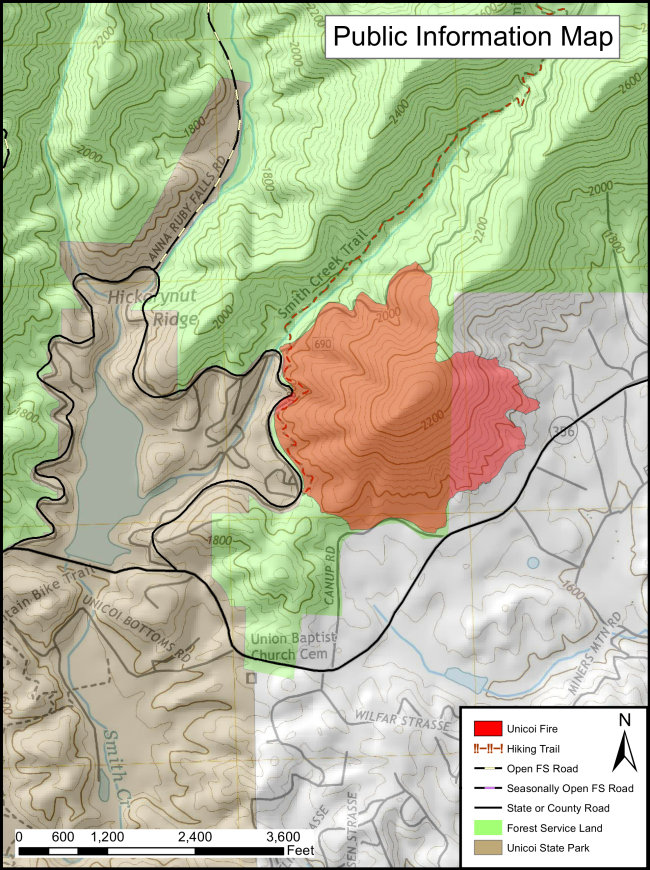
The location of the Unicoi Wildfire is shaded in red. It is centered on Tray Mountain off Highway 356 north of Helen. (Source: US Forest Service)

“The burnout was a big part of securing the line,” he tells Now Habersham. “The weather was challenging yesterday, so, the combination of the burnout and hard work by the crews holding the line was the difference.”

Crews will focus their efforts today on mopping up and patrolling to find any remaining heat sources that could threaten the lines. Additional efforts include installing water bars and spreading native seed on fire lines to reduce potential erosion.

Tuesday’s weather forecasts call for higher humidity and lower winds which will mean less severe burning conditions.

The Unicoi Wildfire has consumed 184 acres and has temporarily shut down Smith Creek Trail. There are no road closures or evacuation warnings in place. At one point on Monday, flames threatened around 15 homes, but Wettstaed says no homes have been damaged and no one has been injured as a result of the fire.

Two popular tourist destinations in northern White County, Anna Ruby Falls, and Unicoi State Park, were on alert to close if needed, but that has not been necessary: Both remain open to visitors.
White County burn ban remains in effect

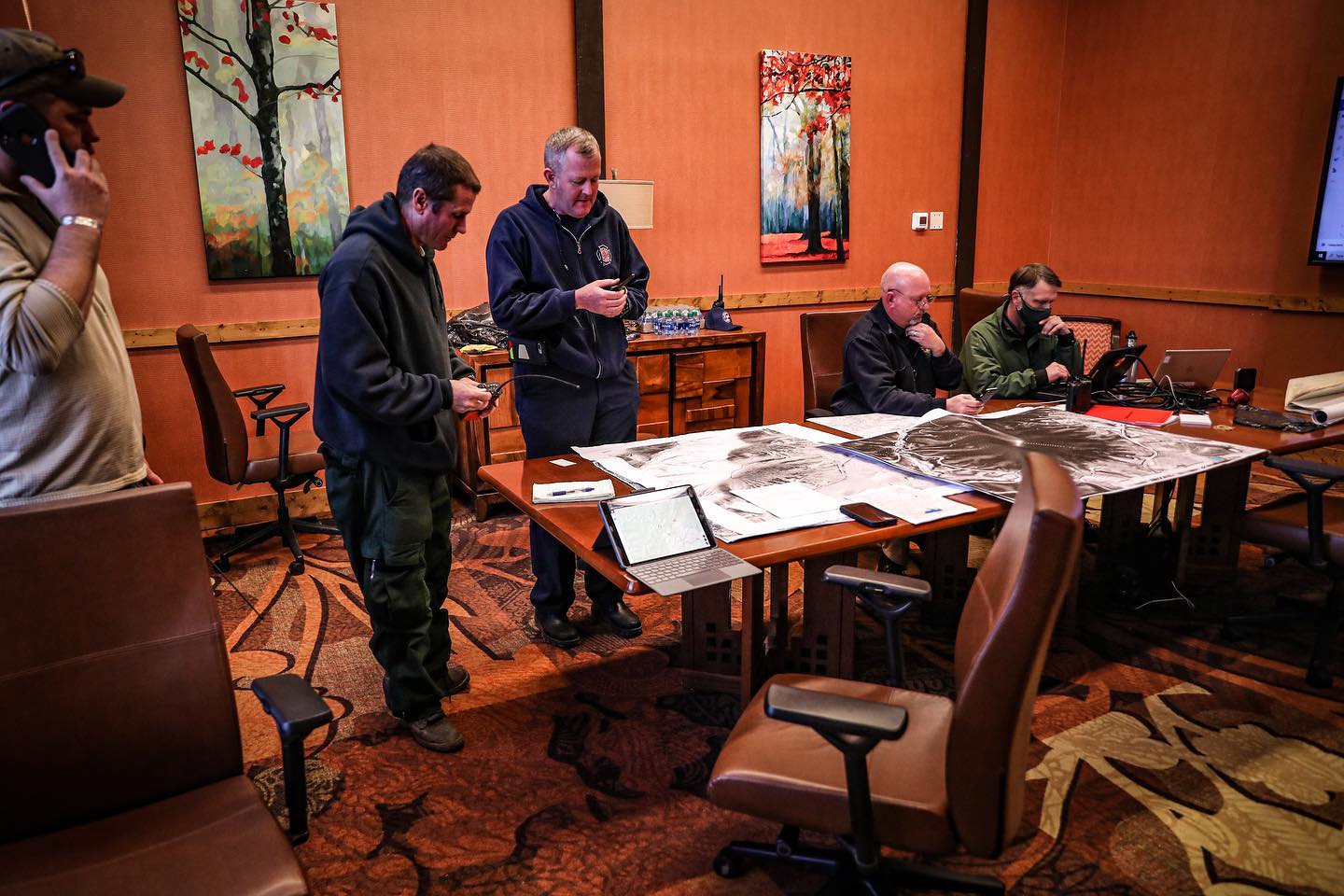
The dry, windy weather fueled the fire’s spread which forestry and public safety officials first thought they had contained as of late Saturday. By Sunday, the forest service upgraded its response to a Type 3 incident (with ‘1’ being the most severe) and called in additional personnel. They set up a command post at Unicoi State Park Lodge and are overseeing ground and aerial operations from there.

Fifty forestry workers remain on the scene but those numbers are expected to drop starting Wednesday as the USFS shifts from a Type 3 to Type 4 incident response.

A burn ban remains in effect for White County until further notice.

“Those who choose to burn can be held liable for fires that cause damage to other’s property,” the county’s public safety department warns.

Heavy rain is expected to move into the region on Thursday, helping firefighters douse any existing flames or smoldering remains.
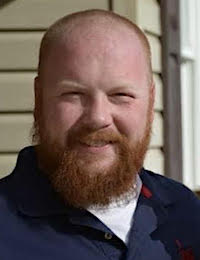
Brent Thomas

Brent Thomas, age 38 of Lawrenceville, Georgia formerly of Cornelia, Georgia passed away on Friday, February 11, 2022.

Born in Demorest, Georgia on August 29, 1983, he was a son of Glenn Thomas of Demorest & Lisa London Rolader of Lawrenceville. Growing up, Brent was very artistic from a young age and enjoyed life to the fullest. He was a graduate of Habersham Central High School, Class of 2001, and employed with CR Lighting Company. Brent enjoyed a variety of different sports and was an avid Georgia Bulldog fan. Most of all, he loved his family deeply and spending precious time with his children.

Brent was preceded in death by his grandparents, Leon London, Henry & Ruby Thomas.

Survivors include his children, Carson, Landon, & Kinsley; mother & step-father, Lisa & Jim Rolader of Lawrenceville, GA; father & step-mother, Glenn & Charlene Thomas of Demorest, GA; sister & brother-in-law, Hillary & Michael Gosnell of Clarkesville, GA; brother, Andy Thomas of Clarkesville, GA; grandparents, Joyce & Thurlow Tomlin of Cornelia, GA; Myrtle Rolader of Tucker, GA; a number of aunts, uncles, nieces, nephews, other relatives, & a host of friends.

A gathering of family & friends will be held at Hillside Memorial Chapel in Clarkesville on Sunday, February 20, 2022, from 4:00 p.m. until 6:00 p.m.

An online guest registry is available for the Thomas family at www.HillsideMemorialChapel.com.

Arrangements by Hillside Memorial Chapel, Clarkesville, Georgia. (706) 754-6256

Indians continue win streak, Lady Indians throttle Athens Christian

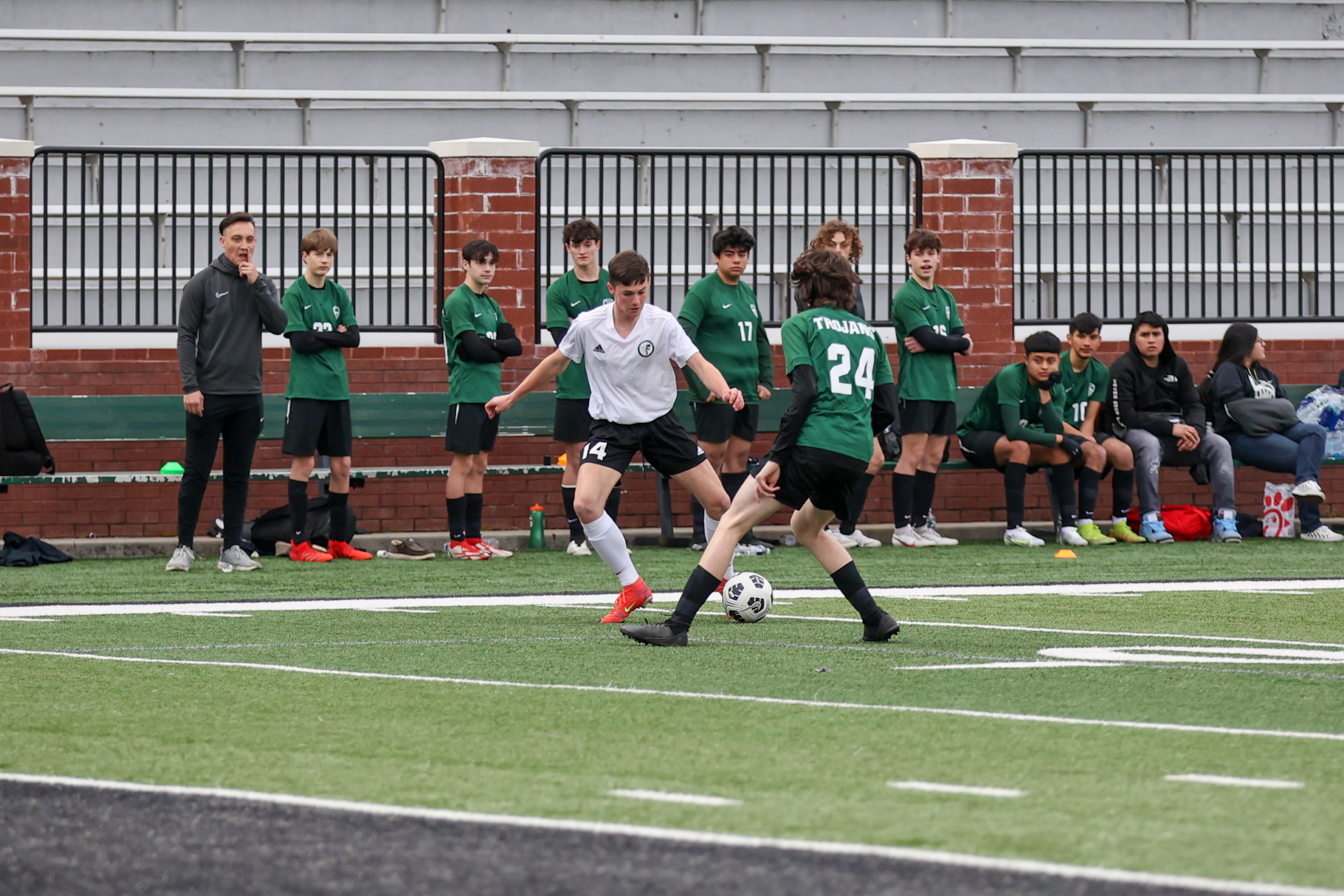
Jackson Cording (photo by Austin Poffenberger)

BOYS

The win streak reaches 3 for the TFS Indians, who produced a 5-1 road win Tuesday at Athens Christian to open region play. Sean Lynes, Jr. kept his hot streak alive as well, scoring 4 times to lead Tallulah Falls.

Lynes, Jr. tallied a PK, a beautiful free kick goal, another intelligent play to keep it alive on an assist from Jared Mullis, and a fourth on a lob over the keeper which came on the back end of a lofted through by Austin Ball.

Jackson Cording recorded the other TFS goal for his first varsity score. Cording found the back of the net after a scramble in the box following a corner kick.

“Overall the team played well,” says coach Jeremy Stille. “We worked hard and fought to get our first region win.”

With the 4-goal game, Lynes, Jr. sets a new career-high, which is one goal shy of the school single-game record. He now has 10 goals on the season through 4 games played. The Indians are 3-0-1 overall and 1-0 in region play and will take on #7-ranked Athens Academy at home on Friday.

GOALS

4 – Sean Lynes, Jr. (10)
Jackson Cording (1)
ASSISTS

Jared Mulls (1)
Austin Ball (4)

GIRLS

The Lady Indians put on an offensive presentation Tuesday night at Athens Christian, scoring 10 goals in a clean-sheet win that fell one goal shy of the program record.

TFS scored 5 goals in each half and held a 5-0 advantage heading into the halftime break. They doubled that effort in the second half to secure the team’s second win of the season.

Goals came in bunches, as Addie Higbie, Honora Kahwach, and Kat Williams all notched hat tricks with 3 apiece. Maddie Mullis had the other goal for the Lady Indians. Assists were recorded by Genna Farris (2), Jenna Chesser, Lily Desta, and Honora Kahwach.

Meanwhile, the defense was spectacular and kept the Athens Christian offense at bay. Kyndal Anderson recorded her first clean sheet of the season and the third of her career.

Higbie’s 3 goals move her to 11 on the season, which ranks second-most in a single season behind Maria Whitson’s (’17) 15 tallies. Kahwach matches her career-high with 7 goals on the season and gets her to 23 career, which has her just 3 shy of Ashton Boyd’s (’12-’14) mark of 26.

The Lady Indians are 2-2 overall and now 1-0 in region play. They’ll take on #3-ranked Athens Academy on Friday at home.

GOALS

3 – Addie Higbie (11)
3 – Honora Kahwach (7)
3 – Kat Williams (3)
Maddie Mullis (1)
ASSISTS

2 – Gemma Farris (2)
Jenna Chesser (1)
Lily Desta (1)
Honora Kahwach (4)

Ag industry creating stink again over latest right-to-farm bill

Rep. Robert Dickey, a middle Georgia Republican, is proposing a rewrite of the state’s four-decade-old “Right to Farm” law. But opponents warn it will open the door to large-scale animal operations. (Jill Nolin/Georgia Recorder)

(GA Recorder) — Charlotte Swancy says she tries to be a good neighbor as she raises cattle and hogs on her 300-acre farm in north Georgia.

But Swancy said she also wants assurances that any other farmer who may move in near her will do the same. She’s particularly concerned about large-scale agricultural businesses, known as concentrated animal feeding operation or CAFO, pointing to a massive poultry operation that eyed Gordon County last year.

Swancy argues Georgia’s current “right to farm” law has worked just fine for the last four decades to shield farmers from newcomers who object to the smells and sounds of country living.

There’s a proposal on the move under the Gold Dome to rewrite that law, which opponents warn could attract more large-scale industrial operations to the state. A similar proposal stalled in 2020 but not before sparking impassioned debate over private property rights and farm heritage.

The new version has been dubbed “Freedom to Farm” and has the backing of the House Rural Development Council and major agricultural industry groups, like the Georgia Farm Bureau. One Republican lawmaker, Rep. Dominic LaRiccia, who represents a rural South Georgia district, called it “probably the most important piece of legislation we will look at this year.”

A public hearing was held early Tuesday morning even though the new version of the bill was not available to view online, complicating the public’s ability to comment. Swancy asked to read a lawmaker’s hard copy of the new bill as she attempted to weigh in at the hearing. The committee did not vote on the bill.

“My concern is that we’re weakening the (law) and I don’t want it to get weakened,” Swancy said. “I want it to be a strong bill to protect my farm, and my son, when he goes on to farm.”

She characterized nuisance farmers as those who exceed the capacity of the land, water and air. “Some of these CAFOs do take it way beyond the ‘carrying’ capacity. That’s why they smell so bad,” she said.

The concerns surrounding massive meat producers are partly due to the bill’s origin. The push for changes here in Georgia started in 2019 in response to eye-popping jury verdicts against hog producers in North Carolina who had been storing smelly pig waste in ponds and spreading it across fields as fertilizer.

The new version proposed Tuesday attempts to assuage those concerns about large-scale industrial meat producers, spelling out in the bill that hog-feeding operations of any size and producers with, for example, more than 300 cattle would not benefit from the broader protections offered in the bill. That means the one-year timeframe for a nuisance claim would start over if a facility began one of these animal operations.

But the proposal would strip all mention of urban sprawl and “changed conditions” around the farm, broadening the application of the law.

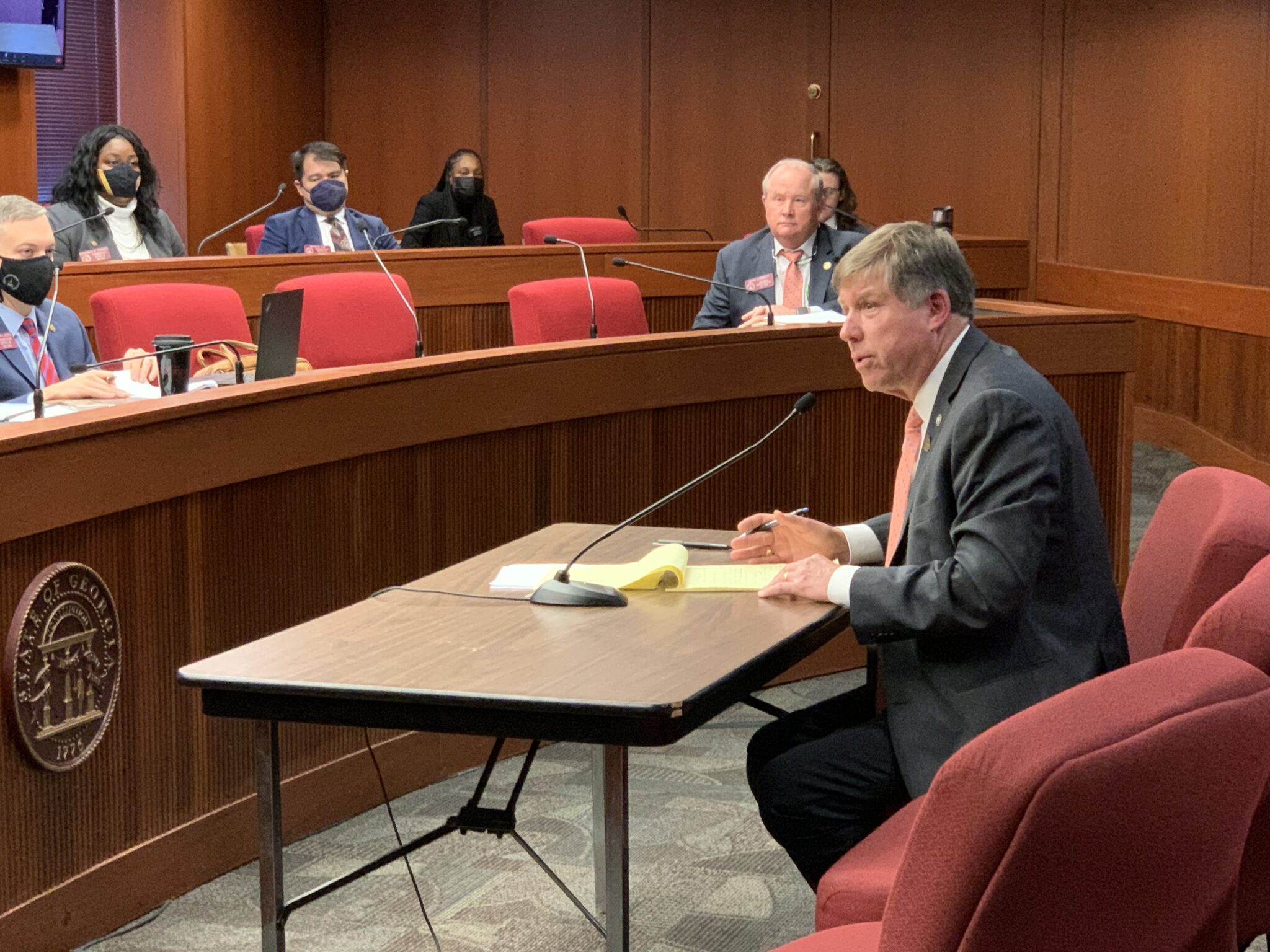
Rep. Robert Dickey, a Musella Republican and peach farmer who is sponsoring the bill, acknowledged Tuesday that his bill is not designed to address a problem currently facing Georgia Farmers. Dickey also chairs the House Agriculture Committee.

“All we’re trying to do is just give them some legal certainty, some legal protections that they just can’t be run off their farm by folks that are moving in or those type things,” Dickey said after the hearing. “So that’s simply all we’re trying to do with this. Nothing complicated; no new, great, big protections. It’s just clarity of a law now that’s been thrown in question in other states.”

Agricultural groups, which represent the state’s largest industry, argue the state has changed in the last 40 years – with subdivisions popping up in previously agricultural areas – and the law should reflect that while protecting the investments of producers.

“I would say that even in rural areas, it’s very difficult to find a place in Georgia where there’s already not non-farming people living around proposed new farms,” said Mike Giles, president of the Georgia Poultry Federation.

But April Lipscomb, a senior attorney with the Southern Environmental Law Center, cautioned lawmakers that the changes proposed could lead to court challenges, pointing to an Iowa law that was recently found unconstitutional.

“What this bill does is it says that we value newly arriving, industrial-scale animal operations more than we value long-standing Georgians’ private property rights,” Lipscomb said.

“Our current ‘Right to Farm law is really, really strong. I am not aware of a single farm that has been shut down because of nuisances in the state of Georgia,” she added.

Julian Kenneth Franklin

Julian Kenneth Franklin, age 87, entered rest Monday, February 14, 2022. Julian was born January 5, 1935, in Gainesville to the late Clyde Richard and Dodie Tatum Franklin and was a graduate of Gainesville High School. He attended Mercer University where he was a member of Sigma Nu fraternity. Julian graduated from the University of Georgia with a Bachelor’s Degree. After graduation, he received a U.S. Army Reserve Commission, serving as Post Quartermaster on active duty, earning the Army Commendation Medal. He also served in Army Intelligence in the reserve, obtaining the rank of Captain.

His business career started at WDUN announcing high school and college sporting events. He later began his 38-year career as a manager with Belk Department Stores, managing stores in Cornelia, Decatur, Tucker, and Lawrenceville before retiring as Regional Store Manager in Athens.

Julian was a community servant, active in various committees, Boards and organizations in both the Athens and Highlands communities including Highlands-Cashiers Hospital, Highlands-Cashiers Chamber Music Festival, The Bascom, Macon County Program for Progress, Hospital Authority of Clarke County, Georgia, Athens Regional Health System, Athens Regional Medical Center, SunTrust Bank of Northeast Georgia, Athens Symphony Orchestra, Samaritan Counseling Center, and Rotary Clubs. He also served as President of the Northeast Georgia Council of Boy Scouts of America earning the Silver Beaver Award.

Julian was preceded in death by his sister Joyce Wheeler and brother Joe Franklin. Left to cherish his memory are loving wife, Marguerite Maynard Franklin, daughter Pamela (Chuck) Carver; son Rick (Jennifer) Franklin; grandchildren Monica, Laura, Sam, Max, and Sarah and great-granddaughter Margo; sister JoAnn Dollar and a host of other relatives and friends.

Private graveside services for the family will be held Wednesday at Alta Vista Cemetery with Rev. Becky Matheny officiating. A public celebration of life will be announced at a later date.

In lieu of flowers, please make contributions to the Highlands Plateau Greenway P.O. Box 2608 Highlands, NC 28741. www.highlandsgreenway.com or the Northeast Georgia Council Boy Scouts of America, 148 Boy Scout Trail, Pendergrass, GA 30567. www.donations.scouting.org

Online condolences to the family may be made at www.wardsfh.com. Ward’s Funeral Home is honored to serve the family of Julian Kenneth Franklin.

Bill to approve third judge for Mountain Judicial Circuit advances in state Senate

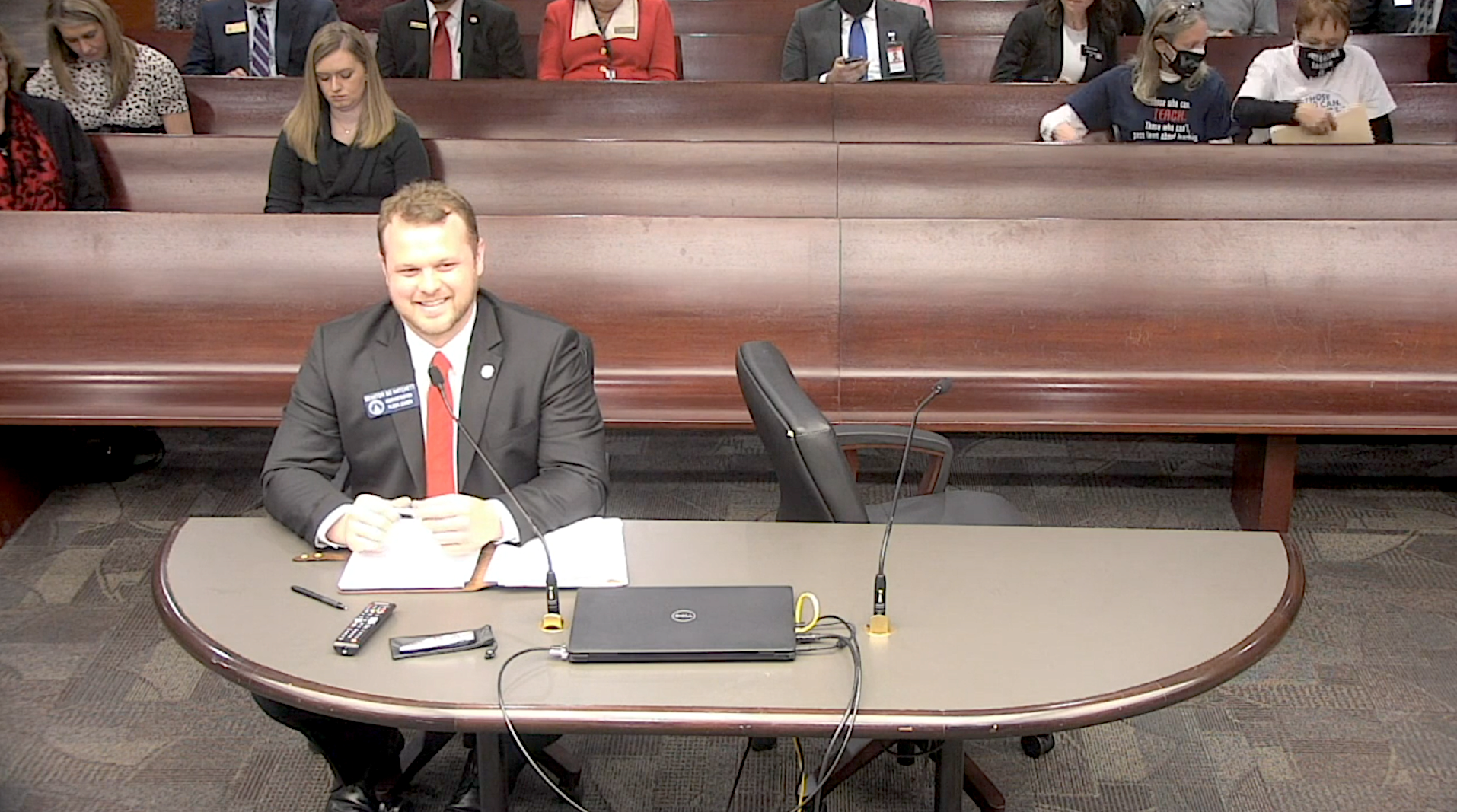
Sen. Bo Hatchett, an attorney from Cornelia and one of Gov. Kemp's floor leaders, shared a lighthearted moment with Senate Judiciary Committee members who suggested Kemp might appoint him to the bench if a third Mountain Judicial Circuit judgeship is approved. (GA Senate livestream)

The Mountain Judicial Circuit is one step closer to adding a third judge. The state Senate Judiciary Committee on Monday unanimously voted in favor of a bill that would add an additional judge to help alleviate case backlogs in Habersham, Rabun, and Stephens counties.

The Mountain Judicial Circuit is listed among the top three circuits in the state with the highest caseloads, according to Sen. Bo Hatchett (R-Cornelia). He’s sponsoring Senate Bill 395 which would create a third judgeship in the circuit and provide state funding for the position. The bill would also allow the judges to appoint an additional court reporter.

While presenting the bill to the committee on Monday, Hatchett explained that the Judicial Workload Assessment Committee – a standing committee of the Judicial Council of Georgia – has a formula to evaluate the caseload in each of the state’s 50 judicial circuits.

“Right now, the Mountain Judicial Circuit ranks number three in need,” he said.

According to Hatchett, there are eight judicial circuits that presently qualify for an additional judge. Those circuits are South Georgia, Blue Ridge, Mountain, Coweta, Clayton, Atlantic, Northern, and Atlanta. The governor’s budget includes funding for three of them:  Mountain, Blue Ridge, and South Georgia.

The bills for the two other new circuit judges are being introduced in the House.

If approved by the legislature, Hatchett’s bill would provide state funding for a third Mountain Judicial Circuit judge effective July first of this year, but the position would not be filled until next year. The governor would appoint a judge to serve from January 1, 2023, through December 31, 2024, after which time an elected judge would begin a four-year term.

The bill now goes to the Senate Rules Committee.

Educators worry parental rights legislation sets stage for grudge-motivated complaints

Some educators say they worry legislation designed to empower parents could stifle classroom discussions and set them up for frivolous complaints.

(GA Recorder) — A so-called parental bill of rights passed a state Senate committee Monday, while another controversial bill banning the promotion of “divisive concepts” in public school or university classrooms is set for another hearing.

Senate Bill 449, sponsored by Buford Republican Sen. Clint Dixon, a floor leader to Gov. Brian Kemp, spells out rights for Georgia parents of public school children, including the right to review all instructional materials used in a child’s classroom.

“It’s a parent’s Bill of Rights. It’s simply a transparency bill, which gives parents the fundamental right under state law, which currently doesn’t exist, to review the material that their kids and students are being taught before each nine-week period.”

Sen. Greg Dolezal, a Cumming Republican, said the bill standardizes a process that can vary from district to district, leaving parents frustrated and unable to weigh in on what their children are learning.

“I think that if we would agree, which I think maybe we all would agree, that this is a good process, to have parents be able to see what curriculum is being taught to their children, then we would want that to be part of state law,” he said. “And we wouldn’t want it to be something that could arbitrarily be changed by a board without the oversight of the General Assembly and ultimately the governor as well.”

American Civil Liberties Union of Georgia Executive Director Andrea Young said the bill is unnecessary and promotes political bickering in classrooms. Young said a parent with a grudge could upend a teacher’s entire carefully planned lesson plan with one complaint.

“We need to help our kids catch up after a year of school disrupted by the pandemic, not turn our schools into battlegrounds,” she said. “Allowing parents to object en masse to classroom content will contribute to a climate of classroom censorship. The review period burdens teachers, the bills employ vague language and they’re unnecessary because parents are already involved in setting educational standards and goals.”

Georgia Association of Educators President Lisa Morgan said the bill would hamper teachers’ ability to change lesson plans on the fly if one approach is not working for a particular classroom.

Teachers welcome parental involvement through means such as emails, conferences, classroom volunteer opportunities and PTA meetings, but the proposed legislation would only strain the parent-teacher relationship, she said.

“Teachers feel attacked,” she said. “And more than that, this bill seems to drive a wedge between the most important partnership in education, and that is between the parents and the teachers. This bill makes that relationship adversarial, rather than the partnership it should be.”

The bill and others like it come as parents around the country rally against so-called critical race theory. Once a niche academic term defining racism as a problem stemming from the structure of society rather than individual vice, the term has come to be used for lessons that critics say cause white students to feel judged or blamed for sins of America’s racial history.

A bill targeting the teaching of “divisive concepts” in K-12 and college classrooms got a hearing in the same committee Monday, though it was not scheduled for a vote.

The bill states that schools and colleges “may not teach, act upon, promote, or encourage divisive concepts,” including the superiority of any race, racial determinism of guilt or moral character, that “the United States of America and the State of Georgia are fundamentally or  systemically racist,” or that “Meritocracy or traits such as a hard work ethic are racist or were created by individuals of a particular race to oppress individuals of another race.”

Educators are permitted to answer specific questions about divisive topics without endorsement.

Sen. Bo Hatchett, a Republican from Cornelia, said the bill does not prevent teachers from teaching the least savory parts of American history.

“I vividly remember learning about slavery, about segregation, about the KKK,” he said. “Those are some of the most memorable days of learning a student experiences, among other eye-opening historical moments like the Holocaust. Those are the days when students learn just how deeply flawed people can be, and how deeply flawed even our government can be. I am among those who will tell you that those lessons are not just valuable. They are imperative.”

“Our incredible teachers all across this state teach those lessons so eloquently, so memorably, while intertwining those hard-hitting truths, with the progress triumphs and sacrifices made along the way that gives us hope for our country, and allows us to still believe that we collectively should be proud of being American and proud to be Georgians,” he added. “I believe that every single one of us in this room today understands our history and the ways it has shaped our present without having been taught that we inherit those burdens.”

Georgia Association of Educational Leaders President Robert Costley said his organization is not taking a position on the merits of the bill, but teachers are concerned that, while students are more curious than ever about critical race theory and the history of race in the U.S. because of the current national discussion, the bill could open them up to increased scrutiny for answering their questions.

“They get asked their opinion so often as it is about concepts, about, ‘Hey, did you deal with this when you were my age?’” he said. “What we don’t want is the workforce of Georgia’s teachers to say to that, ‘Look, I’m not really supposed to talk about that because I might expose myself to a complaint.’ And that is what, even though our members may feel different ways, individually, that is what they’re most afraid of.”

Costley said the language for redressing parental complaints could be too vague. For example, if a principal addresses a concern by having a discussion with the teacher, but the parent wants the teacher fired, it is not clear if the parent could escalate the situation to the school board, he said.

“Once a bill like this is passed, there are going to be more complaints, formalized complaints,” he said. “We want to make sure that teachers don’t have to worry about baseless concerns or misunderstandings about what CRT perhaps is or is not. And they will be getting complaints on them, and if you know the average teacher, if they just have a momma that’s mad at them, that’s going to cause them to fear, that’s going to cause them to think all night.”

Monday’s meeting ended with multiple names still on the list for public comment on the bill. The committee’s chair, Dalton Republican Sen. Chuck Payne, said the meeting needed to end for the sake of time, but the discussion will continue.

“We’re going to take our time with this, and if you were not called today, I encourage you to come back to the next one, we’re going to have opportunity, I’m sure, going forward, to have continued public input,” he said.

Volunteers for Literacy announces $5,000 raffle winner

VFL President Don Gnecco announces the winner of the non-profit's $5,000 raffle fundraiser. (Hadley Cottingham/Now Habersham)

The Volunteers for Literacy (VFL) announced their first annual Love for Literacy raffle winner Valentine’s night at Your Pie in Clarkesville among an enthusiastic bunch of community members.

Stacy Kaufman of Atlanta, who submitted five entries into the raffle, won the $5,000 prize.

Clarkesville’s Mainstreet Director, Trudy Crunkleton, drew the winning name Monday night. (Hadley Cottingham/Now Habersham)

Entries came to the raffle from as far away as Texas and the Carolinas to support Habersham’s Volunteers for Literacy, a group that supports reading, literacy and education in Habersham County. While the organization didn’t reach its fundraising goal of $20,000, with raffle tickets selling at $20 each, VFL Executive Director Phylecia Wilson says she’s still happy to receive the support they did.

Wilson hopes to have the fundraiser again in the future but at a different time of year. She says there were other good things to come out of the Love for Literacy raffle other than fundraising, though. Wilson says that they came away with community engagement and new volunteers.

“We’re really pleased with what we did,” Wilson told Now Habersham. “Considering it’s the first year we’ve done it and the time of year we had it.”

If you’re interested in volunteering with Habersham’s VFL, or would like to learn more about the organization and the programs it offers, click here.

Mask rule controversies continue to simmer as Kemp bids to ban school mandates

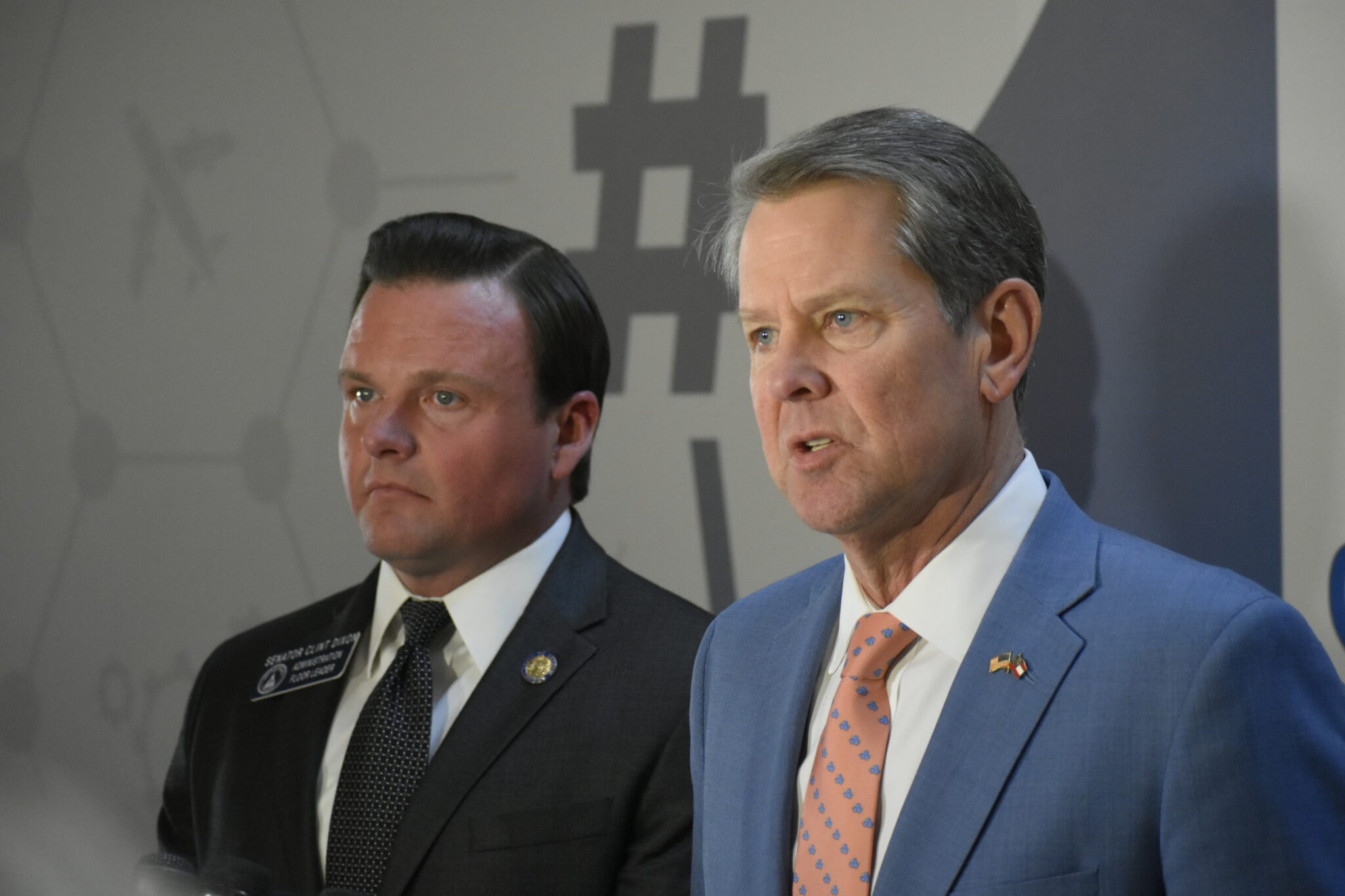
Gov. Brian Kemp and Sen. Clint Dixon said the state should tell local school districts to stop requiring masks in the classroom unless parents can opt out. (Ross Williams/Georgia Recorder)

(GA Recorder) — Georgia school children could go mask-free in the classroom, at least until next summer, if a bill just rolled out by Gov. Brian Kemp passes the Legislature.

The Unmask Georgia Students Act, introduced Monday by Buford Republican Sen. Clint Dixon, bans school boards, superintendents, administrators and teachers from requiring masks on school property unless there is a way for parents to opt out. The bill applies to charter schools as well as public schools.

“We’ve been in this pandemic for well over two years now, going into our third year, we’ve got to continue to move back toward more normal operations,” Kemp said. “We’re trusting our parents every day whether to send their kids to school or not, if they’re not feeling well, if they have a fever, we can certainly do that for masks at this point in the pandemic.”

Georgia has 181 school districts, and Kemp said about 45 of them currently require masks.

If it passes the House and the Senate, both controlled by Kemp’s fellow Republicans, it will take effect immediately upon receiving Kemp’s signature. It is set to expire on June 30, 2023.

“We felt like having a short window,” Kemp said. “We’re not obviously going to deal with a global pandemic the rest of our lives. As you all know, I’ve been a local control governor, working with the school systems to help get kids into classrooms, I have great respect for that, but I also believe that when you have schools out there that have a mask mandate, then allow visitors to come in unmasked, what is the point?”

That appeared to be a thinly veiled barb at Stacey Abrams, the presumed Democratic nominee for governor of Georgia. Abrams stirred controversy when she appeared as the sole mask-less person in photos during an event where she read to children at a Decatur elementary school. Kemp’s other political rival, former Sen. David Perdue, has also attacked Kemp over masks, last week releasing an ad accusing him of folding to radical Democrats and allowing them to set their own mask rules.

“It’s a shame that it takes political pressure to get our Governor to speak up and act on anything,” Perdue said in a tweet Monday. “He should have done this months ago. This is nothing but a political ploy because he’s worried about this election.”

Kemp said the bill is not targeted at any individual but intended to relieve frustrated parents and students.

“We should trust the parents, their medical providers, with the health of our children at this point in the pandemic,” Kemp said. “This is something that I’ve been very patient on, but it’s gone on way, way too long.”

Other Republican governors’ patience has also worn thin. According to the Center for Dignity in Healthcare for People with Disabilities, seven states currently ban school mask mandates: Arizona, Florida, Montana, Oklahoma, South Carolina, Texas and Utah.

Last year, Kemp filed an executive order prohibiting local governments from instituting mask mandates, but he has largely been content to let local school boards set their own rules. Last May, he said on a Fox News interview that he would sign an executive order banning mask mandates, but the actual order only prevented them from justifying mandates on the state of emergency declared by his office.

The latest proposed step goes further, but not as far as some other states. In Florida, schools that defy the state’s rules could risk a portion of their funding, but Kemp’s bill does not spell out consequences for schools or districts that require kids to mask up anyway.

Still, some public health experts worry the proposed law will contribute to the spread of the disease among children and the adults in their lives.

Young people typically suffer only mild symptoms from COVID-19, but in rare cases, they can develop serious illness. And while the omicron variant usually causes less severe symptoms than previous strains, it can still be deadly.

“It’s particularly troubling that not not only our governor, but other governors around the country, are in a hurry to take away mask mandates in schools at a time when we’re in a much better place in the omicron surge, but we’re but we’re clearly not to a point where transmission levels are low,” said Dr. Harry J. Heiman, public health professor at Georgia State University. “We’re still having high transmission levels of omicron across the country, including virtually the entire state of Georgia. The CDC is still recommending universal indoor masking in school settings, and I think mask mandates are one of the most critical tools that we have to protect children, and to keep them in school.”

Heiman said Georgia’s low vaccination rate among school-age children — 16.7% with at least one dose in January compared with 28.1% for the nation, according to the Kaiser Family Foundation — is particularly concerning. He said he worries the legislation will hamstring schools from making decisions based on local conditions.

“If you look at, for example, Atlanta Public Schools, where they’ve had a very consistent and, I believe, evidence-based policy, which says that when transmission rates get down to the moderate range, so they set a metric of 50 or less cases per 100,000, that will be the time that will start rolling back mask mandates. That’s based on the science, that’s based on the most current public health recommendations. And that, to me, makes a lot of sense. But to pass legislation that takes away that ability from local school districts to make decisions based on the reality on the ground in their community, I think is both dangerous and ill-advised.”

Georgia law typically gives deference to local school boards to make their own decisions, but Kemp said he’s confident his plan will get ultimate approval in the courts.

“We anticipate legal action with all kinds of pieces of legislation down here,” he said. “I would remind you that we have had the Biden Justice Department suing us over the Elections Integrity Act, where it’s easy to vote and hard to cheat. That’s not how we legislate. We’re trying to do the right thing for our parents and for our children. It’s past time to do this.”

Prosecutor: Arbery’s killers known to use racist slurs

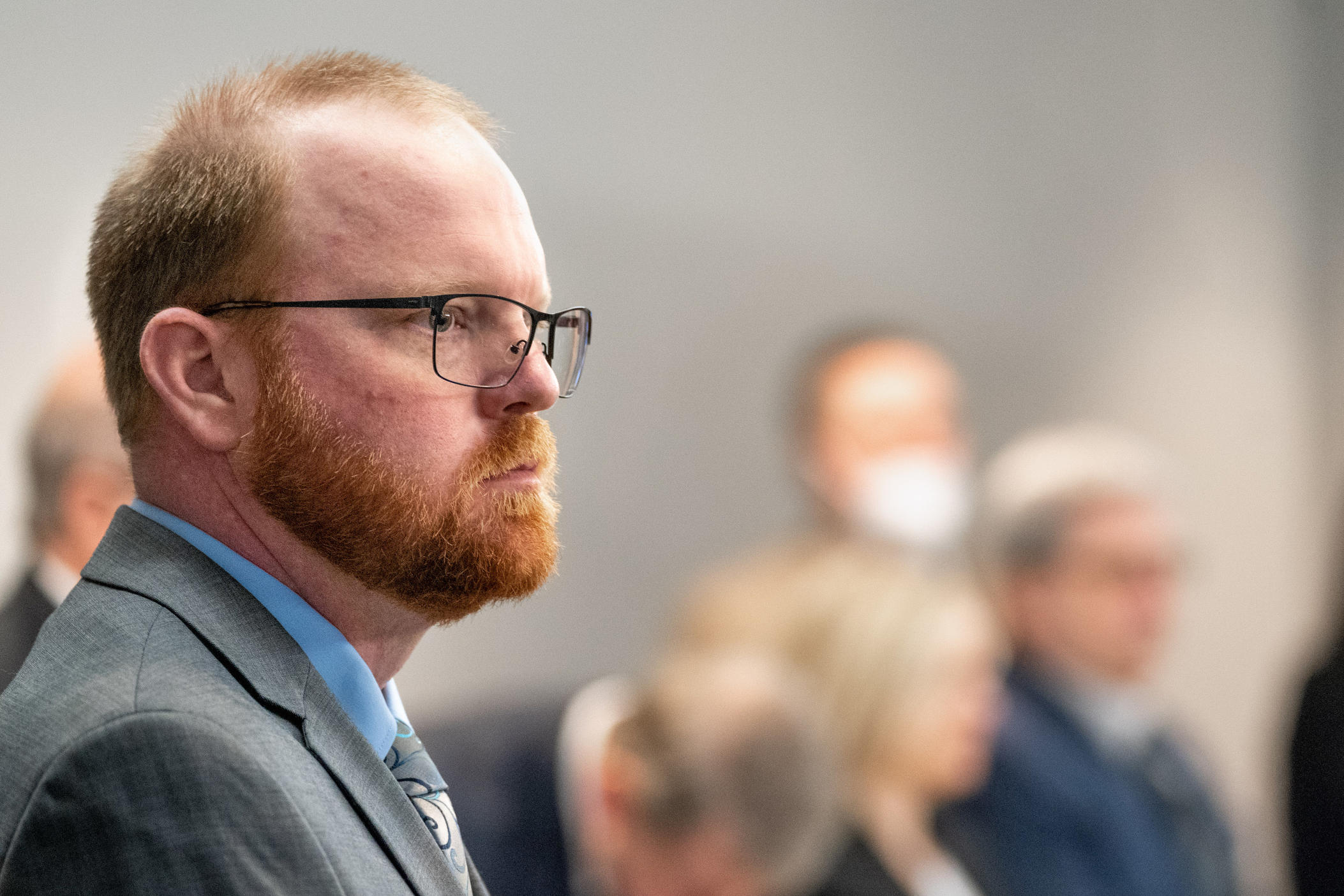
BRUNSWICK, GA - NOVEMBER 8: Defendant Travis McMichael stands as the jury enters the room at the Glynn County Courthouse on November 8, 2021 in Brunswick, Georgia. McMichael is charged with the February 2021 shooting death of 25-year-old Ahmaud Arbery. (pool photo by Sean Rayford/Getty Images)

The three white men convicted of killing Ahmaud Arbery had histories of making racist comments or using slurs in text messages that stunned their friends and colleagues, a federal prosecutor told jurors Monday as the trio stood trial on hate crime charges in the 25-year-old Black man’s death.

During opening statements in the case, defense attorneys admitted their clients had each expressed offensive and indefensible opinions about Black people.

But they insisted the trio’s pursuit of Arbery as he ran in their neighborhood was prompted by honest, though erroneous, suspicion that he had committed crimes — not by his race.

“I’m not going to ask you to like Travis McMichael,” Amy Lee Copeland, the defense attorney for the man who fatally shot Arbery, told the jury. “I’m not going to ask you to decide that he had done nothing wrong. But I’m going to ask you to return a verdict of not guilty to this indictment.”

McMichael and his father, Greg McMichael, armed themselves and chased Arbery in a pickup truck after he ran past their coastal Georgia home on Feb. 23, 2020. A neighbor, William “Roddie” Bryan, joined the pursuit in his own truck and recorded cellphone video of Travis McMichael blasting Arbery with a shotgun. Arrests came only after the video leaked online two months later.

All three were convicted of murder and a judge sentenced them to life in prison last month.

Now the McMichaels and Bryan are on trial again, this time in U.S. District Court, where federal prosecutors have charged them with hate crimes that allege they violated Arbery’s civil rights and targeted him because he was Black.

Security cameras inside a nearby home under construction had recorded video of Arbery wandering inside but never taking anything, several times in the months before his death. White people had also been seen entering the home, which had no doors or windows. Yet the McMichaels assumed Arbery must be a criminal and kept a lookout for him, prosecutor Bobbi Bernstein told the jury.

“If Ahmaud Arbery had been white, he’d have gone for a jog, checked out a cool house that was under construction and been home in time for Sunday dinner,” Bernstein said. “Instead, he ended up running for his life.”

Bernstein said prosecutors will show evidence of comments by the McMichaels and Bryan that reveal a mindset that led them to suspect an innocent Black man of wrongdoing.

Travis McMichael, she said, once texted a friend saying he loved his job because “zero n——rs work with me.” Commenting on an online video of a Black man lighting a firecracker stuffed in his nose, he messaged a friend saying: “It’d be cooler if it blew the f—-ing n——r’s head off,” Bernstein said. The friend was taken aback by how angry McMichael sounded, she said.

One allegation never mentioned in the prosecutor’s opening statement was that Bryan told investigators he heard Travis McMichael utter a racial slur after shooting Arbery. The comment was widely reported after Georgia Bureau of Investigation agent Richard Dial testified to it during a June 2020 pretrial hearing in the state murder case. Travis McMichael’s attorneys denied he said it, and state prosecutors never brought up the comment during the murder trial.

As for Greg McMichael, Bernstein said a former colleague of his will testify that McMichael responded angrily in a conversation about the 2015 death of civil rights activist Julian Bond, saying: “Those Blacks are all nothing but trouble.”

And just days before Arbery was shot, Bernstein said, Bryan had become upset after learning that his daughter was dating a Black man. She said Bryan commented that his daughter “has her n——-r now.”

A jury of eight white people, three Black people and one Hispanic person was sworn in to hear the case Monday morning along with four alternate jurors. Judge Lisa Godbey Wood and the attorneys disclosed the panel’s racial makeup in court.

Attorneys for the McMichaels and Bryan acknowledged that their clients had made racially offensive remarks. But they urged jurors to decide the hate crimes case based on facts rather than the raw emotions such words may stir.

“I’ve heard the N-word more today than I’ve heard it in the past three or four years, and we haven’t even heard any evidence yet,” Bryan’s attorney, Pete Theodocion, told the jury.

Greg McMichael’s attorney, A.J. Balbo, said his client initiated the pursuit of Arbery not because Arbery was Black, but because McMichael recognized him from security videos as the man who had kept entering a neighbor’s unfinished house.

“Greg didn’t know the name, but he recognized the face,” Balbo said. “There was no mistaking who has just run by him.”

Theodocion said that Bryan joined the chase assuming Arbery had done something wrong because he saw Arbery run past his house with the McMichaels in pursuit, yelling for Arbery to stop.

Copeland, Travis McMichael’s attorney, said evidence will show he “was in shock” after shooting Arbery at close range as Arbery threw punches and grabbed for the gun.

“You’re not going to hear any evidence that he was pumping his fists, that he was gleeful,” Copeland said.

The judge said she expects the hate crimes trial to last between seven and 12 days.

In contrast to the federal trial, the jury in the state murder trial of the three defendants last fall was disproportionately white, drawing objections from prosecutors and complaints from Arbery’s family. The state judge allowed the panel to be seated after defense lawyers stated nonracial reasons for striking most Black jurors from the pool.

Arbery’s father, Marcus Arbery, told reporters outside the courthouse in the port city of Brunswick that he was “very pleased” with the federal jury.

State elections chief calls for state troopers to secure more than 2,000 polling places

Georgia Secretary of State Brad Raffensperger called on Monday for the Georgia State Patrol to provide security at Georgia’s 2,000 polling stations for 2022. (Ross Williams/Georgia Recorder)

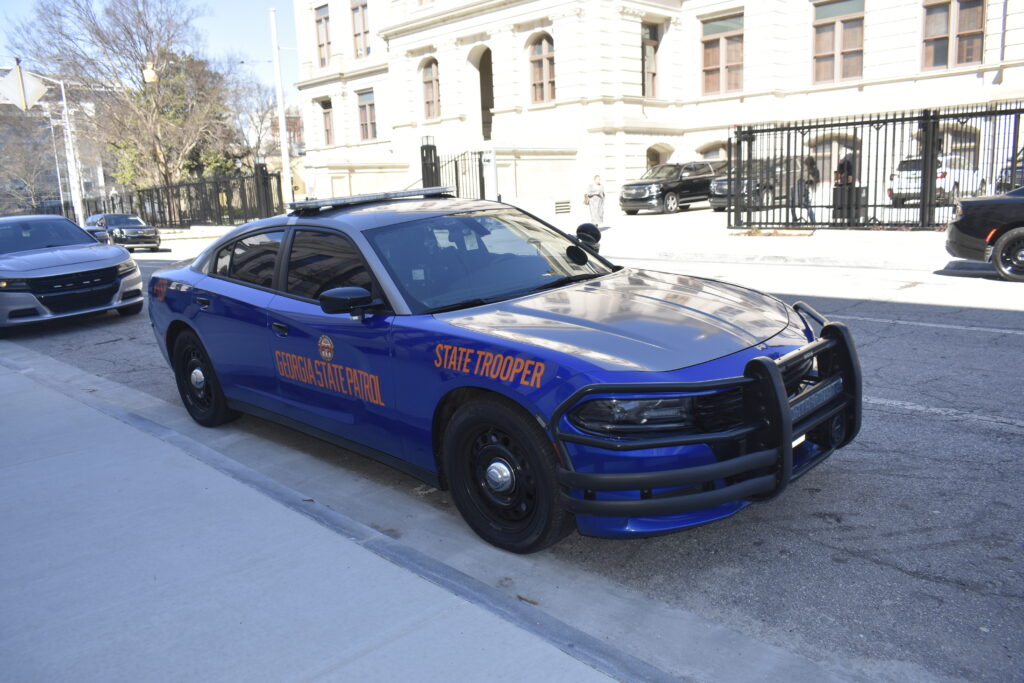
(GA Recorder) — Georgia Secretary of State Brad Raffensperger wants the governor to authorize state troopers to provide security at the state’s polling precincts throughout the 2022 election year.

Georgia elections have remained under intense scrutiny since the 2020 presidential election in which poll workers and other election officials were threatened over baseless claims that a rigged election cost President Donald Trump a second term.

Raffensperger said at a Capitol press conference Monday that stationing troopers at county election offices throughout early voting and at the 2,000 polling places on Election Day will make it safer for voters, poll workers, and poll watchers as the state rolls out its new election law.

Raffensperger addressed his request to Gov. Brian Kemp, the state Legislature, and the State Election Board.

“There are over 2,000 Election Day polling places in Georgia so we need law enforcement with a statewide footprint to be able to man each location to supplement the county sheriffs who already provide security at polling places,” he said. “Georgia State Patrol officers are well trained and have high respect across the country and party lines.”

The request, however, drew criticism from one of Raffensperger’s Democratic opponents for secretary of state, state Rep. Bee Nguyen of Atlanta, who called it a waste of resources and a potentially intimidatory tactic, given troopers’ history of discrimination against Black voters.

In the days and weeks following the 2020 presidential election, where Trump was narrowly defeated in Georgia by Democratic candidate Joe Biden, death threats were lodged at a voting equipment technician in metro Atlanta, Fulton County election workers were harassed over baseless allegations of absentee ballot fraud, and a Cobb County election worker reported that racist slurs were directed at him after leaving an election warehouse.

Also, death threats forced Raffensperger and staff to temporarily relocate from their Capitol office.

Also on Monday, Raffensperger endorsed House Speaker David Ralston’s plan to have two Georgia Bureau of Investigation agents dedicated to election investigations and to give the agency the authority to handle cases independently.

Raffensperger said more investigators would complement the two election fraud officers in the secretary of state’s office. But more must be done since the secretary of state’s office and 23 other investigators often have to be pulled from business licensing and other matters to handle election cases, he said.

“I think we can all agree that the two election investigators currently assigned to our office are not enough,” he said. “Georgia has become the epicenter of the election universe and this year we’re going to have hard-fought campaigns that are going to be watched all across the nation.

“Every indication is that we’re going to have close races and with that environment it only makes sense to provide additional resources for election security so that everyone can have confidence,” Raffensperger said.

A sharp increase in threats against election workers and officials in recent years has prompted Democratic legislators in states including Maine, Washington, Illinois, and Vermont to introduce bills that increase punishments for such offenses.

Last month, a Texas man was indicted by the U.S. Department of Justice for allegedly urging the killing of several Georgia officials a day before the Capitol insurrection.

According to a Brennan Center for Justice report from spring 2021, one third of 223 election officials surveyed did not feel safe working the polls.

More than a year after the former president’s rally helped unleash an attack on the Capitol, Trump continues to say the election was illegally tallied in Georgia despite several recounts, including a hand recount of 5 million paper ballots that confirmed the results of the electronic machines.

A Fulton County special grand jury will investigate whether the former president or his associates attempted to illegally overturn the 2020 election results.

Investigators release name of man found dead in Hall County house fire

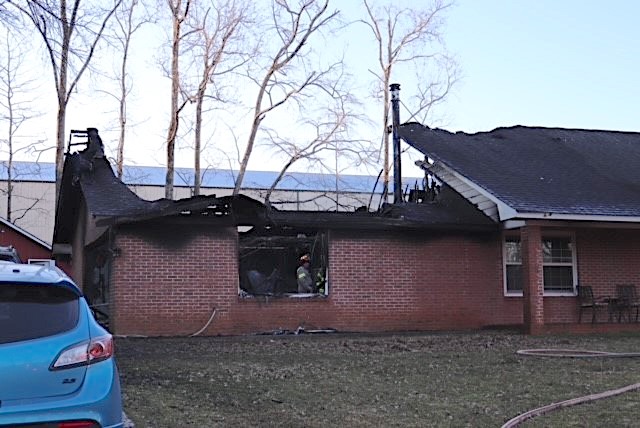
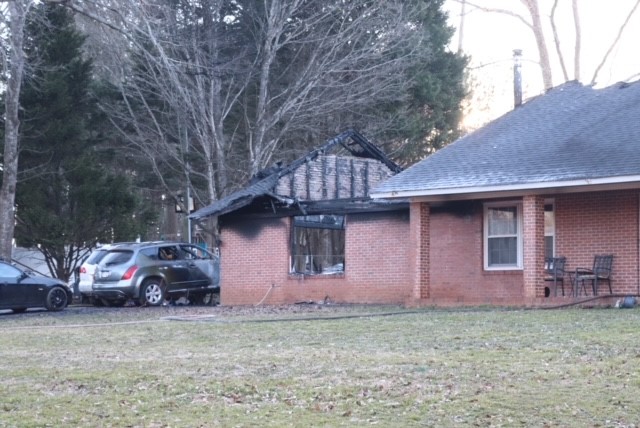
A man died early Valentine's Day morning in a fire at this house on McEver Road. Authorities are investigating to determine what caused the deadly blaze. (photo by Hall County Fire Services)

Investigators looking into a fatal house fire in Hall County have identified the victim as 68-year-old Andrew Donaldson. An autopsy is being conducted to determine his exact cause of death, the Hall County Sheriff’s Office says.

(photo by Hall County Fire Services)

Hall County firefighters discovered Donaldson’s body in the burned ruins of a home in the 5,000 block of Meadow Drive on the south end of the county. Fire rescue crews were dispatched to the scene off McEver Road just before 6:30 a.m. Monday, February 14.

When they arrived, crews found heavy fire showing through the roof and side of the residence.

“Once firefighters were able to enter the residence, they discovered the body of an adult man; he was pronounced dead at the scene,” says Hall County Sheriff’s Public Information Officer BJ Williams.

The cause of the fire remains under investigation.