
Home Blog Page 1587

Habersham ESPLOST to be on the ballot in May

Habersham County voters will decide the fate of the county’s education special local option sales tax this spring. The board of education on Monday approved a resolution to put the ESPLOST 6 referendum on the primary ballot in May. The proposed tax is estimated to raise $59 million for Habersham’s public schools over 5 years.

Georgia enacted ESPLOST in 1996, giving school districts in the state the opportunity, with voter approval, to adopt a 1% sales tax with revenue earmarked for capital outlay. ESPLOST 5, which was to raise $35 million for Habersham’s schools, expires at the end of this year.

While the school board presents ESPLOST 6 as a renewal, every ESPLOST is a separate tax measure that can last up to five years. If approved by voters, Habersham County’s current 7% sales tax rate would remain the same: If voted down, the county’s sales tax rate would drop to 6%.

According to the proposed referendum, money from ESPLOST 6 would go to pay up to $26 million in debt service on existing bonds, including those used to build Fairview Elementary and Habersham Central High School. The rest would be used for a wide range of capital expenditures including, but not limited to, facility, transportation, technology, and security updates, purchasing instructional materials, and possible land acquisitions.

One of the likely big expenditures would be school buses. Habersham County School Superintendent Matthew Cooper says the county’s current fleet is aging and needs to be replaced. The state provides funding for two and a half buses each year, but Cooper said the county needs more than that. If ESPLOST 6 passes “we want to buy about 40 more new buses,” he said.

While the Habersham County Board of Education has not released a specific list of projects, Cooper stressed during Monday’s meeting that ESPLOST is vital to ongoing operations. Without it, he said, “our general budget could not meet all the needs of our schools and our school system.”

Using the broad base of people who pay sales tax as a selling point, the superintendent stressed that county residents are not the only ones who pay it – so do visitors.

“People are coming to Habersham from all over, spending their money,” Cooper said. “And guess what they’re doing? They’re paying off the debt on the schools, and our property owners should be smiling about that. They’re not only paying off the debt, all that other stuff [school expenditures] . . . they’re paying for that, too.”

If voters fail to pass ESPLOST 6, it will fall to the county’s property owners to make up the shortfall, Cooper said.
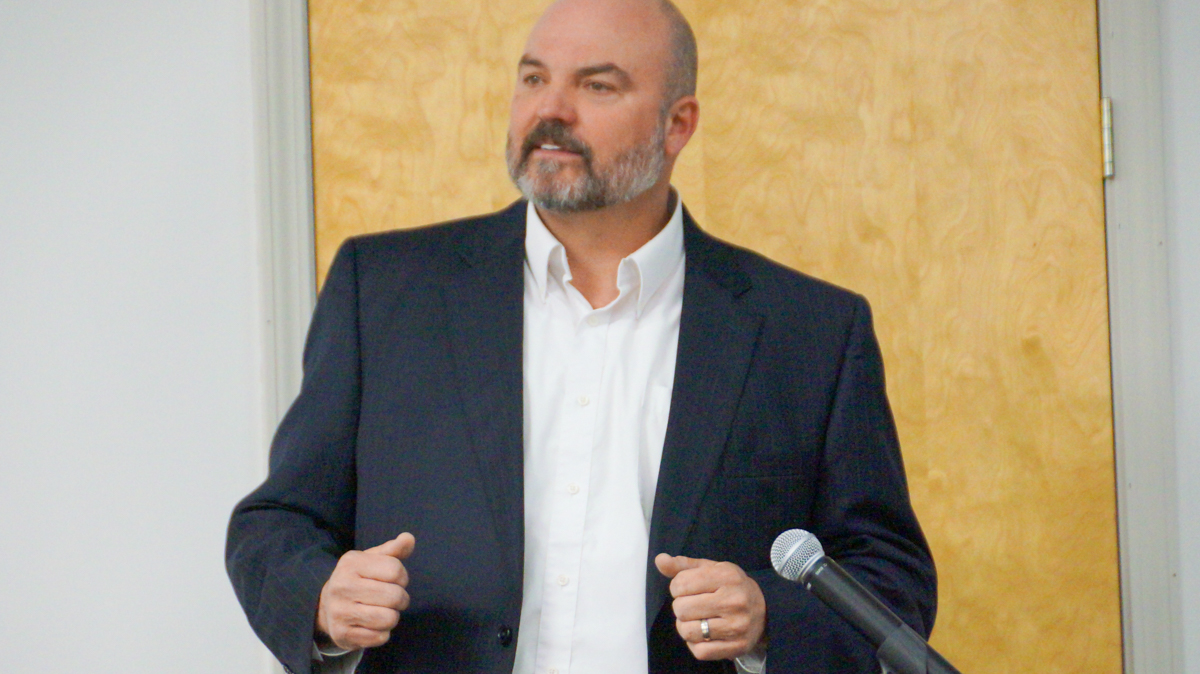
Habersham County Schools Superintendent Matthew Cooper presented his argument for voting in favor of the E-SPLOST to the BOE and community. (Hadley Cottingham/Now Habersham)

“That debt shouldn’t be placed on property owners, but without ESPLOST, that’s the only option we have. There are no other options, that’s it. Without ESPLOST, that debt has to be paid by the property owners and only the property owners,” Cooper said.

If voters approve ESPLOST 6 Cooper made a commitment to make the school system debt-free.

“We would be among the very few [schools] in this state that would be debt-free,” he said. “We can do it and we will do it, I’m going to commit to it. We will be debt-free if we get the ESPLOST.”

The BOE plans to unveil its list of proposed ESPLOST 6 projects in March ahead of the May 24 primary.

Click here to read ESPLOST 6 referendum

This article has been updated for clarity

House panel endorses more transparency in health plans’ data

A House committee Tuesday approved a bill that would require more public disclosure about Georgia health plans serving Medicaid patients and state employees and teachers.

House Bill 1276, if it becomes law, would require the main state health agency to post reports showing how many primary care providers these insurance plans offer in a county, along with data on the insurers’ hospital costs and prescription drug spending.

Hawkins

Members of the House Health and Human Services Committee did not voice any objections to the measure, which now goes to the Rules Committee in that chamber.

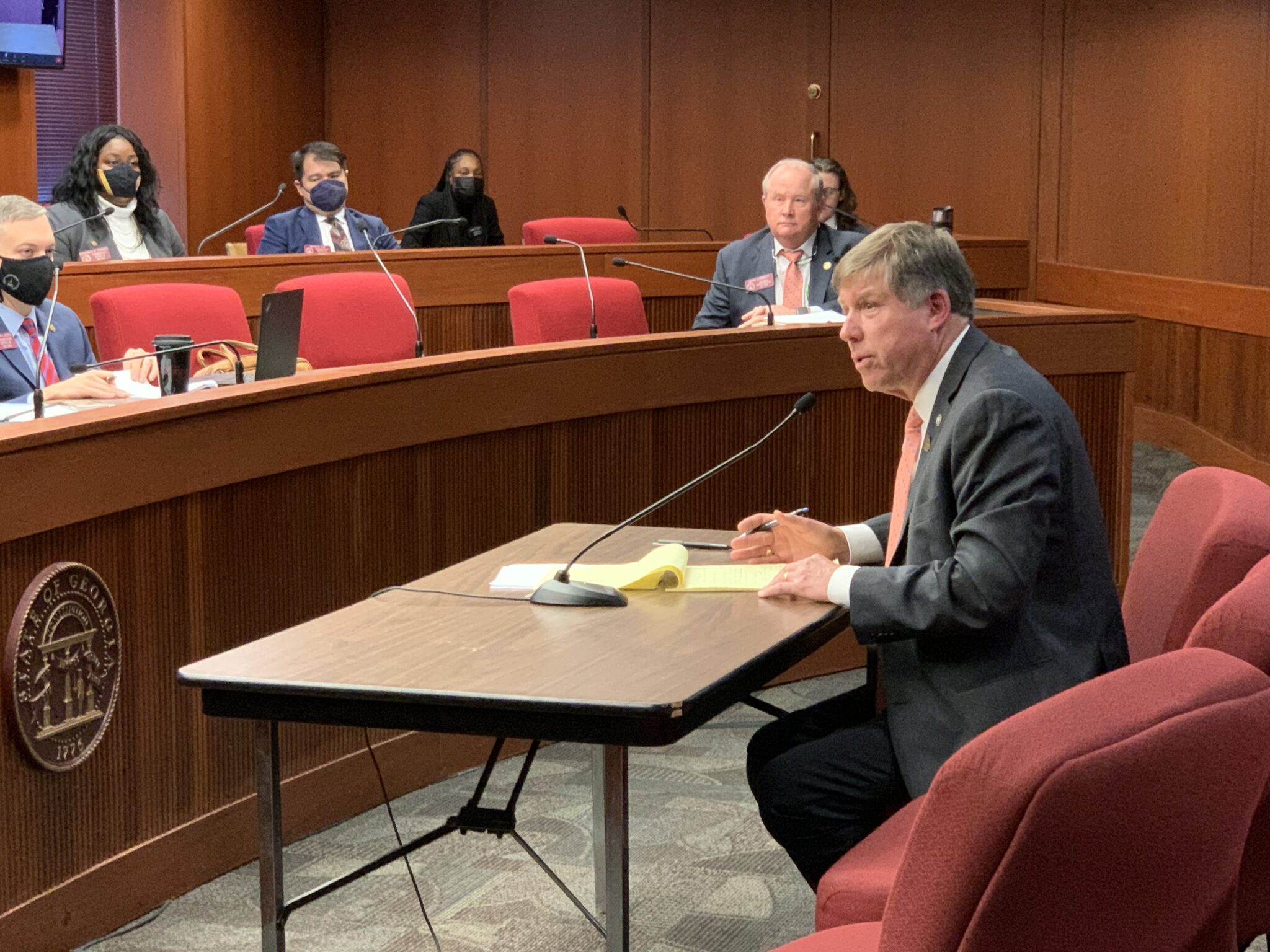
The legislation was sponsored by Rep. Lee Hawkins, a Gainesville Republican and a dentist. He said that as lawmakers, “we’ve always wanted to see’’ the insurance information required in the bill.

“We’ve got to know where the problems are,’’ Hawkins told the committee. “We’ve had a hard time understanding exactly what’s wrong.’’

The information would be collected by health insurers and then transmitted to the state Department of Community Health (DCH), which oversees Medicaid and the State Health Benefit Plan. The latter benefits plan covers more than 600,000 state employees, teachers, other school personnel, retirees and dependents.

Jesse Weathington, CEO of the Georgia Association of Health Plans, an industry group, sat next to Hawkins during his presentation to the committee. Hawkins said Weathington agreed to the bill’s provisions.

The proposed legislation, though, comes amid calls for greater financial and performance transparency about how the state Medicaid insurers provide care.

Under a separate bill, the managed care plans serving much of the Medicaid population are facing potential requirements to refund payments to the state if they don’t spend enough on medical care and quality improvements for patients.

That proposal is contained in the bipartisan mental health bill introduced by Georgia House Speaker David Ralston.

Ralston (left), with Kevin Tanner, chairman of a mental health commission, and Insurance Commissioner John King, speaking about his bill.

Georgia Health News and Kaiser Health News reported in September that Georgia is one of only a few states that doesn’t mandate a minimum level of medical spending for its Medicaid insurers.

The House health panel is expected to take up the Ralston legislation, House Bill 1013, on Wednesday.

Last September, a report from the Georgetown University Center for Children and Families found that Georgia failed to post important information about Medicaid management and performance on the DCH website. For example, the state did not post quality metrics or enrollment data that are delineated by race and ethnicity, which the Georgetown report said is “vital to ensuring that Medicaid equitably delivers care.”

DCH’s performance dashboard shows how each Medicaid insurer performs on national quality metrics through using a star-rating system. The latest data come from measurement year 2019.  The dashboard does not break up the data by race or ethnicity.

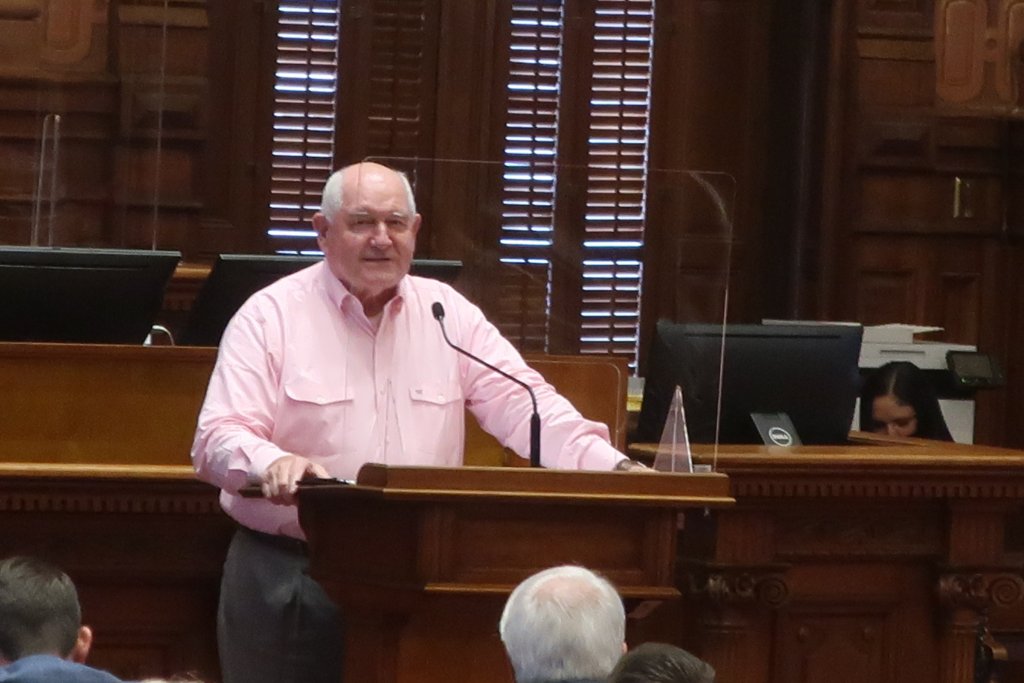
Prior to the new dashboard, some key data were difficult to find on the DCH website, Georgia Health News reported.

The new bill would require DCH to post “demographic and population-based reporting on common disease states.”

Hawkins’ legislation would also require the state to post the per-member, per-month “cost figures” for the Medicaid, PeachCare and fee-for-service plans that provide health insurance to hundreds of thousands of Georgians, most of them children.

Virginia Mae Nelms Loudermilk

Virginia “Jean” Mae Nelms Loudermilk, age 83, of Mt. Airy, passed away on Tuesday, February 15, 2022.

Born on June 7, 1938, in Cleveland, she was the daughter of the late Frank and Lessie Ferguson Nelms. Virginia worked most of her life in the sewing industry, she was an at home seamstress and did work for many people in Habersham County. She loved baking and cooking for her family and others. She loved spending time with her family, especially her grandchildren. Virginia was loved by many.

In addition to her parents, she was also preceded in death by her brothers, Otis Nelms, Curtis Nelms, Jr. Nelms and Mack Nelms.

She is survived by her husband of 64 years James Charles Loudermilk of Mt. Airy; daughters and sons-in-law, Donna Loudermilk Patrum (Joel) of Mt. Airy, Pamela Sue Loudermilk Davis (Calvin) of Mt. Airy; sisters, Dorothy Nelms of Cleveland, Ruth McAllister of Cleveland; grandchildren, Scotty (Jen) Sanders of Mt. Airy, Brandon (Ansley) Patrum of Clermont, Kyle (Whitnie) Patrum of Mt. Ariy; great-grandchildren, Vayda Sanders, Ava Sanders, Anistyn Patrum, Anderson Patrum, Kenslie Hill, Aubrie Patrum; many nieces and nephews.

No formal services are planned at this time.

McGahee-Griffin & Stewart Funeral Home of Cornelia, Georgia (706/778-8668) is in charge of arrangements.

Critics fume as Sonny Perdue closes in on Georgia’s university chancellor job

Former Georgia Gov. Sonny Perdue spoke to Republican state lawmakers at the Capitol Nov. 9 2020 during the party’s caucus elections. (Stanley Dunlap/Georgia Recorder)

(GA Recorder) — Former Georgia Gov. Sonny Perdue, who also served as United States secretary of agriculture, has been named sole finalist to lead the state’s public college and university system despite worries over his lack of educational experience and fears that his conservative political past may be seen as divisive to some students.

The Georgia Board of Regents voted unanimously to approve Perdue as finalist for chancellor of the University System of Georgia at a special called meeting Tuesday afternoon. By state law, the regents must wait at least 14 days between naming a finalist and voting to approve them. If, as expected, Perdue passes the full vote, he will take the reins from interim Chancellor Teresa MacCartney, who has been leading the system’s 26 public colleges and universities since former Chancellor Steve Wrigley retired in July.

Sonny Perdue is flanked by former President Trump and former Vice President Mike Pence at a 2018 event. Chip Somodevilla/Getty Images 

“I consider being named the finalist as the Chancellor of the University System of Georgia to be a wonderful capstone to a career of public service,” Perdue said in a statement. “Education is the most important issue at the federal, state and local level and it’s why, as a legislator, I sought to be chair of the Senate Higher Education committee to work on important initiatives with Gov. Zell Miller and former USG Chancellor Steve Portch.”

Perdue rose through the state Senate as a Democrat before switching parties in 1998 and becoming Georgia’s first Republican governor since Reconstruction in 2002. He handily won re-election in 2006.

In 2017, he was tapped by then-President Donald Trump to serve as agriculture secretary, and he served until the end of Trump’s term.

Board Chair Harold Reynolds said Perdue’s impressive resume makes him an ideal candidate.

“He has extensive background in public service, including government management experience and leadership at the highest levels. He was twice elected by the people of this state to serve as our governor, and he has served our nation as the United States Secretary of Agriculture. He was also the chair of the Senate Higher Education Committee, during his time in the Georgia General Assembly. He holds a doctorate of veterinary medicine degree from his beloved alma mater, the University of Georgia, and has a passion for higher education, and specifically for this state’s public colleges and universities. I’m excited about the future of the university system with him at the helm.”

But critics point out that his resume does not include academic leadership.

“He is completely inexperienced in education, and this appointment — though it shouldn’t be — is blatantly political,” reads a Change.org petition with 1,529 signatures created by a group called Stop Sonny. Gov. Brian Kemp sought to fend off those charges in a statement congratulating Perdue released shortly after the hearing.

“As a cabinet level official who was confirmed with overwhelming, bipartisan support, he managed a budget roughly 15 times that of USG and navigated challenging times of disruption that required innovative thinking,” Kemp said. “Georgians will benefit from his decisive and creative leadership over a system which now serves more than 340,000 students. I look forward to working with future Chancellor Perdue to ensure the quality of our higher education continues to be worthy of the best place to live, work, learn, and raise a family.”

Perdue was long reported to be Kemp’s top choice, despite the fact that Perdue’s first cousin, former U.S. Sen. David Perdue is challenging Kemp for the governor’s job. Sonny Perdue helped accelerate Kemp’s political rise by naming him secretary of state in 2010. Although Kemp is now on the outs with Trump for failing to overturn the 2020 election, the former governor reportedly convinced the president to offer Kemp his endorsement in 2018, helping him defeat then-Lt. Gov. Casey Cagle in the GOP primary.

The search has been clouded by charges of political paybacks. The Southern Association of Colleges and Schools Commission on Colleges sent a letter to the Board of Regents warning about undue political interference, and an executive search firm hired to help find the replacement for the retired former Chancellor Steve Wrigley quit last year amid questions of whether Perdue was a done deal.

“The search for a chancellor must be conducted in the open and must include meaningful faculty participation,” the American Association of University Professors wrote in an open letter to the regents Monday. “The USG system deserves and demands a chancellor who understands higher education, who has the confidence of the faculty who work in the system, and who will work to enhance the entire Georgia system to ensure Georgia students have the best educational experience.”

Some of his past political stances may also put Perdue at odds with some in Georgia’s campus communities. His first election as governor was fueled by debate over the 1956 state flag, which his predecessor Democratic Gov. Roy Barnes changed to remove the Confederate cross. Perdue supported a statewide referendum that would have included the old flag with its Confederate symbolism. He later declared April 2006 Confederate History Month in Georgia. Just over a quarter of Georgia’s 340,638 public college students are Black, and for many Georgians, the Confederate flag is an enduring symbol of racist hatred.

Perdue’s full-throated support of Trump also causes heartburn for some young people in a state that narrowly rejected the former president in 2020. Georgians between 18 and 29 supported President Joe Biden over Trump by 56% to 43%, a wider margin than any other age group in the state, according to Washington Post exit polling.

But Perdue’s reputation as a staunch conservative may endear him to other members of the state government, which is still dominated in all three branches by the GOP. Republican lawmakers have filed multiple bills this session seeking to push back against what they see as an increasing cultural shift in Georgia universities, including bills to ban the promotion of “divisive concepts,” in classrooms, and expand campus free speech zones after receiving complaints of censorship from right-wing speakers.

If Perdue wants to weigh in on those hot button issues, he did not signal that Tuesday, instead vowing to support students in learning and employees in teaching.

“I want to make a difference by providing leadership and resources so that faculty can thrive in their teaching, research and service and students are inspired and supported so they graduate, find rewarding careers and become productive citizens,” he said. “I am honored to be considered for such an important role.”

Lady Indians claim first-ever region tournament championship!

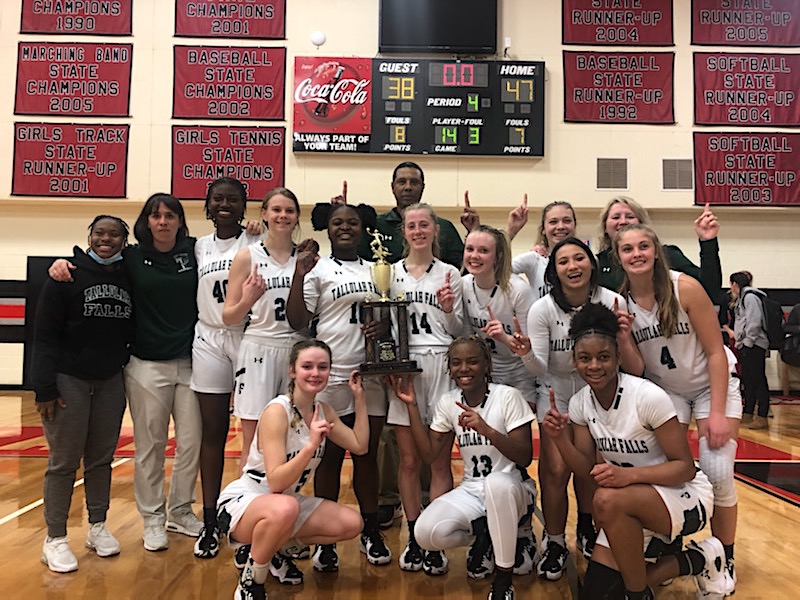
The TFS Lady Indians celebrate their first-ever region tournament championship on Tuesday, Feb. 15, 2022. (photo by TFS Athletics)

For one of Tallulah Falls’ most successful programs over the past 4 years, the only thing missing was a region tournament championship. The Lady Indians can now check that box after a 47-38 win over Prince Avenue Christian at George Walton in the title game on Tuesday night.

In a tight, low-scoring night, the Lady Indians never wavered on the way to the win. The girls grabbed a 12-7 lead following the first quarter of play. Prince Avenue battled back to within a single point at 16-15, but TFS used a 5-0 run to close out the half. Molly Mitchell hit a 3-pointer with a second left on the clock, and the Lady Indians were up 21-15.

TFS outpaced Prince Ave 8-4 in the low-scoring third, giving the Lady Indians a comfortable 29-19 cushion going into the final stanza. Prince Avenue stormed back with an immediate 3-pointer. It appeared as though TFS was set to put the game away when driving up the lead to 33-22, but Prince Avenue scored 8 unanswered, which included back-to-back 3-pointers to make it a 3-point game with under 5 minutes to play.

Denika Lightbourne retaliated with her own triple, pushing it to 36-30 with 3 minutes to go. Lightbourne then converted a 3-point play to make it 39-32 with 1:54 on the clock. From there, the Lady Indians locked it down for the historic win, closing out the game with an 8-6 run.

The Lady Indians are now on a 3-game win streak and are 13-4 overall. The girls had claimed the regular season region title for a second straight season, but this marks the first-ever straight-up region championship for girls basketball.

Lightbourne paced the offense with a game-high 14 points, while Macy Murdock added 11 for TFS. Veronaye Charlton had 7, Kailyn Neal 6, Mitchell 5, and Tanisha Seymour 4.

The journey continues next week when TFS will host the first round of the state playoffs on either February 22 or 23, with the opponent to be determined.

Testimony begins in Ahmaud Arbery death hate crimes trial

This photo combo shows, from left, Travis McMichael, William "Roddie" Bryan, and Gregory McMichael during their trial at at the Glynn County Courthouse in Brunswick, Ga. Jurors on Wednesday, Nov. 24, 2021 convicted the three white men charged in the death of Ahmaud Arbery, the Black man who was chased and fatally shot while running through their neighborhood in an attack that became part of the larger national reckoning on racial injustice. (Credit: Pool, file via AP)

Neighbors of the three white men convicted of murdering Ahmaud Arbery testified at their hate crimes trial Tuesday about how a quiet afternoon in their community was shattered by three shotgun blasts and the sight of a young man’s body sprawled in the street.

“I felt guilty that it happened outside my house,” said Dan Allcott, who was home with his wife and their baby when Arbery fell dead a few feet from Allcott’s driveway on Feb. 23, 2020.

Police found bloodstains and shotgun shells in Allcott’s yard. He said he later met Arbery’s parents when they came to inspect the scene and let them place a wooden cross with a wreath in his yard. He moved his family to a different neighborhood months afterward.

“The house didn’t feel the same anymore,” Allcott testified. “It didn’t feel like home anymore.”

Father and son Greg and Travis McMichael armed themselves and used a pickup truck to chase Arbery after spotting him running in their coastal Georgia neighborhood that day, a Sunday. A neighbor, William “Roddie” Bryan, joined the chase in his own truck and recorded cellphone video of Travis McMichael shooting Arbery.

No arrests were made until the video leaked online two months later.

Both McMichaels and Bryan were convicted of murder last fall in a Georgia state court and sentenced to life in prison.

All three are now standing trial in a separate case in U.S. District Court, where they are charged with violating Arbery’s civil rights and with targeting him because he was Black. They have pleaded not guilty.

A jury of eight white members, three Black people and one Hispanic person was sworn in Monday to hear the case. The judge in the case on Monday filed a written order requiring the jurors to be sequestered throughout the trial to protect them from “trial publicity, extraneous influences and harassment” and to ensure a fair trial.

On the day of the shooting, another neighbor, Matt Albenze, called police using a nonemergency number when he spotted Arbery entering a home under construction where security cameras had previously recorded Arbery.

Albenze was on the phone with police when Arbery ran from the house toward the home of the McMichaels. Albenze said he saw their truck back out of the driveway as they gave chase.

Pete Theodocion, Bryan’s defense attorney, asked Albenze if he still would have called police had the man entering the unfinished home been white or Hispanic.

“Nothing you did that day, none of the words or actions, were based on Mr. Arbery being African American, is that correct?” Theodocion asked.

“Correct,” Albenze replied.

He said he heard the gunshots minutes later, and rode his bike to the scene of the shooting but kept his distance after seeing the man he’d reported to police lying dead in the road. Albenze said he went home and poured himself a vodka.

Albenze testified that when he grabbed his cellphone to call police he also slipped a handgun into the pocket of his overalls. Asked by prosecutor Bobbi Bernstein if he ever shouted at Arbery to stop, drew his gun or pointed it at Arbery, Albenze said no.

“It’s not my job,” he said.

Georgia Bureau of Investigation agent Richard Dial, who led the agency’s investigation into Arbery’s death, testified Tuesday afternoon.

While he was on the stand, the jury watched three versions of the cellphone video of the shooting: the original, a slow-motion version and a version that’s zoomed in and stabilized to reduce shaky hand motion.

Travis McMichael’s lawyer, Amy Lee Copeland, objected to the last version being shown, saying the jury would be seeing the video a third time. The judge overruled her objection.

The jury also saw a clip from the body camera of the first officer on the scene, which showed the McMichaels standing in the road where Arbery lay after being shot. The clip shows Arbery’s head and right leg move. The video was shown without sound, but Dial said if the sound was on, Arbery’s “dying gasps” would be audible.

On the trial’s first day in the port city of Brunswick on Monday, prosecutors told the jury they have evidence that each of the defendants had a history of making racist comments. To win convictions on the hate crime charges, they must prove to the jury that Arbery was chased and fatally shot because he was Black.

In their opening statements, defense attorneys called their clients’ use of racist slurs offensive and indefensible. But they insisted that their deadly pursuit of Arbery was motivated by an earnest, though erroneous, suspicion that the 25-year-old Black man had committed crimes — not by racial hostility.

This article appears on Now Habersham through a news partnership with GPB News

Billie Ann Graham Herrin

Billie Ann Graham Herrin, age 91, of Cornelia was called home to be with the Lord on Monday, February 14, 2022.

Born in Danielsville, GA on July 8, 1930, she was the daughter of the late Joseph Benjamin Graham and the late Annie Lou Stribling Graham Irvin. She graduated as Salutatorian of her high school senior class at Davis Academy in Banks County. Mrs. Herrin worked as a dental assistant for many years and then as a medical receptionist. After she retired, she helped her husband with his business, Herrin’s Service Center in Cornelia. She was a member of Level Grove Baptist Church.

Mrs. Herrin was a loving wife, mother, and grammy. She was very proud of her family. She loved to read, cook, shop for antiques, and take short trips to the mountains and the beach. She also loved her cat, Sophie.

In addition to her parents, she was preceded in death by her husband, Eugene Herrin; her son, Graham Herrin; her sister, Jo Beth Graham Lawson; and her brother John Franklin Irvin.

She is survived by her daughter and son-in-law, Joan and David Tanksley of Cornelia; grandsons and their wives, Adam and Erin Gordon Tanksley of Atlanta, GA and Dillon and Morgen Billingslea Tanksley of Chattanooga, TN.

A special thank you to Joy Baker for her love and the care she helped provide Mrs. Herrin for 21 months.

A private funeral service will be held.

In lieu of flowers, the family requests that donations be made to the Habersham County Veterans Wall of Honor P.O. Box 298 Demorest, GA 30535.

Arrangements have been entrusted to the Whitfield Funeral Homes & Crematory, North Chapel at 245 Central Avenue, Demorest, Georgia 30535. Telephone: 706-778-1700.

Veterans entering law enforcement could train with free tuition

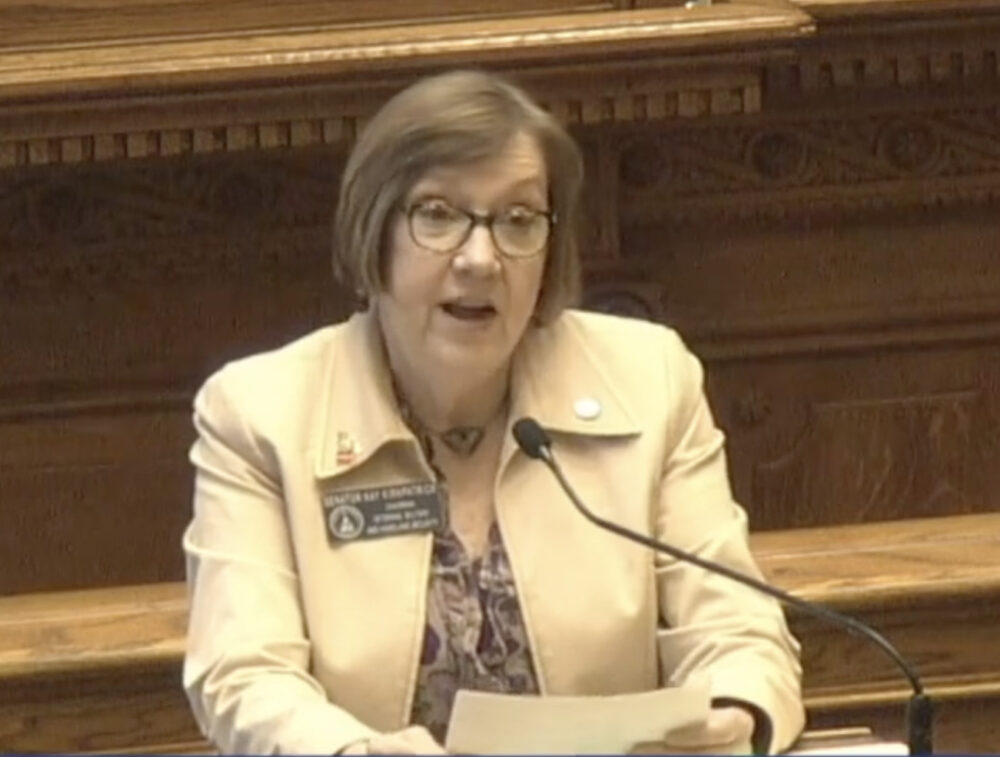
In this Feb. 10, 2022 screenshot, Senator Kay Kirkpatrick presents SB 358 to the Senate Floor Session. (Georgia General Assembly)

Georgia lawmakers are hoping to lower the barrier for veterans to enter law enforcement careers by offering tuition-free training.

The state Senate voted unanimously to authorize the Georgia Public Safety Training Center to reimburse tuition for active duty, retired or honorably discharged members of the U.S. Armed Forces who are attending basic law enforcement training. The bill passed last week and now goes to the House.

Sen. Kay Kirkpatrick, chair of the Veterans, Military and Homeland Security Committee,  sponsored the bill to “smooth the path for veterans coming out of military service” and “ease their way into law enforcement training,” she told the Senate Public Safety Committee during a hearing.

Kirkpatrick, a Republican from Marietta, said she also hopes covering tuition will encourage recent veterans to fill job openings.

“We have vacancies in many of our law enforcement agencies,” Kirkpatrick said. “By making it easier for interested veterans to access these training programs, we can keep more of these highly trained individuals in our state.”

Tuition for basic law enforcement training at the center is $3,093 plus $700 in fees, although the charges generally are waived for those who already have a law enforcement job.

This article appears on Now Habersham through a news partnership with Fresh Take Georgia

Unicoi Wildifire ‘100% contained,’ forest service says

A US Forest Service helicopter drops water on the Unicoi Wildfire burning north of Helen. The fire was sparked on Feb. 12, 2022, by a homeowner burning leaves. (photo by Red Bird Media)

The Unicoi Wildfire that has been burning now for four days is “100% contained,” U.S. Forest Service officials say. “There was no change in the fire size yesterday and we have control lines all the way around it,” says USFS spokesperson James Wettstaed. “We expect to start downsizing tomorrow.”

From burning leaves to burnout

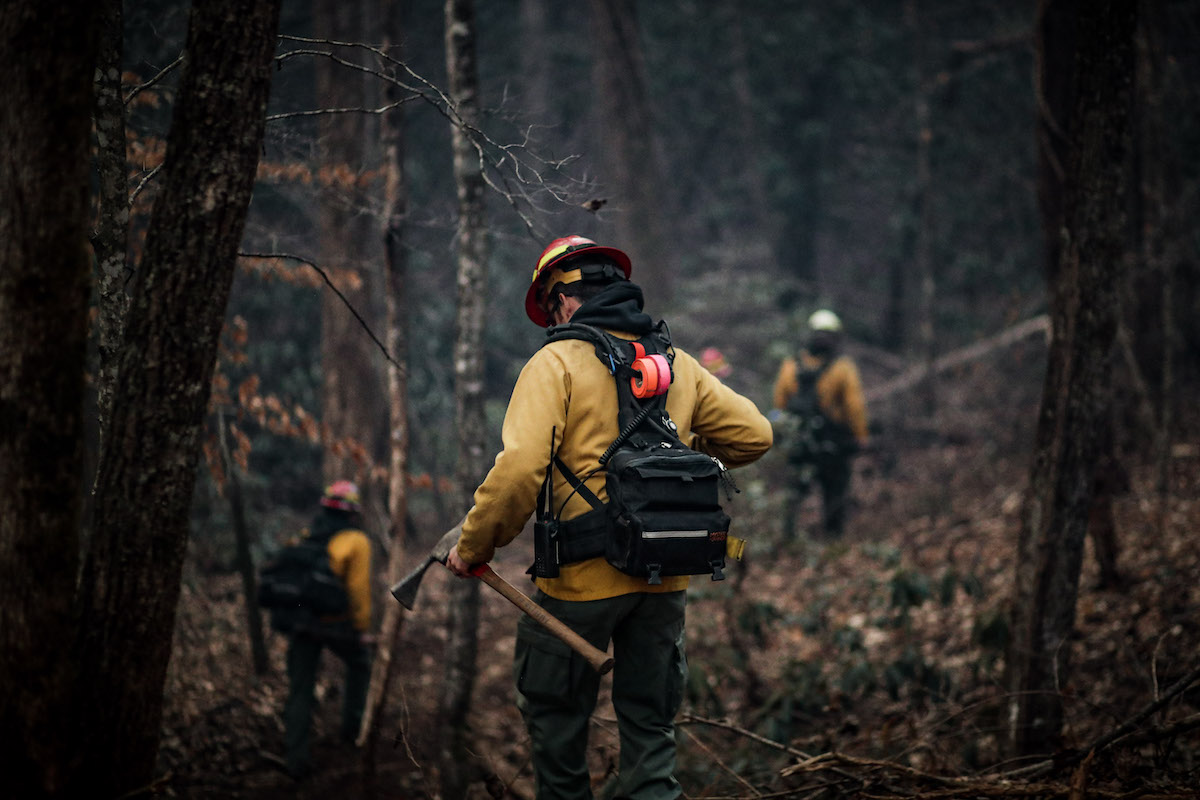
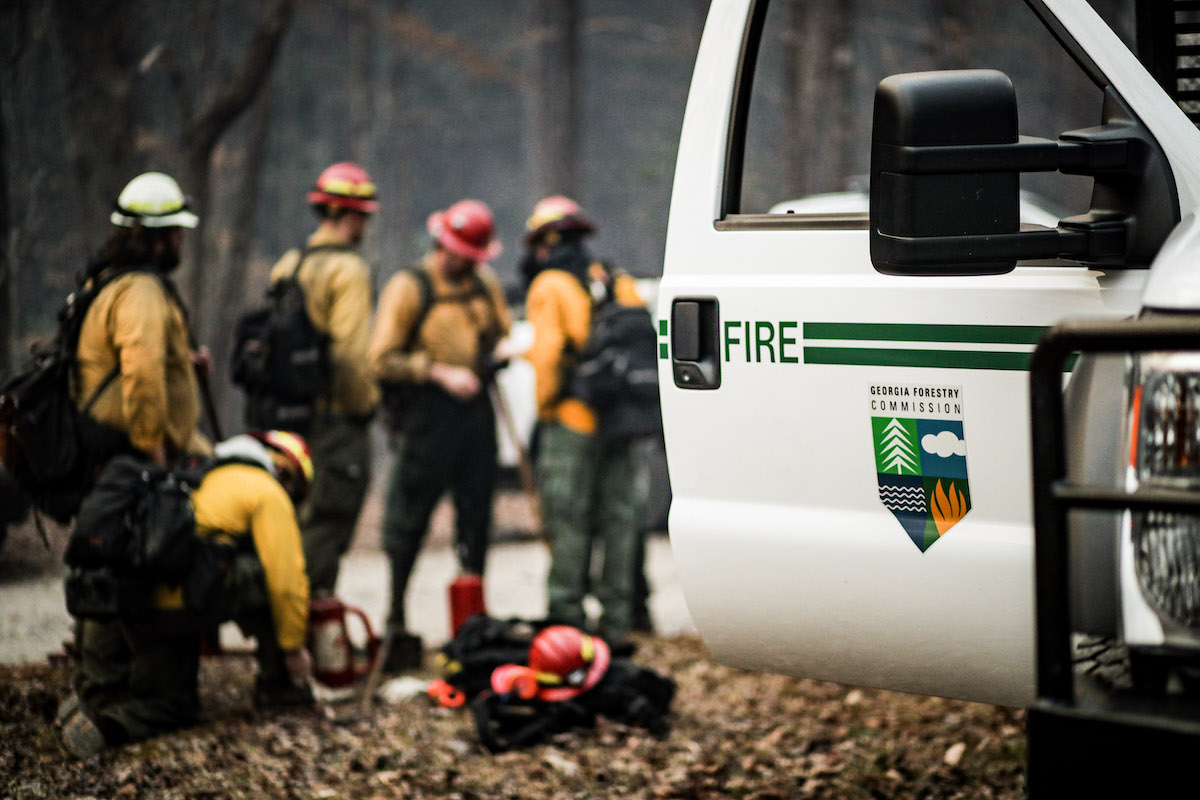
Crews from the US Forest Service and Georgia Forestry Commission cleared containment lines to keep the fire from spreading. (photo by Red Bird Media)

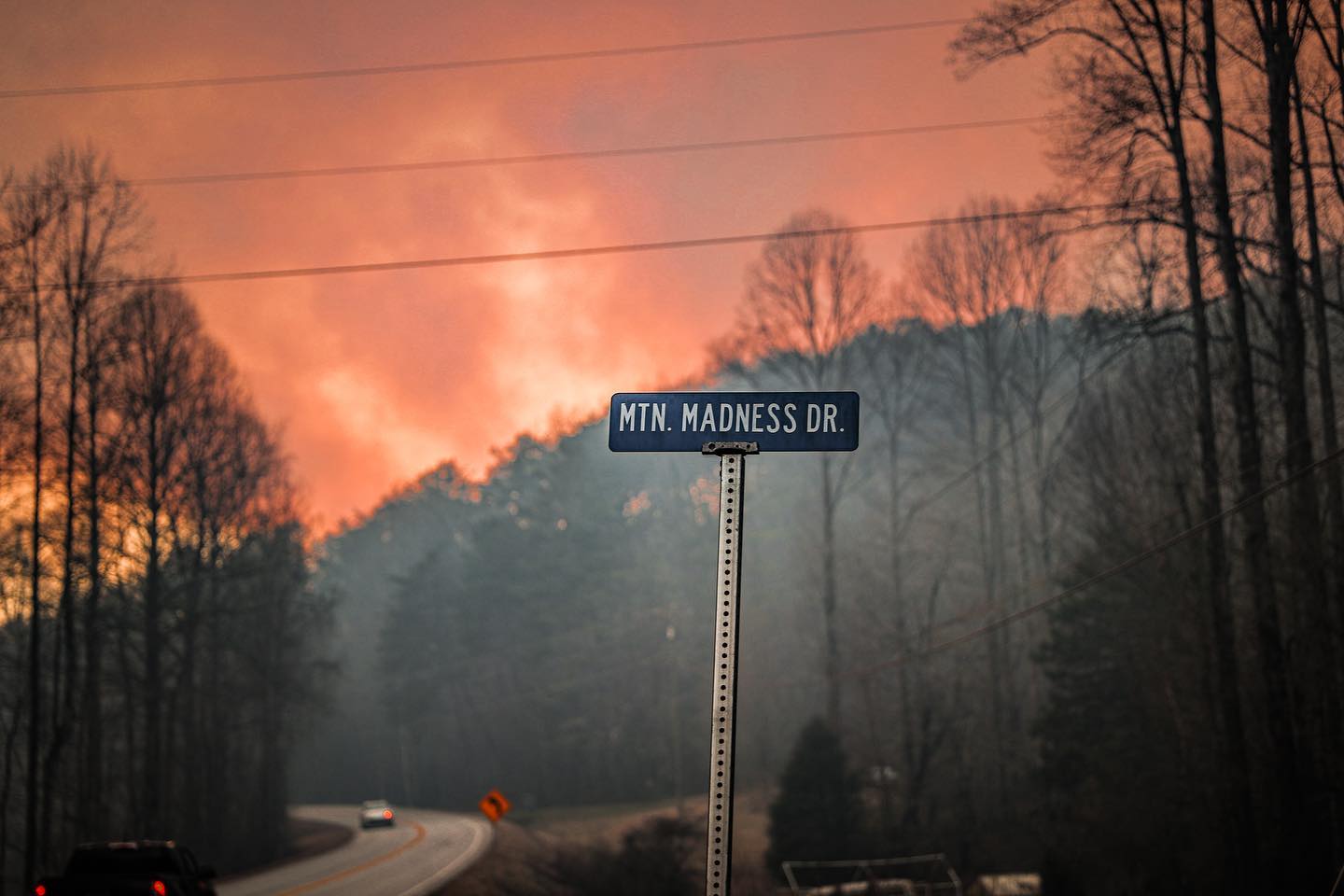
The good news comes on the heels of a tough weekend of firefighting that saw the wildfire – which started with a homeowner burning leaves – spread from 5 to 60 to ultimately 184 acres on Tray Mountain near Unicoi State Park north of Helen.

USFS and Georgia Forestry Commission personnel conducted a burnout operation on Sunday, burning back the dry leaves and brush between the containment lines and flames. That, says Wettstaed, had a significant impact on Monday’s firefighting efforts.

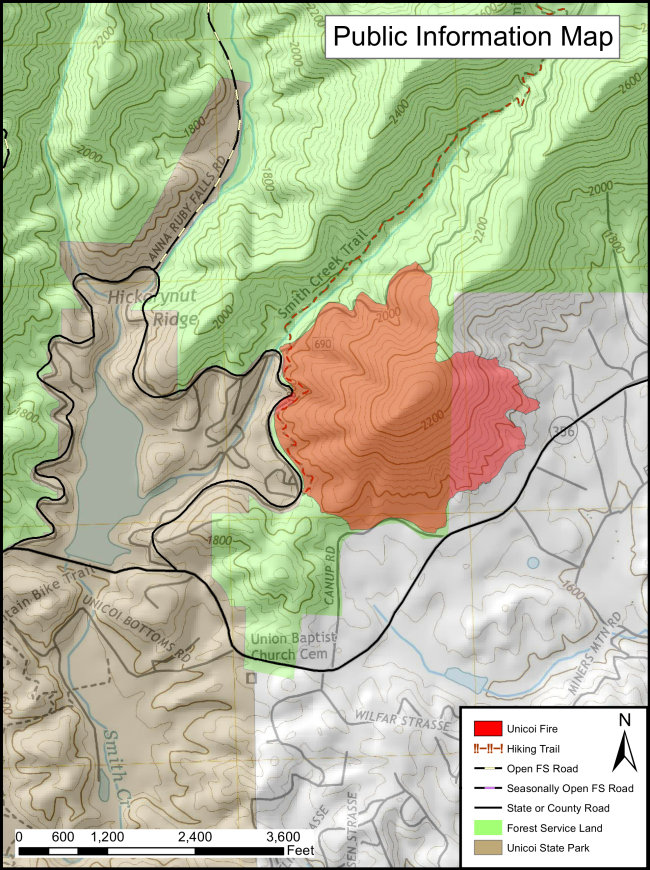
The location of the Unicoi Wildfire is shaded in red. It is centered on Tray Mountain off Highway 356 north of Helen. (Source: US Forest Service)

“The burnout was a big part of securing the line,” he tells Now Habersham. “The weather was challenging yesterday, so, the combination of the burnout and hard work by the crews holding the line was the difference.”

Crews will focus their efforts today on mopping up and patrolling to find any remaining heat sources that could threaten the lines. Additional efforts include installing water bars and spreading native seed on fire lines to reduce potential erosion.

Tuesday’s weather forecasts call for higher humidity and lower winds which will mean less severe burning conditions.

The Unicoi Wildfire has consumed 184 acres and has temporarily shut down Smith Creek Trail. There are no road closures or evacuation warnings in place. At one point on Monday, flames threatened around 15 homes, but Wettstaed says no homes have been damaged and no one has been injured as a result of the fire.

Two popular tourist destinations in northern White County, Anna Ruby Falls, and Unicoi State Park, were on alert to close if needed, but that has not been necessary: Both remain open to visitors.

White County burn ban remains in effect

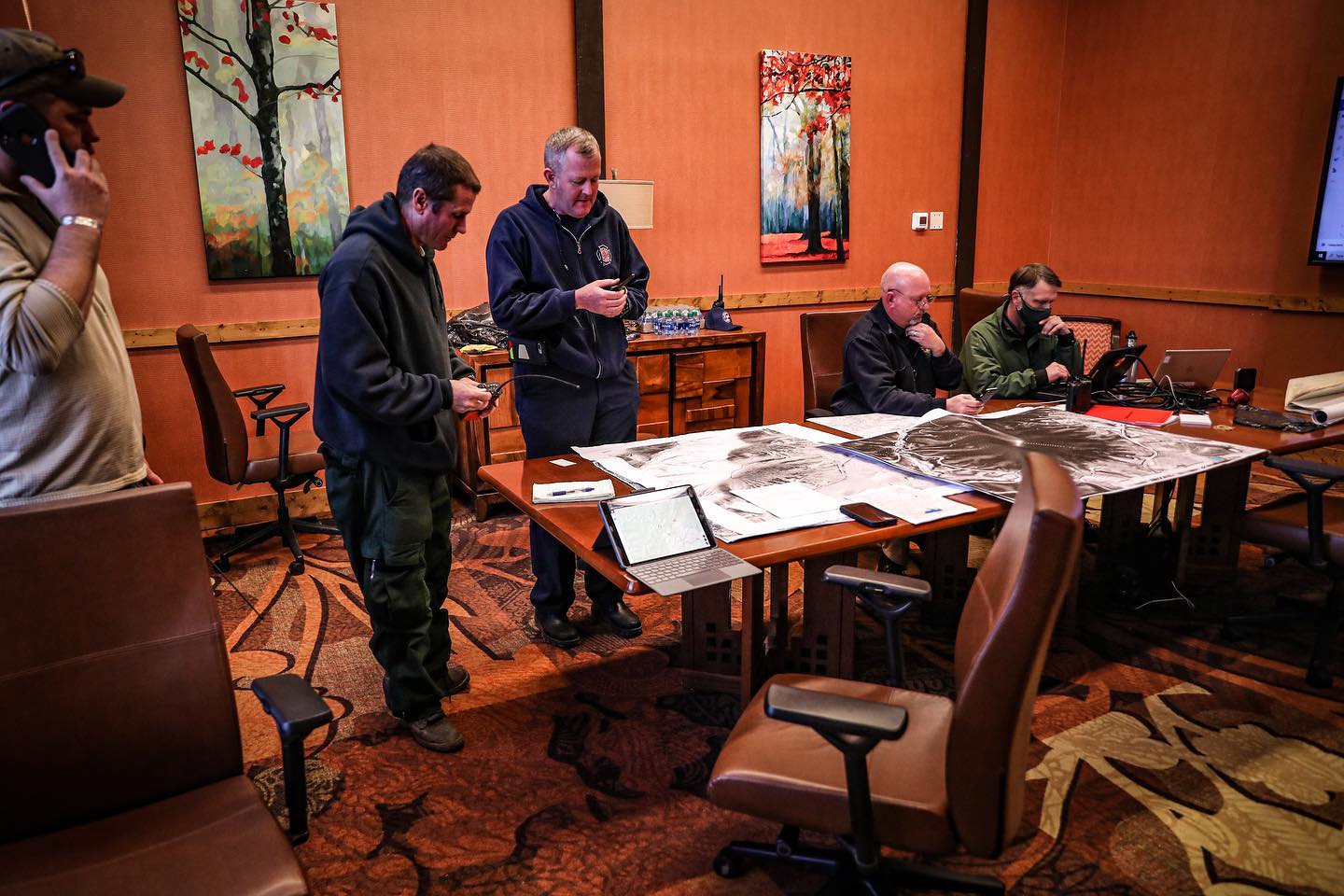
The dry, windy weather fueled the fire’s spread which forestry and public safety officials first thought they had contained as of late Saturday. By Sunday, the forest service upgraded its response to a Type 3 incident (with ‘1’ being the most severe) and called in additional personnel. They set up a command post at Unicoi State Park Lodge and are overseeing ground and aerial operations from there.

Fifty forestry workers remain on the scene but those numbers are expected to drop starting Wednesday as the USFS shifts from a Type 3 to Type 4 incident response.

A burn ban remains in effect for White County until further notice.

“Those who choose to burn can be held liable for fires that cause damage to other’s property,” the county’s public safety department warns.

Heavy rain is expected to move into the region on Thursday, helping firefighters douse any existing flames or smoldering remains.

Brent Thomas

Brent Thomas, age 38 of Lawrenceville, Georgia formerly of Cornelia, Georgia passed away on Friday, February 11, 2022.

Born in Demorest, Georgia on August 29, 1983, he was a son of Glenn Thomas of Demorest & Lisa London Rolader of Lawrenceville. Growing up, Brent was very artistic from a young age and enjoyed life to the fullest. He was a graduate of Habersham Central High School, Class of 2001, and employed with CR Lighting Company. Brent enjoyed a variety of different sports and was an avid Georgia Bulldog fan. Most of all, he loved his family deeply and spending precious time with his children.

Brent was preceded in death by his grandparents, Leon London, Henry & Ruby Thomas.

Survivors include his children, Carson, Landon, & Kinsley; mother & step-father, Lisa & Jim Rolader of Lawrenceville, GA; father & step-mother, Glenn & Charlene Thomas of Demorest, GA; sister & brother-in-law, Hillary & Michael Gosnell of Clarkesville, GA; brother, Andy Thomas of Clarkesville, GA; grandparents, Joyce & Thurlow Tomlin of Cornelia, GA; Myrtle Rolader of Tucker, GA; a number of aunts, uncles, nieces, nephews, other relatives, & a host of friends.

A gathering of family & friends will be held at Hillside Memorial Chapel in Clarkesville on Sunday, February 20, 2022, from 4:00 p.m. until 6:00 p.m.

An online guest registry is available for the Thomas family at www.HillsideMemorialChapel.com.

Arrangements by Hillside Memorial Chapel, Clarkesville, Georgia. (706) 754-6256

Indians continue win streak, Lady Indians throttle Athens Christian

Jackson Cording (photo by Austin Poffenberger)

BOYS

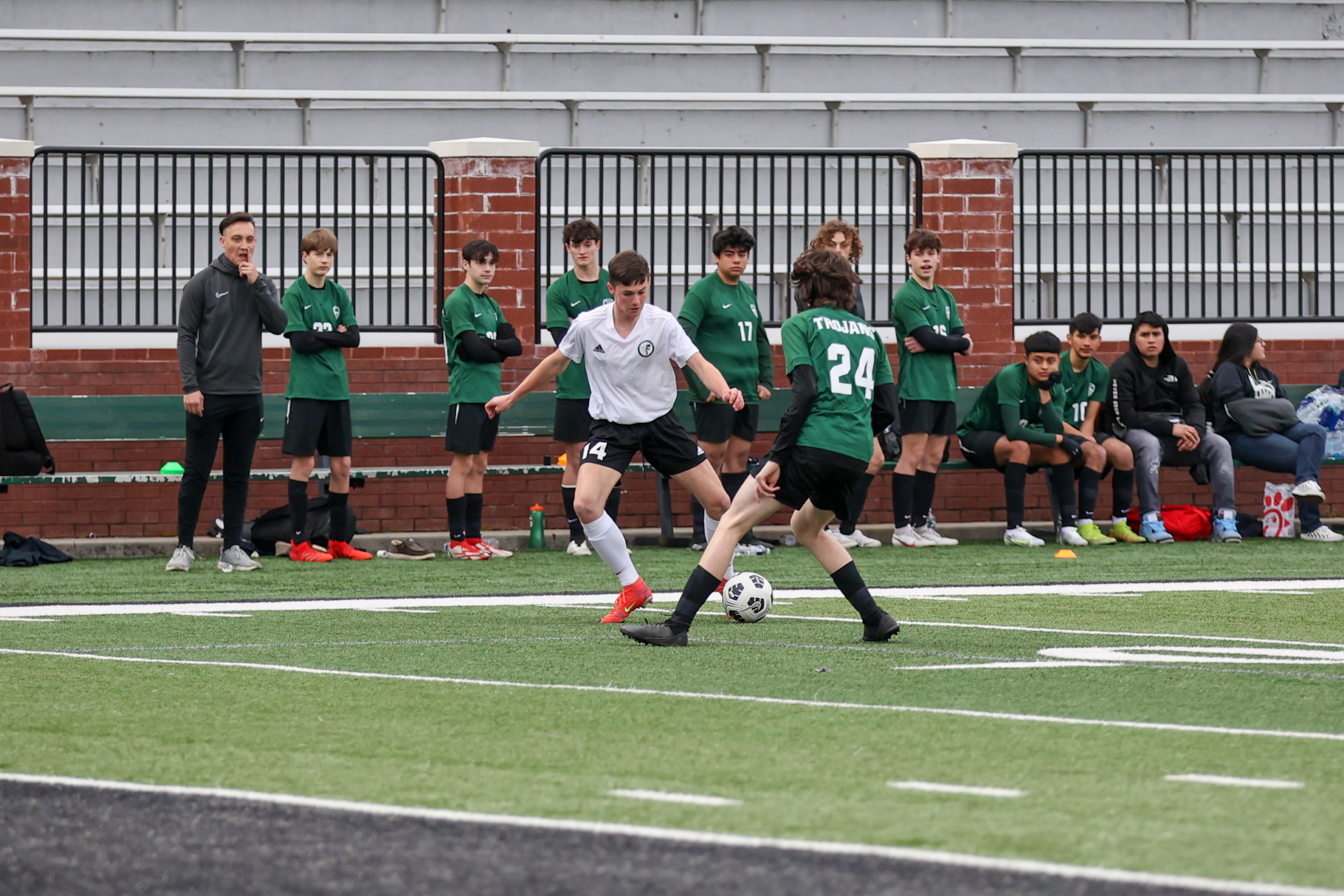
The win streak reaches 3 for the TFS Indians, who produced a 5-1 road win Tuesday at Athens Christian to open region play. Sean Lynes, Jr. kept his hot streak alive as well, scoring 4 times to lead Tallulah Falls.

Lynes, Jr. tallied a PK, a beautiful free kick goal, another intelligent play to keep it alive on an assist from Jared Mullis, and a fourth on a lob over the keeper which came on the back end of a lofted through by Austin Ball.

Jackson Cording recorded the other TFS goal for his first varsity score. Cording found the back of the net after a scramble in the box following a corner kick.

“Overall the team played well,” says coach Jeremy Stille. “We worked hard and fought to get our first region win.”

With the 4-goal game, Lynes, Jr. sets a new career-high, which is one goal shy of the school single-game record. He now has 10 goals on the season through 4 games played. The Indians are 3-0-1 overall and 1-0 in region play and will take on #7-ranked Athens Academy at home on Friday.

GOALS

4 – Sean Lynes, Jr. (10)
Jackson Cording (1)
ASSISTS

Jared Mulls (1)
Austin Ball (4)

GIRLS

The Lady Indians put on an offensive presentation Tuesday night at Athens Christian, scoring 10 goals in a clean-sheet win that fell one goal shy of the program record.

TFS scored 5 goals in each half and held a 5-0 advantage heading into the halftime break. They doubled that effort in the second half to secure the team’s second win of the season.

Goals came in bunches, as Addie Higbie, Honora Kahwach, and Kat Williams all notched hat tricks with 3 apiece. Maddie Mullis had the other goal for the Lady Indians. Assists were recorded by Genna Farris (2), Jenna Chesser, Lily Desta, and Honora Kahwach.

Meanwhile, the defense was spectacular and kept the Athens Christian offense at bay. Kyndal Anderson recorded her first clean sheet of the season and the third of her career.

Higbie’s 3 goals move her to 11 on the season, which ranks second-most in a single season behind Maria Whitson’s (’17) 15 tallies. Kahwach matches her career-high with 7 goals on the season and gets her to 23 career, which has her just 3 shy of Ashton Boyd’s (’12-’14) mark of 26.

The Lady Indians are 2-2 overall and now 1-0 in region play. They’ll take on #3-ranked Athens Academy on Friday at home.

GOALS

3 – Addie Higbie (11)
3 – Honora Kahwach (7)
3 – Kat Williams (3)
Maddie Mullis (1)
ASSISTS

2 – Gemma Farris (2)
Jenna Chesser (1)
Lily Desta (1)
Honora Kahwach (4)

Ag industry creating stink again over latest right-to-farm bill

Rep. Robert Dickey, a middle Georgia Republican, is proposing a rewrite of the state’s four-decade-old “Right to Farm” law. But opponents warn it will open the door to large-scale animal operations. (Jill Nolin/Georgia Recorder)

(GA Recorder) — Charlotte Swancy says she tries to be a good neighbor as she raises cattle and hogs on her 300-acre farm in north Georgia.

But Swancy said she also wants assurances that any other farmer who may move in near her will do the same. She’s particularly concerned about large-scale agricultural businesses, known as concentrated animal feeding operation or CAFO, pointing to a massive poultry operation that eyed Gordon County last year.

Swancy argues Georgia’s current “right to farm” law has worked just fine for the last four decades to shield farmers from newcomers who object to the smells and sounds of country living.

There’s a proposal on the move under the Gold Dome to rewrite that law, which opponents warn could attract more large-scale industrial operations to the state. A similar proposal stalled in 2020 but not before sparking impassioned debate over private property rights and farm heritage.

The new version has been dubbed “Freedom to Farm” and has the backing of the House Rural Development Council and major agricultural industry groups, like the Georgia Farm Bureau. One Republican lawmaker, Rep. Dominic LaRiccia, who represents a rural South Georgia district, called it “probably the most important piece of legislation we will look at this year.”

A public hearing was held early Tuesday morning even though the new version of the bill was not available to view online, complicating the public’s ability to comment. Swancy asked to read a lawmaker’s hard copy of the new bill as she attempted to weigh in at the hearing. The committee did not vote on the bill.

“My concern is that we’re weakening the (law) and I don’t want it to get weakened,” Swancy said. “I want it to be a strong bill to protect my farm, and my son, when he goes on to farm.”

She characterized nuisance farmers as those who exceed the capacity of the land, water and air. “Some of these CAFOs do take it way beyond the ‘carrying’ capacity. That’s why they smell so bad,” she said.

The concerns surrounding massive meat producers are partly due to the bill’s origin. The push for changes here in Georgia started in 2019 in response to eye-popping jury verdicts against hog producers in North Carolina who had been storing smelly pig waste in ponds and spreading it across fields as fertilizer.

The new version proposed Tuesday attempts to assuage those concerns about large-scale industrial meat producers, spelling out in the bill that hog-feeding operations of any size and producers with, for example, more than 300 cattle would not benefit from the broader protections offered in the bill. That means the one-year timeframe for a nuisance claim would start over if a facility began one of these animal operations.

But the proposal would strip all mention of urban sprawl and “changed conditions” around the farm, broadening the application of the law.

Rep. Robert Dickey, a Musella Republican and peach farmer who is sponsoring the bill, acknowledged Tuesday that his bill is not designed to address a problem currently facing Georgia Farmers. Dickey also chairs the House Agriculture Committee.

“All we’re trying to do is just give them some legal certainty, some legal protections that they just can’t be run off their farm by folks that are moving in or those type things,” Dickey said after the hearing. “So that’s simply all we’re trying to do with this. Nothing complicated; no new, great, big protections. It’s just clarity of a law now that’s been thrown in question in other states.”

Agricultural groups, which represent the state’s largest industry, argue the state has changed in the last 40 years – with subdivisions popping up in previously agricultural areas – and the law should reflect that while protecting the investments of producers.

“I would say that even in rural areas, it’s very difficult to find a place in Georgia where there’s already not non-farming people living around proposed new farms,” said Mike Giles, president of the Georgia Poultry Federation.

But April Lipscomb, a senior attorney with the Southern Environmental Law Center, cautioned lawmakers that the changes proposed could lead to court challenges, pointing to an Iowa law that was recently found unconstitutional.

“What this bill does is it says that we value newly arriving, industrial-scale animal operations more than we value long-standing Georgians’ private property rights,” Lipscomb said.

“Our current ‘Right to Farm law is really, really strong. I am not aware of a single farm that has been shut down because of nuisances in the state of Georgia,” she added.