Home Blog Page 1581

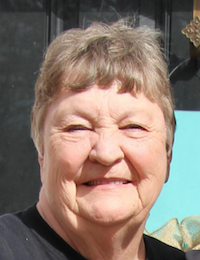
Dolores Glover

Dolores Glover, age 71, of Alto, Georgia, passed away on Monday, February 21, 2022.

Mrs. Glover was born March 8, 1950, to the late Hugh and Ruby Glover. In addition to her parents, she was preceded in death by a brother, Dennis Glover. She was a retired Habersham County school bus driver and a truck driver. She never met a stranger. She was a devoted mother, sister, and grandmother.

Survivors include sons and daughters-in-law: Kelly and Tiffany Held, Lilburn, Georgia, Bradley and Ulla Held, Palm Beach Gardens, Florida, and Ethan and Lindsey Held, Auburn, Georgia; sister, Dixie Glover, Alto, Georgia, six grandchildren, Olivia, Victoria, and Sophia Held of Lilburn, Georgia, Jocelyn, Fiona, and Ryder Held, Auburn, Georgia.

Memorial services will be held at 2:00 PM, Friday, 25, 2022, at the Whitfield Funeral Home, South Chapel. Inurnment will follow at the Yonah Memorial Gardens.

The family will receive friends from 1:00 p.m. to 1:45 p.m. Friday, February 25, 2022, at the funeral home.

Arrangements have been entrusted to Whitfield Funeral Homes & Crematory, South Chapel at 1370 Industrial Boulevard, Baldwin, Georgia 30511. Telephone: 706-778-7123

Caught in the middle of a Republican overhaul of education, teachers feel ‘under attack’

Teandra Storey is in the midst of a grueling rehearsal schedule for her high school’s rendition of “A Raisin in the Sun.”

The economics teacher is directing the play in honor of Black History Month at Grayson High School in Gwinnett County.

“What I really like about ‘Raisin in the Sun’ is that it doesn’t really fully focus on the relationship between African Americans and white Americans,” Storey said. “Really, the main focus of the play is how this African American male is navigating a world that — during that time period — that really didn’t allow for them to have as many opportunities.”

The increased politicization — and polarization — of education and our nation’s history on race that is sweeping the country has put teachers like Storey into an increasingly uncomfortable situation.

Across the state, teachers have found themselves caught in a conservative battle to ban “divisive topics” from classrooms, which Republican lawmakers define as a various list of ideas regarding race — bills that came from the national conservative uproar over so-called “critical race theory” in classrooms.

Critical race theory is the idea that longstanding institutions of the United States are inherently racist.

GOP lawmakers have introduced an array of bills this session that target teaching about race in K-12 classrooms, although critical race theory isn’t actually taught in any Georgia schools.

During a conversation with reporters called by Republicans, Senate Majority Leader Mike Dugan asserted that the proposals are not the same as “critical race theory” bans being seen across the country.

This is not a CRT bill,” Dugan said. “CRT is a specific model. That would be too narrow a focus, for one. So just to clarify, this is not a CRT bill.”

But after two years on the front lines of partisan pandemic politics, teachers say they are exhausted and now on constant alert about what they can and can’t say in their classrooms.

One minute, they worried about vitriol over masks in school; the next, they’re worried about what law could get passed down from the General Assembly that puts them in the hot seat.

“Laws like this could make teachers question everything,” Storey said, who is in her 10th year of teaching. “Even if it’s factual, it makes them question it.

‘Anti-education’

During his State of the State address this year, Gov. Brian Kemp pledged to “protect our students from divisive ideologies like critical race theory that pits kids against each other.”

Since then, GOP lawmakers — many with ties to the governor — have launched efforts to pass laws that limit conversations around race and others that give parents more say over what their kids are taught in school.

Still, committee hearings have been riddled with hours of testimony on how teachers feel mistrusted and scared to teach a curriculum that has been part of their lesson plans for years.

Jameson Brewer, assistant professor of social foundations of education at the University of North Georgia, said state policymakers are taking up an attack against teaching about race in classrooms that started under the Trump administration.

“I think that [to] anybody paying attention to what’s happening in Georgia as well as across the nation,” Brewer said, “it seems that there’s a fever pitch of anti-CRT bills.”

“It’s really just anti-education,” he said. “It’s anti-critical thinking; it’s anti-student.”

The conversations about what about race should be taught in K-12 classrooms — and how — has been brewing for months.

In June of last year, the Georgia School Board passed a resolution targeting race in classrooms that states that the board “believes the United States of America is not a racist country, and that the state of Georgia is not a racist state.”

Local school board meetings across Georgia have also been filled with angry parents who have alleged that teaching race in schools actually introduces racism and puts white students in an uncomfortable position.

This month, the Atlanta Board of Education passed a resolution unanimously opposing various bills that limit teaching about race and censoring of classroom materials being reviewed by the state legislature.

Board Chairwoman Eshé Collins said she worries about the impact these bills will have on the students — especially in the Atlanta school system where more than 72 percent of students are Black.

“We know that those stories and what history tells us — and even the conversations — provide a level of critical thinking and analysis that we want our students and our children to be able to have,” Collins said.

“We want our teachers to fully feel free to teach — and to teach what is necessary for our students,” she said.

A Gwinnett County school board meeting was where Storey first heard about the concerns about “critical race theory” from white parents, which she calls “false hysteria.”

Storey is not only a teacher but helps curate social studies lessons in her county and for teachers across the country.

“It was very confusing to me as to why there was this uproar about critical race theory when nothing in our standard teaches critical race theory,” she said. “It’s laughable. It’s laughable and something that we are not really talking about because we’re not teaching it.”

State Sen. Bo Hatchett, a Cornelia Republican and one of the governor’s floor leaders, is the sponsor of SB 377, which seeks to curb “divisive concepts” in the classroom.

Hatchett argues the bill doesn’t keep teachers from teaching history around slavery, oppression or segregation.

“I want to make it clear that I do not want to inhibit the teaching of history, which is why there’s explicit language in the bill that speaks to this intent,” Hatchett said. “Ultimately, we need to give parents a voice in classroom subject matter that strays outside the bounds of simply teaching historical facts. So we’re banning specific divisive concepts in the teaching process.”

But the subjective nature of the language in the bills making their way through the General Assembly leaves a lot of room for interpretation.

Storey wonders how she can talk about economic disparities between Black and white Americans without addressing the discriminatory systems that have played into the problem.

Brent Andrews, a 21-year English teacher at Cedar Shoals High School in Clarke County, said that in his American literature class he asks students to probe the tenets of the “American Dream.”

Is there current evidence that there’s racial discrimination in our country?” he said. “Is there evidence that policies of the past are still negatively affecting people’s lives today? And I think that these laws that are coming through now are intended to stymie that.”

Brewer, who teaches University of North Georgia undergraduates studying to become educators, said even his students are starting to think about what they can and can’t teach in their classrooms.

“It hampers teachers,” he said. “It will cause teachers to engage in some self-censorship just because it’s confusing. It’s not clear what these bills necessarily restrict and what they don’t.”

Parents vs. teachers

Teachers, like Andrews, said political battles over what happens in the classroom has long hindered the profession.

I think for a long time, education has been damaged in a lot of ways by elected officials making laws about education,” he said.

But experts say the atmosphere for restrictive education bills in the legislature was primed by the pandemic, which took the debate over classroom politics to an all-time high.

After more than two years of navigating partisan politics surrounding COVID-19 policies in schools, Lisa Morgan, president of the Georgia Association of Educators, said teachers are “exhausted.”

The flurry of legislation being considered by lawmakers this session feels like “teachers are under attack,” she said.

“They are attacks on the integrity and professionalism of educators,” Morgan said. “And they are an attack on the partnership that should exist between parents and educators for our students.

A key provision within education proposals are processes that would allow parents to request access to months of lesson plans and launch complaints against the curriculum that their child’s teacher has planned for the class.

Another bill being considered under the Gold Dome gives parents a pathway to protest “obscene” books and other materials they believe aren’t appropriate for teaching.

It’s just having a complete chilling impact on this discourse in the classroom, which is how children learn,” Morgan said. “A lot of these are things that educators and parents already were sharing, but now it’s being turned into this political issue to divide parents and educators.

House Rep. Will Wade, a Dawsonville Republican, is the sponsor of HB 1084, the House counterpart to SB 377 that bans “divisive concepts” around race.

During a committee hearing on the bill, Wade pushed back against the idea that legislation pits parents and teachers against each other.

Teachers are not the target,” he said. “Administrators are not the target. I do believe in the vast majority of places in this state that local school administrators and teachers and parents can come together through a process to resolve these kinds of conflicts.”

But Brewer says the message is clear.

“Considering these bills, it is yet another manifestation — or artifact — that we don’t trust teachers,” Brewer said. “We don’t consider them to be professionals. We have very little regard for the work that they do … and that is damaging to the profession.”

It’s a profession both Storey and her husband got into because, she said, it’s what they love to do.

Not only am I a teacher, I am a mother first,” she said. “I think the thing that I want to emphasize is that we get into this job because we love children and we love to see them learn and we love to see them grow.”

We do this because we love the profession and we love students,” she said. “And lawmakers make it hard for us to continue to love the thing that we went to school for.”

This article appears on Now Habersham through a news partnership with GPB News

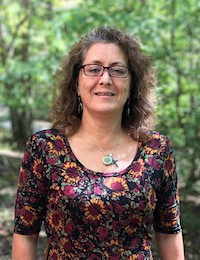
Brenda Alice Sisk

Brenda Alice Sisk, age 62, of Demorest, passed away on Sunday, February 20, 2022.

Born on August 6, 1959, at Clark Air Force Base in the Philipines, she was the daughter of the late Harold David Johnson and Lily Sengsen Johnson. Brenda worked many years in telecommunications at Midland Communication, was a Wellness Advocate for DoTerra Essential Oils, served on many mission trips overseas, she was an accomplished knitter, loved her church and her family.

In addition to her parents, she was also preceded in death by her father-in-law, Marion Sisk, Sr. and her “Bonus Dad,” Ted Hann.

She is survived by her husband, Hal Sisk; son and daughter-in-law, Michael Medlock (Emily) of Loda, Illinois; daughter and son-in-law, Cristina Bailey (Jonathan) of Sharpsburg, Georgia; daughter, Elizabeth Sisk (Justin) of Dahlonega, Georgia; sister and brother-in-law, Marie Carter (Mike) of San Antonio, Texas; grandchildren, Peyton and Tyson Lewallen, Mason and Keegan Medlock, Parker, Hayden, Skylar and Duncan Bailey; several nieces, nephews and cousins; mother-in-law, Mina Sisk and “Bonus Mom” Jo Anne Hann.

In lieu of flowers, donations may be made to, Georgia Transplant Foundation 2201 Macy Drive, Roswell, Georgia 30076 or to The Torch Nicaragua Mission 800 Cannon Bridge Road Demorest, Georgia 30535.

Memorial services are Saturday, March 5, 2022, at 11 a.m. at The Torch with Pastor Mike Franklin officiating.

The family will receive friends from 6 – 8 pm on Friday at The Torch 800 Cannon Bridge Road, Demorest, GA 30535.

Those in attendance are asked to please adhere to public health and social distancing guidelines regarding COVID-19.

An online guest register is available and may be viewed at www.mcgaheegriffinandstewart.com.

McGahee-Griffin & Stewart Funeral Home of Cornelia, Georgia (706/778-8668) is in charge of arrangements.

Habersham Commission to discuss new positions at meeting tonight

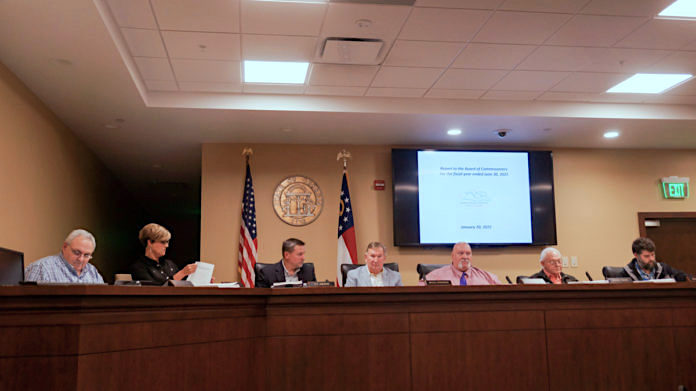
The Habersham County Board of Commissioners will meet tonight to discuss several agenda items, including the creation of two new county positions.

The commission recently approved the creation of a county airport manager, and is scheduled to discuss the creation of a temporary part-time magistrate judge position and an emergency radio system administrator position tonight.

The commission will discuss what those positions would entail and what costs the county would be looking at, as well as possible budgetary amendments for those positions, at their meeting.

The commission will also discuss moving forward with a pay study, something the county has expressed a need for on multiple occasions. County Manager Alicia Vaughn spoke in January about how a pay study will help the county understand how to improve county employee pay, which the commissioners say is not comparable to the pay rates in neighboring counties.

The meeting will take place at the Habersham County Courthouse on Monday, Feb. 21 at 6:00 p.m., and will be livestreamed here. A work session will precede the meeting at 5:00 p.m. at the courthouse.

To view the full agenda, click here.

Thomas A. Johnson Jr.

Thomas A. Johnson Jr., age 62, of Demorest, GA, died February 16, 2022, at NEGMC from complications related to Covid 19. His beloved wife, Linda Gibeault, was at his side when he passed.

Born in Waterbury, CT, Tom was preceded in death by his father, Thomas A. Johnson. In addition to his wife, Tom leaves behind his cherished dog Jesse, his mother Mabel Coer of Naugatuck, CT, sister Nancy D’Alfonso (Rose), sister Judy Bell (Don), numerous grandchildren, nieces and nephews. He also leaves behind a large Gibeault family and his nephew, Raymond Solla of Bristol, CT who was like a son to Tom.

Tom graduated from Waterbury State Technical College in 1992 (Manufacturing Engineering) and North Georgia Technical College in 2011 (Accounting). A long time employee of Scovill Fasteners in Clarkesville, Tom truly found his niche at Atlanta Rod & Mfg in Lavonia GA from 2011 to present.

Tom loved dogs, all types of music, Braves baseball, SEC and NFL football, crossword puzzles, cabining in the mountains in Ellijay and Linda’s cooking.

No services are planned at this time. In lieu of flowers, donations in Tom’s memory be made to Dream Dachshund Rescue in Marietta, GA.

An online guest register is available and may be viewed at www.habershamcrematory.com.

Habersham Crematory (678-617-2210) of Cornelia is in charge of arrangements.

Loyd Tyler

Loyd Tyler, age 72, of Alto, Georgia passed away on Saturday, February 19, 2022.

Mr. Tyler was born on June 25, 1949, in Banks County, Georgia to the late James Pierson Tyler and Mary Alice Dalton Tyler. In addition to his parents, he was preceded in death by his brother, Edward Tyler; granddaughter, Morgan Nicole Tyler; brother-in-law, Bruce Simmons. Mr. Tyler was the United States Marine Veteran having served in the Vietnam War. Loyd had a love for antique cars and motorcycles.

Survivors include his son and daughter-in-law, Jamie Tyler and Reta, of Clarkesville; grandson, Austin William Tyler, of Clarkesville; sisters, Glenda Simmons, of Banks County; sister and brother-in-law, Barbara and Charles Garrison, of Panama City, FL; and numerous nieces, nephews and cousins.

Graveside Services will be held at 2:00 p.m., Wednesday, February 23, 2022, at Yonah Memorial Gardens with military honors by The Grant Reeves Honor Guard and Pastor Scott Ledbetter and Dr. Kenneth Franklin officiating

The family will receive friends from 6:00 p.m. to 8:00 p.m., Tuesday, February 22, 2022, at the Whitfield Funeral Home, South Chapel.

Flowers will be accepted or memorial donations may be made to the Grant Reeves Honor Guard, 174 Cornelia Crossing Shopping Ctr, Cornelia, Georgia 30531, or the Habersham County Veterans’ Wall of Honor, P.O. Box 298, Demorest, Georgia 30531.

Arrangements have been entrusted to the Whitfield Funeral Homes & Crematory, South Chapel at 1370 Industrial Boulevard, Baldwin, Georgia 30511. Telephone: 706-778-7123.

Keith Steven Ross Robinson

Mr. Keith Steven Ross Robinson, age 45, of Demorest, went home to be with the Lord on February 17, 2022.

Mr. Robinson was born May 25, 1976, to John Garrison and the late Marilyn Garrison. Keith was a member of Living Faith Sanctuary in Demorest, GA. Some of his favorite things in life included fishing, cars, getting his back scratched and spending as much time as he could with his family. As a child, he enjoyed putting together model cars and airplanes. His family says his mission was always to make everyone laugh and smile. In addition to his mother, he is preceded in death his grandmother Olivia Elizabeth Christopherson, grandfathers Larry Spencer Christopherson and Ross Robinson, cousin Haley Jade Robinson as well as his best friend Nathan Nicholson.

He is survived by his daughter and significant other Katlyn Robinson and Blake Thompson; sons Nate Robinson and Nicholas Harper; grandchildren Kayden, Lucas and Michael Thompson; sister and brother in law April and Kenneth Stephens as well as numerous other aunts, uncles, cousins and other relatives.

A celebration of life service will be announced at a later date.

Funeral arrangements have been entrusted to Whitfield Funeral Home North Chapel, 245 Central Ave. Demorest, GA 30535 (706) 778-1700.

50% of suicide victims interact with health care system in the month before their deaths

The Centers for Disease Control and Prevention recently reported that suicide was the 12th leading cause of death in the United States in 2020. (Credit: Pexels)

The Pew Charitable Trusts recently launched a project aimed at reducing suicide rates by making risk assessment a part of routine hospital visits.

Evidence-based screening tools exist that can help health care providers quickly and easily identify patients at risk for suicide, but they’re not widely used, said Kristen Mizzi Angelone, a senior manager with the Trusts’ Suicide Risk Reduction Project.

Suicide is preventable, Angelone said, and universal assessment of suicide risk would save lives.

“We’re really focusing on the health care system right now because statistics show that about half of people who die by suicide have interacted with the health care system within a month of their deaths,” Angelone said. “So we know that this is a crucial intervention point to identify people who may be at risk of suicide.”

Suicide is not a new concern, but the coronavirus pandemic is exacerbating all mental health and substance use disorders.

A record number of people overdosed and died nationwide in the 12-month period ending in January 2021, according the Centers for Disease Control and Prevention, including more than 1,900 Georgians. That is a 38.8% increase over state data from the previous year, which was higher than the national average of about 31%.

The numbers are likely underreported.

When Georgia released its first revenue report after the pandemic took hold, tax collections from alcohol sales had risen 13%.

The Georgia Council on Substance Abuse said people in isolation due to the pandemic are more likely to experiment with addictive substances for the first time, and that people in recovery are at risk of relapsing when forced to avoid social activities. That includes in-person recovery meetings.

MORE: This Is What Happens When Georgians Experience Mental Health Or Addiction Crisis

The opposite of addiction is connection, said Jeff Breedlove, the Council’s spokesman.

“It’s happening already and it’s only going to get worse before it gets better,” he said of the problem.

Suicide is an urgent public health issue across the United States, affecting people across urban areas, rural areas, and all racial and ethnic groups, Angelone said.

Rates of suicide have increased dramatically over the last 20 years, especially among veterans and people who identify as LGBTQ.

RELATED: A suicide epidemic is killing Georgia’s first responders. Help from lawmakers is slow in coming

Suicide was the 12th leading cause of death in 2020, the CDC reported.

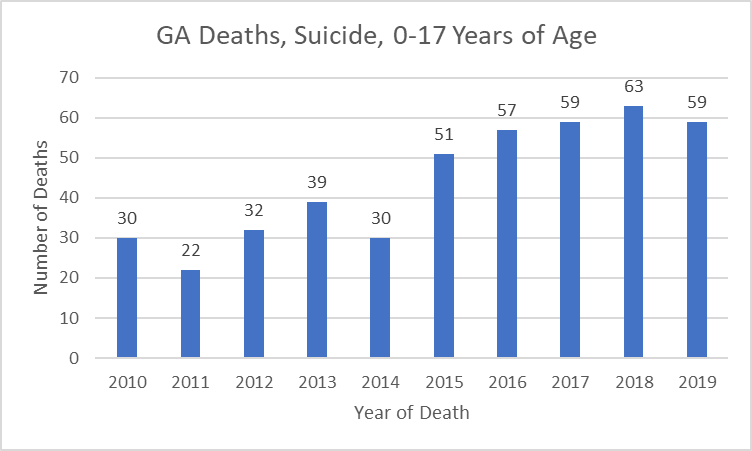
Chart showing deaths by suicide between 2010 and 2019

For Georgians between ages 10 and 17, the rate of completed suicides has been 1.8 times higher during the past five years compared to the prior five-year period.

Over the next two years, the Suicide Risk Reduction Project plans to work closely with a cohort of hospitals, helping them implement changes and overcome obstacles to risk assessment implementation, Angelone said.

They are hoping to bring together about 10 to 12 rural, urban, large and small hospitals that serve a diversity of patients, and work with the administrations to implement an expanded set of suicide care practices.

“At the end of this, we hope to publish the findings of a case study of this experience as an example for other hospitals around the country that are interested in expanding what they’re doing around suicide,” Angelone said.

Experts have not yet established a baseline of what suicide care in the United States currently looks like, such as exactly how many hospitals have expanded their suicide screening practices or what those suicide care practices look like across the country.

Angelone said researchers with the Suicide Risk Reduction Project will conduct a survey this year, hoping to publish findings early in 2023.

The hope is that the cohort of hospitals can serve as a model for hospitals and health systems around the country.

“There is a lot that hospitals and health systems can do to identify these folks [at risk of suicide] and provide them with the care they need,” Angelone said. “We’re really looking forward to seeing how the next two years go.”

MORE: 988 will be the ‘911’ for mental health/addiction crisis calls. Georgia preps for the extra load

This summer, Georgia will join the nation in using a single three-digit crisis hotline: 988 is meant to be the “911” of behavioral health, said Judy Fitzgerald, the commissioner of the Department of Behavioral Health and Developmental Disabilities.

Establishing 988 for suicide prevention and mental health crisis services will make it easier for Georgians in crisis to access the help they need and decrease the stigma surrounding suicide and mental health.

The 988 emergency line goes live July 16.

“This is probably one of the largest and most transformative initiatives that I’m going to experience in my lifetime in behavioral health,” Fitzgerald said.

If you or someone you love is experiencing a mental health emergency, call Georgia’s current Crisis Access Line at 1-800-715-4225.

This article appears on Now Habersham through a news partnership with GPB News

Toccoa motorcyclist injured while fleeing from trooper, state patrol says

A Toccoa motorcyclist faces DUI and other charges after leading state troopers on a short chase after they tried to stop him, officials say.

The pursuit began shortly after 3:30 p.m. Sunday afternoon on US 76 in Rabun County. It ended when the Suzuki GSX-R600 ran into a car, injuring the biker, says Georgia State Patrol Post 7 Commander Donnie Sadler. He identifies the injured biker as 40-year-old Jason Hoyt Massey.

According to Sadler, the pursuit lasted approximately a quarter-mile before Massey crashed into a Ford Fusion as it attempted to turn left off of US 76. The driver of the car, Kayla McClain, 39, of Otto, North Carolina, was not injured.

Rabun County EMS transported Massey to a local hospital for treatment. Troopers charged him with DUI drugs (pending), fleeing and attempting to elude, and other traffic charges.

Renter struggles remain as Georgia’s assistance program dodges federal funding claw back

Georgia has reallocated $228 million of its $552 million in federal aid to other rental assistance programs in the state. Georgia ranks near last in distributing money intended to help stem an eviction crisis. Getty Images

(GA Recorder) — Janell Wise has lived in the same apartment since she moved to south Cobb County from Tennessee in 2014. Wise, 40, lives with her 13-year-old son in Mableton and works as a team leader at an Amazon facility near Fairburn.

Last August, she came down with COVID-19. After her son tested positive in September, she missed nearly two months of work.

“Once COVID hit, we just weren’t really prepared for it as much as I thought I was,” Wise said. “It really put a financial strain on us.”

The rent for Wise’s two-bedroom apartment increased to $1,025 from $967 in February after her first-ever late notice in December. Wise is looking for both a second job and rental assistance, but she’s had trouble applying to the Georgia Rental Assistance program in the past.

Janell Wise remained in her Mableton apartment after she got help with her February rent. Ross Williams/Georgia Recorder 

The rental assistance program is administered statewide by theDepartment of Community Affairs, and it offers federal funds covering up to 18 months in rent and utility bills. The department has so far struggled to distribute its first allotment of federal funding despite what experts and advocates call a clear housing need.

Last November, the Treasury Department required DCA to file a Program Improvement Plan to avoid losing $120 million to higher performing jurisdictions. The Treasury approved Georgia’s plan in mid-December, according to Kaley Volkmann, a contract spokeswoman for DCA.

“DCA did not lose any federal funding and is currently operating the GRA program under the approved PIP,” said Volkmann.

In January, the U.S. Treasury allowed DCA to voluntarily reallocate portions of its funding, according to a press release. Volkmann said the state has reallocated $228 million to other Georgia rental assistance programs, adding “this is subject to the Treasury’s approval and disbursement.”

The Treasury Department has approved a total of $80.6 million in reallocations to five counties. On Feb. 8, Fulton County officials announced they have received an additional $25 million in emergency rental assistance, indicating some of the reallocated funding has already reached smaller jurisdictions.

Georgia’s state program still ranks 48th out of 50, ahead of only Wyoming and South Dakota, according to the National Low Income Housing Coalition. Seven states have already distributed 100% of the first round of pandemic-related federal rental aid.

According to the latest community affairs program metrics, $84 million of Georgia’s $552 million allocated through the first round of the rental assistance program has gone to 12,000 renters. More than 55,000 tenants have applied, and another $7.3 million is scheduled.

“Between two waves of emergency rental assistance, [DCA] got about a billion dollars from the federal government to help Georgia’s families, and they sat on it for over a year,” said Elora Raymond, an assistant professor in the School of City and Regional Planning at Georgia Tech and a project lead for the Atlanta Region Eviction Tracker. “And they did this during the foreclosure crisis. They’re doing it again during the pandemic housing crisis.”

From 2010 to 2021, the state agency oversaw the HomeSafe Georgia program, distributing federal funds meant to prevent Georgians from losing their homes during the foreclosure crisis. A 2017 audit by a federal watchdog group found that DCA “withheld funds,” disbursing only a portion of the available $370.1 million to homeowners and spending $32 million on administrative expenses. Raymond sees a pattern between the two community affairs-managed programs.


“These programs are different by design and in both DCA worked diligently to administer the federal funds,” said Volkmann. “HomeSafe GA closed out very successfully at the end of 2021.”

Ongoing efforts across the state

Rather than a tipping point of mass evictions reminiscent of the 2010 foreclosure crisis, Raymond says the housing crisis Georgia faces today is more of a constant, slow roll.

According to the Atlanta Region Eviction Tracker, there were 9,752 reported eviction filings in Atlanta’s five-county region in January 2022. This figure is down 29% from January 2019, but up more than 25% from last year.

Various Georgia agencies and organizations are working to alleviate the crisis on multiple fronts. Protip Biswas, the vice president of homelessness for United Way of Greater Atlanta, says the nonprofit partnered with the city of Atlanta to disburse all its rental assistance funding. The program is not currently accepting applications.

“There are certain populations like seniors, or where language barriers come in, that is even more difficult for them, so it’s not easy to access this money,” Biswas said. He added that it’s important renters now apply through the state program to initiate assistance.

According to Lindsey Siegel, Atlanta Legal Aid’s director of housing advocacy, the organization has already assisted 1,188 households with landlord-tenant related cases in Atlanta’s five-county region this year, with most trying to help people avoid eviction.

“Rents are going up sometimes by hundreds of dollars from one lease to another,” said Siegel. “And if tenants aren’t able to pay those increases, they’re being pushed out.”

Georgia as a whole saw rents increase by 31% from 2020 to 2021, and the average rent across the state was $1,478, according to the most recent Rent Report from Rent.com. The National Equity Atlas’ rent debt dashboard estimates there are 251,000 Georgians behind on rent.

“Cobb County was wall to wall with evictions before COVID,” said Monica DeLancy, the founder of We Thrive in Riverside Renters Association. “Now we’re seeing rents over $1,000.”

Wise covered most of her February rent with help from We Thrive in Riverside, but the threat of eviction is taking its toll. Over the last few weeks, she’s been noticing piles of furniture in front of apartments in her area. Wise hopes she can stay in her apartment at least until her son finishes the school year; her 19-year-old daughter is a college sophomore in North Carolina.

“Whenever she comes home, is it going to be a home for her to come to?” Wise said. “That’s why I’m trying to fight so hard, working hard every day. Just trying to have just enough money to make sure we can make it.”

What to know

To apply for Georgia’s Emergency Rental Assistance Program, go to georgiarentalassistance.ga.gov or for help, contact the Department of Community Affairs at [email protected] or 833-827-7368. Anyone in the state can apply, and there is an initial screening to determine eligibility.

For help with Section 8 problems, contact the Georgia Department of Community Affairs:

https://www.dca.ga.gov/safe-affordable-housing/rental-housing-assistance/housing-choice-voucher-program-formerly-known.

If immediate assistance is needed because you are experiencing homelessness or on the verge of homelessness, please email [email protected]. For more information, visit DCA’s Homeless and Special Needs Housing.

Georgia Legal Services Program can help with eviction cases at 833-457-7529 or at https://www.glsp.org/housing/.

Lady Indians finish 9th at Bear’s Best

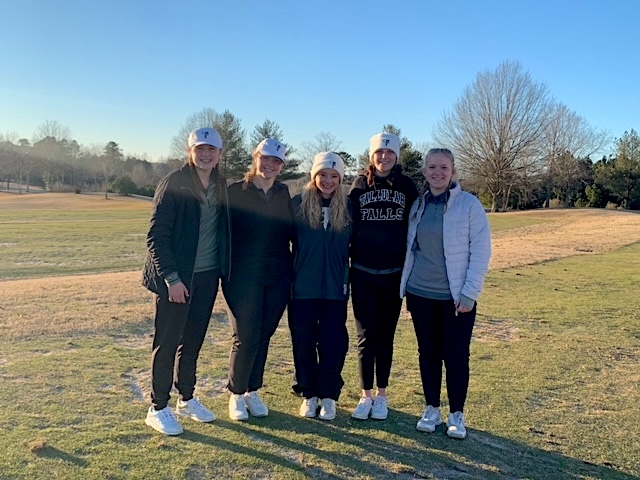
TFS Lady Indians team (photo by TFS Athletics)

The Lady Indians varsity golf team opened the 2022 season at Bear’s Best Golf Club Atlanta in a tournament hosted by Buford. The Tallulah Falls School girls came in 9th among 22 teams.

In the two-man best ball tournament, freshmen Mallory Higgins and Ella Akers paced TFS with the team-low score of 99.

“For our first tournament of the season, I’m proud of the way our girls competed and how they carried themselves on the course,” says coach Hannah Satterfield. “I feel like this tournament helped the girls see their strengths along with the areas they can improve upon.”

The challenging course is designed by former professional golfer, Jack Nicklaus. The girls will compete in their first 9-hole match on March 7 against Stephens County at The Orchard Golf Club.

Deborah Sue Crask

Deborah Sue Crask, age 71, of Blairsville, entered rest Saturday, Feb. 19, 2022, at the Northeast Georgia Medical Center, Gainesville.

Deborah was born on March 23, 1950, in Greenville, South Carolina to the late William, Sr. & Hester Smith Jordan. She was a paralegal with many Law firms in the Greenville area.

Left to cherish her memory, Husband, Melvin Crask; sons, Jordan Fowler & Jason (Jessica) Fowler; daughter, Kimberly (Robert) Whelan; grandchildren, Samantha, Jacob, Emma & Katheryn; brother, William Jordan, Jr.; sisters, Phyllis Michaux & Lucia Dodson; a host of other relatives survive.

Memorial services will be held later in Greenville, South Carolina. Please share online condolences with the family at www.wardsfh.com.