I hope you made it out to see the full snow moon last week. It was certainly a beautiful one!
This week the moon will be far from our minds as it rises later and later each night giving more time for evening stargazing without worrying about a washed-out sky. With the spring equinox coming up in just a few weeks this makes for the perfect time to check out a twice-a-year phenomenon known as the zodiacal light.
By Dominic Cantin – Wikimedia
Back a few billion years ago when the solar system was just beginning there was a lot of dust and gas just floating around. Due to a physics concept known as conservation of angular momentum, this dust cloud condensed over time to all have roughly the same orbit and form a pancake-shaped disc around the infant sun. Over time this dust and gas would slowly coagulate due to gravity eventually forming all the planets and moons as we see them now. However, not all of that dust made it to planets, and plenty more has been kicked up by comets and asteroid impacts.
This remaining dust is what is known as the interplanetary dust cloud, and it is what forms the zodiacal light. The zodiacal light has been observed for thousands of years and even holds a significant place in Muslim tradition where it is referred to as the “false dawn”. It is visible twice a year, around both equinoxes when it is at its steepest incline to our own orbit and points nearly straight up into the sky. During the spring it is best visible from 2-3 weeks before to 2-3 weeks after the equinox during the evening after sunset. It is visible around the fall equinox before sunrise, hence the “false dawn”. Over the past couple hundred years an increase in light pollution has made this phenomenon much harder to observe.
Zodiacal light from NGAO in March of 2015
The zodiacal light appears as a fairly dim triangle of light stretching up from the west in spring and east during the fall. It is best seen around 1 hour after sunset once astronomical twilight has faded. It is also easiest seen from a dark sky location well away from bright city lights. I have observed it numerous times in North Georgia from the North Georgia Astronomical Observatory, as seen below in a photo from way back in 2015.
With the moon rising later and eventually disappearing altogether over the coming two weeks it will make for an excellent time to observe the zodiacal light.
Head out this week and try to sneak a peek! If you manage any photographs feel free to share them with us as well.
Georgia’s time at the center of national politics is likely to continue this year with a slate of Trump-endorsed candidates in the GOP primary and U.S. Sen. Raphael Warnock and Stacey Abrams on the ballot. John McCosh/Georgia Recorder (2020 file)
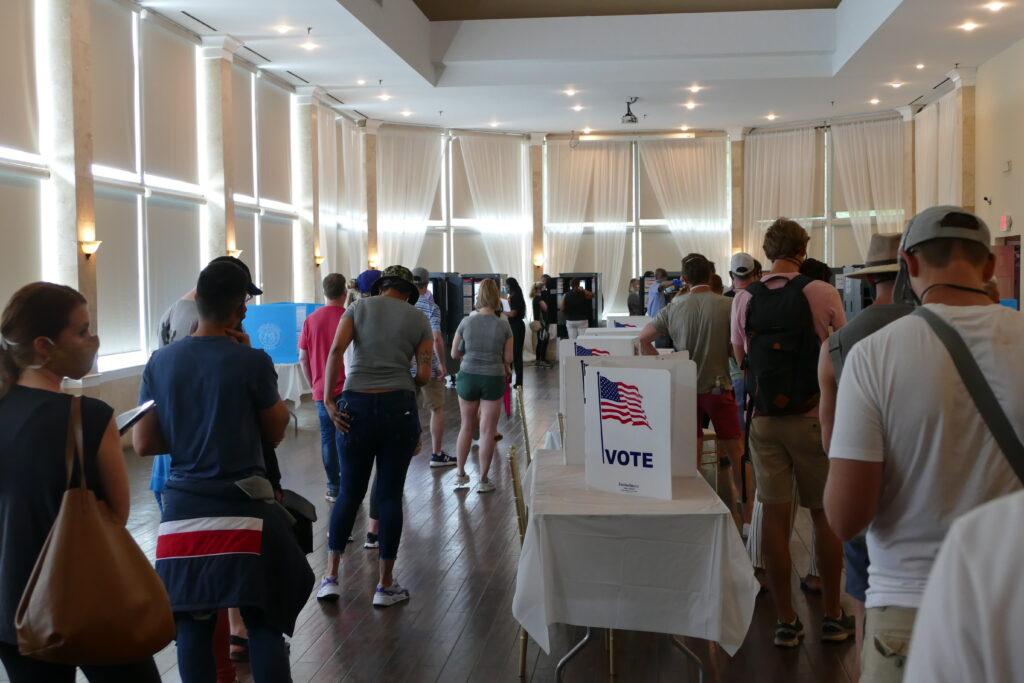
(GA Recorder) — Georgia voters might not hold the power this time around to dramatically flip control of the federal government, but even so, the once reliably red state will stay at the center of national politics this year.
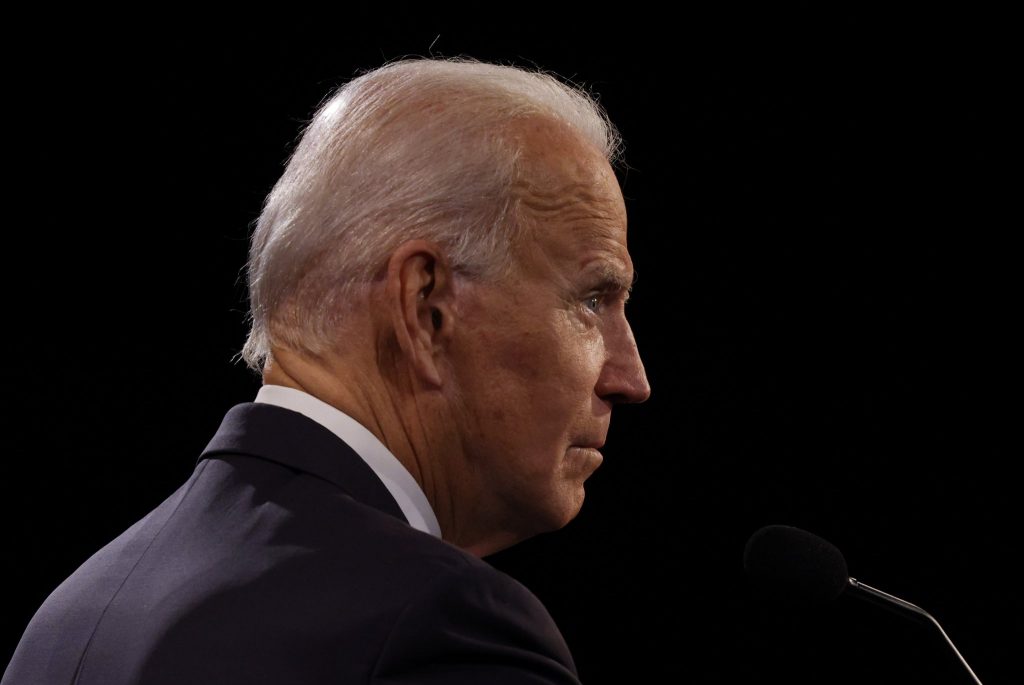
It was just a little more than a year ago when a record five million Georgians turned out to vote and helped put President Joe Biden in the White House – narrowly choosing a Democratic presidential candidate for the first time in three decades.
And a good many of them – and more Black voters and fewer Republicans – came back to the polls a couple months later to send a pair of Democrats to represent them in the Senate. The upset wins unexpectedly handed Democrats tenuous control of all three branches of government and set a new spending record for Senate elections.
The stakes are not quite that high for this year’s midterm elections, but the national implications are still there. Many candidates have already announced their campaigns, but their candidacy will become official early next month when qualifying begins.
For one, there is a Trump-endorsed candidate in four statewide races, with even the sitting governor facing a rare intra-party challenge after refusing to overturn President Joe Biden’s slim victory in Georgia. The GOP primaries on May 24 will test former President Donald Trump’s hold on the Republican party.
About 31% of likely Georgia Republicans said they did not know Trump endorsed former U.S. Sen. David Perdue when asked earlier this month, according to a poll from the Trafalgar Group that showed Gov. Brian Kemp with 49% support to Perdue’s 39.5%. Other polls also show Kemp with the edge.
Zach Gibson – Pool/Getty Images (file)
A Trump rally or two in Georgia, though, could make a difference. It would at least shrink the number of people who say they do not know who Trump’s preferred candidate is to lead the state.
“If Kemp wins, it’s a kind of a chink in the armor of the Trump endorsement. It’s a chink in the armor of his control over the party,” said Brian Robinson, a Republican strategist in Georgia. “If Perdue wins, by May this year we know beyond a shadow of a doubt that Trump’s grip on the party is strong as steel.”
Robinson, who predicts a close race, said he is also watching to see whether pro-Trump super PACs come to Perdue’s rescue to help close the widening fundraising gap between Kemp and Perdue, who has centered his campaign on Trump.
The former president has also endorsed former University of Georgia star running back Herschel Walker for U.S. Senate, state Sen. Burt Jones for lieutenant governor and Congressman Jody Hice for Secretary of State.
At the top of the ballot, whoever wins the GOP primary will go on to face Democrats U.S. Sen. Raphael Warnock, who is the state’s first Black senator, and former Georgia House Minority Leader Stacey Abrams, who has only burnished her national star power since losing to Kemp by about 55,000 votes in 2018.
This year’s elections will also feature other quirks that will keep Georgia at the center of national politics.
If the state’s new district maps survive multiple court challenges, the new congressional boundaries increase the likelihood of Republicans gaining one seat in the U.S. House of Representatives from Georgia as the GOP attempts to wrest away control of Congress.
And this is also the first major election since Georgia Republicans passed controversial voting rules in the wake of the 2020 presidential election, which critics argued were designed to dull minority political influence in an increasingly diverse state where the GOP’s margin of victory has steadily shrunk over the years. Last year’s municipal elections were seen as a test run of the new state law.
Redistricting fallout
Two years ago, Democratic Congresswomen Lucy McBath and Carolyn Bourdeaux were rare bright spots for House Democrats, who otherwise had a dismal showing in the 2020 congressional elections. McBath held onto her seat with a solid win over former Congresswoman Karen Handel in her purple-ish district, and Bourdeaux managed to flip her district after former Republican Congressman Rob Woodall did not seek re-election.
But this year, one of the two suburban Atlanta Democrats will be defeated before the first ballots are cast in the November 2022 election, thanks to a congressional map drawn by state Republicans in last year’s redistricting process likely to shift Republicans’ congressional majority in Georgia from 8-6 to 9-5.
McBath’s 6th District, including portions of Cobb, Fulton and DeKalb counties north of Atlanta, was redrawn to stretch into more Republican-leaning Forsyth, Cherokee and Dawson counties.
Bourdeaux’s 7th District, farther to the east and comprising chunks of Forsyth and Gwinnett counties, sheds some of its more conservative Forsyth precincts, creating a safer Democratic seat.
Whether or not Georgia’s electoral maps disempower minority voters will soon be tested in court. Pictured is Rep. Bonnie Rich, the Suwanee Republican who led the redistricting process in the Georgia House of Representatives. Ross Williams/Georgia Recorder (file)
Just as the Georgia House had finished debating the map, which passed on party lines, McBath announced she would seek re-election in Bourdeaux’s district, arguing that while Bourdeaux has represented parts of the new 7th District, she did not live there under the updated map. Georgia members of Congress are not required to live in the districts they represent, though most do.
Bourdeaux may have the home field advantage, but McBath has plenty of advantages of her own, said University of Georgia political science professor Charles Bullock.
“I suspect she probably has better overall name recognition, she’s been in office two years longer than Bourdeaux, and then she has a particularly compelling story, so it will probably be a tight race,” he said.
McBath began speaking out on gun safety after her son, Jordan Davis, was murdered in what would become known as the loud music case.
“I suspect McBath will also probably find it easier to raise money now, it always becomes easier once you’re an incumbent as opposed to being a challenger,” he said. “At least in the past, McBath’s strong position on gun regulation has been a very effective magnet for drawing money. Former New York Mayor (Michael) Bloomberg has contributed generously to a previous campaign, and he probably will do so again.”
Bourdeaux has called on McBath to reject campaign funds from Protect Our Future, a super PAC she said has “a record of making it easy for criminals to launder money and commit fraud and links to the Trump Administration.” But for the most part, both campaigns have avoided the type of personal attacks the GOP gubernatorial candidates have leveled.
Georgia Democrats are also looking toward southwest Georgia, where long-time Democratic Congressman Sanford Bishop’s District 2 is set to lose some of its Black, Democratic-leaning voters. The Black voting age population is set to decrease from 49.5% to 45.8%
Congresswoman Lucy McBath, left, will seek re-election in the district of fellow Democrat Congresswoman Carolyn Bourdeaux, McBath announced Monday.
That’s far from the immediate threat facing Democrats in the 6th District, Bullock said, and Bishop has won in his district while it was majority white years ago. But should the 75-year-old congressman decide to retire, Republicans will likely see the open seat as a major target.
And because the 2nd District was the most underpopulated in the state going into redistricting, Bishop will have plenty of new voters to introduce himself to. Bishop created a campaign Twitter account last month.
In the state Legislature, Republicans have drawn themselves into slightly safer districts, especially in competitive metro Atlanta, where they hope they can hold out for the next decade.
State Sen. Michelle Au, the state’s only Asian-American female senator, appears to be at the most risk from the redrawn lines, with her Johns Creek district set to change from 36.8% white and 59.2% Democratic to 50.9% white and 51.6% Republican.
Other Democrats are seeing smaller shifts, and at least one Republican seems likely to lose his seat. Sharpsburg Rep. Philip Singleton, whose hardline conservative beliefs have put him at odds with members of his party like House Speaker David Ralston, is set to watch his district go from 72.4% Trump voters to 66.6% Biden voters.
The bitter battle over boundaries has also seeped into the once-routine redrawing of local district lines. In counties including Cobb, Gwinnett and Richmond, Republicans are overriding maps approved by the majority-Democratic local delegations and replacing them with maps that are friendlier to Republicans for county commissions and school boards.
Democrats call the effort an attempt to defy the will of minority voters.
In one tense exchange, House Governmental Affairs Committee Chair Darlene Taylor, a Thomasville Republican, called security on House Minority Whip David Wilkerson, a Powder Springs Democrat, after Wilkerson expressed disgust with the plans at a committee meeting.
“You very rarely hear me mention race, but today, let me be very clear. This is about making sure people of color stay in their place and do not have a seat at the table,” Wilkerson said at a Capitol press conference.
Whether or not Georgia’s electoral maps disempower minority voters will soon be tested in court. U.S. District Judge Steve Jones is set to decide on whether the maps deserve to be thrown out or remain in place.
The U.S. Supreme Court has allowed for partisan redistricting, but drawing maps on the basis of race violates the 1965 Voting Rights Act. Earlier this month, the high court ruled in favor of an Alabama map a lower court said harmed Black voting power, which could indicate justices are becoming less receptive to race-based redistricting complaints.
“There is a huge question mark over these maps,” Bullock said. “The hearing before Judge Steve Jones might conceivably result in those maps being thrown out and new maps having to be drawn, and the maps that would be redrawn would probably be more favorable to Democrats. If Jones puts that on hold, or the appellate court does, there might not be a decision until after the election. As we’ve seen in Georgia often happen, districts don’t last for a decade because the courts invalidate them.”
The state’s demographic changes have favored Democrats with a population boom during the last decade driven largely by a younger voting bloc around metro Atlanta and more minorities calling Georgia home, with a 13% increase in the Black population, 32% for Hispanics and a 53% more Asian residents.
Those shifting demographics played a role in a statewide electorate reaching a record 7.6 million registered voters for the 2020 presidential election, up from slightly under 7 million when Kemp defeated Abrams nearly four years ago.
Since 2018, Georgia’s number of registered voters has increased to 7.8 million residents on its voter rolls with active voters accounting for 6.9 million of them. Overall, those voting demographics break down like this: 3.7 million white voters, 2 million Black voters and a combined total of about 450,000 Hispanic and Asian active voters.
While SB 202 mandated for the first time that each of Georgia’s 159 counties provide at least one absentee drop box, it also restricted access to inside a polling place and limited their number based on how many registered voters live in the county. Jill Nolin/Georgia Recorder (2020 file)
Alan Abramowitz, an Emory University political science expert, says the same population shift caused primarily by migration will likely take a series of elections to see the full transformation to a majority Democratic state.
“There are things that are going on in terms of national politics that have an impact as well, so 2022 being a midterm election year, Biden not being very popular, people are upset about inflation, we could see Republicans and make some more of a comeback,” he said.
Georgia’s voting law overhaul will also face its first major test this year with millions of residents set to choose their preferred candidate for governor, U.S. Senate, Congress, the state Legislature and on down to local seats.
Republicans passed the controversial Senate Bill 202 last March that has been criticized by Democrats and civil rights groups as voter suppression attempts targeting Black voters and other marginalized groups ahead of the 2020 general election.
Eight pending federal lawsuits – including one by the U.S. Department of Justice – claims that Georgia’s law discriminates by requiring a state ID for absentee voting, preventing provisional ballots from being cast in the wrong precinct before 5 p.m., limiting absentee drop boxes, and other restrictions. The ongoing legal battle over the new law will likely go on for years.
Republicans tout the law instead for expanding weekend voting, requiring more notice to voters when polling places are changed, and replacing subjective absentee signature verification with a government-issued ID number.
In addition to removing the secretary of state from serving as chairman of the State Election Board, the measure gave the board authority to temporarily remove a local election board based on a performance review.
Secretary of State Brad Raffensperger, who has frequently defended the integrity of the state’s elections against overwhelmingly disproven claims of fraud in 2020, has also been outspokenly supportive of the majority of the new election rules.
Raffensperger, Kemp and other Republicans have said that the minimal problems during November’s elections in Atlanta and other cities show how ridiculous the claims are that the law would disenfranchise voters are.
“It’s so easy to vote in Georgia that we’ve had record registration, record turnout and yet we somehow have been picked on by President Biden,” Raffensperger said at an Atlanta Press Club event this month. “We’re big people, we can fight back, we push back from political biases with things that just are supported by the facts.”
Yet, there are some early signs that the rule changes are resulting in a higher rejection rate for absentee ballot requests from 1% in 2020 to 4%, with the most common reasons due to a shortened deadline to request the ballots and not properly following the new ID requirement.
That higher rejection rate would disproportionately harm Black voters who turned in more than half the absentee ballots in 2020, according to Abrams-founded Fair Fight Action.
A record number of Georgians voted by absentee ballot in the 2020 election as an alternative to in-person voting during the pandemic. Jill Nolin/Georgia Recorder
Absentee voting was one of the cornerstones of Abrams’ 2018 campaign and in 2020 a record 1.3 million Georgians chose to vote absentee in the Nov. 3 general election, as the pandemic changed how people cast ballots.
While SB 202 mandated for the first time that each of Georgia’s 159 counties provide at least one absentee drop box, it also restricted access to inside a polling place during business hours and limited their number based on how many registered voters live in the county.
The rule means dozens of counties, mostly in rural Georgia, will now have a drop box set up throughout early voting, but also means Democratic stronghold Fulton County will go from 38 boxes in 2020 to eight this year spread across its more than 70-mile length.
With only 12,000 votes separating Biden and Trump in 2020 and a gap of 55,000 giving Kemp the victory over Abrams in 2018, even rules that might curtail thousands of votes could be costly to candidates.
“It’s going to be important now for the candidates and parties to make sure that voters are educated about what’s required,” Abramowitz said. “I think a lot of these changes that were part of that bill, in the end, are not really going to have that much effect on turnout, just as we saw in the past when the state enacted that voter ID law.”
“There is reason to be concerned with when elections are very close because even small differences in turnout or rejection rates could make a difference,” Abramowitz added.
There is also the potential, though, for new election-related changes with the legislative session underway now through early April. One proposal would eliminate drop boxes entirely, while another calls for ending the no-excuse absentee system that’s been in place since 2005.
Republican Sen. Burt Jones’ bill includes the same plan to get rid of drop boxes as that of Sen. Butch Miller, his Republican opponent for lieutenant governor, but would deal a much greater blow to absentee voting by no longer allowing all voters to vote-by-mail for any reason.
Will voters show up again?
Organizers also saw last year’s local elections as a chance to adapt their get-out-the-vote strategies under the new law.
Fenika Miller, state coordinator for Black Voters Matter, a nonpartisan voter advocacy group, says there is significant anxiety surrounding the changes under the law, including a photo ID requirement for absentee voting and changes for how to request an absentee ballot.
Miller said her organization will continue to focus on early voting and educating the public on the changes resulting from redistricting and the state’s election law.
“We start earlier, and we go harder,” she said. “We’ve seen these tactics and these strategies before. They’re nothing new. When our ancestors were asked to count the bubbles on bars of soap, we went and bought bars and soap and ran water over and learn how to count bubbles.”
But Miller says one thing she isn’t worried about is voter fatigue, which she dismisses as a national talking point. She pointed to several local races across the state last year where voters put Black candidates in office, such as in Brunswick, Warner Robins and Cairo.
Miller says the answer to sustaining voter engagement is to stick to “hyper local” issues and races, right down to who sits on the local boards governing school districts and water authorities.
“This is our time where we have to really lean into our power – we’re not abdicating it to anyone – and build power from the ground up and not the top down,” she said.
Still, she said she thinks this election cycle will be “2020 on steroids” when it comes to the national attention that will be at least partly due to having both Warnock and Abrams, who could become the first Black woman governor in America, on the ballot.
There is usually a drop-off in turnout – especially among Democratic voters – from a presidential election to a midterm. But Bullock, the UGA professor, said he does not expect much of a dip this year, noting there was only a slight decline in turnout last time Abrams was on the ballot.
But the extent of voter turnout in either column may hinge on how often Trump visits the Peach State this year, Bullock said.
“The more that Trump campaigns in Georgia, that may have the perverse result of motivating Democrats more than Republicans to go to the polls, and certainly we saw that in January of 2021,” he said.
“Especially if Trump continues as he has been doing in other locations, where he’s been going to replay that 2020 election, to claim that in Georgia, it was stolen from him, the Georgia election system is rigged, it’s unreliable, if he keeps reiterating those messages,” he said. “It isn’t going to change the outcome of the 2020 election, but it may have the same effect as the January 2021 election, which would be to discourage some share of Republicans to go and vote.”
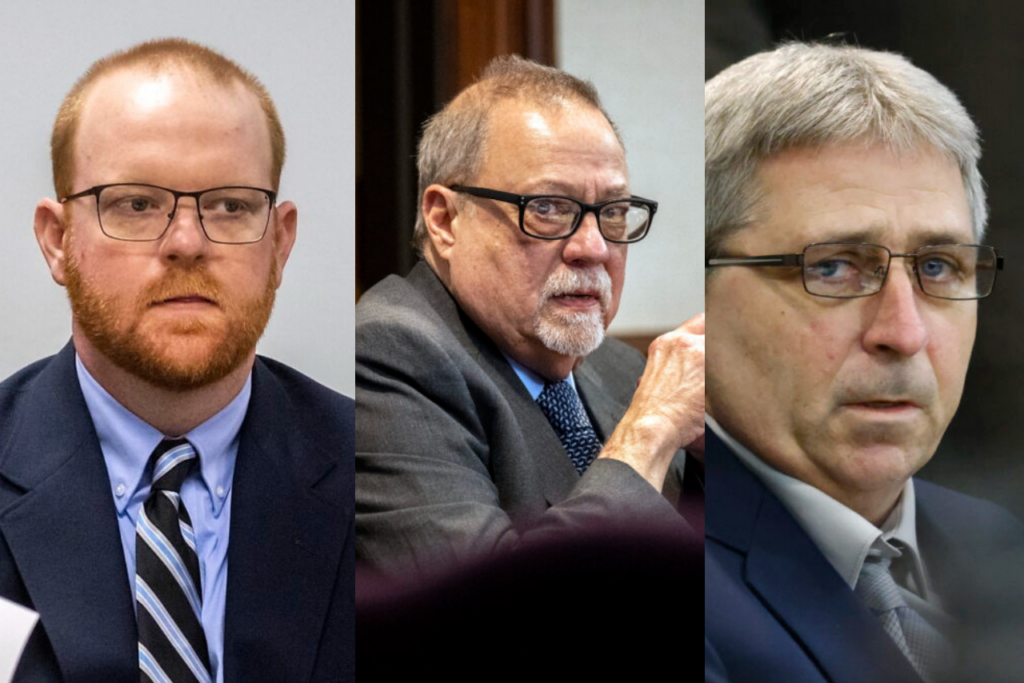
Travis McMichael, Greg McMichael, Willam “Roddie” Bryan. (AP pool photos from Glynn County murder trial.)
A predominantly white jury began deliberations Monday afternoon as to whether to find Ahmaud Arbery’s three killers guilty of federal hate crimes after a weeklong trial that probes the thorny questions of racially motivated violence, vigilantism and toxic stereotypes of criminality and Black Americans.
The defendants — Travis McMichael, 36; his father, Gregory McMichael, 66; and neighbor William “Roddie” Bryan, 52 — have already been convicted of murder in state court and sentenced to life in prison. Their actions on Feb. 23, 2020, changed Georgia state law and focused an uncomfortable spotlight on Brunswick and Glynn County amid the nation’s ongoing conversation about racial inequality.
Arbery’s name became entwined with racial justice protests that swept the country after an unarmed Black man in Minneapolis, George Floyd, was killed by a white policeman. The trial at Brunswick’s federal courthouse, however, is the first U.S. government prosecution of hate crimes associated with the disturbingly long list of recent high-profile killings of Black Americans.
Satilla Shores is the suburban Glynn County neighborhood where the three white men on trial for murdering Ahmaud Arbery lived and where the fatal confrontation took place on Feb. 23, 2020. Stanley Dunlap/Georgia Recorder
All three defendants from the Satilla Shores neighborhood are charged with one count of interference with Arbery’s civil rights and with one count of attempted kidnapping for threatening him while he was jogging on a public street during a Sunday afternoon two years ago. The McMichaels were also charged with one count each of using, carrying, and brandishing a firearm, and Travis McMichael faces an additional count of discharging a firearm during and in relation to a crime of violence. Each man has pleaded not guilty.
The three were convicted in state court of murder on Nov. 24, 2021, and face life in prison for that crime. A federal conviction on any of these charges would add additional time onto those previous sentences — and ensure they are branded racist killers, not simply convicted murderers.
After presenting a week’s worth of evidence about racist slurs and attitudes, federal prosecutors urged the 12 residents of the Southern District of Georgia to find all three defendants guilty of acting out violently because of Arbery’s skin color and because of their deep hatred for Black Americans.
“It was about race — racial assumptions, racial resentment and racist anger,” Christopher Perras, an attorney with the U.S. Department of Justice Civil Rights Division, told the jury during closing arguments. “All three of them saw a Black man and they thought the worst of him.”
The three lawyers representing the defendants spent their closing statements Monday morning poking holes in the government’s case, using the technical language of the federal law and the intricacies of the charges to tell the jury that there was still reasonable doubt about their clients’ guilt.
The attorneys did not deny that the defendants were racist. They even told the jury they might dislike the men, or thought they did something wrong. But that didn’t matter, they said. As Travis McMichael’s lawyer argued, her client would have chased anyone that day, regardless of color, because he was determined to defend his neighbors from any perceived threat.
“Would Travis McMichael have grabbed a gun and done this to a white guy?” his attorney, Amy Lee Copeland, asked the jury. “The answer is yes.”
This still from a video shows the Feb. 23 encounter between Ahmaud Arbery, right, and Travis McMichael in the moments before Arbery was killed.
Basic facts of the case aren’t disputed. The McMichaels armed themselves and chased Arbery in a pickup truck after he was spotted running past their home on a Sunday afternoon. A neighbor, William “Roddie” Bryan, joined the pursuit in his own truck and recorded the video of Travis McMichael firing the fatal shots at point-blank range.
What the jury in this case will decide is whether the three men acted from a racial motive and racial hatred.
What the jury doesn’t know and can’t consider during their deliberations is the fact that the McMichaels were ready to plead guilty to one count of the hate crimes indictment in exchange of spending 30 years in a federal prison before they served time in a Georgia state penitentiary. That plea deal fell apart two weeks ago before the trial began when Judge Wood rejected the terms of the sentencing.
At the heart of the prosecutors’ case are the reams of digital evidence that FBI agents uncovered from the McMichaels’ and Bryan’s social media postings and cell phones. A terrorist analyst for the FBI testified to approximately two dozen racist text messages and social media posts preceding the shooting.
Some witnesses testified about hearing the McMichaels’ racist statements firsthand. A woman who served under Travis McMichael in the U.S. Coast Guard said he called her an N-word lover after learning she had once dated a Black man.
Another woman testified Greg McMichael had ranted angrily about Black people while he was working as an investigator for the Brunswick-area district attorney. When she told him of the death of civil rights activist and former Georgia legislator Julian Bond, the elder McMichael said: “All those Blacks are nothing but trouble” and commented that they should be “put in the ground.”
Only one of the three defense lawyers, the man representing Greg McMichael, mounted a defense.
American courts do not require defendants to put up any defense — instead, the burden of guilt is put entirely on the prosecutor. Jurors will have to determine whether prosecutors succeeded in meeting that high bar linking the three men’s views of Black people with their actions on Feb. 23, 2020, when they chased and killed Arbery.
A.J. Balbo, a federal criminal defense lawyer from Richmond Hill, raised the issue of Greg and Travis previously confronting a white homeless man who they believed was acting suspiciously in the area of the Satilla Shores neighborhood.
The inference, according to Balbo in his closing statements, is that the father and son might have had vigilante tendencies, but those tendencies were race neutral.
The jury of eight white people, three Black people and one Hispanic person, as well as four alternates who are white, have been sequestered throughout the trial. They hail from towns as far away as Augusta, a 3 ½-hour drive north of Brunswick; Dublin, more than a 2-hour drive on the freeway towards Macon; Tybee Island and Statesboro.
Judge Lisa Wood held court on Monday despite the President’s Day federal holiday to minimize the time the jury would have to spend away from their families.
Wednesday will be the second anniversary of Arbery’s murder. Brunswick and Glynn County will be holding commemorations in his memory. Prosecutors’ and defense attorneys’ closing statements ended at 2:23 p.m. Monday – an unusual coincidence as the numbers coincide with the date of Arbery’s death: 2/23/2020.
This story appears through a news partnership with The Current, a nonprofit news outlet that focuses on issues affecting Savannah and Coastal Georgia
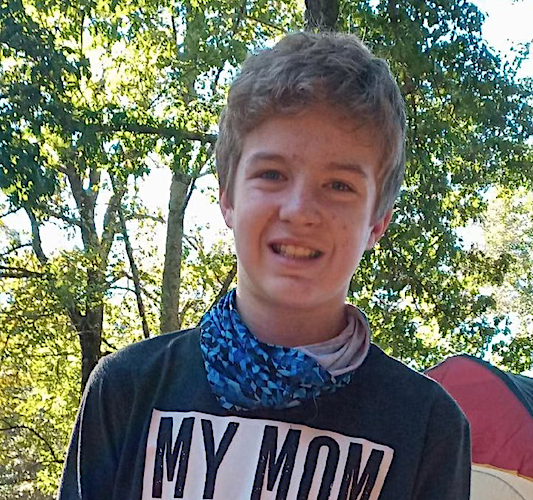
An 11-year-old boy missing since Monday afternoon has been found safe in Habersham County. Xavier Anderson was reunited with his parents late Monday night after a homeowner he approached recognized him and called 911.
Andeson had been missing since around 4:41 p.m. Monday when he was last seen on Hazel Creek Road. He was found approximately three miles from there around 10 p.m.
The sheriff’s office credits the community for helping to bring the search to a successful end.
“In this case not only did we have our K-9 out and our criminal investigators, the community was really the twelfth man,” says Habersham County Sheriff’s Public Information Officer Kevin Angell. “The information we put out was shared more than 1,000 times and it led to a community member calling us because the child came to their front porch. We were able to return him home safely thanks to the community’s response to our social media post.”
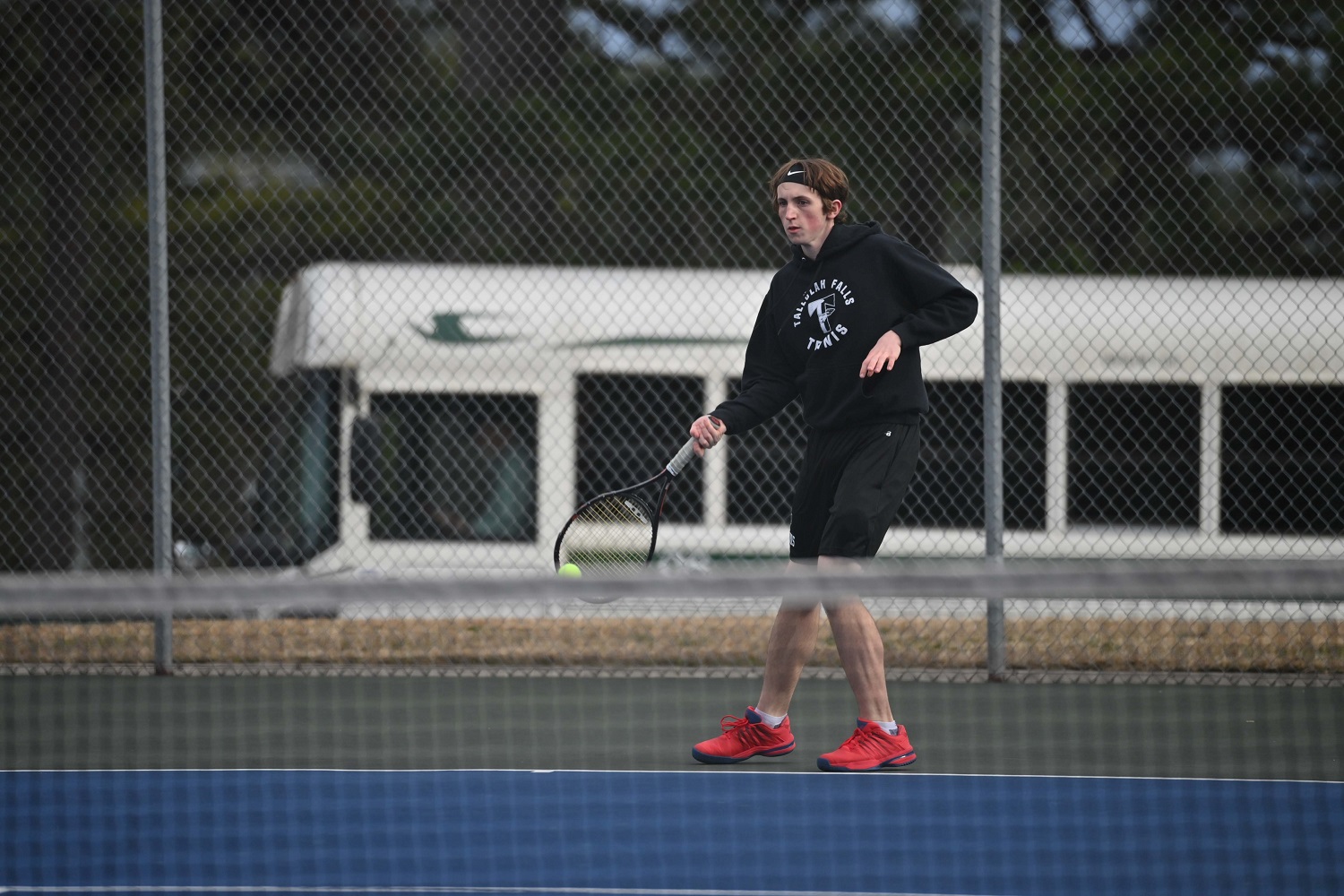
The first serve was made on Monday evening between Tallulah Falls and visiting Banks County. Both the Indians (3-1) and Lady Indians (3-0) earned abbreviated wins as the rain washed away many of the matches that were still ongoing. However, both teams were able to clinch the wins with 3 line wins.
The Lady Indians got singles wins from Ashli Webb and Maggie Peacock, and a doubles win from Sophie Herrera and Landry Carnes. The Indians got singles wins from Josh Jackson and Tanner Davis, as well as a doubles win for Jake Owensby and Zach Carringer.
GIRLS
#1 Singles – Maggie Peacock (1-0) W 8-5
#2 Singles – Ashli Webb (1-0) W 8-1
#3 Singles – Evette Corwin (0-0) DNF
#1 Doubles – Sophie Herrera & Landry Carnes (1-0) W 8-3
White House Press Secretary Jen Psaki said in a statement the Biden administration “anticipated a move like this from Russia” and would be imposing the sanctions within the Donetsk People’s Republic and the Luhansk People’s Republic.
WASHINGTON (GA Recorder) — President Joe Biden issued an executive order Monday imposing sanctions on the two breakaway regions of eastern Ukraine that Russian President Vladimir Putin declared independent earlier in the day.
The order bars new investment, trading and finance in the Donetsk People’s Republic and the Luhansk People’s Republic.
White House Press Secretary Jen Psaki said in a statement the administration “anticipated a move like this from Russia.”
“To be clear: These measures are separate from and would be in addition to the swift and severe economic measures we have been preparing in coordination with Allies and partners should Russia further invade Ukraine,” Psaki said.
The sanctions will “prohibit new investment, trade, and financing by U.S. persons to, from, or in the so-called DNR and LNR regions of Ukraine.”
The executive order will “also provide authority to impose sanctions on any person determined to operate in those areas of Ukraine,” Psaki said.
The announcement followed a lengthy speech from Putin during which he called Ukraine “a colony with puppets at its helm” before declaring the Donetsk People’s Republic and the Luhansk People’s Republic independent.
“Ukraine has never had its own authentic statehood. There has never been a sustainable statehood in Ukraine,” Putin said.
Putin later ordered the Russian military into that region, according to multiple news reports.
Biden spoke with Ukrainian President Volodymyr Zelenskyy for about 35 minutes during which he discussed plans for sanctions and “strongly condemned Russian President Putin’s decision to purportedly recognize the ‘independence’ of the so-called DNR and LNR regions of Ukraine,” according to a White House statement. Biden also spoke with French President Emmanuel Macron and German Chancellor Olaf Scholz Monday afternoon “about Russia’s ongoing escalation along the borders of Ukraine.”
Zelinsky wrote in a tweet that he and Biden “discussed the events of the last hours.”
Monday’s events struck a much different tone than those on Sunday when Biden agreed to meet Putin “in principle” as long as Russia didn’t further invade Ukraine.
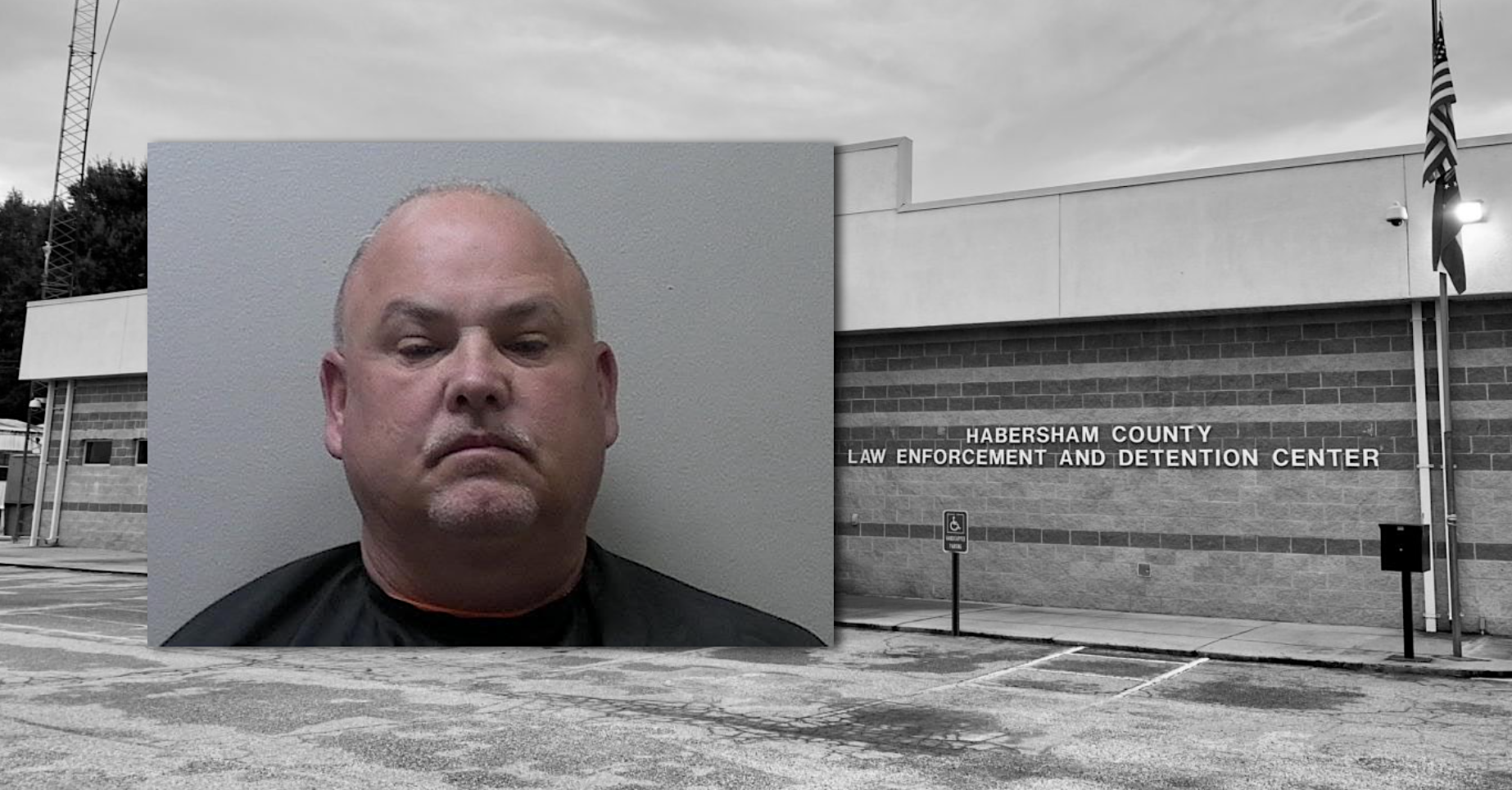
The Habersham County Sheriff’s Office fired one of its deputies after he was arrested over the weekend for DUI. The sheriff’s office identified the now-former deputy as Scott Lilly.
According to the sheriff’s office, at approximately 1:30 a.m. Sunday morning, February 20, a Habersham County patrol deputy stopped a vehicle on New Liberty Road for suspected DUI. The driver was immediately identified as an off-duty officer.
“Lilly had attended a party in Banks County earlier Saturday evening and then made the decision to get into his personal vehicle and drive,” says a press release issued by HCSO PIO Kevin Angell.
Officers arrested Lilly at the scene and transported him to the Habersham County Detention Center. He’s charged with one count of DUI, one count of reckless driving, and one count of failure to maintain lane.
On Sunday afternoon, Lilly was released from jail on a $2997.50 bond, jail records show. The sheriff’s office says his employment with the Habersham County Sheriff’s Office “has been terminated.” Lilly had been with the Habersham County Sheriff’s Office since January 2017.
This marks the second time in a year that a Habersham County deputy has been fired following a DUI arrest. Former investigator Chance Oxner was let go after he wrecked his patrol vehicle while off-duty last July.
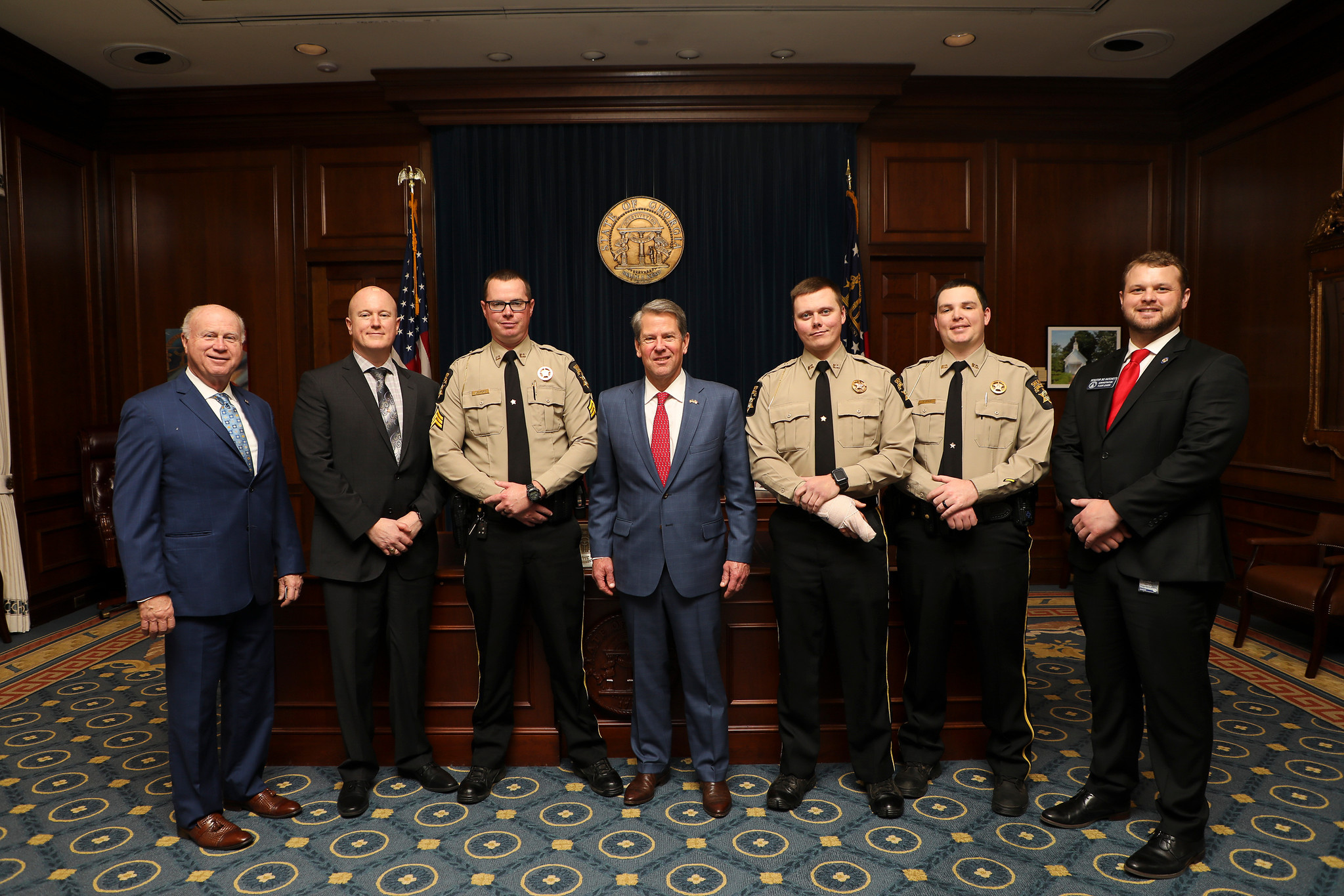
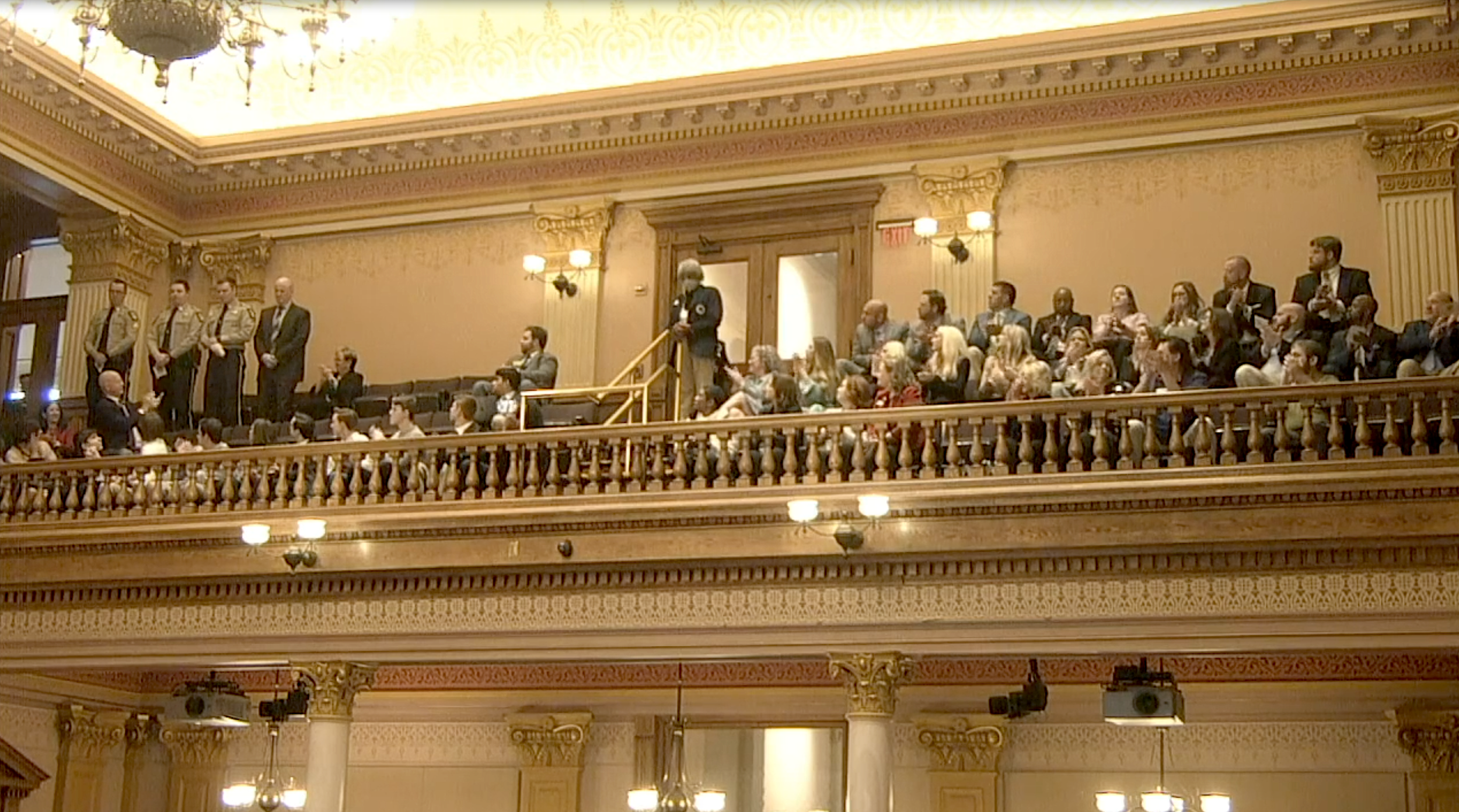
Governor Brian Kemp joined Georgia lawmakers in honoring three Banks County deputies at the State Capitol in Atlanta on Feb. 17, 2022. Pictured, left to right are Sen. Butch Miller, Banks County Sheriff's Maj. Matt Allen, Sgt. Jeffrey Ledford, Gov. Kemp, Deputy Dillon Crump, Deputy Cale Mathis, and Sen. Bo Hatchett (R-Cornelia). (Olivia Mead/Governor's Office)
Georgia state lawmakers recently honored three Banks County deputies for their valor in rescuing a North Carolina woman from her alleged kidnapper. Deputies Dillon Crump, Cale Mathis, and Sgt. Jeffery Ledford were recognized during a visit to the State Capitol on February 17.
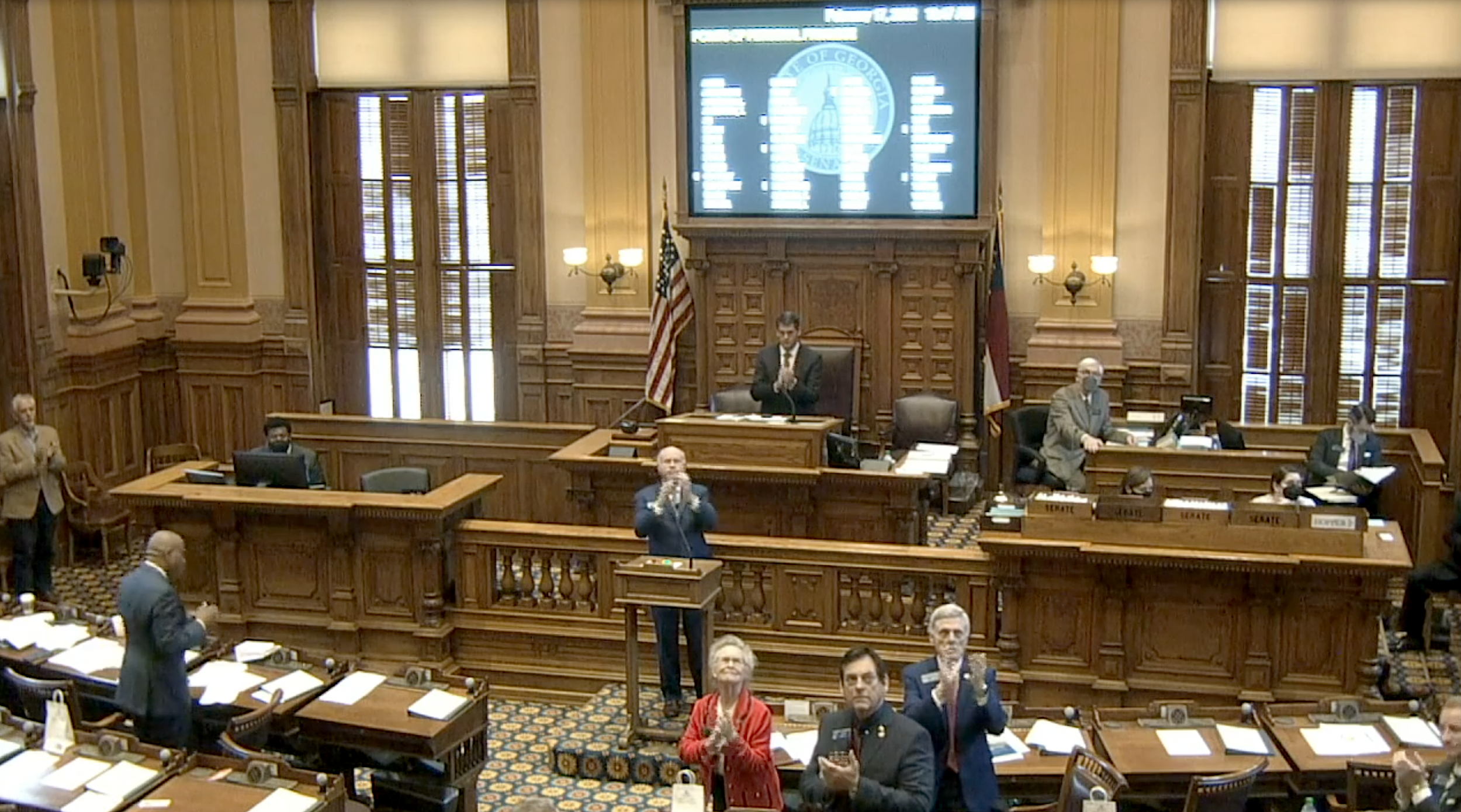
Lt. Gov. Geoff Duncan, Sen. Butch Miller, and other members of the Georgia Senate applaud three Banks County deputies who rescued a woman police say was kidnapped from her home in Henderson, North Carolina. (GA Senate livestream image)
Senate President Pro Tempore Butch Miller (R-Gainesville) paid tribute to the officers from the Senate well. He called them heroes for laying their lives on the line in the violent encounter outside a Commerce motel on February 8.
While on patrol, the officers noticed a suspicious vehicle that matched a BOLO out of North Carolina. When they went to investigate, the suspect, who was sleeping in the car with the victim, shot her and fired on deputies, according to the GBI. The deputies returned fire, striking the suspect who was later identified as Robert Brodie. Deputy Crump was shot in the hand.
“They have demonstrated strength and courage and valor and they have dedicated their lives to law enforcement,” Miller said. He added, that because of “the bravery of Deputy Crump and the other deputies in Banks County, we can rest easy.”
As the deputies stood to be recognized, Senators gave them a standing ovation.
Banks County deputies Dillon Crump, Cale Mathis, and Jeffery Ledford, along with Banks County Major Matt Allen, were recognized for their valor by the Georgia State Senate on Feb. 17, 2022. (Senate livestream image)
The deputies also met with Gov. Brian Kemp who shared a photo op with them along with Senators Miller and Bo Hatchett (R-Cornelia).
Kemp said he was honored to spend time with Crump and his fellow officers.
“We are glad he’s doing well, and we will be keeping him and all our brave officers who risk their lives to keep Georgians safe in our prayers,” the governor said.
According to Miller, both Crump and the victim are “recovering nicely.” Brodie was released from the hospital and remains in the Banks County Jail. He’s charged with kidnapping, aggravated battery, three counts of aggravated assault against a law enforcement officer, possession of a firearm by a convicted felon, and possession of a firearm during the commission of a crime.
Two White County men have been charged with sexually exploiting children after a cybertip led authorities to them. Investigators accuse both men of possessing child pornography.
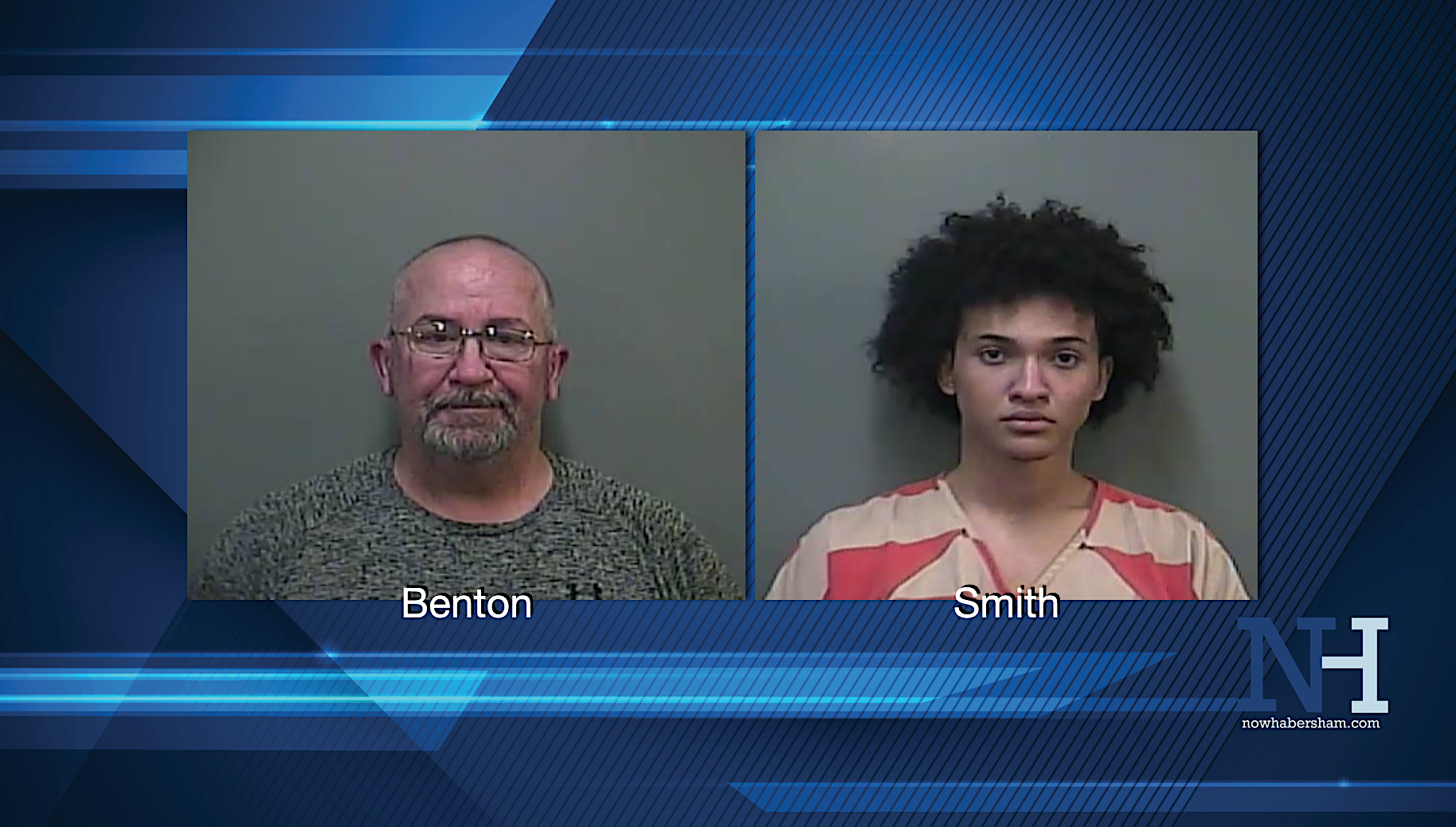
On February 17, GBI agents and White County Sheriff’s deputies executed two residential search warrants related to separate investigations. As a result of those searches, officials arrested 57-year-old Richard Benton and 18-year-old Lazarus Smith, Jr., both of Sautee Nacoochee.
Officers charged Benton with four counts of sexual exploitation of children and Smith with three counts.
The investigations began after the GBI’s Child Exploitation and Computer Crimes Unit received independent and unrelated cybertips from the National Center for Missing and Exploited Children. “Those cybertips involved the possession and/or distribution of explicit child sexual abuse material, commonly referred to as child pornography,” a GBI press release states.
This investigation is part of the GBI’s ongoing effort to crack down on the child pornography trade. Anyone with information about these or other cases is asked to contact the GBI at 404-270-8870 or online at https://gbi.georgia.gov/submit-tips-online.
Wrecks on GA-365 are becoming increasingly more common and severe, and the Habersham County Sheriff’s Office in conjunction with the Northeast Traffic Enforcement Network ran an operation to slow down drivers Thursday.
“Operation Lead Foot” targeted speeders on 365 between 9 a.m. and 6 p.m. Thursday, with Habersham County Highway Enforcement of Aggressive Traffic (HEAT) officers pulling over a total of 54 individuals.
“Of the 54 traffic stops we did, 37 tickets were issued for speeding,” Habersham County Sheriff’s Office Public Information Officer, Kevin Angell, said. “That’s a lot in a small amount of time. And while our focus was speeding, there were other citations that were issued, including a DUI arrest.”
“The state Governor’s Office of Highway Safety reports that approximately two out of every 10 fatal crashes in the state involve drivers who were speeding or driving too fast for the conditions of the road,” the HCSO says in a Facebook post. “2021 saw the highest fatality rate in Georgia for the last 25 years. Georgia is consistently in the top five nationwide for fatal crashes. That is not what we want to be known for.”
Between the Habersham County HEAT and Georgia State Patrol officers patrolling the roads Thursday, the agencies pulled over a total of 140 speeding drivers, issued 73 tickets and 83 warnings.
“There seems to be not only an increase in crashes but in the severity of those crashes,” Angell says. “While this is just but one part of our effort to reduce those crashes, and ultimately the injuries and fatalities, we will pick this up again in March and keep working towards people seeing our proactive presence out there.”
When we’re hit with our hardest times, having someone to lean on and love is what keeps us going. But for many homeless animals in Habersham County, when they go through their hardest times, it’s because they’ve lost the people they had to lean on.
In this week’s Adopt-A-Pet, we’re highlighting two abandoned animals who lost everything. Currently in the loving care of Habersham County Animal Care and Control, these two sweet animals, Bune and Buster, could use a happy home to make new memories in.
Meet Bune
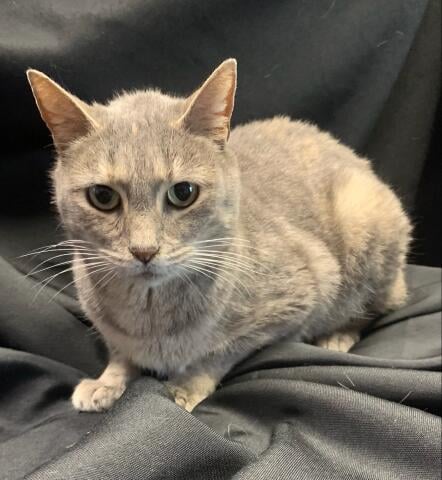
. Bune was brought to the shelter after being abandoned at the beginning of the month(HCACC/Facebook)
Meet Bune, a beautiful female cat looking for a family that will stay by her side through thick and thin.
Bune was brought to the shelter after being abandoned at the beginning of the month, and is hopeful that someone will meet her and fall in love.
“I felt completely rejected when my family left me,” she says. “I have a little bit of hope in my heart from what other cats at the shelter have told me, though, about being adopted. I dream about someone choosing me, and sticking around to love me.”
Bune says her ideal fur-ever home is one with lots of good meals and yummy treats, and humans that make her feel loved and wanted.
“I know that I deserve a second chance,” Bune says. “I just want to stop imagining what it will be like to I get it, and start living it instead.”
Meet Buster
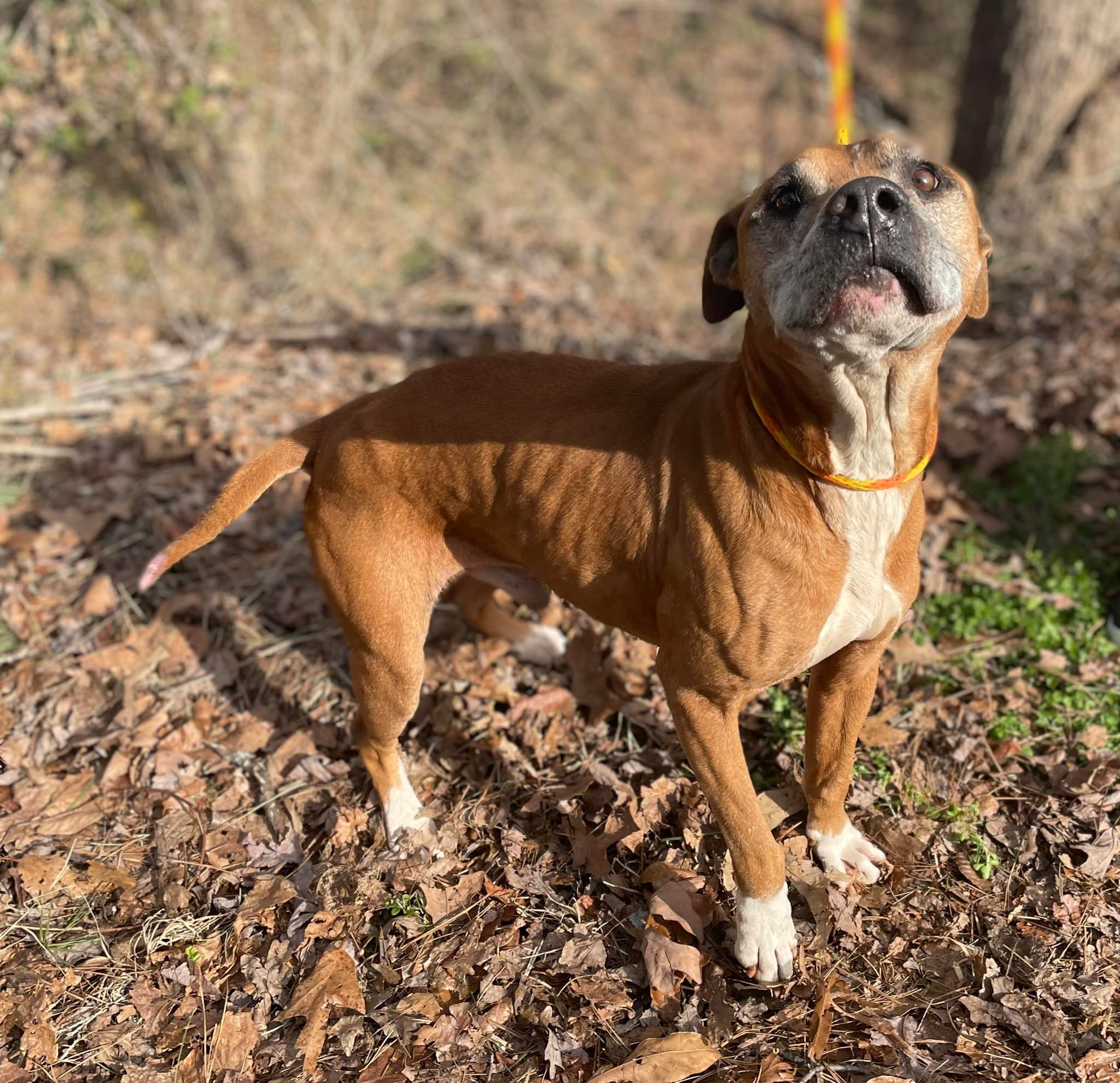
Meet Buster, a sweet-as-can-be Georgia Brown Dog mix who needs a lot of love.
Buster would really like to have a warm home to overcome his health challenges in. (HCACC/Facebook)
Like Bune, Buster was also abandoned. When HCACC found him on the road last month in Alto, they waited for someone to reclaim him. But no one ever came. At the shelter, Buster tested heartworm positive and could use lots of love and affection to get him through his treatment.
“These past few weeks haven’t been easy,” Buster says. “Everyone here has been so kind to me, helping me try to eat enough to feel like myself and get me back in shape while I deal with heartworms.’
Even with that love and kindness, Buster would really like to have a warm home to overcome his health challenges in, with a person who could give him the stability he needs.
“I’ve been shown so much love here at the shelter,” Buster says. “But I’m ready to have a family, a home, and know all about what it’s like to be loved.”
If you’re interested in adopting Bune, Buster or any of the other animals at the Habersham County Animal Shelter, please call the shelter at (706) 839-0195 to set up an appointment. You may also visit them in person Tuesday-Friday from 10 a.m. to Noon & 1-5 p.m. or on Saturday from 10 a.m. to 2 p.m. Check out their Facebook page for more information.
Timothy L. “Tim” Orr, age 57, of Hull, Georgia passed away on Saturday, February 19, 2022.
Mr. Orr was born on April 7, 1964, in Atlanta, Georgia. He was preceded in death by his father, M.C. Orr. Mr. Orr was a proud Veteran of the United States Marine Corps. Tim loved to relic hunt for Civil War artifacts. He loved his family, Tim was a loving son and brother.
Survivors include his mother, Dolores Orr, of Cornelia; brothers and sisters-in-law, Keith and Leah Orr, of Demorest; Grady and Angie Orr, of Cornelia; nieces and nephews, Hayden Orr, Adrienne McElwaney, Itali Orr; great-niece and great-nephew, Charlie and Catilina.
Memorial Services will be held at 2:00 p.m., Saturday, February 26, 2022, at the Whitfield Funeral Home, North Chapel with military honors provided by the United States Marines and the Grant Reeves Honor Guard.
In lieu of flowers, memorials may be made in Mr. Orr’s Memory to The Grant Reeves Honor Guard or the Habersham County Veterans’ Wall of Honor.
Arrangements have been entrusted to the Whitfield Funeral Homes & Crematory, South Chapel at 1370 Industrial Boulevard, Baldwin, Georgia 30511. Telephone 706-778-7123.