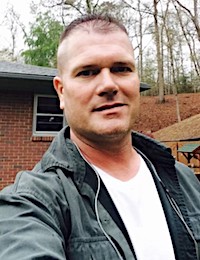
Randall “Randy” Scott Barron, age 54 of Demorest, passed away Thursday, February 24, 2022.
A lifelong resident of Demorest, Georgia, Randy was born on December 18, 1967. He was the son of Lloyd and Barbara Kennedy Barron. Randy was retired from United Parcel Service, a career that he deeply loved and took pride in for 25 years. He was a Service Provider working out of the Pleasantdale Hub. Randy loved classic cars, especially Ford Mustangs and he was also a NASCAR and Dale Earnhardt fan. He was an avid outdoorsman and loved to hunt and fish and he also liked 80’s rock and country music. Randy was a lifelong Georgia Bulldog fan but could also be found rooting for Alabama as well. Randy was a born-again Christian and had spent a great deal of time in last several years growing in his walk and spending time in the Word. His relationship with Jesus was very important to him as well as was worshipping with other believers at The Torch where he was a member. He had the heart of a true servant and tirelessly and selflessly served others, especially his immediate family.
Randy is preceded in death by grandparents Isaac Terrell Barron and Lizzie Kastner Barron, Shade Kennedy and Una Belle Kennedy Allen, as well as aunts and uncles Willie Barron, Cosby Barron, Mildred B. Barron, Terrell Barron, Jr., Francis Kennedy, Jimmy Allen, Elaine Allen Lawson and Rex Allen.
Survivors include son and daughter-in-law Scott and Jaime Barron of Orlando, parents Lloyd and Barbara Kennedy Barron of Demorest, brother Lloyd Barron, Jr. and wife Monica of Marietta, uncle Verner Kennedy (Mary Jane) of Demorest, grandson Landyn Barron of Orlando, niece Sydney Barron of Tacoma, Washington, nephew Grant Barron of Sandy Springs as well as numerous extended family members.
Funeral services will be held at 4:00 PM on Thursday, March 3, 2022, at Hillside Memorial Chapel with Pastor Mike Franklin, officiating. Interment will follow the service in Hillside Memorial Gardens. The family will receive friends at the funeral home on Thursday, prior to the service from 2-4 PM.
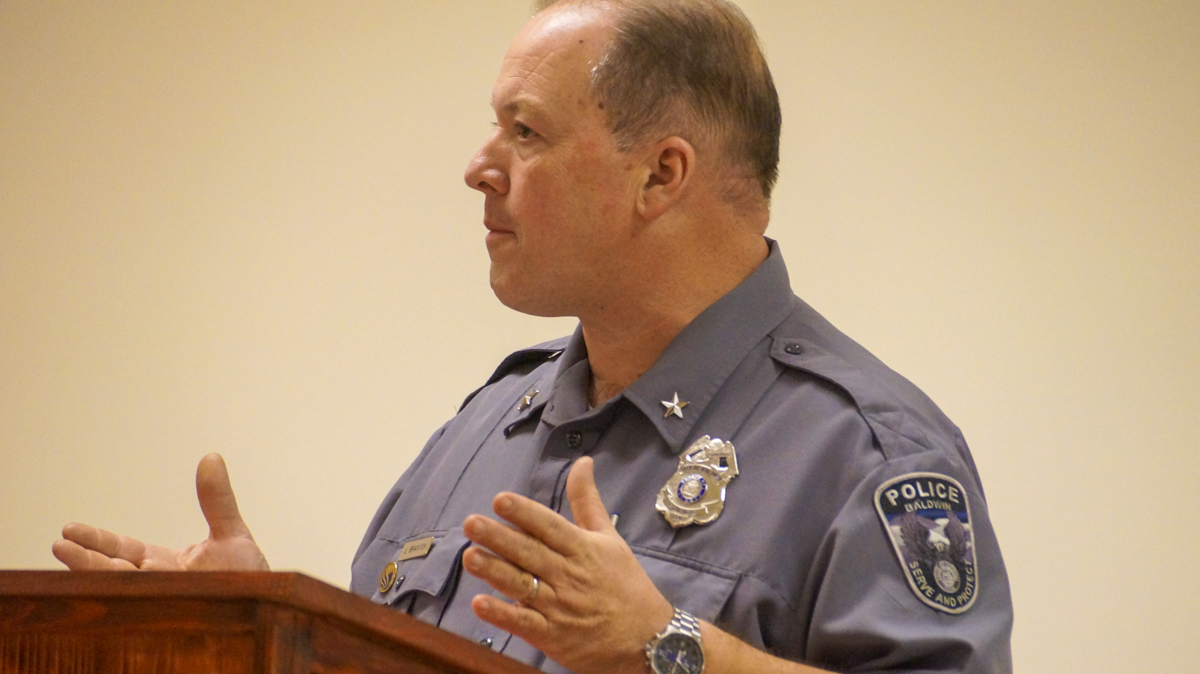
City of Baldwin Police Chief Jeff Branyon responded to comments he’s seen via social media regarding the school zone outside of Baldwin Elementary that has attracted controversy over the past few weeks.
“So there’s been a lot of social media discussion about the speed cameras, and I generally don’t like to respond to social media because there’s no accountability,” Branyon said. “Things go out on social media, nobody verifies or fact-checks what’s out there. We don’t have that luxury. We only provide factual information.”
Branyon said that after seeing some of the comments that were made, he wanted to address some misinformation that was posted online. In addition to his comments, the city is adding a fact sheet surrounding the speed zone to their website.
Chief Branyon, members of the Baldwin City Council and Habersham Schools Superintendent Matthew Cooper were quick to defend the zone, which uses laser technology to catch drivers speeding in the school zone outside of Baldwin Elementary.
“When we see posts saying ‘I got a ticket for going one mile over the speed limit,’ that’s just not correct, that doesn’t happen,” Branyon said. He says that tickets are only issued to drivers going more than 10 miles over the speed limit.
Branyon also clarified that the school zone is not 27/4.
“[The speed limit is] 25 miles an hour for an hour in the morning when buses are unloading, 25 miles an hour in the afternoon, when they’re getting ready to go home.,” Branyon said. “It’s 25 [MPH] during those two hours of the day, the rest of the day is 35 [MPH]— and not on snow days, teacher workdays, holidays, summer break [or] spring break. Anytime school is not occupied, they’re off.”
He says that speeding through the school zone only saves drivers seconds, while it could cost a child their life.
He says that it takes 57 seconds to get through the school zone at 25 MPH, and 40.6 seconds to get through the school zone at 45 MPH. Going 10 MPH over the speed limit, according to Branyon, only saves about 8 seconds of time.
“Don’t speed in the school zone, we want to keep our kids safe,” Branyon said. “The program’s legal, it’s not a speed trap. You don’t get ticketed for [going] one or two miles an hour [over the speed limit].”
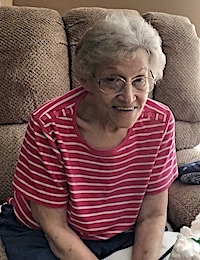
Betty Jane Haff Davidson, age 82, of Lula, passed away on Sunday, February 27, 2022.
Born in Tallulah Falls, Georgia on September 15, 1939, she was a daughter of the late Thomas Mansfield Haff and Ethel Katherine Harvey Haff. Mrs. Davidson was an LPN at Northeast Georgia Medical Center for many years. Betty enjoyed collecting antique dolls and was a member of Enon Baptist Church. She loved her family, grandchildren and great-grandchildren.
In addition to her parents, she was preceded in death by her brothers, Ben Davis Haff and Bill Haff; twin sister, Bobbie Haff and sister, Pat Albanese.
She is survived by her loving husband of 58 years, Jack W. Davidson of Lula; sons, Mike (Jackie) Davidson of Alto, James “Jamie” (Kay) Davidson of Flowery Branch; grandchildren, Christine (Clint) Garner, Stephanie (John Michael) Farina, Will (Susanna) Davidson, Marissa Davidson, Thor (Hannah) Smith, Zack Smith, Taylor (Mark) Maynard; great-grandchildren, Emmie Garner, Willow Garner and Walker Vincent Farina; sister, Martha Suggs of Gainesville, Sandra (Mike) Couch of Cleveland; sisters-in-law, Elise Wade of Lula and Juanita Wilbanks of Lula; several nieces and nephews; special friend, Barbara Hermann of Gainesville.
Funeral services are scheduled for 2 pm, Wednesday, March 2, 2022 at the Chapel of McGahee-Griffin & Stewart with Rev. Leon Miller and Rev. Scott Collett officiating. Interment will follow at Enon Baptist Church Cemetery in Alto.
The family will receive friends from 2 – 4 and 6 – 8 pm Tuesday, March 1, 2022 at the funeral home.
Those in attendance are asked to please adhere to the public health and social distancing guidelines regarding COVID-19.
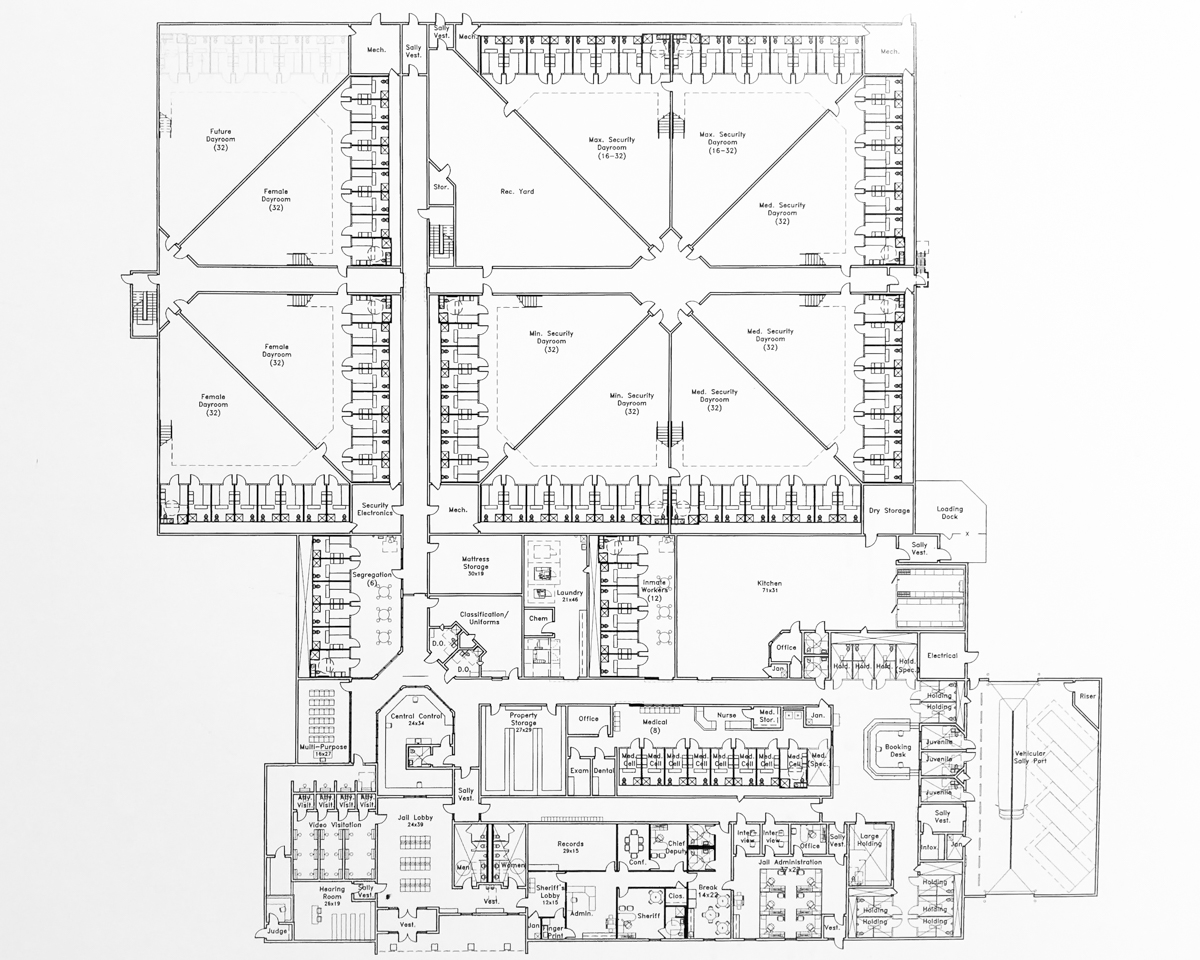
This rendering of a new Habersham County jail would use parts of the county's already-existing infrastructure. (Source: HCSO)
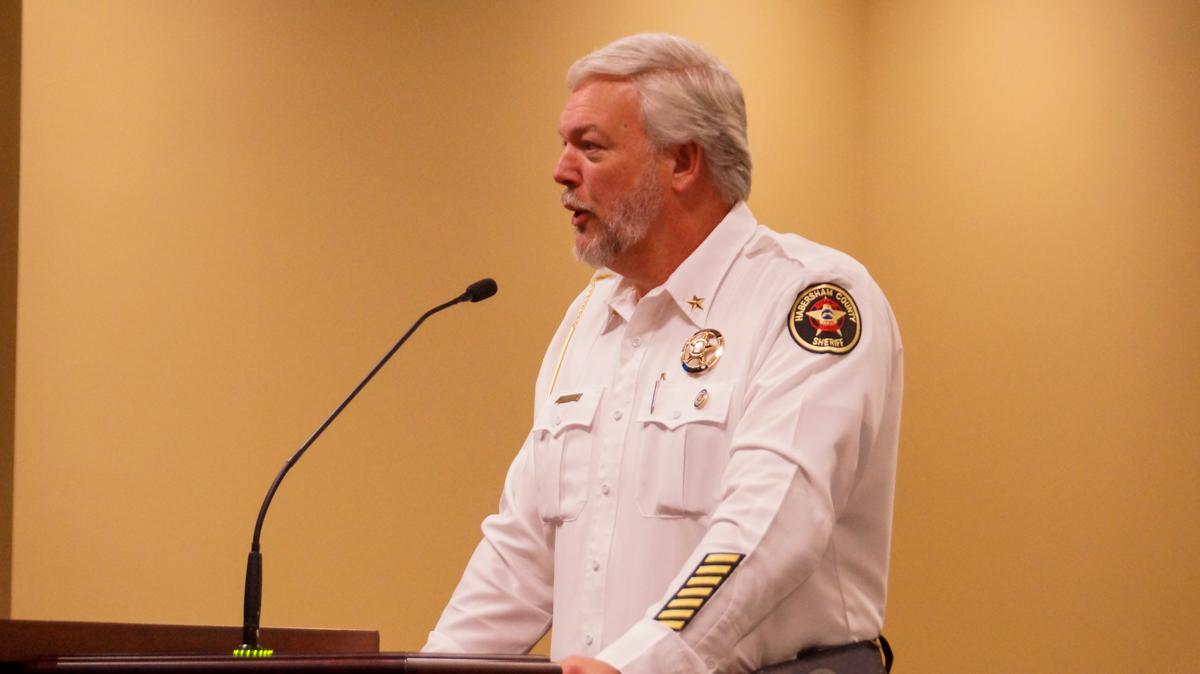
Habersham County Sheriff Joey Terrell has advocated for a new jail for the last three years, and he says the need is just as strong today as it was in 2019. He’s asking the county commissioners to find a way to make it happen, and for the public to realize what a pressing issue it is.
The current county jail, which was built in the late 90s, was built in the style of a jail from the 60s and 70s according to Terrell. He says it hasn’t aged well in its 25 years. Terrell and former county commissioners appealed to the public in 2019, citing the issues that the jail faced on a day-to-day basis and presenting the same argument they’re presenting today: if the county doesn’t get a new jail, they’re going to get sued.
The need for a new jail
Terrell says that there is a slew of reasons the county needs a new jail, but the issues boil down to safety, both of those who are imprisoned at the jail and the officers working there. The major issues at the county jail are that it doesn’t meet regulations on separation of people incarcerated, nor does it meet airflow, privacy or accessibility requirements.
The current jail isn’t built in a way that takes modern case law into account, which requires that people who are incarcerated are separated by the offense that has them in the jail.
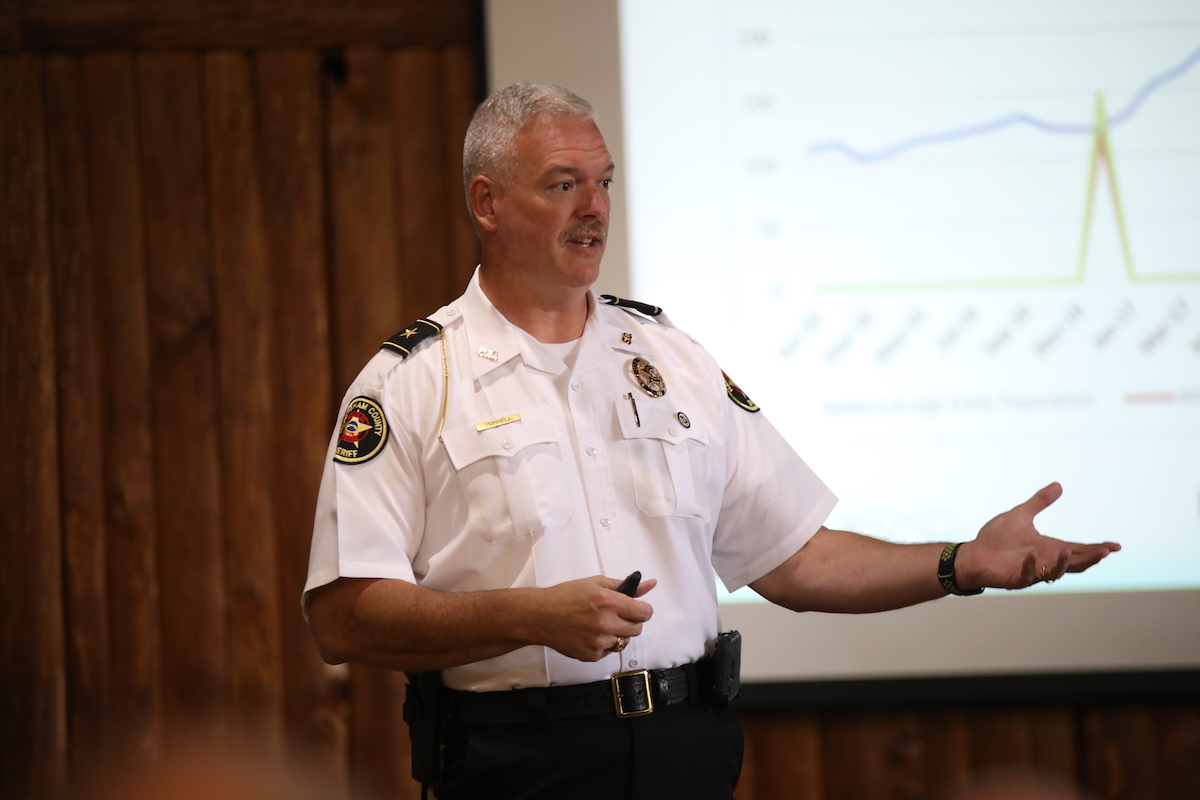
Habersham County Sheriff Joey Terrell says that the county’s current jail doesn’t meet state or federal requirements, which leaves those incarcerated in unsafe conditions, and the county open for litigation. (Hadley Cottingham/Now Habersham)
Terrell says that there are two types of separation the jail has to take into account: minimum and maximum offenses. Mimunim offenses surround misdemeanors, while maximum offenses include felonies. By law, people with minimum and maximum offenses have to be separated for their safety.
“They [people incarcerated] should go with like people who have that same classification,” Terrell says. “As our jail is set up, we can’t do that … they’re all mixed together.”
Because of the limited number of spaces they have to separate people, called classification, they struggle to separate them. It isn’t just based on charges, either. Other people involved with the same crime that are incarcerated need to be separated from each other, people of different sexes need to be separated and people who have conflicts sometimes need to be separated.
“We have to try and do our classification by … upstairs and downstairs, and we try … within that do the best we can with classification,” Terrell says. “We try and keep the extreme [separate], we don’t put a child molester in with a 20-year-old.”
Because of that separation, just because the jail has 160 beds doesn’t mean all 160 can be used when people are being separated from each other. The jail can be full before every bed is full— which means the HCSO has to house out people who are incarcerated to other facilities, something that cost the department around $720,000 in the 2018-2019 fiscal year, according to the sheriff’s office.
He says that even though they do their best to keep people separated in terms of cells, it’s not possible to keep them completely separated at all times. There could be a time they’re in the day room together or sharing another space. But Terrell says there isn’t enough space for them to separate in that way, too.
“We don’t have the facility to not do that, so that’s the number one [problem],” Terrell says. “That is the biggest thing that can get us because the Supreme Court says you shall, and you will, classify inmates for their protection. That’s what it’s for, that’s the biggest thing, to keep them protected. And we fail at that. We fail at that because of our facility.”
The jail also doesn’t meet air circulation standards, which allows illness to breed in the jail, and it isn’t Americans with Disabilities Act (ADA) compliant, meaning many parts of the jail are not accessible for people who have disabilities.
How likely is a lawsuit?
Terrell says that a lawsuit could be lurking around the corner at any minute and that people who have been incarcerated at the Habersham County Jail have come close to a successful lawsuit before.
The best thing they can do right now, other than working with what they have, is to keep the people who are currently incarcerated at the jail as comfortable as they can be so that they, according to the sheriff, aren’t looking for things to sue the county over.
“I learned in the Sheriff-elect academy if you keep their [individuals who are imprisoned] bellies full, it cuts down on complaints,” Terrell says. “So if them allowing them to buy Snickers bars and Mountain Dew keeps them from suing us because we’re violating their constitutional rights, I think that’s a good trade-off.”
Terrell says that either the county finds a way to purchase a jail, or someone sues the county and the federal government orders the county to buy a new jail— one that he says will be much more expensive than the one they’ve proposed. It’s just a waiting game to see what happens first.
The blueprint of the new jail would have the space to alleviate issues with separation and comply with state and federal regulations. (Source: HCSO)
How can the county afford it?
The short answer is that no one knows for sure.
After many conversations and questions asked of county government officials, there just isn’t a clear-cut answer on how the county can afford a multi-million dollar jail. But they all seem to agree that the project needs to happen.
Terrell shared the county’s need for a new jail with members of the community at a public forum in 2019. (file photo)
In 2019, the county put a jail bond referendum up for a vote that would raise property taxes by 1.38 mills, which at the time would have cost the average homeowner approximately $72 more per year. Voters turned it down, and current Commission Vice-Chair Bruce Harkness completely opposes any measure that would raise property taxes.
The project was estimated to cost around $32 million in 2019. Today, Terrell says the costs likely sit closer to $46 million.
“Habersham county has always had the issue of kicking the can down the road,” Terrell said. “They’ve always wanted to kick the can down the road and let somebody else worry about it because we didn’t want to spend the money.”
Terrell says that the problem is going to have to be addressed in time, whether the county and community want to address it or not. He says it’s a matter of getting ahead of the problem, and he thinks a Transporation SPLOST could open up the funds to make it happen.
“How do you pay for a new jail? Well, the TSPLOST could help with that,” Terrell said. “There’ll be money freed up in SPLOST that could help make those payments on a new jail. It would there be money in our budget that could help go to that.”
But even county commissioners who have supported adding a TSPLOST to free up SPLOST funds for other projects aren’t sure that would be enough.
“Maybe in the future, it could open up funds,” Commissioner Dustin Mealor told Now Habersham. “The problem with the jail is the sheer cost of the project itself would almost consume the entire amount of SPLOST, but what I think would be better [for the] community would be if we could figure out a way to phase in a jail project so that we’re paying for it and finishing a certain phase of that project and then moving on to the next phase.”
Law enforcement officials in Toccoa arrested five people on various drug and gang charges after a three-month joint investigation, officials say.
On Thursday, February 24, officers executed search warrants at 104 Hughes Street, 299 Emily Street, and 180 Whisenant Street. As a result of those raids, they arrested 32-year-old Dometrious Sanchez Smith and charged him with two counts of trafficking cocaine, two counts of trafficking methamphetamine, and three counts under the Georgia Street Gang and Terrorism Prevention Act.
Police arrested and charged four others as follows:
Roger Laquerrious Neal, age 32 – one count distribution of methamphetamine;
Anthony L. Harrison, age 39 – one misdemeanor count possession of marijuana;
Quentin Shrod Reed, age 32 – possession of cocaine, possession of marijuana with the intent to distribute;
Delane Mayfield, age 54 – possession of cocaine and misdemeanor possession of marijuana.
The Stephens County Sheriff’s Office, Toccoa Police Department, Federal Bureau of Investigation, Drug Enforcement Administration, Georgia Bureau of Investigation Region 8 Investigative Office in Cleveland and the Appalachian Regional Drug Enforcement Office were involved in the investigation.
There have been several other unrelated arrests tied to drug trafficking investigations in North Georgia in recent days. On February 23, officers took two people into custody in Cornelia. The same day, they arrested six people during a drug raid in Lumpkin County.
Officials say the Toccoa investigation is still active and ongoing. More charges are anticipated.
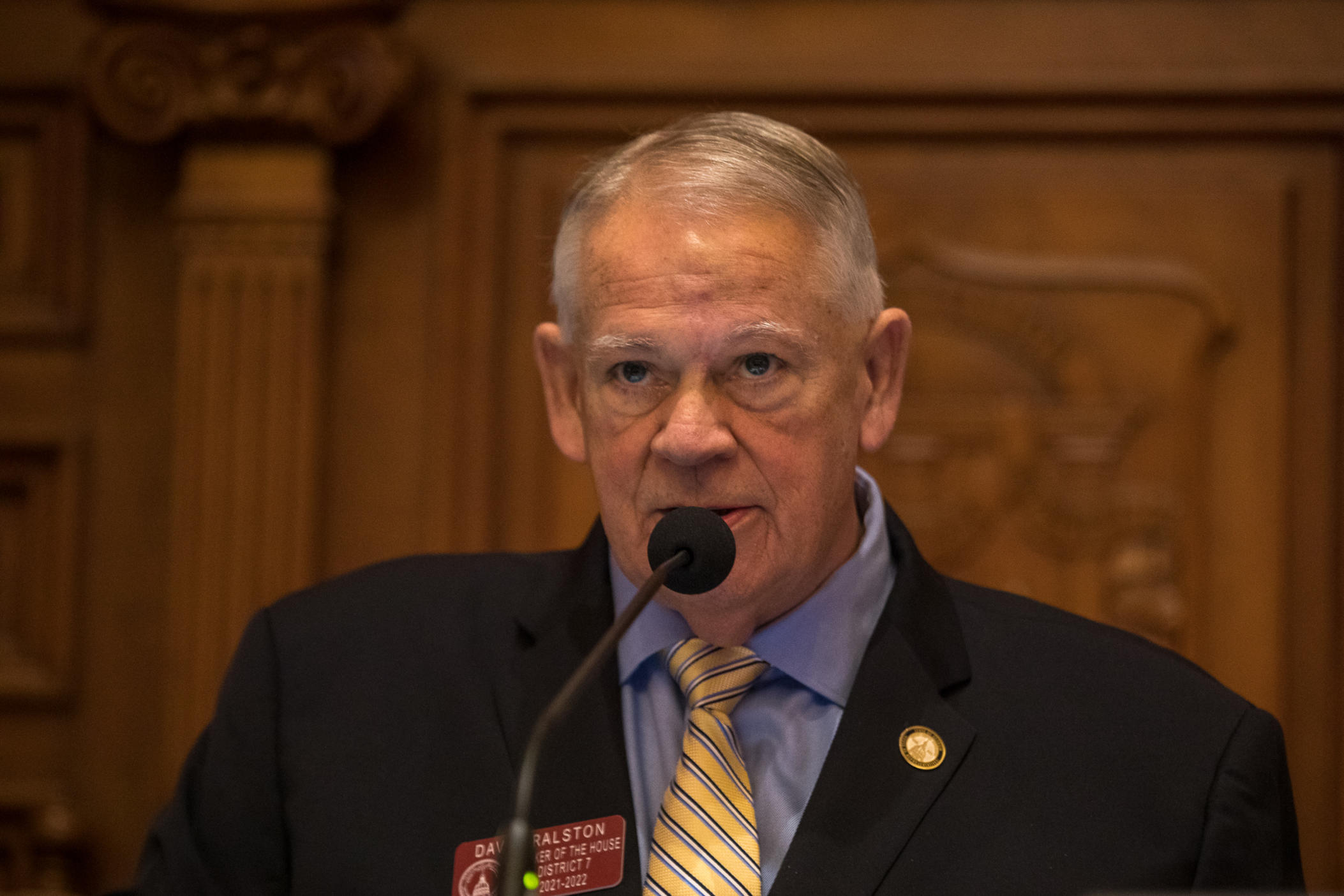
House Speaker David Ralston speaks in his chamber ahead of Gov. Brian Kemp's State of State address on Jan. 12. On Feb. 28, Ralston announced an effort to end Georgia investment in Russia amid the nation's invasion of Ukraine. (Riley Bunch/GPB)
House Speaker David Ralston received a bipartisan standing ovation on Monday when he announced he’d seek to end state pension business with Russia.
Last week, Russia launched a large-scale military attack on Ukraine, its neighbor to the southwest. According to Ukraine’s government over the weekend, more than 350 civilians have been killed.
Republican leaders condemned Russia’s actions and Ralston said he aims to take their harsh words a step further.
He announced to his chamber that he directed the House Budget and Research Office to report on any investments the state holds in Russian equities and assets — noting specifically the state’s employee and teacher’s retirement systems.
“I don’t know about you all, but I don’t want one penny of a Georgian’s money going to subsidize Vladimir Putin,” he said. “While our role in international affairs is limited, we make clear that our people stand with those who want to live in peace.”
The speaker’s office has asked state agencies that may have ties with Russia to report investment with the country and potential opportunities for divestment. The office has yet to hear back on specific examples.
Gov. Brian Kemp’s office also said in a statement that the governor, too, supports dissolving Georgia investments with Russia.
“Last week, our office began reviewing and taking actions to ensure Georgia taxpayer dollars are not being used to subsidize Russia,” said Katie Byrd, director of communications for Kemp. “Upon identification, we will fully divest the agreements. So far, there has been one instance, and we will be fully divested from that agreement by mid-week.”
The state also has economic ties with the country in terms of trade.
According to the Georgia Department of Economic Development, in 2021, the state totaled more than $146 million in exports to Russia and brought in more than $234 million in imports.
Top exports to the country were commercial aircraft, cars, scrap metal and engines. Among Georgia’s top imports from Russia were oil and plywood.
It’s unclear yet how the crisis unfolding in Europe will affect Georgians, but the state’s legislative leaders have pledged allegiance to the people of Ukraine.
“They continue courageously defending their nation against an unwarranted and unprovoked invasion by the Russian Federation,” Ralston said. “…It’s interesting to note that even Russia’s own citizens have turned against their government’s incursion, protesting in the streets and being detained as a result of their protest and not cheering on this senseless, barbaric violence.”
Lt. Gov. Geoff Duncan, too, slammed Russian President Vladimir Putin on Monday.
“Vladimir Putin is a selfish, brutal dictator, and anybody who would tell you otherwise is lying,” he said. “I call on this country, I call the state, I call on this chamber to stand in support of the Ukrainian people as they fight for freedom.”
Cogdell Republican State Sen. Russ Goodman also took to the podium in the chamber to condemn Americans who support Russia and its attack on Ukraine.
“It is unfathomable to me that any American that calls himself an ‘American,’ with what’s going on in the world today, can chant: ‘Putin’ and ‘Russia,’ he said. “Anyone that gives aid and comfort to the enemy like that, I’m going to tell you something: They are not deserving of the title to be called an ‘American.’”
His comments seemed to be referring to a white nationalist rally in Florida, where Georgia U.S. Rep. Marjorie Taylor Greene spoke in front of a crowd that cheered in support of Putin.
This article appears on NH through a news partnership with GPB News
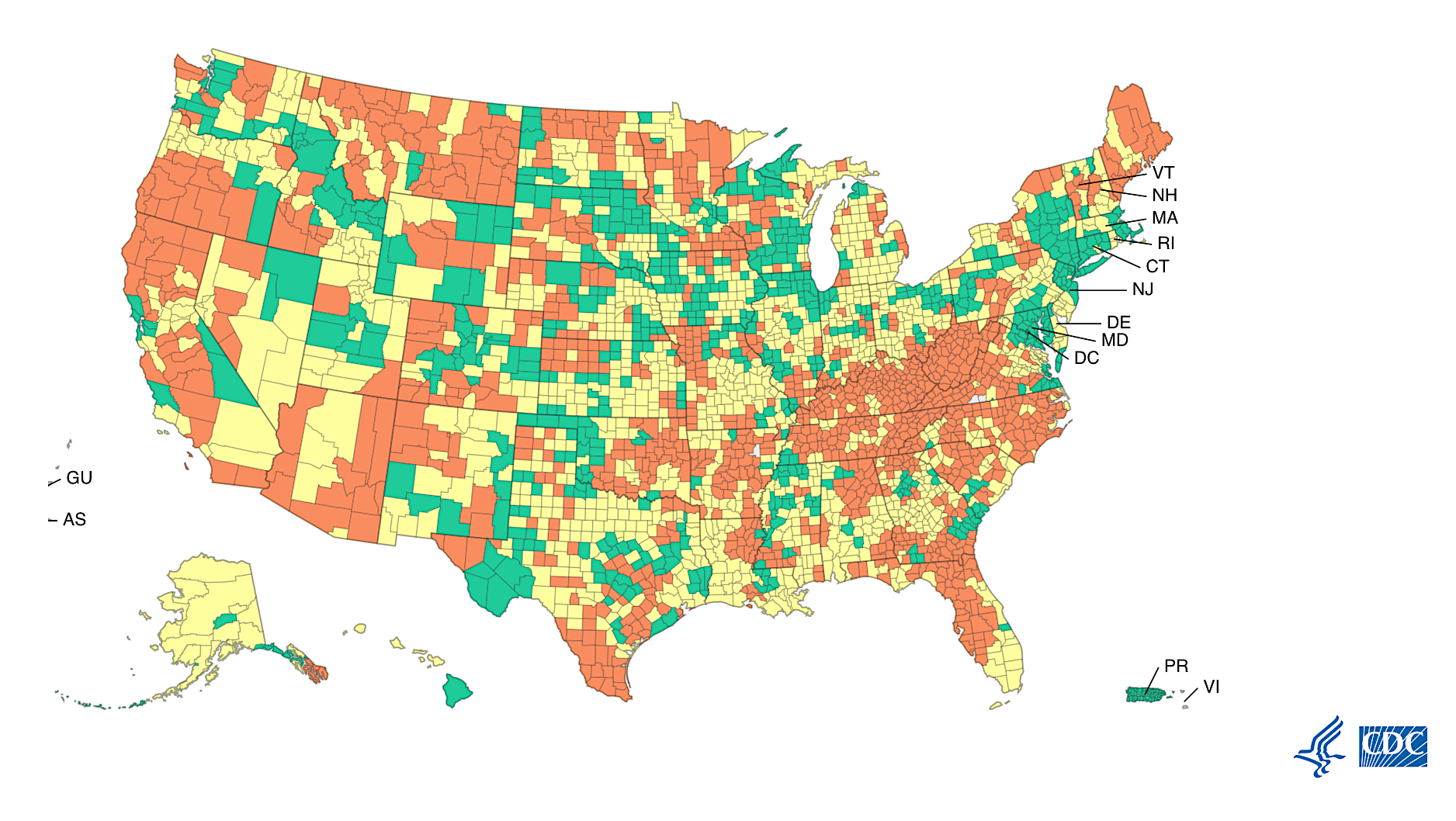
The Centers for Disease Control in Atlanta has unveiled a new tool to help fight community spread of COVID-19.
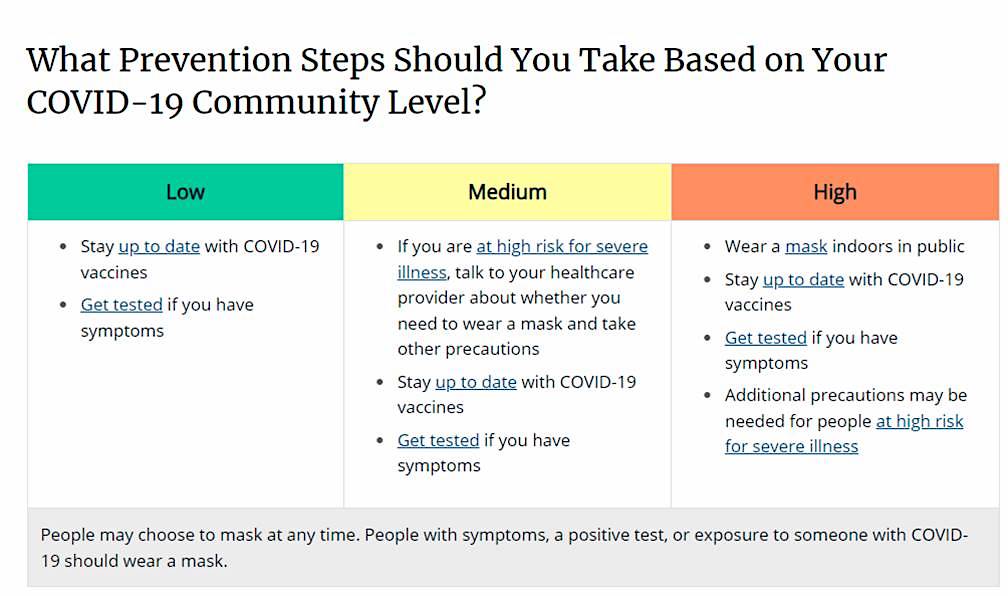
The COVID-19 Community Levels tool provides a county-by-county look at COVID-19 levels throughout the U.S.
It is designed to help communities decide what prevention steps are needed based on several factors: hospital beds in use, hospital admissions and total of new cases in the area. The data is then categorized into low, medium and high levels. Based on your community level, you can determine what precautions to take to protect yourself and others against COVID-19.
Source: CDC
As of February 25, 2022, here’s how Northeast Georgia counties rated:
Low
Elbert
Medium
Clarke
Hart
Franklin
Jackson
Madison
Oconee
Stephens
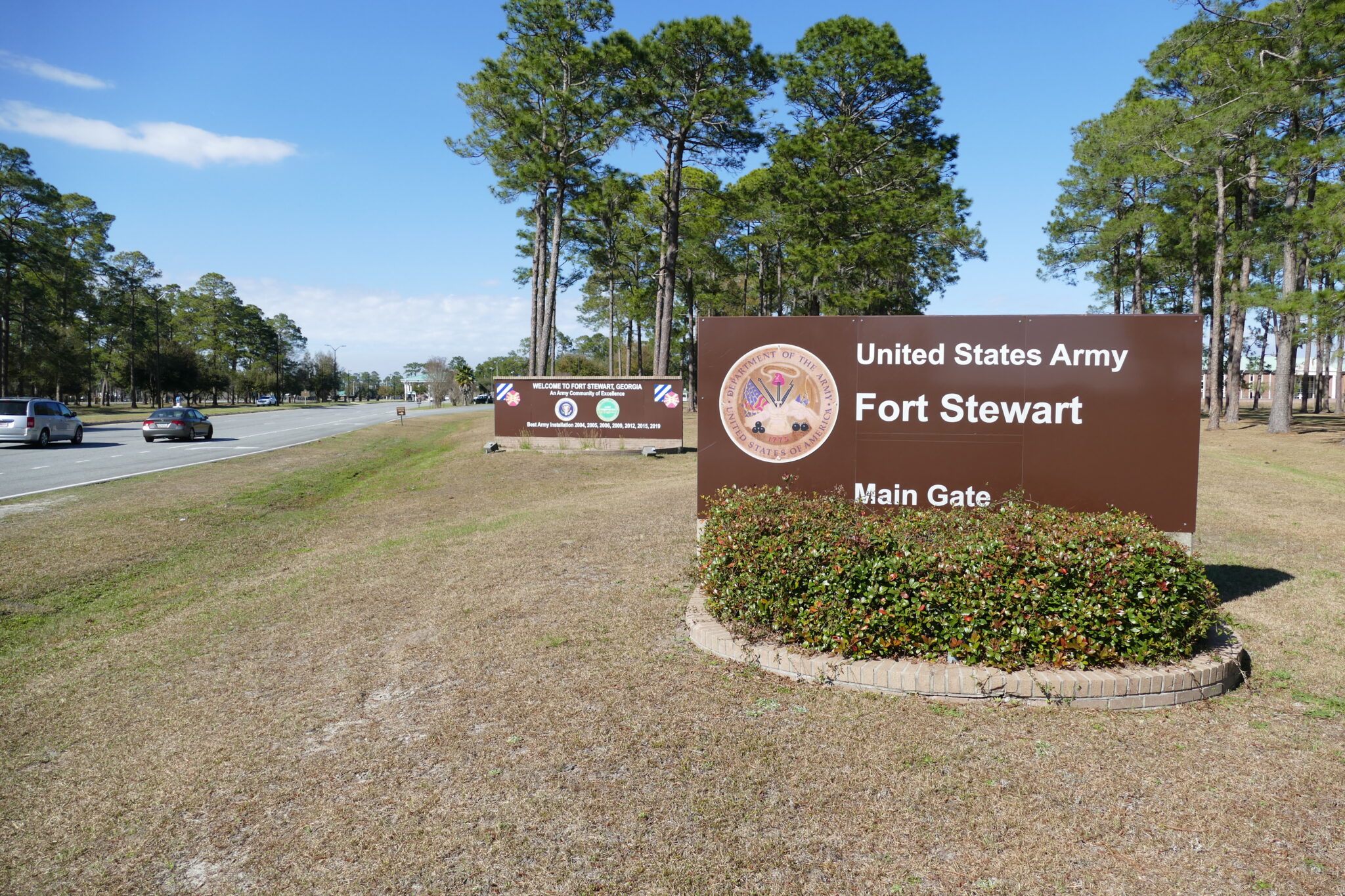
Visitors trickled in at the main gate to Fort Stewart in Hinesville over the weekend as the community waited for the specific timing of a 3rd Infantry Division troop deployment to Germany. (John McCosh/Georgia Recorder)
UPDATE | HINESVILLE, Ga. (GA Recorder) — Anka Hinze was skeptical a couple of weeks ago when her retired military police officer husband said he had a sense of foreboding that an overseas conflict was about to deliver a ripple effect across the Hinesville community near Fort Stewart.
Then the owner of the popular German restaurant Zum Rosenhof in downtown Hinesville noticed a change in her clientele.
“We normally have a lot of soldiers, male and females,” Hinze said Saturday afternoon at a sidewalk table outside the small restaurant. “In the last two weeks or three weeks, we noticed families coming from out of town for the visit to family members. And we’re like, OK, what is going on? We knew something was brewing, you know, overseas, but we really didn’t know what it was because it was just all hearsay.”
Thursday, President Joe Biden removed all doubt when he announced the imminent deployment of 7,000 troops to Europe. Most will come from Fort Stewart’s 1st Armored Brigade Combat Team, 3rd Infantry Division.
Hinze said until Russian President Vladimir Putin ordered an invasion of Ukraine last week, her relatives back in her native Germany were also skeptical such a thing could happen. Now they worry that Ukraine is just the beginning of Russian aggression.
More families from out of state are dining lately at the Hinze family’s Zum Rosenhof restaurant in downtown Hinesville. Owner Anka Hinze (shown with her daughter Vivian) says her regular soldier customers have visited Zum Rosenhof the past few weeks. John McCosh/Georgia Recorder
“Today it’s Ukraine, which is next to Poland,” Hinze said. “And next to Poland is Germany. They are worried. The distance is not so far. I mean, it’s very close. If you think about it, from the middle of Germany, the middle of Ukraine, it’s only like 20 hours by car.”
For the first time, NATO is positioning personnel “in a deterrence and defense role,” according to Pentagon officials. Soldiers from Fort Stewart and Fort Bragg, N.C., will be among a contingent of as many as 12,000 U.S. troops sent to Europe in support of NATO.
Fort Stewart’s combat team will arrive at the Joint Multinational Training Center in Grafenwoehr, Germany. According to the division’s Twitter account, troops started deploying from Georgia Sunday.
The @1ABCT_3ID is deploying to @USArmyEURAF area of operations. Col. Peter J. Moon, brigade commander, describes the unit’s mission to reassure NATO allies, deter Russian aggression and to be prepared to support a range of other requirements in the region. #ROTM 1/2 pic.twitter.com/8VIJ5Njo4h
It will mark the second recent deployment separating family members from their loved ones who serve at Fort Stewart. Just seven months ago the unit returned to Fort Stewart from a nine-month deployment to Korea.
Georgian U.S. Sen. Raphael Warnock (D-Ga.) spoke to Maj. Gen. Charles D. Costanza, the commanding general of the 3rd Infantry Division at Fort Stewart, over the weekend, pledging support to the servicemembers and their families. Costanza said this type of short-notice deployment is especially difficult compared to the recent past when schedules are known, as has been the case over the last 20 years, according to a weekend readout of the phone conversation released by Warnock’s office. Costanza also told the senator the unit prepared to quickly and effectively deploy.
Built on 288,000 acres across Liberty, Bryan, Evans and Tatnall counties in southeast Georgia , Fort Stewart is one of the largest U.S. Army installation east of the Mississippi River. Signs are literally all over town that testify to its local importance. A water tower near the base declares Hinesville as home to the “Rock of the Marne,” a reference to the 3rd Infantry Division’s activation in 1917 during World War I, where it earned the nickname for holding a defensive position along the Marne River in France against German forces.
Many restaurants displayed messages on roadside marquees showing support for troops. Now a community still struggling to return to pre-COVID-19 norms is bracing for a new normal – again. And troops who are usually a common sight at local restaurants or places where they relax, like Doodles pool hall, were few and far between on the streets around Hinesville over the weekend.
A soldier in downtown Hinesville engaged in an animated conversation Saturday afternoon. Fewer uniformed soldiers than usual were spotted lately on streets near Fort Stewart. John McCosh/Georgia Recorder
“Our community always feels a deployment both economically and in a deeper way, when our soldiers are gone,” said Jimmy Shanken, chairman of the Liberty County Chamber of Commerce. “Yes, traffic will be a little lighter, stores will be a little emptier and lines will be a little shorter, but the important thing is keeping those men and women in our thoughts and prayers, as well as continuing to support the families that they leave behind in our communities. As a veteran, my family understands these hardships and so many other things that military families face that most never realize. So yes, we know that this may affect our economy but that certainly is not a concern when you factor in the very human side of what deploying means.”
In a town where service runs deep, the desire for a safe and swift return goes far beyond financial incentives, Shanken said.
“Yes, businesses do depend in a lot of ways on people who are military affiliated, however, as a community we have also learned a lot in the last 15 years with consistent deployments about diversifying income streams and attracting people from other areas to our community to help subsidize any losses,” Poole said. “This is also, so far, a different deployment with one brigade going, not the whole division, that will make absorbing the economic impact a lot lighter. We just want everyone home safe as soon as possible.”
Shanken is a veteran, as are 22.3% of residents of the Hinesville metro area, a much higher proportion than Georgia as a whole at 5.9%.
A 2021 study by researchers at Georgia Southern University found that Fort Stewart accounted for just over $3 billion in economic output for the Hinesville metro area and brought about 23,000 jobs to the area, including more than 17,000 people directly employed to support its local operations.
For family-owned businesses like Hinze’s, news of imminent deployments from Fort Stewart often spreads through the community by word of mouth among the service member’s family but is not shared with outsiders.
“Families, you know, you never talk about planning, you just don’t do that,” Hinze said. “But me being a military wife, we would talk to each other, you know.”
In the nearly two decades since Hinze opened Zum Rosenhof, she’s seen Hinesville go through peacekeeping deployments to Korea, Afghanistan and Iraq. She says the level of concern among the military families visiting her restaurant is ratcheted up this time compared to those missions.
“They tell us, you know, they worry, because it’s a scary situation,” she said. “Because it’s not knowing about the mission,” Hinze said. “Some say, ‘oh, yeah, this is not about peacekeeping, if there are bombs and shots being fired.’ For us, that’s not peacekeeping.”
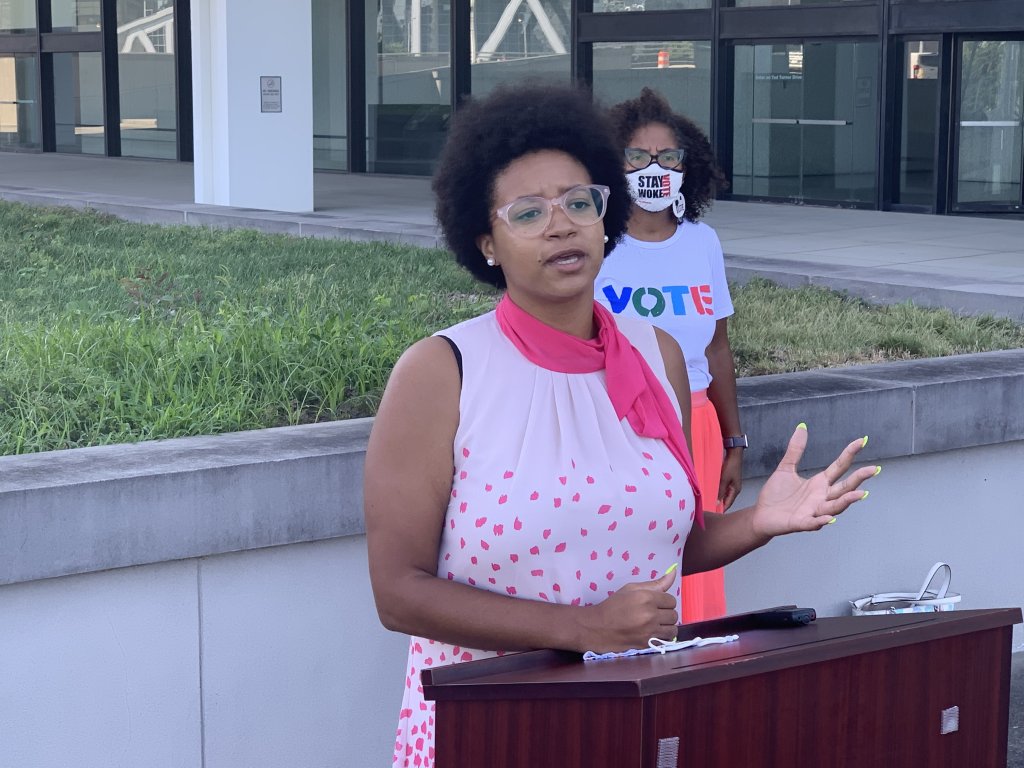
Georgia Conservation Voters Executive Director Brionté McCorkle is one of the plaintiffs seeking to postpone the March qualifying for a Public Service Commission race until after a trial for a lawsuit that argues the current system illegally dilutes Black voting influence. File photo (Stanley Dunlap/Georgia Recorder)
(GA Recorder) — A U.S. District Court judge is set to decide over the next week whether candidates qualifying for a Georgia Public Service Commission race must wait until after a summer trial for a lawsuit claiming the process of electing utility regulators has largely kept Black people from winning a seat.
Northern District of Georgia Judge Steven Grimberg was asked on Friday to issue a temporary injunction for the March 7-11 qualifying on behalf of four Black Fulton County voters who want elections moved to district-only and for at least one predominantly Black district to be created. In this year’s election, the only PSC seat up for election is District 2, now held by Republican Tim Echols from Hoschton.
The lawsuit contends that having statewide elections determine district public service commissioners as happens now is unconstitutional under the Voting Rights Act of 1965. Only one Black commissioner has been elected to the board that decides how much Georgia Power charges its customers for electricity. It also regulates telephone and natural gas rates.
Brionté McCorkle, a plaintiff and executive director of Georgia Conservation Voters, said it’s a better idea to postpone qualifying since the trial may reshape the PSC elections.
“Qualifying is when the secretary of state actually does the work needed to create ballots of the candidates so this is the best time for him to make a decision to postpone the election,” McCorkle said.
Lawyers for the Georgia Secretary of State’s Office asked the judge on Friday to allow the qualifying and May primary elections to proceed as scheduled since changes would not be difficult before the Nov. 8 general election.
In a court filing, the state’s attorneys claim that the plaintiff’s are trying to disrupt the election process before a final judgment is rendered and that canceling the primary election would cause confusion.
“Their argument was that if we delayed the elections there would be a burden on the state to have to do a special statewide election,” McCorkle said. “Our team said that the state has special elections all the time. This isn’t unprecedented.”
The next commissioner elected to a six-year term will have a vote on significant decisions, including how much Georgia Power customers pay for the Plant Vogtle expansion.
“They’re making decisions at that point about how much of the cost overruns to allocate customers, which is something that directly impacts, you know, black voters,” McCorkle said.
The five-member board currently has one Black commissioner, Atlanta Republican Fitz Johnson, who was appointed by Gov. Brian Kemp in 2021.
On Thursday, the Senate approved a new PSC redistricting map over objections from Democratic lawmakers.
Tablet pc and medical tools with SURVEY inscription, social distancing concept
Area health care providers are again partnering together to better understand the health needs and issues that Northeast Georgians face when making healthy life choices. Northeast Georgia Medical Center, District 2 Public Health, Stephens County Hospital, Habersham Medical Center and Good News Clinics are conducting a Community Health Needs Assessment (CHNA) online survey.
The survey, conducted every three years, helps provide a snapshot of the region’s latest health profile and healthcare barriers. This assessment is then used to help guide the focus and development of future programs.
The survey is simple and easy to complete online at www.nghs.com/community-survey and will be open to anyone in the community until March 22.
“We invite everyone to participate in this short survey, which is truly invaluable in helping us understand the growing needs of our community,” says Phillippa Lewis Moss, NGMC Board Chair and Co-Chair of the Regional CHNA. “The information we gather informs NGHS, CHNA partners, and other community leaders where to direct community health improvement efforts.”
Dr. Monica Newton, Co-Chair of the Regional CHNA, agrees that the feedback gathered leads to improvements in the health of the entire region.
“The Community Health Needs Assessment is both a mirror and a rudder to guide hospitals in forming partnerships that make the biggest impact on the health of the community,” Newton explains.
Healthcare providers say information from this study will be used to formulate specific plans to improve health in the region. Results will be available to anyone interested in using them for long and short-range planning.
The 2019 CHNA led to collaborative efforts toward improving mental healthcare in the region.
“A significant part of the assessment is community input,” says Moss. “Although the CHNA will include data and statistics from community health resources, it is important to us to know what community members feel are the key health needs, especially those of our most vulnerable populations.”
Responses are kept anonymous with a composite report. For those who would like to be included (and are willing to provide their name and contact information), there will also be a drawing for a free one-year YMCA membership.
For more information about the CHNA and to complete the survey, click here.
Animals provide a level of companionship no other connection can compete with— feeling the unconditional love of a pet each day makes life that much sweeter. But those pets need our love just as much as we need theirs, and today, there are animals at the Habersham County Animal Shelter dreaming of that kind of feeling.
Meet Ali the cat and Donivan the dog, two adoptable pets that just might be the perfect addition to your world.
Meet Ali
Ali is a sweet female cat who is a friend to all— humans and animals of all different types, sizes and shapes, too! (Photo: HCACC)
Meet Ali, a sweet and chatty female kitty who would love to be part of your family.
Ali may not have had the most purr-fect life before coming to the Habersham County Animal Shelter, but she’s ready to have one now.
“The past is in the past,” Ali says. “Now, it’s time to focus on the new things ahead— like having the family I’ve always dreamed of.”
Ali loves making friends, whether those friends are adults, children, cats, or even dogs, she’s all about growing her circle.
“I have a lot of love to give, and I love to give it,” Ali says. “I hope that wherever my new home is, and whoever it’s with, they’ll want to be my best friend, too.”
Meet Donivan
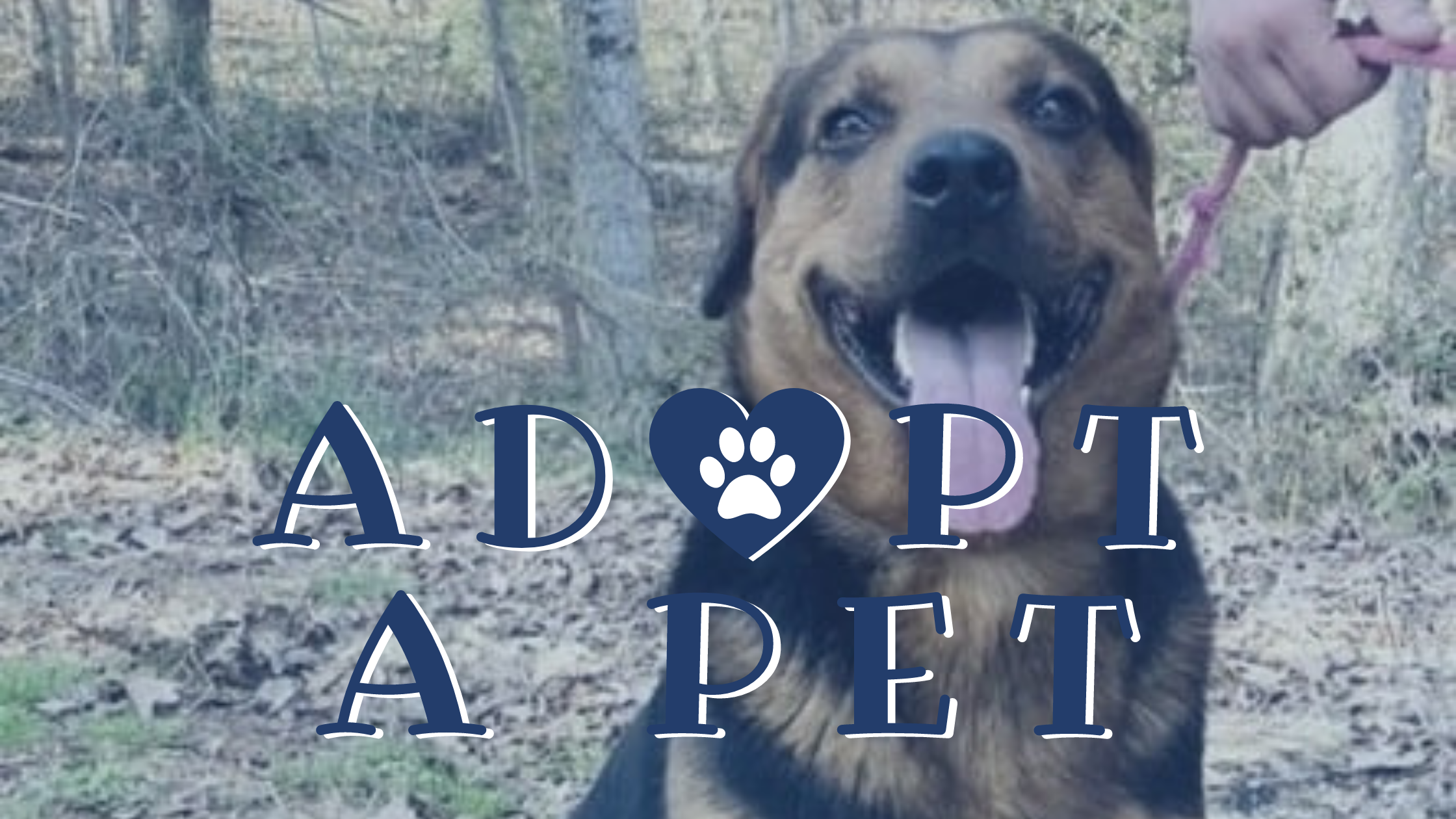
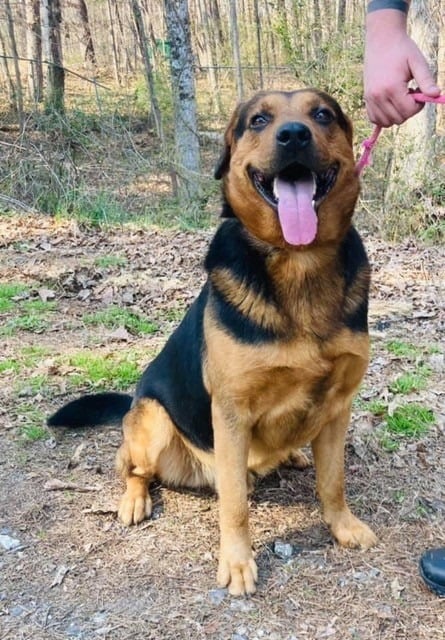
Donivan is an energetic 5-year-old male Rottweiler/Shepard mix who loves to play. (Photo: HCACC)
Meet Donivan, an energetic 5-year-old male Rottweiler and Sephard mix who is ready to run around with someone who loves to play.
This isn’t the first time Donivan has been at the shelter, the first time he was around, he’d been abandoned. He was adopted in May and returned in February, leaving him wondering why.
“It’s hard to be rejected over and over again,” he said. “I wish I could understand why.”
While he knows the animal shelter and the staff well, he’s ready to be loved unconditionally in a fur-ever home. His dream home has someone who likes playtime as much as he does—Donivan might be a big dog, but when it comes to playtime, he’s just an oversized puppy.
“If I had a human who loved me and loved to throw a ball, I’d be the happiest I’ve ever been,” Donivan said. “I can only imagine what a perfect life I would have.”
If you’re interested in adopting Ali, Donivan or any of the other animals at the Habersham County Animal Shelter, please call the shelter at (706) 839-0195 to set up an appointment. You may also visit them in person Tuesday-Friday from 10 a.m. to Noon & 1-5 p.m. or on Saturday from 10 a.m. to 2 p.m. Check out their Facebook page for more information.