Georgia Department of Corrections cadets and trainers before the 2010 ribbon cutting for the department's training facility and offices in Forsyth. A labor strike of the incarcerated would come about month later. GDC lost over 2,000 correctional officers in the following year. (Grant Blankenship / GPB News)
Correctional officers in Georgia prisons could see a significant raise if an amendment to the state budget makes it to the governor’s desk.
Retaining prison guards has been a struggle for the Georgia Department of Corrections for years. Depending on who you ask, understaffing is at the root of everything from escalating prison violence to recidivism.
Part of the problem is pay. The average Georgia correctional officer makes about $35,000 a year. Now a change to the budget being debated by the Georgia Senate would give correctional officers a whopping $9,000 pay hike.
“The Senate proposal will almost double down on the governor’s $5,000 raise, adding an additional $4,000 on top … for sworn filled positions, again, in juvenile justice and the Department of Corrections,” Republican Sen. Blake Tillery of Vidalia said from the floor of the Senate this week.
Georgia Department of Corrections Commissioner Timothy Ward called the proposed raise a “very big day for corrections.”
“You know, if they want to do what’s right, if they want to help us with this non-negotiable mission, they need to pay our staff,” Ward said. “74% of our inmate population is violent, so the job has been getting a little bit more difficult. So the pay needs to match the difficulty of the job.”
Given the support by Senate Republicans, the measure seems likely to pass. If it does, starting pay for Georgia correctional officers would be about $40,000 dollars a year.
This article appears on NH through a news partnership with GPB News
The Stephens County Development Authority and local businesses shared employment information with Stephens County High School students in August. (Visit Toccoa/Facebook)
The Georgia Department of Juvenile Justice has partnered with the Stephens County Development Authority to help provide more opportunities, like jobs, to teens in Stephens.
The GDJJ announced the expansion of the agency’s career opportunity program F.R.E.S.H Start Youth Initiative. GDJJ is now partnering with the Stephens County Development Authority (SCDA) to help ensure justice-involved youth in Northeast Georgia have access to gainful employment.
“Public-private partnerships like F.R.E.S.H. can help pave the way for better opportunity for youth in need of a constructive path forward and safer communities,” said Governor Brian P. Kemp. “I commend the Department of Juvenile Justice for their work to implement this program across the state, and I am thankful for the good corporate citizens who have agreed to join the effort. We look forward to the positive impact this initiative will have on the Northeast Georgia community.”
F.R.E.S.H, which stands for Focusing Resources Effectively to Sustain Hope, is a program in the Department’s Reentry Services Division that facilitates youth’s connections to services and support as they transition back into their communities. Launched in August 2020, GDJJ has partnered with more than a dozen businesses located in Clayton, Cobb, DeKalb, Fulton, and Hall counties.
“DJJ remains committed to restoring youth inside and outside of our development campuses,” said GDJJ Commissioner Tyrone Oliver. “We want our young people to have a positive outlook on their employment future, and I am grateful to the Stephens County Development Authority and the business owners in the northeast region for their dedication to this important effort.”
Sage Automotive Interiors, Nifco KTW, ASI Southeast, MWL LLC, Trachte and Maple Ridge Cabinetry are now amongst the list of partners offering job opportunities to current and former justice-involved youth. These companies are manufacturers of various products, such as wood pallets, automobile parts and modular steel buildings.
“As workforce needs increase in Toccoa-Stephens County, the Stephens County Development Authority is excited to partner with the DJJ to offer great career opportunities in our local industries to youth in our state that are trying to reenter the workforce,” said Brittany Ivey, President/CEO of the Stephens County Development Authority. “Our industries that have agreed to be a partner in this program firmly believe that past mistakes do not have to define an individual as they move forward in life. They are excited to offer second-chance opportunities, and hopefully, this partnership will prove beneficial to their companies and the young people they will employ.”
The Stephens County Development Authority was established in 1965 and is responsible for sustainable economic growth in Northeast Georgia. Its mission is to support the expansion of industrial and commercial facilities to promote employment.
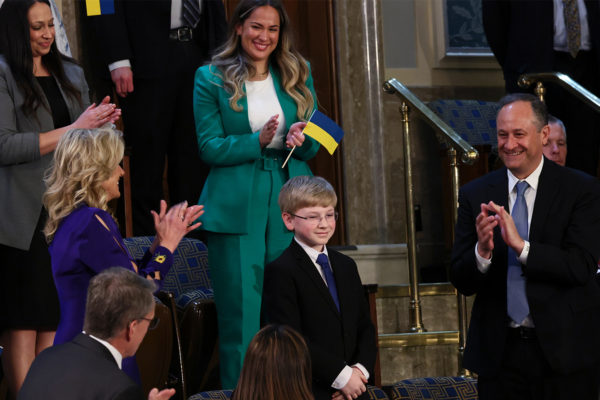
Joshua Davis, a 13-year-old diabetes patient, receives applause during President Biden’s State of the Union address.
Democrats in the Senate are poised this month to make their first attempt at salvaging one of the most popular elements of President Joe Biden’s stalled Build Back Better plan — the proposal to cap insulin costs at $35 a month.
It might not go well— even though the idea of helping millions of Americans with diabetes afford a crucial medicine has immense public support, and even bipartisan adherents. But there’s a difference of political opinion between Democrats and Republicans, of course, but also among Democrats.
Sen. Raphael Warnock (D-Ga.) is sponsoring a bill, expected to come up in March or early April, that would cap the price. Pursuing Warnock’s bill would remove that provision now in the Build Back Better bill.
Drug companies have dramatically jacked up prices in the United States, leaving Americans to pay more than 10 times as much as people in other developed countries, according to the most recent detailed survey by the federal government.
Warnock
Senate Majority Leader Chuck Schumer highlighted the obvious selling points of bringing down insulin costs when he announced before Congress that the issue would be a priority. “It is just preposterous— beyond preposterous— that Americans with diabetes sometimes pay more than $600 just for a 40-day supply of insulin,” Schumer said.
“There’s enormous interest in our caucus to pursue this proposal, so it will be a priority for Democrats in the weeks ahead,” he said, inviting Republicans to get involved. “This has long been a bipartisan issue: As many as 20 states across the country— many with Republican legislatures and governors— have passed state-level insulin caps. There is no reason this shouldn’t be bipartisan in this body.”
Still, the complications start on the Democratic side, even if they appear entirely surmountable.
The first is that Biden and many of the more progressive Democrats in Congress still would like to pass a stripped-down version of the Build Back Better plan. They would like to take another shot at building a package of the popular tax, climate, and health provisions that could pass muster with West Virginia Sen. Joe Manchin, a conservative Democrat who blocked the more ambitious bill. Democrats could speed the new version through Congress with 51 votes under the expedited budget reconciliation rules they’ve already passed.
Biden was talking up Build Back Better and capping insulin costs as recently as last month — just days before Schumer announced Warnock’s insulin plan — and brought up insulin again in his State of the Union address, pointing to Shannon Davis and her 13-year-old son, Joshua, who lives with Type 1 diabetes, like his father.
“Imagine what it’s like to look at your child who needs insulin and have no idea how you’re going to pay for it. What it does to your dignity,” Biden said, reaffirming his plan to cap insulin at $35 a month.
Pulling the insulin measure from Build Back Better removes that powerful talking point and means that an insulin-only bill would need 60 votes to pass in the Senate, instead of a simple majority.
The president did not mention his larger spending plan in his March 1 speech. And Schumer’s embrace of Warnock’s bill suggests that Democrats see the value of Warnock taking the lead on a popular issue as he faces a tough reelection battle in Georgia this year.
“I’m a pastor; I’m on the ground, and so I know that everybody knows somebody with diabetes,” Warnock said in a video in which he noted that 12% of Georgians have the disease. “I’ve seen up close how diabetes impacts Georgians.”
According to background information provided by Warnock’s office, the senator has been working with Schumer and the chairs of the Finance and Health committees on how best to bring the measure forward. He’s also been working with Biden’s Centers for Medicare & Medicaid Services on technical details, suggesting at least tacit support from the White House.
Staffers of Hill Democrats, speaking candidly about Build Back Better’s prospects, described it as less a race car that’s just pulled into a pit stop and more a clunker on cinder blocks. Some senators have declared that it doesn’t exist anymore.
Other Democratic staffers say pulling prescription reforms out of the Build Back Better package might be useful. Items included in the reconciliation process are supposed to directly affect the federal budget. Most of the prescription drug provisions would affect the finances of insurers and drugmakers much more than the federal government’s, leaving the provisions open to a parliamentary challenge from Republicans.
By starting the salvage operation with a popular piece, and attracting enough Republicans to succeed, Democrats could use the insulin cap as a model for getting a few other chunks of Build Back Better through Congress.
There is no clear signal, though, that Republican senators will cooperate, even though around 20 of them have previously expressed support for measures to control insulin prices. Warnock’s staffers said the senator has gotten positive feedback on the proposal from both Democratic and Republican colleagues.
Asked about Warnock’s bill, several key Republicans, including Minority Leader Mitch McConnell and the co-chair of the Senate Diabetes Caucus, Sen. Susan Collins of Maine — did not respond.
Jess Andrews, a spokesperson for Sen. John Kennedy (R-La.), who has offered three bills to lower insulin costs, one as recently as September that included caps, said the politician had nothing to say at this point.
Sen. Chuck Grassley (R-Iowa), who has worked extensively with Finance Committee Chairman Ron Wyden (D-Ore.) on investigations and legislation dealing with insulin costs, offered no opinion on Warnock’s bill.
A spokesperson did note that Grassley prefers a broader approach. “There’s no doubt that insulin is one of many essential medications that has become less and less affordable,” said Grassley spokesperson Taylor Foy. “Bipartisan proposals in Congress, such as the Grassley-Wyden Prescription Drug Pricing Reduction Act, would address the root causes of price increases for not just insulin, but many other medications as well.”
Indeed, nearly every group of advocates who work on a particular disease would like Congress to control the price of an essential drug to treat or cure that disease. But Congress so far has lacked the will or means to approach the problem that way.
McConnell torpedoed Grassley’s broader bill in 2019, when Republicans held the majority in the Senate. But now Schumer controls which bills make it to the floor.
If 10 of the Republicans who want to control insulin costs are willing to align themselves with a vulnerable Democrat facing a close contest, the bill could pass this time around. If they are not, Democrats will take the consolation prize of highlighting how the GOP blocked a popular reform demanded by millions.
Women, who make up 48% of the state’s workforce, are nearly 12 times more likely than men to leave their jobs to care for children, and the COVID-19 pandemic pushed even more people into caregiving roles that keep them from earning income.
However, the Georgia Budget and Policy Institute believes help could come from House Bill 510, which is sponsored by five Republicans and one Democrat.
GBPI Senior Economic Justice Policy Analyst Ife Finch Floyd said this proposed legislationwould create a state earned income tax credit that would support economic justice for women, who often bear the bulk of responsibility for child care, as well as families in the low income demographic.
“We see this as a way to help families bolster their wages,” Floyd said. “It would lower their tax liability and ultimately make sure that they can target those wages to cover the essentials that they need for their family.”
Emotional distress from trying to balance caregiver and employee roles, without much support from employers, became the No. 1 challenge.
Floyd said she remembers having to take care of her kids and take work calls at the same time.
“That is incredibly stressful,” Floyd said. “The cost of child care (is) actually going up right during the pandemic and, in many states, some are just finding it may make more sense for their family to not have to work.”
When schools and day care centers close, as they did again earlier this year during the omicron variant surge of cases, families have to adjust.
In Georgia, the average cost of infant care for center-based care is about $8,500 a year, according to the Economic Policy Institute.
Floyd said that is more than one year of in-state tuition.
“They have to make some pretty tough decisions about what to do to care for their kids and also make sure they can pay those bills,” Floyd said.
Essential workers often have jobs without any sick time or paid medical leave, and younger caregivers of color and those with lower levels of education are less likely to have flexibility with employers, she said.
Only about 43% of Black workers and 25% of Latino workers have access to any paid parental leave, and many people of color cannot afford to take advantage of the unpaid federal Family and Medical Leave Act of 1993 even when eligible.
“The FMLA is only applicable for businesses with 50 or more employees, so some small businesses are not required to offer unpaid leave,” Floyd said. “There is also a requirement of 1,250 hours a year that an employee must work to qualify for FMLA leave, so some low-wage workers may not meet the hour requirement.”
Low wages also contribute to the existing shortage of professional caregivers, meaning more family members are forced into these roles. Georgia’s average hourly wage for professional caregivers in 2020 was $13.84.
A 2020 workforce equity study from Policy Link ranked home health aides as the fifth-lowest and personal care aides as the fourth-lowest-paying jobs among the 25 lowest-paying jobs disproportionately held by people of color. Only dishwashers, fast-food cooks and cafeteria attendants were paid less. Nursing assistants also made the list, ranking 19th.
Research has shown that low wages are often cited as the main reason 50% of direct care workers leave their jobs within the first year. They also point to strenuous workloads, lack of advancement opportunities and little to no health care benefits as additional issues leading them to quit.
Women small business owners are the drivers of new business, job creation and the state’s economy, Small Business Majority Georgia Outreach Manager Rachel Shanklin said. But, despite their tremendous contributions, this community is more likely to own businesses and work in fields that don’t pay livable wages.
“They are often forced to choose between paying for child care or saving for a rainy day,” Shanklin said. “Enacting the Georgia Work Credit will provide targeted and meaningful benefits for women entrepreneurs and their employees, giving them more take-home pay and the freedom to cover their basic necessities.”
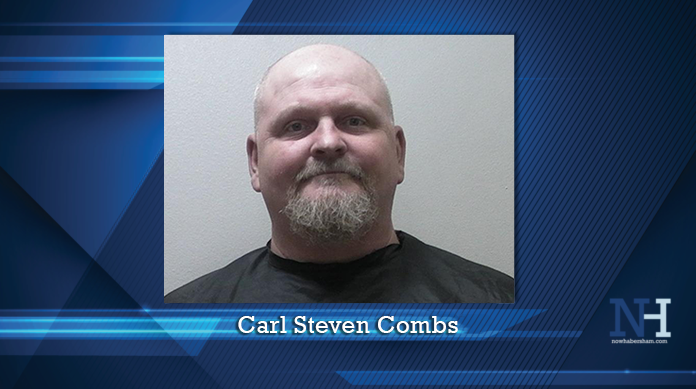
A Cornelia man is behind bars, accused of sodomizing a young boy.
Habersham County deputies arrested 49-year-old Carl Steven Combs on Tuesday, March 1, and charged him with aggravated sodomy. The child, who was under the age of ten at the time of the alleged assault, is related to Combs through marriage, officials say.
According to the warrant, Combs allegedly assaulted the boy sometime between January 1, 2020, and March first of this year. Investigators relied on evidence gathered in a forensic examination to bring charges against Combs.
The Habersham County Sheriff’s Office says the case remains under investigation. Combs currently remains in the Habersham County jail without bond.
More than a year after sustaining significant structural damage, the Georgia Department of Transportation has updated the City of Demorest on their plans to repair the retaining wall on Central Avenue.
The wall sustained damage during Hurricane Delta in October of 2020 and has been a point of concern for the city council ever since. They were waiting in limbo to hear back from GDOT to find out how much they could help with repairs, and how much the city would have to pay to get the wall and sidewalk that runs over it back in shape.
Monday, those questions were answered when GDOT approached the city manager and mayor for a meeting to update them on all the projects going on in Demorest: GDOT will cover the expense and labor of the whole project.
“The wall has been an eyesore for quite some time,” Demorest Mayor Jerry Harkness said. “They [GDOT] hopefully will start working on in late July. They have the funding for their next [fiscal] year, which starts in July. Hopefully, it’ll take them about three months to get that complete.”
The new wall will look similar to the one below and will be texturized with stamped concrete. GDOT will also update and maintain the sidewalk running over the wall, as well as the handrails.
(Source: City of Demorest)
“The design that they showed us tonight is beautiful,” Harkness said. “It’s a beautiful cement wall with stone accents. It’ll be a great added feature to the City of Demorest.”
GDOT is expected to begin repairs in July and would finish the project by the fall.
Two fires set in the Rabun County last month have now been ruled as arson, according to Georgia Insurance and Safety Fire Commissioner John F. King.
The office announced Thursday that the two Rabun Gap fires, which occurred the afternoon of Feb. 25 at a residence on Wolffork Church Road, were intentionally set and have been ruled arson.
The first fire heavily damaged the carport and left side of the residence, according to the office of the insurance and safety fire commissioner. They say that the alleged perpetrator(s) also set a second fire that destroyed a workshop on the property.
“Our office is assisting the Rabun County Fire Department in this investigation,” said Commissioner King. “We are asking for the help of the community in bringing the perpetrator(s) to justice. Anyone with information about this Rabun County fire is invited to call my Fire Investigations Unit at 1-800-282-5804.”
In coordination with the State Fire Investigations Unit, Georgia Arson Control is offering a reward of up to $10,000 for information that leads to the arrest and conviction of those responsible for arson.
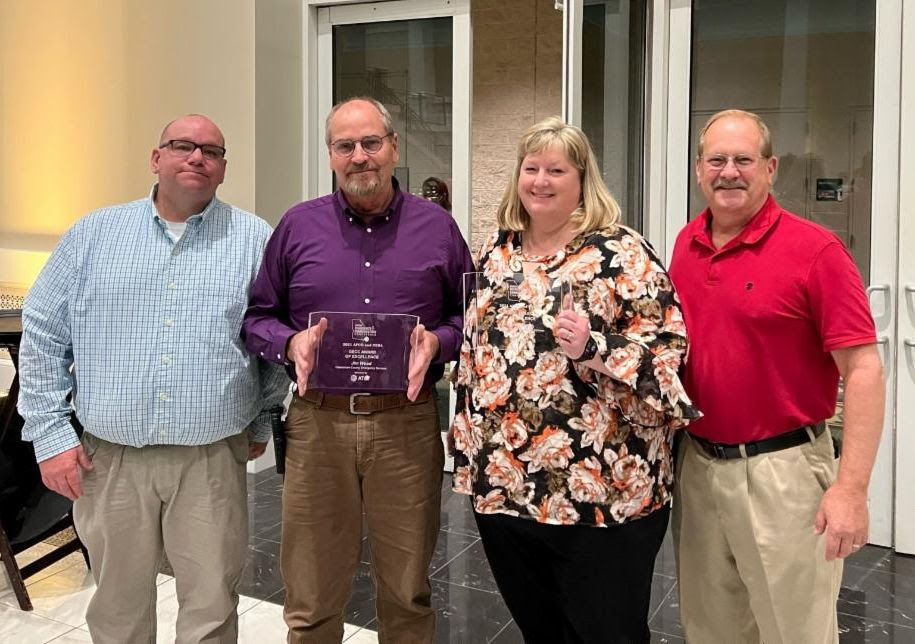
Two Habersham County Community Paramedics received the GECC Award of Excellence.(From left to right) Division Chief of Operations Jason Davey, Habersham County Community Paramedic Jim Wood, Habersham County Community Paramedic Hope Adams and Business Services and Training Chief Jeffrey Adams.
Two Habersham County Community Paramedics were recognized for their service at the Georgia Emergency Communications Conference, receiving the conference’s Award of Excellence for their dedication.
Habersham County Community Paramedics Hope Adams and Jim Wood received the Georgia Emergency Communications Conference Award of Excellence Tuesday night, which is presented to those not employed with E-911 to recognize their outstanding service and dedication to improving the agency.
Habersham County E-911 staff nominated Adams and Wood, who have been part of the Habersham County Community Paramedicine program since it began in 2017.
“Our department felt they were deserving of this award because of what they do for all of us,” Habersham County E-911 Director Lynn Smith said. “They truly serve all the departments, not just 911 and Emergency Services.”
The community program provides home visits to underserved community members with chronic conditions, such as congestive heart failure, mental disorders, lung disease and diabetes, to help them with their prescribed treatment plans.
“They have significantly cut down on our call volume,” Smith says. “They take on calls that might not be as urgent and free up other resources to be used as needed. Habersham County E-911 feels that Hope Adams and Jim Wood deserve this award because they go above the call of duty every day.”
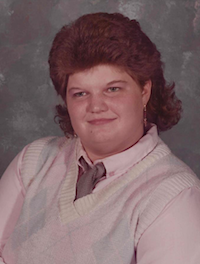
Miss Tina Marie Anderson, 57, of Clarkesville, formerly of Elberton, passed away on Thursday, March 3, 2022, at Northeast Georgia Medical Center in Gainesville.
Tina was born in Elberton on September 4, 1964, daughter of George ‘David’ Anderson and the late Miriam Elizabeth “Beth” Rice Anderson. She was a cafeteria worker having worked in nursing homes and a member of Middleton United Methodist Church.
Survivors, in addition to her father David of Elberton, include her sister, Lisa Anderson Higginbotham of Elberton; nephews: Eddy Higginbotham and Adam Higginbotham; and great-niece and nephews: Ashton Higginbotham, Alex Higginbotham, and Alijah Higginbotham.
Memorial services will be held on Saturday, March 12, at 11 o’clock in the Memorial Chapel of Berry Funeral Home with the Rev. John Moore officiating. Burial will be in Middleton United Methodist Church Cemetery.
The family will receive friends for one hour prior to the service.
Flowers are accepted; contributions may be made in her memory to Middleton United Methodist Church, PO Box 660, Elberton, GA 30635.
Those wishing may sign the online guestbook at www.berryfh.com.
Berry Funeral Home & Crematory of Elberton is respectfully in charge of arrangements for Miss Tina Marie Anderson.
Courtesy announcement by Whitfield Funeral Homes & Crematory, South Chapel at 1370 Industrial Boulevard, Baldwin, Georgia 30511. Telephone: 706-778-7123
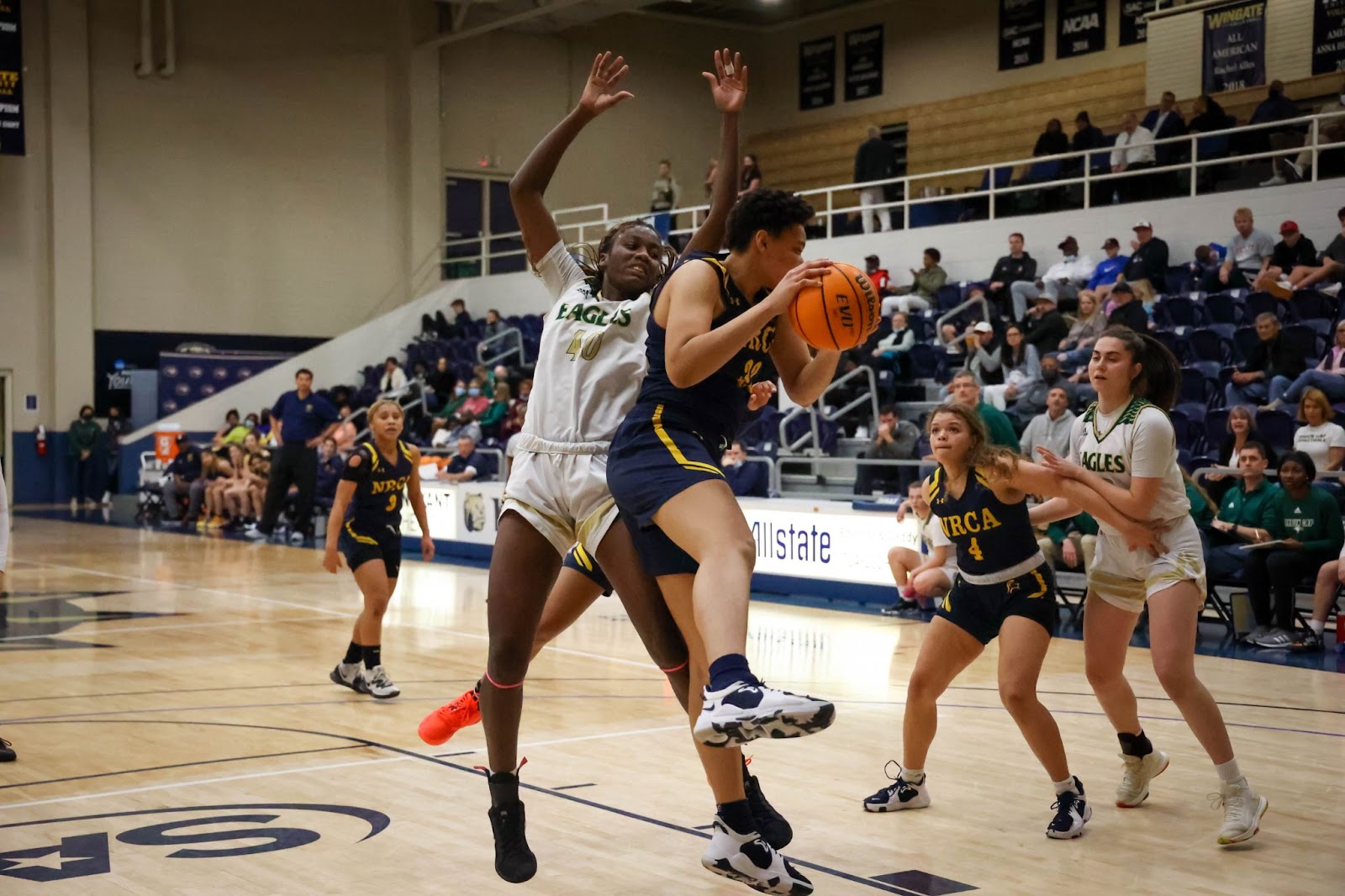
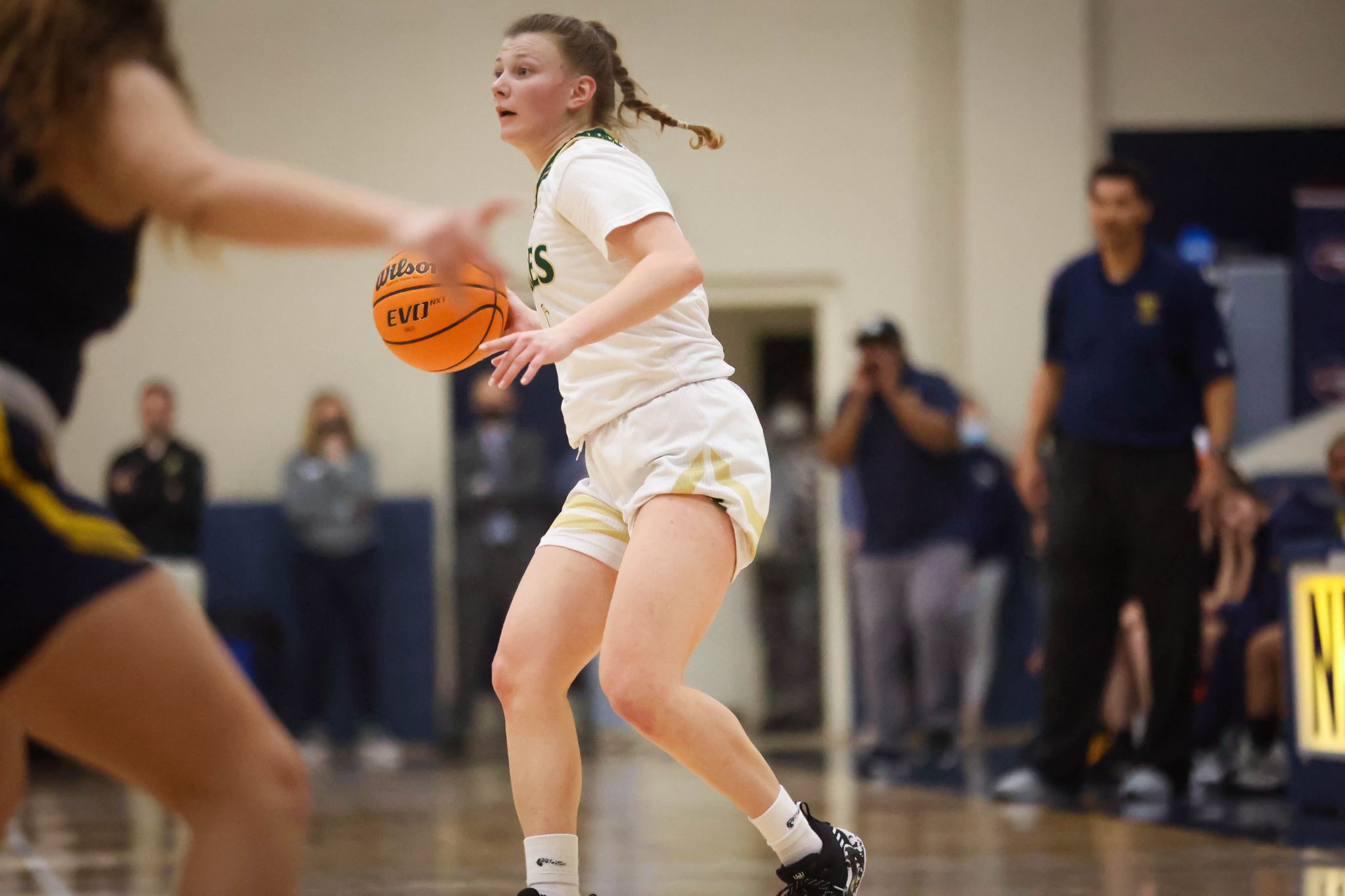
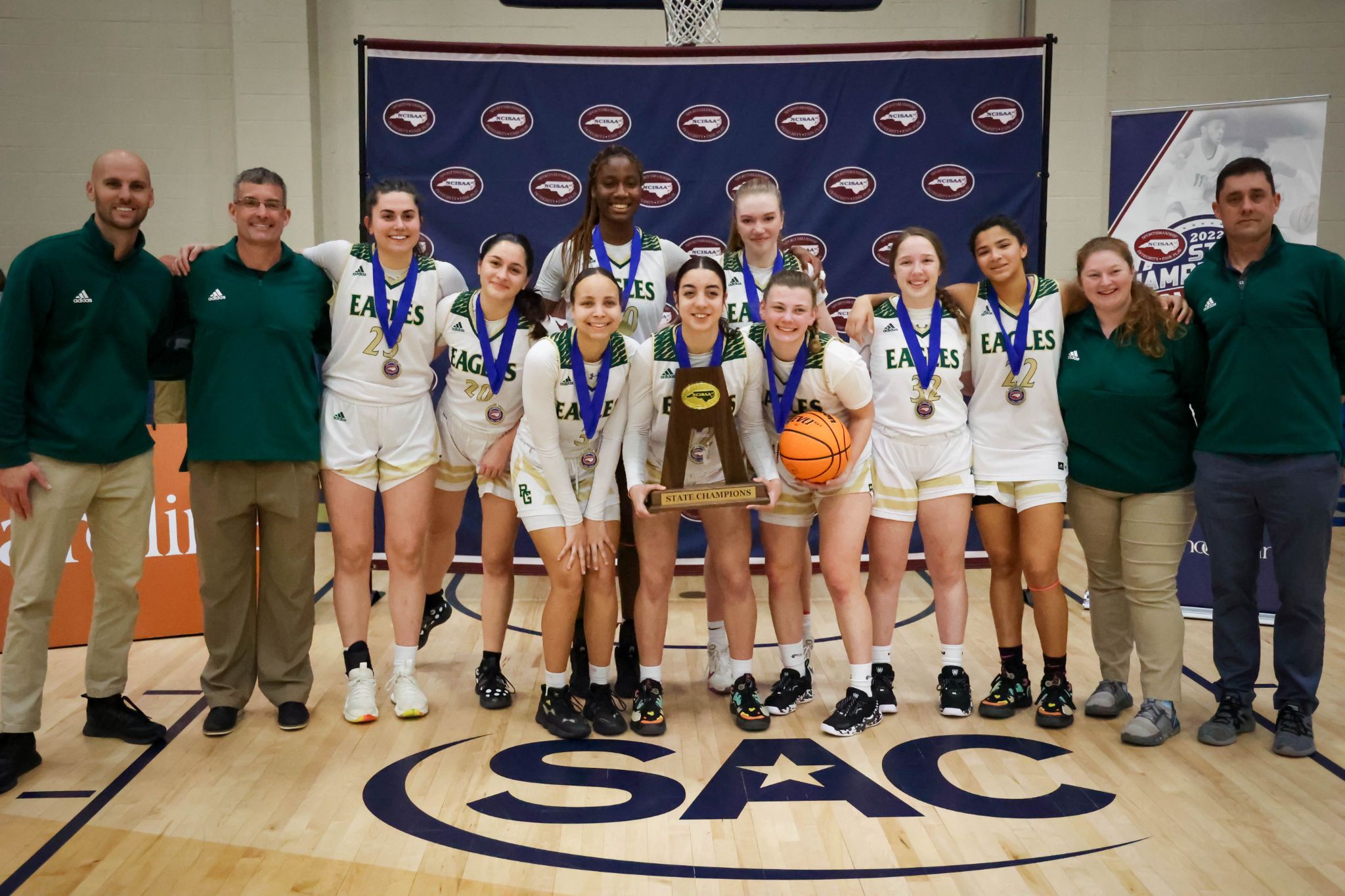
The Rabun Gap-Nacoochee School girls basketball team celebrates their historic championship victory on Saturday at Wingate University. (Photo: Rabun Gap)
It was a historic championship moment for Rabun Gap athletics on Saturday at Wingate University.
The Lady Eagles basketball team clinched the NCISAA 4A state title with a close 36-33 win over North Raleigh Christian Academy. This is the first state championship title in the Rabun Gap girls basketball program history which dates back 50 years. It also marks the first state title for any girls team in school history and is Head Coach Dale Earnhardt’s first state championship in his 15 years at Rabun Gap.
“Any time one of our teams wins a championship, it is huge for our school,” said Earnhardt. “I am so proud of this team and the hard work they put in this season. This was our ninth Final Four and our fourth appearance in the state championship game in 15 years. I am so happy for these coaches, these young ladies, and our school, but also for all the former players who laid the foundation for what was accomplished on Saturday night.”
The championship game was a back-and-forth battle against the No. 3-ranked Lady Knights. Rabun Gap jumped ahead early, scoring the first four points of the game and finishing the first quarter 12-6 off a three-pointer by Tuana Coskun. The Lady Eagles held a narrow 16-14 lead at the end of the second quarter.
University of Louisville commit Imani Lester of North Raleigh proved to be a dominant force but was no match for the Lady Eagles’ defense which held her to seven points and three rebounds. Earnhardt said Rabun Gap senior Victory Fredricks’ defense on Lester was key to the win, with several key blocks early in the game that set the tone.
Victory Fredricks of Lagos, Nigeria, held a strong defense against North Raleigh Christian Academy— the key to the Lady Eagles’ win. (Photo: Rabun Gap)
Rabun Gap went on a 5-0 run to begin the second half, but NRCA answered to take the lead. A key three-pointer by Kornelia Ignerska gave Rabun Gap a 28-27 lead as they headed into the final quarter. She hit a deep three-pointer with four minutes remaining to put the Lady Eagles up 33-30, and Monna Julkunen sealed it 36-33 with the final three points scored.
“We stressed all season that championships are won by taking care of the little details,” said Earnhardt. “It was true Saturday. The attention to detail proved to be the difference. Executing those two late-quarter possessions into successful threes was big for us.”
Strong defense and excellent rebounding propelled Rabun Gap to the title. The Lady Eagles held NRCA to 26 percent from the floor and out-rebounded the Lady Knights 35-26. Rabun Gap logged 12 offensive rebounds.
A key three-pointer by Kornelia Ignerska of Poznan, Poland gave Rabun Gap a 28-27 lead as they headed into the final quarter. (Photo: Rabun Gap)
The gym erupted with excitement at the final buzzer as players, coaches, and fans rushed the court to celebrate the historic moment.
This year’s girls basketball team has a lot to celebrate after a monumental season. The girls finished the season 23-6 and were undefeated at home. The Lady Eagles had a nine-game winning streak to close out the season after a huge 48-47 victory over Rabun County, which Earnhardt called the turning point of the season. Earnhardt said the team exemplified its motto – “Enjoy the Journey” – from day one.
“They worked extremely hard in the weight room and on the track during the fall to prepare for the season. We were as prepared to start the season as any team I have coached in the past,” he said.
Earhardt praised the hard work of his two seniors, Ana Baptista and Fredricks.
“Both played a huge role for us this season. Ana served as a captain, played a variety of positions on this team, and was the glue to keep us together no matter what happened on the court,” said Earnhardt. “Victory is an excellent rebounder and defender. She averaged over 10 rebounds per game for the season and had over 50 blocked shots. We were an excellent defensive team this year and most of it was because Victory protected the basket so our guards could pressure and take chances.”
It will be the second state championship trophy to come home to Rabun Gap this school year and the third in school history. The boys’ soccer program won its first state championship last October. Prior to 2021, the last school state championship was won in 1985 by boys cross country.
Members of the 2022 state championship girls basketball team include Ece Arabacioglu of Istanbul, Turkey; Ana Catarina Baptista of London, UK; Francesca Cergol of Brooklyn, NY; Tuana Coşkun of Istanbul, Turkey; Victory Fredricks of Lagos, Nigeria; Kornelia Ignerska of Poznan, Poland; Monna Julkunen of Vantaa, Finland; Vivian Ross of Cherokee, NC; Angelica Vanflorcke of Sapphire, NC; and Mia Wilson of Murphy, NC. Assistant coaches were Dustin Barnes, Morgan Neisweinder and Weston Willard. (Photo: Rabun Gap)
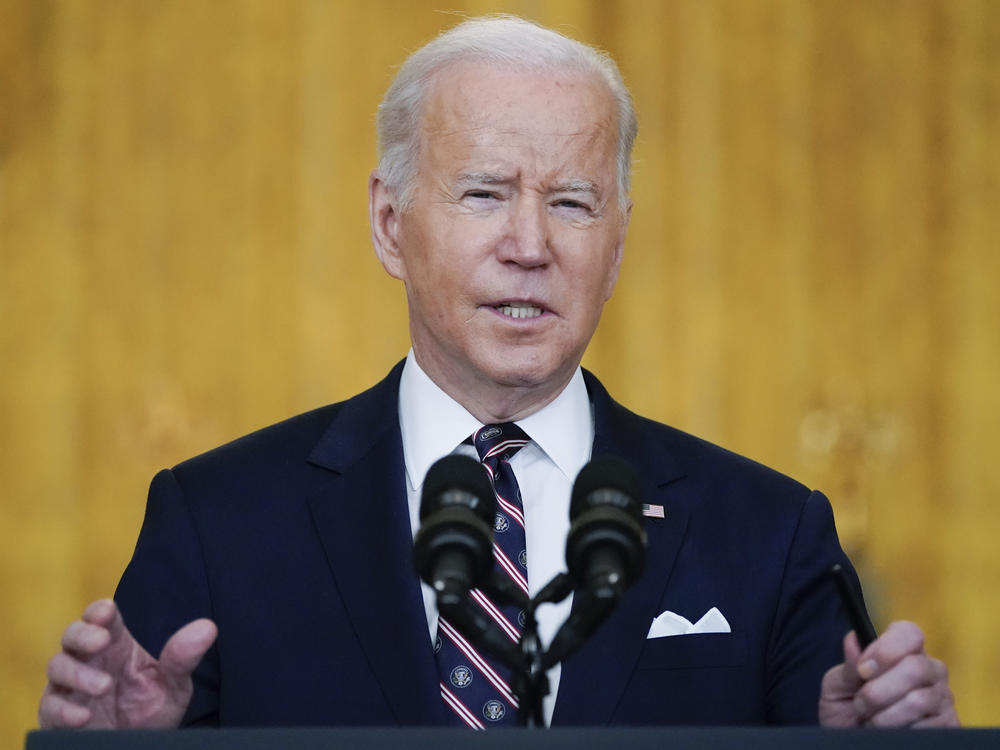
President Joe Biden speaks about Ukraine in the East Room of the White House, Tuesday, Feb. 22, 2022, in Washington. (AP Photo/Alex Brandon)
WASHINGTON (GA Recorder) — The Biden administration is asking Congress to provide $10 billion in assistance to Ukraine and $22.5 billion in COVID-19 funding on a fast timeline — within the next week.
White House acting budget director Shalanda Young wrote in a letter to lawmakers that this likely won’t be the last emergency funding request for either Ukraine or fighting the pandemic as both situations continue to evolve.
But she said the Ukraine aid is based on the best information the administration has at the moment and the coronavirus funding is needed to continue providing testing, treatment and vaccines.
Young asked Congress to quickly approve the emergency funding by attaching it to a government funding package that must become law before midnight on March 11 to avoid a government shutdown.
Adding extra cash or completely separate legislation on the annual government funding bill is relatively common, though asking Democrats and Republicans to reach agreement on more than $32 billion in emergency funding within just a few days will likely present some hurdles.
The Ukraine request is billions higher than the $6.4 billion ask the administration made just days ago, highlighting the challenges to determining how much military aid to send to Ukraine and how much to provide for humanitarian assistance as refugees pour into Europe by the thousands.
This request asks for $4.8 billion for the U.S. Defense Department to bolster the number of American soldiers in countries near Ukraine and send military equipment to that nation’s government. Another $5 billion would go to the U.S. State Department and U.S. Agency for International Development for economic and humanitarian efforts.
The COVID-19 aid would go partly to the U.S. Health and Human Services Department, which would receive $18.25 billion if Congress fully approves the request. The U.S. State Department and USAID would get the remaining $4.25 billion for international vaccination and treatment efforts.
While approving the Ukraine aid may quickly get bipartisan support in Congress, the COVID-19 aid will likely face a more complicated path to approval on such a short timeline.
Republican senators are likely to want more details from the Biden administration about where previously approved coronavirus relief funds have gone and whether any of that funding could be moved around.
Thirty-six GOP senators sent a letter to President Joe Biden on Wednesday asking for details on how much of the $1.9 trillion in aid funding Democrats approved in 2021 has been spent.
The letter asks for information on how much of the $350 billion in funding to state and local governments was spent on testing and vaccines. The senators also want a list of the expenditures and “accompanying metrics used to evaluate their effectiveness.”
Senate Majority Leader Chuck Schumer encouraged lawmakers to back the request during a speech on the Senate floor Thursday morning, saying the country is at a crossroads with the pandemic.
“Either we act now to secure the progress we have made, or we risk backsliding if another contagious variant emerges in the fall and winter,” Schumer said. “As we cannot allow COVID to rule our lives, neither can we fall into a false sense of complacency.”
A recall of powdered infant formula is expanding to include a specialty formula for infants with certain dietary needs. Since the FDA and CDC began their investigation on Feb. 17, five infants have been hospitalized following consumption of the recalled products, and two deaths have been reported in association with the product.
“The FDA, along with CDC and state and local partners are investigating consumer complaints and/or reports of infant illness related to products from Abbott Nutrition’s Sturgis, Michigan facility,” the FDA says. “All of the ill patients are reported to have consumed powdered infant formula produced from Abbott Nutrition’s Sturgis, Michigan facility.”
Recalled products
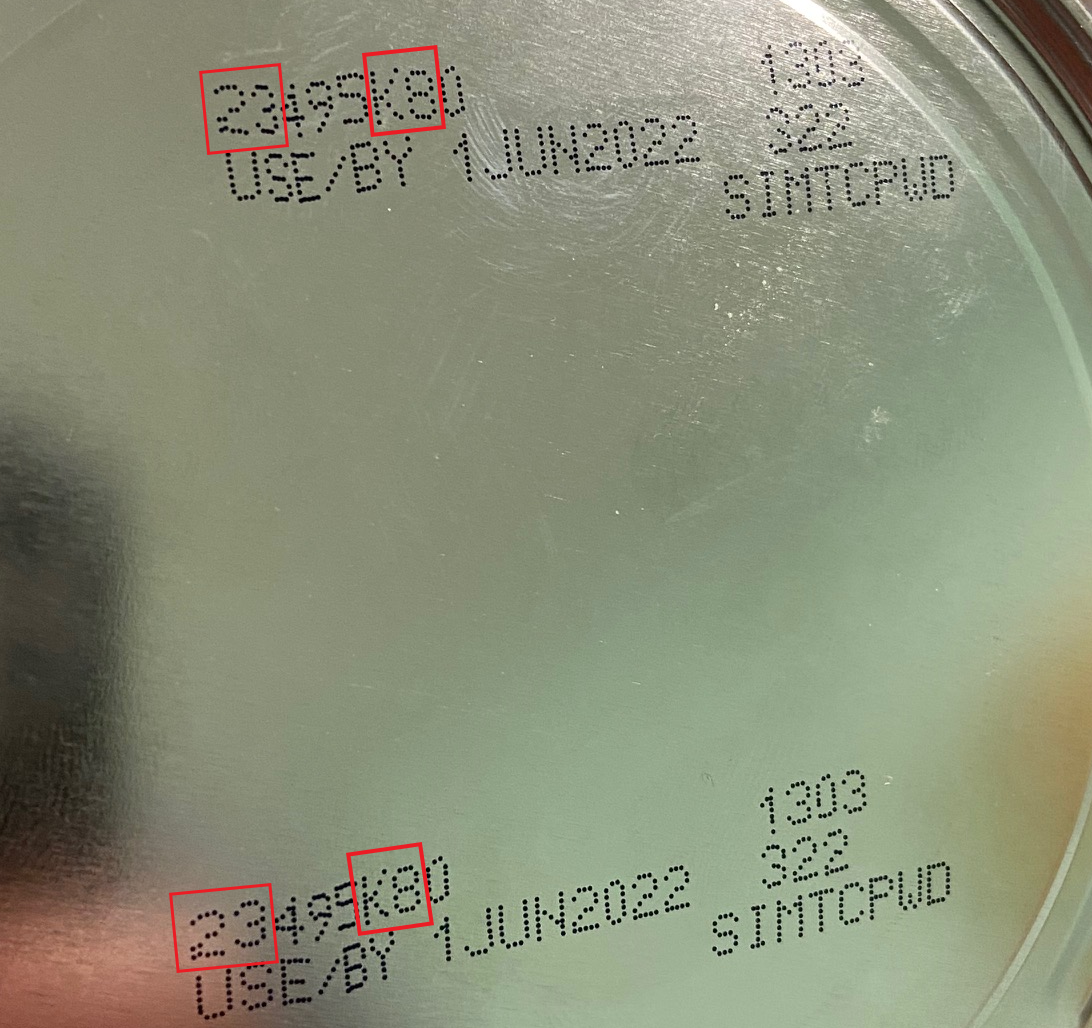
The recall for Similac PM 60/40 includes lot numbers 27032K80 on cans and 27032K800 on cases. (Source: FDA)
Abbott Nutrition is now recalling one lot of Similac PM 60/40 in addition to select lots of Similac, Alimentu, and EleCare formulas manufactured in its Sturgis, Michigan, facility that were recalled last week.
The products are sold throughout the US, and the Georgia Department of Public Health (DPH) is urging parents and caregivers of infants to check their powdered infant formula before using it.
The recall for Similac PM 60/40 includes lot numbers 27032K80 on cans and 27032K800 on cases.
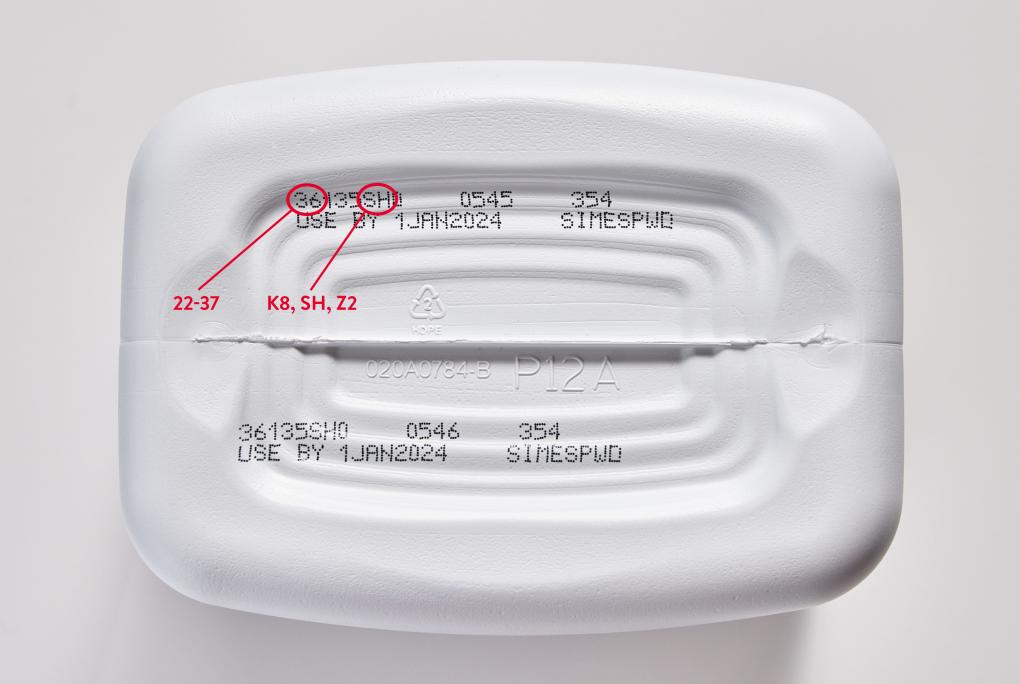
The previously recalled powdered infant formulas— Similac, Alimentum, and EleCare— can be identified by the 7-to-9-digit code and expiration date on the bottom of the package. Do not use these brands if they meet all 3 of the following conditions:
the first two digits of the code are 22 through 37 and
the code on the container contains K8, SH, or Z2, and
the expiration date is 4-1-2022 (APR 2022) or later.
Source: FDA
Parents can also check Similac’s recall website or call 800-986-8540 and follow the instructions provided to find out if a formula they use is included in the recall.
If a child’s regular formula is not available, parents should consult with their child’s healthcare provider for recommendations on changing feeding practices. Georgia WIC participants may return, or exchange recalled formula to the place of purchase or contact their WIC clinic to exchange for replacement vouchers.
The U.S. Food and Drug Administration (FDA) and the Centers for Disease Control and Prevention (CDC) are investigating five babies in Minnesota, Ohio and Texas who became sick with bacterial infections after consuming the products. Four of the complaints concerned Cronobacter Sakazakii infections and one complaint was Salmonella infection. All five illnesses resulted in hospitalization and Cronobacter may have contributed to death in two infants.
“We understand that infant formula is the sole source of nutrition for many infants and is an essential product,” the FDA says. “FDA is working with Abbott Nutrition to better assess the impacts of the recall and understand production capacity at other Abbott facilities that produce some of the impacted brands.”





 The president did not mention his larger spending plan in his March 1 speech. And Schumer’s embrace of Warnock’s bill suggests that Democrats see the value of Warnock taking the lead on a popular issue as he faces a tough reelection battle in Georgia this year.