Home Blog Page 1568

Truett-McConnell plans 5K charity event benefiting service dogs for veterans

Truett McConnell University has announced that it will hold a 5K run/walk event to raise funds for K9s for Warriors. The charity pairs military veterans with rescue-turned-service dogs in a program that helps heal lives.

The 5K will take place on Friday, April 8th from 9:00 a.m. until 12:00 p.m. at Truett McConnell University (TMU).

A worthy cause

Jeremiah Lukers, Assistant Professor of Exercise Science at TMU, helped the university partner with K9s for Warriors because of his passion surrounding both corporate health and supporting veterans.

“Spiritual, mental, and physical health are all related,” Lukers said. “If one is out of balance, you can see the ramifications.”

Through this event, TMU will be able to serve veterans and encourage physical health in the local community.

K9s for Warriors provides a unique way to help veterans who suffer from PTSD, brain injuries and sexual trauma. The charity rescues dogs from shelters to train them as service dogs, and pairs them with veterans to form a relationship that saves two lives. Their program has proven successful in helping veterans reduce suicide ideation while simultaneously saving the lives of 1,300 rescue dogs.

A route to help

The route for the 5K charity event will traverse many parts of TMU’s campus, including the paths near the baseball field, the mountain biking trails, the soccer field and the front entrance. Student volunteers will be needed to help prepare the course prior to the event.

TMU faculty and the community are also invited to help set markers around the course and man water stations during the day. Additionally, students and faculty can help the success of the event by spreading the word to friends and family who may be interested in supporting the cause.

Since the 5K will cover various types of terrain, Lukers suggests that participants wear running or hiking shoes. Additionally, merchandise will be available for purchase to participants and volunteers on the day of the 5K event to help raise as many funds as possible.

Sign-ups and donations

The run/walk 5K is open to all age and ability groups, including TMU students, faculty and the local community. The cost of registration is $25, but participants are encouraged to donate. A specially designed t-shirt is included in the cost to participate.

Donations can be made whether you wish to participate or not.

“This is a way to reach out,” Lukers said. “The person who might benefit from the money we raise may be unsaved. They can know this money came from Truett McConnell, and we’re praying for them.”

To sign up or donate now, click here. For those who are interested in donating to the event, donor levels can be found here.

Freshman phenom Emre Sungur works toward ultimate goal as Olympic hopeful

Emre Sungur (photo by Lane Gresham)

Like a fish in water, freshman Emre Sungur is a natural fit in the pool. Hailing from Istanbul, Turkey, Sungur found his way to Tallulah Falls School. He’s made an immediate impact on campus, and has had great success early and often as part of the state-qualifying swim team.

“I’ve been swimming for 11 years,” says Sungur. “I don’t remember the exact time I fell in love with swimming, because I was so young. But one thing I remember from that time was that we had a baby pool and I was in the pool for the whole day. I was eating in that pool.”

If it’s not during the school day, there’s a good chance you can find Sungur in the TFS Natatorium, where he has trained vigorously since arriving on campus.

“The natatorium is one of the best pools I’ve ever trained in,” states Sungur. “It is so bright, it doesn’t matter what time it is, the lights are on. The water feels really good also. Other pools I’ve been in were okay, but felt pretty old. For me, the facility is so important because I see the pool like my second home, so it needs to be pretty.”

Sungur had a fantastic first year for the Indians this winter. It culminated in competing in four events at the Georgia High School Association State Championships, where he placed third in the 500 Freestyle, fourth in the 200 IM, 12th as part of the 400 Freestyle Relay team, and 14th with the 200 Medley Relay group.

“Emre performing well at the state level bodes well for his future in the sport,” adds TFS coach Rachel Nichols. “Georgia has historically been a powerhouse in the sport of swimming and to be able to place so highly as a freshman is an impressive feat with the depth of competition available to him.”

“My first year of varsity swimming was pretty good,” says Sungur. “I felt the energy of the team and that was great. Competing in a high level meet was good and bad. It was so much stress because we trained for this meet for the whole season. So I get stressed about not being able to translate the practice success to my actual races. But I think I did pretty well.”

Sungur set a trio of school records during his freshman season, including in the 200 Freestyle (1:48.35), the 200 IM (1:58.51), and the 500 Freestyle (4:46.02). The latter two records were eclipsing his previous mark while at the GHSA State Championships at Georgia Tech.

“My goal is to leave a legacy in swimming and introduce swimming to the whole world,” states Sungur. “I want to be remembered as one the greatest swimmers. If I have to say something concrete, I want to be able to go compete in the Olympics.”

Those are lofty ambitions for any swimmer, but for Sungur they are achievable with the right amount of hard work and determination.

“Right now I’m training with coach [Chris] Kafsky, coach Nichols, and my club team coach Don,” says Sungur. “Training for the highest level is making me extra powerful in the water. This is a dream for me, and it’s really fun and wonderful to make every move in the water meaningful.”

“An athlete with not only the determination but the attention to detail that Emre has is something all coaches love to see,” states Nichols. “Emre maintains a positive attitude even after a race that may not have gone the way he wanted it to. He not only seeks feedback but takes the feedback given and immediately implements it to improve. He’s also a great teammate who is compassionate to others. He is an awesome addition to our program from multiple viewpoints, not just the swimming component.”

While all eyes will be on Sungur’s attempt to become perhaps a state champion swimmer and one day, the Olympics, he knows that the process is a daily grind.

“I don’t know my next year’s steps directly, but I will continue to try to get better than the previous day,” says Sungur. “Seeing my work pay off is great because I’m putting my effort, time and life into this and seeing that payback is awesome.”

With the work ethic he’s putting in combined with his sheer determination and athleticism, don’t be surprised to see Sungur crush school records — including his own. Sungur might well end up among the state’s best swimmers, and perhaps make his dreams come true to be an Olympic swimmer.

Georgia senate GOP approves ban on COVID-19 vaccine ‘passports’

Georgia Republican lawmakers appear primed to have restrictions in place this summer to block “intrusive” government COVID-19 vaccine mandates from returning in the next year or so.

In Georgia and all across the country, government-imposed mandates are being rolled back after public health guidelines were relaxed following a significant reduction in cases in much of the country.

If local officials in Georgia want to follow future recommendations of public health officials to require masks in schools and other public buildings or to require proof of vaccination to enter government buildings, they will likely be in violation of state law.

The Georgia House is now set to take up Senate Bill 345, which would forbid local and state governments through June 2023 from requiring proof of vaccination to use services and access government facilities, including public college campuses. The bill cleared the Senate Friday with 31-19 vote along party lines.

Democratic Sen. Michelle Au, a Johns Creek physician, called the measure dangerous. The bill would block the Department of Public Health’s ability to enforce rules, such as COVID-19 vaccinations requirements for students to attend school, Au said.

Another Senate bill backed by Republicans would allow parents to opt their children out of masks mandates for k-12 public schools over the next five years.

“We’ve seen that corrosive messaging around public health and vaccines can do a tremendous amount of harm,” Au said during Friday’s debate. “And we’ve seen that doubt, cynicism, misinformation, and the undermining of confidence in public institutions has caused cracks in the foundational elements keeping our society safe.”

The Atlanta and Decatur school districts, along with Fulton County government, have already begun removing mask requirements as cases have declined significantly in many communities.

Government rollbacks are also being implemented in other areas of the country, including New York City, where the mayor lifted this week the requirement for vaccine passports to enter restaurants, bars, and other venues.

In spring of last year, as vaccination distribution picked up speed, so did the debate over whether the federal and state governments needed to require individuals to have “vaccine passports” showing proof of vaccination.

The privacy concerns spurred the Georgia Legislature last year to pass a measure that allows Georgians to opt out of the statewide and federal vaccine databases and Republican Gov. Brian Kemp has expressed opposition to government-mandated COVID-19 passports and forcing public school students to wear masks.

Vaccination rates remain divided across urban and rural areas, political lines, and demographics. This week, the CDC released a report in which it showed a widening gap from April through January between the vaccination rates of metropolitan and rural residents and Democrats and Republicans

Sen. Greg Dolezal, a Republican from Cumming, accused Democrats of hypocrisy by blaming misinformation spread about vaccination. Polls showed the majority of Democrats didn’t trust the vaccine development during Donald Trump’s time as president and remarks at the time from now-President Joe Biden and Vice President Kamala Harris also questioned their effectiveness.

“This doubt and corrosive messaging went so deep into the ether when it was politically expedient to undermine the vaccine,” Dolezal said.

“Mandates have not worked,” he added. “The vaccine is a decision between individuals and their doctor.”

Georgia bill targets homelessness by stripping funds from cities, banning permanent housing

A bill in the Georgia Senate would ban local governments from using federal dollars to build permanent homeless shelters and financially penalize cities that have a higher-than-average homeless population. It would also make it a misdemeanor to take shelter on state property. (Credit: File photo/GPB)

A bill in the Georgia Senate would ban local governments from using federal dollars to build permanent housing for homeless individuals and further financially penalize cities that have a higher-than-average homeless population.

It would also make it a misdemeanor to take shelter on state property.

Proponents of the “Reducing Street Homelessness Act” claim that the bill seeks to reduce the number of homeless individuals on the streets in Georgia — particularly its metropolitan cities — by pressuring local governments to take more action.

But critics say it punishes nonprofits for their work and criminalizes an extremely vulnerable population. Opponents also say it’s another bill in a series of attacks on Atlanta by lawmakers who don’t represent the area.

Cordele Republican Sen. Carden Summers opened a hearing on the bill on Thursday by talking about his experience in Atlanta during the legislative session.

“When you ride down a road in Atlanta, anywhere within a two-mile radius of this Capitol, homelessness is out of control,” he said. “I’ve made a point to ride around almost every night, take 30 minutes and just drive a different route and count the homeless people on the street, living in the corners, living on the edges, living on the sidewalks, living under bridges.”

Summers said the bill is about holding cities “accountable” for addressing the homeless crisis within their borders by cutting off funds.

Effective July 1, 2023, as written in the bill, any city with a per capita population of homeless individuals higher than the statewide average would be ineligible for some state grants until the number is reduced.

Nonprofits working within the city would also be exempt from grants or tax credits.

The legislation is being pushed by Texas-based policy nonprofit, Cicero Action. Members of the organization said cities and nonprofits should be held accountable for moving homeless individuals off the streets quickly.

“They should focus on short-term, service-provided shelters for people who are in crisis and not try to give every individual on the streets a free and indefinite home because that will not solve homelessness,” said Judge Glock with Cicero.

Stone Mountain Democrat Sen. Kim Jackson told GPB News that the legislation takes direct aim at Georgia’s Capital city.

“It targets Atlanta and it has targeted Atlanta by people who don’t even live in Atlanta,” she said.

The city of Atlanta testified against the bill in committee, making the case that recently elected Mayor Andre Dickens needs time to address the problem as it relates to Georgia’s largest city.

“The mayor has been mayor for 57 days,” said Kenyatta Mitchell, director of intergovernmental affairs for the city. “Please give us some time to clean this up.”

In an interview, Mitchell mentioned a recent effort to move dozens of people out of an encampment near the Capitol on Mitchell Street.

Within a few weeks, she said, the city partnered with nonprofits to place individuals within hotels and shelters. Mitchell said limiting the types of housing — like permanent housing solutions — that cities can use hinders similar efforts.

“When we start taking things off the table, it’s very difficult for us to come to a solution,” she said. “There are many very innovative solutions across the country where they use different options — whether it be permanent or temporary housing — that work. Each person is different; we have to come to whatever solution where you can help as many people as possible.”

Cathryn Marchman, CEO of Partners for Home, a coalition of government and nonprofit stakeholders focused on homelessness, said that while permanent housing is not the only solution to homelessness, it is one of the most successful solutions.

“If you look at the cost analysis, the cost-benefit analysis of placing somebody in supportive housing, actually ending their homelessness, which is the end goal,” she said. “We want that in our outcome because if we get somebody into housing, we have in fact then ended the problem of homelessness.”

She said that overall numbers of homeless individuals in Atlanta have actually reduced by 25% since 2015 — although there was a small increase from 2019 to 2020.

“During COVID, we aligned a tremendous amount of federal and public and private resources $24 million to create a non-congregate shelter hotel to move people quickly off the street,” she said.

From that effort, she said, organizations were able to set up about 700 permanent households.

Department of Community Affairs Commissioner Christopher Nunn testified to lawmakers that the legislation is “financially risky” for the state. He warned that there’s a potential that federal COVID relief funds may be revoked if lawmakers ban certain housing solutions.

Atlanta Attorney Elizabeth Appley said that the legislation would also hurt the state’s progress in meeting requirements in a long-standing settlement with the U.S. Department of Justice.

In 2010, the federal government ordered the state to establish community-based services and housing for about 9,000 people with mental illness who, advocates say, cycle through the health care and criminal justice systems.

The legislation could mean less federal funds toward the state housing voucher program, she said, which would be contrary to the efforts of the settlement.

“We’re now serving fewer than 2,000 people through the House State Housing Voucher Program,” she said. “The obligation under the settlement agreement is to fund and provide services to 9,000 people.”

Opponents pointed out that criminalizing Georgia’s homeless population, many of who suffer mental illness is a stark contrast to lawmakers’ pledge this session to bolster mental health services — like House Speaker David Ralston’s comprehensive reform effort.

The bill makes it a misdemeanor to set up shelter on government-owned property — after first receiving a citation. It also requires law enforcement officers to be part of “outreach teams” when moving homeless individuals out of prohibited areas.

Jackson, who runs a church exclusively for people experiencing homelessness, said that the population already harbors a large amount of distrust for law enforcement.

Sending them to jail also does not help, Jackson added.

“It only results in sending them deeper into poverty, making it even more difficult for them to get jobs when they are ready to get jobs,” she said. “It only complicates their lives more for us to criminalize this act of sleeping outside.”

The Senate Government Oversight Committee did not vote on the bill on Thursday.

This article appears on Now Habersham in partnership with GPB News

GSP identifies Baldwin residents injured in US 441 wreck

(Hadley Cottingham/Now Habersham)

The Georgia State Patrol has released the names of two Baldwin residents injured in a rollover wreck Friday evening on U.S. 441/GA 15 in Banks County. The wreck seriously injured 23-year-old Haley Davidson. 19-year-old Blaine Turpin sustained what appeared to be visible non-serious injuries, officials say.

(Hadley Cottingham/Now Habersham)

According to GSP, Davidson was driving a Nissan Murano south on U.S. 441 near GA 105 when the vehicle drifted into the median and struck a culvert. The vehicle overturned multiple times.

Troopers say Davidson and Turpin were not wearing their seatbelts. Initial reports from the scene indicated Davidson might have been ejected, but the state patrol has since confirmed she was not. Banks County EMS transported both of them to Northeast Georgia Medical Center in Gainesville for treatment.

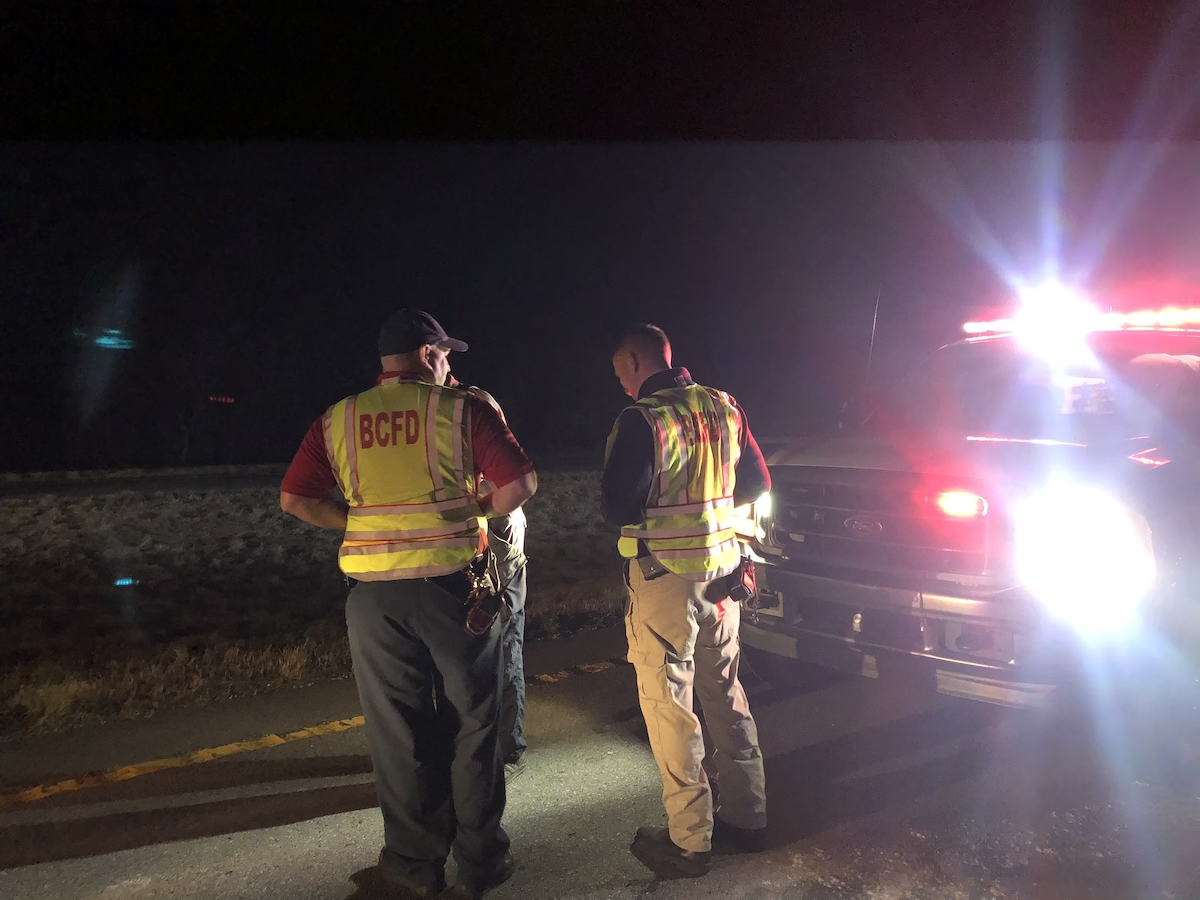
Banks County Fire Department personnel were among those who responded to the crash. (Hadley Cottingham/Now Habersham)

The wreck happened around 7:15 p.m. on March 4, just inside the Banks County line. It temporarily shut down the southbound lanes of U.S. 441 near the crash site for nearly two hours.

Emergency personnel from Banks and Habersham counties responded to the crash along with the state patrol.


Georgia House passes three controversial education bills

The Georgia House passed three controversial Republican education bills on Friday, despite fierce opposition from Democrats.

HB 1 would eliminate “free speech zones” on college campuses. It would also limit colleges’ abilities to prevent speakers on campus. The bill says that students, faculty members, and guests should be able to express free speech wherever they want on campus. Critics of the bill say it could provide a platform for hate speech. But the bill’s sponsor, Rep. Josh Bonner (R-Fayetteville) said it is necessary.

“The cure to overcoming bad ideas is not to limit speech, but it’s to increase the amount of speech,” he said.

Democrats mentioned that the language of the bill contradicts another bill on the floor that deals with educational content.

“Today, you will also vote on a bill that limits the speech of our teachers in the K through 12 system by banning them from teaching divisive concepts,” Rep. Jasmine Clark (D-Lilburn) said. “So now you are being asked in this bill, to give individuals who do not pay tuition, who are not affiliated with the college, unrestricted access to teach those divisive concepts to the students.”

HB 1 passed 93 to 62.

The House General Assembly also heard HB 1084, which would prevent teachers from promoting “divisive concepts” in schools.

The bill, sponsored by Rep. Will Wade (R-Dawsonville), says that divisive concepts include teaching that one race is superior, that a person is inherently racist because of their race, that the United States is fundamentally racist, and that a person should be responsible for the actions of other members of their race. Several of the concepts allude to critical race theory, which is not taught in any Georgia schools.

Wade directly addressed the contrast between HB 1 and HB 1084.

“I look at the world today and I see the political polarization that we have,” he said. “And there is a distinction between K-12 and how we approach history and then how we allow the younger adults in a college setting to have the freedom of speech to discuss those things.”

Rep. Doreen Carter (D-Lithonia) expressed concern that the bill would cause teachers to shy away from controversial topics.

“We don’t even have a system in place in this legislation to support the teacher,” she said. “And then what happens to our children? They have hard questions. This teacher is not going to answer their questions, because they don’t want to violate this code.”

Rep. Matt Wilson (D-Brookhaven), a former teacher, said that the bill harms both teachers and students.

“All this bill does is muzzle our teachers and make them into a straw man for political gain from the true divisive voices in our communities,” he said. “I say this to you as a former sixth-grade teacher: There is no better place to discuss difficult concepts and events than in the classroom, a safe space for our students, where our trained educators can also teach them the skills to discuss, consider questions, and even reject ideas — but to do so in a healthy and respectful manner.”

The bill passed 92 to 63.

Lawmakers in the House also debated HB 1178, which would create a “Parents’ Bill of Rights” in schools. The bill, also sponsored by Bonner, would allow parents to review curriculum taught to their children and file complaints if they disagree with the content. Supporters of the bill said that it was necessary to increase parents’ involvement in schools, but critics said it could hinder teachers’ ability to effectively teach their students.

HB 1178 passed 98 to 68.

This article appears on Now Habersham in partnership with GPB News

Ginger Howard Stewart

Ginger Caroline Howard Stewart age 69, of Toccoa, entered heaven Friday, March 4, 2022, at the Northeast Georgia Medical Center, Gainesville.

Ginger was born on June 25, 1952, in Toccoa to the late Billy & JoAnn Howard. She was self-employed as an Artist. She was preceded in death by her children, Dennis, Jason & Joseph Vinyard; and brother, David Howard.

Left to cherish her sweet memory, son, Aaron (Michelle) Vinyard; daughter, Jennifer (Carl) Curtis; sister, Gloria Baroni; 10 grandchildren and a host of other relatives also survive.

A service to celebrate her life will be held at 11:00 a.m. Saturday, March 5, 2022, at the Ward’s Funeral Home with a reception to follow.

Please share online condolences with the family at www.wardsfh.com. Ward’s Funeral Home is honored to serve the family of Ginger Howard Stewart.

Farmer nuisance suit protection, or ‘bad neighbor bill’? Ga. House gives OK

The bill’s sponsor, Rep. Robert Dickey, a Musella Republican and peach farmer, defended the changes as needed to keep newcomers from shutting down family farms. Several supporters have voiced concern about the country’s shrinking farmland. Jill Nolin/Georgia Recorder (February 2022 file photo)

ATLANTA (GA Recorder) — A controversial bill that proponents say is meant to keep farmers out of court has again collided with private property concerns and fears the measure will make way for large-scale industrial farms.

A similar proposal, dubbed the “right to farm” act, stalled a couple of years ago after backers bemoaned changes made in the Senate.

A revamped version cleared the House Thursday with a 102-62 vote after an hour-long debate where opponents touted their agricultural bona fides – including one rural Democrat who held up her Farm Bureau membership card – before launching into their objections.

Critics have questioned why changes should be made to a decades-old law that appears to have served Georgia farmers well even as subdivisions and other development popped up around them. Environmentalists have gone further, warning of large corporate farms and branding it the “bad neighbor bill.”

“Where are the lawsuits? I can’t find them,” said Rep. Debbie Buckner, a Junction City Democrat. “Where are the nuisances? Where are the farmers who have been harmed? Whose property rights are we taking care of if we do away with this law?”

The bill’s backers have argued the changes are intended to prevent a potential onslaught of nuisance claims from people who may move out to the country and then object to the noise, dust and smells coming from nearby farms.

Lobbyists representing the state’s prized agricultural industry, including poultry producers, have championed the measure for years. Chicken broilers represent the state’s most valuable agricultural product.

The sponsor, Rep. Robert Dickey, a Musella Republican and peach farmer who chairs the House agriculture committee, defended the changes as needed to keep newcomers from shutting down farms. Several supporters have voiced concern about the country’s shrinking farmland.

“I want to go on record to say this bill is not about big farming, but about being able to keep our small family farms, rural farms and even urban farms operating without having to worry about (nuisance claims),” Dickey said.

Concerns the bill is designed to shield massive meat producers are partly due to the bill’s origin. The push for changes here in Georgia started in 2019 in response to eye-popping jury verdicts against hog producers in North Carolina who had been storing smelly pig waste in ponds and spreading it across fields as fertilizer.

This year’s version tries to address those concerns by spelling out that hog-feeding operations of any size and producers with, for example, more than 300 cattle would not benefit from the broadened protections. That means the one-year timeframe for a nuisance claim would start over if a facility began one of these animal operations.

But the proposal would strip all mention of urban sprawl and “changed conditions” around the farm, which critics argue make the state’s current law clear and strong.

There are also differing interpretations for how long someone would have to file a nuisance claim, with opponents arguing the bill would limit it to one year and supporters saying there would still be four years to file a claim for an alleged nuisance that happens in the first year.

State Rep. Stacey Evans, an Atlanta Democrat and plaintiff’s attorney, predicted a “rush to the courthouse” if the measure becomes law, which she also argued is unconstitutional.

“We’re adding uncertainty, and in addition to adding uncertainty, we’re infringing on private property rights,” Evans said. “This is no longer about who was there first, which is what it’s been forever – which I think, incidentally, is unconstitutional and is going to lead to a lawsuit about that.

“I don’t think this bill says what it means or wants to mean what it says,” she added.

Licorice Pizza

Licorice Pizza is a movie that’s been in release since last November and recently racked up three Oscar nominations. Don’t look to me to explain the title because even I don’t understand it.

What I do understand is that writer/director Paul Thomas Anderson has crafted another winner that fans of his will enjoy.

The movie takes place in the San Fernando Valley in 1973 and it centers around a high school student named Gary Valentine (Cooper Hoffman) who meets an older woman named Alana Kane (Alana Haim) and immediately falls for her. She doesn’t reciprocate due to their 10 year age difference.

However, Gary persists and eventually gets Alana to have dinner with him. Their relationship blossoms and she confides in him that she wants to try acting. Gary himself has acting experience and tries to hook her up with an agent to get her career started. In the meantime, they also become partners and open a waterbed business.

If you think this plot is sorta Seinfeld-esque, well, you might be right.

Sean Penn costars as an actor who strikes up a working relationship with Alana and after a night out, he convinces her to jump on the back of his motorcycle so he can recreate a stunt from one of his movies.

Bradley Cooper also costars as real-life producer Jon Peters, who’s depicted as a hot-tempered, controlling guy who orders a waterbed from Gary. Cooper’s performance albeit brief is a high point in the movie and he gets very perturbed when Gary mispronounces Barbra Streisand’s name.

From Boogie Nights to Magnolia to There Will Be Blood, Anderson manages to develop characters that may or may not be good people, but he makes them three-dimensional regardless. Licorice Pizza is no exception.

I think the movie is a prime example of a screenplay that’s concocted not to necessarily tell a story in the conventional sense, but rather to give us a unique insight into the lives of these people and explore their tastes, tendencies, insecurities, and ultimately their payoffs.

The movie is really made up of a series of individual moments that have a lot of wit and charm instead of relying on a script set to autopilot and that merely pushes the plot ahead.

Plus, Anderson wonderfully recreates the look, moods, and trends of the early ’70s, and Haim and Hoffman seem to really be engaged with their roles.

Licorice Pizza might baffle some audiences with its title, but Anderson’s fans will be happy to take another joyride.

Grade: A-

(Rated R for language, sexual material, and some drug use.)

White House allows Ukrainian nationals to stay in the U.S. without fear of deportation

Ukrainian students at the University of Kansas Mykola Hordiichuk, Elina Shutova and Andrew Brytsko cover their hearts as the Ukraine national anthem plays. (Sherman Smith/Kansas Reflector)

WASHINGTON (GA Recorder) — The U.S. Department of Homeland Security is granting Temporary Protected Status that will shield Ukrainian nationals living in the United States from deportation, following pressure from members of Congress.

“Russia’s premeditated and unprovoked attack on Ukraine has resulted in an ongoing war, senseless violence, and Ukrainians forced to seek refuge in other countries,” DHS Secretary Alejandro Mayorkas said in a statement. “In these extraordinary times, we will continue to offer our support and protection to Ukrainian nationals in the United States.”

Ukrainians living in the U.S. as of March 1 of this year will be eligible for TPS designation of up to 18 months; it will not apply to Ukrainians arriving after March 1. The designation will allow those in the program to be protected from deportation, as well as apply for work permits.

The Center for Migration Studies in New York estimates that there are about 28,000 Ukrainians in the U.S. that would benefit from the program.

Some states with the highest populations of Ukrainians without permanent status include Illinois, Michigan, Pennsylvania, Florida and New Jersey.

TPS does not grant permanent U.S. status and only applies to those already in the country, not those who are fleeing. One million people have left Ukraine, according to the United Nations Refugee Agency.

U.S. House lawmakers are also pushing the Biden administration to immediately designate Student Special Relief for Ukrainians.

A letter, led by Rep. Jimmy Gomez, a California Democrat, and signed by 98 members urged the president to extend both TPS and the student program for 18 months because “given the already unmet humanitarian need in the country and the effects of the armed conflict with Russia, the Ukrainian government is in no state to receive TPS and SSR eligible Ukrainians.”

SSR would allow for the temporary suspension of certain requirements put in place by DHS for a foreign student studying in the U.S. “from parts of the world that are experiencing emergent circumstances.” Some of those requirements include “duration of status, full course of study and off-campus employment eligibility.”

Russia began its invasion into Ukraine on Feb. 24. Ukraine’s health ministry reported that at least 250 civilians have been killed in the attack.

Members of Congress praised the Biden administration for the TPS designation for Ukrainians.

Sen. Bob Menendez, a New Jersey Democrat and chair of the Senate Foreign Relations Committee, said in a statement that the TPS designation was the right thing to do “after a week of Vladimir Putin’s illegal and ruthless war against the people of Ukraine.”

“Temporary Protected Status was created by Congress for exactly this purpose — to protect people whose home countries have experienced armed conflict, an environmental disaster, or extraordinary conditions that prevent people from safely returning home,” he said.

The White House is also asking Congress to approve $10 billion in aid for Ukraine to help bolster soldiers in neighboring countries around Ukraine and to send military equipment to the country. The Biden administration has announced it would place sanctions on Russia’s President Vladimir Putin and the country as well.

Some legal groups agreed with the TPS designation, but criticized DHS for its backlog of TPS designation for Black-majority countries.

Lisa Parisio, the Director of Advocacy at the Catholic Legal Immigration Network, said in a statement that the Biden administration should also use TPS for “Ethiopia, Cameroon, Mauritania and other countries whose nationals face grave danger if they are forced to return.”

“The backlog of TPS designations for Black-majority countries here in the U.S. mirrors the anti-Blackness we’re seeing as African students and others in Ukraine are denied access to escape the conflict,” she said.

CLINIC, along with nearly 200 organizations, petitioned for the Biden administration to allow Ukrainians in the U.S. to use TPS.

In a letter to the White House, a bipartisan group of 42 senators advocated for the TPS designation, arguing that “it is obviously too dangerous for Ukrainian nationals to return to Ukraine due to the ongoing armed conflict.”

Senators who led the letter include Illinois Democrat Dick Durbin, chair of the Senate Judiciary Committee; Menendez; and Ohio Republican Rob Portman, top GOP member of the Senate Homeland Security and Governmental Affairs Committee.

“Forcing Ukrainian nationals to return to Ukraine in the midst of a war would be inconsistent with America’s values and our national security interests,” they wrote. “As a nation, we must do our part to protect the safety of Ukrainians in the United States by designating Ukraine for TPS.”

Other senators who signed the letter include Democrats Tim Kaine and Mark Warner of Virginia, Ron Wyden of Oregon, Ben Cardin and Chris Van Hollen of Maryland, Sherrod Brown of Ohio, Amy Klobuchar and Tina Smith of Minnesota, Jeanne Shaheen and Maggie Hassan of New Hampshire, Michael Bennett and John Hickenlooper of Colorado, Tammy Baldwin of Wisconsin, Cory Booker of New Jersey, Gary Peters and Debbie Stabenow of Michigan, Catherine Cortez Masto and Jacky Rosen of Nevada, Mark Kelly and Kyrsten Sinema of Arizona, Raphael Warnock of Georgia and Martin Heinrich of New Mexico.

Northeast Georgia area drug task force seizes guns and $15K worth of suspected meth

Guns and suspected meth agents say they seized as a result of a 3-month-long investigation into drug activity in Jackson County. (ARDEO)

A three-month-long investigation in Northeast Georgia led to the seizure of approximately 20 ounces of suspected methamphetamine and three firearms, including one that was stolen, the Appalachian Regional Drug Enforcement Office says. The suspected drugs have a street value of $15,000.

On March 3, agents arrested two men in connection with the probe. They charged Jonathon Stephens, AKA “Yella”, age 31, with two counts of possession of a firearm by a convicted felon. Officers charged Javon Stephens, age 38, with theft by receiving a stolen firearm. Both men are from Arcade.

The investigation included a search warrant served on 107 Grace Drive in Jefferson where one of the suspects lived, according to ARDEO spokesperson Michael Marlar.

Multiple local, state and federal agencies were involved in the investigation including the sheriff’s offices in Jackson and Banks counties, Lawrenceville police, Georgia State Patrol, DEA, and ARDEO.

Marlar says the investigation is ongoing.

The drug task force encourages citizens to report any suspicious drug activity through Facebook IM (@AppalachianRDEO) or at 706-348-7410 or contact your local Sheriff’s Office or Police Department.

Hall County deputy fired after fatal crash now charged with vehicular homicide

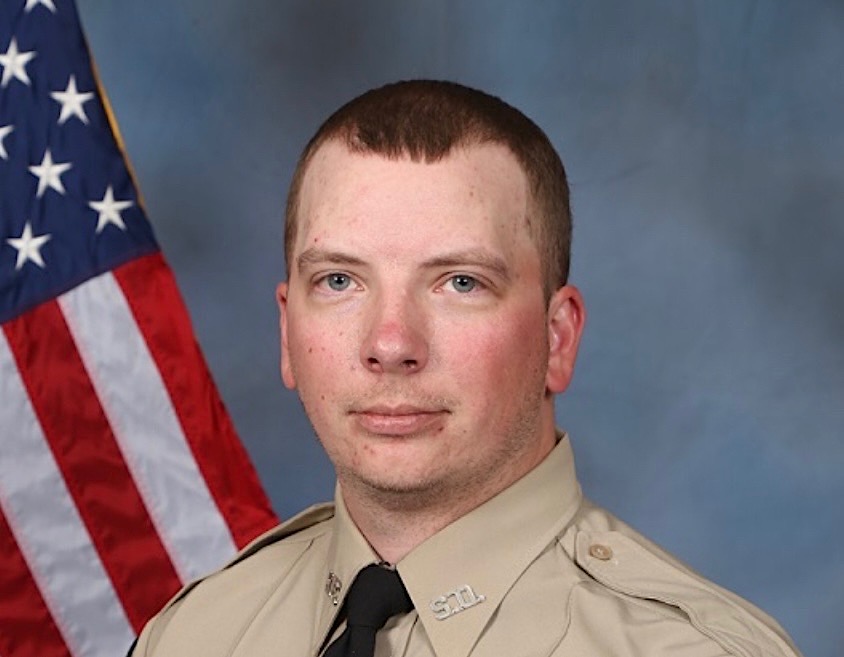
Former Hall County Deputy Aaron Buchanan (HCSO)

A Hall County deputy who was fired from his job following a fatal wreck has now been charged with vehicular homicide. The Georgia State Patrol charged Aaron Matthew Buchanan, 31, of Homer in the death of 84-year-old Jon William Jones of Gainesville.

The crash happened around 10:30 a.m. Thursday, March 3, at the intersection of GA 53/Dawsonville Highway and Nix Drive in Gainesville. The Hall County Sheriff’s Office says Buchanan was off duty in his marked Ford Taurus patrol car at the time of the crash.

According to the Georgia State Patrol, Buchanan was southbound on Dawsonville Highway “at a high rate of speed.” Jones was driving east on Nix Drive in a Lexus LS430 and had stopped at the stop sign at the intersection.

“The Lexus left the stop bar and traveled into the path of the oncoming deputy’s vehicle,” GSP says.

The patrol car struck the driver’s side of the Lexus, fatally injuring Jones. The wreck injured Buchanan and a passenger in the Lexus, 81-year-old Doris Claudine Jones of Gainesville. She is being treated for her injuries, according to GSP. Buchanan was treated and released from the hospital

In addition to vehicular homicide, troopers charged the now-former deputy with speeding, reckless driving, and serious injury by vehicle.

Following the crash, Hall County Sheriff Gerald Couch issued his condolences to the family and said he was “saddened and shocked” by the tragic crash.

File photo: Hall County Sheriff Gerald Couch (Layne Saliba)

“Our employees are held to a higher standard and they are entrusted to serve and protect those in this community,” Sheriff Couch said. “While swift action was taken in terminating the deputy, nothing can replace the loss of a loved one.”

Sheriff Couch said the deputy failed to follow his training and the agency’s long-standing policies and procedures and neglected to obey state law, but did not include specific details.

“No one in law enforcement should ever cause the innocent to be harmed and this type of reckless behavior will not be tolerated by anyone,” he said.

Buchanan had worked for the Hall County Sheriff’s Office since September 2016. He had worked as a patrol deputy for HCSO since January 4, 2021.

The Georgia State Patrol Specialized Reconstruction Team is investigating the crash.