Home Blog Page 1558

Indians blast 5 homeruns, rally to win slugfest over Rabun

The Indians set a school record with 5 home runs in an 18-11 slugfest at home on Tuesday against visiting Rabun County, earning a third straight victory in the process. The game featured Rabun County taking a commanding 9-1 lead before TFS rallied back for the win.

Rabun County took a quick 4-0 lead in the opening frame, taking advantage of walks and an error. A Norman Bastian, Jr. sacrifice fly got one back in the home half, but the Wildcats added a 3-run home run in the second as part of a 5-run inning. That boosted Rabun up 9-1 to seemingly put the game out of reach.

Joel Miller (photo by Randy Crump)

However, Tallulah Falls’ best offense in school history caught fire. It started in the third inning with a leadoff solo homer off the bat of Joel Miller, who blasted a school record two home runs in the game. After a Drew Bates single, Bastian, Jr. then launched a two-run dinger over the right field fence, cutting into the Rabun lead and making it a 9-4 ball game. Danny Grant doubled in Frankey Moree and Malique Charlton, and Miller walked with the bases loaded to cap the 6-run third inning and moving the score to 9-7 in favor of the visitors. In all, 11 batters came to the plate that frame as TFS drew closer to Rabun.

Aiden Gragg, who came in relief of Jeremy Medina, buckled down from there. A bases loaded hit by pitch of Kylar Clouatre made it a 9-8, one-run game after four innings. The Wildcats added a pair in the fifth to pull ahead 11-8, but they’d score no more.

Bates, Bastian, Jr., and Tyler Popham all had RBI singles in the bottom of the fifth, tying the game at 11 apiece. Gragg worked around a two-out single in the sixth, and the Indians broke the tie in the home half on Miller’s second home run, as he drove a 1-1 pitch over the left field fence for the eventual game-winner. Later in the inning, Moree blasted a 3-run homer to center to make it a 15-11 TFS lead. Moments later, for the third time in the inning, the Indians again benefited from the long ball as Charlton belted a 2-run bomb to left, padding the lead to 17-11. Bates recorded an RBI groundout before the inning was over, and TFS held on for the 18-11 win.

TFS scored 7 runs in the sixth, and set school records with 3 home runs in an inning and 5 in one game. Miller is the first known TFS player to have a multi-homer game. The Indians slugged out 15 hits.

Miller was 2-for-2 with 2 home runs, 2 RBI, 2 walks, and 4 runs. Bates had 3 hits and 2 RBI, Bastian 3 hits and 4 RBI, and Moree 3 RBI. Popham had 2 hits and an RBI, while Charlton had 2 hits and 2 RBI. Grant also had 2 RBI, as the 18 runs scored were just 3 off the school single-game record.

Gragg picked up the win in relief, lasting 6 frames and giving up 4 earned runs while striking out 2. The Indians have now won 3 straight, and are 5-3 overall on the season.

Latest bill to overhaul health care regulations appears doomed

A sweeping bill to repeal the state’s health care regulatory process failed to clear the House by a crucial legislative deadline Tuesday, meaning it is probably dead for the year.

The regulatory system, known as certificate of need (CON), governs much of how the health care industry operates in Georgia. A medical provider must apply for and get a certificate of need from the state to begin any major project.

(Hadley Cottingham/Now Habersham)

CON has been targeted annually by legislators proposing reforms to ease its rules, but these bills have been successfully fended off by Georgia’s hospital industry.

This year’s CON reform attempt, House Bill 1547, sought to repeal the whole regulatory system in 2025.

It failed to emerge from the House Rules Committee on Tuesday, which was Crossover Day for the 2022 session of the Georgia General Assembly. Crossover Day is the deadline for a bill to be approved by at least one legislative chamber, which gives it a chance to become law this year.

There remains a slim chance the bill could be revived if its language is attached to legislation that’s somewhat related to it and has already been approved by one chamber. That happens in some cases, though rarely.

Meanwhile, several major bills involving health care passed at least one chamber in the days before Crossover.

They include legislation on mental health parity, caregivers for hospital patients, pharmacy benefits for Medicaid, protection of children from lead poisoning, and an indoor vaping ban. Other bills moving to another chamber would extend Medicaid coverage for uninsured people who have HIV, and for post-pregnancy low-income women from six to 12 months.

At a committee hearing last week, the CON bill’s main sponsor, House Majority Whip Matt Hatchett (R-Dublin), called CON a “monopolistic’’ system that favors large hospital systems and stifles competition, raising health care prices in the process.

Such regulatory laws were adopted by states decades ago to control health care spending. But more than a dozen states have repealed these regulatory set-ups, including recently Florida.

Under Hatchett’s bill, changes would have been made to CON in the years before repeal occurred. These provisions include:

  • Allowing physician-owned surgery centers that feature multiple specialties.
  • Limiting the amount of cash reserves maintained by hospitals that are run by hospital authorities.
  • Allowing state assistance to people with mental illness who are uninsured.

The legislation would have replaced CON with a licensing system, maintaining the facilities’ indigent care requirement.

Members of the House Special Committee on Access to Quality Healthcare, which passed Hatchett’s bill, voiced frustration last week over the annual CON battles in the Legislature, criticizing the persistent and intense lobbying mounted by the hospital industry against changes in the regulatory system.

The bill quickly drew opposition from hospital groups.

Monty Veazey, president of the Georgia Alliance of Community Hospitals, which represents nonprofit facilities, told lawmakers last week that CON repeal would have a “devastating effect on the health care delivery system in this state.’’

He said it would worsen the current shortages of health care workers in hospitals still experiencing financial losses due to the COVID pandemic.

Brenda Helen Heptinstall Hay

Brenda Helen Heptinstall Hay, 76, was born on March 26, 1945 in Anniston, Alabama, and passed away peacefully in her sleep at her home on March 7, 2022.

Brenda was a Christian daughter, mother, grandmother, great-grandmother, niece, cousin and a precious friend to many. She proudly raised her children, and once grown, pursued her passion for teaching children with special needs, especially children with autism, until she retired.

She is leaving behind two daughters and their spouses Maryhelen Inlow (Greg) of Blakely, Ga and Lara Leigh Hay (Mark Grafton) of Commerce, Ga; two grandchildren, Ryan Couch (Cody) of Phenix City, Al and Ti Inlow of Blakely, Ga; and a great grandchild, Jace Couch of Phenix City, Al. She was preceded in death by her parents Helen and Leyden Heptinstall; and her son, Forrest Hay.

There will be two Celebrations of Life services: Saturday, March 26, 2022, her birthday, in Anniston, Alabama, and Saturday, April 23, 2022 in Commerce, Georgia.

In Anniston, the graveside service is to be held in Anniston Memorial Gardens at 2:00 pm Central Time on Saturday, March 26, 2022, followed by a high tea at 3:00 pm.

In Commerce, the service is to be held at the First United Methodist Church of Commerce at 2:00 pm Eastern Standard Time on Saturday, April 23, 2022, with high tea immediately following in the reception hall.

An online guest registry is available for the Hay family at www.HillsideMemorialChapel.com.

Arrangements by Hillside Memorial Chapel, Clarkesville, Georgia. (706) 754-6256

Northeast Georgia Health System breaks ground on new medical tower in Gainesville

Northeast Georgia Health System board members and administrators break ground on the new medical tower at Northeast Georgia Medical Center in Gainesville on Tuesday, March 15, 2022. Pictured, left to right, are Greg Ours, LeTrell Simpson, Board Vice Chair Alex Wayne, Jackie Wallace, Dr. Mohak Davé, RK Whitehead, NGHS President & CEO Carol Burrell, Board Chair Spence Price, Dr. Deepak Aggarwal, and Mary Lynn Coyle.

Northeast Georgia Medical Center in Gainesville is on its way to becoming the third-largest hospital in the state based on bed capacity.

The hospital broke ground on a new multi-story medical tower on Tuesday. The 927,000 square-foot facility will be located next to the existing North Patient Tower on the NGMC Gainesville campus.

The new tower will accommodate more than 150 new inpatient beds and additional operating rooms. It will also house an expanded emergency department and will bring the Georgia Heart Institute’s heart and vascular services under one roof. In addition, there will be a new helipad, parking deck, and additional greenspaces where people may gather outdoors.

“The project team spent a lot of time talking to physicians, nurses and other clinical staff to design a place that would streamline care for our patients,” said NGHS Chief of Medical Staff Dr. Deepak Aggarwal. “The additional beds will help meet the demand of our growing population, and having more operating and procedure rooms to serve their needs is vital as well.”

The Emergency Department in Gainesville is consistently one of the top five busiest in the state of Georgia. Moving it to the reimagined space in the new tower should lead to shorter wait times for patients and an improved working environment for physicians and staff, hospital administrators say. It will also include space dedicated to treating pediatric patients.

“We have needed new space for a while, and I’m grateful that we are one step closer to that reality,” said NGHS Chief of Emergency Medician Dr. Mohak Dave՛. “We have been able to design the space around new workflows borne out of the pandemic and other experiences to make an emergency visit more efficient for patients, physicians and staff.”

“As you can imagine, COVID drastically changed the way we think about delivering care to our patients and has allowed us to apply lessons we have learned to the new tower design,” said NGHS President and CEO Carol Burrell.

One example of this can be found in the new tower’s proposed ventilation system. The patient rooms in the new tower will be designed so they can more easily be converted to negative pressure rooms to help prevent the spread of airborne viruses.

As Gainesville-Hall County’s top employer, NGHS says it’s committed to using local labor from the region and state as much as possible to build the new tower – with as many as 2,000 workers expected on-site at any given time.

“Over the next two years, it will be virtually impossible to miss this tower coming out of the ground,” said NGHS Board Chair Spence Price. “This campus is going to be transformed, and the economic and health impacts will be significant for our region.”

NGMC Gainesville is Northeast Georgia Health System’s largest hospital. The health system owns and operates three other hospitals in Braselton, Dahlonega, and Winder.

Alto man accused of harassing and sexually exploiting teenage girl

An Alto man is out on bond after his arrest last week on two counts of sexual exploitation of children and one count of harassing communication.

According to records from the Habersham County Sheriff’s Office, Samuel Ethan Bradford, 20 of Alto, had allegedly been in communication with a 16-year-old girl through text and social media platforms including Snapchat, Skype and others. During those communications, the HCSO says the teenage girl may have shared nude photos with Bradford.

The mother of the 16-year-old girl reportedly intervened with their communications due to concerns about Bradford’s intentions, as well as the content of the communications between the two. HCSO records state that the mother felt “uneasy” about the way they were communicating and that the age difference was concerning to her.

The mother reached out to the Habersham County Sheriff’s Office on Feb. 28 after Bradford allegedly began sending harassing messages to herself and her daughter, and creating new social media accounts to hide the communications. The mother also alleges that Bradford threatened to share nude photos of the girl by saying the images “will go public somehow.”

The HCSO says the mother is concerned for her daughter’s safety and well-being. Bradford was arrested by HCSO Investigator Eric Newcomb on Wednesday, March 9. He was released on a $7,800 bond on Friday, March 11.

Cleveland Council approves short term rentals in the city

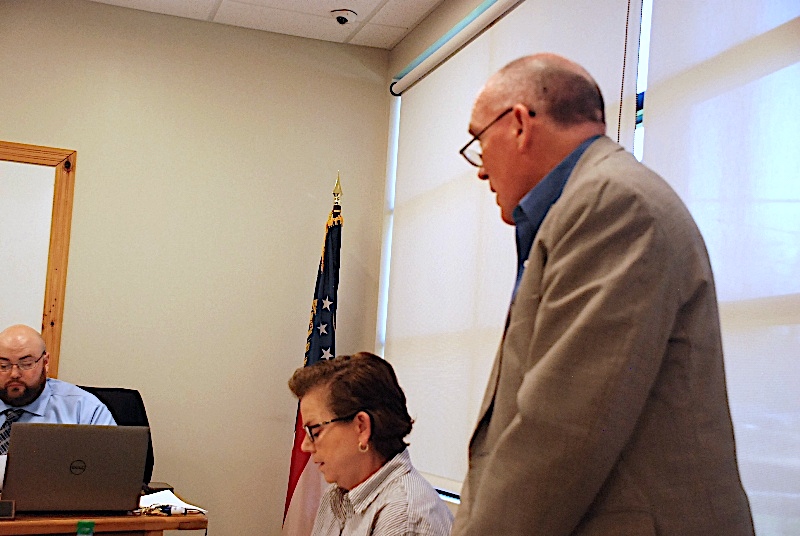
City Administrator Tom O’Bryant speaks to the city council about the short term rental regulation. (wrwh.com)

After months of development and a fourth consideration, the Cleveland City Council voted Monday night to approve amendments to the city’s zoning ordinance to allow Short Term Rentals in residential districts within the city.

City Administrator Tom O’Bryant told the council the document had all the changes that they asked for and provides the requirements for those who would like to participate. Short-term rentals must be approved by the city before they can take place.

Mayor Josh Turner said he feels this will be a good thing for the city.

“There’s no secret that this area has a lot of interest in tourism and currently, there are not many options for overnight accommodations in the city. Hopefully, this will provide some more opportunities for folks who want to stay close into the downtown square and also provide a little more revenue for the city as well with hotel-motel tax,” he said.

During their meeting, the council also had the first reading of amendments to the city’s alcohol beverage ordinance that would allow for curbside service, but the businesses that would like to offer the service must meet strict guidelines. Currently, only two businesses, Ingles and Walmart, have indicated they would like to offer that type of service.

The Council conducted the first reading on regulations governing pawn shops and pawnbrokers. Ward 3 Councilman Jeremy McClure and Ward 4 Councilman CJ McDonald voiced concerns with charging a $150 license fee for each additional employee of the pawnshops. That additional fee requirement was removed before the approval of the first reading.

A second reading of the regulations must be held before they become effective.

TFS splits with Habersham as girls claim win

The TFS tennis teams welcomed Habersham Central to campus on Monday afternoon, earning a non-region split. The Lady Indians rebounded with a win after a previous loss to George Walton, while the Indians saw their 3-match win streak come to an end.

The Lady Indians swept to a 5-0 win, as every line dominated. The #1 doubles combo of Sophie Herrera and Landry Carnes rallied from going down 3-1 to start their first set.

Both teams are now 3-1 on the season, and play again Tuesday against Prince Avenue Christian.

GIRLS

  • #1 Singles: Maggie Peacock (2-2) W 6-3, 6-2
  • #2 Singles: Ashli Webb (3-1) W 6-0, 6-0
  • #3 Singles: Evette Corwin (2-1) W 6-0, 6-2
  • #1 Doubles: Sophie Herrera & Landry Carnes (3-1) W 6-3, 6-0
  • #2 Doubles: Christy Hulsey & Cassidy Hayes (2-1) W 6-3, 6-0

BOYS

  • #1 Singles: Josh Jackson (2-2) L 4-6, 4-6
  • #2 Singles: Tanner Davis (3-1) W 6-1, 8-6
  • #3 Singles: TJ Cox (2-1) L
  • #1 Doubles: Jake Owensby & Zach Carringer (3-1) L 8-10
  • #2 Doubles: Aiden & Everett VanOrman (2-1) L

Indians rebound with win, Lady Indians drop match against PAC

Playing in back-to-back home matches for the first time this season, the TFS tennis teams split in a region match Tuesday against Prince Avenue Christian. The Lady Indians were edged 3-2, while the Indians bounced back with a solid 4-1 win.

The boys saw all singles lines earn wins, and at #1 doubles. Between Josh Jackson, Tanner Davis, and TJ Cox, the boys were efficient and dominated the opposition. The girls got wins and #2 and #3 singles, but dropped the rest.

The Indians move to 4-1 overall and are now 2-0 in region play. The Lady Indians are 3-2 overall and 0-2 in region.

BOYS

  • #1 Singles: Josh Jackson (3-2) W 8-2
  • #2 Singles: Tanner Davis (4-1) W 8-0
  • #3 Singles: TJ Cox (3-1) W 8-1
  • #1 Doubles: Zach Carringer & Jake Owensby (4-1) W 8-2
  • #2 Doubles: Aiden & Everett VanOrman (2-2) L 6-8
  • Exhibition: Luis Varona Pastor & Benjamin Okoronkwo (1-0) W 8-3

GIRLS

  • #1 Singles: Maggie Peacock (2-3) L 0-8
  • #2 Singles: Ashli Webb (4-1) W 8-4
  • #3 Singles: Evette Corwin (3-1) W 8-3
  • #1 Doubles: Sophie Herrera & Landry Carnes (3-2) L
  • #2 Doubles: Christy Hulsey & Cassidy Hayes (2-2) L 6-8
  • Exhibition: Susie Sun (1-0) L 5-8

Baldwin continues membership with Partnership Habersham

(Hadley Cottingham/Now Habersham)

In a turn of events, a previously hesitant City of Baldwin council voted unanimously to continue their membership with Partnership Habersham.

Just last week at their work session, the council discussed terminating their membership on the grounds that they weren’t sure that the work the partnership did immediately benefited the city. But after mulling the decision over and hearing comments from Partnership Habersham Executive Director Charlie Fiveash, the council voted 5-0 to renew their membership.

At the city’s Thursday work session, Councilwoman Alice Venter said she would be interested to know exactly what the city’s investment in Partnership Habersham did for them. Fiveash gave her, and the council, those details.

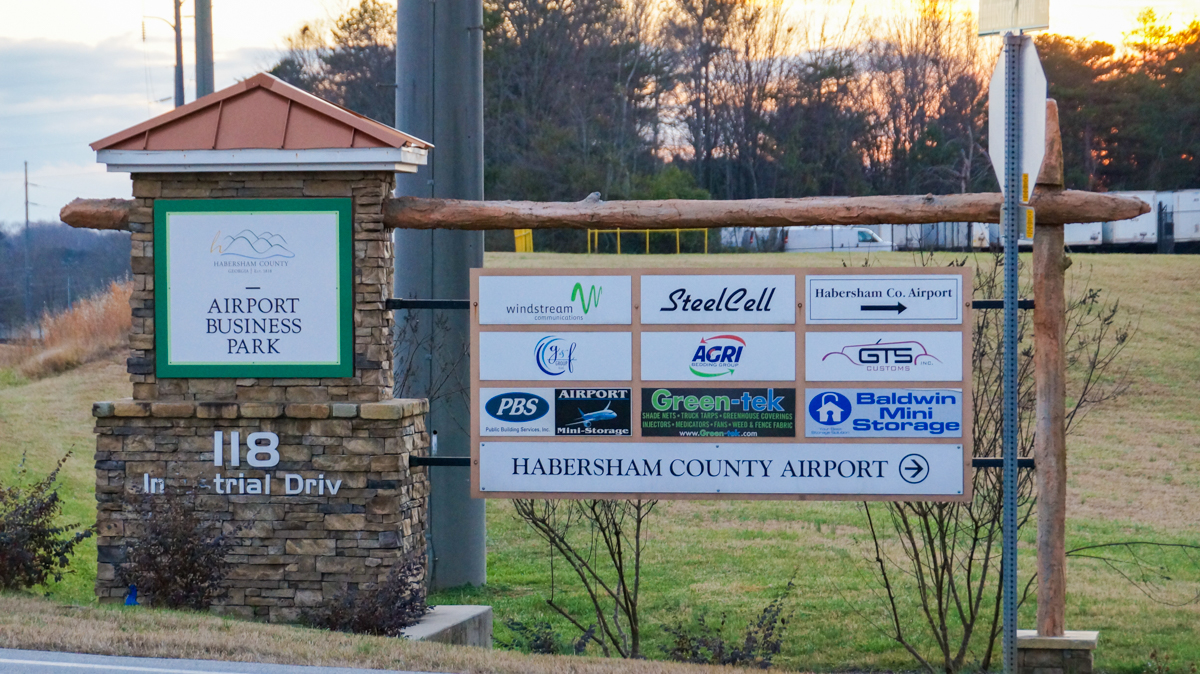
Fiveash appeared before the council Monday evening to share examples of how Partnership Habersham has helped Baldwin rebrand the airport business park, bring in new industries, including a new business that could bring 10 new jobs to the city in the near future and work with local youth to develop Habersham’s workforce.

His comments were enough to win the council over.

“I think it’s amazing,” Venter said. “You don’t know what you don’t know, and some of the things that you’re telling us that you guys have done, it’s fantastic.”

He says that while development might not be obvious, the partnership is helping Baldwin achieve their goals of bringing in new businesses and industries.

“Economic development is a long-term process,” Fiveash told the council. “It takes quite a long time to recruit and attract, and then bring in … industries that will create new jobs and new investment, both in our community and, specifically, in the City of Baldwin.”

Mayor Joe Elam made the motion to continue the partnership, which passed without objection.

Cornelia launches new website, app

(Source: cornelia.org)

The City of Cornelia has a fresh look online. The city launched its new website on Tuesday, March 15. The website, built by Diversified Technologies, Inc., took several months to design. Jeremy Dundore, IT Director for the City of Cornelia, worked with the company to include specific additions and capabilities that each department requested, a city news release states.

“We hope this website will enhance community involvement and allow the city to address issues faster, all while providing the best service for our citizens,” Dundore says.

The website now has online payment capabilities, online Community House rental requests, links to social media feeds, and more. These new features are in addition to what was already offered on the website including agendas and minutes for boards and commissions, forms, and general information.

The city also launched a new phone app. This app has all the features of the website, the city says. It also has a place where citizens and community members can take a photo and submit it, along with a praise or concern, and it will automatically be directed to the appropriate department to be processed.

To download the app, type “City of Cornelia” in the app store. To view the website go to www.cornelia.org.

Georgia lawmakers face do-or-die Crossover Day on elections, culture wars bills

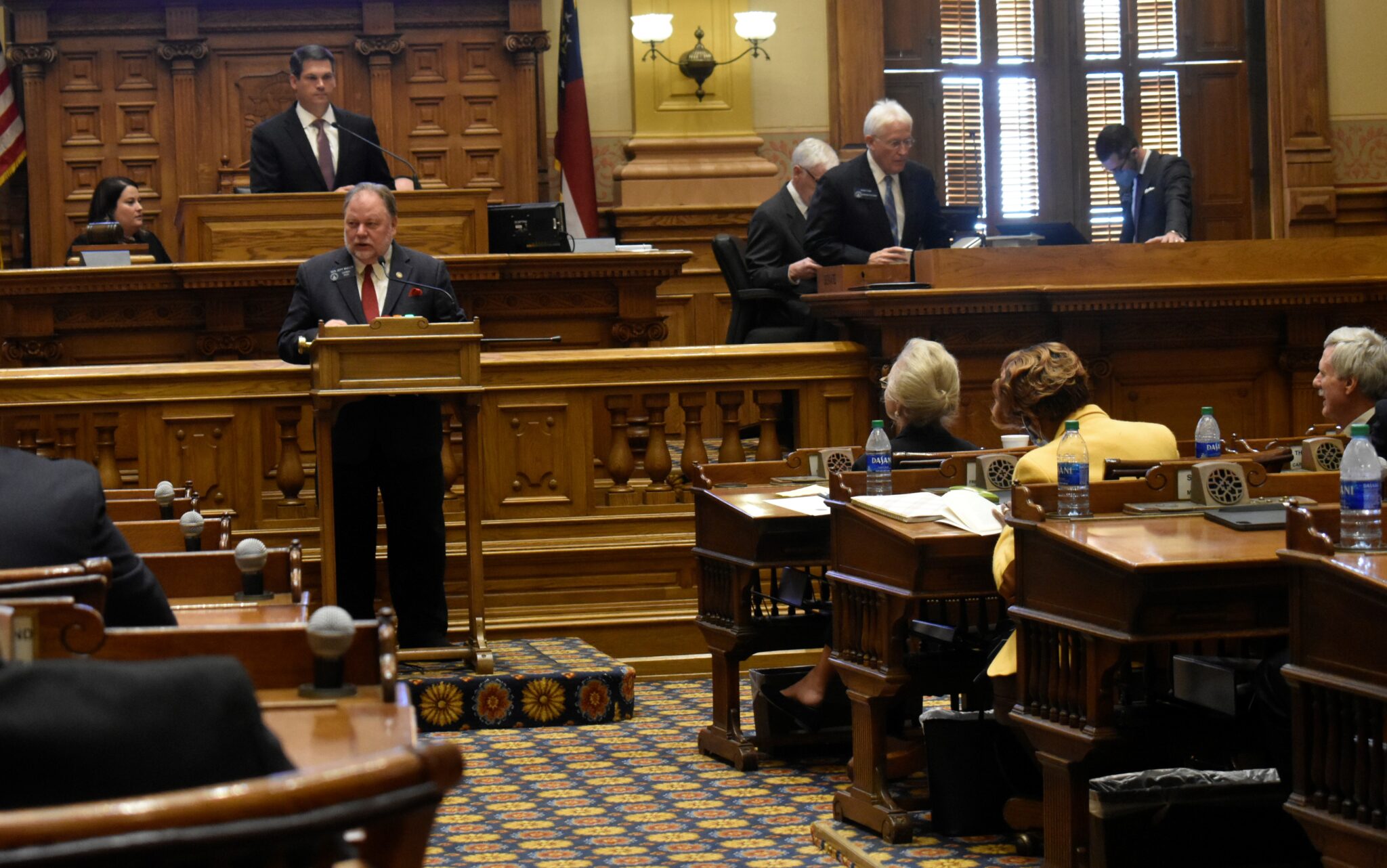
Sen. Jeff Mullis speaks on the Senate floor. As chair of the powerful Rules Committee Mullis has the power to decide which bills will or will not get a hearing on Crossover Day. (Ross Williams/Georgia Recorder)

(GA Recorder) — When the music stops at the Gold Dome Tuesday night, not every bill will have a seat.

Tuesday is Crossover Day in the state Legislature, the last day a bill can cross from one chamber to the other. While lawmakers have been known to practice legislative necromancy by grafting dead language onto healthy bills, legislation that does not pass either Georgia’s House or Senate by Crossover Day is typically considered dead for the session.

“It doesn’t happen every day, but every session it happens on some bills,” said University of Georgia political science professor Charles Bullock. “For the most part, bills that aren’t approved by one chamber or the other will not go forward, but if, indeed, the leadership gets behind it, they will find a way to push it through.”

The caffeine-fueled festivities usually last well into the night as senators and representatives do all they can to ensure their favored bills are still breathing when the sun rises anew.

The Senate agenda for Tuesday contains 45 bills or resolutions, and the House calendar is set to be revealed when the Rules Committee meets at 8:30 a.m., but the House’s plans could evolve throughout the day.

“What you’ll see on the House side, not the Senate side, is the House Rules Committee can meet during the day and amend that list of legislation,” Bullock said. “The Senate tends to have a single calendar for the day, but the House Rules Committee can come up with new calendars.”

Here’s a short list of proposed legislation whose fate will likely be sealed one way or the other when the final gavel falls Tuesday night.

Education

During his annual State of the State speech, Gov. Brian Kemp listed a slate of priorities for the state public education system, many of which are already safe from being knocked out on Crossover Day. Bills banning the teaching of so-called divisive concepts have passed both the House and Senate. Bills to enshrine a “parents’ bill of rights” and allow adults to more easily register complaints about school library materials are likewise alive and well.

But supporters of school vouchers are hoping Crossover Day will bring a win for another conservative favorite, the perennial plan to pay public school parents to transfer their students into private schools.

A Senate bill authored by Senate Pro Tempore Butch Miller, a Gainesville Republican, moved out of committee last week and has been added to the Senate calendar for a full vote.

But a Senate vote could be a pyrrhic victory for voucher fans. House Speaker David Ralston has indicated a similar House bill will not receive a vote after a pro-voucher group sent out mailers apparently intended to bully Republicans into supporting the measure by tying them to high-profile Democrats.

Another Miller bill that aims to protect the rights of parents to attend school board meetings has also passed through a committee and is up for a full vote Tuesday.

A pair of bills by powerful Senate Rules Chairman Jeff Mullis aimed at reshaping the governing body of high school sports in the state are not on Tuesday’s calendar.

The first bill would replace the Georgia High School Association entirely with a new organization. That bill has passed committee and been read twice in the Senate. The second bill would make public and private schools with small numbers of students compete in separate regions and playoffs, but has not advanced out of committee.

A bill that would ban transgender students from playing on girls’ sports teams has passed the Senate and awaits a House vote, but another measure modeled after Florida’s so-called “Don’t say gay” bill has LGBTQ advocates wary. Senate Bill 613 aims to prevent private schools from discussing “sexual orientation or gender identity in primary grade levels or in a manner that is not appropriate for the age and developmental stage of the student.”

The odds of the bill moving forward seem low — Sen. Carden Summers, a Cordele Republican, filed it a week before Crossover Day, and it has not received a committee hearing.

During a huddle with reporters last week, Ralston seemed dismissive of its odds in the House if it makes it over.

“I don’t read Senate bills until they get over here,” he said. “If it gets over here, I’ll take a look at it. I mean, that doesn’t sound like something that’s very high on my agenda.”

This year has also seen a renewed push to extend in-state tuition benefits to some immigrants studying in Georgia. Senate Bill 460 would allow students who came to the country illegally as minors and who have received Deferred Action for Childhood Arrivals, or DACA, to pay the same reduced rate as other Georgia students. House Bill 932 would extend that benefit instead to refugees, special immigrants and humanitarian parolees upon their arrival to the state. Neither bill has so far passed its committee vote.

Elections

Last year’s controversial overhaul of the state’s election system was far from the final word on voting in Georgia, and lawmakers are poised once more to push for big changes to the ways Georgians cast their ballots.

The House chamber could take up Tuesday the most comprehensive voting bill of the session, which would give the Georgia Bureau of Investigation the power to initiate election fraud cases, allow the public to inspect official paper ballots and make it more difficult for county election offices to accept private contributions.

Republican legislators behind House Bill 1464 say it would strengthen last year’s controversial voting law overhaul by granting the GBI the authority to take the lead in subpoenaing records, adding chain of custody requirements for handling ballots and requiring the State Election Board to oversee donations from outside groups.

Detractors note that the bill gives credence to false claims of election fraud originating in 2020, will cause local election offices to lose millions in private donations, and could result in greater intimidation of voters and election workers since the GBI will handle cases instead of the Secretary of State’s Office.

Public safety

Another contentious measure that must pass the Senate on Tuesday to have a realistic chance to pass would add harsher penalties for blocking a highway, vandalizing storefronts and other crimes committed while protesting. The bill is a response to the racial justice protests that shook cities across the country, including Atlanta, in the summer of 2020. Critics say provisions in the bill could be burdensome to local governments and likely violate First Amendment protections for protesters.

A bill to standardize the ad hoc process of compensating Georgians who have been wrongfully imprisoned for crimes they did not commit is set to get a vote in the House Tuesday.

The National Registry of Exonerations reports 47 Georgians have been cleared after wrongful convictions since 1989. The state has paid out $7.9 million to 10 of them since 1991, according to data from the Georgia Innocence Project.

If the bill becomes law, it will establish a panel to decide the financial compensation each wrongfully accused Georgian should receive instead of the Legislature.

Medical marijuana

Seven years ago, Georgia passed a law to allow registered patients with specific illnesses to take medical marijuana oil, but there is still no way to legally buy the medicine in the state as companies bicker in court over the rights to sell it.

Both chambers have legislation aimed at cracking the stalemate: House Bill 1453 and Senate Bill 609, which is scheduled to come up Tuesday in the Senate.

Both bills aim to grant the final OK to six companies initially approved in 2020 and have provisions for potentially expanding licenses to companies that did not make the cut down the line.


Another House bill authored by Hartwell Republican Rep. Alan Powell aims to slice through the tangled knot by offering a license to all of the initially approved companies and all of those contesting the decision for a total of 22 licenses.

Gambling

What are the odds of a Georgian betting on a horse race without crossing state lines?

We’ll have a better idea Wednesday morning after the Senate takes up Senate Bill 212, a Mullis bill seeking to allow wagering on races in the state.

If it passes both chambers with two-thirds support and the governor signs off, it would be up to voters to decide whether to amend the state constitution to allow the new form of gambling. Proponents say doing so would help the agriculture industry and create new jobs caring for the horses and working at the tracks. Naysayers believe tracks will create gambling addicts through historical horse racing machines, revenue boosters for racetracks that opponents say are just slot machines by another name.

VA eyes major changes in health care system as veterans flock to the South, Southwest

A new VA medical center is proposed for Gwinnett County to augment treatment options for metro Atlanta enrollees living in the northern suburbs. The Decatur medical center is a long drive for veterans on the northern end of Gwinnett. (Courtesy U.S. Veterans Administration)

WASHINGTON (GA Recorder) — The U.S. Department of Veterans Affairs on Monday began the years-long process of restructuring its nationwide health care network, an endeavor that will require the president and Congress to sign off before it could begin.

The restructuring would mean the closures or consolidations of some medical facilities, likely provoking opposition from communities and members of Congress.

Montana Democrat Jon Tester, chairman of the U.S. Senate Veterans’ Affairs Committee, said Monday that “any effort to kneecap our veterans’ health care is a non-starter for me.”

“I will fight tooth and nail against any proposals that blindly look to reduce access to VA care or put our veterans at a disadvantage,” Tester said.

Illinois Rep. Michael Bost, the top Republican on the U.S. House Veterans’ Affairs Committee, said he looks forward to the work the “Commission will do in the coming months to ensure the recommendations VA released today stand up to scrutiny.”

“For far too long, VA’s infrastructure has been slowly crumbling. Veterans in every corner of the country deserve better,” Bost said.

A report from the VA secretary, broken into two volumes and released Monday, predicts the number of veterans in the Northeast and Midwest will decline in the coming years while those settling in the Southeast, South and Southwest would grow.

“These changes are largely driven by the aging of the Veteran population and the predicted pattern of military separations near military bases,” the report states.

The VA will likely continue struggling to address the number of veterans living in rural or highly rural areas — a group that currently makes up 33% of VA’s enrollee population, according to the report.

The Asset and Infrastructure Review looks at the dozens of ways veterans’ health care needs will change during the coming decades and expectations about where they’ll live, so the VA can try to set up facilities, staff and programs in the best locations.

“In some markets, the Veteran population is rapidly increasing, so we are adding new medical centers, community-based outpatient clinics and other facilities to meet that ever-growing demand,” VA Secretary Denis McDonough wrote.

“In other markets, the opposite is happening — the number of Veterans is decreasing — but even in those markets, we are investing in new facilities that better address the needs of the Veterans who live there.”

If President Joe Biden and Congress approve the final set of recommendations, which will come from the Asset and Infrastructure Review Commission in about a year, the VA would start implementing them no later than February 2026.

But if Biden or lawmakers, through a joint resolution of disapproval, reject the plans, the entire process comes to a halt.

Major new Georgia treatment centers planned

Georgia is in line for a significant boost in veterans’ access to treatment in the VA proposal. Macon and Gwinnett County are recommended as new sites of major medical sites, which would provide outpatient mental health care, outpatient surgical treatment and dental health services. Existing VA Community-based outpatient clinics in those communities could be closed.

Georgia Congresswoman Carolyn Bourdeaux, a Suwanee Democrat, said the planned Gwinnett location could go a long way to improve veterans’ access to health care in Atlanta’s northern suburbs. A specific location has not yet been identified.

“For years, veterans in Gwinnett County and the greater Atlanta area have complained about their inability to access basic care from the VA. From long wait times to sitting in traffic while driving to downtown Atlanta, veterans in Gwinnett and Forsyth have long needed their own VA medical facility right here in their community,” Bourdeaux said in a statement.

The new Gwinnett facility could serve more than 32,000 VA enrollees who live within a 30-minute drive and about 125,000 live within an hour of the planned new medical center. The Macon site would be within a 30-minute drive of more than 17,000 enrollees and more than 38,000 could get there in an hour.

In addition, the proposal would ripple across the state in communities from Augusta to Brunswick to Dublin with smaller-scale changes by adding treatment capacity outside of city centers.

And the plan contemplates new partnerships, including a Dublin-based residency program with the Macon campus of Mercer University to develop a pipeline for surgeons and other doctors.

The geographic realignment could also send Georgia veterans out of state for treatment in a strategy designed to improve health care access. Treatment offered in Wayne, Glynn and McIntosh counties in the Savannah area could be supported by nearby medical centers across the South Carolina line, which the report says would “improve the scope, level, and cost-effectiveness of services available to the veterans.”

The VA analysis says the proposed Georgia “modernization” plan would cost $56 million, or less than $3 million more than leaving things status quo. The added expense is the estimated cost of building new facilities in Georgia.

Rural Areas

“While VA and community providers alike will continue to have difficulty recruiting and retaining staff in rural areas — 136 rural community hospitals have closed between 2010 and 2021 — VA is committed to providing accessible VA health care through new points of care, partnerships, telehealth and virtual care, and other modalities,” the report states.

The VA will likely continue facing strong competition with the private healthcare market to secure doctors and nurses, especially as nationwide shortages are expected to begin.

According to the report, the VA expects that within two years there will be a “shortage of between 14,280 and 31,091 psychiatrists, and 77% of counties” will have a severe shortage of mental health providers.

By 2033 there will be a “shortage of between 21,400 and 55,200 primary care physicians and between 33,700 and 86,700 non-primary care specialty physicians,” according to the report.

“The projected shortages will affect rural areas more than urban areas.”

More women, people of color

But the report, required by Congress to “to modernize and realign VA’s aging health care infrastructure,” also looks at how the people the VA treats will continue to evolve, as will the types of services the VA provides to those veterans.

Within the next seven years, the VA expects it will see an increase in the proportion of women and people of color, as well as a decrease in the average age of veterans.

“The Veteran enrollee profile is growing more diverse. For example, the lifting of laws that had previously led to a pre-Vietnam U.S. military that was under 2% women, has resulted in women comprising over 19% of active duty military today,” the report says.

“As the population shifts, VA’s Veteran enrollee population’s health care needs may vary based not only on service-connected conditions but also on demographic differences and social determinants of health.”

The VA, however, warns that not every health care need can be predicted, with many future needs dependent on how combat changes in the years ahead.

For example, the VA says that the use of improvised explosive devices in the wars in Afghanistan and Iraq combined with improvements in medicine meant that many soldiers who would have died during previous wars were able to survive. Those troops, however, were living with “amputation, [traumatic brain injury], infertility, genitourinary injuries, 47 and other conditions that strained VA capacity.”

“VA cannot foresee the service-connected conditions for future Veterans,” the report says. “Given this uncertainty, VA must be able to rapidly innovate and adapt to care for Veterans regardless of the health concerns they face.”

Georgia Recorder Editor John McCosh contributed to this report