
Home Blog Page 1557

Georgia gamblers win some, lose some as state Legislature reaches final turn

Pimlico Race Track, Baltimore, Maryland, USA. May 1995

(GA Recorder) — A resolution to bring horse racing to Georgia failed to jump a legislative hurdle in the Senate this week, all but dooming the effort for the year, but gamblers can still pin hopes on a House bill to expand the payouts for coin-operated amusement machines, or COAMs, commonly found in gas stations and convenience stores.

“I am disappointed in my colleagues,” said Chickamauga Republican Sen. Jeff Mullis, chair of the Senate Rules Committee and longtime supporter of bringing race tracks to Georgia. “I really was hoping you would let us go to the ballot, and that’s all this did was take it to the ballot, and I wish you would reconsider.”

Sen. Jeff Mullis. Ross Williams/Georgia Recorder 

Senate Resolution 131 received a majority of votes, 33-20, but because it called for a referendum to change the state constitution, it required a two-thirds majority vote to pass rather than a simple majority.

Backers tried to convince their skeptical colleagues by citing a Georgia Southern University study which found that the industry would generate an economic impact of $1.28 billion and bring more than 8,500 new jobs to the state.

Sen. Billy Hickman, a Statesboro Republican who raises horses to race in other states, sought to ease concerns that the three tracks allowed by the bill would bring in historical racing machines, which opponents say are essentially slot machines with a different name but just as addictive.

“The word casinos is nowhere in this bill. Nowhere does this bill say the word casinos,” Hickman said. “Nowhere does this bill say the word slot machines, OK? I want you to get that in your mind, because that’s the way it is, OK? But it does allow horse racing, which is a big agricultural industry.”

Sen. Ed Harbison, a Democrat from Columbus, tried to coax his fellow lawmakers with a higher education funding sweetener.

“I remember when we did lottery, a lot of the people were opposed to the lottery, a lot of people right now who benefit from the lottery proceeds in education, I guarantee you, they were against it, they opposed it, because it’s gambling, they opposed it, because it would be bad for Georgia,” he said. “Right now, Georgia is a centerpiece in the nation, for sponsoring education for their children, for students in the state of Georgia, children don’t have to go outside the state of Georgia because of the great program we have in the lottery.”

But their arguments were not sufficient to persuade enough senators to sign on to the bill.

Republican state Sen. Marty Harbin of Tyrone said he was uneasy with the business model.

“When I give my money to Chick-fil-A, they give me a sandwich, there’s an exchange of values. When I give my money to Coca-Cola, there’s an exchange of values,” he said. “But here’s the issue. In gambling, for there to be a winner, there must be a loser. The system does not work unless there’s a loser. It is not an equal exchange of value.”

Harbin said he’s worried more people would become addicted to gambling at race tracks.

“We’ve all met people who could not handle gambling,” he said. “It’s a health problem, because among those who are addicted to gambling, there’s a high suicide rate as well that goes along with that.”

When the resolution was voted down Tuesday, Mullis successfully moved to reconsider, which kept the hope alive for horse racing fans for this year that Mullis could somehow wrangle enough votes to pass the plan by the end of Tuesday’s key deadline.

Always the showman, Mullis kept Georgia politics watchers guessing until the Senate was nearly adjourned, rising to speak before the last gavel.

“You know, I’ve had a bad day today, and my friends have deserted me,” he said. “But I’m determined. I move that Senate Bill nothing be taken off the table.”

“Thank you for that theatrical performance,” said Lt. Gov Geoff Duncan.

Coin-Operated Amusement Machines ride on

In the House, a bill to expand payouts to players electronic games of chance hit paydirt after an initial loss.

House Bill 1424 makes several changes to the law dealing with these machines, including allowing operators to offer non-rechargeable gift cards worth up to $50 as prizes.

Bill sponsor Rep. Alan Powell, a Hartwell Republican, said the goal of the bill is to discourage those operators from illegally offering cash prizes.

Rep. Alan Powell. Ross Williams/Georgia Recorder 

“Y’all may remember this discussion from last year, the idea that a lot of us had, where you see a lot of cases that there are those people that get called paying out cash, and by going to the gift card so that they can redeem for non-cash prizes or restaurants or certificates, and this would hopefully, stop eating illegal traffic,” he said.

Atlanta Democratic Rep. Stacey Evans argued against the bill, saying the state does not get enough of a cut to warrant an expansion.

“We should not fool ourselves that these machines don’t attract nuisances, they create nuisances and problems in our community,” she said. “And just like with any gambling operation of any sort, we might be willing to take the bad if there is an overwhelming good, and I can’t explain to you how the COAM industry was able to establish themselves in this state and only give us 10% of the proceeds for educational purposes for HOPE and pre-k, which is what they do right now, 10%.”

The bill failed to receive the required majority the first time around, failing 88-79, but a second push from Powell later in the night saw more success, passing 100-67.

King: GA insurance companies should divest themselves of Russian assets

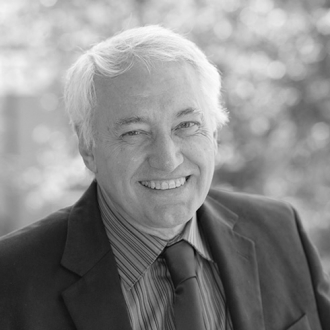
Georgia Insurance Commissioner John King

Editor’s Note: The following editorial was written and submitted to Now Habersham by Georgia Insurance and State Fire Commissioner John King. 

In recent weeks the United States government, the European Union, and the majority of nations worldwide have come together to condemn Russia’s unwarranted attack on Ukraine. The world is rightly horrified at the scale of human suffering on display due to Russia’s aggression towards the people of Ukraine. In response, the United States and its allies have imposed severe financial and economic sanctions on Russia.

The leaders of the State of Georgia have also made it clear that they stand with the Ukrainian people and with the free world in condemning the actions of the Russian government. Governor Kemp announced that the State of Georgia would fully divest from Russian firms, and Speaker Ralston has made clear that he wants none of the state’s money subsidizing Vladimir Putin’s war.

While the State of Georgia’s role in international affairs is modest, we must stand with the Ukrainian people in opposing tyranny in whatever manner we are able. Accordingly, I want to urge insurance companies who do business in the state to do their part in opposing Russia’s invasion of Ukraine.

Investments and business operations by insurance companies are a vital source of capital for markets around the world, including markets in Russia. The fact that the premiums paid by citizens and entities in Georgia to insurers could be used as capital support by the Russian regime is shameful. Therefore, insurance companies who do business in Georgia should begin the process of eliminating any financial support, via investments or business operations, for the Russian regime.

Insurance companies that transact business in Georgia should review their financial holdings and operations to begin the process of identifying and divesting from any investments and/or operations in Russian assets or operations that may provide financial support for Russia. Should companies be concerned about how this will affect their statutory and regulatory financial obligations, my office stands ready to assist those companies in making such divestments or business changes in a manner that will not violate relevant laws, or unduly harm Georgia consumers or the competitiveness of the Georgia insurance market.

We must stand with the Ukrainian people and do all we can to put an end to Russia’s criminal and cowardly invasion of Ukraine.

RELATED:

Research shows new reasons to watch for ticks in Georgia

More than 50 cases of Heartland virus have been identified in people from 11 states in the Midwest and the Southeast, the CDC says. The tick borne virus has resulted in some deaths. Researchers want people to be aware and to guard against tick bites as they become more active outdoors this spring.

A virus unknown until a little more than a decade ago is circulating among lone star ticks in Georgia, Emory University scientists say.

Heartland virus was first identified in Missouri in 2009 in two severely ill individuals.

Vazquez-Prokopec

“We don’t know how many people are infected’’ with Heartland, said Gonzalo Vazquez-Prokopec, associate professor in Emory’s Department of Environmental Sciences.

He’s senior author of an Emory study on the virus in Georgia that was published Wednesday in the journal Emerging Infectious Diseases. The research focused on ticks collected in the central part of the state.

The lone star tick is the most common tick in Georgia, Vazquez-Prokopec said. (It gets its name from a mark on its body that somewhat resembles a star.)

More than 50 cases of Heartland virus have been identified in people from 11 states in the Midwest and the Southeast, the CDC says. Many required hospitalization and a few people who had pre-existing medical problems have died.

The journal article said a retroactive analysis confirmed that the previously unidentified illness that killed a Baldwin County resident in 2005 was Heartland.

“We’re trying to get ahead of this virus by learning everything that we can about it before it potentially becomes a bigger problem,” Vazquez-Prokopec said.

The CDC has reported an increasing number of reported tickborne illnesses and expanding geographic ranges for ticks in recent years.

Lone star tick

A recently released estimate based on insurance records suggests that each year about 476,000 Americans are diagnosed and treated for Lyme disease, the CDC said. This number is likely an overestimate of actual infections because patients are sometimes treated presumptively in medical practices, the agency said.

“Ticks are everywhere in Georgia,” Vazquez-Prokopec said, though he added that Lyme disease isn’t a major problem in the state.

The Southeast in general is a breeding ground for ticks because of its warm, humid climate and abundant foliage. The tick borne bacterial disease called Rocky Mountain spotted fever is actually more common here than it is in Western states.

Vazquez-Prokopec said a new tick threat has been found in Georgia. The Asian longhorned tick was found on a Pickens County farm last year.

The Asian tick has now spread to 17 states. Vazquez-Prokopec called it “a very nasty invader,” adding that the tick “is really good at transmitting’’ a Heartland-type virus.

Researchers point to climate change as a cause of warmer and shorter winters, increasing the chances for some species of ticks to breed more frequently and to expand their ranges.

Asian longhorned tick

Vazquez-Prokopec also pointed to more human encroachment on wooded areas. Deer and small animals that carry ticks are inhabiting smaller patches of forest, he said.

He added that the purpose of the research is not to alarm people but to raise awareness of ticks’ potential threat to human health.

The Georgia Department of Public Health recommends these steps to prevent tickborne disease:

  • Use an Environmental Protection Agency-registered insect repellent.
  • Avoid wooded and brushy areas with high grass and leaf litter. Walk in the center of trails.
  • Wear long-sleeved shirts, pants, and socks.
  • Treat items, such as boots, pants, socks, and tents with permethrin, or use permethrin-treated clothing and gear.
  • Take steps to control ticks and fleas on pets.

And once indoors, the CDC recommends:

  • Checking your clothing for ticks.
  • Examining gear and pets.
  • Showering soon after being outdoors.

The Resurrection through the eyes of a four-and-a-half-year old

Even at four-and-a-half years old, Caleb knows that Jesus did something amazing for him. (Photo Jenna Shaw)

During the past few months, my husband’s mother has passed away in her 90s and a dear friend of ours who had been a part of family for more than 35 years (we called him a “fruncle” or friend/uncle) passed away from debilitating strokes at the age of 72. It’s been tough for our whole family, but especially for four-and-a-half year old Caleb.

Caleb has lost someone he depended on when David died. He attended David’s funeral as well as his great-grandmother’s. He’s become somewhat obsessed with the idea of dying and going to heaven, and he’s constantly asking questions about what life in heaven will be like. He recently gave me a truck he got from a McDonald’s Happy Meal to take with me when I go to heaven so I’ll have something to play with. I’m almost 70 so I’m not really ready to make the journey yet, but I do appreciate the sentiment.

Because of his constant questions about what happens when someone dies, the door has been opened for questions about Jesus, about His death and His resurrection, and about what He has done for us. Especially with Easter approaching, the conversations have been more focused on Jesus.

Last week, in a conversation with his mom and me, Caleb tried to figure out the whole idea of the resurrection –– of coming back alive from the dead. “Is it like a zombie coming back alive,” he asked. I answered, “No. Zombie’s aren’t real. Only Jesus was able to come back from the dead.”

“Hmmph,” Caleb answered.

Then, I asked Caleb why he thought Jesus had been willing to die on the cross for him. Caleb thought a few seconds and then said, “Because He wants me to be a part of His family.”

Wow! His answer took my breath away.

We adults talk about Jesus’ death on the cross with deep theological concepts and big, multi-syllable words. We say that we are justified by Jesus’ redemptive work on the cross. That means we are made righteous (becoming like God the Father) because Jesus took on our transgressions (our sins) when He sacrificed His life for ours.

All that is true. We are made right through the death and resurrection of Jesus Christ. We are reconciled to God through that action because Jesus became the bridge that allows us  into the very presence of God.

And the result of all that is we become a part of the very family of God.

Caleb got that very right! And when all the big theological words are put aside, Jesus wants us to be a part of the eternal family of God.

I pray that you celebrate Easter as a part of the family of God. If you’ve not yet made that decision, today could be your day to do so. May you today encounter the Risen Lord!

If you want to read the story of Jesus’ resurrection for yourself, click here to read the story in Luke 24:1-8.


Piedmont professor sheds light on what may have led up to Russian attack

(Photo: Piedmont University)

With death tolls increasing in Ukraine and shocking images of the invasion being broadcast worldwide, Americans are grappling to understand why the invasion is happening at all, and what can be done.

Now Habersham sat down with Piedmont University Professor of History, Al Pleysier Ph.D., a Russian history expert, to discuss the politics that led up to the invasion and the American response to the war.

Putin, the Soviet Union and the Russian Empire

Pleysier has an impressive 40-year tenure at Piedmont University, where he teaches a slew of history classes— including Russia’s history. (Photo: Piedmont University)

Pleysier is no stranger to Russian history. He’s been a professor on the subject for 40 years at Piedmont University, and he’s spent his career studying it— from writing books on the Soviet Union to participating in archeological work in Crimea. He says that he believes Russian President Vladimir Putin’s attack on Ukraine is an attempt to rebuild the Russian empire destroyed by the Soviet Union, and boost the country’s economic prosperity.

He says that after the fall of the Soviet Union, satellite states of the Russian empire, like Estonia, Lithuania, Latvia and Ukraine all gained their independence. To a young Putin, who had grown up under Soviet rule, this was a loss of power.

“Putin will tell you that was one of the worst things that ever happened in his life,” Pleysier said. “Not because the communist party fell, but because the empire fell. And he wants that empire back.”

But why invade now? Pleysier says he believes that because of how the Obama administration reacted to the Russian invasion of Crimea in 2014, Putin didn’t expect to see an American reaction to the invasion of Ukraine.

“During the time that Barack Obama was president and Joe Biden was his vice president, Barack Obama placed Joe Biden in charge of the relationship between the United States and Crimea,” Pleysier said. “Putin was able to get away with Crimea, and [Biden] has been in office for a year.”

He says that he believes Putin thinks he can get away with more invasions under Biden’s leadership due to how he reacted to the Russian invasion of Crimea 8 years ago, and that now, he wants to take everything back.

“Now he doesn’t just want Crimea, he wants all of Ukraine,” Pleysier said. “Not because he wants to establish the Soviet Union— because he wants to re-establish the Russian Empire as it was.”

Zelensky’s plea

Ukrainian President Volodymyr Zelensky pleaded with the US Congress Wednesday morning to bring more aid to Ukraine. Specifically, to help them with a no-fly zone, a response to Russia’s attacks on the country. Recently, one of those attacks included bombing a maternity hospital in Mariupol.

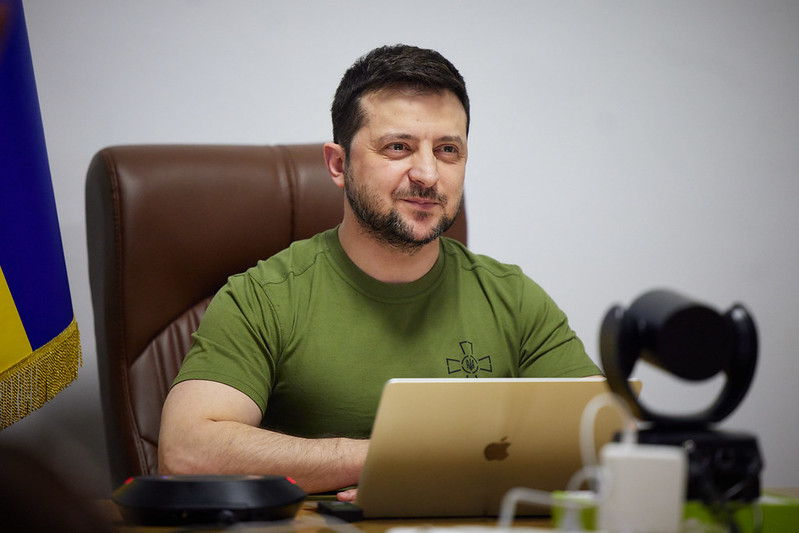
Zelensky addressed the United States Congress by video call Wednesday morning, asking the United States to “do more” to save the lives of Ukrainians. (President of Ukraine/Flickr)

“Remember Pearl Harbor, [the] terrible morning of December 7, 1941, when your sky was black from the planes attacking you,” he said. “Just remember it, remember, September the 11th, a terrible day in 2001 when evil tried to turn US cities into battlefields when innocent people were attacked from [the] air, just like nobody else expected it and you could not stop it. Our country experiences the same, every day, right now at this moment.”

RELATED: In virtual address to Congress Zelensky calls on U.S. to ‘do more’

However, the US is hesitant to offer assistance for a no-fly zone. Canada and the North Atlantic Treaty Organization (NATO) have refused to enforce a no-fly zone after hearing Zelensky’s impassioned remarks earlier this week, similar to those the United States heard today.

Pleysier says it’s a good thing the US hasn’t moved quickly to help Ukraine enforce a no-fly zone.

“I appreciate what Joe Biden is doing, he’s being very careful of that [no-fly zone],” Pleysier said. “If you do go into Ukraine with air cover, and you do shoot down a Russian plane, then you could have a world war. Then that cold war could become a hot war.”

While the US hasn’t committed to helping with a no-fly zone, US President Joe Biden allocated an additional $800 million to Ukrainian efforts to fight back against Russia’s invasion Wednesday afternoon. Shortly after, Biden told reporters that he thinks Putin is a war criminal.

Pleysier says he has no doubt that Putin has committed war crimes. He tells Now Habersham he thinks it’s “unbelievable” that anyone would have any hesitation in calling Putin a war criminal.

“This is murder, you’re a murderer,” Pleysier said of Putin. “You’re the one that gives the orders.”

The United Nations Human Rights office reports that since attacks on Ukraine began, at least 1,900 Ukrainian civilians have died and 1,174 have been injured. They estimate that the actual numbers are considerably higher.

W. C. Cawthon

W. C. Cawthon, age 91, of Demorest, Georgia, passed away on Tuesday, March 15, 2022.

Born on May 11, 1930, in Martin, Georgia, he was a son of the late Jefferson P. Cawthon and Evie Mae Wright Cawthon. Mr. Cawthon was a United States Army Veteran having served during the Korean Conflict. He retired from Habersham Mills after 38 years as a machinist. Mr. Cawthon was a member of Bethel Temple Congregational Holiness Church where he served as a Deacon for multiple terms. He read the entire Bible 114 times and loved to sing gospel music.

In addition to his parents, he was preceded in death by his wife, Rachel Hendrix Cawthon; brothers, Jeff, John Henry, James, Lynn, Glynn, and Willie Cawthon; sisters, Ruth Smith, Inez Cawthon, Carol Bray, Betty Pierce, Ann, and Naomi Ellard.

He is survived by son, Wesley C. Cawthon of Demorest; daughter, Becky Jean Robinson (Rev. Phillip) of Cleveland; grandchildren, Rev. Casey Robinson, Alicia Robinson, and Megan Robinson; and great-grandchildren, Cameron Robinson and Luke Caudell; sister, Velma Gettys of Toccoa.

Funeral Services will be held at 2 pm, Friday, March 18, 2022, at Bethel Temple Congregational Holiness Church with Rev. Edward Hood, Bishop Ronald Wilson, Rev. Phillip Robinson, and Rev. Casey Robinson officiating. Interment will follow in the church cemetery with full military honors provided.

The family will receive friends from 3 -5 pm and 7 – 9 pm on Thursday, March 17, 2022, at McGahee – Griffin and Stewart Funeral Home.

Those in attendance are asked to please adhere to the public health and social distancing guidelines regarding COVID-19.

An online guest register is available and may be viewed at www.mcgaheegriffinandstewart.com.

McGahee-Griffin & Stewart Funeral Home of Cornelia, Georgia (706/778-8668) is in charge of arrangements.

In virtual address to Congress Zelensky calls on U.S. to ‘do more’

WASHINGTON, DC - MARCH 16: Ukrainian President Volodymyr Zelenskyy speaks to the U.S. Congress by video to plead for support as his country is besieged by Russian forces at the U.S. Capitol on March 16, 2022 in Washington, DC. Zelenskyy addressed Congress as Ukraine continues to defend itself from an ongoing Russian invasion. (Photo by J. Scott Applewhite-Pool/Getty Images)

WASHINGTON (GA Recorder) — Ukrainian President Volodymyr Zelenskyy on Wednesday invoked the Pearl Harbor attacks ahead of World War II and the 9/11 terrorist attacks while urging the United States to do more to stop the Russian war against his country.

During the speech, delivered virtually to members of Congress in an auditorium on Capitol Hill, Zelenskyy drew a comparison between attacks on the United States and on his democracy and called on the U.S. to institute a no-fly zone over Ukraine.

He’s made the request several times before, but so far American leaders have been reluctant to grant it, citing concerns that American or NATO military pilots enforcing such a restriction on Russian warplanes would lead to a direct confrontation, significantly broadening the war.

“Today, the Ukrainian people are defending not only Ukraine, we are fighting for the values of Europe and the world, sacrificing our lives in the name of the future,” he said.

Zelenskyy began the 18-minute speech speaking Ukrainian, with a translator conveying his message in English. But he transitioned to speaking in English toward the end of the address after playing a two-minute video.

The deeply emotional video first showed peaceful scenes of Ukrainians leading their lives ahead of the war. It then transitioned to gruesome scenes of war, including bodies being added to a mass grave, images of people being treated in a hospital and several scenes of children crying as they evacuated. The video ended with the words “close the sky over Ukraine.”

Maine Sen. Angus King told reporters afterward there was a “collective holding of the breath” in the room and “the fact that he concluded his speech in English was a very powerful moment.”

Biden announces more military aid

Several hours after the address, President Joe Biden announced $800 million in additional U.S. military assistance to Ukraine, saying that he listened to Zelenskyy’s “convincing” speech from the White House private residence.

“He speaks for people who have shown remarkable courage and strength in the face of brutal aggression — courage and strength that’s inspired not only Ukrainians, but the entire world,” Biden said.

Despite Democrats and Republicans alike commending Zelenskyy for his speech and his actions in Ukraine, it wasn’t immediately clear if the United States would shift its stance on the no-fly zone.

White House Press Secretary Jen Psaki said Tuesday that the administration “continues to believe that a no-fly zone would be escalatory, could prompt a war with Russia.”

“I don’t believe there’s a lot of advocates calling for that at this point in time from Capitol Hill, but we certainly understand and recognize that is still a call from President Zelenskyy,” Psaki continued.

RELATED: Piedmont professor sheds light on what may have led up to Russian attack

Zelenskyy on Wednesday said that if a no-fly zone was “too much to ask for,” the United States should supply Ukraine with the S-300 missile system, airplanes and other weapons to help Ukrainians defend themselves from Russian attacks.

Using the words of the “I Have a Dream” speech by Rev. Martin Luther King Jr., Zelenskyy said: “I have a dream. These words are known to each of you. Today, I can say I have a need. I need to protect our sky. I need your decision, your help, which means exactly the same, the same you feel when you hear the words ‘I have a dream.’”

Zelenskyy closed out the speech speaking directly to Biden, even though Biden was not present for the virtual address.


“As the leader of my nation, I’m addressing President Biden. You are the leader of the nation, of your great nation. I wish you to be the leader of the world. Being the leader of the world means to be the leader of peace. Thank you. Slava Ukraini.”

The words mean, “Glory to Ukraine.”

Biden said during his speech that “at the request of President Zelenskyy” the U.S. has “identified and are helping Ukraine acquire additional longer-range, anti-aircraft systems and munitions for those systems.”

Biden also announced the U.S. would send the Ukrainian military 9,000 anti-armor systems, including “shoulder mounted missiles that Ukrainian forces have been using with great effect to destroy invading tanks and armored vehicles”; 7,000 small arms, including grenade launchers and machine guns; and 800 anti-aircraft systems “to make sure the Ukrainian military can continue to stop the planes and helicopters that have been attacking their people and to defend their Ukrainian airspace”; and drones, which demonstrates America’s “commitment to sending our most cutting edge systems to Ukraine for its defense.”

The United States and allied democracies, Biden said, would continue to send Ukraine more weapons and assistance in the future.

“I want to be honest with you, this could be a long and difficult battle. But the American people will be steadfast in our support of the people of Ukraine,” Biden said.

Congress reacts

Zelenskyy’s remarks had barely ended by the time lawmakers began reacting on Twitter. Members of both parties said they were moved by Zelenskyy’s speech and the video, and pledged to help Ukraine fight the war.

Many were nonspecific about how the United States should aid Ukraine.

“I was moved by the remarks of President Zelenskyy this morning,” Virginia Democrat and Senate Intelligence Committee Chairman Mark Warner tweeted. “Virginia stands with Ukraine as they navigate the terror of this senseless invasion.”

Others called for more targeted actions, including providing the military tools Zelenskyy requested.

“The Biden administration must respond with more lethal assistance, including the airplanes, anti-air weapons, and tightened sanctions immediately,” Sen. Rob Portman, an Ohio Republican who co-chairs the Senate Ukraine Caucus, tweeted. “If they won’t, then Congress must again act in a bipartisan way with more help.”

“We need to do everything possible to #StandWithUkraine,” Arizona’s U.S. Rep. Ruben Gallego, a Democrat, said. “We can only avoid using troops if we are willing to arm them to the teeth with every conventional weapon available.  We need to again be the Arsenal of Democracy.”

“@ZelenskyyUa is David taking on Goliath, but he needs more than slingshots,” Rep. Brian Mast, R-Fla., posted, using Zelenskyy’s Twitter handle. “The Biden Administration should move immediately to provide him and the Ukrainian people with the necessary equipment to defend their country.”

His fellow Florida Republican, Michael Waltz, was more succinct.

“Send the damn MiGs,” Waltz wrote, referring to a type of fighter jet.

Another Florida Republican, Sen. Rick Scott, called for sending planes and adding economic deterrents.

“We must give @Ukraine the planes they need to fight, stop Russian trade & implement the most severe sanctions on ALL Russian politicians to cut off these tyrants,” Scott said.

Some members also named Russian President Vladimir Putin as the aggressor.

“This morning, President Zelenskyy addressed Congress to update us on Vladimir Putin’s unprovoked and evil attack on innocent Ukrainians,” Kansas Republican Rep. Jake LaTurner tweeted. “I appreciate his leadership & willingness to stand up and fight for freedom.”

Noting she was moved by Zelenskyy’s courage, Sen. Debbie Stabenow lauded recent efforts to provide humanitarian and military aid to Ukraine, as well as the administration’s sanctions.

“President Biden and Congress must continue to do everything we can to help them defend their people and their democracy,” the Michigan Democrat said. “That includes the billions in essential aid just passed in the recent appropriations bill for military assistance to strengthen Ukraine’s air defense capabilities and critical humanitarian assistance. And it includes continuing to hit Putin and his oligarchs where they feel it most — in their bank accounts.”

Although there was a bipartisan consensus that the U.S. should provide more aid to Ukraine, partisan bickering continued.

Some Republican members blamed Biden for not acting fast enough.

“Russia invading Ukraine shouldn’t surprise the Biden-Harris administration,” Florida Republican Rep. Byron Donalds said. “Anyone who was paying attention saw this coming. Unfortunately, Biden is leading from behind, which has worsened the situation. We need to accelerate more support for Ukraine, starting with MiGs.”

Sen. Chris Van Hollen, a Maryland Democrat, said House Republican Leader Kevin McCarthy targeted the wrong world leader in remarks following Zelenskyy’s address.

“Leaving President Zelenskyy’s speech was sickening to hear GOP Leader Kevin McCarthy attacking, not Putin, but” Biden, Van Hollen said on Twitter. “Somebody needs to tell him who the real enemy is & to stop playing politics with the defense of freedom in Ukraine. We’re all in this together.”

McCarthy, of California, told reporters he’d advised Biden to provide weapons to Ukraine and implement economic sanctions earlier.

Baldwin OKs liquor superstore plans

(Source: Google Maps)

The Baldwin City Council unanimously approved an application for a liquor “superstore” off of 365 next to Hayes Chevrolet.

This would be the city’s first liquor store following the overwhelming passage of a liquor referendum by citizens in the November 2021 elections. The council approved the license and location for the store unanimously at their Monday council meeting.

Annesh Patel of Gainesville applied to open the liquor store, named “365 Superstore.” According to Baldwin Mayor Joe Elam, Patel has another store similar to the plans for this one in Gainesville. Patel’s application has been the only completed application the city has received.

Now that the license to open the store has been approved, Patel will move forward with providing specifications for the project to the city. The store would be located off of 365, on the corner of Charlie Davis and BC Grant Road.

Councilwoman Stephanie Almagono voiced her concerns at the city’s work session last week that the liquor store would be in a part of town that could create problems.

“Using that BP station— it gets a little rough there in the evening,” Almagno said. “There are folks that are living behind that BP, [who] shouldn’t be living behind that BP, just hanging out behind that BP . . . now adding the liquor store to it, I’m fine with having them, but I just hope that we have patrols and things. We’re just adding a different element to the area.”

She did not share any further concerns during Monday night’s vote.

According to the city’s liquor ordinance, the city will allow a total of three liquor stores within city limits. That number is dictated by population, according to the proposed amendments. Two would be allowed for the city regardless of population, with an additional store per 5,000 people. If Baldwin’s population grows an additional 5,000 citizens, another store would be permitted to open.

I-85 Northbound near Braselton closed for emergency bridge deck repairs

BRASELTON- Georgia Department of Transportation construction partners have closed I-85 northbound at Exit 129 for emergency bridge deck repairs. This closure is required to repair the concrete surface over the CSX Railroad, the state transportation department says.

Contractors working on the I-85 Phase 2 widening project noticed damaged concrete and immediately notified Georgia DOT officials and closed an outside lane earlier today.

Work is underway with crews active around the clock to repair the bridge deck and reopen one lane by Thursday afternoon. Both lanes of I-85 northbound are anticipated to reopen late Friday, March 18, weather permitting.

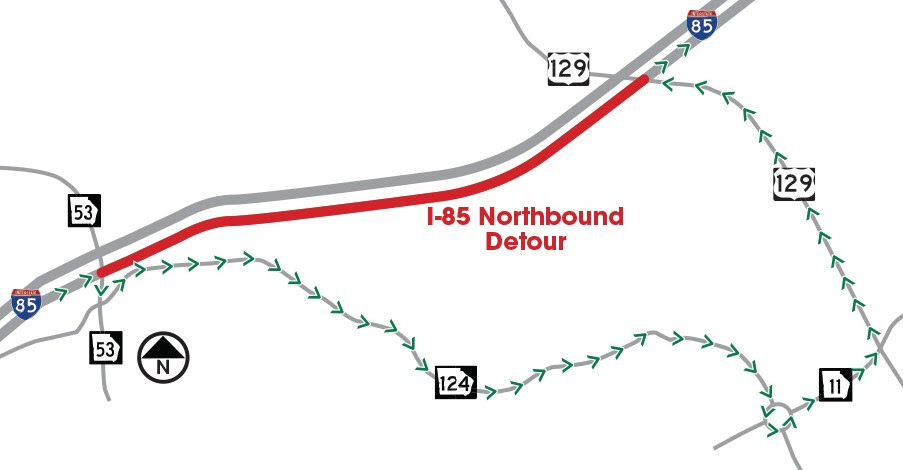
Detour route near Braselton in Jackson County (Source: Georgia DOT)

“Although this temporary detour will be a short-term inconvenience, Georgia DOT is working to protect motorists traveling this vital corridor,” said Georgia DOT Project Manager Butch Welch. “We’re grateful to the contractor for their quick, proactive actions to inform the Department and get to work repairing the bridge. We look forward to reopening the roadway as soon as possible.”

During the closure, motorists will use the following detour:

Motorists should exit I-85 northbound at Exit 129, turning right onto State Route (SR) 53. Motorists should travel approximately 0.3 miles and turn left onto SR 124/Lewis Braselton Boulevard. Motorists will continue along SR 124 for approximately 9.9 miles. At the roundabout, take the third exit onto SR 11/Winder Hwy.

Motorists will then travel approximately 1.5 miles to US 129/Jefferson Bypass. Motorists should then turn left onto US 129/Jefferson Bypass and continue for approximately five miles. Motorists will then turn right to merge onto I-85 northbound.

Motorists are advised to exercise caution and travel safely through the detour, following posted speed limits on local roads.

Reed reacts to Cornelia commission win, shares hopes for leadership

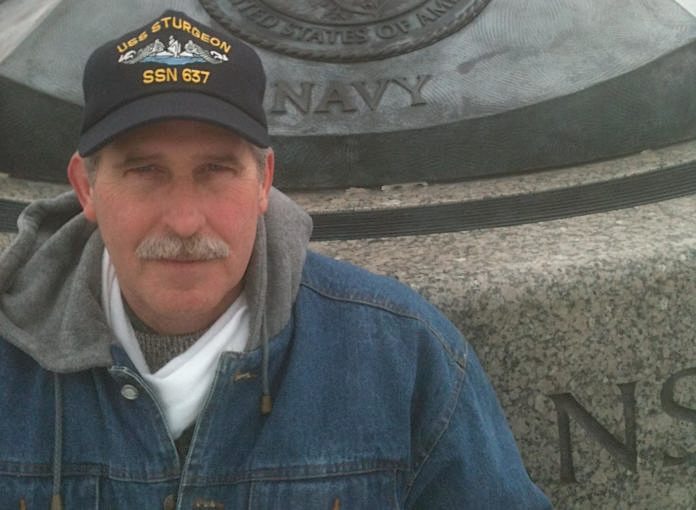
Cornelia’s Ward 1 Commissioner has been chosen by the voters, and Navy Veteran and Cornelia Native Mark Reed will take up the position for Ward 1 on the City of Cornelia Commission.

Reed came out on top at the polls, defeating Jeff Wilson, who was appointed to the council following the death of Ward 1 Commissioner Wesley Dodd, with 60 percent of the vote.

Wilson says he’s disappointed he lost, but he wishes Reed and the commission the best. He says he enjoyed his time on the commission and getting to see how government operated, and that he enjoyed seeing how committed he felt the commission was to the citizens.

“I really had a great experience, it was just 6 months, but I don’t have any negative experiences from those 6 months,” Wilson said. “It was a positive experience for me, and hopefully, I was able to do my part to serve the community while I was there.”

RELATED: Reed beats out Wilson in Cornelia Ward 1 election

Reed, who has served on the City of Baldwin’s planning commission, as Baldwin’s Mayor, with the Georgia Municipal Association and the Habersham Relay for Life, among others, says he’s happy to be back in his role as a public servant.

“We all search for balance in our lives,” Reed said. “I feel like for the last few years what’s been missing [in mine] is my … desire for public service.”

He says that being from Cornelia and living in the city today, as well as his friendships in the area, has impacted his calling to serve the city.

“Being from here and … having so many friends in Cornelia, I just felt like [I wanted] to offer myself for service to the city,” Reed said.

Representing Ward 1

This was the second time Reed ran for the Ward 1 council seat, the first time against the late commissioner Wesley Dodd. This election filled the seat on the commission left empty after Dodd lost his battle to cancer in September. Reed says he and Dodd were friends, and that when he ran against him in 2019, it wasn’t because he opposed him. He just wanted to offer himself as a candidate to the city.

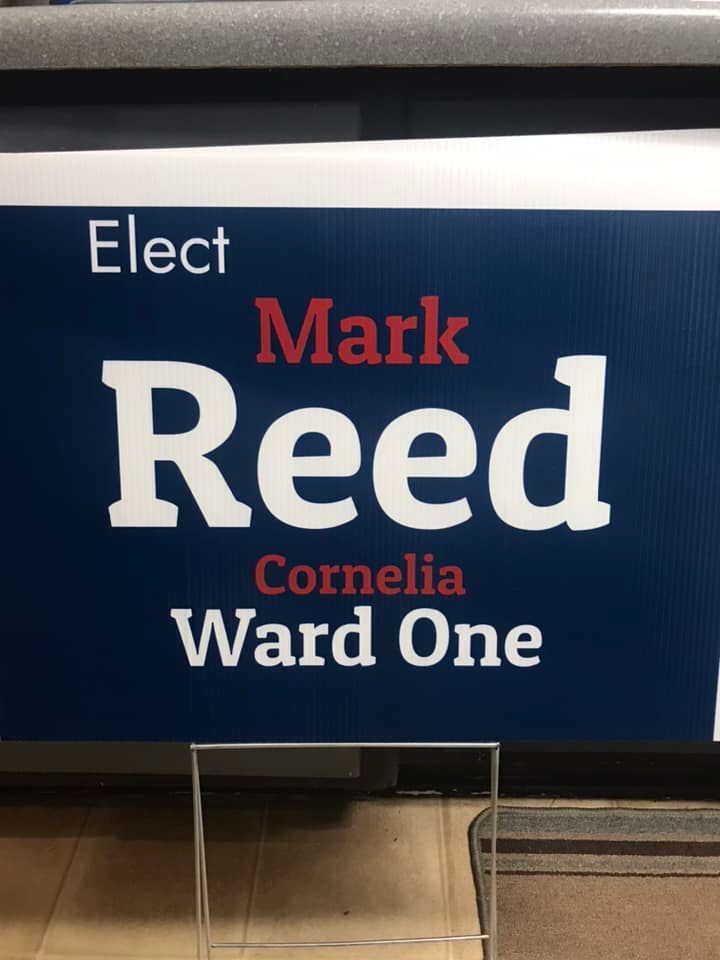
Reed printed campaign signs in both red and blue, saying in a Facebook post that “city elections are non-partisan,” and “City government is where the rubber meets the road.” (Mark Reed/Facebook)

“It wasn’t about running against Wes, he was a friend of mine. He was my deacon at church, and he was just an overall great guy,” Reed said. “I was just running to try to do my best for the city and to offer my service.”

Now that he’s moving forward to achieving his goal of finding balance in his life with public service, he says he’s humbled that voters elected him Tuesday.

“It was very rewarding, very humbling to see that I was selected this time,” Reed said. “I’m dedicated to doing the best I can for the city as a whole and for my citizens in Ward 1 in particular.”

Reed says even though he’s grateful for his supporters, he still wants to represent everyone in Ward 1 equally.

“We’re all in this together,” he said. “I’ll represent them just as well, and to the best of my abilities as if they had supported me.”

Much to learn

Reed says even though the campaign trail is over, there’s plenty of work for him to do. While he might not be knocking on doors, he says his next step is to learn everything he can, from getting to know the people who didn’t support him and their needs to learning about city operations.

“I have to reach out to those who didn’t support me,” Reed said. “And to my fellow commissioners to get to know them and find out what’s important to them in their wards so that we can build bridges and work together with a greater understanding of where we stand as commissioners, individually and as a team, collectively for the city.”

He says he doesn’t have an agenda in his new position, and that his goal for the foreseeable future is to learn how to best serve his community.

“I don’t have an agenda, I have a lot to learn about the city and the city’s operations, which I’m very excited to do,” Reed said. “I plan to do more listening than talking, and spend a period of time, like I said, getting to know my fellow commissioners and the mayor, and learning about what our priorities are now and our vision for the future.”

U.S. Senate backs shift to permanent daylight saving time

WASHINGTON (GA Recorder) — The U.S. Senate with little debate on Tuesday unanimously supported a permanent change to daylight saving time, several days after Americans once again went through the hated “spring forward” ritual of changing their clocks.

If the bill, the Sunshine Protection Act, clears the House, it would mean most states would stay on daylight saving time throughout the year — giving them an extra hour of sunlight in the evening.

“Just this past weekend, we all went through that biannual ritual of changing the clock back and forth and the disruption that comes with it,” Florida Sen. Marco Rubio, the Republican who sponsored the bill, said on the Senate floor. “One has to ask themselves, why do we keep doing this?”

Rubio said that he believed a majority of Americans want to do away with the time switch and would prefer an extra hour of daylight, especially during the winter months. The Senate agreed under a process known as unanimous consent.

The bill, if signed into law, would not go into effect until 2023, to give airlines and other companies time to adjust. A White House spokesperson did not respond to a question about President Joe Biden’s position on daylight saving time.

The House held a hearing last week at which a panel of experts debated the health, energy and economic impacts of changing clocks twice a year. While lawmakers on the panel couldn’t decide which time to switch to permanently, they all agreed that the United States should stick to one or the other.

It turns out daylight saving time is a shared mission among Florida lawmakers. U.S. Rep. Vern Buchanan, a Florida Republican, introduced the House version of the bill, H.R. 69. He wrote on Twitter that he is drafting a letter to House Speaker Nancy Pelosi, asking to bring his bill to the floor for an immediate vote.

States have moved to pass or enact measures in favor of year-round daylight saving time, but without congressional approval, they can’t adopt those changes. Georgia lawmakers have pushed for an end to seasonal clock changes for years, although some worry about getting out of time sync with other parts of the country.

Iowa’s state House recently passed a bill that would put the state on daylight saving time, pending federal action.

Two states have passed measures to stay on standard time — Arizona and Hawaii. Both congressional bills would allow states to stay on standard time if they adopted the time change before the Sunshine Protection Act went into effect.

Daylight saving time was used as an energy-saving measure during various points in U.S. history, such as World War I and World War II, and has become a permanent fixture since the energy crisis of the 1970s.

This is not the first time the U.S. has moved to make daylight saving time permanent. On Dec. 14, 1973, Congress voted to put the U.S. on daylight saving time for two years. While 79% of Americans approved of the change in December of that year, within three months, approval fell to 42%, according to the New York Times.

The biggest concern stemmed from children going to school in the dark, which soon proved to be dangerous as more children were reported to be hit by early-morning drivers.

Shortly after President Richard Nixon resigned, Congress passed a bill that would restore standard time, which was then signed by President Gerald Ford.

Daylight saving time this year ends on Nov. 6.

Habersham elementary students win awards for school bus safety art

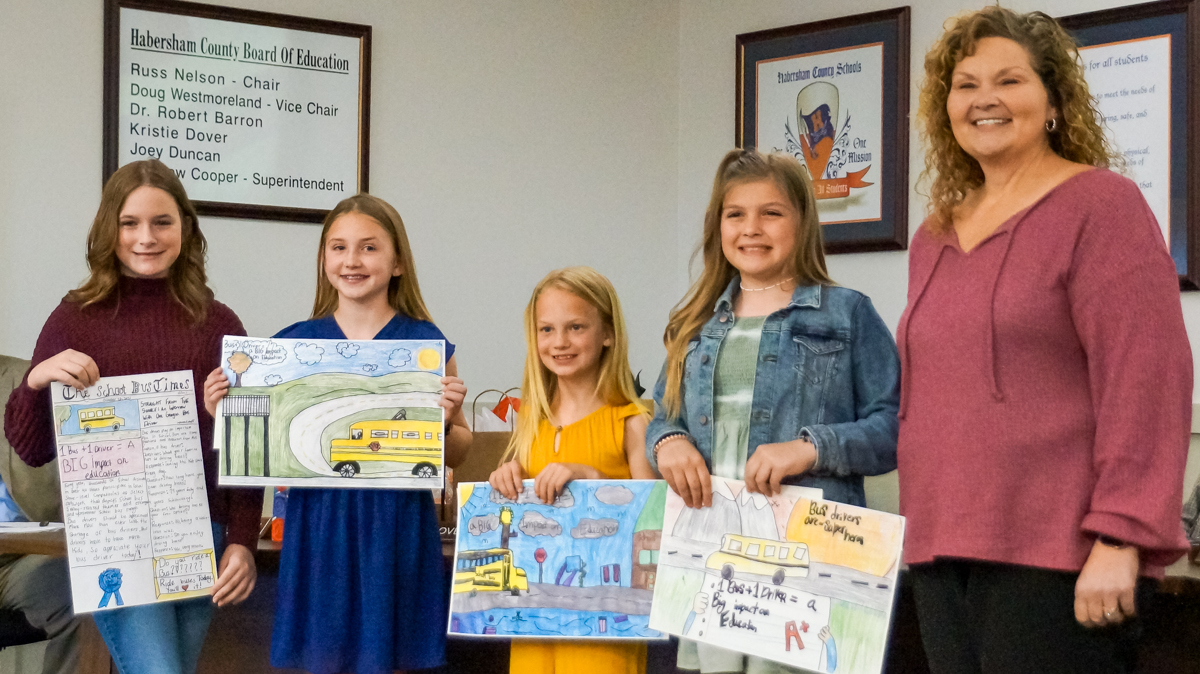
Students (from left to right) Sabrina Blackburn, Caroline Sutton, Britton Franklin, Glori Tyler and Transportation Director Stephanie Walker share this year's school bus safety poster winners with the community. (Hadley Cottingham/Now Habersham)

Four Habersham elementary schoolers presented their award-winning school bus safety art to the school board and their community on Monday.

The pieces were entries into the National Association of Pupil Transportation’s annual school bus safety poster contest. Students compete at the school, state and national level for the grand prize: the best poster in each division becomes the promotional poster for the NAPT.

The competition is divided into three divisions: First Division, which covers grades K-2, Second Division, which covers grades 3-5 and Third Division, grades 6-8.

This year’s school-level winners include Clarkesville Elementary second grader Britton Franklin, who won first place in the first division of the competition. In the second division, Sabrina Blackburn, a Clarkesville Elementary fifth grader, won first place, Glori Tyler, a fourth grader from Clarkesville Elementary, took second and Caroline Sutton, a Level Grove Elementary fifth grader, took home third place.

Caroline Sutton’s sunshiney school bus poster won third place in her division. (Hadley Cottingham/Now Habersham)

Walker was impressed with the creativity and talent with the student submissions this year, and says she loves seeing the student’s ideas and artwork each year.

“My favorite part is just sitting down on the floor going through the different posters we get, and trying to determine— ‘oh my gosh, we’ve got to come up with which ones are going to the finalists,'” says Habersham County Schools Transportation Director Stephanie Walker. “Sometimes that’s hard, we get some really, really cute ones. They do a great job every year.”