
Home Blog Page 15

Thousands sign petition opposing data center in Columbus

Thousands oppose data center in Columbus (NowGeorgia.com)

Thousands of people have signed a petition at Change.org opposing a $5 billion dollar data center in Columbus. Project Ruby is the name of the proposed data center, and it would be located on Layfield Road in the Upatoi area of Muscogee County. Neighbors and local citizens are voicing their concerns to “the appropriate local governing authority and planning/zoning decision-makers with jurisdiction over Muscogee County, Georgia (including any Board of Commissioners/City Council, Planning Commission, and Zoning Board, as applicable).”

The petition reads as follows:

I. Request for Action

Petitioners respectfully oppose the Proposed Development and request that the governing authority:

FIRST.- Deny, table, or condition any application(s) required for the Proposed Development, including but not limited to rezoning, special use permit, conditional use permit, variance, development permit, and/or site plan approval, unless and until the applicant demonstrates—through competent, publicly disclosed evidence—full compliance with applicable zoning procedures and that the proposal is consistent with the public health, safety, welfare, and morals of the community.

SECOND.- Require the applicant to provide complete and accurate information about anticipated environmental impacts, noise, traffic, infrastructure demands (electricity, water, sewer), public safety impacts, and property value impacts, and to fund any independent studies needed for informed decision-making.

THIRD.- Ensure that all required public notice and hearing procedures are strictly followed pursuant to Georgia law, including the Georgia Zoning Procedures Law. See, e.g., OCGA § 36-66-1 (Short Title; “Zoning Procedures Law”).

II. Parties and Standing

Petitioners include homeowners, renters, and other community members who live, work, attend school, worship, and/or own property in and around Muscogee County, Georgia. Petitioners will be directly affected by the Proposed Development’s potential impacts on neighborhood character, environmental conditions, traffic and road safety, infrastructure capacity, and property values.

III. Background (General)

Upon information and belief, a developer has proposed construction and operation of a large-scale data center in and/or near Muscogee County, Georgia. Such facilities are typically associated with:

• substantial and continuous electricity demand and associated transmission/substation infrastructure;
• increased demand on water resources (including potential cooling-related consumption) and potential impacts to wastewater/sewer systems;
• significant construction traffic and ongoing service traffic;
• continuous or intermittent mechanical and HVAC noise, including backup generator testing and operation;
• site grading, stormwater runoff, and other environmental impacts.
Petitioners submit this petition to ensure that the governing authority evaluates the Proposed Development in a transparent manner and in accordance with law, and to urge denial (or, at minimum, strict conditions) where the proposal threatens community well-being.

IV. Grounds for Opposition

A. Environmental Concerns

Petitioners are concerned that the Proposed Development will adversely affect local environmental resources, including but not limited to air quality, stormwater runoff, habitat, and overall environmental quality. Petitioners request that the governing authority require comprehensive evaluation of site disturbance, impervious surface impacts, erosion and sediment controls, and any necessary state or federal environmental permitting.

B. Noise Pollution

Petitioners are concerned that operational noise from HVAC systems, mechanical equipment, loading/service activity, and backup generators may create persistent nuisance conditions, disturb sleep, and negatively affect quality of life. Petitioners request enforceable noise limits, continuous monitoring where appropriate, and meaningful setback/buffering requirements.

C. Increased Traffic and Road Safety

Petitioners are concerned about increased construction and operational traffic, including heavy trucks, on local roads that may already be constrained. Petitioners request an independent traffic impact study addressing intersections, school bus routes, emergency response access, and required road improvements—with all costs borne by the applicant.

D. Infrastructure Impacts (Electricity, Water, and Sewer)

Petitioners are concerned that the Proposed Development’s utility demands may require new or expanded infrastructure, including transmission lines, substations, water lines, wastewater capacity, and related facilities, potentially imposing cost burdens on residents or increasing service risks. Petitioners request:

• full disclosure of projected peak and average electricity usage;
• identification of required grid upgrades/substations/transmission work;
• full accounting of water usage (including cooling method) and wastewater generation;
• confirmation of available capacity and a binding commitment that the applicant will fund necessary upgrades.
E. Impact on Property Values and Community Character

Petitioners are concerned that industrial-scale facilities, associated security features (fences, lighting), and utility infrastructure may negatively affect nearby property values and alter the community’s rural/suburban character.

F. Consistency with Long-Term Planning and the Comprehensive Plan

Petitioners contend that approval of the Proposed Development may be inconsistent with applicable long-term planning goals, land use maps, and/or the jurisdiction’s comprehensive plan. Petitioners request findings that any approval is consistent with adopted planning policies and that any departure is justified by the record.

i. Kendall Creek Character Area(12) Conservancy included in the comprehensive plan will be negatively impacted by the data center.

G. Public Health, Safety, Welfare, and Morality

Petitioners object to the Proposed Development to the extent it undermines public health, safety, welfare, and morals, including through noise, traffic hazards, environmental degradation, infrastructure strain, and reduced livability.

V. Legal and Procedural Considerations (Georgia)

Petitioners request strict adherence to all applicable procedural requirements governing zoning and land use decisions, including public notice and hearings.

Georgia courts have recognized that zoning actions must comply with due process requirements under the Georgia Constitution, including adequate notice and opportunity to be heard where required. See, e.g., Bell v. Studdard, 220 Ga. 756, 141 S.E.2d 536 (1965) (addressing constitutional infirmity where an ordinance failed to provide for notice and hearing to affected owners).

Petitioners further request that the governing authority ensure compliance with the Georgia Zoning Procedures Law and any applicable local ordinances implementing those requirements. See OCGA § 36-66-1 (“Zoning Procedures Law”).+

VI. Requested Conditions (If the Proposal Is Not Denied)

If the governing authority does not deny the Proposed Development, Petitioners request that approval be conditioned, at minimum, on enforceable requirements that protect neighboring residents and public resources, including:

FIRST.- Noise protections, including measurable decibel limits at property lines, restrictions on generator testing hours, and ongoing compliance monitoring with clear enforcement mechanisms.

SECOND.- Traffic and road improvements, including any turn lanes, signalization, road widening, trucking route restrictions, and construction scheduling limitations recommended by an independent traffic study.

THIRD.- Environmental and stormwater protections, including enhanced buffers, tree preservation where feasible, and stormwater controls designed for extreme events with third-party review.

FOURTH.- Utility/infrastructure funding commitments, requiring the applicant to pay for all needed electricity, water, sewer, and related public safety improvements without shifting costs to taxpayers.

FIFTH.- Lighting and visual buffering, including dark-sky compliant lighting, vegetative screening, and setbacks sufficient to protect residential areas.

SIXTH.- Emergency management and public safety planning, including fire protection planning appropriate for electrical infrastructure and battery systems (if any), coordination with local fire/EMS, and funding for any necessary equipment/training.

VII. Reservation of Rights

Petitioners reserve the right to submit additional comments, evidence, and legal objections; to participate in all public hearings; and to pursue any remedies available under Georgia law if required procedures are not followed.

You can sign the petition here: Change.org – Results page
Bill allowing Georgia property owners to sue over homelessness, immigration clears House

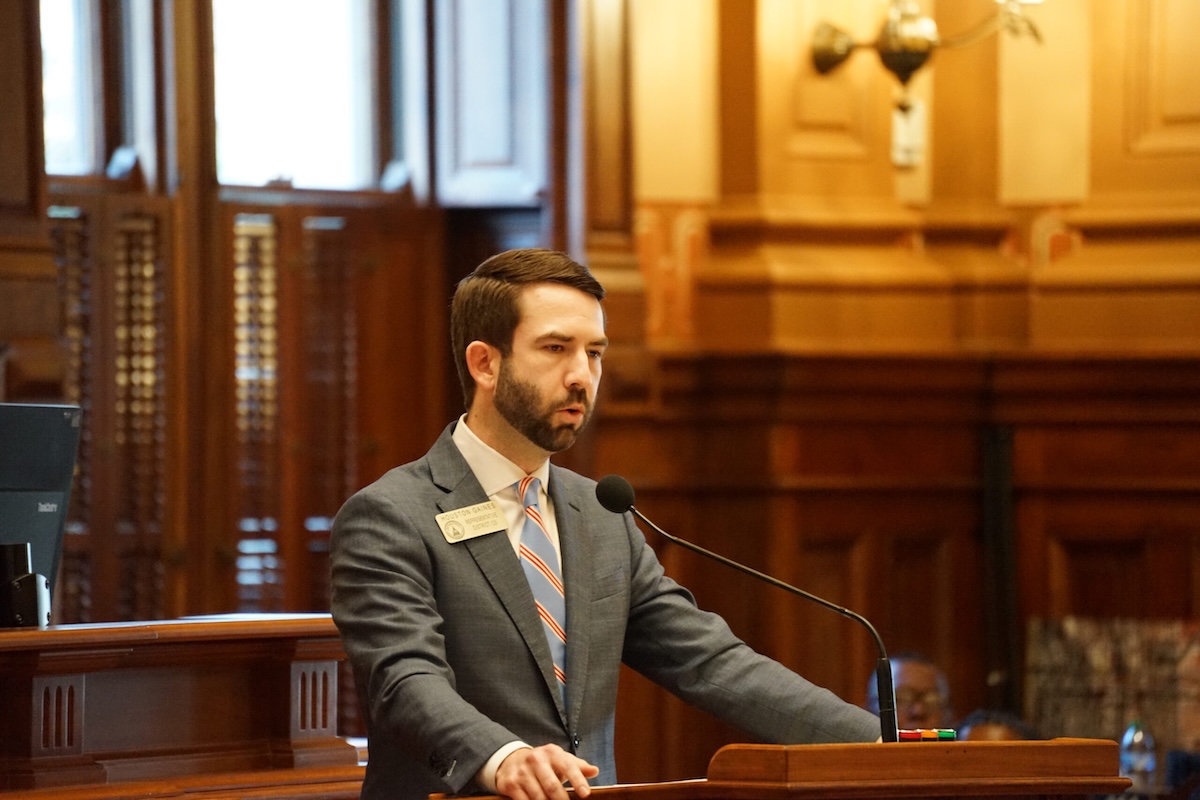
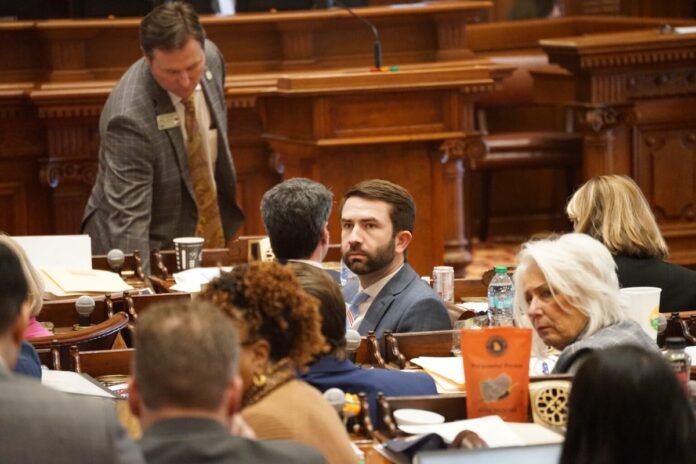
Rep. Houston Gaines, a Republican from Athens, listens to comments from fellow lawmakers as they cast their votes on House Bill 295, which would allow property owners to sue local governments if they fail to enforce laws related to homelessness, public safety and immigration, during a session of the Georgia House of Representatives on March 4, 2026, in Atlanta. (Alander Rocha/Georgia Recorder)

(Georgia Recorder) – The Georgia House of Representatives passed a measure Wednesday that could allow property owners to sue city and county governments if they fail to enforce state laws related to homelessness, public safety and immigration.

House Bill 295, sponsored by Athens Republican Rep. Houston Gaines, passed with a 98-75 vote, clearing the lower chamber just ahead of a key legislative deadline. It now moves to the Senate for consideration.

The bill targets local governments that may have “pervasive, systemic, or organized” practices that decline to enforce laws against illegal public camping, loitering, drug possession, shoplifting or the state’s ban on “sanctuary policies” that limit cities from working with federal immigration authorities. If cities or counties are found liable, property owners can sue for financial harm from lost property value.

Rep. Houston Gaines, a Republican from Athens, presents House Bill 295, which would that would allow property owners to sue local governments if they fail to enforce laws related to homelessness, public safety and immigration, during a session of the Georgia House of Representatives on March 4, 2026, in Atlanta. (Alander Rocha/Georgia Recorder)

“If a local government refuses to do its job, we’re going to hit that local government in the pocketbook and put the money back in the hands of the property owners who have been harmed,” Gaines, who is also a candidate for the 10th Congressional District, said during floor debate.

Todd Edwards, director of governmental affairs for the Association of County Commissioners of Georgia, said the organization has noticed a “disturbing trend.” There has been a wave of bills in recent years that waive local governments’ sovereign immunity, which is a standard that generally protects government entities from being sued. Edwards said he sees Gaines’ bill as part of that trend.

Edwards said the association, which represents counties at the state Capitol, does not support the bill but was able to negotiate with Gaines to “incorporate many safeguards,” ensuring it’s not a “blanket” waiver of local government’s sovereign immunity.

“If it’s just an open, all-out waiver of immunity, that means local governments — thus taxpayers — can be sued,” Edwards said. “And this would be a trial attorney’s dream to be able to go after the public purse.”

Rep. Clint Crowe, a Jackson Republican and chair of the House Public Safety and Homeland Security Committee, argued the bill is not a “blank check” for litigation but needed accountability on the local level. He noted that damages are capped at the amount of property taxes the owner paid in the previous year.

“What it does is it creates a civil remedy for property owners when (a) local government formally adopts a policy of non-enforcement, when that policy causes documented financial harm … The local government has 30 days to act. If it refuses, the owner may seek relief in the courts. That is the process. It is measured. It is documented. It is not a blank check. It is a backstop,” Crowe said.

Debate on the House floor was divided along party lines, with Democrats arguing that the

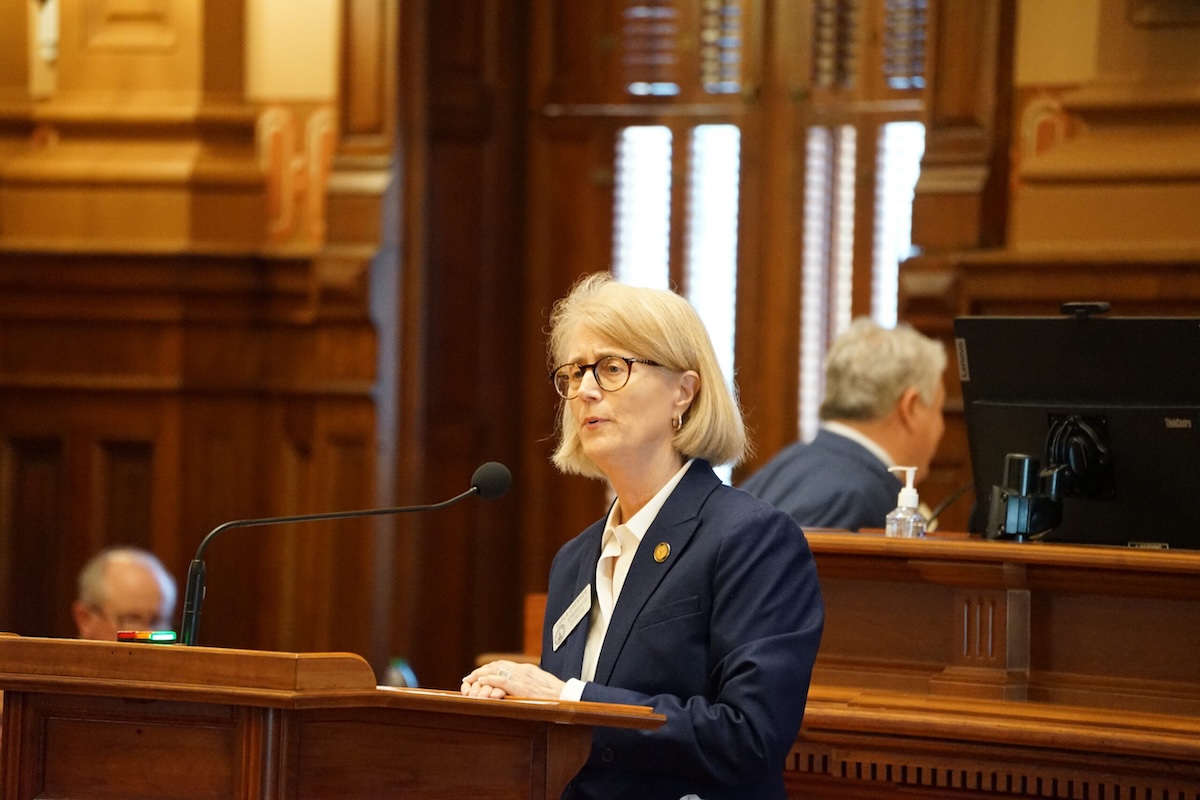
State Rep. Karla Drenner, an Avondale Estates Democrat, speaks against House Bill 295, which would that would allow property owners to sue local governments if they fail to enforce laws related to homelessness, public safety and immigration, during a session of the Georgia House of Representatives on March 4, 2026, in Atlanta. (Alander Rocha/Georgia Recorder)

bill criminalizes poverty while failing to provide the resources needed to solve the underlying issues.

“What it does instead is expose cities and counties to financial liability if they do not enforce certain laws aggressively enough, even when enforcement is not the right or effective response,” said Avondale Estates Democrat Rep. Karla Drenner.

But Rep. Jesse Petrea, a Republican from Savannah, said he hears from business owners about homeless people “defecating on the front stoop, the back stoop, public camping on private property,” saying it is a “cruel” act to allow someone “to live in squalor and filth and not ensure and encourage local governments to move them to a place where they at least have the fundamentals that every human being should have.”

“There’s a better way to serve people than to just ignore the laws that we have on the books,” Petrea said.

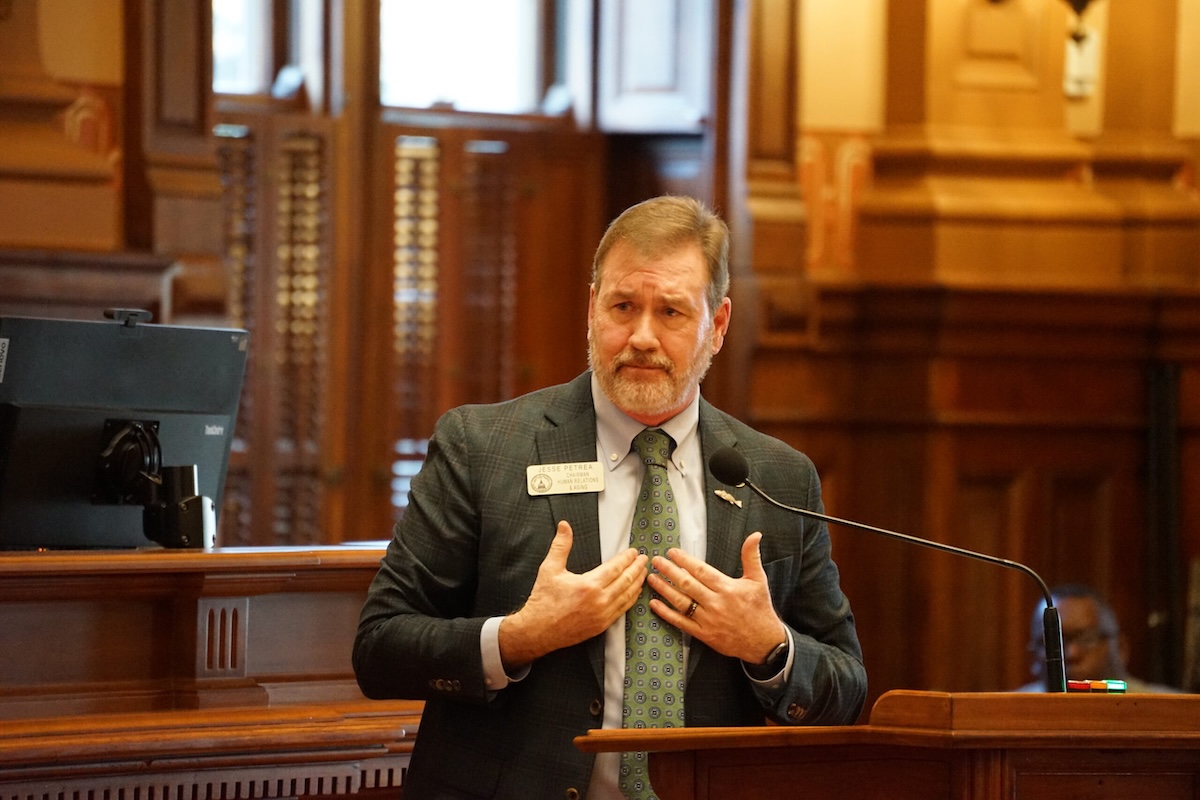
Savannah Republican Rep. Jesse Petrea speaks in favor of House Bill 295, which would that would allow property owners to sue local governments if they fail to enforce laws related to homelessness, public safety and immigration, during a session of the Georgia House of Representatives on March 4, 2026, in Atlanta. (Alander Rocha/Georgia Recorder)

The bill also specifically targets so-called “sanctuary” policies. If passed, it would require local governments to cooperate with federal immigration authorities as mandated by state law.

Gaines cited cases where local governments allegedly refused to transfer detainees to U.S. Immigration and Customs Enforcement’s custody, arguing that “public safety depends on coordination between local, state and federal authorities.”

“When a local government chooses ideology over enforcement, it sends the message that our laws are optional,” Gaines said.

Rep. Gabriel Sanchez, a Smyrna Democrat, called the measure “a direct attack on the most disadvantaged communities.”

“This bill hates immigrants and the unhoused so deeply and uncompromisingly that it leverages against them the wealth and privilege that they are already denied,” Sanchez said. “This bill is yet another example of prioritizing the needs of the wealthy over the needs of everyone else.”

The bill now goes to the Senate, where Edwards with the association that represents counties says they will continue to advocate for “safeguards” to protect local governments’ sovereignty.

Friday is Crossover Day, which is a deadline for a bill to pass its chamber of origin in order to have a smooth path to becoming law before the end of the legislative session. The session is set to end April 2.

Georgia Senate passes bill to fund peace officer benefits

The Georgia State Capitol's gold dome. (Ross Williams/Georgia Recorder)

ATLANTA – The Georgia Senate approved a bill in a 49-4 vote that would create a new funding source for retired law enforcement officers. Senate Bill 285 now moves to the Georgia House for consideration before it can reach the governor’s desk.

The Peace Officers’ Annuity and Benefit Fund, known as POAB, said the bill had to pass the Senate by March 6 to remain active during this legislative session. According to a POAB Georgia update from Feb. 27, 2026, the current version of the bill creates a “public safety support surcharge” on telephone services.

The surcharge would be $1 per month for monthly telephone subscribers and $1 for each retail transaction of prepaid wireless services. While earlier versions of the bill were linked to 911 fees, POAB officials noted the substitute is “unlike the previous proposal” and has no relationship to those charges.

The money is intended to support the POAB fund, which provides benefits to eligible peace officers. POAB described the potential change as “one of the biggest financial enhancements to the fund in decades.”

When asked about the bill making its way through the Georgia Senate, Habersham County Sheriff Robin Krockum said, “The Peace Officers’ Annuity and Benefit Fund is a great supplemental retirement option for law enforcement officers in this state. Benefits after participation in the fund for 30 years will increase from $900 to $1,200 per month if passed into law. Many of these officers will rely solely on this fund and Social Security when they retire. Like many agencies across the state, we pay into this fund for our law enforcement personnel in addition to their current retirement.”

Supporters of the measure say it is a way to maintain and strengthen benefits for those who serve in public safety. Some confusion remains because older tracking documents still describe the bill as a change to 911 charges, but the 2026 committee substitute is materially different.

U.S. 441 bypass in Baldwin reopens after gas main break

(Daniel Purcell/NowGeorgia.com)

BALDWIN, Ga. — A gas main break forced the temporary closure of a section of the U.S. 441 bypass in Baldwin Thursday morning, authorities said.

The roadway was shut down between Willingham Avenue and Industrial Boulevard while crews worked to repair the damaged gas line.

Emergency personnel were on scene, and law enforcement officers detoured traffic around the closure.

The incident happened around Thursday around 10:00 a.m., and drivers were asked to avoid the area while repairs were underway.

No injuries were reported. The roadway reopened shortly after 1:00 p.m.

Columbus police sergeant named 2026 Remarkable Woman

SGT Katina Williams named Remarkable Woman (Columbus Police Department)

The Columbus Police Department congratulates Sgt. Katina Williams on being named WRBL News 3’s 2026 Remarkable Woman, an honor recognizing women who make a lasting difference in their communities through service and leadership.

Sgt. Williams leads CPD’s Community Policing Unit and is known for her work supporting some of Columbus’ most vulnerable residents, particularly those experiencing homelessness. Her work focuses on building relationships, connecting people with resources, and finding practical solutions that improve lives while strengthening trust between officers and the community.

As part of the recognition, a $1,000 donation was made in Sgt. Williams’ honor to Girls Inc., supporting programs that empower young girls to succeed. She will also travel to Nashville, TN to join other honorees from across the country for the national Remarkable Women celebration hosted by Nexstar Media Group.

“Sgt. Williams shows every day what it means to truly serve others,” said Chief Stoney Mathis. “She builds trust, treats people with dignity, and works tirelessly to help those who need it most. We’re proud to see her receive this recognition.”

Sgt. Williams’ selection comes as communities nationwide observe Women’s History Month, making the honor especially meaningful for both the department and the Columbus.

Last 2 names of 6 US soldiers who died in Kuwait attack identified by the Pentagon

Capt. Cody Khork, 35, of Winter Haven, Florida; Sgt. 1st Class Nicole Amor, 39, of White Bear Lake, Minnesota; Sgt. 1st Class Noah Tietjens, 42, of Bellevue, Nebraska; and Sgt. Declan Coady, 20, of West Des Moines, Iowa; Chief Warrant Officer 3 Robert Marzan, 54, of Sacramento; and Maj. Jeffrey O’Brien, 45, of Indianola, Iowa. (U.S. Army)

WEST DES MOINES, Iowa (AP) — The last two names of the six U.S. soldiers killed in a drone strike at a command center in Kuwait were released Wednesday by the Pentagon, and they are from California and Iowa.

The soldiers identified Wednesday were Chief Warrant Officer 3 Robert Marzan, 54, of Sacramento, and Maj. Jeffrey O’Brien, 45, of Indianola, Iowa.

The six members of the Army Reserve, who worked in logistics and kept troops supplied with food and equipment, died Sunday when a drone hit a command center in Port Shuaiba, Kuwait, one day after the U.S. and Israel launched its military campaign against Iran. Iran responded by launching missiles and drones against Israel and several Gulf Arab states that host U.S. armed forces.

The Pentagon said Marzan was at the scene when a drone strike hit the command center and is “believed to be the individual who perished at the scene,” according to the statement. A medical examiner will confirm identification, the Pentagon said.

Public records appeared to show Marzan living in Virginia but with family in the Sacramento area. Family members couldn’t immediately be reached or declined to comment.

The Pentagon listed O’Brien’s hometown as Indianola, a suburb of Des Moines. A person answering the door at a home address in Waukee, another suburb of Des Moines, did not comment, saying the family would release a statement.

The four soldiers previously identified by the Pentagon were: Sgt. Declan Coady, 20, of West Des Moines, Iowa,; Sgt. 1st Class Nicole Amor, 39, of White Bear Lake, Minnesota; Capt. Cody Khork, 35, of Winter Haven, Florida; and Sgt. 1st Class Noah Tietjens, 42, of Bellevue, Nebraska.

All were assigned to the 103rd Sustainment Command, which provides food, fuel, water and ammunition, transport equipment and supplies.

“Sadly, there will likely be more, before it ends. That’s the way it is,” President Donald Trump said of the deaths. Trump will attend the dignified transfers of the soldiers when they arrive in the U.S., the White House said Wednesday. The ritual honors service members killed in action.

Iowa Gov. Kim Reynolds released a statement Wednesday offering prayers and condolences for the families of the Iowa residents killed.

“Our hearts are broken by the deaths of Major Jeffrey O’Brien and Sergeant Declan Coady, two brave Iowa soldiers who gave the ultimate sacrifice to secure freedom and peace,” Reynolds said.

Nearly 15 years of service

O’Brien was promoted to major in August 2024, according to a Facebook post, which shows him alongside two young children. He served in the Army Reserve for nearly 15 years, according to his LinkedIn.

The signal officer and information systems engineer in the Army Reserve was a manager of defensive cyber operations at an Iowa-based cybersecurity company, according to his LinkedIn. He had a career spanning two decades in information and cybersecurity.

O’Brien is survived by a wife and children, according to his aunt, Mary Melchert, who posted on Facebook. Melchert said O’Brien “was the sweetest blue-eyed, blonde farm kid you’d ever know. He is so missed already.”

Loving husband and father

Marzan’s sister described him on Facebook as a “strong leader” and loving husband, father and brother.

“My baby brother, you are loved and I will hold onto all our memories and cherish them always in my heart,” Elizabeth Marzan wrote.

California Gov. Gavin Newsom and acting Gov. Eleni Kounalakis offered condolences to Robert Marzan’s wife and family in a statement Wednesday, saying flags at the state Capitol will remain at half-staff in his honor.

They described him as “a courageous Californian whose service to our nation was marked by honor and distinction.”

A mother of 2 who loved gardening

Amor was just days away from returning to her husband and children.

“She was almost home,” her husband, Joey Amor, said Tuesday. “You don’t go to Kuwait thinking something’s going to happen, and for her to be one of the first — it hurts.”

Amor was an avid gardener who enjoyed making salsa from the peppers and tomatoes she grew with her son, a high school senior. She enjoyed rollerblading and bicycling with her fourth-grade daughter.

A week before the drone attack, Amor was moved off-base to a shipping container-style building that had no defenses, her husband said.

“They were in fear that the base they were on was going to get attacked and they felt it was safer in smaller groups in separate places,” he said.

‘He loved being a soldier’

Coady had been checking in with his family from Kuwait every hour or two after the U.S. and Israel launched their military campaign against Iran, even as Iran launched retaliatory strikes.

When he didn’t respond to messages Sunday, “most of us started to wonder,” Coady’s father, Andrew, told The Associated Press. “Your gut starts to get a feeling.”

Coady recently told his father he had been recommended for a promotion from specialist to sergeant, a rank he received posthumously.

He was among the youngest people in his class, trained to troubleshoot military computer systems, but he impressed his instructors, Andrew Coady said Tuesday.

“He trained hard, he worked hard, his physical fitness was important to him. He loved being a soldier,” Coady said. “He was also one of the most kindest people you would ever meet, and he would do anything and everything for anyone.”

Declan Coady, an Eagle Scout, was studying cybersecurity at Drake University in Des Moines, and he wanted to become an officer.

“I still don’t fully think it’s real,” his sister Keira Coady said. “I just remember all of our conversations about what he was going to do when he came back.”

A calling to serve his country

Khork was very patriotic and wanted to serve in the military from childhood, his family said in a statement Tuesday.

He enlisted in the Army Reserve and joined Florida Southern College’s ROTC program.

“That commitment helped shape the course of his life and reflected the deep sense of duty that was always at the core of who he was,” his mother, Donna Burhans; father, James Khork; and stepmother, Stacey Khork; said in a statement.

Khork, who loved history, had a degree in political science.

His family described him as “the life of the party, known for his infectious spirit, generous heart, and deep care for those who served alongside him and for everyone blessed to know him.”

Abbas Jaffer posted Monday on Facebook about his friend of 16 years.

“My best friend, best man, and brother gave his life defending our country overseas,” Jaffer said.

A dedicated instructor and mentor

Tietjens, who came from a military family, previously served alongside his father in Kuwait. When he returned home in February 2010, he reunited with his overjoyed wife in a local church’s gym.

Tietjens’ cousin Kaylyn Golike asked for prayers, especially for Tietjens’ 12-year-old son, wife and parents, as they navigate “unimaginable loss.”

“We lost a brave soldier this weekend and many hearts are broken,” Golike wrote on Facebook Tuesday.

Tietjens earned a black belt in Philippine Combatives and Taekwondo and was “an instructor who gave his time, discipline, and leadership to others,” the Philippine Martial Arts Alliance said on Facebook.

Army Staff Sgt. Jeff Coleman said Tietjens was his mentor.

“You could call him day or night,” Coleman told KETV. “He always took the time, you know, he made you feel important.”

By Hannah Fingerhut, Konstantin Toropin and Rebecca Boone

Hawks beat slumping Bucks 131-113 to win 5th straight and climb above .500

Milwaukee Bucks forward Giannis Antetokounmpo drives agains the Atlanta Hawks during the first half of an NBA basketball game Wednesday, March 4, 2026, in Milwaukee. (AP Photo/Jeffrey Phelps)

MILWAUKEE (AP) — Nickeil Alexander-Walker scored 23 points and the Atlanta Hawks defeated the slumping Milwaukee Bucks 131-113 on Wednesday night to win their fifth straight game and move above .500 for the first time since December.

Atlanta (32-31) was 15-12 after a Dec. 14 victory over Philadelphia, but the Hawks lost their next seven games and hadn’t owned a winning record since.

Onyeka Okongwu had 21 points and Jalen Johnson added 20 points and nine assists as the Hawks erased an early 16-point deficit. CJ McCollum scored 18 points, while Dyson Daniels had 14 points and 10 rebounds.

The Hawks outscored the Bucks 65-42 in the second half.

Atlanta didn’t have Jonathan Kuminga available due to inflammation in his left knee, while Milwaukee was missing Kevin Porter Jr. because of swelling in his right knee.

Milwaukee (26-35) fell five games behind Atlanta and Charlotte, who are tied for ninth in the Eastern Conference standings. The Bucks have lost their last four games by a combined 97 points.

Giannis Antetokounmpo scored 24 points for the Bucks in his second game since returning from a right calf strain that caused him to miss five weeks. He received a technical foul for throwing the ball against the stanchion in frustration after a basket by Daniels extended Atlanta’s lead to 121-103 with 4:20 left.

Ryan Rollins had 13 points and 12 assists for the Bucks. Kyle Kuzma scored 16 two nights after spending an entire 108-81 loss to the Boston Celtics on the bench.

Milwaukee led 71-66 after a first half in which each team shot at least 60% from the floor. But the Bucks then went ice cold, scoring just two points in the first 5:56 of the third quarter.

Atlanta pulled ahead for good by scoring the first 10 points of the third.

Senate Republicans vote down legislation to halt Iran war

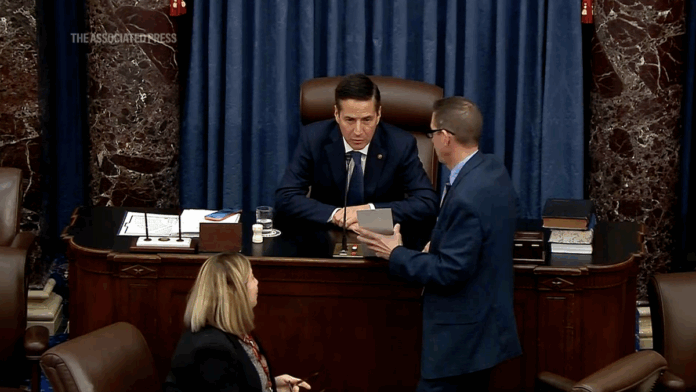
A vote aimed at reining in President Trump's power to expand the war in Iran failed in the U.S. Senate on Wednesday, March 4, 2026, by a vote of 47 to 53. (US Senate livestream image via AP)

WASHINGTON (AP) — Senate Republicans voted down an effort Wednesday to halt President Donald Trump’s war against Iran, demonstrating early support for a conflict that has rapidly spread across the Middle East with no clear U.S. exit strategy.

The legislation, known as a war powers resolution, failed on a 47-53 vote tally. The vote fell mostly along party lines, though Republican Sen. Rand Paul of Kentucky voted in favor and Democratic Sen. John Fetterman of Pennsylvania voted against.

The war powers resolution gave lawmakers an opportunity to demand congressional approval before any further attacks are carried out. The vote forced them to take a stand on a war shaping the fate of U.S. military members, countless other lives and the future of the region.

Underscoring the gravity of the moment, Democratic senators filled the Senate chamber and sat at their desks as the voting got underway. Typically, senators step into the chamber to cast their vote, then leave.

“Today every senator — every single one — will pick a side,” Senate Democratic Leader Chuck Schumer said before the vote. “Do you stand with the American people who are exhausted with forever wars in the Middle East or stand with Donald Trump and Pete Hegseth as they bumble us headfirst into another war?”

Sen. John Barrasso, second in Senate Republican leadership, said during the debate that GOP senators were sending a message that Democrats are wrong for forcing a vote on the war powers resolution.

“Democrats would rather obstruct Donald Trump than obliterate Iran’s national nuclear program,” he added.

Trump administration scrambles for congressional support

After launching a surprise attack against Iran on Saturday, Trump has scrambled to win support for a conflict that Americans of all political persuasions were already wary of entering. Trump administration officials have been a frequent presence on Capitol Hill this week as they try to reassure lawmakers that they have the situation under control.

Defense Secretary Pete Hegseth said Wednesday that the war could extend eight weeks, a longer time frame than has previously been floated by the Trump administration. He also acknowledged that Iran is still able to carry out missile attacks even as the U.S. tries to control the country’s airspace.

U.S. service members “remain in harm’s way, and we must be clear-eyed that the risk is still high,” Gen. Dan Caine, chairman of the Joint Chiefs of Staff, said at the same press conference.

Six U.S. military members were killed over the weekend in a drone strike in Kuwait.

Republican Sen. Joni Ernst of Iowa acknowledged the human costs of the war in her floor speech. Two of the soldiers killed Sunday were from Iowa and a National Guard unit from her state was also attacked in Syria in December, resulting in the deaths of two other soldiers.

“But now is our opportunity to bring an end to the decades of chaos,” said Ernst, who herself served as an officer in the Iowa National Guard for two decades.

“The sooner the better,” she added.

Trump has also not ruled out deploying U.S. ground troops. He has said he is hoping to end the bombing campaign within a few weeks, but his goals for the war have shifted from regime change to stopping Iran from developing nuclear capabilities to crippling its navy and missile programs.

“We should be careful about opening a door into chaos in the Middle East when we cannot see the other side of it,” Democratic Sen. Chris Coons of Delaware said in a solemn floor speech after the vote concluded.

He said he was praying for “grace to find a path forward together where more do not needlessly join those who have already fallen in this new war in the Middle East.”

Lawmakers go on record

The votes in Congress this week represented potentially consequential markers of just where lawmakers stand on the war as they look ahead to midterm elections and the consequences of the conflict.

“Nobody gets to hide and give the president an easy pass or an end-run around the Constitution,” said Sen. Tim Kaine, the Virginia Democrat leading the war powers resolution.

Republican leaders have successfully, though narrowly, defeated a series of war powers resolutions pertaining to several other conflicts that Trump has entered or threatened to enter. This one, however, was different.

Unlike Trump’s military campaigns against alleged drug boats or even Venezuelan leader Nicolás Maduro, the attack on Iran represents an open-ended conflict that is already ricocheting across the region. Several senators who have voted for previous war powers resolutions noted that they opposed this one because it applied to a conflict that is already raging.

“Passing this resolution now would send the wrong message to Iran and to our troops,” said GOP Sen. Susan Collins of Maine. “At this juncture, providing unequivocal support to our service members is critically important, as is ongoing consultation by the administration with Congress.”

House vote looms

On the other side of the Capitol, an intense debate over the war unfolded before a vote Thursday. The House first debated a resolution presented by GOP leadership affirming that Iran is the world’s largest state sponsor of terrorism.

Rep. Brian Mast, the GOP chairman of the House Foreign Affairs Committee, publicly thanked Trump for taking action against Iran, saying the president is using his own constitutional authority to defend the U.S. against the “imminent threat” of Iran.

Mast, an Army veteran who worked as a bomb disposal expert in Afghanistan, said the Democratic resolution was effectively asking “that the president do nothing.”

Rep. Gregory Meeks, the top Democrat on the Foreign Affairs panel, said before the debate that the hardest votes he has taken in Congress have been to decide whether to send U.S. troops to war. “Our young men and women’s lives are on the line,” he said, his voice showing emotion as he emerged from a closed-door briefing late Tuesday with Trump officials.

At a news conference Wednesday, several Democratic members who are also veterans of the Iraq and Afghanistan wars spoke about the heavy costs of those conflicts.

One of them was Rep. Jason Crow, D-Colo. “I learned when I was fighting in Iraq and Afghanistan, that when elites in Washington bang the war drums, pound their chest, talk about the costs of war and act tough, they’re not talking about them doing it, they’re not talking about their kids,” Crow said. “They’re talking about working class kids like us.”

By Stephen Groves, Lisa Mascaro and Mary Clare Jalonick

Arkansas man accused of killing his daughter’s alleged abuser wins GOP sheriff’s nomination

Aaron Spencer, a Republican candidate for sheriff in Lonoke County, Arkansas, won a GOP primary on Tuesday, March 3, 2026, defeating the incumbent sheriff to advance to the general election despite awaiting trial for a murder charge. (Facebook)

An Arkansas man accused of killing his teenage daughter’s alleged abuser won the Republican nomination for local sheriff while waiting to stand trial for murder in his rural county, where he ran on a message of seeing the failures of law enforcement.

Aaron Spencer defeated Lonoke County Sheriff John Staley in Tuesday’s primary elections, according to unofficial results posted by the Arkansas secretary of state. He would not be able to serve if he is convicted of killing Michael Fosler, 67, who at the time was out on bond after being charged with numerous sexual offenses against Spencer’s then-13-year-old daughter.

Spencer’s attorneys do not deny that he shot and killed Fosler but maintain he acted within the law to protect his child from a predator.

Spencer won more than 53% of the vote with all precincts reporting, according to unofficial results. Staley, whose department arrested Spencer in 2024, conceded the loss.

“Congratulations to Mr. Spencer. Tonight the voters made their decision in the Republican Primary, and I respect the decision,” Staley said in a statement posted on Facebook.

Spencer said in a statement that his message of accountability resonated with voters.

“Tonight, the people of Lonoke County stood up and chose transparency and accountability,” Spencer said. “This wasn’t a campaign about me. It was about every family who called for help and got nothing. That betrayal ends tonight.”

He is now set to face Democrat Brian Mitchell Sr. in the heavily Republican county in November.

Spencer has pleaded not guilty and is out on bond while awaiting trial, which was originally scheduled to start in January. The trial was delayed after the presiding judge was removed from the case. A new date has not been set.

Court documents show that on the night of the October 2024 shooting, Spencer woke up to find his daughter missing from her bedroom and went searching for her in his truck. He found the girl in the passenger seat of a vehicle Fosler was driving. Spencer eventually forced Fosler’s truck off the highway and, after an altercation, called 911 to report he had shot the man, records show.

Prosecutors argue Spencer had planned to kill Fosler even before that night and that he could have called police while pursuing Fosler.

Spencer’s attorney, Erin Cassinelli, wrote in an email to The Associated Press that the election results have no bearing on the facts of the case.

“Aaron Spencer did exactly what the law allows and exactly what any father would do: he protected his daughter and himself from harm,” Cassinelli said. “At some point, those responsible for this prosecution will have to reckon with that.”

Spencer pledged in a Facebook post last month that if elected he would establish a dedicated team to combat sex crimes against children.


Lou Holtz, college football staple who coached Notre Dame to 1988 national title, dies at 89

FILE - Arkansas coach Lou Holtz is carried by his players after defeating Oklahoma in the Orange Bowl NCAA college football game, Jan. 2, 1978, in Miami, Fla. (AP Photo/Phil Sandlin, File)

Lou Holtz never met an opponent that couldn’t beat him. Somehow, he squeaked out nearly 250 wins and a national title while cementing himself both as one of the most lovable and unlikable characters in college football — a one-of-a-kind iconoclast in a profession brimming with originals.

The pint-sized motivator who restored greatness at Notre Dame and demanded it everywhere else he went died in Orlando, Florida, Notre Dame announced Wednesday. He was 89.

Spokeswoman Katy Lonergan said the family did not provide a cause of death.

“Notre Dame mourns the loss of Lou Holtz, a legendary football coach, a beloved member of the Notre Dame family and devoted husband, father and grandfather,” Notre Dame president the Rev. Robert A. Dowd said in a statement.

His son, Skip, who followed Holtz into coaching, said in a post on X that his father had passed away and was “resting peacefully at home.”

“He was successful, but more important he was Significant,” Skip Holtz wrote.

Holtz went 249-132-7 over a career that spanned 33 seasons and included stops at Minnesota, Arkansas, South Carolina and, most notably, Notre Dame.

It was there that he won his lone national championship, in 1988, capped with a win over West Virginia in the Fiesta Bowl but highlighted by a 31-30 victory earlier in the season over Miami — one of the notable meetings in the so-called “Catholics vs. Convicts” rivalry of the ’80s.

For all the big personalities coarsing through college football during the day, none stood bigger than Holtz. He was only 5-foot-10, but commanded the sideline like someone much bigger. The lead-up to the big games were sometimes his best theatre.

Armed with a homespun brand of folksiness that could trickle into corny but always contained a kernel of truth, Holtz lit up bulletin boards and motivational posters with dozens of memorable quotes and pithy observations, virtually all of them constructed to inspire:

—“Life is ten percent what happens to you and ninety percent how you respond to it.”

—”When all is said and done, more is said than done.”

—“You’re never as good as everyone tells you when you win, and you’re never as bad as they say when you lose.”

He could make any team — from Akron to Army to Alabama — sound like a world beater on any given week. More often than not, his Fighting Irish figured out a way to scratch out the wins.

Restoring Notre Dame to greatness

Before Holtz arrived in South Bend, Notre Dame was wallowing in mediocrity — a mere shell of the program built on a foundation of Knute Rockne, Ara Parseghian, the Golden Dome and Touchdown Jesus. Holtz turned things around quickly and had the Irish in the Cotton Bowl in Year 2 and winning the national title the season after that.

His 1988 and 1989 teams won a school-record 23 consecutive games and he beat three teams ranked No. 1 — Miami in 1988, Colorado in 1989 and Florida State in 1993.

The Irish finished No. 2 in the AP poll in 1993. Holtz left South Bend after the 1996 season with a record of 100-30-2.

“Lou and I shared a very special relationship,” said current Notre Dame coach Marcus Freeman, who led the Irish back to the national title game in 2025 — a contest Holtz attended and spiced up with some trolling of the Ohio State program that beat the Irish that day. “Our relationship meant a lot to me as I admired the values he used to build the foundation of his coaching career: love, trust and commitment.”

A fast start, then a detour to the NFL

Notre Dame was the highlight of a head-coaching career that began at William & Mary and North Carolina State and also included a one-year stop in the NFL.

Like so many who mastered the college game in his profession, he failed up there, resigning with one game left in a 3-10 campaign with the New York Jets in 1976 and proclaiming “God did not put Lou Holtz on this earth to coach in the pros.”

That opened the door at Arkansas, which was one of the four schools he led into the AP Top 25. His teams made 18 appearances there; eight of those were in the top 10.

After Notre Dame, Holtz transitioned into the TV booth with CBS, promising he would never coach again.

“I said, ‘You could put it in granite.’ I’ve got the granite stone,” Holtz said. “It wasn’t very good granite.”

He took an open job at South Carolina, where he had once served as an assistant coach. Despite posting a career-worst 0-11 mark in his first season with the Gamecocks, Holtz went 17-7 over the next two seasons, beat then No. 9 Georgia in the second game of 2000 and also beat Ohio State twice in the Outback Bowl.

He left the sideline for good following the 2004 season and returned to the airwaves, working 11 more seasons with ESPN.

Core values of trust and getting the best out of players

On the field, each program he led reached new heights in part because he never wavered from his core values of trust, a commitment to excellence and caring for others.

“I think you have to go in there with a vision of where you want to go and a plan of how you’re going to get there,” Holtz once said. “You have to hold people accountable, and you have to believe it can be done.”

The results were impressive, even if he sometimes used unconventional methods.

He once tackled quarterback Tony Rice following a failed play in practice and was widely critiqued in 1991 when he grabbed a player by the facemask, pulling him to the sideline and yelling at him the entire way after the player committed a personal foul. Holtz later apologized.

Holtz suspended his leading rusher, Tony Brooks, and leading receiver, Ricky Watters, in 1988 because they were 40 minutes late to a team meal the night before Notre Dame faced then No. 2 Southern California. The Irish still won 27-10.

At Arkansas, he once suspended three starting offensive players for disciplinary reasons before facing then No. 2 Oklahoma in the Orange Bowl. Arkansas, an 18-point underdog, still won 31-6.

As demanding as Holtz could be, though, he used his charm and eye for good players to recruit top talent. Notre Dame’s 1990 recruiting class included five future first-round NFL draft picks, and he found unique ways to motivate his team.

“The first thing I said at every practice was, ‘Boy, what a great day to work,’” Holtz recounted. “It could be raining. It could be whatever. I’d be, ‘Boy, am I glad to be here. No place I’d rather be than here.’ I used to say to them, ‘I travel all over the world speaking to every major corporation and they’d pay me money. I speak to you for free and you don’t have to take notes.’”

Born in West Virginia, dreamed of coaching high school

Louis Leo Holtz was born Jan. 6, 1937, in Follansbee, West Virginia, and aspired to be a high school football coach. His future wife broke off their engagement in 1960. That’s when Holtz, once a 150-pound linebacker at Kent State, took a graduate-assistant job at Iowa. A year later, he married Beth Barcus, and they were together more than 50 years.

She inspired him again in 1966 when, eight months pregnant with their third child, Holtz was jobless. Beth bought him a book about setting goals, and Holtz created a wish list of what he wanted to do: attend a White House dinner, appear on “The Tonight Show” and see the Pope.

Holtz said there were 107 entries on the list: “She said, ‘Gee, that’s nice. Why don’t you add ‘get a job.’ So we made it 108,” he said.

In 2008, Holtz was inducted into the College Football Hall of Fame and Notre Dame placed a statue of him outside its home stadium.

He said numerous times that his plan was to be buried on that campus, as well. He figured it was only fitting because, as he said in 2015: “The alumni buried me here every Saturday.”

AP’s Tom Coyne contributed to this report

Michael George Kohr

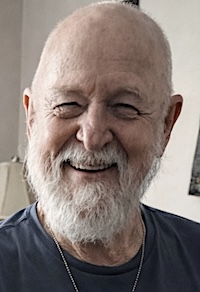
Michael George Kohr, age 75, of Cornelia, Georgia, went to be with the Lord on Friday, February 6, 2026.

Mr. Kohr was born on August 12, 1950, in Inglewood, California, to the late George Kohr and Ann Flynn Pendelton. He had an insatiable curiosity and love for life. Michael cherished every moment. He was a proud member of the First Presbyterian Church of Cornelia, where he found solace and purpose. He had a special affinity for traveling, often embarking on trips to visit family, and relishing the beauty of nature through camping excursions. His adventurous spirit was matched only by his love for his family, especially his beloved grandchildren, who lovingly referred to him as “Bampa.”

Michael’s deep appreciation for history and heritage fueled his passion for genealogy, where he proudly traced his family lineage back to the 1500s. His journey of discovery in connecting with his roots was a testament to his love for his heritage and his desire to preserve it for future generations. A man of many talents, Michael was not only a skilled machinist but also a master craftsman. He worked on some of the most incredible engineering feats of his time, including machining parts for the Voyager One.

As a custom harmonica maker, Michael created beautiful, handcrafted wooden harmonicas for musicians around the world, including the legendary BB King. His craftsmanship went beyond the ordinary, with many harmonicas personally delivered to their recipients, a testament to his passion and commitment to his art. His legacy is not only one of skill and craftsmanship but of love, kindness, and devotion to his family and community.

Survivors include his daughter, Michelle Anne Sherman, of Woodstock; Michael David Sherman, of Dawsonville; grandchildren, Anna Claire Pass, Wyatt Jackson Sherman Pass, and Eliza Jean Pass; sisters, Kathy VanSlyke, of Santa Barbara, CA, and Patricia Barbieri, of Fort Walton Beach, FL; several nieces and nephews; and many friends

A Celebration of Michael’s Life will be held at 2:00 p.m., Saturday, March 7, 2026, at the Cornelia Presbyterian Church.

Per Michael’s request, please wear colorful clothes to celebrate his life.

A potluck meal will follow the service. You are welcome to bring a covered dish if you’d like.

Arrangements have been entrusted to the Whitfield Funeral Homes & Crematory, North Chapel at 245 Central Avenue, Demorest, Georgia 30535. Telephone: 706-778-1700.

Arrests made as multi-agency drug investigation continues in Habersham County

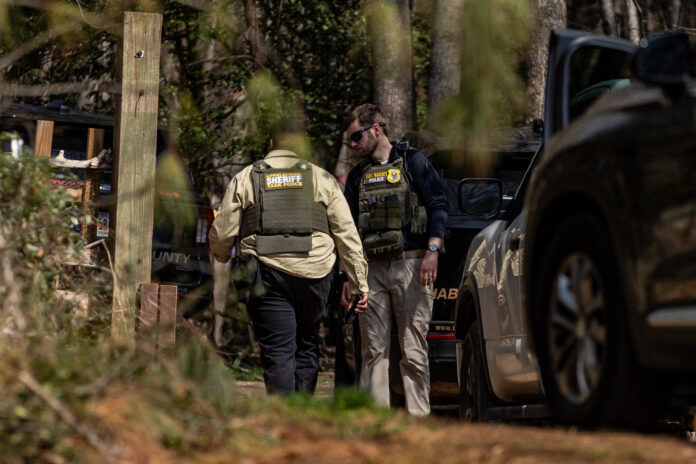
Drug task force agents descend on a property off Hwy. 17 in northwest Habersham County during a drug and racketeering investigation on Wednesday, March 4, 2026. (Daniel Purcell/NowGeorgia.com)

CLARKESVILLE, Ga. — A number of arrests have been made as a large-scale, multi-agency drug investigation continues across Habersham County. Officials would not say how many people were taken into custody on Wednesday. However, they did say the arrests are tied to racketeering cases and occurred at multiple locations throughout the county.

Those arrested were transported to the Hall County Jail, according to Ken Howard, Special Agent in Charge of the Georgia Bureau of Investigation’s Appalachian Regional Drug Enforcement Office (ARDEO). His agency is leading the task force but is not releasing additional details at this time due to “operational security.”

“We will have a full update on the investigation tomorrow morning,” said Howard.

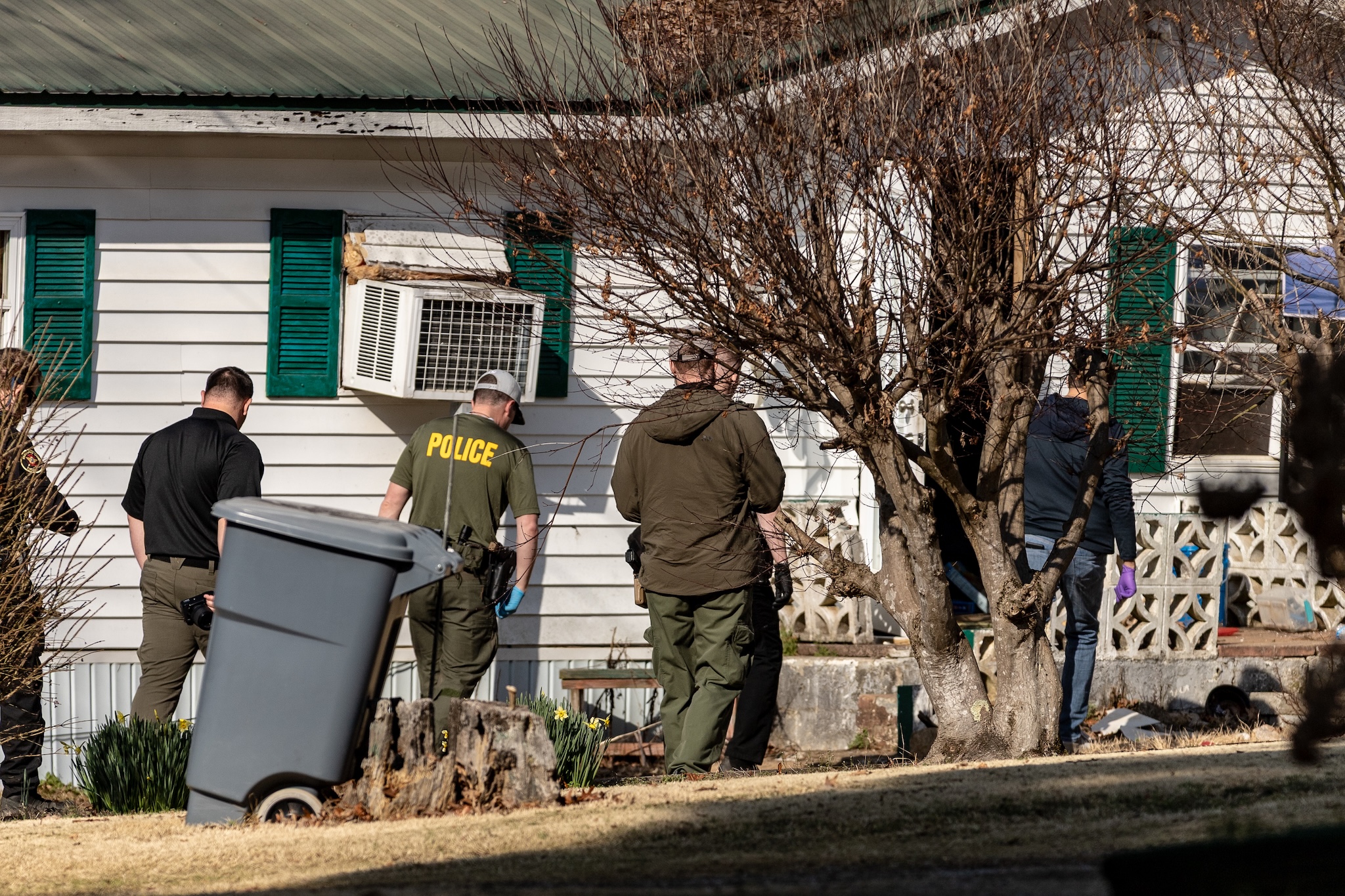
Law enforcement descends on a house off Minyard Lane just outside of Clarkesville on Wednesday, March 4, 2026. Officers fanned out across the county on Wednesday, arresting suspects in a racketeering case, according to ARDEO SAC Ken Howard. (Daniel Purcell/NowGeorgia.com)
(Daniel Purcell/NowGeorgia.com)

Daylong operation

Throughout the day, drug task force agents have been observed at several locations across Habersham County.

Early on the morning of March 4, agents were spotted outside a residence on Minyard Lane on the outskirts of Clarkesville. Habersham County Sheriff’s Office K-9 units were among those at the scene.

A caravan of marked and unmarked law enforcement vehicles was later seen at other locations, including areas off Highway 17 in the northern part of the county and along Crane Mill Road to the south.

Habersham County Sheriff Robin Krockum confirmed his agency is assisting with the operation.