Gov. Brian Kemp speaks at 2026 Eggs and Issues. (Ross Williams/Georgia Recorder)
(Georgia Recorder) — Last year, Georgia Gov. Brian Kemp’s legislative priorities going into the 2025 legislative session had an almost singular focus: overhauling the state’s civil litigation system through a series of policies that proponents refer to as “tort reform.”
This year, with the fight over tort in the rearview mirror, Kemp has begun to roll out his plans for his last session in office. During a celebratory speech at the Georgia Chamber of Commerce’s annual Eggs and Issues breakfast, he previewed a series of new infrastructure proposals aimed at easing traffic, investing in natural gas infrastructure and reducing homelessness in Atlanta.
The Republican governor’s full budget proposal will be outlined during his annual State of the State address Thursday. But in his remarks to business leaders during Wednesday’s breakfast, held at Mercedes-Benz Stadium, Kemp offered a glimpse into his 2026 wish list, starting with capital projects aimed at reducing traffic.
“Road congestion doesn’t care if you’re a Republican or a Democrat, only that you’re running late to work or an appointment or to your kid’s ball game,” Kemp said. “It costs commuters time with their loved ones and money, it costs businesses valuable production output, and it costs the entire state potential economic development projects.”
Kemp’s proposed budget will include $1.8 billion to expand the I-75 South corridor in Henry County, as well as an additional $200 million to continue work on State Route 316/University Parkway, he said. Communities across the state would also receive an extra $250 million for local road projects, and rural areas would receive $100 million to strengthen or replace failing bridges. Rural communities would also receive an additional $35 million in the amended budget for natural gas infrastructure upgrades under Kemp’s proposal.
“All of this additional funding for transportation projects is certainly needed, but it also has the added benefit of keeping Georgians working in the years to come,” Kemp said.
He debuted a proposal to address homelessness in Atlanta by creating a $50 million grant that will allow the state to work alongside local nonprofit organizations, Atlanta Mayor Andre Dickens and other advocates to decrease homelessness.
“This grant will act as a force multiplier to complement the good work already underway by Mayor Dickens and other champions on this challenging issue,” Kemp said.
Funds will provide funding for emergency shelter and transitional housing, mental health and substance use services and other outreach efforts to reduce homelessness in Georgia’s capital city ahead of the 2026 FIFA World Cup, which is expected to bring 500,000 visitors to Atlanta, according to some estimates.
Other legislative leaders also discussed their priorities, with House Speaker Jon Burns highlighting his chamber’s plans to eliminate property taxes on primary residences, while Lt. Gov. Burt Jones pledged to continue lowering the state income tax rate.
“For too many families in our state, the cost of purchasing or building a home has put ownership out of reach,” Burns said. “This doesn’t just impact potential home buyers, it’s also a workforce development issue hurting businesses, job creators and local economies.”
Georgia Chamber President and CEO Chris Clark speaks at 2026 Eggs and Issues. (Ross Williams/Georgia Recorder)
Chris Clark, the president and CEO of the Georgia Chamber of Commerce, lauded the new investments in Georgia’s infrastructure and efforts to reduce homelessness across the state.
“We all want to look good when the World Cup comes to town, but this is about men and women that live, work, play and pray here,” he said. “I think this was a wonderful announcement today, and hopefully it’s a trend for how states can work with local leaders to address those critical issues.”
On the topic of the Legislature’s dueling ideas for cutting taxes, Clark said he was eagerly awaiting the full proposals, but would not endorse either idea until more details become available.
“What we don’t want is to shift the tax burden from one place to another place, or have to raise taxes somewhere else to make up for it,” he said. “We’ll work with both the House and the Senate, we’ll listen to what their plans are, and then we’ll take a look and see how we weigh in.”
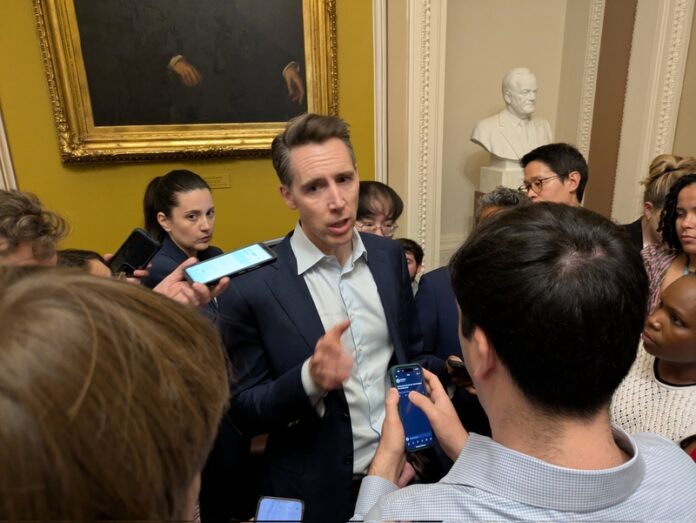
U.S. Sen. Josh Hawley, R-Mo., talks to reporters at the U.S. Capitol on Saturday, June 28, 2025. (Ashley Murray/States Newsroom)
WASHINGTON (States Newsroom) — Vice President JD Vance broke a tied Senate vote to block advancement of a war powers resolution that would have stopped President Donald Trump from taking further military action against Venezuela without congressional authorization.
Senate Republicans used a procedural maneuver Wednesday night to halt debate on the Vietnam War-era statute that gives Congress a check on the president’s deployments abroad.
Sens. Todd Young of Indiana and Josh Hawley of Missouri flipped on their previous votes to advance the resolution, splitting support at 50-50 — and delivering a victory to Trump, who had strongly criticized Republican senators who earlier defected from the administration.
Sens. Lisa Murkowski of Alaska, Susan Collins of Maine and Rand Paul of Kentucky voted to keep the effort alive in the Senate. Paul is the only Republican co-sponsor of the bill. Democratic Sen. Tim Kaine of Virginia was the leading Democratic co-sponsor.
Young said while he “strongly” believes Congress must be involved in any decisions about the commitment of U.S. troops, administration officials assured him that is not the state of play in Venezuela.
“After numerous conversations with senior national security officials, I have received assurances that there are no American troops in Venezuela. I’ve also received a commitment that if President Trump were to determine American forces are needed in major military operations in Venezuela, the Administration will come to Congress in advance to ask for an authorization of force,” Young said in a written statement after he cast his vote.
Rare rebuke doesn’t last
The vote came less than a week after Young and Hawley were among the five Senate Republicans who broke with party ranks to move the resolution across an initial procedural hurdle — a rare rebuke of Trump from some in his own party.
Trump pointedly attacked the five GOP senators after they voted, writing on his Truth Social platform that the lawmakers “should never be elected to office again.”
Senate Republicans argued a resolution to rein in Trump’s military actions against Venezuela is not relevant because “there’s no troops there, there is nothing to terminate,” as Senate Foreign Relations Committee Chair Jim Risch said on the floor ahead of the vote.
“Now, I know some of my colleagues will argue that a vote for this resolution is a prospective statement about limiting future action in Venezuela. That’s not what it says. They argue, ‘we still have ships in the Caribbean, and clearly the president is ready to invade again,’ they say. But again, that is not what the resolution says. … No language in this resolution addresses future action,” said Risch, R-Idaho, who moved to table the measure.
The vote came 11 days after U.S. special forces apprehended Venezuela’s president, Nicolás Maduro, and his wife, Cilia Flores, from their bedroom during a surprise overnight raid. The couple was wanted by U.S. authorities on federal drug and conspiracy charges.
The vote also comes after a monthslong bombing campaign on small boats in the Caribbean Sea and eastern Pacific Ocean in which U.S. strikes killed more than 115 alleged “narco-terrorists,” according to U.S. Southern Command.
Within an hour before senators voted to block any advancement of the war powers resolution, Trump posted on social media that he “had a very good call” Thursday morning with Venezuela’s interim President Delcy Rodríguez.
“We are making tremendous progress, as we help Venezuela stabilize and recover. Many topics were discussed, including Oil, Minerals, Trade and, of course, National Security. This partnership between the United States of America and Venezuela will be a spectacular one FOR ALL. Venezuela will soon be great and prosperous again, perhaps more so than ever before!” Trump wrote on his own platform, Truth Social.
Trump hosted oil executives at the White House Friday for a meeting on potential investment in Venezuela’s oil industry. Prior to the meeting, the president announced the South American nation had already agreed to give the U.S. between 30 million and 50 million barrels of oil. Trump said he would control the money made from the sale.
‘We are heavily engaged’
Paul and Democratic sponsors of the war powers resolution vehemently disagreed with the GOP statements about the U.S. presence in and around Venezuela.
“You don’t have to be a great expert in military affairs to know that we are heavily engaged,” said Senate Minority Leader Chuck Schumer, a New York Democrat, ahead of the vote.
“Donald Trump says we’re not engaged in hostilities? Tell that to the 16,000 U.S. service members currently deployed in the Caribbean. Tell that to our service members on the Ford carrier strike force. Look at the Marine expeditionary unit operating in the region,” Schumer said. “Donald Trump is turning the Caribbean into a dangerous powder keg — and Congress must rein him in before one mistake ignites a larger, more unstable conflict.”
Kaine likened the Republicans’ procedural move to “a parliamentary gag rule on discussion of this military operation.”
“If this cause and if this legal basis were so righteous and so lawful, the administration and its supporters would not be so afraid to have this debate before the public and the United States Senate,” Kaine said on the floor ahead of the vote.
Paul said the administration’s claim that Venezuela is not an official war is “an absurdity.”
“The invasion of another country, blockading of a country and removing another country’s leader, to my mind, clearly, is war,” Paul said on the floor ahead of the vote.
U.S. Southern Command declined to confirm Wednesday the exact number of troops and warships present in the region.
Venezuelan Interior Minister Diosdado Cabello said more than 100 were killed in the raid, according to numerous media outlets that posted a video of his statement. The Cuban government announced on Facebook 32 of its citizens were among the dead.
Seven U.S. troops were injured in the incursion, according to the Pentagon. Five returned to work within days after the attack, while two were still recovering as of Jan. 8. Pentagon officials declined to comment further on their conditions Wednesday.
Tallulah Falls School students-athletes like Valentina Arias Camargo not only excel locally but also internationally. Over the holiday break, the senior from Juan Diaz, Panama, had the opportunity to swim and represent her country in the National Long Course Swimming Championship.
From December 12-14, Camargo was in David, Panama, competing in the 18-over division for the Panama State Team.
Camargo swam in several events, such as the 50 Back, 100 Free, 50 Free, 100 Fly, 50 Fly, 200 Free, and Mixed 200 Free Relay.
She didn’t just participate – she dominated. Camargo was the top finisher in the 100 Free, 100 Fly, 200 Free, and in the Mixed 200 Free Relay events. While coming in first in those, she was second in the 50 Back and 50 Fly. Her total performance gave her an overall Runner-Up finish.
“Even though I’ve participated many times already, I take this experience with me as a reminder that hard work truly shows results,” says Camargo. “Even though it is an individual sport, it’s beautiful how it brings people together, how you can meet athletes from different clubs and build very meaningful friendships.”
Camargo has been a pivotal part of the Tallulah Falls swim team and was a member of the 2024-25 State Championship team. She has goals of continuing to swim after her time at TFS as well.
“I look to keep representing Panama internationally and keep swimming during college,” she adds.
President Donald Trump displays a signed bill in the Oval Office on Jan. 14, 2026. Trump signed the Whole Milk for Healthy Kids Act, which restores whole milk to school lunches across the country. (video image, The White House)
WASHINGTON (States Newsroom) — President Donald Trump signed a law Wednesday that will restore whole milk in federally subsidized school lunches.
The dairy staple — out of school meal programs for more than a decade amid a broader push to curb childhood obesity — will soon return to school cafeterias under the law.
Trump said during a signing ceremony in the Oval Office that the Whole Milk for Healthy Kids Act will “ensure that millions of school-aged children have access to high-quality milk as we make America healthy again.”
Seated with a jug of milk on the Resolute Desk, Trump said the changes will also be “major victories for the American dairy farmers who we love and who voted for me in great numbers.”
White House ceremony
Agriculture Secretary Brooke Rollins celebrated the legislation becoming law and said her department would post Wednesday the “new rulemaking that is necessary to get whole milk back into school lunches.”
Health and Human Services Secretary Robert F. Kennedy Jr. also lauded Trump’s efforts and described the measure as a “long overdue correction of the school nutrition policy that puts children’s health first.”
Trump was also joined by Dr. Ben Carson, national advisor for nutrition, health, and housing at USDA, along with Democratic Sen. Peter Welch of Vermont, GOP Sens. John Boozman of Arkansas, Mike Crapo of Idaho and Roger Marshall of Kansas, Commerce Secretary Howard Lutnick and advocates who supported the bill.
Rep. Glenn “GT” Thompson of Pennsylvania, who chairs the House Agriculture Committee, and Rep. Tim Walberg of Michigan, chair of the House Committee on Education and Workforce, also attended the ceremony.
The U.S. House passed the bill in December, following unanimous passage in the Senate in November.
Welch and Marshall, along with Pennsylvania Sens. Dave McCormick, a Republican, and John Fetterman, a Democrat, introduced the measure in the Senate.
Thompson and Democratic Rep. Kim Schrier of Washington state brought corresponding legislation in the House.
What the new law does
Under the law, schools that are part of the USDA’s National School Lunch Program can offer “flavored and unflavored organic or nonorganic whole, reduced-fat, low-fat, and fat-free fluid milk and lactose-free fluid milk.”
The program — which provides free or low-cost lunches in public and nonprofit private schools and residential child care institutions — saw nearly 29.4 million children participate on a typical day during the 2023-2024 school year, according to the Food Research & Action Center.
The schools can also provide “nondairy beverages that are nutritionally equivalent to fluid milk and meet the nutritional standards established by” the Agriculture secretary.
The law exempts milk fat from being considered saturated fat as it applies to schools’ “allowable average saturated fat content of a meal.”
Parents and guardians, as well as physicians, can also offer a written statement for their student to receive a nondairy milk substitute.
Michael Dykes, president and CEO of the International Dairy Foods Association, celebrated the bill becoming law in a Wednesday statement.
Dykes dubbed the law a “win for our children, parents, and school nutrition leaders, giving schools the flexibility to offer the flavored and unflavored milk options, across all healthy fat levels, that meet students’ needs and preferences.”
The signing marked the second major nutrition policy change this month. The U.S. Department of Agriculture and U.S. Department of Health and Human Services released the 2025-2030 Dietary Guidelines for Americans, which encourages more full-fat dairy and protein.
LAVONIA, Ga. — A northeast Georgia surgeon was arrested at St. Mary’s Sacred Heart Hospital in Lavonia after allegedly confronting a patient in her hospital room, officials said.
The Lavonia Police Department said officers were called to the hospital around 6 p.m. on Jan. 8th in response to a reported disturbance involving a physician and a patient who had undergone surgery earlier that day.
According to the police incident report, the patient told officers she was recovering in her room when she spoke by phone with her surgeon, identified as Steven Muscoreil, about concerns related to the procedure. She reported that Muscoreil became angry during the call and raised his voice.
Police said that shortly after the phone conversation ended, Muscoreil arrived at the patient’s room in person. The patient reported that when he entered, he charged toward her in an aggressive manner, got close to her face, and began yelling loudly. She told officers he shook his finger inches from her face and spoke loudly enough for staff outside the room to hear.
The patient said she moved her head away because she believed she was about to be struck and feared she was in immediate danger of being hurt.
Eyewitnesses
Two nurses who witnessed the incident corroborated the patient’s account, police said. One nurse, who was inside the room at the time, told officers that “Muscoreil’s behavior appeared aggressive” and that she “believed he was about to hit the patient”. The nurse said she physically intervened and pushed him away to prevent the situation from escalating further.
Both nurses described Muscoreil as extremely angry during the encounter. They declined to provide written statements or additional identifying information, citing instructions from legal counsel, according to the report.
The patient also told police she was afraid Muscoreil could return to her room because she was hospitalized and unable to leave following surgery.
Based on statements from the patient and witnesses, police determined there was probable cause to arrest Muscoreil on a charge of simple assault. The arresting officer noted that immediate action was necessary due to Muscoreil’s access to the patient and the potential for continued intimidation.
Muscoreil was taken into custody at the hospital and arrested on the simple assault charge. He was released the following morning.
According to WSB-TV, the hospital issued a statement saying Muscoreil was not a hospital employee and “is no longer providing care at our facility.” A hospital spokesperson said they could not provide further comment.
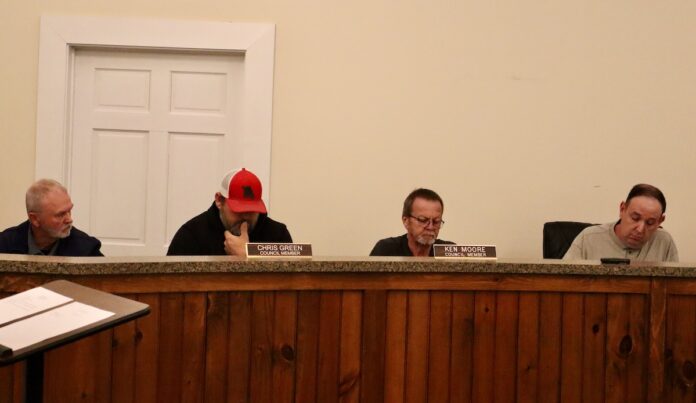
The Mt. Airy Town Council approved a farm winery ordinance Tuesday night. (Patrick Fargason/Now Habersham)
MT. AIRY, Ga. — The Mt. Airy Town Council unanimously approved a new farm winery ordinance Tuesday night and set the annual license fee at $750 following extended discussion over how much to charge local producers.
Council members approved the ordinance on its second and final reading without objection before turning to the separate issue of establishing a farm winery license fee.
Mt. Airy Mayor Adam Tullis leads the debate for the license fee for a farm winery. (Patrick Fargason/Now Habersham)
Mayor Adam Tullis told the council that staff had recommended a fee ranging from $1,500 to $2,000, noting that license costs vary widely across the region. He said Cornelia charges $750, Blairsville $1,500, Helen $650, and Hall County $2,000 for similar licenses.
Councilman Patrick Ledford said a lower fee was more appropriate for a municipality like Mt. Airy, suggesting a range between $500 and $800 based on nearby cities.
Sweet Acre Farms owner Matt Vrahiotes addressed the council during the discussion, urging members to keep the fee as low as possible as he prepares to launch his operation.
“I’m obviously biased,” Vrahiotes said. “I would definitely say do as cheap as possible, only because I’ve got a lot of expenses when it comes to it. I’m in no matter what, I have to pay whatever you guys say, but $1,500 would be a lot.”
Vrahiotes also argued that higher fees in other jurisdictions often come with broader privileges, such as operating tasting rooms and selling wine on-site — activities not permitted under Mt. Airy’s new license.
“The other point that I’ll make is you guys are limiting our inability to sell wine in there,” he said. “So $1,500 to $2,000, if it’s a full-fledged tasting room and we’re allowed to do everything. What you guys are saying is we’re just doing manufacturing here.”
Councilman Mike McCoy ultimately brokered a compromise, proposing a lower initial fee to help the business get established.
“I say we charge him a little less than the average his first year and give him a chance to get on his feet,” McCoy said.
McCoy then made a motion to set the farm winery license fee at $750 annually. The motion passed unanimously.
Following the meeting, Vrahiotes told Now Habersham he was encouraged by the council’s decision and what it means for restarting his business after last year’s fire.
Sweet Acre Farms owner Matt Vrahiotes said he’s so happy to get his wine production up and running again. (Patrick Fargason/Now Habersham)
“I’m very, very excited,” he said. “It’s funny — it’s the anniversary of our fire next Thursday. The fact that we were able to get the ball rolling again in less than a year is really nice.”
Vrahiotes said production in Mt. Airy is still several months away as he works through site preparation and regulatory approvals at the federal, state and local levels.
“The next step is getting the space we’re hoping to use cleared out and cleaned up,” he said. “Then we have to go to the federal government, then here, then the state. So we’re still looking at several months before we’re able to get up and going. And once you’re up and going, you’ve got to make wine — unfortunately, wine isn’t like beer. It takes more time.”
He added that Sweet Acre Farms is continuing efforts to establish its tasting room in Cornelia, a separate project from the manufacturing operation approved in Mt. Airy.
Mayor Tullis said he expects the immediate impact of the farm winery ordinance to be limited but noted it fits into the town’s broader approach to alcohol regulation.
“Alcohol ordinances in Mt. Airy have been good to keep the taxes low,” Tullis told Now Habersham. “The farm winery license is just another opportunity to collect some revenue from alcohol sales.”
The ordinance establishes a regulatory framework for farm wineries operating within the town limits, with the license fee taking effect immediately.
NEW YORK (AP) — Many Verizon customers encountered a widespread outage on Wednesday, disrupting calling and other cellular services across the U.S.
The carrier acknowledged that there was an “issue impacting wireless voice and data services for some customers.” Verizon didn’t specify what was causing the disruptions, but said in updates shared on social media that it had deployed its engineering teams and was working to resolve the problem “as quickly as possible.”
Outage tracker Downdetector showed that Verizon customers began to report issues with their service around noon E.T. Reports appeared to peak in the early afternoon and remained elevated later in the day — sitting close to 50,000 as of 4:30 p.m. ET.
Impacted users said their phones were in “SOS” mode or had other no signal messages. In New York, alerts warned that the outage may disrupt 911 calls — urging residents to try landlines and devices from other carriers, if available, or visit a local police or fire station in-person in case of an emergency.
Per Downdetector, other major hubs impacted by Verizon’s outage included Washington D.C., Chicago, Houston, Los Angeles and Atlanta. But consumers across the country said they were experiencing disruptions.
A handful of outage reports for other carriers also bubbled up on Wednesday — but companies like T-Mobile and AT&T quickly confirmed online that their services were operating normally. Both suggested that their customers may be encountering issues contacting people with Verizon’s service, however.
When cellular outages happen, some phone companies also urge consumers to try to connect to Wi-Fi and use internet calling. If Wi-Fi is still unavailable, there can be a limited number of other options — including sending messages via satellite on newer iPhones.
The Habersham County Animal Shelter staff does everything they can to find homes for the animals in their care. (Riley Moody/Now Habersham)
If a dog could read the room, he’d never accept a “free” cheeseburger from Madi Nix. The Habersham Animal Shelter director feels her heart break whenever she’s forced to drive a dog to a local veterinarian for their last goodbye. They still get one more treat en route, though: a delectable Big Mac.
Nix, a legendary dog lover, emotes passionately about the enormous effort her team makes to keep every last one of “her” dogs and cats alive and healthy. The overwhelmed staff of eight, plus volunteers, look relentlessly for new homes that suit every individual creature. They advertise. They make phone calls. They blast out pleas on social media, with cute photos and heartwarming videos to accompany them.
Nevertheless, a very few are sent to die at a local vet’s office.
Before that, though, the boss will try almost anything to re-home her dogs. Periodically, Nix grabs a few of her friendlier dogs, packs them into her van, and drives them the half mile across Toccoa Highway to the county office building. She and the four-legged mob descend on her fellow county employees, and the puppy dog grins and wags will occasionally win over a commissioner, tax assessor, or clerk; that lucky employee goes home with a new friend in her back seat. “Yeah–sometimes, it works,” she laughs, and she returns to the shelter, if not dogless, then at least with a few less yips and barks than when she departed. That’s a win.
A van loaded for transport to adoptive pet families up north prepares to depart the Habersham County Animal Shelter on Dec. 27, 2022. (Joy Purcell/NowHabersham.com)
The shelter staff’s biggest commitment? A few of them pile into the shelter’s van to drive a pack of dogs—19 of them, on a recent trip—to a shelter or rescue group somewhere up north that has offered to help re-home the furry creatures. The October run was an 820-mile trek to Cedarburg, Wisconsin, where a rescue group, “Mutt Life,” was waiting for them, as were 19 prospective pet-owners. That trip involved hotel stays, but shorter trips to New York can be “turn and burns,” where staff leave before dawn, drop the dogs, and make it home to a very late dinner with their families.
In the last few weeks, there have been pet caravans to Bedford Hills, New York; Phoenix, Maryland; and Springfield, Virginia, each returning with blissfully empty vans.
For reasons Nix ascribes to “cultural differences,” it seems to be much easier to find new pet-homes north of the Mason-Dixon line than in Georgia or elsewhere in the South. For one thing, spaying and neutering are much more common up north, so there are far fewer “surplus” pets. And stray dogs are likelier to survive the Southern winters than the colder climes of the Midwest or Northeast, which means there are more here for the adopting, year-round. The shelter staff takes advantage of the Northern need with our Southern dogs, affording many of them a good Yankee life instead of an indefinite stay at the shelter—or worse.
But then, why euthanasia?
With all this strenuous effort to keep them alive, one might be tempted to ask: Why, then, is any shelter dog or cat ever euthanized?
There are a lot of reasons. Some are strictly medical, and simply amount to choosing a humane death over a harrowing life. Others because they can’t fit in with other dogs or cats in a prospective owner’s home; still others because they’ve been exposed to a rabid wild or domestic animal, and it can take months to find out if they’re sick themselves, while other animals are waiting for that same spot at the shelter.
But behavioral issues are usually the main reason. Nix explains: “Some of the dogs have aggressive behaviors we just can’t control. If none of us would feel safe with the dog in our homes, we can’t very well put them out into the community.”
A cat peers out from her cage at the crowded shelter. (Riley Moody/NowHabersham.com)
As to cats, kindhearted Habershamians often make the mistake of collecting stray newborn kittens they find on their property. But that may not be a kindness; if they’d leave them alone, the mother cat—who often is nearby, foraging food for her litter—will come back and take care of them better than any human could. Nix hopes people will learn to leave the little mewing bundles alone; many of the youngest kittens don’t fare well in the shelter.
The ever-present dog in the road
Perhaps the most common medical reason for canine euthanasia is the ubiquitous problem of dogs hit by cars on the road, who, if not killed right away, may be hurt too badly to recover, which happens distressingly often. “And usually, that’s an un-neutered male who’s escaped so he can go out looking for a ‘girlfriend,’” Nix says. “Neutering would help.”
Animal control picked up Emily after she was hit by a car in 2016. Her injuries were so severe that her left back leg had to be amputated. (Habersham County Animal Shelter/Facebook)
The hard numbers for euthanasia might sound relatively good to dog-lovers, depending on one’s perspective. In the first 10 months of 2025, the shelter took in 1,491 animals and successfully sent 1,264 to new homes locally or elsewhere, the staff reported. Of the remainder, 84 (less than six percent of the total) were euthanized, many of those because of medical crises. The good news: it remains quite rare for a healthy, well-behaved dog or cat to be euthanized. If they’re “put down,” there is almost always some serious problem that led them there. But if a dog is doing all right in the shelter, there is always another Northern trek to put them on, if no one adopts them here.
The shelter staff are not allowed to euthanize the dogs anymore, because of new federal DEA rules—instituted a few years back over concerns about the dangerous (and sometimes illicitly trafficked) drugs used for euthanasia. Since now only a veterinary office can handle and use the lethal drugs, the unfortunate need for euthanasia is entirely handled by several local veterinarians, at a cost of $50 to $150 each, charged to the county.
Asked if she prefers the new protocol to the old one, Nix, perhaps surprisingly, says that when euthanasia was necessary, she preferred to do it herself, because the animals knew and trusted her and she knew how to make them comfortable, she says.
“I felt it was my responsibility,” she said, grimacing at the memory.
As to the veterinarians taking on the grim task: “Obviously, it’s not why any vet got into this line of work,” Nix says, “but it’s part of their job.”
From the vet’s perspective
Among the Habersham County vets who take on the sad task of euthanasia for the shelter is Dr. Cecily Nieh of Northeast Veterinary Hospital in Cornelia.
Dr. Cecily Nieh and her Pomeranian mix, Kissy Lips, in the operating room at her office. (Joshua M. Peck/Now Habersham)
“Doing euthanasia takes an awful lot of compartmentalization,” says Nieh, an avid animal lover who brings her own small, fluffy white dogs to work with her every day. “But the quality of life for an animal lingering in a shelter is not good; for an old dog with serious health issues, we just don’t think it’s fair to keep them alive,” when their lives entail so much suffering.
Nieh willingly makes the call herself when medical issues are the reason for euthanasia, “but when it comes to behavioral issues, I rely on Madi.” Even a well-behaved dog can get wild in the strange environment of a vet’s office, she says, so only the shelter staff would know what the dog is like day-to-day and whether his behavioral issues preclude adoption.
Even so, the vet says it is common for Nix to be crying by the time she arrives with a pet to Nieh’s office to end the animal’s life.
The procedure itself almost always goes smoothly, Nieh says. She injects the pet with valium or an opiate to calm him. If a dog is fighting, sometimes the vet staff will have to throw a blanket over him to restrain him, but they use the least force possible.
Upon the arrival of an exceptionally angry or fearful dog, the vet staff will maneuver the dog so that his leash is strung from behind an office door, through the opening between the hinges and the door frame. Then, though the dog may be growling and fighting, he is behind the door, with the staff safe on the other side; they look for an opportunity to inject the dog with the calming drug, usually in his hindquarters.
Once the dog is sedated, Nieh says, “he’s in la-la land”—quiet and compliant. To end the dog’s life, the vet injects a powerful barbiturate; it quietly stops the animal’s heart in 30 to 60 seconds, Nieh says.
The easiest way to avoid euthanasia
How can animal lovers avoid the whole awful sequence? Easy, Nieh says, two words: “spay” and “neuter.” And those simple operations are a good idea, not only to limit the number of stray and homeless animals, the vet adds. A variety of maladies can afflict older dogs whose reproductive systems are intact. For males, their abundance of testosterone can grow their prostate glands, which leads to other disorders (just as in human males). For females, they are far more prone to cancer of their teats if they make it to their first “heat” (fertility cycle) unaltered.
(Riley Moody/NowHabersham.com)
These medical issues didn’t arise when animals were in the wild, because few lived past five or six years of age, Nieh says. Now, these are common diseases of animals’ not-so-golden years, and much of the pain and discomfort can be headed off with a well-placed scalpel, early in the animal’s life.
Nieh says she endeavors to treat each animal with all the compassion she deserves, and that can be hard on her and the caring staff at her practice, which includes three other veterinarians and a dozen or so staff. The hardest for her, no contest, was when her own old cat, Vixen, developed serious heart and kidney issues some seven years ago. She insisted on handling the euthanasia herself.
“I knew it was totally justifiable,” she says, “but I wasn’t right for a year,” her eyes filling with tears at the memory of the beloved companion she shared with her husband, Douglas, also a vet at the hospital.
Harvey sticks around
HCACC Director Madi Nix and Harvey (Jerry Neace/NowHabersham.com)
Nix has a favorite long-time-visitor at the shelter—Harvey, a mixed-breed with a delightful, playful personality. Nix has taken him home for short stays at her own (three-bedogged) home several times. She seems to be crazy about him, and he’s regarded veritably as a shelter mascot by the other staff. He greeted visitors when the shelter’s new site in Cornelia had its ribbon-cutting at the construction site in April, and he’s still there with Nix and her crew.
Why is the affable Harvey still a shelter presence? Easy. “He’s a resource-guarder,” she says with a resigned shake of her head. “If there’s food, or a toy, or even just a dish of water…no other dog is allowed to get near it. We can’t have that.” And prospective Harvey-adopters don’t seem to like it either.
Habersham County Animal Care and Control Director Madi Nix and the locally beloved Harvey, the shelter’s unofficial mascot, prepared to wow the crowd at the 2024 Dogs of Summer Pet Pageant. (Carly McCurry/NowHabersham.com)
At the shelter, the business of bringing in and re-homing dogs continues, even while Nix chats with a new visitor. Anthony Rivera recently came in, having seen a familiar canine face the day before on the shelter’s Facebook feed. Kona, his beloved mixed-breed dog, seemingly disappeared more than a year ago, then turned up on a road a short distance from home—looking none the worse for the mysterious months away.
Rivera had let his two dogs out to relieve themselves one night early in 2025; one came back, but Kona disappeared. The young man’s theory: someone else took the dog in for the intervening months, but then the clever dog managed a second escape. Rivera hugs the dog, puts a leash on him, and leads him away after going through the necessary paperwork with shelter staff. Happy to say, this kind of result is an everyday occurrence at the shelter.
Young Zimba, another frisky long-time shelter resident, has remained because when he gets excited, he gets “mouthy,” as Nix euphemistically put it (he nips). He does get to make a legal escape from time to time—staffer Beverly takes him hiking about once a week, and other volunteers do the same for other dogs.
Hunting for Unicorns
Zimba plays with a ball in the pet play yard outside the Habersham County Animal Shelter in Clarkesville. (Riley Moody/NowHabersham.com)
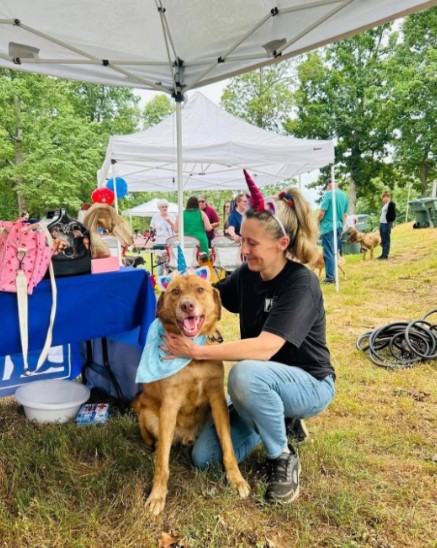
When Zimba gets overstimulated, he is hard to control—thus the long stay at the shelter. Yet, there may be a perfect adoptive parent out there for Zimba and the others. The shelter staff call these adoptees “unicorns.” These are prospective pet-parents with kids at home, no other dogs to fight with, and ideally, at least one parent working from home, so the new dog gets all the attention it needs. They are indeed a rarity, though perhaps not quite so rare as a one-horned, rainbow-colored horse.
A few other factors work against the shelter’s never-ending battle to stay ahead of the homeless pet count. Just recently, several of the county’s apartment buildings and mobile home parks have taken an anti-dog turn, Nix says. “People were given a month to get rid of their pets or move out.” Some would move if they could find a dog-friendly new home, but that’s hard on a 30-day timetable. So inevitably, those evicted, beloved dogs find their way across Toccoa Highway to the shelter, and ideally, to new owners.
And for other humans, struggling to feed themselves or make a living at all, they may have to give up their pets as a sheer necessity. Poverty is hard on everyone—dogs too, Nix observes.
(Riley Moody/NowHabersham.com)
As far as getting ill-behaved dogs to improve enough for adoption, it’s frustrating for Nix and her team. “There’s not a magic wand here,” she says. “This environment is stressful for the dogs. You get a dog in here that may already be under stress from whatever home he came from; you bring him in here and it’s like putting a guy who’s already a psycho in a mental health ward…it may not be the right place for them to get better.”
When it comes down to it, dogs belong with a family, not on a long, sterile hallway, with other dogs barking, stressing, and yearning to breathe free. “I’d go crazy, too, looking at the same brick walls 23 hours a day,” Nix says. “I can’t even imagine being that upset and angry all the time; why should they?”
Nix breaks off talking to walk the halls, offering a treat to each dog on the corridor. Nix, herself extended a rawhide skeleton hand to each dog, posing merrily with the ones who want to play. These happier times are what she lives for.
“You want a toy?” she asks the frisky mix at the end of the corridor. Apparently, she does.
Student Success Coach Barbie Gallimore (left) received the 2026 North Georgia Technical College Employee of the Year Award (photo submitted)
CLARKESVILLE, Ga. — North Georgia Technical College has named Barbara “Barbie” Gallimore as its 2026 Employee of the Year during the college’s annual service awards holiday luncheon.
Gallimore, a student success coach at NGTC’s Currahee Campus, has worked at the college since August 2022. She holds a Bachelor of Science in business administration from the University of Arkansas. Coworkers nominated Gallimore for the honor, citing her commitment to students and colleagues, her willingness to go above and beyond, and her effectiveness and involvement across campus.
“I am proud to be part of North Georgia Tech, where we work together improving lives through technical education,” Gallimore said. “This award reflects the positive work environment we’ve all built together. It’s exciting to see students complete our programs and make an impact in our communities.”
Dr. Vinson Burdette, NGTC vice president of student affairs, said Gallimore consistently prioritizes student needs and uses her skills to make a positive difference for both students and the college.
Gallimore lives in Toccoa with her husband, Warren. They have three children. Her interests include swimming, traveling, hiking and family gatherings.
NGTC President John Wilkinson also presented 2026 Employee Service Awards, recognizing faculty and staff for years of service to the college and the Technical College System of Georgia.
Ronnie Ayers of Toccoa, Ga.; Terry Edwards of Clarkesville, Ga.; Leslie Foster of Cornelia, Ga.; and Buddy Raper of Alto, Ga., were recognized for 25 years of service to NGTC (photo submitted)
Five-year service award recipients were Blake Conner, Summer Day, Matt Moon and Chris Vaughn of Toccoa; Katie Johnson of Mount Airy; Matthew Mashburn of Blairsville; Jason McElwaney of Dahlonega; Mandy Moss and Cameron Smith of Demorest; Connie Mull of Clarkesville; Erin Nieves of Blairsville; Augusto Roca of Martin; and Heather Terrell of Alto.
Recognized for 10 years of service were Fernando Arenas of Walhalla, South Carolina; Laura Ferguson, Amy Hulsey, Kelly Moody and Trudi Schubring of Clarkesville; Vicky Frankum of Cleveland; and Lisa Ramsey of Toccoa.
Fifteen-year service certificates went to Joe Banks of Alto; James Benn of Toccoa; and Pamela Segers of Clarkesville.
NGTC’s 10-year service award recipients were (from left to right): Fernando Arenas of Walhalla, S.C.; Laura Ferguson of Clarkesville, Ga.; Vicky Frankum of Cleveland, Ga.; Amy Hulsey of Clarkesville, Ga.; Kelly Moody of Clarkesville, Ga.; Lisa Ramsey of. Toccoa, Ga.; and Trudi Schubring of Clarkesville, Ga.
Alexander Bladowski of Toccoa was recognized for 20 years of service. Honored for 25 years were Ronnie Ayers of Toccoa; Terry Edwards of Clarkesville; Leslie Foster of Cornelia; and Buddy Raper of Alto. Shelby Ward of Demorest was recognized for 30 years of service.
“I am proud to work with so many outstanding individuals who are committed to serving our students and communities,” Wilkinson said. “It was an honor to present Barbie with the Employee of the Year award and to recognize others for their dedication to the college.”
Lee County Sheriff's Office investigates animal cruelty case/NowGeorgia.com
On January 12, 2026, Lee County deputies were dispatched to a residence on Lee Rd. 146 in the Beauregard community of Lee County regarding animal cruelty. Deputies discovered multiple deceased dogs in bags and living dogs in poor health conditions. Expert analysis of the deceased animals indicates that the dogs died within the range of the past few months up to a year.
Three residence occupants were arrested and charged with a total of 111 offenses so far, including multiple felony aggravated cruelty to animals and misdemeanor failure to bury livestock offenses. All three defendants are being held with bond set at $48,700 each. This case is being submitted to the Lee County District Attorney’s Office for Grand Jury presentation. Additional charges may be added as the investigation continues.
The Sheriff’s Office has responded to three previous complaints at the residence, in 2017, 2019, and 2021. Responding deputies did not find elements to support criminal charges at those times. Lee County Sheriff’s Office personnel all believe in and defend the humane treatment of all animals.
The Lee County Sheriff’s Office takes all calls about potential animal cruelty very seriously. Through the years, Lee County Sheriff’s Office deputies, when confronted with circumstances where animals are suffering from abuse, have always acted, and continue to take immediate action, to apply the law and protect the animal(s) involved. We find what we discovered on January 12 to be among the worst treatment of animals that we have seen.
Anyone with information about this case is asked to contact the Lee County Sheriff’s Office at 334-749-5651 or Central Alabama Crime Stoppers at 334-215-STOP (7867).
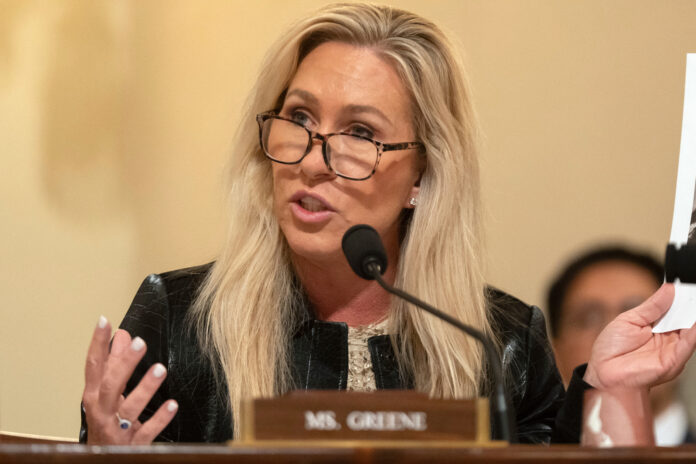
Rep. Marjorie Taylor Greene, R-Ga., speaks during a hearing of the House Committee on Homeland Security on Capitol Hill in Washington, Thursday, Dec. 11, 2025. (AP Photo/Mark Schiefelbein)
(Georgia Recorder) — Nearly two dozen people are hoping to become the next member of Congress to represent northwest Georgia.
Voters in Georgia’s 14th District – which includes Catoosa, Chattooga, Dade, Floyd, Murray, Paulding, Polk, Walker and Whitfield counties and portions of Cobb County – will head to the polls starting on Monday, Feb. 16 when early voting kicks off.
Candidates who have qualified to run for Congress in Georgia’s 14th District
Star Black, Republican
Reagan Box. Republican
Beau Brown, Republican
James Marty Brown, Republican
Jared Craig, Republican
Eric Cunningham, Republican
Jim Davis, Democrat
Clayton Fuller, Republican
Tom Gray, Republican
Shawn Harris, Democrat
Larry Hilley, Republican
Jonathan Hobbs, Democrat
Christian Hurd, Republican
Trey Kelly, Republican
Nicky Lama, Republican
Colton Moore, Republican
Rob “Rush” Ruszkowski, Independent
Brian Stover, Republican
Meg Strickland, Republican
James Tully, Republican
Jenna Turnipseed, Republican
Andrew Underwood, Libertarian
The three-day candidate qualifying period ended Wednesday afternoon.
All of the candidates will appear on the same ballot regardless of party, and 17 Republicans, three Democrats, one Libertarian and one independent have qualified, according to the secretary of state’s office.
Election Day is set for March 10, and if no candidate receives more than 50% of the vote, which is likely with so many names on the ballot, a runoff between the top two candidates is scheduled for April 7.
The district is considered the most likely in the state to favor a Republican, according to the Cook Political Report. It was previously represented by firebrand conservative Marjorie Taylor Greene. Greene resigned earlier this month after publicly feuding with President Donald Trump over matters including health insurance subsidies, Israel’s bombing campaign in Gaza and the release of the Epstein files.
The winner will only earn the right to serve out the rest of Greene’s term and will have to prepare immediately for a primary in May and a general election in November.
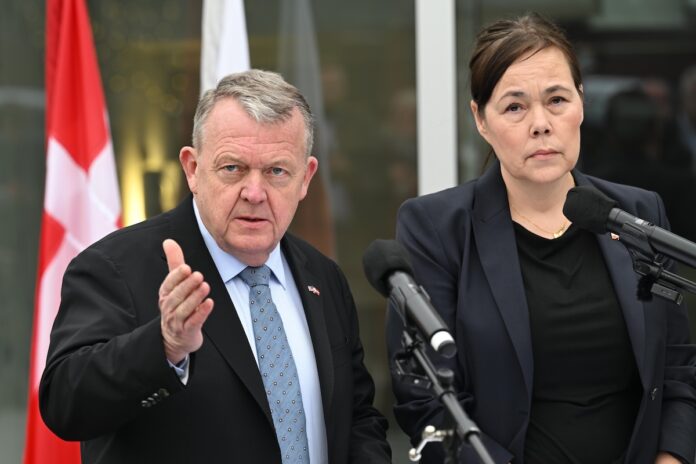
Denmark's Foreign Minister Lars Løkke Rasmussen and Greenland's Foreign Minister Vivian Motzfeldt speak at a news conference at the Embassy of Denmark, Wednesday, Jan. 14, 2026, in Washington. (AP Photo/John McDonnell)
WASHINGTON (AP) — A top Danish official said Wednesday that a “fundamental disagreement” over Greenland remains with President Donald Trump after highly anticipated talks in Washington with Vice President JD Vance and Secretary of State Marco Rubio.
The two sides, however, agreed to create a working group to discuss ways to work through differences as Trump continues to call for a U.S. takeover of the semiautonomous territory of NATO ally Denmark.
“The group, in our view, should focus on how to address the American security concerns, while at the same time respecting the red lines of the Kingdom of Denmark,” Danish Foreign Minister Lars Løkke Rasmussen told reporters after joining Greenland’s foreign minister, Vivian Motzfeldt, for the talks.
Trump is trying to make the case that NATO should help the U.S. acquire the world’s largest island and says anything less than it being under American control is unacceptable.
Denmark has announced plans to boost the country’s military presence in the Arctic and North Atlantic as Trump tries to justify his calls for a U.S. takeover of the vast territory by repeatedly claiming that China and Russia have their designs on Greenland.
The White House did not immediately respond to a request for comment after the roughly hourlong meeting.
But a few hours before the officials sat down, Trump said on his social media site that the U.S. “needs Greenland for the purpose of National Security.” He added that “NATO should be leading the way for us to get it” and that otherwise Russia or China would — “AND THAT IS NOT GOING TO HAPPEN!”
“NATO becomes far more formidable and effective with Greenland in the hands of the UNITED STATES,” Trump wrote. “Anything less than that is unacceptable.”
Løkke Rasmussen told reporters that it remains “clear that the president has this wish of conquering over Greenland.”
“And we made it very, very clear that this is not in the interest of the kingdom,” he said after the meeting, citing a “fundamental disagreement” with the Trump administration but willing to keep talking.
Denmark bolstering presence in Arctic
In Copenhagen, Danish Defense Minister Troels Lund Poulsen announced an increase in Denmark’s “military presence and exercise activity” in the Arctic and the North Atlantic, “in close cooperation with our allies”.
Poulsen said at a news conference the stepped-up military presence was necessary in a security environment in which “no one can predict what will happen tomorrow.”
“This means that from today and in the coming time there will be an increased military presence in and around Greenland of aircraft, ships and soldiers, including from other NATO allies,” Poulsen said.
Other NATO allies were arriving in Greenland along with Danish personnel, he said. Poulsen declined to name the other countries contributing to increased Arctic presence, saying that it is up to the allies to announce their own participation.
Earlier, Swedish Prime Minister Ulf Kristersson wrote on X that “some officers from the Swedish Armed Forces are arriving in Greenland today” as part of a group from several allied countries. “Together, they will prepare events within the framework of the Danish exercise Operation Arctic Endurance,” Kristersson said. Two Norwegian military personnel also will be sent to Greenland to map out further cooperation with allies, the country’s Defense Minister Tore O. Sandvik told newspaper VG.
Greenlanders want the US to back off
Greenland’s prime minister, Jens-Frederik Nielsen, said Tuesday that “if we have to choose between the United States and Denmark here and now, we choose Denmark. We choose NATO. We choose the Kingdom of Denmark. We choose the EU.”
Asked about those comments, Trump replied: “I disagree with him. I don’t know who he is. I don’t know anything about him. But, that’s going to be a big problem for him.”
Greenland is strategically important because, as climate change causes the ice to melt, it opens up the possibility of shorter trade routes to Asia. That also could make it easier to extract and transport untapped deposits of critical minerals which are needed for computers and phones.
Trump says Greenland is also “vital” to the United States’ Golden Dome missile defense program. He also has said he wants the island to expand America’s security and has repeatedly cited what he says is the threat from Russian and Chinese ships as a reason to control it.
“The only Chinese I see is when I go to the fast food market,” heating engineer Lars Vintner said. He said he frequently goes sailing and hunting and has never seen Russian or Chinese ships.
His friend, Hans Nørgaard, agreed, adding “what has come out of the mouth of Donald Trump about all these ships is just fantasy.”
Denmark has said the U.S., which already has a military presence, can boost its bases on Greenland. The U.S. is party to a 1951 treaty that gives it broad rights to set up military bases there with the consent of Denmark and Greenland.
For that reason, “security is just a cover,” Vintner said, suggesting Trump actually wants to own the island to make money from its untapped natural resources.
Mikaelsen, the student, said Greenlanders benefit from being part of Denmark, which provides free health care, education and payments during study, and “I don’t want the U.S. to take that away from us.”
Løkke Rasmussen and Motzfeldt, along with Denmark’s ambassador to the U.S., planned to meet later Wednesday with senators from the Arctic Caucus. A bipartisan delegation of U.S. lawmakers is also heading to Copenhagen this week to see Danish and Greenlandic officials.
AP’s Emma Burrows and Claudia Ciobanu contributed to this report