CSU to cohost Georgia Economic Outlook series (Robbie Watson/NowGeorgia.com)
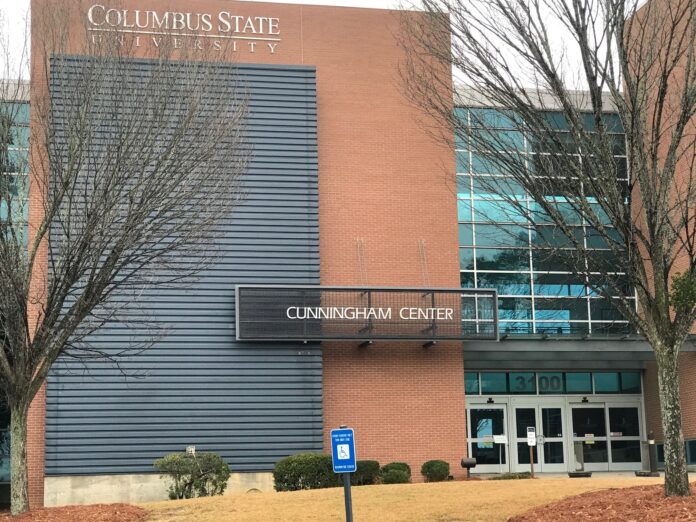
Columbus State and the University of Georgia will cohost the 2026 Georgia Economic Outlook luncheon series January 27, 2026, at the Cunningham Center in Columbus.
The luncheon is the state’s premier event, where business and community leaders come together to gain critical insights into the economic forecast for 2026. Dr. Santanu Chatterjee, interim dean of the University of Georgia’s Terry College of Business, will present findings and offer expert analysis of national and state trends based on research by UGA’s Selig Center for Economic Growth.
Following the statewide forecast, a team of Columbus-based presenters, including the following, will provide a local economic forecast:
Dr. Michael Rothlisberger, chief academic strategy officer, Columbus State University
Dr. Tesa Leonce-Regalado, acting dean, D. Abbott Turner College of Business & Technology, Columbus State University
Missy Kendrick, president and CEO, Choose Columbus
Andy Hilms, executive vice president of strategy, Choose Columbus
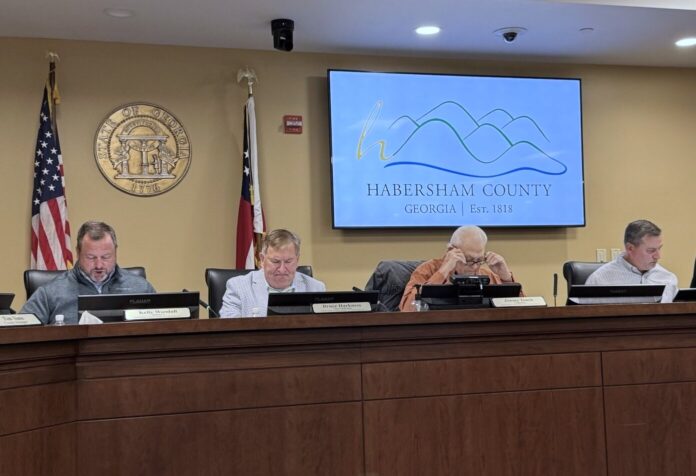
CLARKESVILLE, Ga. — The Habersham County Board of Commissioners will meet Tuesday, Jan. 20, with officer elections for 2026, a conditional use request for a proposed event center, and a county financial audit among the key items on the agenda.
The meeting was moved from its customary third Monday schedule in observance of the Martin Luther King Jr. Holiday.
Commissioners will begin the meeting by electing a chairman and vice chairman for the 2026 calendar year, a process that typically sets the leadership structure for the board.
The agenda also includes a public hearing on a conditional use application from Doug Campbell, who is seeking approval to use a 35-acre property at 850 Preacher Campbell Road for an event center and farm tours in the county’s Low Intensity zoning district. The request is expected to draw public interest, as growth and land-use issues remain an ongoing focus for the board.
Recent meetings have included action to extend a temporary residential development moratorium, signaling continued scrutiny of growth, infrastructure capacity, and long-term planning across the county.
In presentations and recognitions, commissioners will honor Ken Schubring and spotlight the Habersham County Animal Control Department.
The consent agenda includes approval of revised ground lease agreements for two new box hangars at Habersham County Airport, authorization for staff to apply for a Georgia Transportation Infrastructure Bank roadway grant, and consideration of alcohol license issuance and renewals.
Reports scheduled for the meeting include presentation of the county’s 2025 financial audit by Chris Hollifield of Rushton, a county manager’s report from Tim Sims, and a departmental update from Risk Management Director Tori Williams.
Commissioners will also consider appointments to the Development Authority and the Georgia Mountains Regional Commission.
The meeting will be held at 6 p.m. at the Habersham County Courthouse Jury Assembly Room, 295 Llewellyn St., and is open to the public.
A rare sight in Phenix City, Alabama. No, not the snow (although that is rare); we're talking about this snowman drinking coffee. This rare sighting was captured on camera outside Dutch Brothers Coffee on the morning of Jan. 18, 2026. (Photo by Clairess Raine)
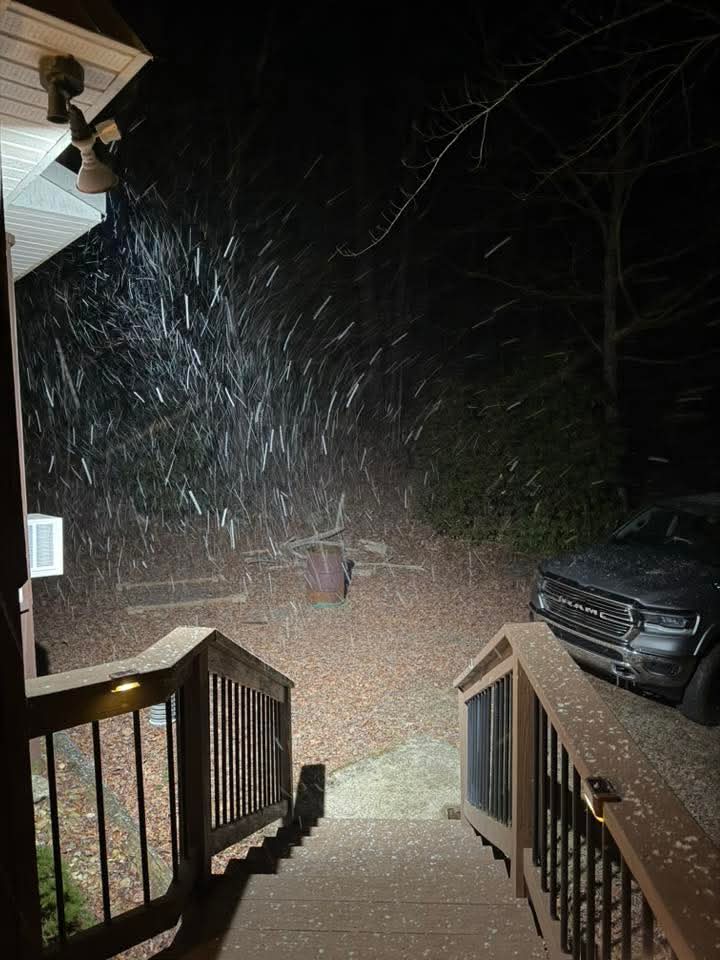
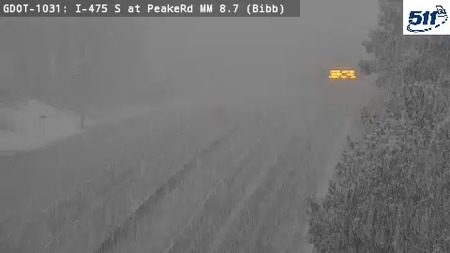
A coastal low brought a rare, light snowfall to Central Georgia Sunday morning. The snow was triggered by frigid air diving south behind a cold front, allowing snowflakes to form as far south as northern Florida.
In Georgia, areas including Columbus and Macon saw snow accumulate on the ground, with enough to make travel treacherous in spots. Snowfall totals were generally light, with between a dusting in many areas and up to 3″ near Monticello.
The Columbus area saw snow begin in the early morning hours, and by daybreak, around 1.5″ had accumulated. This was enough to coat cars, make travel a bit treacherous in spots, and put smiles on everyone’s faces.
Elsewhere, Thomaston reported 1.6″ with Barnesville reporting 1.5″.
Folks in Phenix City awoke to snow-covered lawns and vehicles. (Photo by Clairessa Raine)
Snow flurries on Tray Mountain (Photo: Pete Alvarado via Facebook)
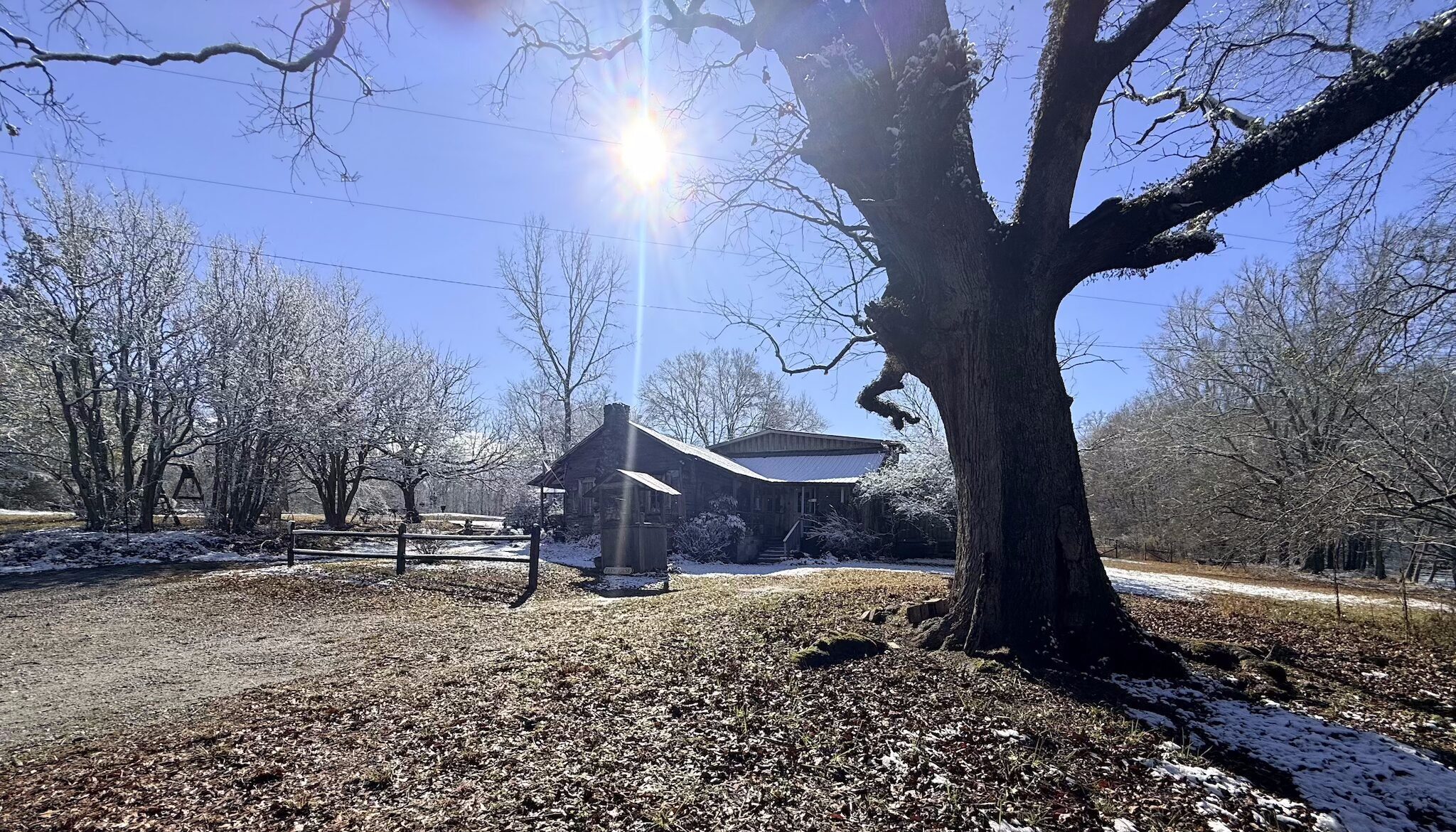
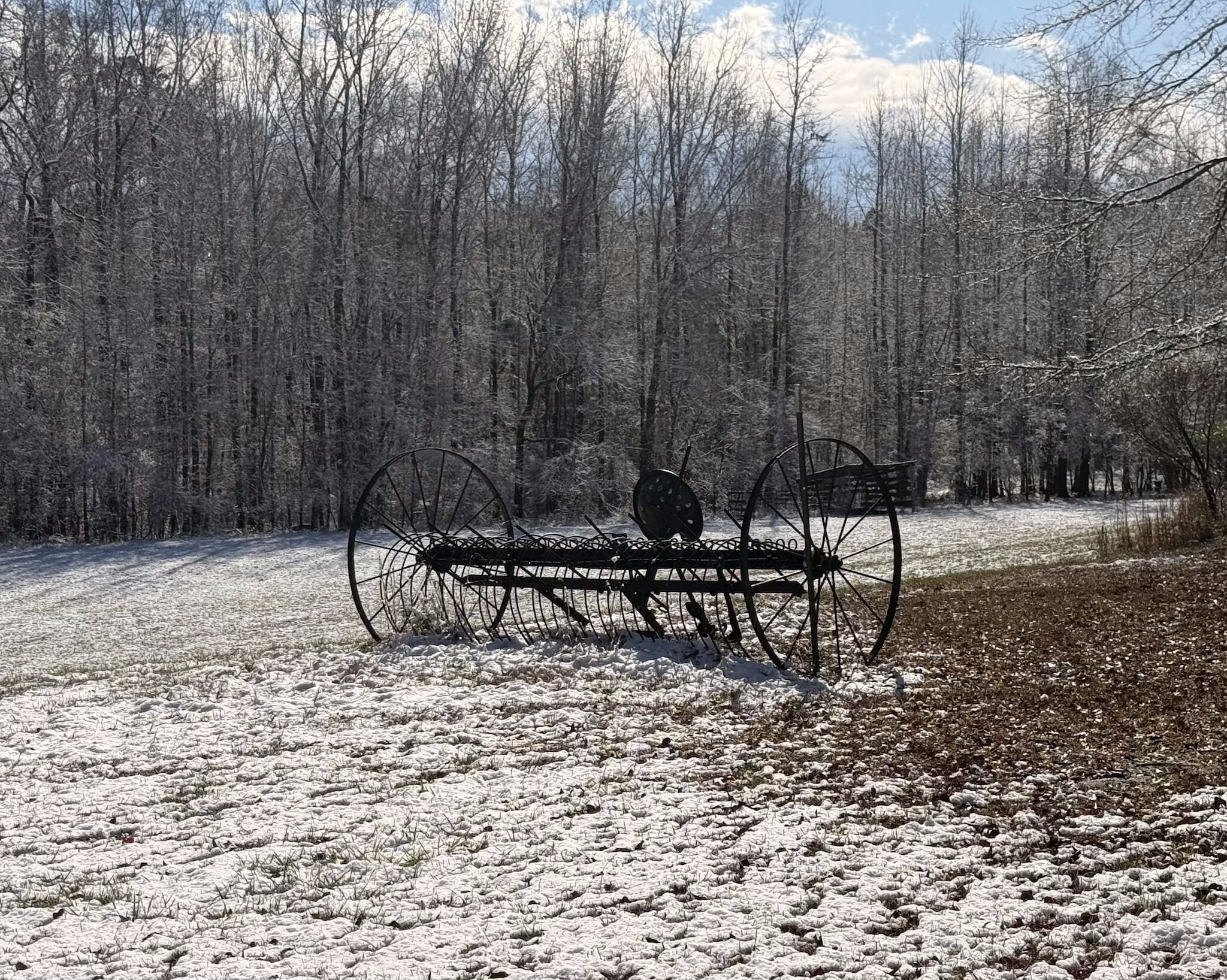
The sun beams through the trees in the yard of this farmhouse in Ellerslie, Georgia, as clouds clear from the rare winter storm. (Photo by Clairessa Raine)
Early morning snowfall in Macon, GA, on Jan. 18, 2026. (NWS Peachtree City/Facebook)
Ellerslie, GA (Photo by Clairessa Raine)
Phenix City, AL (Photo by Clairessa Raine)
Neighboring states
Across Southeastern Alabama, a winter storm warning was in effect early Sunday, with 1–2 inches of snow reported in Phenix City and places like Coffee, Dale, Henry and Geneva counties. Lighter amounts were seen in surrounding counties. Roads largely stayed free of snow cover as temperatures warmed and snow ended by late morning.
In the Florida Panhandle, areas to the west briefly turned into a “snowy state” for the second year in a row. Snow briefly dusted grass, rooftops and even palm trees in areas near Pensacola and Holt, though warmer ground temperatures kept roads mostly clear.
The southern snow was short-lived but memorable, drawing photos and social media posts from residents who rarely see winter precipitation.
The Winter Weather Advisory for the region has been allowed to expire as the snowfall moves northeast into parts of South and North Carolina.
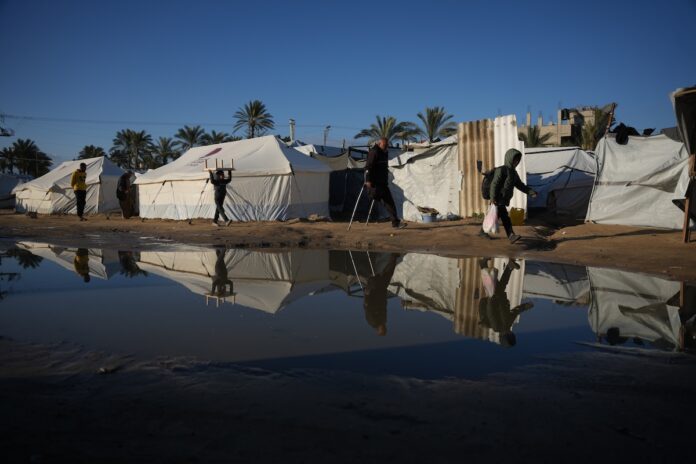
Sewage overflowed parts of a makeshift tent camp for displaced Palestinians in Deir al-Balah, Gaza Strip, Saturday, Jan. 17, 2026. (AP Photo/Abdel Kareem Hana)
At least six more countries said Sunday the United States has invited them to join U.S. President Donald Trump’s “Board of Peace,” a new body of world leaders meant to oversee next steps in Gaza that’s showing ambitions for a broader mandate in global affairs.
A $1 billion contribution secures permanent membership on the Trump-led board instead of a three-year appointment, which has no contribution requirement, according to a U.S. official who spoke on condition of anonymity about the charter, which hasn’t been made public. The official said the money raised would go to rebuilding Gaza.
Hungarian Prime Minister Viktor Orbán has accepted an invitation to join the board, Foreign Minister Péter Szijjártó told state radio on Sunday. Orbán is one of Trump’s most ardent supporters in Europe.
India has received an invitation, a senior government official with knowledge of the matter said, speaking on condition of anonymity as the information hadn’t been made public by authorities.
Jordan, Greece, Cyprus and Pakistan also said Sunday they had received invitations. Canada, Turkey, Egypt, Paraguay, Argentina and Albania have already said they were invited. It was not clear how many have been invited in all.
The U.S. is expected to announce its official list of members in the coming days, likely during the World Economic Forum meeting in Davos, Switzerland.
Those on the board will oversee next steps in Gaza as the ceasefire that took effect on Oct. 10 moves into its challenging second phase. It includes a new Palestinian committee in Gaza, the deployment of an international security force, disarmament of Hamas and reconstruction of the war-battered territory.
In letters sent Friday to world leaders inviting them to be “founding members,” Trump said the Board of Peace would “embark on a bold new approach to resolving global conflict.”
That could become a potential rival to the United Nations, the global body created in the wake of World War II. Its clout has been diminished by major funding cuts by the Trump administration and other donors, and its most powerful body, the U.N. Security Council, has been blocked by U.S. vetoes from taking action to end the war in Gaza.
The White House last week also announced an executive committee of leaders who will carry out the Board of Peace’s vision, but Israel on Saturday objected that the committee “was not coordinated with Israel and is contrary to its policy,” without details. The statement by Prime Minister Benjamin Netanyahu’s office was rare criticism of its close ally in Washington.
The executive committee’s members include U.S. Secretary of State Rubio, Trump envoy Steve Witkoff, Trump’s son-in-law Jared Kushner, former British Prime Minister Tony Blair, World Bank President Ajay Banga and Trump’s deputy national security adviser Robert Gabriel, along with an Israeli business owner, billionaire Yakir Gabay.
Members also include representatives of ceasefire monitors Qatar, Egypt and Turkey. Turkey has a strained relationship with Israel but good relations with Hamas and could play an important role in persuading the group to yield power in Gaza and disarm.
Stacy “Red” Mairon Jones, age 54, of Mount Airy, Georgia, went to be with the Lord on Saturday, January 17, 2026.
Mr. Jones was born on October 8, 1971, in Habersham County, Georgia. He was preceded in death by his brothers, Dale Jones and Bradley Jones.
Stacy worked the majority of his career in the Logging Industry, which he enjoyed immensely. He had a great love for fishing and enjoyed hunting as well. Most importantly, Stacy was a beloved “Poppy”, his greatest joy was his grandbabies.
Survivors include his loving wife, Sharon Burton Jones, of Mt. Airy; mother, Barbara Garrett, of Demorest; step-son, Jason Gilder, of Cleveland; step-son and daughter-in-law, Alex and Heather Gilder, of Alto; grandchildren, Abigail Gilder, Peyton Gilder, Jace Gilder, and Mykigh Burton; brothers, Todd Jones, of Cleveland; Roy Garrett and Heather, of Demorest; Dale Garrett, of Clarkesville; sisters, Tonya Kastner, of Cornelia; Stephanie Smith and Zackary, of Alto; as well as numerous nieces and nephews and many other relatives and friends.
Funeral Services will be held at 2:00 p.m., Thursday, January 22, 2026, at the Old Nacoochee Missionary Baptist Church with Rev. Bill Trotter officiating. Interment will follow in the church cemetery.
The family will receive friends from 5:00 p.m. to 8:00 p.m., Wednesday, January 21, 2026, at the Whitfield Funeral Home, North Chapel.
Arrangements have been entrusted to the Whitfield Funeral Homes & Crematory, North Chapel at 245 Central Avenue, Demorest, Georgia 30535. Telephone: 706-778-1700.
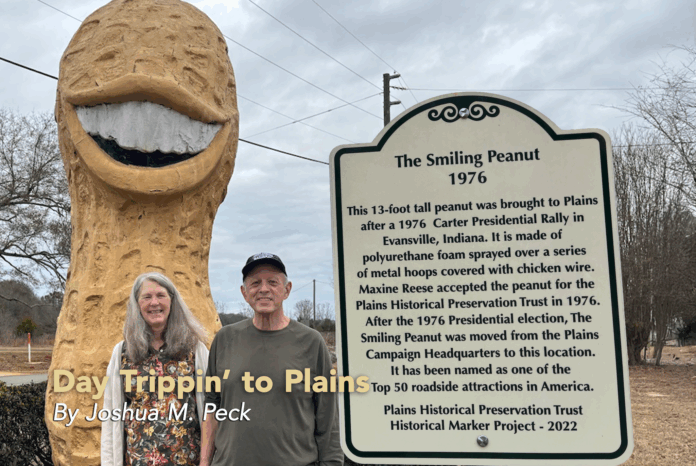
Joshua Peck and his wife, Elisa Frye, of Clarkesville, traveled to Plains, Georgia, to explore the place and people who shaped the life of late former President Jimmy Carter. (Photo by Joshua M. Peck)
PLAINS, Ga. — Even if you’re too young to remember Jimmy Carter, you probably know he was our only Georgia-born-and-bred president. Although the success of his presidency remains a subject of historical debate, one thing everyone can agree on is that he made a significant impact on America, even in his 46 post-presidential years. And he did it rising out of very modest roots, in Plains—a town so small it makes Clarkesville or Cusseta look like a metropolis.
My wife and I took a few days between Christmas and New Year’s to enjoy the Sumter County sites, now part of the Jimmy Carter National Historical Park run by the U.S. National Park Service. These are the places that made Jimmy Carter, well, Jimmy Carter. No one locale where he and his wife, Rosalynn, grew, learned, and governed in the area has anything more than an intimate small-museum feel to it, but in aggregate, the little town offers a stirring collection of memories of the 39th president, who died, aged 100, a year before our visit, in the waning days of 2024. Rosalynn died a year earlier.
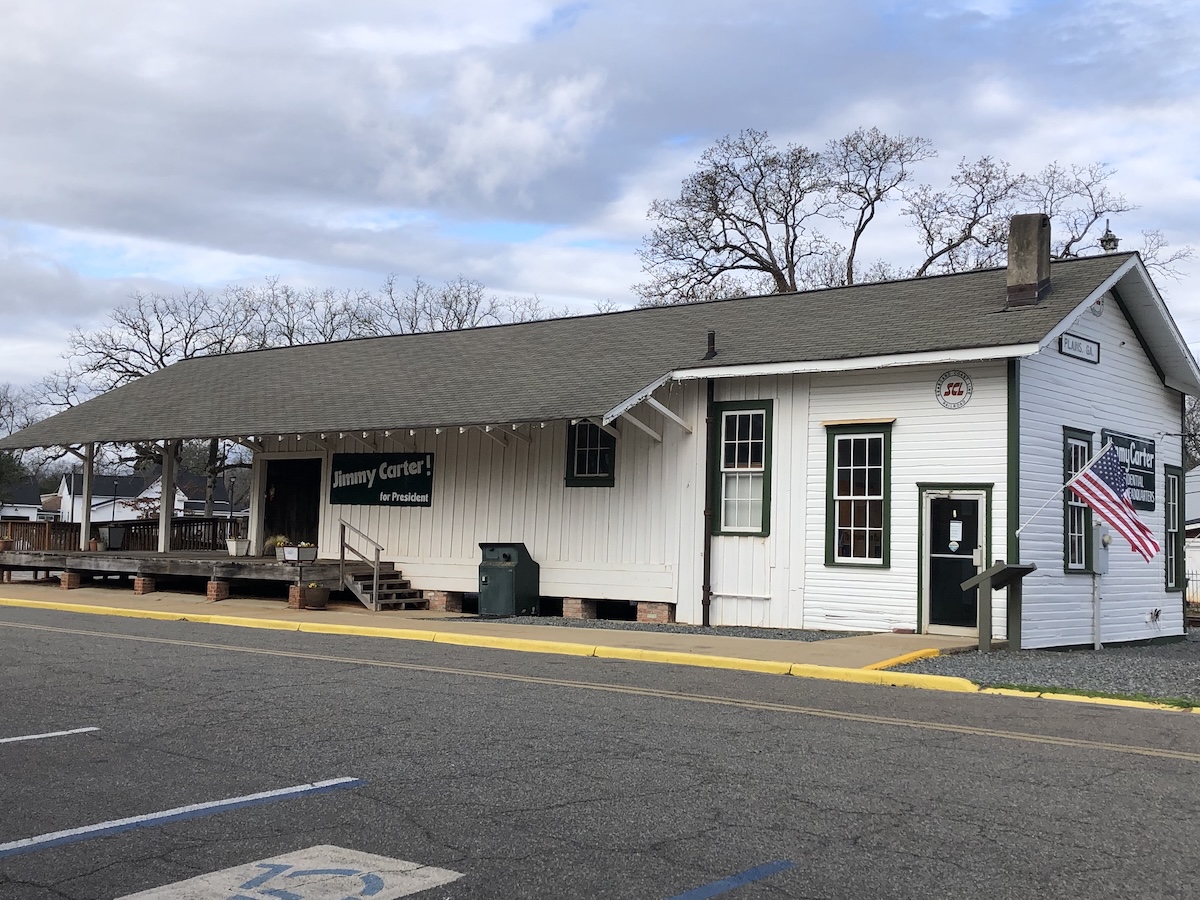
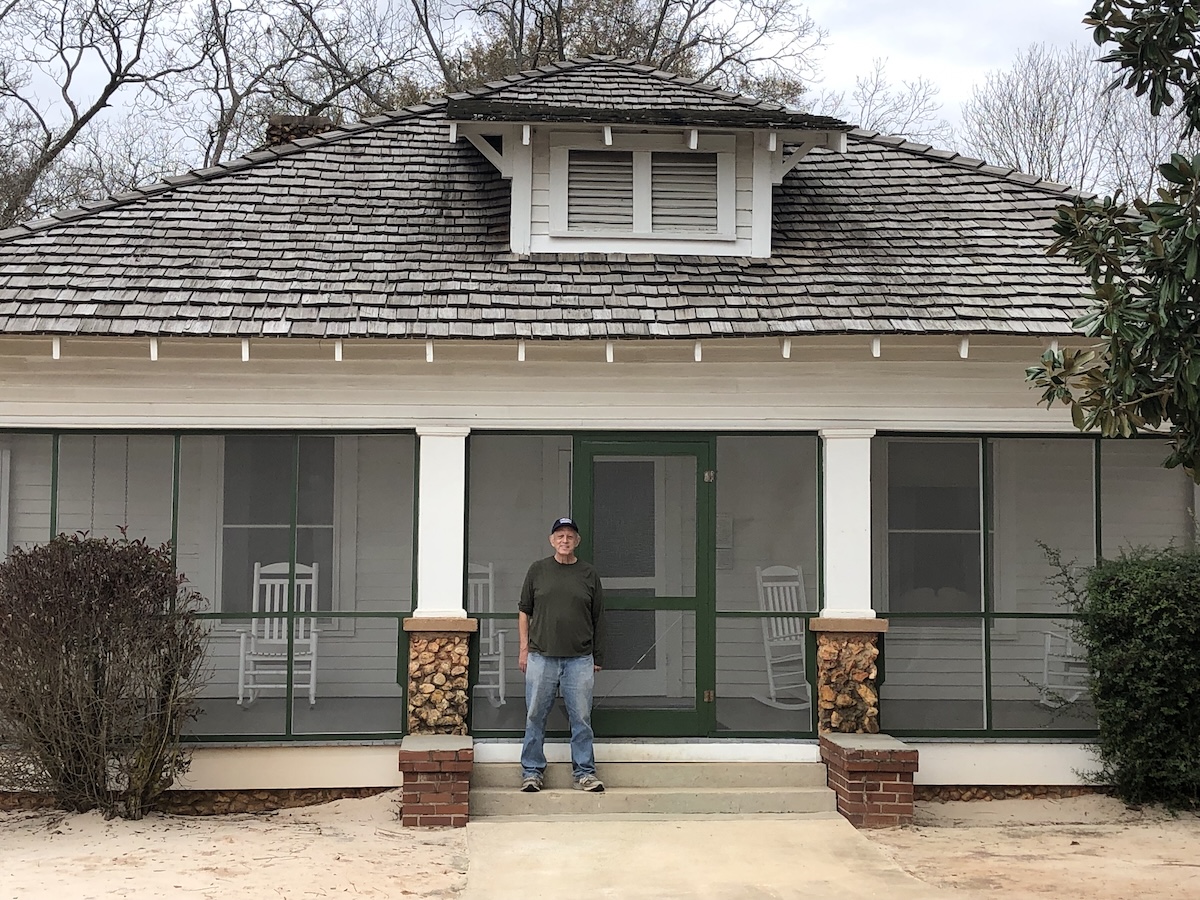
The old train depot in Plains still stands as President Jimmy Carter’s campaign headquarters. (Elisa T. Frye/Now Habersham)Joshua Peck outside President Carter’s boyhood home in Plains, Ga. (Photo by Elisa Frye)
After the presidency
Also remembered here are Carter’s extraordinary post-presidency years, consisting largely of peace-building, via Atlanta’s Carter Center, and occasionally, homebuilding, wielding a hammer and saw for Habitat for Humanity.
We started at the former Plains High School, where both Jimmy and Rosalynn had enormously formative years, particularly under the tutelage of one fondly remembered, influential teacher, memorialized here, Julia Coleman.
The high school is now given over entirely to remembering their early days and subsequent careers. Just a quick few hundred yards from “downtown” Plains (which amounts to perhaps a 100-yard row of stores and one restaurant), the school has exhibits about Carter’s rise from farm boy to Navy nuclear engineer, to farmer, to school board member (pushing for integration, ahead of his time), to state senator, to governor, and finally, president from 1977-1981.
We found ourselves quite moved by a 25-minute film about the Carters, with some moments that looked familiar from our own youth, and others less-remembered. Of the former, one striking image was the Carters, with young Amy in tow, hopping out of their limousine after his 1977 inauguration and walking the rest of the way to the White House, amidst the roaring crowds. It was a symbol of his intent to be the President of the People, following on the dark Nixon years, and President Gerald Ford’s abbreviated presidency after Nixon’s fall in disgrace.
The triumph at Camp David
Carter’s rise is well-documented here, and there’s a good deal about his signature foreign policy achievement, the 1978 Camp David Accords, culminating in the (lasting) peace agreement between Israeli Prime Minister Menachem Begin and Egyptian President Anwar Sadat.
The exhibits also encompass ample treatment of his service in lower office. It seems one mainstay of his public life was agitating—often against a hefty majority—against racial segregation. From the school board to the White House, he fervently sought equality among the races.
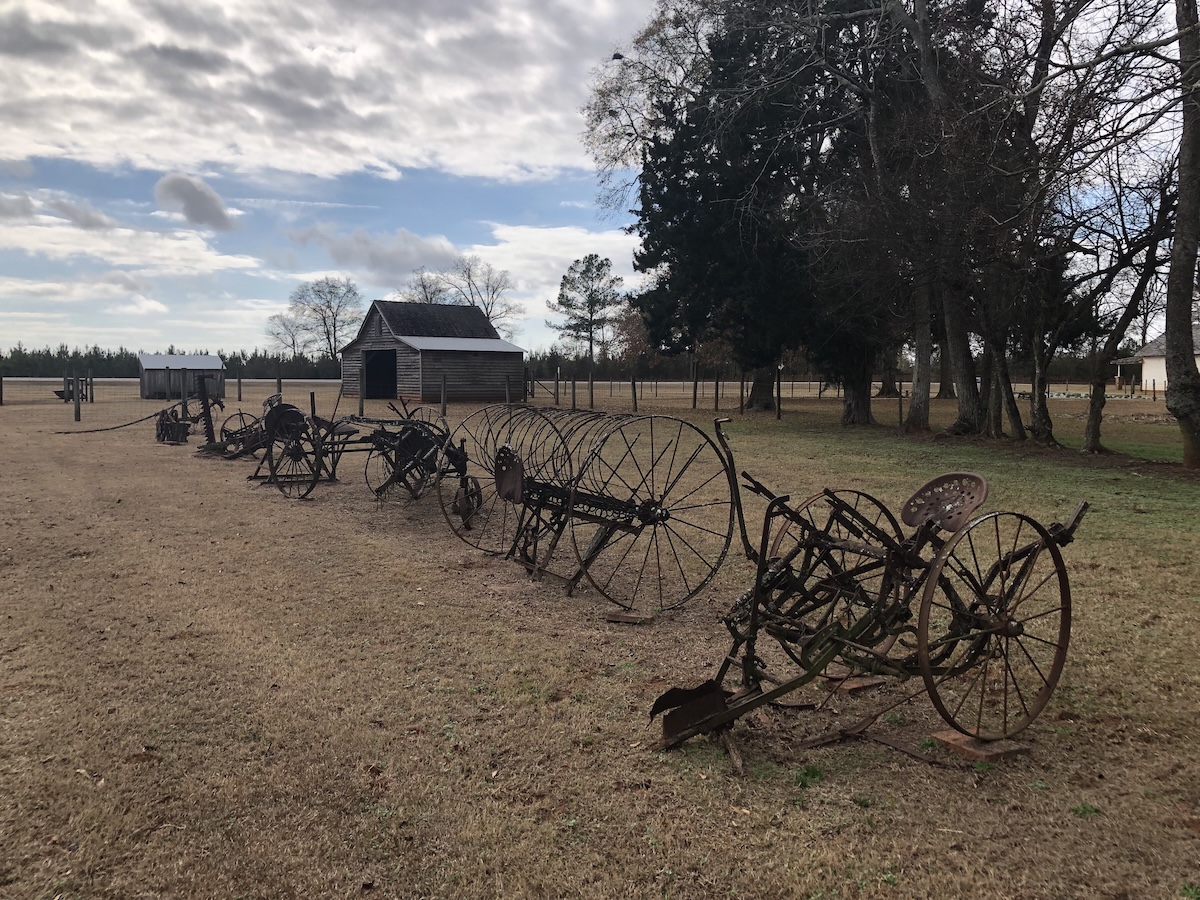
The Carter family farm in Plains, Ga. (Photo by Elisa T. Frye)
Along the way, we learn that Carter’s father, Earl (officially, James Earl Carter, Sr.), a local businessman and farmer, while he always endeavored to treat his Black and white customers the same, nevertheless maintained a firm belief that separating the races was the best policy. His son rebelled against that mindset.
And Jimmy’s mother, Lillian, who was alive throughout his presidency, was originally a nurse who insisted on providing equal care to patients of all races. She also treated Black people as her social equals, having them come through the front door of her home, which was not customary at the time.
Growing up with Black schoolmates
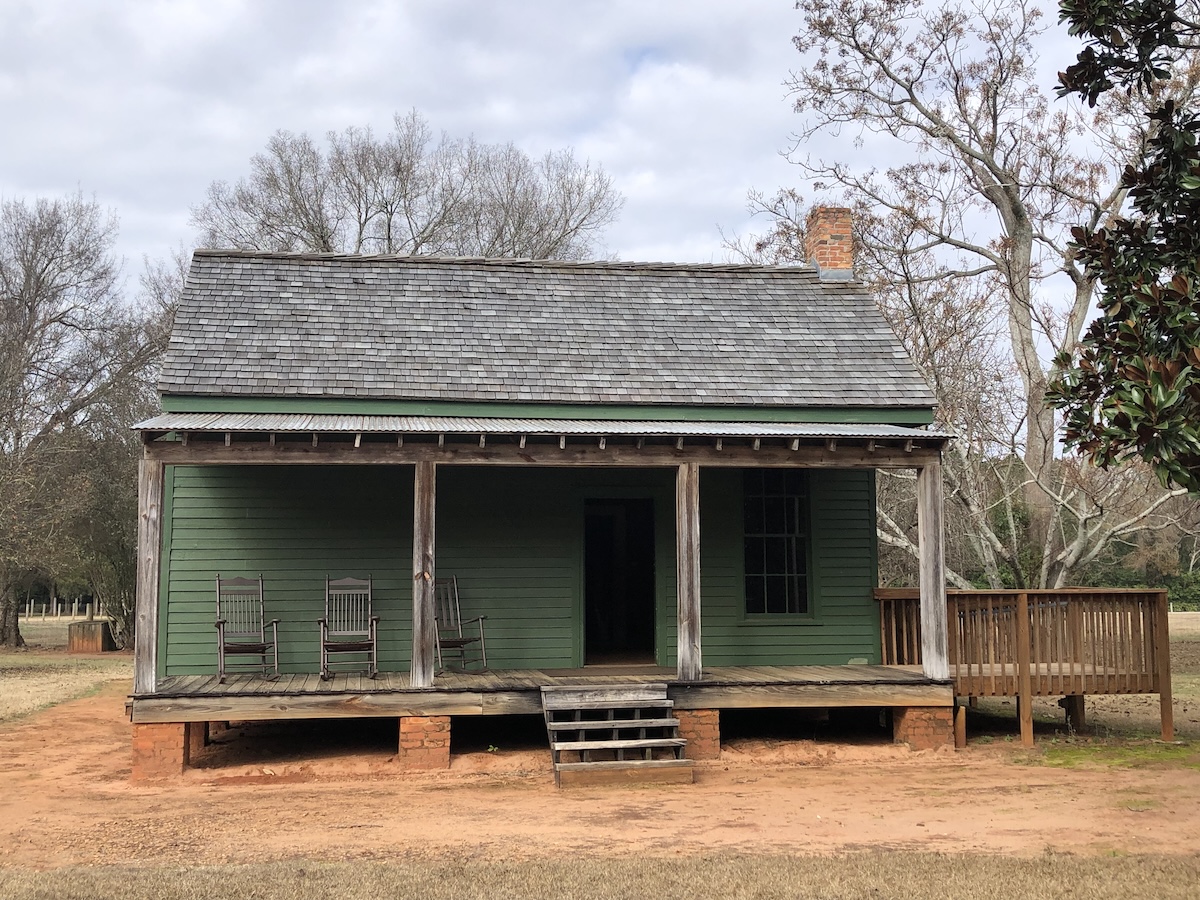
Soon, we saw how Carter came by his enlightened racial attitudes. We spent the most time on a brisk day on the Carter farm, not far west of Plains, in the tiny, unincorporated village of Archery. In Carter’s day, the village’s population consisted of 25 Black families and only one other white one. Most of Jimmy’s neighbors and school chums were Black. Significantly, Rachel and Jack Clark, a family of Black farmworkers, occupied their own house on the Carter farm, a few hundred yards from the Carters’ front door. One gets the impression they were virtually part of the Carter family.
The farm is (still) beautifully organized, in its current incarnation as a historic site. Well-organized garden space, a peanut field (of course), a barn for the livestock, a range of farm equipment, and a windmill that brought water out of the ground all look to be in working condition now, as then.
The home of Jack and Rachel Clark, the black family that worked on the Carter farm, still stands on the property. (Photo by Elisa T. Frye)
The house was heated in Carter’s youth by fireplaces, but the plaques indicate it was just the main one, in the senior Carters’ bedroom, that was generally alight, and where the Carters huddled for warmth in the winter. And personal needs were attended to outside, as was customary in the time and place, in a neighboring outhouse (no longer in use, as far as we could determine).
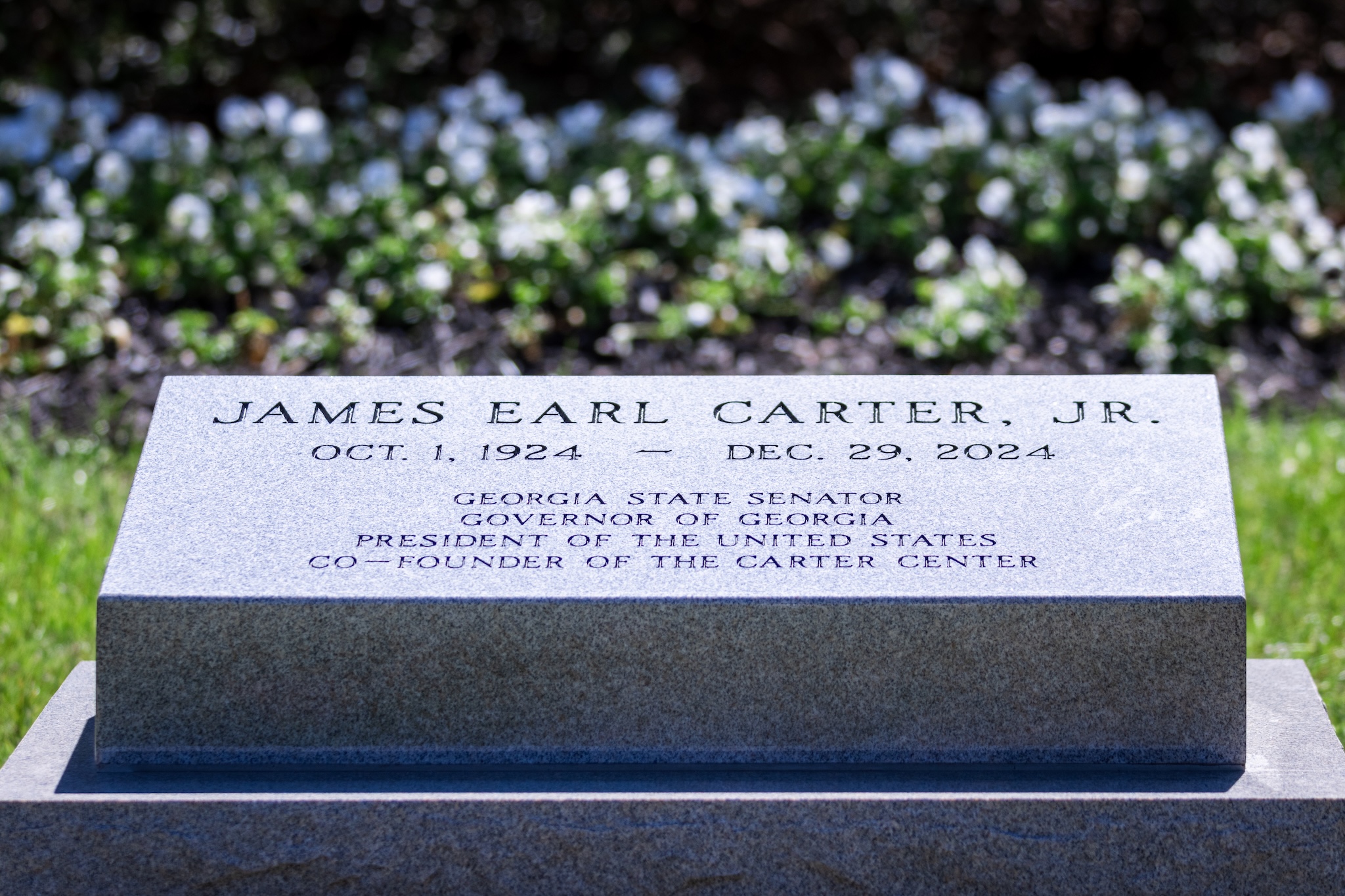
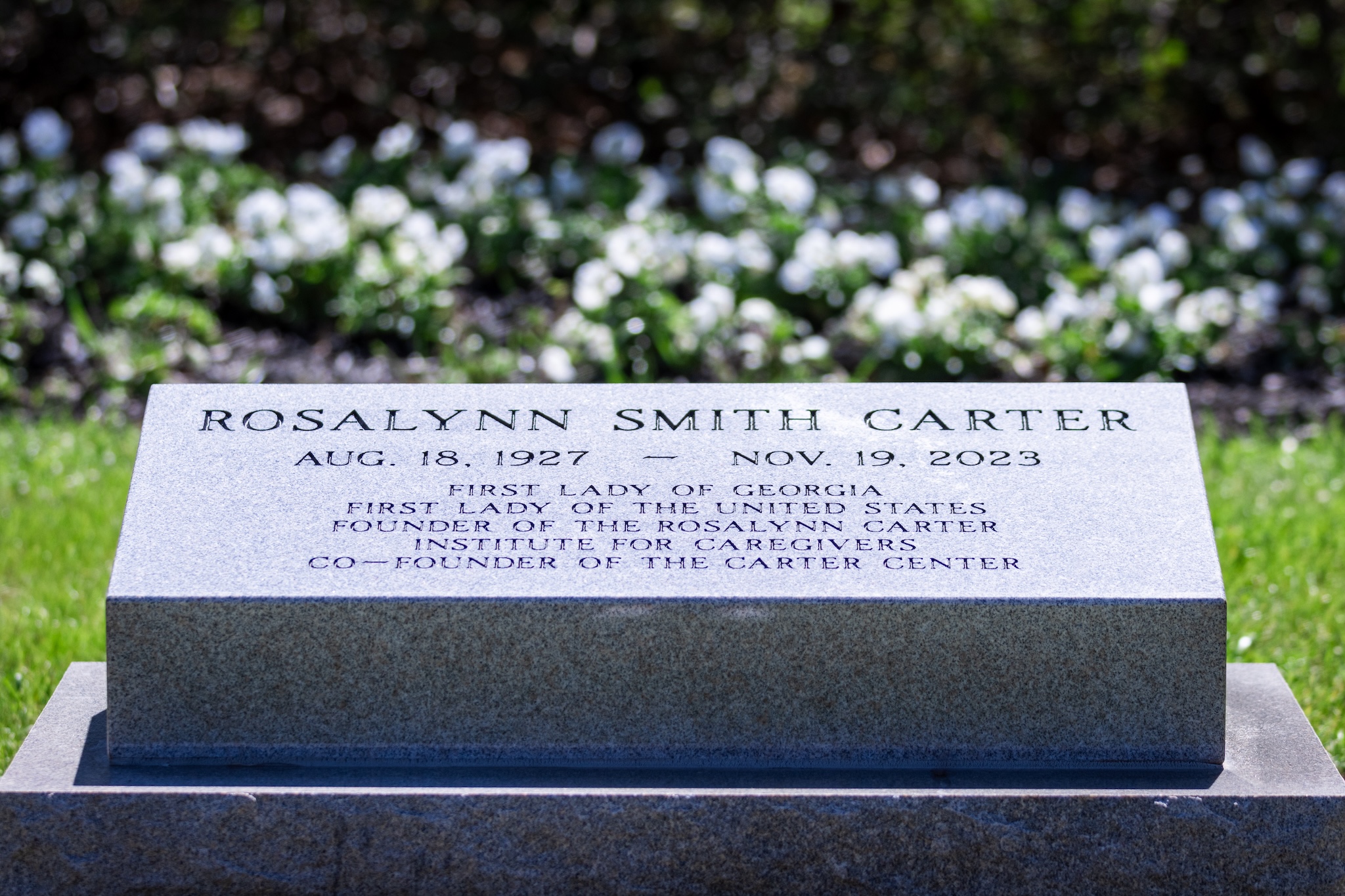
On the western edge of Plains is the modest ranch house where Jimmy and Rosalyn lived for most of their marriage (after a spell in public housing). One can’t enter their marital home, but we took a good gander, then wandered through the gardens across the way, where markers on the graves of the Carters gleam in the sun. There is a grass plot between the path and the graves, but the legends on the stones are fully visible, even without trampling (illegally) on the neighboring grass and flowers, as some of our fellow visitors insisted on doing.
Jimmy and Rosalyn Carter’s burial plot outside their home — now a national historic site — in Plains, Georgia. (Photo courtesy National Park Service)(Photo courtesy National Park Service)(Photo courtesy National Park Service)
The Baptist schism in Plains
The issue of race also showed up in worship, we learned. The Carters’ original church, Plains Baptist, was split by an attempt by four Black worshippers to attend. Perhaps in an attempt to saddle Carter’s 1976 presidential campaign with the issue, race also reared its head that very autumn. As The New York Times told it:
“The Plains Baptist Church, where Jimmy Carter is a deacon, locked its doors and refused to hold services today rather than admit four blacks in violation of a resolution passed in 1965 barring Negroes and ‘civil rights agitators.’
The resolution was opposed by Mr. Carter at the time of its passage, and resulted in a temporary boycott of his peanut business by townspeople.”
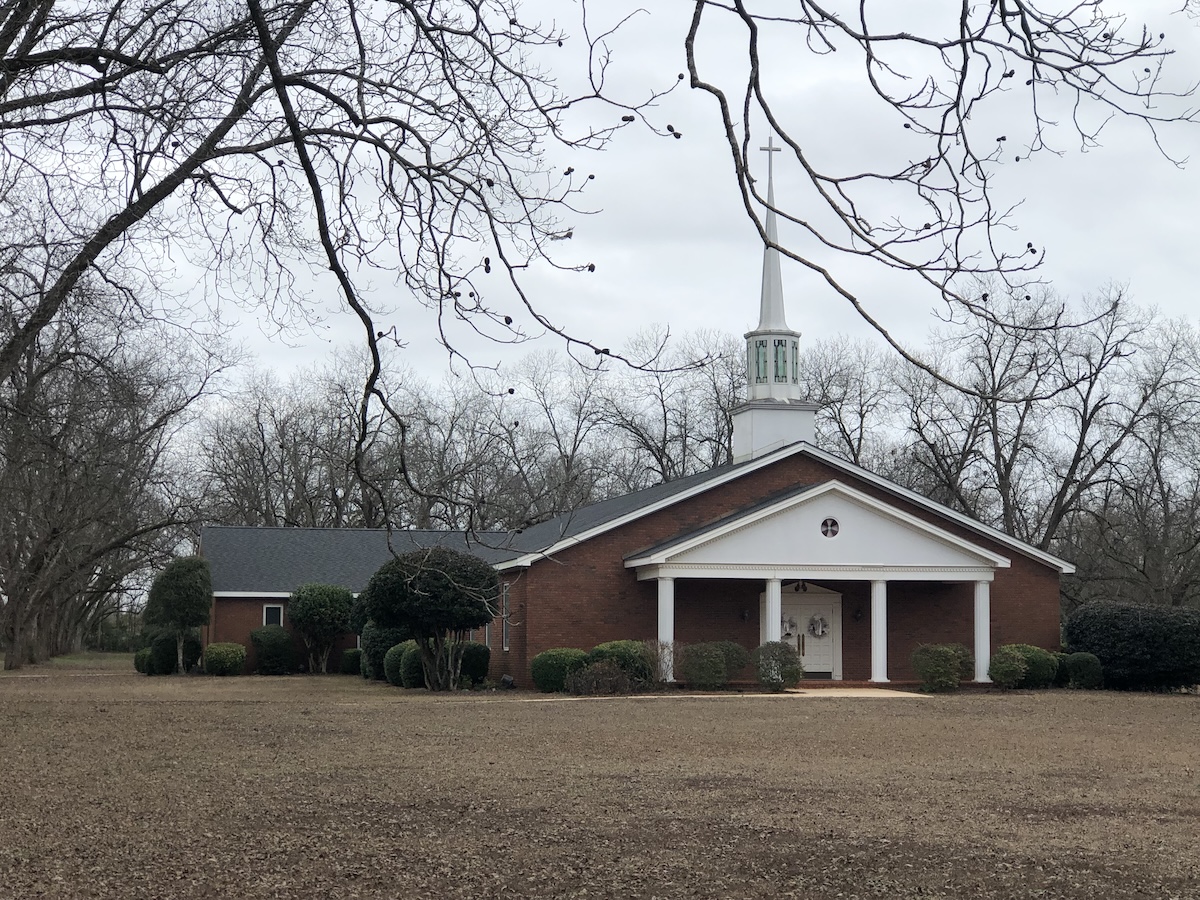
Marathana Baptist Church, where President Carter taught Sunday School all the way until the COVID-19 outbreak in 2020. (Elisa T. Frye/Now Habersham)
The Carters ended up among the small group of Plains Baptist Church members to break off and form Maranatha Baptist Church—again, a stone’s throw from the downtown stores—which welcomed Black and white congregants alike from the outset. It was at this church where Carter, famously, taught Sunday School for years, often in front of visitors from across the state and the country, who were intrigued by seeing the then-former-president in perhaps his most natural habitat.
Maranatha was closed the day we stopped by, but I was struck by the spare building, and by a sign which, to me (a native Northerner), seemed exotic: “NOTICE: NO HARVESTING OF PECANS ON THIS PROPERTY. PRIVATE PROPERTY.” Well, perhaps I’m a yokel, but I’d never seen any pecan on a tree before, and I certainly didn’t pick one there.
Where to stay
If you are intrigued and might consider a visit, we recommend the best hotel in Plains (it also seems to be the only one), The Plains Inn and Antiques Mall. Each cozy room is decorated in the style of a different decade, from the 1920s to the 1980s—we enjoyed the Roaring ‘40s. Good coffee is offered in a central social room, and of course, the Inn offers proximity to the historic sites and a (very) few places nearby to grab lunch.
For more food options and entertainment, the place to go is Americus, just 15 minutes down the road. It has about 16,000 residents, slightly more than Plains’ 573. There are restaurants of almost every description in Americus, including both a nice bar and grill and a fancy sit-down restaurant in the elaborate Windsor Hotel downtown.
On your way in or out of Plains, you may want to visit the Andersonville National Historic Site, the notorious Confederate prison. We skipped it, but the history is astounding (and distressing).
Just a short drive through the historic backroads of Georgia will put you in the seat of some not-very-long-ago Georgian and American history. Consider it recommended.
This year, we will celebrate the founding of our nation, and it promises to be great fun! Flags will be flying, bands will be playing, fireworks will be exploding, and Americans everywhere will be rejoicing… hopefully. Will history remember our joy, or will our celebration be altered, distorted, or revised in the future?
Historians recognize that history is inherently revisionist. This emphasizes how new evidence and perspectives can help us better understand past events, rather than merely reflecting the suppression of facts for political reasons.
The Lost Cause Narrative used by Southerners after the Civil War is only one of many instances where people tried to rewrite factual history. We attempted to romanticize the Old South by downplaying the central role of slavery in the conflict. As a result, this narrative was widely accepted by white America for decades and influenced textbooks nationwide.
Textbook censorship and bias have existed for over a century. Political battles have erupted over the content in history books, with some demanding that publishers alter the narrative to align with regional perspectives.
The truth is that history is always marked by events we would prefer to forget or wish would disappear. All nations have histories that include shame, regret, and actions driven by hate—ours included.
The horror that Native Americans endured on the Trail of Tears and the injustices faced by Japanese Americans during World War II cannot be erased or sanitized; our actions were real. We cannot eliminate the bloodshed caused by antisemitism or racism. No power can rewrite the hate and bigotry that so many people still remember today.
We have made errors in the past, and our leaders have as well. The only way to correct these mistakes is by learning from history. We cannot ignore the truth or create a false version of events, as the facts will always prevail over our words. Truth and facts must take precedence over denial. Accepting reality, whether positive or negative, allows future generations to thrive and helps them avoid repeating our errors.
There are days in my life as an American that I wish were just a bad dream. For instance, the day when fire hoses were turned on Black protesters in Birmingham, or the times when men shrouded in white burned crosses. I recall an era when children of color were banned from entering schools or denied food services simply because of the color of their skin.
How can we allow such egregious behavior to be whitewashed? I pray that our history teaches our children to never close the door to anyone due to the misguided belief that they are better than others.
We must not erase history or ignore facts to create a more patriotic or sanitized version of America. Our identity is shaped by the lessons we’ve learned from our mistakes, and we continue to evolve.
Another day I wish I could erase, but cannot, is January 6, 2021. The images from that day still haunt me and will never fade away. Like many others, I witnessed the events unfolding. Six demonstrators lost their lives, and many more were injured. A police officer also died, and several others later took their own lives. We all know the story, but how many have tried to sanitize the vision?
Our president pardoned those who participated in the march and has recently rewritten the narrative surrounding the events of January 6. He now portrays it as a peaceful protest, despite the facts that played out before our eyes. The truth is stark and undeniable, marked by the blood spilled in our Capitol’s halls, the vandalism on the walls, and the shame it represents. This serves as a reminder of the importance of honesty.
We have fought against nations that committed atrocities, including the murder of six million Jewish people, terrorized their own citizens, and lived under ruthless dictatorships. Countless soldiers lost their lives in these battles to prevent such horrors from reaching American shores.
The goodness of America must continue to shine through our dark times. Our patriotism will thrive if we unite and acknowledge the reality of our sorrowful days. No one can truly rewrite history, as it has a way of revealing the truth and resurfacing. Therefore, when future generations read about us, let them read that we learned from our mistakes and forged a path forward in unity, resolving to become better people, embracing forgiveness, and honoring God.
Did Japanese Americans finally assimilate back into society? Do Native Americans still endure pain? Do we still see the Ku Klux Klan burning crosses? Are fire hoses still used on Black American protesters today?
The answer should be no, as we hopefully have learned from the lessons that truthful history provides.
As we celebrate our 250th year, may the banners fly, and fireworks glow, for we have survived both good and evil days to live free in this land called America.
28 Years Later: The Bone Temple is a direct follow-up to last summer’s 28 Years Later. This franchise is proving to have more and more intriguing possibilities about where it should go, and I’m liking where it might be headed.
Fans of the previous installments are in for a sequel that doubles down on the amount of gore and violence in some brutal sequences that are often creative, as well as some surprisingly thoughtful moments and well-acted performances from its cast.
Ralph Fiennes returns from 28 Years as Dr. Ian Kelson, who still takes care of his Bone Temple as a memorial for those who died in the apocalypse. The structures are nothing but human bones. He befriends a mutated zombie whom he names Samson because Samson is influenced by the effects of his blowpipe. Samson gradually feels the need to no longer attack Kelson, and Kelson tries to figure out a cure that can hopefully reverse the process.
Jack O’Connell plays Sir Lord Jimmy Crystal, the leader of a demonic cult full of children known as the Fingers, and their latest recruit is a kid named Spike (Alfie Williams) who is virtually reluctant to have anything to do with the Fingers. Crystal renames Spike “Jimmy” as he does with the other members.
The movie follows separate storylines that inevitably interconnect: The Fingers terrorize pretty much anyone who gets in their way, and Kelson continues his research for a cure to the virus.
Director Nia DaCosta takes over the reins for the sequel from Danny Boyle, and her style and approach stay true to the spirit of its predecessors as it combines a genuinely dreadful atmosphere with the occasional sequences of over-the-top lunacy to give it the edge we’ve come to expect.
Fiennes delivers another solid performance as Kelson, who hasn’t lost hope of creating his cure. The moments between him and Samson are effective because the movie gives those scenes time to breathe rather than be about gratuitous violence.
There’s also a sense of faith vs. science when Kelson and Crystal debate their radical spiritual ideas, but it never hits the audience over the head. Fiennes and O’Connell get some terrific scenes together.
The Bone Temple has moments of innovation and possibilities for where the story may go next. I think fans will appreciate what’s in store for them. It may not make any new converts, but there are plenty of thrills, brilliance, and absurdity at its core.
Grade: A-
(Rated R for strong bloody violence, gore, graphic nudity, language throughout, and brief drug use.)
The fire broke out at Casa Bariachi's on Friday morning, October 24, 2025. Multiple businesses in the strip mall where the restaurant is located were impacted by the smoke. (Hazel Cording/NowHabersham.com)
CORNELIA, Ga. — Renovations are continuing at Casa Bariachi following a fire in late October, with the restaurant’s owner now targeting the last week of January for a reopening.
Veronica Fuentes of Casa Bariachi told Now Habersham‘s Hazel Cording the project has taken longer than initially expected after damage was found beyond the area directly impacted by the fire.
“At the beginning we thought we were just going to fix the part that was burned or caught on fire,” Fuentes said. “But once we started looking at everything and the smell, we decided to do bigger renovations, and that’s what’s taking longer.”
Smoke and fire damage forced the restaurant to close for repairs and renovations. (Hazel Cording/NowHabersham.com)
Fuentes said smoke odor had permeated the building, including walls and furniture, prompting more extensive repairs. City inspections and updated code requirements have also played a role in the timeline, she said.
As work continues, Fuentes said she is hopeful the pace will pick up this month and allow the restaurant to reopen by late January, pending final approvals.
When Casa Bariachi reopens, Fuentes said customers can expect a celebratory atmosphere, including activities for families and adults, drink specials, and entertainment.
“We want to do special things for them,” she said, adding that many regular customers have been eagerly awaiting the restaurant’s return. “We can’t wait to see our friends.”
Fuentes said she expects many familiar faces to return when the restaurant reopens, including most of the kitchen staff and some longtime servers.
“I will definitely be here,” she said. “I can’t wait to see my friends and my customers.”
Casa Bariachi has been a longtime fixture in Cornelia, and Fuentes said the renovations mark a fresh start for the new year.
“New plans for the new year, new renovations, and a lot of new fun,” she said.
A firm reopening date is expected to be announced later this month.
Tallulah Falls reeled off its second straight win in a 46-35 victory Saturday against #9-ranked Bethlehem Christian. It marks the first top-10 win for the Lady Indians this season, and third all-time.
TFS jumped out to a 20-4 opening quarter. It was a low-scoring second, where both teams combined for nine points, which had Tallulah up 24-9.
Bethlehem closed the gap to just an 8-point game going into the final period. The Lady Indians then outscored Bethlehem 16-13 in the final eight minutes.
Marta Beltran had 10 points, while Klara Dvorakova and Lia Sanjur each recorded nine. Nora Mitchell chipped in with six, LB Kafsky had four, and Ines Gil finished with two.
Former NFL Coach of the Year and New Atlanta Falcons head football coach Kevin Stefanski was fired by the Cleveland Browns earlier this year.(AP Photo/Jeff Dean)
ATLANTA (AP) — Kevin Stefanski was hired as coach of the Atlanta Falcons on Saturday night, getting a second chance to lead an NFL team less than two weeks after he was fired by the Cleveland Browns.
Stefanski spent six seasons with Cleveland, where he twice was named AP Coach of the Year and had a 45-56 record. He was fired on Jan. 5 after the Browns finished a 5-12 season.
Stefanski replaces Raheem Morris, who was fired alongside general manager Terry Fontenot after an 8-9 campaign in his second season leading the franchise. He will report to newly appointed team president Matt Ryan, who also holds most of the Falcons’ major passing records.
“We’re thrilled to land a lead-by-example leader in Kevin Stefanski, who brings a clear vision for his staff, our team and a closely aligned focus on building this team on fundamentals, toughness and active collaboration with every area of the football operation,” Ryan said in a statement.
Falcons owner Arthur Blank brought Ryan on as his second-in-command and the leading decision-maker for the franchise.
“Coach Stefanski is a team-first leader who puts a premium on accountability for everyone and a player-driven culture,” Ryan said. “His experience in Cleveland and Minnesota has given him a great understanding of the importance of working in sync with scouting, personnel and the rest of the football staff to maximize talent across the roster and in doing everything possible to put our players in the best position to succeed.”
Stefanski was named AP Coach of the Year in 2020 after leading the Browns to an 11-5 record, their first playoff appearance since 2002 and their first postseason win since 1994. He was honored again in 2023 when the Browns finished 11-6 and made the playoffs, but those were his only two winning seasons with Cleveland.
The coach climbed the ranks in Minnesota for 14 years with the Vikings before being hired by Cleveland in 2020. He overlapped with Falcons quarterback Kirk Cousins in 2018 and 2019.
“I’m beyond thrilled to be charged with leading this iconic franchise,” Stefanski said. “I am grateful to Mr. Blank and Matt Ryan for trusting me to coach this football team and there are many talented players on our roster that I cannot wait to coach. We share a vision for this football team that I believe will make Falcons fans everywhere proud.”
Stefanski inherits a roster that includes four players who were named All-Pros in 2025. Bijan Robinson was named a first-team running back and second-team all-purpose player. Tight end Kyle Pitts Sr., right guard Chris Lindstrom and safety Jessie Bates III each earned second-team honors.
But he also has to weather some uncertainty at quarterback. Shortly after signing Cousins to a four-year, $180 million deal in 2024, the Falcons drafted Michael Penix Jr. in the first round of the NFL draft. Cousins lost the starting job after underperforming midway through the 2024 season. Penix finished his rookie season and started the 2025 campaign as the starter before going down with a season-ending knee injury.
Cousins stepped in for the last nine games, leading the Falcons to a 5-4 record and four straight wins to close out the season. Penix’s recovery is expected to linger into training camp.
Stefanski has experience with quarterback uncertainty. The Browns had rotating quarterbacks throughout most of his tenure after trading former first-overall pick Baker Mayfield and acquiring Deshaun Watson. Joe Flacco, Dillon Gabriel and Shedeur Sanders each made starts in 2025.
The Falcons also have several other staffing decisions ahead of them, including general manager.
“We will get to work immediately putting together a first-class coaching staff and working hard to get to know all the great people that are so important to getting us all where we want to go,” Stefanski said.
NUUK, Greenland (AP) — Thousands of Greenlanders carefully marched across snow and ice to take a stand against U.S. President Donald Trump on Saturday. They held signs of protest, waved their national flag and chanted “Greenland is not for sale” in support of their own self-governance in the face of increasing threats of an American takeover.
Just as they finished their trek from the small downtown of Greenland’s capital city Nuuk to the U.S. Consulate, the news broke: Trump, from his home in Florida, announced he will charge a 10% import tax starting in February on goods from eight European countries over their opposition to U.S. control of Greenland.
“I thought this day couldn’t get any worse but it just did,” Malik Dollerup-Scheibel said after The Associated Press told him about Trump’s announcement. “It just shows he has no remorse for any kind of human being now.”
Greenlandic Prime Minister Jens-Frederik Nielsen speaks during a protest against Trump’s policy towards Greenland in front of the US consulate in Nuuk, Greenland, Saturday, Jan. 17, 2026. (AP Photo/Evgeniy Maloletka)
Dollerup-Scheibel, a 21-year-old Greenlander, and Greenland Prime Minister Jens-Frederik Nielsen were among what others described as the island’s biggest protest, drawing nearly a quarter of Nuuk’s population. Others held rallies and solidarity marches across the Danish realm, including in Copenhagen, as well as in the capital of the Inuit-governed territory of Nunavut in Canada’s far north.
“This is important for the whole world,” Danish protester Elise Riechie said as she held Danish and Greenlandic flags in Copenhagen. “There are many small countries. None of them are for sale.”
In Nuuk, Greenlanders of all ages listened to traditional songs as they walked to the consulate. Marie Pedersen, a 47-year-old Greenlander, said it was important to bring her children to the rally “to show them that they’re allowed to speak up.”
“We want to keep our own country and our own culture, and our family safe,” she said.
Her 9-year-old daughter, Alaska, crafted her own “Greenland is not for sale” sign. The girl said her teachers have addressed the controversy and taught them about NATO at school.
“They tell us how to stand up if you’re being bullied by another country or something,” she said.
A girl shouts during protest against Trump’s policy towards Greenland in front of the US consulate in Nuuk, Greenland, Saturday, Jan. 17, 2026. (AP Photo/Evgeniy Maloletka)
Meanwhile, Tom Olsen, a police officer in Nuuk, said Saturday’s protest was the biggest he’s ever seen there.
“I hope it can show him that we stand together in Europe,” he said. “We are not going down without a fight.”
Tillie Martinussen, a former member of Greenland’s parliament, said she hopes the Trump administration will “abandon this crazy idea.”
“They started out as sort of touting themselves as our friends and allies, that they wanted to make Greenland better for us than the Danes would,” she said as others chanted in the background. “And now they’re just plain out threatening us.”
She added that the push to preserve NATO and Greenland’s autonomy were more important than facing tariffs, though she added that she was not dismissing the potential economic impact.
“This is a fight for freedom,” she said. “It’s for NATO, it’s for everything the Western Hemisphere has been fighting for since World War II.”
But when the AP asked Louise Lennert Olsen what she would say to Trump, the 40-year-old Greenlandic nurse instead said she wanted to give a message to the American people.
“I would really like them to support our wish to be Greenland as we are now,” she said as she marched through Nuuk. “I hope they will stand against their own president. Because I can’t believe they just stand and watch and do nothing.”














Reshaping history teaches no lessons
This year, we will celebrate the founding of our nation, and it promises to be great fun! Flags will be flying, bands will be playing, fireworks will be exploding, and Americans everywhere will be rejoicing… hopefully. Will history remember our joy, or will our celebration be altered, distorted, or revised in the future?
Historians recognize that history is inherently revisionist. This emphasizes how new evidence and perspectives can help us better understand past events, rather than merely reflecting the suppression of facts for political reasons.
The Lost Cause Narrative used by Southerners after the Civil War is only one of many instances where people tried to rewrite factual history. We attempted to romanticize the Old South by downplaying the central role of slavery in the conflict. As a result, this narrative was widely accepted by white America for decades and influenced textbooks nationwide.
Textbook censorship and bias have existed for over a century. Political battles have erupted over the content in history books, with some demanding that publishers alter the narrative to align with regional perspectives.
The truth is that history is always marked by events we would prefer to forget or wish would disappear. All nations have histories that include shame, regret, and actions driven by hate—ours included.
The horror that Native Americans endured on the Trail of Tears and the injustices faced by Japanese Americans during World War II cannot be erased or sanitized; our actions were real. We cannot eliminate the bloodshed caused by antisemitism or racism. No power can rewrite the hate and bigotry that so many people still remember today.
We have made errors in the past, and our leaders have as well. The only way to correct these mistakes is by learning from history. We cannot ignore the truth or create a false version of events, as the facts will always prevail over our words. Truth and facts must take precedence over denial. Accepting reality, whether positive or negative, allows future generations to thrive and helps them avoid repeating our errors.
There are days in my life as an American that I wish were just a bad dream. For instance, the day when fire hoses were turned on Black protesters in Birmingham, or the times when men shrouded in white burned crosses. I recall an era when children of color were banned from entering schools or denied food services simply because of the color of their skin.
How can we allow such egregious behavior to be whitewashed? I pray that our history teaches our children to never close the door to anyone due to the misguided belief that they are better than others.
We must not erase history or ignore facts to create a more patriotic or sanitized version of America. Our identity is shaped by the lessons we’ve learned from our mistakes, and we continue to evolve.
Another day I wish I could erase, but cannot, is January 6, 2021. The images from that day still haunt me and will never fade away. Like many others, I witnessed the events unfolding. Six demonstrators lost their lives, and many more were injured. A police officer also died, and several others later took their own lives. We all know the story, but how many have tried to sanitize the vision?
Our president pardoned those who participated in the march and has recently rewritten the narrative surrounding the events of January 6. He now portrays it as a peaceful protest, despite the facts that played out before our eyes. The truth is stark and undeniable, marked by the blood spilled in our Capitol’s halls, the vandalism on the walls, and the shame it represents. This serves as a reminder of the importance of honesty.
We have fought against nations that committed atrocities, including the murder of six million Jewish people, terrorized their own citizens, and lived under ruthless dictatorships. Countless soldiers lost their lives in these battles to prevent such horrors from reaching American shores.
The goodness of America must continue to shine through our dark times. Our patriotism will thrive if we unite and acknowledge the reality of our sorrowful days. No one can truly rewrite history, as it has a way of revealing the truth and resurfacing. Therefore, when future generations read about us, let them read that we learned from our mistakes and forged a path forward in unity, resolving to become better people, embracing forgiveness, and honoring God.
Did Japanese Americans finally assimilate back into society? Do Native Americans still endure pain? Do we still see the Ku Klux Klan burning crosses? Are fire hoses still used on Black American protesters today?
The answer should be no, as we hopefully have learned from the lessons that truthful history provides.
As we celebrate our 250th year, may the banners fly, and fireworks glow, for we have survived both good and evil days to live free in this land called America.