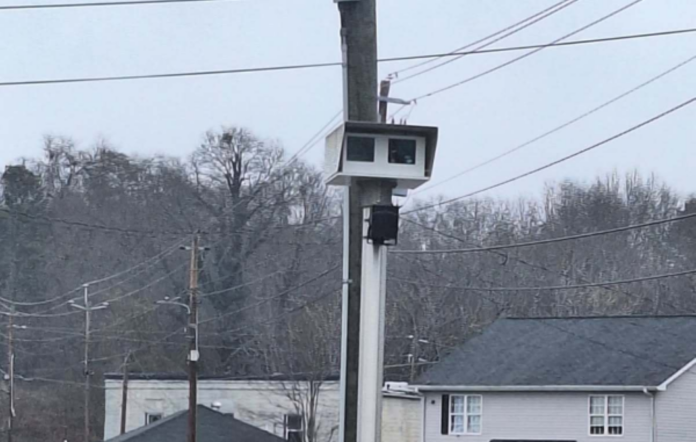
In mid-December, Now Habersham received an email complaint from citizen April Rooks regarding the school speed zone cameras in the City of Baldwin. Rooks raised several concerns regarding the operation of the cameras, the flashing warning lights in the area, and how the city uses funds generated by citations.
Now Habersham reached out to Baldwin Police Chief Chris Jones regarding the accusations. Chief Jones replied with responses to Rooks’ concerns and minutes from City of Baldwin meetings.
The school zone cameras have long raised concerns with citizens, some calling them “revenue generators.”
Citizen concerns
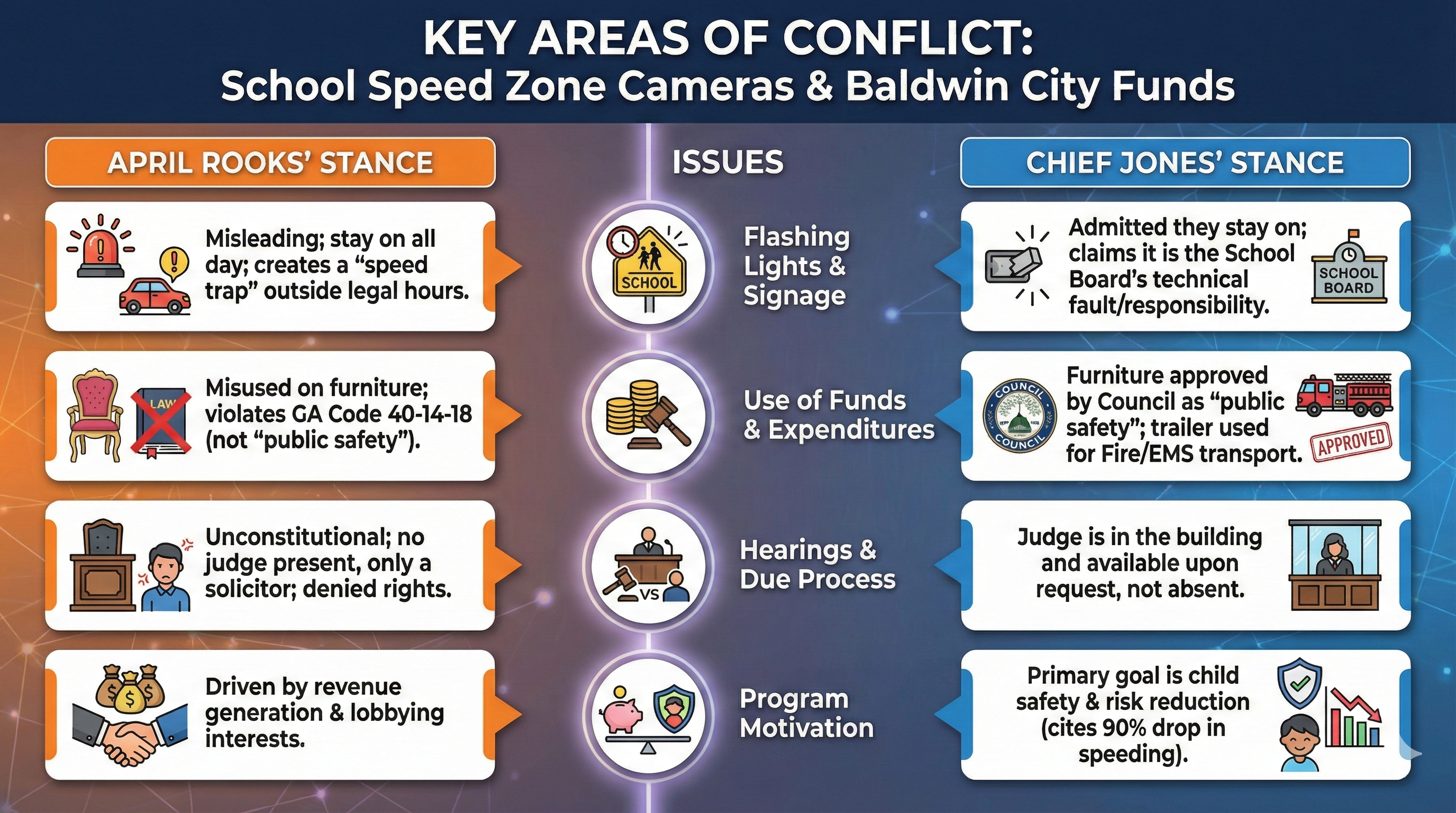
Rooks challenged the legitimacy and constitutionality of the camera program. She alleged the cameras are driven by revenue rather than safety. She described the cameras as a ‘speed trap’ managed by lobbyists.
One of Rook’s primary grievances involved the flashing school zone lights. She claimed the lights flash continuously, even outside of legal school zone hours, which confuses drivers. She stated that the cameras issue citations all day from 7 a.m. to 4 p.m. regardless of the lights.
Rooks also questioned the judicial process for those who receive tickets. She reported attending a hearing at which she met with a solicitor, but no judge was present. She argued this denied her constitutional rights.
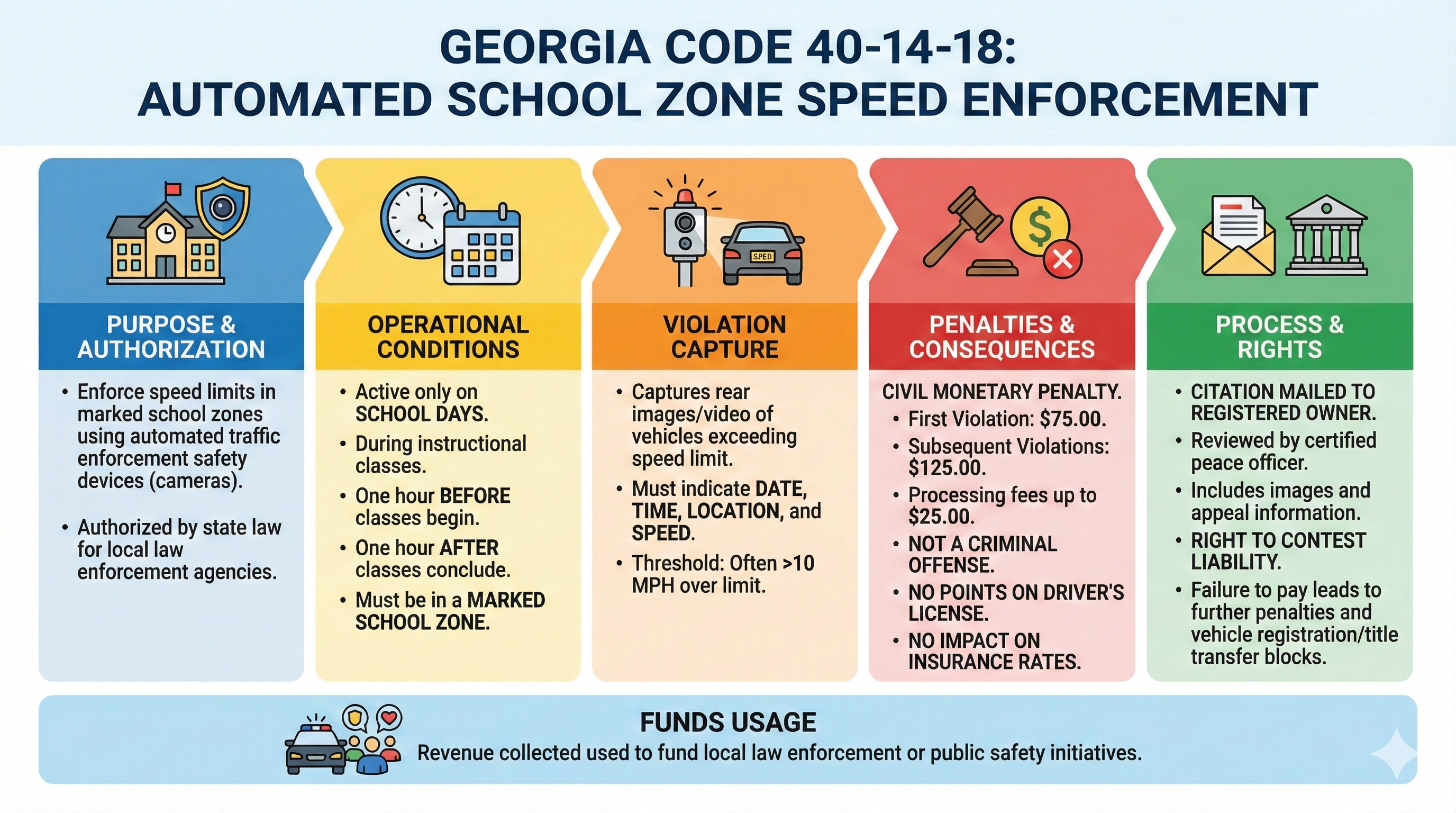
Rooks also alleged a misuse of funds. Citing Georgia Code 40-14-18, she noted that revenue from these cameras must be used for “public safety initiatives.” She questioned whether spending nearly $10,000 on courtroom furniture and purchasing a utility trailer fit this legal requirement.
Finally, Rooks expressed concern over political influence. She alleged that camera companies, specifically Blue Line Solutions and Red Speed, have donated approximately $200,000 to lawmakers to keep these programs active.
Police Chief’s response
Chief Jones defended the program, stating that the safety of children is the primary goal. He argued that the cameras have shifted the financial burden of enforcing speed limits from taxpayers to violators.
Jones provided statistics to support the program’s effectiveness. He claimed that since the implementation of the cameras, there has been a “reduction in speeding violations exceeding 90%” compared to a test period conducted in 2023.
Regarding the flashing lights, Jones acknowledged that they stay on longer than intended. However, he stated this is the responsibility of the Habersham County Board of Education. Jones said he and the assistant chief have spoken to school board representatives, but the issue remains unresolved. He clarified that the lights “do not have any influence on the operation of the speed camera or the speed limit the camera enforces.”
Jones also addressed the judicial process. He clarified that while a violator initially speaks with a solicitor, a judge is “present in the building” and available if the violator requests to speak with them.
Regarding the use of funds, Jones justified the expenditures. He stated that the purchase of chairs and furniture was “deemed as a public safety initiative by City of Baldwin Administration and the Baldwin City Council.” He added that the utility trailer was purchased for the Baldwin Fire Department to transport lifesaving and traffic control equipment.
Additional findings
Now Habersham has reached out to Murray Kogod, the Director of School Safety and Chief of Police for the Habersham County School System, for comment on the timing of the flashing lights. Kogod did not respond.
Now Habersham also contacted Altumint, the vendor that operates the speed cameras in front of Baldwin Elementary School. Records indicate that Rooks received a citation for speeding on Wednesday, March 19, 2025, at 3:36 p.m. This time falls within the posted school zone hours. Information regarding the camera systems is available on the Altumint website.
Speed camera legislation update
The debate in Baldwin mirrors a larger legislative battle in Georgia. House Bill 225 was introduced to repeal laws that allow automated speed detection cameras in school zones.
The bill passed the House and, in the spring of 2025, the Senate with an amendment. However, the House and Senate disagreed on the effective date of the ban. The Senate version pushed the date to July 1, 2028, while the House aimed for an earlier date. Because the two chambers did not agree before the session ended, the bill is effectively on hold until the legislature reconvenes in January.
Senator Blake Tillery (R-Vidalia) has championed the bill to ban the cameras. Tillery, who launched a campaign for Lt. Governor in August 2025, frequently uses the phrase “taxation by citation” to describe the revenue-generating nature of third-party contracts. Conversely, Senator Billy Hickman (R-Statesboro) was one of the few Republican Senators to vote against HB 225.
Opponents of the cameras cite instances where cities were forced to issue refunds due to errors. For example, Jonesboro issued refunds after cameras ticketed drivers when school was not in session. Atlanta faced similar issues with signage and timing glitches that led to dismissals.
Legislators are expected to revisit HB 225 in the upcoming session to reconcile the House and Senate versions.