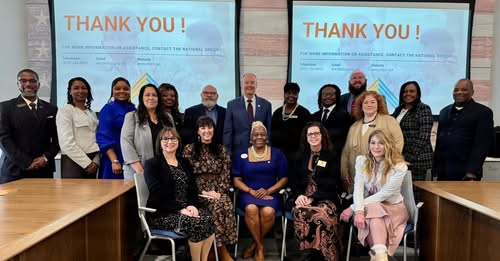
Nearly 6,000 military‑connected students attend the eight school districts in and around Fort Benning. Superintendents and representatives serving those students, from districts in Alabama and Georgia, recently took part in the annual Superintendents’ Roundtable, hosted by the Fort Benning Directorate of Family and Morale, Welfare, and Recreation School Liaison Office.
“A strong community support system helps military families navigate the challenges that come with frequent relocations,” said Kevin Clarke, Fort Benning Deputy to the Garrison Commander.
In the spirit of collaboration, garrison and district representatives shared updates using the “rose, bud, and thorn” framework—highlighting strengths, emerging efforts, and areas needing improvement in their support for military‑impacted students.
Sarah West, Fort Benning School Liaison Officer (SLO) explained, “The roundtable provides our Garrison leadership with an overarching view of district policies and best practices, while allowing our superintendents to collaborate and strengthen partnerships.”
Some districts also emphasized the success of their Partners in Education (PIE) partnerships. The PIE program connects local schools with soldiers across the installation. Soldiers visit schools for Career Days and Veterans Day events, teach resiliency skills, serve as lunch “Battle Buddies,” and attend academic and special events.
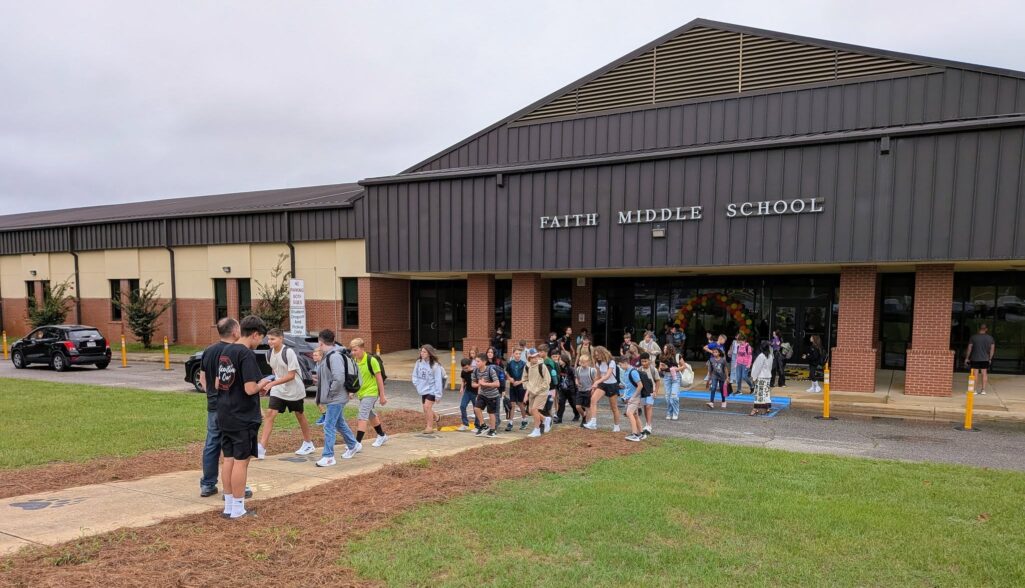
An example of the Alabama Department of Education’s innovation is its honoring of schools that demonstrate a strong commitment to supporting military families as they transition to new homes, schools, and communities with the Purple Star Schools designation. To earn the designation, schools must have a dedicated staff liaison for military families, provide professional development on the needs of military students, maintain online military resources, and offer a student-led transition program with faculty support.
Similarly, the Georgia Department of Education established the Military Flagship School Award in 2019 to recognize schools that provide exceptional support to military students and families. Each year, a panel of judges with experience educating military-connected students reviews submissions detailing specific support initiatives. Examples include collaboration with Fort Benning’s SLO, Student 2 Student (S2S) peer transition programs, counseling services, Junior Leadership Corps (JLC) programs, military mentorships, military student clubs, and full-time family coordinators who help families navigate school transitions.
Military-connected students represent about 10 percent of the combined student population in the Chattahoochee Valley, and the impact of frequent moves and the emotional demands of military life can significantly shape their educational experience
“Supporting military families not only aids in their stability,” Clarke added. “But also has a direct impact on the morale of service members and the overall effectiveness of their missions.”