
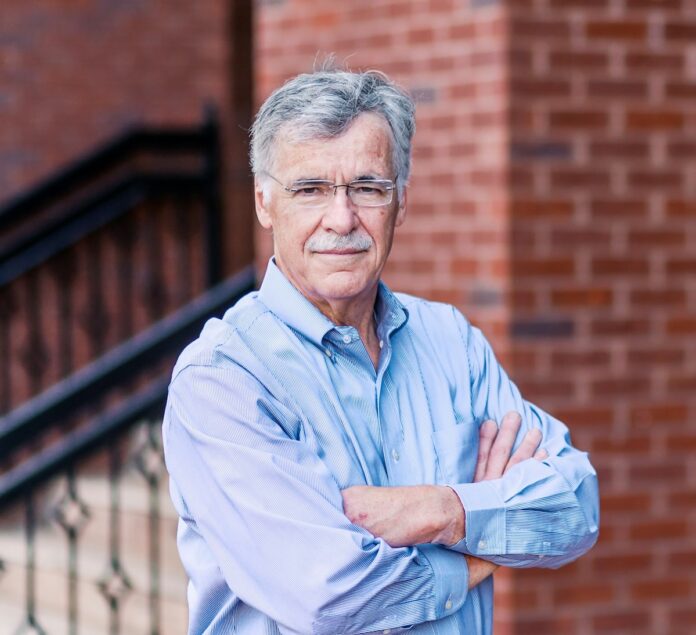
CLARKESVILLE — Democratic congressional candidate Nick Alex is making his case to voters in Georgia’s 9th District as a centrist alternative, emphasizing economic concerns at home while also arguing Congress must reassert its authority on issues ranging from war powers to federal spending.
Alex, who has been campaigning for more than a year, said the 2026 midterm cycle presents a rare opportunity for a Democrat to compete in the region.
“If there was ever a cycle that a Democrat could win in, this is it,” Alex said, pointing to historical trends that favor the party out of power during midterm elections.
The district is currently represented by Republican Andrew Clyde, who is also facing primary challengers within his own party.
Alex said that dynamic — combined with broader political headwinds — could create an opening.
“Clyde has aligned himself very closely with MAGA and Donald Trump,” Alex said. “I think that’s something voters are starting to question.”
Building a broader coalition
Alex describes himself as an “inclusive” or centrist Democrat, a label he believes better fits the political makeup of Northeast Georgia.
“I’m not a fringe left Democrat, and I’m not a center-right Republican,” he said. “I’m something in between.”
He said his campaign is focused on building a coalition that includes Democrats, independents and moderate Republicans.
“I call them ‘Democrat-curious Republicans,’” Alex said. “People who are looking for something different.”
That approach, he said, is necessary in a district where national party labels often carry more weight than individual candidates.
“I think the Democratic Party has had a messaging problem,” Alex said. “But it’s starting to find its voice again.”
Affordability tops voter concerns
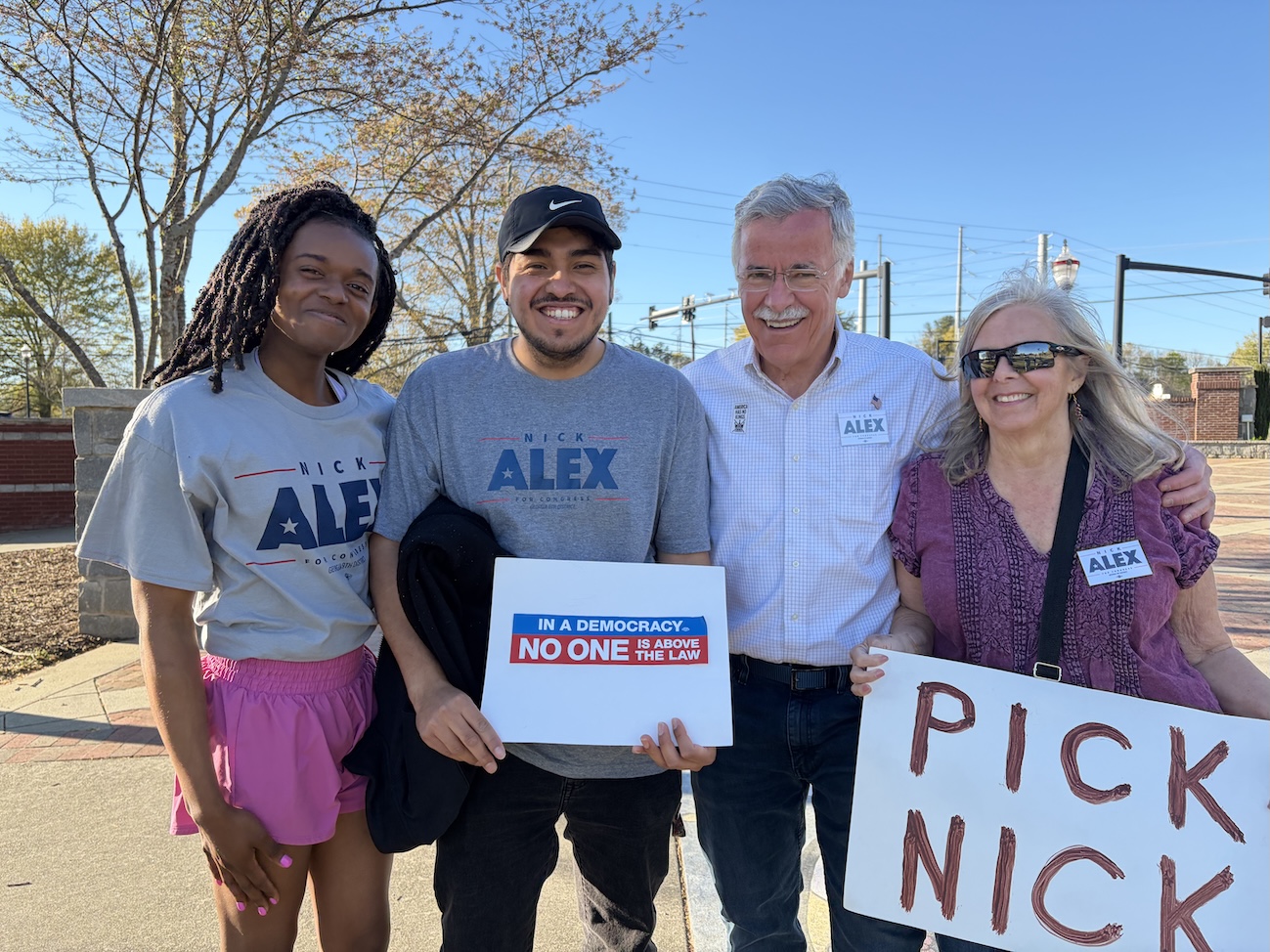
Across the district, Alex said one issue consistently rises above the rest: cost of living.
“I’ve talked to 4,000 to 5,000 people, and this is the number one issue everywhere,” he said.
Alex tied rising costs to federal policy decisions, including tariffs and broader economic management, and said regaining Democratic control of the U.S. House would be key to addressing the problem.
“I want to be part of a coalition that takes the House back,” he said. “That’s how we start to bring costs down in a meaningful way.”
He also pointed to housing shortages as a major driver of affordability challenges, supporting efforts to increase supply and limit large-scale investment purchases of single-family homes.
“We have a supply problem, not a demand problem,” Alex said.
Health care a “systemic crisis”
Alex said health care — particularly in rural areas — is approaching a breaking point.
“We’re at a point now where health care is becoming a systemic crisis,” he said.
He warned that cuts to federal programs such as Medicaid and subsidies under the Affordable Care Act could worsen access, especially in rural communities.
“We already have a fragile network,” Alex said. “If we lose more hospitals and clinics, people will have to travel farther — and in emergencies, that can be deadly.”
As a long-term solution, Alex said he supports moving toward a universal or single-payer health care system.
Immigration and enforcement
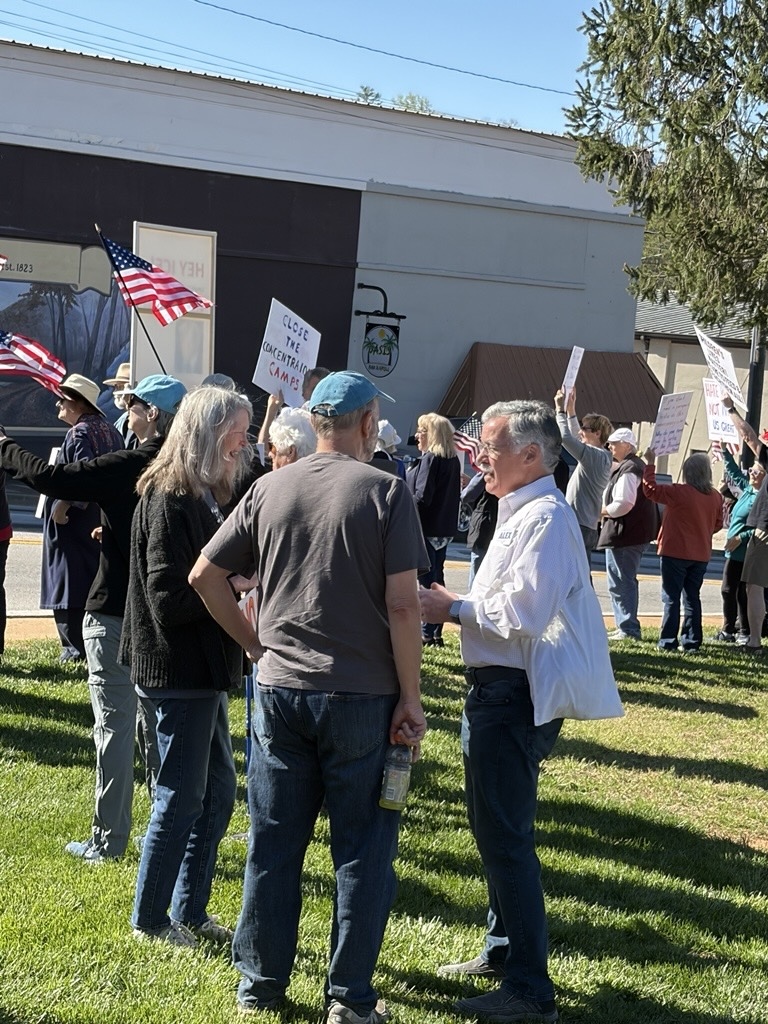
On immigration, Alex said he supports comprehensive reform that balances border security with a pathway to legal status for long-term residents.
“We need strong borders, but we also need a functioning legal immigration system,” he said.
Alex said he opposes large-scale deportation efforts and has spoken out locally against a proposed immigration detention facility in Hall County.
At the same time, he said he does not support eliminating U.S. Immigration and Customs Enforcement, but instead favors restructuring its role.
“I’m not for abolishing ICE,” he said. “I’m for reforming it.”
War powers and presidential authority
One of the sharper exchanges in the interview centered on presidential war powers — an issue that has gained renewed attention as Congress debates U.S. involvement in Iran.
Recent votes in Washington have underscored that tension, with the U.S. House narrowly rejecting a resolution that would have required congressional authorization for continued military action.
When asked about the long history of presidents from both parties bypassing Congress — from Vietnam-era decisions to more recent actions under multiple administrations — Alex agreed the issue crosses party lines.
“I can’t say that six wrongs make a right,” he said.
Alex argued that Congress has gradually ceded its constitutional authority to declare war, particularly in the post-9/11 era.
“Too often, we’ve allowed presidents to bend the rules in the name of speed or national security,” he said. “But I think we’ve seen that’s a mistake.”
He said he would push to restore that balance if elected.
“Going to war is a national sacrifice, not an executive one,” Alex said. “Congress should be the body making that decision.”
Agriculture and the farm bill divide
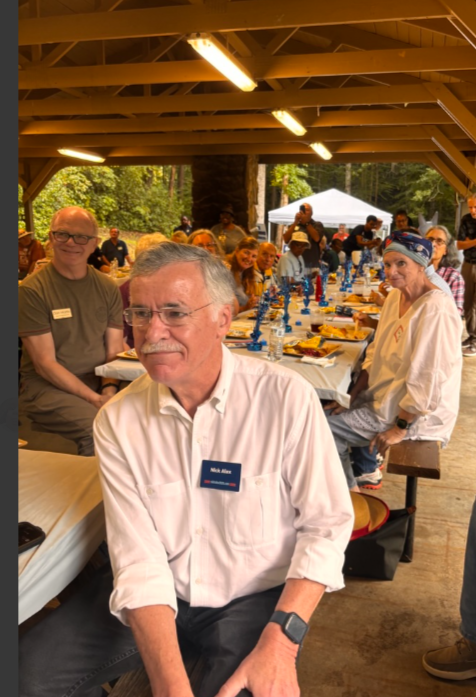
Alex said agriculture policy — particularly the ongoing struggle to pass a federal farm bill — highlights the interconnected nature of rural issues.
He pointed to cuts in food assistance programs such as SNAP as having ripple effects on local farmers.
“When those benefits are reduced, it impacts demand and hurts the farm economy,” Alex said.
He also cited rising fuel and fertilizer costs, labor shortages and development pressures as challenges facing farmers in Northeast Georgia.
“You can’t deal with these issues in isolation,” he said. “They all have to be addressed together.”
Guns and public safety
Alex said he supports Second Amendment rights but believes Georgia should follow the lead of other states in adopting additional safety measures.
“I am 100% supportive of the Second Amendment,” he said. “But that right should exist within certain safety boundaries.”
He pointed specifically to red flag laws — which allow courts to temporarily remove firearms from individuals deemed a danger to themselves or others — noting that similar policies have been enacted in Republican-led states.
After the 2018 school shooting at Marjory Stoneman Douglas High School, Florida lawmakers passed a red flag law with bipartisan support, despite the state’s Republican supermajority at the time.
“There’s no reason we can’t do that here,” Alex said.
He said Georgia should also consider safe storage requirements and universal background checks, particularly in homes with children.
“If you have children in the house, you should have to safely store that firearm,” Alex said.
Alex emphasized that his proposals are not aimed at restricting ownership, but at adding safeguards.
“I have no intention of limiting ownership beyond common-sense safety measures,” he said.
He also criticized U.S. Rep. Andrew Clyde’s emphasis on gun rights messaging, arguing voters are looking for a more balanced approach that includes safety.
Growth, infrastructure and regional pressure
As Northeast Georgia continues to grow, Alex said infrastructure planning is becoming an increasingly urgent issue — even if it has not yet been a central focus of his campaign.
“I’ll be honest, I’m not as versed on this as I am other issues,” he said. “But even choosing not to get involved at the federal level is still making a choice.”
His comments come as local governments across the region grapple with rapid growth, including Habersham County’s ongoing work on a unified development code and annexation efforts in Baldwin and Cornelia.
At the same time, large-scale projects like the new inland port in Hall County are expected to reshape transportation patterns across the region. The Gainesville Inland Port, set to open in 2026, will connect Northeast Georgia directly to the Port of Savannah by rail and is expected to support regional industry while also shifting freight traffic patterns.
Local officials have already begun infrastructure upgrades tied to that growth, including road realignments and widening projects near the inland port to accommodate increased freight traffic along key corridors such as Ga. 365.
Alex said those types of projects highlight the need for better coordination.
“If you’re going to build something like an inland port, you have to take into account roads, broadband and overall infrastructure,” he said. “Right now, we’re too fragmented in how we approach it.”
He said he would support a more coordinated effort between federal, state and local governments.
A closing contrast
In his closing message, Alex framed his campaign as a contrast in both tone and accessibility.
“I’m an independent Democrat, beholden to no one,” he said.
He also criticized Andrew Clyde for what he described as limited engagement with constituents.
“People want representation that shows up and listens,” Alex said. “That’s what I intend to provide.”
Don’t miss what everyone in town is talking about.
Join 4,000+ locals and choose our free newsletter covering news, events and the stories shaping our region.