

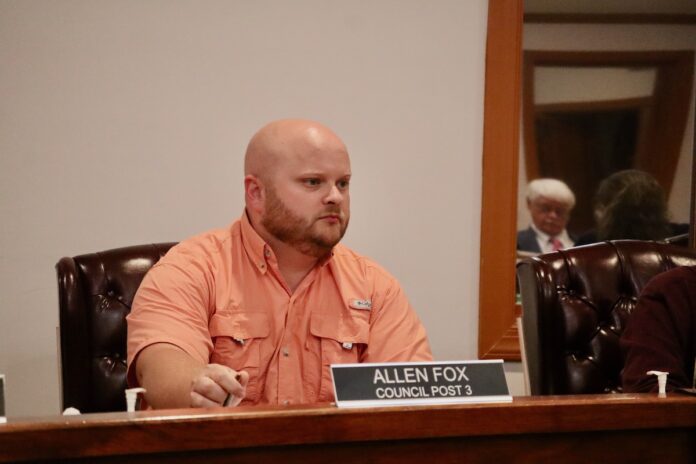
ALTO, Ga. — A proposal to end additional meeting payments for Alto’s elected officials stalled Tuesday after Councilman Allen Fox’s motion to advance the measure failed to receive a second, following a contentious discussion over compensation, potential savings and the process for changing the town charter.
Fox proposed amending Article 2, Section 2.15 of the town charter to preserve compensation for one regular monthly council meeting while eliminating separate per-meeting payments for special-called meetings and work sessions. The change would not prevent the council from holding additional meetings when necessary.
The discussion drew objections from Councilwoman Debbie Turner and Councilman Eddie Palmer, who questioned whether the proposed change justified the expense of amending the charter and whether Fox should have consulted the town attorney before bringing the proposal to the council.
Fox defended the proposal, arguing that elected officials should be expected to make spending reductions just as other town departments have been asked to do.
After the meeting, Fox told Now Georgia he believed the proposal failed both because some council members opposed the change itself and because they disagreed with how he brought it forward.
“We’ve passed a resolution, freezing raises, cost of living adjustments, and that’s great until we talk about putting it on ourselves,” Fox said.
Fox argues for compensation limits
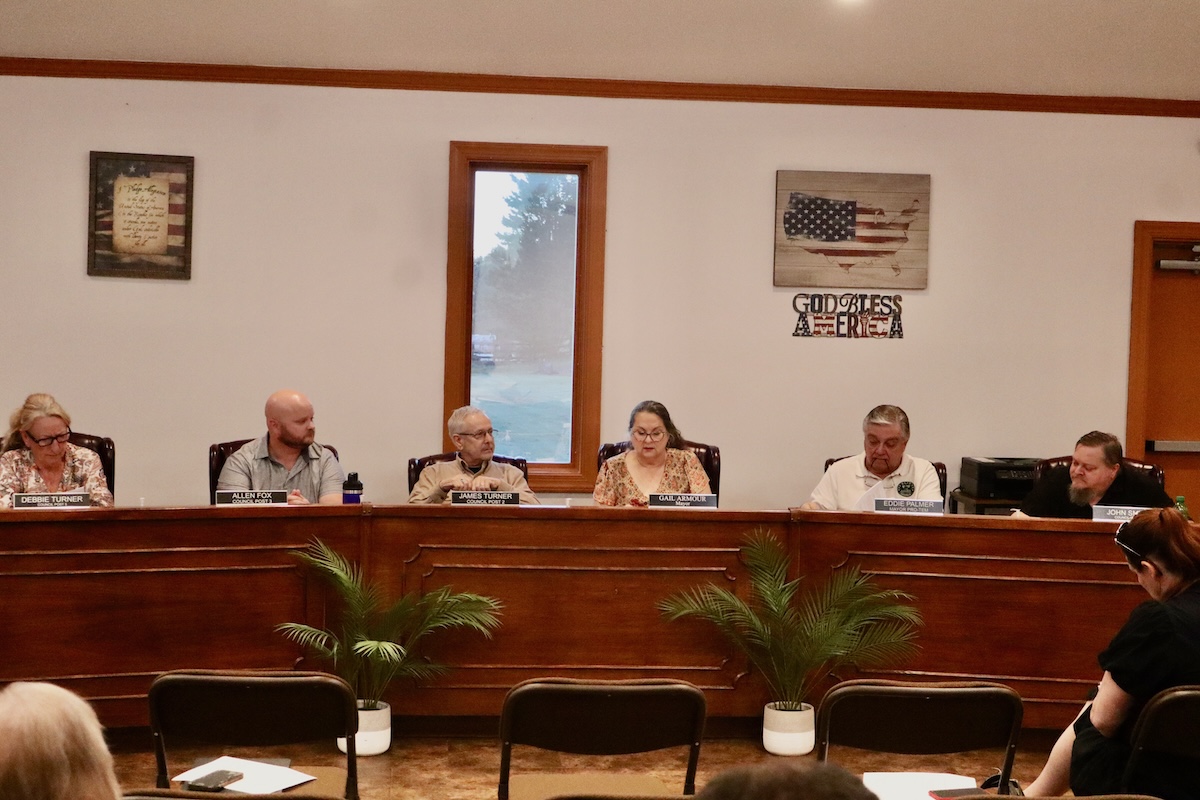
In a handout prepared for the discussion, Fox outlined a proposal to limit additional meeting compensation while leaving the existing pay structure for regular monthly meetings intact.
Under the current arrangement described in the handout, the mayor receives $150 in monthly salary and $125 per meeting, while each of the five council members receives $100 per meeting.
Fox’s proposal would retain the mayor’s monthly salary and the existing per-meeting rates for one regular monthly meeting. It would end additional per-meeting compensation for special-called meetings and work sessions. Reimbursement for necessary and actual expenses would remain available under town policy.
Fox’s handout identified 29 additional called meetings in the town’s agenda and minutes records from 2017 through October 2026. Using current compensation rates, it modeled a cost of $18,125 for those meetings, or approximately $1,800 annually based on the historical average of about 2.9 additional meetings per year.
The document cautioned that the $18,125 figure was a rate-based estimate, not an audit of historical payroll payments. It also used a hypothetical $2,000 implementation cost to illustrate how the savings might offset the expense of changing the charter.
Fox argued that the council should apply the same cost-conscious approach expected of other departments.
Turner questions the expense
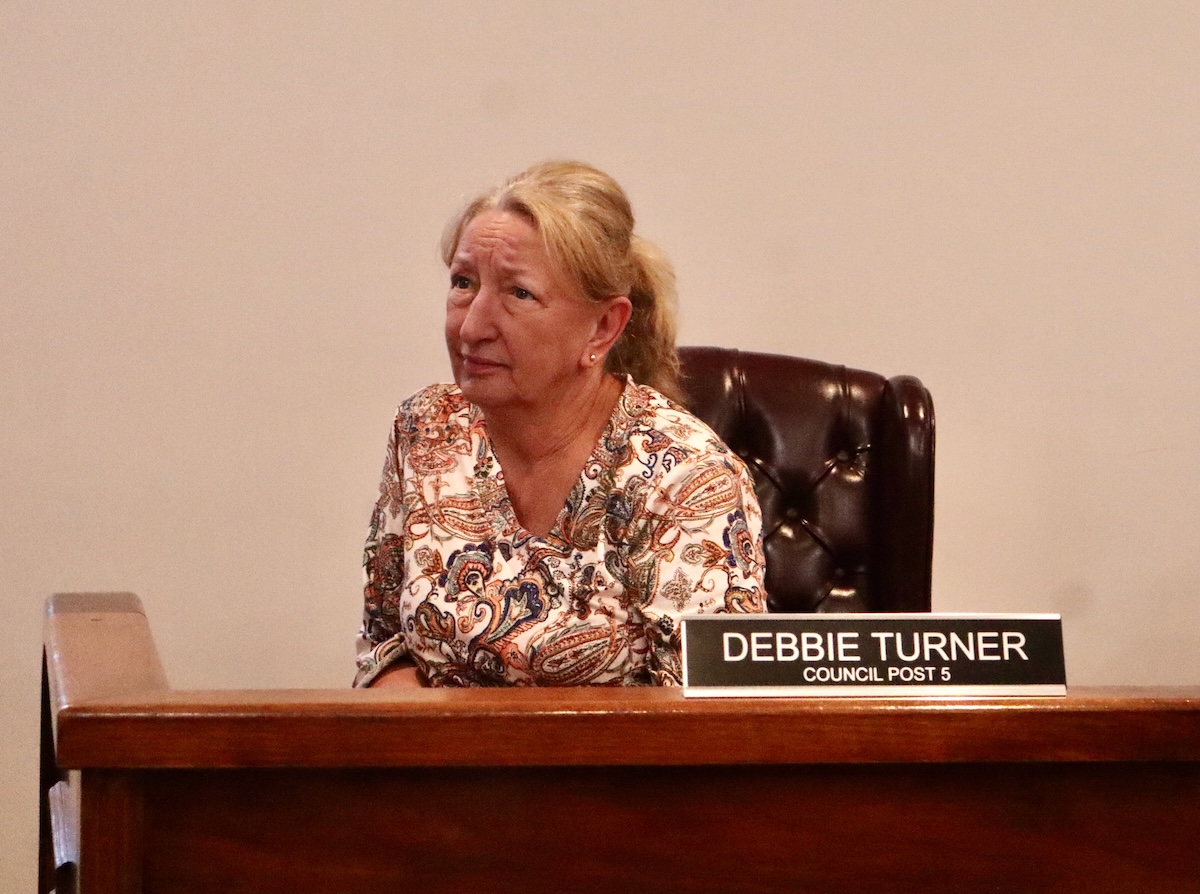
Turner said additional meetings had not generally been abused and questioned whether spending money to change the charter was necessary.
“This is not anything that is abused until it’s about this time of year, and we’ve got one scheduled,” Turner said. She suggested the town should instead work to ensure business is handled in the office so additional meetings are not needed.
Fox countered that avoiding additional meetings was not a realistic solution based on the town’s history.
“We have asked every other department to make meaningful cuts,” Fox said. “I’m asking that we make the legislative department make meaningful cuts.”
Palmer questions process, offers alternative
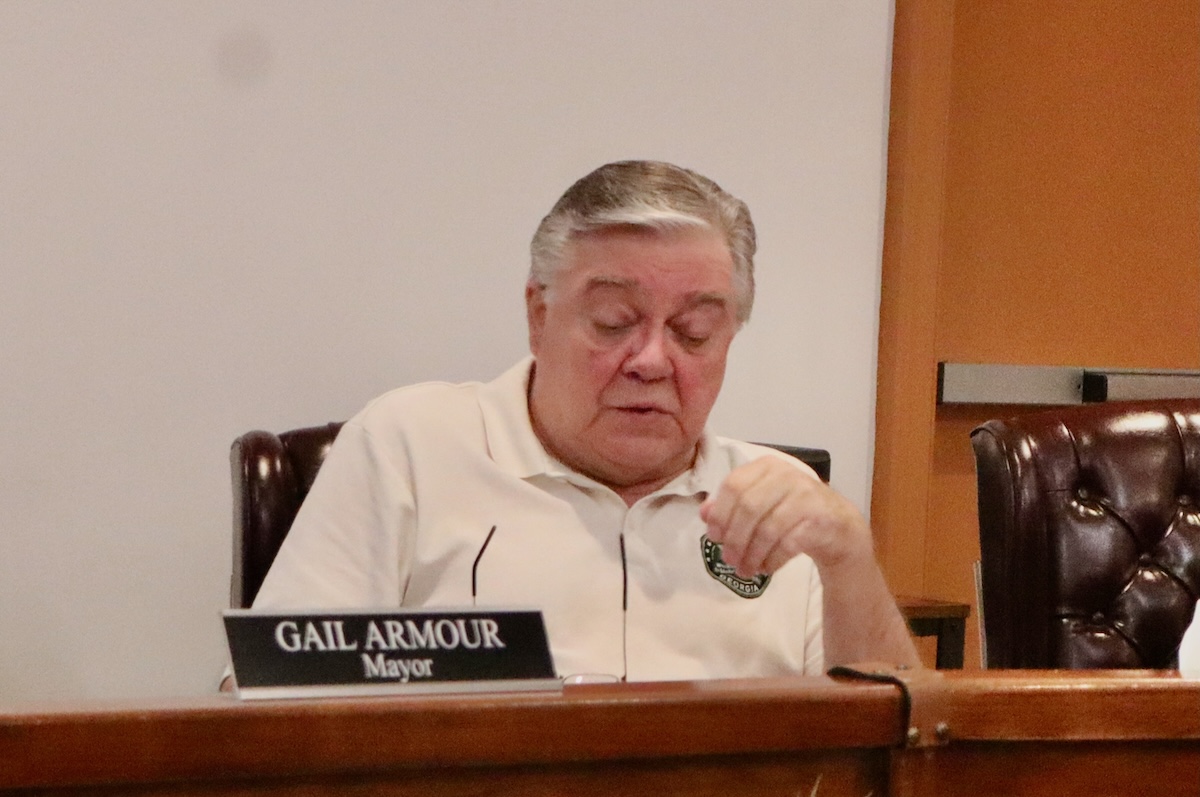
Palmer challenged the process Fox followed in developing the proposal, arguing that it should have come before the council for discussion and approval before the town attorney prepared language for a charter amendment.
Palmer said the legal process could take time and cost the town money even if the council ultimately decided not to proceed.
Rather than immediately changing the charter, Palmer suggested council members could agree to temporarily forgo additional compensation for special-called meetings. He proposed recording such an agreement in the minutes and revisiting it after a set period.
Palmer said that approach could address the issue without permanently changing the charter for future councils.
Fox responded that Town Attorney David Syfan had identified what Fox described as a loophole in the charter because it did not clearly define which meetings qualified for additional compensation and which did not. Fox also questioned whether the charter allowed individual council members to introduce ordinances.
When Palmer challenged Fox’s handling of the matter, Fox responded, “It’s not on me to prove my innocence; it’s on you to prove my guilt.”
Councilman John Smith also asked whether the town attorney had charged the town for work on the proposed ordinance.
“Obviously, lawyers don’t work for free, John,” Fox replied.
The discussion did not establish the amount, if any, already billed to the town for work on the proposal.
Fox ultimately made a motion to approve the proposed amendment, but no council member seconded it. The motion died without a vote on the proposal’s merits.
Council approves advertising town property
Elsewhere in the meeting, the council unanimously approved advertising three town-owned items for bidding: a 1995 dump truck, a 2000 BMW and a vacant trailer behind the police department.
The council also unanimously authorized Mayor Gail Armour to pursue additional funding, including grants and other public funding sources, for the McDaniel shop, which also serves as the town’s water and public works building.
During the work session, officials also discussed the underground fuel tanks at the Alto Police Station. Armour said the tanks are empty but out of compliance, and the town must reapply for its permit in December.
Armour outlined restoring the tanks or pursuing another option. Police Chief Sean Rogers said the tanks had previously been assessed and repaired for about $20,000 to bring them into compliance.
Councilman Eddie Palmer asked whether the town could remove the tanks. Rogers said abandonment could involve filling them with foam, but he did not know the cost. He also raised concerns that leaving the tanks underground could affect the property’s value if a future buyer had to pay to remove them.
The council did not establish a cost estimate for that option during the discussion.
Don’t miss what everyone in town is talking about.
Join 4,000+ locals and choose our free newsletter covering news, events and the stories shaping our region.