
(Georgia Recorder) — A grass-eating invasive pest has been spotted in Georgia, and it could mean further headaches for cattle ranchers and farmers.
The pasture mealybug has been spreading across the Southeast since it was first confirmed in Texas last October, and Georgia Agriculture Commissioner Tyler Harper announced recently the insect had been spotted at a turf business in Decatur County in the southwest corner of the state in August.
“Pasture mealybug is a serious threat to Georgia agriculture, and we’re asking Georgia farmers and producers to stay vigilant in order to protect their operations,” Harper said. “This pest can spread quickly and kill grass, potentially causing significant losses for our farmers and making biosecurity more important than ever.”
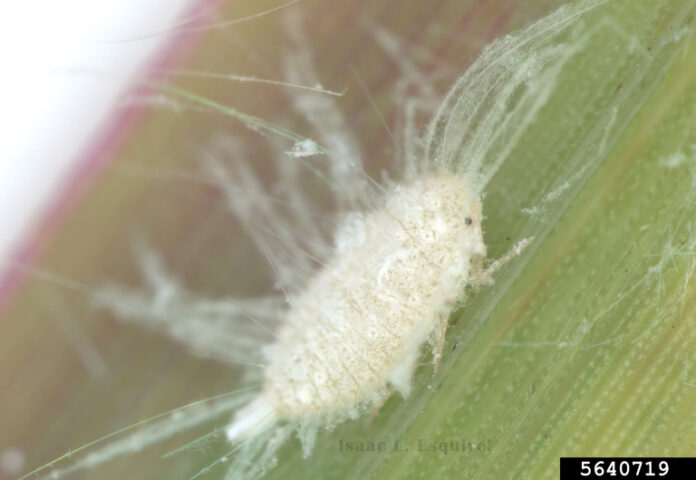
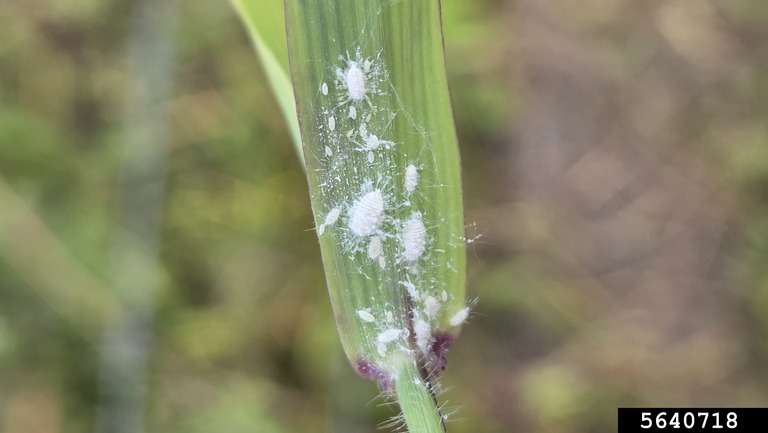
Female pasture mealybugs are wingless and appear white and fluffy. Males are gnat-like and have wings but no mouthparts, do not feed in their adult stage and only live a few days as adults.
They can produce up to 100 offspring at a time and can have three generations in a year. They feed on grass by sucking out sap, which damages the plants and makes them more susceptible to disease. They also inject toxic saliva into the plants and produce a thick honeydew that promotes mold growth.
Researchers say the bugs could pose a major economic threat to livestock because they can decimate grazing grasses that cattle rely on, and they also threaten crops like rice and sugarcane, both of which are types of grass.
“We still know very little about it overall, since it is relatively new to the United States,” said Lisa Baxter, a professor at the University of Georgia’s College of Agricultural and Environmental Sciences who studies crop and soil sciences. “But our understanding from literature is that any warm-season grass could be affected, so that means pastures, hay fields, lawns, sod farms, seed farms, crop fields that are grasses. People forget that things like corn and wheat and things like that are grasses.”
According to UGA, which is tracking sightings of the bug throughout the state, beef was the second most valuable farm commodity in 2024, generating $1.2 billion to the economy.
But cattle ranchers have reported struggles in recent years from droughts and higher costs for inputs like fuel and fertilizer, and the U.S. cattle herd is at its lowest point since the 1950s.
The pasture mealybug’s newness on the scene in the U.S. also means farmers and scientists don’t know what kinds of pesticides might be effective against them. Baxter said researchers are testing existing products, and if one is found effective against mealybugs, it could receive temporary approval, but so far nothing has been found.
Baxter said that means it’s important for farmworkers to take precautions to slow the spread of the bugs as much as possible. Young mealybugs can be blown from place to place by the wind, and they can also hitch a ride on animals, including humans, attaching to their clothes, tools and vehicles.
“It’s keeping people and animals and equipment clean as you are moving from farm to farm, limiting traffic through your farm and monitoring, like, always looking down, keeping an eye as to what’s happening,” she said. “And if you have an infected area, kind of self-quarantine it off, and make sure that we’re cleaning equipment from the infected area to the non-infected area or cleaning your boots from one area to the next.”
Signs of infestation can appear within a week and may include yellowing leaves that progress to purple or red discoloration and death of the plant.
University of Georgia entomology professor Shimat Joseph stressed that much is still unknown about how this bug could affect crops in the United States, but he said the creatures are likely to cause problems for pasture growers, and they could also create challenges for commercial sod and turf farms and for those who grow ornamental grasses.
Turfgrass was a $284 million business in 2024, according to UGA.
But he said he is hopeful that, based on infestations in other countries, the mealybugs will not be a major threat to residential lawns or places like parks or golf courses with regularly maintained grass.
“For a long time, in Australia, it’s been there. And wherever they reported problems in turfgrass, it was when the grass is not mowed or the grass is growing very tall, so if we keep the grass mowed and keep it low, most probably we may not see this as a major problem in turfgrass. But again, this is all based on what we know from Australia and in Florida, but as time goes, we might know more about this.”
Don’t miss what everyone in town is talking about.
Join 4,000+ locals and choose our free newsletter covering news, events and the stories shaping our region.