
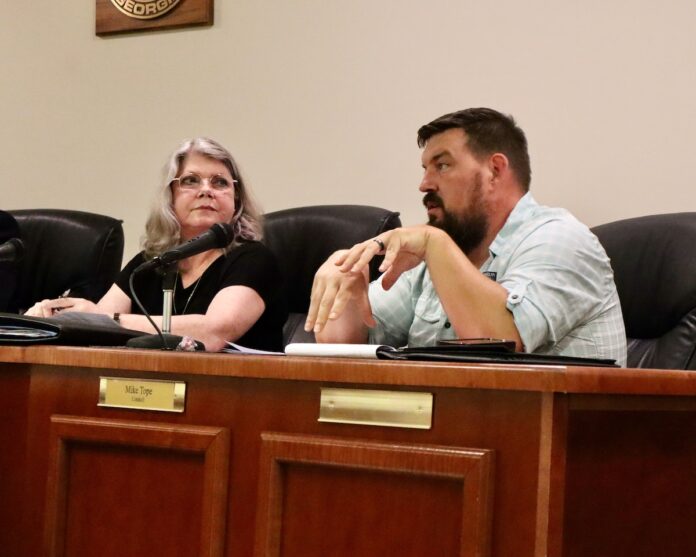
BALDWIN, Ga. — A series of capital equipment costs, funding reallocations and delayed payments are driving increases in Baldwin’s fire and police budgets in the city’s draft FY 2027 plan, officials said during a May 19 council meeting.
City officials said the higher costs are largely tied to updated vendor pricing, shifting funding sources and corrections to prior-year estimates that did not fully capture the cost of equipment purchases now coming due.
Radio costs higher than earlier estimates
Finance Director Angela Adams said the draft budget includes approximately $140,000 for fire department radios and about $110,000 for police radios, part of a broader communications system update for public safety agencies.
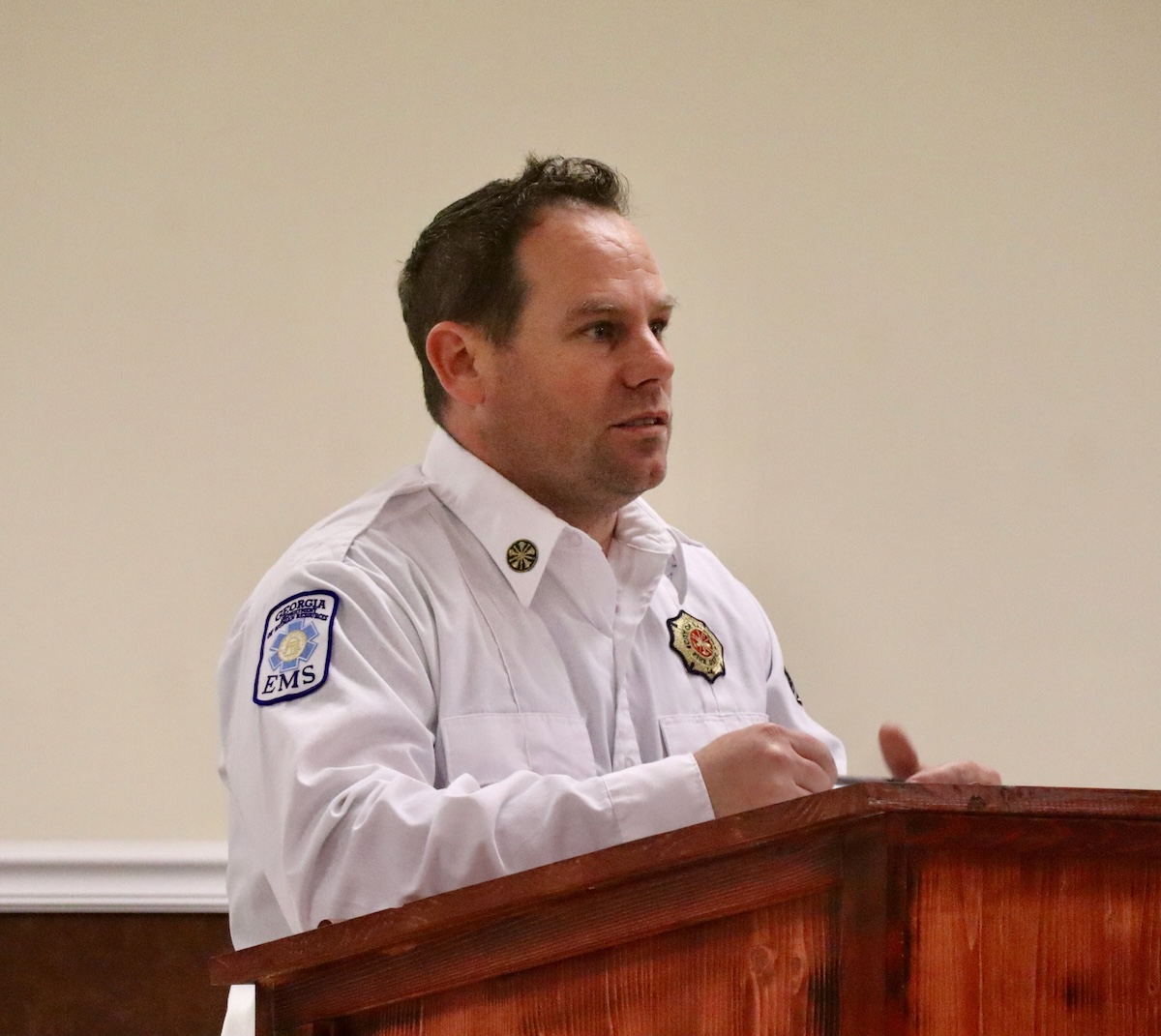
Fire Chief Ross Jackson said the final costs came in significantly higher than earlier expectations, which had been based on preliminary figures provided during earlier budget planning cycles.
“The numbers that we received that you guys saw in last year’s budget were given to us,” Jackson said. “We immediately fell on the floor and said, where are we going to come up with this money.”
Jackson said the departments had previously operated under the understanding that radio upgrades would cost substantially less, but updated vendor invoices and confirmed quotes reflected higher final pricing.
ARPA funds and shifting expectations
Police Chief Chris Jones said initial planning for radio replacements was tied in part to American Rescue Plan Act (ARPA) funding and other one-time revenue sources.
Jones said the department was originally told federal relief funds and other allocations would cover the costs, but delays in procurement and timing issues complicated how those funds could be applied.
“As we got closer to time, that ARPA funds were running out,” Jones said.
He said earlier assumptions about funding availability were based on expectations set during prior administrative planning, but those assumptions shifted as deadlines and procurement timelines changed.
Fire truck payment allocation changes
Officials also discussed a fire truck payment that was not properly included as a line item in a prior budget and was instead covered through a combination of funding sources.
Adams said approximately $74,000 of the payment came from the city’s school speed zone camera fund, with about $57,000 covered by the general fund.
Fire Chief Ross Jackson said the funding structure was intended to avoid relying on a revenue source that has shown signs of decline.
“We’re trying to basically take that fire truck payment back out from under disputes on the fund,” Jackson said, noting concerns about the long-term reliability of speed zone revenue.
Speed zone revenue concerns
Jackson said revenue from the city’s school speed zone program has decreased as driver compliance has increased, reducing citations and associated income.
He said that shift makes the revenue stream less predictable for ongoing capital obligations.
“You start speed analysis,” Jackson said, describing adjustments in enforcement patterns and resulting revenue changes.
Prior estimates and budgeting adjustments
City officials said some of the cost increases stem from corrections to earlier estimates that did not reflect final contract pricing.
Police Chief Chris Jones said prior radio cost estimates were significantly lower than actual invoice amounts, contributing to the gap between earlier budgets and current figures.
Adams said the discrepancies reflect a broader effort to align budget assumptions with verified financial data rather than projections or preliminary figures.
She said the city is working through prior-year allocations to ensure capital costs are properly recorded moving forward.
System-wide reconciliation underway
Officials said the radio and vehicle costs are part of a broader financial reconciliation effort that has identified prior-year allocation issues totaling hundreds of thousands of dollars across multiple departments.
City leaders said the current budget process is being used to correct those discrepancies while establishing more consistent accounting practices going forward.
Adams said the city will begin producing monthly financial statements beginning July 1 and is working toward a financial dashboard system that will allow council members to track revenues and expenditures more closely across funds.
Officials said the goal is to ensure future capital purchases and operating costs are fully aligned with verified revenue sources and documented budget line items.
Don’t miss what everyone in town is talking about.
Join 4,000+ locals and choose our free newsletter covering news, events and the stories shaping our region.