

ATLANTA (Georgia Recorder) — Georgia could soon have an official new state flower.
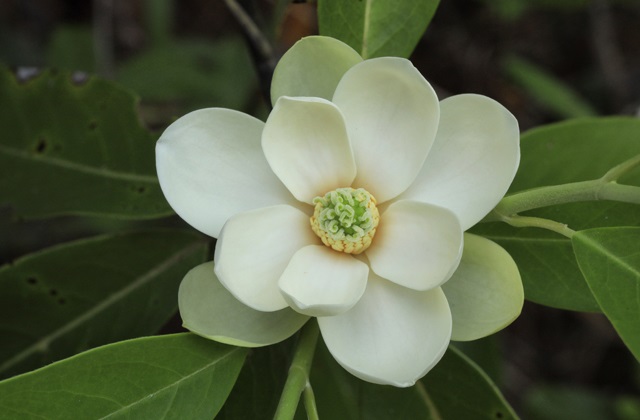
Senate Bill 240, sponsored by Milledgeville Republican Sen. Rick Williams, calls for changing the state floral emblem from the invasive Cherokee rose, which is native to southern China, to the native sweetbay magnolia.
Similar bills have run into opposition in the past, including from the chairman of a powerful Senate committee that decides which bills advance, but he appears to have had a change of heart. The bill has cleared the Senate and now has until Thursday – the final day of this year’s session – to clear the House.
State Sen. Matt Brass, a Newnan Republican who chairs the Senate Rules Committee, said he initially opposed the change on account of the Cherokee rose already being “ingrained” in Georgia’s history and because he said a family member wrote a song named after the Cherokee rose. But this time around, Brass turned to support the bill, saying it was a small statutory correction that reflected sound ecological policy and cultural accuracy.
“The duty of a legislator is to recognize when a symbol has lost its meaning and quietly make it go away,” Brass said. “It is now time for the Cherokee rose to go away.”
The question of changing the state floral emblem is not new. Since the mid-20th Century, the Cherokee rose has been known to be a non-native plant and has been named invasive by the Georgia Invasive Species Council. There’s also a broader understanding that the Cherokee rose has no cultural or historical ties to native Georgia Cherokee tribes.
The Georgia Native Plant Society came to the state Capitol with the request about two years ago and became connected with two lawmakers, Williams and Rep. Deborah Silcox, a Sandy Springs Republican, who took on the cause. However, their previous bills received opposition from legislators who were uneasy with the change.
“Look, this change is symbolic, I get it,” said Michael Cowan, the native plant society’s chair. “You know, we’re not curing cancer, it’s not a huge budgetary item, it’s just changing a little flower. But in and of itself it’s important because of what it represents for native plants.”
Native plants are crucial to the stability of the environment and ecological relationships formed with those plants make up the foundation of everyday life, Cowan said. And the Georgia Native Plant Society hopes to use the proposed new official state flower – the sweetbay magnolia – as a visible symbol of those benefits.
This year, Silcox and Williams tried again, introducing House Bill 955 in February, calling for changing the state flower, and Senate Bill 240, designating April as Georgia Native Plant Month. The two measures were ultimately merged into one bill, which is now pending in the House.
Supporters of the bill say it represents more than just a ceremonial change. It would raise awareness of the ecological and economic benefits of native plants. Unlike the invasive Cherokee, the sweetbay magnolia makes up the basis of a healthy ecosystem, and can be attractive to landscaping companies, beautifying any landscape. It also serves as the host for the state butterfly, the Eastern Tiger Swallowtail, making it a logical choice, Cowan said.
“As an ornamental, horticulture plant, it can be planted anywhere in Georgia,” Cowan said. “Why not have a state flower that people can actually plant and enjoy?”
President of the Georgia Cherokee Community Alliance Tony Harris says this decision would also bring about an important historical correction and dispel long-believed myths about the Cherokee people spread in classrooms and even in tours at the state Capitol.
In 1916, the Cherokee rose was approved as the state emblem in recognition of the removal of the Cherokees from Georgia in the 1800s. Stories spread about the flower springing up wherever a Cherokee’s tear fell along the trail and about the white petals of the flower representing the clans of the Cherokee and the yellow center representing the gold for which their land was stolen.
However, the Cherokee rose holds no such significance for the tribes, Harris said, calling the flower “foreign.”
“The reason it got so misconstrued is because it got ‘Hollywood-ized,’ or romanticized in ways that destroy history,” said Harris. “It was done for sales, to make a sale to the public.”
The Cherokee rose is native to China and was brought to Georgia during the colonial era for decorative purposes. Most Cherokee probably wouldn’t even have seen a Cherokee rose in their lifetime, Cowan said.
Relationship to the earth is sacred for tribes like the Cherokee, and when an invasive plant is introduced and “idolized,” like the Cherokee rose was, it is seen as an obstruction of the sacred, Harris said.
The Cherokee and other tribes relied on the plant to live, taking parts of the roots and leaves and boiling them for medicinal purposes. In addition to being attractive, the sweetbay magnolia is a Cherokee symbol of creation Harris said.
“It’s almost like the creator saying, ‘look and remember, remember how you can use this, how I gave it to you to use,’” said Harris.
Both Harris and Cowan said they are ready to work with Georgia’s school boards to make their curriculum reflect the correct ecological and historical information about the Cherokee rose. Harris said education leaders seem open to the changes.
“They want to teach accurately,” said Harris. “They’re happy to learn from people who have lived the experience.”
By Juliana Milevsky