(GPB News) – Georgia’s network of support services for people with severe mental health issues recently got a new addition.
Thirty new units at West Central Georgia Regional Hospital in Columbus have been added to what Georgia’s Department of Behavioral Health and Developmental Disabilities calls “Operation New Hope”: a network of step-down units for people who need support after lengthy treatment at state hospitals.
The first group of 10 patients began treatment last week. Program operators are working to fill the remaining 20 beds.
These units are part of the state’s solution to address a backlog of people in custody of the court who have been deemed “incompetent” to stand trial, or not guilty “by reasons of insanity,” but who otherwise have a chance at living in their community.
“These are folks who our doctors believe are clinically ready to leave the hospital,” said DBHDD Commissioner Kevin Tanner.
There were over 800 people in Georgia waiting for placement in state hospitals for “court-ordered restoration services” as of last February, according to DBHDD.
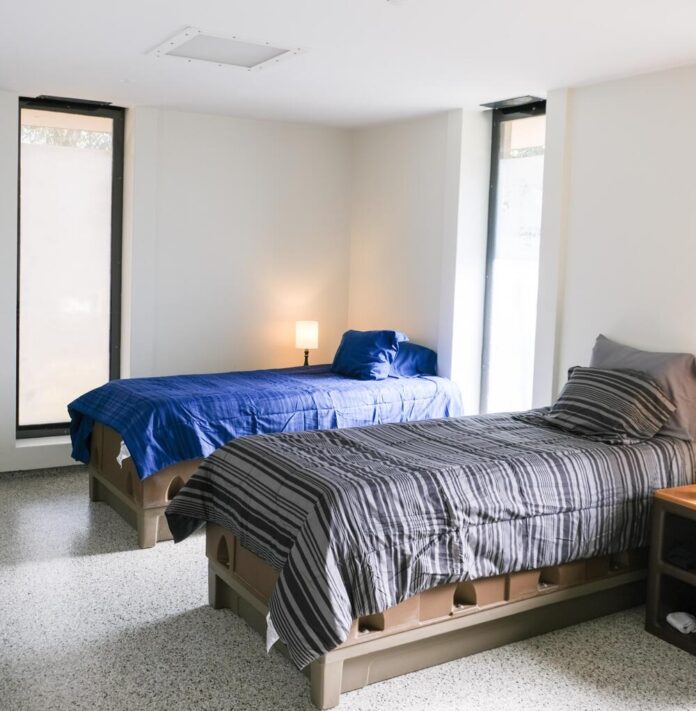
Tanner describes the units at all Operation Hope facilities — there are two others in Savannah and Milledgeville and a total of 77 such units in the state — basically like dorm rooms. There are beds, a kitchen and a shared living area.
“We teach them how to do laundry, how to cook … how to manage financial resources, their money,” Tanner said. “So just a lot of opportunities to slowly reintegrate back into normal society.”
At each of the facilities, behavioral health service providers can be expected to get at least two to three people living independently in their communities every year, Tanner said.
The new center in Columbus was made possible by a $1.6 million investment by the state legislature.
This session, lawmakers are pushing for an even bigger investment into the state’s mental and behavioral health infrastructure: a $409 million state hospital to treat people waiting for restoration services. Tanner said the department plans to build the new hospital at the site of its headquarters in DeKalb County.
Supporters of the project say it’s necessary to ease the burden off local law enforcement, who say they’re often left responsible for housing people with critical mental or behavioral health challenges in their jails.