Hardman Farm Historic Site welcomed visitors Sunday, Feb. 8, from 1 to 4 p.m. during Super Museum Sunday, a statewide initiative organized by the Georgia Historical Society that opens museums and historic sites across Georgia to the public free of charge for one day each year.
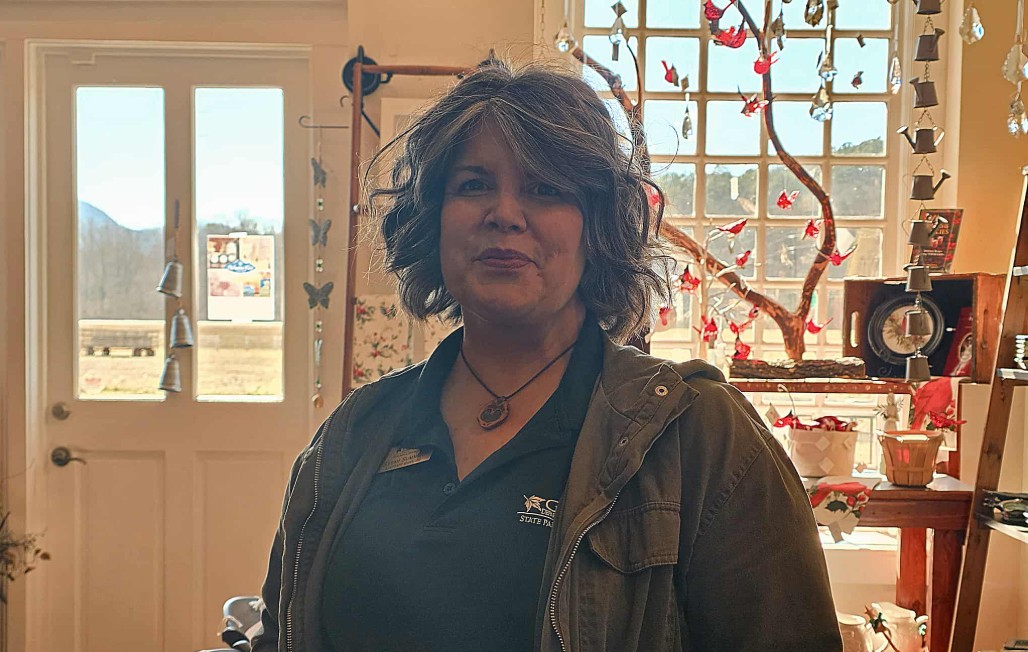
When asked who tends to visit on Super Museum Sunday, Faye, a Georgia State Parks and Historic Sites docent at Hardman Farm, said, “I think a lot more local people. A lot of people come in and say they’ve driven by here all the time and never stopped, so this gives them a chance to go out and look at it for free.”
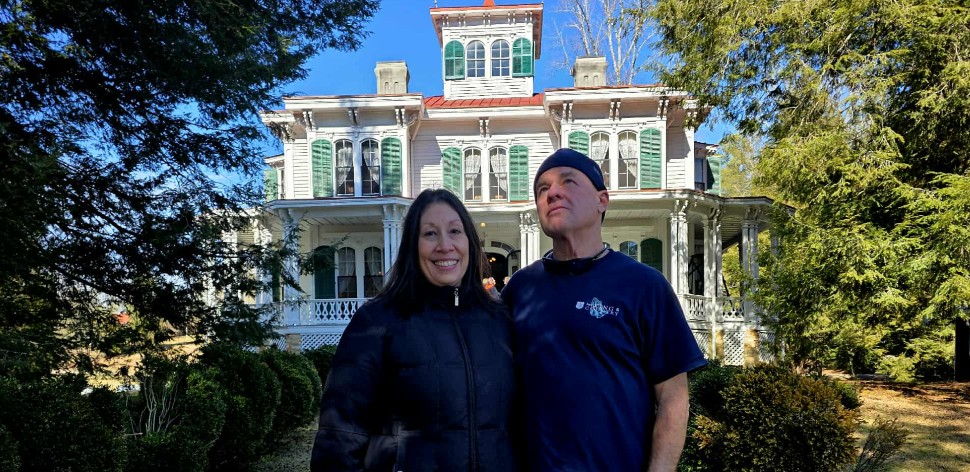
Among those visitors were Rob and Shawna Efferson of Cleveland, who said the free admission prompted a long-considered visit. “We live in Cleveland,” Rob Efferson said. “I’ve been wanting to come over here, and I thought this would be a good opportunity to check it out.”
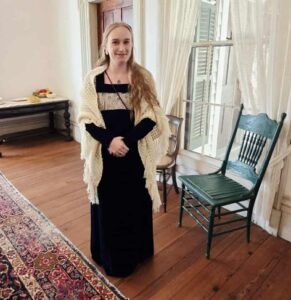
Families entered the property through the main house, passing along an allée of stately walnut trees to the 1870s Italianate mansion before moving into the backyard, where the grounds open toward a shallow creek glittering in a butter-yellow winter sun.
For children, the afternoon became less about dates and facts and more about inhabiting the past. Siblings Jonah and Lacey Tilley lingered by the creek near the house, taking turns pretending to haul heavy pails of water toward the mansion, pretending to provide for the morning kettle. The game proceeded with the usual kid energy, giggles, and exaggerations as Jonah pretended to strain under the weight of the water, throwing his shoulders wide before collapsing into the grass in a display meant to be seen and applauded.
Inside the house, Lacey Tilley studied the furnishings with curiosity. “The furniture is so small,” she said. “I didn’t know that people were so much smaller back then.”
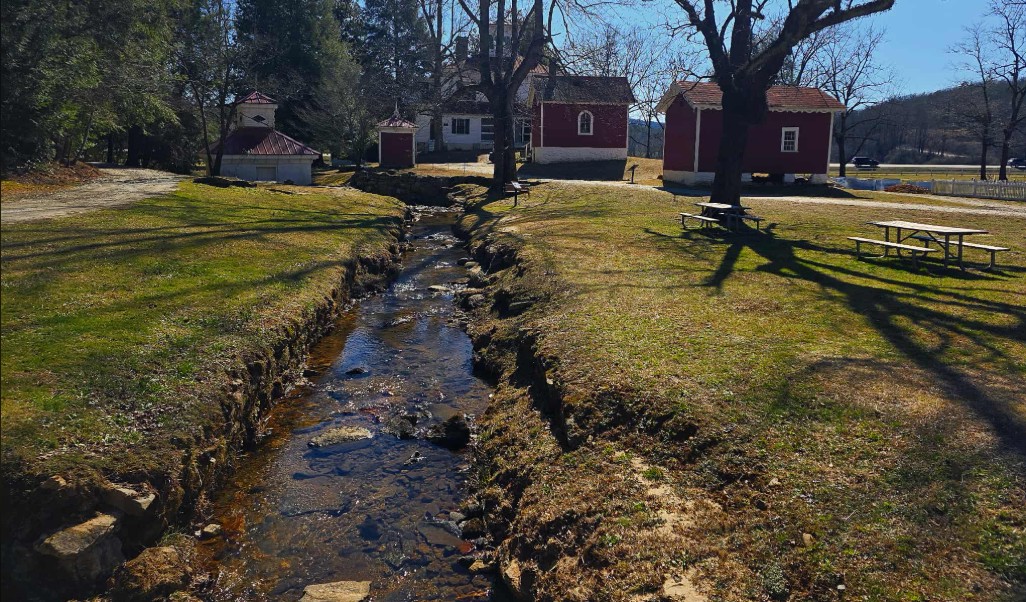
The path carried visitors across an old wooden bridge set in a sun-dappled clearing, where the sound of running water followed closely. Beyond it, families gathered in the open glade near the carriage house, with the dairy barn reached by a narrow footpath just beyond. A clear, bubbling brook wound through the property, evoking the pastoral scenes of Little House on the Prairie.
At the fire pit near the carriage house, families gathered to roast marshmallows using free s’mores packets provided for the event. Parents stood nearby nursing cups of coffee while children debated which of the provided sticks worked best to cook their marshmallows. Lacey Tilley examined one branch and asked whether the bark was clean enough to use, drawing affectionate smirks from nearby adults, who exchanged looks heavy with unspoken “back in my day” stories held in the corners of their smiles.
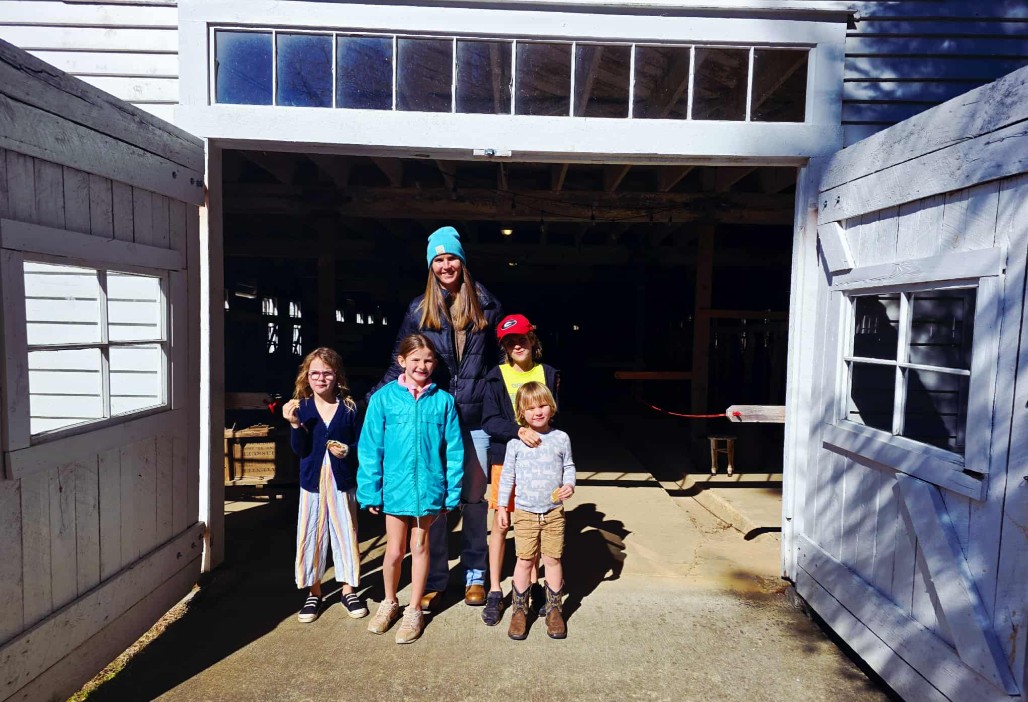
Standing with his family, Carson Britt flipped through his notes before summarizing his takeaway. “It was built by Captain Nichols,” he said.
At the dairy barn, Maple Jean Camejo, 2, delivered her assessment of the structure’s purpose to anyone within earshot. She said it held “cows.” When asked to clarify, she added, “Cows make milk,” and “Cows say moo.”
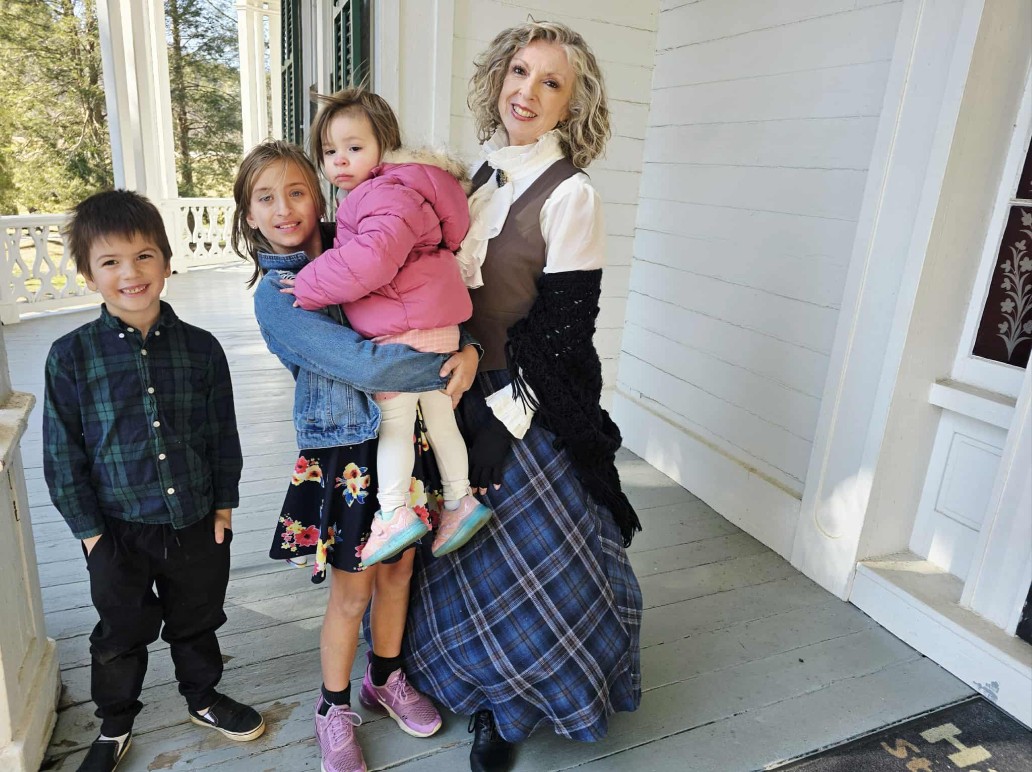
By the afternoon’s end, families, couples, and everyone in between moved easily among the house, creek, bridge, and barn. Children stuffed fallen walnuts into their pockets, staged stick sword fights on the hillsides, soaked their shirts with imaginary water, and reacted with disbelief at the idea of walking to school. Learning took place without instruction or assessment, carried instead through movement, play, and shared attention.