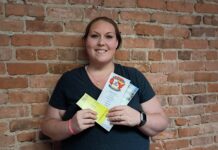


October is Breast Cancer Awareness Month, but I believe breast cancer stories should be told often and in any month of the year. You never know when someone needs to share their story or hear yours, because every 2 minutes a woman is diagnosed with breast cancer.
I am a 28 year breast cancer survivor. There is NOTHING funny about cancer, but choosing to find some laughter through your journey is like a booster shot to your resilience, with no unpleasant side effects and hopefully some unexpectedly pleasant ones.
While laughter cannot cure cancer, evidence suggests that therapeutic humor and laughter can significantly improve the physical and psychological well-being of patients as a complementary therapy. Laughter helps reduce stress, pain, anxiety, and depression, while also potentially boosting the immune system.
The statistics for breast cancer are a wake up call. According to the National Breast Cancer Foundation:
- 1 in 8 women will develop breast cancer in their lifetime.
- In 2025, an estimated 316,950 women will be diagnosed with breast cancer and 42,170 women will die from the disease in the U.S.
- Breast cancer is the most common cancer in American women, except for skin cancers.
- It is estimated that approximately 30% of all new female cancer diagnoses will be breast cancer.
- Approximately 15% of women diagnosed have a family history of breast cancer. Those with a first-degree relative (mother, sister, daughter) with breast cancer are nearly twice as likely to develop breast cancer themselves.
My mother died of colon cancer, my uncle died of lung cancer, my mother-in-law died of ovarian cancer, and my youngest sister died of breast cancer. So, yes, everyone in my family hates all cancer!
Finding a lump
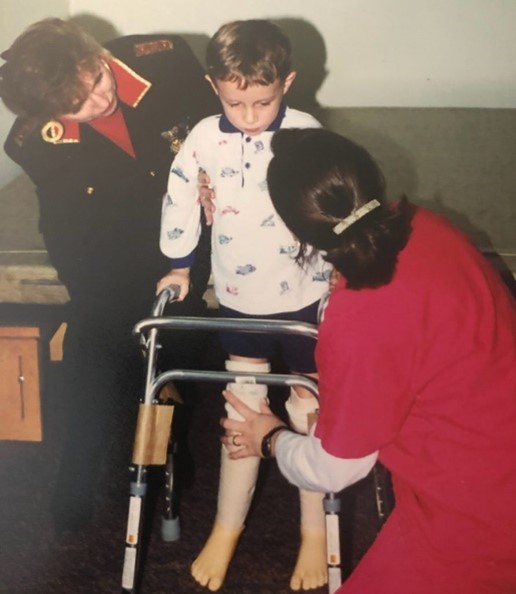
My cancer story began with what might seem an unrelated event. When my only child, Robert, was five years old, he woke up one morning with a high fever. He was delirious and nauseous. We were living in Middle Tennessee at the time, and he was sent by life flight to Vanderbilt Children’s Hospital. He was diagnosed with bacterial meningitis and almost died. Two months later, he had to have both feet amputated.
Almost a year to that date, I detected a lump in my breast. Somehow, I knew exactly what it was because I had been in a high-stress mode with Robert for the past 12 months. I believe that level of stress can lead to a host of medical issues.
I wasted no time setting up an appointment with my OB/GYN. I had a mammogram about a month prior, and all was clear. This time, she did an ultrasound. Her recommendation was to wait a few months and check it again.
That wasn’t good enough for me. I called a friend who was an internal surgeon, and she did a biopsy. It indicated I had intraductal breast cancer at an early stage. I wanted it out!
I scheduled an appointment with a breast cancer surgeon. I went for the works, a bilateral mastectomy. That was my choice, even though I could have had a lumpectomy, I didn’t want to wake up every day worrying if the doctor got all those sneaky little cells. The good news was there was no evidence that cancer had spread to my lymph nodes.
Chemotherapy stinks
My surgeon referred me to an oncologist. I could not have had a better one. Dr. Anthony Greco had invented the breast cancer cocktail. It was a mixture of 5-fluorouracil, Cytoxan, and methotrexate.
Big words. Scary words. But I trusted him. I knew he was one of the best. In my mind, I always thought I was getting poison injected into my body. In a way, I suppose I was.
My youngest sister, Sherry, took me to every appointment. We laughed all the way. Telling jokes and listening to funny tapes. Yep, cassettes were a thing then.
She would come to my house and bring comedy movies for us to watch. We laughed hysterically.
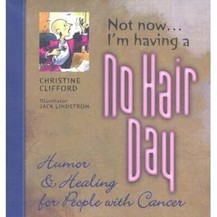
A friend brought me a book, “Not now…I’m having a No Hair Day.” It was filled with humor for people with cancer. This one especially resonated with me because my doctor had told me that I probably would lose some weight and may not lose my hair with the chemo. I lost nary a pound and lost most of my hair.
There is something about losing your hair for us girls that is somehow devastating. The Bible helps make sense of that feeling.
“But if a woman has long hair, it is a glory to her: for [her] hair is given her for a covering.” 1 Corinthians 11:15
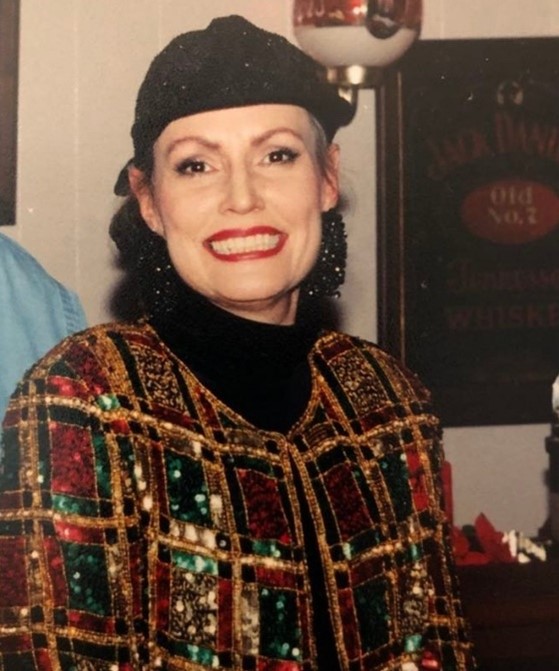 My mother-in-law bought me a sparkly jacket for Christmas and I topped it off with a sparkly baseball cap. At that point, I still had a few wisps of hair left. Sherry and I came up with a running joke about how it looked like cats had been sucking on my hair.
I made the most of that ‘no hair day’ part of my life by wearing baseball caps. I had them in every color. My sister and I eventually found a wig that resembled my hair before it fell out. Funny thing, though, as the weather got warmer, wearing the wig irritated me to the point I went back to baseball caps.
The next chapter
A couple of months after my chemo treatments ended, I was ready for reconstructive surgery. That process from beginning to end took about three months. First expanders were inserted, and gradually, in the coming weeks, filled with saline.
The main types of breast implant fillers are saline (saltwater) and silicone gel, with silicone offering a more natural feel and appearance, while saline provides a clear indicator of rupture and a higher safety profile for leaks. Other options for subtle, temporary volume enhancement or skin improvement include fat grafting from your own body, and non-surgical treatments like PRP, microneedling, and laser procedures.
After some research, I chose saline. I figured if I ever ‘sprung a leak’ the saline would be absorbed into my body, but silicone might create other medical issues.
Again, Sherry went with me to every appointment. Yes, she was a great support system, but in all fairness, the plastic surgeon was incredibly handsome, so it wasn’t a huge imposition for her.
After successful reconstructive surgery, I was ready to move on to the next chapter of my life, which included a return to television at WRBL. That turned into a blessing in more ways than one. I became an advocate for early detection, mammograms, and offering support through Relay for Life programs and because of my career, was invited to speak on behalf of cancer patients and survivors across the southeast.
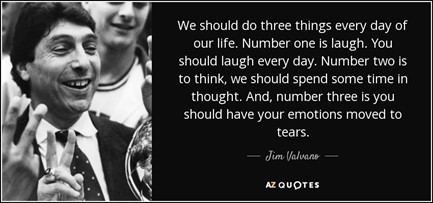
I will tell you what I told groups from 20 to 2,000 in those speaking engagements: laughter is the best medicine! One of my favorite quotes, which I always shared, is from Jim Valvano, coach of the 1983 NC State basketball championship team, who died of glandular cancer. “If you can laugh, think, and cry every day, that’s a heck of a day. You do that seven days a week, you’re going to have something special.”
Cancer rears its ugly head again
I will admit, for the first couple of years after the surgery and chemo, I was a little anxious, especially when it came time for mammograms and follow-up oncology appointments. Eventually, those feelings subsided, and I felt like God had given me a second chance. It was almost like being reborn.
My sister, Sherry, wasn’t so fortunate. In 2006, she discovered a lump in her breast. She was diagnosed with lobular cancer. After months of powerful chemo drugs, some experimental, it just wasn’t enough. She died in 2007. She was 45 years old. Sherry was my youngest sister, best friend, and one of the kindest, strongest women I’ve ever known. I guess God needed her more than we did.
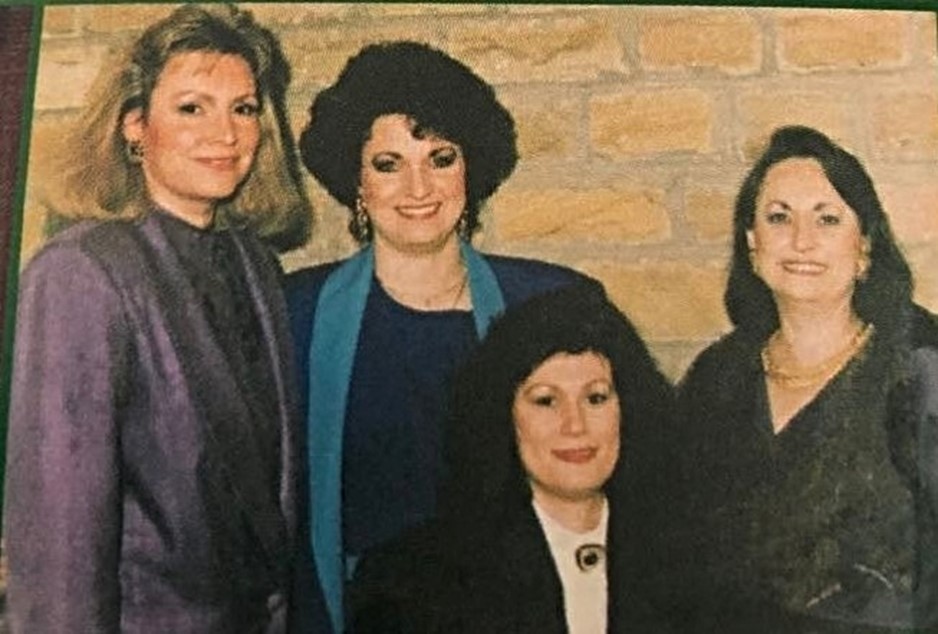
At the end of 2007, my sister, Angela, was administered a genetic cancer mutation test for the BRCA2 gene because of our family history. She tested positive which meant that she had an 80% chance of developing breast cancer. She also decided to have a bilateral mastectomy.
So far, our oldest sister, Janice, has had no evidence of breast cancer.
If you have a family history of breast cancer, and men can also be diagnosed with breast cancer, get tested. Be scared of what you don’t know, not what you find out!
- Breast cancer death rates have slowly decreased over time, for an overall decline of 44% since 1989. This is due to better screening and early detection efforts, increased awareness, and continually improving treatment options.
- Women who receive regular screenings for breast cancer have a 26% lower breast cancer death rate than women who do not receive screenings.
Lessons learned
Your healthcare provider is a good place to start asking questions and there are many other great resources including the American Cancer Society and the National Cancer Institute. Knowledge is powerful and can be very helpful if you or a loved one is diagnosed.
Here are some other nuggets of wisdom I gleaned through my cancer journey and the tribulations of our family medical trauma:
- Learning to ask questions through my mother’s battle with cancer and my son’s meningitis taught me how to be my own best medical case manager.
- Those experiences and my own cancer journey instilled in me that life is short and to seize every minute of every day.
- Self-breast exams are important!
- Losing your hair is no fun but better than having the groundhog deliver your mail.
- Try and locate the silver lining in every step of the journey.
- Laugh, think, and cry every day!
If you know of someone who is fighting breast cancer or any other type of cancer, reach out to them, especially if you are blessed enough to be a member of the Survivor’s Club. They’ve been where you are or where you are headed. We all need an Amen corner and something to laugh about!
Don’t miss what everyone in town is talking about.
Join 4,000+ locals and choose our free newsletter covering news, events and the stories shaping our region.